Yesterday it started to rain…
The smell of damp tarmac rising up through open windows, a smell which is uniquely evocative for us all depending on our individual histories: a suburban pavement, a school playground, a basketball court.
The rain cut through a band of low pressure that had been lying over the city for days, pinging rhythmically off metal, causing rolling tyres to hiss and spit.
The music that soundtracked this meteorological shift was the debut full length from Rain Text (Giuseppe Ielasi & Giovanni Civitenga), simply titled III. Scattered throughout the nameless eight tracks there are moments of low-end pressure relieved by the fizz and clatter of metallic rhythms; there is static, there is discord, there is release.
The individuals comprising Rain Text have a long history of manipulating sounds for evocative ends, Giuseppe Ielasi has been making music as one half of Bellows for many years, each album stretching and destroying their sound in beautiful increments. He has also released reliably inspirational music either solo or in collaboration for the likes of Editions Mego, Shelter Press and Faitiche. His sensitive ears are also in high demand as a mastering engineer. It is worth perusing the 800+ releases he has technical credits for on Discogs: from classics of the avant-garde to the freshest faces of the Swedish underground, the chances are some of your favourite albums are included.
Giovanni Civitenga helms the SKYAPNEA long-running NTS show. Joining him, you can enjoy the fruits of a lifetime of deep listening through shows that flit between the industrial and the devotional, a space that is fully explored on III.
The album was recorded quickly over three fertile days in Ielasi’s studio in Monza, but of course results like this can only be achieved at such a pace by spending a lifetime obsessing over the mechanics and possibilities of sound.
Those who are enamoured by the rain—who are returned by it to the surfaces, smells and sounds of a lost and idealised youth; who feel themselves restored—are known as ‘pluviophiles’. Their response to rain may well have a biological explanation: when rain hits tarmac negative ions are released into the air, which are thought to result in feelings of wellbeing and positivity. All the more reason, then, to return to the vivid ecosystem that Rain Text has so carefully cultivated for III."
Words by The Dengie Hundred – August 2024
Поиск:avant garde
Все
Farfalla Records presents “Kaleidoscope”, its new compilation dedicated to the composer Jack Arel. His name belongs to a constellation of composers whose writing has hot stamped sixties and seventies pop music. Variety, television, cinema, ballet and theatre have all been touched by Jack Arel’s signature.
Take a trip through a psychedelic pop musical journey featuring 12 tracks recorded during his long and productive collaboration with the Chappell label and with his friends Pierre Dutour and Jean-Claude Petit by his side throughout.
This compilation features tracks such as ‘Psychedelic Portrait’, famously used as a music cue in the avant-garde cult British TV series The Prisoner.
The track ‘Strange Galaxy’ was utilised as the opening and closing theme for the Australian science fiction TV series Phoenix Five.
‘Purpose’, ‘May Be’ and ‘Something Happen’ are taken from the ultra-rare French soundtrack of the musical Je fus cet enfant là.
While the more adventurous may recognise the tracks ‘Picture of Spring’ and ‘Picture of Summer’ from the Danish underground horror film The Sinful Dwarf.
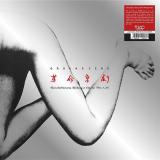
WRWTFWW Records is thrilled to unveil the limited edition vinyl reissue of Natural Sonic, the groundbreaking 1990 environmental percussion album by Japanese composer and performer Yoshiaki Ochi. Long a hidden gem of the kanky? ongaku movement, Natural Sonic finally returns in its full analog glory, housed in a heavyweight sleeve with obi and carefully remastered from the original archives of Wacoal Art Center / Spiral's visionary NEWSIC label.
Originally released only in Japan at the dawn of the 1990s, Natural Sonic is a mesmerizing exploration of earthly sound and rhythm - a sonic tapestry woven from wood, water, and stone, and skin. Ochi, who at the time was the in-house composer and performer for world-renowned designer Issey Miyake, created a series of elemental pieces that blur the line between avant-garde percussion, ritual music, and environmental sound art. The result is both deeply physical and profoundly meditative - an album that breathes with nature itself.
Echoing the organic minimalism of Midori Takada's Through the Looking Glass and the ecological grandeur of Geinoh Yamashirogumi's Ecophony Gaia, Ochi's compositions open portals into primal landscapes, evoking forests, rivers, and stones in flux. Part of NEWSIC's celebrated experimental catalog - alongside Yoshio Ojima's Une Collection des Chaînons, Motohiko Hamase's #Notes of Forestry, and Satsuki Shibano's Rendez-Vous - Natural Sonic now finds new life for contemporary listeners seeking sound that feels both timeless and vital.
A singular album of resonance and restraint, Natural Sonic is a treasure from the golden age of Japanese environmental music, finally available again over three decades later.
- A1: Yamame
- A2: Memories Through Thick Glasses
- A3: Fly Casting
- A4: Like Someone In Love
- B1: Out Of Nowhere
- B2: Le Crepuscule Embaume
- B3: Like Sonny
'Yamame' (the Japanese name for a kind of freshwater salmon) was recorded in 1962 and was Miyazawa’s first album, but the sharpness and avant-garde modernity of the music creates a completely timeless quality. Miyazawa is one of a group of musicians who laid the foundation of the Japanese jazz scene. He wanted to express his cultural heritage by doing something he felt “only someone Japanese” could do, and so he dedicated himself to a pursuit of “Japanese jazz”. Incidentally, the album was originally simply titled “Akira Miyazawa”, but perhaps due to the impression the cover art and the track titles made, it was reissued in 1977 as “Yamame”, and has gone by that title ever since. This is an historic masterpiece of Japanese jazz.
Tenor Saxophone – Akira Miyazawa
Alto Saxophone, Flute – Sadao Watanabe (tracks: B1 to B3)
Baritone Saxophone, Clarinet – Tadayuki Harada (tracks: B1 to B3)
Trombone – Mitsuhiko Matsumoto (tracks: B1 to B3), Yasuhiro Tomoto (tracks: B1 to B3)
Trumpet – Akira Nakano (tracks: B1 to B3)
Piano – Masahiko Sato
Bass – Masanaga Harada
Bass Trombone – Takeshi Aoki (tracks: B1 to B3)
Drums – Kanji Harada, Takeshi Inomata
Supervised By – Jiro Kubota
NPVR is the avant garde duo made up of the late Peter Rehberg and Nik Void. Editions Mego is proud to present their second and final release. No this is not some kind of Beatles synthetic AI that raises the dead reconstructed recordings but rather a new album made by the humans and their machines.
The initial meeting of Rehberg and Void was in London in 2016 and despite or due to their mutual awkwardness found solace and compatibility in the fact that they both had a similar electronic modular set up, along with matching cases to transport all. The idea to collaborate was an obvious and organic process as a means to connect their individual gear together and observe the outcome. The fruits of these initial experiments, recorded in London, resulted in the playful experimentation of their acclaimed 2017 release 33 33 (eMego 251).
Now in 2024 Editions Mego presents the logically titled follow up, 33 34. These sessions were recorded six months after the initial recordings at Peter’s home in Vienna. This was planned out as a mirror city release to the original London recordings. With Peter having access to his full studio set up this time around we encounter a rich audio landscape which organically folds together a variety of musical genres blurring any distinction between these forms so the resulting music hovers as a new cloud of sound. Any musical form, be it industrial, electro-acoustic, ambient, drone and techno all coexist and melt into the other as the ensuing result unveils a hypnotic swarm of divergent sounds (music). When active there were no lines or contexts with NPVR, either between sound or genre within these recordings or live where NPVR were at home playing at a techno club one night and an avant garde venue the next.
The initial session of these recordings was edited by Rehberg and sent to Void to further develop. Over time the final versions were agreed on and then shelved as other outside projects took over. The awkwardness had been surmounted and the two had become close friends. NPVR performed at a range of venues such as Tresor, Sutton House, Corsica, Blitz, Paris GRM #Focus2, LEV Festival and Rigas Skanumezs Festival. Following Rehberg’s untimely passing Void had difficulty listening back to the sessions but eventually thought it fit to complete and release this album, of which even the artwork (like 33 33, an image from Zurich photographer, Georg Gatsas) had been decided upon prior to Rehberg parting ways.
There is an unmistakable joy to these recordings. One encounters an enthralling exploration of their chosen machines which conveys the excitement of what can be randomly conjured when people speak through such devices. There is no grand statement or argument here, just the sheer thrill of creation and the recorded results of random encounters. The art of collaboration was always a mainstay of Rehberg’s practice from the advent of the MEGO adventure. Rehberg & Bauer was an initial collaboration with former business partner Ramon Bauer. Even at this stage one can hear a relaxed sense of delight in the sheer discovery of sound.
A mix made for the Wire magazine following the release of 33 33 hints at the freedom that comes with endless urge for exploration and discovery. Abstract tracks from Z'EV. Jérôme Noetinger and Jung An Tagen are included alongside British stalwarts The Fall and New Order. There were no lines between pop / academic / underground or mainstream in Rehberg’s world. All of it sat at the same table. It is just matter in the atmosphere, like the diverse exploration found in these recordings that comprise 33 34.
Towards the end of his life Rehberg was obsessing over the immense output of the German ambient musician Pete Namlook. An artist renowned for not only his sprawling catalogue of ambient masterpieces but one who often said his main inspiration was nature. This is apt with regards to the work of NPVR which also aligns with such thought as the intertwining of the two individual artists and their machines results in a natural symbiotic flow, as it happens, just like in the world around us.
A meditative, folk-inflected score rooted in improvisation, ‘Dragon’s return’ echoes the soul of A film long buried behind the Iron Curtain
With Dragon’s Return, Australian composer and multi-instrumentalist Oren Ambarchi and Norwegian guitarist Fredrik Rasten present a new, meditative score to Eduard Grecner’s eponymous 1967 Slovak cult film — a stark, black-and-white parable.
The album captures a unique live performance recorded at the Videodroom Festival during Film Fest Ghent in October 2024, where this new score premiered alongside the film in collaboration with the Slovak Film Institute. What began as a fleeting, improvisational encounter between music and image has since taken on a life of its own — an evocative sound world that retains its power even in the absence of visuals.
The album will be available on vinyl and all digital platforms from September 12 via VIERNULVIER Records. The vinyl edition includes an obi strip, a booklet with film stills, and extensive liner notes on the film.
The label is known for shedding new light on forgotten films through reimagined soundtracks — claire rousay’s acclaimed The Bloody Lady being the most recent example.
“Folklore meets avant-garde in an ancient drama - a ballad about love, hate and finding a way out of loneliness” - Rastislav Steranka (Slovak Film Institute)
Ambarchi and Rasten do not accompany the images so much as speak through them. Their interplay — on guitars, flutes, percussion, and voice — unfolds slowly, without a fixed destination, culminating in subtle, entrancing drones. With few breaks or ruptures, this trippy, folk-inflected continuous composition invites surrender.
Rasten’s 12-string guitar and delicate use of voice create layered textures that shimmer and shift. Ambarchi, known for his electro-acoustic work, here explores a radically softer mode — strumming, bowing and coaxing tones from his instrument as though it were a string section unto itself. He blows into shells, adding breath and texture to the sonic palette, touching on something elemental.
Together, they evoke a sound world that feels both ritualistic and strangely familiar — as if echoing from a forgotten ceremony or dreamed into being after hearing an old folk tale. Rooted in improvisation, the music speaks in tones both intimate and expansive, shaped live in dialogue with the film and with each other, with only minimal overdubs added afterward.
- 4070: Blues
- Charade
- Conversations, Part I
- Conversations, Part Ii
- Conversations, Part Iii
Sahib's Jazz Party is an album by saxophonist/flautist Sahib Shihab, recorded live at the Jazzhus Montmartre in Copenhagen, around the same time that he relocated there in 1963. Shihab is joined by flugelhornist Allan Botchinsky, guitarist Ole Molin, drummer Alex Riel, and 17-year old bass prodigy Niels Henning Orsted Pederson. The recordings showcase Sahib's diversity and dexterity as a player, including his openness to the avant-garde style, expanding on the bop era playing he is known for. The audio has been remastered by Dave Gardner and pressed on audiophile-grade vinyl at Pallas Group in Germany.
- A1: (Part I)
- B1: Prelude (Part Ii)
- B2: Maiysha
- C1: Interlude
- C2: Theme From Jack Johnson
The capstone of Miles Davis’ electric period, Agharta reigns as a funk-rock fireball — a blazing comet streaked energy and elan, a fearless organism feasting on adventure and freedom, a seven-headed Godzilla stomping its way through Osaka, Japan. Recorded on February 1, 1975 at Osaka Festival Hall at the first of a two-show stand, the double album offers an endless abundance of surprises and shifts — as well as a road-proven ensemble whose chemistry and abilities equal that of any of Davis’ celebrated bands. If the true measure of jazz is the capacity to adapt to the moment and challenge perception, Agharta is consummate.
Sourced from the original master tapes, housed in a Stoughton gatefold jacket, and pressed at Fidelity Record Pressing in California, Mobile Fidelity’s numbered-edition 180g 33RPM 2LP set of this epic live release presents it in audiophile sound on a domestic pressing for the first time. Offering greater degrees of separation, detail, and richness than the compressed CD editions and more clarity, openness, and presence than older vinyl copies, this version of the 1975 release helps bring the concert stage to your home. Just make sure your turntable and speakers are up to the challenge of Davis and Co.’s explosive performances — and producing the decibels they demand.
Teeming with vibrant colors, tones, and pace, Mobile Fidelity’s reissue captures the hear-it-to-believe-it flow, sweep, and moodiness of the music. Though the group honors looseness and freedom with religious verve, the specificity and scale rendered by this remaster allows you to detect methods behind the alleged madness that are often otherwise harder to discern. This insight extends to the understated changes in volume, harmonics, and phrasings. In many ways, you can listen as Davis himself did that early February evening as he helped coordinate the overall direction and decided on whether to blow his wah-wah-wired trumpet or take a turn on the organ.
Tellingly, Agharta would likely never have been made if not for Davis’ ventures overseas and, specifically, to the Land of the Rising Sun. Having for years faced a backlash on his native soil for his choices to experiment and blow past all known borders, Davis was welcomed with open arms in Japan. The concert documented on Agharta — as well as the day’s later show, captured on the equally exciting Pangea — stemmed from a sold-out three-week tour that would ultimately mark Davis’ final public appearances for years, as he soon settled into semi-retirement and nursed the wounds connected to an unprecedented stretch of restless and relentless output.
For all the band-fueled merit of Agharta — and there’s plenty, given the cast of saxophonist Sonny Fortune, bassist Michael Henderson, drummer Al Foster, percussionist James Mtume, and guitarists Reggie Lucas and Pete Cosey seemingly blasts off to outer space and travels distant galaxies by the time this minimally edited record runs its course — Davis’ own playing often remains overlooked. As critics Richard Cook and Brian Morton observed, it is “often fantastically subtle, creating surges and ebbs in a harmonically static line, allowing him to build huge melismatic variations on a single note.” He attacks like a man on a mission, out to prove naysayers wrong and bent on trailblazing another new path forward. Convention and skeptics be damned.
Noisy and furious, dark and discordant, abstract and off-balance, radical and intense, abrasive and atmospheric, strangely beautiful and hypnotically eccentric: Agharta evades simple description, and refuses to be pinned down in any established category — rock, jazz, punk, ambient, prog, avante-garde, or otherwise. Shot through with trench-deep grooves, screaming riffs, scalding solos, and free-improv leads, its cosmic thrust comes on as the equivalent of an animated pointillist painting comprised of millions of textured dots, dashes, and dabs that hold your attention so raptly you want to revisit the ideas again and again.
Always steps ahead of everyone else, Davis knew what he was doing even when Agharta debuted in Japan before later hitting U.S. markets. Though “Maiysha” and “Theme from Jack Johnson” are identified in the track listing, the record contains a number of uncredited references to other Davis works, including a nod to “So What.” This decision to bypass labels only adds to the art of the reveal — the rare black magic in which Agharta expertly deals.
The scottish singer-songwriter and multi-instrumentalist James Yorkston and the english guitarist with a fluid fingerpicking touch, David A. Jaycock, already played together in the first formation of the experimental folk ensemble Big Eyes Family Players. Their encounter with Swedish saxophonist Lina Langendorf gives rise to a little gem of pure acoustic candour, perfectly balanced between chamber avant-garde and neo-folk. As on an endless autumn evening in front of a lake in Finland or Estonia, the trio's nordic soul creates atmospheres that recall hidden nostalgia. In a process of rarefied sound matter, elegiac paintings spring up, moments that flow slowly and silently in a tension that is always suspended and unresolved. Soft, crepuscular passages, at times sharp and cold guitar, but also the velvety breath of the nickelharpa, combine with a saxophone that still blows dramas of distant Norwegian fjords, but can also become more Mediterranean and arabesque. The music becomes like a warm warmth around the fire, reflecting a hidden twilight zone of the soul, in a quiet, gentle whisper between poetic abstraction and arpeggiated themes of more recognisable narrative melody, typical of a certain Northern folklore.
Co-Release with We are busy bodies.
Two musicians, two different folk music traditions, two soundscapes hundreds of miles apart and one nightingale song. Nightingale melodies inspired this intoxicating folk album by Slovakian flautist Michaela Antalová and Norwegian double bassist Adrian Myhr. The Oslo-based duo’s album follows their meditative 2021 debut Zvony (Bells), which featured harmonium, field recordings of crickets and a Slovak male choir.
Sing Nightingale is a translation of ‘Zaspievaj Slavicku’, a traditional Slovakian song. The duo experiments with this theme of the songbird; exploring instrumentation from around the world and its rich tonal textures. On ‘Night Singing’, Michaela plays a Slovakian fujara, a tall, upright wooden bass flute originally played by shepherds. The fujara’s smooth, deep tones are laid over a recording of a nightingale by musicologist Tomáš Šenkyřík, with Michaela’s flute mimicking the bird’s nocturnal chirps and warbles to attract a mate. Michaela is carefully imitating the bird, who is in turn improvising his melody. In ‘Worm Moon’, named after the springtime full moon in March, when nightingales return from Africa where they have spent the cold winter, Adrian’s slow and resonant double bass is brightened by the sweet trills of a real nightingale and Michaela’s fujara.
The Norwegian Hardanger fiddle or hardingfele, features on two specially written songs; ‘Lament’ and ‘Rosenhave’ (rose garden) which bring together the nightingale’s symbolic associations with undying love, sacrifice, deep sorrow and loss. Celebrated Hardanger fiddle player Helga Myhr plays alongside Adrian’s double bass and Michaela’s seljefløyte or willow flute. Helga also plays on ‘Flagre’ (Flutter) and ‘Dance Nightingale’. The seljefløyte is very similar to the Slovak overtone flute koncovka. By using this Norwegian instrument, Adrian and Michaela’s new compositions are reminiscent of both countries’ folk traditions. Folk music often comes from unknown sources; the original writer may not be known and the melodies are typically passed down orally. Michaela and Adrian’s project merges the different folk musics from their respective countries, finding common ground in the sonic qualities of instruments and evolving a new hybrid folk style, authentic in its own right.
For the stunning adaptation of the traditional Slovakian fujara song ‘Dolu Ovce Dolinami’ (‘Sheep down the valleys’), Adrian’s friend Javid Afsari Rad plays the Iranian santur, similar to the traditional Slovak string instrument cimbalom. By coincidence, Iran’s national bird is the nightingale, making another unexpected connection to the symbolic bird. These 11 tracks are a beguiling fusion of traditional folk styles, approached by musicians from an avant-garde, improv and jazz background. The album pays tribute to a hugely expressive bird and finds a strange, soothing universality in the folk sounds of different countries.
On “Cold Sweat,” James Brown famously called to “give the drummer some.” In 1974, Philadelphia vibraphonist Khan Jamal called to Give the Vibes Some, with superb results. Pianist and composer Jef Gilson’s PALM label gave Jamal the platform he needed to deliver a thorough exploration of contemporary vibraphone. After launching PALM in 1973, Gilson quickly demonstrated that he would only produce records not found anywhere else. Give the Vibes Some, PALM number 10, was another confirmation of this guiding principle.
Raised and based in Philadelphia, Khan Jamal took up the vibes in 1968, after two years in the army during which he was stationed in France and Germany. Decisively drawn to the instrument by the work of the Modern Jazz Quartet’s Milt Jackson, Jamal studied under Philadelphia vibraphone legend Bill Lewis and soon made his debuts in the local underground.
Early in 1972, Jamal made his first recording, with the Sounds of Liberation. The band attempted an original fusion of conga-heavy grooves with avant-garde jazz soloing. Saxophonist Byard Lancaster, an important figure in Jamal’s development, contributed much of the solo work. Later in 1972, Jamal made his leader debut with Drum Dance to the Motherland, a reverb-drenched, never-to-be-replicated experiment with live sound processing. Both albums appeared on the tiny musician-run Dogtown label.
“We couldn’t get no play from nowhere. No gigs or recording sessions or anything. So I took off for Paris,” Jamal recalled in a Cadence interview with Ken Weiss. “Within a few weeks, I had a few articles and I did a record date. It didn’t make me feel good about America.” That was in 1974, while Byard Lancaster was recording the music gathered on Souffle Continu’s recent The Complete PALM Recordings, 1973-1974.
Jamal’s record date delivered Give the Vibes Some. At its core, it was an exploratory solo vibraphone album, even if two tracks added (through technological resourcefulness?) a très célèbre French drummer very much into Elvin Jones appearing under pseudonym for contractual reasons. Another track, for which Jamal switched to the vibes’s wooden ancestor, the marimba, added young Texan trumpeter Clint Jackson III. The most notable article published on Jamal during this stay in France was a Jazz Magazine interview. Jamal’s last word there were “The Creator has a master plan/drum dance to the motherland.” “Give the vibes some” could be added to this programmatic statement.
Texan deep house don Rami invites you into an evocative world here that is part soothing late night charmers, part avant-garde electronic experiments and part cruising late night grooves. 'First' is a deliciously drowsy sound to get you on side, then 'Popsumn' shakes things up with bleeping synths, fragmented vocals and warped pulses. There is a moment to pause amidst lush ambient on 'After You', daydream in the cuddly kicks and far-sighted pads of 'I Like This' and gaze off into the distance on the far-sighted 'Bedtime'. 'Sex! Closes with a steamy late-night pulse that could well get you in the mood.
- A1: Filastrocca (Nursery Rhyme) 1:11
- A2: Scuola Di Retorica (School Of Rethorics) 2:08
- A3: Retarius In Lotta (Retarius' Fight) 2:13
- A4: Scena, Fiaba, Pantomima (Scene, Tale, Pantomime) 5:24
- A5: Quartilla 0:31
- A6: Quartiere Dei Bordelli (Brothels' Quarter) 2:26
- A7: Mercato, Nebbia (Market, Fog) 1:02
- A8: Orgia (Orgy) 2:34
- B1: Bali 7:02
- B2: Epitaffio (Epitaph) 1:09
- B3: La Nave (The Ship) 1:34
- B4: Inizio Tempesta (Storm Begins) 1:04
- B5: Tempesta Violenta (Violent Storm) 1:30
- B6: Succhiata (Sucking) 0:12
- B7: Naufragio (Shipwreck) 1:33
- B8: Giardino Di Circe (Circe's Garden) 0:43
- B9: Proseleno 0:51
- B10: La Maga (The Witch) 1:19
- B11: Mangiando Il Cadavere + L'uccello (Eating The Corpse + The Bird) 2:27
Within the world of theatrical archives, there are the known, the unknown, the forgotten, and the lost. Demetrio Stratos' stage compositions for Teatro dell'Elfo's groundbreaking 1979 production Satyricon - directed by future Oscar winner Gabriele Salvatores - represents one such lost artifact now wondrously returned to life. This radical sonic work, integrating extended vocal techniques, Balinese instruments, and pioneering whale song recordings, stands as the final masterpiece of Italy's most visionary vocal experimenter, lost for over four decades until Die Schachtel's extraordinary recovery. As Stratos himself explained: "The musical operation performed on Satyricon is particular: the composer-musician here does not compose, but borrows ready-made music, vivisects it, melts it, intervenes and recomposes it on magnetic tape. The structure of the signifier, from a morphological point of view, presents itself as a conceptual collage." The music is obtained by utilizing compositions and musical elements from David Behrman, Joan La Barbara, Balinese Ketyak, Turkish Nay flute, Yugoslavian bagpipe, Pan flute, and whale song, with synthesizer interventions by Paolo Tofani. It began as part of something known - a wild, immersive theatrical event that inaugurated Teatro dell'Elfo's historic venue in 1979, was almost entirely forgotten, becoming lost and then unknown. The original production marked a radical departure for the company: no longer popular street theatre, but a dark, immersive, sophisticated spectacle that transformed their space into a rough wooden arena with a sand floor. Demetrio Stratos, working with Paolo Tofani (fellow Area member), created an entire sonic universe that subverted every conventional function of stage music. Their composition wasn't accompaniment, but autonomous sonic dramaturgy that integrated extended vocal techniques, archaic electronic elements, Nay flutes, Balinese instruments, and pioneering whale song recordings. The result was a three-dimensional soundscape that enveloped audiences, creating an otherworldly acoustic dimension. Stratos' score even intervened in the actors' vocal delivery, with the recordings capturing both the performance and his coaching sessions with the cast. The production featured young actors destined for fame - Elio De Capitani, Ferdinando Bruni, Cristina Crippa, Corinna Agustoni, Ida Marinelli - guided by Gabriele Salvatores in this adaptation of Petronius' ancient novel. Shortly after the Satyricon performances, Stratos was hospitalized for the condition that would lead to his death at just 33 years old. This work represents his final composition - a haunting farewell from one of Italy's most innovative sound artists. Die Schachtel presents this recovered work in collaboration with Teatro dell'Elfo, pulled from the original magnetic tape and carefully restored. Satyricon '79 is one of the great artifacts of 1970s Italian avant-garde - a wild, grinding sonic expose which sucks the ear into its depths, made in the spirit of collaboration and creative risk-taking. The edition includes critical apparatus with essays, testimonies from protagonists, and period photographic documentation, documenting an unrepeatable moment where theatre, vocal research and sonic experimentation converged. This release marks a poignant moment in experimental music history - Stratos' final work, now rescued from the archives and restored to its rightful place in the canon of Italian avant-garde masterpieces. A true wonder of towering historical importance. As essential as it gets for any fan of experimental music, or the history of the Italian avant-garde. Fully restored and newly mastered from the original analog tapes. Absolutely essential.
- 1: Pure Energy 09:8
- 2: Clint 06:53
- 3: 5.000 Feet Up 1:19
- 4: Give The Vibes Some 05:51
On “Cold Sweat,” James Brown famously called to “give the drummer some.” In 1974, Philadelphia vibraphonist Khan Jamal called to Give the Vibes Some, with superb results. Pianist and composer Jef Gilson’s PALM label gave Jamal the platform he needed to deliver a thorough exploration of contemporary vibraphone. After launching PALM in 1973, Gilson quickly demonstrated that he would only produce records not found anywhere else. Give the Vibes Some, PALM number 10, was another confirmation of this guiding principle.
Raised and based in Philadelphia, Khan Jamal took up the vibes in 1968, after two years in the army during which he was stationed in France and Germany. Decisively drawn to the instrument by the work of the Modern Jazz Quartet’s Milt Jackson, Jamal studied under Philadelphia vibraphone legend Bill Lewis and soon made his debuts in the local underground.
Early in 1972, Jamal made his first recording, with the Sounds of Liberation. The band attempted an original fusion of conga-heavy grooves with avant-garde jazz soloing. Saxophonist Byard Lancaster, an important figure in Jamal’s development, contributed much of the solo work. Later in 1972, Jamal made his leader debut with Drum Dance to the Motherland, a reverb-drenched, never-to-be-replicated experiment with live sound processing. Both albums appeared on the tiny musician-run Dogtown label.
“We couldn’t get no play from nowhere. No gigs or recording sessions or anything. So I took off for Paris,” Jamal recalled in a Cadence interview with Ken Weiss. “Within a few weeks, I had a few articles and I did a record date. It didn’t make me feel good about America.” That was in 1974, while Byard Lancaster was recording the music gathered on Souffle Continu’s recent The Complete PALM Recordings, 1973-1974.
Jamal’s record date delivered Give the Vibes Some. At its core, it was an exploratory solo vibraphone album, even if two tracks added (through technological resourcefulness?) a très célèbre French drummer very much into Elvin Jones appearing under pseudonym for contractual reasons. Another track, for which Jamal switched to the vibes’s wooden ancestor, the marimba, added young Texan trumpeter Clint Jackson III. The most notable article published on Jamal during this stay in France was a Jazz Magazine interview. Jamal’s last word there were “The Creator has a master plan/drum dance to the motherland.” “Give the vibes some” could be added to this programmatic statement.
“In a concert, I show something with a beginning, a middle and an end. But, there is no end. Of course, there is no end. Because I am the music, and I am still here.” - Sophie Agnel
‘Learning’ - Sophie Agnel’s first solo LP, feels like the dark, physical inversion of her excellent ‘Song’ which came out on Relative Pitch earlier this year. Sinking her unique sound into vinyl for the first time, the LP arrives as Agnel recovers from a brain tumour - a shocking discovery that will require Agnel to start again with the piano. It’s a terrifying prospect, but Agnel has been here before, having reorientated herself almost entirely away from her early classical training over the last 4 decades of her work.
‘When I was young I had very good ears, oriole absolute. Then later I began to make strange sounds with my piano, to do different kinds of music. I was more interested in the sounds than the melody, for example. I remember once I sat down in a shop to try to read the scores of Schubert and there was a light emitting a very strong bzzzzzzz. And I couldn't listen to my oriole internal - I couldn't read the score. I was entirely subjugated by the sound of the light. And I understood that something had changed. Ten years before I could read and not hear the light. Now I understood that my ears were completely different. I was more open to the sounds of life.”
Born in Paris in the 60’s and playing her parents piano as soon as she could stand up, Agnel quickly grew tired of the classical world. What frustrated her was the strange disconnect between the frame of the piano and its keyboard - a weird boundary that seemed to form some hushed code of etiquette. “The first thing I put inside the piano was a plastic goblet. I’d seen a few pianists do it: Fred Van Hove, for example, put rubber balls inside his. But what didn’t appeal to me was that there seemed to be no link between the pianos outside and inside.”If you see Agnel play now, the body of her piano is littered with fish tins, ping pong balls, wooden blocks - not that you’d recognize their sounds. Having absorbed the language of the European avant-garde, Agnel is known for pulling the piano’s interior outside of itself by tipping her handbag into it. But these ‘strange sounds’ don’t just come from Cage - they also share the poetic force of Cecil Taylor and ‘Learning’ demonstrates that Agnel’s work on the piano's keyboard is just as important as what she’s littered on its strings. The record lets loose her ability to unleash a formidable sound mass and then rope it back to one single, clarifying note. With one hand, Agnel plays 88 tuned drums and on the other an enormous guitar - with the LP rotating through oncoming trains, and blues harmonica and feedback. It’s single minded stuff, borne out of a dedication to a wholly personal language of gesture, accumulation and deft reduction. “Maybe when I’m 80 I will not need anything,” Agnel says in a recent film made at her home. “I will do the same but with one note, and one finger. Maybe it's enough.”
‘Learning’ arrives in a reverse board sleeve designed by Jereon Wille. Recorded live at Cafe OTO by Billy Steiger on 6th June 2023 and 4th June 2024. Mixed by James Dunn and Benjamin Pagier. Side B edited by Benjamin Pagier. Mastered and cut by Loop-O. Front photograph by Aimé Agnel. Typography and layout by Jeroen Wille.
- 01: Grotesque (Chapter 2)
- 02: Duo + 1
- 03: Night Out (Theme From Early Snow In Munich)
- 04: Paraphrase Sw (Theme For Stevie Wonder)
- 05: Feat. Zdenka Kovacicek - Peep Show (Theme From Early Snow In Munich)
- 06: Love Experiment (End Credits From Whatever You Can Spare)
- 07: Video Games (Theme From Early Snow In Munich)
- 08: Whatever You Can Spare (Orchestral Version)
- 09: Early Snow In Munich (Opening Credits)
- 10: The Forrest Date (Theme From Whatever You Can Spare)
- 11: The Graduates (Theme From The Graduates)
- 12: Oberhausen (Theme From Way To Your Neighbour)
- 13: Winter's Wish (Theme From Winter's Wish)
A new release from Fox & His Friends Records, Chapters (Screen & Stage Dancefloor Jazz from Yugoslavia 1971-1984) by Ozren Depolo brings to light a trove of previously unreleased music spanning more than a decade of his work in film, theater and television. This gatefold audiophile 180g LP, including a 12-page booklet with archival photos and detailed liner notes, offers for the first time a full album composed exclusively of Depolo's own authorship, drawn from master tapes held in private and institutional archives. Mastering and cutting was done by Frank Merritt from The Carvery Ozren Depolo rarely pursued opportunities to record original material, in part due to a general lack of interest among local publishers in jazz discography. Yet he was more than a gifted composer: he was also an accomplished saxophonist, clarinettist, flutist, pianist, arranger and occasionally, a jazz journalist who contributed articles to specialized programs on Radio Zagreb. Depolo also played in international big bands alongside jazz greats such as Clark Terry, Oliver Nelson and Gerry Mulligan, as well as in formations led by Bosko Petrovic, including the Nonconvertible All Stars and the B.P. Convention Big Band. He was a member of ensembles including The Alfi Kabiljo Orchestra, The Dragutin Diklic Ensemble, Jugoslovenska Pop Selekcija, The Stipica Kalogjera Octet, Vaclav Zahradnik & His East All Stars Band and the Zagreb Jazz Quintet. As both composer and arranger, he produced a significant body of work for large jazz orchestras and small ensembles. He was deeply engaged in jazz improvisation and avant-garde classical music, recording numerous chamber pieces for saxophone. A long-standing member of Acezantez, Zagreb's renowned contemporary music ensemble, he also collaborated with international figures such as Ted Curson, John Lewis, Johnny Griffin, Art Farmer, Leo Wright, Art Taylor, Slide Hampton and Lucky Thompson. This selection also includes his collaboration with Igor Savin and jazz vocalist Zdenka Kovacicek who were played on Karl Lagerfeld's fashion shows. The release demonstrates how Depolo was able to shift fluidly between idioms: from driving big-band passages to intimate chamber-like arrangements, from funk-tinged motifs to lyrical, impressionistic soundscapes. This stylistic breadth, always anchored in his deep jazz and funk sensibility, gave his music an adaptability perfectly suited to the hybrid world of stage and screen. The LP highlights that versatility while also presenting the coherence of his artistic voice, one that had gone unrecognized precisely because it was dispersed across so many contexts.
"“Veruschka” is a unique film within the Italian cinematic landscape of the early 1970s — halfway between experimental cinema, visual art, and fashion. Directed by photographer Franco Rubartelli, it tells (in a highly symbolic and almost dreamlike way) the story of Veruschka von Lehndorff, the famous model and muse of the director, who plays herself in a journey of inner exploration and alienation through Africa and the world of fashion photography.
It is not a narrative film in the traditional sense, but rather a visual and sensory experience, made of extraordinary imagery, contemplative rhythm, and a constant sense of aesthetic melancholy. And for this very reason, Ennio Morricone’s score plays a fundamental role: it is the true emotional voice of the film.
For Veruschka, Morricone composed one of his most delicate and spiritual works. The soundtrack is a perfect balance between avant- garde and lyricism, between melody and sonic experimentation."
An electrified meeting of minds, Candy Girl is a lost 1975 session by jazz pianist Mal Waldron, recorded in Paris with core members of the mighty Lafayette Afro Rock Band, the American funk unit who had made France their home and whose deep grooves would later be mined by generations of hip-hop producers.
By 1975, Waldron was a decade into his self-imposed exile from the United States—a transformed musician who had reassembled his sound in Europe and Japan after a devastating breakdown in the early '60s. His post-1969 output had stripped jazz down to its core elements: modal intensity, locked grooves, and hypnotic repetition. Candy Girl doesn’t interrupt this trajectory—it extends it, wrapping Waldron’s minimalist mantras around the funked-up chassis of the Lafayette rhythm section.
Originally released in microscopic quantities on the Calumet label and long shrouded in obscurity, Candy Girl was recorded spontaneously in the studio of French producer Pierre Jaubert, whose Paris HQ had become the workshop for both avant-garde jazz (Archie Shepp, Art Ensemble of Chicago, Steve Lacy) and psychedelic funk (Lafayette Afro Rock Band AKA Ice). This session finds Waldron jamming freely with bassist Lafayette Hudson, drummer Donny Donable, and keyboardist Frank Abel on clavinet, Moog and more—laying down raw, unfiltered instrumental funk with an experimental edge.
Highlights include the low-slung vamp of “Home Again”, the crisp, break-laden groove of “Red Match Box”, and the mesmeric swirl of the title track “Candy Girl” —a minor-key electric piano waltz with hints of cosmic soul. There's even a deep cut for the crate diggers: the somber yet meditative “Dedication to Brahms”, where Waldron deconstructs the Romantic composer’s third symphony into a sparse jazz reverie.
Unlike his polished sessions for Japanese labels or the avant-garde swing of his earlier Prestige work, Candy Girl feels more spontaneous, even accidental — and that’s part of its power. It’s a document of Waldron as bandleader, collaborator, and explorer, captured in the midst of a vibrant, cross-cultural scene in mid-70s Paris. Never officially issued with a cover and barely released at all, Candy Girl is a rare convergence of two underground traditions: Waldron’s Euro-exile electric jazz and the raw, sampled-future funk of the Lafayette Afro Rock Band. Now finally resurfaced, it deserves its rightful place in both stories.
- Mor, Mor
- The Human Noise
- I Thought It Was The Moon
- Benitez
- Her Absence
- Vi Legede I Marken
- Le Soleil Le Pain Et L'ame
- It's So Nice
- As Dots
- To Marilyn
Denmarks leading outlet for fresh, forward forward-thinking jazz, April Records, proudly presents the debut release from award award-winning Danish vibraphonist Viktoria Sondergaard. With wide ranging influences from jazz, chamber music, cabaret, pop, rap and SukumaSukuma-inspired grooves, as well as the hymns and melodies of the Danish Hojskolesangbog traditional/folk songbook, the music is grounded in collective expression and responsibility. The album s bold, boundary boundary-pushing sound was built on a strong sense of musical community, as well as Sondergaard s desire to integrate spoken word and lyrics into her practice to convey her thoughts and feelings on the world around her on a deeper, more personal level. Composing with her four collaborators in mind, Viktoria imagined her quintet playing each note as she composed, making the music inseparable from their presence. The album integrates spoken word, rap, singing, screaming, and whispering - a shared sonic tapestry that expresses joy, wonder, questioning and celebration. It s a band built on inspiration, joy, dreams and love, Viktoria says. For me, one of the most beautiful things in art is that we have a platform to say something about the society and world around us. This album is an attempt to do just this. this." Balancing warmth and intimacy with tension and exploration, the music weaves rich instrumental textures and spacious soundscapes with intricate vocal arrangements - intertwining voices that move between comforting folk folk-like harmonies and angular, avant avant-garde expression. The quartet s deep listening and intuitive interplay are evident throughout, shifting fluidly from open, exploratory passages to tightly locked grooves. The result is a sound that feels both grounded and searching: a sonic conversation inviting the listener into a space of vulnerability, curiosity, and connection. With a sparkling tone, emotive improvisation and refined control over her instrument Viktoria is recognised as a fearless explorer and bold musical voice. A recipient of the Aarhus Jazz Talent Prize, Tivoli Jazz Prize and the 2025 Carl Prize Honorary Award presented by Marilyn Mazur, she balances adventurous writing and collective invention with melodic immediacy and emotional power.
Detroit-born artist, Jalen Elk Star unveils his debut LP, ESIN on L.I.E.S. Known in certain circles as filmmaker, music producer, playwright, and collagist, Jalen often draws from controversial themes to craft modern avant-garde works redefining the way art is seen in today’s chaotic universe. After years working on diverse projects under various aliases, his shift to a more liberated creative process under this new moniker has allowed his vision to reach a broader audience, continuing the path with the music on this new lp.
ESIN, a 13-track sonic collage, builds on his past, blending raps, noise, ambience, samplers, drum machines and synths into a raw, vibrant narrative. This work traces Jalen’s journey between his cities, Detroit and Chicago, offering a profound glimpse into his dynamic, limitless world of sound and vision. Something along the lines of the dusty crunched out vapors of the 2010s getting in a car crash with the abstractions of Rammellzee. A headtrip for the headphones.
Mit seinem neuen Album Who Is The Sky? schlägt David Byrne ein weiteres spannendes Kapitel seiner künstlerischen Laufbahn auf. Nach dem weltweiten Erfolg von American Utopia - gefeiert als Album, Broadway-Show und HBO-Film - richtet Byrne nun den Blick nach innen: Was bedeutet es, kreativ zu sein? Was ist Liebe? Was ist unser Platz in der Welt? Gemeinsam mit dem Grammy-prämierten Produzenten Kid Harpoon (Harry Styles, Miley Cyrus) und dem New Yorker Kammerensemble Ghost Train Orchestra ist ein Werk entstanden, das persönliche Geschichten mit orchestraler Klangvielfalt und popmusikalischem Feinsinn verbindet. Gäste wie Hayley Williams (Paramore), St. Vincent und Tom Skinner (The Smile) verleihen dem Album zusätzliche Tiefe. Songs wie "My Apartment Is My Friend", "She Explains Things to Me" oder "I Met the Buddha at a Downtown Party" erzählen Alltagsbeobachtungen mit Witz, Menschlichkeit und einem Hauch Absurdität. Byrne gelingt es wie kaum jemand anderem, komplexe Gedanken in eingängige Musik zu verpacken und so stets zugänglich zu bleiben. Who Is The Sky? ist verspielt, tiefsinnig und durch und durch Byrne: voller Fragen, Überraschungen und Momente echter Verbundenheit. Ein Album, das zum Zuhören, Nachdenken und Tanzen einlädt, ein orchestraler, verspielter und tiefgründiger Blick auf das Menschsein selbst.
- A1: That Musician Thats Dead
- A2: Preference Is A Good Friend, Mind
- A3: No One Can Sing That Well
- B1: Last Herald
- B2: Mo**Real
- B3: Things Keep Happening
OOOOH! by Alex Bad Baby Lukashevsky with Cocoa Corner (2025)
Celebrated veteran of Toronto’s music scene, known for his boundary-pushing approach to folk and avant-garde music, twists rock music into strange and brilliant new shapes with the help of young jazz players, U.S. Girls, and his own immensely talented son.
OOOOH! is hard on the outside and soft on the inside. Made in the spirit of unity,
humanity, and poetry — disobediently renouncing the glory of personal triumph for the
generosity of an honest experiment. On the last track of the album you’ll hear “Or do you only ever never want to make a single enemy? / That’s not freedom or humility / It’s nothing, honestly.” Oooh, that's a bad baby!
A celebrated Toronto songwriter and performer, Alex Lukashevsky has always been disobedient. Which simply means, nothing is off the table when he’s looking for his
poetic voice; when trying to find the realest I of the teller. As he sings on the lead track “that musician that’s dead” The musician is radical/ it’s the world that’s demented/ listening with their eyes, the music looks dented/ they’re over-represented.
OOOOH! was recorded in January 2024 at Sound Department in Toronto, engineered by Patrick Lefler (ROY), mixed by Grammy-nominated producer Matt Smith. All the songs were tracked live off the floor in two days, with one extra day for recording vocals, to keep the recording fully alive and breathing. As leader of Deep Dark United, as a solo performer, and a sideman in Brodie Wests’ Eucalyptus and Luka Kuplowsky’s Ryokan Band, Alex has been an outsized influence on the Toronto music scene that spawned acts like Broken Social Scene and Owen Pallett. (Pallett, who has toured with Lukashevsky, went so far as to record an entire album’s worth of Alex’s songs, backed
by a full orchestra.)
Lukashevsky has approached each of his albums and projects as something completely new, using only the musical boundaries he creates with each song. Even when he
has recorded songs with nothing but his voice and his own acoustic guitar accompaniment, the results are never “stripped down” or “back to basics,”
Gong! How do you get to heaven / have fun! have fun!
It’s cool to approach music as a game of “spot the influence”; Burt Bacharach-meets-Black Flag; Lana Del Rey-meets-LCD Soundsystem etc. Glorified mash-ups are promising because of their conversational nature. But they can turn us into hyperboreans; blowing cold air beyond ourselves while doing what we can to remain warm. To devise a game or a narrative is to have a winner and a loser, but we all know that just as you win/ so you lose. And does anything really change? Alex Lukashevsky and Cocoa Corner are more at ease drawing blind contours or playing an old game like consequences. They let things add up without knowing particularly how. Cognition is recognition.
Lukashevsky, in addition to writing all the songs, plays guitar and sings on OOOOH!, doing both in ways that are soulful and spikey at the same time. Joining him on guitar and vocals is his oldest child, Charlie Lukashevsky, who, at 23, is already a talented performer and songwriter in his own right. Cocoa Corner also includes Aidan McConnell, an in-demand drummer and composer, Jack Johnston, a jazz bassist and Barry Harris acolyte, and percussionist Evan Cartwright (The Weather Station, U.S. Girls, Cola, Tasseomancy), who plays steel pan and marching drum.
Working with his son and with other younger musicians is central to the album’s
unpredictable aesthetic. It reinvigorated the sound in unexpected ways. Lukashevsky says, “I had to reconsider my own instincts. I had to deal with being 99 years old.”
In addition to these performers, the album includes a tasty contribution from Meg
Remy, the visionary musician and producer who is the leader of the critically acclaimed
project U.S. Girls. Remy duets with Lukashevsky on the imagistic and sprawling album
closer “things keep happening.”
About that album title: OOOOH! is taken straight from “that musician that’s dead” an
arch and unhinged comment on the exertion required to navigate a lifetime of music making.
Lukashevsky’s delivery of that one emotive word is a kind of cultural posture, but also a
hundred percent primitive expression. The impact is never less than visceral. His vocal
delivery ranges through rich baritone blues to keening falsettos to a kind of sprechstimme that periodically steps out from the music to grab the listener’s shirt. He
doesn’t sound too nice, but he is sincere. When life gives you lemons lament.
For OOOOH! his first official full-length album since 2012’s Too Late Blues, (a collection of knotty-yet-effervescent tunes built upon the enchantingly serpentine harmonies of Lukashevsky and his vocal collaborators, Felicity Williams (Bahamas, Bernice) and Daniela Gesundheit (Snowblink, HYDRA)), Alex has once again broken apart and rebuilt his own approach to music. Or rather (because that sounds too over-determined), he
has allowed his music to build itself into strange new shapes that only fleetingly and
coincidentally, but happily, resemble anything that might be called rock and roll. There is some editorializing within the song’s lyrics— Lukashevsky even cheekily contributes to the “spot the influence” game with the line “Muddy Waters, Rite of Spring!” a funny preemptive strike against anyone already reaching for some variation of avant-blues to describe what the song is up to here. In fact there are many names checked on this record (literally and in spirit); they are the lily pads that trace the path of this expression! Palestrina, Peter Pears and Benjamin Brittain, Andrés Segovia, Stravinsky, Lotte Lenya, Alice Coltrane, Skip James, Chuck Berry, D’Gary, Betty Carter, Mukhtiyar Ali, Chuck D, Yoko Ono, Hailu Mergia, David Bowie, Jane Siberry. rhythm is a skeleton mansion / haunted by melody / feckless prodigy / the world is under a spell / cast by some demon angel / Practice day and night / Try as hard as hell / no one can sing that well Musicians are often worried by the way in which they are prepared to fail rather
than how they would like to succeed; it’s such a deep concern that it tempers their creativity and shackles their process. Current cultural proclivities, tend to comfort a certain kind of artistic failure and abnegate another kind. How many testimonials, full of heartfelt care and investment, have you heard for Taylor Swift, and yet a craftsman like Chris Weisman is often dismissed easily as though he’s doing something anti-social. what’s throwing itself in my ears and my eyes / arrogant devil ad hominem christ.
The music you will hear on this recording veers off in multiple directions at once,
and features a rock and roll spirit with a divergent heart. This is no sclerotic clomp of the Average Rock Song, but in fact a flood of humanity in all its darkness and moodiness and unpredictability. If most performers make songs that are like sports cars or pickup trucks to drive around, Lukashevsky has built something more akin to a rowboat in a tree: it’s weird and beautiful.
- Bytheriver
- Onatightrope
- Briefglimpsesofclearsky
- Hatandraincoat
- Callhersunrise
- Bytheriver
- Twolonelyspacepilots
- Umbrellasonparade
- Whatkindoflove
Hekura are a Barcelona-based duo that create expansive soundscapes anchored in ritual minimalism. With influences ranging from the ethereal mysticism of Alice Coltrane to the hypnotic pulse of Steve Reich, their music explores the boundary between introspection and bold sonic exploration. Inspired by ethnographic traditions and the raw energy of Julius Eastman, their compositions fuse scattered percussion, shimmering textures, and hypnotic saxophone rhythms for moments of solitude and profound reflection. Hekura's work invites listeners to immerse themselves into a spectral world where tradition meets the avant-garde, offering a unique and evocative listening experience. Ernest and Edu met during their jazz studies at Taller de Musics in Barcelona. Their first conversation was about Charlie Haden Liberation Orchestra's "free jazz" version of the South African anthem, Nkosi Sikelele. That bond quickly translated into a shared world of listening, respect, experimentation, and sound that crystallized in Hekura. Edu Pons is a saxophonist and a music teacher at Taller de Mùsics in Barcelona. His music ranges from jazz to folk or from classical to free improvisation yet with his own distinctive voice. Ernest Pipó is a guitarist and composer from a small town in La Garrotxa. Currently based in Barcelona, he primarily focuses on music production and soundtrack composition. His influences range from jazz, electronica, noise, pop, and, although he dares to admit it, also ambient. For fans of: John Tchicai (with strings), Steve Reich, Arv & Miljö (Discreet Music, 2024)
- A1: I Love You Honey
- A2: At Last I Found You
- A3: Love Is The Warmth Of Togetherness
- A4: Please Make Love To Me
- A5: At Last I Know (I Belong To You)
- A6: My One And Onely Love
- A7: My Man's Gone Now
- B1: Touched By Rodin In A Paris Museum
- B2: Moon Don't Come Up Tonight (Live At Lone Mountain College)
- B3: I Love You Honey (Live At Lone Mountain College)
First time release on vinyl of the breathtaking songs Patty Waters recorded with engineer Steve Atkins in 1970 at the Coast Recordings studio, together with the unreleased single 'My One And Only Love' and a recorded live session at Lone Mountain College in 1974.
The album 'You Loved Me' is the missing link between her two groundbreaking pioneering and highly acclaimed ESP-Disk records from the end of the 60's and her post 90's releases. The missing link between the radical ingenue of the 1960s and her late 90's songs wherein she expressed the resolution of all of her life's moments through mature readings of traditional songs and jazz standards. This collection aims to provide that missing link and to finally complete the picture of her storied recording career.
In what would have been her third LP, the 'You Loved Me' album serves as the inverse of Patty's debut. While her debut "Sings" concerned itself with themes of heartbreak, loneliness and yearning, there's an abundance of love, joy and togetherness on "You Loved Me".
Or in Patty's own words:
"I was a young girl alone at age 19, I was longing for love and dreaming of how wonderful love could be"
On 'You Loved Me' Patty Waters velvet voice captures this longing for love, straight from her soul to your heart. Crossing the border of the avant garde jazz entering a strange zone, somewhere between spiritual jazz, early folk vibes on the songs on the A-sides while the 14 minute composition 'Touched By Rodin In A Paris Museum' on the B-side is (dixit David Stubbs for Uncut in 2004) a brilliant extended showcase for the uneasy Cageian minimalism of her piano playing.
'You Loved Me' proves also again why Albert Ayler introduced her to ESP-Disk president Bernard Stollman, impressed Miles Davis, Pharoah Sanders and Henry Grimes with her concerts and can count Patti Smith and Yoko Ono (to name a few) amongst her fans.
- A1: The Burning Bright Light (The Multitudes Cannot Contain Me)
- A2: A Brass Planet (Cigarette Break In The Airlock)
- A3: Subspace Lab Fiend (The Duplicitous End Of Already Nothing Nowhere Time)
- B1: Hermes Majesty 3 0 Firmware Safe Injection Site (Or How I Learned To Love The Demiurge)
- B2: Avant Jawn (Dissection In The Technoverse)
"The Burning Bright Light" is a mind-meld between improvisation trio "Dromedaries" (saxophonist Keir Neuringer of Irreversible Entanglements, Shayna Dulberger on double bass, and percussionist Julius Masri) and sci-fi writer/vocalist "Alexoteric" (Alex Smith), evoking epic sci-fi cinemascapes, vocabulary- and reference-rich underground writing, the liberatory jazz tradition, and playful avant-garde experimentation.
Recorded in a single high-voltage burst of cosmic collaboration on an October afternoon at Philadelphia's Rittenhouse Soundworks, "The Burning Bright Light" is a sonic document like no other. A mind-meld between improvisation trio »Dromedaries« and sci-fi writer/vocalist "Alexoteric" (Alex Smith), the album emerges organically on a foundation of speculative fiction, free jazz interaction, avant-garde textures, and freestyle refrains.
- Moonrise
- Caedes Sacrilegae
- Above The Pantheon
- De Praestigus Daemonium 1563
- Sarah Ellen
- Serenade In Blood Minor
- Mena Glade
- Luna Garden
- Ggal Hannahh
- Dawn
THE CULT 1994 ALBUM FROM THE ENIGMATIC NORWEGIAN BLACKENED DOOMSTERS.
PRESENTED ON VINYL FOR THE FIRST TIME. Carpathian Full Moon formed in Norway in 1992 & was responsible for the sole full-length album, ‘Serenades In Blood Minor’; considered somewhat of a lost classic of melodic Scandinavian blackened doom. The style was reminiscent of acts such as Ophthalamia, as opposed to the more traditional & conventional style of black metal which was sweeping Europe at the time. ‘Serenades In Blood Minor’ was originally released on Avantgarde Music in 1994 & showcased refined musicianship as well as an eclectic mix of influences, whilst incorporating elements of progressive music into the compositions to give a rich texture throughout (members went on to form the more prog rock based act, Julia Dream). A darkly atmospheric opus which evoked the grandiose nature of black metal, but with a more melodic & often sombre doom core, ‘Serenades In Blood Minor’ saw Carpathian Full Moon sculpting an identity of their own with this release, before eventually splitting up. ‘Serenades In Blood Minor’ was recorded & mixed in October & November 1993, at Waterfall Studios in Oslo & is presented for the first time on the vinyl format. "
- Angel's Gear
- Avant-Garde Gas Station
- Slacker
- Folk Song
- Touch The Chimes
- Ethereal Security Guard
- Thursday Morning
- Pool Dizzy
- Nuages
- Mediocre Garden
- Second Contact
- Prime Mover Unmoved
- Oceanographer
- Gentle Decoder
When Brion Gysin died a tape was found in his possession which was posthumously released under his name entitled "The Pool". It took many years and a lot of letters to realize this was actually a composition by his friend Paul Bowles, as they often sent recordings back and forth to each other. Dumb EPs are the same in a way, like tapes or letters crossed through time. Not as they are confused, from a band not earnestly wearing influences on its sleeve. But as a future touchstone making music that is uniquely their own.
What is the source, and why does it matter? Marking three years since his debut LP, area127 honcho Tadan steps forward with his second solo record. Built on a trance language of his own, it dives into tripped-out sonic terrains where introspection meets organic force.
The journey begins with ‘Pure Idea’, as waterborne harmonies ripple like the first morning rays through glowing tones. ‘Level 27’ ascends into a haze of suspended energy, flickering and pulsing to bridge rhythm and reflection. With ‘Muses’, the record transcends into hypnotic rite – nocturnal breaks and avant-garde melodies conjure a dialogue between psyche and body. ‘Evolution’ wraps it up in future-driven, past-echoing psychedelia, lucidly carrying the answers you might be looking for.
2025 Repress
FINALLY! The very first commercial release of two legendary remixes of Arthur Russell's "In The Light Of The Miracle". Both are widely regarded as transcendent masterpieces and very much befitting of the title “holy grails”.
These long-beloved mixes are the types you'd wish would last for eternity. With almost 30 minutes of music here, we very nearly get our desires granted. At last, these jaw-dropping mixes are widely available to every Arthur fan in the world. This is musical perfection.
The deep Loft classic "In The Light Of The Miracle" remained unreleased during Arthur's lifetime, finally discovered when Phillip Glass included the original version on Another Thought on Point Music in 1993. As Steve Knutson told us, when Another Thought was being put together, the plan was to release a companion album of remixes that was overseen by Steve D'Aquisto but the project only got as far as these two remixes of "In The Light Of The Miracle".
Some dodgy scans of some centre label designs suggest that Point Music might’ve been planning to release these on a 12" but it didn’t happen. The story goes that Gilles Peterson heard the remixes on a visit to the Point Music offices and wanted to release them on Talkin’ Loud. We’re not sure how many white label copies made it out into the wild, but again, these remixes didn’t make it to a proper release.
These remixes both extend and undeniably enhance the original, elevating it to new heights. The 13 minute remix on the A-side is by Danny Krivit & Tony Smith with editing duties performed by Tony Morgan. As ever with Arthur, the music is almost impossible to describe: is it Disco? Garage House? Avant Garde? None of these tags do full justice to its sheer majesty. You best just listen. Stretching out the original with some unbelievably great percussive elements, until we're in a deeply spiritual, otherworldly realm, it's just too beautiful for words. As many have claimed, it's the prototype for EVERYTHING.
The "Ponytail Club Mix (Part 1 & 2)", produced by Tony Morgan in the mid-90s, is in a more up-tempo style, with vocals higher in the mix, the BPM upped to 120 and the addition of a housey 4/4 kick drum. A 14 minute epic, you could say this is a more straight ahead "club-friendly" mix (but can things ever be that straightforward with Arthur?!) It also has some really interesting vocal parts not used in the other versions, including some vocals from guest poet Allen Ginsberg.
These remixes are part of the same original project that also produced the Another Thought album so it seems only right that they have a sleeve that matches. Thanks again to Janette Beckman for letting us use another of her photos of Arthur and the rest of the design follows what Margery Greenspan, Tina Lauffer and Michael Klotz did for Another Thought back in 1994.
Simon Francis remastered the original audio for both tracks and Cicely Balston's precise cut for Alchemy at AIR Studios ensures this 12" well and truly slaps. The immaculate Record Industry pressing will ensure this incredibly sought-after treasure finds a home in many more collections, this and every year.
Etched in the grooves of this 12” record, listeners will find an inspired moment in time. The 5-track LP, serving as the debut album of Estrada Orchestra, was recorded early one morning after a live gig. No session exactly the same as the next one, the founding members used their last chance to record together in their underground studio. Needless to say, these lunatics used it to fall into a frenzy of improvisation, a state characteristic of Estrada’s avant-garde spirit.
Formed of vinyl diggers, street musicians and self-taught aficionados, Estrada Orchestra started out as a spontaneous jam band in 2013. Their only intention was to enjoy leisure time and keep an open mind; unknowingly they ended up pioneering the return of jazz-funk in Estonia. (Henrik Ehte)
Born from a chance encounter in a Villejuif squat over a decade ago, Ciccio & 2mo have cultivated a singular musical language through spontaneous and genre-defying collaborations — notably around cult French band Cheveu.
The duo brings together two key figures from the fringes of the European underground: Olivier Demeaux (aka 2mo), a pioneer of France’s electronic avant-garde, leading projects like Heimat and Accident du Travail (Teenage Menopause, Bruit Direct), known for his explorations across lo-fi synthwave, spectral post-punk, and drone-infused textures; and Francesco Pastacaldi (Ciccio), a jazz-punk drummer and member of the explosive trio Jean-Louis and the angular groove unit Abacaxi (Carton Records), also a longtime collaborator of the maverick performer Fantazio.
Their debut album 24 96 (The Trilogy Tapes, 2021), born from a series of abrasive studio improvisations, was followed by a sold-out show at London’s Café OTO. That performance, released as Maremoto, captured the duo’s raw, physical energy in its purest form.
Since then, Ciccio & 2mo have brought their visceral live act to stages across Europe — from Sonic Protest in France to the Meakusma Festival in Belgium, where their live set was released as Live at Meakusma Festival 2024.
Now, the duo returns with Bouc & Rouages, a bold and hallucinatory second album commissioned by Hublotone. This new opus introduces three singular voices into the mix: operatic singers Léa Trommenschlager and Bianca Iannuzzi, and genre- blurring rapper Pauline Sampler (aka Frizzy P, known for her work with M. Cole). The result is a soundscape in constant tension — pulsing drum machines, organic percussion, saturated synth layers, and hypnotic, looping riffs.
Equal parts physical and disenchanted, the music of Ciccio & 2mo traces a thrilling, unstable path through noise psychedelia, industrial memory, and experimental pop.
Imagine Cosey Fanni Tutti rubbing up against pop, with Charles Hayward (This Heat) on drums — and you’re getting close.
Igorrr ist das visionäre Projekt des französischen Multi-Instrumentalisten und Produzenten Gautier Serre, der seit zwanzig Jahren unter diesem Namen operiert. Seit der Unterzeichnung bei Metal Blade Records im Jahr 2017 hat sich Igorrr von einem Ein-Mann-Projekt zu einer vollständigen Bandidentität entwickelt, wobei Gautier als Mastermind und kreative Leitfigur fungiert.Das Projekt ist bekannt für seine kompromisslose Verschmelzung von Classical, Death Metal, Electronic und Breakcore - eine Musik, die sowohl von Bach und Chopin als auch von Cannibal Corpse, Aphex Twin und Meshuggah inspiriert ist. Mit jedem Album überrascht Igorrr selbst die treuesten Fans mit radikaler Vitalität und experimentellen Wendungen.Current Lineup:• Gautier Serre: Machines• Jb Le Bail: Vocals• Marthe Alexandre: Vocals• Remi Serafino: Drums• Martyn Clément: GuitarsAktiv seit: 2005Herkunft: FrankreichCHART-ERFOLGE & STREAMING-ZAHLEN• #12 Official German Album Charts (Spirituality & Distortion)• #57 Swiss Official Album Charts (Spirituality & Distortion)• US Billboard Charts: Multiple Top 10 Positionen• Über 74 Millionen Streams auf Spotify gesamt• 255.000 Follower auf Spotify• 28 Millionen Streams für "Spirituality & Distortion" alleinLIVE-PERFORMANCE & TOURNEEN• Massive Headlining-Tour in Europa (1.500-2.000 Kapazität)• Ausverkaufte US-Shows: Regent Theater LA (1.100), Irving Plaza NYC (1.110), The Crocodile Seattle (750)• Major Festival-Auftritte: Hellfest, Wacken, Download, Sweden Rock, Graspop, Nova Rock, Bloodstock• Weitere US-Shows für 2026 geplantSPECIAL FEATURES• Gastauftritte: Scott Ian (Anthrax), Trey Spruance (Mr. Bungle), Mike Leon (Soulfly)• Echter Chor in Kirche aufgenommen für authentische AtmosphärePLAYLISTING-ERFOLGSpotify: All New Metal, Alternative Metal, Kickass Metal, New Music Friday (USA/UK)Apple Music: Avant-Garde Metal Essentials, Extreme Metal, Metal Rewind, Breaking MetalDeezer: Industrial, Metal Radar, French Metal
The Pusher Distribution / info@thepusher.fr
Hyperjazz Records presents the self-titled debut album from Tera Tera, an unexpected collaboration between two
visionaries of the Italian music scene. Drummer Jacopo Battaglia, founder of the cult Italian trio Zu and collaborator with
Mike Patton and The Bloody Beetroots, joins forces with guitarist Adriano Viterbini, founder of the rising sensation I Hate
My Village and collaborator with Rokia Traorè and Bombino. Born from two intense jam sessions of pure improvisation, this
album emerged through multiple phases of fragmentation, psychedelic experimentation, and sonic reconstruction. Hours
of raw material were distilled into structures, then subjected to further manipulation and synthesis, documenting the inherent
chemistry between two sound wanderers. Tera Tera's primary interest lies in exploring sound, creating new pathways
toward transcendence. Their music defies genre boundaries, pushing beyond conventional limitations into uncharted
psychedelic territories.
Jacopo Battaglia
Jacopo Battaglia has established himself as one of the most innovative and respected drummers in the Italian experimental
music scene. As a founding member of the cult band Zu, he pushes the boundaries of music since 1997. Blending elements
of noise rock, free jazz, and avant-garde into a distinctive style, he’s a pivotal figure in the “evolutionofavant - gardemusic”
internationally.
Adriano Viterbini
Over the years, Adriano Viterbini has built an international credibility like few other Italian musicians. He’s one of the most
inspired guitarists of contemporary Italian music, best known as founding member of I Hate My Village and Bud Spencer
Blues Explosion bands. An entire career voted to the research of the purest language of blues, Viterbini's impact extends
far beyond Italy, influencing a new generation of musicians with his dynamic approach to composition and performance.
Released by Hegoa Records and Night School Records.
Greatest Heads is the fourth album by the radical Basque- Berlinesque group Al Karpenter. A deconstruction of structured “rock” music, here Al Karpenter re-imagine “the band” to explore the intersection between Free music, afro-beat, the avant garde and gonzo rock.
If Theodore Adorno wrote “To Write Poetry after Auschwitz is Barbaric” in 1949, Al Karpenter attempts to answer the difficult question today; what kind of music can be done in the face of a genocide? Álvaro Matilla, Marta Sainz, Enrique Zaccagnini & Mattin’s response to the planet’s slipping into a vortex of hate is to create a music ecstatic, a music of protest bursting with multiple musical languages and glossaries, full of overlapping histories and thrilling tensions.
Greatest Heads posits a plurality of musics both in opposition and intertwined: Al Karpenter play rock instruments pulled apart in the studio in post-production. Distorted rhythm chunks bit-crushed and dissipated, segments of freedom oppressed by waves of sound invading from every direction. The interplay between the chief instrumentalists and renowned, storied sound artist Mattin creates something akin to ESP freedom-seekers Cro Magnon playing in Miles Davis’ early 70s groups, The Los Angeles Free Music Society tightening up into a clenched fist of plunderphonics and runaway percussion.
We Are All Karpenters opens Greatest Heads with the most straight-forward song refrain of the record accompanied by a band that soon crash into eruption, imagining Sun City Girls in full free rock mode.
The modulating synth sound soon sucks the band into its wake to create a spine-chilling climax of distorted sound, made fully orgasmic with mastering engineer Rashad Becker’s attention to detail. On Izugarrizko Buruak (Greatest Heads), Matilla intones in Basque over a mangled distorto-beat. A Brand New Astraphobia creates a black space for a heavily processed guitar to blow up before falling to earth at night, a gentle figure serenading the coming end.
On Side B, the band begins by being masticated by a brutal phaser, squelching and stretching the music into new territories. The overt message of Stop The Genocide! is besieged by violence before Worm City aggressively samples the ghosts of soul music, mixing in noise bursts, prepared piano and swiping, abstracted sound. Epic closer Perfect Love feels like a beat poetry performance on a burnt world, still grasping for community, for home, for some sort of human love. A Mad love, then; an angry love fuelled by solidarity and collaboration.
The band’s cascading layers of references and polyglottal musics attempt to create the perfect lover, alive with rage and disorientating ecstasy: Al Karpenter.
Limited first pressing on silver vinyl. Flying Horseman returns with their first new album in five years. Experience their renewed but signature sound with a fresh line-up.
Flying Horseman is back! After a five year hiatus and with a new line-up, the band is ready to once again captivate headphone junkies and live audiences alike with Anaesthesia, their seventh album. It's an urgent and passionate work of intelligent rock'n roll, hazy psychedelia and cosmic folk. Anaesthesia is brooding, angry and dark but at the same time full of life, wonder and sophistication. It's an invigorating, fascinating, electric brew.
Flying Horseman is still centered around the intensely personal song writing, singing and guitar playing of Bert Dockx. The band's line-up has changed,with Louis Evrard (Pruillip, Ottla, Grid Ravage) and Maximilian Dobbertin (Calicos, Frankie Fame) replacing drummer Alfredo Bravo and bassist Mattias Cré. Bravo and Cré were long-standing members, beloved by fans and fellow musicians alike, and they have played an important part in establishing Flying Horseman's musical identity. Today Evrard and Dobbertin are adding a fresh and personal twist to the idiosyncratic sound of Flying Horseman: their groove, their intuition and sensibility, their soul.
Then there's Loesje and Martha Maieu, who have been part of the group for almost as long as its frontman has, and who offer essential ingredients to bring about Flying Horseman's signature flavour, their haunting vocals and atmospheric electronics contrasting beautifully with Dockx' more earthy vocal delivery and his restless, fiery plucking of the guitar strings.
The whole record is fiery, alternately smouldering and violently burning. These are musical sounds capable of setting the listener's heart and mind ablaze. Anaesthesia is very consciously, a political record born out of Dockx and his friends' bafflement at the state of the world, the new rise of fascism, the onslaught of injustice, barbarism and stupidity which we, inhabitants of planet earth, are witnessing day in day out.
How to guard one's sanity in such a crazy world? How to maintain one's dignity? How to feel useful and joyful when surrounded by confusion and hate? These are the questions Flying Horseman is struggling with, as are so many of us today. But there is joy and purpose in the asking; in the struggling; in staying critical of dominant systems of oppression; in thinking or saying: "I don't agree, this is not how it's supposed to be"; in coming together and connecting, sharing, mourning and dreaming. Joy and purpose; questions and confusion; burning hearts and tarnished dreams: it's allhere, in the transportive sound world of Flying Horseman.
Anaesthesia was recorded in Antwerp by Joris Caluwaerts (keyboardist of the inimitable avant-jazz group .STUFF) and mixed by Yves De Mey (one of Belgium's most prominent & avant-garde electronic wizards), two experienced collaborators who know a thing or two about capturing sound and transforming it into a rewarding listening experience. With their help, Flying Horseman has crafted a tight collection of eight art-rock tunes with a clear identity, a rich sound, an original vision and a joyful purpose in the face of encroaching sinister forces.
Oscar-nominated composer Rafiq Bhatia has only deepened his status as "one of the most intriguing figures in music today...who refuses to be pinned to one genre, culture or instrument" (New York Times). On his new album Environments out on September 12th, Bhatia makes sculptural, meticulously crafted music that finds common ground among ecstatic avant-garde jazz. New technological integrations have allowed Bhatia to merge his last decade of development as an electroacoustic composer back into his practice as an improvising guitarist, using real-time sampling and manipulation to express and develop multiple worlds of sound at once. Rafiq has previously co-scored Marvel"s Thunderbolts and the Oscar-nominated soundtrack for Everything Everywhere All AT Once with his bandmates, Son Lux.