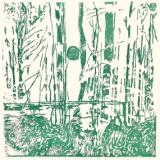
Budapest based concept label Blue Sun welcomes formerly independent local afrobeat-jazz ensemble to its catalogue with a nuanced 4 tracker EP. The release not only marks the beginning of the collaboration, but a definite new musical direction in the band’s life.
Written in a one week jam session retreat in the Hungarian countryside, and recorded at one of the highest peaks of Hungary after a year of global touring, The Garden becomes an amalgamation of the band's personal and artistic experiences. The material conveys a more jazzier approach, with complex harmonies, and an almost cinematic, dreamlike atmosphere, somewhat distancing from (but not completely forgetting) the previously emphasized, dance-oriented Afro- and Latino roots. Song for Ramon serves as the EP’s emotional climax inspired by the passing of a close friend and local underground chef pioneer.
Formed in 2019 in Budapest, Hakumba is a staple of the Hungarian festival circuit, with a growing international presence (SXSW London, SHIP, PIN Music Showcase). They’ve recently finished a tour in Australia this January.
The groove-driven ensemble blends afrobeat, jazz, and various strands of world music into a sound that is both rhythmically powerful and harmonically adventurous. With an eleven-piece lineup featuring an expansive horn section, multiple vocalists, percussion, and keys, the band moves effortlessly between dancefloor energy and more intricate, jazz-influenced musical ideas.
Like the band’s previous album, the EP was again recorded, mixed, and mastered by András Weil, the producer behind The Qualitons, the only hungarian band ever performed Live at KEXP. This continuity preserves Hakumba’s recognizable sonic identity while giving space for new colors and more complex musical ideas to emerge.
Written & performed by:
Soma Számel – drums
Endre Szép – bass
Imre Hegedűs – guitar
Zalán Bendegúz Huff – guitar, vocals
Csongor Mari – keys
Noel Nagy – percussion, vocals
Dorka Foster – flute, vocals
Kristóf Szabó – alto sax
Alpár Sikó – tenor sax
Gáspár Simon – trumpet
András Téglásy – baritone sax
Produced, recorded, mixed and mastered by Andras Weil
Artwork by Eszter Lukács
Graphic design by Péter Tóth
Manufactured by AD Records
Distributed by Rush Hour
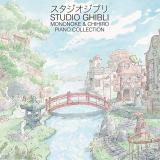
Immerse yourself once again in the worlds of Princess Mononoke and Spirited Away, the two Studio Ghibli masterpieces created by Hayao Miyazaki and set to music by Joe Hisaishi, in this new original production for solo piano!
Based on the official piano scores by the original composer of the Studio Ghibli films, Joe Hisaishi, this album is a new journey of discovery into the two beloved worlds of Hayao Miyazaki, performed by pianist Nicolas Horvath, a Steinway & Sons artist renowned as a first-rate interpretor of composers such as Philip Glass, Franz Liszt, Claude Debussy, and Eric Satie.
The album features a total of 26 tracks from the two cult films Princess Mononoke (Mononoke Hime) and Spirited Away (Sen to Chihiro no Kamikakushi), composed by Joe Hisaishi.
Vanisher, Horizon Scraper is the highly anticipated follow-up to Quadeca’s 2024 critically acclaimed mixtape Scrapyard, which received a coveted score of 9/10 from Anthony Fantano (The Needle Drop) and currently sits as the #28 highest-rated mixtape of all time on RateYourMusic.
Vanisher, Horizon Scraper is a concept album—a modern apocalyptic folklore about a man who sails into the ocean alone in pursuit of freedom and cosmic understanding, subconsciously driven by his own self-destruction.
With a runtime of nearly 70 minutes, the album takes listeners on a transformative sonic journey, blending genres such as world music, ambient, hip hop, bossa nova, folk, rock, and other experimental styles.
out of Stock
Last delivered 13 months ago available to reorder, subject to availability
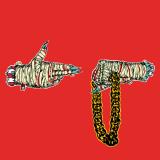
Named the #1 Hip-Hop Album of 2014 by Pitchfork, Rolling Stone, and Complex, RTJ2 is the duo’s definitive masterpiece. This LP finds GRAMMY-winner Killer Mike and El-P at their peak alongside guests Zack de la Rocha (Rage Against the Machine) and Travis Barker. Available for the first time as a 1LP pressing, this edition restores the legendary Gangsta Boo verse and includes the rare bonus track "Blockbuster Night Pt. 2" (feat. Despot & Wiki). Now back in print as a 140g LP in Gatefold Jacket. A must-have for any hip-hop collection.
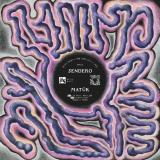
Bliss Point is proud to welcome the Bogotá born, New York based Matük to the label with Sendero, a collection dripping with life, with lust, with joy in the face of it all.
Birthed from weekend-long studio sessions in the heat of New York summer, Sendero is luscious and visceral party music, crackling with the spontaneous possibility that runs through city streets as temperatures peak, asses throw and emotions run high.
Hailing from Colombia and deeply immersed in the New York underground, Matük’s influences collide into an ecstatic tapestry on Sendero, blending the rich traditions of Afro-Caribbean musics with experimental and club sonics, long the sounds of joy as defiance from deep within the imperial core.
Many paths cross on Sendero. “Ricotta” features vocals from BRAVA, the Basque DJ and MC whose raw, infectious spirit has injected new energy into the international bass and footwork scene. She is joined by Argentinian-Colombian artist FEDRA on synth and vocals, transforming voice notes the trio sung into their phones over a long weekend of dancing into a party anthem of their own. “Lio”, the EP opener, pairs Mexico’s Renn Loop with Matük himself, trading sultry, heated frustrations over latinx futurist production. Things slow down on “De; Dioses y Pantallas”, a yearning, introspective plea to the night sky, before returning to the party with the bouncing, acid-fueled remix of “Ricotta” from Mexico City’s Soos.
Sendero is a snapshot of a scene in motion, a document of serendipity and collaboration, music made in the long tradition of enjoyment as a revolutionary act.
out of Stock
Last delivered 4 months ago available to reorder, subject to availability
Filmmaking and music-making share a common element of worldbuilding. Whole cloth, environments are raised in which a perspective can be placed; the viewer, the listener, is taken on a ride into the unknown for a time. Movie, the newest album by DMV-based duo Lifted, is like a film shot with microphones rather than cameras, using the pacing, spatialization, and semiotics of cinematic sound design to lead us through a surreal soundworld that draws as much from Foley artistry as dub, jazz, and electronic music. Musical elements and field recordings shift in and out of focus, collaged in spontaneous improvisation sessions on CDJs by the core duo of Andrew Field-Pickering (Max D, Dolo Percussion, Beautiful Swimmers) and Matt Papich (Co La, Ecstatic Sunshine). We may not see where we are, but our ears give us all the information we need.
We open on a pedal steel, played by More Eaze, but it’s been warped and slowed, gradually pitching upward until it's met by drums and electronics. Imagine the THX logo emerging onscreen. Movie is bookended by two related themes, “The Ice Chewers (Opening Credits), ” and “Midnight Snack (End Credits), ” giving the spatial experiments at the heart of the record form and focus. If there’s a broader narrative to latch onto, it’s in the transition moments, the juxtaposition of various field recordings that indicate movement of characters through space and life happening at its own pace. Tracks are defined by other thematic elements: a wandering piano in "Repossessed, " the drone of Duncan Moore’s bagpipe on “Melts Very Nasty, ” the delicate dance of Dustin Wong’s guitar over Jeremy Hyman’s drums on “Midnight Snack. ” Even with such an expansive ensemble cast, the focus remains squarely on the flow from one scene to the next.
Robert Altman’s use of sonic perspective shifting, as well as Apichatpong Weerasethakul’s intricate construction of environmental ambience and aural representations of the unknown, were both inspirational for Lifted’s focus on sound as a way to establish set and setting in film. We hear Altman especially in the way dialogue emerges and recedes: as Papich puts in a sandwich order, as Field-Pickering browses the grocery store. These techniques have been a part of the duo’s arsenal in Lifted and their own projects for years, but here, without the mandate to make something overtly musical, they are foregrounded and placed in crisp focus. Here is another way to listen to the world, to understand how time, place, and personality are communicated through sound as Lifted closes the gap between artforms. What you can’t see only drives the imagination to more brilliantly invent.
Helping to celebrate the 50th anniversary of his debut LP, Matthew & Son, released in 1967 via Deram, Third Man Records along with producer Jack White are pleased to announce two new and as of yet unreleased renditions of the earliest singles from Yusuf "Cat Stevens" Islam's vibrant and storied catalog. The project signals more of what's to come from the Blue Room Sessions series. Recorded at label headquarters this past September, the songs find new life with arrangements that are pensive and potent, sharpened by time on the road. The results are far and away a testament to the hustle and vision of all involved.
After breaking through with a gold selling debut in the late 1990’s, Harlem emcee Cam’ron quickly emerged as a leading figure in hip-hop, just as the genre was reaching mass audiences for the first time. A platinum-selling classic on Roc-A-Fella Records came a few years later, followed by the founding of the iconic collective Dipset and the release of three more seismic solo albums over the course of the 2000s. The last chapter in his historic run was 2009’s Crime Pays, which drew praise from critics while also lighting up the Billboard Charts, showcasing Cam’s sonic evolution while proving his pen game remained unmatched. More than 15 years after it’s release, this vital collection is now receiving an official vinyl pressing for the first time ever. A perpetually underrated lyricist with transcendent rhyme mechanics embedded in his leisurely flow, Cam’ron is in peak form on Crime Pays, effortlessly walking listeners through the details of his fascinating life and times. With suprisingly modern production supplied by AraabMuzik, I.N.F.O., Skitzo, and more, this memorable album is an important chapter in the story of a truly essential artist.
Produced by Manilow and longtime collaborator Michael Lloyd, What A Time brings together an eclectic and cross-generational group of collaborators, including Kenneth “Babyface” Edmonds, nine-time GRAMMY® winner Dave Cobb, and longtime co-writers Bruce Sussman and Adrienne Anderson. The result is a collection that pairs Manilow’s signature melodic grandeur with fresh textures and stylistic turns — from classic, string-swept torch songs to groove-driven R&B flourishes, heartland rock touches, and gospel-inspired crescendos.
PAUL WALKER: Paul Walker is the debut studio album by American post-hardcore band, Drug Church. It features 10 tracks, including "Thinking About Joining Drug Church", "Reading Youtube Comments", and "Clifton Country". SWELL: Drug Church, monsters of alt-rock, have weathered a year of dope shows and fan adoration since the release of their seminal punk masterpiece Paul Walker. Now, the chickens have come home to roost. The band has dedicated itself fully to a true ‘sophomore slump’ EP full of indulgent missteps and overreaching stabs at pop crossover. All that being told, they’re “the sickest band ever” has yielded real results. On Swell, Drug Church push their idiosyncratic blend of punk and alt to new heights of sick. Recorded with J. Robbins (every band, ever) in a big, professional studio, Swell delivers the biggest Drug Church sound to date. It’s pretty much the life-changer you assumed it would be. This new repress of the album includes remastered tracks. HIT YOUR HEAD: Drug Church is the logical limit of heavy alt. Like the Bee Girl from the Blind Melon video pitting hard for Helmet. Hit Your Head, recorded with Jay Maas, fully embraces the futureless aesthetic the band hinted at on previous records. This is worst-body-on-the-beach music. These are fired-from-your-window-tinting-job songs. An album for people on probation for crimes that aren't even cool. Big riffs and petty concerns.
PAUL WALKER: Paul Walker is the debut studio album by American post-hardcore band, Drug Church. It features 10 tracks, including "Thinking About Joining Drug Church", "Reading Youtube Comments", and "Clifton Country". SWELL: Drug Church, monsters of alt-rock, have weathered a year of dope shows and fan adoration since the release of their seminal punk masterpiece Paul Walker. Now, the chickens have come home to roost. The band has dedicated itself fully to a true ‘sophomore slump’ EP full of indulgent missteps and overreaching stabs at pop crossover. All that being told, they’re “the sickest band ever” has yielded real results. On Swell, Drug Church push their idiosyncratic blend of punk and alt to new heights of sick. Recorded with J. Robbins (every band, ever) in a big, professional studio, Swell delivers the biggest Drug Church sound to date. It’s pretty much the life-changer you assumed it would be. This new repress of the album includes remastered tracks. HIT YOUR HEAD: Drug Church is the logical limit of heavy alt. Like the Bee Girl from the Blind Melon video pitting hard for Helmet. Hit Your Head, recorded with Jay Maas, fully embraces the futureless aesthetic the band hinted at on previous records. This is worst-body-on-the-beach music. These are fired-from-your-window-tinting-job songs. An album for people on probation for crimes that aren't even cool. Big riffs and petty concerns.
PAUL WALKER: Paul Walker is the debut studio album by American post-hardcore band, Drug Church. It features 10 tracks, including "Thinking About Joining Drug Church", "Reading Youtube Comments", and "Clifton Country". SWELL: Drug Church, monsters of alt-rock, have weathered a year of dope shows and fan adoration since the release of their seminal punk masterpiece Paul Walker. Now, the chickens have come home to roost. The band has dedicated itself fully to a true ‘sophomore slump’ EP full of indulgent missteps and overreaching stabs at pop crossover. All that being told, they’re “the sickest band ever” has yielded real results. On Swell, Drug Church push their idiosyncratic blend of punk and alt to new heights of sick. Recorded with J. Robbins (every band, ever) in a big, professional studio, Swell delivers the biggest Drug Church sound to date. It’s pretty much the life-changer you assumed it would be. This new repress of the album includes remastered tracks. HIT YOUR HEAD: Drug Church is the logical limit of heavy alt. Like the Bee Girl from the Blind Melon video pitting hard for Helmet. Hit Your Head, recorded with Jay Maas, fully embraces the futureless aesthetic the band hinted at on previous records. This is worst-body-on-the-beach music. These are fired-from-your-window-tinting-job songs. An album for people on probation for crimes that aren't even cool. Big riffs and petty concerns.
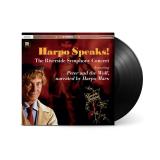
On March 20, 1964, legendary American comedian and harpist Harpo Marx joined the Riverside Symphony on stage at a benefit for the Southern California organization. By then, the comic had been in semi-retirement, and after a series of heart attacks in 1961, he was told to stop working altogether. But to a lifelong performer, nothing compared to the feeling of being on stage. Benefit shows, he slyly argued, were not technically work, since he wasn’t getting paid. For the next few years, Marx’s wife and doctors grudgingly went along with the pitch. Harpo Speaks! The Riverside Symphony Concert, out June 5 from Ramseur Records, captures a considerably remarkable, one-of-a-kind performance: The silent Marx Brother, the one whose trademark persona led many audiences to believe he was actually mute, spoke. As Harpo Marx’s first, and last—recorded just six months before his death—live album, Harpo Speaks! places listeners in the room, immersed in the swell of the Riverside Orchestra as Marx performs alongside the symphony and leads them in a narration of Peter and the Wolf. In another unusual move for Marx, he allowed the recording of the show for posterity, though the tapes seemingly disappeared after his death. Harpo Speaks! is the result of heroic archival work. Recently discovered by longtime Marx Brother archivist John Tefteller, he and Marx biographer and expert Robert Bader set out to restore the long lost recording. “The fact that we have a recording is a miracle,” says Bader. “It was not the most professionally recorded thing.
It was very haphazard. The work that was done to rehabilitate it is stunning. It’s as if you’ve found something covered with layers of mold and dirt, got it all cleaned off, and now are able to see something brand new underneath it.” Across the recording’s near-43 minute runtime, Marx, alongside the Riverside Symphony, takes the cheering audience through the delightfully lighthearted “Toy Symphony” and carries them into the softly romantic “Moon Medley,” (a medley of “Fly Me to the Moon” and “How High the Moon,” arranged by his son Bill, alongside his own composition, “Moon Tune”) and a rare instrumental performance of his composition “Guardian Angels.” And then the concert’s true highlight: the near 22-minute long riveting narration of Peter and the Wolf. For the first time, Harpo reveals his voice: deep, yet soft-spoken, refined, yet still retaining the slightest hint of his New York City origin. And, in speaking, he entertained, getting laughs not just for his physical gags, but for the storytelling itself: the dramatic inflections in moments of suspense, the arch mischievousness, and tongue-in-cheek references to Goldwater, Rockefeller, and Nixon.
The Scottish singer Donovan embraced the folk-music boom during the sixties that swept both England and America.
In 1965 Fairytale was released, his second studio album which planted the seed of what was yet to come. It foreshadowed the jazzy feel and descriptions of life in urban London that Donovan would continue to explore over the next two years. Fairytale features his hits “Colours”, “Universal Soldier” and “Jersey Thursday”.
Fairytale is available as a limited edition of 750 individually numbered copies on transparent vinyl.
In 1979, the Soviet label Melodiya released a record that immediately stood apart from most Soviet jazz of its time and perhaps for that very reason never became widely known. Oriental Suite by Oleg Gotskosik Quintet is a rare example of jazz, Eastern musical tradition, and compositional thinking coming together not as an exotic stylization but as a fully formed artistic statement.
This is not “Oriental colour” used as decoration, nor folklore treated as an ornament. Oriental Suite grows from within another musical tradition, with its monody, modal logic, slow unfolding of form, and focus on inner states rather than outward effect. The music is calm and concentrated. It does not try to impress, but gradually draws the listener into its own space.
Oleg Gotskozik was born in Tashkent in 1951, a city where Eastern music was part of everyday life rather than something distant or exotic. That may explain why his engagement with traditional material sounds so natural. He does not quote or stylize; he thinks in the same musical categories. By temperament, he was closer to a composer than to a jazz musician in the conventional sense. For him, jazz was not a style but a way of working with form and improvisation.There is no standard “theme and solos” logic in Oriental Suite. Improvisation is woven into the fabric of the music itself and unfolds in the same way as in oral traditions, gradually, with rising tension and a clear sense of arrival. Individual sections refer to traditional Uzbek genres such as lullabies, lyrical songs, and funeral laments, but these are not genre sketches. They are states of being. The music unfolds slowly, avoiding familiar harmonic drama and relying instead on modal scales and subtle internal movement.
A special role is played by trumpeter Yuri Parfyonov. His approach, with delayed vibrato, micro-glissandi, and melismatic phrasing, sounded unexpected at the end of the 1970s and still feels remarkably fresh today. This is not expressive jazz virtuosity but a focused, almost meditative voice, where improvisation becomes a form of inner speech.
It is also important to note that the original recording was not without technical flaws. Like many Soviet jazz releases of the time, Oriental Suite was captured under far from ideal conditions, and the master contained audible imperfections that were never part of the music itself. For this edition, the restoration was approached with great care and respect, working through the recording moment by moment to remove unwanted artifacts while preserving the character and atmosphere of the original. The aim was simple: to make sure nothing stands in the way of fully experiencing the music.
In the early 1980s, Oleg Gotskozik left the Soviet Union, and after that his name virtually disappeared from Soviet music journalism and literature. There were no official bans or public statements. He was simply no longer mentioned. Oriental Suite continued to exist on its own, without an author and without context. The record never entered the canon, received no continuation, and was never officially reissued. It seemed to fall out of time.
The original vinyl pressing was released in a run of around 32,000 copies, but most of them remained within the republic and never reached wide circulation. Today, original copies are hard to find and have long become objects of interest for collectors. There have been no official reissues, only attempts that never went beyond test pressings.
Today, Oriental Suite sounds surprisingly contemporary. It is music that can be described as deep ethno-jazz and even, in a certain sense, spiritual jazz. There is no exoticism here, no decorative borrowing, only a complete immersion in another musical way of thinking. It does not require explanations and does not need to be justified by its time.
This is not a forgotten curiosity revived for collectors’ sake. It is music that simply waited for the moment when it could be heard without ideological filters or genre expectations. Now it is returning quietly, without noise or hype, but with the clear sense that this is not an artifact of an era, but a living and genuinely rare artistic statement.
Maqom Soul Launches Its Reissue Series with a Cult Classic from Uyghur Ensemble “Yashlik”.
Maqom Soul, a newly founded Uzbek label dedicated to reviving rare and overlooked music from Central Asia, proudly announces its debut release: a vinyl reissue of the seminal album by the Uyghur vocal-instrumental ensemble Yashlik, originally recorded and released in 1978.
Founded in 1973 as part of the Uyghur Music and Drama Theater in Almaty, Yashlik (which translates from Uyghur as Youth) quickly emerged as a groundbreaking force in the regional music scene. Though born out of a theatrical setting, the group transcended those boundaries with a unique blend of Uyghur folk melodies, jazz influences, Soviet estrada, and traces of psychedelic rock.
The ensemble’s founder and artistic director was Murat Akhmadiev, a prominent figure in both the musical and cultural-political life of Kazakhstan. The album being reissued is one of the rare recordings where synthesizers, electric guitars, and drums appear side by side with traditional Uyghur instruments. More than a musical experiment, it stands as a cultural document of its era a creative attempt to preserve identity through the language of modern sound. Originally recorded at the Melodiya studios in the late 1970s, the album’s initial pressing was distributed only within the Soviet Union. Now, over four decades later, listeners finally have the opportunity to experience this music in a lovingly remastered and reimagined edition.
According to the team at Maqom Soul, beginning the label’s journey with Yashlik was a conscious and symbolic choice: “This was a group that embodied youthful energy, deep respect for tradition, and a genuine thirst for innovation. Their music once played at festivals and on television, and then quietly disappeared. We’re bringing it back — not out of nostalgia, but as a living piece of art.”
Maqom Soul is committed not just to reissuing rare records but to restoring the presence of culturally significant music that helped shape the sonic identity of Central Asia. Forgotten music is also part of the future. Maqom Soul brings it back to the stage.
British punk trio GRADE 2 return swinging with Talk About It, their third and most blisteringly realized album, out on Tim Armstrong"s storied Hellcat Records. It"s an 11-track surge that fuses classic punk"s bare-knuckle conviction with the disillusionment, identity crises, and quiet rage of Gen-Z-delivered by three Isle of Wight lifers who"ve been sharpening their edge since they fifirst bashed out covers at 14. Jack Chatfifield, Jacob Hull, and Sid Ryan have spent thirteen years turning raw instinct into a signature roar, and Talk About It captures them at full velocity. Their blistering track, "Cut Throat," distills their ethos: fifierce guitars, punishing rhythm, and a narra-tive of clawing forward while the world seems hellbent on pulling you under. "It"s about a world that takes more than it gives," the band says-and that tension becomes fuel, a rallying cry for anyone navigating a landscape that feels colder by the day. With Talk About It, GRADE 2 don"t just revive punk"s urgency-they embody it.
2026 repress of classic fourth album by U.K. Psychobilly legends DEMENTED ARE GO! Originally released in 1991 on FURY RECORDS / U.K.! Mark 'Sparky' Phillips - vocals * Antanoid 'Horseman' Thomas - drums * Lex 'Luther Boy Wonder' - Guitar * Billy 'Space Cadet' Munster - Slap bass Initially released by the legendary rockabilly / psychobilly label Fury Records in 1991, DEMENTED ARE GO's "Orgasmic Nightmare" is brought back to life again for all you cellar beasts and demon angels! Twelve tracks of 100% psychobilly mayhem for all you stompers and wreckers out there! Classic (black vinyl here)!
2026 repress of classic fourth album by U.K. Psychobilly legends DEMENTED ARE GO! Originally released in 1991 on FURY RECORDS / U.K.! Mark 'Sparky' Phillips - vocals * Antanoid 'Horseman' Thomas - drums * Lex 'Luther Boy Wonder' - Guitar * Billy 'Space Cadet' Munster - Slap bass Initially released by the legendary rockabilly / psychobilly label Fury Records in 1991, DEMENTED ARE GO's "Orgasmic Nightmare" is brought back to life again for all you cellar beasts and demon angels! Twelve tracks of 100% psychobilly mayhem for all you stompers and wreckers out there! Classic (black vinyl here)!
Aus der fruchtbaren skandinavischen Post-Rock-Landschaft hervorgegangen, haben sich Oh Hiroshima einen Ruf dafür erarbeitet, Introspektion in einen weiten, cineastischen Klang zu verwandeln. Mit ,And the Dead Tree Gives No Shelter" setzen Oh Hiroshima ihr Streben fort, das Gleichgewicht zwischen Verletzlichkeit und Kraft zu verfeinern. Im Kern des Sounds von Oh Hiroshima liegt ein filigranes Wechselspiel zwischen Zurückhaltung und Entladung. Ihre Kompositionen bauen behutsam Spannung auf und lassen jede Ebene organisch entfalten: Klingende Gitarren, ferne Nachklänge und minimale rhythmische Impulse - die scheinbar schwerelos in der Luft schweben - bilden einen Kontrast zu jener wuchtigen Kraft, die sie entfesseln können. Klare, schimmernde Gitarrentöne breiten sich wellenartig durch dichten Hall und subtile Delays aus, während sich einzelne Linien oft in sanftem Kontrapunkt miteinander verflechten. Während sich diese Ebenen schichten, intensivieren sie sich allmählich und steuern auf jene Momente zu, in denen Verzerrung und Lautstärke die einst fragile Atmosphäre in etwas Immenses und Kathartisches verwandeln.Wenn die Musik ihre emotionalen Höhepunkte erreicht, tritt die Perkussion zwar bestimmender hervor, bleibt dabei jedoch behutsam in die Gesamtatmosphäre eingebettet. Oh Hiroshima beweisen beständig ein wachsendes Selbstvertrauen darin, die Grenzen ihres Sounds auszuloten. Durch die Verschmelzung von Harmonien, einer immersiven Produktion und einem tief intuitiven Gespür für das richtige Tempo haben Oh Hiroshima ein Album geschaffen, das von Intimität durchwoben ist und sich zugleich weit und raumgreifend anfühlt. Für Freunde von Alcest, Mogwai, God Is an Astronaut. CD, klassisch schwarzes und farbiges (limitiertes) Vinyl erhältlich.
Aus der fruchtbaren skandinavischen Post-Rock-Landschaft hervorgegangen, haben sich Oh Hiroshima einen Ruf dafür erarbeitet, Introspektion in einen weiten, cineastischen Klang zu verwandeln. Mit ,And the Dead Tree Gives No Shelter" setzen Oh Hiroshima ihr Streben fort, das Gleichgewicht zwischen Verletzlichkeit und Kraft zu verfeinern. Im Kern des Sounds von Oh Hiroshima liegt ein filigranes Wechselspiel zwischen Zurückhaltung und Entladung. Ihre Kompositionen bauen behutsam Spannung auf und lassen jede Ebene organisch entfalten: Klingende Gitarren, ferne Nachklänge und minimale rhythmische Impulse - die scheinbar schwerelos in der Luft schweben - bilden einen Kontrast zu jener wuchtigen Kraft, die sie entfesseln können. Klare, schimmernde Gitarrentöne breiten sich wellenartig durch dichten Hall und subtile Delays aus, während sich einzelne Linien oft in sanftem Kontrapunkt miteinander verflechten. Während sich diese Ebenen schichten, intensivieren sie sich allmählich und steuern auf jene Momente zu, in denen Verzerrung und Lautstärke die einst fragile Atmosphäre in etwas Immenses und Kathartisches verwandeln.Wenn die Musik ihre emotionalen Höhepunkte erreicht, tritt die Perkussion zwar bestimmender hervor, bleibt dabei jedoch behutsam in die Gesamtatmosphäre eingebettet. Oh Hiroshima beweisen beständig ein wachsendes Selbstvertrauen darin, die Grenzen ihres Sounds auszuloten. Durch die Verschmelzung von Harmonien, einer immersiven Produktion und einem tief intuitiven Gespür für das richtige Tempo haben Oh Hiroshima ein Album geschaffen, das von Intimität durchwoben ist und sich zugleich weit und raumgreifend anfühlt. Für Freunde von Alcest, Mogwai, God Is an Astronaut. CD, klassisch schwarzes und farbiges (limitiertes) Vinyl erhältlich.
Under the mentorship and executive production of Grammy-winning hip-hop producer 9th Wonder (Jay-Z, Destiny's Child, Kendrick Lamar) come North Carolina's fastest-rising hip-hop duo! THE ZENITH is produced entirely by 9th's daughter JADA and includes 15 tracks of lyrical raps from Fayetteville's own S14H over JADA's smooth sampling.
With features from established and revered hip-hop acts such as Murs and Swank & King Draft as well as from fellow members of THE COLLECTIVE, KMac, Carri Starr, and Iris Moon, THE ZENITH is living proof that the soul of lyrical hip-hop lives on in the next generation through artists like JADA X S14H.
A founding member and keyboardist of acclaimed jazz
groupBADBADNOTGOOD,Tavares has gone from being an in-demand
producer with some of the biggest names in music to a songwriter and
artist in his own right, having touched corners of the globe and cemented
twoGRAMMY Awardsand five nominations
Between collaborations with Kendrick Lamar , Ghostface Killah , MF DOOM , Tyler
the Creator , Kali Uchis , Tavares has also played with Frank Ocean ,
soundtracked Virgil Alboh 's landmark S/ S 2019 runway show for Louis Vuitton,
and penned songs for Post Malone , Rosalia , Travis Scott , Kodak Black , Justin
Beiber,Camilla Cabello,Jack Harlow amongst others.
With a sound that fuses his nostalgia for the golden era of blogs with the
eclecticism of the late 2000s, the combination of the internet crossed with an
isolated suburban upbringing has laid the groundwork for Matty's genre-bending
artistry. Embracing a raw creative output with an aversion to following the norms
of the industry reverberates across his discography,Matty has found success in
previous releases including 'Clear' and 'I'll Gladly Place Myself Below', which push
the boundaries of sonic creativity and knowledge.
Now with his upcoming album POPS , Matty relinquishes his lowkey and
understated style for something larger than life, while maintaining a level of
honesty and openness that has defined his past work to make for a dynamic
release that constellates around music's greatest subject - love.
The album is a powerful reaffirmation of human creativity: "My music has always been about connection, bringing enduring old stories into conversation with contemporary life," Portman says. "This album is a collective, entirely human-made effort, and it's richer because of it." Renowned for her luminous songwriting and distinctive voice in contemporary folk, Portman steps into bold new territory with an album that charts a heroine's midlife journey through dark woods in search of wonder. Drawing on ballads and folktales, Dominion of Spells explores themes of burnout, misogyny, motherhood, miscarriage and personal transformation, weaving lived experience with mythic imagery and traditional folk narratives. The title track, Dominion of Spells , reclaims a 17th- century phrase once used to diagnose women as "disordered", drawing on the myth of the wandering womb and the long history of medical misogyny. Portman transforms these ideas into a vision of a freer, fairer realm where women's bodies are understood rather than feared. The first single, Turn Again , is a tender meditation on parenthood, inspired by her young son's imaginative shapeshifting games and echoing the Tam Lin ballad, where steadfast love breaks a powerful spell. Elsewhere, the album explores women's right to move safely after dark, genderswapped retellings of heroic quests, miscarriage, phone addiction and the restorative power of creative practice.
* A highly influential and sought-after benchmark dub LP, originally released on the Jah Works label in 1995.
* Produced by the late Rej Forte AKA Jah Rej, who was one of the most creative minds from the UK reggae and dub scene from the last 40 years.
* The album features recognisable tracks from the Jah Works cannon, but dubbed into oblivion with special effects galore. All tracks played by humans, with the exception of a drum machine.
* Dub Crusaders feature members of Revolutionary Dub Warriors (On-U Sound, Ariwa), and Radical Dance Faction.
* Recorded at Channel One under the supervision of Martin Campbell, whose vocals feature twice on this set.
out of Stock
Last delivered 2 days ago available to reorder, subject to availability
This tune was destined to be the one when Adam and SG Lewis met in Los Angeles in 2023. They hit it off immediately—why wait to collaborate on something when you can use the time in between Coachella weekends to go to a studio in LA together? That’s where „Be The One“ came to life. Refined and road-tested in the months that followed, it’s finally seeing the light of day as a record that thrives on both artists’ mutual penchant for captivating hooks and heartwarming emotional depth.
Starting in 2021 the critically acclaimed Next Wave Acid Punx series has seen Luca Venezia, aka Curses, celebrate the music that has shaped both his life and career. Across the first two compilations Luca took usfrom the industrial and post-punk sounds of the late 70s, through the emergence of EBM, new beat and freestyle in the 1980s and onto the music he both makes and plays himself in clubs today. Bringing the series to a close Next Wave Acid Punx TROIS sees the Berlin-based musician and DJ return full circle, this time exploring the sounds that first initiated him into Brooklyn's rave scene and the music that, in some way, continues to embody its eclectic spirit today.
Spread across three 2LPs and 3CDs Next Wave Acid Punx TROIS captures a moment whose influence can still be heard reverberating around clubland today. With the nascent rave scene obliterating boundaries, this was a moment where the darker, harder industrial electronic sounds of the mid 1980s were crashing headfirst into the ecstatic wave that was washing over clubland creating thrilling juxtapositions. Whether in the clubs and warehouses of New York, London, Frankfurt, Valencia and beyond, electronic music would never be the same again as countless new genres we take for granted today were born from the chaos and energy that had been unleashed.
Featuring 46 hard-to-find, new and exclusive tracks, Next Wave Acid Punx TROIS both documents that fertile period and shows how, despite rumours to the contrary, that early anarchic spirit can still be found today. From the Detroit Techno of Model 500 to Nitzer Ebb's EBM and the proto-Trance of Age of Love and onto brand new tracks from some of today's best producers such as Zaatar, Italo Deviance and Leona Jacewska, this compilation closes out a series that has to date revelled in exploring the darker corners of clubland in uplifting style.
This is Chapter 1.
out of Stock
Last delivered 10 days ago available to reorder, subject to availability
Starting in 2021 the critically acclaimed Next Wave Acid Punx series has seen Luca Venezia, aka Curses, celebrate the music that has shaped both his life and career. Across the first two compilations Luca took us from theindustrial and post-punk sounds of the late 70s, through the emergence of EBM, new beat and freestyle in the 1980s and onto the music he both makes and plays himself in clubs today. Bringing the series to a close Next Wave Acid Punx TROIS sees the Berlin-based musician and DJ return full circle, this time exploring the sounds that first initiated him into Brooklyn's rave scene and the music that, in some way, continues to embody its eclectic spirit today.
Spread across three 2LPs and 3CDs Next Wave Acid Punx TROIS captures a moment whose influence can still be heard reverberating around clubland today. With the nascent rave scene obliterating boundaries, this was a moment where the darker, harder industrial electronic sounds of the mid 1980s were crashing headfirst into the ecstatic wave that was washing over clubland creating thrilling juxtapositions. Whether in the clubs and warehouses of New York, London, Frankfurt, Valencia and beyond, electronic music would never be the same again as countless new genres we take for granted today were born from the chaos and energy that had been unleashed.
Featuring 46 hard-to-find, new and exclusive tracks, Next Wave Acid Punx TROIS both documents that fertile period and shows how, despite rumours to the contrary, that early anarchic spirit can still be found today. From the Detroit Techno of Model 500 to Nitzer Ebb's EBM and the proto-Trance of Age of Love and onto brand new tracks from some of today's best producers such as Zaatar, Italo Deviance and Leona Jacewska, this compilation closes out a series that has to date revelled in exploring the darker corners of clubland in uplifting style.
Starting in 2021 the critically acclaimed Next Wave Acid Punx series has seen Luca Venezia, aka Curses, celebrate the music that has shaped both his life and career. Across the first two compilations Luca took us from the industrial and post-punk sounds of the late 70s,through the emergence of EBM, new beat and freestyle in the 1980s and onto the music he both makes and plays himself in clubs today. Bringing the series to a close Next Wave Acid Punx TROIS sees the Berlin-based musician and DJ return full circle, this time exploring the sounds that first initiated him into Brooklyn's rave scene and the music that, in some way, continues to embody its eclectic spirit today.
Spread across three 2LPs and 3CDs Next Wave Acid Punx TROIS captures a moment whose influence can still be heard reverberating around clubland today. With the nascent rave scene obliterating boundaries, this was a moment where the darker, harder industrial electronic sounds of the mid 1980s were crashing headfirst into the ecstatic wave that was washing over clubland creating thrilling juxtapositions. Whether in the clubs and warehouses of New York, London, Frankfurt, Valencia and beyond, electronic music would never be the same again as countless new genres we take for granted today were born from the chaos and energy that had been unleashed.
Featuring 46 hard-to-find, new and exclusive tracks, Next Wave Acid Punx TROIS both documents that fertile period and shows how, despite rumours to the contrary, that early anarchic spirit can still be found today. From the Detroit Techno of Model 500 to Nitzer Ebb's EBM and the proto-Trance of Age of Love and onto brand new tracks from some of today's best producers such as Zaatar, Italo Deviance and Leona Jacewska, this compilation closes out a series that has to date revelled in exploring the darker corners of clubland in uplifting style.
Fuse leans further into its proposed aesthetic of biting club tracks with a brand new release by Cirkle. ‘Infinity Drift’ balances powerful sound system sound design with lush ambiance, creating standout moments on a dancefloor with a taste of nostalgia. These tracks explore the richness in themes that techno can have when made by someone who’s spent years meticulously crafting it. ‘Skyland’ asserts itself first with impressive pace. Swift chord stabs open and close to create waves of excitement and craze in the track while percussion shuffles along to add impact; Cirkle is an artist of all rooms and dimensions. Shrill sound design cuts through the stereo field creating a wormhole in the middle of rhythmic determination. Tension balance and anticipation are his specialty and every transition whips his dispersed elements into singularity in the EP, specifically the title track. A truly musical piece that embraces the crowd with vintage warmth, ‘Infinity Drift’ tones down the dissonance in exchange for something closer to astral exploration. These larger than life themes are never lost on dancers and serve to unify the dancefloor into an organism instead of pushing sound system violence. This is a theme that is omnipresent in Cirkle’s music and carried through into ‘Stimulus’. Here, the Greek producer dips into the hypnotic bordering on psychotic, stretching arpeggios and delays across drum transitions and time. The dimension of ‘Stimulus’ matches the preceding tracks with ease, but stands out in its effect, rolling a powerful synth through reliably tuned percussion. For the final track, ‘Impulse’ sees Cirkle prioritizing the importance of drums. Pressing hard on the drive of the kick, rides and filtered claps squeeze their way out of the low end to create an infectious groove. Stabs of ethereal pads envelope the rest of the EP, leaving space for the rest to breathe. Bumping along the way, Cirkle lands the EP with class, cementing himself further as an artist whose knowledge of the dancefloor creates a singular experience.
Given the Balearic life that Leeds ex-pat Nightmares on Wax now leads in Ibiza, we have to admit we did not see this coming: the downtempo Warp legend returning to his early 90s electronic roots. He does so with a new series of collaborations with young talents on 20/20 Vision, starting with Marlon Lopez. 'Patang' is slow, snaking dub with glitchy synth patches and melodic bass. 'Cancel Dat!' has a crunchy feel next to the bleepy synths with a leggy, loopy low end and tech house snap. Wulf's Jam 4 Jamie is a deeper, more twisted version and label head RL's Get It Together remix cuts up the groove and brings a spoken word that reframes the cut as soulful I:Cube style jam.
out of Stock
Last delivered 4 months ago available to reorder, subject to availability
Besides his work as a painter, filmmaker and set designer, Philippe Lamiral Poirier (1951-2025) played guitar and saxophone in the group Kat Onoma, which he co-founded with Rodolphe Burger.
His fifth studio album combines his written texts with music composed by his son, Roméo Poirier, whom he considered to be cut from the same musical cloth as he was. It also confirms what has emerged from his previous albums, namely songs more spoken than sung and whose words evoke images, thus the album’s title – Images parlées.
A book of his paintings, Images traversées, will be published simultaneously with the album.
In this continual back and forth movement between text and image, music has always been present – sensitive and abstract, expressing nothing other than itself. It hollows out a place to tell us where we are. It is life without delay.
Roméo Poirier is working in the field of electronic music, focusing on heavy processing of samples and digital collage. He released albums on the London based record label Kit Records (Plage Arrière), the mancunian record label Sferic (Hotel Nota), and Jan Jelinek’s own imprint Faitiche (Living Room and Off The Record).
out of Stock
Last delivered 4 months ago available to reorder, subject to availability
The 1970s were Marion Brown’s most searching decade, a period during which he sought to move beyond the free jazz of the previous era and find more personal approaches to structuring improvisation and composition. After leaving New York for Europe in 1967, Brown began reshaping his music into what he described as “a more deliberate kind of music that had more structure to it,” pacing it so that moods and modes could develop over time. Albums such as In Sommerhausen, Afternoon of a Georgia Faun, Geechee Recollections, and Sweet Earth Flying trace this evolution: rhythmic structures moved to the foreground, harmony receded, and composition became a matter of orchestrating interlocking rhythmic parts as one would polyphonic lines.
Released in 1976, Awofofora is an overlooked but crucial entry in that sequence. At the time, its use of funk and reggae beats, electric guitars, and grooves drawn from contemporary Black popular music led some to misread it as a jazz-rock detour. In retrospect, it is entirely consistent with Brown’s methodology. As he admired in the Art Ensemble of Chicago, the stimulus comes from within the community. Here Brown filters Afro-Caribbean rhythms and funk through his own sensibility, abstracting their structural qualities rather than adopting surface style.
“La Placita,” making its first recorded appearance, layers distinct rhythmic phrases in a manner reminiscent of African drum ensembles, over which Brown and trumpeter Ambrose Jackson spin extended improvisations. The standard “Flamingo” is reshaped through diasporic rhythm and lyrical soloing, while “Pepi’s Tempo” and “Mangoes” harness crisp funk and reggae grooves to generate what Brown called a “manifestation of community” through collective improvisation. Even the overdubbed solo feature “And Then They Danced” reflects his structural thinking, ingeniously re-voicing a duet composition for two alto saxophones performed by one player.
This was the only recording by a short-lived band that briefly polarized audiences during festival appearances in 1976. Yet Brown consistently sought unity across change: different sounds, same principles — rhythm as structure, melody as architecture, collective improvisation, and above all, the primacy of tone. Awofofora stands not as a departure, but as a vivid synthesis of the elements he had been refining since the late 1960s, its grooves and golden alto lines conveying a sound drawn, in his words, “from life and from the world of experience.”
out of Stock
Last delivered 4 months ago available to reorder, subject to availability
A defining transmission in the history of Skylax Records. Originally released across different moments of the Skylax catalogue, these recordings are now assembled as the final chapter of the Skylax House Explosion series — a project exploring the architecture, memory and survival mechanisms embedded within house music culture. The record opens with Move D’s “Outer Rim 64”, originally released in 2018 as part of the Skylax House Explosion narrative. Suspended between motion and distance, the track establishes the conceptual perimeter of this final chapter — a space where rhythm no longer functions only as propulsion, but as orientation. Here the listener stands at the outer edge of the dancefloor’s architecture, where structure persists even as its original social conditions begin to disappear. The sequence continues with Hardrock Striker’s “Motorik Life (DJ Sprinkles Dub)”, originally released in 2011. Rather than operating as a conventional remix, the Dub reinforces the motorik continuum of the original composition, transforming repetition into endurance. DJ Sprinkles preserves the infrastructural skeleton of the dancefloor — its capacity to sustain bodies through duration alone, without narrative resolution or emotional release. The record culminates with “Motorik Life (DJ Sprinkles Mountain Of Despair Remix)”, one of the most politically explicit works ever associated with Skylax Records. Through the relentless repetition of the phrase “mountain of despair,” Terre Thaemlitz dismantles the traditional function of dance music, transforming remix culture into structural critique. Referencing Martin Luther King Jr.’s famous metaphor, the remix removes the promise of redemption and leaves only the architecture of struggle. The dancefloor is no longer presented as escape, but as a temporary condition of survival. Together these recordings reveal house music’s true function: not to resolve despair, but to create temporary conditions in which bodies can continue to exist despite it.
AFTER THE DANCEFLOOR
you cannot preserve a dancefloor
by archiving its sound
because the dancefloor was never sound
it was bodies
finding temporary protection
inside systems designed to erase them
house music was never a genre
it was a survival strategy
when the lights disappeared
the structures remained
and so did we
Very limited numbers, orders will need to be confirmed.
For his new album, Irreparable Parables, Andrew Wasylyk felt a strong desire to write a set of songs featuring an element hitherto rare in his work: the human voice. Equally strong was the conviction that he did not want to sing them himself.
The Scottish multi-instrumentalist and composer set about assembling a group of guest singers, sending out the songs to wherever they were in the world. The vocals were recorded remotely and then, like migrating birds, winged their way back to Scotland. The result is an album of great beauty which, perhaps preeminently in Wasylyk’s work, expresses the vulnerability and resilience of the human spirit.
Six singers appear on the record, represented by six songbirds illustrated on the sleeve by Clay Pipe Music’s Frances Castle. The cuckoo is a nod to Belle and Sebastian’s 2004 single ‘I’m A Cuckoo’, that band’s Stuart Murdoch being the first voice you hear on the new album. When the vocal for ‘Private Symphony #2’ arrived, says Wasylyk, “it was everything that I was looking for and more. But this is Stuart Murdoch. Of course he’s going to make something incredibly beautiful and thoughtful.”
The song lyrics were, for the most part, written by the singers. The music is Wasylyk’s creation. He navigates a sound world that lies somewhere beyond the borders of classical and jazz, ambient and abstract. It is difficult to describe, but easy to understand, which is to say to feel. That is the way Wasylyk’s work is experienced: as a feeling. It takes you back to childhood, perhaps, to feelings of comfort and safety, or to memories of walks at sunrise and sunset, or to the way a shadow falls on a particular field in a particular place at a particular time in your life. This is consoling music. That is why, though pretty, it is not merely pretty. These are songs to shore up the soul.
Wasylyk writes in a room, in his native Dundee, full of “half broken” instruments. He picks these up, plays a little, seeking an idea, a feeling, a door that lies ajar. The musical palette of Irreparable Parables includes brass and woodwind, a six-piece string section, guitar, bass, drums, vibraphone, Mellotron, Fender Rhodes, tape loops, synthesisers and percussion. The strings were arranged by the cellist Pete Harvey, a long-term collaborator.
Among the other guest vocalists are Gruff Rhys of the Super Furry Animals, Saya Ueno from Japan’s Tenniscoats and Peter Brewis from Field Music. Wasylyk himself takes the lead vocal on the title track, though a throat infection and touch of pitch-shifting have altered his singing in a way that even he, having fallen out of love with his own voice, finds acceptable.
The heart of the record can, arguably, be found in two tracks, ‘Love Is A Life That Lasts Forever’ and ‘Spectators In The Absence of God’, sung respectively by Molly Linen and Kathryn Joseph. The former, bright with trumpets, was inspired by the writing of Derek Jarman. “I was feeling deeply upset about the world and wanted to try and write some- thing that was obviously hopeful,” Wasylyk says.
‘Spectators …’ offers an emotional counterpoint. It is an “apocalyptic hymn” that seems to grapple with watching human suffering from afar, too distant to be at physical risk, but experiencing the psychological wounding, and feelings of helplessness, even complicity, that come with constant awareness of other people’s pain. “Kathryn’s a pal, I love her dearly, and she’s a brilliant artist who really feels what she writes,” Wasylyk says. “The cracked tenderness of her voice is spellbinding.”
The album closes with an instrumental piece, ‘Soul Enters The Ocean Sun Climbs Out Of The Sea’, all piano and strings, that offers a sense of resolution and ascension. A good moment, too, for Wasylyk to reflect upon the artistic companionship that he enjoyed while making this record – the songbirds that answered his call: “These humans are incredible at what they do. I’m deeply grateful and feel so lucky. It blows my mind.”
"All the tracks on this release come from a live concert at Sharmanka, a beautiful and unique museum of kinetic sculptures in Glasgow, and throughout the record, the sounds of the sculptures moving and emitting noises are incorporated into the music performed. The four pieces presented are entirely improvised. There was no discussion beforehand of what instruments or what approach would be taken, and each piece evolved as a musical negotiation as the performers individually made choices about what instruments to play and how to support and meet each other within the unfolding musical narrative. While Macdonald and Ferlaino both share a lifetime of work with their chosen primary instrument, the saxophone, they also share a passion for exploring other instruments and objects for their sonic and socio-creative potential. This record foregrounds both these aspects of their work: they use saxophones, but also incorporate bells, toys, bagpipes, accordions, percussion instruments and voice.
"Raymond MacDonald is a saxophonist and composer with an extensive career in music, cross-disciplinary arts and academia. He has played on and released over 100 albums, toured and broadcast worldwide and has composed music for film, television, theatre, radio and art installations. He is a founding member of the Glasgow Improvisers Orchestra, and his work is informed by a view of improvisation as a social, collaborative, and uniquely creative process that provides opportunities to develop new ways of engaging musically.
"Christian Ferlaino is an Italian saxophonist, bagpipe player, improviser, composer and ethnomusicologist. He composes for ensembles of improvisers, both from the jazz and improvised music scene, as well as for contemporary music ensembles. His work explores the relationships between composition and improvisation, and the expressive potential of improvised music. His musical research also focuses on creatively engaging with the sonic and musical realm of Calabria, with special attention to its performing techniques and approach to sound and music generation."