Space Ghost returns with Back From Reality, his first solo album since 2022. Blending ambient, downtempo and house, the LP explores themes of escapism, introspection and the search for moments of calm in an increasingly overwhelming world. Out October 9th, 2026 via Space Ghost’s own Peace World Records.
Drawing influence from late '90s and early 2000s ambient and electronic music, the record channels the nostalgic atmosphere of PS2-era video game soundtracks, console startup screens, and save menus. “I used to play games like Spyro, Crash, Ape Escape, Gran Turismo. It's fun for me to reimagine songs that could have lived in games from that era. ” The project reveals Space Ghost's interest in writing music for video games, with tracks such as "System Reset" reimagining an alternate PS2 startup screen or “VGM” visualizing a stage selection screen for an imaginary game.
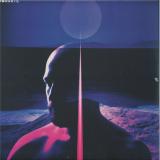
Visually, the project emulates the minimalist design trends of album artwork from the same era: sparse industrial landscapes paired with minimal type. Space Ghost took the cover photo himself while driving around the quiet, empty Oakland ports at night. Tracks like “Sugar Cube” and “Back From Reality” mimic these late night environments and create a downtempo zone for listeners to get lost in. “One of my favorite things to do after writing songs, is to drive around Oakland listening to them. It's almost like the final test for the songs, to see if their emotion holds up.
”
Written over the course of five years, Back From Reality reflects Space Ghost’s experience of balancing everyday life with the desire to be creative. “This album is me coming home from my day job and returning back to the place where I feel the joy and freedom in making my music. If I could, I would work on my music full time, but for now it's part time and often a form of escapism. ” Beneath its calming surface, the LP quietly wrestles with larger questions. Against the backdrop of global conflict, environmental decline, and economic uncertainty, the album searches for small moments of optimism through creativity and introspection. Back From Reality holds a moment of space away from these overwhelming times, allowing listeners to pause and recharge.
Back From Reality releases on Peace World Records October 9th, 2026
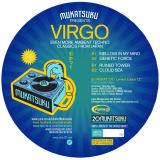
Mukatsuku's endless thirst for archival gold and knack for killer reissues burns strong with this latest third in the series hand-numbered 12" , which digs deep into classic ambient techno from Japan. The man behind the music is Virgo, a solo project by Yasutaka Sato that was active from 1996 to 2004 and then reappeared in 2024. This EP revisit some of his best moments from more than two decades ago, starting with the soothing, pulse-slowing beauty of 'Mellow In My Mind' before cosmic charm defines 'Genetic Force' and 'Ruined Tower' has a more melancholic, sombre feel. 'Cloud Sea' lifts the mood with a gently hopeful closer with soft new age chords and oh-so gentle rhythms that break like waves on a distant island paradise.
'You & Me', 'The Ballad of John Henry' and 'Live from the Royal Albert Hall'.
It is in a live setting where Joe Bonamassa the performer really thrives and in May
2009, he played the historic Royal Albert Hall in London. It was an incredible
memory for everyone present and one of his greatest live performances has been
remastered on high- quality 180g heavyweight triple vinyl for the first time. The
majestic evening saw him glide through his back catalogue of original hits as well
as inspired covers and featured guest performances from Eric Clapton and Paul
Jones – truly a special night to savour.
With 25 #1 albums, yearly sold-out tours worldwide and custom annual cruises,
he's a hard act to beat. These albums are a testament to his credentials and a
toast to his longtime fans who remember them originally and new fans who can
experience them for the first time. It's Joe Bonamassa at his finest, ready to rock.
Music from Tokyo / New York serves as the 2024 sequel to his previous release, Music for Joshua Tree. This conceptual album is divided into Side A (Tokyo) and Side B (New York), utilizing field recordings captured in each location. The ceramic images featured on LP jacket is the work of Namiko Ishikawa (NamipotNYC).
On this record, he incorporates Ambient, Downtempo, Trip-hop, and Dub—bringing to life the specific sounds currently resonating in his mind and his original roots.
Since the pandemic, he has been traveling and capturing "environmental sounds" through field recordings, which served as the primary inspiration for this record. Side A features tracks inspired by the atmosphere of Tokyo, including recordings from streets, parks near his home in Japan. Side B explores New York, incorporating the sounds of Brooklyn and Manhattan, as well as the chirping of insects recorded in the New York mountains.
While the album remains centered on analog synthesizers and vinyl samples, he has introduced analog drum machines and glitch noise to craft the groove. Unlike his previous work, this release brings prominent bass lines and added more Dub elements to the forefront. His primary focus for this project was expressing a sense of "space" and "air" through the meticulous use of reverb and delay.
Throughout the album, he invites the listener to imagine the unique "local atmosphere" he experienced during his travels.
Divorce From New York returns with Jazzthetics, a sophisticated blend of Broken Beat, Nu Jazz and House, where detailed musicianship meets club ready energy. Featuring collaborations with Quiet Dawn, Stickydub, and Carla Luna, the EP explores warm, organic textures and rhythmic depth.
Remixes by K15, GE-OLOGY, and Stefan Ringer expand the sonic palette with future?minded interpretations that connect soulful atmospheres with powerful grooves.
After releasing three LPs and appearing on influential labels such as Nervous Records and Toy Tonics, as well as being featured on the acclaimed Somewhere Soul compilation, Divorce From New York presents his new EP Jazzthetics.
Distinctive fusion of Broken Beat, Nu Jazz, and House. Collaborations with Quiet Dawn, Stickydub, and Carla Luna, plus remixes by K15, GE-OLOGY, and Stefan Ringer.
12" vinyl format with premium finish and digital download included.
Supported on stations such as NTS Radio, Worldwide FM, Rinse FM, The Lot Radio, and Kiosk Radio. Endorsed by influential DJs and platforms including Lefto, Marco Weibel, Mr.Redley, Somewhere Soul, and Brownswood Recordings.
Backed by an international promo campaign and European club tour throughout summer 2026.
fka boursin returns to Scissor & Thread with From Space Between, following his 2025 debut for the label, Listless Intertext. The Bristol producer continues to explore the more spacious edges of house music, drawing together dub, ambient detail and a loose rhythmic sensibility that has become increasingly characteristic of his work. From Space Between unfolds patiently with sounds appearing at the edges and gradually moving into focus. On the B-side Frank & Tony return with another Housebeat Dub, picking up the thread of their Listless Intertext rework. Francis Harris and Anthony Collins draw the original further into their own language of deep house, giving the rhythm more room and letting the dub elements stretch across the arrangement.
"A half-successful attempt at working with fewer elements in pursuit of a more minimalist approach," says Henry Murray aka fka boursin, "trying to find restraint and sit with gaps in the stereo image where previously I would have reflexively filled them with melodic content. Recorded whilst living alone in another country for a month, the track was borne out of meditations on living in and between unfamiliar places, seasons, languages, currencies, relationships, medications, economics, intentions, sanities, and spaces."
For 3+ years Razor-N-Tape has held their quarterly A Joyful Noise event in the Sound Room at Public Records. Conceived as a hearkening back to an early 2000s era of NYC nightlife, it is a club night that includes both DJs and live music. Led by JKriv as musical director and bassist, the live band is a collective of luminary NYC talent including singer Brandon Markell Holmes, guitarist Peter Matson, flutist/singer Domenica and percussionist Olatunji Ojore (Underground System), trumpeter Carter Yasutake (Midnight Magic), keyboardist Jason Lindner (Donny McCaslin/David Bowie's Blackstar), drummer Jim Orso (Hot Chip/Holy Ghost!) and saxophonist Stuart Bogie (Antibalas/Arcade Fire). Merging club sensibilities with jazz, funk and afrobeat pedigree, the A Joyful Noise repertoire includes live-interpreted renditions of J’s music and remixes, features by Razor-N-Tape artists, and original works. This album is a document of this special event, capturing all the live energy, moments of dazzling ensemble interplay, and features by artists Adi Oasis, Toribio and Cor.Ece.
Forty years of cassette releases, pressed for the first time on vinyl
First of two instalments exploring the previously unreleased sonic archives of one of Poland’s most enigmatic
living artists - with its first volume focused on his deep listening practice and spiritual reverie (recorded 1990–2013)
The last time Andrzej Dudek-Dürer took a banknote bearing the face of the Polish anarchist Jarosław Dąbrowski from his pocket to trade it for a pair of shoes was in 1969. He bought them for 120zł - the equivalent of 100€ today - and never replaced them since then. Only rebuilt them, year after year, drawing a needle and thread through the leather each time it split, closing one wound before the next one opened. It became a ritual of precision, stitching a record of another year into their soles.
That same year, in Wrocław, he arrived at a conclusion that would recalibrate everything that followed. Convinced he was the reincarnation of Albrecht Dürer, he adopted the surname Dudek-Dürer, stopped cutting his hair and began wearing the same garments every day. It was the first ritual of many, though he wouldn't have called it that yet. Look closely enough, over the decades, and it is always the same gesture, returning in different material: hair growing in a single unbroken strand, a needle drawing thread through leather, sitar strings pulled taut across a neck he built with his own hands and magnetic tape spooling forward inside the cassette boxes stacked against his walls.
None of this began in a vacuum. Dudek-Dürer emerged from the Wrocław neo-avant-garde, in a Polish art world where an exhibition could be cancelled overnight by the stroke of a censor's pen. In 1973, his exhibition Auto-crucifixion was shut down by the state, and for a time he found himself blocked from exhibiting his own art at all - the one force in his life that ever came close to cutting the thread.
He seemed to experience it differently. In 1974, after long, patient research into sitar craftsmanship, he built his first prototype with his brother, a knowledgeable luthier. In 1978, in a smoked-out jazz club, he took his first steps into sound recording with the unreleased album Jazz From Underground with his first band. By 1979, recognition started to travel further than he could.
Turning toward Far-Eastern philosophy, meditation and the idea of reincarnation was another language of freedom for him. It was a way of claiming an inner territory the state could not reach, a border it could not close. Mail Art served a parallel function, reaching further out: in a country that restricted travel and expression, sending and receiving art through the postal system became an act of quiet rebellion.
The body, in his understanding, is only an envelope readied for constant transformation. From this came Metaphysical Telepathy: during the years he could not leave Poland, he treated that confinement as a rehearsal room, sending his mind out ahead on the same thread his body would later follow. Living Sculpture grew from the same root with performances of stillness beside static art objects, until the boundary between the object and the man beside it simply dissolved. Camera Meditation extended the same instinct into photography: a shutter click flattening three dimensions into two so that a single instant could be held forever. Inspired by the pioneers of self-portrait photography like Robert Cornelius, he used it to document time itself, and kept explaining to me: "You know. This is not about vanity. This is about observing time passing.”
The isolation did not end suddenly. It ended the way his own philosophy had already predicted it would, from the inside first. Mail Art quietly solved the problem politics couldn't. Correspondence built during years of confinement slowly worked its way through doors the state itself had kept locked. Contacts made through folded paper and stamps became invitations. Ultimately, invitations became passports.
In 1983 he made his first trip outside Poland, to Germany, in search of the audio technology he couldn’t get his hands on before. In 1985, he was invited by the Indian embassy in Poland to give a sitar concert on an instrument he had spent a decade patiently stringing together - half sitar, half tanpura, built from patience and determination. After the collapse of the People's Republic of Poland, the travels kept unspooling: South Korea, then Mexico, then Australia, Canada, New Zealand, Singapore, Japan and the United States - each stop leaving behind its own small knot of tape, tied off and carried home.
In the decades since, recognition arrived at the same unhurried pace: he conducted workshops at UC Berkeley, served as vice-president for artistic affairs of the Union of Polish Art Photographers and the Union of Polish Visual Artists between 2010 and 2014 and received the Bronze Medal for Merit to Culture - Gloria Artis. His visual work gradually entered collections including the National Museums of Warsaw, the Stedelijk Museum, Tate Modern, MoMA and the Venice Biennale. His musical practice, by contrast, never found that kind of room - left to circulate quietly, sharing his cassette tapes directly, waiting for someone willing to follow it further.
It took months before I could find a way to reach Andrzej Dudek-Dürer - his presence online is very close to nonexistent. Surprisingly, LinkedIn turned out to be the only door still open, a faintly absurd irony given everything else about him. I packed the strict minimum for a three-day trip and an empty notebook and made my way to Wrocław. His headquarters sits in the neighbourhood of Grabyszyn: a two-storey pre-war house that has belonged to his family for generations. The man who opened the door was long-haired, long-bearded, in his trademark leather shoes and patched jeans. We sat in his living room, in front of a computer where decades of recordings sat organised in cryptically named files, surrounded by books and objects that had arrived one layer at a time, leaving room for only two chairs in the middle. His shoes sat by the door, rebuilt so many times they had become their own quiet sculpture. Cassette tapes filled boxes against the walls, almost unlabelled, each one a spool of thread holding decades of sound that had never once been asked for, until now.
I listened for hours: meditating in front of strangers on the porch of a Seoul temple until the tourists stopped taking photos and simply waited with him; a stand-off with border guards at the US–Mexico crossing over an instrument they couldn't identify and didn't trust; a session with the Stockhausen family that he still, decades later, describes like it happened last week. All of it interrupted, occasionally, by the smell of soup boiling and fresh bread warming on the ceramic stove. After two days, it felt like being handed the end of a very long thread and asked, gently, to keep following it. I left with a USB drive holding his full discography, signed with his unmistakable signature.
Astral Meditations From A Living Statue is a length of that thread, drawn out from the boxes stacked against his walls - recordings gathered from different rooms, different countries, different decades. This first record breathes slowly: incense-thick, meditative, built for stillness. A cutting-edge séance in outer space where machines learn how to dream.
It begins with the neo-classical improvisations of Andrzej, space-delayed, recorded at Klub Muzyki i Literatury in Wrocław in 2002. 'When..So' opens the curtains with a deep-rooted meditation accompanied by slow-decaying piano figures illuminated by a candle-lit spirit gathering.
Los Angeles, 1990: a dormant villa, a grand piano, the voice of Bonnie Barnett. 'Exception' is captured in a single room, in a single afternoon - voice and keys circling each other, neither one leading, until the silence between the notes starts to feel like the instrument.
'The Meta...' and 'Tired Of...', recorded at Studio Morandi in Ponte Nossa, Italy, in 1992, settle into a sitar drone built entirely from patience - overtones stacking and beating against each other, strung by a man who never once set foot in India. 'Mastery Of...' follows, recorded the same year at Studio Suski in Łomianki, pushing that same hum further still, until pitch dissolves into a spectral reverie. 'Transcendental Sound', from 2000, closes the first record in a slow bath of celestial frequency - better heard beside the shores of the Odra river.
More than fifty years after deciding that a life could become an artwork, Andrzej Dudek-Dürer continues to inhabit that decision. His shoes keep wearing thin against the earth's crust. His hair keeps growing, one strand at a time. His cassette tapes keep spooling in the dark of their boxes.
Now the thread finds its last shape: a single unbroken groove, spiralling inward from the outer edge to the label at the centre. Never cut - the way nothing else in his life ever was. Drop the needle and it will find that groove and follow it, the same way a needle once followed leather, once followed a border it couldn't cross, once followed string into an instrument that didn't exist until he built it. This record is the other end of a thread that has been travelling for fifty years. For the length of both sides, it rests here, in your hands. This is a timeless proof that the Lord of the New Age was never lost."
Faitiche presents the debut solo album by cellist, sound artist, and composer Topu Lyo: “quiet scenes from tokyo” brings together sixteen miniatures for solo cello and tape echo that oscillate between abstracts drones and rhythmic pizzicato sketches – all recorded at Topu’s Tokyo apartment. The constant traffic noise from a nearby highway has become an accompanying soundtrack for his compositions and can be heard on the recordings. Topu’s playing is marked by a distinctive idiom oriented more towards abstract electronic studio effects than classical technique.
The artist spoke to Jan Jelinek about his work:
JJ: A solo cello album may seem like an odd fit for a label that has to date released only music that is electronic in the broadest sense. But I think “quiet scenes from tokyo” complements the Faitiche repertoire exceptionally well. Its sixteen miniatures showcase the cello in all its complexity: the bowed passages sometimes recall a tape feedback drone; the pizzicato playing conjures up the percussion recordings of Moondog; and the abstract textures might be mistaken for the product of a granular sampler rather than rapid finger work on the cello. I’m constantly surprised by just how rich and varied this album is – without ever losing the charm of its sketch-like quality. Could you say a few words about the making of your album – first of all, from a rather technical perspective: what production tools did you use, and why?
TL: My production tools were very sparse. Just a solo cello and my Roland 301 Space Echo, which I only used at the end, running everything through it during mixing, tape only. After years of working with electronics, pedals, and synthesizers, moving to Tokyo pushed me toward minimizing my setup. But my aesthetics shifted too, toward simplicity. I wanted to strip everything back to just the acoustic cello and see how far I could push it — replicating some of my favorite electronic effects through extended technique: slow portamento, LFOs, filters, detune, noise. I’d also been listening to a cassette of ocean sounds for years. When I moved to Tokyo I was horrified to find myself living directly across from a freeway. Eventually the freeway started sounding almost identical to the ocean — and that ended up playing a prominent part in the recording.
JJ: That’s super interesting: mimicking electronic production as a compositional idea for the cello! You say the sound of the freeway is crucial to the album: I, too, tend to interpret steady traffic noise as a positive soundscape – do we hear the freeway on the album? I can also hear other field recordings, for example on “a street car with announcements”. Can you say a bit about how these field recordings influence your playing?
TL: Yes, you can hear the freeway on the album! The freeway is most prominent in “old trees in lonely spring”, “yuyake koyake”, and “the moon” (you can clearly hear individual cars). When I first began recording I had my balcony door shut tightly, but after a while I began leaning into the highway sound and slowly opening the door little by little to control the amount of noise. “streetcar with announcements” was a moment I was recording and a car passed by making announcements in the background. I loved how it sounded! Same thing with “yuyake koyake”, and later I realized that every day at 5pm the same song plays to mark sunset, telling children it’s time to go home. Having this bedrock of sound puts less pressure on me to put music on top or to play more notes.
JJ: It’s astonishing how much this differs from what I’d imagined: I’d been picturing peaceful landscape recordings, but had never thought of a freeway. Which goes to show how open to interpretation traffic noises are. So the room by the freeway had a major influence on the album – how are you going to perform it live?
TL: The contrast between the freeway and the beautiful landscape in my head couldn’t have been starker. I too was imagining a beautiful landscape in which to create the album, but somehow it still worked out. I've been going back and forth a lot on live shows and I think the most honest way is to have it the most stripped down. I was thinking of using traffic samples etc., but I think the duet really comes from the background sounds from every unique venue/environment. So as it stands, I’ll just be doing acoustic solo cello.
Initially recorded in 1996 and officially released February 1997, 2nd Family's Killaz from the Blackside tape is one of the most distinctive examples of unpolished, stripped-back & paranoid mid-90s Memphis rap. Recorded by King JC together with 2nd Family MCs Pistol Grip & Killa Chrome in a home-studio set up at the group's base in Southern Hills Apartments in Whitehaven, South Memphis (known locally as Blackhaven or the Blackside, a short trip from Graceland) the sparse, brooding and somewhat introspective production sets the record apart from the more raucous, overdriven precedent of the period. Pressed on vinyl for the first time via Death Is Not The End in an edition of 300 copies.
Early DJ Support: Massimiliano Pagliara, Paranoid London, Logan Fisher, Terry Farley, James Holroyd, Rocky (X Press 2), Francois K, Marcel Vogel, Sean Johnston, Austin Ato, Ron Basejam, Richard Rogers, Oliver Dollar, Crazy P and many more
Creating an international name for itself over the past decade as a sample pack label, Samples From Mars made its inevitable venture into the music world originally as a home for founder Teddy Stuart’s work. Long before making samples, Stuart garnered credits working as a grammy-nominated recording engineer in the hip hop world, and DJing / producing with Justin Strauss as A/JUS/TED, for labels such as DFA, Domino Records and Southern Fried Records. Now the label is set to release a variety of genres - house, disco, techno, ambient, all with a vintage tinge and a focus on high quality, analog production.
Enter Salt Queen. Visual artist and musician Magali van Caloen together with Samples From Mars founder, Teddy Stuart. Based in New York, the duo combine hardware dance aesthetics with dry, salty takes on familiar club moments into music that sits somewhere between funny, raw and unpredictable.
Salt Queen’s debut ‘ARE U OK’ is an acid-laced, deadpan spoken word track with an opening line that snaps any room to attention. A disorienting club encounter unfolds over Italo-inflected 808s and a relentless 303 bassline. There are no chords and no melodies - just a skeletal groove and an intimate voice circling the dancefloor. Drifting between concern and provocation, the vocal runs through cliché club conversations before destabilizing completely into a siren-laden crash out. The ‘Freak Nasty Club Mix’ ditches the plot and lets the hardware breathe, with a thick SH-101 bassline anchoring the first half before a sudden switch into an unrelenting acid pattern that refuses to settle. Two versions of the same wild night out.
Mack Loenz delivers his debut album From The Heart on Maceo Plex’s Lone Romantic imprint, expanding his razor-sharp, cinematic sound through analog synthesis and retro-futurist design.
Across its ten tracks, the album moves through a palette that is both nostalgic and forward-facing, with glistening arps, soaring pads and growling basslines shifting between physical club function and emotional extremes of melancholic yearning, romantic tenderness and futuristic intensity. ‘Follow Me’ opens with shimmering arpeggios and driving bass building to a euphoric crescendo, while ‘Switching My Flow’ pushes into heavier territory with gritty hoover synths, skittering vocals and chest-rattling subs. Elsewhere, ‘It’s Complicated’ brings a more tender, melancholic edge with rolling drums and expansive, symphonic synth work, and ‘Trust Issues’ leans into a nocturnal, romantic yet dystopian mood carried by sweeping leads and pitched vocal splicing. ‘Waiting Game’ moves into darker, industrial-leaning tension, before ‘Back To The Stars’ closes on a reflective, emotional resolve.
Shaped by a vision to push electro into a more expressive space, From The Heart carries a clear emotional core throughout. As Mack Loenz puts it, “In a time where there is a lot of darkness, this album is about bringing light, spreading positive energy, and creating moments that people can feel both on the dancefloor and within themselves.” That sentiment runs through the record, shaping a cohesive statement that balances club functionality with atmosphere, emotion and forward-facing electronic production.
Esoteric, atmospheric, dancefloor-feric! GFD012 is here! The Son Of Knuf EP is pure love for the groove and the roots of funkiness. Four wild tracks from Guy From Downstairs that hit with a fresh touch built on a faster pace, deeper basslines, and a flow smoother than ever.
In 2001, Shin’ichi Ogawa of Sugar Plant was working for the SAL Disc record label and came up with the idea of doing an E2-E4 tribute album with his friends. This album would come off the back of a Neil Young tribute album which might have seemed odd but these two artists, Neil Young and Ashra (Manuel Göttsching), would be played regularly as equals at after-parties that Shini’ichi would throw at his house. Longtime friend and collaborator, Taro Yoda, noted that the eclecticism of these after-parties were influenced by the variety of parties they were attending at the time, from the legendary Japanese open-air rave party Life Force to Cream at Amnesia in Ibiza. Taro was obsessed with European trance and left-field downtempo while the two members of Sugar Plant were into ’70s soul—especially Marvin Gaye and William DeVaughn and at the same time, they were listening to Phish and the Grateful Dead too. All three of them were of course inspired by the DJ’ing and selections of Larry Levan.
A- Side – Sugar Plant – “Just Be There” – Production began in my home studio. Since I was frequently attending a house party called “Life Force” (with DJ Nick the Record as the resident DJ) at the time, I thought deep house would be the perfect style for a Sugar Plant cover.
I looped a two-chord electric piano track and applied filters using plugins and outboard gear to create a “sound I could listen to forever.” I recorded the bass on guitar and converted it to an analog synth (Doepfer MS-404).
From there, I layered synths improvisationally, listening to the track over and over again to make fine adjustments. I think I worked on it for days, mostly late at night.
I recorded the guitar at the very end of the track. After playing it a few times ad lib without any set plan, I suddenly had the idea to add vocals during the bridge, so I set up a mic in my hallway and recorded them.
I think this track is packed with the emotions I felt when listening to “E2-E4” back then, as well as the vibe I experienced at that party. – Shin’ichi Ogawa
Ohio’s 156/Silence return with From a Distance, their crushing new full-length and first release for Pure Noise Records, arriving September 4. Produced by Josh Schroeder (King 810, Lorna Shore, The Plot In You), the album expands on the breakout success of People Watching with a darker, more cinematic approach that balances punishing heaviness, eerie atmosphere, and emotional depth. Featuring guest appearances from Mike Hranica (The Devil Wears Prada) and Alex Reade (Make Them Suffer), From a Distance pulls influence from horror, prestige television, and retro game soundtracks while moving seamlessly between hard rock, experimental textures, and the band’s chaotic mathcore roots. Atmospheric, unpredictable, and unbound by genre, From a Distance pushes 156/Silence further into their own lane while cementing them as one of heavy music’s most fearless rising acts.
'20 Años. Layered from the individual' is the first Compilation into the SEMANTICA 20 Years celebration.
This various is about to focus on raw and minimal techno, with no fear to showcase brightest to dark material, or exchange classic approach to non-standard visions in the same package.
An ambitious proposal featuring key artists such Oscar Mulero, Kaiser, Dimi Angelis or Adriana Lopez to name a few, but also solid names and fresh blood to put to test.
Music From Memory presents ‘Sleep Machines’, a new collaborative album from UK ambient pioneers O Yuki Conjugate and German producer and DJ Philipp Otterbach.
Formed in Nottingham in 1982, O Yuki Conjugate have spent more than four decades developing a singular approach to what they now describe as ‘dirty ambient’. Emerging from the post-punk DIY scene and drawing early inspiration from artists including Cabaret Voltaire, The Durutti Column and Jon Hassell, the group gradually carved out a space between post-industrial electronics, ambient music and Fourth World experimentation. Centred today around founding members Roger Horberry and Andrew Hulme, their work has retained an outsider sensibility throughout its many periods of activity and hibernation.
Philipp Otterbach approaches music from an equally open-ended perspective. As a producer, collector and DJ, his work moves freely between drone, dub, techno, house and electronics. His sets and productions share a fascination with unexpected connections, allowing disparate sounds to drift into one another through intuition rather than fixed genre boundaries.
‘Sleep Machines’ began with a chance meeting at The Gun on Well St. in London. Otterbach asked, “Would you be interested in doing a collaboration?”
“A collaboration? Sorry, we don't do collaborations,” came the reply.
“But wouldn’t it be fun?”
“We don't do fun either.”
Despite themselves, O Yuki Conjugate tentatively sent over an initial track. An avalanche of ideas quickly came back, and what began as an unlikely proposal developed into 18 months of recording, file-swapping, mixing and repeated reworking between the UK and Germany.
Produced by Otterbach, the resulting ten tracks bring together recognisable elements of both sides while gradually dissolving the lines between them. O Yuki Conjugate’s hazy atmospheres, dubwise spaces and tactile rhythms meet Otterbach’s instinct for strange detail, low-slung electronics and shifting forms. Rather than functioning as a collection of separate pieces, the album moves without gaps, unfolding as a single continuous work in which one environment slowly slips into the next.
‘Sleep Machines’ is both O Yuki Conjugate’s first collaborative album and an unlikely meeting point between two generations of musicians whose work has consistently existed at the edges of established forms.