KKYV09 is a four-track EP by Helsinki-based producer and DJ Valeria Croft, exploring a refined intersection of house and minimal shaped by funky rhythms, rolling grooves, and detailed, tactile sound design. Alongside three original cuts, the release features a remix by Romanian DJ and producer Lumieux. The EP opens with Measured By The Silence, a hypnotic, groove-led track that defines Valeria Croft's sound through subtle progression and layered detail. Floating within a vibrating minimal house framework, the track delivers warm, positive dancefloor energy across its eight-minute journey. Lumieux's remix flips the mood, pushing the arrangement into a tighter, more driving house direction while carefully reworking elements of the original into a fresh, high-impact version. On the B-side, Flex Your Body leans into an old-school minimal feel, enhanced by sensual vocal sampling and a darker, late-night atmosphere. The EP closes with Night Shift Funk, a deep, immersive track that pulses with nocturnal energy, unfolding slowly and methodically as textures stack and tension builds. Together, the tracks form a cohesive, dancefloor-focused release designed for extended DJ sets and late-night sessions.
Search:silence
- 1: Sun Of Manes
- 2: Uraeus
- 3: Flaxstaff
- 4: Hexameter
- 5: Geush Urvan
- 6: Niut Shaes
- 7: Doubting Zurvan
- 8: Mithudrsa
- 9: Cloud Wolf
- 10: Perfumer
- 11: Ninefold
- 12: Mercurial Silence
TRANSPARENT CLEAR VINYL[31,72 €]
Seit mehr als drei Jahrzehnten bahnt sich David Eugene Edwards einen einzigartigen Weg durch die amerikanische Musikszene. Zunächst mit dem dunklen Folk-Dringlichkeit von 16 Horsepower, dann mit der andächtigen Intensität von Wovenhand und in jüngerer Zeit durch die reduzierte Klanglandschaft seiner Soloarbeiten. Auf seinem zweiten Soloalbum "Mercurial Silence" setzt Edwards den Weg fort, den er auf seinem Debütalbum "Hyacinth" aus dem Jahr 2023 eingeschlagen hat, und dringt gleichzeitig durch den erweiterten Einsatz elektronischer Produktion und vielschichtiger Texturen in neue Klangwelten vor. Auf dem Album kanalisiert Edwards die krasse Intensität, die einen Großteil seiner Karriere geprägt hat, und greift gleichzeitig auf eine breitere Klangpalette zurück, die sich zugleich uralt und modern anfühlt. Seine unverwechselbare Stimme bewegt sich durch die Schichten aus Streichern, perkussiven Drones und gespenstischer Elektronik und verleiht dem Album die Aura einer Welt außerhalb unserer Reichweite. Über seine 12 Songs hinweg verfeinert Edwards hier die thematische Ausrichtung, die erstmals auf seinem Debüt erkundet wurde, und erweitert gleichzeitig seinen Fokus, um die wiederkehrenden Geschichten zu betrachten, die verschiedene Kulturen über Himmel und Erde und deren stetes Miteinander erzählen. Musikalisch zeichnet sich das zweite Solowerk durch die bewusste Verschmelzung akustischer Instrumente mit ausgeprägten elektronischen Elementen aus. Synthesizer, programmierte Rhythmen und dichte Ambient-Texturen verbinden sich mit Edwards' eher traditionellen Arrangements und schaffen einen Klang, der zwar karg bleibt, aber gleichzeitig die räumliche Tiefe der Songs erweitert. Während frühere Projekte oft auf rohe physische Kraft setzten, wirkt "Mercurial Silence" mit einer anderen Art von Kraft. Das Album entfaltet sich geduldig, atmosphärisch und überwältigend.
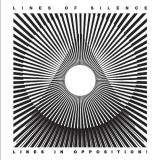
From deep within the astral planes of all that is cosmic in the Northwest and through a fog of kaleidoscopic haze emerges the latest mind-expanding music makers to arrive on Sprechen in the form of the Todmorden based Lines Of Silence.
Living amongst a hotbed of UFO activity and home to the UK's highest ever beach they combine experimental analogue and digital electronics, motorik beats, polyrhythmic improvisation and drone rock guitar explosions to create an immersive, expansive and contemporary take on psychedelia.
Their long player on Sprechen: 'Lines In Opposition !' takes the listener on a visionary aural journey across 8 tracks of electronic, shamanic soundscapes where the sounds of Krautrock exist in harmony alongside drone-esque ambient excursions through an array of synths, guitars & sequenced patterns that draw heavily on the stylings of NEU!, Aphex Twin, Kraftwerk and the musical pickings of the more esoteric sets and radio shows by Andrew Weatherall.
A truly universal listening experience to take you into a higher state of electronic music consciousness...
In spring 2025, Abul Mogard and Rafael Anton Irisarri created the source material for their second album, Where Light Pauses in the Silence of the Sun, during a three-day residency at Morphine Raum in Berlin. Functioning as both recording studio and performance venue, the space has no stage, with the audience gathered around the performers. Working within an open framework, the duo reshaped the music each evening while recording the performances live to multitrack. Rotary speakers, modular synthesizers and bowed guitar formed the core of their sonic language, captured through a 1970s mixing console and microphones placed around the room.
Back in Mogard’s studio in Rome, the material was further crafted as motifs were stretched, fragments isolated, and tempos dissolved. Irisarri recorded additional guitar textures and treatments in New York, while passages recorded by Martina Bertoni and Andrea Burelli in Berlin reinforced the harmonic centres and brought breath, refinement and a new sensibility to their compositions. The process continued as Mogard’s layering and subtraction reassembled everyone’s parts into the final arrangement.
The album opens with “In the Eastern Wild,” building from a sparse outline into a monumental formation of low-frequency weight, its internal motion shaped by the rotating Leslie speaker. “Over the Domes” widens into a broader acoustic field, where sustained modular tones meet waves of softly plucked guitar. The music then turns inward with “A Blue Descent,” centred on Bertoni’s cello, whose growling timbre introduces a melancholic depth.
At the album’s centre, “In a Quiet Radiance” unfolds around a slow guitar ostinato, its luminous stillness opening into a more expansive and reflective state. Across its ten-minute span, Burelli’s violin lines and Bertoni’s lower cello phrases gradually surface, weaving through the harmonic field. Mogard brings Burelli’s processed voice to the fore, its emotive, operatic presence becoming one of the record’s pivotal moments. “Of Blessed Ages” suspends the sonic flow, shifting between parallel major and minor chords as lingering, slowly decaying melodies shape the music’s internal drift. The closing “Among Shadows” settles into a darker resonance as layered textures recede.
Mogard and Irisarri’s shared language balances restraint and maximalism. UK magazine Crack describes the music as “a tidal wave held in suspension,” while Dutch newspaper de Volkskrant writes, “What a colossal sound, and how this music strikes at the emotions.” Reflecting on the residency sessions, Irisarri recalls: “At moments I genuinely couldn’t tell if a sound was coming from me or from Abul. It stopped feeling like two people making decisions and began to feel like we were inside a system moving on its own."
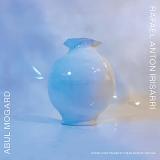
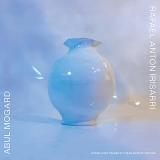
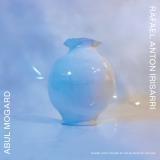
Marja de Sanctis’ cover artwork revisits the vessel sculpture from the duo’s first album, Impossibly Distant, Impossibly Close. There it appeared as raw, unfired clay. Here it has been fired in the kiln and finished with a glaze. Light gathers on its polished surface and spills into the surrounding space. As she explains, “I wanted to convey the idea of continuity within the duo, and the vessel became a kind of container for that idea. However, their music felt different this time, and with the collaboration of Martina and Andrea, I felt it should have a sleeker, softer, more glamorous look, very distant from the first raw appearance.” The transformation of the vessel from raw clay to fired form suggests a passage from immediacy toward permanence, mirroring the music’s gradual expansion.

In spring 2025, Abul Mogard and Rafael Anton Irisarri created the source material for their second album, Where Light Pauses in the Silence of the Sun, during a three-day residency at Morphine Raum in Berlin. Functioning as both recording studio and performance venue, the space has no stage, with the audience gathered around the performers. Working within an open framework, the duo reshaped the music each evening while recording the performances live to multitrack. Rotary speakers, modular synthesizers and bowed guitar formed the core of their sonic language, captured through a 1970s mixing console and microphones placed around the room.
Back in Mogard’s studio in Rome, the material was further crafted as motifs were stretched, fragments isolated, and tempos dissolved. Irisarri recorded additional guitar textures and treatments in New York, while passages recorded by Martina Bertoni and Andrea Burelli in Berlin reinforced the harmonic centres and brought breath, refinement and a new sensibility to their compositions. The process continued as Mogard’s layering and subtraction reassembled everyone’s parts into the final arrangement.
The album opens with “In the Eastern Wild,” building from a sparse outline into a monumental formation of low-frequency weight, its internal motion shaped by the rotating Leslie speaker. “Over the Domes” widens into a broader acoustic field, where sustained modular tones meet waves of softly plucked guitar. The music then turns inward with “A Blue Descent,” centred on Bertoni’s cello, whose growling timbre introduces a melancholic depth.
At the album’s centre, “In a Quiet Radiance” unfolds around a slow guitar ostinato, its luminous stillness opening into a more expansive and reflective state. Across its ten-minute span, Burelli’s violin lines and Bertoni’s lower cello phrases gradually surface, weaving through the harmonic field. Mogard brings Burelli’s processed voice to the fore, its emotive, operatic presence becoming one of the record’s pivotal moments. “Of Blessed Ages” suspends the sonic flow, shifting between parallel major and minor chords as lingering, slowly decaying melodies shape the music’s internal drift. The closing “Among Shadows” settles into a darker resonance as layered textures recede.
Mogard and Irisarri’s shared language balances restraint and maximalism. UK magazine Crack describes the music as “a tidal wave held in suspension,” while Dutch newspaper de Volkskrant writes, “What a colossal sound, and how this music strikes at the emotions.” Reflecting on the residency sessions, Irisarri recalls: “At moments I genuinely couldn’t tell if a sound was coming from me or from Abul. It stopped feeling like two people making decisions and began to feel like we were inside a system moving on its own."
Marja de Sanctis’ cover artwork revisits the vessel sculpture from the duo’s first album, Impossibly Distant, Impossibly Close. There it appeared as raw, unfired clay. Here it has been fired in the kiln and finished with a glaze. Light gathers on its polished surface and spills into the surrounding space. As she explains, “I wanted to convey the idea of continuity within the duo, and the vessel became a kind of container for that idea. However, their music felt different this time, and with the collaboration of Martina and Andrea, I felt it should have a sleeker, softer, more glamorous look, very distant from the first raw appearance.” The transformation of the vessel from raw clay to fired form suggests a passage from immediacy toward permanence, mirroring the music’s gradual expansion.
In spring 2025, Abul Mogard and Rafael Anton Irisarri created the source material for their second album, Where Light Pauses in the Silence of the Sun, during a three-day residency at Morphine Raum in Berlin. Functioning as both recording studio and performance venue, the space has no stage, with the audience gathered around the performers. Working within an open framework, the duo reshaped the music each evening while recording the performances live to multitrack. Rotary speakers, modular synthesizers and bowed guitar formed the core of their sonic language, captured through a 1970s mixing console and microphones placed around the room.
Back in Mogard’s studio in Rome, the material was further crafted as motifs were stretched, fragments isolated, and tempos dissolved. Irisarri recorded additional guitar textures and treatments in New York, while passages recorded by Martina Bertoni and Andrea Burelli in Berlin reinforced the harmonic centres and brought breath, refinement and a new sensibility to their compositions. The process continued as Mogard’s layering and subtraction reassembled everyone’s parts into the final arrangement.
The album opens with “In the Eastern Wild,” building from a sparse outline into a monumental formation of low-frequency weight, its internal motion shaped by the rotating Leslie speaker. “Over the Domes” widens into a broader acoustic field, where sustained modular tones meet waves of softly plucked guitar. The music then turns inward with “A Blue Descent,” centred on Bertoni’s cello, whose growling timbre introduces a melancholic depth.
At the album’s centre, “In a Quiet Radiance” unfolds around a slow guitar ostinato, its luminous stillness opening into a more expansive and reflective state. Across its ten-minute span, Burelli’s violin lines and Bertoni’s lower cello phrases gradually surface, weaving through the harmonic field. Mogard brings Burelli’s processed voice to the fore, its emotive, operatic presence becoming one of the record’s pivotal moments. “Of Blessed Ages” suspends the sonic flow, shifting between parallel major and minor chords as lingering, slowly decaying melodies shape the music’s internal drift. The closing “Among Shadows” settles into a darker resonance as layered textures recede.
Mogard and Irisarri’s shared language balances restraint and maximalism. UK magazine Crack describes the music as “a tidal wave held in suspension,” while Dutch newspaper de Volkskrant writes, “What a colossal sound, and how this music strikes at the emotions.” Reflecting on the residency sessions, Irisarri recalls: “At moments I genuinely couldn’t tell if a sound was coming from me or from Abul. It stopped feeling like two people making decisions and began to feel like we were inside a system moving on its own."
Marja de Sanctis’ cover artwork revisits the vessel sculpture from the duo’s first album, Impossibly Distant, Impossibly Close. There it appeared as raw, unfired clay. Here it has been fired in the kiln and finished with a glaze. Light gathers on its polished surface and spills into the surrounding space. As she explains, “I wanted to convey the idea of continuity within the duo, and the vessel became a kind of container for that idea. However, their music felt different this time, and with the collaboration of Martina and Andrea, I felt it should have a sleeker, softer, more glamorous look, very distant from the first raw appearance.” The transformation of the vessel from raw clay to fired form suggests a passage from immediacy toward permanence, mirroring the music’s gradual expansion.
SWIFT005 brings you the latest from Dynamic Bones, the project of Romanian producers Georj & Obrini. Their EP, Coordinates of Silence, reveals a new direction in their sound, with all mixing done by the duo themselves. Vlad Caia handled the mastering at CAW, giving it a clean, precise finish. The record contains three original tracks that explore fresh soundscapes, accompanied by a remix from Kozo. The artwork was created by their friends Bog and Didier, with Didier taking care of the illustration. Grab your copy!
This is the story of an artist in search of sound and breath: an artist who dares to question the rhythm of silence—an invitation to rethink music, sound, and musical collaboration. This is the story of a journey that, after opening countless paths, has finally found its vessel—and its messengers. Three artists of profound musical truth and radical freedom, merging into an exceptional trio that crosses genres and transcends words in a journey toward pure emotion.
Le Rythme du Silence is the culmination of this long search. Yom delivers it here with violinist Théo Ceccaldi and cellist Valentin Ceccaldi—kindred spirits in sound. “I’ve been working on this idea of the ‘rhythm of silence’ for years,” Yom explains. “I first heard the phrase from a Sufi master, describing the foundation of meditation. It struck something deep in me. I’ve practiced meditation for a long time, and we often think of it as a kind of stillness—opposed to noise and life. But in truth, the rhythm of silence enables meditation. It means accepting that the world continues to move and live around you, even as you try to be still. I wanted to compose from that place. To imagine sound as vibratory matter—the primal substance of creation. That required letting go of fixed structures: forgetting melodies, abandoning the idea of a constructed solo. I needed to leave behind music as a system, and touch sound as a living, breathing entity. It took years. Many projects led me elsewhere. But with the Ceccaldi brothers, I finally found the right resonance. Working with them was simply obvious—it was indredibly powerful.”
Yom first rose to prominence reimagining Jewish traditional music with his 2008 debut New King of Klezmer Clarinet. Since then, his path has led through rock (With Love, 2011; You Will Never Die, 2018), electronic utopias (The Empire of Love, 2013), meditative and sacred soundscapes (Prière, 2018), and countless unclassifiable hybrids (Unue, 2009; Green Apocalypse, 2010). It was inevitable that he would eventually cross paths with the free-spirited Théo and Valentin Ceccaldi—two artists who also place collaboration and genre-blurring at the heart of their artistic development. Their projects are always bold, demanding, and full of life (Kutu, Tricollectif, ONJ, Velvet Revolution, Grand Orchestre du Tricot, Lagon Noir, Constantine, etc.). And so, when the three met within the iXi string quartet, something clicked.
“I was seated between the two of them in the quartet,” Yom recalls, “and I could feel their energy flowing from both sides—it was wild! They’re so tuned into each other, they don’t need words. It’s like they’re connected by musical Wi-Fi. The groove happens instantly. They’re precise when they want to be—thanks to their experience in pop-influenced projects —but they can also let go completely, diving into pure sound. That’s exactly what this project needed.”
Without a single rehearsal, the trio formed instinctively. They began performing Yom’s compositions live, unfolding them into a single continuous piece, where clarinet and strings stretch the limits of sound and breath.
Bowed, plucked, or prepared with clothespins, the Ceccaldi strings engage in a playful and intense dialogue with Yom’s custom B-flat clarinet. Through their imaginative listening and fearless invention, air and space open into a vast new soundscape—one that lies somewhere between meditation and healing music.
“When Yom shared the concept of the rhythm of silence, we were immediately drawn in,” says cellist Valentin Ceccaldi. “There’s a deep intensity and spiritual commitment in his music that really spoke to me. With this trio, we’re trying to dive into the core of sound—but also to create a kind of communion with the audience. It’s like gradually turning up the volume on silence, and realizing it’s made of countless tiny sounds—the music of particles in motion" This stripped-down intensity demands full presence—body and mind—of these three musicians, vibrationally connected in a state close to trance. With them, we enter a journey - not religious, but sacred nonetheless.
The Rhythm of Silence becomes an echo of our most intimate, most distant inner landscapes.
An album—and a trio—to return to without end.
Silence In The Secret Garden is an intensly personal and spiritual journey into the heart & soul of black music.From the reckless dark minimalism of the title track Silence In The Secret Garden to the irresistible funk of Yesterday’s Party… this classicalbum has continued to surprise and inspire.
Smokey 2LP with limited edition Obi Stip to celebrate the 35-year anniversary
"Silence Is Golden" fits perfectly into a musical landscape marked by experimentation and social anger.
The album presents itself not just as a collection of songs, but as a sonic experience that pushes the listener to be overwhelmed by the power of its sounds and a sometimes dystopian nihilism. Incessant riffs alternate with moments of introspection, creating an interesting mix of noise and hardcore punk.
A timeless classic - coming up on nearly 20 years since the original 12's were released and the very first time this LP has collectively been available on wax. (over 15 years since last in circulation)
This edition was remastered to analog perfection from the Grammy award winning ears @Stardelta Mastering. paying close attention to every finite detail - this album has never sounded so alive!
A multidimensional sound experience; it's like taking a swim in an analogue ocean and being immersed into the deepest end of the Mariana's Trench. Sonic Submersion of the Highest Order!
Credits:
Written & Produced by Steven Hitchell.
Vocal & Rhodes Performance by Paul St. Hilaire (Tikiman), courtesy of false tuned. Published by Basic Channel Publishing. (BCP)
Additional Mastering, Mixing and Engineering by Mark Richardson @ PrairieCat/Metropolis Mastering, Chicago, USA. (2007-2009)
Remastering and Lacquer cutting by Stardelta, UK. (2024)
Velasco’s Moving In Silence label kicks off with four heavy hitters. An exciting time as the Berlin based New Yorker embarks on this solo label project, uncovering underground sounds from all corners of the globe. Landed kicks off the project with gritty peak-time action from the producer on the rise, crammed with an abundance of rave textures throughout the “Enigma” EP. Expect 4 live recorded rolling techno tunes to keep you stuck in a loop.
300 Limited copies
The Silence returns with this limited edition addendum to their debut album for the true diehards that need their darkness to be a little more complete. To sweeten the deal this EP contains an extended version of their tortured dubstep anthem 'Something Hardcore' and the already infamous 'Industrial Counter'.
In The Land of Silence is the first full length album by experimental artist Ireen Amnes. The founder of the London based collective Under My Feet. debuts on Sonic Groove with an immaterial journey contemplating suffering, liberation, the importance of affection and unity. This ambient album reveals a hidden connection between these human emotions. From anger and rejection, to love and unity, the sounds explored by the artist represent a recent journey within. Recollections of distant memories are expressed with nostalgic sounds; by contrast, darker tracks are symbolic of those moments when it is more dif ficult to accept reality for what it is. Ireen expresses in this album that there wouldn’t be any joy without suffering.
Sounds created out of emotions that cannot be spoken. Beats that pulse out of gestures that can no longer be performed. Tones that screech out of bodies that can no longer be human. Echoes of all unspoken words reverb into the wounds of time; that constant ebb and flow of existence; that relentless stomping of exchanges. The slur of life is now noise – she collects its torn pieces with her bare hands and holds them close to her pounding flesh. She now sways in and out of consciousness, transported by nothing but his will to life, his ecstatic memory, his murmured love that now forms this soundtrack to her life.
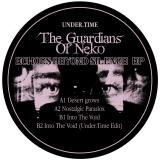
The first 12” from the Rosario-based label Under.Time comes courtesy of T.G.O.N, the duo formed by Fakk and Luciasensacional.
The release unfolds across four tracks, moving between techno, electro and synthpop. Built around pressure and movement, the record evokes the streets of their hometown after dark, carrying a sense of drama, speed and latent intensity.
Locky Mazzucchelli continues his Awkward Silence journey with four tripped-out underground cuts. AWKS002 moves from the serious drive of ‘Kobsta’ through the twisted beeps and bleeps of ‘Lonely Bass’, into the crisp, mind-bending movements of ‘Blue Kards’, before closing with ‘Dance To The Sun’. Each track brims with Locky’s signature off-centre touch as he continues to evolve both his sound and the label.
- A1: When We Dance (4:24)
- A2: Heart Started Beating
- B1: Desperation Looks Ill
- B2: Who Just Wants To Survive? (5:09)
The new EP is released on limited edition 'Scissorhands Ice Blue' coloured vinyl with a hand-numbered gold riso print sleeve art with obi strip. Sarah/Shaun wooed hearts and wowed critics with debut EP It's True What They Say? in 2024 plus follow-up EP Someone's Ghost in 2025.
They have been featured across the media including BBC Radio 6Music, BBC Radio Scotland, The List and The Skinny. They've played gigs supporting French legends Air, Glaswegian 80s pop legends The Bluebells, Glasgow's huge Glasvegas, a slew of venues across Glasgow and Edinburgh, not to mention the festivals: Kelburn Garden Party, Fringe By The Sea, Kendall Calling, Dunbar Music Festival and Hidden Door Festival. The duo are set to release a full length album in late 2026.
[b] A2 Heart Started Beating [Backwards] (4:10)
[c] B1 Desperation Looks Ill [From The Other Side] (4:26)
- A1: The Letter
- A2: L'intrigue
- A3: Drinking At A Stream
- A4: Oakwood Green
- A5: Children Of Clay
- A6: Sur La Plage
- A7: Her Masters Voice
- B1: The Draw In Room
- B2: The Slides
- B3: Fleur's Dolls
- B4: Mortuary
- B5: The City Sleeps
- B6: Birds
- B7: Silence & Wisdom
- B8: Festival
- C1: Our English Friends
- C2: Piroette
- C7: Albert The Mud Fish
- C8: Who Art In Heaven
- C9: Shackleford Breeze
- C10: 2 Blind 2 See
- C11: Zazinthos
- C3: The Third Movement
- C4: Play Room
- D1: Little Brown Jig
- D2: Tounges
- D3: Shalama
- D4: The Sun On The Sea
- D5: Interlude
- D6: The Snow Falls & The Village Is Overflowing With Children
- D7: Double Happiness
- C5: Starboard She Said
- C6: Los Estrellas
The short, mysterious career of the female French duo Deux Filles is bookended by tragedy. Gemini Forque and Claudine Coule met as teenagers at a holiday pilgrimage to Lourdes, during which Coule's mother died of an incurable lung disease and Forque's mother was killed and her father paralyzed in an auto accident. The two teens bonded over their shared grief and worked through their bereavement with music. However, after recording two critically acclaimed albums and playing throughout Europe and North America, Forque and Coule disappeared without a trace in North Africa in 1984 during a trip to visit Algiers. The short and terribly unhappy lives of Forque and Coule are at the root of the small but fervent cult following the mysterious duo have gained since their disappearance, not least because the placid, largely instrumental music on the duo's albums betrays no hint of the sorrow that framed their personal lives.
This would be a terribly sad story if a word of it were true. In reality, Deux Filles were Simon Fisher Turner, former child star/teen idol and future soundtrack composer, and his mate Colin Lloyd Tucker. Turner and Tucker left an early incarnation of The The in 1981 to pursue another musical direction. Turner claims that the idea of Deux Filles came to him in a dream, and he and Tucker strictly maintained the fiction throughout the duo's career. Not only did they pose in drag for the album covers, the duo once even played live without the audience realizing that the tragic French girls on-stage were actually a pair of blokes from south London. Deux Filles released two albums through Turner and Tucker's Papier Mache label, 1982's Silence & Wisdom' and 1983's Double Happiness'. Both albums are included here and blend watery piano, occasionally ghostly vocals, sheets of synthesizers, heavily processed guitars and the barest minimum of percussion. Drifting and wistful, they're a pair of lost ambient gems from a time when the genre had yet to mature, an excellent example of post-Eno, pre-Orb ambient music.
All songs have been remastered for vinyl by George Horn at Fantasy Studios in Berkeley. The vinyl comes housed in gatefold sleeve with original front covers of both albums, and a centerfold of archive images and the original liner notes. Each LP includes a sticker of the Lino cuts by Adrian Gill that was included with the original pressing.
"Like an early French film soundtrack with melodramatic overtones, the sound is jagged and disjointed but never harsh. Lilting guitars and ample use of echo smack of Vini Reilly, relying on the hypnotic qualities of the sound rather than abrasive noise" (Sounds, 03/1983)
- 1: Empty And Hollow
- 2: The Truth (Was A Lie)
- 3: The Fading Light
- 4: Doomed To Fall Forever
- 5: Sorow Feeds The Silence
- 6: In The Shadows
- 7: When Dreams Die
- 8: We Don't Belong
- 9: Forever Hollow
Mourn The Light kehren mit einem beeindruckenden neuen Album zurück, das epischen Heavy Metal mit einer düsteren, doomlastigen Atmosphäre verbindet und mit gewaltigen Vocals, emotional aufgeladenen Melodien und massiven Riffs überzeugt.
„Sorrow Feeds the Silence“ hebt den charakteristischen Stil der Band mit dramatischem Songwriting, dynamischen Arrangements und einem Sound, der an die Glanzzeiten des klassischen Metal erinnert und gleichzeitig mit moderner Intensität voranschreitet, auf ein neues Niveau. Von herzlichen, langsameren Passagen bis hin zu triumphalen Metal-Hymnen ist dieses Album das stärkste und vollständigste Statement in der Karriere der Band.
Unverzichtbar für alle, die kraftvollen, melodischen und atmosphärischen Heavy Metal suchen.
Für Fans von Candlemass, Dio, Grand Magus, Solitude Aeturnus, Savatage.
- A1: Des Plumes Dans La Tête (Variation 1) 1:15
- A2: Situation Initiale 1:20
- A3: Pour Les Oiseaux 1:16
- A4: Feu 0:24
- A5: Le Brasier De Tristesse 3:36
- A6: Ferme Les Yeux 1:08
- A7: Des Plumes Dans La Tête (Variation 2) 1:15
- A8: Les Débutants 1 1:50
- A9: Pour Les Oiseaux (Variation 1) 1:17
- B1: Anthracite 1:28
- B2: Nocturne Urbain 2 0:59
- B3: Pour Les Oiseaux (Variation 2) 0:39
- B4: Sinon Le Vent Qui Passe 0:41
- B5: Noir 1:19
- B6: Ferme Les Yeux (Variation) 0:42
- B7: Les Débutants 2 1:16
- B8: Pour Les Oiseaux (Variation 3) 0:36
- B9: Blanche Comme L'infini 1:58
- B10: Situation Finale 2:02
- B11: Des Plumes Dans La Tête 1:20
- Un Autre Décembre Lp
- C1: Minéral 3:28
- C2: Sous Tes Yeux Probablement 1:16
- C3: Granulation 1 1:38
- C4: Neuf Cents Lunes 3:56
- C5: Alors La Lumière Vacille 1:07
- C6: Granulation 2 0:56
- D1: Il Fait Nuit Noire À Berlin 2:12
- D2: La Lettre Qu'il N'envoya Jamais 2:00
- D3: Granulation 3 1:35
- D4: Un Autre Décembre 2:24
- D5: Granulation 4 1:26
- D6: Du Rève Dans Les Yeux 1:30
- Nocturne Impalpable Lp
- E1: Blanc 2:23
- E2: Cet Enfer Miraculeux 2:59
- E3: Radiophonie N°1 2:54
- E4: Doucement, Le Grain De Sa Peau 3:41
- E5: 0:36
- E6: Ocre 2:47
- E7: 0:35
- E8: Radiophonie N°2 3:15
- E9: Adieu Miséricorde 1:14
- E10: 0:31
- E11: Léger 2:25
- E12: 0:40
- F1: Le Monde Intérieur 4:01
- F2: Arachnéenne Encore 1:29
- F3: 0:27
- F4: Je Me Suis Bâti Sur Une Colonne Absente 4:04
- F5: 0:33
- F6: Radiophonie N°3 2:07
- F7: Nocturne Urbain 4:56
Minority Records is releasing a unique boxset Politique du silence with three early albums from Sylvain Chauveau, French composer of minimalist neoclassical music.
“When I made my first albums as a composer, I was obsessed with minimalism, and this quote from the film director Robert Bresson summed up my state of mind. I set myself three principles: 1) Use silence as a starting point, 2) Only add sound when it's absolutely essential, 3) Don't imitate the Anglo-Saxon musicians I admired, but draw on the musical culture of my country, France which lead me to listen intensively to Satie, Debussy and Ravel.” Chauveau explains the background to his work.
The collection Politique du silence contains the recordings of Des plumes dans la tête (2004), Un autre Décembre (2003) and Nocturne impalpable (2001) on coloured 180 gram vinyls. The cover features artwork by French photographer Valéry Lorenzo.
“When I discovered the simple and powerful black and white pictures by Valéry Lorenzo, in the 90s, I immediately fell in love with them. We became good friends and since then I ask him to let me use one of his photos for most of my album covers, or to make my portrait for press shots. It has become a real collaboration, music and images, for more than 25 years. It was then logical to ask him again for the cover of this boxset, like a gentle reflection on my piano and strings era. It's a true honour for me to see my early music recollected, repackaged, remastered after all this time. Which gives me hope that this music, in which I've put all my soul and heart during the years 2001 to 2003, is maybe not forgotten yet.” Chauveau himself adds of his collaboration with Valéry Lorenzo.
Nocturne impalpable and Un autre Décembre were re-issued by Minority Records in 2014 and 2015 and both titles completely sold out. This year’s release also includes the album Des plumes dans la tête in its world premiere on vinyl.
Nocturne Impalpable is a world of minimalism, abstraction, and contemporary rendition of classical music with variations for the piano, clarinet, strings, and accordion which are often compared to the compositions of composers Harold Budd and Claude Debussy. Here, Chauveau partially reveals his versatility as a composer by connecting electronic elements, noises, and ambient planes with monumental strings and piano preludes. The
album of piano variations Un autre Décembre is interspersed with field recordings and electronic noises. The inspiration for the recording of the album and for its name was the song Jaurès by the Belgian singer and composer Jacques Brel. This song tells the story of the grandparents’ generation who toiled in the mines. “Comfort and health won’t protect our generation from sadness and discontent. We also live through winter times, even if these are slightly warmer due to the current climate.” An album of 20 short instrumental sketches with several delicate intermezzos for the piano, string quartet, and the clarinet, Des plumes dans la tête, was composed for the eponymous film by director Thomas de Thier.
Sylvain Chauveau was born in 1971 in the French town of Bayonne and currently lives in Barcelona. His extensive discography of mainly meditative neo-classical recordings for the music labels FatCat, Sub Rosa, Sonic Pieces, and Flau is enriched by several collaborations and his participation in the Ensemble 0, Arca, and On projects. Chauveau has also composed many film soundtracks as well as music for the theatre. He has presented his works in Prague several times, most recently in the spring of 2024 at the Spectaculare festival. His compositions get tens of millions of streams on streaming services, and he’s been called the French king of minimalism.
Cinematic feasts of dramatic strings and cascading pianos that will satisfy fans of Nils Frahm and Ólafur Arnalds' The Ransom Note
A timeless classic - coming up on nearly 20 years since the original 12's were released and the very first time this LP has collectively been available on wax. (over 15 years since last in circulation) This edition was remastered to analog perfection from the legendary Stefan Betke (POLE) sonically sculpting the original work into a true masterpiece - this album has never sounded so alive! This is truly a multidimensional sound experience; it's like taking a swim in an analogue ocean and being immersed into the deepest end of the Marianas Trench. This edition features two cuts, "A Night To Remember" (as featured on Richie Hawtin's ENTER: Ibiza 4XCD mix) & "Under The Ocean" from the original 2009 edition of the album. The remaining tracks were selected from CD2 including "Tswana Dub" (Phase90 Restructure) as featured on Deadbeat's classic mix "Radio Rothko" on NYC's theAgriculture. Also included is a "live" (recorded from the house booth) performance at "dub echoes" in NYC (a screening for the feature film).
a A1. A Night To Remember Remastered 11:07
b A2: Ocean View Remastered 5:30
c B1. Kingston’s Burning Dub live in nyc 8:08
d B2: De Lion’s Den Remastered 4:20
e C1: Never Forget Remastered 9:06
g D1: Love In Lofi Remastered 13:00
Remastered 4:44
a A1. A Night To Remember Remastered 11:07
b A2: Ocean View Remastered 5:30
c B1. Kingston’s Burning Dub live in nyc 8:08
d B2: De Lion’s Den Remastered 4:20
e C1: Never Forget Remastered 9:06
[g] D1: Love In Lofi [Remastered] 13:00
[Remastered] 4:44
Two Intersecting Loops of Silence is a 10-inch experimental vinyl that turns silence into rhythm and time into matter. Side A features two silent grooves that create a mechanical ticking when played, while Side B animates a clock-like etched drawing as the record spins. Numbered edition of 200 with hand-printed, unique etching covers. Each copy a one-of-a-kind artwork.
What We Do When in Silence is the trio of Nicola Ratti, Alessandra Novaga and Enrico Malatesta.
Imagine a series of small movements in an empty space. Imagine their shadows on the floor, there’s a natural light sliding in from the 3 windows on your right side. There’s no silence here. There are people outside waiting for others, waiting for the people since what we do is not visible, since we do it when in silence and there is no silence here. Synthesizer, piano, whistling, electric guitar and percussions.
Nicola Ratti is a versatile musician and sound designer who has long been active across diverse experimental fields. His sound production creates systems shaped by repetition and expansion, with a particular focus on building environments that resonate with the spaces and architectures we inhabit, and on balancing the emotional and perceptual orientations to which we are accustomed.
Alessandra Novaga is a guitarist who has been exploring, for years, the possible territories her instrument can lead her to. She has crossed through the most classical worlds, reaching into intangible abstractions without setting boundaries between the two. Sound, meanings, encounters, and narratives are the elements that guide her path.
Enrico Malatesta is a percussionist and independent researcher working within experimental contexts that intersect music, performance, and territorial investigation. His practice explores the relationship between sound, space, and movement, and the vitality of materials, with a particular focus on surfaces, listening modes, and the articulation of multiple layers of information through an ecological and sustainable approach to percussion instruments.
- La Vallée Du Sommeil
- Corridor
- Vieux Silence
- La Nuit Voilée
- Au Point Du Jour
- Le Temps D'antan
- Entre Deux Mondes
- La Saison Blanche
Da ich schon seit Jahren von Andrew Chalks Arbeit mit MIRROR (und auch von seinen Solo-Projekten als FERIAL CONFINE sowie seinen vielen Kollaborationen mit David Jackman, The New Blockaders, Daisuke Suzuki usw.) und Timo van Luijk (als Af Ursin, In Camera, La Poupée Vivante und Kollaborationen mit Kris Vanderstraeten und anderen) fasziniert, war ich natürlich neugierig, von ihrem Duo-Projekt ELODIE zu hören. Das Projekt wurde 2010 gegründet und hat bis heute schon elf wunderschöne Alben rausgebracht. ,Vieux Silence" für Ideologic Organ ist ihre erste Veröffentlichung außerhalb ihres eigenen Plattenlabels Faraway Press & La Scie Dorée. Das ist aber nicht das erste Mal, dass Ideologic Organ und ELODIE zusammenarbeiten. Sie traten im Februar 2012 bei einem von mir kuratierten Abend in London zusammen mit Jessika Kenney und Eyvind Kang auf. Elodies Auftritt war einer der feinfühligsten und gekonntesten, die ich je gesehen habe ... so still, während draußen vor den Fenstern des Cafe Oto in London der Schnee fiel, versank das Publikum spürbar in hochkonzentriertem Zuhören. Die Erinnerung daran ist echt beeindruckend, wenn man bedenkt, wie sparsam die einzelnen Elemente an diesem Abend eingesetzt wurden. ,Vieux Silence" und ELODIE im Allgemeinen regen sofort die visuelle Vorstellungskraft an, vielleicht gefiltert durch alte Aquarelle, Bandkorn, antike Linsen, vergessene Ebenen des Zuhörens und beobachtende Geduld. Auf diesem wunderschönen Album arbeiten Chalk & van Luijk auch mit Klavier, Pedal Steel und Klarinette zusammen (gespielt von Tom James Scott, Daniel Morris und Jean-Noel Rebilly). Jedes Detail wurde sorgfältig durchdacht und Schritt für Schritt koloriert, wie ein impressionistisches Aquarell. - Stephen O'Malley, Les Lilas 2017
- 1: Anytime
- 2: Alibi
- 3: Everybody Tells Me To Let Go
- 4: Coyote Pt. I
- 5: Coyote Pt. Ii
- 6: Everyday
- 7: You Can't Escape The Morning Dew
- 8: Adore
- 9: Let Me Catch My Breath (In Silence)
- 10: I Never Seem To Get It Right
múm are returning with a new album on Morr Music. »History of Silence« is the first full body of work by the Icelandic collective since 2013's »Smilewound« and their seventh studio album to date—recorded, deconstructed, put back together again, refined and finished over the course of two years. Vibrantly oscillating around a carefully curated palette of electronic and analogue sounds, the eight new tracks reflect the group's continuous strive to explore sonic spaces through subtle yet gripping songwriting.
For a long time now, múm have been exploring the idea of distance in their music. In the beginning, this was born purely out of necessity. Founded in Iceland in the late 1990s, the members soon began embarking on journeys across the world—collectively while touring, but also individually, exploring new places to live and create. Settling in, moving on, catching up: The concept of distance soon became an integral part of the collective's process. »History of Silence« leans into this idea, with space and time becoming indispensable pillars of the arrangements. While being coherent and structured, they echo their origins from different seasons, cities, and spaces—neatly stitched together with unparalleled craftsmanship. They breathe an overall airy and intimate atmosphere, yet resonate with the structural heft of time.
On »History of Silence« time manifests in unexpected, liberating, and mesmerizing ways. It does not move reliably forward; it drifts, takes twists and turns, even disappears completely. Electronic textures blur into acoustic sounds, voices flicker and dissolve, melodies stumble and repeat. The arrangements often feel like they’re wandering, gently resisting direction. »Our Love is Distorting,« for instance, begins with a subtle piano motif, playing hide and seek with feedback noises, digital artefacts, and lush—yet very quiet—string arrangements, before gradually forming into a distinctive song. It's a perfect illustration of múm's general approach on this album. »Mild at Heart« turns this idea upside-down, flowing freely from start to finish with moments of silence sprinkled in—serving to emphasize the musical elements. The music on »History of Silence« moves like weather: unexpected, intimate, quietly detailed. Contrasted with vivid phrases, rhythmic shifts, and small hooks, the album offers a new angle of compositional clarity and vision.
Work on »History of Silence« began at Sudestudio in southern Italy. Additional recordings were made in Reykjavík, Berlin, Athens, Helsinki, New York, and Prague. The strings were recorded by Sinfonia Nord at the Hof concert hall, Akureyri, arranged and conducted by Ingi Garðar Erlendsson, who has worked with the band for many years. The orchestral elements don’t dominate the record—instead, they surface gently, adding depth and resonance to the songs without disturbing the songs' fragility.
Contrary to what the album title suggests, »History of Silence« is a collection of bold and colorful songs, no matter how muted they might sound at times. They tickle like a feather drifting through the wind, ending up in unexpected places, stimulating long-forgotten thoughts and feelings, intimate moments of introspection. The songs move through the echoes those moments leave behind: the emotional traces of things unsaid, the weight of stillness. Offering closeness by means of distance and much-needed support.
múm are returning with a new album on Morr Music. »History of Silence« is the first full body of work by the Icelandic collective since 2013's »Smilewound« and their seventh studio album to date—recorded, deconstructed, put back together again, refined and finished over the course of two years. Vibrantly oscillating around a carefully curated palette of electronic and analogue sounds, the eight new tracks reflect the group's continuous strive to explore sonic spaces through subtle yet gripping songwriting.
For a long time now, múm have been exploring the idea of distance in their music. In the beginning, this was born purely out of necessity. Founded in Iceland in the late 1990s, the members soon began embarking on journeys across the world—collectively while touring, but also individually, exploring new places to live and create. Settling in, moving on, catching up: The concept of distance soon became an integral part of the collective's process. »History of Silence« leans into this idea, with space and time becoming indispensable pillars of the arrangements. While being coherent and structured, they echo their origins from different seasons, cities, and spaces—neatly stitched together with unparalleled craftsmanship. They breathe an overall airy and intimate atmosphere, yet resonate with the structural heft of time.
On »History of Silence« time manifests in unexpected, liberating, and mesmerizing ways. It does not move reliably forward; it drifts, takes twists and turns, even disappears completely. Electronic textures blur into acoustic sounds, voices flicker and dissolve, melodies stumble and repeat. The arrangements often feel like they’re wandering, gently resisting direction. »Our Love is Distorting,« for instance, begins with a subtle piano motif, playing hide and seek with feedback noises, digital artefacts, and lush—yet very quiet—string arrangements, before gradually forming into a distinctive song. It's a perfect illustration of múm's general approach on this album. »Mild at Heart« turns this idea upside-down, flowing freely from start to finish with moments of silence sprinkled in—serving to emphasize the musical elements. The music on »History of Silence« moves like weather: unexpected, intimate, quietly detailed. Contrasted with vivid phrases, rhythmic shifts, and small hooks, the album offers a new angle of compositional clarity and vision.
Work on »History of Silence« began at Sudestudio in southern Italy. Additional recordings were made in Reykjavík, Berlin, Athens, Helsinki, New York, and Prague. The strings were recorded by Sinfonia Nord at the Hof concert hall, Akureyri, arranged and conducted by Ingi Garðar Erlendsson, who has worked with the band for many years. The orchestral elements don’t dominate the record—instead, they surface gently, adding depth and resonance to the songs without disturbing the songs' fragility.
Contrary to what the album title suggests, »History of Silence« is a collection of bold and colorful songs, no matter how muted they might sound at times. They tickle like a feather drifting through the wind, ending up in unexpected places, stimulating long-forgotten thoughts and feelings, intimate moments of introspection. The songs move through the echoes those moments leave behind: the emotional traces of things unsaid, the weight of stillness. Offering closeness by means of distance and much-needed support.
múm are returning with a new album on Morr Music. »History of Silence« is the first full body of work by the Icelandic collective since 2013's »Smilewound« and their seventh studio album to date—recorded, deconstructed, put back together again, refined and finished over the course of two years. Vibrantly oscillating around a carefully curated palette of electronic and analogue sounds, the eight new tracks reflect the group's continuous strive to explore sonic spaces through subtle yet gripping songwriting.
For a long time now, múm have been exploring the idea of distance in their music. In the beginning, this was born purely out of necessity. Founded in Iceland in the late 1990s, the members soon began embarking on journeys across the world—collectively while touring, but also individually, exploring new places to live and create. Settling in, moving on, catching up: The concept of distance soon became an integral part of the collective's process. »History of Silence« leans into this idea, with space and time becoming indispensable pillars of the arrangements. While being coherent and structured, they echo their origins from different seasons, cities, and spaces—neatly stitched together with unparalleled craftsmanship. They breathe an overall airy and intimate atmosphere, yet resonate with the structural heft of time.
On »History of Silence« time manifests in unexpected, liberating, and mesmerizing ways. It does not move reliably forward; it drifts, takes twists and turns, even disappears completely. Electronic textures blur into acoustic sounds, voices flicker and dissolve, melodies stumble and repeat. The arrangements often feel like they’re wandering, gently resisting direction. »Our Love is Distorting,« for instance, begins with a subtle piano motif, playing hide and seek with feedback noises, digital artefacts, and lush—yet very quiet—string arrangements, before gradually forming into a distinctive song. It's a perfect illustration of múm's general approach on this album. »Mild at Heart« turns this idea upside-down, flowing freely from start to finish with moments of silence sprinkled in—serving to emphasize the musical elements. The music on »History of Silence« moves like weather: unexpected, intimate, quietly detailed. Contrasted with vivid phrases, rhythmic shifts, and small hooks, the album offers a new angle of compositional clarity and vision.
Work on »History of Silence« began at Sudestudio in southern Italy. Additional recordings were made in Reykjavík, Berlin, Athens, Helsinki, New York, and Prague. The strings were recorded by Sinfonia Nord at the Hof concert hall, Akureyri, arranged and conducted by Ingi Garðar Erlendsson, who has worked with the band for many years. The orchestral elements don’t dominate the record—instead, they surface gently, adding depth and resonance to the songs without disturbing the songs' fragility.
Contrary to what the album title suggests, »History of Silence« is a collection of bold and colorful songs, no matter how muted they might sound at times. They tickle like a feather drifting through the wind, ending up in unexpected places, stimulating long-forgotten thoughts and feelings, intimate moments of introspection. The songs move through the echoes those moments leave behind: the emotional traces of things unsaid, the weight of stillness. Offering closeness by means of distance and much-needed support.
- All Along The Watchtower
- I Can't Get No Satisfaction
- Sanningens Silverflod
- Tegenborgsvalsen
- All Makt Åt Folket
- Svarta Pärla
Legendary and pioneering Träd, Gräs och Stenar is considered Sweden's oldest rock band to introduce psychedelic underground music. The group originally formed in 1967 as International Harvester, later became Harvester, and eventually evolved into Träd, Gräs och Stenar. Their unique blend of psychedelic rock and traditional Swedish folk music was groundbreaking at the time-and still resonates with new generations of listeners today. This long-awaited "Green Album" from 1970 marks their very first release under the name Träd, Gräs och Stenar. Now, for the first time since its original release, it's being reissued on vinyl-complete with rare photos, an in-depth story, and a 30x60 cm poster. Decades later, the band continues to perform under the name TRÄDEN, now with only one original member. He is joined by a new generation of acclaimed musicians, who are keeping the spirit alive and carrying the sounds and legacy of Träd, Gräs och Stenar into the future.


![Intrusion - The Seduction of Silence - PART 2 [Remastered] (2x12")](https://www.deejay.de/images/l/4/1/1165441.jpg)