Yes, yes funky people, another super sexy, soul, classic dancer makes it onto the DYNAMITE CUTS 7” series. This all-time soul gem “That what friends are for” by the amazing Madeline Bell and Alan Parker. This version is taken from her solo album, uplifting, with a touch of Latin hip movement, is the fresh, must-have 45 everyone is waiting for. On the flip “That’s the way I like it” is a banging version club mover. When you get the best British Library musicians with one of the hottest American soul singers, the magic happens. The band is made up of some of the biggest library legends; Alan Parker, Alan Hawkshaw, Chris Karan and Duncan Lamont to name a few.
out of Stock
Last delivered 2 days ago available to reorder, subject to availability
Madelyn Byrd returns to Glasgow’s Somewhere Press with a hazed set of weightless soundscapes. »Night Rider« opens in widescreen with the chirp of cicadas dancing across a desert landscape, before Shiroishi’s saxophone eventually cuts through the dark like neon. The story Byrd tells is close to their heart: they spent their teenage years in the Sonoran Desert, the vast subtropical expanse spanning parts of Arizona, California, and Mexico. Its seemingly alien landscape — pocked with giant, tree-like cacti and looming rocky outcrops — is lodged in the cultural memory, a quality Byrd draws on as they slowly reveal their poetic narrative.
The album plays like a road movie of sorts, moving through Byrd’s memories and setting them to very different rhythms. Clattering drums emerge on »Of Nature, Of Bodies, Of Dreams«, while Byrd’s soft tones, processed to sound almost otherworldly, glide gently across the metallic clangs. Each track highlights a form of movement: there is the microscopic, insectoid crunch of »Imprint«, where guitar prangs meet Shiroishi’s spirited runs, while »Into Sonoran Pool« creates motion from the atmosphere itself, recreating the thick desert air with shimmering electrical currents and psychedelic processes.
At this point, the album begins to echo Robert Ashley’s late-period theatrical work: compositions that broke with familiar formats, juxtaposing dialogue with knowingly experimental orchestral flourishes. Byrd strikes a similar note through a fusion of poetry, sound design, choral music, and chiming, listless ambient elements that also recall Harold Budd. Budd grew up in the Mojave Desert, which borders the Sonoran, creating an eerie parallel with the moods he conjured throughout his long career.
Byrd finds a similarly aesthetic link to the West Coast landscape, referencing the history of experimental music while establishing their own voice. As the album rides into the sunset with a roar of engines, they offer a distinct vision of pop: »What Is, What Was« integrates a chugging break and ketamised vocal hook, while the finale, »In Perfume, Remember«, lands as a James K-like heartmelter.
out of Stock
Last delivered 2 days ago available to reorder, subject to availability
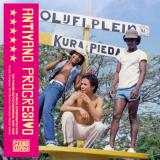
Between the late 1960s and the mid-1980s, musicians across the Dutch Caribbean islands of Aruba, Curaçao, and Sint Maarten created music that crossed stylistic boundaries, forming a close-knit network shaped by common histories and identities, while rarely receiving wider recognition.
From the psychedelic funk of local stars Sugar Ice Tea and Cryptus Confession to the Latin influences of visiting musicians like Puerto Rican star Mon Rivera via Surinamese-influenced soul and the garage rock of Los Honda, the islands nourished a huge array of styles and talent.
Antiyano Progresivo unfolds against the backdrop of a rapidly transforming Caribbean. During the twentieth century, oil industries, migration and tourism reshaped the islands, creating unparalleled cultural exchange while deepening social divisions. African, Latin American, North American and European musical traditions intertwined with local forms, producing a rich and distinctive musical landscape. Tambú, tumba, calypso and Caribbean dance music coexisted alongside soul, funk, psychedelic rock, reggae, Latin music and American and British pop. Musicians moved fluidly between these styles, developing sounds that were unmistakably local while remaining connected to wider currents across the Caribbean and beyond.
The period also coincided with growing movements for cultural and political self-determination. Events such as Curaçao's Trinta di Mei uprising in 1969, the emergence of Black Power movements and increasing calls for greater autonomy fostered renewed pride in African heritage, local languages and cultural expression. These ideas resonated through music, inspiring artists to challenge conventions and create work that reflected changing identities.
out of Stock
Last delivered 3 days ago available to reorder, subject to availability
From the fires and floods of the Australian bush on her debut, Soon, which Phil Elverum reissued via his label, P.W. Elverum & Sun, tiarn now takes us to the shores of the Pacific Ocean where classical and electronic arrangements move with an ever-present longing for connection and nature. Stretton has weaved a new world, set on the brink of night, when the world is soft and suspended in blue. Living in isolation near the ocean, overlooking the winter migration of whales, Stretton would regularly swim during the brief 20-minute period known as the blue hour. Ideas would come to her in the icy salt water, and walking home in the dark, she would carry melodies back to record that night. At its heart, tiarn reflects ecological grief and the search for connection in a changing world. tiarn is also inspired by a piece of home camera footage Stretton found of her family in Japan where they lived in the ‘90s before she was born.
It shows the distant mountains, and Stretton’s young family looking over the valley in the soft static of one summer evening. Decades later, using the untouched synth her parents had bought in Tokyo in 1991, Stretton began recording music directly to that footage, letting the images dictate the melody. Voices, insects, weather, movement, and the ambient sounds of the valley are woven throughout the record itself, blurring the line between documentation and composition. The result is an album that feels less created than uncovered — something remembered rather than made. Stretton’s work continues to carve a singular path in contemporary music, balancing environmental awareness, experimental composition, and deeply personal storytelling.
out of Stock
Last delivered 4 days ago available to reorder, subject to availability
Big welcome to Time is Now for J Wax for a bit of a statement EP and I am coming out swinging here cos this is a really good record. There’s good, and then there’s this, the kind of good that stays good.
You know that feeling when something’s just right. When flow state becomes clarity. Well listening to this EP from J Wax gives me that feeling. This is proper Goldilocks business. It’s equal parts Gun Fingers and Loved up hugs. Just right.
By now we all know that something very special happens when Speed Garage collides with 1st wave UK Hard House - but - what makes this just right is that J Wax didn’t stop there, just like the Dutch 2nd Wave of Hard House he’s slid onwards into euphoric trance and oh boy am I here for it. In 1997 we got Double99’s Rip Groove and Nalin & Kane’s Beach Ball and for me this EP has as much in common with perfectly formed ‘97 Trance as it does with Speed Garage. Who says you can’t have it all!
We’ve been following J Wax’s output for years. He has been grafting hard. And for me he’s already firmly a part of the long lineage of globally significant Scottish party starting producers and DJ’s. So when we signed this EP to Time is Now I was gassed. Four big tunes. Sick EP. For me it’s crystal. J Wax is now a producer operating in rarefied air.
Run the Tracks….
A1. The dubplate of ’Peaches’ has been causing mayhem for a minute. Gliding in smooth before that big diva vocal screams down the bassline.
A2. J Wax tags in Edinburgh local RUA.DJ. The pair double up on ‘Shift’ for a slice of Trance infused but no-nonsense Speedy G. Reece bass & gun shots + bouncy synthline & ethereal chords. Lose it and yourself.
B1. ‘Soul Movement’ is a big room weapon. Serious levels on this one that leave no doubt - this is a producer at the top of his game, writing high energy weapons to destroy the dance.
B2. ‘Smokin’ is peak time bizness. Harder darker house with a diiirty dirty south vocal chop. This one is heads down & lock in…
Goldilocks.
out of Stock
Last delivered 5 days ago available to reorder, subject to availability
"Guitarize the World" lässt die außergewöhnliche Erfolgsgeschichte des genreübergreifenden Gitarrenduos Café del Mundo erstmals auf einem Album erklingen und versammelt einen Querschnitt der mitreißenden Arrangements aus Klassik, Filmmusik und Pop, mit denen Jan Pascal und Alexander Kilian ihr Publikum weltweit bei ihren spektakulären Live-Auftritten begeistern. Aufgenommen in legendären Studios wie Abbey Road und in Zusammenarbeit mit renommierten Ensembles wie dem Royal Philharmonic Orchestra oder dem Deutschen Filmorchester Babelsberg, präsentiert "Guitarize the World" den unverwechselbaren Sound des Duos in mehr als 20 Tracks. Von reduzierten Gitarren-Miniaturen bis hin zu opulenten Orchesterarrangements umfasst das Album eigene Kompositionen wie "Dance of Joy", "Space Gitanos" und "Smile", Adaptionen klassischer Titel wie "Clair de Lune" und "Air on a G-String", Arrangements von Filmmusiktiteln aus "Interstellar", "Cinema Paradiso" oder "Forrest Gump" sowie bombastische Cover von Pop-Hymnen wie "Viva la Vida", "With or Without You" und "Smooth Criminal". Darüber hinaus enthält das Album exklusiv ein Arrangement von Beethovens Klavierkonzert Nr. 5 für zwei Gitarren. Die 180-g-Color-Vinyl-Edition beinhaltet 23 Titel auf 2 Schallplatten in Grün und Pink im hochwertigen Gatefold. Exklusiv in diesem Format enthalten sind die Aufnahmen von "Blessing", "Easy" und "Smooth Criminal". Die limitierte 2-CD-Edition enthält die 20 Titel des Albums sowie als Bonus-CD "80s Unplugged" mit 13 Gitarrenarrangements legendärer Klassiker der 1980er-Jahre, darunter "Everybody Wants to Rule the World", "Time After Time" und "I Still Haven't Found What I'm Looking For".
A channeling of restless spirit and ritual movement, knowledge that travels beyond its origin, pressed into black wax. An imprint of a hidden world, where soundscapes and movement are celebrated. A living archive, carried forward.
03: A Post-Modern Object-Oriented Chaotic Cellular Microtonal Teledildonic Virtual Simulacra! (Buzzwords (that might have gotten you tenure) for sampled orchestra)
01: Martigny (1991) for computer-controlled synthesizer
02: 24 Chorales for Chris Mann (1991) for computer-controlled synthesizer
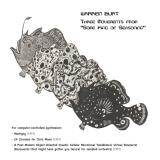
EM Records is proud to release Three Movements from “Some Kind of Seasoning” by the eminent Warren Burt: composer (and performer, writer, instrument builder, educator) of genius. Burt was born in 1949 in the USA, and moved to Australia in 1975. Throughout his long and inspired career, his expansive aesthetic has eagerly embraced microtonality, improvisation and technology, fusing these elements in often humorous and/or irreverent compositions based on live interaction with intelligent or semi-intelligent machine processes. He sets up machine-generated musical environments and then “wanders through” their rules and behaviors, exploring the resulting possibilities in a manner which never results in tech-driven alienation or alienating randomness; Burt’s keen and personable musical intelligence is always evident. This release features music from the final sections of a near-six-hour epic cycle of interactive computer and synthesizer pieces from 1990-91, investigating the magical intermediate space between the human and the mechanical. Dedicated to Kenneth Gaburo, the music draws on wide-ranging inspirations including Sun Ra and Elliott Carter, Quincy Jones’ “Setembro” and Charles Ives, Portsmouth Sinfonia and ancient Greek modes. With good-natured humor, an openness to the excellence of “mistakes” and a wide range of timbres, the music includes progressions of "traditionally musical" pitches, delicate textures of sustained electronic tones, raucous and noisy combinations of sound. Available on 12” LP, CD and DL, with liner notes by the composer.
c 03: A Post-Modern Object-Oriented Chaotic Cellular Microtonal Teledildonic Virtual Simulacra! (Buzzwords (that might have gotten you tenure) for sampled orchestra) 1991 for computer-controlled synthesizer
[c] 03: A Post-Modern Object-Oriented Chaotic Cellular Microtonal Teledildonic Virtual Simulacra! (Buzzwords (that might have gotten you tenure) for sampled orchestra) [1991] for computer-controlled synthesizer
[c] 03: A Post-Modern Object-Oriented Chaotic Cellular Microtonal Teledildonic Virtual Simulacra! (Buzzwords (that might have gotten you tenure) for sampled orchestra) [1991] for computer-controlled synthesizer
Futurismo proudly present a vital compilation born in the shadows of American punk; AMERICAN GRAVE Gothic Punk / Deathrock USA: 1978-1988, the third volume in their Altered Vision anthology series.
Drawing from darkest depths of the American spirit, American Grave is testament to a subculture spawned from late night savagery, graveyard hangouts and suburban isolation. Deathrock, post-punk, goth, whatever term you prefer, this compilation showcases the sounds and aesthetics of a tarnished golden era, an underground movement that took the DIY concepts of punk and the velocity of a burgeoning hardcore scene and immersed it in echoes, distortion, tribal rhythms and macabre vocals, thematically preying upon cult horror flicks, surrealism, and the manipulation of religious iconography. Whilst the UK had a counterpart scene many would hail as Goth, this was different, this was a truly American incarnation, a new breed of youth haunted by the ghosts of old blues, garage and glam, bleak theatrical imagery dressed up to evoke a response, smeared eyeliner, leather, bones…black. This was a backlash against a culture in decay, bucking against a puritanical oppression brought on by the archaic social standards set by their parents. It was aggression manifested as gloom, it was a ceremony, the celebration of death.
American Grave has been co-curated by Wesley Eisold (Cold Cave/American Nightmare/Heartworm Press) in collaboration with Futurismo head honcho Del Jae, to bring you a haunting tracklist ranging from the all important integral mainstays of the genre to those rarer and more elusive artists, including many recordings that have never been reissued before on any format. Featuring the music of Christian Death, T.S.O.L., The Cramps, Of A Mesh, The Gun Club, Twisted Roots, Kommunity FK, The Brainz, Theatre Of Ice, Burning Image, Fur Bible, PSI Com, Shadow Of Fear, Super Heroines, 45 Grave and more.
The music on this compilation is reinstated further from a visual perspective by an array of incredible images by famed punk photographer Edward Colver, and lovingly designed to the level you would expect from a Futurismo release.
2xLP on limited edition ‘Splintered Tomb’ coloured vinyl. It is housed in a gloss laminated outer sleeve with colour inner sleeves and contains a large fold-out poster with unseen photos by the great Edward Colver, words by Lisa Fancher and liner notes by Wesley Eisold of Cold Cave/American Nightmare.
The third chapter of The Third Room's curator-led series is shaped by Verraco, one of the key voices behind a new generation of artists reshaping contemporary club music. Through his productions, DJ sets and his work with TraTraTrax, he has helped define a sound where hybrid forms, rhythmic experimentation and cross-cultural influences are pushing the genre into new territory. Structured across two distinct sides, the release draws a clear connection between past and present. The A-side leans into a deeper, more classic space, while the B-side moves towards a more forward-facing, hybrid sound. It opens with Libration (Stone Version) by Substance & Vainqueur, a revisiting of their landmark 2007 release, a track that helped define the language of Dub Techno as it is understood today. Reduced, deep and spatially precise, it established a blueprint for how rhythm, delay and tone could function together. It's presence here acts less as a nod to the past and more as a reminder of a foundation that continues to shape the genre. Skee Mask's Clear Sky 909 continues this thread, softening the edges without losing depth. Warm, enveloping textures and fluid movement give the track a sense of openness, balancing clarity with emotional weight. The B-side shifts perspective. On Untitled (Teamgeist Mix), Verraco, joined by Tils, delivers the record's defining moment - a dense, intricately designed piece built on a driving low-end and evolving rhythmic patterns. Elements from Techno, Bass and Leftfield House converge into a detailed, forward-moving structure that actively bridges cultural contexts. It results in a form of dance music shaped by technical precision, but drive.n by a clear sense of intent, marking a distinct expression of Verraco's current sound. Untitled by 1morning introduces a rolling, tribal-infused groove with a strong sense of depth, while PatumPa by Regal86 closes the record with a bright, loop-driven energy that leans into pure motion. Across both sides, the release moves between reference and progression. Rather than separating old and new, Verraco connects them - tracing a line from foundational Dub Techno to a more fluid, contemporary club language. Copyright 2026 The Third Room A1 Written and Produced by Peter Kuschnereit & Rene Loewe | A2 Written and Produced by Bryan Mueller | B1 Written and Produced by JP Lopez & Jakob Ferdinand Tils and mixed by Lurka | B2 Written and Produced by 1morning | B3 Written and Produced by Regal86 Mastered by Andreas Kauffelt (Schnittstelle Berlin) Artwork by Charlotte Ernst Design by Daniel Bornmann (STUEDIO.XYZ) Distribution by Clone Pressing by Matter Of Fact
out of Stock
Last delivered 8 days ago available to reorder, subject to availability
OTHELLO is the debut album by pianist and composer Orson Claeys. Bringing together influences from jazz, hip-hop, urban culture, and everyday life, the record offers the clearest portrait yet of an artist shaped as much by the worlds around him as by music itself.
The title refers to Claeys' full name, Orson Dwight Othello Claeys, and reflects the album's central concern:identity. Throughout the record, personal experiences, cultural influences, and artistic inspirations converge into a body of work that seeks to understand how an artist is formed, both within and beyond music. Musically, OTHELLO builds on jazz, strongly intertwined with hip-hop, contemporary culture, and ideas beyond traditional musical frameworks. For Claeys, music is not a fixed genre, but an open and evolving form of expression.
This broad perspective is evident in the album's carefully chosen collaborations. A track like "WHAT A NIGHT" first took shape during a studio session with indie-soul singer Sevens, whose harmonic ideas laid the foundation for the track. As the composition evolved, Claeys felt it called for a stronger hip-hop voice. Through a recommendation from Mixmonster Menno of STUFF., he was introduced to L.A. rapper IAMOMNI, whose contribution brought exactly the energy and perspective the track needed. The result unfolds like a late-night journey through Los Angeles, with IAMOMNI's contribution adding a sense of movement, character, and place.
Elsewhere on the album, "SPIRAL", featuring Belgo-Brazilian vocalist Helena Casella, grew out of a long-standing mutual admiration. Conceived as a meeting point between R&B and jazz, the composition balances the groove and emotional depth of the former with the improvisational spirit and spontaneity of the latter. The collaboration developed naturally from the outset, with Casella instinctively understanding the atmosphere Claeys envisioned while enriching the music with her own warmth and nuance.
A long-held ambition materializes on "SHADOWBOXING", where Claeys is joined by drummer, producer, and one of the key figures in contemporary Belgian jazz, Lander Gyselinck. Gyselinck's work, particularly his collaboration with Zwangere Guy on Pourriture Noble, was instrumental in showing Claeys how the language of hip-hop could coexist naturally with jazz, an idea that runs through OTHELLO. Drawing inspiration from boxing, the track is a musical equivalent of a fighter's walk towards the ring: focused, intense, and driven by the sense of anticipation that precedes stepping into the fight.
After this heightened intensity, the album gradually moves toward its closing statement. OUTRO / HANIN", featuring oud player Akram Ben Romdhane, a longtime collaborator whose playing forms a natural bridge between Claeys' previous work and the broader musical landscape explored across the album. The title references the Tunisian Arabic word hanin, meaning "nostalgia", a fitting conclusion to a work deeply concerned with memory, identity, and personal history.
Beyond music itself, OTHELLO is informed by a wider cultural landscape. Urban culture, with its visual language, creative independence, and sense of community, forms an important backdrop to the record. Sport also plays a significant role, particularly boxing and basketball, whose emphasis on discipline, focus, and resilience mirrors Claeys' own creative process. Rather than being treated as separate influences, these worlds coexist without hierarchy, reflecting an artistic vision that resists rigid boundaries and allows different disciplines, communities, and experiences to inform one another.
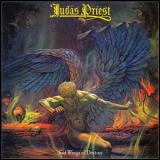
Dieses Reissue würdigt das 50-jährige Jubiläum eines der wegweisenden Alben des Heavy Metal. Original-Master von 1976, Half-Speed-Mastering, farbiges Vinyl, Original-Artwork, ursprüngliche gewünschte Tracklist. Diese zum 50. Jubiläum erscheinende Ausgabe von Sad Wings of Destiny wurde von den analogen Original-Masterbändern aus dem Jahr 1976 restauriert und stellt die definitive Version des Albums dar. Das ursprünglich 1976 veröffentlichte Album gilt als eines der einflussreichsten Alben in der Geschichte des Heavy Metal und prägte das Genre maßgeblich mit Klassikern wie "Victim of Changes", "The Ripper" und "Tyrant". Die in Zusammenarbeit mit Judas Priest entstandene Ausgabe wurde im Half-Speed-Mastering-Verfahren speziell für Vinyl bearbeitet. Dieses Verfahren bewahrt die Kraft und den Dynamikumfang der analogen Aufnahmen und sorgt zugleich für außergewöhnliche Klarheit und Tiefe. Die Wiedergabe erfolgt in der von der Band vorgesehenen Reihenfolge, beginnend mit "Prelude", wodurch das ursprüngliche Hörerlebnis wiederhergestellt wird. Die LP kommt dabei im ikonischen original Artwork als Galaxy Yellow/Orange Mix Vinyl, auch als klasse klingende CD wieder erhältlich. "Sad Wings of Destiny, ...simultaneously took heavy metal to new depths of darkness and new heights of technical precision. [...] Three songs rank as all-time metal classics, starting with the epic "Victim of Changes," which is blessed with an indelible main riff, a star-making vocal turn from Halford, explosive guitar work, and a tight focus that belies its nearly eight-minute length. "The Ripper" and "Tyrant," with their driving guitar riffs and concise construction, are the first seeds of what would flower into the New Wave of British Heavy Metal movement." -
Pierre Mariétan (1935–2025) was a prolific Swiss composer, sound artist, and pioneer in acoustic ecology who spent most of his life working in France. Over his long career, he composed more than 300 instrumental, orchestral, vocal, and electronic pieces. Mariétan studied under avant-garde legends like Pierre Boulez, Karlheinz Stockhausen, and Bernd Alois Zimmermann. In 1966, he founded GERM (Groupe d’Étude et de Réalisation Musicales), a music collective that blurred the lines between strict composition and free improvisation. In 1969 the French BYG label released a GERM album and the same year GERM played at the legendary 5-day Festival in Amougies, Belgium, sharing stage with Pink Floyd, The Soft Machine, Frank Zappa, Don Cherry,…
In 1979 Mariétan founded the Laboratoire d'Acoustique Urbaine (Urban Acoustics Laboratory) to bridge environmental sounds, urban architecture, and musical composition. Mariétan was also a professor at the University of Paris where he taught the relationship between sound and space. Later in life, he remained active as a director for the Movement of Environmental Sound and continued developing permanent, immersive sound installations across the globe. His album Musique d’été was originally released on cassette back in 1983 by Éditions Salabert and Costin Miereanu’s Poly-Art International, and it has been slightly tweaked for this LP reissue. The record splits his vision of "Summer Music" into two different vibes. Side A is a deep dive into an electronic, synthesizer-driven landscape, while Side B features raw acoustic field recordings of forests and traditional Swiss alphorns.
Adjust the intensity of the sound at the same level, if not just above the background noise specific to the place of diffusion.
Elektronische Klangreisen zwischen pulsierendem Techno, treibendem House und atmosphärischer Ambient-Electronica. Treibende Grooves, verspielte Beats und futuristische Effekte schaffen Kopfkino, Bewegung und positive Energie – perfekt für Dancefloor, Afterhour oder entspannte Hörmomente.
EN
The electronic sound goes from pounding techno to driving house and atmospheric ambient electronica. Driving grooves, playful beats and futuristic effects create mental images, movement and positive energy – perfect for the dance floor, after-hours or relaxed listening moments.
French composer, artist and co-founder of Transversales Disques, Jonathan Fitoussi has developed a distinctive body of
work over the past two decades, blending analog synthesis, minimalism and electronic music.
Inspired by the mineral landscapes and luminous atmosphere of southeastern France, DELTAS is his fifth solo studio album.
Combining hypnotic drum patterns, flowing pulses, shimmering electronic textures and contemplative movements, it unfolds as a deeply immersive journey through space, light and motion.
A rich and evocative work from one of the most singular voices in contemporary electronic music.
out of Stock
Last delivered 12 days ago available to reorder, subject to availability
Selected by Lea Lisa, Many Shades Of House - Vol 2 is a reflection of time, movement and memory. Built from decades of digging, collecting and playing records, this new chapter captures the many emotional layers of house music.
From uplifting, groove-led moments to deeper, more obscure and cerebral territories. Each track has been chosen not only for its musical strength, but for the stories it carries: nights behind the decks, connections on the dancefloor, and the quiet influence these records have had along the way.
True to the spirit of the first volume, this selection celebrates diversity and timelessness without compromise. It is a tribute to the artists’ vision, to the culture that surrounds this music, and to the shared experience that continues to unite listeners, dancers and selectors across generations.
out of Stock
Last delivered 12 days ago available to reorder, subject to availability
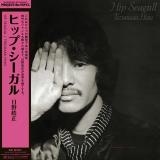
This is both a blueprint and a definitive masterpiece. Effortlessly transcending eras and genres, Terumasa Hino continues to captivate audiences around the world.
His sound and presence are truly top of the tops. Long before Japanese jazz was labeled as “Wa-Jazz”, and even before the rare groove movement emerged, Hip Seagull has been shaking dance floors, stimulating listeners, and fascinating collectors alike. Since his debut album Alone, Alone and Alone, Terumasa Hino has remained at the forefront of the scene, consistently delivering works that can be called masterpieces in every era. Among them, this 1978 recording stands out as one of his signature achievements.
From the epic title track “Hip Seagull”, which unfolds from a mystical intro into a jazz-funk journey, to the mellow and cosmic “This Planet Is Ours,” the album is filled with tracks imbued with a truly unique atmosphere.
This is both a blueprint and a completed form. Hip Seagull continues to enchant the past, present, and future alike.
IVM Trio is made up of percussionist & composer Sébastien Forrester, producer & visual artist Mika Oki, and artist & producer Apulati Bien. All three sit within the French-Brussels axis, united by a shared love of free improvisation, sparse atmospherics and rapturous club mutations. Inner Voice Movement is a genuinely exploratory record — abstraction and contemplation sit side by side, as the trio dives into the micro-precision of computer music while mirroring organic, environmental schemes. These have long been persistent points of study for all three artists.
Arriving on Accidental Meetings, their debut album has been a long time coming, and it features three outstanding vocalists. South Korean artist bela brings the depth and range of their guttural vocals; Bristol-based Grove, a leading voice in punk-dancehall crossover, pulls things back with a spoken-word feature; and Naples sound artist Sara Persico rounds things off with a stunning excerpt of storytelling.
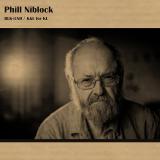
Phill Niblock completed BLK+LND in late November 2023. It is one of Phill Niblock's final compositions and was commissioned by bassist Robert Black (who passed away in the summer of 2023). The piece is based on recordings of acoustic bass and bass clarinet performed by Neil Leonard and Robert Black under Niblock's direction in 2021.
Phill Niblock (1933-2024) as an artist whose fifty-year career spanned minimalist and experimental music, film and photography. He has been a maverick presence on the fringes of the avant-garde. In the history books he is the forgotten Minimalist. Since 1985, he served as director of Experimental Intermedia, a foundation for avant-garde music based in New York with a branch in Ghent, and curator of the foundation's record label XI. Known for his thick, loud drones of music, his signature sound is filled with microtones of instrumental timbres that generate many other tones in the performance space. He said: 'What I am doing with my music is to produce something without rhythm or melody, by using many microtones that cause movements very, very slowly.' In 2013, his diverse artistic career was the subject of a retrospective realized in partnership between Circuit (Centre d'art contemporain Lausanne) and Musée de l'Elysée (Paris). The following year he was honored with the prestigious Foundation for Contemporary Arts John Cage Award. Since 1968 he also put on over 1000 concerts in his loft space in New York.
"On January 6, 2024, two days before his passing, Phill called me to discuss the premiere and tour of BLK+LND. To distract him from his rapid decline, I engaged in his touring plan, only for him to reveal that all the details were still in his head and none of the events had been confirmed. He was entrusting the project to me. Phill would have been thrilled and honored by this concert at the Donaueschinger Musiktage. The thought of one more performance with Robert Black, whom he greatly admired, presenting his new work for low-pitched instruments that he was particularly fond of, andreconnecting with old and new friends in Donaueschingen would have meant the world to him." - Neil Leonard, Berklee College of Music, Boston
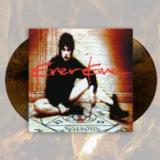
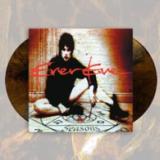
EverEve - "Seasons", "Stormbirds" & "Regret"The first three masterpieces of Germany's EverEve, (Their name is taken from a poem out of "Lord of the Rings") "Seasons" (1997), "Stormbirds" (1998), and "Regret" (1999), are deeply emotional works of art, forged in darkness, melancholy, and poetic introspection, standing today as some of the most compelling statements ever produced within the Gothic Metal movement.In the late 1990s, while countless bands attempted to define the boundaries of Gothic Metal, EverEve effortlessly rose above convention Their music was never confined by genre limitations. It drew equally from Doom Metal's oppressive weight, Gothic Rock's romantic desolation, and the emotional grandeur of Dark Wave, creating a soundscape that was uniquely their own. "Seasons " marked the beginning of this remarkable journey. A debut album rich in atmosphere and emotional depth, it introduced a band already possessing a mature artistic identity. Its songs unfold like chapters from a forgotten gothic novel, where every melody is wrapped in shadows and every lyric resonates with profound emotional sincerity.
EverEve - "Seasons", "Stormbirds" & "Regret"The first three masterpieces of Germany's EverEve, (Their name is taken from a poem out of "Lord of the Rings") "Seasons" (1997), "Stormbirds" (1998), and "Regret" (1999), are deeply emotional works of art, forged in darkness, melancholy, and poetic introspection, standing today as some of the most compelling statements ever produced within the Gothic Metal movement.In the late 1990s, while countless bands attempted to define the boundaries of Gothic Metal, EverEve effortlessly rose above convention Their music was never confined by genre limitations. It drew equally from Doom Metal's oppressive weight, Gothic Rock's romantic desolation, and the emotional grandeur of Dark Wave, creating a soundscape that was uniquely their own. "Seasons " marked the beginning of this remarkable journey. A debut album rich in atmosphere and emotional depth, it introduced a band already possessing a mature artistic identity. Its songs unfold like chapters from a forgotten gothic novel, where every melody is wrapped in shadows and every lyric resonates with profound emotional sincerity.
The first three masterpieces of Germany's EverEve, (Their name is taken from a poem out of "Lord of the Rings") "Seasons" (1997), "Stormbirds" (1998), and "Regret" (1999), are deeply emotional works of art, forged in darkness, melancholy, and poetic introspection, standing today as some of the most compelling statements ever produced within the Gothic Metal movement.In the late 1990s, while countless bands attempted to define the boundaries of Gothic Metal, EverEve effortlessly rose above convention Their music was never confined by genre limitations. It drew equally from Doom Metal's oppressive weight, Gothic Rock's romantic desolation, and the emotional grandeur of Dark Wave, creating a soundscape that was uniquely their own. "Seasons " marked the beginning of this remarkable journey. A debut album rich in atmosphere and emotional depth, it introduced a band already possessing a mature artistic identity. Its songs unfold like chapters from a forgotten gothic novel, where every melody is wrapped in shadows and every lyric resonates with profound emotional sincerity.
The first three masterpieces of Germany's EverEve, (Their name is taken from a poem out of "Lord of the Rings") "Seasons" (1997), "Stormbirds" (1998), and "Regret" (1999), are deeply emotional works of art, forged in darkness, melancholy, and poetic introspection, standing today as some of the most compelling statements ever produced within the Gothic Metal movement.In the late 1990s, while countless bands attempted to define the boundaries of Gothic Metal, EverEve effortlessly rose above convention Their music was never confined by genre limitations. It drew equally from Doom Metal's oppressive weight, Gothic Rock's romantic desolation, and the emotional grandeur of Dark Wave, creating a soundscape that was uniquely their own. "Seasons " marked the beginning of this remarkable journey. A debut album rich in atmosphere and emotional depth, it introduced a band already possessing a mature artistic identity. Its songs unfold like chapters from a forgotten gothic novel, where every melody is wrapped in shadows and every lyric resonates with profound emotional sincerity.
Following one of 2025’s standout EPs, the CEO of the National Centre for Mark Fell Studies fires from the hip in brilliant, club-troubling motion. In step with 30 years of prism-pushing work — and particularly the »Nite Closures« EP, which signalled a concerted return to the dancefloor — Fell pulls aspects of hypermodern dance and electronic music from Chicago, Tanzania, and Japan into his own peculiar agenda.
The hugely distinctive results pull the body into thrillingly unusual, typically ascetic arrangements, activating every pointillist drum hit with attack and decay in a soberly ludic play of rhythmelodic tension and release, executed to delirious ends; 40 minutes of computer music.
As an artist who witnessed first-hand the explosion of electronic music in early ’80s Sheffield, and its interplay with house and rave as it refracted into wild new styles during the ’90s, Mark Fell is uniquely positioned to pursue his passion for the dynamics of electronic dance music to the nth degree. »Servitude In Context« continues to develop ideas around music for movement in the mid-2020s, placing decades of keen observation — from the macro and historical to the niche and hypermodern — at the service of flexing bodies in new directions.
Long-held notions of multistability manifest in what feels like two machines playing chess on the dancefloor, attempting to adapt to each other’s playing styles and patterns in real time, anticipating and zigzagging around the next move. The result is a plethora of options for limber dancers and those who only bust a move inside their heads.
The slow-fast play of accelerating and decelerating strikes, alongside monotonic chatter in »Actuations #1 (Extended)«, acclimatises the body to a uniquely sensual physics. This develops into the rudely screwed, asymmetric angularity of »Time-Slur« and the shatterproof elasticity of »Taut Manifold«, which feels like an LLM trained on Autechre.
»Low Energy Mantra« offers the EP’s closest resemblance to melodic structure, like gamelan and footwork refracted through lab-grown diamonds. Then »Anode« flashes its teeth with a rudeness recalling the latter stages of Fell’s Pat Thomas jams, before »3 Lost Contours (Pts 1–5)« tilts into 12 minutes of proper quicksilver madness, balancing the sexiness of his Sensate Focus work with an updated, clean-hoofed step and parry.
This VA release brings together four producers who share a common language: hypnosis, movement, and an obsessive attention to sound design. Across two sides of vinyl, the record moves through different shades of deep and mental techno, held together by a sense of restraint and clarity rather than force.
Na Nich opens the A-side with a mental yet groove-driven piece, where impeccable sound quality meets a clean, deliberate design. LFO-driven elements float underneath the surface, almost speaking, giving the track a voice of its own without ever breaking its hypnotic hold.
Forest On Stasys follows with a tribal and deep approach that still hits with weight. Shakers and layered percussion drive the movement forward, building a rhythmic body that feels both organic and controlled.
On the B-side, Translate stays true to a purely mental identity: repeating LFOs and speaking tones that fold in on themselves, always kept clean and precise, letting the repetition do the work.
Save Your Atoll & Gabriele Santucci close the record with a deep, tribal-leaning cut full of groove and motion. Bongos, shakers, and background percussion build a danceable hypnosis, where every element serves the movement.
Four tracks, four voices, one shared sense of direction — a record built for the floor, but never at the expense of detail.
Following a strong debut, the Uruguayan label EviternoRecords returns with its second release, Teknovela, bringing together Molen and Nico Lampariello, two of the most talented poducers from the new generation of Uruguay’s electronic scene. Across four carefully crafted cuts, the EP expands the label’s vision through music that is equally instinctive and deliberate. Built around hypnotic movement, subtle tension and refined groove, Teknovela unfolds with patience, inviting listeners into an evolving journey where every detail serves the dancefloor without sacrificing depth or personality. The A-side finds Nico Lampariello exploring darker and more introspective terrain, weaving resonant basslines, shifting atmospheres and understated melodic touches into compositions that gradually reveal their emotional weight.
At The B-side Molen delivers two tracks driven by fluid rhythms, intricate spooky melodies and mysterious textures with a constant sense of forward motion. Rather than contrasting one another, both artists meet at the same destination from different directions. Together, the four tracks form a cohesive statement that captures the spirit of contemporary underground house and techno: immersive and built to leave a lasting impression.
out of Stock
Last delivered 17 days ago available to reorder, subject to availability
The first transmission from Pink Dolphin arrives on a double-sided 12” – two sides of music following the warmth, movement and possibility of an endless day.
Night Wind moves with the ease of a warm summer afternoon – light, fluid and quietly uplifting. Rhythm and atmosphere flow together with an effortless sense of motion, like a breeze arriving from somewhere just beyond the horizon. There is a feeling of open space throughout: sunlight on water, windows open, landscapes slowly passing by. Nothing feels hurried. The music simply finds its own pace, suspended somewhere between movement and stillness.
As the music unfolds, familiar elements seem to drift in and out of focus, leaving just enough unexplained. It feels less like a destination than a moment – one of those stretches of summer when time loosens its grip and the day seems capable of continuing indefinitely.
Night Wind is a small escape into that space.
out of Stock
Last delivered 18 days ago available to reorder, subject to availability
The practice of dub techno and its tendrils is a fundamental for me, both aesthetically and from an engineering perspective.
I start every recording session with a dub inspired jam, the first piece I ever recorded in 1996 was an effort to recreate Phylyps Trak with only a Korg X3 and an Ibanez PUE5 (borrowed from Gary Howell). It was an awesome introduction to jamming, and the footing stones of noise, delay and saturation were explored with my foot hard on the enthusiasm pedal.
These practice jams are in some sense cathartic, the first step taken again & again, which helps me move forwards each session and additionally helps to 'warm the circuits' both of myself and the machines.
After realising the genius of Basic Channel is akin to the genius of peasant food, using every ingredient with nothing left to waste, (up to and including the oft maligned working noise of the machines themselves), this was a watershed moment for my own subjective progression. No longer tied to just emulation of something inspiring, but taking these learned tools into other areas of music helped to break free from a strong current of influence and also to progress into other areas with the new toolbox.
Dub:
The importance of the dub pioneers should never be understated, in modern music and my own practice. Yet with my initial inspiration being two german dudes issuing extreme techno variants with obscured label designs, who then signposted their listeners to their own inspirations (via their Wackies re-issues or nodded to on their Rhythm & Sound/Burial Mix sub-labels), meant that I started late and travelled backwards.
Learning to notice the live mixing of Mikey Dread or Lee Perry when the faders are bleeding through even when turned down, (echoed in BC's Quadrant Dub), or the brash send effects literally thrown into the mix also taught me that 'rough' mixing can inject a recording with life, uniqueness and the most right wrongness. Looking back Basic Channels very few elements helped me realise that the rules to be understood, are also the best ones to be broken.
Push the mixer into the red.
Amp that noise up from the tape delay cos it sounds sick.
Pseudo side-chain effects cos the kicks are way too loud and the mixer can't sum it nicely.
Spam the send knob into the delay units now, now and now.
Carelessness.
Noise:
Once I wrapped my head around the intrinsic 'noise' element that set those records apart, this became a torchlight into the alt noise movements which I was tentatively exploring at the time, and also is evidently a connection or thread into them.
Whether the Industrial/Post Punk UK scene (This Heat, TG, A Tent, F.E.) or the prolific output of the US Noise scene (Wolf Eyes, Live & Shave in LA, and subsequently following the lineage all the way back to Chrome's Alien Soundtracks), I had finally discovered a connection from techno to this 'free for all' corner of music.
This input from the Noise arena of sound is, in my experience, an all important step for a sonic artist, taking it's roots and extending out from Stockhausen/Pierre Henry and utilised/warped/mangled by thousands of adventurous pioneers ever since, I now see the line separating the high brow and the low brow is actually an artery carrying information from the head to the heart.
Vault is a selection of these jams that precede each of my solo recording sessions, for 30 years I've recorded hundreds of these 'workouts'. They are never intended as serious statements, just moments of naive enjoyment, yet most importantly they are time & space captured as practice.
The objective is always a warm up exercise, but sometimes those exercises turn a different corner, with a certain focus or direction dependent on what random samples are left in my machines from the previous session, instead of conscious choices, these unconscious elements can facilitate those 'positive mistakes' that make a piece of sound retain a different feel or colour and thus become special, or at least special to the creator.
I am quite conscious that the 'record everything' aspect of my ethos has been invaluable in cataloguing and saving these jams, while the attitude of carelessness during this process (after all, it's only a warm up jam) invites more enjoyment than seriousness ever could. Even if you don't feel the piece at the time, record it, because some years later it may well fit, or become relevant in a way you never intended.
-Miles
out of Stock
Last delivered 18 days ago available to reorder, subject to availability
Following the success of Denshi Ongaku No Bigaku Vol. 1 and Vol. 2, Cosmocities returns with the third instalment of its celebrated compilation series dedicated to the rich and ever-evolving world of Japanese electronic music. Compiled by label owner Matt Soulie, Denshi Ongaku No Bigaku Vol. 3 continues the journey through Japan’s diverse sonic landscape, bringing together pioneering artists, cult favourites and contemporary innovators across ambient, house, jazz-infused electronics and experimental sound design.
A carefully curated snapshot of Japanese electronic music past and present, Denshi Ongaku No Bigaku Vol. 3 showcases the depth, innovation and enduring influence of one of the world’s most inspiring musical cultures.
Since its inception, the Denshi Ongaku No Bigaku project has paid tribute to a musical culture that has profoundly influenced the Cosmocities vision. Where the first volume explored dreamy ambient textures and deep electronic moods, and the second shifted focus towards boogie-laden rhythms and jazz-fuelled dancefloor excursions, Volume 3 finds a natural balance between introspection and movement.
The compilation opens with Yosi Horikawa’s sublime “Bubbles”, an ambient masterpiece whose delicate organic textures gently set the tone. Chari Chari’s “Luna de Ritmos” follows with deep, ethereal house atmospherics before Force Of Nature’s hypnotic “Skyy High” guides listeners further into immersive territory.
The journey continues through the experimental electronics of XTAL’s “Skygazer” and the analogue warmth of Takuya Matsumoto’s “Jump Rope Music”, while regular Cosmocities contributor Yuu Udagawa delivers the sophisticated high-tech jazz house groove of “Little Secrets”.
On the second half of the collection, Kuniyuki’s remix of Slow Didi’s “Follow Me” brings rich jazz-inflected elegance, leading seamlessly into the futuristic techno-swing fusion of DJ Eiji Takehana featuring Yusuke Nakamura’s “Deep Track Jazz”. Tominori Hosoya’s “Summer Dreamers” adds a deeply emotional and dreamlike house moment before Azzurro’s “Just A Touch Of Love” shifts the focus firmly towards the dancefloor with a hypnotic late-night thumper.
Closing the compilation is AcidGelge’s “Fatality 4”, a beautifully spacey and atmospheric finale that leaves the listener suspended somewhere between the club, the cosmos and the imagination.
out of Stock
Last delivered 18 days ago available to reorder, subject to availability
Originally released in 1989 with the tagline “Bringing house music into the living room,” Fade Out is a landmark Japanese pop/club crossover produced by Haruo Chikada. At the dawn of Japan’s club culture, the track became a staple around Tokyo’s legendary Shibaura GOLD scene, widely embraced as a “danceable kayōkyoku (Japanese pop)” classic.
Today, among European diggers, Japanese techno kayō is undergoing a strong revival and growing reappraisal. Positioned at the heart of this movement, Fade Out now sees its long-awaited official release, featuring previously unreleased remixes with Soichi Terada, Haruo Chikada & OMB.
Performed by Kyoko Koizumi - still evolving as a cultural icon in Japan - Fade Out stands as one of her defining works and a key contribution to the Japanese underground music scene. A timeless piece, ready to be rediscovered in 2026.
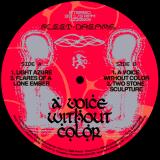
Crafting another beautiful experience in sensorial delight, fleet.dreams returns to Vinezza with the label’s 3rd offering “A Voice Without Color” - born from an ever-deepening practice of groove-powered depth tech melded with realms of dubwise kineticism, enchanted cognition, and expressive, dreamlike synthesis.
“A Voice Without Color” finds fleet.dreams’ music in its most rave-activated mode yet, crafting 4 pieces of infinitely mixable spectral matter - all part of their own universe beckoning to be heard under the glow of stars in the night sky, or floating amidst the mesmerizing fog & lights pumping out of the system on your favorite dancefloor.
Awash in kaleidoscopic splendor and psychedelic intrigue, “A Voice Without Color” finds kinship in everything from the best of expansive dancefloor kineticism, time dilated wonder, and the vivid reverbations of the natural world floating in the mix. At once quintessential, contemporary, and ubiquitous is fleet.dreams’ own remarkable production technique, each track unfurling in seemingly endless swells of simmering rhythm and hypnotizing atmospherics - new memories of circadian entrancement in their molten essence, designed to blissfully guide you deeper and deeper towards the primordial exhilaration of movement. Undulating with vivid pulsations and clarion calls for the hips and mind echoing across a spiraling gyre, the sprawling waltz of “A Voice Without Color” glides through dazzling chroma and effulgent radiance greater than the sum of its parts.
Painting with bold, prismatic strokes of iridescent friction amidst the listless gray of our increasingly dispassionate timeline, fleet.dreams delivers another EP of style, substance, and vision for the dancers and DJs alike - a future classic of a possible world ready to be activated together.
*words by Kiernan Laveaux
Early support from: Kiernan Laveaux, Daniel Rincón (NAP), Scott Zacharias & Amelia Holt
out of Stock
Last delivered 18 days ago available to reorder, subject to availability
Leo Gibbon returns to Mudline with barbed, a six-track suite of dust-worn, sample-driven constructions pieced together from a balcony while travelling. Built from fragments that retain the emotional weight of their origins, the EP finds Gibbon paring his sound back to its essentials, letting cracked loops, negative space and tactile percussion carry a quiet sense of intimacy. There's a subtle tension throughout, music suspended between memory and movement, where worn textures and carefully preserved imperfections become part of the composition itself.
James Massiah appears on the record with a characteristically measured performance, his delivery drawing on the cadence and phrasing of archived poet freestyles, less spoken word than an act of excavation, recalling a lineage of recorded voices whose authority comes from rhythm, restraint and lived experience. His presence folds seamlessly into the EP's weathered textures, becoming another fragment in Gibbon's collage rather than a conventional guest appearance.
The first half drifts through reflective, inward-looking terrain before the second side gradually opens towards the dancefloor, never abandoning the emotional pull that defines the record. Even at its most club-focused, barbed favours understated pressure over obvious peaks, allowing atmosphere and texture to carry as much weight as rhythm. Mastered by Miles Whittaker, every grain, scrape and imperfection is left intact, balancing grit with clarity and reinforcing Mudline's instinct for raw, emotionally resonant club music that feels as honest as it does functional.
Breakbeat Paradise Recordings welcomes back Umbo for another heavyweight installment of the Toxic Funk series. One of the original pioneers of the Nu Funk movement, Umbo once again delivers two dancefloor-ready cuts packed with soulful samples, infectious breaks and unmistakable funky vibes.
Having released music on respected labels such as Good Groove Records and Timewarp, Umbo has built a reputation for crafting timeless party weapons that blend classic funk with modern breakbeat production. His previous appearances on Breakbeat Paradise have become fan favorites, and Toxic Funk Vol. 24 raises the bar once again.
Leading the release is Got Soul, a groove-laden funk workout driven by punchy drums, irresistible basslines and uplifting soul energy that's destined to ignite dancefloors. On the flip side, Save It delivers another dose of vintage funk attitude, combining tight breaks, funky rhythms and cleverly chopped vocals into an irresistible DJ weapon.
Whether you're spinning funk, breaks, nu disco or party edits, these two cuts are built to keep the energy high. Toxic Funk Vol. 24 is another essential addition to the Breakbeat Paradise catalogue and proof that Umbo continues to be one of the scene's most consistent producers.
out of Stock
Last delivered 11 days ago available to reorder, subject to availability
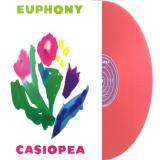
Japanese crossover and fusion are hot again now. As either an outgrowth of, or a spin-off phenomenon from, the global reappraisal of city pop,
Japanese fusion has been rapidly rising since around last year.
This was the second release on AURA, the band’s own label established under Polydor, and their 13th studio album overall.
Because they had continued recording overseas for some time, they chose not to bring in guest musicians for this album, instead settling into their
home base at STUDIO JIVE and creating it solely with the band members.
As a result, the album offers a fresh and lively sound that returns to the group’s roots.
Alongside the live staple "SUPER SONIC MOVEMENT," it is also packed with new attempts, including the Japanese-flavored "Old Times," the technodriven big band-style jazz track "SOLID SWING," and the high-speed Latin funk number "RED ZONE."
This also became the final CASIOPEA album for the duo of Tetsuo Sakurai and Akira Jimbo.
X-Ray Spex was a British punk rock band that emerged in the late 1970s, known for their distinctive sound, socially conscious lyrics, and the dynamic frontwoman Poly Styrene. The band was active during the first wave of punk rock and played a significant role in the punk movement.
Lead vocalist and songwriter Poly Styrene was known for her unique vocal style and often cited as an influential figure in the punk scene.
Other band members on ‘Germfree Adolescents are Jak Airport: Guitarist / Paul Dean: Bassist / Rudi Thompson: Sax / B P Hurding: Drummer.
X-Ray Spex released their debut album, "Germfree Adolescents," in 1978, featuring the title track, "Germfree Adolescents." The album is considered a classic of the punk era.
Poly Styrene's lyrics often addressed social and consumerist issues, and her unconventional fashion sense and energetic stage presence added to the band's overall identity.
Pressure is the medium of wind players. Wind instruments all sound thanks to pressure differentials, whether that’s the rush of wind over a lip plate or a steady, buzzing exhalation through pursed lips. Ka Baird and Chris Ryan Williams (HxH) are wind players well- schooled in the power of using pressure and movement to amplify the mystery of an invisible force animating a metal tube. They augment their instruments, flute and trumpet respectively, with electronics, sometimes obscuring the acoustic sound source, sometimes making it hyperreal. Flutters of lip and tongue slither over the listener’s ear, and sustained tones become a dense fog, pushing on other kinds of visceral, emotional pressure points.
On Enthalpy, Baird and Williams’ first album as a duo, the energy they conjure feels barely contained, the pressure built up to a breaking point before spilling out in multiple directions at various speeds. They borrow the title from thermodynamics, referring to the total energy of a system based on its pressure and volume. The music flies out in bursts; it seeps and oozes, flows with intention. It is an incredibly rhythmic work without any hint of meter, full of sounds that punctuate with the thud of a dart hitting a bullseye. Williams’ capability to conjure swirling atmospherics, as well as his remarkable ability to pull fragments of melody from the haze, fit puzzle-like into Baird’s exclamations and the eruption of electronics that often dovetail them. The duo draws on tones from nearly the entire range of human hearing, from nimble but bulbous throbs of sub-bass to pinprick flickers of ultra-high end.
The sessions that produced Enthalpy were completely improvised, showcasing a degree of mind-meld that belies each participant’s thrill at approaching the unknown. This isn’t a casual conversation, but an omnidirectional tangle that ties and reties itself into new knots as the album progresses. Williams and Baird have both become ubiquitous presences throughout the New York City experimental music communities, collaborating with innumerable others and learning how their unique approaches work in tandem with similarly expansive thinkers and players. Even in the album’s most spacious moments, there’s a tension between the feeling of being unmoored and yet completely locked in, like the abyss is just one more river to cross. They ford it together before moving on to the next idea in lock step.
For the listener, Enthalpy is often felt in the body as much as it reverberates within the ears. We’re tossed from side to side, made to shoulder the impact of detonating electronics, absorbing these sounds with the feet, gut, and crown. Baird reaches into the back of their throat for guttural growls, and we can almost feel the scratch. As we tread the border of the synthesthetic, it's a reminder of the physical nature of sound, that the space between our ears and the speakers is its own enthalpic system of energy conduction. Move with it, let it move you, and see how it feels.
This year, Prohibition reissues their landmark 1996 album Towncrier on vinyl. A cult classic that once took them across Europe and onto the iconic French TV show Nulle Part Ailleurs, the record remains a defining moment in their career. To mark the occasion, the Paris-based quartet returns once again for a series of live performances at the end of 2026. "Prohibition is undoubtedly one of the most important rock bands France has ever produced." - MOWNO Formed in 1989, Prohibition emerged from the underground veins of the French post-punk scene-a time when the movement survived through a handful of fanzines, crumbling venues, and a sparse network of independent record stores. Their sound was raw, urban, and tightly wound, still reverberating with echoes of hardcore and skate culture. A jagged, abrasive form of rock, driven by atonal guitars, surgically precise bass lines, off-kilter rhythms, and biting vocals. What set Prohibition apart was its singular instrumentation: a saxophone unleashed and the hypnotic drone of a sitar cutting through the noise. Their reputation quickly spread across Europe and the United States, leading to relentless touring and shared stages with the likes of Blonde Redhead, Fugazi, David Grubbs, Condense, and Chokebore. The band came to a close in 1999, following the release of their fifth and final album, the enduring 14 Ups & Downs. In 2015, Prohibition reunited for a special tour marking the 20th anniversary of Prohibited Records, including a standout performance at the Teriaki Festival, later captured by Mowno. Celebrating 30 years in 2025, the band released a reimagined version of Cobweb-day, titled Cobweb-day (Revisited), and returned to the stage for a series of powerful, memorable shows. Now, in 2026, Prohibition reissues their landmark 1996 album Towncrier on vinyl. A cult classic that once took them across Europe and onto the iconic French TV show Nulle Part Ailleurs, the record remains a defining moment in their career. To mark the occasion, the Paris-based quartet returns once again for a series of live performances at the end of 2026. For fans of: The Ex, Fugazi, The Jesus Lizard
Marking their second release for GULF COAST RECORDS, the collection favours raw performance over polish, capturing the chemistry, spontaneity, and fearless musicianship that have defined the group for more than three decades. Fronted by the unmistakable voice of JERRY LANGER and the soulful guitar work of RANDY JACOBS - formerly of Was (Not Was) - the EP embraces honest, acoustic arrangements where every note and breath remains beautifully exposed. Produced by Jacobs, Langer, and JOHN WOOLER, the project reveals a band confident enough to let the songs speak for themselves. Recorded primarily at Kaleidoscope Studios in Berlin, the sessions continued wherever the road allowed, with additional performances captured in U.S. studios and hotel rooms between shows. This wandering spirit gives the EP a sense of movement and lived experience. A remarkable ensemble of collaborators adds depth throughout, including Holly Montgomery, Arthur Thompson, Joe Sublett, Mark Pender, Jon Gilutin, and Oliver Leiber. Across six tracks - bold reinterpretations and originals - the band blends Detroit soul, New Orleans groove, blues, and rock & roll swagger. Pull Up the Roots celebrates authenticity, proving that great songs and genuine soul need no embellishment.
Marcal has emerged as one of the most distinctive voices of a new generation of techno producers, combining rhythmic precision with an instinct for detail, tension and movement. On Four Small Escapes, he delivers four tracks built around subtle shifts and carefully placed moments of surprise, where intricate sound design and groove remain in constant dialogue. Opening with Smoke from Respawn, Marcal immediately establishes the record's character. Syncopated rhythms, intricate percussion work and subtle sound design details unfold within a streamlined framework, creating a groove that feels both spacious and forward-moving. Wooden rimshots and glassy textures interact across an open arrangement, giving the track a fluid and trippy quality. Arapuca shifts into darker territory while maintaining the same sense of control. Organic percussion, rolling low-end momentum and sharply placed accents continuously reshape the groove, creating a track that feels alive through movement rather than dramatic intervention. On Ultimamente, Marcal introduces one of the record's most immersive moments. Fleeting sonic details appear and disappear throughout the arrangement, while a carefully integrated vocal element adds depth and emotional weight without disrupting the flow. The result is a track that invites complete immersion while remaining firmly focused on the dancefloor. Closing the EP, The Surprise Test delivers its most direct statement. Rough and driving without leaning into industrial aesthetics, the track is powered by rolling energy, syncopated claps and a series of subtle electronic details that continuously animate its surface. The contrast between rawness and precision gives the record a powerful closing moment. Across all four tracks, Four Small Escapes highlights Marcal's ability to create tension through detail rather than excess. Reduced yet expressive, the EP balances functionality with a strong sense of character, allowing small gestures and unexpected shifts to leave a lasting impact.
out of Stock
Last delivered 2 days ago available to reorder, subject to availability