
disponibile anche
COLOURED VINYL[21,81 €]
pre-ordina ora17.10.2025
dovrebbe essere pubblicato su 17.10.2025
21,81 €
COLOURED VINYL[21,81 €]
dovrebbe essere pubblicato su 17.10.2025

Black Vinyl[21,81 €]
dovrebbe essere pubblicato su 17.10.2025

"The Twits" wurde von der Band im Februar 2023 innerhalb von nur acht Wochen in einem provisorischen Heimstudio auf Mallorca aufgenommen und von Marta Salogni abgemischt. Nach einem Kinderbuch von Roald Dahl benannt, zeigt sich das Songwriting von bar italia in rauen, mystischen, ungebürsteten und gelegentlich düsteren Arrangements. Songs wie "my little tony" mit seinen harten Riffs und dem kathartischen Sound ist ein klassischer Indie-Banger für die große Bühne. In anderen Momenten wagt sich die Band auf bisher unbekanntes Terrain, auf dem sie eine hypnotische Dissonanz ihrer Stimmen schaffen. "Jelsy" zum Beispiel spielt sich wie ein Gespräch zwischen Freunden über wehmütigen, summenden Country-Blues ab, wobei die Stimmen abwechselnd tröstlich, ironisch und hoffnungslos sehnsüchtig sind. Der geschmeidige, langsam brennende Walzer "Twist" besticht durch seine nackte Lyrik und scheint jedes Bandmitglied zu einem individuellen Bekenntnis einzuladen. Während "Tracey Denim" von seinen kompakten 2-3-minütigen Songs lebte, besticht "The Twits" durch seine eher offenen und mitunter uferlosen Kompositionen. "glory-hunter" nimmt z.b. spielerische Wendungen, bevor es an einem völlig anderen Ort endet, als es begonnen hat. Das abschließende "bibs" ist ein seltener Fall, in dem alle drei im Einklang zu hören sind. Eine Prozession geradezu geisterhafter Akkorde mit einer zerreißenden Rückkopplung bildet den Abschluss des Albums. Das im Mai veröffentlichte Matador-Debüt "Tracey Denim" von bar italia wurde schnell zum Gesprächsthema der weltweiten Indieszene. Publikationen wie The Guardian ("eines der Alben des Jahres 2023 bisher"), The Times ("excellent debut album"), The Observer ("Artist To Watch"), NME ("a lasting impression that"s all of their own making"), The Quietus ("endlessly evocative") und Pigeons And Planes ("quickly establishing themselves as one of the most enticing upcoming bands") feierten das Album. Im Juni gaben bar italia ihr Live-Debüt in den USA mit fünf ausverkauften Konzerten in New York sowie vier in Los Angeles und auch ihre Debüt-Show in Berlin war binnen kürzester Zeit ausverkauft. Über einen der New Yorker Auftritte schrieb Brooklyn Vegan: "Live spielt die Band ganz natürlich und großartig auf, mit Songs wie "Punkt", "Changer" und "Nurse!" (...), die Post-Punk der frühen 80er mit Indie-Rock der 90er und einem Hauch Trip-Hop mischen".
Ordina ora e ordineremo l'articolo per te presso il nostro fornitore.

"The Twits" wurde von der Band im Februar 2023 innerhalb von nur acht Wochen in einem provisorischen Heimstudio auf Mallorca aufgenommen und von Marta Salogni abgemischt. Nach einem Kinderbuch von Roald Dahl benannt, zeigt sich das Songwriting von bar italia in rauen, mystischen, ungebürsteten und gelegentlich düsteren Arrangements. Songs wie "my little tony" mit seinen harten Riffs und dem kathartischen Sound ist ein klassischer Indie-Banger für die große Bühne. In anderen Momenten wagt sich die Band auf bisher unbekanntes Terrain, auf dem sie eine hypnotische Dissonanz ihrer Stimmen schaffen. "Jelsy" zum Beispiel spielt sich wie ein Gespräch zwischen Freunden über wehmütigen, summenden Country-Blues ab, wobei die Stimmen abwechselnd tröstlich, ironisch und hoffnungslos sehnsüchtig sind. Der geschmeidige, langsam brennende Walzer "Twist" besticht durch seine nackte Lyrik und scheint jedes Bandmitglied zu einem individuellen Bekenntnis einzuladen. Während "Tracey Denim" von seinen kompakten 2-3-minütigen Songs lebte, besticht "The Twits" durch seine eher offenen und mitunter uferlosen Kompositionen. "glory-hunter" nimmt z.b. spielerische Wendungen, bevor es an einem völlig anderen Ort endet, als es begonnen hat. Das abschließende "bibs" ist ein seltener Fall, in dem alle drei im Einklang zu hören sind. Eine Prozession geradezu geisterhafter Akkorde mit einer zerreißenden Rückkopplung bildet den Abschluss des Albums. Das im Mai veröffentlichte Matador-Debüt "Tracey Denim" von bar italia wurde schnell zum Gesprächsthema der weltweiten Indieszene. Publikationen wie The Guardian ("eines der Alben des Jahres 2023 bisher"), The Times ("excellent debut album"), The Observer ("Artist To Watch"), NME ("a lasting impression that"s all of their own making"), The Quietus ("endlessly evocative") und Pigeons And Planes ("quickly establishing themselves as one of the most enticing upcoming bands") feierten das Album. Im Juni gaben bar italia ihr Live-Debüt in den USA mit fünf ausverkauften Konzerten in New York sowie vier in Los Angeles und auch ihre Debüt-Show in Berlin war binnen kürzester Zeit ausverkauft. Über einen der New Yorker Auftritte schrieb Brooklyn Vegan: "Live spielt die Band ganz natürlich und großartig auf, mit Songs wie "Punkt", "Changer" und "Nurse!" (...), die Post-Punk der frühen 80er mit Indie-Rock der 90er und einem Hauch Trip-Hop mischen".
dovrebbe essere pubblicato su 03.11.2023

Tronic has a 20-30 year long history with releasing melodic house and techno. While we opted for the more raw sound in the past few years, Christian wanted to go back to his roots and produce more emotive, groovy, and melodic house and techno again. Lamour Toujours is a progressive groover that has a disco-influenced bassline and adds an emotive chord progression in the break. We asked Argentinean legend Hernan Cattaneo to make a remix. As a long time supporter of Tronic we felt that he would be a great candidate for this remix. Hernan Cattaneo and Kevin Di Serna teamed up and delivered a stunning remix focusing on the melodic chord progression of the original! Italian maestro Gai Barone mutates 'L'Amour Toujours' into a stunning, mind-bending interpretation that proves his insane ability to rewrite the rulebook. Meanwhile, Colombian powerhouse Kamilo Sanclemente stays closer to the original, injecting a massive, chord-driven progression built to elevate any room. Three classy, high-caliber remixes. We're absolutely buzzing with this drop.
dovrebbe essere pubblicato su 02.10.2026

Italian cinematic funk heroes Calibro 35 announce a limited edition 45 rpm vinyl featuring two previously unreleased singles. The record is pressed on clear orange vinyl, limited to 600 copies, making it a must-have collector’s item.
On the A side, Calibro 35 reimagine Grover Washington Jr.’s jazz-funk classic “Mister Magic” with an ultra-groovy cinematic funk stormer, perfect for DJs and collectors alike. On the B side, the Milan-based combo revitalizes Can’s krautrock anthem “Vitamin C” with a fresh jazz-punk energy, a track recently brought back into the spotlight through Kanye West’s sampling. Both tracks are taken from the Deluxe Edition of their latest studio album Exploration, set for digital worldwide release on February 6th via Record Kicks.
Praised by Rolling Stone as “the most fascinating, retro-maniac and genuine thing that has happened to Italy in the past few years,” Calibro 35 have built an international reputation as one of the coolest independent bands around. Their music has been sampled by Dr. Dre, Jay-Z, and The Child of Lov (featuring Damon Albarn), and they’ve collaborated with icons such as PJ Harvey, Mike Patton, and Stewart Copeland, continuing to push their cinematic funk universe further.
To celebrate the release, Calibro 35 will hit the road starting mid-October, with two special U.S. shows in Miami and Los Angeles, followed by a European tour including Barcelona, Berlin, Paris, and London.
dovrebbe essere pubblicato su 05.10.2026
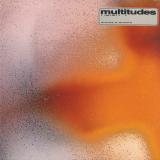
Following acclaimed releases on Permanent Vacation and Shall Not Fade, as well as their Panorama Bar debut, Rhode & Brown return with their second album, Multitudes.
Across nine tracks, the Munich-based duo showcase their signature versatility, moving seamlessly between dubby tech groovers, bouncy house cuts, and sleek, 90s-inspired downtempo. The LP features collaborations with Italian producer Ferrari (Faith Beat) and London-based Braga Circuit (Rinse), alongside vocal appearances from UK rapper RONNI and Munich/ Mexico-based artist Sianza.
Disponibile in Stock e pronto per la spedizione
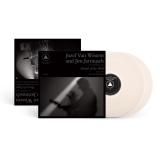
Jozef Van Wissem and Jim Jarmusch’s Bocca di Lupo and Mouth of the Wolf were recorded in July 2025 in Bologna, Italy. The recording sessions took place just after several live dates in New York and Chicago, and a week before they began a short European tour which included Paris, London, Ghent, Porto, and a first date in Bologna.
Below are notes from Jozef and Jim directly.
“With thanks to Gian Luca Farinelli and Rosanna Mordini from the extraordinary Cineteca di Bologna, we were able to secure recording days in the very cool Fonoprint Studios — located on Via Bocca di Lupo in Bologna, hence the titles of these two LPs. (“In bocca al lupo” — in the mouth of the wolf — is the Italian idiom for wishing one good luck; equivalent to “break a leg” in English.)
Bocca di Lupo starts with a new version of our own “Only Lovers Left Alive,” and “Apology” is a new version of a pre-existing piece by Jozef. All other tracks are new originals. We were honored to have guest duet vocals from the iconic Courtney Barnett on “Never Like You Said.” The lyrics of the song arrived spontaneously in a single take in the studio. It’s not directed at a specific person, but more an emotional response to several disingenuous, deceitful people — a closing of the door on their toxic behavior. And a casually recorded conversation (concerning the haunted auras of particular pieces of vintage women’s clothing) between Adriana Coppi and Veronica Mayrr (from Deux Femmes) is woven as a background into the track titled “Pour Deux Femmes.” “Black Roses” is an original poem written in Bologna, and recited from within its own musical setting. All other tracks are instrumentals.
Mouth of the Wolf, the second LP, consists of two longer, darkly ecstatic instrumental studio tracks — “In A” and “Massa Damnata.” Both were created with two electric guitars, and derived from our live performances. We consider it to be a musically separate album, and is therefore presented in its own sleeve and with its own artwork.
Our music has many inspirations — everything from our friends in Sunn O))) and Swans to Terry Riley and Morton Feldman; from Hildegard Von Bingen and WIlliam Lawes to Psychic Ills and Spacemen 3; from Les Rallizes Dénudés and NEU! to Nadja and Glenn Branca; from Ian Svenonius and Dead Skeletons to Son House and Gwenifer Raymond…from sunset to sunrise…full moon to new moon…”
a 01. Only Lovers Left Alive 4:36
b 02. Never Like You Said 5:23
[c] 03. Apology [5:11]
[d] 04. Black Roses [2:44]
[e] 05. On Twofold Nature [9:37]
[f] 06. Pour Deux Femmes [8:09]
[g] 07. In Bocca Al Lupo [5:58]
[h] 01. In A [12:56]
[i] 02. Massa Damnata [17:51]
[a] 01. Only Lovers Left Alive [4:36]
[b] 02. Never Like You Said [5:23]
[c] 03. Apology [5:11]
[d] 04. Black Roses [2:44]
[e] 05. On Twofold Nature [9:37]
[f] 06. Pour Deux Femmes [8:09]
[g] 07. In Bocca Al Lupo [5:58]
[h] 01. In A [12:56]
[i] 02. Massa Damnata [17:51]
[a] 01. Only Lovers Left Alive [4:36]
[b] 02. Never Like You Said [5:23]
[c] 03. Apology [5:11]
[d] 04. Black Roses [2:44]
[e] 05. On Twofold Nature [9:37]
[f] 06. Pour Deux Femmes [8:09]
[g] 07. In Bocca Al Lupo [5:58]
[h] 01. In A [12:56]
[i] 02. Massa Damnata [17:51]
[a] 01. Only Lovers Left Alive [4:36]
[b] 02. Never Like You Said [5:23]
[c] 03. Apology [5:11]
[d] 04. Black Roses [2:44]
[e] 05. On Twofold Nature [9:37]
[f] 06. Pour Deux Femmes [8:09]
[g] 07. In Bocca Al Lupo [5:58]
[h] 01. In A [12:56]
[i] 02. Massa Damnata [17:51]
[a] 01. Only Lovers Left Alive [4:36]
[b] 02. Never Like You Said [5:23]
[c] 03. Apology [5:11]
[d] 04. Black Roses [2:44]
[e] 05. On Twofold Nature [9:37]
[f] 06. Pour Deux Femmes [8:09]
[g] 07. In Bocca Al Lupo [5:58]
[h] 01. In A [12:56]
[i] 02. Massa Damnata [17:51]
dovrebbe essere pubblicato su 06.11.2026
DJ Support: Vladimir Ivkovic, Calm, LefTo, Dawn Again, Dream Chimney, Alexis Le-Tan, Afterlife, Sofa Elsewhere, Kreggo, Froid Dub, Johan Blende, Sean Johnston, Fabio De Luca, Dr. Rob, Leo Mas, Mark Broadbent, Patch, Stefano Tucci, DJ Nova
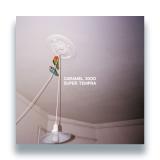
Three years after dropping Rapido Super studio on Hell Yeah, Caramel 3000 has slowed things down even further for his new eight-track LP, Super Tempra. This playful work gets stranger but even more inviting than ever with his signature OB-6 synth and the Eurorack modular, oodles of springy reverb, delayed balafon and scattered spoken-words. Caramel 3000 splits his time between the muddy waters of the Barene, south of the Venice Lagoon, and the dim light of a studio in Anderlecht. When not cruising in his sun-bleached wooden boat, he cherishes in the little light that reaches him at his shelter in Anderlecht. Renata and Piero, the couple on the artwork, once passed through that studio. This irregular sonic fusion of this EP came out of that visit. It's a fantastical collage that dissolves the boundaries between devotion and daydream with syrupy choir voices and fragments of Nancy Fraser lectures drifting in and out like the plot of a half- remembered hallucination. Quotes from legendary Italian singer Ornella Vanoni, children’s percussion and mystic melodies are looped and modulated into slow-burning psych - outs.
After the ancient sci-fi dub of the opener, 'Corsa Nudi' pairs the occult with the primitive, 'Arena Deriva' melts to watery droplets and glacial waves, and 'Acqua Tofana' is polyrhythmic tribalism from another dimension. 'Lente Virtus' marries melodic innocence to trippy humid density and 'Soft-shell Crab' is a woozy kaleidoscope with the happy accidents left in. 'Cacciatore di Frodo' is a haunting apparition from the deep and 'Vittoria Foresta' suspends you between the earthly and the otherworldly. Super Tempra is half the speed but twice the depth and full of wonder.
dovrebbe essere pubblicato su 06.11.2026

A two-way Italian/Mexican stand-off here, as Saint Wax founder Gledd (real name Eduardo Barbi) and Kaninchenbau label chief The Funk District (Fernando Mendoza) deliver their first joint EP since 2022. The latter steps up first with two solo workouts- the Clavinet-splashed nu-disco-goes-bluesy deep house shuffle of 'The River Bends Back' and the Rhodes rich deep house disco of 'Got To Be Alright' - before the duo combine on two collaborative cuts. 'I Said' is a gospel-powered slab of ever-building disco-house hedonism, while 'Down The Middle' is deeper, more bass-heavy and topped off with classic soul vocal samples. Gledd then takes over, following the infectious piano house bounce of 'I Said' with the colourful, acid-flecked excellence of 'Blessin'.
dovrebbe essere pubblicato su 16.11.2026
Berlin-based Dutch-Italian composer and musician Aimée Portioli aka Grand River presents the new album Temporary, returning to the renowned Editions Mego label with her most expansive and focused LP yet.
Rooted in existential ideas of impermanence and flux, Temporary is a deeply emotive work centred on the rich interplay between resonant guitar work and innovative electronics. Written in the wake of profound personal grief and loss, the album sees Portioli infuse her music with a raw, expressive intensity anchored in this experience. Across eight strikingly melodic and affecting soundscapes, Portioli powerfully embodies a dramatic encounter with mortality.
Temporary reprises Portioli’s exceptional streak of material across acclaimed labels including Donato Dozzy and Neel’s Spazio Disponibile, Caterina Barbieri's light-years, Ghostly International, Tresor and Umor Rex. The LP represents the latest tour de force in her distinctive electronic practice. Alongside a raft of lauded releases, Portioli has devised visionary multichannel installations which dissolve the boundary between the art gallery and the performance space.
Her new album signifies a culmination of her work, imbued with the depth of Portioli’s artistry. Shaped by a paradigm shift rising from loss, the record reflects a contemplation of the human condition and the ephemeral nature of existence. Ruminating on the thoughts and experiences that have fed into the record, Portioli reveals a consequential recognition underpinning the record:
"Sometimes, when travelling in places far from home that I know I will most likely never return to, or while accompanying someone I loved towards the end of their life, I become intensely aware of the singularity of the moment, and of how precious and sad this feels at the same time. It carries a particular weight because it will never happen again in quite the same way. Through experiences like these, I have gradually come to understand the temporary nature of all things. They taught me that to live is to experience the present while already feeling the trace of its disappearance, something both painful and blissful." - Aimée Portioli, Grand River
The album is invested with a potent mood and momentum from the outset. Establishing an evocative tone with the subtle, pulsating synthesis, rustling undertow, and oceanic low end of 18 circles to heaven, Portioli gradually ascends through the incandescent modular majesty of Come to stay, and the turbulent, brooding guitar figures of The crossing of the body, the crossing of the mind. The album progresses through the rapturous electronic phasing of The little we last into the coruscating synth grandeur of Let me know when you’re pure, before a thrilling endgame.
Closing with the wavering harp runs, heavy percussive thud, and cataclysmic guitar discordance of Maybe I am dead and this is paradise, and the evanescent atmospherics and beautiful acoustic refrains of Work of ending, Portioli takes the listener through vast landscapes of sound and mercurial emotional states. Intimate and immersive in equal measure, the record traces a compelling sensory journey.
Each part of the album is part of a larger poetic sentence, with track titles forming fragments that together articulate a meditation on transience. From 18 circles to heaven and Come to stay through From the other side and Work of ending, they read like quiet statements about being human, about loving, losing, remembering and eventually fading. The record moves through these states as a continuous passage, depicting a poignant soundworld guided by temporality.
The awareness that our time is limited sharpens the value of what remains. Each encounter, each gesture, each fleeting moment becomes more vivid. Temporary lingers in the space where presence and disappearance coexist, where everything is already passing away and therefore becomes infinitely precious. Things matter because they do not last. Mortality does not diminish life; it intensifies it. In confronting these ideas, Temporary feels irrepressibly alive.
Composed, produced and mixed by Aimée Portioli
Production and mixing assistance by Luca Sammartin
Acoustic piano on Maybe I am dead and this is paradise by Andert Tysma
Mastered by Rashad Becker
Cut by Marta De Pascalis at Schnittstelle, Berlin
Artwork by Nicola Tirabasso
Layout by Riccardo Piovesan
dovrebbe essere pubblicato su 20.11.2026

Younger Than Me announces his debut full length "The Golden Age Of Love", to be released on 90's Wax this coming March 2024. The record is the perfect example of the breadth of his irrepressible and unique sound. Featuring collaborations with Massimiliano Pagliara, Brame & Hamo and Pablo Bozzi. The artist is an Italian native known for a modern interpretation of '90s club music' - a dynamic blend of Progressive House, Trance, EBM, Breakbeat, and Techno ideas. This first album is a love letter to a deep-rooted passion for the idiosyncrasies of rave culture and the crossover points with contemporary electronic music.
Younger Than Me, an artistic project by Francesco Mingrino that is steeped in the nostalgia of ‘90s rave, yet not at all trapped in that past. A project that has cemented a special place in the electronic music scene with a string of records on labels like Bordello A Parigi, Amsterdam-Utrecht based platform XXX, Rotterdam’s Bar and Jennifer Cardini’s Dischi Autunno. To this point Francesco has pushed his fun yet forceful sound, with many releases on his own 90's Wax, and collaborations with people like Skatebård, Francesco Farfa, Timothy Clerkin and Curses (as Y2C).
"The Golden Age Of Love" as a package is curated in Younger Than Me's characteristic style. Opening with "Long Life Death", a track that sets the stage with a cinematic soundscape in a classic Carpenter vibe. Picking up the tempo "Zarathustra Dance" takes you right into the golden age itself, its low slung beat and carefully sequenced lead line pushes an ever building tension designed to crack any dancefloor. The track with Massimiliano Pagliara, "Eternal Sunshine Of Solitary Mind", is one of the highlights, perfectly building around a catchy lead with tight arpeggio and sequenced acid. Leading us into the 2nd half of the record "Sadness Is The Only Way To Happiness" is a proto-trance beast, inspired by that period in the early 90s when Trance was less bright lights and big stages and more dark rooms and smoke filled spaces, an ever building progressive run of haunting vocals, rave stabs and rolling bass.
Whilst YTM is at home presenting dancefloor focussed material, we see him explore the other side too, with "Memory Is A Clock" like the earlier "Vortix", he ditches the 4x4 for breakbeat territory. Whilst the bass keeps the solid metronome you would expect, "Memory Is A Clock" is a track that takes a few moments, contemplative melody and trademark arpeggios take the lead. When it comes to the other collaborations on the record, the appearance of Brame And Hamo on "Raver's Heart Is A Mess" sees them lean into the Progressive nature both artists love so much. Then Pablo Bozzi lends his own unique outlook to "We Don't Know The Way, We Just Stay" in one of the standout tracks, epitomising Younger Than Me’s ability to create profound experiences.
The album concludes with "Music Will Never Stop, Heartbeat Will Never Fade, Party Will Never End", less of a title and more of a personal philosophy – the perpetual essence of rave culture and its timeless impact on music. A rhythmic belter, juxtaposed with incendiary synth-lines and staple catchy sequence work, finishing the record with one of the true highpoints. In addition the release also features four digital bonus tracks, including "The Other Face Of Loneliness" and a Prog Dance Reshape of one of the records more eclectic cuts "Zarathustra Dance" all offering an extended exploration into the creative landscape YTM inhabits.
"The Golden Age Of Love" is a debut album that ticks all the boxes; it's a celebration of a bygone era through the lens of the contemporary. Younger Than Me stands as a testament to the enduring spirit and evolving nature of the music that began in the ‘90s rave scene, with an LP that pushes Love, Progression and Fun to the forefront.
Disponibile in Stock e pronto per la spedizione

Elypsia Records presents A Future Tribe, the new album from Italian electronic music producers CEM3340 & 2030. Rooted in the formative language of electro and early techno, A Future Tribe channels the past through a lens very much focused on the future. Across the album, analogue warmth, machine-driven funk, synthetic textures and futuristic atmospheres come together in a sound that channels the pioneering spirit of early Detroit while remaining unmistakably connected to the present. For CEM3340 and 2030, machines are not simply tools, they are central to the creative process. Both producers have spent years immersed in the culture of electronic hardware. They've been carefully building and refining their own approach to production through an extensive collection of synthesisers, drum machines, sequencers and studio equipment. Based in Bari, southern Italy, their work reflects a deep fascination with the physicality of electronic music: oscillators, circuitry, voltage, rhythm and the unpredictable character of machines programmed and played with a human touch. That philosophy is deeply embedded in A Future Tribe. Rather than treating the early years of techno as a museum piece, CEM3340 & 2030 approach its foundational ideas as a living language - one that can be stripped back, re-translated and taken somewhere new. The influence of Detroit's first generation of electronic innovators is unmistakable. There are echoes of the futuristic electro and techno pioneered by artists including Juan Atkins and his contemporaries, where funk, science fiction, machines and the possibilities of tomorrow became part of a new musical vocabulary. It is an approach that has already earned the duo recognition within that lineage. Their previous Machines Awake EP, released through Atkins' Metroplex Records, was described as paying homage to the classic foundations of the genre while pushing them into new territory. Juan himself gave the release his sonic approval. But A Future Tribe is not an exercise in retro-futurism for its own sake. The album comes from two producers who understand the history, have the hardware to explore it and, crucially, are interested in what happens when those influences are given space to evolve. The result is electronic music that is full of funk, groove and a kind of nostalgia that is pure and intentional without being a pastiche. Together, they make music that is rooted in one simple truth: machines can't come to life without human creativity.
dovrebbe essere pubblicato su 27.11.2026

The ultimate soundtrack of the summer is here: Mixatissimo, a 10-track vinyl-only mixed dance compilation bridging nostalgic ’80s sunshine vibes with modern Italo and indie-dance energy.
In Italy, during the 1980s, there was an absolute ritual that marked the beginning of summer: the release of those mixed dance compilations with glittering, futuristic covers. They weren’t just records; they were the very definition of sun, sea and tan lines. It was precisely holding one of those vinyls in his hands – the first one he ever bought – that sparked the musical passion of Italian DJ and producer Hey Cabrera!
Today, that perfect circle closes with Mixatissimo, a project that takes that nostalgic inspiration and transports it straight into the modern era.
Released as an exclusive vinyl-only edition by Universo Segundo and powered by Bordello A Parigi, the compilation packs 10 bangers oscillating between modern Italo, indie-dance and electronics, featuring some of the hottest names on the contemporary scene.
Exclusive special edits have been crafted for every single track, locking the groove into a fixed BPM for each side: 122 BPM on Side A and 125 BPM on Side B. Thanks to smooth transitions featuring drums-only sections, the record flows as a continuous stream for the listener, while simultaneously serving as the perfect tool for DJs who want to mix the individual tracks.
A meticulously calibrated selection, designed as much to make the dancefloor explode late at night as to keep the rhythm high in the most sophisticated listening bars.
The soundtrack to your summer is ready.
What are you waiting for?
Disponibile in Stock e pronto per la spedizione

Epic emotional club tunes with a feeling of grandeur. Moving through different tempos and styles, the EP channels golden-era IDM and Italian trance-prog psychedelic tradition into a deeply melodic and contemporary framework. Inspired by the Tibetan tradition of Sky Burial, its themes revolve around transcendence and spiritual transformation.
Disponibile in Stock e pronto per la spedizione
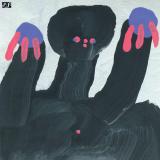
Berlin's Hypersoft crew launch their new vinyl label with Clínica Electrónica by Italian DJ, producer and Evasione Digitale co-founder Andrea Dama. Following the start of their new residency at Panorama Bar, the label opens its catalogue with a strictly limited five-track EP recorded at Buenos Aires' legendary La Siesta del Fauno, bringing Dama's Berlin dancefloor sensibility together with the peculiar chemistry of one of the world's most extraordinary electronic music studios. Forged through extended jam sessions on an array of vintage analogue instruments, including the original Korg PS-3300, Moog modular and Yamaha CS-80, the spontaneity of the sessions translates directly into the finished tracks, where ideas mutate, collide and develop into unexpected forms. Switching gears between hypnotic, mechanical, groove-driven house, and stuttering, furious, off-kilter techno, Dama moves deep into more atmospheric territory, conjuring worlds that are at once lush, organic, paranoid and extraterrestrial. An analogue vision of a future past, built by machines that were already imagining it decades ago.
Questo articolo non è stato ancora rilasciato. È possibile pre-ordinare il prodotto ora.

Five years after their radiant debut Ufo Bar, Italian cinematic funksters Banda Maje are back with Costa Sud to take us deeper into their land of ‘Salifornia’—a Southern province of sun-drenched coastlines and decaying buildings where dreams of exotic escapism sprout and bloom.
Once again, behind the eight tracks in the album—and behind the wheel of the fiery red Alfasud on the cover—is composer and keyboardist Peppe Maiellano. He has meticulously tailored each piece to his virtuoso partners in crime: a 'family' of exuberant musicians spread between Salerno and Naples, all bound by deep-rooted ties to the region and a shared belief in the grit of independent artistry.
The Costa Sud (South Coast) imagined by Banda Maje is a shimmering ribbon of sun-baked asphalt stretched between the sea and the ancient pine forests of the Gulf of Salerno. It is a land of enchanting but wounded places, where the grace of Ancient Greek civilization sits in a restless silence alongside the scars of rampant building and neglect. “But if truth is beauty and beauty is truth,” Maiellano explains, inverting Keats’s famous line, “with the right eyes, you can find beauty and poetry even under a layer of moral and material filth."
Conceived and recorded entirely in the South, the album nevertheless looks beyond the horizon. While Neapolitan funk and golden-age Italian soundtracks remain the double helix of the band's DNA, this album welcomes new influences from across the ocean, weaving Italy, Brazil, Africa, and contemporary sounds into its unique vision of the 'global South.'
Side A is an immersion into Salifornian territory and its myths: from the carefree instrumental disco-funk of the title track, which sublimates local contradictions into enveloping cinematic atmospheres, to the mellow groove of “Baia”—a fusion of Neapolitan funk, afrobeat, and disco that pays homage to Salerno’s famous beach, squeezed between millennia-old sea rocks and mountains of shipping containers. The band’s heartfelt sense of belonging shines in their fresh soul-disco version of “Mo…” (a 1981 cult classic by Neapolitan legend Peppino di Capri) featuring Maiellano’s own vocals, while the reimagining of Tonico 70's “Jet Lag” celebrates a fraternal partnership with the Salerno-based rapper/producer, charting a musical itinerary that unites Brazil, the States, and Salifornia through evocative grooves, sharp synths, and Gianfranco Campagnoli’s exquisite trumpet.
On Side B, the sound becomes even more eclectic with the samba-funk warmth of “Samba Maje”, where Mediterranean melodies and lush vocal harmonies marry jazz-funk arrangements and disco-inflected Brazilian rhythms. The next track, “Africana”, is dedicated to a legendary dolce vita nightclub on the Amalfi Coast (and its founder Luca Milano); here, a rhythmic mantra incorporating tribal African elements blends with synths that evoke RAI television themes of the late 70s. The journey concludes under the sign of the silver screen: the disco-funk elegance of “Black Glamour Girl” (from the early-80s road-trip comedy In viaggio con papà), a tribute to the compositional genius of Piero Piccioni, and “Lovebossa”—an easy-listening homage to the "Cine Bossa" atmospheres that characterized so many Italian soundtracks of the 60s and 70s, finally carrying the listener ‘ncopp’ ‘e nuvole (above the clouds—which is basically Salifornian for "somewhere over the rainbow").
Available on LP and Digital from 15 May 2026.
Disponibile in Stock e pronto per la spedizione

2026 Repress
Voices From the Lake (consisting of Donato Dozzy and Neel) mark the 10th anniversary of their influential self-titled album with a fully remastered reissue on Spazio Disponibile. It arrives in full on vinyl for the first time, as well as on digital formats, first quarter of 2023 as the pair continues to play select live shows around the world. The release will see the light of day as a 4-set vinyl LP release, including download. Italians Dozzy and Neel have been friends united by a shared vision of music since their teenage years. They are immaculate sculptors of sound who fuse evocative ambient and leftfield techno into multi-layered soundscapes. For many years they worked as established solo artists but came together in 2011 to craft what is now regarded as one of techno's most pure and absorbing listening experiences. It's often said that the best music comes about as a happy accident, and that is certainly true of Voices From the Lake. The career-defining album first arose in the thoughts of Dozzy and Neel when the latter was preparing a mix for the former's wedding and named it Voices From The Lake. It was a pertinent title that stuck in the mind: both grew up by waters around the coast of Italy, and in their early days the pair even held private parties on the shores of a lake. Fittingly, Japan's celebrated Labyrinth festival at that time was also held by a river and a lake in the middle of a forest on a serene mountainside. It was that exact setting the pair envisaged when making music to play live on stage. During preparations, they "accidentally" wrote an entire album. It has only ever been performed live a few times - once at Japan's Labyrinth festival in 2011, at London's Barbican, Barcelona's Mira Festival, Paris' Marathon Festival and once during 2022's Amsterdam Dance Event. Those shows saw the pair using banks of analogue and digital equipment to improvise in the moment and essentially remix the album live on stage. That spontaneity is captured in the original Voices From the Lake recordings and on later LPs such as Live at Maxxi in 2015, and the most recent EP Quarto Freddo from 2020. But the debut album remains a standout achievement. A decade on, it's quiet intensity, musical storytelling and slowly unfolding tension remain in a class of one. Each sound is meticulously designed and placed, and the spaces left behind are just as important in conveying such a captivating mood and emotion. Rather than traditional kick drums, hi-hats or snares, this is music crafted from layers of real-world sound - dripping water, chirping birds, rustling leaves or a distant breeze - and it's that which defines the album's organic allure. From deeply contemplative to cautiously optimistic, pastoral organic scenes to more underwater worlds, Voices From the Lake is a cohesive collection of tracks that add up to one inseparable whole.
Disponibile in Stock e pronto per la spedizione

third album, "Magic Seeds". The record represents his most personal and collaborative work and blends live recordings and analogue synths to create an organic, rhythmic sound reminiscent of trip-hop and hip-hop.
"Magic Seeds" explores themes of growth and reconnection, featuring unexpected musical moments and influences from 90s electronic music to neoclassical. Tracks like "Smoke in the Air" and "Inner Child" highlight his ability to balance emotional peaks with deep, moody atmospheres. The album’s dynamic range and authenticity reflect James's commitment to musical freedom and societal reflection, making it a compelling sonic collage of his recent experiences.
Over the past few years, Leifur James has steadily built a reputation as a vital new voice in electronic music on both sides of the Atlantic. He’s played prestigious London venues like the Barbican and Village Underground in London and toured Europe, as well as being named Pitchfork and KCRW’s ‘best new music’ in the US, and his music has been championed by the likes of tastemakers Gilles Peterson, Mary Anne Hobbs, Bradley Zero and actor Cillian Murphy, and from BBC 6Music to NTS via KCRW and RMC Italia. James has also enjoyed further flagship press support from Consequence of Sound, Clash, CRACK, Passion of the Weiss, XLR8R, Complex, MixMag, DJ Mag, The Vinyl Factory, and more
Disponibile in Stock e pronto per la spedizione
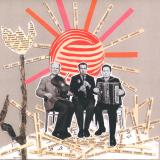
"There is a suspicion that no one really knows how to deal with the legacy of the past." — Siarhiej Kraŭčanka
Malenčyk / Lami is a double vinyl release pairing previously unpublished archival recordings of Belarusian fiddler Stanisłaŭ Malenčyk with a response to that archive by Italian sound artist Giovanni Lami.
Stanisłaŭ Malenčyk (1928–2007) was a self-taught fiddler from a small village in Western Biełaruś, born on land that was then Polish territory. He never studied music formally and never worked on a collective farm — he supported his family solely through playing, crafting his own violins and harmonicas by hand. The music he played was made for a community: weddings, christenings, a room full of people, a shared life. As life shifted toward the cities and the village dissolved, that music lost the only place it could exist. By the end of his life, Malenčyk — nearly blind — was playing for whoever happened to be there: at the local bazaar, on district buses, moving through the aisles. He simply couldn’t stay home. He had to play.
These recordings were made by ethnographer Mykoła Kozienka in Ščučyn in 1999 and have not been released until now.
Giovanni Lami approaches this archive from a distance that could hardly be greater — geographical, cultural, temporal.
Credits:
Record 1 (Side A/B) — performed by Stanisłaŭ Malenčyk,
recorded by Mykola Kozenka in Shuchyn, Grodno Region, Belarus in 1999.
Record 2 (Side C/D) — produced by Giovanni Lami.
Mastering by Siarhej Cviki and Anton Aniščanka
Archival research by Alaksej Krukoŭski and Alaksandr Baroŭski
Cover Artworks by Volha Savič
Cover design by Ihar Jukhnievič
Project curation by Anton Aniščanka
Project assistance by Alaksiej Šumakovič
Texts by Siarhei Kraŭčanka (essay, editing, translation),
Alaksej Krukoŭski and Alaksandr Baroŭski (Malenčyk biography),
Giovanni Lami (artist statement)
Disponibile in Stock e pronto per la spedizione

Cititrax release Sand Clock, the new full-length album by Men With Secrets, the Italian trio of Donato Dozzy, Lino Monaco, and Nicola Buono (Retina.it). Originally emerging from a shared background in experimental techno under the name Le Officine Di Efesto, the three musicians turned toward classic post-punk, minimal wave, and synth-driven pop with the formation of Men With Secrets. Their debut album Psycho Romance (2020), released on Bunker Records, introduced a meticulously produced body of work that felt like a rediscovered European darkwave recording from the early 1980s—yet was entirely contemporary in its construction.
With Sand Clock, the trio deepen this language. The album leans more directly into the melodic clarity and romantic tension of late-80s and early-90s darkwave and synthpop while maintaining the stark restraint that defines the project. Icy synthesizers, shuddering basslines, and precise drum machine programming frame baritone vocals that are intimate, emotionally exposed, and quietly apocalyptic.
Balancing pop structure with gothic atmosphere, Sand Clock moves between shadowed dance floor momentum and solitary headphone introspection. It is not an exercise in revivalism, but a continuation—an acknowledgment that the emotional architecture of that era remains unresolved and still relevant. Written and produced by Donato Dozzy, Lino Monaco, and Nicola Buono and recorded in Rome and Pompeii.
The vinyl edition is pressed on clear 160-gram vinyl, limited to 500 copies worldwide. Each record is housed in a heavy printed jacket with a printed inner sleeve.
Disponibile in Stock e pronto per la spedizione
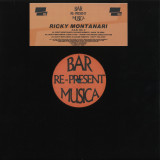
BAR Musica is happy to come back with its BAR Musica Re-Present catalogue and is even happier to welcome back the Italian legend Ricky Montanari - to confirm the respect and friendship with us.
Ricky Montanari has always been a forward thinking in both his production and sets. The tracks in this H.O.M. Vol II are some unreleased gems produced together with his studio partners Davide Ruberto and Edo Lo Zio in the early 2000 that never got released.
This release is dedicated to all the respect and the gratitude to Ricky, for always be a friend!”
Order now. Collecting orders for repress.

BAR Musica Re-Present is happy to come back after the great success of BARREP05 by the master Ricky Montanari, with some new unreleased cuts by another Italian great project - Presslaboys.
Presslaboys had a massive momentum in the early 2000’s with releases on Crosstown Rebels and their own Presslab Records, delivering some of the best cuts in the new era called tech house.
We teamed with Omar J and found these unreleased cuts, a little different from what they were releasing at the time, but with a real progressive sound that we are happy to release
Disponibile in Stock e pronto per la spedizione

Phosphor’s fourth release connects two promising talents from Barcelona’s underground scene: French producer Vince Void and Mexican DJ Gamba. Together, they deliver a finely crafted EP that blends punchy club dynamics with dreamy, psychedelic touches. From electro with 80s Italian accents to glitchy grooves and spacey breaks, PHP004 stands as a floor-ready release, moving with a subtle balance of tension and elevation.
Vince Void takes the A-side with two effective cuts. “Thunder” builds on a saturated Italo-style bassline and crisp, stripped-back drums, creating a steady tension that works perfectly at the start of a set. “Fashion Victim” switches the mood with acid-tinged grooves, glitchy stabs and a playful swing. It’s less linear but just as effective, adding contrast and movement to any DJ set.
On the B-side, DJ Gamba goes deeper. “The Universe”, in collaboration with Quim, weaves lush pads and shimmering arps into a rolling club structure, with subtle breakbeat accents that add lift and fluidity. To close, “Your Vision” slows the pulse slightly, blending filtered melodies, melancholic textures and a steady groove, locking in emotion without losing the club energy.
Disponibile in Stock e pronto per la spedizione

The new album by the collective that for
over 25 years has been among the most
representative names of the Italian dance
and electronic scene worldwide.
“BLOOOM”, this is the title of the new release,
will be available in all traditional stores and
on digital platforms starting January 16.
Set against the soundscapes that have become
the Planet Funk trademark, the lyrics by Dan
Black attempt to give voice to a fragile and
contradictory condition of our time: an
intensified sensitivity that, instead of
turning into openness and connection, often
becomes emotional overload. A generation
constantly overwhelmed by excessive stimuli,
relentless information, anxieties, and fears,
called upon to find its way in a world thaoffers neither pauses nor silence. In this paradox, sensitivity is no longer just a natural gift, but
a daily effort: staying open and receptive without being overwhelmed, trying to preserve a human and
vulnerable gaze in order, despite everything, to fully appreciate life and the present moment.
The single’s artwork—like that of the album—curated by Nationhood, visually conveys this tension: the
distant sirens of a city that amplifies feelings of disorientation and loneliness even when we are
surrounded by thousands of people.
“BLOOOM”, preceded by the single “FEEL EVERYTHING”, arrives at the end of an intense, creative year
full of music, which saw Alex Neri (DJ, keyboards, synthesizers), Marco Baroni (keyboards, piano,
programming), Dan Black (vocals and guitar), and Alex Uhlmann (vocals and guitar) engaged between
studio work, collaborations, and live performances in Italy and abroad. A journey that today
transforms into new energy, into an even more open vision oriented toward the future.
Exactly one year ago, PLANET FUNK released “Nights in White Satin”, a single that reached the top
positions of the radio charts and launched a season rich in concerts and DJ sets in Italy and around
the world. The subsequent “I Get a Rush”, the collaboration with Alfa and Manu Chao on the remix of
their hit “A me mi piace”, and the track “È Naturale” together with Francesca Michielin, confirmed
Planet Funk’s ability to renew themselves and engage with different musical worlds while always
remaining true to their own identity.
Throughout this journey, music has inevitably intertwined with life. The memory of Sergio Della Monica
and Domenico “Gigi” Canu, pillars and founding souls of the PLANET FUNK project, is a living part of
this new chapter. Their vision, creative spirit, and way of understanding music continue to be a
constant guide, a deep root from which new ideas and new directions can grow.
“BLOOOM” is also this: a personal and artistic blossoming that, starting from the legacy left by
Sergio and Gigi, transforms into a living process of growth, metamorphosis, and discovery. An album
that does not look back with nostalgia, but forward with awareness, momentum, and a desire for
renewal.
Founded in 1999, for over 25 years PLANET FUNK have represented one of the most important, solid, and
influential realities in the international electronic music scene. Born from the meeting of Souled
Out! (Domenico “GG” Canu and Sergio Della Monica) and Kamasutra (Marco Baroni and Alex Neri), and
following their debut with “Non Zero Sumness” in 2002 (a gold record and a turning point for the
band), PLANET FUNK have managed to reinvent themselves over time while maintaining a unique sonic
identity. This has led them to collaborate with internationally renowned artists, deliver iconic
performances around the world, create soundtracks and international advertising campaigns, and
continue to demonstrate constant creative vitality
Disponibile in Stock e pronto per la spedizione

Repress!
Rhythm On The Loose “Break Of Dawn” is quite simply one of House Music’s all time classics.
Producer Geoff Hibbert was inspired by seeing dawn break on an Italian coast line to
draw inspiration from Moby’s anthemic “Go” and disco gem “Let No Man Put Asunder” by First Choice to create his loving homage to the UK Rave scene.
Network set up a label “The One After D” to release a limited edition press of the instant classic to create demand.
One of the first copies was picked up by Kevin Saunderson and his relentless playing of the track helped fuel interest in the USA.
The first release on Network in 1991 established the track as iconic. That original mix is here and still sounds as fresh as ever. Perfect in fact.
The 12” also contains remastered versions of the 1995 remixes by Rhythm On The Loose, Strike and Stonebridge.
Taken from Network’s extensive back catalogue and a re-issue of a timely classic that is always in-demand.
Disponibile in Stock e pronto per la spedizione

Perros' third installment is a sequel release from various artists that develops the theme Canerêve. Holding the usual multi-functional-tracker mission, this Volume 2 features four dancefloor house-lines facets.
DJ Cream struts with solid drum kicks that mellows into a structure that humps atmosphere dreams through a cheeky R'n'B sample, opening the record with warm charisma. A deep house blowgun truly on point. Following the info side of the record, we found a rising french producer based in Barcelona by the name of Groenogen, setting an elektrisch-soaked trip to tech house, throughout chunky basslines and infectious grooves that move inside a stridulous synth in combo with a sexy vocal chorus.
Artwork side, by the italian painter and tattoo guru FASE, starts with a showcase of layered high-quality projects throughout instruments knowledge and improvisation that just a live-act maestro like Emi Ömar can guarantee. Tribal, Deep, Acid, Electro,Funky. An immersive mixture of textures and emotions that enhances a full storytelling, a whole venture narrated by a hypnotic vocoder. The fourth and final track, comes up with a glimpse criteria, climbing the heights gradually. Then, when DJ Rou finally decides to start, that moment is just a boom! The break comes with energetic grooves, intricate percussions, sci-fi samples bounce all around with both acid and melodic flows of a potential hard-house hit.
Disponibile in Stock e pronto per la spedizione

The Éthiopiques series returns! Essential archive recordings from an extremely fruitful period in Ethiopian music.
Before “Swinging Addis” took over the world, there was Moussié Nerses Nalbandian — the Armenian-born composer who shaped modern Ethiopian music. Mentor, arranger, and pioneer, he laid the foundations of Ethio-jazz.
This Éthiopiques volume revives his forgotten legacy, recorded live by Either/ Orchestra First issue ever with new exclusive photos and in depth liner 8-page insert.
“Ethiopian jazzmen are the best musicians that we have seen so far in Africa.
They really are promising handlers of jazz instruments.”
Wilbur De Paris
(1959, after a concert in Addis Ababa)
አዲስ፡ዘመን። *Addis zèmèn* **A new era.**
The time is the mid-1950s and early 1960s, just before "Swinging Addis" bloomed – or rather boomed – onto the scene. Brass instruments are still dominant, but the advent of the electric guitar, and the very first electronic organs, are just around the corner. Rock’n'Roll, R’n’B, Soul and the Twist have not yet barged their way in. Addis Ababa is steeped in the big band atmosphere of the post-war era, with Glenn Miller's *In the* *Mood* as its world-wide theme song, neck and neck with the Latin craze that was in vogue at the same period. Life has become enjoyable once again, with the return of peace after the terrible Italian Fascist invasion of Ethiopia (1935-1941). The redeployment of modern music is part and parcel of the postwar reconstruction. *Addis zèmèn* – a new era – is the watchword of the postwar period, just as it was all across war-torn Europe.
The generation who were the young parents of baby boomers** were the first to enjoy this musical renaissance, before the baby boomers themselves took over and forever super-charged the soundtrack of the final days of imperial reign. Music is Ethiopia's most popular art form, and very often serves as the best barometer for the upsurge of energy that is critical for reconstruction. Whether it be jazz in Saint-Germain-des-Prés or the *zazous* who revolutionised both jazz and French *chanson* after the *Libération*, be it Madrid's post-Franco Movida, or Dada, the Surrealists and *les années folles* that followed World War I, the periods just after mourning and hardship always give rise to brighter and more tuneful tomorrows. Addis Ababa, as the country's capital, and the epicentre of change, was no exception to this vital rule.
**Two generations of Nalbandian musicians**
Nersès Nalbandian belonged to a family of Armenian exiles, who had moved to Ethiopia in the mid-1920s. The uncle Kevork arrived along with the fabled "*Arba Lidjotch*", the** "*40 Kids*", young Armenian orphans and musicians that the Ras Tafari had recruited when he visited Jerusalem in 1924, intending to turn their brass band into the official imperial band. If Kevork Nalbandian was the one who first opened the way of modernism, pushing innovation so far as to invent musical theatre, it was his nephew Nersès who would go on to become, from the 1940s and until his death in 1977, a pivotal figure of modern Ethiopian music and of the heights it. Going all the way back to the 1950s. Nothing less. And it is Nersès who is largely to thank for the brassy colours that so greatly contributed to the international renown of Ethiopian groove. While the younger generations today venture timidly into the genealogy of their country's modern music, often losing their way amidst a distinctly xenophobic historiographical complacency, many survivors of the imperial period are still around to bear witness and pay tribute to the essential role that "Moussié Nersès" played in the rise of Abyssinia's musical modernity.
Given the year of his birth (15 March 1915), no one knows for sure if Nersès Nalbandian was born in Aintab, today Gaziantep (Turkiye/former Ottoman Empire) or on the other side of the border in Alep, Syria... What is certain is that his family, like the entire Armenian community, was amongst the victims of the genocide perpetrated by the Turks. Alep, the place of safety – today in ruins.
Before Nersès then, there was uncle Kevork (1887-1963). For a quarter of a century, he was a whirlwind of activity in music teaching and theatrical innovation. *Guèbrè Mariam le Gondaré* (የጎንደሬ ገብረ ማርያም አጥቶ ማግኘት, 1926 EC=1934) is his most famous creation. This play included "ten Ethiopian songs" — a totally innovative approach. According to his autobiographical notes, preserved by the Nalbandian family, Kevork indicates that he composed some 50 such pieces over the course of his career. This shows just how much he understood, very early on, the critical importance of song as Ethiopia's crowning artistic form. Indeed, for Ethiopian listeners, the most important thing is the lyrics, with all their multifarious mischief, far more than a strong melody, sophisticated arrangements or even an exceptional voice. (This is also why Ethiopians by and large, and beginning with the artists and producers themselves, believed for a long time — and wrongly — that their music could not possibly be exported, and could never win over audiences abroad, who did not speak the country's languages).
Last but not least, one of Kevork's major contributions remains composing Ethiopia's first national anthem – with lyrics by Yoftahé Negussié.
Nersès Nalbandian moved to Ethiopia at the end of the 1930s, at the behest of his ground-breaking uncle. Proficient in many instruments (pretty much everything but the drums), conductor, choir director, composer, arranger, adapter, creator, piano tuner, purveyor of rented pianos,... he was above all an energetic and influential teacher. From 1946 onwards, thanks to Kevork's connexion, Nersès was appointed musical director of the Addis Ababa Municipality Band. In just a few years, Nersès transformed it into the first truly modern ensemble, thanks to the quality of his teaching, his choice of repertoire, and the sophistication of his arrangements. It was this group that would go on to become the orchestra of the Haile Selassie Theatre shortly after its inauguration in 1955, which was a major celebration of the Emperor's jubilee, marking the 25th anniversary of his on-again-off-again reign.
At some point or other in his long career, Nersès Nalbandian had a hand in the creation of just about every institutional band (Municipality Band, Police Orchestra, Imperial Bodyguard Band, Army Band, Yared Music School…), but it was with the Haile Selassie Theatre – today the National Theatre – that his abilities were most on display, up until his death in 1977. To this must be added the development of choral singing in Ethiopia, hitherto unknown, and a sort of secret garden dedicated to the memory of Armenian sacred music, and brought together in two thick, unpublished volumes. Shortly before his death (November 13, 1977), he was appointed to lead the impressive Ethiopian delegation at Festac in Lagos, Nigeria (January-February 1977).
His status as a stateless foreigner regularly excluded him from the most senior positions, in spite of the respect he commanded (and commands to this day) from the musicians of his era. Naturally gifted and largely self-taught, Nerses was tirelessly curious about new musical developments, drawing inspiration from the very first imported records, and especially from listening intensely to the musical programmes broadcast over short-wave radio – BBC *First*. A prolific composer and arranger, he was constantly mindful of formalising and integrating Ethiopian parameters (specific “musical modes”, pentatonic scale, and the dominance of ternary rhythms) into his “modernisation” of the musical culture, rather than trying to over-westernise it. It even seems very probable that *Moussié* Nerses made a decisive contribution to the development of tighter music-teaching methods, in order to revitalise musical education during this period of prodigious cultural ferment. Flying in the face of all the historiographical and musicological evidence, it is taken as sacrosanct dogma that the four musical modes or chords officially recognised today, the *qǝñǝt* or *qiñit* (ቅኝት), are every bit as millennial as Ethiopia itself. It would appear however that some streamlining of these chords actually took place in around 1960. It was only from this time onward that music teaching was structured around these four fundamental musical modes and chords: *Ambassel*, *Bati*, *Tezeta* and *Antchi Hoyé*. A historical and musical “details” that is, apparently, difficult to swallow, especially if that should honour a *foreigner*. Modern Ethiopian music has Nersès to thank for many of its standards and, to this day, it is not unusual for the National Radio to broadcast thunderous oldies that bear unmistakable traces of his outrageously groovy touch.
Disponibile in Stock e pronto per la spedizione
Chaos is fundamental for creating something powerful. It teaches us to be at ease with how things are, to listen to ourselves, and find our own order’. (Enrico Sangiuliano)
Pioneering, avant garde yet chart-storming sound designer/producer/live performer Enrico Sangiuliano drops EP ‘Order In Chaos’ as release #1 in his self-destructing countdown imprint ‘NINETOZERO’, out 20th November. The EP’s three tracks respectively represent a triptych of sound exploring tension, release, and dissolution, with violinist and composer Vito Gatto joining Italian techno/melodic maestro Sangiuliano for tracks 1 and 3. The EP blends electronic, classical and electro-acoustic genres, resulting in a fresh, unique product that defies typical techno expectation, as Sangiuliano and Gatto explore the concept of disorder as a creative playground.
‘With this chapter, we dive into chaos – something that can be uncomfortable, but is the place in which you can find unexpected or new ideas. Chaos is fundamental for creating something powerful. It teaches us to be at ease with how things are, to listen to ourselves, and find our own order’. (Sangiuliano)
The ‘Order In Chaos’ EP continues a momentous year for Enrico Sangiuliano, and heralds his upcoming all-night-long SOLO show at Nitsa in Barcelona (Nov 28th, tickets here). His highly acclaimed NINETOZERO label has also previously featured Charlotte de Witte, Antonio d’Africa, Mattia Saviolo, GMS, Alex Lentini, STOMP BOXX, Zimmz, Secret Cinema and About Sofiya.
Vito Gatto is a Milan-based violinist, composer and sound explorer. He is the founder of label/collective NeMu (‘Neutral Mutation’) producing Italian projects at the interface of electronic and organic sound. His self-description as ‘Making sounds, looking for silence’ makes him the perfect collab partner for ‘Order In Chaos’, which ‘embraces the paradox: chaos births order, and order dissolves back into chaos.’
‘Whilst classically trained, I have always been fascinated by the world of electronic music, in all its expressive forms’ Gatto says. ‘I use real instruments and natural sound sources processing them through electronics to enhance their unpredictability, always remembering that the core of music - whether classical or electronic - is communication and storytelling. This philosophy guided our creative synthesis on this release.’
The collaborative workflow combined remote and in-person studio work over roughly a year, culminating in these three key tracks reflecting different musical and conceptual layers.
‘Order In Chaos’ EP tracks:
Enrico Sangiuliano & Vito Gatto ‘Adaptation for Strings and 909’: A cinematic overture built from the raw intimacy of Vito Gatto’s violin, processed and layered with unquantized 909 drums. Out of grid, out of rules. Drama and turbulence surge until thunderous kicks strike like sudden storms. ‘This track symbolises both of us. Vito sent the strings, I added the iconic Roland 909. It has no structure and no grid, the arrangement is not precise, it’s a very pure track and a great example of disorder and freedom.’
Enrico Sangiuliano ‘Order in Chaos’: The title track is a pure techno weapon and dancefloor igniter: rolling, stripped, euphoric. A shape-shifting lead synth constantly mutates, flirting with disorder until the kick restores gravity. Chaos becomes dancefloor order.
Enrico Sangiuliano & Vito Gatto ‘Dissolution’: The closing moment. Strings and drums dissolve into a weightless drone. Beatless and infinite, it invites surrender into space. ‘This cinematic track slowly melts ‘Order in Chaos’, adding processed organic sounds and field recordings from the mountains.. coming back to nature, and silence.’ (Gatto).
Still #0 to go in the NINETOZERO countdown… And then what? With Sangiuliano, it’ll be something unexpected and brilliantly innovative.
Disponibile in Stock e pronto per la spedizione

Produce, arranged and mixed by Visnadi at 77 Studio, Mestre – Venice
X-Static are: Paolo Visnadi, Massimo Artusi, Riccardo Stecca and Cristina Dori (vocals)
A1 Additional Production & Remix by Alex Neri and Marco Baroni For Bass Productions
B1 & B2 Remix & Additional production by Gianni Bini at House of Glass Studio for HOG Productions
℗ ©2025 Undiscovered Recordings Ltd.
"I'm Standing" is a popular 1990s dance and house song by Italian band X-Static, produced by Visnadi. Originally released in 1994, the single was a huge success, spawning multiple remixes and versions, including the "Heavy Organ Mix" and the "Kamasutra Remix" by Alex Neri and Marco Baroni. This vinyl reissue features these two remastered mixes, along with two "2025" versions produced by Gianni Bini for HOG Productions.
Disponibile in Stock e pronto per la spedizione

With his new offering"The Stone Tablet", New Jersey native Brainorchestra solidifies his legacy in underground hip-hop, carving out a raw and unfiltered masterpiece that feels as timeless as it is bold. Produced entirely by Brainorchestra himself, the album is a testament to his relentless pursuit of authenticity and artistry, drawing listeners into a world where intricate beats meet introspective bars, and sticking to his proudly independent operation.
Featuring guest appearances from UK’s SonnyJim and Toronto's Raz Fresco, "The Stone Tablet" brings together diverse voices that seamlessly blend with Brainorchestra’s visionary beats. Each track adds to the album’s mystique, with moments of reflection, hustle, and sharp wit, all contributing to Brainorchestra’s mark on the modern hip-hop landscape.
The album cover, crafted by Italian artist Claudio Scialabba, embodies the album’s theme with its raw, textured feel — reflecting Brainorchestra’s relentless, chiseled approach to his craft. "The Stone Tablet" is a statement, a monument that etches Brainorchestra's name alongside the genre’s most revered creatives.
Disponibile in Stock e pronto per la spedizione
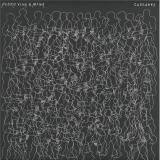
On 9th December Modern Obscure Music presents Cascades, the new album from Pedro Vian & Mana, which premiered during their immersive live set at the most recent Sonar Festival in Barcelona.
Cascades was recorded over a three-day studio session in Turin during the winter months, which is reflected in the musical narrative, as the eleven tracks flow gently like an icy river, filled with a mixture
of hazy melancholy, uncanny dream-states and euphoria.
Various recording techniques and instrumentation was utilised, including the Lyra-8 organismic analogue synthesiser, which takes principles from living organisms to produce sounds resembling a
conversation between nature and technology. The result is a spellbinding ambient odyssey that features a luminous synthesis of neo-classical strings and orchestral drones, together with strange
voices, and abstract passages designed to evoke Dante’s Inferno, which represent the soul’s journey.
Pedro Vian is a renowned Catalan artist who has released three solo albums (Beautiful Things You Left Us For Memories, Pedro Vian and Ibillorca) and a collection of singles on his Modern Obscure
Music imprint – a multi-disciplinary platform based on deep listening and music research. The ‘PRSNT’ compilation, which Pedro curated in 2021 and featured Laurie Spiegel, Ryuichi Sakamoto, and Visible Cloaks, received support from Pitchfork, Crack, Brooklyn Vegan, The Quietus, The Wire and Metal. Pedro has been remixed by Inga Copeland and Pye Corner Audio, and has recorded mixes for of Bleep, Self-Titled and Juno Daily.
As part of a new generation of Italian electronic music artists, Piedmont born composer and producer Mana has released two full length albums (Seven Steps Behind and Asa Nisi Masa) on Kode 9's
Hyperdub imprint, plus an EP on Nicolas Jaar's Other People label under his Vaghe Stelle alias.
Earlier in his musical journey, Mana supported Laurent Garnier, James Holden and Skream across the Torino club scene, and in 2011 teamed up with Italian friends Lorenzo Senni and A:RA to form
the experimental group One Circle.
Pedro Vian & Mana’s previous work as solo producers has pushed the limits of electronic music, and together they’ve garnered critical acclaim from the likes of Pitchfork, The Quietus, The Vinyl
Factory, Resident Advisor and more. They now join forces to traverse new sonic territories between electronica, ambient, drone, and trance-inducing soundscapes.
Disponibile in Stock e pronto per la spedizione

Swiss-born, Berlin-based artist Stallo makes his anticipated vinyl debut on Casanova Bar Records with Mifepan EP.
After first appearing on the label in 2020 with a contribution to CBB007 a digital VA, he now returns as the main artist on CBR008, delivering two original tracks that define his signature sound.
The EP opens with Bleenthal, a hypnotic journey built on rolling drums and immersive textures. On the flip, "Wavoom" pulsates with a constantly evolving synth, pushing forward with relentless energy.
Elevating the release, Japanese techno legend Takaaki Itoh delivers a raw and powerful remix of Wavoom, while Italian innovator Fabio Florido reinvents Bleenthal with his cutting-edge sound design.
Mifepan EP is a bold statement from Stallo, an immersive exploration of deep grooves and evolving driving textures.
d B2 Bleenthal Reinvented (Fabio Florido remix)
Reinvented (Fabio Florido remix)
Disponibile in Stock e pronto per la spedizione

effgee returns on his own imprint fellice with three deep house cuts, warm, soul-inspired and topped with dreamy sampled vocals. fellice 005 comes as a special edition: each sleeve is hand screen-printed by the artist, limited to 250 copies.
Another special feature is the label's first remix: a greeting from sunny Bari to the dance floors by Italian deep house fratello Nico Lahs.
"Your Light" reaches back to effgee's production roots - soulful sampling, dreamy textures and groove-heavy. "Birds" shifts into a fresher club direction, while "Roland Bass" brings together the essentials of his production recipe: analogue synths, sampling, and a punchy kick at the core. fellice 005 is a deeply personal record - both musically and visually.
Disponibile in Stock e pronto per la spedizione

The new Mono Jazz series - The Jazz Sinners - is designed, crafted and produced to the highest standards allowed by today’s music industry.
The tracks featured come from either rare, top-condition vintage first pressings or from meticulously sourced recordings to ensure the
best possible sound quality. Thanks to the expertise of Giorgio Cencetti (DJ Farrapo), we've created a fully organic mastering process that offers a
360° sound spectrumfor a truly high-fidelity listening experience. The vinyl itself is pressed under the supervision of Elettroformati - Milano.
The cover is 100% Italian-made, using premium 350g cardstock with a luxurious hand feel, with inner sleeves lined in polyliner for complete protection of the record.
Disponibile in Stock e pronto per la spedizione

Modi: Three Days on the Wing of Madness is a 2024 biographical drama based on the life of renowned Italian artist Amedeo Modigliani.
Directed by Johnny Depp, the film stars Riccardo Scamarcio in the title role, with supporting performances by Stephen Graham,
Al Pacino, and Antonia Desplat. The film’s original soundtrack plays a pivotal role, blending evocative original compositions by The Tiger Lillies
with classic tracks from artists such as Charles Trenet, Augie March, Tom Waits, and The Velvet Underground & Nico.
The soundtrack is available as a deluxe 2LP vinyl set in a gatefold sleeve with imagery from the film
And as a 2CD Box Set with lift-off lid, featuring a 24-page booklet including exclusive notes from Johnny Depp and behind-the-scenes images
Disponibile in Stock e pronto per la spedizione

RedNilo is an Italian-Moroccan duo composed of Reda Zine and Danilo Mineo, two musicians based in Bologna linked by a deep passion
for world music, particularly African music. Their ongoing and tireless musical exploration has led them to collaborate for over a decade
on numerous artistic and recording projects. Their new album, eponymously titled RedNilo, features six tracks characterized by a sound
reminiscent of Gnawa, Hassani, Tuareg, and experimental rock. The psychedelic, raspy riffs of the electric guitar, the repetitive rhythms
of the percussion, and the rhythmic-melodic lines of the guembri represent and evoke their journey. The resulting sound material is the
culmination of their journey and their encounters with masters, artists, griots, artisans, and instrument makers in the Draa Valley in
southeastern Morocco, bringing together the two musicians' urban and experimental backgrounds and souls. The album's artwork was
designed by Moroccan artist Aali Wica, initiator and mentor of their spiritual and artistic journey to the southern African continent,
across the long black snake.
Réda Zine, a musician and documentary filmmaker born in 1977 in Casablanca, launched his musical career in the 1990s, contributing
to L'Boulevard, Africa's largest independent festival. Raised in the Casablanca medina, he was introduced to Gnawa music by various
Maallems. After studying at the Paris 3 Sorbonne University, he founded Café Mira, a project that has performed at several international
events.
From 2011 to 2014, Zine was artistic director for Creative Commons (Middle East and North Africa), where he won the #CC10 Korea
award in 2012 with the project "It will be Wonderful," which brought together musicians from over 12 countries. He has also been
involved in exhibitions on music and censorship, participating in events in major cities such as Paris, Buenos Aires, and Seoul. In Italy,
he continued his musical research with the Hardonik project and was part of the Afrobeat group Voodoo Sound Club, recording the
album Mamy Wata. Zine collaborates with artists such as Seun Kuti and has initiated educational activities related to Gnawa music,
contributing to initiatives such as the African Symphony Laboratory for improvisers. He is the co-founder of Fawda, a Gnawa-based
project, and is part of the Gnawa Rumi collective, which explores the music of the Moroccan diaspora in Italy. He directed the documentary "The Long Road to the Hall of Fame" about Public Enemy, which won an award at the Pan African Film Festival in 2015.
Danilo Mineo graduated as a national educator from the AMMnationalscholl music academy in Milan, with a thesis entitled "Afro-Cuban
Music and the Rhythm Section." Over the years, he has attended workshops and masterclasses with international artists and masters
of percussion and drums, including Horacio El Negro Hernandez, Airto Moreira, Trilok Gurtu, Luis Agudo, Arto Tuncboyaciyan, Dudu
Tucci, Dom Famularo, Karl Potter, Rodney Barreto, and Eno Zangoun, exploring the rhythmic language of various musical genres and
styles.
In addition to publishing several educational manuals for percussionists, music critics consider him a versatile percussionist, active in
various musical productions and recordings: Mop Mop, Fawda, Guglielmo Pagnozzi "Voodoo Sound Club," Fabrizio Puglisi "Guantanamo," Panaemiliana, The Mixtapers, and many others, with whom he has performed at numerous national and international music festivals (in Europe and Africa). As a percussionist and side man he has recorded numerous albums and collaborated with Italian and
international artists including: Giancarlo Schiaffini, Gianluca Petrella, Roy Paci, Roberto Freak Antoni, Famoudou Konate, Melaku Belay, Baba Sissoko, Kalifa Kone, Jamal Ouassini, Deda, Dj Lugi, Bioshi.
Disponibile in Stock e pronto per la spedizione
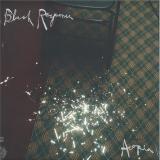
Naarm/Melbourne trio Acopia return with Blush Response, their highly anticipated third album, and first release on Scenic Route. Arriving September 12, this 8-track LP captures the band at their most open and self-assured—an emotionally resonant work shaped by silence, space, and sincerity.
At its core, Blush Response is an exploration of emotional distance, unresolved feelings, and the quiet tension between vulnerability and strength. It’s introspective and melancholic, yet with an underlying clarity that marks a new chapter for the group.
Formed in 2018 by Kate Durman, Lachlan McGeehan, and Morgan Wright, Acopia began with a minimalist palette—slow tempos, sparse arrangements, and a distinct sense of restraint. Since then, they’ve evolved into a more fluid and expressive unit, blending elements of dream pop, downtempo, indie, and post-punk into a sound that’s as delicate as it is disarming.
Following the release of 2022’s Chances and their self-titled 2023 album, Acopia gained significant critical momentum with praise from Pitchfork, The Guardian, The FADER, and The Beat. Pitchfork described their work as “a nod to 1980s ennui and 2020s anxiety”—an apt summation of their unique place in today’s musical landscape. Their growing international footprint includes support slots for Bar Italia and Tirzah, festival appearances at Golden Plains, Rising, and NTS Naarm, and a sold-out 2024 headline show at London’s Lexington.
Recent collaborators include UK producer Daniel Avery, who’s shown strong support for the band—elevating their profile across both electronic and alternative audiences.
With Blush Response, Acopia deliver their most expansive and expressive project to date—anchored by the emotional depth fans have come to expect, but now sharpened by bold songwriting and a broader sonic reach. Their arrival on Scenic Route marks an exciting new era, one that’s already resonating with tastemakers, record buyers, and a fast-growing global fanbase.
Disponibile in Stock e pronto per la spedizione

Italian DJ Plant Texture drops ambitious techno odyssey 'Mondo Nuovo' on Mutual
Rytm sub-label, X.
Bari-based underground mainstay Dona Basile, aka DJ Plant Texture, has been crafting forward-thinking techno for a decade, releasing on leading labels from Ilian Tape to Tresor Berlin. Adding to his rich catalogue, his label debut on SHDW's Mutual Rytm sub-label X is a homage to the spirit of space travel. With the label boss already a long-time fan and having dropped tracks from this EP in his sets for a while, the partnership creates an ideal match for an artist and label looking to push the boundaries of the genre. With Basile's distinctive style perfectly fitting with the label's vision, each of the productions provides a tribute to space exploration - fusing analogue hardware and deep rhythmic invention while channelling everything from early sci-fi cinema to the 80s ambient soundtracks. "Space exploration is the ultimate metaphor for creative freedom. This album is my way of sonically mapping the cosmos, not through melody but through mood, modulation and motion", notes Basile.
Opener 'Wormhole' is a raw, driving sound with synth pulses and jacked-up drums for peak time chaos, while 'Echoes' evokes ramps it up further with panel-beating percussive loops, earth-shattering bass and twisted stabs. The title track pairs more physical and booming drums with introspective synth craft that encourages deep thought. 'Flex The Beat' is the first of two digital only cuts and offers a chaotic collision of overdrive percussion, manic vocal loops and reversed stabs for utter dance floor carnage, before 'Let It Go' (Jungle Mix) provides a dark exploration of
frenzied jungle breakbeats with drilling bass to close the offering.
Disponibile in Stock e pronto per la spedizione

Disponibile in Stock e pronto per la spedizione
