The only "lost track" from the same session as Lucky Brown's critically acclaimed "Mesquite Suite", "Sweet Tea (With My Sweetie)" reminds fans of Lucky Brown's trademark deepfunk sound that he and his crew can still ignite a dancefloor - and keep it lit for almost 8 minutes! "Sweet Tea (With My Sweetie)" is a cool, refreshing swig of sweet instrumental soul to enjoy while watching the sun set over the pecan trees of the Texas Hill Country with your lover.
Belly-up to the bar and gitcherself a couple tall frosty glasses of Lucky's trademark production/sound swirled with a heady shot of his backing band The S.G.'s. Your thirst for funk will be quenched by a solid deepfunk 2-sider complete with a Texas barbecued guitar feature up front, and jalapeño spiced trombone to take out side one. Then, on the flip: a smoked-out saxophone solo, some cornbread trumpet, some super sweet vintage organ treats, and finally building energy to a tasty drum and horn break - Lucky's brand of Sweet Tea is good to the last drop!
The Tramp team is extremely proud to have been working with such a genius for so many years and hopefully for many more to come! We want to thank all of you who have supported us in the past - thank you so much!
So, go ahead, mix up some "Sweet Tea" this summer! Your listeners will be bobbing their heads, smiling, and feeling good while they holler out for another tall cool glass of "More Sweet Tea".
This was Charles Tolliver's first album as a leader. The setting is unique only because his second Freedom-Black Lion album 'The Ringer' and all of his subsequent albums on Strata-East featured his quartet Music Inc. with pianist Stanley Cowell. Here he is surrounded in quartet and quintet formats with a truly stellar cast of the leading players on the New York jazz scene.
Charles plays the role of leader, composer and trumpeter. But it is surely that last role that deserves the most attention. The trumpet is a brass instrument that leans toward a hard sound and staccato phrasing. Yet Tolliver is the quintessence of fluidity. While it may be undeniable that he has learned from his musical heritage and past trumpet masters, a trumpeter of such flow, tone, control, lyricism and creativity is, by definition, a major musician.
Charles Tolliver first came to the professional jazz scene in the mid-sixties, when he first met Jackie McLean. Under McLean's leadership, he played on a number of Blue Note record sessions, some of which have yet to be released. He contributed original tunes to many of those sessions.
Within a couple of years, Tolliver was a well known figure in New York circles, playing and/or recording with Booker Ervin, Archie Shepp, Andrew Hill, Roy Ayers, Art Blakey, Sonny Rollins, Willie Bobo, Gerald Wilson, McCoy Tyner, Hank Mobley, and many others. His compositions were getting recorded by many artists. He gained his greatest recognition during a two year stint with the Max Roach quintet that also included Gary Bartz and Stanley Cowell.
There is also a previously unreleased bonus track of the song, "Repetition", recorded by Charles for this LP which will be included on this new release of the album. This song was originally made famous by Charlie Parker's LP With Strings.
This album is certainly an important and lasting document in light of the musicians involved and in light of its unique context for Charles Tolliver. But basically, it is just a great album to listen to. Michael Cuscuna
Third LP of Cabaret Contemporain, French band (featuring Fabrizio Rat on keys) who use acoustic instruments (piano, guitar, bass, drums, contrabass) to produce a « hand-crafted » club music infused with techno. Inspired by Jeff Mills, Robert Hood or Drexciya, the five members already had a career on classical scene; their idea is not to replay classical techno tunes but to create a new path for the electronic music. 2 tracks featuring with the label boss, Arnaud Rebotini.
« Ballaro », which opens Cabaret Contemporain's third album, begins with light percussions, which seem to turn on themselves, while being conveyed by reverberations close to dub. After a few minutes of convolutions, the piece gets out of hand, transporting the listener into a rich form of pulsating trance, irrigated by a soaring melody and punctuated by persistent piano tones. « La selva »; more subdued, has the same energy, the track ending in an even more powerful way, a kind of paroxysm.
Finally, the strangest and most minimal « Cactus », features a singular groove, which evokes the most brutal house from Chicago, or the sometimes obsessive techno from Detroit. Just like other tracks such as « Transistor » or « TGV », fuelled by sweat and trance, Séquence Collective bears all the intensity of a techno cut for clubs' dancefloors. The only difference being that their music is not played with synths, drum machines or software, but with acoustic instruments. Dual curriculum The band is composed of five musicians and a sound engineer: Fabrizio Rat on piano, Giani Caserotto on guitar, Julien Loutelier on drums, Ronan Courty and Simon Drappier on double bass and of course Pierre Favrez on console. They are all in their thirties and met at the prestigious Paris Conservatoire in the late 2000s. However, all the musicians in the band have a double curriculum and navigate freely between the institutional realm and the underground or pop music scenes. Through classical or contemporary music, jazz and improvisation, rock and experimentation, they share a common passion for the original and futuristic techno of the 1990s, that of Jeff Mills, Robert Hood or Drexciya, which they have decided to reinvent and further in their own way. Not as a simple stylistic exercise practiced by virtuoso musicians, but rather as a new path for modern music, and for their generation. « The original idea » they say, « was to make club music by hand, like craftsmen. Like in the early days of jazz, our band managed to transform itself into a kind of dancing machine. Our music is therefore functional because it is danceable, but also mental and abstract, while offering several layers of listening. You can dance and play, have a purely physical and sensory connection to the music. But you can also immerse yourself in its listening, perceive refined harmonies or more complex rhythmic superpositions »
If the tones of Cabaret Contemporain are truly unique it is because each member of the band has developed a very personal approach through the use ''prepared'' instruments. The strings of their piano, guitar or double bass may recall strange machines with literally incredible sounds, obtained using objects such as chopsticks, clothes pegs, foil, hangers, a tiny pie mould or many other utensils from a DIY store. A collective energy
Cabaret Contemporain is first and foremost a live band that has been performing in venues and festivals since its inception in 2012 (Nuits Sonores, Siestes Electroniques, L'Aéronef, Le Trabendo, Philharmonie de Paris, Gaîté Lyrique, Rewire, Dancity, Barcelona Accio Musical...), both at traditional jazz and contemporary music venues, and more often at electro music hubs. When facing the audience, the band, which plays each of its sets in one go, without a break, shows an intense physical presence, which competes with the musical power of DJs who share the stage with them. Their performance, full of tension and repetition, which requires maximum concentration and a state close to trance from the musicians, is sometimes, according to them, « a mental journey and a mystic experience ». A dimension that brings to mind the historical techno culture and its dancers who, communicating on the dancefloor, were carried until the early hours of the morning by the power of the beat. An album inspired by the stage Since their beginnings, their compositions on record have drawn their energy directly from the practice of their concerts, whether referring to Terry Riley (2014) or Moondog (2015), an EP and an album dedicated to the repertoire of the two American artists, the original compositions of Cabaret Contemporain (2016) and Satellite EP (2017), as well as this new album. Séquence collective can be listened to as a condensed transcription of their inventions and their live experiments. The tracks, more than half of which were improvised during sessions held in the former Vogue studios near Paris, were recorded in live conditions, « like an old school rock band » they say. As usual, they invited a new musician to join them in the studio. After collaborating with Étienne Jaumet or Château-Flight, Arnaud Rebotini, César winner for best film music, added a welcome synth touch on two tracks (Pro- One, Prophet 600), which boosted the group's formidable collective energy. The album ends with « October Glide », again performed with Rebotini, a lyrical and lively track, built on a powerful and slow progression of timbres and percussions, which would ideally find its place at the core of a techno party « peak time »
The Seeds of Fulfillment by David Drazin (November 2018)
Andrew Venson founded Seeds of Fulfillment (SOF) in early 1978. In the 1960s he had played electric bass with Arthur Conley, and later the original Peaches and Herb. On the same bill with Big Brother and the Holding Company, he hung out backstage with Janis Joplin. Yes! Vince was hoping SOF would get all of us to the top. He composed three tunes for the band, and we always had a ball playing them.
Roger Myers is a marvelous drummer. We co-composed Namaste. Roger would settle on a drum pattern of four measures at a time that he wanted to keep, and I'd put chords and melody right on top of his pattern. When he layered a second drum pattern on top of the first one, we'd get two melodies at the same time. We thought we were going to collaborate on more songs this way, but it didn't happen.
Lee Savory is a very inventive jazz man. He's musically literate, and wrote excellent transpositions. I remember Lee's asking for my input while he was composing Tight Squeeze, but it was clear he had it down. Once when I was visiting a DJ who played the album in a local radio station, the total of checks next to Tight Squeeze for number of plays was by far the highest!
Randy Mather's sax playing always knocked me out. I could hardly wait to hear him solo. When he left SOF to go with Woody Herman's orchestra it was amazing, but true.
Jeanette Williams had recorded 45s for the Duke and Peacock label when she was 17 years old. Her powerful singing was incredible to me. When we needed an original for Jeanette, Vince composed it, and Roger's wife Linda wrote the lyrics.
In 1978 I was in my senior year at Ohio State University when I met Vince. He came into a bar called My Brother's Place where I was playing with a trumpet player named Bobby Alston. When I was a freshman at OSU I'd played in an off campus band called Akadama. Before that I played in my home town of Cleveland, Ohio in the Brush High School Stage Band and a jobbing band called The Midnight Combo.
Everyone in the band contributed something to Egg Cartons in a composition jam session. We rehearsed in Vince's basement, and he had covered the walls with egg cartons to make the room sound more like a recording studio. The Provider was inspired by Country Preacher by Joe Zawinul. In those days I especially admired the way Zawinul would get his soulful feelings across, but also loved Herbie Hancock and to a lesser degree Chick Corea too. It took two years (with a break of several months) for the band to conquer Self-Fulfilling Prophecy. It shows you what consideration and dedication is, that ultimately they felt it was worth learning.
We recorded at Fifth Floor Studios in Cincinnati, Ohio. While we were there I got to shake hands with Bootsy Collins, who was recording in the rooms downstairs at the same time. Years later, Fifth Floor burned down and all the master tapes were destroyed.
"It's been nearly five decades since Joe McPhee assembled a group of musicians to perform the weekend concerts that would become Nation Time, his debut LP. It was December 1970, thirty-one-year-old McPhee was inspired by Amiri Baraka's poem 'It's Nation Time,' and the students at Vassar College didn't know what hit them. 'What time is it?' shouted the bandleader. 'C'mon, you can do better than that. What time is it?!'
"The music on Nation Time came out of the fertile, but little-known creative jazz scene in Poughkeepsie, New York, McPhee's home base. Two bands were deployed, one with a funky free foundation featuring guitar and organ, the other consisting of a more standard jazz formation with two drummers and the brilliant Mike Kull at the piano. Across the concert and the next afternoon's audience-less recording session, the band was ignited by McPhee's passion and his gorgeous post-Coltrane / post-Pharoah tenor. On 'Shakey Jake,' they hit a James Brown groove filtered through Archie Shepp, while the sidelong title track is as searching and poignant today as it was during its heyday.
"Originally released in 1971 on CjR, an imprint started expressly to document McPhee's music, Nation Time has a sense of urgency and inspiration. Additional material from those December days would later appear on Black Magic Man, Hat Hut's first release. In fact, the first four records on this seminal Swiss label all featured McPhee.
"Nation Time was largely unknown a quarter century or so later, when it was first issued on CD through Atavistic's Unheard Music Series. On Corbett vs. Dempsey, we reissued the album along with all known tapes leading up to and around it as a deluxe box set, but the standalone LP has long remained incredibly rare. Now is the time for a new generation of freaks to lose their shit when settling into the cushy beat of 'Shakey Jake' and answer McPhee's call with the only appropriate response: It's NATION TIME."
SWINGTING017 is a bouncy JA-to-UK bashment banger that features a hefty combination of producers and vocalists from both the Equiknoxx & Swing Ting camps. The tune finds each artist at their most playful, riding the sparkly, jiggy riddim impeccably.
Jump to the Bar was built and voiced in two days at London Bridge's Red Bull Studios, late Summer 2017.
Day one involved Gavsborg , Time Cow , Platt & Samrai arriving from various residences of friends and family in the vicinity of the English Capital (shout to the Epsom crew). Alway early-birds, Gavs and Cow set to the task on various machines and available gear to construct the rough instrumental, with Platt & Samrai assisting on percussion and programming. Soon lush synths, tough kicks, flanged hats, grimy bass and snappy claps were combining neatly and the backdrop was set.
Day two featured Kingston's queen of the cool kids club Shanique Marie flying straight into the big smoke to lay down a witty hook in minutes before earning a lie down on the sofa. Original Brum-town don RTKal rolled in from the West-Midlands (driven by Farda Neeko) dropping a one-take freestyle (egged on by an excitable studio gathering including Randy Valentine, Mr Williamz & Specialist Moss) that later became his verse and the pre-chorus. With the clock ticking on the session, the flask was neatly passed to Mancunian stalwart Fox for the final flourish, giving shouts to buckfast tonic wine & organic herbal treats.
Supported by Toddla T (Coldest Record), Jubilee (BBC Radio 1 Residency), Chal Ravens (Top Flight), Max Glazer (Federation Sound Radio) as well as being added to Spotify's Dancehall Official Playlist.
Kami Is The Fourth Opus Of Foudre! - A Telluric Drone Quartet Composed Of Frédéric D. Oberland (oiseaux-tempête, Le Réveil Des Tropiques, The Rustle Of The Stars, Farewell Poetry), Romain Barbot (saåad), Grégory Buffier (saåad, Autrenoir) And Paul Régimbeau (mondkopf, Autrenoir, Extreme Precautions) Who Meet Punctually For Sessions Of Ritual Improvisation Where They Invoke Noise And Drone And The Deities Of Chaos. Improvised And Recorded Live At Le Rex De Toulouse Supporting The 10th Anniversary Of French Doom Metal Band Monarch!, Kami Extends The Cosmogony And The Sound Of The Band By Taking Excursions Into The Invisible And Ambiguous Side Of Nature. In This Orgiastic And Surprising Mix Of Sonic Textures And Rhythms, You May Hear Strange Phenomena, Summoning Of Animistic Spirits, Shamanic Calls, Siren Yellings And Growls. The Original Chemigram Artwork Was Created By French Artist Fanny Béguély By Painting With Chemicals On Light-sensitive Paper. Following The Sold-out Earth Soundtrack (gzh71, 2015), Kami Delivers An Immersive Soundscape For Abstract Clubbers, Where Kosmiche Electronic, Power Ambient And Industrial Punk Music Are Freely Invited To Commune. This Pagan Ceremonial Is An Ode To The Ever-changing Vortex Of Life - A Sonic Dream Machine For The Occurring Now.
300 Beer-coloured Vinyl With Black Inner, Poly-lined Paper Sleeve.
LMYE first came to light in 2016 on Funkineven's Apron imprint with the LMYE EP, which quickly became a regular fixture at the London label's infamous parties and bbqs as well as with house DJs worldwide. Since then the pair have been relatively quiet, only appearing once on record, with a release for Bristol's Idle Hands in 2016.
The paucity of their output though belies a busy production schedule behind the scenes. Tracks from those sessions have surfaced occasionally in the sets of DJs like Shanti Celeste and Ben UFO but they have never seen the light of day on a full release until now.
As you would expect from their first releases, the self-titled LP treads a line between classic house and UK garage with a nod here and there to boogie and Latin freestyle, genres which have inspired their production techniques.
From barnstorming new jack house cut 'The Gift' to the classic UK funky sound of 'Hypnotized', LMYE have selected only the most weighty numbers at their disposal, with the aim of offering an LP that will catch the ear of those at every end of the house spectrum.
That's not to say that this is an LP of dancefloor-only cuts though. 'Long Island at Night', which features Bristol's Typesun and Adam Davies live in session, shows the softer, more musical side of LMYE's output. Meanwhile 'XTC Rising' is a uk garage cut with a classic edge which nevertheless still feels modern and up to date in its outlook.
In short, 'LMYE' collects the highlights of a number of years' work, with the aim of finding a home in the boxes of the most discerning and listeners for years to come.
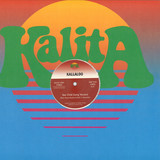
Kalita Records are proud and honoured to announce the first
ever and official reissue of Kallaloo's sought-after 1982
disco single 'Star Child', accompanied by interview-based
liner notes. Originally released on Jeffrey Turpin's
Trinidadian record label IDA, 'Star Child' has since become
highly sought-after by both DJs and collectors alike as an
invisible, yet astonishing piece of Caribbean disco. Unable
at the time to gain the traction and success that it deserved,
we hope that this re-release provides an opportunity to bring
such a great record to a much wider audience.
Kallaloo consisted of various Trinidadian musicians including
Keith Alexander and Peter Wayne Barkley. Keith had been
well-respected as a member of the Trinidadian group Impact, and
was later to become an in-demand producer and composer under
the name of Keith Diamond, responsible for various hits by Billy
Ocean, Donna Summer, Starpoint and Melba Moore. In contrast,
Peter was a well-known recording session drummer, but after
'Star Child's' release he moved to North Carolina to pursue other
interests and 'was never heard from again'.
'Star Child' was recorded at Right Track Recording, in mid-town
Manhattan, New York. As Jeffrey recalls, the atmosphere in the
studio was 'great', with 'everyone upbeat, the cream of the crop
just looking for that break... everyone was talented and just
wanted the chance to express their own ideas'. Five hundred
copies of the record were released on IDA with a white label
design, and they were sold both in Brooklyn, New York and Port
of Spain, Trinidad. It was also released on a red label, however
this was not to Jeffrey's knowledge at the time.
Jeffrey explains that the reason why the record didn't fare well at
the time was because of the difficulty in getting the song played
on the radio. As he recalls, radio stations were much more likely
to play 'radio versions' of songs which lasted for a couple of
minutes, rather than five or seven minute 'extended' versions
such as 'Star Child', which were more suitable to a club
environment. In addition, as Jeffrey explains, radio airplay is a
'political business', and also within a short while band members
such as Keith got their own breaks, and the Kallaloo era was over
as quickly as it had started.
'they've quietly found themselves elevated into the psych scenes premier league.' Drowned In Sound
'when they go pedal-to-metal it rarely fails.' Mojo Magazine
'The Lucid Dream are rapidly becoming major players in an ever-increasingly crowded psych scene..utterly seductive.' The Quietus
'one of the most enthralling bands in the UK.' Far Out Magazine
The Lucid Dream return in October with the release of their 4th album, 'Actualisation'.
Driven by fans raising £10,000 to help replace all equipment robbed after a Paris show in early 2017, a new album became the instant focus in the summer of 2017 for a rejuvenated The Lucid Dream.
'Actualisation' is soaked in the influence of acid house, amalgamated with dub and kosmische. It will again see them acknowledged for venturing into pastures new, setting themselves apart from 'genres', 'scenes' or what any other act are currently doing.
The album was penned over the summer of 2017 by Mark Emmerson (vocals/guitar/synths), using only the classic Roland 303/808 synths, bass and vocals as tools for writing. Inspiration for the writing was formed via continuous listening to the Chicago to UK acid house works of 1986-1992, the focus predominantly on the groove.
Several months on from those writing sessions and The Lucid Dream have completed their 4th album in 5 years. A record made for the dancefloor.
Recorded at Whitewood Studios, Liverpool, with Rob Whiteley, the album is produced alongside long-time collaborator Ross Halden (Ghost Town Studios, Leeds), with mastering via Dean Honer (All Seeing I/I Monster/The Moonlandingz).
The confrontational techno-punk of 'Alone In Fear' opens the album, a 9-minute attack fuelled by the frustration and anger spawned by Brexit, government and a realisation of what 2018 Britain currently is.
Recent single 'SX1000' (the first work from the album, unveiled via 12' vinyl in April this year) is the band's first move into pure acid house. The acid house fusion runs throughout the record, represented furthermore by 'Ardency', a track already praised by live critics when aired live for the first time earlier this year as 'even on first hearing, would've raised the roof of The Hacienda'.
The 2-part opus of 'Zenith' follows, commencing with a space-dub/house instrumental groove before building into a track that will go for your head as much as your hips. Only 'Breakdown' harks back to sounds of old for the band, a little reminder of the skull-crushing impact they can make when stripped to the bare bones. 'No Sunlight Dub' closes the album, a dark-dub that invites the classic acid-house tool (Roland 808) into the dub. The track makes a stop-off into drum 'n' bass/jungle along the way before rounding up in a manner suited to Lee Perry, King Tubby, Augustus Pablo and other Jamaican greats.
The Lucid Dream formed in Carlisle, Cumbria, in 2008. A string of sold-out 7s was followed by the debut longer player, 'Songs Of Lies and Deceit', in August 2013. The initial vinyl pressing of the debut album (500 copies) sold out within 2 days, and was backed by a main stage slot at Kendal Calling, and supports to Death In Vegas and A Place To Bury Strangers (full UK tour).
The bands 2nd album ('The Lucid Dream') was released in March 2015 to further acclaim. This included 2 BBC 6 Music sessions and plays across most shows on the station, as well as plays from BBC Radio 1 (Huw Stephens) and BBC Radio 2. Further press followed from Uncut, The Skinny, Louder Than War, and Drowned In Sound, who named the album #7 UK album of 2015. Supports to Clinic and A Place To Bury Strangers also coincided.
3rd album, 'Compulsion Songs' was released in September 2016, on Holy Are You Recordings. The vinyl pressing of the album sold-out within a day, prompting an immediate 2nd press, with pre-sales of the album topping 1,000 before release. The album was backed by a headline UK tour, and a main slot at Liverpool International Festival of Psychedelia (for which they were singled out for major plaudits from The Quietus, The Skinny and Drowned In Sound). The album again received acclaim from the likes of Mojo, Uncut, Classic Rock Magazine, BBC Radio 2 (Huey Morgan) and across the board on BBC 6 Music (Lauren Laverne, Marc Riley, Tom Ravenscroft, Gideon Coe, Stuart Maconie).
'Actualisation' is released on 19th October 2018 (CD/download/ltd red vinyl/standard black vinyl), via Holy Are You Recordings.
'they've quietly found themselves elevated into the psych scenes premier league.' Drowned In Sound
'when they go pedal-to-metal it rarely fails.' Mojo Magazine
'The Lucid Dream are rapidly becoming major players in an ever-increasingly crowded psych scene..utterly seductive.' The Quietus
'one of the most enthralling bands in the UK.' Far Out Magazine
The Lucid Dream return in October with the release of their 4th album, 'Actualisation'.
Driven by fans raising £10,000 to help replace all equipment robbed after a Paris show in early 2017, a new album became the instant focus in the summer of 2017 for a rejuvenated The Lucid Dream.
'Actualisation' is soaked in the influence of acid house, amalgamated with dub and kosmische. It will again see them acknowledged for venturing into pastures new, setting themselves apart from 'genres', 'scenes' or what any other act are currently doing.
The album was penned over the summer of 2017 by Mark Emmerson (vocals/guitar/synths), using only the classic Roland 303/808 synths, bass and vocals as tools for writing. Inspiration for the writing was formed via continuous listening to the Chicago to UK acid house works of 1986-1992, the focus predominantly on the groove.
Several months on from those writing sessions and The Lucid Dream have completed their 4th album in 5 years. A record made for the dancefloor.
Recorded at Whitewood Studios, Liverpool, with Rob Whiteley, the album is produced alongside long-time collaborator Ross Halden (Ghost Town Studios, Leeds), with mastering via Dean Honer (All Seeing I/I Monster/The Moonlandingz).
The confrontational techno-punk of 'Alone In Fear' opens the album, a 9-minute attack fuelled by the frustration and anger spawned by Brexit, government and a realisation of what 2018 Britain currently is.
Recent single 'SX1000' (the first work from the album, unveiled via 12' vinyl in April this year) is the band's first move into pure acid house. The acid house fusion runs throughout the record, represented furthermore by 'Ardency', a track already praised by live critics when aired live for the first time earlier this year as 'even on first hearing, would've raised the roof of The Hacienda'.
The 2-part opus of 'Zenith' follows, commencing with a space-dub/house instrumental groove before building into a track that will go for your head as much as your hips. Only 'Breakdown' harks back to sounds of old for the band, a little reminder of the skull-crushing impact they can make when stripped to the bare bones. 'No Sunlight Dub' closes the album, a dark-dub that invites the classic acid-house tool (Roland 808) into the dub. The track makes a stop-off into drum 'n' bass/jungle along the way before rounding up in a manner suited to Lee Perry, King Tubby, Augustus Pablo and other Jamaican greats.
The Lucid Dream formed in Carlisle, Cumbria, in 2008. A string of sold-out 7s was followed by the debut longer player, 'Songs Of Lies and Deceit', in August 2013. The initial vinyl pressing of the debut album (500 copies) sold out within 2 days, and was backed by a main stage slot at Kendal Calling, and supports to Death In Vegas and A Place To Bury Strangers (full UK tour).
The bands 2nd album ('The Lucid Dream') was released in March 2015 to further acclaim. This included 2 BBC 6 Music sessions and plays across most shows on the station, as well as plays from BBC Radio 1 (Huw Stephens) and BBC Radio 2. Further press followed from Uncut, The Skinny, Louder Than War, and Drowned In Sound, who named the album #7 UK album of 2015. Supports to Clinic and A Place To Bury Strangers also coincided.
3rd album, 'Compulsion Songs' was released in September 2016, on Holy Are You Recordings. The vinyl pressing of the album sold-out within a day, prompting an immediate 2nd press, with pre-sales of the album topping 1,000 before release. The album was backed by a headline UK tour, and a main slot at Liverpool International Festival of Psychedelia (for which they were singled out for major plaudits from The Quietus, The Skinny and Drowned In Sound). The album again received acclaim from the likes of Mojo, Uncut, Classic Rock Magazine, BBC Radio 2 (Huey Morgan) and across the board on BBC 6 Music (Lauren Laverne, Marc Riley, Tom Ravenscroft, Gideon Coe, Stuart Maconie).
'Actualisation' is released on 19th October 2018 (CD/download/ltd red vinyl/standard black vinyl), via Holy Are You Recordings.
Hosono's solo career would take many twists and turns from this point forward, with forays into exotica, electronic, ambient, and techno, culminating in the massive success of techno pop group Yellow Magic Orchestra (YMO), who made their debut in 1978. Admired by artists ranging from Van Dyke Parks to Mac DeMarco, Hosono continues to forge ahead as he heads into his fifth decade as a musician. With the re-release of his key albums for the first time outside of Japan, his genius will be discovered by a whole new generation of fans around the world.
.
The unbelievably prolific Haruomi Hosono is one of the major architects of modern Japanese pop music. With his encyclopedic knowledge of music and boundless curiosity for new sounds, Hosono is the auteur of his own idiosyncratic musical world, putting his unmistakable stamp on hundreds of recordings as an artist, session player, songwriter and producer.
Born and raised in central Tokyo, his adolescent obsession with American pop culture informed his early forays into country music, which he would revisit later in his career. Hosono made his professional debut in 1969 as a member of Apryl Fool, whose heavy psychedelia was somewhat at odds with his influences, which leaned towards the rootsy sounds of Moby Grape and Buffalo Springfield. The latter was one of the main inspirations for his next group, Happy End, whose unique blend of West Coast sounds with Japanese lyrics proved to be highly influential over the course of three albums. After the band’s amicable break up in 1973, Hosono began his solo career with Hosono House, an intimate slice of Japanese Americana recorded inside a rented house with recording gear squeezed into its tiny bedroom.
The music on this EP was conceived in China, between 1989 and 1993. The original tracks were mixed to DAT in real time, in a small neighbour-proof studio inside my apartment in Macau, a 19th floor with a view to the hurricanes. There's a small, unexpected or improbable story behind each track, some little magic fused with the local atmosphere, certainly guaranteeing their lasting authenticity 25 years later.
TAIPEI DISCO
Late 80s Guangzhou was an exotic city where the traditional past coexisted in harmony with the present and even already with the future.
I'd rather spend my weekends in Guangzhou than diving into Hong Kong consumerism - as most ex-pats in Macau did. I took a cab at the border and travelled 150 Km through chaotic roads with family and friends until reaching the hot, humid, mega South China metropolis.
We ate on street joints in the evenings, went on to a karaoke bar and ended up at Taipei Disco, the only proper club in town. All the others were inside hotels and played generic music or they were seedy, sleazy, smoky cabarets.
Taipei Disco used to be a cinema and played cantonese pop music and anglo-saxon pop/rock (that was new). The spacious dance floor was generously lighted, the atmosphere was airy and modern. Boys and girls were in the habit of dancing in pairs, one in front of the other, observing a respectful yet sensual distance. When the girl took a few steps back, the boy went along and vice versa. With legs and feet (more than the upper bodies) synchronized with the music, they never exceeded in extroversion. Cool.
I always carried a MicroComposer and a portable DAT recorder in my travels through China and weekends in Canton. Any spontaneous musical idea was imediately recorded and memorized. The MicroComposer allowed multitrack recording, which was very handy on the road. Based on the emphatic choreography of Taipei Disco's dancers, i started to compose a rhythm track while sitting at a table, with headphones, listening to Cantopop in the background. As if by magic - not a rare occasion in music - everything began fitting together. Odd as it may seem, the track ended up sounding more germanic (Kraftwerkian) than Cantonese pop.
The story ends in a circle: the cantonese DJ at Taipei Disco, whom i used to ask to play certain records, wanted to play my music at the disco when it was basically only just a rhythm track and little else. From a cupboard under his set up he took out a battered keyboard (unrecognizable brand) and invited me to play over the track with the available sounds on the keyboard. The circle was complete, with Cantonese clubbers happily dancing forwards and backwards, as if it were another Cantopop hit.
I didn't get payed but the house offered us free ice cream cups in which little Portuguese flags were sticked.
The track would be finished later, in studio, with vocoder strings ensemble and synth solos.
TAIPEI DISCO (LIVE)
The live version of 'Taipei Disco' was recorded during a live set at the China Pop venue, in Macau, 1993. China Pop was a rock club built in the ample space of an old fishing warehouse, located in the labyrinthic Inner Harbour area. It was decorated with large Mao Zedong and Cultural Revolution posters and memorabilia and had a unique atmosphere, fusing Pop Art with film noir. We began our performance at 1AM, pretty early for Macau's nightlife standards. We were lucky. An audience showed up. And in Macau there were always several friends among the audience, which tranformed a musical performance into a relaxed party.
The atmosphere was particularly surreal on that night. The front row was dominated by French Crazy Horse dancers, a sort of Oriental Moulin Rouge. The girls had finished their last performance of the evening at the Crazy Horse and were still energized from their show. During our performance, right in front of us and perfectly synched, we could hear the famous irreverent screams of can-can dancers. You always had to expect the unexpected in Macau.
RED MAMBO (IMPROMPTU)
I was familiar with the Portuguese-speaking African countries well before having lived in China. I found myself returning several times to one in particular, always attracted by its magic and very distinct, identitary culture and music: Cape Verde.
During the early years of DWART a lot of the inspiration for drum machine rhythms (Roland's TR series) came from African music, especially from new musical trends that gained full autonomy with Cape Verde's independence from Portugal, as was the case with funaná.
I had the privilege of having known and befriended some of the greatest Capeverdian composers, musicians and singers during the 70s and 80s, such as Bana, Luís Morais, Cesária Évora, Paulino Vieira, Chico Serra, Tito Paris, and historical bands such as Bulimundo (ambassadors of funaná) and Os Tubarões (great innovators of morna, coladera and funaná, with the sonic impact of an afro-beat big band).
When Luís Filipe de Barros began playing Os Tubarões for the first time on Portuguese radio, that was the turning point for African music in Portugal. The 'Tabanca' album was so widely heard and talked about that it quickly got a Portuguese release through one of the big labels of the time.
The mystic of this band from the Santiago Island would reach the East. Os Tubarões played to a packed room in Macau in 1992, and after the bombastic gig we arranged a dinner and party at my place.
We ate and drank generously and the moment came for a jam session at the small studio on the 19th floor. Because Os Tubarões didn't all fit in the studio, we recorded an impromptu with only three of the musicians: Tótó Silva (electric guitar), Mário Russo Bettencourt (bass) and Zeca Couto (piano). And there we were improvising without barriers, suddenly detached from cultural roots, labels and constraints, a truly unique moment. The track is now being released exactly as it was recorded, imbued with the real communion between the musicians. And it could only be titled 'Red Mambo'. I wish to dedicate it to the memory of Ildo Lobo and Jaime do Rosário, founders of Os Tubarões, sadly and too soon departed from the land of music.
A long time ago, in a Norway far far away in time, keyboardist Bugge Wesseltoft introduced his New Conception of Jazz to the world. We're talking about the late 90s, when Bugge's cosmopolitan blend of jazz, hiphop and techno beats was pretty much the coolest music coming out of Norway at that moment. That was a golden time for Norwegian music, in fact, when the rest of the world began to sit up and take notice that something was stirring up north, and realised the music was more than just glacial tones hurtled from icy mountaintops and frozen lakes. This was the sound of urban Scandinavia.
A few years later came the electronic dance genre 'space disco'. Along with Todd Terje, Bjørn Torske and Lindstrøm, Prins Thomas was at the epicentre of this next big wave to surge out of Norway. Now, the two generations have come together in this exclusive collaboration between Bugge and Prins Thomas on the Smalltown Supersound label. Jazz and electronics combine for that energising vitamin D shot of Nordic sunshine.
The Rainbow Studio in Oslo is a familiar name to anyone who follows the ECM label - many of its classic 1970s jazz albums were recorded there under the eye of resident producer Jan Erik Kongshaug. Bugge and Thomas booked a couple of sessions at the legendary space with Kongshaug at the controls, and improvised some tunes in the style and spirit of some of their favourite ECM moments, like the fresh, open sounds of Codona, Egberto Gismonti, Oregon and Kenny Wheeler. Bugge had previously done a remix of Thomas's 'Bobletekno' in 2015 but this is the first time they have worked together as active musicians. The results - also partly taped at Thomas's home studio - fuse programmed rhythms, live synths and percussion, all captured in a sumptuously spacious acoustic.
For an even more authentic touch they called up one of their all time local heroes and one of Norway's most famous jazz drummers, Jon Christensen, who's been the go-to guy for Jan Garbarek, Terje Rypdal, Keith Jarrett and many more. At 75 years he's still pretty spry behind the kit, as you'll hear on several tracks here.
Make no mistake, though, this is not retro pastiche but contemporary music, coasting on gently insistent programmed grooves and bubbling basslines. The whole thing feels not so much like a consciously hip fusion of DJ and jazz musician, more like two great musicians totally enjoying themselves. Which is exactly what it is.
Key facts:
Bugge Wesseltoft is one of Norway's leading jazz figures. He set up Jazzland Recordings in 1996. His solo Christmas LP It's Snowing On My Piano remains Norway's best selling jazz album!
Prins Thomas's real name is Thomas Hermansen. His label, Full Pupp, means 'full breast'. He's released several albums under his own name, as well as collaborations with Bjørn Torske and Lindström. Check out his amazing Paradise Goulash mixtapes.
Salvador Font studied violin, clarinet, composition and harmony at the Conservatori Municipal de Barcelona, but very soon started to gain notoriety as a saxophonist in the rich jazz scene of 1940s Barcelona. Font would soon be playing tenor sax and clarinet in the Orquesta Gran Casino. He was in his early twenties and his hot swing technique was already praised through the citiy's scene, he would grow to be considered the best saxophonist in Spain by playing in many orchestras and combos, among them: José Puertas', Antonio Vilá's Virgina, Bonet de San Pedro's band, Pierre Michel, El Lirio Campestre, Los Marios, Luis Rovira y su orquesta, Orquesta brasileña Fon-Fon, Jaime Camino, Los Embajadores, Italo Leone's... With these and others, Font toured constantly, visiting many countries and even staying on some for long seasons: Mexico, Morocco, Switzerland, Egypt... Hungarian violinst of Turkish ancestry Kurt Dogan gave him the "Mantequilla" surname - he felt "Mantequilla" (which means "butter") fit Font's mellow yet swinging improvisation style.
Mantequilla y su conjunto
In the early sixties, "Mantequilla" had the chance to lead his own combo, Mantequilla y su conjunto, with which he was to record the three splendid EPs that are compiled on the present album. All these 7" have become elusive collector pieces in the record market, with sellers demanding from 200 to as much as 950 euros per copy.
In 1961 "Mantequilla" was at his best moment, his gigs at the Jamboree Jazz Cava had brought him back to the first line of Barcelona's jazzmen after he had been working abroad for a long time, and was approached by the Belter label to record an EP. On the sessions he was accompanied by Manolo Mercedes on trumpet, Pedro Ferré on piano, Rafael Lizandra on double bass and Rafael Verdura on Drums. The material chosen for the disc were four original compositions by Salvador Font which had a high West Coast flavour all over: "La Tuna Club", "Whisky Jazz" and "Jamboree" named after famous jazz clubs and "Azul Trompeta", dedicated to Manolo Mercedes.
In late 1962, after spending some time in Madrid working as members of the Italo Leone combo, "Mantequilla" and pianist Manuel Gas came back to Barcelona for the recording of the second "Mantequilla" EP, also on Belter. We find again Manolo Mercedes on trumpet, Pedro Ferré on piano and Rafael Lizandra on double bass, the drummer this time was José Farreras. Another news is that Manuel Gas also sat on piano and vibraphone. The songs chosen for the occasion were two tunes from the Art Blakey Jazz Messengers repertoire: Bobby Timmons' classic "Moanin'" and the Jacques Marray track "No Problem" from the soundtrack of the Les liaisons dangereuses film (mispelled "Not Problem" on the sleeve and label), plus the Salvador Font penned "Blue Note" and "Full de ases" - on "Full de ases" "Mantequilla" trades his sax for the violin, which he also mastered under high influence from Stephane Grapelli. The record was released on Belter in early 1963 and showed "Mantequilla" adding a certain aggressivity to his sound, in a soloist style which has been compared to that of tenor saxophonists Barney Wilen or Benny Golson.
1965 was the year of release of Mantequilla y su conjunto's third EP, now on the Discophon label. Mercedes and Farreras are again present in the recording sessions, joined by Ricardo Miralles on piano and Enrique Ponsa on double bass. Four original Font compositions make up the fantastic EP: "Blues 3/4", "Atmósfera", "Vat 69" and "Balada".
There would be a further EP on Belter, released in 1971 as Mantequilla Group it was a cash-in operation to take some redits of the ye-yé discothèque phenomenon, it gets quite afar in style from the jazz works of Mantequilla y su conjunto, so we just left it aside for the present edition.
"Mantequilla"'s career would continue, in 1968 he would settle in Majorca and form a swing band with Bonet de San Pedro and Manuel Bolao. He played in local orquestras and also with first class world acts like Gerry Mulligan, Tete Montoliu, Errol Gardner, a.o. He was even approached by Henry Mancini to play sax on The Pink Panther Theme in a gig Mancini did with his orchestra in Palma de Mallorca in 1975, He also joined his son Salvador Font (a demanded drummer himself who has played with Máquina!, Orquestra Mirasol, Música Urbana, Gary Burton Quartet, Georgie Fame, and many others) and his peers Carles Benavent, Emili Baleriola, Josep Mas 'Kitflus' and Jordi Bonell with whom he recorded his acclaimed "Mantequilla" album in 1987.
Now, for the first time ever, the legendary three ultra rare and imposible to find EPs by Mantequilla y su conjunto are compiled in a lavish vinyl LP with remastered sound, featuring liner notes and photos and a fantastic period inspired, three backflaped, front laminated sleeve. It is a stricly limited edition of only 500 copies and they are expected to sell out very soon, do not miss your chance of getting yours - it may be the last chance of chasing the Mantequilla sound on vinyl at a reasonable price!
Franco Micalizzi CHI SEI(Four Flies Records - FLIES 17)
LP 180gr. Limited Edition 500 copies
liner notes byALFONSO CARRILLO (Rendezvous, LA)
lettering & artwork restoration byLUCA BARCELLONA
Considered one of the finest and most successful works composed by Franco Micalizzi. A 500 limited-edition LP which includes two tracks never before released on vinyl, a reworked painted lettering title designed by Luca Barcellona, and extensive liner notes by Los Angeles'RendezvousDJ/film event founder, and Four Flies collaborator, Alfonso Carrillo: "A film score that was quite unheard of in horror - a funk and disco-tinged soundtrack, with a sound reminiscent of a blaxploitation film. Director Ovidio Assonitis'Chi sei(1974, American title:Beyond the Door) offered horror fans both a familiar sto- ryline and a stylistically unusual score. Recorded in the States, and using American session musicians, Micalizzi created one of horror's most unique soundtracks. He utili- zes soulful lead vocals (sung by Warren Wilson) along with sax and synthesizer, both of which are featured prominently on the score. Along with superb percussion work, this soundtrack features virtuosic musicianship by top session players and easily stands up to the test of time. This was an early foray into the world of soulful funk and an early in- dication of future-funk to come from the maestro". Alfonso Carrillo (Rendezvous, LA)
Way back in 1967, an animated superhero cartoon was released into the world. It was created by Grantray-Lawrence Animation and was based on a web-spinning, crime fighting blue and red dressed character that had originated in1962, in Marvel Comics by Stan Lee and Steve Ditko. This amazing series (that we're not allowed to mention the name of for legal reasons) ran on ABC TV in the USA, then Canada, then a few years later started to spread its web further, running here in the UK throughout summer holidays, after school and possibly early mornings at weekends in the late 1970s. The series then got released on VHS video (and probably Betamax too) in the mid 1980s and still continues to spin its animated magic around the world through further broadcasts, YouTube and DVDs.
The series was notoriously low budget, with animated errors everywhere and numerous scenes, sequences and backgrounds being re-used all the time, often across the same episode. Even a certain spider logo on a costume would appear with six legs, then eight legs later on, then back to six again in the same show.
Series One opened with a newly written spider theme, a classic, hooky song all about doing whatever spiders can, and had, as Big George (RIP) once pointed out to me, a set of session singers falling slightly out of time with the backing track after the first verse. Series One also featured background music by jobbing composers Bob Harris and Ray Ellis but these cues and master tapes are now believed to be lost.
After Series One the company Grantray-Lawrence went bankrupt, so the amazing spider series (that we're not allowed to mention for legal reasons) was taken on by producer Steve Krantz. He brought in new talent, including animation director Ralph Bakshi who later went on to turn a Robert Crumb strip cartoon into the feature Fritz The Cat. Krantz also slashed the already cripplingly small spider budget, and brought in the idea of using economic library music. Here, thanks possibly to an independent sync agent (it has been suggested that a company called Music Sound Track Services may have been the one) production turned to the KPM catalogue. This was one of the few really established library catalogues around at the time with a modern edge, it was full of fabulous, modern dramatic music tracks - often all on the same LP. But more importantly all the tracks were far longer than the one minute musical cuts that many of the fledgling USA library companies were issuing at the time. Not only would this KPM music be efficient, affordable and very easy to use, it would also mean syndication worldwide would not be held up by any future musical issues. Krantz produced two amazing spider series (that we're not allowed to mention for legal reasons), and both were smothered with KPM music. In fact barely a spider second goes by without music playing in either the background or foreground.
For many years I - and many nostalgic others - have been thinking about putting this vinyl album together. For many enthusiasts this really is formative music - a junior foray into hip swinging crime jazz and esoteric musical grooviness. I've also read on line accounts by DJs from WFMU on the trail of original spider master tapes, and there's even a whole forum dedicated to Spidey-Jazz'. Then recently I was looking at an old spider tracklist and realized that several of my favourite KPM cues were there including Syd Dale's Hell Raisers' and Walk And Talk', both from one of the most elusive and desirable KPM albums of all time (yes, you just try and find yourself a copy of KPM 1002 right now), so I decided to push on and get the album made.
So, what features on this Spider-Jazz Lp Well it's music from the amazing TV series we are not allowed to mention for legal reasons, BUT, not music from Series One. No, but it is all from Series Two and Series Three. From looking at archival cue sheets, over 50 tracks from various early KPM 1000 series albums were used across episodes. I've distilled this down into one exciting and enthralling LP, and if this works a further Spider Jazz album may well swing in to production. If you're interested (and I'm sure you may well be) cues here came from KPM1001, KPM1002, KPM1015, KPM1017, KPM1018 and KPM1043 and were composed by master library composers of the era - Dale, Hawkshaw, Hawksworth, Mansfield etc.
And if you are listening over there in the USA, you may well recognize many of the cues here not just from the amazing TV series (that we're not allowed to mention for legal reasons) but also from classic 1960s and 1970s NFL highlight shows that we are allowed to mention.
The long awaited debut release from Melbourne based producer / personality Mousse is here! Until now, Mousse aka Simon Barry has kept his craft close to his chest and we finally hear the result of years of hard studio labour in the bungalow. Barry has been a crucial part of Melbourne's dance community for the past five or so years, co-hosting the legendary disco party 'Misty Nights' with Danny Hotep as well being a fixture at The House De Frost and Animals Dancing parties.
On the A side we have the anthemic 'Sex and Acid' and 'Big Fat Party Popper' two raw house tracks with links to early Chicago classics. Quirky sound effects and catchy vocals simmer on top of hot acid bassline to give you a couple of the summers most memorable bangers! But don't be fooled, Mousse is no one-trick-pony. On the flip we step out of the bungalow and into 'Afternoon Bloom' where jazzy pianos dance around a playful machine rhythm. Rounding out the four tracker 'Bare With Me' delivers an evolving house jam with a conversive synth line and dubbed out chords.
A killer debut release from one of Melbournes rising stars.
Recorded in Philadelphia in 1969, The Deirdre Wilson Tabac's sole album is a beautiful blend of funk, jazz and soulful pop. Possessing the complex grooves, thrilling breaks and ethereal weirdness that The Rotary Connection pedalled so brilliantly, the LP failed to connect with audiences upon its original release.
In the decades since, it has deservedly attracted a considerable cult following. However, almost inevitably, it has become increasingly tricky to pick up a copy in good condition for anything less than eye-watering sums. As such, we're delighted to present the first officially licensed vinyl reissue of this undoubted masterpiece of freaky funk-rock, limited to just 500 copies.
The Tabac were, in fact, a trio. Discovered, managed and produced by Svengali Sonny Casella (who'd earlier managed garage band The Magic Mushrooms), they comprised Deirdre Wilson, Stu Freeman (formerly of said Mushrooms) and Barbara Payne (formerly with the James Brown Revue). They were backed by session players including jazz guitarist Chuck Anderson, bassist Hugh McDonald and keyboardist Roy Bittan (who went on to be a long-term Bruce Springsteen sideman).
Their first single coupled two fine Casella compositions, each featuring powerhouse vocal workouts, the supremely funk-fuelled blues beat of "The Other Side Of Life" and the psychedelic-flavoured "Look In My Face" - both of which are featured here. This 7" picked enough up airplay to merit an album, which duly appeared early the following year, but, as is often the way with these lost classics, it received barely any press. Correspondingly, sales where low and the trio didn't last long.
And herein lies the real tragedy. The rest of the LP deserves to be heard from start-to-finish - it's that good. A beguiling mix of funky folk and rocky jazz tracks, with some deep, string-drenched harmony soul ballads and a handful of remarkable covers elegantly presented througout. Indeed, they put some sauntered head-nod funk into The Beatles' "Get Back" whilst tearing through a version of "Sittin' On The Dock Of The Bay" which gives Otis' original a real run for its money.
But the real standout cut for most - with its soulful, haunting vocals, swinging hammond organ and stabbing horns, is the incredible 6/8 time jazz dancer "I Can't Keep From Cryin' Sometimes." Staggering.
The Land of Look Behind soundtrack returns to vinyl in a remastered and expanded edition that includes a download of three previously unheard and unreleased tracks from the original sessions. Alan Greenberg, who wrote and directed this film documenting the funeral of Bob Marley, provided K. Leimer with location tapes which were used to originate many of the rhythmic patterns for Land of Look Behind. Loops of the monologues and phrases that exhibited more distinctive cadences and pacing, the words, glottal stops, clicks and coughs of witnesses were used as cues for the percussion instruments. In effect, speech became the organizing principle of the musical score. By eliminating the accuracy of click tracks, musicians were prompted to rove through the inconsistent intervals of the voice-derived patterns. Also included is a four-page insert featuring an essay by Paul Dickow.
K. Leimer founded Palace of Lights in 1979. Leimer's early work has recently been reissued by Autumn and RVNG, and his early cassette work is in the critically acclaimed VOD box set American Cassette Culture. Leimer has been actively producing music since the mid 1970s — his current catalog includes seventeen albums plus two collaborative albums with Marc Barreca.
Leimer's work is included in the collection of The British Library.
A native of the Caribbean coast of Colombia, Abelardo Carbono achieved legendary status in his country's storied ranks of musical icons by combining the homegrown sounds of cumbia with the chiming guitars of West African soukous, enormously popular with the local tropical sound systems, and drenching the whole thing in his off-kilter, surreal and slightly psychedelic sensibility.
With the exception of a well-received compilation of songs from his 1980s heyday, Carbono has been rarely heard from outside the sweaty dancehalls he still commands in his hometown of Barranquilla. Now, Names You Can Trust has welcomed the reclusive guitarist and singer back to the vinyl format with a simmering Afro-Carib beast of a cut, recorded with the assistance of Will "Quantic" Holland on rhythm guitar and Mario Galeano (Frente Cumbiero, Ondatropica) on keys and in conjunction with Lucas SIlva of Palenque Records & Polen Records. It's a true cross-generational and international collaboration that is uniquely possible via Colombia. The first release of this expansive & power packed studio session is a cover of vallenato pioneer Guillermo Buitrago's La Piña Madura. This updated take veers heavily towards Africa on a rock solid foundation of bass and drums, with Abelardo's trademark guitar and quirky vocals leading the way.
Finally Copenema drops on vinyl. This special limited edition vinyl EP especially for those summer beach bar vibes.
The EP includes the much loved Te Faz Bem which became a Balearic classic in Ibiza last summer after DJ Harvey regularly played it at his residency 'Mercury Rising' at Pikes . This caught the attention of Pete Tong who played it on his BBC Radio 1 show multiple times.Deixa Música Tocar (Let The Music Play) on the B side is the second single (currently unreleased) and carries on the same classic Balearic vibe from Te Faz Bem.
Super strong remixes from Riccio & Kenneth Bager complete the 12' nicely. The single representing 'the other side of Ibiza' is receiving strong support from Pete Tong, DJ Harvey, Ruf Dug, Peaking Lights, Alfredo, DJ Pippi, Phli Mison, Jon Sa Trinxa and other Balearic inspired DJs and echoes a renewed interest in Latin and Brazilian inspired sounds across the beach bars of the Mediterranean in summer 2017. Copenema (Copenama = Copenhagen Vs Ipanema) is a collaborative project between artists from Denmark and Brazil with the album partly recorded in the living room of Brazilian star Rodrigo Sha in Rio Di Janeiro, and finished at the legendary Volmers studio in Copenhagen.
Copenema is the latest incarnation of Music For Dreams' label boss Kenneth Bager in collaboration with artists and friends Rodrigo Sha, Danish composer Troels Hammer and producer Thomas Schultz from Ambala. The lead single 'Te Faz Bem' was the last track recorded during the sessions and will be the first single released on Music For Dreams this autumn.
Having pinned to perfection the sonics of the Adriatic, Croatia's Love International Festival bottles up their blissed out rhythms and sunrise sessions for the inauguration of Love International Recordings, fittingly, with a first release from UK producer Begin.
Bringing the Love International feel to wax and digital, the label will encapsulate the range of music the festival's secluded party paradise has become renowned for. All the way from the balearic tinges of this first release, to the meatier house, techno and electro selections on show at Barbarellas.
Begin aka James Holroyd has a long history with Love International. Dating back to the early 2000s, Holroyd was one of the first guest DJs at the old Garden festival on the former festival site in Petrcane. Long serving Chemical Brothers tour DJ, Back to Basics resident since the 90's and Bugged Out co founder, Begin has long paid his paid his dues to the scene. In the words of Dave Harvey: 'he's been an absolute workhorse in dance music for time'.
Love International 001's tracks seemingly fit the festivals own daily lifecycle. From the docile guitar picking of meditative EP opener 'Wood Trees' to the slow daybreak funk of 'Daypulse' where synths pierce through the track like sun rays through the Adriatic dusk, the EP is a holistic reflection of what one might hear at one of the festival's fabled sunrise sessions. 'Garden Interlude' ushers in a fresh burst of energy, with the revitalizing sounds of piano house, paired with warming neo soul vocals. 'Into The Fun' is a self fulfilling prophecy, closing the EP on a quintessentially balearic note.
Faitiche releases the album Improvisations And Edits, Tokyo 26.09.2001 on vinyl for the first time. For the original 2002 CD on Soup-Disk and Sub Rosa (Audiosphere), Jan Jelinek and the Japanese trio Computer Soup (Satoru Hori - trumpet, Osamu Okubo - toys & electronics, Kei Ikeda - toys & electronics) presented eight tracks all recorded one afternoon in the trio's living room in Tokyo. They are excerpts from a joint group improvisation that subsequently underwent rudimentary editing, on which Jelinek and Computer Soup worked separately.
Jelinek met the three musicians at his first concert in Japan in 2001, at Tokyo's Yellow club, where Computer Soup performed as the support act. Delighted by their free improvisation on pocket-sized electronic toys, trumpet and oscillators, he arranged to meet Hori, Okubo and Ikeda a few days later for a session at their apartment. The resulting three-hour recording, made on their living room floor, formed the basis for Improvisations and Edits. A few days later, Jelinek returned to Berlin. Over the following months, they separately chose passages from the recording that were then edited and assembled into an album.
Formed in Tokyo in 1996 as a quintet (including Shusaku Hariya and Daisuke Oishi), Computer Soup began by performing with acoustic instruments on the streets of Shibuya. Ikeda und Okubo soon switched instruments, and from then on the group's minimalistic but densely woven sound was defined by electronic toys, oscillators and Satoru Hori's trumpet. Their first album was released in 1997 on the Japanese label Soup Disk. Eight further releases followed.
From the reviews of Improvisations and Edits, Tokyo 26.09.2001 in 2003:
"The mind-blowing first track Straight Life is perhaps the best example of what the album has to offer. Jelinek's trademark smears and washes occupy the midrange, like ghosted images of Joe Zawinul's electric piano floating quietly in the wind. DSP jazz modes are set against a walking bassline (possibly computer generated) and a gently tooted trumpet complete with Harmon mute, a dead ringer for Miles Davis' Prestige-era ballads. The effect is something like a three-dimensional film, with different realities on each layer, images of what jazz was manage to interact with a real-time demonstration of all it could be."
pitchfork, 2003
"Improvisations and Edits is a warm and mellow Ambient release with beautiful glitch fragments, static noise bursts and real trumpet intersections. However, there are times where it is the exact opposite, mainly effect-laden, overdriven and bouncy with a lack of melodies and focus, so be aware of these specific tracks."
ambientexotica, 2003
"Often deliciously dreamy and hazy, Improvisations and Edits is like listening to an exceptional instrumental jazz performance while half-conscious or under some sort of chemical influence. Computerised blips and bleeps, loops and treatments and murky sonic skips curl up around desolate horn notes and scattered instrumental noises that culminate in elegant music."
exclaim.ca, 2003
Spread across two 180g discs, spanning 24 cuts and served in a gatefold sleeve designed by members and affiliates, the Young Echo LP is a capsule intended for cementation through time.
It's been almost five years since their last album. As a group, extended radio submissions, prolonged studio sessions and notorious club nights make up the cogs of time. Over the course of these years, the network has grown continually, both as one, and with singular, multi-directional paths from each of the 11 artists that make up the Young Echo collective, counting Jabu, Vessel, Kahn, Neek, Ishan Sound, Ossia, Manonmars, Bogues, Rider Shafique, chester giles and Jasmine towards the crew, with projects such as Bandulu, FuckPunk, O$VMV$M, Gorgon Sound and ASDA adding to the table in their individual ways.However, this record aims not to be judged on any single producer or vocalist. It is most effective as a whole, simply titled Young Echo. Of course each of the artists has an important part to play, but it is very much about the act of balance, accepting individualism to form a greater whole.A good example is the welcome addition of new energy coming from Jasmine (1/3 of Jabu) who injects endless space with her vocals, perfectly answered by the cool-killin' wordplay of Manonmars - who makes his long awaited debut here - sharing stage with the immediate poetry of ASDA's very own chester giles, along the mighty sound of Rider Shafique, and Bogues' versatile style that can flit between rap & song within seconds. Five very different vocalists that could've tried to find a compromise, but instead choose to connect in different ways, finding their niche in the equal range of rhythms and sounds that sprawl in this shared space, the juxtaposition.
Detuned soundsystem stylings, love songs swaying in hacked up ambience, skeletal dancehall, microphone technique, dread electronics, outsider pop, this record manifests the outcome of the shapeshifting anarchy which rears it's head when no one idea can rule, embracing the diversities when one path must be made up of many.
* From the pumping heart of The Magnetic System comes the 'dirtiest' Da-Da-dancefloor anti-jams with this lost 1979 blueprint of Italian conceptual cosmic disco played by the cream of the Goblin studio band. Ultra-rare and unscrubbed,Finders Keepers finally snip the trip from the cash machine to the trash machine.
* Carving its own grubby niche as an early prototype of cosmic disco cum Italo space funk whilst simultaneously harbouring Dada hat stand satire with a junkshop glam aesthetic, this ecological illogical poplitical crab cabaret clearly broke the mould before way before the jelly had set.
* Fans of 'other' obtuse outernational agit-camp might find a fantasy fusion between France's JP Massiera and Sweden's enviroMENTAL marvel Kaptain Zoom while trying to unravel the Madfilth tangle - but rest assured there were method men behind this madness and a portal to Italian funk royalty still festers
at the bottom of the psych rap scrapheap.
* Originally drip-fed out of Cesare Andrea Bixio's Cinevox stable as one of a tight grip of non-soundtrack LPs, made to test the label's commercial potential, Madfilth would follow the band Goblin (and their non-cinematic Roller) as well as the hens' teeth eponymous long player by the group The Motowns in what was perhaps the last-ditch attempt at custom built popsploitation - combining the skills of overqualified composers with undercooked conceptual mind belches. Naturally, after almost 40 years in the barrel, this micro-brewed oddity finally quenches the acquired taste of a new breed of shambolic psychotropic guzzlers proving that 1979 was obviously good year for fool's gold. The Madfilth medicine has finally come to cure your psychic ills so open wide and don't bite the spoon.
* It is beneath the flamboyant rhythm rants and vari-speed osric slop of alt-comedic sarcy-satirist Alberto Macaro (a genetic beneficiary of a vaudevillian comic bloodline) that we find The Magnetic System maestros Franco Bixio and Vince Tempera as the sonic driving force behind this unmarked treasure trove of
B-musical diamanté discoids. It will also come as little surprise that
Cinevox/Dario Argento favourites Goblin were not too distant from the whiff of this curate's egg with the men who many consider to be the group's greatest assets - bass player Fabio Pignatelli alongside sports rock drummer Agostino Marangolo. It was this unison that remained consistent throughout Goblin's career, weathering the temporary departure of Claudio Simonetti and
maintaining the stylistic heartbeat of the group. Madfilth's inclusion of Goblin synth Maverick Maurizio Guarini and the band's mid-period guitarist Carlo Penessi (founder of the band Etna) pinpoints the jobbing Goblin session group during the time they recorded the soundtracks for the films 'Buio Amiga' and 'Squadra Antigagsters'. This lesser-celebrated late 70s era also witnessed the mutating Goblin rhythm section providing discoid backbeats for records such as Giorgio Farina's 'Discocross' album, Simonetti's own Capricorn alter-ego and the homoerotic nightclub spin-off Easy Going - all of which, alongside Madfilth,
provide a strong mutual stylistic support system for their claim to cosmic disco's deep red bloodline.
'Rothschild 12' operated between 2009 and 2017 in the heart of Tel-Aviv, near the bustling intersection of Herzl street and Rothschild boulevard. Located on the ground floor of an elegant eclectic-style building which was built by Mr. Abraham Fogel exactly 100 years before it opened, 'Rothschild 12 began as an art gallery and quickly became a popular relaxed café and bar. While its front terrace faced the hustle and bustle of the city's main boulevard, in its back room 'Rothschild 12' hosted nightly live shows by a variety of established as well as up and coming independent musicians. What started off as improvised jam sessions soon developed into a full program ranging from jazz and rock to world music, hip hop and electronica. Now that 'Rothschild 12 is relocating to a new venue on Herzl street, it is time for a summary - a snapshot of the musical diversity which filled its walls - in the form of the compilation you are now holding. This musical summary of 'Rothschild 12' brings together a modern remix to a pioneering Israeli-Yemenite disco number from the seventies, a bundle of colourful and psychedelic beats,
Unmissable, cornerstone Wackies, back in. Horace Andy's greatest artistic achievement, surpassing even his Skylarking set for Studio One. With definitive reworks of songs he first recorded for Bunny Lee and Derrick Harriott (Money Money and Lonely Woman), a deadly version of Lloyd Robinson's Cuss Cuss, and a first outing for Spying Glass, later versioned by Massive Attack. Musicians include Wackies regulars like Owen Stewart and Oral Cooke from Itopia, and Ras Menilik and Jah T, also Sleepy's multi-instrumentalist spar Myrie Dread from the In The Light sessions for Hungry Town. At the desk, Lloyd Barnes, Junior Delahaye and Douglas Levy coax unequalled vocal performances from the singer, bejewelling ineffable extended mixes. Essential reggae.
Well before Shuggie Otis (Born Johnny Alexander Veliotes, Jr.) cut his debut album, musicianship and performance had long been a part of his life. The son of rhythm and blues legend Johnny Otis, Shuggie learned to play guitar as early as the age of two, and performed professionally with his father's band at eleven. Throughout his long and illustrious career he'd performed on records for the
likes of Frank Zappa, Al Kooper, Etta James, and George Duke, to name a few. In spite of all this, widespread mainstream success eluded Shuggie for much of his career. His most famous release to date is his 1974 album Inspiration/Information, which would experience new resurgent life in 2001. Those willing to dig a little deeper however, would discover hidden gold in his earlier releases, especially in the album directly before Inspiration/Information, his sophomore 1971 release Freedom Flight. As with his debut, Freedom Flight was produced by Shuggie's father Johnny Otis, and built upon the distinct sounds of his debut album: lush, baroque, string section arrangements, paired with hard funk rhythms, and funky blues melodies, with the majority of the instruments once again performed by Shuggie himself. The album also featured backing from premium session greats like George Duke and Aynsley Dunbar, and the track "Strawberry Letter 23". which became a Billboard hit for The Brothers Johnson 3 years later. An unearthed treasure of deft, technical skill, and virtuosic composition.
music is the silence between the notes.' the french composer claude debussy once said.
the german trio wareika, consisting of florian schirmacher, henrik raabe and jakob seidensticker, love the silence between their notes, even if their music is often fully loaded with many detailed sounds, rhythms, melodies and intercultural sound links.
since 2007 they spread their passion for repetitive club grooves in the minimal house spheres that love to swing in the epic way. with four albums on labels like perlon or visionquest as well as eps for labels like eskimo, tartelet, circus company or bar 25 under their wings, the trio proofed their craftsmanship for multi-layered dance music already arrestingly deep on numerous releases and during tours around the globe that brought them also to japan.
now they deliver a new one hour long sonic journey on the tokyo based mule musiq, the label on which wareika member florian schirmacher already released as part of the glowing glisses project in 2008. also wareika itself are not new to the japanese imprint, as they previously dropped a remix for mule for the mysterious project jemmy in late 2015.
and now water, sky, sun, wood' - an ambitious one-track (on vinyl separated into four parts) love letter that kicks you deep into meditation - assumed you surrender yourself to their complex sounding and grooving story-arc. it all started with an unplanned four-hour jam session between henrik and flo-rian, gaming and messing around on the piano, guitar and drum computer.
later florian edited the happening into a one-hour sensation, henrik added some congas and synthlines and jakob mixed it down. the result is a meticulously edited, deeply absorbing dance between the pi-ano, guitar, conga, mfb tanzbär, mfb dominion 1, ob-6, jupiter 6 and manikin mellotron synthsizer. you can use it to get lost. lost from the daily grind. lost from precast perception.
lost in music. you can use it for your imagination to move to a place beyond words that guarantees some genuine experience. or you just can shut yourself down to it, dive deep into your unforeseeable dream world and dance your sub-consciousness around and around.
whatever each listener chooses to do, wareika's latest adventurous blend of jazz, techno, house and world music will move each soul individual. primarily because water, sky, sun, wood' is a reverbera-tion of the inner notes that are floating and dancing in florian, henrik and jakob. and as the greatest music in the world is nothing but an echo of the inner music, wareika managed to reach a new fresh peak of their multidimensional artistic body of work, that grows and grows to stand out in terms of deepness, permanency, eternalness and silence between all sounding sensations.
There were several groups within the Detroit music scene that shared the name of 'The Holidays'. From the 1950's through to the late 1960's our version of The Holidays who took their name from a group members car, a 1954 Oldsmobile 'Holiday', would record for the Star-x, Markie, Master and Holiday record Labels. Founding member James Holiday would also briefly pursue a solo career with releases on the Markie, Syco and Blue Rock labels respectively.
In 1969 James joined by his brother Jack, a baritone saxophonist and the former leader of the band within influential Detroit DJ 'Frantic' Ernie Durham's legendary Gold Room at the 20 Grand Theatre. The brothers together, with Maurice White and former Contours member Joe Billingslea formed 'The New Holidays' who recorded the 'Popcorn' Wylie produced song Maybe So, Maybe No' (Soul Hawk 1008). This current in demand 45 featured If I Only Knew' on the flipside, an excellent cover version of a previous Jimmy (Soul) Clark recording If I Only Knew Then (What I Know Now)' This was recorded at a later session to Maybe So, Maybe No' and featured a slightly different line up with Joe Billingslea making way for a youthful Elliot Smith.
By 1972 The Holidays found themselves without a label, so they formed their own, Marathon Records. Their initial release was the excellent double sider I'm So Glad (That I Met You)/Too Many Times' (Marathon 257). Both songs were written by James Holland and Sylvester Potts another former member of the Motown group 'The Contours' and were recorded under the artist name of 'The Fabulous Holidays.
Into 1973 and their next release was the soulful ballad Getting Kind Of Serious' (Marathon 18475) a Fritz Hale and Fredrick Charles Hawkins composition backed with an instrumental version. Followed by Ego Tripping' (Marathon 18475) an upbeat funky little mover backed with the ballad Lazy Day' written by James Holland, Anthony Hawkins and Fritz Hale.'
During 1975 The Holidays resumed their acquaintance with former record store owner Ronald Holmes a collaboration which led to the release of another excellent double sider This Is Love b/w The Love We Share' on the Rob-Ron (RR-75) label. The Love We Share' was recorded twice. Firstly as the issued 45 version under the shortened title of The Love We Share' and as an unissued longer version under the title of (Been Together Too Long) The Love We Share' with slightly different lyrics. During 1976 a further Holland/Holmes collaboration saw the release of the message song Procrastinate (Why Do We)' (Ron-Hol 76). After this release Ronald Holmes and the Holidays parted company.
During late 1976 into 1977 the Holland brothers wrote and produced two further songs which they recorded with Charles Hawkins (a founding member of the Psychedelic Rock and Funk Band, 'Black Merda') The up tempo dance track You Make Me Weak' and the less frenetic Lost Love' although never issued at the time both songs can be found on the recently released Soul Junction cd album Getting Kind Of Soulful' (SJCD5012). A later discovery of a alternative take of You Make Me Weak' (Take 2) is now available on vinyl for the first time backed with their uptempo dancer I'm So Glad (That I Met You)' The Motorcity continues to yield its long lost legacy.
Brewing another supremely heavy release on the horizon, Moonshine Recordings is stealing the spotlight once again. Proudly presenting Violinbwoy's first solo album, unadulterated sound system pressure at its finest. Slavic chants and drum rhythms meet the unrivaled power of Violinbwoy's eccentric take on modern bass music 'Fyetisov' kicks off the stellar 3x12" release with a high-powered Stepper emission. Setting the tone with a rumbling bassline and supremely energetic lead instrumentation, full force sound system music down to its core. Shining in a different light, 'Moonspell' reveals its melancholic nature gradually intensifying through otherworldly percussion and anthemic vocal sample placements. Stripped down to its bare bones,'Dubplate' unleashes its detuned, percussive shackles for a massive onslaught of four-to-the-floor, while keeping true to Jamaica's music roots. Warbling tape echo spheres and excellence in emotive expression Violinbwoy's collaboration with singer Marina P turns out to be an anthem by itself enthralling, whoever gets caught into the midst of this hymn of a track. Not backing down one step from the established level of quality, 'Sound System' featuring Junior Dread excels once more in a crystal-clear demonstration of modern roots music mandatory repeat listening. Rejoicing in simplicity, 'Rig Alert' holds true to what the name suggests - cinematic bass meditation, fluidly scaling with the size of its speaker counterpart. Moving on to Dan s vocal skills in 'Wanted': Rastafarian wisdom chanting along a skanking rhythm and orchestral atmosphere. Ethereal bells being submerged in moving air and scattered white noise, 'Run & Hide' demonstrates a more experimental side within the LP exhibiting Downtempo/Ambient inclinations in a magnificent combination with Dub characteristics, only increasing in energy to the call of the dub siren. Ready for more, the title track 'dod' captures us within the expressive, introductory playing of the violin, deserting it for echoes and sub oscillations alike. Calling upon the prowess of Rider Shafique, his harmonic toasting is being escorted by a forward-minded halftime groove in 'Find The Way'. Topping the LP off with Sis' excellence in telling a story through song on a hypnotic instrumental. The nature of last tunes is often powerful, serving to concede with an explosion, appropriate of the session as is the case with 'Surfacing' closing off the monumental EP with visceral lead movements, setting the tone alongside driving drums and one more murderous bassline, sure of receiving countless rewinds in the near future. Encompassing a plethora of current Roots- Dub- and Steppa- influenced styles, Moonshine's next LP installment is sure to be received for what it is: a definitive, quality expedition of what's firing up dance floors around the globe.
Species Of Fishes was created in 1993 in Moscow during the experimental home sessions of Igor Kolyadny and Vitaly Stern, which resulted in the recording of the Songs Of A Dumb World, a sampledelic album, published on the sublabel of the Dutch Staalplaat - Kormplastics in 1994. It was followed by the album Trip Trap (1996) on the domestic label Exotica, which immediately affirmed Species of Fishes as one of the leading electronic groups in Russia. It is this seminal album that marks the first release of Nina Kraviz's new label GALAXIID.
GALAXIID runs as a sub label of , illuminating the listening side of Nina's musical taste with a focus on experimental, ambient and psychedelia. As with , GALAXIID has a strong connection to art through it's visual identity, with all the cover artworks drawn by psychedelic artists.
Trip Trap was so ahead of its time upon initial release and still sounds modernistic as it is rereleased almost 20 years later. Here, Species Of Fishes explore different genres of electronics, somehow interpreting them and creating their own unique out-of-genre stylistics, marrying different styles such as breaks and experimental in 'Health 100%', electro and ambient in 'Crash Recovery', IDM and techno in 'Bfg9000 vs. Barons Of Hell'. The 10 tracks range from short interludes '(Backspace)' and (Alt+Tab) to more lengthy tracks '(The Web)' and 'Access Depth'.
(180 gr) Mark Barrott steps away from the Balearic sound he's become synonymous with to take a journey back to the territory he first explored with Bepu N'Gali. The Pathways Of Our Lives is a joyous, life affirming piece of 70's Afro Soul with amodern twist, continuing Barrott's love affair with African Polyrhythms and 70's Philly Strings.
It's also the first time since 2014's aforementioned Bepu N'Gali release that he has worked with a full band and sees The Grünewald Quartet return to string duties after collaborating on Barrott's Sketches from an Island 2 album last year.
The Bside, Music for Santoor, Bansuri, Tanpura y Sarod is another track recorded live during one of his spring meditation sessions in Northern Ibiza, with India's Vishnu Quartet performing a 2 hour piece with Barrott directing and later editing it down into the form you hear today.
After a busy and productive first half of 2017 in which Barrott released his Music for Presence EP and two Talamanca System releases, this summer sees Mark Barrott step into high gear with his work at La Torre in Ibiza, where he is sunset resident and has compiled the second edition of their compilation
series (last year's debut charting high in best mixes of the year by Resident Advisor).
Pathways invites the listener inside Barrott's mystical world, where stillness and meditation are the foundations, non-attachment and non-judgement are the windows, and through the music he mindfully sketches a vista into the next chapter in his career.
Pitchfork calls International Feel's "Pathways Of Our Lives" incredible. Hell of a track.
(2x 180 gr LP in a gatefold sleeve with download card) The debut album of Talamanca System, aka Gerd Janson + Mark Barrott + Philipp Lauer. Their past is your future!
On the white island, between Ibiza Town and the infamous fish shack high up on a rock next to a bird sanctuary, you will find the beach of Talamanca. Plagued by too much seaweed, anchored middle-class yachts and joggers, it is also surprisingly the spiritual home of a correspondent post-Balearic group. As luck would have it, a remix request by Mark Barrott bedded the International Feel boss in a trio with Philipp Lauer and Gerd Janson, alias Tuff City Kids. A highly sought-after 12-inch later ("Balanzat"), as well as fantasies of getting together to work on more material, led to a fruitful and effortless studio session on the non-Balearic outskirts of Frankfurt am Main.
The outcome of that meeting forms the homonymous debut album of Talamanca System. A documented vision, or a sunburned imagination of a day and night spent on said island, during a moment in time that probably never was or will be. Still summed up best by dungarees, long hair, yellow sunglasses, espadrilles or that famous picture of people grouped around roofless Amnesia's pyramid well, it is the food of the Balearic gods. But, dear nostalgia, stop right here! Even though Talamanca's debut flies the Balearic flag, it is not about turning back the clock, but rather about a past that could be the future. Dusted, danceable, driving, dreamy and dapper at the same time, this is an album for the club, the car, the beach, the (coke)float and the fountain.
Coined by the colourful and respective talents of the three individuals behind Talamanca, you will hear nine tracks ranging from up to downtempo, piano house smashers that would have deserved the prefix Italo-, percussion rituals captured by a group of Zoo animals on the loose, soundtracks for dusk and dawn, hushed vocals, rites of ambient passages, powerful synth ballads and vamp choirs. If this album were a car, it would be a Citroen 2CV remade by Tesla.
We've said it before and we'll say it again: their past is your future!
De-Bons-en-Pierre is a project from Beau Wanzer & Maoupa Mazzocchetti. Beau Wanzer spends the majority of his days sifting through paraffin embedded animal tissues and reading old issues of Fangoria, occasionally breaking his monotonous routine to record in various fits and bursts. As well as solo material, he is also in numerous projects including Streetwalker, Mutant Beat Dance, Civil Duty, and Corporate Park. He's released on many labels including; Diagonal, L.I.E.S, Cititrax, Nation, Rush Hour, and Light Sounds Dark. Maoupa Mazzocchetti is the pseudonym of Florent Mazzocchetti, a French producer based in Brussels. Florent is strictly devoted to a DIY mentality around music production and his sound revives the electro-industrial aesthetic of the late 70s and early 80s. He's released notable productions on labels such as Unknown Precept, PRR! PRR!, Knekelhuis and Mannequin Records.
While Beau was visiting Brussels he stopped by Maoupa's house to jam for a bit. All songs were recorded on April 4, 2016 between 11:00am and 11:00pm, as single live takes.'Crepes' is a 6-track EP, titled so because they ate crepes the majority of the session. Beau says, "There was a bit of a language barrier. We'd mostly just laugh and nod when something sounded cool to us." The equipment set up included a Roland TR-808, TR-606, SH-101, CR-78, CR-8000, two Syncussions and effects. Over 23 minutes of garbles, sludgy synths and leviathan rhythms. Surfing the slippery slope between industrial and electro, but never quite falling in, just a dip of your pinky toe to to test the temperature.
All songs are mastered by George Horn at Fantasy Studios in Berkeley. Housed in a sewage green/blue jacket featuring a crepe-masked duo reminiscent of pulpy VHS covers. Designed by Eloise Leigh and Florent Mazzocchetti. Each copy includes a 2-sided postcard with a photo taken during the recording session.
Lovin' Mighty Fire' is Howard Williams' third Japanese music compilation for the Ace Records house of labels - this time, for BGP International. Assembled in between his job as a record distributor and his monthly Japan Blues show for NTS radio, the first two have taken a look at the late 50s for a blast of Japanese rockabilly ( Nippon Rock'n'Roll' CDWIKD 313), then the 60s and 70s for a romp in Japanese surf music ( Nippon Guitars CDWIKD 297). Following his retrospective of jazz singer Maki Asakawa for Honest Jon's, this new outing searches for the soul music of Japan, from the early 70s to the early 80s.
Japan has long been known as the final destination for many a collectible soul record. Yet, who suspected that some fine soul grooves were recorded for the domestic market, from ballads, to funk and disco Strangely enough, some of the busiest writers and producers in this field came from a late 60s rock band, Happy End, but on listening to their collaborations, their rhythmic, soulful feel is immediately apparent.
The bluesy funk of Lily, the soul-diva brilliance of Minako Yoshida - represented here in both slow-grind mode and epic disco, the maverick genius of Haruomi Hosono, the lively songstress Yasuko Agawa, and the sultry steaminess of Mari Natsuki, and more. This album finally plants a Japanese flag firmly on the global map of soul.
Cookin' On 3 Burners are Australia's foremost organ trio joining the dots between funk, soul, boogaloo & jazz. Long time partners Lance Ferguson (guitar), Ivan Khatchoyan (drums) and Jake Mason (organ) have taken their home brew of soulful Hammond get down everywhere from jazz festivals to after hours bars and clubs. Their top notch reputation led to them supporting Sharon Jones & The Dap Kings in Sydney, jamming live with Breakestra and becoming THE in demand band south of the equator. With a musical CV that includes names like Joe Bataan, Alice Russell, Mark de Clive-Lowe and The Quantic Soul Orchestra, as well as the world beating outfit The Bamboos, it's not surprising this latest CO3B album has generated huge interest even prior to its' release. Their first Freestyle album 'Baked, Broiled or Fried' featured the group in a hardcore funk groove but on 'Soul Messin' sees the sound, feel and influences widened further with some quite magical results. Versatile singer Kylie Auldist (Tru Thoughts Recordings) opens proceedings on the deep funk groove of 'Push It Up' but it is the Freestyle 45 'This Girl' (FSR7057) that provides the mellow, beautiful and incredibly catchy vocal highlight of the entire collection, shimmering horns ride over this laid back, future deep soul classic. We don't yet know what Gary Numan will make of CO3B's version of his 80's synth pop hit 'Cars' (CD only) but Jake Masons organ playing (including simultaneously supplying the super funky bass lines via his Hammond foot pedals and left hand) takes this track in a direction no one was expecting! Drummer and top notch singer Fallon Williams provides his gritty, searing voice on 'Hole In My Pocket' and 'Seen Through Your Disguise' sounding very much like US soul legend Robert Moore and the band display their versatility whilst doffing their caps in the direction of The Meters on the numbers 'Dog Wash' and 'Piranha' The down tempo, moody album closer 'The Proving Grounds' (CD only) once again shows the groups expanding musical textures and rounds off 'Soul Messin' the bands most varied and accomplished recording so far.
Recent Mark Lamar Live Session on Radio 1
"This Girl" has been Freestyle's top selling single of 09 so far !
Since more than ten years close friends and metal heads Phillip Tielsch (von Spar) and Mario Katz (Cologne Tape) met for guitar sessions, trying to " nd the essence of their favourite metal records* and digest in their own sound". Quite ambitious but without any release plans so far... Magazines Jens-Uwe Beyer found out about their project and pushed them to produce an uncompromising condensate of their raw material. Beyer cut here and there, contributed some additional production and also got John Stanier (Battles) in the boat for the drums.
So ZON became a band and "Palace" became the most intense and sharp edged instrumental metal set you probably heard in years!
Crato's B-side counterpart, a 27min drone ambient interpretation of the ZON material, completes this literally thrilling album and makes it - wrapped up by John Harten's unique artwork series - another MAGAZINE release at its best.
Mastered by Matt Karmil. - 45 min playtime
- Endless loop on side A; B-side cut inside out
*
Death - Spiritual Healing
Entombed - Morning Star
Ministry - Psalm 96
Earth - Hex, Or Printing In The Infernal Method Autopsy - Mental Funeral
Napalm Death - Words From The Exit Wound Terrorizer - World Downfall
Misery Index - The Killing Gods
Morbid Angel - Domination
Sepultura - Beneath The Remains