Diamond Dogs may be a bunch of renaissance rockers deeply rooted in the early 70s British rock and roll, but just like our forerunners, we owe
almost everything to Little Richard, the architect of it all! It's impossible to even imagine rock and roll without him.
Little Richard is the soul, spirit and passion of the Diamond Dogs lifestyle, and I was six years old when I first heard 'Rip It Up' with love at first feel.
The raw energy and the blood screaming lyrics over that manic hammering piano embodied everything I craved in music, straight from the speakers to my young heart. Even if I discovered a lot of other influences later on in life, I always kept Little Richard close to where he once hit me. One of Diamond Dogs' early tunes is called 'Lunatic Eye-Rolling Delivery' which is a line nicked from a concert review of Little Richard, and we believe it sums up the essence of his greatness pretty well. He was much more than a rock pioneer, the way he dressed up and spoke was something the world had never experienced before.
Little Richard got Paul McCartney to write 'I Saw Her Standing There', got James Brown a new haircut, and put a silly little mustache on Prince!
So, the idea of recording a homage to the true king of rock and roll had been with all of us for many years when Chris Spedding one day called me
and asked if we should record something together. Of course, I immediately said yes, and then asked him to join Diamond Dogs in the upcoming
studio session to record some well selected Little Richard gems for an LP. All said and done, and Chris was extra thrilled that his favorite 'Send Me
Some Lovin'' was among the songs we picked.
And on a cold and windy January day we gathered the Dogs and the new old puppy in the sweet premises of Dog Pound Studios, along with our
beloved friend and engineer Jonas Åhlén.
So, when the room is geared up, we do our melodies as we normally do it, no rehearsals, all live, straight to tape. One hour per track is usually a
good thing! An amazing energy and swagger filled the atmosphere as Diamond Dogs and Chris fulfilled my dream.
Now that I'm listening through the vinyl, I must say that I've never been prouder of anything we've achieved with this shady bunch so far. It's like
walk the full circle, like I've been graduating from the 12-bar rock and roll academy.
Sulo, Stockholm/Sweden, 2024
Sound Like: The Faces, Rod Stewart, Frankie Miller, Elton John, Mott
The Hoople, J Geils Band, The Rolling Stones, Steppenwolf, Little
Richard
Diamond Dogs may be a bunch of renaissance rockers deeply rooted in the early 70s British rock and roll, but just like our forerunners, we owe
almost everything to Little Richard, the architect of it all! It's impossible to even imagine rock and roll without him.
Little Richard is the soul, spirit and passion of the Diamond Dogs lifestyle, and I was six years old when I first heard 'Rip It Up' with love at first feel.
The raw energy and the blood screaming lyrics over that manic hammering piano embodied everything I craved in music, straight from the speakers to my young heart. Even if I discovered a lot of other influences later on in life, I always kept Little Richard close to where he once hit me. One of Diamond Dogs' early tunes is called 'Lunatic Eye-Rolling Delivery' which is a line nicked from a concert review of Little Richard, and we believe it sums up the essence of his greatness pretty well. He was much more than a rock pioneer, the way he dressed up and spoke was something the world had never experienced before.
Little Richard got Paul McCartney to write 'I Saw Her Standing There', got James Brown a new haircut, and put a silly little mustache on Prince!
So, the idea of recording a homage to the true king of rock and roll had been with all of us for many years when Chris Spedding one day called me
and asked if we should record something together. Of course, I immediately said yes, and then asked him to join Diamond Dogs in the upcoming
studio session to record some well selected Little Richard gems for an LP. All said and done, and Chris was extra thrilled that his favorite 'Send Me
Some Lovin'' was among the songs we picked.
And on a cold and windy January day we gathered the Dogs and the new old puppy in the sweet premises of Dog Pound Studios, along with our
beloved friend and engineer Jonas Åhlén.
So, when the room is geared up, we do our melodies as we normally do it, no rehearsals, all live, straight to tape. One hour per track is usually a
good thing! An amazing energy and swagger filled the atmosphere as Diamond Dogs and Chris fulfilled my dream.
Now that I'm listening through the vinyl, I must say that I've never been prouder of anything we've achieved with this shady bunch so far. It's like
walk the full circle, like I've been graduating from the 12-bar rock and roll academy.
Sulo, Stockholm/Sweden, 2024
Sound Like: The Faces, Rod Stewart, Frankie Miller, Elton John, Mott
The Hoople, J Geils Band, The Rolling Stones, Steppenwolf, Little
Richard
2023 was a whirlwind year for Oracle Sisters. The trio—Julia Johansen, Chris Willatt, and Lewis Lazar—followed the release of their debut album Hydranism with a globe-spanning tour that captivated fans and critics alike. From the highways between Knoxville and Nashville to sold-out clubs in rain-soaked Seattle, and festival stages across the UK, they logged countless hours on the road. Their journey was a tapestry of exhaustion and exhilaration, falling apart, brawls and disputes, love and acceptance. By the year’s end, just two days before Christmas, they found themselves in Tokyo, reflecting on the fleeting nature of time and the fragments of inspiration gathered along the way. It was there the seeds for their next album, Divinations, began to sprout. Composing as a true trio for the first time, Oracle Sisters pieced together sketches formed during stolen moments on tour. These fragments coalesced into Divinations, an album shaped by the band’s nomadic existence. The recording sessions spanned cozy Parisian studios, a barn in northern France, and the storied Valentine Studios in Los Angeles. Their creative process embraced experimentation—swapping primary instruments, playing with toy drum machines, and crafting melodies on quirky tools like the OP-1 and a baby Casio keyboard. This spirit of discovery lent the album a sense of spontaneity and wonder. At its core, Divinations channels mysticism and timeless storytelling. The band’s songwriting draws on diverse influences, from the surrealist poetry of Baudelaire and Rimbaud to the introspective philosophies of Carl Jung. Musically, echoes of Talking Heads, Air, and Leonard Cohen resonate throughout the album and tracks like “Riverside” delve into existential questions— “How far are you going? Is it more than money can buy?” Elsewhere on the album “Marseille,” born in the city that gave the song its name, kicks off as a trance with lyrics that play between the sincere and desperate self-help affirmations, we give ourselves while trying to find a bridge between our individual lives and a universal feeling. Lead-single “Alouette” is Oracle Sisters at their most direct; propelled by a driving bassline and exuberant strings, the track summons the sound of 80’s, 90’s, and early 2000’s rock n roll as they sing about “getting out of dodge, finding a pirate ship and sailing home.” Inspired by the book Caliban and the Witch, “Blue Left Hand” is a lyrical tapestry weaving together history, philosophy, and cultural critique. The lyrics, “It’s in the harbor of every page / It’s in the corner of the playwright’s stage / And every player and every fake / And every witch that we burned at the stake,” reflect on the forces that shaped the capitalist society we know today. Across Divinations’ 11 tracks it’s not only geographic boundaries that were crossed but also the boundaries of time and circumstance. While their work may not consciously reflect specific worldly events, they seek to embrace the universal and offer a space for healing. “Good music would make sense to a farmer in 17th century France as it would to a pastry chef in Slovenia in the 21st century,” shares Lazar. “It’s not written for any temporal powers that be. It’s about expressing our common humanity and taking it from there.” This intuitive approach fuels Oracle Sisters creative process - whether composing in a frozen French farmhouse or performing live with an ever-expanding lineup of collaborators, the band remains committed to exploring the unknown. Through Divinations, they hope to leave listeners feeling transcendent, levitating on waves of intuition and discovery.
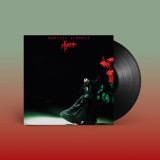
Bartees Strange begann die Arbeit an "Horror" in seinem Homestudio. Eine Session mit Yves und Lawrence Rothman (Yves Tumor, Lady Gaga) lieferte das rhythmische und klangliche Rückgrat für große Teile des Albums. Nachdem Bartees Strange Jack Antonoff (Taylor Swift, Lana Del Rey...) kennengelernt hatte und die beiden schnell Freunde wurden, arbeitete Strange an Material für Antonoffs Band Bleachers und Antonoff an "Horror". Die beiden beendeten die Arbeit am Album gemeinsam, indem sie die Songs roh bearbeiteten, editierten, arrangierten und sie in Kleidung kleideten, die Angst einflößt. Während des gesamten Albums legt Strange eine schwierige Wahrheit nach der anderen ab. Auf den 12 neuen Tracks des Albums finden sich genreübergreifende Fäden der Musik, die sein Vater ihm nahegebracht hat - Parliament Funkadelic, Fleetwood Mac, Teddy Pendergrass und Neil Young - die mit Stranges Interesse an Hip-Hop, Country, Indie-Rock und House verschmelzen. Seit dem Release seines 4AD-Debüts "Farm to Table" (2022) spielte Bartees Strange neben eigenen Headline-Touren (und einem Auftritt beim letztjährigen Reeperbahn Festival) im Vorprogramm von Acts wie boygenius, Clairo, Dijon und The National. Während eine Tour zum neuen Album noch angekündigt werden wird, gibt es schon eine Reihe von Release-Shows in 2025 in New York, Los Angeles, Washington D.C. und London. Geboren in Ipswich, England, als Sohn eines Militärvaters und einer Opernsängerin, verlebte Bartees Strange eine Kindheit, die geprägt war von diversen Umzügen bevor er sich schließlich in Mustang, Oklahoma, niederließ. Später spielte Bartees Strange in Hardcore-Bands in Washington D.C. und Brooklyn, während er in der Regierung von Barack Obama und der Bewegung für Umweltschutz arbeitete. In letzter Zeit wurde seine Musik auf mehreren populären TV- und Film-Soundtracks verwendet, darunter bei The New Look von Apple TV und I Saw The TV Glow von A24-Studio.
During the year 2019, Adrian Younge and Ali Shaheed Muhammad made music with the masters. Composing and producing brand new albums with their heroes. Jazz Is Dead 001 is where it all started, their first presentation of work that has come out of these initial sessions.
out of Stock
Last delivered 19 months ago available to reorder, subject to availability
Louisville, Kentucky-based musician and artist Evan Patterson never planned for JAYE JAYLE to blossom from a stripped-down solo project into the otherworldly, full-band sonic experience that it is today. In the beginning, the songs were short and lighthearted, written on acoustic guitar with no intention of releasing them or even performing them publicly. Time, however, is a fickle thing. `After Alter' is an astounding collection of musical memories and emotional fragments, all drawn together from previous recording sessions and previous lives in order to chart a cathartic creative course into new, unknown territories. At once volatile, gut wrenching and serene; expect the unexpected. Raw remnants and lingering refrains from these pivotal moments are reframed to form a powerful reminder of what Jaye Jayle is and always has been: an unadulterated, unfiltered outlet for the sounds that pour out of Patterson's mind at any given time or place. `After Alter' is a document of the indecipherable, of feeting feelings dragged once again to the surface. Lead single and opening track `Father Fiction', for example, dives headlong into the fables and factious ideologies of organised religion with a hardened gaze and a wry smile as rolling drums and repetitive discordant guitar refrains spiral ever down into the labyrinth of meaning and misinterpretation. Elsewhere, `Fear Is Here' sees Jaye Jayle facing up to day-to-day examples of how terrifying everything around us can become within an instant as the song's truncated blues piano hook is pushed ever further, distorted over time into something strange and hideous whilst the crawling post-hardcore dirge of `A Blackout' serves as a searing critique of the American Dream; a nameless, homeless protagonist worships the alluring glow of billboard ads from their bed in the dirt on the side of the highway. Simultaneously both tracks five and eight though, the arresting `Bloody Me' is Jaye Jayle's dichotic, janiform identity made manifest. Written even before the band's debut album was released, track five's `Bloody Me' is a bolshy, bass-driven punk rock retaliation to dressing up for Halloween because Patterson is always dressed for Halloween. Track eight's `Bloody Me' however, is a tender solo acoustic recording cut straight to wax at Third Man Records in Nashville, mere hours before Patterson saw Bob Dylan perform for the first time. Two sides of the same coin; one ferocious and snarling, the other plaintive and bare but both unapologetically Jaye Jayle. By creatively exorcising these poignant moments, Jaye Jayle have opened themselves to even more inspiration. FOR FANS OF Leonard Cohen fronting Spiritualized, Spacemen 3, JJ Cale, Lungfish, Angels of Light, Young Widows The very limited Help Edition is single colour purple vinyl!
Recorded in 1966 and released by Blue Note Records in August of 1967, Don Cherry's Symphony for Improvisers features Gato Barbieri, Henry Grimes, and Ed Blackwell, all of whom had appeared on Cherry's previous album Complete Communion. Also featured are Karl Berger, Jean-François Jenny-Clark, and Pharoah Sanders. The album received a rating of ****½ on AllMusic, with reviewer Steve Huey stating that, "Even though the album is full of passionate fireworks, there's also a great deal of subtlety. Feverish but well-channeled, this larger-group session is probably Cherry's most gratifying for Blue Note."
Strut proudly reintroduces a classic from the Topomic catalogue, Ice’s ‘Each Man Makes His Destiny’, officially available on vinyl for the first time.
After relocating from the United States to Paris, Ice began performing regularly in the city’s Barbès district, a vibrant area with a large North African immigrant community. The band’s heavy Afro-funk sound caught the attention of producer Pierre Jaubert, leading them to become the resident session musicians at his independent Parisound studio.
Immersed in the local influences, Ice began integrating African-inspired chants, textures, and rhythms into their distinct funk style. In 1973, the group recorded their debut album, ‘Each Man Makes His Destiny’, a psychedelic funk exploration that hinted at the evolving sound that would later define them as the Lafayette Afro-Rock Band and, eventually, Ice once more.
Produced by Jaubert, the album brings some powerful social commentary on claustrophobic tracks like ‘Too Little Room’ and ‘Suicide’, under-pinned by a determination to succeed despite the adversity.
Remastered by The Carvery.
out of Stock
Last delivered 20 months ago available to reorder, subject to availability
Following a string of successful releases and performances at some of the electronic world’s most revered underground venues, Italian DJ and producer Matisa returns with her captivating new single, '1234 Bisous', out now.
With sultry vocals and classy tech-house sensibilities, this deep, rolling cut is primed for the dancefloor. Nodding to Matisa’s love for euphoric, nostalgia-inducing rhythms, shimmering acid and piano-laced sounds, the gorgeous single offers a glimpse into her forthcoming mini-LP, ‘In My Head’ due for release on 31 January 2025.
'1234 Bisous' carries the same bold energy that has solidified her place in the scene while introducing a more introspective and emotional depth to her sound; a deeply personal track that encapsulates the bittersweet emotions of fleeting love and the unexpected start of a new romance.
“Un deux trois quatre bisous, I was keeping just for you, But then I wake up in a boom, Just a lad lays in my room”.
"This track captures the bittersweet end of a significant love story as a new one begins. It’s not your typical love-at-first-sight scenario… It took a solid five minutes for that spark to ignite and that undeniable feeling to hit." – Matisa
Known for her uplifting, radiant house selections and productions, Matisa's music carries a distinct energy—shimmering with bold rhythms and acid-driven sounds that draw from 90s rave culture and global club scenes. Her versatility behind the decks not has also made her a standout at world-renowned venues such as Berghain | Panorama Bar, fabric, and Circoloco, where she consistently delivers unforgettable sets.
With past releases on respected labels like Gudu Records, Butter Sessions, On Loop, and Optimo, Matisa’s upcoming mini album marks a major milestone for Matisa, as she showcases an ever-evolving sound and her remarkable production prowess, seamlessly blending both nostalgic elements with futuristic sounds and a raver’s spirit.
out of Stock
Last delivered 19 months ago available to reorder, subject to availability
The Acidboychair music project started in the early noughties as a commentary on what journalist Simon Reynolds would summarise a few years later as Retromania. Initially conceived by Thomas Baldischwyler and Andreas Diefenbach as a performative revival travesty with large-format drum computers and synthesizers reconstructed from cardboard, everything took a surprising turn when DJ Mooner (the man behind the now defunct Munich music label Erkrankung Durch Musique) took an interest in the adventurous audio material produced by Baldischwyler. In 2005, the LP 1987 (EDM1016), produced almost exclusively with long-forgotten software (SoundEdit 16, RB-338, etc.), was released on Mooner's label. As a result of the growing number of bookings, Baldischwyler had to think about improving the performability of his intentionally amateurish productions. Fortunately, the Ableton Live programme became a DAW with a MIDI sequencer and support for VST plug-ins as early as 2004 - and this made it easier for him to execute his intuitive, error-friendly version of acid house. This can be heard on the first two sample-heavy tracks on the A-side of Come Down Easy, which were recorded in 2005 and 2006 respectively at Acidboychair gigs at Hamburg's Golden Pudel Club and Munich's Registratur. The first two tracks on the B-side (produced sometime between 2006 and 2008) were actually supposed to be part of a solo release on the Acido label run by Dynamo Dreesen, but this never materialised. However, the final tracks and the 133.3 BPM lock grooves that follow are the title and central to this catalogue number TBG123: Through ethno-musicologist Arthur Boto Conley, who had already released a one-sided 12 on his label with material from one of Baldischwyler's audio installations, he met Florian Meyer (Don't DJ) and Marc Matter (Spoken Matter), who introduced him to their collaborative project Institut F?r Feinmotorik (IFFM). Baldischwyler's attempt to approach the sound aesthetics of IFFM led to the tape 60 Minutes Of Barely Modified Lock Grooves (TCCC06), recorded in Rome in 2018. A buyer of this tape introduced him to the Detroit collective Pure Rave, which he immediately contacted and introduced to the work of the IFFM. It was important for Baldischwyler to have an analogue update made and so both the Detroiters and IFFM, who now live in Berlin, were given 8 copies of EDM1016's backstock to remix the material in their own way. At their jam in Detroit, Pure Rave opted for the almost identical material that IFFM had also used for a live performance in the Hamburg project space Beek. The dominant jumps in both arrangements come from the track Eightyseven, produced in the early 2000s for the LP 1987, an awkward remix of the Spacemen 3 track Come Down Easy, which is also referred to in the liner notes on the inner sleeve of TBG123. The almost two-decade-old revival idea thus turns into false memory syndrome and runs into a - in keeping with our times - clean-cut (endless) groove. Kassem Mosse (The KM of MM/KM) on Come Down Easy after a first listening session: I think it all works very well as a mix, no matter where you start it carries you further forward back in the loop. if I understand the liner notes correctly, it's about the music's turn from tradition preservation (doing everything right) to ecstatic delusion (not doing everything right when intoxicated). Now that I'm reading again instead of listening, the titles give me a different understanding of the connections; how the skipping belongs together, which playtime is connected. Now I can name my favourites. Thank you for the journey!
Compilation of 80s Turkish-Swiss band Café Türk, featuring selected works from their discography as well as previously unreleased recordings!
Café Türk's unrestrained sonic palette explores new wave, psych, disco and reggae with influences from Anatolia and Azerbaijan.2xLP includes a 4-page booklet with extensive liner notes and photos.
Café Türk are an inimitable Turkish-Swiss band formed in the 1980s, whose genre-bending sonic palette draws from Anatolia, the Caucasus and Western Europe. The group’s frantic trajectory connects Switzerland and the Turkish city of Kars with a background story as rich and unexpected as their sound. After three decades since they disbanded, Zel Zele Records have collaborated with Turkish crate-digger Grup Ses to give the music of Café Türk a new lease of life. This eponym compilation features original album tracks, singles and previously unreleased takes that trace the outline of the group’s history. From the rolling disco of the group’s debut recording “Haydi Yallah”; to the previously unreleased kosmiche of “Yıldızlar”, “Ali Baba From Istanbul”s Azeri grooves and German language vocals, to the psyched-out interpretation of Causaccian folk tune “Şamil”, Café Türk showcases the endless stream of ideas the band had during their time together between 1983 and 1989. Tracks come with an unrestrained spirit, weaving in the crackling energy of new wave, rock, disco and reggae with influences from Turkey and Azerbaijan.
This fascination in pulling different worlds together goes right back to the formative days of Metin Demiral, founder of Café Türk. Metin grew up in Kars, a provincial town in the Northeastern part of Turkey. Kars was once known for its multicultural communities; where you could hear locals speaking a range of languages, from Turkish to Azeri, Russian and Kurdish. In 1983 Café Türk won a contest set for Turkish groups based in Europe, organised by the label Türküola, home to Turkish stars like Cem Karaca, Selda Bağcan and Barış Manço. The resultant recording sessions gave birth to his new band and debut LP, Pizza Funghi. But Metin turned down Türküola’s offer to put the record out and instead self-pressed 1000 copies on his own Sound Concept label - driving as far as Berlin to sell them face-to-face to record shops. The record was picked up by a member of the German city of Nuremburg’s Cultural Department and soon Café Türk were invited to play for the local workers’ unions, many of whom represented immigrants from Turkey. These events only grew in popularity, the group ultimately spending five years touring similar shows in Europe, alongside more conventional tours and festivals. Metin had hoped to bring his new record to audiences in Turkey again, however, he found it impossible to get any of his songs played on state-sponsored radio, something he attributed to the infamously strict supervisory board of TRT, Turkey’s state-funded broadcaster. TRT tended to not accept songs that blended both western and traditional Turkish music in order to avoid “degenerating” Turkish folk music. Cafe Türk tried to fight this conservative mindset, but progressively resigned themselves to the political restrictions of the time
out of Stock
Last delivered 5 years ago available to reorder, subject to availability
Skeletal Family are: Anneka Latta - Vocals, Stan Greenwood - Guitars, Roger "Trotwood" Nowell - Bass, Ian "Karl Heinz" Taylor - Keyboards / Saxophone, Adrian "Ozzy" Osadzenko - Drums and Percussion. Formed in 1982 with vocalist Anne Marie Hurst, their debut album 'Burning Oil' topped the National UK Indie Charts for three weeks in Autumn 1984 above other contemporary northern bands The Smiths and New Order. The band subsequently recorded seven BBC Radio One sessions for John Peel, Janice Long & Kid Jensen. They Signed to Chrysalis Records in 1986. Their discography includes the studio albums: 'Futile Combat', 'Sakura', 'Songs of Love Hope and Despair', 'Day of All Days'. The current line up came together in 2021, with the introduction of vocalist Anneka Latta with the band performing live at 'Wave Gotik Treffen' in Leipzig and 'Darker Waves Festival' in Huntington Beach, California as well as various dates in the UK and USA. Their latest album 'Light From The Dark' was recorded at Paul Weller's 'Black Barn' Studio and received critical acclaim already earlier this year.
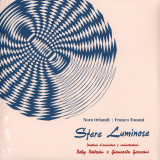
Sfere Luminose is a rare and breathtaking masterpiece that stands as a pinnacle of Italian Library music. Featuring the mesmerizing vocals of Nora Orlandi and the legendary jazz drumming of Franco Tonani, this album is an essential gem from the cult label Record TV - Firmamento, a name revered for iconic releases from the late 1960s to early 1970s. The album is produced by maestros Giancarlo Gazzani and Roby Poitevin, with contributions from the acclaimed studio group I Marc 4 and Alessandro Alessandroni.
This stunning work encapsulates the very essence of Italian Lounge music, offering a rich and diverse musical landscape. From cinematic soundscapes and Hammond organ-driven grooves to soft psychedelic arrangements, the album flows with impeccable soul-jazz and bossa nova influences, reminiscent of Piero Umiliani’s finest creations. The signature style of I Marc 4 shines through captivating drum work, while the enchanting interplay of scat vocals and choral harmonies adds a touch of ethereal beauty.
With its refined blend of jazz, lounge, and Morricone-esque beats, Sfere Luminose is an unmissable listening experience for aficionados of the genre. It's a collector's grail and a timeless treasure that captures the magic of Italy’s golden age of music, and we're proud to bring this back on vinyl, remastered from the original mono sessions, including 4 bonus tracks and artwork restoration by Luca Barcellona.
Alpha Beta Gamma Delta Plus' endlich auf Vinyl, als expanded Doppel-LP in Gatefold. Die 13 Original-Tracks von 'Alpha Beta Gamma Delta', plus 9 Bonus-Tracks, die zuvor auf Single und alternativen Akustik-Tracks veröffentlicht wurden, auf einem denkwürdigen Album von unfehlbarem Inhalt: zeitgenössischer, aufregender, dunkler und gefährlicher Rock & Roll. Alpha Beta Gamma Delta, von der Band im September 2022 selbst veröffentlicht, war das erste neue Material der legendären britischen Rock'n'Roll-Gruppe The Godfathers seit fünf Jahren. Das während der obligatorischen Pandemic-Pause aufgenommene Album wurde von den Fans in den höchsten Tönen gelobt und erhielt einige der besten Kritiken in der gesamten Karriere der Band. Peter Coyne, Leadsänger und Frontmann der Godfathers, nannte es ,eine klangliche Tour de Force". Alpha Beta Gamma Delta ist eine brillante, aktuelle Sammlung von Rock-'n'-Roll-Songs, die perfekt mit dem konkurriert, was The Godfathers in der Vergangenheit gemacht haben, und Spannung in eine Welt bringt, die nicht mehr die Welt ihrer Anfänge ist. Sie behalten ihre Identität bei, aber der Gesamtsound ist etwas anders. Zur Wut der Vergangenheit gesellen sich Gesangsharmonien ('Bring on the Sunshine'), Gitarrensoli, Melancholie und eine Reihe neuer Referenzen, die auch ihre eigenen sind. Dead in Los Angeles", ein Song über einen Spaziergang im Mondlicht, könnte von einigen mit The Doors verglichen werden, und ,Tonight` ist sehr Iggy Pop. Die Godfathers machen auch leisere Nummern, wenn es nötig ist, und so ist Peter Coynes Baritonstimme auf dem sensiblen, honigsüßen ,There Is No Time" zu Hause. You Gotta Wait" ist ein melodischer Punkrock-Klassiker, der das Montagsgefühl auspackt, bei dem das Wochenende eine Million Meilen entfernt scheint... Kurzum, dreizehn Tracks solider und abwechslungsreicher wütender Rock'n'Roll für eine neue Ära. Darüber hinaus enthält Alpha Beta Gamma Delta PLUS drei Tracks, die auf der Originalausgabe des Albums nicht enthalten waren: 'Wild and Free' (zuvor als Single zusammen mit 'I'm Not Your Slave' veröffentlicht) sowie 'When the Cowards Fall' und 'Fade Away' (enthalten auf ABGDs Vorab-EP 'Midnight Rider'). Außerdem sind sechs akustische Neuinterpretationen der Titel enthalten, die während der Studio-Sessions eingespielt wurden. Alpha Beta Gamma Delta Plus ist ein melodisches, reifes und abwechslungsreiches Album, auf dem The Godfathers weiterhin ihr wütendes Wesen in einer anderen Ära, in einer anderen Welt zeigen, in der sie sich immer noch weigern, Rock 'n' Roll als Routine zu akzeptieren.
M_Sessions - Reworks is offering a contemporary version of Mania D., Malaria and Matador’s music for the 40th anniversary. Bringing the past into the now and into the future.
Monika Werkstatt seemed the perfect choice for new interpretations. Founded in 2015, comprising female electronic musicians and producers from the entourage of Monika Enterprise and Moabit Musik. The loose collective played dozens of improvised concerts around Europe and released a studio album and live recordings in everchanging artist constellations. The M_Sessions involved Pilocka Krach, Beate Bartel, Midori Hirano, Mommo G, Lucrecia Dalt, Antye Greie-Ripatti, Natalie Beridze, Annika Henderson and myself. Here the form of interpretation is focussing on keeping the freedom of their improvised work and adapting it to the collective appropriation of songs. I cannot imagine a better reinterpretation of the material with its real life ups and downs and with its enthusiasm. (G.Gut)
"The three, reunited: Malaria, Matador and Mania D, unter einem Dach, but gutted, replaced with electronic hearts, new beats, new beasts, the time has changed, yet the politics, the problems, the heartache remains the same. 2021 sees the anniversary of the 3 M’s and therewith the production of an album of songs, covering a selection of the bands’ finest output, this time assembled by a new set of feminist misfits; producers, fangirls, instrumentalists, under the strict guidance of original members Gudrun Gut and Beate Bartel. M-Sessions features: AGF, Lucrecia Dalt, Sonae, Midori Hirano, Islaja, Natalie Beridze, Pilocka Krach, Annika Henderson (Anika), Lupe, Gudrun Gut and Beate Bartel. Beginning in West Berlin, in 1979, with the inception of Mania D, spawning Malaria! and later Matador; in a time when music was essential to movement, to escape, to space, to the scene and to the rebellion of the people; three bands stood for trial and error, trial and terror, anti- conformity, and anti-consumerism, for girl power and sticking it to the man, and for just doing whatever the hell they wanted. The three, their existence slightly staggered, with different members, different grudges, different heartbreaks, different instrumental expressions, were joined by a string of barbed wire, piecing pigeon hearts, within the playground that was the desolate ex-capital, now again capital, Berlin; a place where artists and freaks could run free amongst the wrinklies and army dodgers; no microscopes, no rules, no property developers." (ANNIKA HENDERSON)
out of Stock
Last delivered 22 months ago available to reorder, subject to availability
"This is the time that we, who have benefitted from the Last Poets shouldbe able to say, 'it's the Last Poets. It's them we should be honouring, because we did not honour them for so many years_"
KRS One wasn't just addressing the hip hop fraternity when he uttered
those words by way of introducing the video for Invocation - a poem
written thirty years ago, around the time of the Last Poets' last significant comeback. He was speaking to everyone who's been affected by the word, sound and power issuing from the most revolutionary poetry ever witnessed, and that the Last Poets had introduced to the world outside of Harlem at the dawn of the seventies.
In 2018 the two remaining Last Poets, Abiodun Oyewole and Umar Bin
Hassan, embarked on another memorable return with an album -
Understand What Black Is - that earned favourable comparison with theirseminal works of the past, whilst showcasing their undimmed passion andlyrical brilliance in an entirely new setting - that of reggae music. Trackslike Rain Of Terror ("America is a terrorist") and How Many Bullets demonstrated that they'd lost none of their fire or anger, and their essential raison d'etre remained the same.
"The Last Poets' mission was to pull the people out of the rubble o f their lives," wrote their biographer Kim Green. "They knew, deep down that poetry could save the people - that if black people could see and hear themselves and their struggles through the spoken word, they would be moved to change."
Several years later and the follow-up is now with us. The project started when Tony Allen, the Nigerian master drummer whose unique polyrhythms had driven much of Fela Kuti's best work, dropped by Prince Fatty's Brighton studio and laid down a selection of drum patterns to die for. That was back in 2019, but then the pandemic struck. Once it had passed, the label booked a studio in Brooklyn, where the two Poets voiced four tracks apiece and breathed fresh energy, fire and outrage into some of the most enduring landmarks of their career. Abiodun, who was one of the original Last Poets who'd gathered in East Harlem's Mount Morris Park to celebrate Malcolm X's birthday in May 1968, chose four poems that first appeared on the group's 1970 debut album, called simply The Last Poets. He'd written When The Revolution Comes aged twenty, whilst living in Jamaica, Queens. "We were getting ready for a revolution," he told Green. "There wasn't any question about whether there was going to be one or not. The truth was many of us still saw ourselves as "niggers" and slaves. This was a mindset that had to change if there was ever to be Black Power." He and writer Amiri Baraka were deep in conversation one day when Baraka became distracted by a pretty girl walking by. "You're a gash man," Abiodun told him. The poem inspired by that incident, Gash Man, is revisited on the new album, and exposes the heartless nature of sexual acts shorn of intimacy or affection. "Instead of the vagina being the entrance to heaven," he says, "it too often becomes a gash, an injury, a wound_" Two Little Boys meanwhile, was inspired after seeing two young boys aged around 11 or 12 "stuffing chicken and cornbread down their tasteless mouths, trying to revive shrinking lungs and a wasted mind." They'd walked into Sylvia's soul food restaurant in Harlem, ordered big meals, then bolted them down and run out the door. No one chased after them, knowing that they probably hadn't eaten in days. Fifty years later and children are still going hungry in major cities across America and elsewhere. Abiodun's poem hasn't lost any relevance at all, and neither has New York, New York, The Big Apple. "Although this was written in 1968, New York hasn't changed a bit," he admits, except "today, people just mistake her sickness for fashion." Umar is originally from Akron, Ohio, but had arrived in Harlem in early 1969 after seeing Abiodun and the other Last Poets at a Black Arts Festival in Cleveland. That's where he first witnessed what Amiri Baraka once called "the rhythmic animation of word, poem, image as word- music" - a creative force that redefined the concept of performance poetry and stripped it bare until it became a howl of rage, hurt and anger, saved from destruction by mockery and love for humanity. When Umar's father, who was a musician, was jailed for armed robbery he took to the streets from an early age where he shined shoes and raised whatever money he could to help feed his eight brothers and sisters. By the time he saw the Last Poets he'd joined the Black United Front and was ready to join the struggle. Once in Harlem, Abiodun asked him what he'd learnt in the few weeks since he'd got there. "Niggers are scared of revolution," Umar replied. "Write it down" urged Abiodun. That poem still gives off searing heat more than fifty years later. In Umar's own words, "it became a prayer, a call to arms, a spiritual pond to bathe and cleanse in because niggers are not just vile and disgusting and shiftless. Niggers are human beings lost in someone else's system of values and morals." And there you have it. It's not just race or religion that hold us back, but an economic system that keeps millions in poverty and living in fear - a system born from political choice and that's now become so entrenched, so bloated on its own success that it's put mankind in mortal danger. It was many black people's acceptance of the status quo that inspired Just Because, which like Niggers Are Scared Of Revolution, was included on that seminal first album. Along with their revolutionary rhetoric, it was the Last Poets' use of the "n word" that proved so shocking, but it would be wrong to suggest that they reclaimed it, since it never belonged to black people in the first place. There's never any hiding place when it comes to the Last Poets. They use words like weapons, and that force all who listen to decide who they are and where they stand. Umar's two remaining tracks find him revisiting poems first unleashed on the Poets' second album This Is Madness! Abiodun had left for North Carolina by then where he became more deeply enmeshed in revolutionary activities and spent almost four years in jail for armed robbery after attempting to seize funds related to the Klu Klux Klan. Meanwhile, the 21 year old Umar was squatting in Brooklyn and had developed close ties with the Dar-ul Islam Movement. A longing for purity and time-honoured spiritual values underpins Related to What, whilst This Is Madness is a call for freedom "by any means necessary," and that paints a feverish landscape peopled by prominent black leaders but that quickly descends into chaos. "All my dreams have been turned into psychedelic nightmares," he wails, over a groove now powered by Tony Allen's ferocious drumming. Those sessions lasted just two days, and we can only imagine the atmosphere in that room as the hip hop godfathers exchanged the conga drums of Harlem for the explosive sounds of authentic Afrobeat. Once they'd finished, the recordings and momentum returned to Prince Fatty's studio, since relocated from Brighton to SE London. This was stage three of the project, and who better to fill out the rhythm tracks than two key musicians from Seun Anikulapo Kuti's band Egypt 80? Enter guitarist Akinola Adio Oyebola and bassist Kunle Justice, who upon hearing Allen's trademark grooves exclaimed, "oh, the Father_ we are home!" Such joy and enthusiasm resulted in the perfect fusion of Nigerian Afrobeat and revolutionary poetry, but the vision for the album wasn't yet complete. He wanted to create a new kind of soundscape - one that reunited the Poets with the progressive jazz movement they'd once shared with musicians like Sun Ra and Pharoah Sanders. It was at that point they recruited exciting jazz talents based in the UK like Joe Armon Jones from Mercury Prize winners Ezra Collective, also widely acclaimed producer/remixer and keyboard player Kaidi Tatham, who's been likened to Herbie Hancock, and British jazz legend Courtney Pine, whose genius on the saxophone and influence on the UK's now vibrant jazz scene is beyond question. The instrumental tracks on Africanism are in many ways as revelatory and exciting as the Last Poets' own. It's important to remember that the kaleidoscope of styles and influences we're presented with here aren't the result of sampling but were played "live" by musicians responding to sounds made by other musicians. That's where the magic comes from, aided by Prince Fatty's peerless mixing which allows us to hear everything with such clarity. Music fans today have grown accustomed to listening to all kinds of different genres. Their tastes have never been so broad or all- encompassing, and so the music on this new Last Poets' album is as groundbreaking as their lyrics, and perfectly suited to the era that we're now living in. John Masouri
Ever wish you could travel back in time and be in the thick of the 1960s rock explosion? Well, until an actual TARDIS is perfected, this album is the next best thing. Recorded in the wee hours of May 26, 1966, A Session with the Remains is a no-holds barred romp through their club set, captured live-to-tape in Capitol Records' studios. Recorded as an audition for the label, the albums seethes and snarls, twists and shouts, rocks and rolls and generally embodies the force of nature that was the Remains. Performing a mix of originals and current hits, the band is in command at every step, rocking one minute and pausing to kibitz between songs the next.
In attempting to describe this album, reviewers have used words like "blazing," "explosive," "delirious" -- but honestly, none of these descriptions comes close to what is contained in the grooves. It's like trying to tell a stranger 'bout rock & roll, ya know? All you really need to do is listen. After all, one guitar lick is worth a thousand words.
This BLAZING, EXPLOSIVE, DELIRIOUS album was painstakingly sourced from the one-and-only original two-track analog mono master tape and wrestled onto high-quality vinyl and compact disc for your review. I'd like to thank you on behalf of the group and Sundazed for listening and I hope they pass YOUR audition!
"A religious totem of all that was manic and marvelous about mid-'60s pop." - Rolling Stone
"Blazing through a mix of originals and covers, the Remains explode in a torrent melody, searing guitar leads and furious drumming. This quartet's ability to play with such delirious abandon yet still nail the tunes' sharp hooks and abundant vocal harmonies marks it as one of rock's more talented and incendiary units. - Chicago Tribune -
The last couple of years have seen a renaissance for West Coast singer-songwriters. LA-based youngsters such as Drugdealer and Sylvie have attracted considerable attention releasing warm and mellow records tonally reminiscent of the early 70s. Most fans of this new/old sound are unaware of Bart Davenport's early explorations in the same sonic territory. His now 20-year-old "Game Preserve"album should gain an appreciative new audience with its first ever vinyl release.
In the year 2000, Bay Area troubadour Bart Davenport and several other musicians were recruited by a major tech corporation in Seattle to work on an algorithm-based music matching/search engine. It was what looked like the beginning of a promising career. After a year, however, the project was shelved. Bart and his colleagues were laid off with a healthy severance package... on the 12th of September, 2001. Not only had the musician's life changed, so had the world. Rather than blow the money on a holiday or new car, Bart knew he had to make a record. A proper album that meant something.
Back in Oakland, he entered Wally Sound Studios with former Kinetics bandmate Jon Erickson at the controls, and a swathe of talented local musicians. "With Game Preserve," Bart explains, "Jon and I really wanted to knock it out of the park. I wanted to utilize people from my old bands like Loved Ones drummer John Kent. I also invited my newer indie-pop friends from Call & Response, and a young Nedelle Torrisi. Harmony singing by The Moore Brothers was an essential ingredient on Game Preserve as well."
Both Erickson and Davenport fondly recall growing up in households where the music of The Carpenters, Joni Mitchell and The Eagles soundtracked their young lives. By the early 00s they were ready to reconnect with what is often referred to as the "Laurel Canyon" sound. "I'd buy used tapes at garage sales and play them in the car. "Ladies Of The Canyon" by Joni and Jackson Browne's first album were both in heavy rotation. Jon Erickson was getting deeper into the Steely-Mac-Doobie yacht-rock sound in earnest. A certain amount of childhood nostalgia led a lot of us back to that part of the 70s. I'd flirted with classic soft-rock on my first album, but that record was pretty scattered esthetically. I wanted my next one to be more focused. Jon and I made some ground rules: no electric guitars (except on 'Bar-Code Trees'). No synths. Most importantly, all the songs have an air-tight, super dead, close mic'd drum sound. Putting these sorts of limitations on the sessions will give your record a specific quality. In the case of "Game Preserve"it's mostly about tight drums, acoustic instruments and analog production. We used a 24-track, two-inch tape machine for tracking, then ran the mixes through an analog board straight to a 1/4 inch master tape."
While the album's sonic palette may be firmly planted in 1970, Davenport's songwriting covers a sizable landscape of moods and reflections. From the quasi-flamenco intro of 'Sweetest Game' to the somber Wurlitzer of 'Nowhere Left To Go', to the 12-string shimmer of 'Intertwine', "Game Preserve" tells a story of young love, lost innocence and redemption, crossing borders and oceans along the way.
Released in 2003 on family-run Oakland label Antenna Farm, the ultra-analog sounding "Game Preserve" was only made available on digital formats, including CD. Copies were later pressed by labels in Germany and Spain; the latter being one country the album actually did well in, establishing Bart Davenport with a small but loyal fanbase he still enjoys today. Two European tours as support for Kings of Convenience also helped gain a foothold on the continent. Back in the US, however, Davenport and his sophomore album remained quite obscure.
Limited promotion meant it did little, but for the music lovers that heard it, the album undoubtedly remains a classic of the era, deserving far more. Twenty years on, it now finally receives its vinyl debut. "I personally think it holds up well," says Bart of the album two decades later. "The idea was to make something that could be an homage to late 60s/early 70s West Coast pop but hopefully timeless as well. Years on, I hear it as just that. It was a colorful and brief period of my life that felt at times like it could last forever. I discovered the joy of working in a proper studio with a perfect cast of characters. I'm still very close with all these people and still play music with many of them."
out of Stock
Last delivered 22 months ago available to reorder, subject to availability
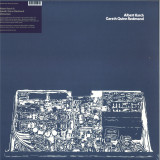
WRWTFWW Records is happy to announce a new collaborative album between Polish producer, multi-instrumentalist and sound engineer Albert Karch (notably known for his superb 2019 album Celestially Light featuring Ichiko Aoba) and Irish ambient master and label’s favorite Gareth Quinn Redmond (Ar Ais Arís, Laistigh Den Ghleo, Umcheol albums from the WR catalogue). The 6-track LP comes as a limited edition of 300 copies worldwide with an artwork by Dublin artist Barry Gibbons and liner notes. It is available in digital format as well.
Recorded in at Albert Karch’s studio in Warsaw in January 2023, Warszawa is conceptually rooted in the reason the two artists met in the first place: the work of Japanese composer Satoshi Ashikawa (Still Way - Wave Notation 2) who sought to compose a time that was stationary. Sparse in approach but sharp with intention, the 6 pieces of the collaborative album were sculpted with precise and floating use of piano, drums, synthesizers, and strings. The result is gentle but emotionally deep minimalistic ambient, reassuring environmental music with an indescribable Mark Hollis touch, also an artist whose worked influenced the recording sessions.
Gareth Quinn Redmond’s previous albums, Laistigh Den Ghleo, another ode to the work of Satoshi Ashikawa, Umcheol, mixing ambient with traditional Irish music instruments, and his tape loops wonder Ar Ais Arís are still available on WRWTFWW Records - complete the collection now!
Warszawa by Albert Karch and Gareth Quinn Redmond is dedicated to the memory of Satoshi Ashikawa.
out of Stock
Last delivered 22 months ago available to reorder, subject to availability
Das „Sparkle in The Rain“-Boxset ist jetzt in einem gekürzten Format des 2014 erschienenen Super Deluxe
Sets erhältlich.
Das Album „Sparkle in The Rain“ aus dem Jahr 1983 gilt seit langem als eines der Juwelen im Katalog der Band. Es leitete eine Serie von drei aufeinanderfolgenden Nummer-1-Alben der Simple Minds in
Großbritannien ein und lieferte die klassischen Hitsingles „Waterfront“, „Up on The Catwalk“ und „Speed
Your Love to Me“.
Diese 4-CD-Box-Set-Version enthält eine Menge Bonusmaterial, darunter B-Seiten und erweiterte Mixe,
BBC-Sessions, ein bisher unveröffentlichtes Glasgow Barrowlands-Konzert, ein Booklet mit BanderolenNotizen und Interviews sowie Track-by-Track-Kommentare. Das Album wurde 2014 in den Abbey Studios
in London umfangreich neu gemastert.
Erhältlich auf allen Plattformen ab dem 22. November!
out of Stock
Last delivered 22 months ago available to reorder, subject to availability
Crankers of amp, torturers of fuzzbox and denizens of small-hours salvation, Thee Alcoholics dished out a rancorous and righteous debut in their decent `Feedback' - one that filtered gnarled riffage and motorik malevolence through a uniquely debauched prism in pursuit of some extremely ill-advised audial dystopia. Thee Alcoholics may have started life as the home-birthed brainchild of Rhys Llewellyn (Hey Colossus/Acidliner/Drmcnt) yet an evolution since has proven the ultimate form of this beastly creation to be the live arena. In assembling cohorts to turn these visceral jams into something to shake rafters and rattle pint-glasses, new frontiers of ornery intensity have made themselves manifest, and such is the form of the monstrous Bear Bites Horse Sessions, a live-in-the-studio document recorded with Wayne Adams at Bear Bites Horse studio in Haggerston, London, chronicling a band breathing life into a Stoogian paradigm, and doing so apparently whilst barely breaking a sweat. Taking essential elixirs of in-the-red mania, hypnotic repetition and deathless swagger, these twelve jams walk a crooked path that neighbours the nihilistic vortex of Loop, the saturnine lurch of The Fall and the deadpan derangement of The Heads but remains possessed of a maverick charisma and mischief all its own. Lovers of lysergic heaviosity and the sound of a Marshall 4x12 violently spluttering its last will find much to satisfy here, but moreover Bear Bites Horse Sessions is a testimony to sonic punishment as a gateway to new horizons, audial excess as a path to wisdom, and answers, right or wrong, being found in the bottom of a glass.
The first time on vinyl for this double-album, capturing Iggy without any band in various environments, mostly acoustic and also electric, but - just as rock"n"roll as ever! Stripped down versions of I Wanna Be Your Dog, Louie Louie, Nightclubbing, Jonathan Richmond"s Pablo Picasso with just 4-strings on his guitar and many other favourites as they"ve rarely been heard - and five otherwise unreleased songs. The 2LP set comprises a solo acoustic show from Barcelona, an acoustic studio session, a solo electric gig from Paris, plus more solo tracks from elsewhere. Skydog Records" first Iggy release was in 1976 with the riotous "last ever Stooges show", Metallic KO; this is its alternative hidden gem. Iggy Pop continues to tour the world as well as presenting radio shows.
"Perhaps best known for his long association with the legendary Muddy Waters, Otis Spann is largely recognized as one of the greatest blues pianists of all time, if not the greatest.
Although Spann made a name for himself in Chicago by the mid 1940s, it wasn’t until 1960 that he got the opportunity to record an album of his own. The sessions Spann did with Candid Records co-founder Nat Hentoff that year resulted in the legendary album Otis Spann Is The Blues. (Incidentally, this was also the first album ever recorded for the fledgling New York City based label.)
The tracks on Walking The Blues were recorded during those same sessions in August of 1960 in New York City.
Left on the cutting room floor, they would not be officially released until 1972, two years after Spann’s untimely death.
Robert Lockwood Jr., also from Muddy Water’s group, accompanies Spann on guitar here as he does on the Is The Blues album. But Walking The Blues also features Spann’s close friend, veteran singer and composer James Oden, better known to blues fans as St. Louis Jimmy.
Stripped down to just the these musicians, this magnificently performed and produced set showcases Spann’s voice as well as piano. Spann stretches out with his pulsing two-handed rhythmic attack, and brings the barrelhouse piano style of his youth in line with the modern Chicago style he embodied."
Facsimile reissue using the original cover art (front photo is lost).
Double insert using an original photo by JP Leloir from 1959.
Each record has been visually checked to prevent defects.
Recorded December 19 and 20, 1958 at the studio Hoche, Paris.
Original LP issue: Barclay 84.063.
Belgian jazz artist Bobby Jaspar died far too young at age 37 in 1963, but fortunately made a handful of memorable dates as a leader. This is the last studio session under his name. Jaspar sticks exclusively to flute on these December 1958 studio recordings. He’s joined by drummer Kenny Clarke, Sadi Lallemand or Michel Hausser (who also doubles on xylophone) on vibes, and either Paul Rovere or Jymie Merritt on bass, as well as percussionist Humberto Canto (on one of the two sessions). Jaspar’s soft arrangements prove very appealing for his originals, standards such as ‘Lullaby of the Leaves’ and ‘There Will Never Be Another You’, and classic jazz tunes (an exotic ‘Misterioso’ and a Latin-flavored ‘Chasin’ the Bird’, the latter featuring Hausser on xylophone). This is easily one of Jaspar’s finest recordings as a leader.
Ken Dryden / All Music
Bobby Jaspar (Flute)
Michel Hausser (Vibes) (tracks 1 to 4, 6,8,9)
Sadi Lallemand (Vibes) (tracks 5,7,10)
Paul Rovère (Bass) (tracks 1 to 4, 6,8,9)
Jymie Merritt (Bass) (tracks 5,7,10)
Humberto Canto (Percussion)
Kenny Clarke (Drums)
Auf dieser Tribute-Compilation finden sich Interpretationen von Margo-Guryan-Songs von TOPS, Rahill, Clairo, June McDoom, MUNYA und Kainalu, Frankie Cosmos und Good Morning, Kate Bollinger, Pearl & The Oysters, Bedouine und Sylvie, Empress Of, Barrie, und Margo Price. Die meisten unserer Geschichten über Kultmusiker, die ein oder zwei Alben machen und dann zu verschwinden scheinen, sind von Trauer, Verzweiflung und ausgefranstem Ehrgeiz umrahmt. Nicht so bei Margo Guryan, einer begeisterten Jazz-Ausnahmeerscheinung, die Popmusik verachtete, bis sie 1966 „God Only Knows“ hörte, das ihr ein Fenster zu den Wundern öffnete, die diese Musik-Form enthalten konnte. Nur zwei Jahre später veröffentlichte sie auf dem Album „Take a Picture“ ihre eigenen kleinen Popsinfonien und erntete dafür großes Lob und hohe Erwartungen. Aber da sie sich bereits von dem Posaunisten Bob Brookmeyer hatte scheiden lassen, lehnte sie es ab, ein Musikerleben zu führen und auf Tournee zu gehen oder auch nur darüber zu sprechen. Ihre Zurückhaltung führte dazu, dass „Take a Picture“ bald in den Regalen der Discounter und letztlich in den Mülleimern landete. Sie schrieb weiterhin Songs und nahm noch jahrelang auf, arbeitete sogar mit der Band von Neil Diamond zusammen, aber meistens schien sie mit ihrem relativ privaten Leben zufrieden zu sein. Wie es sich für eine so atemberaubende und subtile Musik gehört, erlebte die 2021 verstorbene Guryan in den letzten sechs Jahrzehnten mehrere Wiederauferstehungen. Und jetzt geschieht es wieder: Kurz nachdem ihre fast geflüsterte und liebeskranke Hymne „Why Do I Cry“ sie 2021, im selben Jahr, in dem sie starb, zum TikTok-Star machte, startete die Numero Group eine Wiederveröffentlichungskampagne, aus der 2024 das hochgelobte Set „Words and Music“ hervorging. Und jetzt haben ein Dutzend Künstler - von denen keiner geboren war, als „Take a Picture“ entstand - das gesamte Album (plus einen Bonustrack) für „Like Someone I Know: A Celebration of Margo Guryan“ neu interpretiert. Empress Of, Margo Price, Clairo, June McDoom: Sie alle bestätigen Guryans Schärfe als Songwriterin und die Brillanz eines Albums, das den Werbezyklus, den Guryan vor so langer Zeit ablehnte, bei weitem übertroffen hat. Guryan wurde in einer weitläufigen Familie in Far Rockaway geboren, als der Ort noch größtenteils von Bäumen umrahmt war. Während ihres Kompositionsstudiums an der Boston University stolperte Guryan in einen Auftritt als Pianistin zwischen den Konzerten des Miles Davis Quintet, unterschrieb einen Vertrag als Songwriterin bei Atlantic Records und verpatzte eine Session mit Nesuhi Ertegun. Aber sie war nicht darauf aus, ein Gesangsstar zu werden. 1959 ging sie an die Lenox School of Jazz in den Berkshires, um für Ornette Coleman und Don Cherry zu schreiben, die Aufmerksamkeit des Dozenten Max Roach zu gewinnen und in Gunther Schuller einen langjährigen Mentor und Freund zu finden. Sie wurde eine versierte Texterin und schrieb nicht nur für Coleman und Nancy Harrow, sondern auch für Harry Belafonte und Gary MacFarland. Aber es war die spätere Begegnung mit den Beach Boys, die Guryan die Tür zu „Take a Picture“ und einer Reihe anderer großartiger Songs öffnete, von denen viele auf „Words and Music“ erschienen sind. „Take a Picture“ ist eine ausgefeilte Bestandsaufnahme der Romantik und Unentschlossenheit der Mittzwanziger, vom koketten Treiben in „Sunday Morning“ und der Verliebtheit in „Can You Tell“ bis zur verzweifelten Hilflosigkeit in „What Can I Give You“. Ihre ewig weiche Stimme, ihre kühne Songkunst und ihre völlige Offenheit: Guryan machte 1968 und darüber hinaus gewagte Musik, egal wie sanft sich diese Klänge zu bewegen schienen. „Like Someone I Know: A Celebration of Margo Guryan“ unterstreicht die Stärke von Guryans Liedern, indem es einem Dutzend verschiedener Künstler erlaubt, sie auf ihre eigene Reise mitzunehmen. Im Laufe der letzten Jahrzehnte ist immer deutlicher geworden, wie gut Guryan war, wie stabil ihre Lieder inmitten der wechselnden Geschmacksrichtungen. „Like Someone I Know: A Celebration of Margo Guryan“ ist eine absolute Bestätigung, ein Zeugnis für die anhaltende Relevanz und Brillanz von Guryans Arbeit. Ein Teil des Erlöses dieses Albums wird für die Bereitstellung von und den Einsatz für erschwingliche reproduktive Gesundheitsdienste gespendet.
Red Laser gets on a kinky tip, where poppers are currency and salacious activities mandatory as label chief Il Bosco grabs us by the nethers and heads for 'The Darkroom EP'.
Inspired by amyl-soaked tales of Euro basement sex club debauchery, and steadily edging its way to a never-ending climax, the EP is a highly charged exercise in x-rated synth-jizz and erotic Manctalo that'll have you quickly believing you're surrounded by massive pulsating dicks on a cocktail of GHB and Mkat.
Maintaining a persistent throb throughout, the EP has us reaching blindly through clouds of pink saturated club smoke, unsure of what our sweat-soaked hands will grasp on to.
Two remixes alongside three originals. Fabrizio Mammarella has the blood rushing to our head quicker than a whiff of Rush Black Label* on his mix of 'Notio Botherdini'. Adding extra acid for a trippier sexperience and urging willing participants to "close your eyes" as he achieves maximum thrust.
Meanwhile local Stretford poppers enthusiast** Bob Swans also has a fumble in the shadows, remixing 'Dark Room' with late late late on in the session in mind - a time of carnal lucidity and primal urges that'd make even Michael Barrymore's peculiar desires look vanilla. It's a sparse and special redux, fluffing us with that latexy bassline and never-ended sfx trails until we're quite literally cumming in your ears.
Apologies, that probably was a bit graphic.
*Poppers brand highly endorsed by Red Laser contributor Count Van Delicious
**Red Laser only hypothesizes to said producer’s poppers usage.
out of Stock
Last delivered 23 months ago available to reorder, subject to availability
In 2007 an Italian film festival invites Mouse on Mars to score a film of their choice. The organizers claim to be able to clear the rights for any movie the band chooses. Werner Herzog’s fictional documentary Fata Morgana, which merges footage of several desert explorations by Herzog and his team into one continuous association, has long been a band’s favorite. The film comes with a soundtrack by Mozart, Leonard Cohen, Third Ear Band and field recordings. Andi Toma and Jan St. Werner are sent a DVD to Düsseldorf and start working. The idea is to score the film in real time so instrumentation has to be readily at hand: guitar, percussion, electronics, mouth harp, pedals, software, tapes, samplers. Once the arrangement for the three-part film is sorted Mouse on Mars bring their score to stage. Herzog Sessions is performed twice: first when the band still thought the rights had been cleared, and a second time at London’s Southbank Center knowing that Herzog would have never approved a new score.
--
Mouse On Mars – London Queen Elizabeth Hall soundtracking Werner Herzog.
By Mike Diver, 24.04.2009
Filmed in 1971, Fata Morgana is perhaps not one of Herzog’s best-known works (think Grizzly Man, Rescue Dawn, et cetera…), but then Mouse on Mars have never been ones to embrace the mainstream, quietly letting their modern, experimental take on krautrock do the talking over the years, thus producing some quietly brilliant electronica that far outweighs their modest profile.
The film itself is not altogether dissimilar to the wonderful, Phillip Glass-scored Koyaanisqatsi, with sweeping landscape shots and no obvious plot or narrative, though Fata is concentrated purely in one place – in and around the Sahara Desert, switching from images of barren wasteland to desert tribes and dead, skeletal cattle.
The obvious thing to do when soundtracking such powerful imagery is to vie for dreamy electronic soundscapes which can be sustained for a long period, and whilst this ambient shoegaze approach was present and correct (also carefully constructed and highly effective), Mouse on Mars added a human element to the performance, incorporating a live dimension by using and looping guitars, harmonicas, processed vocals and even a live horn player (quite possibly a flugelhorn. Look it up if you don’t believe me) for the final section of the film.
Some of the most interesting points arose when the duo suddenly switched from solemn, ambient tones to glitchy, bouncing electro (reminiscent of their more upbeat work) whilst on the same film shot – causing the audience mood to flick from tripped-out bliss to attentive semi-wired, utterly subverting any idea of a narrative the film may have possessed. Clever stuff.
Ranging from sinister to surreal to humorous, all the moods portrayed in Fata Morgana were successfully matched by Mouse on Mars’ live rescore – no mean feat. The duo also went above and beyond the call of duty with their own soundtrack, adding a fascinating personal signature to an already unique film.
out of Stock
Last delivered 23 months ago available to reorder, subject to availability
Razorlight were at the forefront of the indie-rock resurgence of the early 2000s, their biggest moments - ‘Golden Touch’, ‘Somewhere Else’, ‘In The Morning’, ‘America’ and ‘Wire To Wire’ - driving three Top 5 albums, nine Platinum album certifications, an NME Award, and live highlights including headlining the Reading Festival and performing at Live 8. After reuniting for live shows in 2021, the classic line-up - Johnny Borrell (vocals/guitar), Björn Ågren (guitar), Carl Dalemo (bass) and Andy Burrows (drums) - will release the new album ‘Planet Nowhere’ on October 25th, their first together since 2008. Razorlight preview the set by sharing its first single, ‘Scared Of Nothing’. Since reuniting, Razorlight have sold-out a headline tour which included a London show at the Eventim Apollo, and played shows as guests to Muse, Kaiser Chiefs and James. But as the ever ambitious Johnny challenged himself, “Who wants to be a greatest hits band?” So he hatched a plan, and late in 2023 booked a five-day session with the legendary producer Youth (The Verve, James) at his Space Mountain studio in Spain. Youth knew what they had to achieve, telling the band, “Razorlight’s quite simple isn’t it? Just a driving bassline, driving drums and a story.” For whatever reason, things weren’t that simple. After four days they had a stack of ideas, but nothing really worth pursuing. And then, as Johnny recalls, something remarkable emerged from out of nowhere. “I’d been down in the barranca, and came back up to find the studio empty. So I picked up this weird six-string bass/guitar hybrid I'd never seen before and wrote this thing. On our last night, I started playing it with the guys. The drums came in hard, the bass pounded. It sounded like shit. Absolute shit. But Youth was there, saying 'Can, Velvets, see where it takes you’ and 'Why don’t you try it like that?' But still, the track just wouldn't budge, locked in its own inertia. Youth says, 'You're getting there, just one more' and almost instantly the song came out, from nothing to something, like a statue coming up out of marble.” That song was ‘Scared of Nothing’ and listening back to the finished track, it’s easy to see why it resparked Razorlight’s mojo. Exuding taut, spiky post-punk energy in a way that’s instantly infectious - the very traits that attracted highfalutin praise from NME back when they started out (“More tunes than Franz, more spirit than The Strokes, and more balls than nearly every band out there”). And as ever, Johnny demonstrates the swaggering, high-intensity charisma that took him from being a figurehead of the Camden scene to rise to become a Vogue cover star. It was also the track which unlocked Razorlight’s creativity, leading the band to return to Spain with Youth for a second session earlier this year, during which they crafted an extensive catalogue of songs for the upcoming album. Other titles vying for inclusion include ‘Zombie Love’, ‘U Can Call Me’, ‘Dirty Luck’ and ‘Cool People’. Since returning, Razorlight have also looked back on their initial achievements, first releasing ‘Razorwhat? The Best of Razorlight’ (complete with the new song ‘You Are Entering The Human Heart’) and then last month issuing the 20th Anniversary Deluxe Edition of their breakthrough debut album ‘Up All Night’. Never a dull moment. Writing a new ending for themselves, Razorlight are back to cast out the boring in your life.
Distangled brings you another gem of a re-issue. Barfly, a one-off by Wringler, is a little known and obscure Dutch release from the mid 90's and changes for quite some $ among those who know. Six cleverly produced house and techno tracks, raw and sometimes even with a hint of disco too. Including 3 previously unreleased tracks found on the original session tapes. Big tip!
out of Stock
Last delivered 23 months ago available to reorder, subject to availability
Nour Mobarak’s Dafne Phono is an adaptation of the first opera, Dafne, composed and written by Jacopo Peri and Ottavio Rinuccini in 1598. Drawing on the myth of Daphne and Apollo from Ovid’s Metamorphoses—a story of unrequited love, patriarchal possession, conquest, and transformation—Mobarak’s multimedia and multispecies reimagining splinters the opera’s Italian libretto. Alongside English and Greek versions, it is translated into some of the world’s most phonetically complex languages—Abkhaz, San Juan Quiahije Eastern Chatino, Silbo Gomero, and !Xoon. In this process, the narrative—and an artifact of Western culture—is dismantled, metabolized, and rendered into unruly utterances that shape the sensorium as much as they do the capacity for sense-making. These voices are given material form by a cast of mycelium sonic sculptures whose rhizomatic compositions and broadcasted recordings resemble the formation and mutation of language over time, reconstituting speech into a new, polyphonic body politic, composed of voices whose striking, poetic utterances transfix and transcend meaning.
The A-Side of the record presents a stereo version of Mobarak’s 15-channel sound installation, Dafne Phono. The B-Side uses a recording of a portion of the translation process the libretto underwent in Namibia, live-processed by the artist.
The LP is published on the occasion of Nour Mobarak’s exhibition at The Museum of Modern Art, New York (October 26, 2024–January 12, 2025), with support from Sylvia Kouvali.
Artist Bio:
Nour Pamela Mobarak (Lebanese-American, b. 1985, Cairo, Egypt) lives and works between Los Angeles; Bainbridge Island; and Athens, Greece. Her works have been shown at Sylvia Kouvali (formerly Rodeo), London/Paris; Schinkel Pavillon, Berlin; MIT List Visual Arts Center, Cambridge, MA; Amant, Brooklyn; JOAN, Los Angeles; Kim? Contemporary Art Centre, Riga; Miguel Abreu Gallery, New York; Hakuna Matata, Los Angeles; and Cubitt Gallery, London. Exhibitions at the Museum of Modern Art, New York, and Castello di Tivoli Museo d’Arte Contemporanea, Turin, are forthcoming. She has performed at Western Front, Vancouver; 2220, the Hammer Museum, and LAXART, Los Angeles; Cafe OTO, London; Renaissance Society, Chicago; the Museum of Contemporary Art, San Diego; and elsewhere. Her music has been released by Recital (Los Angeles), Cafe OTO’s TakuRoku (London), and Ultra Eczema (Antwerp), and she has had sessions on BBC Radio 3, NTS Radio, and Dublab Radio. Mobarak’s writing has been published in Triple Canopy, F.R. David, The Claudius App, and the Salzburg Review, and her first catalog, Sphere Studies and Subterranean Bounce was published by Recital (2021). She received a BA in English and Media Studies from Sussex University and did further studies at Université Paris-Sorbonne, Paris IV. She has held residencies at Denniston Hill, New York and the Institute of Contemporary Art, Los Angeles, and was the recipient of the 2023 FOCA fellowship award. Mobarak was a 2024 faculty at Bard College MFA program.
Dafne Phono Vocalists:
Apollo: Renato Grieco (Italian)
Cupid: Arnou Argun (Abkhaz)
Dafne: Agnes | xaye (!Xoon)
Ovid: Olivia O’Dwyer (Latin)
Venus: Don Eugenio Darias (Silbo Gomero)
Abkhaz Chorus: Liana Ebzhnou, Murman Guaramia, Fatima Kharzalia, and Gunda Osia
Chatino Chorus: Felix Daniel Peña Mendes, José Vasquez Canseco, Catalina Candelario Matias, and Claudia Garcia Baltazar
!Xoon Chorus: Franco Tsame, John Djujui Klosi Barase, and Charity Tsame
Clarinet: Steve Kado
SITW’s fourth studio album is a satirical celebration of mistakes. A joyous lambasting of everyone and everything that’s wrong in the world, against the real-time backdrop of global uncertainty, corruption and political unrest.
A London Charivari. Rough Music. A gleeful old-fashioned cancelling. A Chaunter’s delight. 14th Century recording demons collecting mistakes in a sack. Women mugging rich merchants. Nettles being pissed on. Shit food at Lent. A terrible plan. An undoing. The aftermath of a car crash. Catching people doing something they shouldn’t. Nursery rhymes reimagined as death threats. Behind the sarcastic acerbic delivery, Nicola Kearey and Ian Carter convey thoughtful, essential interpretations encouraging us all to check ourselves, through the multi-layered music of cities through time.
This is about as far away from pastoral folk music as you can get.
In their typical wry city-weary style, a beady eye is cast over those committing wrongs in plain sight, with Kearey narrating a series of tales of people fucking up, or being fucked up, with some brief respite in Lavender - one of London’s oldest street melodies - the album being named after the 14th Century story of Tittivilus, the recording demon, who collects scribes’ mistakes (pokes) and the idle chatter of the “liars with their hairy tongues” congregation.
Despite this seriousness, the album’s working-class dry gallows humour carries a stoic “if you don’t laugh you’ll cry” feeling amongst the corruption, scandals and barefaced lies we all observe on a daily basis, with a warning that “only you can fix your deficits” and “it’s your words and deeds that matter…and let me tell you, they speak volumes”.
The core of the record imagines a sound of traditional London music, where the musical continuum is unbroken by the population decimated by the world wars, or by gentrification and social cleansing that has forced communities apart, and yet absorbs all the influences of all the communities that call London their home.
Carter and Kearey attempted sessions at The George Tavern, Whitechapel, and in Spitalfields, at Denis Severs’ House, and a restored weaver’s townhouse, carrying the aesthetic of the record in their heads as they moved from location to location, before settling into an old factory building and their own workshop. The resulting sparse and economical sound is harsher, more present, more essentially them. It is a mighty haranguing that demands your attention.
"The BBC Collection’ is an all-encompassing collection of the many recorded performances of Rory Gallagher at the BBC. Featuring eighteen CDs worth of radio concerts and sessions from 1971 to 1986, roughly 75% of this material has not been officially released before. Also included is two Blu Ray discs of BBC TV concerts and studio performances from 1973 to 1984, all of which has not been officially released previously.
Amassed from the BBC archives and Rory Gallagher’s own transcription discs and off-air cassette recordings, the boxset spans 16 years of his career (1971-1986), taking in highlights such as the 1977 dual television and radio broadcast Sight & Sound concert, Rory’s headlining set at the Reading Festival in 1980 to the emotional ‘At Midnight’ concert live from the Ulster Hall in Belfast, 1984.
A ‘best of’ from this collection will be available on 2CD and 3LP, titled “The Best of Rory Gallagher at the BBC”
These releases celebrate the importance of the artist Rory Gallagher, who was possibly the most recorded musician of the 1970s by the BBC.
“(‘Tore Down’) That was the first song I ever heard played…It’s a BBC recording of Rory Gallagher playing at the Paris Theatre in London in July 1972. And I was in the audience, aged 15, and those opening bars were enough to make me realise that this was something I wanted to do again and again… ‘Tore Down’ was my introduction to live, loud, amplified blues and when Gallagher had finished, my 15-year-old self could not contain his excitement. He ran down to the front to shake Rory’s hand…When the BBC did eventually broadcast the concert, I taped it by leaning the microphone from my clunky cassette recorder against the speaker of our old transistor radio and I listened to that tape over and over again” Nick Hornby, Author"
It is summer dawn . . . and you are alone. Here is music for your strange mood. The piano starts the first track, slow tempo beat, a strict beat, a swinging beat. Lillemor—here minor harmonies give the tune a rural, romantic feeling of some place in Spain or France. The tempo changes to medium fast—the flute solos. Light phrasing contrasts beautifully to the earthy, swinging beat of the rhythm section and the repeating piano figures. The trombone adds a new color, a counterpoint of sound and phrasing, backed by the pulsating beat of this wonderful rhythm and the driving piano. Summer dawn . . . This music has more to offer, because it shows the personality of Sahib Shihab at its best. Sahib is a universal musician who reflects musical experiences in jazz since the end of the thirties. He lived through the important periods of modern jazz with his heart and mind wide open toward everything that was good music, regardless of being termed "Mainstream", "Bop", "Cool", "Westcoast", "Eastcoast", "Hard Bop'', et cetera. When you listen closely to his music, you will find traces of all these, but they are immersed in his deep musicianship and his true jazz personality. Sahib Shihab's background reads like the record of a master of advanced studies. Furthermore he played and collaborated with the coolest jazz musician of that period. Above all let's name Budd Johnson, Theolonius Monk, Tadd Dameron, Milt Jackson, Dizzy Gillespie, Illinois Jaquet, Elmer Snowden, Luther Henderson, Larry Noble, Fletcher Henderson, Roy Eldridge. In his early professional years, Sahib was heard mostly on alto sax; later, more often on baritone sax and flute. Today, his name is inseparably connected with these two instruments. The unity of his jazz performances is not alone bound up with the com¬positions and the arrangements of Sahib Shihab, though in their understated simplicity they have a melodic beauty that is seldom found in jazz of today. The rhythmical subtleties add to the overall qualities of being relaxed vehicles for free-blowing, but there is an immediacy that you hear and feel every moment when listening which defies analysis. The playing of the rhythm section helps greatly to promote the sense of flux and contrasting constant renewal that makes listening to this record so invigorating an experience. Well, this is no surprise, with Kenny Clarke as the nucleus of the rhythm group. Kenny 'Klook' Clarke is a major figure and contributor in jazz, one of the founders of modern jazz, and is ranked as one of the all-time great drummers. He influenced a whole generation of musicians with his playing, though living in Paris since the middle of the fifties somewhat dimmed his name to the general American public. Nevertheless, his name alone will assure a connoisseur to expect top class musical experiences. Talking of the rhythm section we have to name Jimmy Woode's bass, which together with Kenny's drumming, is the driving force for the group and the reliable harmonic anchor for the improvisors. By the way, Jimmy has been with the Duke quite a while, and this alone is an award for extraordinary craftsmanship and artistry. The good sounding rhythm with its full-bodied color is also a result of the added bongos of Joe Harris, who manages to stay out of the way of the players—a quality not often found with drummers—but his playing is felt through the set. There are two members of the group not yet mentioned. Two Europeans, pianist-composer-arranger Francy Boland from Belgium, and trombonist Ake Persson from Sweden. Francy Boland this time is a sideman, though normally he is a leader of recording sessions, both as composer-arranger and as musical director of the band. In the fifties he was in the States writing arrangements for different name-bands, such as Basie and Goodman. In Europe, he is famous for his swinging modern big band arrangements; and his inventiveness as a writer is reflected in his piano playing. He has the talent of using the right dynamic approach every moment, thus making his playing helpful to soloists and interesting for listeners as well. Ake Persson has been Scandinavia's out-standing trombone player for about ten years. There are only a few trombonists in Europe who might match his talents at times, but they lack the consistency of his playing. He is impressive, whether playing in a big band, or whether main soloist in his own small groups. American musicians love the sound of his slide trombone and his easily flowing romantic improvisations, so he often joins American name-bands as they travel in Europe. The music speaks alone . . . , we said it before. You have your soul to feel the beauty, to follow lines and structure, and to enjoy the spiritual excitement. Whether you enjoy the flowing, easy sounding theme of "Please Don't Leave Me", or the climaxing piano solo in the same piece—the bass solo in "Waltz For Seth" or the swinging baritone sax—listen to the first bars of this solo and pay attention to Kenny. Whether you listen to "Campi's Idea", (named after Gigi Campi, the well known Cologne jazz enthusiast who organized this recording) with the romantic flute solo of Sahib, the interesting tempo changes, the piano comping, the moving trombone solo; or to the up-tempo "Herr Fixit", with the cooking Kenny and humorous, driving flute solo, you know that these six musicians where in the right mood, in the right stimulating surroundings to feel what we all feel when it's: SUMMER DAWN.
UK DJ & Radio support:Craig Charles, Gideon Coe, Lauren Laverne, Deb Grant, Huey Morgan, Huw Stephens, Amy Lame, Chris Hawkins(BBC Radio 6 Music), Ex Friendly(Radio Alhara),Rita Ray & Max Reinhart, DJ Kobayashi (Soho Radio),Steve Barker(On the Wire),Debbie Golt(Resonance FM),EHFM, Celtic Music Radio, Poppyland Radio
BBC Jools Holland confirmed TV appearance (film 13th May, TX Sat 15th June)
BBC Radio 6 Music Playlist (2 x weeks B list, 1 x C list )
BBC Radio 6 Music Craig Charles interview (Broadcast 1st April)
BBC Radio 6 Musiclive session with Craig Charles (15th May)here
BBC Radio 3live session for Music Planethere
BBC World Service Session and ITW - here
BBC Africa(Africa Daily) Session and ITW -here
The Telegraph feature confirmed here
MOJO Rising feature published
MOJO album review confirmed
MOJO Playlist - Sharaf included here
Far Out Mag album review here
Songlines feature confirmed
Songlines Top of the World here
Songlines album review May 2024 (#197), on sale April 5.
Sahra Halgan, Somaliland's iconic singer, freedom fighter, and cultural activist, returns with third album Hiddo Dhawr, a culmination of enduring friendship and global exploration
Seamlessly blending age-old Somali traditions with abrasive guitar riffs, sun-drenched percussion, and vintage keys, the album offers a fresh take on the music of Somaliland, the independent but not internationally recognizedd state in the Horn of Africa
Inside a large, tent-like structure in downtown Hargeisa, Somaliland's tranquil capital city, the atmHiddo Dhawr, Somaliland's first music venue. Halganoured head scarfs, revealing elaborate hairdos and impeccable eyebrows, as they rise to their feet and start to dance. On the stage at the far end of the room a drummer and oud player up the tempo, while the singers pass the microphone to one another. The atmosphere is electric, and as the evening progresses, the joy in the room is palpable.
This is Hiddo Dhawr, Somaliland's first music venue. "I started it because I wanted to bring back our culture, so that people can be proud of it," says Sahra Halgan, cultural activist, musician, and founder of this lively Hargeisa cultural hub, which opened in 2013.
Hiddo Dhawr, which translates to "promote culture", is also the name of Halgan's new album, an electrifying blend of Somali melodies, distorted guitar riffs, thumping West African percussion, and Halgan's unique, warbling vocals. Halgan chose this name for the album to honour the women of Somaliland.
Wann genau die Langhalslaute Bouzouki nach Griechenland kam, ist unklar. Ihre Wurzeln gehen bis ins vierte Jahrhundert vor Christus zurück. Die heutige Form des Instruments, benannt nach "Βυζί", dem griechischen Wort für die weibliche Brust, ist relativ jung und seit etwa 1920 in Athen und auf dem Peloponnes verbreitet. Ursprünglich in Bars und auf privaten Festen gespielt fand es durch das Revival des „Rebetiko“, dem „griechischen Blues“ ab den 1960er Jahren weitere Verbreitung. „Ursprünglich wurde auf der Bouzouki viel improvisiert“, meint Georgios Propkopiou, „viel mehr als später. Denn ab den Fünfzigerjahren wurde ihr Spiel professionell unterrichtet. Da wurde vieles festgelegter“. Seitdem ist der metallische Klang des Instruments fast zum Synonym für die griechische Folklore als Begleitung von Liedern und Tänzen geworden... vor allem bei dem Komponisten Mikis Theodorakis, der mehr als nur ein paar Ohrwürmer hervorgebracht hat.
Die Jazzkarriere der Bouzouki hingegen stand bislang noch aus. Es brauchte einen Umweg über Stockholm, damit etwas in Bewegung kam. „Die Kombination Bouzouki und Jazz liegt erst einmal nicht so nahe“, meint der Pianist Joel Lyssarides. „Für mich persönlich hängt sie mit meinem Großvater zusammen, einem griechischen Zyprioten. Er kam in den 1940ern nach Schweden. Griechische Musik mochte ich immer, ich war aber damit nicht wirklich vertraut. Jedenfalls fand ich die Bouzouki faszinierend. Während der Pandemie habe ich mir ein Instrument gekauft, um es ein wenig zu lernen. Beim Stöbern im Internet entdeckte ich dann Georgios durch ein TV-Konzert, ein Tribute an Theodorakis. Ich war total begeistert und habe in Stockholm herumgefragt, ob ihn jemand kennt. Tatsächlich spielte er zufällig ein paar Tage später in der Nähe in einer Hotelbar ein Konzert“.
Das war im Herbst 2022. Joel Lyssarides hörte Georgios Prokopiou zu, sprach ihn an und sie verabredeten sich zu einer Session. Sie jammten und improvisierten, fanden musikalisch schnell zusammen und im Sommer 2023 spielten sie ihr erstes gemeinsames Konzert. „Es ist sehr unüblich, dass jemand mit der Bouzouki über Changes improvisiert,“ erzählt Joel Lyssarides weiter. „Sie ist ja ein traditionelles Instrument mit klar definierter Rolle, meistens Begleitung mit gedoppelten Terzen und Sexten. Georgios aber macht viel mehr. Ich hatte zunächst keine Ahnung, wie unglaublich virtuos und stilistisch variabel er ist. Seine Vielseitigkeit öffnet viele Türen. Wir hatten von Anfang an sehr viel Spaß an den neuen Möglichkeiten. Und ich hatte vorher noch niemanden gehört, der so spielt. Dafür musste ich unbedingt Musik schreiben“.
Lyssarides erzählte ACT-Chef und Produzent Andreas Brandis von der Idee für das Duo und auch dieser war sofort begeistert: „In der Lesart von ACT steht der Begriff Jazz vor allem für ein Vokabular mithilfe dessen Musiker:innen ihre eigene Geschichte vor ihrem persönlichen kulturellen Hintergrund erzählen. Es ist faszinierend, dass hier immer wieder Konstellationen entstehen, die es vorher nicht gegeben hat. Und die Musik, die Joel Lyssarides und Georgios Prokopiou gemeinsam kreieren ist einerseits absolut überraschend und neu, klingt jedoch gleichzeitig so organisch und natürlich, als hätte es diese Konstellation schon immer gegeben.“
Es sind aber nicht nur die Instrumente Klavier und Bouzouki, die sich getroffen haben, sondern auch die speziellen Charaktere und Geschichten der beiden Duopartner. Der Stockholmer Joel Lyssarides verbindet in seinem Spiel größte Virtuosität mit beeindruckender Leichtigkeit und einem starken Gespür für Stimmung und Dynamik. Er arbeitet mit so unterschiedlichen Künstler:innen wie Anne Sofie von Otter, Benny Anderson, Nils Landgren, Viktoria Tolstoy und ist Teil des Esbjörn Svensson Tributes „e.s.t. 30“. Das ACT-Debüt „Stay Now“ von Lyssarides‘ eigenem Trio wurde seit seinem Erscheinen 2022 allein auf Spotify eindrucksvolle 25 Millionen Mal gehört. Der Athener und Wahl-Stockholmer Georgios Prokopiou spielte zum ersten Mal mit sechseinhalb Jahren Bouzouki, gab mit acht seinen Konzerteinstand und hatte als Zehnjähriger bereits feste Musikengagements in Bars und Bordellen. Seitdem arbeitet er im klassischen Kontext ebenso wie in der Folklore und dem Experimentellen, spielt neben der Bouzouki außerdem Saz und andere Saiteninstrumente.
Die Voraussetzungen für das Album „Arcs & Rivers“ waren daher so vielfältig und offen, wie nur möglich. Nach einem Probekonzert in der Berliner ACT Art Collection, von dem das Live-Stück „Zafeirious Solo“ auf das Album übernommen wurde, trafen sich die beiden noch einmal am selben Ort, um mit Studio-Equipment auch andere Facetten aufnehmen zu können. „Wir wollten zum Beispiel leise Stellen dabeihaben, nah mikrofoniert. Außerdem den großartigen Klang des Flügels, der früher einmal Alfred Brendel gehört hat. Insgesamt aber war vieles sehr spontan. Das ganze Album wurde in einem Rutsch aufgenommen, innerhalb von vier Stunden, meistens mit den ersten Takes. Ich bin sonst oft Perfektionist und verbringe Tage mit der Nachbearbeitung von Musik im Studio. Diesmal hingegen sollte es so direkt und spontan wie möglich sein“. Und es funktionierte: „Arc & Rivers“ ist ein Dialogskizzenbuch mit normsetzender Wirkung. Egal ob neue Kompositionen oder Verarbeitungen traditioneller Rhythmen und Muster wie in „Kamilieriko Road“ – diese Musik hat eine schillernde, klangmagische Kraft. Und das Duo selbst strahlt eine Selbstverständlichkeit der Kulturverknüpfung aus, die die Enge der Stile hinter sich lässt. Und es macht klar: Es ist tatsächlich Zeit für etwas mehr Bouzouki im Jazz, in der Improvisation und auf den Bühnen der internationalen Musikwelt.
From the perspective of people who categorize music by genres and types, Evan Shornstein, better-known under his production moniker Photay, has created lots of different kinds of sounds over the past decade. There’s the Hudson Valley-raised, Los Angeles-based multi-instrumentalist composer’s quasi-IDM and electronic almost-pop tracks with the occasional vocal; the improvised organic and and experimental music sessions he participates in alongside new age giants, Laraaji and Carlos Niño; the diaspora electronic folk-jazz he makes with veteran musicians from all over the globe; and the disco and house adjacent records he tag-team DJs with Brooklyn producer Cesar Toribio and engineer Phil Moffa (who also masters all of Photay’s records — and those of dance-music dons around the world). But if you’ve listened closely to Shornstein’s prodigious output, you know that separating and classifying the work is actually contrary to the energy of Photay music. That what on-the-surface may lazily appear as differences, is actually brought together by a shared sonic warmth, a hardware pastoralism at play. Whatever category he engages, Photay makes outdoor music under the spell of the elements, for the purpose of different human movements — some physical, some spiritual, some emotional, some philosophica.
out of Stock
Last delivered 19 months ago available to reorder, subject to availability
Limited pressing of 300 LPs ! 180gm VINYL LPS w/ INSERT & DOWNLOAD FILE UNDER : GARAGE ROCK / PUB ROCK "I wanted to make a very NOW album, our past was fantastic at the time but it was exactly that.the past. We've learned a lot since then and with the combination of influences and personal tastes we've concocted a combination of Raw Power guitar grunt, a touch of The Cars' pop sensibilities and Bad Seeds brood." Dave Butterworth Veteran rockers The Double Agents return with their third album New Motion a powerful new recording evoking directness and immediacy and marking their first release of new material in nearly two decades. The Double Agents' initial incarnation circa 2000 saw the fiercely independent quintet rise from humble stages to becoming one of Melbourne's most revered pub rock bands. They twice toured Europe and eventually shared the stage with iconic luminaries Dead Moon, Mudhoney, The Dirtbombs, Celibate Rifles, The White Stripes and The Black Keys before an amicable hiatus in 2008. New Motion is a modern Australian rock record and marks a departure from their garage rock roots, as best exemplified in their self released 2023 anthology compilation Best Bits. So Far spanning their first three releases. The familiar twin vocals remain, Kim and Dave summoning that deep Dead Moon energy, as does Ryan Tandy's singular lead guitar playing and the rock solid backbeat of Myles Gallagher, but the band's scope seems to have widened on this record, with the inclusion of longtime cohort Mick Stylianou (Saint Jude) adding style and harmonic punch on bass guitar and backing vocals. ..The New Motion sessions were tracked to analog tape by Finn Keane at Head Gap and Julian McKenzie at Newmarket with vocal post production by Dave Larkin (Dallas Crane), mixing by Callum Barter (Courtney Barnett, Kurt Vile), mastering by Mikey Young. Dave Butterworth also produced the album.
The much anticipated album by Another Taste released on Space Grapes — an eclectic ooze of boogie, funk, and obscure disco. Comes in a Tip-on sleeve and with a download code.
Another Taste's debut brings together a blend of boogie, 70’s funk and obscure disco - birthed from unearthing forgotten sounds and reinventing them for the modern era. A recipe they’ve been cooking up successfully over the last years in the studio, through their label Space Grapes and on tour through some of Europe’s finest stages.
Another Taste is a Rotterdam-born concept band formed by a group of longtime friends, consisting of Bobby van Putten (keys), Bob Roche (bass), Barend Lippens (keys) and Teun van Zoggel (drums).
Inspired by the obscurity and the do-it-yourself approach of private press culture of the late 1970s and 80s, their first releases were mostly a product of late night sessions between the four of them at the studio of their co-producer Danilo Plessow (MCDE), leading to the founding of Space Grapes Records.
The band’s first songs were released under various pseudonyms such as Mad Honey, GALXTC or Jambonne and quickly gathered them a loyal following and support from the likes of Gilles Peterson, Kenny Dope and many more.
Another Taste ripples their sound beyond the studio and onto the stage. In their live performances they introduce additional band members in Sarina Voorn (Vox), Diogo Carvalho (percussion) and Florian Verhagen (guitar). A core group with whom they’ve played at prestigious festivals such as Worldwide or Kappa Futur and legendary venues such as Jazz Cafe London, New Morning Paris, and Tresor Berlin.
The March-scheduled album release is the latest iteration of the band’s evolution. From the A-side opener "Turn Up" to the B-side closer "Perfect Night," the album is a testament to Another Taste’s ceaseless creative exploration. Each of the 6 songs on the album presents a new invitation to experience their genre-defying sound and bring people together in delight!
out of Stock
Last delivered 47 days ago available to reorder, subject to availability
The 20th Anniversary Edition of Beyond Good & Evil and its official soundtrack offer a refreshed yet faithful rendition of the game's original music. Utilizing a full orchestra, we preserved the unique, intimate feel of the compositions, often created through improvised sessions. The soundtrack includes new tracks, some recorded with unconventional instruments, celebrating the creativity that made the 2003 original and the franchise special.
“Beyond Good & Evil – 20th Anniversary Edition and its official soundtrack are a true labor of love that give a beautiful new sheen to the notes and melodies of the game, yet always staying true to the emotions that resonated with the fans back then. While we had the means to work with a full-fledged orchestra this time around, we made sure to keep the quirky, intimate feel of the compositions that were, more often than not, the results of improvised jams and family reunions around an iron anvil or a toy ukulele. This soundtrack is an ode to a sort of colorful, artisanal and unbridled creativity, completed here with new tracks (including parts recorded on a broken guitar with an unconventional tuning), and the perfect celebration of all the little things that made the 2003 original and this franchise so special.”
Endeckt die Electronic Music Anthology Collection neu. Diesmal dem TipHop gewidment. Echte Perlen, liebevoll ausgewählt vom französischen privaten Rundfunksender FG, gesammelt auf 2 Vinyl.
out of Stock
Last delivered 14 months ago available to reorder, subject to availability