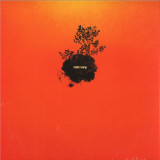
Möbius is an aerial ballet created by Cie XY in collaboration with the choreographer Rachid Ouramdane, and composers Jonathan Fitoussi & Clemens Hourrière.
One of the most sensitive sets of ears in Paris, GRM affiliate Jonathan Fitoussi meets Clemens Hourrière for a beautiful 3rd album called "Möbius". After their acclaimed "Five Steps" 2015 & "Espace Timbrés" 2018 on Versatile records, Fitoussi & Hourrière tethered again to the classic Buchla modular synthesiser, but this time for composed the soundtrack of an amazing aerial ballet in collaboration with Cie XY and famous choregrapher Rachid Ouramdane; Widescreen results
-
"For Möbius we have teamed up with two composers, Jonathan Fitoussi and Clemens Hourrière; for several years now they have shared a common passion for electronic instruments with their unique incredible sound. We soon found there was a lot of common ground between our own acrobatic research and the way they create music : their sounds meeting, colliding or clustering together in a slow and finely nuanced progression, requiring the same continuous adjustment as our own process. This constantly evolving music with its expansive percussion will leave the door wide open to flights of the imagination, transporting us to strange atmospheres, at times disturbing, at others invigorating..." Cie XY
out of Stock
Last delivered 29 days ago available to reorder, subject to availability
Heavenly Recordings announce the release of ‘Heavenly remixes 3&4 - Andrew Weatherall volume 1&2’, a brace of compilation albums collecting together some of the finest remixes from the label’s long-time friend, collaborator and go-to remixer. These compilations follow ‘Heavenly remixes 1 & 2’, which showcases some of the label’s other great remixes.
By the time Heavenly was born in the spring of 1990, Andrew Weatherall was already an inspirational sounding board, as well as a fellow traveller on the bright new road that stretched out ahead, thanks to the massive cultural liberation of acid house. Back then every energised meeting could be turned into a fortuitous opportunity in this burgeoning new underground economy. Bored of your job? Start playing records out! Start a club night! Get in the studio!
Start a label! Just don’t stand still. Commandments Andrew would follow for the rest of his life.
At the start of things, Andrew was a regular visitor to Capersville - the pre-Heavenly press office run by label founder Jeff Barrett (soon to become Andrew’s manager). It was there that he famously picked up a copy of Primal Scream’s unloved second album and singled out a
track that would later become ‘Loaded’, after being given an instruction to “fucking destroy” it by the band’s Andrew Innes; it was there too that the idea to remix the first Heavenly release
came about.
Andrew’s mix of that first Heavenly record is very much a product of its time. ‘The World According To Sly and Lovechild’ is a swirling bass punch topped with a hypnotic marimba line and the kind of ecstatic diva vocal that you’d hear coming out of the speakers all night at postShoom clubs like Yellow Book.
His take on the label’s next release - Saint Etienne’s ‘Only Love Can Break Your Heart (A Mix of Two Halves’) - would set the template for his next three decades of audio exploration. A drawn-out imperial dub, the track builds and builds with a moody intensity (partly down to the
melodica played by Weather Prophets legend Pete Astor) that’s far more Kingston JA at dusk than Kingston-upon-Thames at kicking out time. It’s both a dancefloor record to get lost in and
headphone psychedelia of the highest order - a perfect example of what he did better than anyone else.
Between 1990 and his untimely death in 2020, Andrew fed more Heavenly bands through the mixing desk than those of any other label. Consistently, he returned visionary music to the
office, often in person for (at least) one ceremonial playback - a ritual that would involve the volume cranked up high and Andrew rocking back on his heels, eyes closed, lost in the alchemy of it all.
Each time, he would warp and twist originals into beautiful new shapes - elasticated club records that might evoke Detroit techno one second and Throbbing Gristle the next, before wheel-spinning into something akin to The Fall produced by King Tubby.
Andrew’s studio adventures would always be guided by that early advice to destroy the source material. It’s why he was the first name that came up when remixes were discussed; the first number on the speed dial. Listening back to these remixes now - to thirty years of glorious outsider sounds - it bangs home again just how fucking good Andrew was.
out of Stock
Last delivered 4 years ago available to reorder, subject to availability
We've not been able to get to the bottom of who Kenny Burns is (or at least this one - there was a famous Nottingham Forest footballer of the same name in the dim and distant past), and 89: Ghost main man Neil Tolliday is keeping tight-lipped. Either way, this label debut from the man of mystery includes some genuinely impressive moments. Picturesque closer 'Crease', where dreamy chords and kaleidoscopic synth sounds rise and fall atop an unfussy dancefloor beat, reminded us of Nail's own 1993 cut 'Cassiopeia', while 'Crank' is a thrusting slab of early morning techno peppered with squelchy acid motifs, chiming electronics and loopy, mind-mangling riffs. Elsewhere, 'Croak' is an angular slab of warped techno intensity, and opener 'Creak' is a hypnotic neo-trance number.
out of Stock
Last delivered 4 years ago available to reorder, subject to availability
Mimsy describes himself as someone with many interests and few skills, and sure, you can put it that way. But more precisely, he is a seeker and finder who has always felt more at home in the intermediary spaces. Since his first releases on Karaoke Kalk under the names Saucer, Motel and Wunder in 1997, he has mostly been active as Wechsel Garland, working with samples beyond recognition and thus blurring the lines between his own songwriting and the musical material he uses.
In 2011, he ended the project with the album »Dreams Become Things« and is now opening a new chapter as Mimsy with »Ormeology.« The album was ten years in the making and saw the producer work with sounds, voices and text fragments that were gathered over time. The twelve pieces—based on guitar pickings, looped textural sounds, rhythm boxes and shimmering organ sounds—install themselves in the unconscious through sound, melody and subtle rhythmic shifts to send the listener’s perception on a journey into the unknown.
The name Mimsy is a nonce word coined by Lewis Carroll in his famous nonsense poem »Jabberwocky,« a combination of »miserable« and »flimsy,« while the term »Ormeology« refers to the Italian film »Le Orme« (»Footprints on the Moon«), in which the main character is haunted by memories of a fictional film of the same name. While this alone creates a rich thematic frame of references for the album, it does not at all define its themes. Instead, the references are reflected in the methods with which the pieces on »Ormeology« were designed—sound and language orbit freely around one another, images within images are being layered, following their path unconsciously. In »Sans mobile apparent,« the lyrics get to the heart of this: »die Widersprüche aushalten / die Folien übereinanderlegen« (»enduring the contradictions / laying the foils on top of each other.«) Creative frictions emerge not out of binary decision-making patterns, but from additive layering.
Mimsy followed traces forth and back through time and space, collaborating for a few tracks with set designer and musician Lydia Schmidt and letting Wolfram Wire record various lyrics based on automatic writing that were gathered by Mimsy. Furthermore, he asked the photo blogger Lilia Katherine from Brazil and the Canada-based Andrea Hernandez to translate and record his lyrics in their own respective languages. Human global coincidences resulted in collaborations which are presented as discrete and thus make the album as a whole and even more complex meditation on the interplay of the concrete and the abstract. This is best exemplified by the song »Ginster,« throughout which Schmidt and Mimsy’s voices overlap more and more until they enter a sort of call and response pattern, although they never seem to address each other directly.
»Ormeology« is an album that whirrs and flickers, seeking to mediate between the tangible world and the intangible by blurring the boundaries between words and sounds and space. It is an archipelago that is in many ways connected to what surrounds it, while at the same time opening up a space of its own.
out of Stock
Last delivered 5 years ago available to reorder, subject to availability
A monumental force firmly rooted in the soul canon, Willie Hutch is most notable for recording two of the best Blaxploitation soundtracks, The Mack and Foxy Brown. Yet his legacy is much greater. Outside of Marvin Gaye, Stevie Wonder and Smokey Robinson, Hutch was arguably Motown's top male solo artist of the 70s. Prior to his association with Gordy et al, Hutch crafted his opening statements for RCA, two vital LPs that Be With Records is honoured to present today.His debut, Soul Portrait (1969), is an incredible slice of gritty, Southern-fried soul. Think Stax with a touch of Detroit sparkle. As a whole, the album demonstrates the self-contained act Hutch was, he wrote every tune on the album while also arranging and conducting for it. It features 11 timeless grooves, with a blend of beat ballads and undeniable dancers.
The album's centrepiece is undoubtedly the iconic, brooding minor-key masterpiece "A Love That's Worth Having". The album's most recognisable track, it's a towering ballad drenched in stylish, sliding horns and elevated by its stunning backing vocalists. It was famously sampled by Madlib to augment his soundtrack for Stones Throw's Our Vinyl Weighs A Ton as well as 9th Wonder for the Murs classic "Dreamchaser". Whilst one can understand these iconic beatmakers for leaning on the work of a master, you really need to own the track in its full, unedited glory.
Horn-heavy opener "Ain't Gonna Stop" is a funk-fuelled monster, Hutch's fatback vocal aided by a vicious drum 'n' conga rhythm whilst the bumping uptown soul of "You Can't Miss Something That You Never Had" anticipates the Motown-vibe that Hutch went on to create. Supple guitar licks propel the loping, head-nod breaks of "Good To The Last Drop" whilst "That's What I Call Lovin' You" features gospel piano and plaintive, tender vocal turn. Rounding out Side A, the blazing horns of "You Gotta Try" hints at the Blaxploitation that was to come.Ushering in the flipside, the thundering proto-70s-Motown rhythm of "Let Me Give You The Love You Need" segues neatly into the bouncing Northern Soul favourite "Lucky To Be Loved By You" whilst Hutch's gutbucket guitar stylings are all over the smouldering "Keep On Doin' What You Do". "Your Love Keeps Liftin' Me Higher" is not a rendition of the Jackie Wilson classic, rather, it's a powerhouse original that indicates where Hutch would take his sound on The Mack. Closing the album, the anthemic "Do What You Wanna Do" name-checks contemporary dance fads before instructing the listener to just get up and dance.Brilliantly supported by a heavy roster of studio cats who combined to create a winning combination of horns, strings, and gorgeous female background vocalists, Soul Portrait is as complete a soul album as the decade's very best. Tricky to find for a number of years, this lovingly produced reissue is certainly welcome. Paired with the soaring follow-up, Season For Love, these recordings shine a new light on the early work of a soul legend. Officially licensed and remastered for vinyl by Simon Francis, it has been pressed on audiophile 180g vinyl for the first time and features the original artwork and liner notes.
Parcels have always been a band of extreme light and shade: they’re from surf hotspot Byron Bay in Australia but they’ve been holed up in grimy nightlife utopia Berlin for years; their sweet-as-honey vocal harmonies rival the Beach Boys but they can also turn their live shows into slamming techno rave-ups. The twentysomethings stand out amid the current musical landscape: a soulful rock band that looks like it’s stepped out of a postcard from 1970s California, all flares, moustaches and shaggy hair. They’re a classic band for atypical times.
Since Crommelin, keyboardist Louie Swain, keyboardist/guitarist Patrick Hetherington, bassist Noah Hill and drummer Anatole ‘Toto’ Serret formed in 2014, fresh out of school, they’ve struck upon a singular sound, weaving together gossamer disco and exotica, soft rock and Sixties pop with a focus on uplifting grooves. Their seductive style has translated into 100,000 album sales worldwide, over 200 million streams, cross-continental tours, shows with French royalty Phoenix and Air, a US TV debut on Conan O’Brien, a Coachella slot and a debut single that was produced by none other than Daft Punk, who saw them live in Paris and ushered them into their studio.
After two EPs, 2015’s Clockscared and 2017’s Hideout (the band’s penchant for smooshing words together is a result of a broken keyboard when they submitted their first demo), Parcels’ acclaimed self-titled debut album came in 2018 and was called “timeless and devilishly fun'' in a five-star NME review. They followed it in 2020 with an impressive live album, Live Vol.1, recorded at Hansa Studios, the legendary studio where Iggy Pop and David Berlin hung out during their Berlin years.
The band returns for summer 2021 with an ambitious third studio album,
Day/Night, a double record that spans impossibly catchy disco-soul, prog, pastoral folk, Laurel Canyon-era classic songwriting and cinematic strings. Made over the course of 2020, when the world was at a standstill, it’s the sound of a band growing up; five guys who’ve known each other since childhood and are finding their way together, in spite of all the major obstacles the last 18 months have thrown at them, when they were unable to return home to Australia and see their loved ones. Day/Night is huge in scope and sound, and its hopeful messages of perseverance through difficult times are a balm for these uncertain times.
2 LP Boxset. 2 vinyls packaged together in a clear PVC wallet (in order to display each vinyl cover). 2 x : 140 G black vinyl ( 33 rpm)+ 3mm spine printed sleeve + printed inner sleeve + cmyk vinyl label.
Cello. Marketing Front sticker 5 cm x 7 cm , back cover sticker (upc + tracklisting) 5 cm x 7 cm
out of Stock
Last delivered 4 years ago available to reorder, subject to availability
Translucent red LP housed in a beautiful gold mirror-board sleeve with large Thundercat logo hologram sticker and gold holofoil detail. Includes two bonus tracks: ‘$200 TB’ and ‘Daylight (Reprise)
Vinyl only (no digital) 2021 Black Friday release
If indeed "you blows who you is," as Louis Armstrong once famously said, then Stephen Bruner's bass is a mainline to the soul of a man whose DNA was transcribed from the stars onto staff paper. His Flying Lotus-produced debut, The Golden Age of Apocalypse, offers both stone-cold skill and uncanny astrality, picking up where the pair left off on 2010's Cosmogramma and further distilling the jazz current running through that landmark Lotus release. A longtime contributor to others' albums, Bruner, aka Thundercat, is accompanied by an impressive cast ranging from Erykah Badu to members of Sa-Ra and J*DaVeY, to pianist Austin Peralta and his own Grammy-winning brother, drummer Ronald Bruner, Jr. Still, the end result is unmistakably a Thundercat record -- a lush and magical document combining classic jazz fusion, futurist electronic strains and timeless musical seeking.
Spanning a cosmic stew of players, locations and times, The Golden Age of Apocalypse was years in the making. . There's the ebullient "Daylight," a soft whirl of bluesy piano, New Age synth, snapping beats and warm bass. There's "Walkin'," an upbeat soul strutter powered by Bruner's digitally distorted plucks. There are raw, improvised numbers like "Jamboree" and virtuosic bass pileups like "Fleer Ultra." One of the album's most stunning moments arrives with a spacious cover of George Duke's "For Love I Come," a taut beauty spangled with crystalline harp and keys. Bringing this string of divinely unexpected moments to a moody and cinematic close is "Return to the Journey." There, Bruner sings, "Time will pass us by," but listeners needn't worry. Inside of this space, time really isn't a thing.
out of Stock
Last delivered 4 years ago available to reorder, subject to availability
This album comprises hits from the repertoire of the most famous Cuban and Boriquen orchestras in the late '50s, performed by young Peruvian percussionist Ñiko Estrada and his sonora. However, due to contractual restrictions, the album was released under the fictitious Sonora MAG name.
Fascinated by the music of the Cuban orchestras broadcast on the radio and the colourful and flamboyant outfits they sported when played Lima, Ñiko Estrada named his first band Los chicos de Cuba (The Cuban Boys). In 1958 he put together his own group, sonora, signing to the local label Smith and recording a number of hits. At the same time, he also agreed to anonymously record more music for MAG, the Peruvian company owned by Manuel Guerrero. An imaginary Sonora MAG was born…
"El Negro Bembón con la Sonora MAG" includes, with the only exception of the instrumental track 'Té Para Dos', mostly vocal songs -guarachas and boleros- by the likes of Manolo Castro, Rafael "Chivirico" Dávila, and Vicky Zamora, being her take on 'Pepito' the biggest hit of the album.
This album is currently almost impossible to find in its original edition, so we are now happy to present the first ever reissue of "El Negro Bembón con la Sonora MAG" in its original artwork and 180g vinyl pressing.
out of Stock
Last delivered 4 years ago available to reorder, subject to availability
Promised Land is the twenty-first studio album by world famous American singer and musician Elvis Presley, originally released on January 8, 1975, Elvis’ 40th birthday. It reached number 47 on the Billboard Top 200 and number one on the Billboard Top Country Chart. The album spawned two hit singles: “If You Talk in Your Sleep” and title track “Promised Land”, the latter of which was also used for the 1997 sci-fi comedy film Men in Black. Promised Land remains a timeless classic by the King of Rock and Roll.
On January 31st of 2020, the accomplished songwriter turned songstress released her debut EP "Sis.", a 7-track EP produced by Homer Steinweiss and The Menahan Street Band of Amy Winehouse's famous album "Back To Black". With this project the rising, Memphis-bred artist introduced her own take on modern soul, using live instrumentation and melodic prowess to blend contemporary and nostalgia. The project was met with widespread acclaim, earning her a spot on NPR's Tiny Desk 6/11, three separate usages in this season of HBO's series 'Insecure', and over 20 million streams across streaming platforms.
KIRBY is a soul singer from Memphis, Tennessee. She is the talented writer behind “FourFiveSeconds” by Rihanna, Kanye West, and Paul McCartney, “Tell Me You Love Me” by Demi Lovato, “Die With You” by Beyoncé, “Only One” by Kanye West and Paul McCartney, “Break Your Heart Right Back” by Ariana Grande, and more.
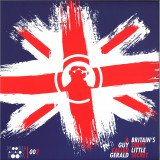
For a number of years now, A Guy Called Gerald has largely made music only for himself. But this special EP is borne from Gerald’s unique and long-lasting friendship with Analog Room founders Mehdi Ansari, Siamak Amidi and Salar Ansari. They first met in 2013 when Siamak booked Gerald to play his Analog Room party in Dubai – a leading underground light in the UAE’s then emergent scene. Away from the glossy VIP hotels and expensive bottle service parties
typically associated with Dubai, Analog Room only deals with quality bookings of the caliber of Move D, Roman Flügel, Moritz Von Oswald and the likes. Gerald immediately fell in love with the party. Its strict music-first, no-nonsense policy appealed to him and he’s returned many times over the years.
By then, of course, A Guy Called Gerald’s musical legacy was already assured. The Manchester icon is best known for his 1988 hit single Voodoo Ray – the touchstone of his hometown’s dawning acid house scene. As well as being an early member of 808 State, Gerald embraced breakbeat and jungle, ran his own Juice Box Records label and worked with the likes of Columbia, Perlon, K7! and many other vital labels. His skills on everything from synths to keys, samplers to
drum machines stood him apart then – and still do today.
“This release is based on a real friendship,” Gerald explains. “I feel part of the Analog Room family. Back in the early days, that’s how it was. These days, it’s like, ‘Oh, you’re famous, let’s do something.’ I’m not interested in that. I’m not interested in being a celebrity or living that life. I’m the same as I was 30 years ago, all I care about is the music. With Mehdi, we have spent hours jamming in private in Dubai, we have partied together. We’ve vibed together for so long and he’s shown me new parts of the world I should be making and playing music in, away from the trendy scenes in other places. So this is an exclusive just for him.
I’m not looking at doing anything else with anyone, and the music is just about celebrating individuality rather than trying to fit in anywhere.”
When Iranian-born Mehdi decided to start Moozikeh Analog Room – which translates from Farsi as “the music of the Analog Room” – Gerald was one of the first artists he asked to release on the label. It might have taken some time for Britain’s Dirty Little Secret to materialize, but boy it’s been worth the wait.
Says Mehdi, “The magic comes through proper relationships and friendships.
That’s why Analog Room worked. It was a great room, an amazing sound system, with amazing artists doing their thing. Bookings were so on-point because we had agents around the world, on the dancefloors, spying up artists who were killing it,
and Gerald was one of them. He was a perfect fit from the first gig and our friendship grew from there. He’s always been very kind to me. We have this common language of music without any bullshit, and that is where this EP comes from.”
The EP is a mixture of different things. Some of it is unreleased material from the vaults revisited, some of it is brand new. It opens up with the devastating Old Skool – a writhing, physical track with naughty bass. The drums hark back to Gerald’s early days of making jungle but reimagined through a modern perspective. As the synths spray about the mix and the percussion bounces atop the jostling drums, muttered vocals draw you in deeper. Sugoi is an experimental
track that fuses ambient synth design with the spacious and eerie atmospheres of jungle. Nimble drums get you on your toes as the spangled synths twist and turn in all directions. It is a thrillingly original, impossible to define track.
Flash Fight is built on a captivating rhythm that sits in the area where house, techno and jungle intersect. It is warm and cavernous, physical yet elegant as it bounces on rubbery kicks and lithe synths roam in and out of earshot. Perfect for those sweaty, cozy back rooms, it’s another masterclass from Gerald. Closing out the EP is False Religion, a deep-rooted house track with elastic drums and
haunting, wispy pads. As a subtle acid bassline rises and falls way down below,
Gerald’s own mystic whispers leave listeners hypnotized.
Following on from Analog Room co-founder Salar Ansari’s debut release on the label, this EP is a statement of intent. More releases will follow from some of Analog Room’s most frequent international guests, but only when the time is right. Moozikeh Analog Room is a label of love, one that is focused on putting out the best possible music at all times rather than chasing hype.
A timely reminder of why A Guy Called Gerald is one of the world’s most enduring electronic artists.
out of Stock
Last delivered 5 months ago available to reorder, subject to availability
Manufactured using FSC certified cardboard.'Transparency' is Sam McTrusty
spilling his guts on everything from marriage, male friendship and the absurdity of
social media to parenthood, medication and his mum. Written in strained
circumstances and recorded remotely with Sam's mate and mentor Jacknife Lee,
the album arrived more by accident than design when the world went into
lockdown last spring.
The third release on U-TRAX in 1993 was also a third debut, this time by Natasja Hagemeier and Jeroen Brandjes. Early in their career, they used several artist names, but became most commonly known as The Connection Machine. With their debut mini-album The Dream Tec Album they more or less described their style: dreamy techno. It became an instant Dutch techno classic and U-TRAX is proud and delighted to offer a fully remastered re-release, including three never before released bonus tracks (one of which is digital-only).
Natasja and Jeroen resided in Utrecht back in the 90s. In 1991 they assembled all their ideas and recorded the track "24 Hours" with DJ Paradize. Soon after this experience, they started to buy their own gear, all strictly MIDI (which wasn't too obvious in those days). In their early recording years, they had three producer-names (Syndrome, The Connection Machine and Bitch&Bites), that were all collected under the The Utroid Machine Missions umbrella, which was used for their debut on U-TRAX.
All tracks on The Dream Tec Album are The Connection Machine's earliest works, from the 1991/1992 years.
"An Overflow of the Mind" is a beautiful, dreamy track with almost divine sounds and strange voice-samples that serves perfectly as an introduction to their entire repertoire.
Their first production was "24 Hours", and what a brilliant one it is! A well-known jazz-musician talks about a "24 hour party going on", on top of a sinister and trancey rug, woven of sampled sounds from pioneers in electronic music and nailed down to the floor with a deep pounding bassdrum. At the time they made this track, 141 bpm was unbelievably fast...
"Evilish Cosmos" is all about a very sad and personal emotion, so everything we say about it will be absolutely wrong. Just listen to the meandering piano line, distorted voice samples - and feel it.
The first bonus track on this release is "Recognized Pain", which was intended to be part of the original The Dream Tec Album. It had appeared on the Phuture Classical Section C cassette in 1993, on the famous Drome Tapes label that formed the roots of U-TRAX. It truly is an amazing track: pure sonic terror with haunting rhythms, psychedelic synth lines and shards of voice samples that make the listener feel slightly uncomfortable.
"X_Manray" is many electronic music lover's favorite track. It is sooo deep that it is hard not to get hypnotized by it. Warm strings are coupled with deep beats that show up and disappear every now and then. Could serve perfectly to start off any DJ's set, as long as she or he has the guts.
Though "Braindrain" is probably the most danceable track on this album, it is carefully designed to tease the listener. Everything in this track drops in too late and every tone, melody or loop last exactly a few bars too long. Designed as a DJ-teaser and so it is.
The second bonus track, "Cafe d'Anvers", is another previously unreleased work, of which unfortunately no master recording was saved. All that is left, as far as we know, was an old VHS Hifi tape from the U-TRAX Archives. And that is where this bonus track was taken from. Mastering engineer Thee J Johanz managed to restore the quality of the recording somewhat, while at the same time maintaining its dark, clubby sound, a tribute to the famous club of the track's name in Antwerp, Belgium.
"Dream Affected Dream" is one of the most recent productions on this album. It was recorded with CNN playing live on top of it. At this exact moment, CNN was having an interview with David Koresh, the leader of the infamous Branch Davidians sect from Waco, Texas, while they were under siege by an armed police force. Natasja and Jeroen were just ready to record Dream Affected Dream, and spontaneously decided to mix in the audio from CNN. Not very long after that, the cult members set fire to themselves. A very strange and oddly funky track, that also serves as a time-document.
The final track is another bonus track. Like Cafe d'Anvers, "Voight-Kampff" is taken from on old U-TRAX VHS Hifi tape and masterfully mastered into a lovely relaxed dreamtech piece. Very suitable to start the Sunday after a long night of clubbing. This track is available for free to buyers of the complete digital album only.
Original release date: July 1993.
out of Stock
Last delivered 4 years ago available to reorder, subject to availability
Marshall McLuhan’s famous edict ‘the medium is the message’ has never been more apt than with regard to modern remix culture. Although the idea of the remix goes way back to the Jamaican dub pioneers and New York disco remixers of the 1970s, the form didn’t truly come into its own until the acid house explosion of the 1980s, when remixers’ credentials often subsumed — and sometimes surpassed — the original source material. Some, among them our lost friend Andrew Weatherall, used remixing as a springboard into multiple other directions, and became auteurs in their own right.
Forged in the white-hot heat of post-acid house Britain, these Heavenly remixes are perfectly weighted with respect and irreverence, the remixer in each case carefully chosen to add heft to the song (as on Al Breadwinner’s dubwise reworking of Mattiel’s ’Guns of Brixton’— the pairing more a game of chess than a best-of-three arm wrestle).
Although Heavenly was founded in the wake of huge upheavals in electronic music, it was still imbued with its own curious parallel life. I’ve always thought of Heavenly as one of the UK’s alt-pop labels; a place where brilliant pop bands live and record, if the general public would only realise. Some of them have ended up in the real, actual charts (Saint Etienne, Doves), but that’s missing the point about Heavenly, who are, like Factory and Fast Product before them, pop music’s conscience.
There is no sense of order to this compilation and we make no apologies. It’s the Heavenly way. Think of it as a present from Loki, the Norse god of mischief. You’ll find a smattering of older tracks: album openers Saint Etienne are taken on a Poseidon Adventure with Underworld, who inject ‘Cool Kids of Death’ with typically manic energy. Elsewhere, ’90s Brum duo Mother add dancefloor pzazz to Espiritu’s innate glamour on an all-funked-up reworking of ‘Los Americanos’, and Mark Lusardi’s remix of Moonflowers’ ‘Get Higher’ is an early Heavenly classic.
On ‘Terracotta Warrior’, a perfect, psyched-out, Mancunian union is created betwixt Jimi Goodwin and Andy Votel, whilst Goodwin cohort Simon Aldred, in his Cherry Ghost guise, receives a proper Tamla-Motowning from Richard Norris (aka Time & Space Machine) on an inspired cover of Cece Peniston’s glam-house hit, ‘Finally’.
There are several of Heavenly’s current darlings here too. One of the most exciting young British prospects, Yorkshire’s Working Men’s Club, effectively remix themselves, as Minsky Rock — WMC’s Syd Minsky-Sargeant and producer Ross Orton — cleave ‘X’ into a riotous industrial racket. Jagwar Ma’s Jono Ma takes the Kraftwerkian leitmotif on ‘Automatic’ and drives the Australian jazz-funkers Mildlife down an electro-convulsive psychedelic tunnel (thankfully no-one was harmed during the making of this remix); Sheffield’s DJ Parrot and Jarvis Cocker deliver one of the outstanding remixes of 2018, turning Baxter Dury’s ‘Miami’ into a lovelorn minor opera; and, making its first appearance on vinyl, David Holmes’ Unloved project is taken on a panoramic Welsh waltz thanks to Gwenno.
There may well be no rhyme, nor reason, to how these compilations have been put together, beyond the fact that they are assembled with love, an innate understanding of the power of great pop music, and a skilled marriage of song and remixer — but does one really need anything more than that for an album to make sense? I’d suggest not.
out of Stock
Last delivered 4 years ago available to reorder, subject to availability
Peggy Gou’s Gudu Records presents a landmark EP of original music by Dea - a legendary Indonesian DJ and artist who counts DJ Harvey, Mr. Scruff and Gilles Peterson (who famously claimed that Dea was the best DJ he’d seen in a decade after watching him spin in 2017) among his admirers.
Making his name in Indonesia’s Sun Down Circle collective, Dea has gone from one of his country’s best-kept secrets to one of the world’s most respected diggers and DJs. His EP for Gudu is his most extensive collection of solo music yet, backed with a transcendent remix by I:Cube - the few-more-acclaimed French artist famed for trading remixes with Daft Punk in the 90s and decades of brilliant solo music since.
out of Stock
Last delivered 4 years ago available to reorder, subject to availability
The third release on U-TRAX in 1993 was also a third debut, this time by Natasja Hagemeier and Jeroen Brandjes. Early in their career, they used several artist names, but became most commonly known as The Connection Machine. With their debut mini-album The Dream Tec Album they more or less described their style: dreamy techno. It became an instant Dutch techno classic and U-TRAX is proud and delighted to offer a fully remastered re-release, including three never before released bonus tracks (one of which is digital-only).
Natasja and Jeroen resided in Utrecht back in the 90s. In 1991 they assembled all their ideas and recorded the track "24 Hours" with DJ Paradize. Soon after this experience, they started to buy their own gear, all strictly MIDI (which wasn't too obvious in those days). In their early recording years, they had three producer-names (Syndrome, The Connection Machine and Bitch&Bites), that were all collected under the The Utroid Machine Missions umbrella, which was used for their debut on U-TRAX.
All tracks on The Dream Tec Album are The Connection Machine's earliest works, from the 1991/1992 years.
"An Overflow of the Mind" is a beautiful, dreamy track with almost divine sounds and strange voice-samples that serves perfectly as an introduction to their entire repertoire.
Their first production was "24 Hours", and what a brilliant one it is! A well-known jazz-musician talks about a "24 hour party going on", on top of a sinister and trancey rug, woven of sampled sounds from pioneers in electronic music and nailed down to the floor with a deep pounding bassdrum. At the time they made this track, 141 bpm was unbelievably fast...
"Evilish Cosmos" is all about a very sad and personal emotion, so everything we say about it will be absolutely wrong. Just listen to the meandering piano line, distorted voice samples - and feel it.
The first bonus track on this release is "Recognized Pain", which was intended to be part of the original The Dream Tec Album. It had appeared on the Phuture Classical Section C cassette in 1993, on the famous Drome Tapes label that formed the roots of U-TRAX. It truly is an amazing track: pure sonic terror with haunting rhythms, psychedelic synth lines and shards of voice samples that make the listener feel slightly uncomfortable.
"X_Manray" is many electronic music lover's favorite track. It is sooo deep that it is hard not to get hypnotized by it. Warm strings are coupled with deep beats that show up and disappear every now and then. Could serve perfectly to start off any DJ's set, as long as she or he has the guts.
Though "Braindrain" is probably the most danceable track on this album, it is carefully designed to tease the listener. Everything in this track drops in too late and every tone, melody or loop last exactly a few bars too long. Designed as a DJ-teaser and so it is.
The second bonus track, "Cafe d'Anvers", is another previously unreleased work, of which unfortunately no master recording was saved. All that is left, as far as we know, was an old VHS Hifi tape from the U-TRAX Archives. And that is where this bonus track was taken from. Mastering engineer Thee J Johanz managed to restore the quality of the recording somewhat, while at the same time maintaining its dark, clubby sound, a tribute to the famous club of the track's name in Antwerp, Belgium.
"Dream Affected Dream" is one of the most recent productions on this album. It was recorded with CNN playing live on top of it. At this exact moment, CNN was having an interview with David Koresh, the leader of the infamous Branch Davidians sect from Waco, Texas, while they were under siege by an armed police force. Natasja and Jeroen were just ready to record Dream Affected Dream, and spontaneously decided to mix in the audio from CNN. Not very long after that, the cult members set fire to themselves. A very strange and oddly funky track, that also serves as a time-document.
The final track is another bonus track. Like Cafe d'Anvers, "Voight-Kampff" is taken from on old U-TRAX VHS Hifi tape and masterfully mastered into a lovely relaxed dreamtech piece. Very suitable to start the Sunday after a long night of clubbing. This track is available for free to buyers of the complete digital album only.
Original release date: July 1993.
out of Stock
Last delivered 7 years ago available to reorder, subject to availability
Fueled By Ramen will be reissuing one seminal album from our 25- year history each month throughout the calendar year of 2021, again this will be on Silver Vinyl as part of the FBR 25th Anniversary.
FBR 25 Podcast
We are currently working on a 16 part podcast that will delve into the history of FBR, it’s cultural relevance and Global impact over the past 25 years. Each episode will look at the careers of some of our most important artists, and deep dive into the making of albums told by the artists themselves in their own words.
25th Anniversary Merchandise
We announced the 25th Anniversary around Thanksgiving last year with our first 25th Anniversary limited merch drop, and then will be working throughout 2021 on new and exclusive designs to drop throughout the year.
m 13. Good Girls Go Bad (Frank E Remix) [feat. Flo Rida]
With his first release as EBM outfit Voltage Control on Antler Subway in 1989, Utrecht-based Arno Peeters can easily be considered one of the Dutch Dance pioneers.
Influenced by hip hop, electro and acid house, and his uncontrollable urge to experiment, he moved on to produce techno. Disappointed by the genre s conventions, he rather suddenly stopped with dance music altogether around 1995, letting a wealth of DATs with unreleased material collect dust in his studio.
To our great pleasure, U-TRAX was allowed to pick some nuggets from these archives, resulting in this Titanic EP and an album later this year.
Arno started experimenting with sound at very young age, resulting in his first cassette releases with experimental soundscapes in 1983. In 1986 he joined the notable Centre for Electronic Music (CEM), where he was able to take his experiments to a new level in a professional studio-environment.
In his techno episode , he recorded several 12 -es and CDs as Sp@sms and The Implant, and as part of Random XS, Urban Electro, African Nightflight and The AWAX Foundation, with most of his records being released on the famous DJAX label.
After turning his back on techno, he applied himself to more experimental music again. In 1996, he created AeroSon, a 40-minute sound collage that won him the first prize in the category Composers Under 30 at a high-brow international contest for electro-acoustic music. This piece was later released on the prestigious Mille Plateaux label.
Since then, his focus has shifted away from releasing music, towards working more project-based: on remixes, compilations and interactive (installations, video, sound design), building himself a successful career as radio maker, teacher and engineer, contributing to several award-winning documentaries and podcasts.
This EP is a nice cross section of Arno s dance productions, serving you some acid, techno and electro.
Titanic V1 was originally created to be a Random XS track, the techno band he formed in 1991 with Sander Friedeman. It was performed during their live set at one of the G.U.R.U. parties, organized by U-TRAX label boss DJ White Delight and label artist P.A. Presents.
This acid track was remixed into a techno monster when Friedeman replaced the 303 with a 101 and added a ton of delay on the bass drums, resulting in the woofer destroying Titanic (Underwater Dub).
The flipside sees a rare post-1995 recording by Arno: CEM Traxx 1. As the title suggests, this melancholic electro gem was created using the intricate machinery of the CEM Studio. Originally created as one half of a two-part composition for some project in 2003, it was never released before.
The EP closes with a typical Arno brainchild, the tongue-in-cheek acid banger XD5 Acid Master, from 1994. Tracks like this happen if you leave Arno unattended with a rather un-hip machine like the Kawai XD-5: he turns it inside out and uses it for things it was never intended for. Buckle up!
All tracks have been produced by Arno Peeters and mastered by Ruud Lekx. Label art by Botterman Ontwerp.
out of Stock
Last delivered 4 years ago available to reorder, subject to availability
Digital Afrika return to the fray with this incredible EP for ASW. Featuring the original Gnawa plus it’s acoustic source recording as performed by Radouan Naim in Morocco PLUS two truly excellent remixes from the legendary Jose Marquez and Melbourne’s own TEYMORI (Amin Payne).
The original source recording for this track was laid down in Planet Essaouira and recorded by Zhonu “Nui” Moon (Digital Afrika ) on one of his many cultural trips to his ancestral home land. The studio is situated on the Moroccan coastal town of Essaouira , a cultural hub for the Berber (indigenous Moroccan) traditions.
This enigmatic town , popularised by the beatniks and bohemians of the 60ʼs, most famously by Jimi Hendrix and The Rolling Stones , has a mystique all its own as well as a long musical history.
“Gnawa” in Berber language literally translates as “Trance“ music , and is traditionally performed in “Lilas” musical ceremonies accompanied by dance that can go on for days .. where the purpose is to produce trance-like states of being where different types of healing or catharsis can occur ..
The recording was then brought back to Melbourne, Australia. Where the Digital Africa team applied its electronic Afro-house touches , while keeping true to its original North African aesthetic.
out of Stock
Last delivered 4 years ago available to reorder, subject to availability
All Them Witches have built a career out of playing music that cannot be pigeonholed into one specific genre.
‘Nothing As The Ideal’ was recorded in Studio 2 at the world famous Abbey Road with the help of longtime mixing engineer Mikey Allred. The history and vibe of that setting laid the groundwork for what was to come.
The band’s signature psychedelic blues riffs, relentless drums, melodic basslines and non-linear lyrics are all present.
The resulting album is a thought provoking headbanger that is the band’s most cohesive album to date.
140g black vinyl gatefold LP.
out of Stock
Last delivered 4 years ago available to reorder, subject to availability
After the worldwide success of their first album Puzzle (1999), which sold over 200,000 copies and went gold in Japan, Xavier Boyer (vocals, guitars), Pedro Resende (bass), Médéric Gontier (guitars) & Sylvain Marchand (drums) reunited with producer Andy Chase to record the follow-up, Wallpaper for the Soul, in New York City. Starting in November 2001 at Stratosphere Sound, the prolific sessions gave birth to twenty tracks, twelve of which appeared on the original tracklist. The eight outtakes were compiled on the mini albums A Piece of Sunshine (2003) & Extra Pieces of Sunshine (2004). This new vinyl edition will be the first time all these songs appear together.
Almost 20 years on, WFTS is a tour de force of contemporary songwriting with obvious nods to the past somehow revisited in a timeless fashion. Tahiti 80’s second effort can also be seen as an alternative and more sophisticated snapshot of an era often associated with the rebirth of rock (The White Stripes, The Strokes…). This set of songs also established them as stalwarts of the Post French Touch cannon, showcasing both their ability to write catchy songs and their knack for mélanges & experimentation. 1,000 Times or The Train are unique examples of blue-eyed soul augmented with French flair (« Prefab Sprout as produced by Thomas Bangalter » suggested Uncut which listed WFTS in their Top Ten’s albums of 2003). Listen to Don’t Look Below today, and ask yourself who was mixing Destiny’s Child with My Bloody Valentine in 2001? Delicate numbers like Open Book or live favorite Better Days Will Come both demonstrate T80’s songwriting skills and their innate sense of melancholia.
Listening back to WFTS today, one cannot help but think of it as an album recorded in a state-of-the-art fashion. All four members would typically perform together in the same room. Basic takes were printed on a 24-track analog tape machine and then bounced onto a computer for editing. A fine example of this method is the title track itself. Originally written on acoustic guitar, Wallpaper … is the result of three eight minutes synthesizer jams pieced together. The Frenchmen were keen to try out multitude of ideas and had developed a taste for experimentation. The sessions also coincide with a rich outburst of creativity from a band on top of their game after several months of touring around the world.
Another typical WFTS characteristic is Richard Hewson’s orchestration. Veteran string arranger, famous for arranging The Beatles’ The Long And Winding Road or writing RAH Band’s ‘80s classic Clouds Across The Moon Hewson gave the songs a sweeping orchestral touch. Strings, Horns & woodwinds were all performed at the now defunct Olympic Studios in London. Urban Soul Orchestra, a 24-piece ensemble who played on Oasis’ or Spice Girls’ hits can be heard on five songs: the opening trilogy Wallpaper…, 1,000 Times and The Other Side, then on the Northern Soul revival Soul Deep and lastly on the album’s closer Memories Of The Past.
Rouen’s most famous four-piece, now relocated in a house on France’s North West Coast, in the quiet seaside town of Étretat, added more bells & whistles and resumed production on the songs. With one last transatlantic leap during the summer of 2002, the boys flew to Portland, Oregon to attend the mixing sessions held by sound wizard Tony Lash (Elliott Smith, The Dandy Warhols…). Suggested by Sub Pop’s craftsman Eric Matthews, also a guest on trumpet and keyboards, Lash would later become a major collaborator on Tahiti 80’s subsequent albums.
In the meantime, Laurent Fétis, the designer behind Puzzle’s iconic artwork, had started working with artist Elisabeth Arkhipoff on a set of nostalgic photographs transfigured with a soft air-bush technique. Those visuals, like their predecessors, have since become an inseparable companion to Tahiti 80’s music.
Many musical fashions and flavors of the month have come and gone, but twenty years after its release, WFTS still sounds fresh and relevant. And always forward-looking, Tahiti 80 is currently wrapping up the recording of their eighth album, to be released in early 2022.
Following many visionary outings such as "Inhuman Series Vol 1.2.3.4" released on New Flesh Records in 2012, "Days of Dissent" released on Killekill in 2016 (repress soon) talking about the rebellion of the World and the moving "Abandon In Place" LP released on New Flesh Records in 2018 telling about the destruction of Earth by the Humans, French producer Umwelt presents his very first cinematographic yet conceptual album on his own label New Flesh Records.
Titled "Subversive Territory", this much anticipated opus sees the founder of Rave Or Die imprint exploring a post-apocalyptic world via twelve haunting songs spreading their infectious melodies and gloomy atmosphere throughout.
Don't expect any beat here as this experimental-ambient manifesto will dive you into the famous tense and dystopian universe Umwelt is building year after year. As visual as auditive, this heartbreaking masterpiece comes illustrated by Yann Legendre. This French illustrator and art director is the father of numerous beautiful illustrations for magazines, books in the movie & music industries. He is the brillant creator of great comic "Flesh Empire" edited by Casterman in 2019.
Working on his forthcoming comic "Vega" anounced for 2022 by Albin Michel, Yann Legendre joined Umwelt for this perfect matching of two arts and two artists offering us this esthetic collaboration. At the end who can say who is illustrating who: the illustrator or the musician? "Subversive Territory" sounds like the perfect soundtrack of a frightening and nottoo-distant future where humanity has collapsed! Fans will appreciate to collect two coloured vinyls in a trifold sleeve.
out of Stock
Last delivered 4 years ago available to reorder, subject to availability
It is highly likely that you will have hummed a song by
Charles Trénet at some point in your life. Thus ‘La Mer’
(aka ‘Beyond the Sea’), a song written on a train
between Narbonne and Montpellier in July 1943, is sung
in Tokyo as well as in Los Angeles and its popularity is
universal. And this is not the only one, among the 700 or
so songs that Charles Trénet submitted to Sacem during
a career of exceptional longevity: nearly seventy years.
10 CD box set features 277 tracks, including 11 rarities.
This edition presents the complete studio recordings
1937-1962 plus several bonus titles from 1933-1936.
2LP vinyl format offers a selection of 29 of his most
famous songs.
What they said about Charles Trénet:
“This new pulse, this extraordinary joie de vivre brought
by the songs that this dishevelled boy was throwing by
dozen, were born from the conjuncture of a remarkable
poetic gift and the vitality of jazz fully assimilated by a
fine sensitivity.” - Boris Vian
“The Sun-King of songs” - Henri Salvador
“He’s a giant … someone who brought everything to
French song. The ‘Singing Fool’ was not only a singerpoet, he was someone extraordinary who is part of the
heritage. He will be teached in schools, he will be talked
about in universities around the world” - Charles
Aznavour
“Charles never asked for anything, but he knew exactly
which place was his, which is the first.” - Alain Delon
In November 1976, Jef Gilson’s phone rang. What a surprise! It was Serge Rahoerson, one of the musicians he had met in Madagascar at the end of the 60s and who had played on his first album “Malagasy”. Rahoerson announced that he was in Paris for a few days.
Immediately, Jef wanted to organise a recording session, starting the next day. He thought of a trio including Serge, Eddy Louiss on organ and cellist Jean-Charles Capon, who had also been on one of the trips to Tananarive and so had also known Rahoerson there. Unfortunately, Eddy Louiss –who had already played with Gilson and Capon on the album “Bill Coleman Sings And Plays 12 Negro Spirituals” in 1968- had to drop out at the last minute: he was delayed by a session with Claude Nougaro. Jean-Charles Capon had also become a sought-after studio musician since his trip to Madagascar in 1969. He appeared on several key albums on the Saravah label including the now famous “Comme À La Radio” by Brigitte Fontaine, “Un Beau Matin” by Areski and “Chorus” by Michel Roques, without mentioning the album by his own Baroque Jazz Trio. He was also to be found with Jef Gilson for his album on Vogue with the ex-drummer from Miles Davis’ first great quintet, Philly Joe Jones, or also in the orchestra led by Jean-Claude Vannier for the album “Nino Ferrer & Leggs”. He also played regularly on albums by Georges Moustaki.
Jean-Charles Capon and Serge Rahoerson found themselves thus in the studio, with Jef at the controls. He had decided to record the rhythmic structure right away. He would find the soloists later, that didn’t worry him. Serge Rahoerson was on drums. Though a saxophonist by training, Jef remembered that Serge was also capable of great things behind a drum kit: he was the improvised drummer on their cover of “The Creator Has A Master Plan” on the album “Malagasy”... The great memories came flooding back (the nod on the title “Orly - Ivato”), and the old magic worked again.
Brought in momentarily from Europamerica, Gilson’s new big band, in which JC Capon also played, the saxophonists Philippe Maté, from France (another Saravah stablemate) and the American Butch Morris (soon to be a key member of David Murray’s band) were invited to record their parts later and Gilson mixed it all as if it had been one single session (as he had already done on other albums, with the tracks by Christian Vander recorded before the creation and success of Magma).
The album would not appear until 1977, on Palm, Jef’s own label, and was dedicated to the memory of Georges Rahoerson, Serge’s father, who had also played on the album “Malagasy” and who had died prematurely at the age of 51 in 1974.
“I only received my own copy of the album in 1981 when I came to live in France definitively”, a still-moved Serge Rahoerson told us in 2013. “I was playing in a club one night and Jef turned up by surprise with a copy of the album for me, I was so pleased to see him again. When I arrived in France, I told everyone that I had played with Jef Gilson a few years previously, and I was surprised to learn that so few people knew of him. For us, he was of one of the great jazz visionaries.” (Jérôme "Kalcha" Simonneau)
Following up on 2017's phenomenally received 'All Right' / 'Innerspace' single on BMTM, Tim Reaper returns to the label with two gorgeous slices of cruising atmospherics that hark back to the seminally lush sounds of Lucky Spin, Dee Jay Recordings and early Good Looking Records.
'Stand Up' layers Demon's Theme-esque strings over hypnotically alternating chords, while submarine beeps deliver head-nodding rhythms over the shuffling breaks and bumping bass lines. If the words 'Speed' and 'Mars Bar' mean anything to you, you should listen to this immediately.
'The Tranquility Track' takes us into more melancholy territory, with filtered Steve Reich-style marimba loops and haunting pads dancing over the vintage break edits for which Tim Reaper has become famous.
Strictly for those who understand the power of a mesmerising groove.
out of Stock
Last delivered 3 years ago available to reorder, subject to availability
On January 27th, 1990, Helmet entered the stage of New York’s equally famous and infamous CBGB’s. What followed was an explosive live show, set during the earliest days of the band’s career. Getting ready to release their debut album “Strap It On” in March that year, Helmet propelled themselves through a staccato-heavy set of tracks that would soon earn them worldwide acclaim in the Punk scene. The first side of this brand-new live album features the CBGB’s set for the first time ever on vinyl and CD, while the second half contains an equally energetic performance, recorded in 1993 at the Big Day Out Festival in Melbourne, Australia. With tracks such as ‘Ironhead’, ‘Better’ and ‘In the Meantime’, the setlist strikes a perfect balance between the band’s hits and hidden gems from their early years. “Live and Rare” is available on 1LP 180g Vinyl as well as a CD Digipak Edition for the first time ever via earMUSIC, to be released worldwide on November 26th, 2021.
Spoken word recordings from Gregory Corso, Tina May Hall, Sam Lipsyte, Christine Schutt, Gary Lutz, Allen Ginsberg, Dawn Raffel, Jason Schwartz, Kathryn Scanlan, Scott McClanahan, & Terry Southern. About 40 years ago, in a record shop on Long Island during a weekend visit there to see my parents, i found a double-LP that looked like something i should definitely buy. It was called "BIG EGO", by the The DIAL-a-POEM POETS. On the cover was a picture of John Giorno (a great poet Ed Sanders had turned me on to) on a NYC rooftop with Philip Glass, Meredith Monk, and two kids. It cost $2. I bought it and rushed back to my parents house, where i still had my old turntable in the basement, not far from my Jimi Hendrix and Zappa Crappa posters, and my framed portrait of John Cage. My copy of Eno's "Discreet Music" was still on the turntable, having been left there years before, when i'd fled Long Island for good. I lifted it from the platter, gently slid it back into its sleeve, like a priceless religious artifact, and put Side A of the Dial-a-Poem LP on. I almost lost my mind while listening to it. The next day i went back to the same record shop looking for more DIAL-A-POEM LP's. i found two. One had a long list of names on the back, some famous, and some i'd never heard of before. I bought both LP's, and an hour later, for the first time in my life, i was exposed to the art of Laurie Anderson, whom i'd never heard of before. This was 1978. Her contribution was a piece called "Time To Go". It changed my life. Or at least, that’s how I remember it. I was just a kid, so there were a lot of moments like that, around then. Nowadays, these moments can be had in seconds, with a click of the cursor. That evening, as i sat alone by my imaginary campfire (ie; that record player in my parents basement), i promised myself that someday, somehow, i would embark upon a WORDS & MUSIC project that might move people the same way i was moved when i first heard Laurie, and Robert Wilson & Christopher Knowles, and Burroughs, and Ginsberg, and Corso, and Anne Waldman, and John Ashbery, and the great Charles Olson, and so many others. Words, for the very first time, had wielded the same power as music. And it was visceral. Just like music. It ran deep. It was a FEELING. John Giorno died in 2019, but he kept poetry alive like nobody's business. I was lucky enough to have spent some time with him in the early 1980's, when i was briefly a member of The Fugs, and often found myself surrounded by those Ginsberg called, "...the greatest minds of my generation". Ed Sanders (who'd ushered me into that scene) once told me that when he came to NYC, it was easy to go to a cafe, or to St Marks Church, and hear Burroughs, Corso, Ginsberg, and all the greats, reading their poetry. He said that even if you were just a bum on the street, you could just walk right up to them, and start a conversation. They were totally accessible, if they were in the right mood at that particular moment. So i was shocked when Sanders told me he didn't approach any of them, not even once, til he'd been going to their readings for nearly ten years. "For almost a decade, I went to every reading, every lecture, every panel discussion. But I never went near them. Never approached them. Not even once", Sanders told me. "For ten years, all I did, was listen." It took me four decades, but ... better late than never. I finally made WORDS & MUSIC, Book One.
This is a special one. Very much indeed. I was on a train on my way to Galicia earlier this year when my phone started off. It was Mike. Me and him exchange a call every now and then, so I thought it was the classic how-you-doing thing, which of course was. Only that this time the call ended with him saying “I’ve emailed you something, a couple of vocal takes plus the only music line that survived that session which is some great drumming by Gad”. Nothing more. Gad (scratches head)? Who the hell is Gad? When I arrived at destination and found some steady wifi connection I downloaded the stuff and found out “who the hell” Gad was. Nothing less than the “most recorded drummer in the history of soul music” aka James “Big Foot” Gadson who, beside the Kirklands, in his career has been drumming for the likes of Marvin Gaye, Charles Wright, Bill Withers, The Temptations, Martha Reeves, Quincy Jones, you name a Soul Star or a famous album, or a legendary recording session, he was there beating snares and kicks. Having been much satisfied by our work on the “Love Scenario” release Mike wanted us, and I quote him literally, “to do our magic”. We did our best of course, but you just can imagine the pressure. This time we went the extra mile though because at some point, listening again and again to the verses and choruses I figured out it would have been a great experiment to give an ultra retro feel to an original recording of 1980. So, while we were doing our thing I’ve asked my mate Paul from Blue Lotus Recordings in Saint Louis, if they could “do their magic” themselves. They gladly accepted the challenge, I handed them over the vocal takes and Gad’s drumming and the result is this 4 tracks 7”/33 rpm biscuit which we hope you will enjoy as much as we all have enjoyed producing it.
Paz en La Tierra is a result of a search by the Meridian Brothers & Conjunto Media Luna of the heart of something that can be called a 'power format' of Colombian Caribbean music; Accordion , Guacharaca, Caja, Congas, Electric bass, and vocals.
Departing from this idea, and casually working with the music of a documentary on the famous singer Diomedes Diaz, Iván Medellín (accordionist of Conjunto media luna), and Eblis Álvarez from the Meridian Brothers, embarked on a new work building a sound exclusively on the traditional format, searching for several spaces between the lines in the universe of accordion in Colombian music.
The duo departed from the basic: the line of vallenato, the most famous in the country but not the only one, the line of sabanero music more of the lands of Sucre and Córdoba inclined towards cumbia, bullerengue, son vallenato among other airs fed the group's ideas. The Barranquilla center deserves a separate mention, due to its cosmopolitan approach, using all kinds of influences, from the Caribbean islands to ancient rhythms or even modern rock and funk, also used as an inspiration for this record.
In the process, new ways of melody appeared and new ways of expression emerged. Although the rhythms used in the record are rooted in the traditional, the duo glitched those rhythms turning them into new directions in the style, using exclusively the past references to transmute the sound into something that looks inside a parallel future.
Using several theatrical situations, alterations in musical structures, and slight deformations of the traditional harmony (a tonal center and its dominant) the result of "Paz en la Tierra" is enigmatic and charming, and at the same time directed towards the dance floor keeping the past alive and flourishing the essence of the tradition.
out of Stock
Last delivered 4 years ago available to reorder, subject to availability
On 18th April, 1980, after decades of anti colonial struggle, the Zimbabweian flag was finally raised at midnight at the Rufaro Stadium in Harare. Not long after, the words "Ladies and Gentlemen, Bob Marley and The Wailers!" rang out, and Zimbabwe's independent future began.
In the years that followed, Africa was to produce it's own reggae superstars, as the likes of Alpha Blondy, Majek Fashek and Lucky Dube swept across the continent and beyond, and there's no doubting Bob Marley's explosive impact on this particular narrative.
Marley's unswerving commitment to liberation and unity ranged from the sweeping spiritual sentiments of iconic hits such One Love and Redemption Song to the galvanising, focused tone of 1979's 'Zimbabwe', and his status as global superstar ensured that his (self funded) part in the countries' epochal celebrations meant that the history of reggae in Africa would always be viewed through the prism of his influence ( Wiki/African Reggae : "In 1980, world-famous Jamaican reggae musician Bob Marley performed in Harare, Zimbabwe, and that concert is often credited as marking the beginning of reggae in Africa")
But in fact, the recorded history of reggae produced in Africa stretches back over a decade before Marley's arrival on the continent, and showcases broad pan - diasporic interflows between the Carribean and Africa, with the UK and the US communities playing influential supporting roles, all helping shape the evolution and development of the genre in Africa from late 60's inception to Marley's arrival in 1980, and then well beyond.
Reggae Africa : Roots and Culture, 1972 - 1981 tries to capture a sense of that evolution, starting in 1972 as Mebussa's ultra rare 'Good Bye Friends' effortlessly captures triangular, transatlantic cultural interflows, with the short lived Nigerian group's bitter sweet chords echoing classic US soul, but laid over a gritty, skanking Jimmy Cliff - esque proto reggae rhythm.
Trying to work out the precise provenance of Black Reggae's 'Darling I'm So Proud of You' (1975) isn't easy, but involves Paris based / African focused label Fiesta, some proper OG co-branding exercise with Bols Brandy ( "Bols Brandy presents Black Reggae") - and deeply infectious, lilting Rocksteady.
By 1976, glorious Nigerian sister duo Lijadu Sisters are echoing the chunky roots of a Dennis Brown or U Roy on 'Bobby', and in 1977, bespoke Nigerian drummer Georges Happi is introing 'Hello Friends' with the soon to be universal signature reggae tom roll intro, before veering leftfield with snatches of spoken Afro - English vocal in between the hooky choruses.
Nigerian giant Chrissy Essien's 'I'll Be You Man' (1979) combines floaty Lovers vibes with catchy ska shuffle, and in the same year, Cameroonian afro-funk/disco heavyweight Pasteur Lappe' drifts seamlessly into skanking, Lovers infected reggae on 'Babbette D.O. ( Rastawoman )' (before a sprawling electric guitar solo reminds us how unselfconsiously eclectic so much African music of the era was.)
And finally bookending the compilation, in chronological terms, fellow Cameroonian Tala AM also swaps his funk and soul for the rootsy and infectious 'Hop Sy Trong' (1981), again highlighting the diverse and eclectic approach to this timeless Carribean musical genre taken by African musicians in the years before that Bob Marley year zero event in Zimbabwe.
out of Stock
Last delivered 4 years ago available to reorder, subject to availability
Third installment in James Brown's early singles collections series. Another essential release covering the crucial 1960-1961 time frame, when Brown and his Famous Flames began to define their innovative R&B style especially through the release of the hit album Think!. Needless to add that the album includes immortal tracks such as You've got the Power, I'll go Crazy, Baby you're Right and Think!
This compilation comes as a perfect introduction to vintage Italian Jazz. A fine selection of some of the best Italian mainstream jazz masters of the sixties and seventies such as the young trumpet genius of Enrico Rava, or maverick film music composer Piero Umiliani, whose jazz influence is well known worldwide. Throughout this record you will bump into both famous and obscure swing / bop stylists of the likes of bass player, Giorgio Azzolini, trombonist Dino Piana, tenor saxophonist Gianni Basso, and drummer Gil Cuppini, a bunch of true pioneers who made the sound of Italian Jazz.
Born and raised in Seoul, Didi Han's passion for the arts began in high school.
During her time at university, where she majored in art and textile design, Didi worked as a designer. Didi Han first began blurring the lines between the arts of fashion and music after working as a music director for fashion shows and selecting music during fashion week. It wasn't long after that, that Didi went to DJ academy to learn how to DJ, inspired by a performance from Nicolas Jaar.
After her success as a member of the "Deluxe Seoul” collective, with whom she played at multiple popular venues across Korea, Didi Han was asked to perform for the world-famous Boiler Room platform on two separate occasions, and later toured across Europe and Asia. While active as a DJ, Didi Han discovered a desire to create her own music. Her 2019 release Forest gave her fans a glimpse of exciting production activities to come, featuring a low-fi texture and the sound of a flugelhorn.
Wake Up is the first project from Didi Han on french label Roche Musique. The 5 track EP was completed after the Seoul based-producer's trip to Bali in 2020. Inspiration from the sounds heard and the experiences had in the warm sunlight and emerald ocean, are what influenced the chill house tracks. Here, Didi Han introduces a mellow and melodic debut-EP which features a lots of percussion. Wake Up mixes elements of hip hop, jazz and house, and features collaborations with established artists such as Wansun Kim, Lydia Lee, Nelick and fellow Korean producer, L-like.
Already keen on Roche Musique musical identity, she quite naturally decided to release her first project under the French label.
“We first met in 2018 while Roche Musique was touring in South Korea, we instantly matched around our vision of the club scene : fresh, bold and spontaneous! In 3 years we had time to build a genuine relationship.”
out of Stock
Last delivered 4 years ago available to reorder, subject to availability
Francisco López offers a brand new field recording composition based on the recordings he did in the island of Tenerife whilst visiting for a performance at the Keroxen Festival, 2020.
Internationally recognized as one of the major figures of the sound art and experimental music scene, Francisco has an ear-like gift to point his microphones (and our ears) to the most special and unlikely of sound sources. For almost forty years he has developed an astonishing sonic universe, absolutely personal and iconoclastic, based on a profound listening of the world. Destroying boundaries between industrial sounds and wilderness sound environments, the presentation here is not unlike his most famous and celebrated works whilst still maintaining its unique relevance among a prolific catalogue of sounds.
Entitled Hidden Island Music the work explores its aforementioned ‘hidden sounds’ of Tenerife with a high sensorial mix of environmental and ‘industrial’ recordings taken in and around the Massifs of Teno and Anaga and later composed into a unique sonic journey through the huge sound pits of this rugged region of north Tenerife.
Another masterful work from one of the masters of his craft, shifting from the limits of our perception to the most dreadful abyss of sonic power, a profound and transcendental listening open to sensory and spiritual expansion.
Original environmental sound matter recorded at multiple locations in Macizo de Teno and Macizo de Anaga (Tenerife), November 2020.
Evolved, composed, edited, mixed and mastered at ‘mobile messor’ (Tenerife, Den Haag) and Dune Studio (Loosduinen), 2020-21.
This one is about the 14th district of Paris.
On the first side, you'll find a track by MLM which invites you to a minimal trip between the René Coty Street and the Montparnasse tower. The track name is a reference to a french poetic movement.
Next is L-e-o's track which takes you around the parisian "prison de la santé" in a very trippy way.
On the side B, you'll find Soufflé Caramel's track that brings you to the Alésia neighborhood and reminds us the early hours of Minimal music.
Then, the maestro Djebali pleases us with a reference to his now world-known Ideal Ghetto Touch.
Finally, the geniuses KERAW make you lose your head with this galactic jungle that will get you travelling around the famous Montsouris Park.
We hope you'll like it !
LMR003, 12", Paris 2021.
Master by SFX Mastering.
out of Stock
Last delivered 3 years ago available to reorder, subject to availability
BBE Music celebrates the centenary of recorded Ghana Highlife music with a double album reissue of two rare 80s LPs recorded by the late Atakora Manu, AFRO HIGHLIFE and OMINTIMINIM. Born in Toase, Ghana, a proud Asante, Atakoras musical talent made itself clear from an early age. But it wasn’t until his late teens that he put that talent to use as a performer, first founding the legendary Princess Trio from 1961 till 1963 with drummer Togas and multi-instrumentalist Elder Osei Bonsu. After a spell from 1963 till 1966 as guitarist with the United Ghana Farmers’ Council Drama Troupe, Manu teamed up with Moses Kweku Oppong to form the legendary Kakaiku No. 2 Band, producing a string of national hit singles over the following three or four years. There followed a three year break from music until fate struck: Atakora found a job in 1973 as Recording Studio Attendant- and later recording engineer- at Ambassador Recording Studios in Kumasi, at that time the country’s largest independent label. On seeing his musical talents behind the studio desk, it wasn’t long before the boss suggested to Manu that he get back to making music himself, an opportunity that he was quick to take up- as will be more than apparent from the hardcore, rootsy Highlife and palmwine selections reissued here. As well as long-time associates Togas and Elder Bonsei, local Kumasi legends CK Mensah, Amoako Agyeman, Agyei Kyeremanteng (of the famous Keyeremanteng All Stars) , and Atta Fofie lent a hand from time to time, along with a handful of other seasoned Ambassador studio session players. THE MUSIC A unique selling point here is the mix of vintage, rootsy ‘palmwine’ blues-style guitar Highlife with quirky keyboard electronics, a sound well-established today but revolutionary in the comparatively conservative world of 70s and 80s Highlife. This comes across beautifully in Dada and Cape Coast Cousin, the latter toasting off guitar licks with bubbling wah wah organ. We find a similar juxtaposition in Asante Kotoko, a shout-out to Kumasi’s champion soccer team, which also features some sweet ‘village’ drumming, and in Meka A Ensa..
“ When I started working on the piece in March of 2020, I had only decided to record it in the way I wanted to. The coronavirus was spreading globally, and the situation was gradually changing into something very serious. With no gigs scheduled and hardly seeing anyone, I felt as if my spirit was in a slightly deeper place than usual during the production. I sat down in front of my equipment as if I were dropping a fishing line into a quiet lake. I kept feeling that something new was lurking beneath the water surface. I was trying to catch that something that seemed to be just out of reach, that floated in and out of sight like a speck of smoke. “ _Referenced from: Afterword of 7FO「Ran - Bouten」
2021 brings a new album by Osaka electronic musician / producer 7FO. This work is a departure from the recent global ambient / new age approach, and the unique sound aesthetic created using only hardware equipment is a new frontier of 7FO or a return to his origin. "Ran - Bouten" is a new electronic music album with a poetic sensibility using machines.Discovered by overseas labels such as RVNG intl., Bokeh Versions, and Metron-and with the release that followed EM Records in his hometown Osaka, it's like his personal folk craft that was once quietly played at his own pace. Music has reached listeners around the world. In recent years, he has been touring from a famous performance with Tapes at the Belgian "Meakusma Festival 2019" to a Japan-Korea tour. "Ran - Bouten" was born as a result of facing the sound alone without being asked by anyone to cool down the heat when the steaming and intense experience had settled down. Inside the cool electronic sound like a water bath, you can feel the maker's heart sending hot blood.Peep into the condensed universe of a home-recorded miniature world that looks like an independent production of unknown age. He was alone in a dark room, making full use of KAWAI's 1990 digital and FM synthesizers , tracing the shape of nature and resonating the micro and macro sound worlds. The Rhythm and melody that continues to the Paradise Pure Land, which floats in a dreamy atmosphere, is the true value of 7FO even without his guitar play.Mastering by Makoto Oshiro, which supports everything from home listening to club sound systems. Hiroaki Hidaka designed the jacket to make the image of the sound appear cool and friendly everywhere.
out of Stock
Last delivered 4 years ago available to reorder, subject to availability