
In Stock
On Stock and ready to ship
Last In: 2 years ago
10,80 €
On Stock and ready to ship

Milan Records is pleased to release this stunning vinyl edition of the soundtrack to the hit anime series Cowboy Bepop.
Originally aired in 1998, Cowboy Bebop became a critical and commercial success both in Japanese and international markets (most notably in the United States), garnered several major anime and science fiction awards upon its release, and received wide acclaim for its style, characters, story, voice acting, animation, and soundtrack
Seatbelts’s repertoire covers not only jazz but also rock, electronic, funk, blues, heavy metal, country and Jpop
On Stock and ready to ship

Exklusive Vinyl-Sammlung mit Demos, Skizzen und Outtakes vom neuen Album "Season Of The Peach" von Black Lips. Mit einem Feature von King Khan sowie alternativen Versionen und Mixen und exklusiven Songs aus den Sessions. Gleichzeitig mit ihrem richtigem neuen Album "Season Of The Peach" wird die Outtakes-Sammlung "Bebop Armageddon (Detours & Offcuts From Season Of The Peach)" veröffentlicht, ein wildes, limitiertes Kompendium: Demos, alternativen Versionen und klingende Missgeschicke der jüngsten Sessions zum neuen Album, für echte Fans auf Vinyl gebannt. Wenn "Season Of The Peach" eine farbenfrohe Halluzination ist - teils Garagenrock-Fantasie, teils verbranntes Americana-Land - dann ist "Bebop Armageddon" sein zerfetzter, magnetischer Schatten. Diese 14 Tracks nehmen einen orientierungslosen Weg durch dasselbe Terrain und bieten mutierte Skizzen, wunderschöne Trümmer und freakige Umwege, die vor rohem Charme und chaotischer Erfindungsgabe nur so strotzen. Es gibt alternative Mixe (,Kassandra"), Demoversionen (,Judas Pig", ,Zulu Saints") und schwindelerregende Neuinterpretationen wie ,The Illusion Pt. 1 (dream mix)". Das Exklusive ,Colt 44" (mit King Khan) rattert wie ein Güterzug, der zu entgleisen droht, während ,Satan" und ,Back To Kiev" gleichermaßen versengten Psych, Saloon-Gospel und gespenstische Front-Porch-Melodien bieten. Alle Tracks wurden auf Analogband im Sound At Manor Studio von Oakley Munson in den Catskills aufgenommen. Bebop Armageddon fängt den Geist der Sessions in roher, ungekünstelter Form ein. Keine sauberen Linien. Keine Wiederholungen. Kein Glanz. Das ist das Chaos unter der polierten Oberfläche des Mutteralbums - die Black Lips, die sich nicht benehmen wollten. Limitiertes klassisch schwarzes Vinyl (1000 Stück weltweit) mit DLC dabei.
expected to be published on 19.09.2025

Zum 25-jährigen Jubiläum des Kult-Animes "Cowboy Bebop" erscheint die Doppel-Vinyl "COWBOY BEBOP: The Real Folk Blues Legends" mit liebevollem Design von Icon Toshiaki Uesugi. Die Musik kommt von der Originalkomponistin des Animes Yoko Kanno und enthält Titel aus der gesamtem Cowboy Bebop-Reihe wie Blue, No Disc und Knocking on Heaven's Door, mit dem kultigen "The Real Folk Blues". Mit diesem Release werden erstmals Klassiker wie "Call Me Call Me" und "Blue" auf der Vinyl zu hören sein - ein einzigartiges Klangerlebnis für Fans!Dieses Vinyl-Set umfasst zwei rosa-dunkelblau marmorierte Deluxe-LP Discs, ein Einlegeblatt mit der Tracklist, Song-Credits sowie ein ausführliches Booklet mit Interviews zu Yoko Kanno.
expected to be published on 26.01.2024

Der Weltraum-Western-Anime "Cowbop Bebop" veröffentlicht zum 25-jährigen Jubiläum des Franchise das Vinyl-Album "COWYBOY BEBOP: Songs for the Cosmic Sofa" - eine akustische Reise von entspannter bis angeregter Musik, begleitet von einzigartigen Designs des gefeierten Toshiaki Uesugi. Der Soundtrack wurde sorgfältig von Yoko Kanno, dem Genie hinter der Musik des Kult-Animes, kuratiert. Das Vinyl-Set beinhaltet eine dunkelblau marmorierte Deluxe-LP Disc, ein Einlegeblatt mit der Tracklist, Song-Credits sowie ein ausführliches Booklet mit Interviews mit Yoko Kanno.
expected to be published on 26.01.2024

Order now and we will order the item for you at our supplier.

• Sony Masterworks is happy to announce the vinyl release of the Netflix live-action series Cowboy Bebop which premiered in November 2021 and is available on Netflix.
• Yoko Kanno and the band SEATBELTS, the artists behind the music in the original anime series of Cowboy Bebop, have returned to bring their signature dynamic, jazzy sound to the Netflix live-action show. The resulting compositions are characters themselves - constant companions to the crew of the Bebop and brimming with just as much personality.
• Cowboy Bebop (Soundtrack from the Netflix Original Series) is a treat for Bebop fans in an additional way - it features over twenty new tracks only available on vinyl! This wide release is pressed on red marble vinyl discs in a gatefold jacket with printed inner sleeves.
• COWBOY BEBOP is an action-packed space Western about three bounty hunters, aka “cowboys,” all trying to outrun the past. As different as they are deadly, Spike Spiegel (John Cho), Jet Black (Mustafa Shakir), and Faye Valentine (Daniella Pineda) form a scrappy, snarky crew ready to hunt down the solar system’s most dangerous criminals — for the right price. But they can only kick and quip their way out of so many scuffles before their pasts finally catch up with them.
• Original anime series director Shinichirō Watanabe is a consultant on the series, and original composer Yoko Kanno returns for the live-action adaptation. The series also stars Alex Hassell and Elena Satine.
• Yoko Kanno is a Japanese composer, arranger and musician best known for her work on the soundtracks of anime films, television series, live-action films, video games, and advertisements. She has written scores for Cowboy Bebop and its live-action adaptation, Darker than Black, Macross Plus, Turn A Gundam, The Vision of Escaflowne, Ghost in the Shell: Stand Alone Complex, Wolf's Rain, Kids on the Slope, Genesis of Aquarion and Terror in Resonance, and has worked with the directors Hirokazu Kore-eda, Yoshiyuki Tomino, Shinichirō Watanabe and Shōji Kawamori. Kanno has also composed music for pop artists Maaya Sakamoto and Kyōko Koizumi. She is also a keyboardist and is the frontwoman for the SEATBELTS, who perform many of Kanno's compositions and soundtracks.
expected to be published on 16.12.2022

Order now and we will order the item for you at our supplier.

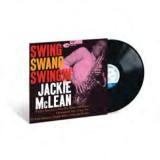
Altsaxofonist Jackie McLean war 1959 bereits seit fast einem Jahrzehnt eine feste Größe der New Yorker
Jazzszene, als er für Blue Note als Bandleader aufzunehmen begann. Die gesamten 1950er-Jahre hindurch
hatte er sich an der Seite von Bebop-Legenden wie Miles Davis und Charles Mingus seine Sporen verdient.
Sein zweites Blue-Note-Album ”Swing, Swang, Swingin’” hält das schwungvolle Versprechen des Titels
voll und ganz ein. Mit Energie und Spielfreude führt McLean durch ein mitreißendes Programm. Als
einziger Bläser des Quartetts steht sein unverwechselbarer Sound ganz im Mittelpunkt: Sein markanter,
leicht herber Ton und sein ausgeprägtes Gespür für moderne Harmonik verleihen seinen leidenschaftlichen
Improvisationen eine besondere Strahlkraft. Neben Standards von Irving Berlin, Johnny Mercer oder Cole
Porter präsentiert McLean eine beschwingte Interpretation von Benny Golsons ”Stable Mates”, bevor das
Album mit seiner eigenen Blues-Komposition ”116th and Lenox” seinen Abschluss findet.
expected to be published on 16.10.2026

2024 repress
In February 2021, Jan Jelinek's seminal album "Loop-Finding-Jazz-Records" turned 20. The anniversary repress, a double LP with two bonus tracks (B-sides from the Tendency EP, 2000), is a little late to the party.
What the press said about Loop-Finding-Jazz-Records:
“Don’t be misled by the title, though for there isn’t a finger-snapping rhythm c bebop lead anywhere on the album. Instead, Jelinek chooses to explore the visual effect moiré - two shifting patterns creating an implied third dimension - in the audio realm.” (Alternative Press)
“The title acts as explanation for the studio technique that provided the basis for this album, snippets of other people’s arrangements deconstructed through a sampler into loops and then splashed onto an audio canvas.” (ATM)
“Jelinek’s sound evolved out of his dislike for (and inability to play) keyboards.” (RPM)
“Jelinek has abstracted his sources beyond recognition, looping his millisecond samples into flickering patterns of sonic moiré laid atop a dub Techno framework. (...) Jelinek might as well have sampled a horn player’s hissing intake of breath – it would have been ‘jazz’ enough for his purposes.“ (The Wire)
“It’s a perfect inversion of conventional music, a sonic negative. Everything that would typically be foreground is moved back or pushed off the screen altogether, and the flecks of sonic debris that would normally be covered by other sounds are left to carry the melody and rhythm.” (Pitchfork)
“All you need to know is that these onomatopoeic non-specific songs (...) are warm, paradisical creations”. (NME)
“Listen carefully and you’ll hear textures slowly unfolding and mutating. Presuming you’ve not fallen asleep of course.” (iDJ)
“At times, it’s all a bit dripping tap Japanese water torture; so sedentary it drowns in its own motionlessness” (DJ)
“Loop Finding Jazz Records' is a genuine modern classic whose re-release is anything but a cynical mortgage repayment exercise. Consider this a second chance, then pretend you had it all along.” (Boomkat)
PS:
“I’ve been fortunate enough to see Jan Jelinek live once, at Tonic NYC (...). Wearing a black and white striped shirt, he looked like a nihilistic Charlie Brown.” (beachsloth)
On Stock and ready to ship

On Stock and ready to ship

360 mcn white-white light cardboard paper / one side only hand plasticization / 2 separated parts prints / hand gluing / PVC outers / original artwork / gatefold sleeve / Bandcamp limited edition 30x60 cm insert with extended liner notes by Tony Higgins and Interview with Babs Robert and Sébastien Gorlé with exclusive pictures and self-portrait by Babs Robert himself printed on GF Smith "Takeo Tant Select" Canvas Paper tip-on left jacket panel / Exclusive never released Memorabilia from Babs Robert's vault.
Personnel:
Babs Robert - alt sax, tenor-sax, electric tenor-sax, Bin Recorder, Acme siren, Chinese-bell, sleigh-bells, maracas, tambourine,hand-rattle,claves)
John Van Rymenant - baritone-sax, fluegelhorn, Bala, tambourine, sleight-bells, cowbell, triangle, claves
Johnny Peret - vibes, bongo's, cowbell, maracas, castanets, rattle-snakes, tambourine, drums, woodclock, trinagle
Johnny Brouwers - piano, prepared-piano, triangle, cowbell, sleigh-bells, maracas, caves,hand-rattle, guiro, woodblock, tambourine
Paul Dubois - bass, triangle, cowbell, claves, rattlesnakes, hand-rattle, woodblock, tambourine
Michel Gobbe - bass,Chinese-bell, claves
Robert Pernet - drum, tambourine, seven-notes M'Bichi, guiro, alarm-siren, home-made metal xylophone, African telephone-drum, triangle, sleigh-bells, Siku
Notes:
Despite its modest role on the world stage, Belgium has produced a number of internationally renowned musicians and composers. There is the iconic gypsy jazz guitar maestro Django Reinhardt, whose position remains unassailable, and guitarist/harmonica player Toots Thielemans, who became an internationally renowned artist performing and recording with Bill Evans, Oscar Peterson, Ella Fitzgerald, Peggy Lee, Shirley Horn and Quincy Jones. The other key Belgian figure is composer/arranger Francy Boland, co-leader with US bebop drumming legend Kenny Clarke of Europe's leading big band of the 60s, the Clarke-Boland Big Band.
The Love Planet performed in the main clubs of Brussels, such as Blue Note, Pol's Jazz Place, and Smog as well as in major musical events throughout Belgium including to big festivals in 1969 - the Avant-Garde Festival in Ghent and the First International Jazz Event in Liege – where the Love Planet shared the bill with Miles Davis - and the Bilzen Jazz Festival in 1970. The contrast between the musical architecture of the themes and sonic freedom in the improvised playing perfectly illustrated the polymorphism – an order within disorder – which the Love Planet aimed for.
The initial original quartet line-up was Babs Robert (sax), Paul Dubois (bass), Johnny Brouwers (piano), and Johnny Peret / Robert Pernet (dru- ms). On the album session, the quartet was augmented with the addition of John Van Rjimenant (saxes) and Michel Gobbe (bass). As well as their main instruments, the band members also played an array of unusual instruments, principally percussion. This is the first official re-release
of the 'Babs Robert and the Love Planet'. Original copies of the album fetch many hundreds of Euros on the collecting circuit and it remains a curious and fascinating window into a moment in time that still resona- tes some fifty years later. Come with us to the Love Planet. (Tony Higgins)
On Stock and ready to ship

Vol.8 PT2[26,01 €]
Vol.9[22,14 €]
Vol.1[23,49 €]
Vol.13 PT2[23,40 €]
Vol.13 PT1[23,49 €]
Vol.15[26,47 €]
Since 2008 our Spiritual Jazz series has presented unlimited horizons. Each album celebrates the rich tradition of African-American songs based on the belief in a higher force than oneself and has also focused on geographical areas, such as Europe or Japan, thus recognizing that these territories have immense cultural riches. Religions, like Islam, whose musical traditions have vivid Arabic and North African resonances, have also been highlighted. The stylistic range of all the above is wide.
Yet historic record labels, from Blue Note and Impulse! to Prestige and Steeplechase, have also featured because their catalogues are musical treasure troves that could not be more relevant to Spiritual Jazz, even though they issued vast amounts of music between the late '30s and present day, that have not been confined to any one school.
Spiritual Jazz 16 is a focus on Riverside and its associated sister labels. Riverside itself was founded in 1953 by Orrin Keepnews and Bill Grauer, and became an important purveyor in that decade and beyond of what would be marketed as of modern jazz. That coinage was itself an amorphous, umbrella term that essentially created a demarcation from the vocabulary of pre-war classic jazz and inter-war big band swing, thus recognizing that improvising artists were breaking new creative ground that would subsequently give rise to a flurry of sub-genres, for example bebop, hard bop, cool, modal and Latin jazz. And it's from this multiplicity of sub-genres that we choose the deepest, most vibrant selections that the vast, pan-generational catalogue of Keepnews & Grauer has to offer
On Stock and ready to ship

Back in the day, French pianist, composer and all-round jazz superstar Jean-François Quiévreux, a.k.a. Jef Gilson, was up there alongside the likes of peers John Coltrane, Oscar Peterson, and Sun Ra. In a fitting homage to the decades worth of sublime music, and his sad passing away in 2012, French quarter Palm Unit have released a lively, honest tribute, upbeat and contemporary re-interpretative vision of his legacy.
.
Gilson has been noted for changing the face of bebop with free-jazz and afro. Along the way his big band featured the likes of Lloyd Miler, Bill Coleman, Michel Portal, and others. With his own recording studio and label Palm Records, Gilson released music from greats including Byard Lancaster, David S. Ware, François Jeanneau, and more. He also helped embed a more entho style to the world of jazz, inspired by his visits to Madagascar, which resulted in the famous Malagasy jazz albums.
Palm Unit are a wildly eclectic super-group of jazz greats includes uKanDanZ's saxophonist Lionel Martin, keyboardist Fred Escoffier from Le Sacre du Tympan, drummer Philippe 'Pipon' Garcia whose mostly known from his worth with the Erik Truffaz Quartet, and special guest Del Rabenja -- who played alongside Gilson in Malagasy -- on the Magascan valiha harp. Palm Unit plays Gilson's repertoire without any a priori, in a totally complex-free manner, reinventing it whilst preserving its original essence. The keyboards sound almost psychedelic (and often not that far from the style of Eddy Louiss on Jef Gilson's 60's albums), the sax scratches, mews and wails, whilst the drums make the whole thing swing. Even Del Rabenja was surprised to rediscover the songs still sounding so modern, decades after they were created.
On Stock and ready to ship

Honey Soundsystem releases 'Cosmologist', the latest offering from our Resident DJ: Robert Yang aka Bézier. A multi-instrumentalist, Robert was trained in saxophone starting at age 10, before moving onto a Fender Telecaster after high school. After being exposed to Southern California rave culture in the late 90s, he moved onto DJing and collecting records. By the time he planted his roots in San Francisco in 2005, Robert had built an impressive analog synth-based studio, which also serves as the creative hub for his riveting live performances.
'Cosmologist' explores Robert's personal universe with three tracks that connect his varied musical lineages. "Cosmos", a celebration of the late 80s/early 90s KIIS FM universe, is built around an infectious freestyle hook that morphs into a seven minute tour of intersecting styles. "Ether" begins as gothic night-driving electro, but breaks into fantasy-scapes inspired by Italo and 1980s Japanese anime theme songs. The final track, "d. Quelle", clocks in at over 11 minutes, incorporating bebop jazz solos drawn from his early exposure to improvisation techniques by Charlie Parker, Cannonball Adderley, and Stan Getz. All songs have been mixed by Mark Pistel (Meat Beat Manifesto, Consolidated) at Room 5, San Francisco and EQed for vinyl by George Horn at Fantasy Studios.
On Stock and ready to ship

140 gramms black vinyl edition
“Origen: Una Exploración por el Jazz Modal de los Trópicos” is a celebration of the human bonds that transcend cultural differences to create a shared language beneath the same sky. Asia, the Middle East, Africa, Europe, and the Americas are the protagonists of this sonic diaspora, where Modal Jazz, Spiritual Jazz, Egyptian Jazz, Ethiopian Jazz, Cape Verdean Kriolu, Brazilian Jazz, Latin Jazz, Caribbean Rhythms, and Flamenco Jazz come together, among many other influences, to shape a journey toward healing and a reconnection with our shared origin.
Credits
Anthonius — Composition, piano, keyboards, arrangements, production, and mixing.
Edu Pons — Saxophones, clarinets, and flutes.
Joana Morais — Vocals (B1).
Situasound — Vocals and guitar (A2).
This item has not yet been released. You can pre-order the product now.
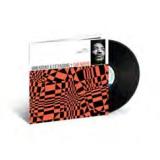
Der außergewöhnlich originelle Saxofonist, Flötist und Komponist Sam Rivers war in Oklahoma mit Gospelmusik aufgewachsen. Über den Blues fand er in den 1940er Jahren zum Bebop, bevor er sich, inspiriert
durch die Musik von Ornette Coleman, John Coltrane und Cecil Taylor, der Avantgarde zuwandte. Zwischen 1964 und 1967 spielte Rivers vier Alben für Blue Note ein, auf denen er seinen Ideenreichtum als
Instrumentalist und Komponist unter Beweis stellte. Das letzte und zugleich experimentierfreudigste dieser
Alben war “Dimensions & Extensions”, auf dem der Trompeter Donald Byrd als Gast einen seiner seltenen
Ausflüge in die Avantgarde unternahm. Obwohl das Album bereits 1967 mit einem von Reid Miles entworfenen, auffälligen Cover für die Veröffentlichung vorbereitet worden war, wurde es, da die Musik ihrer Zeit
zu weit voraus war, auf Eis gelegt und erschien erstmals 1986.
expected to be published on 04.09.2026

Der frischgebackene High-School-Abgänger Sonny Rollins war noch keine 19 Jahre alt, als er 1949 in
New York von Blue Note Records die Chance erhielt, an drei hochkarätigen Aufnahmesessions von Babs
Gonzalez, Bud Powell und Fats Navarro teilzunehmen. Sieben Jahre später kehrte er deutlich gereift zu
dem Label zurück, um vier großartige Alben als Bandleader aufzunehmen: “Sonny Rollins, Volume 1”,
“Sonny Rollins, Vol. 2”, “Newk’s Time” und “A Night at the ‘Village Vanguard’”. Auf “Sonny Rollins,
Vol. 2” präsentierte er sich mit einem erstklassig besetzten Quintett und einem temperamentvollen Set aus
teils selbst komponierten Bebop- und Hard-Bop-Nummern. Die Höhepunkte des Albums sind die unwiderstehlichen Versionen der beiden Thelonious-Monk-Klassiker “Misterioso” und “Reflections”, bei denen sich
der Komponist als Gast am Klavier zu den Mitwirkenden gesellte.
expected to be published on 04.09.2026

Originally released in 1989 as an early milestone for the label, this landmark session teams the legendary alto saxophonist - then at the absolute peak of his powers at age 57 - with the incomparable Tommy Flanagan Trio . A titan of the genre for over 60 years, Woods masterfully combined a lush, beautiful tone with a complete command of the bebop vocabulary. Backed by veteran pianist Tommy Flanagan, former Oscar Peterson Trio bassist George Mraz, and a young, up-and-coming Kenny Washington on drums, the quartet delivers a timeless set of acoustic jazz that sounds as vital and vibrant today as it did nearly four decades ago.
expected to be published on 14.08.2026

Obwohl Shelly Manne (1920-1984) oft auf seine Rolle in der West-Coast-Jazzszene reduziert wird, war
er tatsächlich einer der vielseitigsten amerikanischen Schlagzeuger. In seiner Karriere arbeitete er mit nahezu allen Größen des Jazz unterschiedlichster Stilrichtungen von Swing über Bebop bis hin zur Avantgarde
zusammen und war sogar auf Alben von Tom Waits und Frank Zappa zu hören. Etwas von dieser Flexibilität
zeigt er auch auf dem 1962 aufgenommenen Album “2-3-4”, das seinen Titel der Tatsache verdankt, dass
Manne sich hier im Duo, Trio und Quartett präsentiert. Dabei kommt es unter anderem zu einer Reunion
mit zwei Musikern, mit denen er zu Beginn seiner Karriere in den 1940er Jahren in New York zusammengespielt hatte: dem Tenorsaxofonisten Coleman Hawkins und dem Pianisten Hank Jones. Neben fantasievoll
interpretierten bekannten Standards präsentieren die Musiker auch zwei lakonisch betitelte Originale: “The
Sick of Us” und “Me and Some Drums”.
expected to be published on 24.07.2026

Following the success of his project DFRA Experience Jazz Band – Jazz In, Argentinian deep house maestro DFRA returns to Groovin Recordings for his highly anticipated second 12" vinyl release, "All About You EP".
While his first Groovin record heavily merged live modal jazz and bebop structures with electronic music, All About You sees DFRA shifting focus directly back to the late-night dancefloor. Dropping just in time for the July summer heat, this four-track EP delivers a masterclass in clean, sophisticated deep house.
Across both sides, the Buenos Aires producer effortlessly pairs crisp percussion with warm, hypnotic basslines and soulful chord progressions. From the smooth, vocal-tinted groove of the title track to the late-night atmosphere of the B-side cuts, this record perfectly balances a timeless, classic edge with modern production weight.
Order now and we will order the item for you at our supplier.

Mit seiner Band Ubiquity (was so viel wie “Allgegenwärtigkeit” bedeutet) schlug der amerikanische Vibrafonist Roy Ayers Anfang der 1970er Jahre ein neues musikalisches Kapitel in seiner Karriere auf. “He’s
Coming” war 1972 bereits das dritte Album, auf dem der ehemalige Bebopper mit seiner Band ein unwiderstehliches Gebräu aus jazzigen Improvisationen, Funk-Rhythmen, Soul-Harmonien und spiritueller Tiefe bot.
Dieser Sound sollte Ayers Werk während des gesamten Jahrzehnts prägen und ihn später zu einer Inspirationsquelle für Soul-, Funk-, Hip-Hop- und Neo-Soul-Künstler machen.
expected to be published on 10.07.2026
Born in Philadelphia in 1943, Barron's journey through the jazz world reads like a tour of its greatest innovators: early work with James Moody, Roy Haynes, and a formative tenure in Dizzy Gillespie's quintet set the stage for a career defined by sophistication, depth, and unmistakable melodic clarity.
Through the 1960s and '70s, Barron became a sought-after collaborator, performing with Freddie Hubbard, Jimmy Owens, Yusef Lateef, Milt Jackson, Jimmy Heath, and Stan Getz. His role in the celebrated ensemble Sphere, alongside Buster Williams, Ben Riley, and Charlie Rouse, further cemented his reputation as a musician equally rooted in bebop tradition and forward-looking modernism.
expected to be published on 03.07.2026

This third album by Ryo Fukui arrived a full 17 years after Mellow Dream, marking his first and only solo piano recording. Alongside signature pieces like “Scenery” and “Mellow Dream”, the album includes “Voyage” and “Nord”, both written during a trip toward the northern regions, as well as “Nobody’s”, a piece imbued with Fukui’s deep respect for his mentor Barry Harris. The selection is nothing short of a delight for fans.
Here, the depth and weight Fukui cultivated as a bebop pianist blend seamlessly with the profound “Hokkaido sensibility” that had always resided within him. It is a masterpiece that truly deserves to be passed down through time.
expected to be published on 26.06.2026

Ryo Fukui, who passed away in 2016 after releasing only five albums, recorded this fourth work in 1999. Featuring bassist Lyle Atkinson and drummer Leroy Williams—the longtime rhythm section of Barry Harris this New York-recorded album captures the full appeal of Fukui as a bebop pianist. Centered around standards, the track selection, structure, and of course the performances all radiate intent and vitality. His assured and weighty touch, the firm yet elastic swing, and the emotion and lyricism that permeate his dynamic phrasing everything here conveys Fukui’s breath, will, and presence in vivid form. The re-performance of his signature piece “Mellow Dream” is also a welcome highlight.
expected to be published on 26.06.2026
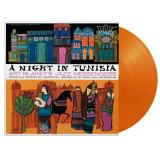
Art Blakey is one of the inventors of the modern bebop style of drumming. Known as a powerful musician and a vital groover his brand of bluesy, funky hard bop was and continues to be profoundly influential on mainstream jazz. For more than 30 years, his band Art Blakey & The Jazz Messengers included many young musicians who went on to become prominent names in jazz.
Released in the late fifties, A Night In Tunisia is a jazz milestone and prime example of Blakey's exceptional rhythmic prowess. This album is not all about drumming though; it leaves much space for great melodical interplay by fellow musicians Sam Dockery on piano, John Griffin and Ferris Benda on saxophone, Bill Hardman on trumpet and Jimmy De Brest on double bass.
A Night In Tunisia is available as a limited edition of 1500 individually numbered copies on orange vinyl, and is packaged in a deluxe sleeve with linen laminate finish.
The small print:
• Due to rights restrictions, this item is only available in the MOV store to European customers.
expected to be published on 12.06.2026

Considered the most accomplished modern jazz harpist, Dorothy Ashby (1932-1986) established the harp as an improvising jazz instrument, beyond earlier use as a novelty or background orchestral instrument. She proved the harp could play bebop as adeptly as the instruments commonly associated with jazz. Presented here is one of her best albums, Dorothy Ashby Plays for Beautiful People (Prestige PR7639 - also issued as In a Minor Groove), a 1958 quartet session featuring venerable players Frank Wess, Herman Wright, and Roy Haynes.
expected to be published on 22.05.2026

expected to be published on 01.05.2026

In seiner Besprechung von Mark Turners letztem Quartettalbum für ECM, Return From The Stars (2022),
bezeichnete Peter Rüedi in der Weltwoche das Programm als „die denkbar schlankste, konzentrierteste
und inspirierteste improvisierte Kammermusik.“ Eine treffende Beschreibung für die kraftvollen Quartettausarbeitungen des Tenorsaxophonisten, die auf Patternmaster ihre bislang ausgereifteste und zugleich
durchschlagskräftigste Form erreicht zu haben scheinen.
Kompromisslose Improvisation ebenso wie kühle Kontrolle sind die antreibenden Motoren einer Gruppe,
die ihr gemeinsames musikalisches Verständnis über Jahre hinweg auf Tour und im Studio weiterentwickelt
hat. Turner und Jason Palmer entfalten Themen mit weitreichenden harmonischen Implikationen, getragen von Joe Martin am Kontrabass und Jonathan Pinson am Schlagzeug – Musikern, die sich mit den
Bläsern auf melodischer, harmonischer und rhythmischer Ebene mit großer Intensität verzahnen. Den sechs
Originalkompositionen Turners wohnt eine zeitlose Qualität inne, die den Geist der klassischen Bebop-Ära
aufgreift und zugleich in die Zukunft weist.
Patternmaster, 2024 in Südfrankreich aufgenommen, wurde von Manfred Eicher produziert.
expected to be published on 13.03.2026

Aufgenommen am 25. Juni 1962 live im Tsubo, einem Café in Berkeley, Kalifornien, zeigt „Full House“
den legendären Gitarristen Wes Montgomery auf dem Höhepunkt seiner Kreativität, begleitet von einem
beeindruckenden Ensemble mit dem Tenorsaxophonisten Johnny Griffn und dem Wynton Kelly Trio, das
durch seine Zusammenarbeit mit Miles Davis gereift war – dem Pianisten Wynton Kelly, dem Kontrabassisten Paul Chambers und dem Schlagzeuger Jimmy Cobb.
All About Jazz beschrieb das Album später als „einen Vorgeschmack auf das, was kommen und viel zu früh
verloren gehen sollte“, und die Darbietung wird diesem Versprechen gerecht. Was den Umfang angeht,
ist auf „Full House“ für jeden etwas dabei. Montgomerys lyrische Zurückhaltung kommt in „I’ve Grown
Accustomed to Her Face“ zum Tragen, während der mitreißende Bebop von „Blue ’N’ Boogie“ und der
lateinamerikanisch angehauchte Groove von „Cariba“ die ganze Bandbreite des dynamischen Zusammenspiels der Gruppe offenbaren. Untermalt von einem begeisterten Live-Publikum bleibt „Full House“ eine
der zugänglichsten und mitreißendsten Aufnahmen Montgomerys.
Diese Neuauflage des Albums erscheint als Teil der Original Jazz Classics Series auf 180-Gramm-Vinyl,
gepresst bei RTI, mit vollständig analogem Mastering von den Originalbändern bei Cohearent Audio und
einer Tip-On-Hülle, die das Original-Artwork originalgetreu nachbildet.
expected to be published on 27.02.2026

J. J. Johnson gilt als der erste Musiker, dem es gelang, die Sprache des Bebop auf der Posaune zu artikulieren. Nachdem er 1952 an der ersten Blue-Note-Session von Miles Davis mitgewirkt hatte, aus der
das Album “Young Man with a Horn” hervorging, ermöglichte der Produzent Alfred Lion dem Posaunisten,
zwischen 1953 und 1955 mit anderen Größen des Bebop eine Reihe von Aufnahmesessions unter eigenem
Namen zu machen. Diese erschienen 1956 auf den beiden 12-inch-Compilations “The Eminent Jay Jay
Johnson, Vol. 1” und “The Eminent Jay Jay Johnson, Vol. 2”. Letztere enthält laut AllMusic “einige der
besten Bebop-Aufnahmen jener Zeit”
expected to be published on 20.02.2026

We Jazz Records kicks off their new series of archival 7" releases with Esa Pethman "In Belgium 1967" released 23 September 2022. The two-tracker is licensed from the Belgian VRT radio archives and both of the pieces are previously unreleased. Finnish jazz legend Pethman, heard here on alto flute and tenor sax, joins forces with European jazz greats such as Heinz Bigler, Uffe Karskov and Jean Fanis. This is a small but valuable piece of unheard European jazz history from the early heyday of modern jazz. The physical release is a quality "inside-out"-styled EP with 3mm spine and small center hole on the 45rpm vinyl.
An excerpt from the liner notes by Mikko Mattlar:
"Esa Pethman (b. 1938) was one of the key figures of modern Finnish jazz in the 1960s. His album The Modern Sound Of Finland was the first Finnish modern jazz album and his composition "The Flame" a true modern Fenno-jazz evergreen.
Pethman was born in Kuusankoski, 135 kilometres from Helsinki in the Kymenlaakso area. The jazz scene was active even though it was an area of rural landscapes and paper mills. Pethman discovered jazz when he heard a Charlie Parker record being played at a local music shop in the late 1940s. Following Parker, bebop became his favourite style of jazz.
Young Pethman played flute and saxophone in local bands who accompanied schlager singers. They played tangos and waltzes for dancers, but usually started a typical dance event with an hour of jazz. In 1959 Pethman moved to Helsinki to study music at the Sibelius Academy. Back then it was a strictly classical music academy, but Pethman later described the studies as crucial for his development and career. He quickly made his way to studio sessions and into the best orchestras in Helsinki.
As a student of composition, Pethman also began writing his own music. "The Flame" was a melody he just got on his mind one night, and he decided to write it down. The catchy composition was released as a 7" single in 1964, a year before Pethman's debut album. Both records stand as benchmarks for modern Finnish jazz. The album consisted entirely of Pethman's compositions, not versions of jazz standards like a lot of the Finnish jazz released until then.
In the mid 1960s, Finnish jazz was also taking its first international steps. Pethman's quintet took part in the first Montreux Jazz Festival in Switzerland in June 1967. At the Montreux jazz band competition, the quintet came in fourth of the twelve contestants. Despite not winning the competition, the band got an honourable mention, and Pethman was now recognized outside Finland.
In December 1967 Pethman travelled to Brussels. His visit was organised by the national Finnish broadcasting company Yleisradio and their jazz program producer Matti Konttinen. Konttinen was supposed to go to Brussels with Pethman, but the musician ended up traveling alone.
In the Decca recording studios Pethman played two songs. He recorded a version of his most famous composition "The Flame", where he played the alto flute and was accompanied by Belgian musicians. On Swiss saxophonist Heinz Bigler's composition "Like Steel", Pethman played the tenor saxophone. The band was now more international, consisting of Bigler, the Italian Francesco Santucci, the Dane Uffe Karskov, a Belgian rhythm section and Pethman. After 55 years, Pethman still remembers Bigler's remarkable skills as a saxophonist.
The two-day visit included the recording session, a dinner and a concert. Pethman and the other non-Belgian musicians came to Brussels mainly to play at a jazz concert organised by the European Broadcasting Union EBU. They played at the studio first, and the concert was held the following day. Pethman and all the other soloists played as members of an international big band. The studio and live session were produced by the Belgian Radio and Television jazz section leader Elias Gistelinck."
Order now and we will order the item for you at our supplier.

Coming of age at the dawn of the bebop era, Art Farmer rejected the mechanical playing that much of bebop seemed to encourage. Instead, Farmer became known for his warm, fluid tone, and his ability to make the trumpet sing like a tender yet stately baritone voice. On Modern Art (his last small group collaboration with Bill Evans, with whom he had first recorded in 1956), Art Farmer emphasises style over technique. The group swings with both authority and subtlety on all eight tracks, making this album one of the best records of this period.
expected to be published on 30.01.2026

Vinyl gatefold jacket includes a 12x12 insert reproduction of the original LP jacket art.Recorded in 1956 and released in 1957, Supersonic Jazz is arguably the first long-playing album by Sun Ra and His Arkestra on his Saturn label. However, it was not recorded as a debut. Rather, the album was assembled from tapes recorded during a number of sessions at two Chicago studios (RCA Victor and Balkan), and several tracks had been released as singles before their inclusion on this album. (Sunny's first fully realized commercial album was 1957's Jazz by Sun Ra, produced by Tom Wilson on his short lived/soon to be defunct Transition label.) Prior to these sessions, Sunny was still arranging for the Red Saunders Orchestra and singer Joe Williams, in addition to arranging for and coaching doo-wop ensembles. As Sunny's ambitions achieved liftoff, the Arkestra coalesced, began building a repertoire (mostly of Ra's originals), and making forays into studios. Deciding it was time for commercial releases, Sunny and business partner Alton Abraham launched Saturn (sometimes called El Saturn) as a record company in 1956. As a first offering, Supersonic Jazz is a pinnacle Sun Ra release. While reflecting many prevailing bebop, Latin, and R&B conventions of the mid-1950s, it's evident that Sun Ra's musical voice and vision were starting to propel him away from the jazz mainstream. Biographer John Szwed finds on these recordings "characteristics which seemed alien to swing, bebop, or the new, more soulful and hard-edged music which was coming to be called hard bop."
expected to be published on 19.12.2025

Coleman Hawkins war nicht nur der erste große Tenorsaxofonist, der sich in der Swing-Ära als Improvisator
profilierte, sondern trug später auch seinen Teil zur Entwicklung des Bebop bei. Im Gegensatz zu vielen
seiner Zeitgenossen blieb er nicht in der Zeit stehen, sondern entwickelte sich ständig weiter. Das 1958
erschienene Album zeigt ihn in munter swingendem Austausch mit durchweg prominenten Mitstreitern.
expected to be published on 21.11.2025

Als Pianist im legendären Quintett von Charlie Parker, in dem auch Miles Davis mitwirkte, stand Duke
Jordan 1947/48 an vorderster Front der Bebop-Revolution. Sein einziges Album für Blue Note, “Flight To
Jordan”, spielte der aus Brooklyn stammende Pianist 1960 mit einem klassischen Hard-Bop-Quintett ein.
Scott Yanow gab dem Album in seiner AllMusic-Rezension die Höchstwertung von fünf Sternen und stellte
fest: „Die Musik hat viele starke Melodien und ist abwechslungsreich. Dies ist eine von Duke Jordans
besseren Aufnahmen und sehr unterhaltsam.”
expected to be published on 07.11.2025

Vinyl + Book[48,32 €]
The songs of Louisiana's Francophone and Creole heritage have flowed through the bayous for centuries, shaped by African, Native American, French, and Caribbean influences. Combining a vinyl record and a bilingual book, Pasé Bél Tan: Francophonies and Creolities in Louisiana celebrates this cultural legacy. It pairs historical recordings with contemporary reflections, inviting artists and scholars to explore this ever-evolving soundscape. Bridging a vibrant present with a painful past, it creates a space for dialogue around identity, memory, and the ongoing transformation of Louisiana’s musical traditions.
The double vinyl compilation and its OBI strip features a staggering 34 songs, ranging from French ballads and Creole renditions to zydeco hooks and reinterpretations by a wide array of contemporary artists such as Madteo, Tanz Mein Herz, Radio Hito, Cyril Cyril, and Deafkids, among others. With archival recordings and contemporary creations side by side, it serves as a bridge across the vast bayou of Louisiana music.
The book is a 272-page bilingual (French/English) publication that seeks to encapsulate the far-reaching implications of Louisiana’s musical heritage within both Louisianan and American society. It explores how this culture has shaped—and been shaped by—its surroundings. With contributions from many key figures of the scene—musicians, researchers, club owners, and other vital witnesses—it aims to present the intricate and singular relationship that exists between Louisiana and its music.
The book only is not available through distribution but only as a bundle with the 2LP version.
expected to be published on 19.09.2025

Vinyl[28,15 €]
The songs of Louisiana's Francophone and Creole heritage have flowed through the bayous for centuries, shaped by African, Native American, French, and Caribbean influences. Combining a vinyl record and a bilingual book, Pasé Bél Tan: Francophonies and Creolities in Louisiana celebrates this cultural legacy. It pairs historical recordings with contemporary reflections, inviting artists and scholars to explore this ever-evolving soundscape. Bridging a vibrant present with a painful past, it creates a space for dialogue around identity, memory, and the ongoing transformation of Louisiana’s musical traditions.
The double vinyl compilation and its OBI strip features a staggering 34 songs, ranging from French ballads and Creole renditions to zydeco hooks and reinterpretations by a wide array of contemporary artists such as Madteo, Tanz Mein Herz, Radio Hito, Cyril Cyril, and Deafkids, among others. With archival recordings and contemporary creations side by side, it serves as a bridge across the vast bayou of Louisiana music.
The book is a 272-page bilingual (French/English) publication that seeks to encapsulate the far-reaching implications of Louisiana’s musical heritage within both Louisianan and American society. It explores how this culture has shaped—and been shaped by—its surroundings. With contributions from many key figures of the scene—musicians, researchers, club owners, and other vital witnesses—it aims to present the intricate and singular relationship that exists between Louisiana and its music.
The book only is not available through distribution but only as a bundle with the 2LP version.
expected to be published on 19.09.2025

'Bird and Diz' is the legendary collaboration between two jazz giants: saxophonist Charlie Parker (nicknamed "Bird") and trumpeter Dizzy Gillespie (often referred to as "Diz") key figures in the development of bebop. Their partnership was pivotal in shaping the sound and direction of bebop and their recordings together are considered some of the most influential in jazz history.
This set contains the complete original LP 'Bird and Diz' (Verve MGV-8006), consisting of a quintet session which marked Parker and Gillespie's last studio date ever (although they would later be recorded together live on numerous occasions, including the celebrated 1953 Massey Hall concert). This session was also Parker's only studio encounter with the great Thelonious Monk. Side B features nine alternate takes from the session.
Overall, the partnership between Charlie Parker and Dizzy Gillespie represents a
golden era in jazz history marked by innovation, collaboration and artistic excellence
and their music continues to inspire and captivate listeners, ensuring that Bird and Diz
will always be remembered as two of the greatest figures in the pantheon of jazz
legends.
expected to be published on 10.07.2025
