“Bandiera Di Carta” represents the ongoing collaboration between instrument builder and composer Pierre Bastien and the
London based experimental duo Tomaga (Valentina Magaletti and Tom Relleen).
Bastien has been called a “mad musical scientist with a celebrity following” by The Guardian (UK) having collaborated with the
likes of filmmaker Pierrick Sorin, fashion designer Issey Miyake, singer and composer Robert Wyatt as well as Aphex Twin,
who released three of his albums on his label Rephlex.
Tomaga have made more than a dozen records since forming in 2014, pursuing a path of fearless experimentation and sonic
brinksmanship that has won them fans and plaudits from far and wide, including Thurston Moore, with whom they collaborated
on the CAN Project with Malcolm Mooney, Deb Goodge and others in 2017, as well as Wire, Silver Apples and Stereolab, with
whom they toured extensively in summer 2019.
The artistic collaboration between Pierre and Tomaga began with two commissions: from Fructose Festival in Dunkirk and the
revered underground festival Supersonic in Birmingham UK. Recording initially at a studio in the industrial port of Dunkirk, the
uneasy bond between borders and states seems to have been a theoretical motor to the collaborative sessions, as well as the
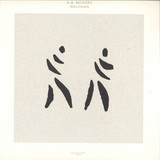
bleak landscape of the seaport frontier. This inspiration found further manifestation in the cover image for ‘Bandiera Di Carta’.
Resembling a white paper flag, it is, in fact, a photograph of Bastien’s paper and air sound machine installed on stage at
Teatro Carignano in Turin as part of the trio’s performance there. This charged, ambivalent image of a blank flag evokes the
transcendence of the national, a prescient visual motif that meditates on the contemporary uncertainty around notions of
national identity and borders but perhaps also a ‘carte blanche’ for the artists involved, in which they can deviate from the
confines of their usual practice into new and strange territories.
For each piece, Bastien’s unique sonic style: by turns his kinetic mechanoid motors, capriciously arrhythmic pipes, or the
peculiar susurrus of paper, creates a world in which Tomaga introduce their musical palette. Magaletti’s percussion anchors
these sometimes chaotic forces into beguiling syncopations, with Relleen’s synthesizer and organ work creating harmonic
counterpoints and interruptive provocations, to which Bastien responds with lyrical turns on prepared trumpet, rubber band, tin
foil and bass ocarina.
The results are curiously evocative of free jazz by the likes of Sun Ra or Art Ensemble of Chicago paired with the percussive
sound worlds of artists like Francis Bebey or Muslimgauze along with unique and sometimes bizarrely exotic tonal landscapes
of composers like Catherine Christer Hennix, Carl Stone, or Egisto Macchi. All three musicians seem to find space to bloom in
ways that are markedly different from their individual work and the resulting album is a strikingly original and powerfully bold
affirmation of what can happen when venturing beyond the normal in pursuit of the other.All tracks written & produced by Tomaga (Tom Relleen & Valentina Magaletti) & Pierre Bastien.
Mixed and mastered by Rashad Becker.
Cerca:becker
Cromby returns to UTTU with 2 blissed out classic house tracks.
DJ Support
Skatebård - “will play!” 4/5
Amy Becker - 5/5 "Fire"
Anja Schneider - “Both tracks are great !!!!! Great work as usual. Cant wait to play. Big Hug” 5/5
Catz 'n Dogz - “this is proper music” 5/5
Kornél Kovács - “:)” 5/5
Reviews
Resident Advisor - "Acid licks and big basslines to sends clubs into meltdown."
New release by Elizabethan Collar. This is their first new release since the intial Elizabthan Collar cassettes released with Aught ( /\\01 in 2014 and /\\10 in 2015 ), and also their frist new release outiside of Aught. All tracks were recorded between 2012 - 2015.
Mastered By Rashad Becker at Dub Plates and Mastering - Art work by Israel Lund
Charlemagne Palestine's majestic 1976 work The Golden Mean, originally performed by Palestine on two pianos, is revisited here as The Goldennn Meeenn + Sheeenn, a new collaboration between Palestine and enigmatic musician Rrose.
March 2018: the Festival Variations in Nantes commissions Charlemagne Palestine to reinvent The Golden Mean for two pianists. Palestine chose Rrose to join him in this new rendition of the work. Together, they performed The Goldennn Meeenn + Sheeenn onstage at the main opera house in Nantes -- the sumptuous Théâtre Graslin – with extraordinary results.
The concept of the 'golden mean' goes back to the roots of mathematics, and ancient Greek philosophy. It is an important work in the Palestine mythos, embodying his total immersion in the power of the interval. "It's probably his most systematic work . . . a step-by-step journey through the intervals of the octave," says Rrose. "When we rehearsed it, we were noticing how each interval is like a universe of its own -- with its own history, emotions, and sonic qualities all mixed up together. Every time you move from one interval to the next, it feels like moving into another world."
"I love the interval," Palestine told me in a recent interview. "I love when it plays with itself. That's what I learned from organ musics too. You can just do an interval, and if they're just slightly out of tune with each other, then they shimmer . . . they play themselves. And it sounds like somebody's playing lots of notes. In your ear, it's like an aural phenomenon . . . that's my whole concept. I make something that then does itself somehow. It continues by itself. So I don't have to always be there. And that makes my music a little less egocentric. So there's more space. Also for the listener — the ear plays with these things, and you're not always being given orders. Your ear isn't given orders all the time of what to listen for."
Beautifully recorded, with mastering by Rashad Becker of Dubplates and Mastering, The Golden Mean + Sheeenn feels expansive, radiant and hypnotic, opening new ears to its enduring mystery.
Rrose adds this note to listeners: "Do not focus your attention on the notes being played, but on the ocean of overtones swimming, suspended, overhead, brushing against one another, kissing one another, melting into one another."
Cut by Rashad Becker at Dubplates & Mastering, Berlin, November 2018
Mastering: Mathias Durand
Translations: Valérie Vivancos
Layout: Stephen O'Malley
Photos: Stéphane Ouzounoff, Bernard Bruges-Renard
Coordination GRM: François Bonnet
Executive Production: Peter Rehberg
SIDE A
Contrée (2013), 20'
SIDE B
Allégeance volatile (2002), 8'46
Esquive (2010), 10'10
The mastering of these tracks was done by Mathias Durand at François Lê Xuân's Studio 101, in Paris. I would like to warmly thank him for this.
Allégeance volatile and Esquive each tackle the same issue in their own way. Overcoming time: whether it be successive, additional, enumerative, or repetitive. However, there is nothing here about the ensuing nature of so-called "repetitive" music. These are types of high-end music. And it is more about insistence, the obstinacy of an individual who keeps knocking on a door that will never open.
Allégeance's rustic drumming, talkative, acidulous, colourful and overarticulated, with almost clownish desinences, eventually dies out in this very respite. The iterative and puffy shimmering of Esquive with its dull, thin and precise sounds, shifts and is engulfed into another sonic world — which appears as a gaping and collapsed response to this prime insistency.
This is, indeed, a 'volatile allegiance' and 'avoidance' from the sonic to the musical elements: the musical phenomenon anticipated and pursued as the non-sound of sound — or, in other words, the void of sound. This seems to be the lesson of the concrete attitude in music. Such is the kind of questioning that stirs the composer.
He returns with another title: Contrée, which, once again, speaks of a counter-event. Here, the movement is broader, more generous, more confident. Time spreads and stretches out. What seems to be a landscape of entanglements, trajectories, influx, masses and points emerges. "Something" rises and presents itself out of the sounds - these escaping beings, these "relatively short combustion flames " (Schaeffer).
The piece consists of five consecutive and uninterrupted parts: Entrée and Stance I — Véhémence de l'air and Stance II — Grande Allure. It is the central section of an electroacoustic triptych with Sables (2011) as the first and Nil (2017) as the last.
Cut by Rashad Becker at Dubplates & Mastering, Berlin, November 2018
Digital transfer: Jonathan Fitoussi & Diego Losa
Translations: Valérie Vivancos
Layout: Stephen O'Malley
Photos: Jacques Brissot, ARR
Coordination GRM: François Bonnet
Executive Production: Peter Rehberg
Remerciements: Brunhild Ferrari
SIDE A
Music Promenade (1964-1969), 20'29
Electroacoustic Music
World premiere for the Théâtre de la musique, March 16, 1970
" Hétéro-Concert ""
Permanent version for four stand-alone tape recorders. A series of colliding realistic sounds and sonic images. Whilst walking, a man is struck by the violence of his surroundings. Nature has disappeared in a whirlwind of warfare and industry in the midst of which he encounters a dying folklore and a lost young girl.
The "Installation" version is used to sonify a place in which walkers are free to choose their musical itinerary.
SIDE B
Unheimlich Schön (1971), 15'40
Musique concrète made in 1971 in the studios of the Südwestfunk in Baden-Baden.
Voice: Ilse Mengel.
"How does a young woman breathe when thinking about something else "
To be listened to at a low volume.
InFiné reissues Murcof`s seminal soundtrack for 'La Sangre Iluminada' in red-vinyl Version. The soundtrack produced by Murcof was originally released by Mexican label 'Intolerancia Records". This version by InFiné includes new editing of the original recordings, remastering by Rashad Becker. It features Murcof´s classic rework for Los Angeles Negro´s Como Quisiera Decirte. 'La Sangre Illuminada' is a feature film directed by Ivàn Dueñas in 2009 and inspired by Jose Carlos Becerra's poems. It tells the story of six characters who mutate into new bodies.
Stefan Smith has channeled an elevated reverence for process, texture and synth-extrapolation with the forthcoming release of his self-titled LP on the Sapiens imprint. A relative new-comer to the land of rapid fire releases and dance floor formulae, Smith is deeply steeped in the art of music creation, performance and theory.
As a graduate of Mills College's revered music department, Smith's prosaic understanding of music partially explains his migration to Sapiens, a label headquartered in Paris, France, which, under the direction of techno luminary, Agoria, has been expanding the realm of possibility for what a techno label can become. Collaborating with musicians, visual artists, film directors, shamans and sound designers, the young Sapiens platform releases may include political speeches, radio hits, dance floor tunes, sensorial or cognitive music or a gentle computer
virus'. Smith's LP contribution will definitely fall on the more delicious end of this spectrum, having woven a synth-lovers dream tapestry.
The nine tracks composing the album, Stefan Smith', draw the listener in on a river of oscillators, which push just past the banks of perceptible sound with with flawless production and loving sound treatment. The idea behind the album is very raw and organic. Stefan Smith focuses on atmosphere, mood, tones, and frequencies, rather than melodies. His productions are a response to the subliminal, and about feeling.
This album came together from a natural flow of working with computers and synthesisers, and also from the musical connection fostered Sebastien Devaud (Agoria). His approach to the album's production was to edit as little as possible, keeping the original feeling of chance and temporality intact. We can sense here Smith's intuition as sound designer, a role which has enabled him to work with artist Nicolas Becker and through this association further contribute work to the Philippe Parreno 'Anywhen' exhibition in Tate Modern Turbine Hall. The feedback
generated by studio experimentation gives birth to new ideas for aural shapes and textures. If one were only to lie back and identify the various wave forms, like butterflies and birds flittering through dappled sunlight, in each track's canopy of bountiful synth elements the mind's eye would dance with the steady intervals of Smith's real-time probe of his machinery, however, deep tracts of emotion and effortless grooves won't allow for a purely sensory listen. In the spirit of exploration, enjoy the ride.
PAUL LABRECQUE (SUNBURNED HAND OF THE MAN) and GHAZI BARAKAT (PHAROAH CHROMIUM) present two epic cosmic, dystopian tracks where guitars, synths and traditional instruments blend into an anarchic sound system.
After excessive years in rock bands like THE GOLDEN SHOWERS or his solo project BOY FROM BRAZIL, time had come for the German-Palestinian artist GHAZI BARAKAT to develop a new aesthetic - the birth of his alias PHAROAH CHROMIUM where BARAKAT creates "meta-music for meta-people in a meta-world", or in other words:a mutoid blend of post-krautrock, psychedelism, free jazz, ancient rituals, science fiction and electronics. So far the Berlin based sonic performer released a couple of solo albums on labels like GRAUTAG or TAPEWORM and a triple LP with krautrock legend GÜNTER SCHICKERT. For his latest output he decided to simply use his civilian name BARAKAT, as does PAUL LaBRECQUE (SUNBURNED HAND OF THE MAN) who contributesguitar and synthesizer to the two side-long tracks. "Jajouka Pipe Dream" is a clear reference to the MASTER MUSICIANS OF JAJOUKA, with lots of flutes and percussion, a very rhythmical, ritualistic track, while "Planet R-101" turns out a spacey trip with elements of krautrock and Kosmische Musik / Berliner Schule.
What may sound contradictionary on paper functions perfectly on LP - freeform / free-floating music, absorbing and integrating a wide range of influences and inspirations, sounds and styles - and highly psychedelic!
Credits:
Ghazi Barakat: guembri, moog synthesizer, beats, Rauschpfeife
Paul LaBrecque: guitar, synthesizer
Mastered and cut by Rashad Becker at D&M, Berlin
Artwork + photography: Nicolas Moulin
- A1: If God Were Alive (& He Is) You Could Reach Him By Telephone
- A2: R4T
- A3: Et Tu, Klaatu
- B1: Eenie Meenie Chillie Beenie
- B2: Novena
- B3: Mind Power
- B4: Yellow Yankee
- C1: Want You
- C2: Vocal Variety
- C3: Kokole
- C4: Cincinnati 1830-1850
- D1: Edison's Piano
- D2: The Lecture Of Comrade Stalin At The Extraordinary 8Th Plenary Congress
Paul DeMarinis is a key figure in the history of electronic music since the 1970s. Collaborator with the likes of Robert Ashley, David Behrman, and David Tudor, DeMarinis is a pioneer in the development of gallery sound installation and digital music technologies. Black Truffle is thrilled to announce the release of a double-LP collection, selected in collaboration with the artist, focussing on DeMarinis's exploration of synthesized voice and the digital analysis and manipulation of speech sounds. Drawing together tracks dispersed on compilations along with a number of pieces previously unheard in any form, Songs Without Throats offers a revelatory look into DeMarinis's alternately accessible and uncompromising production between 1978 and 1995. Opening with a mesmerizing piece from 1978 pairing the voice and tamboura playing of Anne Klingensmith with strings of letters spat out by a Speak n' Spell to the accompaniment of the randomised melodic patterns of DeMarinis's homebuilt electronic instrument 'The Pygmy Gamelan', the record then dispenses with the live human voice in favour of its recorded and synthetic doubles. We follow DeMarinis's restless probing of the possibilities of new technologies, from the hacked Speak n' Spell (which gives us the austere 'Et Tu, Klaatu' 1979, another duet with Klingensmith, this time on bowed psaltery, in which the toy's synthetic voice is stretched into an alien song) through to the use of digital audio samples manipulated with home computer technology in the early 1990s (including a remarkable dream-like collage piece that weaves a rare recording of Stalin's voice and bird-like electronic twittering derived from its formant-glides into a rich tapestry of samples reflective of the dictator's musical life). In between we get a rich sampling of DeMarinis's signature work with speech melodies - usually unnoticed melodic inflections that lie within speech patterns - which he analyses and translates into synthesized musical accompaniment. These pieces draw on a wide variety of textual and vocal sources, which range from the hilarious to the menacing ('Cincinatti (1830-1850)' sets a detailed description of butchering techniques, for example) and an equally broad range of musical conceptions, combining elements as seemingly unlikely as Beethoven's Opus 31 pianos sonatas and the sounds of 80s synth pop. The results are an extraordinary combination of the alien and the familiar. As DeMarinis himself characterises his work with vocal synthesis, this is 'a kind of signal that simultaneously carried and obscured meaning and ideation, even as it created a sound world totally alien in esthetic'. Presented in a deluxe gatefold sleeve with archival images and liner notes by Paul DeMarinis. Design by Stephen O'Malley. Mastered and cut by Rashad Becker at D&M, Berlin
- A1: Ohne Titel
- A2: Ländliches Kouzert
- A3: Vier Brüder Auf Der Bank
- A4: Blaue Dominante, Öl Auf Kupfer
- A5: Susanna Im Bade
- A6: Marktfrau Mit Gemüse
- B1: Halbakt Im Gegenlicht
- B2: Aargauische Kleinlandschaft
- B3: Van Der Rande, Massstäblich
- B4: Goffersberg Mit Traktor
- B5: Selbstbildnis Mit Frau Und Söhnen
- B6: Ohne Titel
Black Truffle is excited to announce the release of the first-ever vinyl reissue of Ruedi Häusermann's Galerie Randolph, a masterpiece of solo multi-tracking originally released on CD by Unit Records in 1995. Born in 1948 and residing in the medieval Swiss town of Lenzburg, and virtually unknown outside of the German-speaking world, Häusermann is a multi-instrumentalist and enormously prolific composer who works primarily in the medium of absurdist music-theatre. A virtuoso wind player and free improviser who also composes for traditional classical instrumentation, his work is characterised by subtly surreal humour and the unlikely combination of extended technique and simple, at times almost child-like, melodic ideas. Named after his rehearsal room in Lenzburg, Galerie Randolph uses an enormous array of instruments to craft a work of singular compositional vision. Each of the twelve pieces begins from the same two elements: a woozy, sliding scatter of tones played on a home-made contraption stretching two guitar strings between the top of Häusermann's alto saxophone and an amplified cup, and a series of uneasy block chords sounded on accordion and reeds. On each piece these two elements (whose pitch gradually raises throughout the record) are complemented by entirely different material, all of it played by Häusermann. Ranging from layered flutes to one-finger piano melodies to unintelligible vocals to musique concrete interjections to free jazz saxophone explosions, these additional layers combine with the endlessly returning idée fixe of the foundational elements to create a truly dream-like listening experience, a gently deranged realm in which we lose all sense of linear time. Calling up the most unlikely combinations of possible predecessors - Erik Satie, Gerry Mulligan, and Helmut Lachenmann perhaps -Galerie Randolph ultimately defies comparison. Almost unknown except to a select group of cognoscenti such as Jim O'Rourke, yet destined to become a cult classic, Galerie Randolph is an instance of that most rare thing: music the likes of which you have never heard before.
Presented in a deluxe gatefold sleeve with gorgeous archival images by the composer. Design by Stephen O'Malley. Mastered and cut by Rashad Becker at D&M, Berlin
Key selling points: - Black Truffle is excited to announce the release of the first-ever vinyl reissue of Ruedi Häusermann's Galerie Randolph, a masterpiece of solo multi-tracking originally released in 1995, the album utilises an enormous array of instruments to craft a work of singular compositional vision.
- Calling up the most unlikely combinations of possible predecessors - Erik Satie, Gerry Mulligan, and Helmut Lachenmann perhaps -Galerie Randolph ultimately defies comparison.
- Each of the twelve pieces begins from the same two elements: a woozy, sliding scatter of tones and a series of uneasy block chords sounded on accordion and reeds. On each piece these two elements are complemented by entirely different material, ranging from layered flutes to one-finger piano melodies to unintelligible vocals to musique concrete interjections to free jazz saxophone explosions, these additional layers combine with the endlessly returning idée fixe of the foundational elements to create a truly dream-like listening experience, a gently deranged realm in which we lose all sense of linear time.
- Almost unknown except to a select group of cognoscenti such as Jim O'Rourke, yet destined to become a cult classic, Galerie Randolph is an instance of that most rare thing: music the likes of which you have never heard before.
- Galerie Randolph is presented in a deluxe gatefold sleeve with gorgeous archival images by the composer with design by Stephen O'Malley. Mastered and cut by Rashad Becker at D&M, Berlin
GIULIO ALDINUCCI is an Italian sound artist working in the fields of experimental electroacoustic music, field recording and ambient soundscape. Born 1981 in Siena, his catalogue comprises four solo albums on labels like DRONARIVM (CHIHEI HATAKEYAMA, AIDAN BAKER),TIME RELEASED SOUND or HOME NORMAL plus EPs and collaborative albums (a.o. with PLEQ). Furthermore , he wrote music for theatre, video art, documentaries and short movies and was awarded with an honourable mention at the 18th International Electroacoustic Composition Competition Música Viva 2017 for his composition "Mute Sirens". Together with ATTILIO NOVELLINO, ALDINUCCI launched the project "Postcards From Italy" which consists of an album published by OAK EDITIONS, live events (the first one took place at Cafe OTO, London) and an installation by AIPS collective & GIANMARCO DEL RE.
"Borders And Ruins", his first album for KARLRECORDS, is a reflection on the instability of borders - borders as an extreme attempt to discriminate and rationalize that turns into a source of chaos and cultural ruins on both sides - and their impact on the relationship between people and territory. It is also a sonic diary: a constantly mutating soundscape where electronic sounds and field recordings (taken during several travels around the continent) blend into an ambient masterpiece of sublime beauty and sacral majesty.
Mastered by Alexandr Vatagin
Vinyl cut by Rashad Becker at D&M, Berlin
Artwork by Joe Gilmore
Lucrecia Dalt's Anticlines is a volume of bodily and geological substrates within poetic theory and sound. It is a place where skins and minerals dissolve and commingle, where gaseous subterranean leaks inflate lungs, where brain cavities echo interplanetary waves bent from passing through atmospheres.
A former geotechnical engineer from Colombia currently residing in Berlin, Dalt's concern with boundaries and edges shape the lyrics and music of Anticlines, her sixth album. Paying careful attention to pace, breath, and texture, Dalt microtonally shifts the distance between speech and song while using traditional South American rhythms to support her contemporary electronic composition.
Lucrecia arrived at the atmosphere of Anticlines after several months of studying and creating new patches for the Clavia Nord Modular, forming a rhythmic feedback flow with it, a Moogerfooger MuRF, and her voice. The overall effect of cavernous space backdroping Dalt's intimate vocal phrasing rewards contemplation, supported in the physical formats of Anticlines by a lyric booklet documenting Lucrecia's collaboration with Australian artist Henry Andersen.
The album opens with Edge,' bordering on a pathological circlusion of self upon other. The lyrics depart from the Colombian myth of El Boraro, an Amazonian monster who turns its victims insides to pulp before sucking them dry and inflating their bodies like balloons to lifelessly float away. Tar' ponders human dependence on earth at the boundary of the heliopause, where to inhale might be like breathing tar. Dalt's distant and obscured vocals end with, we touched only as atmospheres touch.'
The sonic rise and fall of Analogue Mountains' is inspired by martian traces found in Antarctica embedded by meteorite ALH84001, suggesting that we might well be living in mountains transferred from Mars.' The steadily winding music on Concentric Nothings' descends with the lyrical exercise of dissolution let my touch be indistinct and instinctive.'
Interspersed with the lyrical pieces of Anticlines are instrumental interstitials that demonstrate preceding concepts — as if to say, this is what antiforms sound like, and this is what the universe's indifference sounds like.' Dalt's ongoing experiments with visual artist Regina de Miguel support these ideas, their practice allowing the objects of their attention to slip in and out of being.
Mystic of matter, Lucrecia Dalt has previously performed and worked with Julia Holter and Gudrun Gut, her slippery spoken word and performative nature recalling the work of Laurie Anderson, Robert Ashley, Asmus Tietchens, or Lena Platonos. While touching stones, The Thing by Dylan Trigg, Cascade Experiment by Alice Fulton, and Wretched of the Screen by Hito Steyerl are but a few formative scripts that support Dalt's exploration of the betwixt and between.
In preparing a live set for Anticlines, Dalt plans to stage an uninterrupted configuration, like a kind of alienated lecture, aiming for gestures that create tensions with non-existent objects.' Dalt intends to provide meaning and a place for the listener to meditate or relate to the concerns and ideas' she presents.
- Lucrecia Dalt is a Colombian recording artist, songwriter, and producer.
- After studying civil engineering in Colombia, Dalt worked at a geo-technical company for two years and has since lived in Barcelona and Berlin, where she currently resides.
- She has released five solo albums and has collaborated with musicians Julia Holter, Laurel Halo and Rashad Becker, to name a few.
- Dalt has composed for sound design installations and performance pieces for institutions such as the Santa Monica Art Centre, Reina Sofia Museum and the Maisterravalbuena gallery of Madrid, in collaboration with visual artist Regina de Miguel.
- Anticlines is Dalt's sixth solo record, and her first on RVNG Intl., following the release of 2015's Ou.
- Anticlines explores the boundaries and limitations of human consciousness. The album's poetic lyrics were written collaboratively between Dalt and Henry Andersen during a weekend in Brussels, Belgium.
Face Time is the second release from the trio of Oren Ambarchi, Kassel Jaeger, and James Rushford, following on from their 2016 debut Pale Calling. Recorded at the GRM studios in Paris in June 2017, the record immediately returns to the idiosyncratic sound-world of the trio's first release, a simmering stew of electronic smears, pitched-down animal moans, and mysteriously emotive microtonal organ chords. But before long the record takes an unexpected turn, as sounds that initially enter as occasional percussive pitter-patter build to a halting rhythm. Equally reminiscent of Basic Channel-style dub techno and the sound of a microphone loose in a pocket, these stumbling rhythmic figures provide the framework for the remainder of the record's two sides, occasionally receding into the background to allow squelching electronics, chiming bells, distorted autoharp, inchoate grunts and the sound of a Cristal Baschet to take centre stage, but each time returning with the inevitability of a an idée fixe.
Eschewing any clear sense of form, the two side-long pieces move seamlessly through episodes with the organic flow of improvisation, embracing the happy accidents of events conjoined by chance and lingering on liminal moments. Gradually washing out into a cavernous roar, the record's final moments are suddenly enlivened by shimmering metallic percussion and a sequence of woozy synth chords, combining with the muted rhythms and a distant thunderstorm to become a sort of oneiric tribute to the work of Wally Badarou. Bringing together three of contemporary experimental music's most individual voices, Face Time is an essential slice of outsider electro-acoustics. Cover design by Stephen O'Malley. Mastered and cut by Rashad Becker at D&M, Berlin.
Raga Abhogi
1) Alap
2) Jod
3) Jhala
Raga Vardhani
4) Alap
5) Jod
6) Jhala
Zia Mohiuddin Dagar : rudra veena
Annie Penta : tanpura
Concert recorded at the home of Shantha and Niranjan B. Benegal, Seattle, Washington 9 March 1986.
Recorded by Niranjan Benegal. Files obtained from Jeff Lewis.
Mastered & Cut by Rashad Becker at Dubplates & Mastering 1117 & 0318.
Liner notes by Renaud Brizard, edited by Stephen O'Malley & Ian Christe.
Front and back cover photos by unknown.
Interior photography by Niranjan B. Benegal, Dan Neuman & unknown, Seattle 1978-1980. .
Around ten years ago, deep into a cozy and hazy night following a concert with my sound brothers Daniel O'Sullivan and Kristoffer Rygg in London (as Æthenor), they graciously introduced me to a recording of rudra veena (a kind of noble deeper bass relative to the sitar, in a way) as performed by dhrupad master Zia Mohiuddin Dagar.
Dhrupad, for those who do not know, is a branch of Hindustani classical music said to "show the raga in its clearest and purest form". It's pacing concentrates heavily on the slow, contemplative alap section and works with specific microtonal gestures and deep characteristics of resonance ... in short I was hooked on this new (to me) and ancient form of music from the first listen, and feel that a more or less continual listening & reviewing of Zia Mohiuddin Dagar's recordings in the years that followed have influenced my own approach to music quite heavily (if, albeit, indirectly).
In early 2015 I was able to make contact with Zia Mohiuddin Dagar's son Bahauddin and some of his American students/disciples, primarily Jeff Lewis. Over time we developed a friendly and educational exchange, access a massive archive of recordings and developed these two paired titles for my label. It's been a long path to arrive at actually releasing them but also probably in many ways one of the most significant releases I've worked on. And I'm proud to be able to reveal these to date unreleased archival recordings of one of the masters of dhrupad, Z. M. Dagar, to the public for the first time.
Zia Mohiuddin Dagar was the nineteenth generation in a family tradition known as Dagar gharana, a rich lineage which continued and performed the musical form of dhrupad (Bahauddin Dagar continues the lineage as a master rudra veena dhrupad player of note today). Initially, dhrupad was a rigorous, austere, devotional genre that was sung in Hindu temples. But between the 16th and the 18th centuries, it became the preeminent genre in royal courts in North and Central India, and the Dagar gharana developed and continued publicly following the eventual loss of court patronage for dhrupad in the 19th century. The French ethnomusicologist Renaud Brizard covers the story of Zia Mohiuddin Dagar's life and teaching (a long story also in Seattle, my hometown!), the Dagar family and gharana, the rudra veena and more topics in an extensive set of liner notes in this release.
Ragas Abhogi & Vardhani were recorded in a private house concert in Seattle at the home of the Benegals in March 1986 (the week before the accompanying release SOMA029 Raga Yaman was recorded). The Benegals were friends (& Shantha Benegal was also a student) of Dagarsahib who sometimes hosted Hindustani music concerts in their home. It's a rare glimpse of a more intimate, personal and perhaps different kind of performance considering the form of dhrupad.
-Stephen O'Malley, March 2018, Paris, France
Stephen O'Malley would like to especially thank Bahauddin Dagar, Jeff Lewis & Jody Stecher for their enthusiasm, cooperation, patience, insight & advice toward developing these editions. Thank you also to Laurel Sercombe & John Vallier from the University of Washington Ethnomusicology Archives, Shantha Benegal, Philippe Bruguière, Dan Neuman, Ira Landgarten, Renaud Brizard, Ian Christe, Peter Rehberg, Rashad Becker, Daniel O'Sullivan & Kristoffer Rygg, all for their direct or indirect cooperation, assistance & patience.
Raga Yaman
1) Alap
2) Jod
3) Jhala
4) Gat (Composition in Chautal)
Zia Mohiuddin Dagar : rudra veena
Manik Munde : pakhawaj
Gayathri Rajapur & Annie Penta : tanpuras
Recorded by unknown at the University of Washington, HUB Auditorium, Seattle, Washington 15 March 1986 , concert co-sponsored by the UW Ethnomusicology Division and Ragamala.
Original digitally processed audio recording made with Panasonic PV-9000 VCR, Sony PCM-F1, PZM mics. Mastered & Cut by Rashad Becker at Dubplates & Mastering 1117 & 0318.
Liner notes by Renaud Brizard, Stephen O'Malley & Ian Christe.
Front and back cover photos by Niranjan B. Benegal, Seattle Center Folklife Festival 1979. Elizabeth Reeke & Annie Penta on tanpuras.
Inner gatefold photography by Niranjan B. Benegal & Ira Landgarten.
Around ten years ago, deep into a cozy and hazy night following a concert with my sound brothers Daniel O'Sullivan and Kristoffer Rygg in London (as Æthenor), they graciously introduced me to a recording of rudra veena (a kind of noble deeper bass relative to the sitar, in a way) as performed by dhrupad master Zia Mohiuddin Dagar.
Dhrupad, for those who do not know, is a branch of Hindustani classical music said to "show the raga in its clearest and purest form". It's pacing concentrates heavily on the slow, contemplative alap section and works with specific microtonal gestures and deep characteristics of resonance ... in short I was hooked on this new (to me) and ancient form of music from the first listen, and feel that a more or less continual listening & reviewing of Zia Mohiuddin Dagar's recordings in the years that followed have influenced my own approach to music quite heavily (if, albeit, indirectly).
In early 2015 I was able to make contact with Zia Mohiuddin Dagar's son Bahauddin and some of his American students/disciples, primarily Jeff Lewis. Over time we developed a friendly and educational exchange, access a massive archive of recordings and developed these two paired titles for my label. It's been a long path to arrive at actually releasing them but also probably in many ways one of the most significant releases I've worked on. And I'm proud to be able to reveal these to date unreleased archival recordings of one of the masters of dhrupad, Z. M. Dagar, to the public for the first time.
Zia Mohiuddin Dagar was the nineteenth generation in a family tradition known as Dagar gharana, a rich lineage which continued and performed the musical form of dhrupad (Bahauddin Dagar continues the lineage as a master rudra veena dhrupad player of note today). Initially, dhrupad was a rigorous, austere, devotional genre that was sung in Hindu temples. But between the 16th and the 18th centuries, it became the preeminent genre in royal courts in North and Central India, and the Dagar gharana developed and continued publicly following the eventual loss of court patronage for dhrupad in the 19th century. The French ethnomusicologist Renaud Brizard covers the story of Zia Mohiuddin Dagar's life and teaching (a long story also in Seattle, my hometown!), the Dagar family and gharana, the rudra veena and more topics in an extensive set of liner notes in this release.
Raga Yaman was recorded at a public concert in Seattle at the HUB Ballroom at the University of Washington in March 1986 (the week after the accompanying release SOMA028 Ragas Abhogi & Vardhani was recorded) at the end of his last tour of the United States. Yaman was a special raga for Zia Mohiuddin Dagar, one of his signature raags. For centuries, Yaman has been considered as one of the most fundamental ragas in Hindustani music and is one of the first ragas which is taught to students. A deep knowledge of Yaman gives a key for understanding many other ragas. It's filled with tranquility, contemplation, pathos and spiritual yearning. .
-Stephen O'Malley, March 2018, Paris, France
Crying Bamboos is a translation of the pidgin description of the sound of sacred flutes: "Mambu i cry, i cry, i cry".
Sacred flutes are blown to make the cries of spirits by adult men in the Madang region of Papua New Guinea. Pairs of long bamboo male and female flutes are played for ceremonies in the coastal villages near the Ramu River. There are seven male initiation flute cries from Bosmun, four flute cries from Bak: Borai with occasional single garamut percussion and two flute cries from Kaean, one with vocals and hand drums. The flute players were of the last generation to have learned this skill during a complete cycle of male initiation. These previouslyunreleased recordings were made in 1979.
Recorded by Ragnar Johnson
Notes by Ragnar Johnson and Jessica Mayer
Photographs by Ragnar Johnson
Tape to digital transfer and mastering by Dave Hunt at
Dave Hunt Audio, London
Cut by Rashad Becker at Dubplates and Mastering, Berlin
Black Truffle is pleased to make Oren Ambarchi's Grapes from The Estate available once more on vinyl. Originally released on CD on Touch in 2004 and reissued on Southern Lord as a limited double LP in 2006 during Ambarchi's tenure as a member of Sunn O))), Grapes from the Estate was a landmark release for Ambarchi, seeing him expand his sonic palette beyond the clipped, bass-heavy electric guitar tones he was known for at that point. Incorporating subtle layers of strings, keyboards, percussion over a bedrock of his signature guitar tones, in retrospect this album can be seen as the beginning of a broadening and evolution in Ambarchi's work that would lead to his acclaimed, densely layered epics for Editions Mego, Quixotism (2014) and Hubris (2016). Beginning with the shuddering pure tones of opener 'Corkscrew', which looks back to previous guitar-only releases such as Suspension (2001), the album's next two pieces show a progressive broadening of the instrumental palette and a corresponding move away from textural abstraction and sustained tones towards more traditional notions of musicality. This reached its high point on the album's third piece, the fifteen-minute long 'Remedios The Beauty', where guitars, both acoustic and electric, strings, piano, and bells build from a murmur to an interlockinging web of repeating melodic patterns over gently swinging brushed snare and cymbals. The epic closer, 'Stars Aligned, Webs Spun', returns us to a space populated only by the electric guitar, but unlike everything Ambarchi had produced up until this point in his career, the piece has a liquid, psychedelic edge that looks forward to the shimmering harmonics of his more recent work. As Brendan Walls wrote at the time of the original release, this is 'another outpouring of personal, intimate and enduring music from Oren Ambarchi'. Presented in a stunning gatefold sleeve featuring the original artwork and design by Jon Wozencroft. Redesigned by Stephen O'Malley Remastered and cut by Rashad Becker at D&M, Berlin.
Dedicated to giving newcomers an honest platform to showcase their talents, this run of compilations is to be comprised of crystalline electronic music, spanning out across various forms. The inaugural offering sees Villanova and Time team up to reshape La CHICA's Oasis with brushstrokes of subtle melancholy, TEHO fuse contemporary Deep House with UKG and YEUZ' pair of idiosyncratic compositions, for the modern dance floor. Label founder, Agoria, ventures South of one hundred and ten beats per minute on his remix of Embers, cloaking Stefan Smith's original in humility and innocence. A FEW WORDS FROM THE ARTISTS ... about their tracks Oasis: 'The original track brings us a very unique vibe, the work of the analog textures implement perfectly the unique voice of La CHICA ...as soon as I listen to it I was hooked to make a remix that would keep the same feeling .. but adding the energy and dynamic to make it floor friendly.' Embers: 'Other than Music, Stefan's only other Passion in life is reading Samuel Beckett. Whilst reading his radio play Embers he got a call from Nicolas Becker asking him to contribute some work to a project. He set about composing this track with Becketts words reverberating around his head. This track somehow made it into the hands of Becketts friend/collaborator Agoria and here we are.
Mastered and cut by Rashad Becker at Dubplates & Mastering in Berlin.
Hana's first and self-titled LP was recorded in Autumn 2010 at Facta non Verba and consists out of 5 tracks which are techno oriented with disposal of experimental and abstract elements.
Reviews
OMG Vinyl
Hana s S/T LP is easily the best promo records we ve gotten in months. This Greek duo has somehow, almost entirely below the radar, released one of the most exciting electronic records of 2011. Their wobbly brand of techno sometimes chugs ahead at full-speed, other times easing back into a wider waver, almost resembling some weird, warped IDM. I will be shocked if this record doesn t get wider appreciation very soon. Whether that happens or not, we fully recommend it, track one down.
Cyclic Defrost by Oliver Laing
Granny Records duo Hana come correct with their first album, offering a refreshing take on techno and IDM variants in the vein of Jan Jelinek, Raime, Actress and hints of the mighty Chain Reaction label. Mastered at Berlin s Dubplates and Mastering by none other than Rashad Becker, a name that often appears in the run-out groove of artists who inhabit a curiously funky techno-not-techno netherworld Hana s debut self-titled release grows in stature and listening enjoyment with every spin. With a sense of fun and adventure inhabiting the grooves, Hana (who are also part of label-mates, Good Luck Mr Gorsky), explore experimental timbres and ghostly vocalisations with a lightness of touch that belies their recording credentials.
Starting off with an abstract, Clicks and Cuts style intro, Liv slowly finds the sweet spot between mutant Detroit electro funk, a hint of the indie/dance territory of Matthew Dear and the abstract, yet rhythmic 12 releases on the Beatservice label, by Norwegian duo Information from the mid 90s. Obermaier implies the groove to begin with, until a wrong-footed man-with-two-left-feet rhythm leads into minimal acidic flourishes. Album opener SM heads in a Ricardo Villalobos vs. Nonplace Urban Field direction, as the lopsided rhythm and sepulchral vocals add a haunted edge to proceedings. CR80 uses beautifully syncopated live drums and urgent female vocals, and adds a driving, belligerent synth riff falling somewhere in between DMZ and Gary Numan. Echoic, boingy sounds threaten to derail the beat, but somehow it manages to maintain, reminding me of Shed and A Made Up Sound; more in overall feel than in the specific sounds. For those that enjoy abstract electronics that work just as well on headphones as on the dance floor, Greece s Hana are a duo to watch.
Textura
Hana's self-titled debut album arrives saddled with a (literally) cheeky front cover one would more associate with a 70s band like Wild Cherry than a Greece-based techno outfit formed in Thessaloniki last summer. Recorded in fall 2010 at Facta non Verba, the five-cut release finds Good Luck Mr Gorsky members Thanasis Papadopoulos and Thanos Bantis hunkered down in their chemical lab concocting formulae to go along with their material's stripped-down techno beats. Using analogue synths, samplers, and sequencers, the duo brings a decidely experimental edge to their productions, sprinkling as they do liberal doses of burble and flutter over bass-heavy techno rhythms.
The opening track, Sm, sets the scene with a heavy low-end pulse thudding alongside a steady kick drum and joined by acidy synths and percussive effects that suggest a lighter being repeatedly flicked open. On a slightly more aggressive tip, the B-side's Cr80 adds truncated vocal yelps to its bleepy, elephantine throb. A dubby dimension emerges in the track, too, when echoing waves drift repeatedly across the huge bass that slithers across the track's underbelly. The album's most elaborate track comes last. Liv opens beatlessly with flickering shudders and what could pass for the amplified workings of an ant community but then progressively fills in the dots with an insistent beat pattern, voice fragments, and even the demented meander of accordion playing. Though Hana hardly rewrites the techno guidebook on the release, it's nevertheless a pleasurable listen, in part due to the multi-dimensional experience provided by the vinyl format and the always superb mastering work done by Rashad Becker at Berlin's Dubplates & Mastering.
* Aquatic Lab Records presents a very special release to close out 2017. LAB018 plays host to Bristol luminary and Tectonic boss Pinch, who delivers three menacing and forward-leaning apocalyptic cuts.
* The pointed and growling ragga-style techno of A-side 'Brain Scan' is built on battering rhythms and dubwise sonic techniques, in the vein of an old school revivalist production. True to the roots, futuristic in scope.
* On the flip, 'Street Light' is an equally abrasive bassweight roller, counter-balanced by Pinch's cavernous and cinematic sound design. Strictly war sounds for the dance.
* Rounding off the release is soundsystem meditation 'Abducted', an icy, gangster half-stepper drenched in thick reverb and melancholic DMZ-style laments.
* Mastered by Rashad Becker at Dubplates & Mastering (Berlin). 180-gram vinyl.
«Prelude» EP is the inceptive release of Oxmose, which marks the first entry in an ongoing catalogue, and the beginning of a journey with various artists. At its heart, the «Prelude» EP is a dialogue between two composers, a conversation that traces the line between abstract, electronic experimentalism and gliterring interpretive jazz. Parisian producer Shcaa takes control of Side A with 'Core', a near 20 minutes exploration into sound, which skirts the fringes of avant-garde minimalism and experimental rhythms. The song's acute cadence lays a dense and atmospheric foundation for the EP. - Side B sees Romanian artist Traian - Chereches offer-up an absorbing - counterpoint to Shcaa's opener on 'Cage'. The energy of Chereches' rebuttal fuses organic and interpretive sounds into a deft jazz reinterpretation, revealing a wide and surprising cinematic ambience. Mastered by Rashad Becker from Dubplates & Mastering Berlin, « Prelude » will be released on limited edition 12'', 180g heavyweight vinyl - with an outer sleeve featuring handmade artwork created by graphic designer Alice Voinea. The organic materials used in her work, emphasizing the interchange of the record, adding a further layer of continuity, one that streches between the artist, the music and the listener. - Written by Tom Fenwick
Felix Kubin (org, electr,sampler)
Milosz Pekala (vib, xyl, sampler, perc, effects)
Magdalena Kordylasinska (mar, perc, effects)
Hubert Zemler (glsp, dr, perc)
Music composed by Felix Kubin, tracks A1+2 together with Milosz, Magda and Hubert.
The pieces are soundtracks to educational and industrial 16mm films dealing with the subject of "work".
They were commissioned by NDR das neue werk (North German Radio).
Recording engineer: Robert Migas, Black Kiss Studio, Warsaw
Mix: Tobias Levin, Electric Avenue Studio, Hamburg
Mastering: Rashad Becker, D&M, Berlin
Production: Felix Kubin
Film archive: Metropolis Kino, Hamburg
NDR editorial department: Dr. Richard Armbruster
Artwork: Stephen O'Malley
Originally developed as a film score "Takt der Arbeit" is inspired by a handful of industrial and instructional films from the early 1960's until the early 1990's that portrait different forms of work. Felix Kubin is translating these historic documents into a musical poem of conceptual depth. "Takt der Arbeit" - the beat of work - is not only serving as a title but also as constructive element in this endeavour.
Being hunted down by the ever accelerated pulse of our reality is an omnipresent issue in capitalist societies of the the Western world. Living in times of constant exhaustion, it's not only our bodies that have been disciplined by and synchronized to the rhythms of working processes, but also our minds that rage in the tempo of our surroundings. Following an almost analytical effort, Kubin and an ensemble of 3 percussionists are investigating the different qualities and intensities of time that are catalyzed in working processes. While picking up precise temporal and motoric motives of the films, condensing paces and excavating rhythmic patterns, the ensemble is mapping out an animist choreography, shifting from a time when labour was still relying on bodily efforts to a time when machines and ticking clocks seem to reign and model our perception. While Side A is dedicated to procedures that are still based on manual and mechanical movement, Side B is inspired by the digital age, marked by invisible processes and subcutaneous pulses that we internalize.
The result is a critical and poetic reflection on the rhythms of our daily life and yet another example of Felix Kubin's skills as a composer, placing him in the field of orchestral music.
Musique par Andrew Chalk & Timo van Luijk
avec:
Tom James Scott - piano
Jean-Noël Rebilly - clarinette
Daniel Morris - guitare pedal steel
Mastered & cut by Rashad Becker at Dubplates & Mastering, Berlin 0417.
Having been entranced by both Andrew Chalk's work with MIRROR (and back to his solo works as FERIAL CONFINE, plus multiple collaborations with David Jackman, The New Blockaders, Daisuke Suzuki, etc ) and Timo van Luijk (as Af Ursin, In Camera, La Poupée Vivante, and collaborations with Kris Vanderstraeten and others) for many years, I was naturally intrigued to hear about and hear their duo project ELODIE. The project formed in 2010, and has spanned eleven beautiful albums already, to date.
"Vieux Silence" for Ideologic Organ is their first release presented outside of their own record publishing nook, Faraway Press & La Scie Dorée. However this is not the first encounter between Ideologic Organ & ELODIE, they performed at a night in London I curated in February 2012, alongside Jessika Kenney & Eyvind Kang. Elodie's performance was among the most delicately engaging and savant I have witnessed... so very quiet, with snow falling in London outside Cafe Oto's windows, the audience palpably entered a high intensity listening focus. The impression of this vivid memory is striking, considering how spare each of the individual elements present that night were.
"Vieux Silence", and ELODIE in general provoke a visual imagination in an instant, perhaps filtered through aged watercolour, tape grain, antique lenses, forgotten levels of listening and observational patience. On this gorgeous album Chalk & van Luijk also collaborate with piano, pedal steel and clarinet (played by , Tom James Scott, Daniel Morris and Jean-Noel Rebilly, respectively).
Each detail carefully considered and colouring step by step, like an impressionist watercolour.
- Stephen O'Malley, Les Lilas 2017
2024 Repress
Hotel Record is the second release from the duo/couple of crys cole and Oren Ambarchi, following on from Sonja Henies Vei 31 (Planam, 2014). Where their debut recording presented a disquieting portrait of the erotic dimension of romantic intimacy, the follow-up continues to explore the pair's simultaneously musical and romantic relationship in a more subtle fashion, presenting four long-form pieces that touch on the variety of forms the life of this couple takes: as a musical duo, as a pair of travelers to exotic locations, as opponents in a game of cards...
Each of the double LP's four sides presents a distinct sound-world, yet each manages to attain the same suspended, half-sleeping feeling, outlining a space where improbable combinations of the electronic and the acoustic, of extreme closeness and amorphous distance, occur with the gentle insistence of a dream.
The opening Call Myself calmly unfolds a fabric of long tones from electronic organ and guitar, combining the sliding, aleatoric effects of classic David Behrman with a more hands-on feel. Over the top of this slowly shifting tonal bed, cole's voice mutters unintelligibly into a Buchla synth, teasing the listener by suggesting a meaning that remains always out of the ear's reach. Francis Debacle (Uno) builds on the foundations of a heavily amplified session of the titular card game, overlaying vocal murmurs and exhalations and mysterious room-sounds to create an impossible aural environment. On Burrata, a palette of vintage 1980s digital synthesizer sounds combined with guitars create an irregular texture of lush chords and bubbling melodic details, into which cole's voice processed by a vocoder, is interwoven, reading fragments of romantic correspondence. Finally, on Pad Phet Gob, field recordings made in Thailand become an ambiguously acoustic/electronic rainforest, eventually giving way to a mysterious, wavering electronic tone-field punctuated by sibilant, popping mouth-sounds.
Carving out an intimate and human sonic space across a diverse array of compositional approaches, sound sources, fidelities and textures, Hotel Record is the latest dispatch from the continuing explorations of a unique duo. Ambarchi and cole reimagine electro-acoustic music, not simply as 'abstract' sound, but as a diary, a love poem, a dream.
Deluxe gatefold sleeve with photography by crys cole and LP design via Stephen O'Malley
Mastered and cut by Rashad Becker at D&M, Berlin February 2017
Black Truffle is honored to present a new issue of Annea Lockwood's classic 1970 tape piece Tiger Balm, unavailable on vinyl for over thirty years, accompanied by two exquisite unreleased works for percussion and voice.
Created while Lockwood was living in the UK, the side-long Tiger Balm is a singular work within the cannon of tape music. Inspired by research into the ritual function of music, the piece explores the possibility of evoking ancient communal memories through sound. Breaking entirely with the dynamic language of the musique concrète tradition, Lockwood uses a select palette of mainly unprocessed sonic elements chosen for their mysterious and erotic characteristics (a purring cat, a heartbeat, gongs, slowed down jaw harp, a tiger, a woman's breath, a plane passing overhead), presenting at most two sounds at once. As one sound flows organically into the next, their shared characteristics are highlighted, opening a space of dream logic and mysterious associations between nature and culture, the ancient and the modern.
The B-side presents two pieces for percussion recorded here for the first time. Amazonia Dreaming (1987), performed by Dominic Donato, uses unaccompanied snare drum and voice to evoke the nocturnal soundscape of the Amazon rainforest. Unorthodox techniques and materials (marbles, chopsticks, a plastic jar lid) transform the snare into a resonant field of sensual textures.
Immersion (1998), performed by Donato and Frank Cassara, is a slow-moving exploration of gentle beating tones, performed on marimba, tam tams and gong. Like the other two works presented on this LP, it provides captivating proof of Lockwood's belief in the complexity that deep listening can reveal within seemingly simple sounds.
Francis Plagne
Presented in a stunning deluxe gatefold sleeve with archival pics and liner notes by Annea Lockwood including the score to Amazonia Dreaming.
LP design via Stephen O'Malley
Mastered and cut by Rashad Becker at D&M, Berlin February 2017
Written & produced by Roboknob. Mixed by Stefan Goldmann. Mastered by Rashad Becker. Info: We've said it before: techno's vanguard can be found in the East right now. Sofia's quirky techno underground is densifying. Evolving around the Diviat Slon parties (residents: StefaK & Stefan Goldmann), the Beton nights, the indoors offspins of Artmospheric festival and unannounced appearances of KiNK under his Cyrillic guise, raw and rave-infused techno is increasingly defining the city's sound of the small hours. Roboknob are part of this movement, and this is their debut EP. A live hardware duo, Yasen and Stanislav drop rugged, noisy machine jams around the Bulgarian capital and have been regulars at Artmospheric. The EP's tracks have been distilled from their live repertoire and mixed by Stefan Goldmann into sharply defined form with added bite. 'Dexydi' is Greek for acid - the corrosive liquid, not the music. Accordingly, its heavy-handed single-note bass attack will cut through anything. 'Spellbind' is more bouncy with frantic upward movements, distorted percussive fallout and a seasick bass foundation. 'Liulka' handles two layers of time rubbing off of each other: quirky and pushing high in the sky, against the bass drum mechanics down low. A suitable acoustic symbol for Sofia's state of techno.
The seminal 1994 double album by the original PAINKILLER line-up BILL LASWELL, JOHN ZORN and MICK HARRIS on vinyl for the first time! Avant-jazz, grindcore, dub and ambient melt into eerie tracks of haunting atmospheres.
When PAINKILLER started in 1991, their first two albums "Guts Of A Virgin" and "Buried Secrets" (both released on extreme metal label Earache) were heavy attacks blending grindcore and free jazz that brought together the musical backgrounds of the three protagonists: drummer MICK HARRIS had just left grindcore legend NAPALM DEATH, JOHN ZORN explored new extremities with his NAKED CITY project while BILL LASWELL had as a member of roaring free jazz quartet LAST EXIT ( PETER BRÖTZMANN / SONNY SHARROCK / RONALD SHANNON JACKSON) proven that he was not only a visionary producer but also an accomplished bassist. But it is their 1994 double album "Execution Ground" that remains the opus magnum of the brilliant trio: ZORN's unmistakable shrieking saxophone, HARRIS' pounding drums and LASWELL's growling sub-bass lines were given heavy mixing desk treatment, resulting in extended tracks that are no less intense than their early works but display the full range of the musicians' skills. Soaked with reverb and delay, avant-jazz, grindcore, dub and ambient melt into eerie tracks of haunting atmospheres - even more so in the ambient versions of disc 2. Mastered and cut by RASHAD BECKER at D&M Berlin, "Execution Ground" is now available on vinyl for the very first time as 2x 180gr LP incl. a download code and insert in a limited edition of 500 items.
Due to the release of Dial Record's 15 years compilation "All" one track seemed to be the most particular and praised: Dawn Mok's "Like Thought Or Moments We'll Fall"- an intensely touching piece produced by Berlin based artist Felix Mura. The label is honored to release the full length debut album "Eternal Love" a journey into deep and dark shades of future R'nB. Within a year of production and sound design, including the the mixing of Finland's Ville Haimala aka Renaissance Man, Dawn Mok created a milestone of contemporary dance musicand beyond. The Mastering by Rashad Becker (Pan Recordings) brings the longplayer to perfection and a disturbing artwork by artist Dan DeNorch completes a wonderful & surprising release.
Shimmer was the record that put Stefan Goldmann on the map of techno. The dark and throbbing tracks, reduced to the essentials, were love at first sight for many of the DJs who ruled the scene back in 2004. Josh Wink threw in one of his most focused remixes for Stefan Goldmann's debut on Ovum - which was also the first one by a German artist on the label. As so often in dance music, things have come full circle. About time to give a mint copy of "Shimmer" to the DJs who play this prototypic sound today. Remastered meticulously by Rashad Becker at D&M, with the title track cut to a full 12" side, it never sounded better.
Soda Gong presents a razor sharp collection of rigorous and imaginative new music from Moscow-by-way-of-St.Petersburg-based musician and producer Flaty. "Generic TARGZ" places Flaty's precipitously complex drum programming and keen ear for atmosphere and space at the forefront, offering up a dynamic array of techno, ambient, generative footwork, and other tougher to pigeonhole rhythmic experiments. It is a dizzying and cohesive document in which ethereal productions, such as "Praaai" wherein a bewitching vocal pad hovers over delicate, pin-prick percussion, sit comfortably alongside tightly controlled chaos, as with the synapse-knotting "Thread" and heavy-hitting "Horn of Plenty".
Over the past few years, Flaty has released a wealth of diverse and uniformly excellent music under monikers such as AEM Rhythm Cascade, Dada Ques, and Wrong Water. He is most closely associated with the influential GOST ZVUK label, but his work has also appeared on imprints such as 12th Isle, Muscut, and his own ANWO Records. Although Flaty serves as his primary alias, "Generic TARGZ" is only the artist's second full-length under the moniker, following 2016's "New Suggestions", a high-water mark in the impeccable GOST ZVUK catalog. Mastered by Rashad Becker at D&M. Artwork and design by Alex McCullough and Niall Wynne Lewis.