For Metro Beirut’s latest release, Cem Mo steps forward with his debut vinyl EP, a record that bridges the roots of Chicago and Detroit house with his own deep and textured approach to groove.
Born in Ankara and having taken piano lessons at an early age, Cem drifted from classical into jazz, re-teaching himself harmony and improvisation before finding his way into production. After moving to Amsterdam in 2016, the city’s community and music scene expanded his horizon, shaping a sound that treats producing like improvising, with curiosity for grain, color, and repetition, where subtle shifts make all the difference. Along the way, Cem has released on Handy Records and Rhythm Section, while his project Nowhere People has appeared on Artisjok Records.
This EP brings together a tight circle of artists who deepen its character. Saxophonist Moritz Schuster, known for his work across electronic music and past work with Cem and Malik Kassim, formerly known as Retromigration, delivers a striking, free-flowing performance charged with raw intensity. On “The Hard Way”, Franco Corica joins Cem for a deep, soulful, jazz-leaning moment that feels both reflective and quietly defiant. Finally, longtime friend Malik pulls up with a dancefloor remix that preserves Cem’s melodic sensibility while adding his own loose, resulting in a circular dialogue between two artists who’ve grown side by side.
Artwork: Shahd Issa
Suche:beirut
- A1: Disappearances And Losses
- A2: Forest Encyclopedia
- A3: Oceanus Procellarum
- A4: Villa Sacchetti
- A5: Mare Crisium
- A6: Garbo's Face
- A7: Mare Imbrium
- B1: Tuanaki Atoll
- B2: Mare Serenitatis
- B3: Guericke's Unicorn
- B4: Mare Humorum
- B5: Sappho's Poems
- B6: Ghost Train
- C1: Caspian Tiger
- C2: Mani's 7 Books
- C3: Moon Voyager
- C4: Mare Nectaris
- C5: Mare Tranquillitatis
Black Vinyl[28,78 €]
A Study of Losses", das siebte Studioalbum von Beirut, ist eine Odyssee mit 18 Tracks. Das Projekt entstand im Frühjahr 2023, als Viktoria Dalborg, Direktorin des schwedischen Zirkus Kompani Giraff, Condon fragte, ob er Interesse hätte, die Musik für ihr nächstes Projekt zu liefern, eine Show, die auf einer Adaption eines Romans der deutschen Autorin Judith Schalansky basiert. Die Hauptthemen in Schalanskys Buch "Verzeichnis einiger Verluste" und in der Adaption für die Zirkusshow befassen sich mit dem Konzept des Verlusts und der Vergänglichkeit von allem, was uns bekannt ist: von ausgestorbenen Tierarten, verlorenen architektonischen und literarischen Schätzen bis hin zu abstrakteren Konzepten des Verlusts durch den Prozess des Alterns. "A Study of Losses" reist durch elf Songs und sieben erweiterte instrumentale Themen, die nach den Mondmeeren benannt und von der erschreckenden Geschichte eines Mannes inspiriert sind, der davon besessen ist, alle verlorenen Gedanken und Schöpfungen der Menschheit zu archivieren. Musikalisch jedoch taucht er wieder in Chorgesang, Renaissance und andere Stile ein, die seine frühe Arbeiten inspiriert haben, sowie in Variationen von Klängen und Ideen, die sich auf eine seiner Lieblingsplatten, "69 Love Songs" von The Magnetic Fields, beziehen. Mit einer Länge von fast einer Stunde ist es das bei weitem umfangreichste Album, das Beirut je gemacht hat, und es gehört fraglos zu Condons bisher schönsten Arbeiten. "A Study of Losses" ist das zweite neue Beirut-Album innerhalb von nur zwei Jahren und die Fortsetzung eines weiteren, charakteristisch produktiven Kapitels für Zach Condon. Nach einem halben Jahrzehnt, das er damit verbrachte, sich von hartnäckigen Halsproblemen und einem drohenden mentalen Zusammenbruch zu erholen - was ihn daran zweifeln ließ, ob er jemals wieder vor Publikum auftreten würde - folgt "A Study of Losses" auf "Hadsel", das "einen neuen Anfang für Beirut" markierte, lobte Pitchfork und nannte es "eine aus Verzweiflung und Einsamkeit geborene Platte, die sich dennoch voller Leben anfühlt". Während sich "Hadsel" um eine gewaltige, antike Kirchenorgel drehte, die Condon während eines dunklen arktischen Winters in Nordnorwegen entdeckte, wird "A Study of Losses" durch Streichquartette und Arrangements der Cellistin und "No No No"-Mitarbeiterin Clarice Jensen aufgehellt. Geschrieben und aufgenommen von Zach Condon in Berlin (DE) und Stokmarknes (NO), wobei die Wurzeln des Albums in Schweden und Deutschland liegen, erweitert "A Study of Losses" auch die weite Welt, die er durch die Musik von Beirut aufgebaut hat, seit er das Projekt als neugieriger und umherziehender 14-Jähriger begonnen hat. "Als ich zum ersten Mal angesprochen wurde, einen Soundtrack für einen Zirkus zu schreiben, kam zunächst ein gewisses Trauma der 'Elephant Gun'-Ära hoch", erklärt Condon, als er Ende 2024 ,Caspian Tiger' von "A Study of Losses" vorstellt. "Ich war jahrelang in eine Schublade gesteckt worden, in der ich ein skurriles Zirkuskind war, voller sepiafarbener Bilder von Groschenromanen und vielleicht Löwendompteuren mit Schnurrbärten. Es hätte nicht weiter davon entfernt sein können, wie ich mir die Musik vorstellte, die ich machte. Es ist also eine Ironie, dass ich das Projekt von Kompani Giraff so verlockend fand."
Beirut Birds (طيور بيروت) is a sonic memory capsule honoring (inter)personal stories of migration, displacement, and the cyclical turbulent circumstances in Lebanon. Transforming her multi-year project, multidisciplinary artist and composer Nour Sokhon crystallizes the performance Beirut Birds (طيور بيروت) into her long-awaited debut album. When presented and performed live, it is accompanied by juxtaposed images of the Lebanese capital’s city life and avian migration across the Mediterranean Sea, representing themes strongly woven into the music.
In her variegated artistic process, Nour has undertaken and recorded interviews with diasporas and repatriates to commemorate, share, heal, and envision. These source materials become the album’s core elements that loop, narrate, and return throughout time, with Nour responding with both instruments and her voice. Chanting in dialogue with the interviewees, crafting near-mantras, Nour further congregates these materially-rooted soundscapes by including field recordings that she gleaned during 2018–2021 in Lebanon and her subsequent move to Berlin.
Embedded within the composition are manipulated sounds from objects that symbolize migration, such as office bells, a luggage wheel, car parts, and bureaucratic paperwork. Musically, the songs are enriched by Nour’s improvisations on classical piano, electronics, synthesizers, violin, and various percussion instruments. As time is sculpted and the layers blur, words become specters, while an entropic orchestra of drums and melody rises, giving shape to an in-between space for those who have left, and stayed.
Music and artistic research by Nour Sokhon, 2018–2024. Recording, editing, and mixing by Rabih Beaini at Morphine Raum, Berlin. Mastered by Rashad Becker at Clunk.
Hadsel ist das erste neue Album seit Beiruts 2019 veröffentlichtem "Gallipoli". Aufgenommen auf der norwegischen Insel Hadsel, kurz nachdem ein körperlicher und mentaler Zusammenbruch Condon dazu zwang, seine Tournee für 2019 abzusagen, suchte er nach einem Ort, an dem er sich erholen konnte, nachdem er sich in einem Zustand des Schocks und der Selbstzweifel befand. In der Isolation arbeitend, erklärt Condon: "Ich war in einer Trance verloren. Ich stolperte blindlings durch meinen eigenen mentalen Zusammenbruch, den ich seit meiner Teenagerzeit verdrängt hatte. Er kam und läutete mich wie eine Glocke. Ich quälte mich mit vielen Dingen der Vergangenheit und der Gegenwart, während die Schönheit der Natur, die Nordlichter und die furchterregenden Stürme um mich herum ein beeindruckendes Schauspiel boten. Die wenigen Stunden Licht brachten die unergründliche Schönheit der Berge und Fjorde zum Vorschein, und die stundenlange Dämmerung erfüllte mich mit gedämpfter Erregung. Ich würde gerne glauben, dass die Landschaft irgendwie in der Musik präsent ist. Das Ergebnis ist eine Sammlung von Liedern, die diese Verletzlichkeit, den Sinn für Selbstbestimmung und den Glauben daran, dass man nach einem Zusammenbruch wieder lernen kann, allein zurechtzukommen, auf wunderbare Weise widerspiegeln."
- 01: Elephant Gun
- 02: My Family's Role In The World Revolution
- 03: Scenic World
- 04: The Long Island Sound
- 05: Carousels 06. Transatantique
- 07: O Leaozinho
- 08: Autumn Tall Tales
- 09: Fyodor Dormant
- 10: Poisoning Claude
- 11: Bercy
- 12: Your Sails
- 13: Irrlichter
- 01: Sicily
- 02: Now I'm Gone
- 03: Napoleon On The Bellerophon
- 04: Interior Of A Dutch House
- 05: Fountains And Tramways
- 06: Hot Air Balloon
- 07: Fisher Island Sound
- 08: So Slowly
- 09: Die Treue Zum Ursprung
- 10: The Crossing
- 11: Zagora
- 12: Le Phare Du Cap Bon
- 13: Babylon
Zach Condon, der Kopf hinter Beirut, veröffentlicht mit Artifacts eine Doppel-LP mit Musik, die die Entwicklung von Beirut nachzeichnet - von den ersten Versuchen des 14-jährigen Condon, die Musik, die er in seinem Kopf hörte, zum Leben zu erwecken, bis hin zu dem voll entwickelten Beirut, das wir heute kennen. Artifacts begann ganz bescheiden mit der Zusammenstellung einiger früher Beirut-EPs für eine richtige physische Veröffentlichung. Wie Condon jedoch in den exzellenten Liner Notes des Albums erklärt, verwandelte das Wiedersehen mit alten Aufnahmen durch neue Ohren ein einfaches Re-Issue-Projekt in etwas viel Expansiveres. "Als die Entscheidung fiel, diese Sammlung neu zu veröffentlichen, habe ich mich dabei ertappt, wie ich meine Festplatten durchwühlte, um etwas Zusätzliches zu finden, das ich der Compilation hinzufügen konnte. Was mit ein paar zusätzlichen, unveröffentlichten Tracks aus meinen prägenden Jahren begann, wuchs schnell zu einer ganzen Reihe zusätzlicher Musik aus meiner Vergangenheit heran, und zu einem größeren Projekt, bei dem ich alles, was ich fand, remixte und remasterte." ENG Retrospective of rarities and b-sides spanning the entirety of Beirut's catalog. 17 of the 26 songs on Artifacts have not been previously released.Artifacts began humbly as a means of compiling a few early Beirut EPs for a proper physical release. However, as Zach Condon explains in album's excellent liner notes, reconnecting with old recordings through fresh ears turned a simple re-issue project into something much more expansive.
Synths versus me is back this time with the dancefloor at 5:00am as located and fixed target. 3 new tracks of classical ebm, new beat and minimal tribal techno + a remix by the french electro enfant terrible alek drive is what you are going to find on the demolishing 12 that reached worldwide position #1 on bandcamp's #ebm tag in only 24 hours after the preorder release. all tracks remastered specially for vinyl by eric van wonterghem at prodam studio (berlin).
Konstruktivists are a UK Industrial group formed by Glenn Michael Wallis in 1982 out of the ashes of Heute. In the late 70's/early 80's Wallis was heavily involved with Throbbing Gristle and the Industrial Records crew. Influenced by Krautrock bands like Can, NEU!, Cluster/Harmonia as well as Tuxedomoon, Yello, Chrome, SPK and early Clock DVA, Glenn began to record his own material. After several cassette releases through Flowmotion under his own name, Konstruktivists' first LP A Dissembly' was released in 1982.
Composer, improviser, and Buchla Music Easel master Charles Cohen returns to Morphine with a suite of new material.
In keeping with the timbre spectrum of his semi-modular system, Brother I Prove You Wrong is built around pointillist analog tones—Cohen's cosmic "beeps and boops"—that swarm and scatter in mesmeric patterns across four sides. Moving through surrealistic textural overlays and industrial miasma, the album's nine tracks reveal a more introspective and personal side of the artist, following from a retrospective LP trilogy released via Morphine in 2013. Those assembled works, dating back to the late '70s, quickly became essential listening and brought Cohen—at the time largely unknown outside Philadelphia's experimental circuit—to critical renown.
Brother I Prove You Wrong was recorded in Berlin in September 2014 using the Buchla Music Easel, with production help and support from Rabih Beaini. Mastered by Neel and curated and designed by Tank Boys; cover art by Nathalie du Pasquier.
- Al Wahem
- Al Hathayan
- Al Maraya
- Assarab
Al Wahem (“The Illusion”) is the new full-length release by PRAED, the Swiss–Lebanese duo of Raed Yassin and Paed Conca. Recorded between Beirut and Berlin, the album returns to the group’s central aesthetic: a rhythm-driven weave of Egyptian shaabi, electronics, improvisation and the gritty pulse of street-level sound. Nearly twenty years into the project, PRAED have distilled their approach into four pieces that subtly shift the listener’s bearings, reordering grooves and fragments until familiar elements take on new identities.
The twenty-minute title track sets the tone. A tightly interlocking two-drum foundation from Pascal Semerdjian and Ayman Zebdawi shapes a structure that expands steadily: synth figures branch outward, clarinet and bass lines act as internal guideposts, and brief vocal calls from Yassin and guest singer Mayssa Jallad sit inside the texture rather than leading it. PRAED’s shaabi keyboard language is present, but the duo stretch it outward, building tension and movement through patient accumulation.
“Al Hathayan,” at 4:46, tightens the focus. Conca’s clarinet moves between melodic arcs and clipped rhythmic gestures, threading through electronic loops that surface and disappear. Zebdawi’s percussion adds a raw, tactile quality, placing acoustic patterns and electronics in direct conversation. The piece acts as a bridge between the album’s two long-form compositions.
Side B begins with “Al Maraya,” a thirteen-minute piece that relies on electronic, bass and clarinet interplay. The atmosphere nods to the breadth of PRAED Orchestra!, but remains anchored in the duo’s rhythmic foundations. Rather than building mass, the layering creates a sense of depth, as if new spaces were opening inside the groove.
The album closes with “Assarab,” featuring keyboardist Amr Said. Semerdjian and Zebdawi again form a dual percussive axis, while synths hover between melody and pulse, and themes recur in widening circles rather than building vertically. The porous boundary between electronic and acoustic sources — processed clarinet mistaken for a sequencer, rhythmic figures springing from live drums — is where the album’s theme of “illusion” shows itself most clearly.
Al Wahem follows a long arc: early releases on Annihaya, a key appearance on Ruptured Sessions Vol. 5 – Live at Radio Lebanon (2013), later albums on Akuphone, and the large-scale PRAED Orchestra! documented on Morphine Records. This new Ruptured/Annihaya co-release brings the duo back to a concentrated format, reorganizing their familiar materials with renewed clarity and intent.
- Majesty And Misery
- Tunderizer
- Out Of Our Bed
- Waiting For The Drugs
- 680:
- Ain't I Worth That
- Whiskey On The Rocks
- Greece Without The Greeks
- Chennai
- Nothome
- Select A Room
- Approaching Ramp
- Money And Blood
Rami Gabriels zweites Album ,Tunderizer" bringt den harten Experimentalismus des Post-Punk-Industrial in die gemütliche Atmosphäre von zu Hause. Wie Schatten, die durch Spiegel huschen, verdeckt ein Mix aus Lo-Fi-Noise-Art und Feldaufnahmen das super abgestimmte Songwriting. ,Tunderizer" rockt in allen Bereichen, von mitreißenden Melodien bis hin zu dekonstruktivem Rauschen, von Country bis Tarab, von Skronk bis Delta Blues. Der in Beirut geborene Rami Gabriel ist Komponist und Songwriter und spielt Oud, Buzuq und Gitarre. Er lernte Blues und Jazz, indem er mit legendären Musikern aus Chicago auftrat und diese Musikstile mit arabischen Traditionen verband. Rami tritt häufig in Nordamerika und international auf, unter anderem in Europa, Indien, der Türkei, dem Libanon und Ghana. Kürzlich spielte er beim Portland Jazz Festival, dem NYC Arab Festival und dem Festival International De Louisiane. Rami leitet die in Chicago beliebten Bands The Arab Blues und das R&B-Quartett Rami & the Reliables. Er stand schon mit Größen wie Buddy Guy, Zakir Hussein, Bela Fleck, Edgar Meyers und Rakesh Chaurasia auf der Bühne. Er war Vorband für den britischen Songwriter Nick Lowe und nimmt regelmäßig mit Mitgliedern der amerikanischen Rocklegenden NRBQ auf. Außerdem stand er schon mit Prostitute, Marvin Tate und anderen Punk- und Noise-Künstlern auf der Bühne. Seine Musik wurde von experimentellen Künstlern wie Fire-Toolz, Beau Wanzer, Sen Morimoto, Lynyn, k-rAd und Alex Hall von Reliable Recorders aus Chicago remixt.
- Squeal Of Swine
- Dagger Eyes
- A Silence With No Ceiling
- A Shadow With No Silhouette
- The Serpent
- A Dream That Never Arrived
- Walked And Walked
Moumneh (Jerusalem In My Heart) und Oberland (Oiseaux-Tempête) festigen mit diesem Debüt-Studioalbum als Duo ihre langjährige Zusammenarbeit: eine überzeugende Synthese ihrer jeweiligen und gemeinsamen Sensibilität. Durch die Verschmelzung von elektronischen Klängen mit akustischen Instrumenten wie Bouzouki, Rababa, Clarineau und Saxophon, ergänzt durch Moumnehs arabischen Gesang, entsteht ein Album, das von Empörung und Klage über unsere suprematistische und rassistische Gesellschaft geprägt ist. Das Album verbindet vibrierende Elektronik mit akustischen Instrumenten wie Bouzouki, Rababa, Clarineau und Saxophon, gewürzt mit Moumnehs arabischem Gesang, und ist geprägt von Empörung und Klage über unsere supremacistische und genozidale politische Gegenwart. Radwan Ghazi Moumneh und Frédéric D. Oberland wechseln zwischen Sinnlichem und Unterdrücktem und schaffen mit ihrem Debütalbum eine poetische musikalische Verkündigung der verwandelten Realität und sozialen Amnesie. Diese sieben Titel entstanden in zweijähriger Zusammenarbeit und begannen als eine Reihe von Duetten, die Moumneh im Sommer 2023 im Studio Hotel2Tango in Montréal initiierte. Der arabische Titel von Eternal Life No End lässt sich wörtlich mit ,Eine dunkle, verfluchte Nacht, wie die Suchenden selbst" übersetzen. Das Album ist ein Aufschrei inmitten der Ozeane der Ungerechtigkeit, die die SWANA-Region überschwemmen und das Leben und die Visionen der Suchenden selbst heimsuchen. Der arabische Titel von Eternal Life No End lässt sich wörtlich übersetzen mit ,Eine dunkle, verfluchte Nacht, wie die Suchenden selbst" und das Album ist ein Aufschrei inmitten der Ozeane der Ungerechtigkeit, die die SWANA-Region überschwemmen und das Leben und die Visionen großer Bevölkerungsgruppen verfolgen. Wie Dante und Vergil in Dantes ,Inferno" zeichnen die Kompositionen von Oberland und Moumneh einen emotionalen Strudel nach, während Traumzeit in tranceartige Percussion und hypnotische Melodien einfließt und kollektive Dringlichkeiten kanalisiert, die sich durch Radwans Stimme und arabische Texte ziehen. Oberlands Passagen auf dem Saxophon und der Klarinette beschwören schamanische Beschwörungen des Bösen herauf, während Moumnehs Buzuk oft durch elektronische Bearbeitung und Schwärme mit stürmischer Trauer über sich entfaltende Tragödien untermalt wird. Eine Reihe von Instrumenten vervollständigt die Klanglandschaften: Daf (eine Rahmentrommel aus dem Nahen Osten) und Bongos, eine modifizierte elektrische Rababa, bebender Bass und andere synthetische Filigranarbeiten von Oberland. Eine Reihe von Instrumenten vervollständigt die breiteren Klanglandschaften: Daf (eine nahöstliche Rahmentrommel) und Bongos, eine modifizierte elektrische Rababa, bebender Bass und andere synthetische Filigranarbeiten von Oberlands Buchla- und Deckard's Dream-Synthesizern. ,Es ist in gewisser Weise ein Heilungsprozess", sagt Oberland über das Werk. ,Seit Beginn des Völkermords hatte ich eine komplette künstlerische Blockade und war unfähig, das auszudrücken, was die Menschen durchleben", erklärt Moumneh, der schließlich ,die Worte der Opfer" in seine Texte einfließen ließ. ,Es ist in gewisser Weise ein Heilungsprozess", sagt Oberland über das Werk. ,Seit Beginn des Völkermords hatte ich eine völlige künstlerische Blockade und war unfähig, das auszudrücken, was die Menschen durchleben", erklärt Moumneh, der schließlich seine Instrumente und seine Ausrüstung zusammenpackte und im Sommer 2024 nach Paris flog , um mit seinem langjährigen Freund ernsthaft an dem Album zu arbeiten. Die beiden hatten bereits mehrfach zusammengearbeitet, mit Oberlands Hauptband Oiseaux-Tempête und durch Moumnehs Arbeit als Jerusalem In My Heart und als Produzent/Toningenieur bei verschiedenen anderen Projekten. Eternal Life No End baut auf ihrer langjährigen Freundschaft auf, während Oberland und Moumneh auf neue Weise mit Energien und emotionalen Veränderungen umgehen, ihre Sensibilitäten verschmelzen und tiefere Resonanzen entdecken. , Wir haben Tag und Nacht zusammengearbeitet und gemeinsam klare Entscheidungen getroffen", erklärt Oberland. Dennoch übernahm er auch die Führung, um Moumnehs Stimme in diesen Kompositionen zur Geltung zu bringen - vier der sieben Titel des Albums enthalten Gesang. Das Duo tauschte gewissermaßen die Rollen und wagte sich an neue kreative Prozesse, wobei Moumneh offen Anweisungen von Oberland annahm und seine übliche Rolle als Hauptproduzent von Jerusalem In My Heart beiseite ließ. ,Squeal of Swine" und ,Dagger Eyes" eröffnen das Album mit einem doppelten Schlag in die Magengrube, während Handpercussion, tiefe Synth-Klänge und abprallende Buzuq- und Rababa-Klänge die Bühne für Moumnehs klagenden arabischen Gesang bereiten, der ein Meer von Krankheit widerspiegelt, das derzeit den Zustand der Menschheit überschwemmt. Auf dem Instrumentalstück ,A Dream That Never Arrived" verankert ein Lo-Fi-Beat mit Dancehall-Einflüssen überirdische Melodielinien vor dem Hintergrund eines elektroakustischen Sounddesigns in räumlich-zeitlicher Verschiebung. Eternal Life No End wird von einem audiovisuellen Essay zum elektronischen (und vokalen) Song ,The Serpent" begleitet, der von Oberland zusammengestellt und mit einer Super-8-Kamera in Montréal, Paris und Beirut gedreht wurde, einschließlich Aufnahmen von Gaza-Protesten in Paris und von Oberlands Auftritt beim 25-jährigen Jubiläum des Irtijal Festivals in Beirut. Die libanesische Grafikdesignerin, Druckgrafikerin und Kalligraphin Farah Fayyad steuert ein talismanartiges Kunstwerk mit ineinander verschlungenen Schlangen bei, das ebenfalls von diesem zentralen Albumtrack inspiriert ist.
- A1: Beirut
- A2: Free Spirit Feat Jon Batiste
- A3: Red & Black Light
- A4: All I Can't Say Feat Sting
- A5: Kalthoum (Movement I)
- B1: Harlem Feat Marcus Miller
- B2: True Sorry
- B3: Les Quais Feat Kronos Quartet
- B4: Happy Face
- B5: Shadows Feat M
- B6: All Around The Wall
This autumn, on the occasion of his fortieth birthday, Ibrahim Maalouf will release his 12th studio album named "40 Melodies". Maalouf has teamed up with his longtime friend and collaborator Belgian guitarist François Delporte for an intimist duet album. The duet revisits Ibrahim's most memorable melodies, through his albums, to the soundtracks, including a few exclusive new tracks.
This album includes many renowned surprise guests (Sting, Matthieu Chedid, Alfredo Rodriguez, Richard Bona, Trilok Gurtu, Hüsnü Senlendrici, Jon Batiste, Arturo Sandoval, and others). Ibrahim gets back to his roots, and to the basics: a trumpet, a guitar, and 40 melodies to celebrate his fortieth anniversary.
- A1: After All This Time, Beirut
- A2: To Die On Any Hill (If It_S Easy Enough To Climb)
- A3: Wooden Giants And Mechanical Birds
- A4: In Dandelion Fields
- A5: Of The Always Puzzle Of Living And Doing
- A6: For Now We Leave The Sky To The Tyrants, And Dig
- B1: Everyone I Love Is Sleeping And I Love Them So So Much
- B2: The Familiar Scenography Of Electrons Waltzing Across The Screen In Your Peripheral Vision, You Avoid Its Gaze Like A Tired Husband You Have Outgrown
- B3: There Are Glorious Labyrinths In The Ground For Those With The Claws To Find Them
- B4: You Saw What You Were Looking At And You Touched What You Were Touching
- B5: Sounds From Home
'Yara Asmar’s new album presents 11 pieces recorded over the past year between the small town of Alfred in upstate New York and Beirut. These sometimes fragile and tentative sound sketches reflect the times as Yara steps out, as if onto ice, into a new life on a new continent during a time of tragedy, turmoil and upheaval. She works with unfamiliar instruments, new materials and new sounds to build on her intimate style; homemade mechanical music boxes and a personal archive of family recordings form the backbone of its delicate textures. Asmar explores the peculiar resonance of the metallophone and her collection of deconstructed toy pianos, and guides her music into ever more surreal territories. The result is a work that is dreamlike, fragmentary and strangely timeless.'
- A1: Perot Ft. Seth Troxler & John Camp
- A2: World Keeps Changing
- A3: Midtown Mirage Ft. Taylor Bense & John Camp
- A4: Bond Ft. Taylor Bense, John Camp & Dillon Cooper
- A5: Nrg
- A6: Real Job Ft. Taylor Bense
- B1: Hat Down Ft. No Regular Play
- B2: $1000 Ft. Taylor Bense
- B3: Hold Dear
- B4: Carousel Ft. No Regular Play
- B5: Sometimes It's About Us Ft. John Camp & Michael Feinberg
A DJ, producer and prolific collaborator, Greg Paulus’s musical career has led to a truly enviable discography. Born in Minnesota and now an essential part of New York’s sprawling musical landscape, Paulus has taken the foundations of an organic childhood education by his father, the composer Stephen Paulus, and seen it blossom into an unpredictable musical journey encompassing house, soul, jazz and hip-hop.
While touring as a trumpet player with indie band Beirut, as well as in Matthew Dear’s live ensemble, back home he was helping to redefine New York’s underground dance scene as one half of No Regular Play. Alongside childhood friend Nick DeBruyn, the pair brought their deeply musical sound to no less than fifty countries across the world. A decade on, and Paulus arrives on Seth Troxler’s Slacker 85 imprint for his long-awaited debut solo LP, ‘Close To Home’, a deeply felt long-play celebration of his personal cornerstones; family, trust and hope.
From the opening, organic swell of ‘Perot’, arranged with Seth Troxler himself alongside John Camp, ‘Close To Home’ introduces itself as a focused, conscious trip, it’s languid trumpet spilling over into the reflective ‘World Keeps Changing’, which introduces Paulus’s philosophy of music as a constant. ‘Midtown Mirage’ meanwhile leans into the idea of the city itself as a collaborator, resisting pressure and finding its own restful groove. Back over the river, ‘Bond’ roots itself in Brooklyn with a contribution from resident Dillon Cooper, flipping rap standards amid psychedelic flourishes.
Paulus nods toward his dancefloor form on ‘NRG’, a slinky, lo-slung club groove that seamlessly evolves to meld the artist’s nocturnal and studio instincts. In contrast, ‘Real Job’ switches the tempo on Paulus’s MPC to embody an old-school, beatdown flavour, subtly teased out alongside composer and sound designer, Taylor Bense. Doubling down on this languorous groove, ‘Hat Down’ introduces a full-scale No Regular Play reunion, the first of two collaborative tracks that recall the duo’s imperial phase of confidently minimal productions, while evolving their craft.
Following a few missed calls made with love taken from Paulus’s answering machine on ‘$1000’ the minimal, reflective arrangement of ‘Hold Dear’ finds the artist stripping back his layered sound for a skittering, vulnerable exploration of intimacy and life’s devotions.
For a memorable finale, Paulus recruits jazz prodigy Michael Feinberg to deliver upright funk on the deliciously rich ‘Sometimes It’s About Us’. A purely celebratory collage of bopping rhythms and vocals, sharply plucked guitars and archive samples, ‘Close To Home’ concludes with Paulus leading his friends, ensemble and many influences in rare harmony.
Das Avant-Rock-Sextett aus Beirut verschmilzt auf diesem großartigen Nachfolger seines gefeierten 2023er Debüts "Mais Um" Psych/Kraut, Improv/Skronk, Elektronik, Gothic und Jazzelemente mit traditionellem ägyptischem Gesang und moderner arabischer Poesie. Produziert von Radwan Moumneh (Matana Roberts, Sarah Davachi, Jerusalem In My Heart). Der Titel des zweiten SANAM-Albums ist ebenso vielversprechend wie die Musik der libanesischen Band. "Sametou Sawtan" bedeutet aus dem Arabischen übersetzt "Ich habe eine Stimme gehört". Spukhaft oder spirituell, wie auch immer man die Phrase liest, sie spricht von der Fähigkeit von Klang und Sprache, innezuhalten, Aufmerksamkeit zu stehlen und uns für den Moment zu öffnen. In ähnlicher Weise vermischt die Musik von SANAM zarte Rasereien und feuerverbrannte Balladen, indem sie frei fließende Rock- und Jazzgerüste mit der tief verwurzelten arabischen Tradition verbindet. Sie in vollem Flug zu hören bedeutet, in der Gegenwart gehalten zu werden und sich neu zu orientieren, um einen offenen Horizont zu eröffnen. Die Arbeit an "Sametou Sawtan" begann im Frühjahr 2024. Die ersten Ideen, die in den Tunefork Studios in Beirut entstanden, wurden im April während eines Aufenthalts in Beit Faris, einem mittelalterlichen Haus in der Küstenstadt Byblos, weiter ausgearbeitet. Das Sextett: Sandy Chamoun (Gesang), Antonio Hajj (Bass), Farah Kaddour (Buzuq), Anthony Sahyoun (Gitarre, Synthesizer), Pascal Semerdjian (Schlagzeug) und Marwan Tohme (Gitarren), wurde vom Produzenten Radwan Ghazi Moumneh (Jerusalem In My Heart) unterstützt. Die letzten beiden Tracks des Albums sind Aufnahmen aus den Beit Faris-Sessions, während der Rest in den La Frette Studios in Paris während der Europareise der Band im Sommer 2024 aufgenommen wurde. Die Platte verarbeitet Gefühle der Distanz und der Entwurzelung. "In den letzten fünf Jahren hatte ich das Gefühl, dass jeder den Libanon verlässt", erklärt Chamoun. "Das Album handelt nicht wortwörtlich davon, sondern von der Vorstellung, dass dich etwas verlässt. Eine Distanz zu den Ereignissen, obwohl du in ihnen lebst, eine Distanz zu deinem Haus, obwohl du in ihm wohnst." Ob in der sehnsüchtigen Ballade "Goblin" oder dem langsam brennenden, autotune-überladenen Freakout von "Habibon", Sametou Sawtan fängt das Streben nach festem Boden in einer Welt ein, die diesen nur selten bieten kann . Das Album hat die hypnotisierende Intensität des SANAM-Live-Erlebnisses, während es der Musik Nuancen, Tiefe und eine enorme dynamische Bandbreite verleiht. Wie bei ihrem Debüt sind die Texte vieler Tracks entliehen, Worte, die in neue Kontexte gestellt werden, um die Gegenwart zu verarbeiten. "Hamam" interpretiert ein ägyptisches Volkslied neu. In "Hadikat Al Ams" treibt der krachende Hardrock-Stampfer den Text des zeitgenössischen libanesischen Schriftstellers Paul Shaoul an. Und sowohl "Sayl Damei" als auch der Titeltrack verwenden Gedichte des iranischen Dichters und bahnbrechenden Mathematikers Omar Khayyam aus dem zwölften Jahrhundert. "Wenn man etwas von Omar liest, fühlt man eine Verbindung zur Gegenwart", sagt Chamoun. "Das Gefühl, dass es keinen klaren Weg gibt." "Sametou Sawtan" enthält auch zwei Lieder mit Chamouns eigenen Texten, darunter den Opener "Harik". Es war die Keimzelle des Albums, geschrieben von Chamoun im Februar 2024, wobei die Band den Track um ihre Worte herum aufbaute. Es beginnt mit einem Schauder, zerfetzter Elektronik und einer keuchenden Stimme, die das Schlagzeug durchdringt, bevor sich die Band zu einem triumphalen Aufstieg aufschwingt. Es geht um Eintauchen in "ein unendliches Feuer", verrät Chamoun. Den Text zu "Tatayoum" schrieb sie allein, bevor sie ihn der Band vorlegte. Er spiegelt eine andere Art von Intensität wider, "eine Schleife, eine Besessenheit", wie sie sagt. Buzuq webt durch schwebende Elektronik und drängende Trommeln, während Chamoun arabische Worte rezitiert, die die Liebe beschreiben. Die unaufhörlichen Energien, die in diesen Tracks erforscht werden, sind nicht unbedingt negativ. Sie vergleicht deren Intensität mit der eines Schriftstellers, der in einem Gedankengang gefangen ist, im Guten wie im Schlechten. "Es geht nicht darum, deprimiert oder traurig zu sein", sagt Chamoun. "Es ist eine Falle, aber sie kann auch magisch sein." "Sametou Sawtan" wurde von Farah Fayyad mit ikonischen Grafiken und Design versehen.
- A1: Modeselektor - Mega Mega Mega
- A2: Kitschselektor - Permit Riddim (Feat Pobdon)
- A3: Julien Bracht - Melancholia
- B1: Modeselektor - Kupfer
- B2: Siriusmo - Koko
- B3: Beirut - Spillhaugen
- B4: Gaister - Source
- C1: Modeselektor - Movement (Feat Paul St. Hilaire)
- C2: Little Simz - Mood Swings
- C3: Untold - Discipline
- C4: Ben Klock & Fadi Mohem - The Machine
- D1: Modeselektor - Usa Usa Usa
- D2: Szary - Prey
- D3: Maxime Denuc - Ouverture
CALAMITA = KARKHANA members TONY ELIEH, SHARIF SEHNAOUI and Lebanese drummer MALEK RIZKALLAH join forces with the Egyptian singer AYA METWALLI - the result is the improbable meeting between free jazz / improv, punk rock & Oum Kalthoum!
CALAMITA is the "rock project" of SHARIF SEHNAOUI and TONY ELIEH, two of the most active musicians on the Lebanese experimental scene (among others projects, both are members of the "free Middle Eastern music" collective KARKHANA). SEHNAOUI comes from a jazz and improv music background, ELIEH is primarily a rock musician and founding member of the Lebanese post-punk band THE SCRAMBLED EGGS whose work in the last decade has covered many directions from pop-rock to plain experimental. They are joined by Lebanese drummer MALEK RIZKALLAH (WHO KILLED BRUCE LEE, ex THE SCRAMBLED EGGS). As trio they develop instrumental pieces that draw their inspiration from artists as diverse as Tony Conrad, Last Exit or Oum Kalthoum.
AYA METWALLI is an Egyptian singer/songwriter, composer and sound artist currently based in Beirut. Grown up in Cairo, her father would play non-stop Oum Kalthoum songs on road trips to the beach and Aya's mother; known to have the most beautiful voice in the family, she always sang at home and at family gatherings, so long before Aya was able to form her own music taste, immense amounts of Arabic classic songs and melodies already settled in her subconsciousness …
After her first EP "Beitak" in 2016, Metwalli (named "a musical enigma" by The Guardian) started to integrate more experimental and eerie sonic excursions into her avant-pop, so the collaboration with CALAMITA feels like a natural or logic step.
The roots for "Al Saher" ("stay awake") were laid when SEHNAOUI and METWALLI first worked together in "Night", a dance piece by ALI CHAHROUR which included a wide collection of Arabic songs and ancient poems, later Sehnaoui invited her to work with CALAMITA. The four met in a recording studio in Beirut, using songs by "The Voice of Egypt" Oum Kalthoum as starting point.Together they aim to fully revisit the song format and explore the possibilities of classical Tarab songs, extracted from their origins and reframed within the music of the twenty-first century. The result is a mix of various styles and influences that often seek to stretch the contrasts to towering extremes - animprobable blend between free jazz & improv, punk rock & Oum Kalthoum!
- A1: Don't You Touch The Radio
- A2: Beirut
- A3: Do What You're Told
- A4: Ya Habibi
- A5: God's Own Remedy
- B1: We Are One
- B2: Gonna Be Fine
- B3: Run Run
- B4: Fallen Angel
- B5: Jericho
‘Under The Sun’ is the new album from The Wanton Bishops, a band by every definition of the word, but primarily the vision of one eclectic man – Nader Mansour. The album is an exploration of identity and ultimately a love letter to his hometown Beirut, capturing Nader’s kaleidoscopic life journey through a melting pot of musical influence; primarily gutsy blues-rock but with tinges of psychedelia, surf-rock, dance, as well as the Lebanese influences of Nadar’s hometown. “It’s Lebanese Rock”, adds Nader, “a new genre, a blueprint for future music. It’s not fusion, it’s confusion, it’s not world music, it’s rock music from the world, for the world”.
Following the release of The Wanton Bishops’ debut album ‘Sleep With The Lights On’, a Delta blues record inspired by the likes of RL Burnside and Muddy Waters, Nader journeyed to America’s deep south to experience the roots of Mississippi blues. The experience spawned a musical epiphany for Nader, as he returned home to Lebanon a changed man with a newly inspired musical vision. Nader’s music slowly emerged from the Delta swamps into the Lebanese mountains, and the music of The Wanton Bishops began to reflect Nader’s homeland, his people, and his personal journey. To quote Nader, "I’m finally getting to the core of the music I want to create, and that core is scarily confused, yet uniquely special, much like our own identity as Lebanese people living in Beirut, that eternal cultural crossroad."
'The World in Air Quotes' is a genre-shifting style-melting kaleidoscope of art-rock, jazz, techno, folk & industrial. The God In Hackney sound like very little else from the early 2020's and whilst 'The World In Air Quotes' innovative progenitors are manifold - Eno, Coil, The Durutti Column, 1980s ECM jazz to name a few - it sounds beholden to none of them.
The God In Hackney's first album 'Cave Moderne' was Andrew Weatherall's album of the year for NTS Radio.
The God In Hackney's second LP, 'Small Country Eclipse', was album of 2020 for critic Sukhdev Sandhu of The Colloquium for Unpopular Culture: "Mordant music: stuttering, dread, black humour. A record that felt truly independent, beholden to no genre, out of step with all centres and signposted nodes."
'The World In Air Quotes' is The God In Hackney's 3rd album and their most musically emotive and lyrically inventive to date. It's an album that resonates with feelings about climate change, isolation, extinction, the social impact of technology, the flattening of history—and illuminates the darkness with imaginative rhythm, melody, noise & poetry. Songs range from widescreen, anthemic rock, to strange intricately arranged jazz-influenced songs, to abstract, textural electronic pieces. There's a strain of dark and surreal comedy too that runs through the lyrics and some of the choices the band makes in their sounds and arrangements.
The core God in Hackney quartet of Andy Cooke, Dan Fox, Ashley Marlowe and Nathaniel Mellors has expanded to include American multi-instrumentalists and composers Eve Essex (Eve Essex & The Fabulous Truth, Das Audit, Peter Gordon & Love of Life Orchestra, Peter Zummo, Liturgy) and Kelly Pratt (Father John Misty, David Byrne/St Vincent, Beirut, and Lonnie Holley among many others), signalling a new and ambitious direction for the band.
The album cover features original artwork by Iranian-American artist Tala Madani, recently the subject of a career survey exhibition at the Museum of Contemporary Art, Los Angeles.
Advertising:
The Wire, Maggot Brain
Reviews & features:
Maggot Brain - forthcoming feature
Hi-Fi+ Magazine - album review in April 2023 issue
Dereck Higgins (You Tube review)
Sonosphere - interview / feature
Weirdo Shrine - interview
It's Psychedelic Baby - interview
Spettacolo (Italy) - feature.
Ghettoblaster Magtazine (USA) - feature
Airplay:
Gilles Peterson - BBC Radio 6 Music
Steve Lamacq - BBC Radio 6 Music
Dublab - playlisted & featured in Dublab Recommends (Los Angeles)
Cian Ó Cíobháin - RTE Raidió na Gaeltachta (Ireland)
WFMU - playlisted
Resonance FM - The Wire presents Adventures In Sound & Music
Human Pleasure Radio (New Zealand)
Pete Wiggs & James Papademetie - The Seance (Repeater Radio, Sine FM & others)
Peter Hollo's Utility Fog - FBI Radio (Australia)
Jonathan Lethem & Sam Sousa on Radio Free Aftermath (KSP Claremont 88.7)
Life Elsewhere
WRPB Princeton
In Memory of John Peel
Mike Watt's Watt from Pedro Show
Old-time and traditional music stay exciting for their contrasts. Exacting instrumentation honed through mentorships and late-night jams at fiddler's conventions tangles with a community-sourced inventiveness that influences variants and new sounds. Joseph Decosimo is a master of this genre for this very reason, blending deep technique with an openness and curiosity that keep his music crackling with life. A "marvelous fiddler" (No Depression) and banjo player who braids "exultation and veneration" (INDY Week) into his music, on his third solo album Fiery Gizzard Decosimo gathers a close-knit ensemble of friends from his musical career to infuse his interpretations of fiddle and banjo pieces with a contagious communal joy. As an artist working with traditional music from the South and Appalachia, Decosimo chooses songs based not only on historical significance and lineage but also his own sensory approach. For Fiery Gizzard, his ear was tuned to otherworldly tones and mystery, sourcing from field recordings such as Virginia fiddler Luther Davis' hypnotic version of "Shady Grove" while amping up the music's psychedelic potential. On the middle Tennessee banjo composition "Flowery Girls," a VHS of bluesman Abner Jay inspired Decosimo to rig up a pickup inside a fretless banjo and play it thr ough a tube amp to capture some of Jay's edge and funkiness. But to round out the sound and keep it kinetic meant galvanizing a genre-eschewing crew to jam out - and not in a "spaced-out drooly" kind of way, he laughs, but as a sort of "responsive conversation." Decosimo has always been a community-minded artist. He began playing as a seventh graderin Tennessee, fostering relationships with older players at jams and in homes, a learning mode natural to his inquisitive nature and desire for musical connection. A folklorist by intuition, he later became one by profession, studying with old-time legend Clyde Davenport, teaching in East Tennessee State University's renowned bluegrass program, and receiving his PhD at the University of North Carolina with a dissertation titled "Catching the `Wild Note': Listening, Learning, and Connoisseurship in Old-Time Music." In North Carolina, Decosimo kicked about in the verdant environment of Durham and Chapel Hill's folk and indie scenes, collaborating with artists including Alice Gerrard, Hiss Golden Messenger, and Jake Xerxes Fussell. This community has influenced his own music, including his "sublime and strangely heartening" (Bandcamp Daily) 2022 release While You Were Slumbering and Beehive Cathedral, Decosimo's 2024 "Appalachian mountain music treasury" (New Commute) trio album with Luke Richardson and Cleek Schrey for Dear Life Records. Continuing on this path, Fiery Gizzard is home base for a loose outfit of mostly Tarheel-based musicians from within and beyond traditional music. Inspired by a tour with fiddler Stephanie Coleman (Nora Brown), guitarist Jay Hammond, and synth builder and multi-instrumentalist Matthew O'Connell, Decosimo assembled studiomates based on close friendships and comfort. Coleman, O'Connell, and Hammond contribute to Fiery Gizzard, along with bassist and producer Andy Stack (Helado Negro, Wye Oak), horn player Kelly Pratt (Beirut, David Byrne), Mipso and Fust's Libby Rodenbough, Joseph O'Connell (Elephant Micah), and trad/experimental artist Cleek Schrey. Decosimo's fiddle and banjo work is virtuosic, intricate and simple simultaneously, a testament to his many years of study. On some tracks, his playing or lovely, plain-hearted singing is the centerpiece, such as on his interpretations of Texan street preacher Washington Phillips' 1929 recording "I Had a Good Father and Mother" or the Eastern Kentucky fiddle barn-burner "Glory in the Meetinghouse," famously played by Luther Strong for Alan Lomax. But there's also a trusting open-door policy, like where Southern Appalachian tune "Ida Red" relaxes into Coleman's sweet, confident fiddling and Hammond's loping guitar. As a bandleader, Decosimo's confidence and enthusiasm for the music reveal the heart of traditional music and how it can come to life through community. Fiery Gizzard is Joseph Decosimo as a powerful champion of traditional music - a sponge who soaks up as much as he squeezes out, a responsive artist who makes his genre accessible, and a magnet who can bring musicians of all sorts into his orbit with his same passion.
Dario Bassolino is pianist, producer and composer born in Naples, where he currently resides. With an eclectic taste and an genre-defying musical ability, he has produced for and played alongside alt-R&B vocalist LNDFK, jazz-funk legend Nicola Conte, Early Sounds boss Pellegrino and has collaborated with Nu Genea, Kurtis Rosenwinkel and rapper Pink Siifu to name a few. Inspired by the Brazilian funk greats Hermeto Pascoal and Airto Moreira and their Italian counterparts such as Franco Califano, Lucio Battisti, Panella, Enzo di Domenico and Gennaro D'Auria. Bassolino’s live show has a very organic form and is inspired by jazz, funk and disco improvisation, having extensive experience playing to enthusiastic international audiences as a session musician at prestigious festivals Primavera Sound, Montreux Jazz festival, Dour Festival and We Out Here.
Bassolino's new release is located where the sea begins and the sky ends. Two tracks that carry the horizon drawing a straight line between Naples, Tunisi and Beirut. A thin but tangible line that unites the Mediterranean poles. Hence the concept of "Popoli del Mare", the multiform sound waves intertwine a composition with an incessant rhythm: the Afro contamination of Charif Megarbane finds a fit with the Italian and dreamy harmonies of Bassolino. Baid Alik is a song of love and hope. The sound, purely inspired by the research of Habibi Funk, evokes the memory of an ancestral past shared by Bassolino with the Tunisian singer Marzouk Mejri.
His voice, halfway between proto- rap and melodic, mix perfectly to the disco-cinematic instrumental.
- Ida Red
- Glory In The Meetinghouse
- Flowery Girls
- I Had A Good Father And Mother
- Shady Grove
- Pretty Fair Maid
- Billy Button
- Puncheon Camps
- The Queen Of Rocky Ripple
- Boatsman
SEAWEED GREEN VINYL[22,27 €]
Old-time and traditional music stay exciting for their contrasts. Exacting instrumentation honed through mentorships and late-night jams at fiddler's conventions tangles with a community-sourced inventiveness that influences variants and new sounds. Joseph Decosimo is a master of this genre for this very reason, blending deep technique with an openness and curiosity that keep his music crackling with life. A "marvelous fiddler" (No Depression) and banjo player who braids "exultation and veneration" (INDY Week) into his music, on his third solo album Fiery Gizzard Decosimo gathers a close-knit ensemble of friends from his musical career to infuse his interpretations of fiddle and banjo pieces with a contagious communal joy. As an artist working with traditional music from the South and Appalachia, Decosimo chooses songs based not only on historical significance and lineage but also his own sensory approach. For Fiery Gizzard, his ear was tuned to otherworldly tones and mystery, sourcing from field recordings such as Virginia fiddler Luther Davis' hypnotic version of "Shady Grove" while amping up the music's psychedelic potential. On the middle Tennessee banjo composition "Flowery Girls," a VHS of bluesman Abner Jay inspired Decosimo to rig up a pickup inside a fretless banjo and play it thr ough a tube amp to capture some of Jay's edge and funkiness. But to round out the sound and keep it kinetic meant galvanizing a genre-eschewing crew to jam out - and not in a "spaced-out drooly" kind of way, he laughs, but as a sort of "responsive conversation." Decosimo has always been a community-minded artist. He began playing as a seventh graderin Tennessee, fostering relationships with older players at jams and in homes, a learning mode natural to his inquisitive nature and desire for musical connection. A folklorist by intuition, he later became one by profession, studying with old-time legend Clyde Davenport, teaching in East Tennessee State University's renowned bluegrass program, and receiving his PhD at the University of North Carolina with a dissertation titled "Catching the `Wild Note': Listening, Learning, and Connoisseurship in Old-Time Music." In North Carolina, Decosimo kicked about in the verdant environment of Durham and Chapel Hill's folk and indie scenes, collaborating with artists including Alice Gerrard, Hiss Golden Messenger, and Jake Xerxes Fussell. This community has influenced his own music, including his "sublime and strangely heartening" (Bandcamp Daily) 2022 release While You Were Slumbering and Beehive Cathedral, Decosimo's 2024 "Appalachian mountain music treasury" (New Commute) trio album with Luke Richardson and Cleek Schrey for Dear Life Records. Continuing on this path, Fiery Gizzard is home base for a loose outfit of mostly Tarheel-based musicians from within and beyond traditional music. Inspired by a tour with fiddler Stephanie Coleman (Nora Brown), guitarist Jay Hammond, and synth builder and multi-instrumentalist Matthew O'Connell, Decosimo assembled studiomates based on close friendships and comfort. Coleman, O'Connell, and Hammond contribute to Fiery Gizzard, along with bassist and producer Andy Stack (Helado Negro, Wye Oak), horn player Kelly Pratt (Beirut, David Byrne), Mipso and Fust's Libby Rodenbough, Joseph O'Connell (Elephant Micah), andtrad/experimental artist Cleek Schrey. Decosimo's fiddle and banjo work is virtuosic, intricate and simple simultaneously, a testament to his many years of study. On some tracks, his playing or lovely, plain-hearted singing is the centerpiece, such as on his interpretations of Texan street preacher Washington Phillips' 1929 recording "I Had a Good Father and Mother" or the Eastern Kentucky fiddle barn-burner "Glory in the Meetinghouse," famously played by Luther Strong for Alan Lomax. But there's also a trusting open-door policy, like where Southern Appalachian tune "Ida Red" relaxes into Coleman's sweet, confident fiddling and Hammond's loping guitar. As a bandleader, Decosimo's confidence and enthusiasm for the music reveal the heart of traditional music and how it can come to life through community. Fiery Gizzard is Joseph Decosimo as a powerful champion of traditional music - a sponge who soaks up as much as he squeezes out, a responsive artist who makes his genre accessible, and a magnet who can bring musicians of all sorts into his orbit with his same passion.
- Ete
- Kharita
- Baynana
- Mudun
- Haigazian (October 22)
- Burj Al Murr (October 25 To 27)
- Markaz Azraq (December 6)
- Markaz Ahmar (December 6 Suite)
- Al Hisar (December 8)
- Holiday Inn (January To March)
- Holiday Inn (March 21 To 29)
- Al Irth
Mayssa Jallad is a Beirut-based bilingual singer-songwriter, architectural researcher and teacher. Her work deals with the highly personal as well as the political, as with her first solo album "Marjaa: The Battle of the Hotels", which explores the histories of urban battles that occurred before she was born, during the Lebanese Civil War, through a collaborative musical and architectural lens. "(Marjaa) is, as one might expect, a sombre affair largely comprised of Jallad's delicate vocals backed by acoustic guitar and ethereal synthesizer. Elsewhere, co-composer and producer Fadi Tabbal adds the crackle of distant artillery and a ghostly wind between the high-rise blocks." - Daniel Spicer, Songlines, April 2023 "Historical trauma, strings, drones, metallophones and buzuks wrap around powerful stories and gossamer vocals on Lebanese singer's tender, intimate debut. With shades of Nico, Jarboe and Elizabeth Fraser, '80s' 4AD fans will rejoice." - Andy Cowan, MOJO `Marjaa_' (tr. `reference') combined Mayssa Jallad's two main vocations: music and urban research/architectural history. The album was co-written with Fadi Tabbal and based on Mayssa's Historic Preservation master's thesis (`Beirut's Civil War Hotel District: Preserving the World's First High-Rise Urban Battlefield'). The thesis examined a 5-month conflict that took place within Beirut's skyscraper-laden luxury hotel district of Minet El Husn near the start of the Lebanese Civil War. Addressing a post-war generation who have never been taught this difficult history, `Marjaa_' was an attempt to process trauma, and "a call to protest for the renewal, rather than the recycling of the political class that once destroyed the country and holds us, to this day, hostage of its violence". In 2013, Mayssa founded indie-pop band Safar with guitarist Elie Abdelnour, releasing debut album In Transit with Lebanese indie label Ruptured in 2017, and follow-up EP Studies of an Unknown Lover in 2019. Both albums were produced by Lebanese producer Fadi Tabbal at Tunefork Studios in Beirut. Mayssa's most recent multi-genre collaborations include "Madina min Baeed" (2022) with electronic musician/producer Khaled Allaf; "Bi Kheir" and "Fil Aatma" (2022) with indie supergroup Baada Ab (Dani Shukri, Ezra Tenenbaum and Omaya Malaeb), released by Thawra records and Found Sound Nation. Next is the Versions version of Marjaa, which sees Civilistjävel! (aka Swedish producer Tomas Bodén) apply a stripped, dub methodology to Mayssa's original rich stems, refracting the Arabic source through the hazy prism of Northern European electronica. 140gsm vinyl, jacket printed on 20pt board with aqueous gloss coating, with a 3.5mm spine and a black paper inner dust sleeve.
- A1: Let's Dance
- A2: My Lovely Elena
- A3: Sweet Eyes
- A4: Take Me With You
- A5: Always In My Heart
- A6: Dance Of Maria
- A7: I Think Of You
- A8: Smile For Me
- A9: Leila Leila Jolie Fille
- B1: Don’t Forget Me
- B2: Hey! Dabke
- B3: Summer Is Coming
- B4: Let Me Love You
- B5: Goodnight My Love
- B6: Midnight Dance
- B7: Sweet Nadia
- B8: My Heart Song
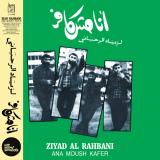
Beautiful mix of eastern sounds and western rhythms, with haunting melodies, nice drum breaks and using traditional arabian instruments alongside organs and drums.
Compilation of tracks from the two Mosaic of the Orient LPs released in the 70's - beautiful psychedelic funk gems.
Right Track is a specialized music label based in Beirut - Lebanon. As an IFPI certified member they are the exclusive Licensee and distributor of multiple international and regional labels in addition to a range of Lebanese Artists. From Omar Khorshid’s arabian-funk to Fairuz’s eerie songs, from Ziad Rabani’s proto-disco to lebanese traditional Wadih Al Safi compositions, Right Track is committed to re-releasing the Immortal Arabic music repertoire on 180 g vinyls, delivering the highest possible quality from remastered audio to satisfy the demanding audiophile connoisseurs.
Civilistjävel! x Mayssa Jallad’s ‘Marjaa: The Battle of the Hotels (Versions)’ is a radical response to Mayssa Jallad’s 2023 original LP, a lyrical account of epochal events in Beirut at the dawn of Lebanon's civil war. ‘…(Versions)’ sees Civilistjävel! (aka Swedish producer Tomas Bodén) apply a stripped, dub methodology to Mayssa's rich stems, refracting the Arabic source through the hazy prism of Northern European electronica. Retaining ‘Marjaa…’s deep spatial framing and vaporous, shifting nature, traces are lifted and set down in a new landscape: a ghost of a ghost. Informed by Tomas' singular strand of ambient, minimalist, dub techno, ‘… (Versions)’ recalls the reductive, shimmering pulse of pioneering Berlin-based practitioners Basic Channel/Chain Reaction, but with the parameters stretched into the ether. Where versions typically focus on a rhythm, here the anchor is the tone and texture of Mayssa’s voice, around which a new world has been constructed. Disembodied and liminal, it conjures an eerie panorama that feels like a postscript to the original, further emphasizing the geopolitical events that have had such devastating effect in Mayssa’s homeland of Lebanon since that record’s release. ‘Marjaa…’ (tr. ‘reference’) combined Mayssa Jallad’s two main vocations: music and urban research/architectural history. The album was co-written with Fadi Tabbal and based on Mayssa's Historic Preservation master's thesis (‘Beirut’s Civil War Hotel District: Preserving the World’s First High-Rise Urban Battlefield’). The thesis examined a 5-month conflict that took place within Beirut's skyscraper-laden luxury hotel district of Minet El Husn near the start of the Lebanese Civil War. Addressing a post-war generation who have never been taught this difficult history, ‘Marjaa…’ was an attempt to process trauma, and “a call to protest for the renewal, rather than the recycling of the political class that once destroyed the country and holds us, to this day, hostage of its violence.” Often perceived as a mysterious, shadowy presence, Civilistjävel! has come increasingly to the fore in recent years through a consistently dazzling stream of records, released both anonymously and via Fergus Jones’ FELT imprint, often appearing with scant information and tracks for the most part untitled. Having featured tracks from ‘Marjaa…’ on mixes, and included the album in his picks of 2023, in early 2024 Tomas asked Mayssa to provide vocals for a track on his album ‘Brödföda’. Mayssa remembers, “Tomas asked me to choose one of the tracks he was working on. I was in Boston at the time, so I took a walk and chose a track. I wrote the lyrics at the public park, wondering if I was the only one around that was losing sleep over the genocide in Palestine and the war in South Lebanon. I went back to the apartment and recorded the vocals on my phone, while listening to the track on headphones. Tomas reworked it with the voice and sent it back. I liked it immediately.” Despite the geographical distance from Beirut to Uppsala, Sweden, where Tomas resides, Mayssa’s contribution sounds very much at home in Civilistjävel!’s atmospheric, contemplative sound-world. Tomas’ request was reciprocated by Mayssa soon after, resulting in the spectral, glassy ambience of ‘Etel, Kharita (Version)’. This was followed by an invitation to work on more tracks, which Tomas immediately embraced, intensively jamming out versions live to two-track tape in downtime between travelling. If not entirely dissimilar to his regular working practice, the immediacy of it was unusual. Much was improvised live with just a keyboard (not tethered to a grid), and a restricted set-up that largely forbade later edits - only the rhythm tracks are programmed. A sharp conceptual thinker and composer, Tomas takes creative liberties with Mayssa’s songs in a way that is deeply felt and sympathetically aligned, whilst unashamedly outside of the original context of the record. The voice is leaned into as an instrument, without the clear, specific details of language, and this axis provides an uncertain, amorphous footing - structure is often suggested or hinted at, before disappearing or collapsing into fog, and folding back into the message within the song. A somewhat unprecedented source for an album of versions, even those familiar with ‘Marjaa: The Battle of the Hotels’ may at points struggle to hear the songs these versions are rebuilt from, despite the vocal narratives remaining virtually intact. The light has shifted; eroded buildings are foregrounded; fragments of memories appear in chiaroscuro. Signs and signifiers have been replaced. Shorn of the original's warm guitar, ‘Baynana (Version)’ feels like an ominous visitation, the sun no longer visible. ‘Holiday Inn (March 21 to 29) (Version)’ is a molten, clattering invocation. The beat-less tracks nod towards the cold, otherworldly sound-scaping of late '90s isolationism. More propulsive and embodied, ‘Holiday Inn (January to March) (Version)’ and ‘Kharita (Dub)’ are strobing, iridescent techno - lithe, shifting and mutating with almost implausible finesse. A stunning addition to Civilistjävel!’s growing catalogue, ‘…(Versions)’ is a luminous counterpoint to ‘Marjaa…’, and a welcome reminder of how incredible that record remains.
- 1: White Walls
- 2: Skyscape
- 3: I Want It All
- 4: Goodbye
- 5: Home Is So Sad
- 6: Fall From Grace
- 7: Hands
- 8: Dis, Quand Reviendras-Tu?
- 9: Minor Detail
"I loved Julia Sabra’s Natural History Museum—it was released at the end of the year and is quietly devastating. Her lyricism and sensitivity in timbre and harmony is akin for me to the great Linda Perhacs. The songs are intimate and infinite feeling at the same time—I love the raw and soft poetic settings of love and death." Julia Holter (Best album 2024- Fader)
“This album is a collection of songs written between 2020 and 2024 in Beirut. I wanted to capture them the way they were written by keeping the rawness and fragility intact, like the late-night voice memos I send to my bandmates as soon as I have a first draft of a song. Fadi and I decided to record them live on tape, with no overdubs, barely any effect - with all the imperfections. Most of the tracks were done in one take only. Some were recorded in the studio, and some in the church I grew up going to every summer in Dhour Shweir.
This is a collection of songs that slipped through the cracks, and some of the most personal ones I ever wrote. Songs about the port explosion, its aftermath, picking up the pieces and trying to move on, coming to terms with the past, regret and nostalgia for a childhood that lives only in memory, the uncertain future, learning to love, getting married, watching a genocide unfold on my phone screen, having it fill my every waking moment, imagining a better send off for all the dead, processing the violence and terror, and finding solace in community.
These songs would’ve probably stayed in my “songs in limbo” folder on my laptop had it not been for Pascal and Fadi, who pushed me to release them. And for this I’m eternally grateful.”
[h] 8.Dis, quand reviendras-tu? [Barbara cover]
- A1: M E.a Group - Onda Nueva
- A2: Mr Myers - So Long
- A3: Alberto Wolf & Los Terapeutas
- A4: Ricardo Bomba - Só Sentindo O Momento
- A5: Flaire - Winter’s Gone
- B1: Dean A Crawford - Laguna
- B2: Raphael Holder - That’s Why I Listen To My Heart
- B3: Richard Bowen - Sorcery
- B4: Neal Davis - Jealous Sea
- B5: Havanna Club - Laura
Heated compilation of 81-1990 rarities.
"Club Méduse’s Charles Bals joins forces with Norman Gervais of Bayetë fame to deliver a 10-track melange of languorous seaside serenades and beach-kissed AOR slow burners/bangers.
Each song evokes wave glimmer and synthetic textures on this first drop by Beirut-via-Saint Tropez label Pocket of Light, one for the listener that’s crossed the last frontier of the registry and needs just a little more.
Is it the Baleares or the Caribbean? Is it hopeful anguish or mature happiness? And with captains like this, does it matter at all…?”
Earthly Measures are very excited to bring to you 'Doroja', an album by Santiago Córdoba & The Bauls of Bengal. Different to past releases, EM explores another part of the world, introducing you to the traditional sounds of Bengal & its talented musicians.
Doroja, is the third album by Argentinian musician Santiago Córdoba, this time in collaboration with The Bauls of Bengal. Recorded at the Hansadhwani Studio in Calcutta, India, where Santiago arrived with only a synthesiser, some effects, and a Legüero Bass Drum (an Argentine percussive instrument used mostly in local folklore) - this album was first conceived in December 2017 during a residency in this mythical city, together with The Bauls of Bengal.
The Bauls believe the body and mind are the sources of all truths and that the expression of freedom cannot be restrained by the labelling of genres or religions, something which is evidently expressed in their music. This provides the perfect foundations for this album to develop without limitations and too effortlessly flow to whichever realms both Santiago and the Bauls of Bengal wish to take us too.
The album combines traditional songs of the Bauls, rhythmic Jhumar instrumental improvisations with the Argentinian legüero bass drum, and other compositions created together in the studio. The result is a melodic mixture/dialogue of cultures, folklore and ancestral sounds with modern influences that help create an experimental and addictive sound full of electronic textures.
Participating in these first recordings: Arpita Chakraborty (vocals), Chandan Ray (dotara), Pijush Baul (Vocals, Dubki) and Tanmoy Pan (percussion), who later, are joined by other artists from different latitudes to achieve a captivating fusion: Matías Romero on strings (Formosa, Argentina), Guilherme Peluci from Mineiro on winds and Daniel Guedes on percussion (Belo Horizonte, Brazil), Porteños Walter Broide on tabla and Cobra Rod on bass (both members of Poseidotica), and the Spanish Ángel Calvo on trumpet.
The album was mixed by Rodrigo Cursach at Delta Uno Estudio, mastered by Daniel Ovie, and the fascinating cover art is by Alejandro Sordi. It will be released on vinyl by the UK based label Earthly Measures, in addition to being available on all digital platforms.
‘Doroja’ means portal, and this album is indeed a magical portal to music, song and dance. Santiago's only means of communication with Bengali colleagues functioned as an astral portal to build the sounds of this journey through strange and unfathomable landscapes that captivate and surprise by building bridges between different cultures of our planet.
Santiago Córdoba is a multi-instrumentalist musician born in the city of Buenos Aires who has been developing his unique sound both with his solo project and with prominent bands from the Argentinian independent music scene. He has been developing his solo career through deep musical and spiritual searching, with the infinite journey as a primary objective.
In recent years, he has lived in places such as Madrid, Beirut and Berlin and has released two albums: ‘Corso’ (2015) and ‘En Other Places’ (2019).
Basias Palast ist kein Schloss, sondern ein Ort voller Liebe, Erinnerungen und schlechter Verkabelung. Seit sich wieder mit Co-Produzent Mark Lawson zusammentat, bewegt sie sich durch eine Traumwelt aus Geflüster, Synthesizern, frühen Chansons und Eurovision-Songs, Leonard Cohens "I'm Your Man", Airs "Moon Safari" und den hauchzarten Maryla Rodowicz-LPs ihres Grossonkels. Das Ergebnis klingt wie ein Album, das hinter den Hintergründen ihrer Kindheitsfotos verborgen war. "Basia's Palace" wurde vom legendären Toningenieur Tucker Martine (Beth Orton, Neko Case, The National) gemischt und mit dem schwebenden Streicherarrangement von Drew Jurecka (Dua Lipa, Alvvays) eingespielt.
Zur Künstlerin:
Basia Bulat ist eine Singer-Songwriterin aus Montreal, Kanada. Neben ihren Fähigkeiten als ausdrucksstarke Sängerin mit unverwechselbarer Stimme ist sie eine versierte Multiinstrumentalistin, die auf E-Gitarre, Klavier, Autoharp, Ukulele, Bass und Charango aufnimmt. Ihre Songs werden für Aufführungen mit Symphonieorchestern adaptiert, sie selber wird zu prestigeträchtigen Tributes an Leonard Cohen, Daniel Lanois, Nick Cave und The Band eingeladen. Seit der Veröffentlichung ihres Debüts 2007 teilte sich Bulat die Bühne mit Künstlern wie St Vincent, Sufjan Stevens, Nick Cave aAnd The Bad Seeds, The National, Michael Kiwanuka, Daniel Lanois, Beirut, Destroyer, US Girls, Jim James, u.a. Sie trat in der #LateShowMeMusic-Reihe mit Stephen Colbert und Jools Holland auf, ist dreimalige Finalistin des Polaris Music Prize und wurde für fünf JUNO Awards nominiert.
Keshavara tragen prächtige Schnurrbärte, verwegene Kopfbedeckungen und sprechen ein abenteuerliches Patois aus Englisch, Hindi, Deutsch und Gibberish. Auf ihrem neuen Album "III" kreieren die Kölner um den deutsch-indischen Musiker Keshav Purushotham Klänge, wie andere Leute Drinks mixen, nachdem sie schon drei genossen haben: Verwaschener Kraut-Pop und diasporische Dub-not-Dub-Exkursionen werden nach Augenmaß miteinander kombiniert und wild geschüttelt. Zuckersüß mäandernde Melodien, entlehnt einem fantastischen Niemandsland in der Grenzregion zwischen exotischen Library-Kompositionen und psychedelischen Soundtracks, verschmelzen mit den Grooves einer Rhythmusgruppe, die sich auch in den Tonstudios des funky Beirut der Mittsiebziger Zuhause gefühlt hätte. Das Ergebnis sind mit surrealistischem Zuckerrand gekrönte Cocktails mit der Wirkung einer halluzinogenen Götterspeise. Musik, die schillert und flirrt, wie eine Fata Morgana in der Wüste. Keshavara klingen in einem Moment, als hätte Ennio Morricone einen Bollywood-Film vertont, und im nächsten wie ein von Curt Boettcher produzierter Eden-Ahbez-Song, oder - nicht ganz so spinös aber nichts desto weniger fantastisch - als hätten Khruangbin und Sven Wunder endlich ein gemeinsames Album aufgenommen. In den glanzvollsten Momenten fügt sich das alles wie von magischer Hand zusammen und kulminiert dann in Songs wie "Spiegelmann" und "Tableau Vivant" - fantasmorgiastischen Partys voller transkultureller Clashes, die uns Hörer dazu einladen, sie in farbenprächtige Gruppenchoreografien zu überführen.
War das Debüt von Keshavara noch ein Solo- und der Nachfolger "Kabinett der Fantasie" im Kern ein Duo-Album, so sind Keshav Purushotham, Niklas Schneider, Benedikt Filleböck und Christopher Martin mit ihrem selbstproduzierten, schlicht "III" betitelten dritten Album endgültig zu einer vierköpfigen Band zusammengewachsen … und zwar um eine alte Farfisa-Orgel herum, die eines Tages als Geschenk im Proberaum gelandet ist: Ein, auf sämtlichen Songs mal mehr, mal weniger präsentes UFO aus einer Zeit der Slow-Jams, Live-Takes und des exzessiven Space-Echo-Einsatzes. Sein analoges Blubbern und sein wabernder Funk rollt dem warmen, organischen Bandsound den roten Teppich aus, und verpasst ihm einen zärtlichen Schubs Richtung 70er. Erfrischenderweise kommt er dort niemals so richtig an, sondern bleibt immer im Fluss. Denn das eigentliche Ziel der halldurchtränkten Korridore dieses Albums ist stets der Weg, genau genommen der kunstvoll gezimmerte Holzweg, der phantastische Irrpfad. "III" ist eine Reise, auf der Zeiten und Orte keine Fixpunkte sind, sondern austauschbare Koordinaten eines augenzwinkernden Vexierspiels. Da ist es nur folgerichtig über "Indische Götter im Sauerland" zu singen. Dass ungeachtet der Nostalgie, die alle neun Songs durchweht wie ein warmer Mittelmeerwind, niemals Sentimentalität aufkommt, ist nicht zuletzt diesem Humor geschuldet.
Die ätherischen Drones, sanft nuschelnden Akkorde und geisterhaft seufzenden Soundschwaden, die Keyboarder Benedikt Filleböck seiner altersschwachen Farfisa bevorzugt in den ruhigeren Momenten und den Instrumentalnummern des Albums entlockt, bilden einen stimmungsvollen Kontrast zu den beiden anderen Säulen des Keshavara-Sounds: Christopher Martins leichtfüßig hüpfenden Bass-Dreiecken und Keshavs sonnendurchfluteten Gitarren-Ornamenten. Im Zusammenspiel mit Niklas Schneiders crispen Drumbeats entsteht ein Fundament, mit dem die kaleidoskopischen Texturen und Melodien vollständig verschmelzen.
Das Ergebnis ist das bisher homogenste Album des Quartetts. Mit "III" erweisen sich Keshavara als gewiefte Soundalchemisten und Weltenwanderer, als eine softe Macht, deren Stärke sich aus ihrer enormen Musikalität, ihrer Fabulierlust und ihrem surrealistischen Witz speist.
Jawad Nawfal and Mazen El Sayed, better known by their stage names of MUNMA and EL RASS, met for the first time in Beirut, during the summer of 2011. A common friend told Jawad wonders about an MC who rapped and slammed in the classical Arabic language, as opposed to the vernacular Lebanese dialect. The two musicians met in a small café in Beirut’s Hamra neighborhood, spoke of music, argued about politics, and decided to collaborate at once. They began working on tracks the following day. A month later, they had already produced a dozen sketches, instrumental beds and accapella vocal tracks. These demos eventually landed in the hands of Ziad Nawfal and Fadi Tabbal, who set out to bring to life the duo’s first recorded album. “Kachf el Mahjoub” (the title is from a Sufi master-work penned some 900 years ago) was eventually released as a limited edition of 500 CD’s, during a launch event at then-budding alternative venue Metro al Madina in Hamra, on the 22nd of February 2012. These CDs went out of print in record time, as can be expected, and the album’s mythical status became reinforced over time – El Rass & Munma collaborated sporadically during the next ten years, but never fully grasped the level of musical intensity and explosive tension attained on this first outing. It has been a longstanding dream of ours, here at Ruptured, to produce a vinyl version of this album, and we are thrilled to say this moment has finally come. Artist ALI RAFEI’s original artworks have been painstakingly reproduced, the music has been dutifully remastered for vinyl by CEDRIK FERMONT, and the records were pressed by our friends at Mother Tongue in Verona. We added bonus track "Fi Kala'at Tarablus" to this 10th anniversary reissue for good measure – recorded during the same sessions that yielded “Kachf el Mahjoub”, it appears on the digital version of the album. “Kachf el Mahjoub” is a landmark album in Lebanon’s alternative music scene, and the MENA region’s hiphop and indie scenes writ large. At the time of their collaboration, El Sayed was a prolific writer and musician, at ease with a variety of instruments, notorious for his masterful flow in the classical Arabic language, with lyrics tackling both social and political sensitive subjects; Nawfal has previously released an impressive number of albums and EPs, exploring downtempo electronica and ambient dubstep, for a number of Lebanese and international labels. The collision of the former’s brazen, slammed vocals and the latter’s harsh beats works wonders on “Kachf el Mahjoub”, Munma’s sound-world perfectly fitting El Rass’s agitated discourse, alternating between broken beats, elaborate percussion, and ambient layers of synths. At times reminiscent of mutant hiphop outfit Shabazz Palaces, at others of the collaboration between dubstep producer Kode9 and the late vocalist The SpaceApe, this album is an uncanny meeting of Arabic hip-hop and electronica, an exceptional event in the realm of contemporary Lebanese alternative music.
Danish band Efterklang returns with their seventh studio album 'Things We Have In Common’, set for release on September 27th via City Slang.
An album about friendship, belonging, faith and understanding, themes which are palpable in the music, which is gentle and uplifting, healing and rousing.
Efterklang has become an open community with three permanent members: Mads Brauer, Casper Clausen and Rasmus Stolberg. On this album the core trio re-connected with their old friend and founding Efterklang member Rune Mølgaard who left the band in 2007 to join the mormon church, and ultimately withdrew from the church in 2022. His profound spiritual journey significantly influences the album's content and tone, on which he has co-written seven of the nine songs.
'Things We Have In Common' coincides with the 20th anniversary of the band’s debut album, and presents 2 decades of collaboration, exploration, evolution and reconnection.
Civilistjävel! returns with »Brödföda«, the successor to 2022’s »Järnnätter« and his fourth release for FELT. The record features collaborations with Laila Sakini, Mayssa Jallad, Thommy Wahlström, ELDON, and Withdrawn.
Tomas Bodén is a revered figure of the aural murk, known primarily for his work as Civilistjävel. It’s an alias that has spawned a catalogue of self-released peculiarities, featuring music that scorns traditional form, instead opting for unfussed symphonies of ice-hued minimalism; soft murmurs that emanate from his studio in the High Coast of Sweden.
On »Brödföda«, his latest album for Fergus Jones’s FELT imprint, subtle new developments in mood prevail. Across its 75 minutes, Civilistjävel! unveils a breadth of emotions that on previous releases seemed distant. He also invites collaborators on record for the first time: Beirut-based singer Mayssa Jallad mournfully croons on »IV«, »VIII« hosts Coldlight’s ELDON & Withdrawn for an abstracted session of dub-hop murk, Laila Sakini offers a hallucinogenic monologue amidst melodica, sticks & bells playing on »IX« and Thommy Wahlström floats scant acid dub stylings on »VI«. These additions and developments bring a forlorn intimacy to the music, and suggest an ambition that few artists of his ilk strive for.
FELT’s (un)reliable cast of audio ghouls routinely summon the odd, with Civilistjävel! often its primary culprit; »Brödföda« gently modifies this path to pursue some of his and the label’s most quaintly beautiful music yet.
Lebanon oud master Rabih Abou-Khalil's stunning 1996 album 'Arabian
Waltz' is appearing here on vinyl for the first time."Arabian Waltz is the
pinnacle of Rabih Abou-Khalil's achievement as a composer and arranger
It is a sublime fusion of jazz, Middle Eastern traditional music, and Western
classical. In addition to Abou-Khalil on oud (the Arabic lute), Michel Godard on the
tuba and the serpent (the tuba's antique kinsman), and Nabil Khaiat on frame
drums, the album also features the Balanescu String Quartet instead of the usual
trumpet or sax. The presence of the Balanescu might seem to pose a dilemma
for the composer: traditional Middle Eastern music uses no harmony but a string
quartet is all about harmony. Abou- Khalil achieves a compromise by generally
writing the string parts in unison (or in octaves), in effect using the quartet as a
single voice, but also letting the quartet split up to play parts in unison with the
other instruments or to provide ornamentation. Without surrendering jazziness at
all, the presence of the strings makes possible a wondrous atmosphere, almost
as if one is listening to the soundtrack of a classy movie set in Beirut or
Damascus during the '40s. This feeling is greatest on "Dreams of a Dying City"
with its brooding tuba and cello motifs and grave, repeated rhythms. "The Pain
After" starts with an impressive tuba solo that turns into a long interlude for tuba
and string quartet; sad, slow music that sounds like one of Beethoven 's late
quartets. Then Abou- Khalil finally enters on oud, bringing a sustained note of
wistfulness. Fortunately, beside the darker numbers lie the propulsive drama of
"Arabian Waltz" and the bobbing and weaving quirkiness of "Ornette Never
Sleeps." Abou- Khalil is known for experimenting with the possibilities his guest
musicians bring to his style. In this case, the guests have inspired the host to
reach a new height and maybe even a new style. This recording suits every fan of
world music, jazz, classical, or just good music." - Kurt Keefner
Following up on Ohm Hourani’s infectious single “Barbara” which included a remix from Ricardo Villalobos and Amir Javasoul, We R The Aliens is happy to present its fifth release this June with another V/A from all-star cast: Boronas & Snad, Bärtaub, Mountain People and Nesta. Tap in and make some space in your record bag
mid short >>>
Following up on Ohm Hourani’s infectious single “Barbara” which included a remix from Ricardo Villalobos and Amir Javasoul, We R The Aliens is happy to present its fifth release this June with another all-star cast: Boronas & Snad, Bärtaub, Mountain People and Nesta.
Boronas & Snad set the tone with ‘Affliction,’ laden with haunting synth work, rolling MPC percussion, meticulous backspins and mind bending delays. Fresh off an outing for Yoyaku’s main label, Istanbul duo Bärtaub give a strong nod to the 90s and the cult E- MU rompler with ‘Orbit The Dance Planet.’ Their track fuses bumpy breaks and robotic voices with ghastly chords, a snaking bass groove and of course, one-shots from the Orbit.
Mountain People kicks off the flip side with ‘I Am The Void,’ characterized by shuffled drum grooves and soft chord sequences intertwined with murky, dubbed out stabs. Beirut’s Nesta rounds out the release with ‘Tarte Citron,’ a late 90's tech house reminiscent track with crisp percussion, airy synth flutters, swelling sub bass tones and a catchy vocal hook.


![El Rass & Munma - Kachf el Mahjoub / Unveiling the Hidden [10th Anniversary Reissue]](https://www.deejay.de/images/l/7/0/997770.jpg)