Cerca:ben marc

Generi
Tutto
Rose Noir - Bloom EP

Rose Noir

Bloom EP

12inchHRRN001
Halfeti Records
04.11.2022

Like the flower from which he takes his name, which is very rare and only grows once a year in one region of the world, the music of Rose Noir cultivates a form of dark and fascinating elegance. Traces of its genesis can be found in the sampling practice of the golden age of hip hop dear to the musician, but it also manages to retranscribe the total aesthetics of the culture of the 60s and 70s, when the stars aligned to give birth to a music bathed in cinematographic influences in the wake of Marc Moulin, Brian Bennet, Azymuth, Janko Nilovic or David Axelrod. Assembled with the help of instruments, Rose Noir’s music has nonetheless benefited from the hybrid background of its creator, an unrepentant digger with a wide-ranging and curious musical culture.

Rose Noir embodies a new phase in the development of a master craftsman, the sound of the French producer is halfway between beat making and majestic arrangements. Though the tracks of this new project Bloom EP wouldn’t be out of place in the soundtrack of a suspense film from the past, they are the reflection of a man in complete control of his art, guided by the same instinctive and passionate searching that has allowed him to evolve from his first starts, by following a trajectory that belongs to him alone. Rose Noir’s compositions are lush and varied, using as much space as they do sound for dramatic and dynamic effect.

The French musician and producer Rose Noir appears to float across different musical time periods, as if touched by grace. But it’s thanks to his iron will, combined with a highly personal and creative approach to music, that he has managed to define new territories and reinvent himself constantly.

non in magazzino

Ordina ora e ordineremo l'articolo per te presso il nostro fornitore.

18,78

Last In: 3 years ago
The Leaf Library + Teruyuki Kurihara - Melody Tomb

Melody Tomb is the first album in a new collaboration between Tokyo artist Teruyuki Kurihara and London drone pop band The Leaf Library. The nine tracks here have in common a metallic hum and a minimal, austere kind of beauty that recalls Teru's work on his 2020 Frozen Dust album (Mille Plateaux). Machine tones mix with static, noise and warm drones, whilst in other places the lineage of classic mangled Warp hardware is visible. In March 2020 The Leaf Library sent their friend Teru a batch of synth drones to play with in the hope a new collaboration would be born. "From the first time we heard Teru's music we knew we wanted to make something with him," say the band. "It has been such a pleasure seeing him take our minimal synth parts and turn them into something really strange and beautiful." The track Kite Beach was the first to arrive, featuring on The Leaf Library-curated Object Ten compilation on Objects Forever in 2021, with the rest of the album slowly appearing over the last year. The artists hope to continue the collaboration with another album in the near future.

For fans of: Autechre, Biosphere, Ben Frost

non in magazzino

Ordina ora e ordineremo l'articolo per te presso il nostro fornitore.

20,97

Last In: 3 years ago
Janoska Ensemble - The Big B’s LP (2x12")

Mit ihrem dritten Album »The Big B’s« präsentiert das Janoska Ensemble die Musik jener Komponisten, die diese Disziplin meisterlich beherrschten: Bach, Beethoven, Brahms – allesamt »Schutzheilige« und Vorbilder des Janoska Ensemble. Was liegt also näher, das neue Album nach diesen B’s zu benennen und gleichzeitig nach anderen B’s Ausschau zu halten – mit Bartók, Bernstein und Brubeck waren sehr schnell weitere gefunden, die sich hier gleichrangig einordnen lassen.

pre-ordina ora28.10.2022

dovrebbe essere pubblicato su 28.10.2022

31,47
SHINEDOE - WAKE UP EP

Shinedoe readies her fifth album ‘Freedom Riders’ on her MTM Records imprint with the release of her vinyl-focused ‘Wake Up’ EP, offering a four-track preview into the project while unveiling a selection of diverse electronic productions for home listening through to the dancefloor.

Over two decades, Dutch DJ and producer Chinedum Nwosu, aka Shinedoe, has established her presence as one of house and techno’s most loved talents, while carving a true path to her own vision. Based in Amsterdam and featuring as a key part of the city’s rich and blossoming underground scene, with performances across De Martkantine, Shelter and Thuishaven to international institutions such as Berghain to fabric, her releases on the likes of Rekids, Cocoon, Bpitch Control and her 2021 release ‘The Observer’ on Jeff Mills’ iconic Axis cemented her reputation as one of the scene’s first talents. Having launched her own label MTM Records in 2018, releasing four EPs on the label to date, October signals the arrival of the label’s first album in the form of her ten-track ‘Freedom Riders’ - an expansive and diverse project created in lockdown capturing sonics from across the spectrum - with the LP preceded by Nwosu’s four-track album sampler EP titled ‘Wake Up’.

“Freedom Riders is about living in a world where there is peace, and all our basic needs are fulfilled. Each being having the right to live in peace, be happy and to be. We are all Freedom Riders, some of us get lost and need to get back to the source.” - Shinedoe.

Opening production ‘Wake Up’ is a tension-building journey through metallic textures, warped vocals and eerie interludes, while album title cut ‘Freedom Riders’ fuses hazy atmospherics, rich chords, crisp percussion and sweeping acid lines to offer a late-night ride through smoky territories. On the flip, B1 ‘Peace’ offers an exemplary balance of light and dark with delicate yet vibrant leads guiding murky undertones and sharp percussion throughout, before closing with the hypnotic, off-kilter and mind-altering sonics of ‘Safety First’, traversing soundscapes to showcase and excellently crafted early-morning cut.

Cuts across the album continue this wide-reaching and rich variation, with the likes of ‘Shine’ and ‘Lockdown’ drawing on classic and modern house influences to offer striking additions for the dancefloor, while ‘Floor Action’ and closing track ‘See The Light’ veering into more dubby, paired back territories to offer up a sense of space and tranquillity - with the ten-track project showcasing a carefully crafted album rich in sound design showcasing one of Amsterdam’s finest talents.

DJ FEEDBACK

early support from


Laurent Garnier: Really like PEACE & SAFETY FIRST niiiiiiiiice

Marcel Dettmann: thx

Luke Slater: nice release thanks!

Ame (Innervisions): thanks

Ben Sims: safety first my fave, thx!!

Slam (Soma): Thanx

Chris Liebing (CLR): great vibe

Radio Slave (Rekids): Woah ! "Freedom Riders" is great... and just in time for the weekend ! Thankyou x

Bambounou (50 Weapons / Sound Pellegrino): There's a vibe I like it thanks

Anthony Parasole (The Corner) this is so good

Truncate: Solid cuts!

non in magazzino

Ordina ora e ordineremo l'articolo per te presso il nostro fornitore.

12,14

Last In: 3 years ago
Akae Beka - Beauty For Ashes LP

Akae Beka's inimitable style of rich, deep, multi-layered songwriting, uncompromising devotion to RasTafari and soulful healing melodies developed over decades performing with St. Croix based band Midnite and countless recordings. At the point of his untimely passing in 2019, he had released over 70LP's. He is without a doubt one of the most prolific reggae artists ever known.

The stellar production trinity that is Zion I Kings have been involved collectively and individually in creating some of the most highly regarded contributions to the vast Akae Beka catalogue. Beauty For Ashes was named as the best reggae album of 2014 according to iTunes. A monumental achievement for undiluted, uncompromising RasTafari roots reggae music this side of the millennium. Two of the LP's tracks, Weather the Storm and Same I Ah One, have been catapulted into global notoriety in part due to the viral success of the YouTube video of the 'Dub in the Rainforest' session organised in St. Croix by Tippy I in 2014. The video offered an unparalleled audio visual insight of the powerful, captivating, energy of Vaughn Benjamin, Pressure Buss Pipe, Ras Batch, and many of the bredrin and sisterin of St. Croix rallying around the I Grade Dub living dub experience.

Following 8 years of anxious anticipation, for the countless Akae Beka fans that are also vinyl connoisseurs, this LP is now being released on as a 12" vinyl LP courtesy of Before Zero Records. This offers the listener not only the chance to enjoy this LP in an analogue form, but also the chance to hold the artwork as a 12" square masterpiece, created by the hands of Ras Marcus, the artist who gave the powerful visual presence that became synonymous to much of the I Grade / Akae Beka works over the years.

non in magazzino

Ordina ora e ordineremo l'articolo per te presso il nostro fornitore.

20,97

Last In: 3 years ago
Lee Tracy & Isaac Manning - Is it What You Want

As the sun sets on a quaint East Nashville house, a young man bares a piece of his soul. Facing the camera, sporting a silky suit jacket/shirt/slacks/fingerless gloves ensemble that announces "singer" before he's even opened his mouth, Lee Tracy Johnson settles onto his stage, the front yard. He sways to the dirge-like drum machine pulse of a synth-soaked slow jam, extends his arms as if gaining his balance, and croons in affecting, fragile earnest, "I need your love… oh baby…"

Dogs in the yard next door begin barking. A mysterious cardboard robot figure, beamed in from galaxies unknown and affixed to a tree, is less vocal. Lee doesn't acknowledge either's presence. He's busy feeling it, arms and hands gesticulating. His voice rises in falsetto over the now-quiet dogs, over the ambient noise from the street that seeps into the handheld camcorder's microphone, over the recording of his own voice played back from a boombox off-camera. After six minutes the single, continuous shot ends. In this intimate creative universe there are no re-takes. There are many more music videos to shoot, and as Lee later puts it, "The first time you do it is actually the best. Because you can never get that again. You expressing yourself from within."

"I Need Your Love" dates from a lost heyday. From some time in the '80s or early '90s, when Lee Tracy (as he was known in performance) and his music partner/producer/manager Isaac Manning committed hours upon hours of their sonic and visual ideas to tape. Embracing drum machines and synthesizers – electronics that made their personal futurism palpable – they recorded exclusively at home, live in a room into a simple cassette deck. Soul, funk, electro and new wave informed their songs, yet Lee and Isaac eschewed the confinement of conventional categories and genres, preferring to let experimentation guide them.

"Anytime somebody put out a new record they had the same instruments or the same sound," explains Isaac. "So I basically wanted to find something that's really gonna stand out away from all of the rest of 'em." Their ethos meant that every idea they came up with was at least worth trying: echoed out half-rapped exhortations over frantic techno-style beats, gospel synth soul, modal electro-funk, oddball pop reinterpretations, emo AOR balladry, nods to Prince and the Fat Boys, or arrangements that might collapse mid-song into a mess of arcade game-ish blips before rallying to reach the finish line. All of it conjoined by consistent tape hiss, and most vitally, Lee's chameleonic voice, which managed to wildly shape shift and still evoke something sincere – whether toggling between falsetto and tenor exalting Jesus's return, or punctuating a melismatic romantic adlib with a succinct, "We all know how it feels to be alone."

"People think we went to a studio," says Isaac derisively. "We never went to no studio. We didn't have the money to go to no studio! We did this stuff at home. I shot videos in my front yard with whatever we could to get things together." Sometimes Isaac would just put on an instrumental record, be it "Planet Rock" or "Don't Cry For Me Argentina" (from Evita), press "record," and let Lee improvise over it, yielding peculiar love songs, would-be patriotic anthems, or Elvis Presley or Marilyn Monroe tributes. Technical limitations and a lack of professional polish never dissuaded them. They believed they were onto something.

"That struggle," Isaac says, "made that sound sound good to me."

In the parlance of modern music criticism Lee and Isaac's dizzying DIY efforts would inevitably be described as "outsider." But "outsider" carries the burden of untold additional layers of meaning if you're Black and from the South, creating on a budget, and trying to get someone, anyone within the country music capital of the world to take your vision seriously. "What category should we put it in?" Isaac asks rhetorically. "I don't know. All I know is feeling. I ain't gonna name it nothing. It's music. If it grabs your soul and touch your heart that's what it basically is supposed to do."

=

Born in 1963, the baby boy of nine siblings, Lee Tracy spent his earliest years living amidst the shotgun houses on Nashville's south side. "We was poor, man!" he says, recalling the outhouse his family used for a bathroom and the blocks of ice they kept in the kitchen to chill perishables. "But I actually don't think I really realized I was in poverty until I got grown and started thinking about it." Lee's mom worked at the Holiday Inn; his dad did whatever he had to do, from selling fruit from a horse drawn cart to bootlegging. "We didn't have much," Lee continues, "but my mother and my father got us the things we needed, the clothes on our back." By the end of the decade with the city's urban renewal programs razing entire neighborhoods to accommodate construction of the Interstate, the family moved to Edgehill Projects. Lee remembers music and art as a constant source of inspiration for he and his brothers and sisters – especially after seeing the Jackson 5 perform on Ed Sullivan. "As a small child I just knew that was what I wanted to do."

His older brother Don began musically mentoring him, introducing Lee to a variety of instruments and sounds. "He would never play one particular type of music, like R&B," says Lee. "I was surrounded by jazz, hard rock and roll, easy listening, gospel, reggae, country music; I mean I was a sponge absorbing all of that." Lee taught himself to play drums by beating on cardboard boxes, gaining a rep around the way for his timekeeping, and his singing voice. Emulating his favorites, Earth Wind & Fire and Cameo, he formed groups with other kids with era-evocative band names like Concept and TNT Connection, and emerged as the leader of disciplined rehearsals. "I made them practice," says Lee. "We practiced and practiced and practiced. Because I wanted that perfection." By high school the most accomplished of these bands would take top prize in a prominent local talent show. It was a big moment for Lee, and he felt ready to take things to the next level. But his band-mates had other ideas.

"I don't know what happened," he says, still miffed at the memory. "It must have blew they mind after we won and people started showing notice, because it's like everybody quit! I was like, where the hell did everybody go?" Lee had always made a point of interrogating prospective musicians about their intentions before joining his groups: were they really serious or just looking for a way to pick up girls? Now he understood even more the importance of finding a collaborator just as committed to the music as he was.

=

Isaac Manning had spent much of his life immersed in music and the arts – singing in the church choir with his family on Nashville's north side, writing, painting, dancing, and working various gigs within the entertainment industry. After serving in the armed forces, in the early '70s he ran The Teenage Place, a music and performance venue that catered to the local youth. But he was forced out of town when word of one of his recreational routines created a stir beyond the safe haven of his bohemian circles.

"I was growing marijuana," Isaac explains. "It wasn't no business, I was smoking it myself… I would put marijuana in scrambled eggs, cornbread and stuff." His weed use originated as a form of self-medication to combat severe tooth pain. But when he began sharing it with some of the other young people he hung out with, some of who just so happened to be the kids of Nashville politicians, the cops came calling. "When I got busted," he remembers, "they were talking about how they were gonna get rid of me because they didn't want me saying nothing about they children because of the politics and stuff. So I got my family, took two raggedy cars, and left Nashville and went to Vegas."

Out in the desert, Isaac happened to meet Chubby Checker of "The Twist" fame while the singer was gigging at The Flamingo. Impressed by Isaac's zeal, Checker invited him to go on the road with him as his tour manager/roadie/valet. The experience gave Isaac a window into a part of the entertainment world he'd never encountered – a glimpse of what a true pop act's audience looked like. "Chubby Checker, none of his shows were played for Black folks," he remembers. "All his gigs were done at high-class white people areas." Returning home after a few years with Chubby, Isaac was properly motivated to make it in Music City. He began writing songs and scouting around Nashville for local talent anywhere he could find it with an expressed goal: "Find someone who can deliver your songs the way you want 'em delivered and make people feel what you want them to feel."

One day while walking through Edgehill Projects Isaac heard someone playing the drums in a way that made him stop and take notice. "The music was so tight, just the drums made me feel like, oh I'm-a find this person," he recalls. "So I circled through the projects until I found who it was.

"That's how I met him – Lee Tracy. When I found him and he started singing and stuff, I said, ohhh, this is somebody different."

=

Theirs was a true complementary partnership: young Lee possessed the raw talent, the older Isaac the belief. "He's really the only one besides my brother and my family that really seen the potential in me," says Lee. "He made me see that I could do it."

Isaac long being a night owl, his house also made for a fertile collaborative environment – a space where there always seemed to be a new piece of his visual art on display: paintings, illustrations, and dolls and figures (including an enigmatic cardboard robot). Lee and Issac would hang out together and talk, listen to music, conjure ideas, and smoke the herb Isaac had resumed growing in his yard. "It got to where I could trust him, he could trust me," Isaac says of their bond. They also worked together for hours on drawings, spreading larges rolls of paper on the walls and sketching faces with abstract patterns and imagery: alien-like beings, tri-horned horse heads, inverted Janus-like characters where one visage blurred into the other.

Soon it became apparent that they didn't need other collaborators; self-sufficiency was the natural way forward. At Isaac's behest Lee, already fed up with dealing with band musicians, began playing around with a poly-sonic Yamaha keyboard at the local music store. "It had everything on it – trumpet, bass, drums, organ," remembers Lee. "And that's when I started recording my own stuff."

The technology afforded Lee the flexibility and independence he craved, setting him on a path other bedroom musicians and producers around the world were simultaneously following through the '80s into the early '90s. Saving up money from day jobs, he eventually supplemented the Yamaha Isaac had gotten him with Roland and Casio drum machines and a Moog. Lee was living in an apartment in Hillside at that point caring for his dad, who'd been partially paralyzed since early in life. In the evenings up in his second floor room, the music put him in a zone where he could tune out everything and lose himself in his ideas.

"Oh I loved it," he recalls. "I would really experiment with the instruments and use a lot of different sound effects. I was looking for something nobody else had. I wanted something totally different. And once I found the sound I was looking for, I would just smoke me a good joint and just let it go, hit the record button." More potent a creative stimulant than even Isaac's weed was the holistic flow and spontaneity of recording. Between sessions at Isaac's place and Lee's apartment, their volume of output quickly ballooned.

"We was always recording," says Lee. "That's why we have so much music. Even when I went to Isaac's and we start creating, I get home, my mind is racing, I gotta start creating, creating, creating. I remember there were times when I took a 90-minute tape from front to back and just filled it up."

"We never practiced," says Isaac. "See, that was just so odd about the whole thing. I could relate to him, and tell him about the songs I had ideas for and everything and stuff. And then he would bring it back or whatever, and we'd get together and put it down." Once the taskmaster hell bent on rehearsing, Lee had flipped a full 180. Perfection was no longer an aspiration, but the enemy of inspiration.

"I seen where practicing and practicing got me," says Lee. "A lot of musicians you get to playing and they gotta stop, they have to analyze the music. But while you analyzing you losing a lot of the greatness of what you creating. Stop analyzing what you play, just play! And it'll all take shape."

=

"I hope you understood the beginning of the record because this was invented from a dream I had today… (You tell me, I'll tell you, we'll figure it out together)" – Lee Tracy and Isaac Manning, "Hope You Understand"

Lee lets loose a maniacal cackle when he acknowledges that the material that he and Isaac recorded was by anyone's estimation pretty out there. It's the same laugh that commences "Hope You Understand" – a chaotic transmission that encapsulates the duality at the heart of their music: a stated desire to reach people and a compulsion to go as leftfield as they saw fit.

"We just did it," says Lee. "We cut the music on and cut loose. I don't sit around and write. I do it by listening, get a feeling, play the music, and the lyrics and stuff just come out of me."

The approach proved adaptable to interpreting other artists' material. While recording a cover of Whitney Houston's pop ballad "Saving All My Love For You," Lee played Whitney's version in his headphones as he laid down his own vocals – partially following the lyrics, partially using them as a departure point. The end result is barely recognizable compared with the original, Lee and Isaac having switched up the time signature and reinvented the melody along the way towards morphing a slick mainstream radio standard into something that sounds solely their own.

"I really used that song to get me started," says Lee. "Then I said, well I need something else, something is missing. Something just came over me. That's when I came up with 'Is It What You Want.'"

The song would become the centerpiece of Lee and Isaac's repertoire. Pushed along by a percolating metronomic Rhythm King style beat somewhere between a military march and a samba, "Is It What You Want" finds Lee pleading the sincerity of his commitment to a potential love interest embellished by vocal tics and hiccups subtlely reminiscent of his childhood hero MJ. Absent chord changes, only synth riffs gliding in and out like apparitions, the song achieves a lingering lo-fi power that leaves you feeling like it's still playing, somewhere, even after the fade out.

"I don't know, it's like a real spiritual song," Lee reflects. "But it's not just spiritual. To me the more I listen to it it's like about everything that you do in your everyday life, period. Is it what you want? Do you want a car or you don't want a car? Do you want Jesus or do you want the Devil? It's basically asking you the question. Can't nobody answer the question but you yourself."

In 1989 Lee won a lawsuit stemming from injuries sustained from a fight he'd gotten into. He took part of the settlement money and with Isaac pressed up "Saving All My Love For You" b/w "Is It What You Want" as a 45 single. Isaac christened the label One Chance Records. "Because that's all we wanted," he says with a laugh, "one chance."

Isaac sent the record out to radio stations and major labels, hoping for it to make enough noise to get picked up nationally. But the response he and Lee were hoping for never materialized. According to Isaac the closest the single got to getting played on the radio is when a disk jock from a local station made a highly unusual announcement on air: "The dude said on the radio, 107.5 – 'We are not gonna play 'Is It What You Want.' We cracked up! Wow, that's deep.

"It was a whole racist thing that was going on," he reflects. "So we just looked over and kept on going. That was it. That was about the way it goes… If you were Black and you were living in Nashville and stuff, that's the way you got treated." Isaac already knew as much from all the times he'd brought he and Lee's tapes (even their cache of country music tunes) over to Music Row to try to drum up interest to no avail.

"Isaac, he really worked his ass off," says Lee. "He probably been to every record place down on Music Row." Nashville's famed recording and music business corridor wasn't but a few blocks from where Lee grew up. Close enough, he remembers, for him to ride his bike along its back alleys and stumble upon the occasional random treasure, like a discarded box of harmonicas. Getting in through the front door, however, still felt a world away.

"I just don't think at the time our music fell into a category for them," he concedes. "It was before its time."

=

Lee stopped making music some time in the latter part of the '90s, around the time his mom passed away and life became increasingly tough to manage. "When my mother died I had a nervous breakdown," he says, "So I shut down for a long time. I was in such a sadness frame of mind. That's why nobody seen me. I had just disappeared off the map." He fell out of touch with Isaac, and in an indication of just how bad things had gotten for him, lost track of all the recordings they'd made together. Music became a distant memory.

Fortunately, Isaac kept the faith. In a self-published collection of his poetry – paeans to some of his favorite entertainment and public figures entitled Friends and Dick Clark – he'd written that he believed "music has a life of its own." But his prescience and presence of mind were truly manifested in the fact that he kept an archive of he and Lee's work. As perfectly imperfect as "Is It What You Want" now sounds in a post-Personal Space world, Lee and Isaac's lone official release was in fact just a taste. The bulk of the Is It What You Want album is culled from the pair's essentially unheard home recordings – complete songs, half-realized experiments, Isaac's blue monologues and pronouncements et al – compiled, mixed and programmed in the loose and impulsive creative spirit of their regular get-togethers from decades ago. The rest of us, it seems, may have finally caught up to them.

On the prospect of at long last reaching a wider audience, Isaac says simply, "I been trying for a long time, it feels good." Ever the survivor, he adds, "The only way I know how to make it to the top is to keep climbing. If one leg break on the ladder, hey, you gotta fix it and keep on going… That's where I be at. I'll kill death to make it out there."

For Lee it all feels akin to a personal resurrection: "It's like I was in a tomb and the tomb was opened and I'm back… Man, it feels so great. I feel like I'm gonna jump out of my skin." Success at this stage of his life, he realizes, probably means something different than what it did back when he was singing and dancing in Isaac's front yard. "What I really mean by 'making it,'" he explains isn't just the music being heard but, "the story being told."

Occasionally Lee will pull up "Is It What You Want" on YouTube on his phone, put on his headphones, and listen. He remembers the first time he heard his recorded voice. How surreal it was, how he thought to himself, "Is that really me?" What would he say to that younger version of himself now?

"I would probably tell myself, hang in there, don't give up. Keep striving for the goal. And everything will work out."

Despite what's printed on the record label, sometimes you do get more than one chance.

non in magazzino

Ordina ora e ordineremo l'articolo per te presso il nostro fornitore.

11,72

Last In: 3 years ago
VARIOUS - FICTIONS (MADE TO MEASURE 47) LP

Eight distinguished artists wrote and recorded original pieces for this album which joins the dots between vintage, experimental and neo-classical ambient, and pays tribute to the relaunched Made To Measure composers' series. All tracks were made to measure for this album, and revolve around the loose idea of wordless fiction. Aside from being such a seductive, fascinating collection of tracks and moods, the album is also modestly aiming at joining dots between certain classic ambient composers (represented here by Benjamin Lew & Steven Brown and Stubbleman, whose work has previously appeared in the Made To Measure series), artists who approach experimental ambient from their pop or club background (Lucrecia Dalt, Inne Eysermans, Matias Aguayo), and eminent exponents of the great new generation of ambient music composers (Kaitlyn Aurelia Smith, Christina Vantzou, Mary Lattimore, Félicia Atkinson). Fictions was curated by Marc Hollander.

pre-ordina ora14.10.2022

dovrebbe essere pubblicato su 14.10.2022

18,45
ROOTEO & MAHURA - METTĀ REMIXES III

REPRESS!

Returning for 2019 with our first 12-inch release, Made in Green Records concludes Rooteo & Mahura’s opening salvo, with reinterpretations from the artists themselves and the label head putting their marks on already-outstanding material. Leading off the release, we find the original ‘Caxixi’ from their debut LP, Mettā, with its tablas and vocals rubbing against billowing clouds of bass and dubwise effects; Made in Green boss Vasco Ispirian turns in the first rework, a thickly layered, relaxed tempo dub techno trip. Barely- recognizable remnants of the original’s percussion and vocal lines occasionally surface out of the subaquatic haze before surging kick drums push them back beneath the surface. Appearing here under his recently-birthed 4NYØN3 project, Rooteo, best known as Marcos In Dub, closes the release with a pounding techno remake that utterly transforms his own & Mahura’s work. Squashing the original’s ambient sonics into unstable delay traps that reappear prominently in the breakdowns, he grafts this into stringent techno, adroitly wrought and with details to spare, the scrambled fragments of sound emerging between heavy drums and contributing to the dark and downcast mood that pervades the piece.

non in magazzino

Ordina ora e ordineremo l'articolo per te presso il nostro fornitore.

11,13

Last In: 3 years ago
Lee Tracy & Isaac Manning - Is it What You Want LP

As the sun sets on a quaint East Nashville house, a young man bares a piece of his soul. Facing the camera, sporting a silky suit jacket/shirt/slacks/fingerless gloves ensemble that announces "singer" before he's even opened his mouth, Lee Tracy Johnson settles onto his stage, the front yard. He sways to the dirge-like drum machine pulse of a synth-soaked slow jam, extends his arms as if gaining his balance, and croons in affecting, fragile earnest, "I need your love… oh baby…"

Dogs in the yard next door begin barking. A mysterious cardboard robot figure, beamed in from galaxies unknown and affixed to a tree, is less vocal. Lee doesn't acknowledge either's presence. He's busy feeling it, arms and hands gesticulating. His voice rises in falsetto over the now-quiet dogs, over the ambient noise from the street that seeps into the handheld camcorder's microphone, over the recording of his own voice played back from a boombox off-camera. After six minutes the single, continuous shot ends. In this intimate creative universe there are no re-takes. There are many more music videos to shoot, and as Lee later puts it, "The first time you do it is actually the best. Because you can never get that again. You expressing yourself from within."

"I Need Your Love" dates from a lost heyday. From some time in the '80s or early '90s, when Lee Tracy (as he was known in performance) and his music partner/producer/manager Isaac Manning committed hours upon hours of their sonic and visual ideas to tape. Embracing drum machines and synthesizers – electronics that made their personal futurism palpable – they recorded exclusively at home, live in a room into a simple cassette deck. Soul, funk, electro and new wave informed their songs, yet Lee and Isaac eschewed the confinement of conventional categories and genres, preferring to let experimentation guide them.

"Anytime somebody put out a new record they had the same instruments or the same sound," explains Isaac. "So I basically wanted to find something that's really gonna stand out away from all of the rest of 'em." Their ethos meant that every idea they came up with was at least worth trying: echoed out half-rapped exhortations over frantic techno-style beats, gospel synth soul, modal electro-funk, oddball pop reinterpretations, emo AOR balladry, nods to Prince and the Fat Boys, or arrangements that might collapse mid-song into a mess of arcade game-ish blips before rallying to reach the finish line. All of it conjoined by consistent tape hiss, and most vitally, Lee's chameleonic voice, which managed to wildly shape shift and still evoke something sincere – whether toggling between falsetto and tenor exalting Jesus's return, or punctuating a melismatic romantic adlib with a succinct, "We all know how it feels to be alone."

"People think we went to a studio," says Isaac derisively. "We never went to no studio. We didn't have the money to go to no studio! We did this stuff at home. I shot videos in my front yard with whatever we could to get things together." Sometimes Isaac would just put on an instrumental record, be it "Planet Rock" or "Don't Cry For Me Argentina" (from Evita), press "record," and let Lee improvise over it, yielding peculiar love songs, would-be patriotic anthems, or Elvis Presley or Marilyn Monroe tributes. Technical limitations and a lack of professional polish never dissuaded them. They believed they were onto something.

"That struggle," Isaac says, "made that sound sound good to me."

In the parlance of modern music criticism Lee and Isaac's dizzying DIY efforts would inevitably be described as "outsider." But "outsider" carries the burden of untold additional layers of meaning if you're Black and from the South, creating on a budget, and trying to get someone, anyone within the country music capital of the world to take your vision seriously. "What category should we put it in?" Isaac asks rhetorically. "I don't know. All I know is feeling. I ain't gonna name it nothing. It's music. If it grabs your soul and touch your heart that's what it basically is supposed to do."

=

Born in 1963, the baby boy of nine siblings, Lee Tracy spent his earliest years living amidst the shotgun houses on Nashville's south side. "We was poor, man!" he says, recalling the outhouse his family used for a bathroom and the blocks of ice they kept in the kitchen to chill perishables. "But I actually don't think I really realized I was in poverty until I got grown and started thinking about it." Lee's mom worked at the Holiday Inn; his dad did whatever he had to do, from selling fruit from a horse drawn cart to bootlegging. "We didn't have much," Lee continues, "but my mother and my father got us the things we needed, the clothes on our back." By the end of the decade with the city's urban renewal programs razing entire neighborhoods to accommodate construction of the Interstate, the family moved to Edgehill Projects. Lee remembers music and art as a constant source of inspiration for he and his brothers and sisters – especially after seeing the Jackson 5 perform on Ed Sullivan. "As a small child I just knew that was what I wanted to do."

His older brother Don began musically mentoring him, introducing Lee to a variety of instruments and sounds. "He would never play one particular type of music, like R&B," says Lee. "I was surrounded by jazz, hard rock and roll, easy listening, gospel, reggae, country music; I mean I was a sponge absorbing all of that." Lee taught himself to play drums by beating on cardboard boxes, gaining a rep around the way for his timekeeping, and his singing voice. Emulating his favorites, Earth Wind & Fire and Cameo, he formed groups with other kids with era-evocative band names like Concept and TNT Connection, and emerged as the leader of disciplined rehearsals. "I made them practice," says Lee. "We practiced and practiced and practiced. Because I wanted that perfection." By high school the most accomplished of these bands would take top prize in a prominent local talent show. It was a big moment for Lee, and he felt ready to take things to the next level. But his band-mates had other ideas.

"I don't know what happened," he says, still miffed at the memory. "It must have blew they mind after we won and people started showing notice, because it's like everybody quit! I was like, where the hell did everybody go?" Lee had always made a point of interrogating prospective musicians about their intentions before joining his groups: were they really serious or just looking for a way to pick up girls? Now he understood even more the importance of finding a collaborator just as committed to the music as he was.

=

Isaac Manning had spent much of his life immersed in music and the arts – singing in the church choir with his family on Nashville's north side, writing, painting, dancing, and working various gigs within the entertainment industry. After serving in the armed forces, in the early '70s he ran The Teenage Place, a music and performance venue that catered to the local youth. But he was forced out of town when word of one of his recreational routines created a stir beyond the safe haven of his bohemian circles.

"I was growing marijuana," Isaac explains. "It wasn't no business, I was smoking it myself… I would put marijuana in scrambled eggs, cornbread and stuff." His weed use originated as a form of self-medication to combat severe tooth pain. But when he began sharing it with some of the other young people he hung out with, some of who just so happened to be the kids of Nashville politicians, the cops came calling. "When I got busted," he remembers, "they were talking about how they were gonna get rid of me because they didn't want me saying nothing about they children because of the politics and stuff. So I got my family, took two raggedy cars, and left Nashville and went to Vegas."

Out in the desert, Isaac happened to meet Chubby Checker of "The Twist" fame while the singer was gigging at The Flamingo. Impressed by Isaac's zeal, Checker invited him to go on the road with him as his tour manager/roadie/valet. The experience gave Isaac a window into a part of the entertainment world he'd never encountered – a glimpse of what a true pop act's audience looked like. "Chubby Checker, none of his shows were played for Black folks," he remembers. "All his gigs were done at high-class white people areas." Returning home after a few years with Chubby, Isaac was properly motivated to make it in Music City. He began writing songs and scouting around Nashville for local talent anywhere he could find it with an expressed goal: "Find someone who can deliver your songs the way you want 'em delivered and make people feel what you want them to feel."

One day while walking through Edgehill Projects Isaac heard someone playing the drums in a way that made him stop and take notice. "The music was so tight, just the drums made me feel like, oh I'm-a find this person," he recalls. "So I circled through the projects until I found who it was.

"That's how I met him – Lee Tracy. When I found him and he started singing and stuff, I said, ohhh, this is somebody different."

=

Theirs was a true complementary partnership: young Lee possessed the raw talent, the older Isaac the belief. "He's really the only one besides my brother and my family that really seen the potential in me," says Lee. "He made me see that I could do it."

Isaac long being a night owl, his house also made for a fertile collaborative environment – a space where there always seemed to be a new piece of his visual art on display: paintings, illustrations, and dolls and figures (including an enigmatic cardboard robot). Lee and Issac would hang out together and talk, listen to music, conjure ideas, and smoke the herb Isaac had resumed growing in his yard. "It got to where I could trust him, he could trust me," Isaac says of their bond. They also worked together for hours on drawings, spreading larges rolls of paper on the walls and sketching faces with abstract patterns and imagery: alien-like beings, tri-horned horse heads, inverted Janus-like characters where one visage blurred into the other.

Soon it became apparent that they didn't need other collaborators; self-sufficiency was the natural way forward. At Isaac's behest Lee, already fed up with dealing with band musicians, began playing around with a poly-sonic Yamaha keyboard at the local music store. "It had everything on it – trumpet, bass, drums, organ," remembers Lee. "And that's when I started recording my own stuff."

The technology afforded Lee the flexibility and independence he craved, setting him on a path other bedroom musicians and producers around the world were simultaneously following through the '80s into the early '90s. Saving up money from day jobs, he eventually supplemented the Yamaha Isaac had gotten him with Roland and Casio drum machines and a Moog. Lee was living in an apartment in Hillside at that point caring for his dad, who'd been partially paralyzed since early in life. In the evenings up in his second floor room, the music put him in a zone where he could tune out everything and lose himself in his ideas.

"Oh I loved it," he recalls. "I would really experiment with the instruments and use a lot of different sound effects. I was looking for something nobody else had. I wanted something totally different. And once I found the sound I was looking for, I would just smoke me a good joint and just let it go, hit the record button." More potent a creative stimulant than even Isaac's weed was the holistic flow and spontaneity of recording. Between sessions at Isaac's place and Lee's apartment, their volume of output quickly ballooned.

"We was always recording," says Lee. "That's why we have so much music. Even when I went to Isaac's and we start creating, I get home, my mind is racing, I gotta start creating, creating, creating. I remember there were times when I took a 90-minute tape from front to back and just filled it up."

"We never practiced," says Isaac. "See, that was just so odd about the whole thing. I could relate to him, and tell him about the songs I had ideas for and everything and stuff. And then he would bring it back or whatever, and we'd get together and put it down." Once the taskmaster hell bent on rehearsing, Lee had flipped a full 180. Perfection was no longer an aspiration, but the enemy of inspiration.

"I seen where practicing and practicing got me," says Lee. "A lot of musicians you get to playing and they gotta stop, they have to analyze the music. But while you analyzing you losing a lot of the greatness of what you creating. Stop analyzing what you play, just play! And it'll all take shape."

=

"I hope you understood the beginning of the record because this was invented from a dream I had today… (You tell me, I'll tell you, we'll figure it out together)" – Lee Tracy and Isaac Manning, "Hope You Understand"

Lee lets loose a maniacal cackle when he acknowledges that the material that he and Isaac recorded was by anyone's estimation pretty out there. It's the same laugh that commences "Hope You Understand" – a chaotic transmission that encapsulates the duality at the heart of their music: a stated desire to reach people and a compulsion to go as leftfield as they saw fit.

"We just did it," says Lee. "We cut the music on and cut loose. I don't sit around and write. I do it by listening, get a feeling, play the music, and the lyrics and stuff just come out of me."

The approach proved adaptable to interpreting other artists' material. While recording a cover of Whitney Houston's pop ballad "Saving All My Love For You," Lee played Whitney's version in his headphones as he laid down his own vocals – partially following the lyrics, partially using them as a departure point. The end result is barely recognizable compared with the original, Lee and Isaac having switched up the time signature and reinvented the melody along the way towards morphing a slick mainstream radio standard into something that sounds solely their own.

"I really used that song to get me started," says Lee. "Then I said, well I need something else, something is missing. Something just came over me. That's when I came up with 'Is It What You Want.'"

The song would become the centerpiece of Lee and Isaac's repertoire. Pushed along by a percolating metronomic Rhythm King style beat somewhere between a military march and a samba, "Is It What You Want" finds Lee pleading the sincerity of his commitment to a potential love interest embellished by vocal tics and hiccups subtlely reminiscent of his childhood hero MJ. Absent chord changes, only synth riffs gliding in and out like apparitions, the song achieves a lingering lo-fi power that leaves you feeling like it's still playing, somewhere, even after the fade out.

"I don't know, it's like a real spiritual song," Lee reflects. "But it's not just spiritual. To me the more I listen to it it's like about everything that you do in your everyday life, period. Is it what you want? Do you want a car or you don't want a car? Do you want Jesus or do you want the Devil? It's basically asking you the question. Can't nobody answer the question but you yourself."

In 1989 Lee won a lawsuit stemming from injuries sustained from a fight he'd gotten into. He took part of the settlement money and with Isaac pressed up "Saving All My Love For You" b/w "Is It What You Want" as a 45 single. Isaac christened the label One Chance Records. "Because that's all we wanted," he says with a laugh, "one chance."

Isaac sent the record out to radio stations and major labels, hoping for it to make enough noise to get picked up nationally. But the response he and Lee were hoping for never materialized. According to Isaac the closest the single got to getting played on the radio is when a disk jock from a local station made a highly unusual announcement on air: "The dude said on the radio, 107.5 – 'We are not gonna play 'Is It What You Want.' We cracked up! Wow, that's deep.

"It was a whole racist thing that was going on," he reflects. "So we just looked over and kept on going. That was it. That was about the way it goes… If you were Black and you were living in Nashville and stuff, that's the way you got treated." Isaac already knew as much from all the times he'd brought he and Lee's tapes (even their cache of country music tunes) over to Music Row to try to drum up interest to no avail.

"Isaac, he really worked his ass off," says Lee. "He probably been to every record place down on Music Row." Nashville's famed recording and music business corridor wasn't but a few blocks from where Lee grew up. Close enough, he remembers, for him to ride his bike along its back alleys and stumble upon the occasional random treasure, like a discarded box of harmonicas. Getting in through the front door, however, still felt a world away.

"I just don't think at the time our music fell into a category for them," he concedes. "It was before its time."

=

Lee stopped making music some time in the latter part of the '90s, around the time his mom passed away and life became increasingly tough to manage. "When my mother died I had a nervous breakdown," he says, "So I shut down for a long time. I was in such a sadness frame of mind. That's why nobody seen me. I had just disappeared off the map." He fell out of touch with Isaac, and in an indication of just how bad things had gotten for him, lost track of all the recordings they'd made together. Music became a distant memory.

Fortunately, Isaac kept the faith. In a self-published collection of his poetry – paeans to some of his favorite entertainment and public figures entitled Friends and Dick Clark – he'd written that he believed "music has a life of its own." But his prescience and presence of mind were truly manifested in the fact that he kept an archive of he and Lee's work. As perfectly imperfect as "Is It What You Want" now sounds in a post-Personal Space world, Lee and Isaac's lone official release was in fact just a taste. The bulk of the Is It What You Want album is culled from the pair's essentially unheard home recordings – complete songs, half-realized experiments, Isaac's blue monologues and pronouncements et al – compiled, mixed and programmed in the loose and impulsive creative spirit of their regular get-togethers from decades ago. The rest of us, it seems, may have finally caught up to them.

On the prospect of at long last reaching a wider audience, Isaac says simply, "I been trying for a long time, it feels good." Ever the survivor, he adds, "The only way I know how to make it to the top is to keep climbing. If one leg break on the ladder, hey, you gotta fix it and keep on going… That's where I be at. I'll kill death to make it out there."

For Lee it all feels akin to a personal resurrection: "It's like I was in a tomb and the tomb was opened and I'm back… Man, it feels so great. I feel like I'm gonna jump out of my skin." Success at this stage of his life, he realizes, probably means something different than what it did back when he was singing and dancing in Isaac's front yard. "What I really mean by 'making it,'" he explains isn't just the music being heard but, "the story being told."

Occasionally Lee will pull up "Is It What You Want" on YouTube on his phone, put on his headphones, and listen. He remembers the first time he heard his recorded voice. How surreal it was, how he thought to himself, "Is that really me?" What would he say to that younger version of himself now?

"I would probably tell myself, hang in there, don't give up. Keep striving for the goal. And everything will work out."

Despite what's printed on the record label, sometimes you do get more than one chance.

non in magazzino

Ordina ora e ordineremo l'articolo per te presso il nostro fornitore.

23,49

Last In: 3 years ago
Space Of Variations - IMAGO LP

Space Of Variations

IMAGO LP

12inchNPR999VINYL
Napalm Records
23.09.2022

Unstoppable Ukrainian metalcore unit SPACE OF VARIATIONS ascend to the next level of mind-bending modern metal on their upcoming, in-your-face full-length, IMAGO, out March 18, 2022. Following their 2019 Napalm Records debut, the XXXXX EP, the unbridled outfit breaks new ground and transcends all expectations with their exciting and undeniably fresh second studio album. IMAGO’s multifaceted, cathartic delivery seamlessly mixes gut-punching hardcore riffs and catastrophic breakdowns with colorful electronics, brutalizing vocals and, at times, trance-like synth – exploring elements of djent, hip-hop and even hyperpop influence along the way. The album’s addictively erratic, emotive atmosphere echoes their spontaneous live performance; having previously toured with modern metal giants JINJER, the four-piece relentlessly smashed European stages while captivating each listener with futuristic stylings reverberating the likes of Bring Me The Horizon, Architects, Norma Jean and LANDMVRKS. Furiously crashing opener “SOMEONE ELSE” sets free the uncompromising spirit of SPACE OF VARIATIONS – instantly breaking down genres and placing a forceful exclamation mark at the start with smashing instrumentation and a feverish vocal and lyrical assault by Dmytro Kozhukhar and Olexii Zatserkovnyi. Devastatingly heavy “1M followers” takes no prisoners from the first second and features a hefty appearance from former Asking Alexandria vocalist Denis Stoff, resulting in a fearless, addictive metalcore banger. Tracks like eponymous “IMAGO” and intense mid-tempo “Serial Killer” emphasize the multifaceted nature of SPACE OF VARIATIONS with sporadically scaled-back instrumentation and emotion turned to 10. On the contrary, previously released penultimate post-hardcore dystopia “Ultrabeat” delivers bone-crushing beats and is by far no stranger to the band’s devotees. Closing with an insane verse from Ukrainian rap sensation ALYONA ALYONA, the track undeniably marks a milestone in the unit’s soon-to-be revered history while representing the seething desire to expand all limits of songwriting and creativity. This mindset embodies SPACE OF VARIATIONS and their sonically boggling ode to the future, IMAGO. 1. SINGLE - EN Unstoppable Ukrainian metalcore unit SPACE OF VARIATIONS steps up its game with hard-hitting opener “SOMEONE ELSE” from the upcoming full-length album IMAGO. Previously touring with modern metal giants JINJER, the five-piece already smashed numerous stages across Europe. “SOMEONE ELSE” promises aggressive screams, charging transitions and deadly synth parts straight to your face. Stay tuned for this futuristic metal monster called SPACE OF VARIATIONS! 2. SINGLE - EN Unstoppable Ukrainian metalcore unit SPACE OF VARIATIONS drifts off into distant universes with their second single “vein.mp3” from the upcoming full-length IMAGO. Previously touring with modern metal giants JINJER, the five-piece already smashed numerous stages across Europe. Like a bestial alien, "vein.mp3" goes wild with its shattering drums, thudding bass, heavily distorted guitars and evil screams. Beware of this musical demon called SPACE OF VARIATIONS! 3. SINGLE - EN Unstoppable Ukrainian metalcore unit SPACE OF VARIATIONS reveals its album title track “IMAGO” from the upcoming full-length IMAGO. Previously touring with modern metal giants JINJER, the five-piece already smashed numerous stages across Europe. With melodic, yet distorted and heavy riffing, booming drums and deep growls, "IMAGO" proves itself as SPACE OF VARIATIONS’ anthem! 

pre-ordina ora23.09.2022

dovrebbe essere pubblicato su 23.09.2022

30,21
Dionysos Now! - Adriano 3

Dionysos Now!

Adriano 3

12inchEPRC0047
EPR-CLASSIC
23.09.2022

A rediscovered untitled Mass by Adriaen Willaert "Missa Ippolito", a
hidden ode to the Cardinal of Ferrara, Willaert's patron.Adriaen Willaert
must have already been a prolific composer before he assumed the
position of kapellmeister at the Basilica of San Marco in Venice
After all, a second Mass of his was included in a large, illuminated choral
manuscript that was produced for the Illustrious Brotherhood of Our Blessed
Lady in 's- Hertogenbosch, the Netherlands (the first Mass in this manuscript,
Missa sex vocum super "Benedicta," can be found on the LP Adriano 2). The title
page of the Mass does not mention the name of the composition, only that of the
composer, Adrianus Willart. It was catalogued as a Missa sine nomine, a Mass
without a name. It is assumed that the work was composed between 1522 and
1527, at a time when Willaert was a member of the music chapel of Cardinal
Ippolito d'Este in Ferrara, Italy. At first glance, what's striking about this
composition is that one of the tenor voices sings a cantus firmus (a "given, fixed,
foundational voice" that provides the basis for each movement of the Mass, to
which the other voices are added) that always consists of the same 13 notes: mi
ut mi sol mi ut fa mi fa mi re mi.
In an article about the Mass, the musicologist Joshua Rifkin claims to have
discovered a sogetto cavato delle parole in this sequence of notes. This is a
compositional technique common for the time in which the notes of a melody, in
this case the cantus firmus, are derived from the vowels of certain words. The
notes used for the tone poetry are those of the Guidonian hexachord, a series of
the 6 notes ut-re-mi-fa-sol-la.
For example, the word Maria (Ma-ri-a) can be "translated" into the notes la mi la.
The cantus firmus of the Mass, according to Rifkin, fits the words "Primus
Ippolitus Cardinalis Estensis" (Ippolito I, Cardinal d'Este) perfectly. The Mass is
thus almost certainly (via a hidden message in the music) an ode to the Cardinal
of Ferrara who was Willaert's patron. This rediscovered untitled Mass by Adriaen
Willaert, which we have now sung as a world premiere, can therefore rightly bear
the name Missa Ippolito.

pre-ordina ora23.09.2022

dovrebbe essere pubblicato su 23.09.2022

17,23
COMPRO ORO - BUY THE DIP LP

Compro Oro

BUY THE DIP LP

12inchSDBANULP24LTD
SDBAN ULTRA
21.09.2022

Ghent based psych jazz collective Compro Oro, are set to release new album 'Buy The Dip' on the 2nd September via the groove-obsessed Sdban Ultra label. Having received critical acclaim for their 2020 album 'Simurg' - a collaboration with Murat Ertel, co-founder and frontman of Istanbul's cult psychedelic folk band BaBa ZuLa and his singer partner Esma Ertel - the band's fifth album is less ethno- and more techno-logy, both on a musical and conceptual level.

With tastemaker fans including BBC 6 Music's Gilles Peterson and Stuart Maconie alongside Jazz FM's Jez Nelson, the band's spontaneous quest for psychedelic sounds and jazz grooves has not stopped expanding since their formation in 2014.

After imaginative musical trips to Havana, Mogadishu and Istanbul for previous releases, Compro Oro went looking for sounds and inspirations from other corners of the globe for 'Buy The Dip'. Synthesizers and electronic effects spice up Compro Oro's distinctive musical marriage of vibraphones, electric guitars, jazzfunk rhythms, exotic percussions and dubby bass patterns. Band leader and composer Wim Segers created these new compositions often on piano or vibes in a more analogue way, leaving enough room for his band mates to colour each track when fine tuning the song.

Segers was inspired by the world of crypto markets and the specific concept of 'buying the dip': bitcoin diggers who play the markets at specific 'low' moments to gain higher profits when prices go up again. Are we all reduced to consuming creatures, seeking for nothing more than the thrill of pointless spending and endless profits? It's a fairly philosophical question - especially for an instrumental album - but it's key for the punchy and eclectic sounds on 'Ben Hur' and 'Bitcoins'.

Apart from those synths and fx, a fair bunch of neo-noir western vibes sprout up on this album as well - think detuned piano's, flamenco-like guitars, rattling snare drums, and imminent whistles. Add to that some laid back sunny pop sounds ('Kayak'), off-hook and swaying Turkish psychedelica ('Karsilama') and even some haunted, kraut-ish vocal parts ('Dungeon'), it's evident Compro Oro has a musical voice without any equal in Belgium and beyond.

Compro Oro released their first album 'Transatlantic' in 2015, an ode to jazz vibraphonist Cal Tjader, an icon of the 1950's Latin jazz movement. The release received critical acclaim back home, lauded in the press as a drunken mix of Buena Vista Social Club and guitarist Marc Ribot's, Cubanos Postizos. Subsequent live shows have been called a celebration for the hips, the ear and the soul.

2017 saw the release of 'Bombarda', a bold EP that sailed South and East of Cuba, incorporating different ethnic rhythms and melodies in elaborate jams. No palm trees and cocktails in Havana this time, but instead dingy basements and LSD in West African cities. The critically acclaimed 'Suburban Exotica' followed in 2019 with 'Simurg', released in 2020, earning the band global success.

non in magazzino

Ordina ora e ordineremo l'articolo per te presso il nostro fornitore.

23,49

Last In: 3 years ago
Ihor Tsymbrovsky - Come, Angel LP 2x12"

"Kontakt Audio and Infinite Fog Productions proudly present the 25-th anniversary reissue of the one of most unique albums on avantgarde/neoclassic music – Ihor Tsymbrovsky – Come, Angel.

Recorded in 1995 in Ukraine and released in 1996 just as a small run on cassette on Polish label Koka Records, the album without any promotion little by little became legendary and madly wanted by many fans all around the world. And from the first seconds, you can hear why it is so. Pretty hard to explain what songs play Ihor, moreover that would be senseless. “Come, Angel” is one of those albums which are so unique that takes you in a vacuum of verbal forms in an attempt to describe the record. In a few words, this is definitely very intimate and deeply emotional music with an absolutely incredible voice. The first associations could forward you to Antony Hegarty from Antony And The Johnsons, Marc Almond, Arthur Russell, Baby Dee, Bjork. Experienced listener familiar with these great artist knows that all of them are inimitable and Ihor Tsymbrovsky is totally inimitable as well.

In 2016 well-known German label Offen Music published 3 tracks from the album “Come, Angel” which brought a lot of attention to Ihor’s music. This time we’re excited to announce the first full album reissue on CD, Double vinyl, and tapes. Beside the full version of the album, you’ll find an exclusive bonus song from the cult compilation “Music The World Does Not See” – Nefryt Records 2000.

~

“For me, music is a certain way of cultural survival. Here I do not set myself theoretical problems or experiments.
The connotations of life are important: rhythms, melodies, their connection with language, poetry, real life, virtual or imaginary space. It is very important to me how the recitation of work sounds, how consonant and vowel sounds dissolve in singing, how they combine musically. I understand sound space as a field of my interpretations, preferences, priorities, and I do not use direct imitation. If I hear a melody or a musical phrase, and it is fixed in my memory, later I extract it in my own interpretation, as already formed by this field. In art, the goal is in the work itself, not outside it. For me, the expression “To be is to create a new reality” is another winged reality.” – Ihor Tsymbrovsky

~~

“Tsymbrovsky – an architect, musician, a poet, an artist; one of the most underestimated musicians in Ukraine’s artistic world. Many critics pulled their hair out trying to get to the bottom of Tsymbrovsky’s music. It has been inspired by jazz, minimal, modern, ethnic, and meditation music. Tsymbrovsky is not a virtuoso, however, he creates whole worlds with his astonishing falsetto. Although Cymbrovsky’s music is simple it is made of many elements. Filled with magic and unusual sensitivity and warmth it can be therapeutic for the listener. This is that kind of music, which can be listened to many times – in a different way each time.” – Koka Records.

~~~

“Igor Tsymbrovsky’s only album “Come Angel” (1995) still remains perhaps the most bizarre phenomenon in Ukrainian music since independence. The story of its author is a vivid example of cultural amnesia. In the pre-Internet era, Tsymbrovsky was a prominent figure in the Ukrainian underground, performed on the “Red Route”, went on tour in Germany. However, he left a minimum of evidence of his activity and became a silent legend for a few. We talked to Igor to find out where he came from and where he was going.

The album “Come Angel” is eight compositions performed with a falsetto to the accompaniment of a piano. (Tsymbrovsky’s falsetto is a legacy of the Lviv Dudaryk choir, where he sang as a child.) It would seem that it could be easier. But, despite such ascetic tools, Tsymbrovsky managed to create a phenomenon unique to Ukrainian culture. Some people compare him to Benjamin Clementine and Anthony Hegarty, but no comparison will be exhaustive. The lyrics of the songs attract special attention: two of them were written by Tsymbrovsky himself, the others demonstrate his remarkable literary knowledge. Here and Guillaume Apollinaire, and Mikhaijl Semenko, and even less obvious poets, such as Mykola Vorobyov or Jozsef Attila.

The young performer’s first performance took place in 1987 in the club of the Forestry Institute. It is quite symbolic that this room used to be a Jesuit church because such a chamber environment suits his songs about angels much better than the noise of big festivals. However, there were also many festivals in Tsymbrovsky’s career: in 1989, Chorna Rada and Chervona Ruta, in 1991, Kharkiv’s Nova Scena and Ukrainian Nights in Gdansk, Alternativa in Lviv. Ihor calls his first performances musical performances and notes that they sounded completely different. Unfortunately, we will never know exactly how.” – Amnesia

~~~~

“The magicians at Dusseldorf’s Offen Music pluck a madly beguiling pearl of late-night songcraft by Ukraine’s Ihor Tsymbrovsky to follow their vital releases by Toresch and Rex Ilusivii. Come Angel was first recorded in Lviv, Ukraine, in 1995, and issued on cassette by Poland’s Koka Records in 1996. There appears to be no prior mention of the release or artist on the internet and quite how it came into of Offen Music possession is not disclosed, and that only ratchets the record’s enigma to astonishing degrees once you’ve heard the music. In a quivering, high register, androgynous trill, Ihor Tsymbrovsky beckons heavenly beings in the remarkable A-side Come, Angel against a swirling backdrop of phasing, subtly delayed organ. It was recorded in one take (this is the 2nd version), and, if we’re not mistaken, you can hear the keys being pressed rhythmically in the background, which seems to be the song’s only tangible connection to this mortal world as Ihor vaults octaves high and close-in-the-mix with the sort of alien, dreamlike vocal that requires pinching oneself to make sure you’re awake. Spellbinding is definitely the word. On the other side he (we’re assured it is a ‘he’ in the promo text) sets two poems by Mykola Vorobyov and Mykhal Semenko, respectively, to emphatic piano keys, this time more shy of FX save for some delay, placing that willowing, avian vocal at a dreamy arms reach in Roses for the Poet, and with a sort of liturgical dark jazz feel, sorta like Lewis repenting his sins as a castrato monk, in the spare atmosphere in By the Sea. This is gold-seal business, we tell ya. Clock the clips and clear some swooning room.” – Boomkat

credits:
Music By – Ihor Tsymbrovsky
Lyrics By: Ihor Tsymbrovsky (tracks: C2, D1)
Atilla Joszef (tracks: B1)
Mychajl Semenko (tracks: B2, C1,C3, D2)
Mykoła Worobjow (tracks: A1,A2)
Engineer – Edward Hryhorjew
Remastering – Ihor Tsymbrovsky"

non in magazzino

Ordina ora e ordineremo l'articolo per te presso il nostro fornitore.

36,93

Last In: 3 years ago
Various - This is Funkiwala EP

Presenting a brand new vinyl compilation featuring artists from the electic Funkiwala label – from Brasillian Afrobeat to Bengali Funk to Indo-Cuban-Nigerian Jazz to European Jazz Soul to traditional Baul Myticism - 3 newly released tracks by Phil Dawson, Cubafrobeat and Lokkhi Terra, with other tracks previously released digitally or on CD only - "if further proof were needed that London is a hotbed of cross-culturally inspired expression, it's new record label Funkiwala"Evening Standard

1. QUE BELEZA - Phil Dawson feat Nina Miranda and the +2s (Domenico, Moreno and Kassin)

A funky version of a Tim Maia classic from the legendary 'Racional' period. Guitarist Phil Dawson grooving with Brasillian musicians Moreno Veloso, Domenico Lancelotti and Kassin Alexandre (the +2s), vocalist Nina Miranda and co-producing with Marco Dalle Luche

2. ON A SUMMERS DAY - Archie the Goldfish -

A project co-led by trumpet player Graeme Flowers and guitarist Chris Bestwick. This track is a nod to the great Miles Davis electric albums of 50 years ago, taken from a 5-track EP "Water & Light' incorporating elements of jazz, drum & bass, funk and hip hop (released in 2021)

3. ENI AGEE - Cubafrobeat -

Formed out of the collaboration between London fusionistas LoKkhi TeRra ("probably the worlds best Cuban-Afrobeat-Bangladeshi group"Songlines) and UK's Afrobeat Ambassador Dele Sosimi ("A true legend"Clash), Cubafrobeat was initially the name of their critically acclaimed album from 2018 (" A total Stonking Blinder"All About Jazz). This has evolved naturally into an entirely new musical beast – and this is their first single.

4. HARMONIUZINHO - Lokkhi Terra

Taken from their debut CD album "No Visa Required" (2010), this is one of the tunes that put Lokkhi Terra on the map. Recorded in Kishon Khan's home studio the track captures the beginning of this London band's journey.

5. KANDE REVISITED - Lokkhi Terra

This a reworking of Lokkhi Terra's version of a classic Bangla Folk song written by Hason Raja. Maintaing the spirit of unique sound clashes, the track combines a typical London Afro Funkiness with the sublime Bengali vocals of Aneire Khan, Sohini Alam and Aanon Siddiqua. The original version was released on their 2012 CD album "Che Guava's Rickshaw Diaries".

6. NUORACLE - Justin Thurgur

Originally released as a digital single, this release from Justin Thurgur, composed in collaboration with Kishon Khan, is a Cuban Jazz track that features driving Timba bass lines and Afrobeat inflected horns and is a nod to the Nuyorican Latin Jazz scene of the '50's, '60's and '70's, which has been a big inspiration to them.

7. EU TOPO - Beiju

Beiju is the combined work of two unique practictioners: Firstly, Adma Macedo Newport from Salvador da Bahia, a singer who has integrated the great Afro-brazilian musical traditions of her native city with that of those she's lived in on her travels. Secondly, Phil Dawson, a London-based guitarist and music writer who has collaborated with many stylistic originators internationally, including those from all four corners of Africa. .

8. SHADHO KI RE AMAR - Shikor Bangladesh All Stars

Taken from their debut album "Soul of Bengal" - This Folk super group is made up of legendary session musicians from Bangladesh. This track features the late great Baul Rob Fakir and is written by the great mystic, Baul Lalon Shah, whose songs are still be found throughout the Bengal today.

non in magazzino

Ordina ora e ordineremo l'articolo per te presso il nostro fornitore.

20,97

Last In: 3 years ago
La Roux - La Roux

La Roux

La Roux

12inchUMCLP005
PROPER RECORDS
09.09.2022

Repress of the the debut album of synth-pop pioneers La Roux.

Originally released in very limited quantities on vinyl in 2009, the album, La Roux, contains the UK No. 1 single Bulletproof as well as Top 3 smash In For The Kill. La Roux was shortlisted for the 2009 Mercury Prize and won Best Electronic/Dance Album at the 53rd Annual Grammy Awards in 2011.

La Roux was a refreshing addition to the world of pop. Brixton-born Elly Jackson was inspired more by the music of Nick Drake and Neil Young than synth pop, and when Ben Langmaid first heard her, she was playing her songs on an acoustic guitar. Together, they updated the template for the synth duo, Langmaid resolutely in the background, while Jackson became the face and mouthpiece for the group.

Their debut single, Quicksand, was released on Kitsune Records in December 2008, and soon after Polydor signed them, and amid a flurry of press attention, In For The Kill came out in March 2009, rising to No. 2 in the UK. In June that year, Bulletproof topped the charts, paving the way for the album, which was received warmly in the UK and made huge inroads into the US charts.

Jackson's androgyny and the duo's musical style evoked the 80s, yet this was no mere pastiche. The songs had heart and soul and were delivered with matchless panache. "People don't just want R&B girls thrusting their groins at them," she told The Guardian. "It gave me hope. People bought the record even though it was fronted by this odd boy-looking ginger girl."

La Roux is presented with scrupulous attention to the detail of the original UK first pressing and available in audiophile 180gm vinyl. Whether replacing a much-loved original copy, or adding to a collection afresh, this is a superior way to enjoy such enduring and influential music.

non in magazzino

Ordina ora e ordineremo l'articolo per te presso il nostro fornitore.

32,56

Last In: 3 years ago
COMPRO ORO - BUY THE DIP LP

Compro Oro

BUY THE DIP LP

12inchSDBANULP24
SDBAN ULTRA
02.09.2022

Ghent based psych jazz collective Compro Oro, are set to release new album 'Buy The Dip' on the 2nd September via the groove-obsessed Sdban Ultra label. Having received critical acclaim for their 2020 album 'Simurg' - a collaboration with Murat Ertel, co-founder and frontman of Istanbul's cult psychedelic folk band BaBa ZuLa and his singer partner Esma Ertel - the band's fifth album is less ethno- and more techno-logy, both on a musical and conceptual level.

With tastemaker fans including BBC 6 Music's Gilles Peterson and Stuart Maconie alongside Jazz FM's Jez Nelson, the band's spontaneous quest for psychedelic sounds and jazz grooves has not stopped expanding since their formation in 2014.

After imaginative musical trips to Havana, Mogadishu and Istanbul for previous releases, Compro Oro went looking for sounds and inspirations from other corners of the globe for 'Buy The Dip'. Synthesizers and electronic effects spice up Compro Oro's distinctive musical marriage of vibraphones, electric guitars, jazzfunk rhythms, exotic percussions and dubby bass patterns. Band leader and composer Wim Segers created these new compositions often on piano or vibes in a more analogue way, leaving enough room for his band mates to colour each track when fine tuning the song.

Segers was inspired by the world of crypto markets and the specific concept of 'buying the dip': bitcoin diggers who play the markets at specific 'low' moments to gain higher profits when prices go up again. Are we all reduced to consuming creatures, seeking for nothing more than the thrill of pointless spending and endless profits? It's a fairly philosophical question - especially for an instrumental album - but it's key for the punchy and eclectic sounds on 'Ben Hur' and 'Bitcoins'.

Apart from those synths and fx, a fair bunch of neo-noir western vibes sprout up on this album as well - think detuned piano's, flamenco-like guitars, rattling snare drums, and imminent whistles. Add to that some laid back sunny pop sounds ('Kayak'), off-hook and swaying Turkish psychedelica ('Karsilama') and even some haunted, kraut-ish vocal parts ('Dungeon'), it's evident Compro Oro has a musical voice without any equal in Belgium and beyond.

Compro Oro released their first album 'Transatlantic' in 2015, an ode to jazz vibraphonist Cal Tjader, an icon of the 1950's Latin jazz movement. The release received critical acclaim back home, lauded in the press as a drunken mix of Buena Vista Social Club and guitarist Marc Ribot's, Cubanos Postizos. Subsequent live shows have been called a celebration for the hips, the ear and the soul.

2017 saw the release of 'Bombarda', a bold EP that sailed South and East of Cuba, incorporating different ethnic rhythms and melodies in elaborate jams. No palm trees and cocktails in Havana this time, but instead dingy basements and LSD in West African cities. The critically acclaimed 'Suburban Exotica' followed in 2019 with 'Simurg', released in 2020, earning the band global success.

pre-ordina ora02.09.2022

dovrebbe essere pubblicato su 02.09.2022

21,39
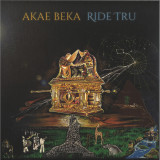
Akae Beka - Ride Tru LP

Akae Beka

Ride Tru LP

12inchIGBZRLP003
Before Zero Records
15.08.2022

Akae Beka's inimitable style of rich, deep, multi-layered songwriting, uncompromising devotion to RasTafari and soulful healing melodies developed over decades performing with St. Croix based band Midnite and countless recordings. At the point of his untimely passing in 2019, he had released over 70LP's. He is without a doubt one of the most prolific reggae artists ever known.

The stellar production trinity that is Zion I Kings have been involved collectively and individually in creating some of the most highly regarded contributions to the vast Akae Beka catalogue. Ride Tru, originally released digitally and on CD in 2014, stood every chance disappearing into the all eclipsing shadow of the LP released by them earlier that year, Beauty for Ashes, which had been named by iTunes as the reggae album of the year. A monumental achievement for undiluted, uncompromising RasTafari roots reggae music this side of the millennium. So needless to say, the bar was high and Vaughn Benjamin and Zion I Kings must have known that, as they managed to raise it higher again.

Ride Tru continues in the same form, rootsy, soulful, refreshingly polished and authentically raw, the threads of anciency that any devout reggae lover will be looking for and the threads of modernity that keep it alive and appealing in the modern day. A uniquely regal tapestry that has become synonymous with music created from the unity of Zion I Kings and Vaughn Benjamin

Following 8 years of anxious anticipation, for the countless Akae Beka fans that are also vinyl connoisseurs, this LP is now being released on as a 12" vinyl LP courtesy of Before Zero Records. This offers the listener not only the chance to enjoy this LP in an analogue form, but also the chance to hold the artwork as a 12" square masterpiece, created by the hands of Ras Marcus, the artist who gave the powerful visual presence that became synonymous to much of the I Grade / Akae Beka works over the years.

“How does an artist follow an album considered by many to be the best reggae album of 2014?..... you get right back in the studio with the same brilliant production team and follow that album a few short months later with one that nearly eclipses it entirely.”
Midnight Raver — Worldareggae

“...remarkable for the clarity of Tippy’s mix and the contrast between the hardness of Lloyd Richards’ drums and the softness of the guitars, keyboards and brass. The woozy analogue warmth of an old Augustus Pablo production – Son of Jah Dub - for Worry Free demonstrates how well Vaughn sits on the sounds of the original masters (an avenue that should be pursued further). Another veteran guest is the late Style Scott - who beats out one of his final patterns on How I & I Carry On.”
Angus Taylor — United Reggae

non in magazzino

Ordina ora e ordineremo l'articolo per te presso il nostro fornitore.

21,22

Last In: 3 years ago
Various - Inside The Dance Vol. 5 (3x12")

After a sold out 20 Anniversary 3XLP, Turntables on the Hudson returns with a diverse 3 X vinyl set that carries the Inside the Dance series (previously on WONDERWHEEL Recordings) to all new releases made between the international friends & family between 2020 - 2022. It was a call to action for inspiration, creation, motivation & moving your body in response to the depressing times of initial lockdown & continued music gathering closures during the pandemic. What we did instead was invested in music, art, collaborations, videos, remixes hoping to keep the spirits alive & inspiration high for each other. It’s now Spring of 2022 & we’re happy we did it all. Here’s the fruits of those seeds planted. Songs from artists across the sound spectrum from Morocco, Italy, USA, Spain, Argentina, Peru, UK, Montenegro, France, Belgium, Turkey, Dominican Republic, Niger & more. Almost all songs slightly edited to make sure we got enough output on each side of the record to mix the music in the clubs & on sound systems everywhere. Combining the singles artwork of Marcus (Tupi Lab) & the album LP vinyl art of Bodo (Marcial Arts), we have a very special limited edition 400 until pressing of this soon to be collectible. We hope you enjoy the collective effort that makes this look & sound so special. Ever since the party & label began in 1998, its mission was to shine the light on the underground international community making dance music & after 15 compilations, this is another proud example. Thanks for your continued support.

non in magazzino

Ordina ora e ordineremo l'articolo per te presso il nostro fornitore.

48,32

Last In: 3 years ago
Front Line Assembly - The Initial Command LP 2x12"

The Initial Command” is the debut landmark album by Canadian EBM-industrialists Front Line Assembly, originally released in 1987 through Belgian label KK Records. Bill leeb shows us already a unique style, setting a benchmark for all that would follow. Fiercely original, not least for ‘it’s time’, from the glittering synths and harsh metallic percussion of the unarguably cinematic “Casualties” and the abrasive white noise on “Ausgang Zum Himmel”, to the punchy breaks and dramatic strings of “No Control”.

Deluxe re-release including all original tracks and both bonus tracks taken from a re-release in 1997: “Complexity” and “Core”. Limited pressing of 500 copies with double vinyl record, deluxe gatefold sleeve and new vintage artwork. D-side features a silkscreen of the classic fist logo.

non in magazzino

Ordina ora e ordineremo l'articolo per te presso il nostro fornitore.

27,69

Last In: 3 years ago
Articoli per pagina:
N/ABPM
Vinyl