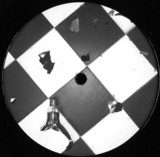
Klein's offbeat singular vision continues to defy classification. Her acclaimed, self-released records – Lagata, Only and CC – along with Tommy for Hyperdub and her theatre musical Care, have allowed glimpses into Klein's uniquely spirally perspective on vocal abstraction, disarming experimentalism and pop culture wonderment. Yet these chapters have also served as masks to conceal the artist's own personal crises of self-belief, misrepresentation and belonging.
An 18-month writing process led to her new album Lifetime. It's an unexpectedly literal body of work which Klein compares to "giving someone your diary." Lifetime embraces the inevitable cycles of existence, phasing through moments of brutality, vulnerability, estrangement and unexpected fortitude. Lifetime embraces the inevitable cycles of existence, phasing through moments of brutality, vulnerability, estrangement and unexpected fortitude. Every sound in Lifetime is intentional, every influence—from 'King of Gospel Music' composer James Cleveland, to early 18th century tonalities in the b side, the work of 'race film' pioneer Spencer Williams, the residue of the religious experience is deeply personal. The 12 songs of the album are pieced together like a puzzle; seamless transitions connect each of its compositions in a reverse chronology, while every chord from every song is echoed someplace else.
What's been hinted at in Klein's live performances is now realised in full for Lifetime. Less vocal work allows her to be even more expressive, and in eschewing a tendency towards brief, truncated sketches, each song serves as its own long conversational piece, committed to realities of a lived experience. The artist who once grappled with self-doubt has set about breaking the cycle of insecurity for others like her, while mindfully chipping away at the conventions of classical music.
Like its artwork, Lifetime addresses intersecting life cycles: the inner and outer selves, hypermodernity versus history, living nightmares and dream states, while seeking the light and darkness in both. Part 1 opens with unmistakable Klein flourishes on the title track. Gusty pads, anxious, frayed-edge static arcs, and craters of deep negative space, all of which melt down to the clean slate of "Claim It," which is a tribute to embracing one's own blessings. "Listen And See As They Take" and "Silent" form their own microcosm, as the sound of crackling kindling burns backwards into imposing structures of distorted strings and disembodied marching drums, before returning to heat and ash again. "For What Worth", in collaboration with sound artist and saxophonist Matana Roberts, explores the kinship between two artists whose shared exploration of lineage leads them both toward uncharacteristically sweet clarity.
Part 2 is further steeped in black expressive styles of the past. "Enough is enough" links the Lifetime narrative to the broader diasporic black experience, inhabiting every chamber of a harmonica with ghostly notes of the present and past, as fragmented gospel chords reflect spiritual bonds between self and the divine. "We Are Almost There" begins the journey with nothing but the looped structures of multitude of voices. The drums and dischord of "Never Will I Disobey" wordlessly create the conditions for "Honour," a near 10-minute composition where crossed boundaries and crossed wires are exposed in real time, and sharp expressions of hurtfulness, accountability and corrupted expectations are rendered beautiful in representational form, via sustained synth tones which hum, jab and flit in natural disharmony. The interlude "Camelot Is Coming" draws on the choir tradition to prelude the spoken word recounts the cycles of trauma and death that form "99." Lifetime closes with the dystopian swirl of "Protect My Blood" a composition which details an excruciating rift, before blooming into serenity as it draws to a close.
Klein's Lifetime is laid bare, from the end to the beginning, and cycled over again. From her place within her family, to their place within her, to viewing the fragility of culture through the lens of memory. It's a lifetime, an embodiment of young livelihood, and an end as much it is a beginning.
Buscar:black crack
One of the key figures in the Austrian house scene is definitely Roman Rauch. The MPC wizard has released quality tracks on cult labels like Philpot, klamauk, Quintessentials, Dirt Crew and Faces Records during this decade.
After 3 remixes and a collaboration with Precious K as Twinpeaks, he will return this autumn on the Viennese based imprint fortunea with a 5 track ep, called Blackout.
The A-side features the title track and a remix by New York’s Let’s Play House chief Jacques Renault. Roman delivers here his typical signature sound of crackling, dustfilled funk and r&b samples in combination with weighty rhythm sections. Jacques’ take is from it’s mood similar. But what stands out here is the addition of congas and a heavy compressed and funky bassline, that puts the dancefloor into a tribal gathering.
The B-side starts in a low-key deep house direction with „Oh Yeah“. A smooth warm bass chimes together with psychedelic rhodes and twirling low-cutted synth progressions. In contrary to this, Janefondas member Precious K takes these elements and transforms them into 2 different versions. The „More Dips Remix“ is a garage influenced party grenade, while the digital exclusive „Rawmix“ turns this tune into an exuberant, dirty warehouse experiment.
The vinyl is limited to 300 copies. There will be no repress!
Mastering by Patrick Pulsinger.
Support by Laurence Guy, Krewcial, Tensnake, Franck Roger, Loz Goddard, Baldo, Orlando B, Nice 7, Severino Panzetta (Horse Meat Disco), Replika, Tim Toh, Drei Farben House, Michael Reinboth, Clandestino, OOFT!, Sean Brosnan, Lars Berenroth
7am. Tilburg. Black room. Strobe light. Dutch Soundsystem Wirwar. "Party Like It's '96" celebrates 23 years of musical debauchery, rinsing BPMs and battering bodies in forests, squats or wherever a PA system could be plugged in. Five tracks from five different aliases make up this descent into drum beat battery. Noses are up against sweat drenched wall from the needle drop, the thundering pace of Trippy D's maniacal offering being elbowed in the ribs by Bart Bral's nosebleed inducing "No Shit, Sherlock!" Distortion slices into squalid acid lines in the blazing "Water On Mars" by RAF before broken beats are blended and blitzed by Just So Nah. The night, or morning, comes to an end in Roel's nightmarish fairground ride. "Wurlitzer Express" minces chiptune cuteness with splintered snares, cracked kicks and mutated percussion to leave hearts, minds and souls thoroughly stained.
Booming and banging, crashing and smashing, wriggling and writhing: the 'Black Snake Whip' cracks and out come the bats. INDEX:005 is a continuum of electrical fields that will psychologically ensnare and physically coerce you. Feel the tension from your ears to your toes; only dance will set you free.
This is a body of music, made for your body. Its Influences have been cultivating in the minds of industrial space enthusiasts and warehouse ravers for years. The sound of peaky synth leads and trebly harsh drums will make you grit your teeth as you succumb to the urge to move.
Take a whiff of this sonic bouquet from Black Snake Whip.
With a discography held in such high esteem amongst fans of conceptual French pop and soundtrack composition, the likelihood of finding an unturned stone amongst maestro Jean-Claude Vannier’s fertile psychedelic rockery falls somewhere between slim and skeletal. Even the most intrepid explorers of the most fearless and fastidious nature should naturally expect to encounter one or two shadowy characters when braving the oblique corners of the Vannier vault, but few lost souls cast a darker silhouette than the cinematic obscurity known only as La Bête Noire (The Black Beast).
Lost and presumed missing for decades the soundtrack tapes to this lesser-known 1983 French thriller (featuring a cast culled from films such as Alphaville, The Modern Couple and Sweet Movie) captures the revered composer and arranger of Serge Gainsbourg’s Histoire De Melody Nelson embarking on a darker exploration of free jazz, frenzied batucadas and cyclic carousel psychedelia. Counting key players of the French jazz scene within its ranks, The Insolitudes group comprises a crack team of Palm/Futura/Actuel/Saravah regulars such as saxophonist Philippe Mate´ (Acting Trio/Mate´-Vallancien/Tacet) alongside drummer Bernard Labat (Mad Ducks) and legendary Arpadys/Voyage rhythm masters Marc Chantereau and Pierre-Alain Dahan (Brutus Drums) all of whom alongside Michel Zanlonghi (Ensemble De Percussion De Paris) make up this thunderous, tumultuous, four-headed rhythm machine bridging an authentic gap between The Jef Gilson Groups and France’s signature “cosmic” revolution. Naturally these previously unheard compositions are spearheaded by lead pianist and composer Vannier and for devotee’s of his 1972 concept album L’Enfant Assassin Des Mouche there is much to admire and cross-reference herein.
Having been the most loyal and long-running guardians of Jean-Claude’s monster archive over the past two decades Finders Keepers Records are proud to present this first catch of newfound vintage Vannier discoveries on this limited and unlikely free jazz 45 single (which should find a perfect home between coveted Euro jazz 7”s by Krzysztof Komeda, Franc¸ois Tusques and Brussels Art Quintet). Almost 15 years since Finders Keepers once liberated the Mouches it is now time to set free another Black Beast amongst discerning listeners.
- A1: Intro
- A2: Crackelefanten
- A3: Der Ton
- A4: Hero
- A5: Raucherpause
- A6: Space Cookie Feat Hans Solo
- B1: Move
- B2: Chip Im Arm
- B3: So Raw
- B4: Hulk
- B5: 1984
- B6: Alptraum
- C1: Conspiracy
- C2: Nutten
- C3: Der Joint Danach
- C4: Le Mpc
- C5: Sonntag Feat Elvis Prestin
- C6: Excuse Moi
- D1: Glaub An Dich
- D2: Der Tod
- D3: Schöne Neue Welt
- D4: Die Lüge
- D5: Outro
Limited Edition Of 500 Copies On Black 2lp Vinyl. Comes In Gatefold Sleeve With A Funky Artwork By Boggie Cramb! Skipping Through Endlessly Boring 70s Flics From Eastern Germany And Digging In The Crates For 1€ Records Crammed With Scheisse Volksmusik Is Something Torky Does All The Time. Don`t Ask Yourself Why. Listen!
"It's Maths classes. A red-haired boy sits in the back, rhythmically tapping his fingers on a table like a madman. Although other students' eyesight is focused on the formula being written on the black-board, the boy could not care less. Out of a corner of his eye he notices as the sequence of numbers slowly begins to melt off the blackboard, glittering with colours, and finally spills all over the floor like a fractal leakage from some other dimension. Students from the first rows, scared, put their legs up - and then you start to hear the rhythm. The sounds, once set free, feedback from the walls and find their way to all chinks and cracks, circle all around to finally reach the teacher's ear. The lady cannot stop the upcoming fury, grabs Krzysztof Ostrowski (number 28) by his ear and circumventing the leakage she leads him out of the classroom. It's not the first nor the second time such thing happens. Years later, the boy finally sits by the machine; subtle light comes through the window slightly ajar, the curtain dances with the wind. Krzysztof, bent, is programming the rhythm."
It's warm and bright Autumn of 2018 and Krzysztof emerges again, this time on vinyl released by Jacek Sienkiewicz's label Recognition. The experimental style of "Primary Fluctuation" might come as a surprise to many of Jacek's followers, but there are surely some common features for the two art-ists - from attention to detail to a kind of serious melancholy present in their music. Ostrowski's rec-ord is a journey through futuristic polyrhythm, with enough space for menacing basses or unorthodox samples, reminding the aesthetics of fusion of broken techno and bass music championed recently by the labels like Timedance or Livity Sound. Four tracks (five in digital version) make up a cohesive, intriguing and surprising record, announcing series of special releases prepared by Recognition for the forthcoming months. ,
Matthew Dear's Black City Can't Be Found On Any Map. It's A Composite, An Imaginary Metropolis Peopled By Desperate Cases, Lovelorn Souls, And Amoral Motives. Like Most Literary Gothams, Black City Is A Place To Love And Hate, As Seedy As A Nightclub's Back Room And As Seductive As The Promise Of Power. Matthew Dear, The Musician, May Live In New York City, But The Matthew Dear Of Black City Inhabits A Sound-world Unlike Any Other: A Monument To The Shadowy Side Of Urban Life That Bumps And Creaks, Shudders And Wakes Up Screaming In The Middle Of The Night. Black City Is Matthew Dear's Third Album On Ghostly International, And It's His Darkest And Most Engrossing Work To Date.
From The rst Notes Of Album Opener "honey", It's Clear That The Love-obsessed Matthew Dear Of 2007's Asa Breed Has Given Way To A More Existentially Paranoid Entity, As Creeping Tempos Dominate, Cavernous Atmospherics Envelop The Listener, And Strange Distortions Crackle On The Horizon. In Black City, Nothing Is At It Seems: Leadoff Single "little People (black City)" Is A Nine-and-a-half Minute Disco odyssey, subverting its gleaming electronic lead with eerily giddy backing vocals and cryptic, ominous lyrics ("a frozen wasted heart / has died", "love me like a clown"); "You Put a Smell on Me" is a sordid sex romp set to hysterically chattering percussion and a serrated synth line that will set your teeth on edge; "More Surgery" at rst recalls the barely-there Krautrock of Harmonia in its burbling minimalism, until Dear's chanted chorus of "Alter genetics / to make my body glow / I need more surgery / there's so much more to know" sends the track hurtling into a dystopian future.
And yet, for all the foreboding moods on Black City, it's the album's sweeter moments that illustrate Matthew Dear's growing maturity as a songwriter. "Slowdance" is a futuristic lullaby in which Dear articulates a lover's helplessness ("I can't be the one to tell you everything's wrong") over breathy, Arthur Russell-esque cello swishes; the album-closing "Gem" is an achingly simple, reverb-drenched piano ballad that ends with a long, slow fade. Even in Matthew Dear's Black City, there is hope.
To coincide with the release of their eagerly awaited debut album Gate Of Grief (now due out on 20 July), US dark electronic outfit WHITE RING release a double AA side 7' single of the two lead tracks on the album 'Leprosy' and 'Nothing'. Blending heavy, distorted electronics with eerie, unsettling vocals they push the boundaries further, subverting genre ideas and mashing them all together, with industrial, metal, rave, chopped and screwed, rap, grunge, neo folk, post punk and new wave all in the mix
'Leprosy' is brooding, abrasive and ethereal all at once, the track draws from a varied and challenging palette, steeped in existential dread. It was the first song they wrote for the album and features the vocals of co-founding member Kendra Malia. As Bryan Kurkimilis explains; 'This song was the first time we really wanted to start exploring aggression in our music.'
'Nothing' is underpinned by gothic 80s beats and sinister synth bass-lines. It crackles and fizzes with arcade bleeps with wraith-like melodies floating over the top. In this song, nothing is true and everything is permitted. It features the first collaboration with newcomer Adina Viarengo, who added her vocals in 2016 to the existing instrumental track that Bryan Kurkimilis created for the first set of WHITE RING demos in 2009.
WHITE RING were originally formed by Bryan Kurkimilis and Kendra Malia, before they were joined by Adina Viarengo, with Bryan and Adina currently touring as a duo. Gate Of Grief arrives a full eight years since their benchmark EP, Black Earth That Made Me, which sold out almost instantly, making their records some of the most highly sought after on the underground scene and earning them a cult following across the globe.
Swerving from aggressively abrasive to beautifully ethereal, musically they draw from varied and challenging palette, whilst tackling themes of loss and acceptance due to struggles with drug addiction and existential dread on a broader scope.
Dwelling on the outskirts of pop music, WHITE RING grew up in the age of the internet and were exposed to a huge range of music. They have developed a unique style while pushing the boundaries of accessibility and musical genre. They have created a piece of art that is brimming with symbolism and underlying tensions, that seduces and scares in equal measure.
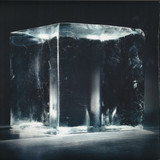
Prairie is the project of multi-instrumentalist and producer Marc Jacobs, hailing from Brussels with roots in The Netherlands. He previously released an EP (I'm so in love I almost forgot I survived a Disaster - 2013) and an LP (Like a Pack of Hounds - 2015) on the Berlin imprint Shitkatapult. On stage, Prairie plays with two or three musicians and together they re-create a free association of musical ideas and atmospheres. Prairie has played in selected venues and festivals across Europe and toured with Apparat in 2016.If the apocalypse was painted in several layers of pastel gouache, its soundtrack might be PRAIRIE's Flash Flood. Listening to the album, we drift through a series of frozen landscapes that gesture at a post-apocalyptic ambience. This is a kind of blackened music that has been left to sediment, excavated from traces in ice core samples. Flash Flood showcases a deep sensitivity to narrative and rich cinematic textures as Marc Jacobs returns with palimpsestic sonic layers. It has been three years since PRAIRIE's last release—the 2015 Cormac McCarthy-inspired Like a Pack of Hounds—and it is clear that it has been several years of pensive reflection. Now, PRAIRIE takes the sentiment of his 2012 debut, I'm So In Love I Almost Forgot I Survived A Disaster, several steps further: it is after the apocalypse, and no one has survived. And yet with Flash Flood, we can hear the hum of this impossible future.
'After the Flash Flood' introduces the sonic ruins of distorted guitars, field recordings, drum programming and synths that create the textures of the entire album. The melancholic and subdued black metal churn of 'Raindeath' becomes the cold backdrop for unnerving, paranoiac speech. The third track, 'Sisters', foregrounds this coldness while slowly moving away toward alternate vistas where the acoustic timbres of the saz-driven 'A Permanent War Economy' take over. 'Underwater Body Hunting' and 'Rabid Ibrahim' are hard hitting beat-oriented tracks that insist on burning slow. There is a patience with PRAIRIE's FLASH FLOOD that is difficult to deny. The lamentation of 'Elephants Will Rise Again' perhaps signals that it is not only the human that is lost after catastrophe. The album closes with 'Hard Water: Cracked Ice' and 'Hayashi Clock'. The former is a beautiful coalescence of clean harmonious tones and softly overdriven drums, while the latter brings us back to a meditative state, drifting through the final pastel tapestry.
"... his cosmos is located somewhere between Bohren & der Club of Gore and Sunn O))), ambient is as familiar to him as brachial sounds, and he is as much acquainted with guitars as with synths and modern technology" (GROOVE)
"... Like Ben Frost, (Prairie) exudes a certain harshness while tempering his work with moments of sublime beauty. This isn't club material, it's music for the hammer in one's hand, the confrontation of the demon, the soul-shattering revelation." (A Closer Listen)
"The kind of melancholia I'm talking about, by contrast, consists not in giving up on desire, but in refusing to yield. It consists, that is to say, in a refusal to adjust to what current conditions call 'reality' - even if the cost of that refusal is that you feel like an outcast in your own time." (Mark Fisher, Ghosts Of My Life, Zero Books 2014, p. 24) In Ghosts of My Life: Writings on Depression, Hauntology and Lost Futures', the author Mark Fisher outlines - to put it in a big way - a resistant melancholy. This stands in contrast to leftist melancholy resignation', as well as something which Fisher does not talk about: its common masculine counterpart, habitual post-left cynicism - as in seen it all before'. Fisher calls this hauntological melancholy. Haunting, spooks, ghosts and apparitions are an almost constant presence on I Started Wearing Black', the second album by the Cologne-based artist Sonae (pronounced so-nah'). The term hauntology shares a fate with retro-futurism when it comes to inflationary overuse and abuse. It's a conceptual container that looks good and can hold a lot, indeed, too much. Furthermore, hauntology has its peak season behind it, a term on the threshold of its expiration date. Nevertheless, I would like to rehabilitate hauntology and use it properly to characterize I Started Wearing Black', because the term is rarely as compelling to describe music as is the case here. The most recent other example could be Asiatisch' by Fatma Al Qadiri, but with a completely different frame of reference. What are the ghosts of this music It rustles, crackles, ruffles, crunches, rattles, scrapes, sometimes a beat emerges from the constant noise, sometimes an obscure voice mumbles incomprehensibly, sometimes a melancholy piano figure is prevented by this noise from coming too much to the foreground. It definitely is eerie - to bring into play another term used by Fisher in the title of his latest book, The Weird and the Eerie'. In British pop-jargon, eerie first occurred to me more often when referring to particularly leftfield, spooky and... well... ghostly dub, a bass-heavy, echoing noise, from Augustus Pablo to Creation Rebel to Burial. Unlike the Wald & Wagner records by Wolfgang Voigt, Sonae is not a kind of neo-romantic veiling with a tendency for escapist nebula. It is more a noise of latency. The noise signals a latent - not necessarily acute - threat, a latent uneasiness about... yes... about what About a System Immanent Value Defect' That's the name of a track on I Started Wearing Black' where something that sounds like a French Horn (or a foghorn) battles for attention through or against the background noise. An email from Sonae: The piece 'System Immanent Value Defect' should actually be called 'I See Turkey'. I wrote it for my fellow student Elif - she is a pianist and Gezi Park activist from Istanbul. Through her I witnessed the inner conflict and agitation that political circumstances can create: her feelings of guilt when there was an attack, with her safe in Germany as a student, watching the events from afar. It was horrible. When her mother begged her not to come home because she feared for her safety, I felt a cold shiver run down my spine. I started with the piece from this mood, beginning with the piano, then the noise (modulated sinusoidal curves), which reminded me of waves and the then heatedly discussed Mediterranean sea: atmospheric, melancholy motifs. In contrast is the anger, the pressure, represented in corresponding sounds - hopefully audible! - During this time I started to think about world views as they can be found around the globe, in how far they held by societies and their political representation. I realized that I know of no political system that is actually about the people and what would do them good. It's always about positions, power, money. I thought that was a lot more frightening on a global scale than merely viewing Turkey in isolation. That's why the piece is called "System Immanent Value Defect", because our world suffers from precisely that. Everywhere, it's all about the wrong things.' Between the wrong things there are happy moments. In the title track, after 184 seconds of rattling and hissing, a beat is unleashed, like an arrow released from a spanned bow, a beatific relief, if there is such a thing. White Trash Rouge Noir' first meanders along spookily, then after 144 seconds it transforms itself into a distant cousin of Einstu¨rzende Neubauten's Yu¨ Gung', but there is no Big Male Ego to be fed here, and the black in the album title is a completely different type of black from that of the Neubauten. Furthermore, I Started Wearing Black' was finished long before the black dresses were worn at the Golden Globes as a sign of protest against sexual violence. Sonae writes that she herself started wearing black some time ago. Her reasons are so-called personal ones: ... resulting from an individual situation (lovesickness), I started to wear black (gaining weight and feeling ugly).' The political dimension of gaining weight, feeling ugly and therefore dressing in black in I Started Wearing Black' lurks within the noise and never becomes explicit and only rarely manifest - or a manifesto. Sonae writes about the track We Are Here': A piece for minorities... in this case, considering the current pop-feminist discourse, explicitly for women. Female artists have long been saying loud and clear that 'we are here' and 'electronic music is not a boys club!' But this pop-feminist moment should only be seen as one part of the dedication of the piece. It is for minorities, for the oppressed, who didn't belong enough.'
Klaus Walter
Putting the foot to the floor French duo Haydee's "No Gouvernance" revs and rumbles like a cantankerous, clapped out engine. Rust breaks clean in huge chunks as screams and shouts punch through the thick drum fumes. Industrial legends Hunting Lodge follow in a similarly smog spitting motor, the drunken mechanical tirade that is "De Omnibus Dubitandum." Bass and beats crack and leak in this scarred proto-acid work from 1983. Newcomer Catriel drowns "nbdymksmefeellow" in a sludge of static, indecipherable words gurgle as percussion attempts to save this doomed victim. Giant Swan (Timedance) then take a piece of pipe to "Dare", pounding it with heavy blows, forcing confessions through verbal assault before leaving it more bloody pulp than track. Finally Gotshell (Blueprint) closes with a rumbling double brewed remix of "De Omnibus Dubitandum. A 12" that'll leave speakers blown and listeners in need of a tetanus shot.
Elevate Melodies are back with four toe-tapping, finger-snapping, dancefloor slaying heaters, all on wax.
Side 1 takes off with the Griffes' remix of Jay Airness' She Staying', all sumptuous keys, sun dappled strings and peak-time beats propelling the track ever forward. Venice Beach then takes on Sly Moore's seismic Muoosic', dropping the tempo and creating a super low-slung slab of electro funk, one for the 100bpm crew.
On the B side, Lord Funk takes on Black Les Grues De Nantes' from Victorius, turning it into a jazzy workout with slap-bass, chopped up vocals and dusty vinyl crackles giving it a classy 90s feel. And rounding out the selection is New York DJ and producer P-Sol who applies his midtempo skills to Law and Theory' from label boss Jay Airness, creating an atmospheric groove with some real funk and jazz flourishes.
Limited to 500 copies.
This is the 2nd various artists compilation from the esoteric Black Lodge collective out of Los Angeles, showcasing a variety of sounds one is likely to hear at their monthly gatherings. This comp contains a mixture of acidic jacking warehouse bangers from veteran producers TX Connect and Jasen Loveland alongside a more acid chicago house inspired jakbeat track from Black Lodge co-founder Kosmik and an EBM/electro dance cut from the Belligerents.
Hot on the heels of the critically acclaimed 2017 LP Windswept - which soundtracked David Lynch's Twin Peaks, Digital Rain is Johnny Jewel's latest album. Jewel is known for his extensive collaborations with film makers David Lynch, Nicolas Winding Refn, and Ryan Gosling, as well as for his work with groundbreaking musical groups such as Chromatics, Glass Candy, and Desire.
The 19 movements of Digital Rain are three dimensional beds of analogue warmth encompassed in raw electronic moisture. The result is an expansive pallet of soft color amid canyons of jagged oscillations. According to Jewel, "Digital Rain is a mirror image of itself designed to play as a singular liquid movement."
"After living a few years in a desert climate, I realized I was nostalgic for the constant presence of precipitation from every city I once called home. The sound of hail ricocheting off my roof in Houston...The floods crashing in from the Gulf of Mexico that would destroy my mother's house three times...The constant kiss of drizzle on the streets of Portland, and the morning rain against the windshield of Trimet city bus number 15 that I would ride home after recording all night...The snow buried row houses of Montreal where my daughter was born, and the rhythmic feel of ice cracking under my boots for six months straight."
"The desert is constant, and I love this repetitious ritual of Los Angeles so much. As moisture and humid weather seem more and more like a dream I once had or a fading memory of the places I fell in love with...I wanted to make a record without drums, without lyrics, vague in form. Each track morphing and eclipsing the next like the ever-changing movement of clouds obscuring the moon."
Cut By The Legendary Bernie Grundman In Hollywood. Recorded in Joshua Tree / Mixed in Los Angeles.
It's been a while since Red Laser's last release which left a void in the UK output of Manctalo synth jams but now a planned schedule of three releases in quick succession means plenty more analogue chug for you to rattle your bones to.
First of the 3 is this unique double gatefold LP from Red Laser original Kid Machine.Kid Machine delivers a 5 star upgrade to the signature sound that people worldwide have fallen in love with. 808 kicks and DX 7 licks bubble under the atmospheric chord changes creating a soundtrack which is just as comfortable on the dance floor as it is on a midnight drive.Alien Dance darts around to irregular delight. The dramatic score of Asteroids builds until it soars high above the grid. The bassline on Beast drills a blackened dance floor in preparation to be replaced with 80's discotheque neon squares.Beyond Cygnus takes flight and drifts across a Martian plane. The 808 kicks and orchestral synth stabs of Conquest crush all known reality into a space the size of a photon and the weight of its gravity is unbeatable. Standing out amongst the pack is the apply titled 'Forever Machine'.
A proper Manctalo synth anthem guaranteed to deliver speaker destruction.The LP closes with classic Machine style bangers 'Flight Manoeuvres' and 'Seconds From Oblivion'.
They bring this galactic odyssey to a confident end. This is a cracking journey through the outer rim and back.
Après s'être posé au large des côtes de Trinidad, l'ovni Caandides a été de nouveau repéré dans un tout autre endroit, davantage atypique, aux coordonnées 70° 30' N 151° 40' E, précisant ainsi les rives de la mer de Sibérie orientale. Toutefois, trois producteurs et le groupe lui-même ont revisité quelques-uns des meilleurs morceaux de l'album, réunis sur un vinyle spécialement conçu pour le Disquaire Day 2016.
Avec Voiski (Construct Re-form), Renart (Cracki Records / Dawn), Svengalisghost (L.I.E.S / Russian Torrent Versions) et Plato.
From the whip-like crack of Yako's signature staccato vocals and impossible-to-memorize lyrics to the relentless overdrive tempo of their oneof-a-kind prog-core, Melt-Banana have long resided in a cybertopia of their own devising where the limits of technology and human capability are old-world concerns as quaint and cumbersome as bartering with a blacksmith. The demos for Fetch, their first studio album since the severely fried pop-punk of 1997's Bambi's Dilemma, were completed in March 2011, but the Fukushima earthquake changed everything, including
their ability to concentrate on recording. Which stopped completely.
Once they felt ready to return to their music, they decided to approach the songs on a sound-by-sound basis, choosing each tone with meticulous attention to detail, affirming their personal connections, being themselves naturally and openly.
Fetch scrapes glam shimmers off punk's outermost fringes and forges them into a rather intensely technical Deanscape packed with fantastical hybrids. Agata's guitar riffs, seemingly composed in tandem with skipping CD players, are more bad-ass than ever, bright and fractured like the soundtrack for a CC-Hennix-scored biker flick. The album is juiced with electronics and post-rock production, tempering what could easily be a
tiresome and predictable frenzy, yielding unexpected associations: Kate Bush climaxing on Walter White's blue meth; demos of late-period Wire playing metal run through Wasp synthesizers and Autotune; unripe wild
lychees keeping time on an Ankgor Wat tin roof during a monsoon.
They've been performing live as a duo since summer 2012, and will do the same for their '2 do what 2 fetch' tour in support of the album. After nearly 20 years of playing with a live rhythm section, their use of a PC, while opening possibilities for a variety of drum and synth voicings, does not signal a move away from the traditional live band sound, as heard, for example, via the future transmissions from downtown Noiseapolis on
2009's Lite Live: Ver. 0.0. Yako and Agata say they need to feel real band sounds onstage as much as someone in the audience. This is a group that routinely excels at several kinds of impossible simultaneously, so of course any new challenge they come up with for themselves is sure to blow the doors off your Mini Cooper. - First record as a duo expands the M-B sound
into multiple dimensions - LP includes digital download card; first
pressing on clear vinyl
Black Truffle is pleased to present Speak To Me, the sixth full-length release from 3/4HadBeenEliminated, the Italian trio of Stefano Pilia, Claudio Rocchetti and Valerio Tricoli. Based on source material recorded in Bologna and Berlin over the course of several years, the album is made up of two side-long pieces meticulously constructed in post-production by Tricoli in his singularly dense and unpredictable style. Although their live performances have always been entirely improvised, in their recorded work the group focuses on using improvised recordings as source material for compositions built up through layering, editing and analogue manipulation, extending the practices of Teo Macero, Faust and This Heat. Melancholic instrumental ruminations sit alongside cracked electronics, concrete sounds and Tricoli's whispered vocals, drawn together into dense assemblages animated by gradual transformations and sudden jump cuts.
Beginning from the abstractions of their self-titled debut release in 2004, the group embarked on a trajectory that saw them move toward near-song structures, Tricoli's voice becoming a dominant element amid an increasingly dense and layered production style. On Speak To Me, however, the listener feels confronted by the ghost of music, sonic memories echoing across a psychedelic expanse. Evacuated of any clear structure, the music becomes a reverb-saturated morass, from which crystalline details momentarily emerge: shimmering echoed guitar, bowed double bass, tactile hand percussion, skittering electronics. Suffused with a darkly pensive atmosphere, Speak To Me is an elegant summation of the distinctive blend of electroacoustic techniques, instrumental improvisation and contemporary psychedelia pioneered by 3/4HadBeenEliminated over the last decade.
- 01: Fly Away - Abraham Battat
- 02: Dawn - Richard Martian & Co
- 03: Missed Another Day - The Gingerbread Express
- 04: Would You Believe - Gloria Rosebud Black
- 05: Spanish Guitar (Feat. Willie Moore's Quintet) - Jimmy Briggs
- 06: In A Galaxy Far Away - Third Stream
- 07: The Dude - Joe B
- 08: The Provider - Seeds Of Fulfillment
- 09: Masquerade - Larry Covin
- 10: In A Strange Strange Land - Bobby Boyd Congress
- 11: Wild Wild World - Larry Dismond
- 12: Take You For A Ride - St. John's Wood
- 13: Seasons Of Doubt - Finnigan/Finlan
- 14: When The Time Is Right - Timberlake
- 15: Summer Love - Portis Brothers
- 16: Midnight And You - Odyssey Group
- 17: Scratch My Back - Soul Scratchers
"...don't ask if there will ever be a Volume 2. We don't know yet. What we do know is that if we ever come across a similar tour de force as Don McCaslin's composition, Praise Poems, then there will certainly be one..." These were the final words of the sales notes for Praise Poems Volume 1 - which we proudly released earlier this year. And indeed, since then, we have discovered a tune which led us to continue to curate this series of obscure, soulful, jazzy and spiritual sounds from back in the day. The song to which we refer to is Abraham Battat's jazz-samba masterpiece, Fly Away. Fly Away is a righteous combination of sonorous jazz guitar, crackling drums and warm acoustic piano. Floating through the tones as if in a private concert for you in your very living room, it is an earnest, honest vocal performance bringing a rainbow message of freedom and liberty to the world. This is the standard by which we judged the entirety of this compilation. Though they may be known in some circles, selections by Richard Martian, Larry Covin, and The Gingerbread Express are in the same category of pure beauty. Of course, good luck finding a copy of Larry Covin's Masquerade or the Portis Brothers' Summer Love. The single hit you receive while doing an online search is the exact same copy from which we took the master. To find a needle in a haystack is a cakewalk compared to turning up a copy of some of these gems to be found here.