The first single from Blundetto's forthcoming album sees the French producer collaborate with a true great of Jamaican music, the legendary reggae vocalist Ken Boothe. Enjoy the killer A side on this dinked 7' then flip it over for dub and repeat... Ken 'Everything I Own' Boothe played a significant part in covering Sir Coxsone's Studio One walls with gold - and goodness knows that label fostered its share of legends. Collaborating with the master, Blundetto could have laid it on thick with heavy production; instead alongside his discreet partner Blackjoy, he created a gorgeous production using the purest of Jamaican music, proving yet again that time has nothing on the suave tones of Mr. Rocksteady.
After a short break in the African wilderness, Black Rox return for part 4 of this acclaimed series. 'Date With The Rain' sees Soft Rocks turn in an 11 minute 'One For The Lion King' manipulation of a joyous and uplifting jam that fuses traditional rhythms (think a humm-ba-ba) and vocals that are underpinned with a strong 4/4 kick.On the flip side,Roots Unit perform some major surgery with a 'Pump Up The Jam' reconstruction on 'Le Beat Is Technotronic'. Crazy percussive jungle rhythms and wonky vocal hooks rule the roost until it merges into a future 'techno-techno' Amazonian world.
We welcome the vinyl format after a hiatus to embark into an energy-driven journey, full of potent, cross-genre tracks courtesy of Mr. Ben Cano.
Ben, which previously collaborated on this label as TenienteTuko, builds on the previous album-creating experience and he outdoes himself in multiple ways, keeping the variety of groove encompassing all together with his propelling signature techno ethos.
'Deep Snowmass' starts the EP in a harsh, mental way to induce rapidly to a dark feeling which leaves you in the void with a malleable conscience that allows your body and soul to float, with the help of an ever-building acidic bass and pulsating percussion.
'Rocky Mountain' goes to other heights, using a uplifting Rhodes chord and effective drum programming to deliver a dreamy wave of full potential.
'Between dub', 'hitch' and 'Tube 8' seal the deal with energetic, acid-infused and sometimes-housey takes from his recent live set, which he manages to reorganize in the track format we currently offer as black pressed acetate.
Aroop Roy has been making waves with his unique sounds for the past few years, with a wealth of successful releases and a busy gig schedule at the helm of some of the best clubs around the world. By fusing elements of Jazz, Afro, Latin, Funk and Soul with the deeper end of House and Disco, Aroop has forged his own style with EPs on revered labels including G.A.M.M, Basic Fingers, Freestyle and Lazy Days. For his Delusions Of Grandeur debut he pulled out all the stops, delivering three original tracks which further show his diversity as an artist and ability to produce left of centre, quality underground music without losing sight of the dancefloor.
Things kick off with Save Our Love, a track that's absolutely brimming with energy thanks to punchy Wurlitzer chops, tension-building Philly strings, and a rock-solid disco groove.
Next up we have What I love which sees Aroop take an altogether more freaky approach flipping an uptempo rolling break, distorted synth line, cross-rhythm stabs and rasping vocal cuts into an edgy dance floor workout.
Closing this brilliant EP is the low-slung bump of Walk That Walk featuring original vocals from Oakland, CA based Blacktroniks who delivers his flow on top of a bass-heavy slice of deep electro boogie.
out of Stock
Last delivered 7 years ago available to reorder, subject to availability
'Rockin live ruff and tuff', this is the untrammelled counterpart to Dadawah, six years later in 1980, fresh from the Black Ark: free, rawly spiritual trance-music, a full-force nyabinghi freak-out.
The drummers are headlong and rollicking, thunderous and explosive. Even more so than Dadawah, the mix is ecstatically echoey, giddily dubwise without let-up. Ras Michael himself sings from the mountain-top, like he just don't care — at the top of his lungs, in voices, screeching like a bird — with the delirious abandonment otherwise owned in reggae by Lee Perry.
Amongst the uncredited performances swirled into proceedings, there are squiggles of flute straight from the Upsetters song-book, the minor-key organ stabs and abstraction of electric space-jazz, and sax-playing more attuned to the Headhunters than the Blazing Horns. (I Ya I in particular is a stunning fifteen minutes.)
This is the real thing, music without affectation. Pure reggae. Sun Ra fans should love it, anyone with ears to hear.
Prepared and manufactured at Abbey Road, D&M and Pallas, beautifully presented in rigid, old-school, tip-on sleeves, with matt-coated fronts and untreated-paper backs, 180g vinyl.
'These sounds are sounds of inspiration and love and culture to the universal benefit of mankind... So therefore meditate and stop hate.'
Very hotly recommended.
Mogwai return with their 9th studio album which was recorded with renowned producer Dave Fridmann (Mercury Rev, The Flaming Lip's, Mogwai's Come On Die Young and ROCK ACTION) at his Tarbox Road Studios in New York State.
Every Country's Sun named after a friends lack of knowledge in how the universe works, takes two decades of Mogwai's signature, contrasting sounds and distills it, beautifully, into 56 concise minutes of gracious elegance, hymnal trance-rock, and transcendental euphoria. It will definitely appeal to fans of the band and will gain many new ones along the way.
Boxset includes: White vinyl double LP, 12" black vinyl (containing 6 tracks of album demos), CD, plus a set of Tarbox Road photographic prints - Includes download card redeemable from the label.
- 180 GRAM AUDIOPHILE VINYL
- GATEFOLD SLEEVE
- INCLUDES 4 PAGE BOOKLET
- FIRST TIME ON VINYL
- 5TH ANNIVERSARY EDITION
- FEATURING THE HIT-SINGLES HERE'S TO NEVER GROWING UP', ROCK N ROLL' AND LET ME GO'
- LIMITED EDITION OF 3.000 INDIVIDUALLY NUMBERED
COPIES ON SILVER & BLACK MIXED VINYL
Avril Lavigne is the fifth studio album by Avril Lavigne. It was released in 2013.
Lavigne collaborated with numerous producers including Martin Johnson, Peter Svensson, David Hodges, Matt Squire and her then-partner Chad Kroeger. The album features a more pop and upbeat sound combined with power and piano ballads. Avril Lavigne also incorporates electronic music, industrial and punk rock. The album features two vocal collaborations: Kroeger and American industrial metal singer Marilyn Manson.
The album debuted in the Top 5 in album-charts of the US, Canada, Japan, China and many other countries.
Five singles were released from the album. Its lead single Here's To Never Growing Up' peaked at number one on the in Taiwan and The Philippines. Other singles, including the duet with Chad Kroeger Let Me Go', Rock n Roll', Hello Kitty' and Give You What You Like' became succesful international hits.
Avril Lavigne received two award nominations, The Juno Award for best Pop Album and World Music Award for World's Best Album.
2018 marks the 5th Anniversary of Avril Lavigne. The album is now available on vinyl for the first time. This first, limited edition run is pressed on 180 gram silver and black mixed vinyl. Only 3.000 copies are available.
- 180 GRAM AUDIOPHILE VINYL
- GATEFOLD SLEEVE
- ALBUM FEAT. SKRILLEX, EXCISION, DATSIK, NOISIA,
KILL THE NOISE, AND 12TH PLANET
- FIRST TIME ON VINYL
- LIMITED FIRST PRESSING OF 2.500 INDIVIDUALLY
NUMBERED COPIES ON COLOURED (SILVER AND
BLACK MIXED) VINYL
The Path of Totality is the tenth studio album by American nu metal band Korn. Originally released in 2011, the album finds Korn shifting gears and exploring new territory.
On The Path of Totality band collaborated with some of the leading dubstep and electronic producers in the world, including Skrillex, Excision, Datsik, Noisia, Kill the Noise, and 12th Planet. This resulted in something completely new, yet utterly and definitively Korn.
The title The Path of Totality refers to the fact that in order to see the sun in a full solar eclipse, you must be in the exact right place in the exact right time,' Korn frontman Jonathan Davis explained.
The album includes the singles Get Up!', Narcissistic Cannibal', Way Too Far' and Chaos Lives In Everything'.
The Path of Totality won Album of the Year at the 2012 Revolver Golden Gods Awards. This was Korn's first victory at the Golden Gods Awards, a ceremony that celebrates the best in hard rock and heavy metal music. Korn was also inducted into the Kerrang! Hall of Fame during the 2011 Kerrang! Awards.
Available on vinyl for the first time, the first 2500 individually numbered copies are pressed on coloured (silver and black mixed) vinyl! Strictly limited!
Southend quartet Ghost Music release their evocative debut album I Was Hoping You'd Pass By Here via Arlen on 19 January. They create careful, considered songs, weaving lo-fi lullabies with gliding guitars and understated arrangements. Influenced by Silver Jews, Flying Nun and K Records, they explore themes of nature, love, loss and a melancholic English romanticism embellished with beautifully spectral melodies and executed with startling subtlety.
Despite this record being their debut, the band has produced a veritable wealth of music over the past 20 years in various guises. Ghost Music revolves around the songwriting partnership of Matt Randall and Lee Hall, who had played together in the 90s with John Peel favourites Beatglider. More recently Randall has received critical acclaim as Plantman, with his three albums Closer to the Snow, Whispering Trees and To The Lighthouse receiving praise from The Guardian, Uncut and Mojo. When Randall and Hall reunited to collaborate on another album together, they brought in the talents of Roy Thirlwall on bass (Melodie Group) and Leighton Jennings on drums (Dark Globes) to complete the band.
The original idea would be that the songs would be 'ghosts' and create 'ghost music' to resurrect and dust off old songs that they had already started. Lee had found the beginnings of 'Home Dog' on a dusty old 4-track and he had recorded 'Strange Love' on his iPhone in 2014, whilst Matt had written 'My Cloud' as far back as 1997 (the night he moved out of his parents' house). As the album began to take shape, the ghostly premise took a back seat, as they began to breathe new life into the songs they found the impetus to write new ones.
Randall explains the songwriting process; 'When we were in Beatglider together and in the past we'd made a 'thing' out of writing long songs with a lot of changes. This time we pared it back a bit and stuck to the melodies more. We really wanted to make a proper guitar record. Lee's my favourite guitarist and it was lovely to see him stretch out on these songs with his diamond fingers.'
Not afraid to wear their influences on their sleeves, Ghost Music's sound is instantly familiar, echoing beloved bands from the 90s such as Pavement ('Home Dog' has a definite 'Range Life' feel), Galaxie 500 ('Blindspot'), Yo La Tengo ('Heart Shaped Holiday' is influenced by the languid YLT songs that peak after a short intro) and even old-school rock'n'roll ('Strange Love' was born out of an appreciation for the instantly engaging opening riff in 50s songs). Yet Ghost Music's work never feels derivative, being instead effortlessly emotive, melancholic and affecting, creating a world of sound that is hugely reassuring and a tonic for the modern age.
The fourth release on Trevor Jacksons Pre- Label is by SKULL. A visceral journey into experimental noise and no wave avant grade beatscapes
The last SKULL release 'SNAPZ' appeared on Jacksons own Output Recordings label in 1999. A seminal collection of tracks that had previously featured on the first two legendary Mo wax 'Headz' compilations (also featuring Autechre, Beastie Boys, Air, and DJ Shadow) as well as tracks that had also appeared on Kevin 'The Bug' Martins notorious Macro Dub Infection albums during the mid 90's.
Reactionary sonic statements aimed at the coffee table world of Trip Hop, fuelled by his dissatisfaction and dissillustionment with Hip Hop of the time, Trevor pushed himself into uncomfortable and far more extreme areas than he had before, areas he felt unable to explore with his Underdog productions, which were mainly being utilised for major label remixes at the time.
Influenced as much by the industrial pioneers, post punk and new wave of the past as the burgeoning post rock scene in the mid 90's, This new set of previously unreleased recordings originally produced between 1996-2000 are equally as intense and visceral as the early releases. Dusty samples, raw beats, tape loops, and primitive effects combine to sound as relevant now as when they were initially created.
Air Lows is the debut solo album by Silvia Kastel. The Italian artist has been a fixture of the underground since her precocious teens, clocking up many miles in Control Unit with Ninni Morgia ('It's like Catherine Deneuve dumped two cases of post-Repulsion psychiatric notes over Pere Ubu's Dub Housing, lit the fuse and, ahem, stood well back" - Julian Cope), including collaborations with the likes of Smegma, Factrix, Gary Smith, Aki Onda and Gate (Michael Morley of The Dead C). Both solo and in her work with others, Kastel has explored the outer limits and inner workings of no wave, industrial, dub, extreme electronics, free rock and improvisation. Air Lows is both her fullest and most refined offering to date, a work of vivid, isolationist electronics which draws deeply on her past experience but assuredly breaks new ground. Prompted by a late-flowering interest in techno and club music, Kastel sought to create something which combines a steady rhythmic pulse with the otherworldly sonorities of musique concrete, and avant-garde synth sounds inspired by Japanese minimalism and techno-pop (Haruomi Hosono's Philharmony being a particular favourite). The formal artifice of muzak / elevator music, the intros and outros of generic popular songs, the extreme light-heavy contrasts of jungle, the creative sampling of hardcore, and the very 'human' synths in the jazz of Herbie Hancock's Sextant and Sun Ra: all were touchstones for Air Lows' conception and composition, and all strains of music addressing - or complicating - the relationship between the human and the technological. By extension, visual inspirations also proved important: anime, and the avant-garde fashion of Rei Kawakubo. What does that shirt or dress sound like Though used sparingly, Kastel's voice remains her key instrument, whether subject to dissociative digital manipulations as on 'Bruell', delivering matter-of-fact spoken monologues, or providing splashes of pure tonal colour. Recorded between her expansive Italy studio and a more compact, ersatz set-up in Berlin, Air Lows gradually takes on some of the character of the German capital: you can hear the wide streets and uninhabited spaces, the seepage of never-ending nightlife, the loneliness. Air Lows is The Wizard of Oz in reverse: the glorious technicolour J-pop deconstructions of its first half leading inexorably to the icy noir of 'Spiderwebs' and 'Concrete Void'. These later tracks are reminiscent of 2015's magnificent 39 12', Kastel in the role of numbed, nihilistic chanteuse stalking dank, murky tunnels of reverb and sub-bass. But in fact there is contradiction and emotional ambiguity to Air Lows from the outset, and throughout - a sense of both infinite space and acute claustrophobia; energy and inertia; fluency and restraint.
LP incl CD
Garden of Love' one of the first single tracks feat Peter Hook (New Order) On the cover of their new album Malamore, their first album for Because Music, Lionel and Marie Limiñanas are back in black, and looking ineffably cool, standing next to a classic silver Fifties trailer, shot at a beach festival in the French town of Paulilles by the Spanish border, just 30 minutes drive from the duo's home town of Perpignan. They'd been playing a DJ set, only with 45 rpm vinyl - Sixties punk, Italian pop, movie soundtracks and Seventies rock tracks,' they recall. The picture syncs well to the colour of Malamore, like the artwork of a movie soundtrack. The lettering on the cover is significant too.
This special collector's edition electronically reproduced stereo 7' single (only 200 copies), comes in two fantastic coloured vinyl options (100 x red vinyl and 100 x purple vinyl). A refreshingly new take on mono to stereo conversion. Elvis fans growing up in the 1960's and 1970's unwittingly listened to his 1950's catalogue in electronically reprocessed stereo, love it or loathe, it was pretty much all there was back then unless you could afford to track down expensive mono copies. To better understand where the electronically reprocessed stereo versions originate from, we need to go back to 1961, at which point RCA had begun the process of taking Elvis' 1950's mono masters and converting them into a stereo sounding effect. By 1960 when Elvis returned from the army, he was recording in true stereo and as far as RCA were concerned, mono was a thing of the past. You just need to listen to the sound quality of the 1960 'Living Stereo' version of the 'Elvis Is Back' album, to appreciate just how much the recording industry had moved on in just two years. Such was the demand for stereo records in the early 1960's most major labels had created their own process for converting mono into stereo or 'fake' stereo as it became known, with some labels producing better results than others. Opinions on Elvis' 1960's electronically reprocessed stereo versions are mixed, with some recordings making the transition from mono to stereo effect better than others. Some DJ's actually preferred playing the electronically reprocessed stereo versions, believing they gave a wider fuller sound on the dancefloor. By late 1970's, RCA had once again begun to re-issue original mono masters, giving many fans their first opportunity to hear how these tracks were originally issued. By the time compact discs had arrived on the scene in the 1980's, electronically reprocessed stereo was well and truly dead and buried. Very few electronically reprocessed stereo recordings ever made it onto a digital format and the few that did are now highly collectible. Recorded at RCA Studio 1, New York on the 30th of January 1956, My Baby Left Me is a driving powerhouse rockabilly masterpiece with a real Sun Records vibe to it (produced by Steve Scholes with Elvis on vocals and acoustic guitar, Scotty Moore on electric guitar, Bill Black on bass and D.J. Fontana on drums). Our flip side Blue Moon Of Kentucky is another rockabilly classic which first appeared as the opposite side to That's All Right (Sun 209) in 1955 (Elvis' first single). Blue Moon Of Kentucky was recorded on the 7th of July 1954 at Sun Records (produced by Sam Phillips with Elvis on vocals and acoustic guitar, Scotty Moore on electric guitar and Bill Black on bass). Both tracks have been painstakingly re-engineered to create a stereo effect sound. The result is a bigger, sharper sound that jumps straight outta the grooves at ya! One reviewer described the process as - it's as if a veil has been lifted off the tracks'. Both tracks are taken from the forthcoming album titled 'Elvis Presley - The 50's In Stereo' (mono to stereo re-visited). For best results play this killer double-sider very loud!!!
This special collector's edition electronically reproduced stereo 7' single (only 200 copies), comes in two fantastic coloured vinyl options (100 x red vinyl and 100 x purple vinyl). A refreshingly new take on mono to stereo conversion. Elvis fans growing up in the 1960's and 1970's unwittingly listened to his 1950's catalogue in electronically reprocessed stereo, love it or loathe, it was pretty much all there was back then unless you could afford to track down expensive mono copies. To better understand where the electronically reprocessed stereo versions originate from, we need to go back to 1961, at which point RCA had begun the process of taking Elvis' 1950's mono masters and converting them into a stereo sounding effect. By 1960 when Elvis returned from the army, he was recording in true stereo and as far as RCA were concerned, mono was a thing of the past. You just need to listen to the sound quality of the 1960 'Living Stereo' version of the 'Elvis Is Back' album, to appreciate just how much the recording industry had moved on in just two years. Such was the demand for stereo records in the early 1960's most major labels had created their own process for converting mono into stereo or 'fake' stereo as it became known, with some labels producing better results than others. Opinions on Elvis' 1960's electronically reprocessed stereo versions are mixed, with some recordings making the transition from mono to stereo effect better than others. Some DJ's actually preferred playing the electronically reprocessed stereo versions, believing they gave a wider fuller sound on the dancefloor. By late 1970's, RCA had once again begun to re-issue original mono masters, giving many fans their first opportunity to hear how these tracks were originally issued. By the time compact discs had arrived on the scene in the 1980's, electronically reprocessed stereo was well and truly dead and buried. Very few electronically reprocessed stereo recordings ever made it onto a digital format and the few that did are now highly collectible. Recorded at RCA Studio 1, New York on the 30th of January 1956, My Baby Left Me is a driving powerhouse rockabilly masterpiece with a real Sun Records vibe to it (produced by Steve Scholes with Elvis on vocals and acoustic guitar, Scotty Moore on electric guitar, Bill Black on bass and D.J. Fontana on drums). Our flip side Blue Moon Of Kentucky is another rockabilly classic which first appeared as the opposite side to That's All Right (Sun 209) in 1955 (Elvis' first single). Blue Moon Of Kentucky was recorded on the 7th of July 1954 at Sun Records (produced by Sam Phillips with Elvis on vocals and acoustic guitar, Scotty Moore on electric guitar and Bill Black on bass). Both tracks have been painstakingly re-engineered to create a stereo effect sound. The result is a bigger, sharper sound that jumps straight outta the grooves at ya! One reviewer described the process as - it's as if a veil has been lifted off the tracks'. Both tracks are taken from the forthcoming album titled 'Elvis Presley - The 50's In Stereo' (mono to stereo re-visited). For best results play this killer double-sider very loud!!!
There were several groups within the Detroit music scene that shared the name of 'The Holidays'. From the 1950's through to the late 1960's our version of The Holidays who took their name from a group members car, a 1954 Oldsmobile 'Holiday', would record for the Star-x, Markie, Master and Holiday record Labels. Founding member James Holiday would also briefly pursue a solo career with releases on the Markie, Syco and Blue Rock labels respectively.
In 1969 James joined by his brother Jack, a baritone saxophonist and the former leader of the band within influential Detroit DJ 'Frantic' Ernie Durham's legendary Gold Room at the 20 Grand Theatre. The brothers together, with Maurice White and former Contours member Joe Billingslea formed 'The New Holidays' who recorded the 'Popcorn' Wylie produced song Maybe So, Maybe No' (Soul Hawk 1008). This current in demand 45 featured If I Only Knew' on the flipside, an excellent cover version of a previous Jimmy (Soul) Clark recording If I Only Knew Then (What I Know Now)' This was recorded at a later session to Maybe So, Maybe No' and featured a slightly different line up with Joe Billingslea making way for a youthful Elliot Smith.
By 1972 The Holidays found themselves without a label, so they formed their own, Marathon Records. Their initial release was the excellent double sider I'm So Glad (That I Met You)/Too Many Times' (Marathon 257). Both songs were written by James Holland and Sylvester Potts another former member of the Motown group 'The Contours' and were recorded under the artist name of 'The Fabulous Holidays.
Into 1973 and their next release was the soulful ballad Getting Kind Of Serious' (Marathon 18475) a Fritz Hale and Fredrick Charles Hawkins composition backed with an instrumental version. Followed by Ego Tripping' (Marathon 18475) an upbeat funky little mover backed with the ballad Lazy Day' written by James Holland, Anthony Hawkins and Fritz Hale.'
During 1975 The Holidays resumed their acquaintance with former record store owner Ronald Holmes a collaboration which led to the release of another excellent double sider This Is Love b/w The Love We Share' on the Rob-Ron (RR-75) label. The Love We Share' was recorded twice. Firstly as the issued 45 version under the shortened title of The Love We Share' and as an unissued longer version under the title of (Been Together Too Long) The Love We Share' with slightly different lyrics. During 1976 a further Holland/Holmes collaboration saw the release of the message song Procrastinate (Why Do We)' (Ron-Hol 76). After this release Ronald Holmes and the Holidays parted company.
During late 1976 into 1977 the Holland brothers wrote and produced two further songs which they recorded with Charles Hawkins (a founding member of the Psychedelic Rock and Funk Band, 'Black Merda') The up tempo dance track You Make Me Weak' and the less frenetic Lost Love' although never issued at the time both songs can be found on the recently released Soul Junction cd album Getting Kind Of Soulful' (SJCD5012). A later discovery of a alternative take of You Make Me Weak' (Take 2) is now available on vinyl for the first time backed with their uptempo dancer I'm So Glad (That I Met You)' The Motorcity continues to yield its long lost legacy.
The legendary Finnish pianist/composer Olli Ahvenlahti returns with his first new jazz album in 31 years! The new album "Thinking, Whistling" will be released 8 Dec by Helsinki's We Jazz Records.
The new record finds Ahvenlahti teaming up with the Jaska Lukkarinen Trio, one of the most highly-regarded ensembles in Finnish jazz. From funk-influenced acoustic jazz to heartfelt ballads, the band are delightfully in a world of their own, drawing from Ahvenlahti's effortless pianism and the trios natural swing.
As Ahvenlahti sums it up: "For me, jazz music has always been about three things: melody, harmony and rhythm."
Olli Ahvenlahti is one of the living legends in the Finnish jazz scene. His debut album was released in 1975 by the famed Love Records. DJs are likely to know him from such highly-regarded rare groove classics as "Grandma's Rockin' Chair" and "Countenance". The new album "Thinking, Whistling" presents Ahvenlahti's knack for writing catchy jazz music with a solid groove base, plus his more introspective side through the heartfelt ballads found on the new record.
Third solo studio album by American musician Lou Reed, released in July 1973 by RCA Records. The album is a tragic rock opera about a doomed couple, Jim and Caroline, the concept was created when producer Bob Ezrin mentioned to Lou Reed that although the stories told by Reed's songs had great beginnings - they never really had an ending. Specifically, Ezrin wanted
to know what happened to the couple from Berlin - a song from Reed's first solo album. Pressed on standard black vinyl.
On the Corner's DJ tool and eclectic favourite, Versus is back for a second instalment. There are some familiar faces occupying this tasty wax and some new comers pushing the needle further-out On the Corner.
As 2015's Versus sold-out we'd already acquired some fresh production talents and sent stems over to new and old friends alike.
Get your atlases out as we criss-cross the globe introducing you to artists from afar-afield as Nairobi, Manchester, Pune, Iringa, Detroit, and South London.
We kick off with Jinku, self-proclaimed space monkey hitting OtC wax for the first time. The producer is one-fifth of the East African Wave, a collective of young DJ Producers who are revolutionising the East African arts scene. As a 'sponge' of different influences, Jinku lays down a balearic reworking of fellow Nairobian, Makadem's 'Nyako'.
Of the returning artists none is quite as mysterious as the elusive and incomparable Black Classical - discordant-Ra-like organ meets Brazilian poly-rhythmic percussions bludgeoned with a heady slab of rave breaks make for 'Jeje': already a firm fave of Gilles Peterson.
Boundary pushing Contours brings a new swing to the 'Agama' groove, following the underground smash from Al Dobson Jr back where it all started with the release of Tamar Collocutor's first album in 2014.
Wonky psychedelic perambulations through the Traab al-Beidaan (Sahara) from Sam Jones who adds another construct to his mantle. Group as Salaam have a cassette release forthcoming and this construct comes from field recording sessions conducted during a feast out in the shadow of Africa's largest Windfarm by label head Pete OntheCorner. Vibes!
On the B-side, sprightly producer Daisho from the Indian hotbed of Pune brings a layered percussive heater hanging in the atmosphere with ominous synth b-lines and rightly tipped to be in the realms of and early Four Tet mover.
The release enters into a deeper shamanic dance territory in the final third: the beathead's elixir, M.I.X.G. and their massive xylophone (Embaire) are back and gets a heavy acid rerub as South London's FYI Chris appear OntheCorner wax again with
'Drop the beat'.
Peter Croce, head of Detroit's Rocksteady Disco brings it deep into the early hours for this euphoric 4am fix of OntheCorner's
afro-latin-electronic party experimentalists, Penya.
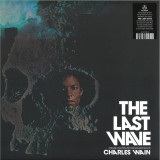
The premiere soundtrack release to Peter Weir's 1977 Australian New Wave classic.
Lost electronic score from the enigmatic composer Charles Wain.
12-track LP sourced from the original stereo master tapes.t.
180g vinyl and deluxe packaging including archival film stills and original press material
The Last Wave (also known as Black Rain in the US) was the final chapter in a trilogy of films scripted and directed by the leading auteur of the Australian New Wave, Peter Weir.
Beginning in 1974 with the absurdist black comedy-horror The Cars That Ate Paris, and followed a year later by the lush gothic mystery Picnic At Hanging Rock, The Last Wave was a landmark in existential horror. Sitting alongside other Australian eco-terror films (e.g. Long Weekend) the film featured a haunting electronic soundtrack that is as mysterious and beguiling as the spiritual themes of the film itself.
With no LP issued after the films premiere in 1977, and together with the mystery surrounding the true identity of its enigmatic composer 'Charles Wain', the score is a largely unheard recording of pioneering experimental film electronics, easily compared to the music that contemporaries Klaus Schulze and Tangerine Dream were composing for Australian films during the same period or the electronic soundtracks of John Carpenter.
Tense atonal electronics, synthesizer drones and manipulated Didjeridu all perfectly capture the film's ominous atmosphere, punctuating the slow hypnotic pace of this brooding supernatural thriller. The Last Wave soundtrack is released in conjunction with the lost film music to Nicolas Roeg's 1971 New Wave masterpiece Walkabout composed by John Barry.
This the first time this title has been available on vinyl . At the risk of further labouring a rather obvious point, with Thank God for Mental Illness, their third collection of absolutely stunning music in 1996, the Brian Jonestown Massacre parallels the prolific and effortless brilliance of the Rolling Stones at their fevered late-1960s peak, the sheer scope of their achievements is stunning — rarely are bands quite so productive, or quite so consistently amazing. Thank God is the BJM's down-and-dirty country-blues outing, all 12-odd tracks supposedly recorded on a single July day at a cost of just $17.36 .The Brian Jonestown Massacre is a psychedelic rock band originally from San Francisco, California, led by guitarist/singer Anton Newcombe. Since 1995 The Brian Jonestown Massacre has released numerous albums, first for Bomp! Records, the label which gave them their start, and later for TVT and Tee Pee. BJM has been essential in the development of the modern U.S. garage scene, and many LA and SF musicians got their start playing with Newcombe, including Peter Hayes of The Black Rebel Motorcycle Club.Originally Newcombe was heavily influenced by The Rolling Stones' psychedelic phase - the name comes from Stones guitarist Brian Jones combined with a reference to cult leader Jim Jones, but his work in the 2000s has expanded into aesthetic dimensions approximating the UK Shoegazing genre of the 1990s and incorporating influences from world music, especially Middle Eastern and Brazilian music.
Seven years into its celebrated journey, Life and Death assembles its third and most adventurous compilation to date - Displaced Soundtracks. For the first instalment in a new series, DJ Tennis has given free rein to some of his most trusted contemporaries, enabling many of today's most respected dance music producers to display their hidden talents as composers. Gathering music from a long-aborted film, the collection stands as another bastion of Life and Death's perpetual evolution. Duncan Gray embraces dissonance, Black Merlin, Appleblim and Artefakt go interstellar and Fango channels post-punk squat music. Hades Rocket showcases the expertly-sequenced synth work that has graced Simian Mobile Disco's illustrious career, while Redshape revisits all the right sides of 80's Wave and Library music. Danny Daze and synth-savant KINK embrace non-standard tempi with great success, while Axel Boman delivers sitar-laced gospelhouse without a bass drum. Elsewhere, your favourite producer's favourite producer, Stimming, team's up with pianist Lambert and the pair learn to fly. Inspired and challenging, Life and Death ventures into their eighth year confidently, constantly evolving without compromise.
180 GRAM AUDIOPHILE VINYL
INCLUDES TWO INNERSLEEVES WITH TRACKLIS-
TING, CREDITS AND PHOTOGRAPH OF KRS-ONE
FEATURING THE CLASSIC HIP HOP TRACKS
SOUND OF DA POLICE' AND P' IS STILL FREE'
ORIGINAL MEMBER OF BOOGIE DOWN
PRODUCTIONS ALONGSIDE DJ SCOTT LA ROCK
LIMITED EDITION OF 1.000 COPIES ON
TRANSPARENT VINYL Return of the Boom Bap is KRS-One's first official solo album, released in 1993. It peaked on the Billboard 200 charts at position 37. According to KRS-One the album has sold over 300,000 copies.Unlike the majority of the Boogie Down Productions LP's, KRS here takes a step back from the production duties and invites rising underground stars DJ Premier, Showbiz and Kid Capri to handle the beats in addition to his four contributions. The track P Is Still Free' appeared on the Menace to Society Original Soundtrack (MOVATM152) labeled as a B.D.P. track. The track Black Cop' was originally released as a 12' single and a track for the CB4 movie soundtrack, thus also labeled as a B.D.P. track.The album was selected as one of The Source's 100 Best Rap Albums. The record was originally rated 4 mics in The Source in 1993.
REPRESSED !
1970's "Osmium" was Parliament's debut album and possibly the first real indicator of where George Clinton and his notorious band of psychedelic funksters might be headed. The ground zero of P-Funk if you will. Existing since the late 50's as a doo-wop group it was the bands later offerings that sculpted their unique, mildly warped idea of what the FUNK should sound like. Initially they cut a couple of 45's for Detroit Soul label Invictus in 1970 (both of which appear on the LP) then embarked on recording more music for the project, their first full length offering on the label. The group also released the debut Funkadelic LP in the same year with both albums feature the same personnel. The conditions under which "Osmium" was realised have since passed off into mythical status with colourful anecdotes involving marathon LSD consuming sessions in isolation in their Toronto studio and a general air of hallucinatory, intense mental psychosis prevailing throughout. It's under this druggy haze that Parliament honed their own sound, a raucous, blown out, tripping stew of R&B, Blues, Soul and Funk replete with early P-Funk trappings.
"Osmium" is a fascinating ride, wild, rampaging heaviness of the most soulful kind. A glimpse into what was to come from one of the most enduring and colourful groups of the last 5 decades. Often a very difficult LP to track down it has always been sought after and extremely expensive to buy. Appealing to fans of Black music, Rock and psychedelia equally it's contents have shocked, entertained and grooved open minded music lovers since it's release over 40 years ago.
This is the first time the record has been reissued in over a decade, complete with original artwork. Remastered, reissued and fully licensed with the full permission and involvement of Invictus Records, Detroit.
Too many people sleep on Tougher Than Leather, Run-DMC's fourth album. But hear us out as we plead the case for this amazing LP. By 1988 there was a lot more competition in the rap game - Public Enemy, Boogie Down Productions, Eric B. & Rakim, Ice-T and many more had given Hollis, Queens' prodigal sons lots of competition. But Joe, Darryl and Jay were still at the top of their game, and hip-hop fans should never let this classic - chiefly produced by their Queens neighbor, DJ and multi-instrumentalist Davy D(MX) - get lost in their crates. For starters, the album's first single, Run's House' b/w Beats To The Rhyme' is arguably the most powerful one-two punch of the trio's career, showing contenders to the rap throne that they could still destroy a beat, tag-teaming with power at any speed. Not to be lost in the shuffle, fans were also reminded on both sides that Jam-Master Jay remained one of the world's best DJs, flexing the pinnacle of what would be called turntablism' a decade later. Both songs show a musical telepathy between all three that has rarely been equaled. The second single, Mary, Mary,' driven by an infectious Monkees sample, took a different approach, shrewdly ensuring that pop fans who jumped on the Raising Hell bandwagon had something to chew on. But, like Walk This Way,' the song wasn't just bubblegum - there was an edge to it, and the lyrical gymnastics were very real. It wasn't selling out, it was allowing fans to buy in. Papa Crazy,' driven in concept and by a sample from the Temptations' Papa Was A Rolling Stone,' followed a similar pop-leaning path. Overall, the lyrical content on the album was a step up from the group's first three LPs. It's easy to infer, looking back, that they were feeling the heat from their younger competitors in the rap game. The genre was changing fast, and they were up to the challenge. On cuts like Radio Station' they bring substance to the grooves, by attacking Black Radio for its continual denigration of rap. Tougher Than Leather' reminds the world that they were still the Kings of Rock, with hard guitars to drive the point home. And They Call Us Run-DMC' and Soul To Rock And Roll' both bring things back to their early days, with sure-fire park jam rhymes and killer cuts. Tougher Than Leather, which went platinum up against a lot of competition, perfectly bookends the '80s output of one of the decade's most important groups. It encompasses the full range of the trio's capabilities, and reminds us that Run-DMC should never be forgotten as both pioneers and party-rockers. And so, we say, long live Joe, Darryl and Jay!
Soul Deep Recordings and Blade are pleased to present the Blackbird EP. The EP features 2 richly crafted rollers that will rock the dance floor. The title track, "Blackbird", has received support from LTJ Bukem and many other top deejays around the world. The song starts off with a heavy amen break and light background atmospherics. At each turn, the break seems to get heavier as layers are added to the mix. When the bassline drops, the groove is undeniable, and will have your head nodding in approval. The song chugs along and builds to a crescendo with it's epic pads and tasteful atmospherics. "Bella l'amour", is the second offering, and it shows a different side to Blade's diverse productions. The track begins with a light break, airy efx, and chiming keys, that set the backdrop for this tight production. At the drop, the drums fill in nicely and the warm 808 bassline punch through the mix. Overall, Blade delivers big on this release, and will surely satisfy his fans with this slice of D&B heaven.
Juicy Lucy formed after the demise of The Misunderstood. Steel guitarist Glenn Ross Campbell, and Blackburn saxophonist Chris Mercer recruited guitarist Neil Hubbard, bassist Keith Ellis, and drummer Pete Dobson to complete the band. Their eponymous debut album was originally released in 1969, and is a heavy form of blues-rock, often played at break-neck speed. The album’s cover features Burlesque dancer named Zelda Plum.
The band immediately notched a UK Top 20 hit with a cover version of Bo Diddley’s “Who Do You Love?”.
Juicy Luicy is available as a limited edition of 750 individually numbered copies on translucent yellow coloured vinyl, housed in a gatefold sleeve.
Say You Love Me wasn't "Om" Alec Khaoli's first solo recording but the 1985 EP solidified the bass player and songwriter's standing as one of South Africa's most consistently innovative pop auteurs. He built a career on ubiquitous rock, pop and soul hits with groundbreaking bands like the Beaters, Harari and Umoja.
But Khaoli's seemingly endless fountain of music continued outside these ensembles, where he usually played bass and contributed songwriting and vocals. Khaoli released several successful solo works while he made records with Umoja and worked on other productions with friends. This creativity was aided by Khaoli's own recording studio. He was the first South African to have a privately-owned studio.
As black artists were forced to record during lunch breaks and didn't get sufficient access and time in the white-owned studios, having his studio allowed Khaoli to develop in his own way. Hence his productive output during the 80's and early 90's, releasing 5 LPs with Umoja and 5 solo LPs, along with numerous singles and EPs. There's something broad and dynamic about the almost epic pop sound Khaoli creates on Say You Love Me.
Being the first South African to take control his recording process and thereby free himself from one of apartheid's many strictures, he took his vision of music to new realms and made timeless music for the dance floor in the process.
out of Stock
Last delivered 3 years ago available to reorder, subject to availability
'White Punks on E' is the taste of bike chains rubbing against black leather. Heavy cast iron forged across studs and hot-wired organs. The howls from blazed skull hordes jacked up to distortion engines broadcasting into neglected cellar units.
It's shrill echoes from the parking lot carried along the financial district, overturning lobotomised business lunches, attache cases and $50 slick-backs. Nasty club rock fed through biohazard cassettes, doom arcades, sabres and scorpion tattoos - new blood to rock the neighbourhood and a pleasure to welcome Stratton into the fold.
Outstanding three track EP from the archives of Caliban (A side project of London musician Milton Myrie, a session guitar player who worked with cult UK buddhist afro and reggae band Ozo as well as on the much sought after Steel and Skin 'Afro Punk Reggae' 12'). Talk about bang for ye buck.. 1 side crucial oddball digital cuts, b side sounds like a UK jazz funk classic... Gold Print Sleeve. BIG TIP!
.
Caliban produced only one self-released 7' 'Open Mind / Digital Reggae' in 1984.
Following the re-discovery of this very little known 7' by Caliban a few years back, UK producer Jackson Bailey aka Tapes managed to track Milton down, who as well as being in possession of most of the stock of the original record, was also sat on a number of amazing unreleased recordings from the Caliban sessions. With an album of unreleased Caliban material compiled by Tapes to follow later on Music From Memory, this EP introduces one of the unreleased tracks, the incredible feel good disco anthem Supernatural'. Taking us on a glittering, rhythm charged rocket tour of the Funk Cosmos, this until-now-unheard future classic will surely set the summer nights alight.
The three track 12' also includes Digital Reggae' which featured on the original Caliban 7'. This computerised dancehall/funk hybrid was partially penned to address the lack of black culture included in the payload of the United States' first space station, Digital Reggae will be included in the Payload of Skylab!'. As well as the original mix, the EP also includes a new dub put together by Milton himself and assisted by riddim specialist Tapes!
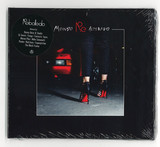
Following 2016's much-acclaimed solo album Mondo Alterado (HIPPIE 008CD/LP), original Pachanga Boy and Hippie Dance mentor Rebolledo returns to the limelight with the jam-packed Mondo Re-Alterado, tapping into his vast and varied network of friends and fellow soundsmiths. Artists such as Superpitcher, DJ Tennis, Maceo Plex, Red Axes, Fango, or Fantastic Twins deliver stunning takes on Rebolledo's unique signature sound, creating a full suite of exclusive remixes, cover versions, and reinterpretations. From the super-energetic club rumblings of Maceo Plex's "Discótico Pléxico" to DJ Tennis's dreamy "Pimiento Drive Version" of "A Numb Gas To The Future" or Fantastic Twins' party bomb "Fantastic Pow Pow", the journey through Mondo Re-Alterado is full of twists and turns -- a world where an epic, cinematic soundscape such as Superpicher's "Rainboy Super Space" sits comfortably alongside the claustrophobic, punishing banger that Fango sculpted from stand-out cut "Pow Pow". Meanwhile, Red Axes turn the casual narrative of "Life Is Strange, Life Is Hard, Life Is Great" into a bouncing workout -- a great companion piece to "WANT", Danny Daze and Shokh's propulsive, jagged dub version of "Fears Come True". Other highlights include Jörg Burger aka The Black Frame with the lush "Black Rainbow Woman", Paulor's country rock extravaganza "Discótico Desértico" and not one, but two excellent contributions from former Italians Do It Better honcho Mike Simonetti. It's a magical, surprising ride that finds beauty in contrasts -- while staying tuned to Rebolledo's spirit of adventure and powerful sense of style.
avorite Recordings proudly presents Natureza, first album of Joao Selva. The story of Natureza is made of the meeting between two passionate artists who are Jonathan "Matuto" Da Silva and Bruno "Patchworks" Hovart.Born and raised in Ipanema and son of a pastor, Jonathan Da Silva grew up in a community of ex-prisoners and converted artists. He made his first guitar notes before his 10th birthday, under the watchful eye of Wanda Sa (muse of the bossa nova), and influenced by a father who in addition to his work, was also a true music lover with a collection, where black music, rock and classical meet. From the age of 18, Jonathan began a life of entertainer, traveling the world to offer shows for disadvantaged children and intensively practicing the Brazilian traditional music arts (Capoeira Angola, Maracatu, Samba de Roda, Coco de Roda...). It was later in France and in Lyon that he put down his instruments. There he formed the trio Forro de Rebeca in 2008, touring the all country and winning many praise in media. The trio recently joined forces with American producer Maga Bo on the project Sociedade Recreativa, whose album was released in 2016 on The Jarring Effects label.Bruno Hovart is a recognized producer, multi-instrumentalist, and remixer. After passing through Angers, Birmingham and London, he's based in Lyon since 2001. Bassist and guitarist for various bands, he switched to production in the mid-90s. Passionate about music and tireless creator, Bruno has practiced in almost every imaginable style, when it comes to groove music, collecting many aliases and projects for more than 10 years: Patchworks, Voilaaa, Uptown Funk Empire, Mr President, Taggy Matcher, Mr. Day, Hawa, John Milk, Lightnin 3, The Dynamics or Metropolitan Jazz Affair ... Nothing resists and escapes his talent and production skills. Thus, when he discovered and met Jonathan and his music, Bruno saw an immediate opportunity to broaden the spectrum of his discography a little more, by looking at Brazil. Beyond its traditional heritage, Brazil has always been a land of extremely varied music, influenced by the international scene. Soul, Jazz and American Pop did inspire many local stars such as Chico Buarque, Carlos Jobim, Gilberto Gil, Tom Zé, or Erasmo Carlos. Both fervent lovers of this movement and these names, it's with the idea to pay them a faithful tribute, that Jonathan and Bruno began the Joao Selva adventure. Together they gave birth to Natureza and embark us for a trip into the heart of the Tropicalist Pop influences of Jorge Ben and Caetano Veloso, the intoxicating Funk of Tim Maia, and the social poetry of Vinicius de Moraes.
2 black LPs in gatefold sleeve with CD included T
A relentless vinyl collector and a fervent connoisseur of Anglo-American culture, the founding painter of the Figuration Libre movement (with Di Rosa, Blanchart and Boisrond) in the early 80's, Robert Combas has always connected his art with rock music. The two are always intertwined and fuel his inspiration. During his exhibition Sans Filet, Robert Combas made an essential encounter: the artist and video maker Lucas Mancione, also from the town of Sete, and decided to make the leap. Together, at the start of the decade, they created the band Les Sans Pattes. Notre Renaissance is a dazzling discharge, a geyser of cold and searing emotions, a conscious search for a unique and extreme experience. The tension in each track is palpable, as constant as it is pregnant. This band is full of character. Sometimes electronic, often a bit punk, always particularly rock'n'roll. Raw and physical tracks, compact and heady. Les Sans Pattes always lean towards psychedelics and repetition.
'This is a journey into sound...,' These familiar words, accompanied by the rumble of a distant train, signal the opening of 'Let's Take A Trip', the sophomore album from Terrel Wallace aka Tall Black Guy. Since 2013's '8 Miles To Moenart' TBG has cemented his position as a standard bearer for the current hip-hop / beats scene. Born in Detroit and now residing in the UK, Wallace's signature style of incredibly clever sample flips and deft production chops has won fans across the globe including Gilles Peterson, Lefto, Jazzy Jeff and House Shoes.
Since his debut release in 2011 (a daring and addictive flip of Fela Kuti), TBG has become revered for his unique take on soulful hip-hop production. The swing of the drums, the textures of the instrumentation as well as a fearlessness in taking on the classics (his Soundcloud page includes flips and chops of tracks from James Brown, De La Soul and Michael Jackson) have marked him out from the crowd. One of the best-kept secrets in the scene, his singular talent is now beginning to get the recognition it deserves. In the last 12 months he has remixed Little Dragon and been invited to take part in Jazzy Jeff's Playlist Retreat alongside the likes of Eric Lau, James Poyser, Ali Shaheed Muhammed, Questlove and countless others.
For this album Wallace had a simple inspiration: 'This album is all about taking a journey. As simple as that. Be it physical, emotional or spiritual. It's asking and answering personal questions from myself within some of the tracks and also touching on social issues i.e. racism, inequality and privilege...that have been at the forefront of my mind over last three years.' Sonically there is also a shift: 'Jazz has definitely been more of an influence in this project, as I have been really inspired by so many up and coming musicians who I've been blessed to connect with'. Some of these musicians, including Kenny Keys, Miles Bonny, Diggs Duke and Dee Jackson feature on the project as well as regular collaborators Ozay Moore and Mario Sweet and fellow Playlist alumni Daniel Crawford and Masego. But this is one man's vision, and for Tall Black Guy this trip is just the beginning...,.
Jerome Meyer AKA Von D is a master craftsman, well-known for releasing dubstep and bass music since 2009. On an increasingly prolific trajectory since last year, recent 12's on Infernal Sounds, Trojan Audio and Scotch Bonnet have signaled his renewed focus on dubwise productions. We are proud to say that Von D's Khaliphonic debut sees him fully committing to reggae and dub - in his words, going back to my musical roots.'
Politricks' is a masterwork, cut from the same living rock as the classic Cuss Cuss riddim, a simply huge bass and drum workout that is truly one for the ages. Politricks is an anthem for now, a call to avoid the dead-end of politics-as-usual and a warning to beware of the lies politicians tell to keep themselves in power - full of promises but changing nothing. Von D says that working with Don Cotti was very natural,' and their easy relationship is audible - the tune fits the vocal like a glove, and Cotti's instantly-recognizable singjay style gives even more gravitas to an already heavy track. The dub version spools out Von D's signature saturated echoes even further, and opens up spectral chambers of reverb that shimmer and glow.
The B side Ygrec' is an equally massive tune, just as compelling if more meditative and mysterious, coming in both one drop and power-steppers mixes for maximum versatility and vibes. Both tunes and their versions feature an incredibly robust, warm, human sound - one that simply can't come from machines alone - live drums, bass, and kete drum among other instruments maintain the tradition of live musicians in dub - to say nothing of expert desk-based mixing and deployment of live analog effects the way the elders intended. Both tunes dial in at 140 making them perfect for roots and dubstep selectors alike.
Von D got his start as a drummer and engineer outside Paris, in the heady days of original jungle. Early releases on Disfigured Dubz, Hench, Boka, Black Acre and the seminal V Recordings, as well as his reggae-oriented Liquid Wicked project, cemented his reputation. Don Cotti is a prolific producer, DJ and MC with releases stretching back to 2006 on labels as varied as Bass Face, Studio Rockers, and Soul Jazz.
Mastered by Lewis at Stardelta. Art & design by Polygon Press.
It's a pleasure to introduce Tony Rainwater - undoubtedly the most productive and creative savage we've come across recently. See usually we don't do this, Lehult is a crew affair, but this guy left us no choice. Being a music enthusiast, DJ and dancer for a long time, Tony has only most recently picked up producing his own music, yet at a stunning rate: When we first asked him for a demo - three months after he started producing - he swiftly dropped us a set of twenty-five tracks, another set of fifty more soon followed. His productions are straight rough edged, no-prisoners-taken Jams, combining samples from the most far-flung corners of his eclectic music collection. His magical patchwork wild style is on full display on his debut "Rockberry Jam" EP for Lehult. The A-Side takes us through the lighter side of his repertoire with the title tracks slow building house groove, some dizzy medieval monk grooves on "To All The World" and seductive R&B on "Lay It On The Line". On the flip "Operalight" irresistible groove and "Black Dream Flowers" provide some darker moments, before "Alone" closes on a soft note. The Vinyl version includes an extra goodie after the runout's. Tony is now a fixed member of the crew already and we're proud to have him and his crazy energy on the team. This won't be the last you'll hear of him.
COMPILED BY PETE PASQUAL, ERICA OLSON & DJ KINETIC
Following on from acclaimed compilations like 'Down Under Nuggets' and 'Heavy Soul' (and two other new titles 'Running The Voodoo Down' and 'Dodgy Bossa (& Silly Sambas)' - details below), Festival Records presents another deep dig into the archives, this time shining a light on rare Australian soul-jazz, jazz-funk, and freaked-out groove rock from the late '60s and '70s.
BACK ON THE STREET AGAIN - AUSTRALIAN FUNK, SOUL & PSYCH (MOSTLY) FROM THE FESTIVAL VAULTS is a stunning 20 track CD and 2LP release that highlights a point when the previously disparate styles of rock, jazz and soul all started influencing each other, and exciting new genres were created. To quote the liner notes (by DJ Kinetic):
Australia produced some amazing music during the 60s and 70s that sat outside of the normal rock mould. Avant guard artists like John Sangster pushed boundaries and experimented with the fusion of local and overseas influences, artists like Dalvanius recorded soaring disco music that was lost amongst the popular music of the time, only to be rediscovered by DJs overseas who were searching for unknown sounds, composers like Brute Force and His Drum took risks and recorded left-field funky sounds hidden within their more mainstream compositions, and popular artists like Billy Thorpe occasionally strayed from their A&R directions and took leaves from the books of American artists who were largely unknown in Australia at the time. Beneath the veneer of bland rock and roll lay an unknown multitude of funky sounds hidden from mainstream view.
In addition to the artists that Kinetic mentions (and the compilation features two John Sangster tracks - stunning versions of 'Hair' and the Beatles' 'A Day In The Life'), the collection includes iconic names of the era like the Daly-Wilson Big Band (featuring Kerrie Biddell), Renee Geyer and the Johnny Rocco Band. '60s sides from Ross D Wyllie and The ID (featuring Jeff St John) reveal the various styles' roots in American rhythm & blues, and the unexpected inclusion of some legendary Australian rock outfits like Tamam Shud and Blackfeather reveals the psychedelic and progressive rock influences at play. The full range of the music is highlighted by the inclusion of both cabaret/daytime TV performer Al Styne and outrageous Kings Cross club act Count Copernicus & The Cosmic Fire as well as the in-house studio 'pops' orchestra, Festival Studio 24 Orchestra.
Co-compilers Pete Pasqual, Erica Olson and DJ Kentic to undertake interviews with specialist media around release. Facebook ad's around release.
Stirred up from deep within, from an abstract spiral of sound and movement, from a sensation of time and space absolving and converging at once, the Black Flower musicians have molded a tangible matter: the album Artifacts. Their second full album sounds international and ageless. Eastern influences, Ethiodub and jazz effortlessly merge. Fantasy and reality seem to fuse. In a word: nourishment for body and soul.
"Psyche-delicious and accessible 20th century Ethiodubjazz. As if John Zorn put on Fela Kuti's shoes and imbibed Mulatu Astatke's whirls."
Piloted by saxophonist /flutist /composer Nathan Daems (Ragini Trio, Dijf Sanders, Antwerp Gipsy-Ska Orkestra), this instrumental band aims for originality. Fellow musicians and 'brothers down the road' are Jon Birdsong (dEUS, Beck, Calexico) on cornet, Simon Segers (Absynthe Minded, De Beren Gieren, Stadt) at the drums, Filip Vandebril (Lady Linn, The Valerie Solanas, Antwerp Gipsy-Ska Orkestra) at the bass and Wouter Haest (Los Callejeros, Voodoo Boogie) playing keys.
For many of us, the Ethiopian aspect once made known to the world by Mulatu Astatke will stand out. Still, Black Flower further adds oriental scales, Afrobeat à la Fela Kuti, jazz in a John Zorn way and varied western music traditions such as rock and dub. The resulting melting pot is undoubtedly inspired by Nathan's distant travels and the multifariously colorful city of Brussels.
...Pretty legit if you ask me - LeFto, Studio Brussel
After their well-received debut album Abyssinia Afterlife (2014, W.E.R.F. / Zephyrus Records) that created an atmosphere of mythical figures and psychedelia, Black Flower now reflects on ancient and modern cultures. The album title Artifacts refers to centuries-old fragile objects or tools that empowered the development of human culture. The world today would look entirely different without those artifacts. The seemingly brittle suddenly becomes a powerful welding cornerstone. Add the musicians' personal musical backgrounds and the result is an album with an ageless mystique. Artifacts is the synthesis of different cultures, of the past and present, and personal and collective memories. It is the soundtrack to modern reality, based on the elements that connect us.
Brilliant - Gilles Peterson, BBC Radio 6
One of Belgium's Best Bands of these past years (...) Black Flower does not simply play a tune, they always groove! - Kurt Overbergh, Ancienne Belgique
Uncomplicated originality, plenty of space for fantasy and an organic tone: those are the ingredients for Black Flower to lay claim to an age-old human ritual: dancing! Still, Black Flower also stands out in various other settings. Their audience at a jazz club will have felt exalted, their audience at a late-night show will not have resisted dancing. The band wields influence over their surroundings in a way only heart-and-soul musicians can. This mastery has repeatedly taken them to United Kingdom, France, the Netherlands and Germany.