Mr. B is the album recorded in 1983 by Chet Baker and is considered one of the best from that period. Baker plays compositions from “Dolphin Dance” (Herbie Hancock), “Strollin” (Horace Silver) and “In Your Own Sweet Way” (Dave Brubeck). The sadness of the songs is felt throughout, in a lazy sometimes slow and sluggish tempo. The album includes two bonus tracks “White Blues” and “Father X-mas” and band members include Michel Graillier (piano) and Ricardo Del Fra (bass).
Mr. B is available as a limited edition of 1000 individually numbered copies on translucent red coloured vinyl. The album sleeve contains liner notes by Wim van Eyle.
• 180 GRAM AUDIOPHILE VINYL
• SLEEVE PRINTED ON HEAVY CARDBOARD WITH LINEN LAMINATE FINISH, CONTAINING LINER NOTES BY WIM VAN EYLE
• CHET BAKER PLAYS COMPOSITIONS FROM HERBIE HANCOCK “DOLPHIN DANCE”, HORACE SILVER
“STROLLIN”, DAVE BRUBECK “IN YOUR OWN SWEET WAY” PLUS 2 BONUS TRACKS “WHITE BLUES” AND “FATHER X-MAS”
• LIMITED EDITION OF 1000 INDIVIDUALLY NUMBERED COPIES ON TRANSLUCENT RED COLOURED VINYL
Steve Gunn has always had one foot in indie rock and the other in an expansive improvisational scene. His songwriter albums alternate with freewheeling jams, most notably in his Gunn-Truscinski Duo, but are not confined to that. So when Gunn decided to revisit Other You, it made sense that he brought in some guests from the far side of the commercial/experimental spectrum to reimagine his songs. Nakama presents five tracks from that last album, reshaped by artists that Gunn admires. The process loosens the songs up considerably.
To start, he calls in Mdou Moctar’s backing band (the American bassist Mikey Coltun and the other guitarist Ahmoudou Madassane) for “Protection.” The song already had a bit of blues-y swagger to it, with sharper-edged guitar rhythms also heard on the ultra-smooth Other You, but here the heat has an otherworldly desert sheen. Its caravan-traveling rhythm sways from side to side, digging in to to the upbeats in a way that is both kinetic and also hypnotically still. There’s some crowd noise in the background, the knot of people that regularly forms when Mdou and his compatriots plug in from Agadez, and a few mournful afro-blues licks arcing off the vamp. But mostly it’s a cut that reminds you how much African guitar music Gunn has absorbed (listen to “Tommy’s Congo” from Way Out Weather for proof), and how well it fits with what he does.
Gunn also brings in Circuit Des Yeux’s Haley Fohr to reconfigure “Ever Feel That Way,” and she sets the song’s drifting melancholy amid pensive minor-key piano chords. She strips back the ambient whoosh that surrounds the original, slows down the pace and presents the song in startling, unadorned clarity. Her version removes some of the sticky, over-prettiness that I found so distracting in Other You. The melody is better, purer and more focused without the frills. There is also an electronic remake of “Reflection” from David Moore’s ambient ensemble Bing and Ruth, which traps Gunn’s fragile vocals in a shivering palace of synthetic tones. It’s enjoyable in its way, but the two sensibilities never quite meld together.
The best part comes when Gunn joins forces with Joshua Abrams’ Natural Information Society in remakes of “Good Wind” and “On the Way.” The former is a matter of subtle differences: the gentle pitch and roll under Gunn’s voice, the intermittent liquid runs of bass between widely spaced phrases. Abrams and his crew open up the jazz-leaning, reiterative possibilities under Gunn’s song, but they don’t change it fundamentally. “On the Way” is even stronger, a glowing drone and a pattern of hand drums enveloping the melody. It makes the music seem more spiritual, more resonant, more deep and full of mysteries. It was striking enough that I had to go back to Other You to hear again an album that had left me cold. This new version of “On the Way” didn’t change that chill, but it gave me an idea of how strong the songs might have sounded in another setting. (by Jennifer Kelly)
Third Pressing of Gilroy Mere's Adlestrop on blue vinyl with a blue cover.
Adlestrop is inspired by the remains of the rural railway stations, that were closed in the wake of the 1963 Beeching Report.
“This record started with Edward Thomas’s poem Adlestrop and a chance visit to the village that it takes its title from. I wanted to see the station, but found it was no longer there, all that remains is the old platform sign Adlestrop, now part of a local bus shelter. However as I walked around the village I was struck that; “all the birds of Oxfordshire and Gloucestershire” were still singing away - like ghosts from Thomas’ verse.
Visiting Adlestrop spurred me to get hold of a copy of the Beeching Report which, in Appendix 2, lists all the services and stations recommended for closure in the 1960s. The names read like an epic British poem, from halts to branch-line stops and stations and singular terminals for public schools, mines, ferries and even an asylum. There’s Ravenscar where a resort was planned but got no further in its construction than the station, and a hotel - the grid marked out for the roads never laid. Bethesda, a short branch line from Bangor up towards Snowdonia, was used for slate and passengers and is now just a quiet green valley, Christ’s Hospital on the old Cranleigh Line, opened with seven platforms to cope with the daily flood of pupils attending the famous school nearby which never came as it was a boarding school. Many of the stations have vanished, with just fields and car parks left in their place, some are repurposed as houses, or shops, or abandoned as artefacts of a lone-gone industrial past.
Armed with a digital recorder, and with a copy of Beechings Report as my guidebook I made notes and recordings on my travels around the country, and used them as the starting point for a set of pieces that try to capture the fading layers of history, in the areas where the stations had once stood making sure each track retains something of the real place within them. Back in my studio I reacted, improvised, and crafted musical responses to each station, trying to capture the ghosts and former lives of the stations and their imprint on the present.”
Gilroy Mere is Oliver Cherer who trading as Dollboy, Rhododendron, and Australian Testing Labs as well as his own name has meandered his way through the backwaters of left of centre English folk, ambient and electronic music, issuing numerous albums of original music to much critical acclaim via highly regarded boutique labels such as Static Caravan, Second Language, Deep Distance, Polytechnic Youth, and Awkward Formats.
Das Warten hat ein Ende: Der legendäre Eric Clapton meldet sich mit einer bemerkenswerten neuen Veröffentlichung, ”The Lady In The Balcony: Lockdown Sessions” am 12. November zurück.
Auf den 17 Songs spielen Clapton und seine langjährigen Bandkollegen Nathan East (Bass und Gesang), Steve Gadd (Schlagzeug) und Chris Stainton (Keyboards) akustische Interpretationen von Claptons Klassikern und eine Auswahl anderer Nummern, die Blues, Country und seltene Eigenkompositionen umfassen.
Das Projekt wurde ins Leben gerufen, nachdem Eric Clapton seine für Mai 2021 geplanten Konzerte in der Royal Albert Hall absagen musste. Auf der Suche nach einer Alternative zog er sich mit seiner Band in die englische Landschaft zurück und inszenierte ein Konzert, bei dem nur die Teilnehmer selbst anwesend waren, während die Kameras liefen. Das Ergebnis ist weit mehr als nur eine Aneinanderreihung
der größten Hits. Vielmehr handelt es sich um eine der intimsten und authentischsten Darbietungen von Claptons gesamter Karriere, ein Angebot, das einen echten Einblick in die Zusammensetzung seines atemberaubenden Katalogs gewährt.
„The Lady In The Balcony: Lockdown Sessions” ist als CD, DVD, Blu-Ray und LP verfügbar .
Goodbye June aus Nashville verschmelzen auf ihrem zweiten Album Hard Rock Licks mit Southern Blues und Gospel Swing. Der Sound erinnert teilweise an Bands der neuen Hard Rock Welle wie Greta Van Fleet oder Rival Sons, deckt aber klanglich ein Spektrum von Led Zeppelin bis Leon ab.
Goodbye June sind drei Cousins, die sich nach dem Tod des Bruders des Gitarristen Tyler Baker im Juni (daher der Bandname) formierten und schworen, sein Andenken mit ihrem souligen und lebensbejahenden Sound zu ehren. Nach der Trennung vom Major-Label Interscope nach der Veröffentlichung ihres Debütalbums »Magic Valley« (2017), blühte der erdige, authentische Sound von Goodbye June noch weiter auf und entwickelte eine noch souligere und bluesigere Atmosphäre auf »Community Inn«.
Space Adventure Cobra is the animated series from the masterpiece of Buichi Terasawa, produced by the prestigious studio TMS Entertainment and broadcasted from 1982. The series was a huge success and remains to this day one of the most appreciated in the world of Japanese animation.
In order to celebrate the 40th anniversary of Space Adventure Cobra, we are pleased to offer this sublime vinyl box set of the OST with its 3 discs gathering a very large selection of music, all the songs (long versions) as well as several covers and rare unused tracks composed at the time, all completed by a 12-page booklet, illustrated with the most beautiful artworks of the master Terasawa!
The legendary soundtrack of Space Adventure Cobra, composed by Kentarô Haneda and YûjiÔno, has greatly contributed to the reputation of the series with notably rhythmic tracks, sublime jazz pieces and unforgettable songs.
Here it is now completely remastered in vinyl format & double CD in this collector's edition!
- 180 GRAM AUDIOPHILE VINYL
- INCLUDES INSERT
- 30TH ANNIVERSARY OF THE LEGENDARY ALBUM
- REMASTERED AUDIO
Fishbone was one of the most distinctive and eclectic alternative rock bands of the late '80s. With their hyperactive, self-conscious diversity, goofy sense of humor, and sharp social commentary, the group gained a sizable cult following during the late '80s.
Truth and Soul is their second album, originally released in 1988. The album features a wide array of genres including punk, ska, reggae, soul, funk, elements of hard rock and blues. Truth and Soul contains a cover version of Curtis Mayfield's Freddie's Dead', originally from the soundtrack of the film Super Fly and it is the first single of the album.
Three other tracks were released as singles Ma and Pa', with a video directed by Mike Lipscombe, Change' and One Day'.
The album was awarded four-out-of-five stars in 2004's The New Rolling Stone Album Guide. Music critic Tom Moon called the album one of his 1000 Recordings to Hear Before You Die' and Robert Dimery listed it as one of his 1001 Albums You Must Hear Before You Die'.
This year we are celebrating the 30th birthday of Truth and Soul. The album is finally available again on vinyl and includes the original insert with lyrics and liner notes.
Under The Big Black Sun is the third studio album by American rock band X and was released in 1982. It’s arguably their finest record. All 11 songs are exceptional, from both a performance and compositional point of view.
Before the recording of the album, singer Exene Cervenka’s sister was killed by a drunk driver, and the band decided to work out their grief in the music, which eventually resulted in two of the album’s best tracks: the melodic “Riding With Mary” and the vintage ‘50s sound of “Come Back to Me”.
The record was produced by Ray Manzarek, who is best known as the co-founder of The Doors. The cover art illustration was made by Alfred Harris.
Under The Big Black Sun is available as a limited edition of 750 individually numbered copies on turquoise coloured vinyl and includes an insert.
• 180 GRAM AUDIOPHILE VINYL
• INCLUDES INSERT WITH LYRICS
• PRODUCED BY RAY MANZAREK (THE DOORS)
• LIMITED EDITION OF 750
INDIVIDUALLY NUMBERED COPIES ON TURQUOISE COLOURED VINYL
Memoirs of a Geisha (2005) is the award-winning drama film adaptation of the novel of the same name, produced by Steven Spielberg's Amblin Entertainment. The original score and songs were composed and conducted by John Williams (the Star Wars & Indiana Jones trilogies, Jaws, Close Encounters of the Third Kind, and many more). The album won the Golden Globe Award for Best Original Score, BAFTA Award for Best Film Music and the Grammy Award for Best Score Soundtrack for Visual Media. It was also nominated for the Academy Award for Best Original Score.
Directed by Rob Marshall, the film stars Zhang Ziyi and Ken Watanabe amongst others. The story revolves around a young girl who is sold by her family to an okiya, a geisha house. Her new family then sends her off to school to become a geisha. The story focuses on her struggle as a geisha to find love, while in the process making a lot of enemies. The film was nominated for and won numerous awards, including nominations for six Academy Awards, eventually winning three: Best Cinematography, Best Art Direction and Best Costume Design.
Memoirs Of A Geisha is available as a limited edition of 1000 individually numbered copies on translucent blue coloured vinyl. The package includes an insert and side D contains an etch.
A Late Lunch’ is the soundtrack to Akiko Iimura’s eponymous movie realized in 1978. It is based on acoustic instruments and field recordings, brilliantly reconfigured and mixed by Bekaert to create a surreal, immersive soundscape. The technique used includes superposition and speed change of recordings, radical sound effects and juxtapositions of sounds. The players were prominent musicians of the 1970’s, including Maggi Payne, George Lewis, David Rosenboom and Blue Gene Tyranny.
‘A Summer Day at Stony Point’ was composed in 1969, with participation of David Behrman, Shigeko Kubota and Charlotte Warren. The piece was commissioned by English composer Hugh Davies who presented it at the Harrogate festival the same year. Stony Point is a small village in New York State where John Cage co-owned a small pseudo-commune art resort where like-minded artists gathered. ‘A Summer Day at Stony Point’ is nothing more than a page of a journal, a fragment of a notebook that utilizes a series of sound sources recorded at Stony Point on one beautiful day in the summer of 1968. Other electronic sound sources were recorded at the Brandeis University where Alvin Lucier was professor. The final realization of the piece was done at Henri Pousseur’s APELAC Studio in Brussels, 1969.
The soundtrack for Akiko Iimura’s ‘Mon Petit Album’ was composed on the basis of a simple description of the technique of the film and its time span. It includes David Behrman on alto, from an outdoor recording at Stony Point, plus excerpts from a Transition concert in London, the band Bekaert formed in 1971 with Michel Herr, Takehisa Kosugi and Ryo Koike, both members of the Taj Mahal Travelers. The atmosphere is quiet and pastoral throughout with a very dreamlike flavour.
Jacques Bekaert (1940-2020) was a man of many gifts: author, journalist, composer, photographer, visual artist, wine connoisseur, radio talk show host, diplomat and expert in Southeast Asian affairs. His whole life Bekaert has been actively involved in music but not much of his work got recorded or published. In the early 60’s Bekaert studied with Pousseur and through his frequent visits to the US he became friends with artists like John Cage, David Tudor, Charlotte Moorman and most of all David Behrman with whom he had a close friendship ever since. Bekaert helped organize the first European tour of The Sonic Arts Union (David Behrman, Robert Ashley, Gordon Mumma, Alvin Lucier) and in the early 70’s he formed the group Transition (with Belgian jazz pianist Michel Herr, Takehisa Kosugi and Ryo Koike, both members of the Taj Mahal Travelers). His meeting with Japanese experimental film-maker Akiko Iimura resulted in two film soundtracks featured on this one of a kind discreet avant garde album.
When asked in a 1979 interview about his double life as a musician and a journalist, Bekaert replied, “I suppose they’re both unsafe, unstable, questioning jobs—composing and reporting. Journalism takes me to places, shows me the world as it is. My music is my wish for the kind of world I’d want to live in. The little peaceful state I dream for everyone, where you can be yourself, and happy, and as collective as possible without giving up total privacy.”
Originally released in 1981 on the Belgian Igloo label this reissue comes with the same sleeve as originally designed by Alain Géronnez.
Sometimes, a change of view can transform a person’s world. On ‘Don’t Come Down’, the artist formerly known as Matt Pond PA can be found with his “shoulder on the concrete” of a pavement, scoping out the world anew. This granular realignment of perspective serves as an open door to the debut album from The Natural Lines. At once clearly Pond’s work yet a huge leap forward in its measured songcraft, melodic immediacy, collaborative detail and wryly questioning lyrics, the result is a gorgeous album of intimate reflections from a relocated, renamed, revivified talent.
Recorded with close collaborators and friends over a period that saw Pond make vital adjustments to his life, its stealth emergence reflects his desire to set a fresh pace for himself and come from somewhere new, somewhere more open.
Now based in Kingston, New York, with his partner and wild dog Willa, Matt explains the album’s gestation thus. “It was something different from the start. I wanted to write as purely as I could. Instead of getting stuck in the ‘tour, write an album, release an album, tour’ cycle, which is not a natural way of writing or living, I wanted to write an album and when it was done I wanted to make sure it was done. I didn’t want this feeling of, ‘Oh, we didn’t have time’, or, ‘I don’t know whether I believe in the songs but it’s coming out anyway.’ I used to be always racing to the finish line, but I’m not anymore.”
For Matt, the call to ring the changes came with the recognition of “a certain nihilism or narcissism” involved in making music. “In some ways, you have to get in your own head and I think I went too far with that, with drinking and shutting people out. In something that I believe is collaborative, it’s not helpful.”
“I quit lying,” he adds. “I checked my harsher tones. I cut my drinking down. I went to therapy and figured out how to stop shouting at cars.”
Car troubles inspire ‘No More Tragedies’, the album’s standout second track, where he wryly details his desire to dampen his twinned impulses to take pictures of license plates blocking his parking space or take bricks to said car windshields. Warming melodies and harmonies soothe his rage, a balance maintained elsewhere on the album.
A need for connection underpins the lilting ‘Alex Bell’, where Matt’s lyrics playfully reference the inventor of the telephone over a plaintive cello and bubbling keyboards – evidence of the album’s carefully nurtured arrangements. With nimble sequencing, ‘My Answer’ follows with a question: do artists really need to get messed-up to create? Matt may not have the answer, he admits, but he articulates the question beautifully, channelling the influence of Blue Öyster Cult’s ‘Don’t Fear The Reaper’ into a song of fleet, melodic electric-folk drive.
Featuring 17-year-old MJ Murphy on misty backing vocals, the softly insistent ‘Don’t Come Down’ is an album centrepiece, detailing a need to see things anew. Like The Flaming Lips writing a classicist piano ballad, the twinkling ‘Artificial Moonlight’ finds Matt writing late at night, illuminated by the lights from streetlamps. Finally, ‘Mahwah’ closes the album on a note of arrival. While Matt Pond PA’s albums emerged from the disconnection of touring and living in vans, Pond is now happily – cruel winters aside – ensconced in Kingston. “I have found a place I love. Mercury Rev lives near here. It is a cool place to be, an artistic, mountainous, wild place to live. So – maybe this is it.”
In the case of The Natural Lines, a sense of arrival suggests itself. For Matt, the album follows two decades’ worth of Matt Pond PA records and soundtrack works. In a career he once described as “a series of benign mistakes,” Matt travelled far, moving from his band’s starting point in Philadelphia to Florida, Oakland and beyond while releasing 14 well-received albums. In 2017, he declared his intent to retire the Matt Pond PA name, though it lived on briefly in the reissue of The State Of Gold and EPs such as Free Fall, a tribute to Philadelphia.
Now, the name change honours his collaborators. Among a revolving cast, one constant presence in his work has been Chris Hansen, who plays guitar, bass, keys, saxophone and vocals on The Natural Lines’ debut. Matt’s partner, Anya Marina, contributes vocals. Other band members number Hilary James (cello/vocals), Kyle Kelly-Yahner (drums), Louie Lino (keys), Sarah Hansen (horns), Sean Hansen (drums/bass), Kat Murphy (vocals) and, also on vocals, MJ Murphy, for whom Matt brims with praise: “She can do anything she wants to musically.”
A heartening rebirth for Pond and his friends, the result also pays warming, witty, reflective and infectious testimony to the value of reconfiguring one’s outlook. “Once I took control of my mind, I could see what I wanted to say more clearly,” says Matt. “Instead of random floods of mania and panic, I felt like I was composed and composing. It has become as simple as reading the words of a sentence in the right order. As small as the pause before I hit ‘send’.” A development, you might say, conducted along the most natural of lines.
Das fünfte Album von Laughing Stock ist eine Reflexion über die Magie der Musik und die Art und Weise, wie Musik den Lauf des Lebens in einem frühen Lebensabschnitt verändern kann. Laughing Stock möchte die Musik annehmen die den Musikern Anfang der 1980er eine neue Welt eröffnete - die Songs, die zu Songs für ihre Zukunft wurden. Dafür haben sie eine Vielzahl von Gästen rekrutiert, die in den Achtzigern populär waren. Vocals von Billy Sherwood (Yes), Colin Bass von Camel und sogar Colin Molding (XTC) sind an Bord. Saxofon von Steinar Børve und ein Horn-Trio unter der Leitung von Tobias Gustum Lindstad veredeln das Album zusätzlich. Es wurde von Jan M Sørensen und der Band produziert und gemischt sowie von Jacob Holm-Lupo gemastert. CD und stark limitierte, weiße LP.
Reviews / Features in Eclipsed, Classic Rock, Rolling Stone, Rocks, Deaf Forever, Metal Hammer, Rock Hard, Die Welt, Audio, Piranha, Break Out, Guitar, Legacy, Slam, Rock City News, Rock It, Gitarre & Bass u. v. a.
T was released on the New York-based he second live album by the funk band Kool and the Gang, Live at P.J.’s,
De-Lite label in 1971. As the title indicates,
the LP was recorded at P.J.’s, which was a
popular nightclub and music venue in West
Hollywood, California. Kool & the Gang would
score a bunch of hits in the ‘80s, but that period
was nowhere near as funky and full of groove
and jazz flourishes as their earlier recordings.
That soul-jazz hybrid that they excelled in
playing can be found on this amazing club
performance. The band is predictably on fire
throughout the set, tearing through some hot
instrumentals, along with some nice vocals
on the medley of “Ike’s Mood” and “You’ve
Got That Lovin’ Feelin’.” The song “N.T.”
(No Title) contains a widely sampled drum
break which has been used in songs by
such artists as Nas, Q-Tip, N.W.A., Public
Enemy and Blue Boy
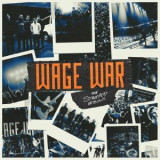
The Stripped Sessions adds to Wage War’s already impressive and numerous career highlights including over 580 total million streams; hitting high marks on Billboard Charts and earning press raves from Revolver, Loudwire, Kerrang!, Alternative Press, Rock Sound, Modern Drummer, and 2021 covers from Kerrang! and UPSET.
Limited first pressing on clear vinyl. Dick Stusso's third album is a document of slow mental unraveling with a world in perpetual decay as its backdrop. With S.P., California-based singer and songwriter Nic Russo has created his most out-there and toothsome record to date, plunging his listeners into a strange and thrilling new world at every opportunity. S.P. is the first Dick Stusso record in four years, following his stellar Hardly Art debut In Heaven from 2018-but this latest missive is more of an indirect sequel to the buzz-building 2015 release Nashville Dreams / Sings the Blues, diving deeper into the fictional character Dick Stusso's crumbling psyche and dystopian surroundings. If our introduction to Dick was someone trying to pursue their dreams and turning into a failure as a result, S.P. reflects the moment where, in Russo's words, "The character is becoming unlikable. He's succumbing to what is taking place around him."Nearly half of its 18 songs-spanning countrified rock duets, Guided by Voices-recalling anthems, and outro noise-burst sound experiments-were completed before the pandemic, when Russo decided to take a beat and allow the music to sprout new, weird buds in his rehearsal space. With mixer Andrew Oswald accentuating the record's unique feel, S.P. bridges the gap between the ultra lo-fi confines of his 2015 debut Nashville Dreams / Sings the Blues and the lush echoes of In Heaven, with a few helping hands to fully flesh out Russo's vision. Grace Cooper (The Sandwitches, Grace Sings Sludge) contributes vocals to "Dinner for Two" and "Self Reflection (Deep)," while his father Marc Russo-a Grammy-winning saxophonist who's currently touring with the Doobie Brothers-lays down expert horn arrangements on "Garbagedump #1." The myriad of twists and turns on S.P. further establish Russo as a fascinating craftsman who's never bound to do the same thing twice.
Das Warten hat ein Ende: Der legendäre Eric Clapton meldet sich mit einer bemerkenswerten neuen Veröffentlichung, ”The Lady In The Balcony: Lockdown Sessions” am 12. November zurück.
Auf den 17 Songs spielen Clapton und seine langjährigen Bandkollegen Nathan East (Bass und Gesang), Steve Gadd (Schlagzeug) und Chris Stainton (Keyboards) akustische Interpretationen von Claptons Klassikern und eine Auswahl anderer Nummern, die Blues, Country und seltene Eigenkompositionen umfassen.
Das Projekt wurde ins Leben gerufen, nachdem Eric Clapton seine für Mai 2021 geplanten Konzerte in der Royal Albert Hall absagen musste. Auf der Suche nach einer Alternative zog er sich mit seiner Band in die englische Landschaft zurück und inszenierte ein Konzert, bei dem nur die Teilnehmer selbst anwesend waren, während die Kameras liefen. Das Ergebnis ist weit mehr als nur eine Aneinanderreihung
der größten Hits. Vielmehr handelt es sich um eine der intimsten und authentischsten Darbietungen von Claptons gesamter Karriere, ein Angebot, das einen echten Einblick in die Zusammensetzung seines atemberaubenden Katalogs gewährt.
„The Lady In The Balcony: Lockdown Sessions” ist als CD, DVD, Blu-Ray und LP verfügbar .
out of Stock
Last delivered 3 years ago available to reorder, subject to availability
Did you know that there's a tunnel under Ocean Blvd is the ninth studio album from acclaimed singer-songwriter Lana Del Rey, comprising 16 tracks and interludes with features including Father John Misty, Tommy Genesis, Jon Batiste, Bleachers and more. It follows the prolific artist's 2021 albums Chemtrails Over The Country Club and Blue Banisters. Standard heavyweight black double vinyl in gatefold sleeve.
out of Stock
Last delivered 3 years ago available to reorder, subject to availability
Following the release of their 2021's critically acclaimed album The Black Stone Affair, instrumental cinematic-soul outfit Whatitdo Archive Group unleashes two startling new singles: "Forbidden Cove" and "The Cashmere Chamber", out on limited edition 7'' on March 24th via Record Kicks. The 45 is limited to 500 copies worldwide and it is just an appetizer of the upcoming new album Palace Of A Thousand Sounds, scheduled for release on May 5th, 2023. Whatitdo Archive Group previous 45s went sold out in weeks and are currently very in-demand from collectors and djs.
On side A, we find the first single "Forbidden Cove". We are immediately greeted with top-notch production that feels like we stumbled upon yet another lost rarity, but this time from the heyday of American "exotica" music from the mid-century movement of the early '60s (think Martin Denny and Les Baxter). The twist here is that the underlying tone is dark, heavy and cinematic. WAG flexes their compositional chops and maturity with clever arrangements, a tight rhythm section and dreamy vibraphone that lead us to dense Arthur Verocai-esque orchestral arrangements and hypnotizing eastern flavors.
From the first notes of the Javanese metallophone, Whatitdo Archive Group welcomes you into "The Cashmere Chamber", on side B of the 7''. Less a room and more an auditory experience, "Chamber" skillfully guides you deeper into its world complete with menacing drums and bass, sinister vibraphone melodies and a haunting choir. But this driving force of the rhythm section isn't enough for WAG; we see the song quickly blossom into an adrenaline pumping guitar feature layered expertly with a Turkish baglama saz and percussion. This track is a sample-worthy heater for any DJ.
The new album Palace Of A Thousand Sounds will be available May 5th, 2023 on limited edition LP, CD and digital platforms. Palace Of A Thousand Sounds finds Whatitdo Archive Group entrenched deeper in the worlds of mid-century exotica and library music—from the Tropicalia-steeped Amazon to the minor key tonalities of the far-out Near East.
Steeped in obscurity, a cult following of crate-diggers and musical oddity collectors has been brewing over the mysterious releases of the Whatitdo Archive Group. Surfacing in 2009 from the high deserts of Reno, NV USA, this three-piece recording collective (Alexander Korostinsky, Mark Sexton and Aaron Chiazza) focuses solely on curating, performing and preserving esoteric soundtrack, library and deep-groove collections. As an onlooker, it's hard to tell whether the music they are procuring is actually archival, music of their own creation, or both. Their debut LP The Black Stone Affair, the formerly lost soundtrack music of a once-shelved Italian cinematic masterpiece, was released in 2021 and received praise from the likes of Wall Street Journal, Mojo Magazine, Uncut, Shindig and Blues & Soul Magazine, BBC 6 (UK), FIP (FR), KCRW (US), JazzFM (UK) and more. Two years later, the Whatitdo Archive Group is back. Get ready for an exotic adventure with their sophomore full-length effort: Palace of a Thousand Sounds.
out of Stock
Last delivered 3 years ago available to reorder, subject to availability
Official reissue of Civilistjävel!'s first, self-titled archival LP in sky-blue embossed sleeve, 500 copies.
A minor masterpiece of high-lonesome, ultra-spacey existential electronics, recorded in the ‘90s and early 2000s, the music on this album had never been heard outside the Swedish artist’s private tape/CD-R trading networks until 2018 - when London’s Low Company presented it in a hand-assembled vinyl edition of 250 with scant context or biographical info. Some people understandably thought the project might be a ruse - was it really plausible that material this accomplished and affecting had fallen under the radar for 20-odd years? Implausible, perhaps, but true nonetheless. Five years on we know that Civilistjävel is indeed the real deal: the alter ego of a discreet but by no means reclusive solo artist based in Uppsala who has for decades been quietly honing his craft without worrying about who's listening. Since 2019 he has become more visible: performing live several times in and around Europe, and last year releasing a brand new studio album, Järnnätter, on Felt Records. Meanwhile Low Company has put out four subsequent, vinyl-only volumes of archival material. These have increasingly tended towards the more rhythmic/techno-oriented impulse in Civilistjävel, so it’s interesting to return now to Volume 1: comprised of the most introspective and isolationist of his works, tapping into deep wells of northern European melancholy. It’s a music made with no audience in mind, but simply to suit itself: cold-world kosmische, intimate minimal synth etudes, bowled percussion clusters and impossibly yearning, 30-days-of-night ambient dronescapes. Created mostly using a Juno60 and Korg MS20, and home-recorded to DAT (crackles and surface-noise preserved intact), you can hear in these seven expansive instrumentals unconscious echoes of Serge Bulot and Anna SjalveTreje’s crepuscular dream-sequences, Scandinavian black metal's mist-cloaked forest-fantasies, the austere dub-techno of Thomas Köner and Basic Channel, and the gristly, consumptive concrète of Nurse With Wound and Asmus Tietchens.
out of Stock
Last delivered 3 years ago available to reorder, subject to availability
Death Is Not The End's 333 sub-label follows the reissue of Devon Russell's Darker Than Blue LP late last year with a first-time reissue of a veritable reggae-dancehall holy grail - Robert Ffrench's 1985 LP 'Wondering'.
Pioneering artist and producer (and cousin of the late, great Pat Kelly) Robert Ffrench was born in central Kingston in 1962, recording his first records in 1979 at the age of 17. Coming out off the back of a slew of roots & early dancehall-style 45s cut with a wide range of producers thoughout the early '80s, the Wondering LP followed closely after two acclaimed LP sets ('Showcase' produced with Lord Koos & 'The Favourite' for Ossie Thomas' Black Solidarity label - plus a split showcase LP with Anthony "Gunshot" Johnson for Jah Thomas' Midnight Rock label).
Ffrench would write and produce the Wondering LP himself in it's entirity, laying down the tracks at Herman Chin-Loy's Aquarius & Michael Carroll's Creative Sounds studios with the help of engineer Christopher Daley. Representing the sound of an artist first confidently sriking out on his own, the album elegantly mixes a classic rub-a-dub & lovers rock-inspired sound with nascent digi-esque flourishes. It boasts an enviable list of contributors too, incl. Sly & Robbie, Dwight Pinkney, Robbie Lyn, Nelson Miller (Burning Spear) and Ronald "Nambo" Robinson among others, with Beres Hammond also providing backing vocals in places.
Following the release of Wondering, Ffrench would continue to write and produce, soon after releasing two further self-produced LPs for Edgar White's Parish label - and founded his own 'France' label in the late 80s, through which his productions would start to hit big, most notably alongside Courtney Melody on 'Modern Girl', and with US rapper Heavy D on the track 'More Love'. Robert's productions released through later label 'Ffrench' would go on to boast the cream of the crop of dancehall artists throughout the 90s and early 2000s, and he is often credited with discovering Buju Banton (producing his first single "Ruler" on the Stamina riddim). Ffrench is still actively producing music of his own to this day, having released singles 'Everyday of My Life' and 'Black Is a Colour' in late 2022 and Feb 2023 respectively, available through all digital platforms now.
333, under exclusive license from Robert Ffrench.
out of Stock
Last delivered 2 years ago available to reorder, subject to availability
As the momentum continues to build for old-school blues rock trio GA-20, the band takes their expanding fanbase by storm with the release its first full-length live LP, Live In Loveland!. Featuring 11 rowdy, blistering performances (including five songs from 2022's Crackdown, three from their 2019 debut Lonely Soul and three previously unrecorded tracks), Live In Loveland! captures GA-20 feeding off the energy of the wall-to-wall crowd and delivering each song with raw emotion and body-shaking force. Live In Loveland! mixes band originals and vintage covers, from early electric blues and honky-tonk country to proto rock 'n' roll, all performed live with deep feeling and punk energy. The album was recorded direct-to-tape on a vintage Tascam 388 at Plaid Room Records in Loveland, Ohio, home of the famous Colemine record label. Produced by Stubbs and engineered by Colemine owner Terry Cole, the band blasts out of the gate playing Harold Burrages' I Cry For You, before tearing into Little Walter's obscure gem My Baby's Sweeter. The previously unrecorded original Hold It One More Time proves to be an instant classic, sitting seamlessly next to the vintage covers on the album. According to guitarist Matthew Stubbs (whose resume includes playing with blues legends Charlie Musselwhite and James Cotton, among others), "There is a special type of energy that is exchanged when we play in front of a live audience, and we definitely feed off of that and wanted to capture that. I love the power and energy of the best live blues albums. Historically, some of the most iconic blues and jazz records have been live ones. B.B. King's Live At The Regal changed my life. So did Hound Dog Taylor's Beware Of The Dog!, and Albert King's Live Wire/Blues Power. We really wanted to continue that tradition and do one of our own."
Veils Of Transformation 1972 - 1980 is a collection of the earliest works of Gregory Kramer, one of the 20th century masters of textural electronic music. This collection is available on CD and cassette with liner notes from Gregory Kramer and Kaitlyn Aurelia Smith, who first brought this fascinating work to the attention of Important Records.
“Greg is one of the pioneers of electronic music and these pieces are unique opportunities to discover how intricate and dynamic early synthesizers are.” Kaitlyn Aurelia Smith
Kramer developed a musical language focused on continuous transformation of timbre, yielding a continuity of attention. This musical language, formed of timbral change, is a compelling aesthetic in its own right and a source of meditative experience. The four works on this album share a deep sense of order derived not from organizing pitches or rhythms, but from the evolution of timbre itself.
Gregory Kramer (b. 1952) is a pioneering electronic composer, inventor, researcher, teacher and author. In 1975 he co-founded Electronic Musicmobile, a synthesizer ensemble later renamed Electronic Musicmobile, a series of synthesizer concerts in New York from which he formed the Electronic Art Ensemble, a highly regarded all electronic quartet. His work extended to developing synthesizers and related equipment. Kramer also co-founded the not-for-profit arts organization Harvestworks in New York City. He is recognized as the founding figure of the intensely cross-disciplinary field of data sonification. Since 1980, Kramer teaches Buddhist meditation.
The four compositions collected here each represent Kramer’s unique approaches:
The structure of Meditations on 32 Parts of the Body (1978) is derived from the means of its production. Recording 5 people chanting an ancient meditation text, then layering to gradually achieve more than one million voices. The layering was all done using analogue tape recorders. The decomposition of the sound reflects the anomalies of tape machines out of sync, and the build up of artifacts from the audio tape itself, such as uneven response curves and tape hiss, are all engaged as musical materials.
Role (1972) was generated using one complex patch on a large hybrid Buchla 200/100 system. Emerging from a zeitgeist that valued pure synthesis as a combined artistic and technological research. At the time this piece was realized its as exceedingly difficult to produce electronic sounds that were internally complex.
Blue Wave (1980) is built on Kramer’s timbral development technique Veils Of Transformation which allows for disparate timbres to be woven into a continuously developing sound.
Monologue (1977) is a virtuosic performance of a massive patch on a Buchla/Electron Farm hybrid electronic instrument. Built into the patch is a pathway for continuous transformation of voice and voltage-controlled synthesizer. The blunt, raw and sometimes harsh sounds of this piece reflect an attitude prominent among composers that music can, or even should, be difficult, contrary to what’s already been done and, by all means, new.
Emotion Hospice is the debut LP by New York-based sound artist and writer Chaperone on Bedouin Records. Combining layers of doom electronics, dystopian ambient, and manipulated tape loops, Emotion Hospice reflects both the artist's suffering and recovery from addiction, as well as Philadelphia's history of socio-economic decay and misanthropy.
Emotion Hospice was recorded from 2016 to 2019, when Chaperone's David Coccagna lived and worked in his hometown of Philadelphia, a city notoriously known for its poverty, redlined city divisions, and fascist policing tactics. While exploring the sound of the city and the effects of its political and social climate, Coccagna also struggled with and managed to overcome a severe addiction to alcohol, tying further the misaligned nature of the self to the maladjusted world he grew up in that is reflected in the record itself.
Sonic thrills and their destruction is present throughout the record, as Coccagna experiments with the brutal manipulation of bossa nova, varying styles of jazz, hip hop, and rap, using 4-Track tape loops, shortwave radio frequencies, various apps on his iPad, and open source audio editing software. With Emotion Hospice, Chaperone liberates the inherent darkness of the cheerful and poppy music that he samples and transforms it into an extensive, doomy sound of a future that is dystopian, maladroit, suffering, but hopeful about human beings. The album was written and recorded entirely by Coccagna aside from the track featuring New York rapper and producer Andre Altrez, whose establishment of Girard Hall in Philadelphia was a beacon of DIY ethos that became legendary in the city in its own right.
Chaperone's Emotion Hospice is his first release on Bedouin Records. His cassette release Dead Pitbulls Slung On Tired Shoulders was his first outing for Bedouin's now defunct sub-label Bastakiya Tapes in 2017. This initial tape was the catalyst to a working relationship between Coccagna and label operator Salem Rashid as collaborators and colleagues.
Created between Palm Springs, California and Hilo, Hawai'i, V is the first double album from the Hawaiian-New Zealand singer-songwriter, multi-instrumentalist and producer Ruban Nielson's Unknown Mortal Orchestra band. Designed to play as one continuous movement and road-tested on dry California freeways, V is the definitive Unknown Mortal Orchestra car record. It's also the fifth full-length album Ruban has released in twelve years. Across fourteen sunbleached songs - written solo or with his brother Kody - Ruban draws from the rich traditions of West Coast AOR, yacht rock, weirdo pop and Hawaiian Hapa-haole music. Over a laidback blend of singalong anthems and cinematic instrumentals, he evokes blue skies, afternoons spent lounging by hotel swimming pools and the alluring darkness that lurks below perfect, pristine surfaces. It's a duality expressed in the dilapidated sunset blues and the saltcorroded soul Ruban explores through tracks like `Layla' and `Nadja. ' During the pandemic's early days, Ruban reunited with Kody at a cousin's wedding in Hawai'i. With assistance from their father, Chris Nielson (saxophone/flute) and longstanding Unknown Mortal Orchestra member Jake Portrait, they brought everything Ruban had been thinking about together. The result was V, due for release on March 3, 2023, through Jagjaguwar. When they talked about records that moved them in that spine-shivering manner, Ruban started thinking about the 70s AM radio rock and 80s pop songs that had lurked on the edge of his subconscious mind for most of his life. He wanted to write his version of records like that, leading to the two glorious uptempo singles Unknown Mortal Orchestra released in 2021, `Weekend Run' and `That Life'. However, the golden good times never last forever. Not long after, health issues began to plague his extended family.Putting his recordings aside, he helped his mother and his uncle move home from New Zealand and Portland to Hawai'i, and began dividing his time between Hawai'i and Palm Springs. During this period he reconnected with his relatives, reassessed his past, and started to look at things with fresh eyes. Hawai'i brought back memories of the darker side of his parents' lifestyle as entertainers. On those trips, he heard those classic AM radio rock records everywhere. They were inextricably intertwined with the palm trees, swimming pools, and glamorized hedonism he'd internalized from his childhood. There's a type of music in Hawai'i called Hapa-haole (Half white). You can hear it expressed in signature Unknown Mortal Orchestra style through the humid guitar-led atmosphere of V's penultimate song, `I Killed Captain Cook'. Although the songs are presented in a traditional Hawaiian manner, they're mostly sung in English. Having been influenced by Hawaiian music since Unknown Mortal Orchestra's first album, Ruban saw a space for himself within the tradition. When he reflected on his success, he realised he had the responsibility and platform to represent Hapa-haole music on the global stage.
Created between Palm Springs, California and Hilo, Hawai'i, V is the first double album from the Hawaiian-New Zealand singer-songwriter, multi-instrumentalist and producer Ruban Nielson's Unknown Mortal Orchestra band. Designed to play as one continuous movement and road-tested on dry California freeways, V is the definitive Unknown Mortal Orchestra car record. It's also the fifth full-length album Ruban has released in twelve years. Across fourteen sunbleached songs - written solo or with his brother Kody - Ruban draws from the rich traditions of West Coast AOR, yacht rock, weirdo pop and Hawaiian Hapa-haole music. Over a laidback blend of singalong anthems and cinematic instrumentals, he evokes blue skies, afternoons spent lounging by hotel swimming pools and the alluring darkness that lurks below perfect, pristine surfaces. It's a duality expressed in the dilapidated sunset blues and the saltcorroded soul Ruban explores through tracks like `Layla' and `Nadja. ' During the pandemic's early days, Ruban reunited with Kody at a cousin's wedding in Hawai'i. With assistance from their father, Chris Nielson (saxophone/flute) and longstanding Unknown Mortal Orchestra member Jake Portrait, they brought everything Ruban had been thinking about together. The result was V, due for release on March 3, 2023, through Jagjaguwar. When they talked about records that moved them in that spine-shivering manner, Ruban started thinking about the 70s AM radio rock and 80s pop songs that had lurked on the edge of his subconscious mind for most of his life. He wanted to write his version of records like that, leading to the two glorious uptempo singles Unknown Mortal Orchestra released in 2021, `Weekend Run' and `That Life'. However, the golden good times never last forever. Not long after, health issues began to plague his extended family.Putting his recordings aside, he helped his mother and his uncle move home from New Zealand and Portland to Hawai'i, and began dividing his time between Hawai'i and Palm Springs. During this period he reconnected with his relatives, reassessed his past, and started to look at things with fresh eyes. Hawai'i brought back memories of the darker side of his parents' lifestyle as entertainers. On those trips, he heard those classic AM radio rock records everywhere. They were inextricably intertwined with the palm trees, swimming pools, and glamorized hedonism he'd internalized from his childhood. There's a type of music in Hawai'i called Hapa-haole (Half white). You can hear it expressed in signature Unknown Mortal Orchestra style through the humid guitar-led atmosphere of V's penultimate song, `I Killed Captain Cook'. Although the songs are presented in a traditional Hawaiian manner, they're mostly sung in English. Having been influenced by Hawaiian music since Unknown Mortal Orchestra's first album, Ruban saw a space for himself within the tradition. When he reflected on his success, he realised he had the responsibility and platform to represent Hapa-haole music on the global stage.
out of Stock
Last delivered 2 years ago available to reorder, subject to availability
Created between Palm Springs, California and Hilo, Hawai'i, V is the first double album from the Hawaiian-New Zealand singer-songwriter, multi-instrumentalist and producer Ruban Nielson's Unknown Mortal Orchestra band. Designed to play as one continuous movement and road-tested on dry California freeways, V is the definitive Unknown Mortal Orchestra car record. It's also the fifth full-length album Ruban has released in twelve years. Across fourteen sunbleached songs - written solo or with his brother Kody - Ruban draws from the rich traditions of West Coast AOR, yacht rock, weirdo pop and Hawaiian Hapa-haole music. Over a laidback blend of singalong anthems and cinematic instrumentals, he evokes blue skies, afternoons spent lounging by hotel swimming pools and the alluring darkness that lurks below perfect, pristine surfaces. It's a duality expressed in the dilapidated sunset blues and the saltcorroded soul Ruban explores through tracks like `Layla' and `Nadja. ' During the pandemic's early days, Ruban reunited with Kody at a cousin's wedding in Hawai'i. With assistance from their father, Chris Nielson (saxophone/flute) and longstanding Unknown Mortal Orchestra member Jake Portrait, they brought everything Ruban had been thinking about together. The result was V, due for release on March 3, 2023, through Jagjaguwar. When they talked about records that moved them in that spine-shivering manner, Ruban started thinking about the 70s AM radio rock and 80s pop songs that had lurked on the edge of his subconscious mind for most of his life. He wanted to write his version of records like that, leading to the two glorious uptempo singles Unknown Mortal Orchestra released in 2021, `Weekend Run' and `That Life'. However, the golden good times never last forever. Not long after, health issues began to plague his extended family.Putting his recordings aside, he helped his mother and his uncle move home from New Zealand and Portland to Hawai'i, and began dividing his time between Hawai'i and Palm Springs. During this period he reconnected with his relatives, reassessed his past, and started to look at things with fresh eyes. Hawai'i brought back memories of the darker side of his parents' lifestyle as entertainers. On those trips, he heard those classic AM radio rock records everywhere. They were inextricably intertwined with the palm trees, swimming pools, and glamorized hedonism he'd internalized from his childhood. There's a type of music in Hawai'i called Hapa-haole (Half white). You can hear it expressed in signature Unknown Mortal Orchestra style through the humid guitar-led atmosphere of V's penultimate song, `I Killed Captain Cook'. Although the songs are presented in a traditional Hawaiian manner, they're mostly sung in English. Having been influenced by Hawaiian music since Unknown Mortal Orchestra's first album, Ruban saw a space for himself within the tradition. When he reflected on his success, he realised he had the responsibility and platform to represent Hapa-haole music on the global stage.
Dark Horse Records ist stolz auf die Veröffentlichung von LEON RUSSELLs Signature Songs, eine Sammlung von intimen, reduzierten Klavier- und Gesangsaufnahmen, darunter Aufnahmen seiner zeitlosen Songs "A Song for You", "Tight Rope", "Stranger in a Strange Land" und "Hummingbird".
Ursprünglich 2001 veröffentlicht und lange vergriffen, wird es nun auf CD neu aufgelegt und zum ersten Mal auf Vinyl gepresst.
Leons Freundschaft mit George Harrison ist gut dokumentiert, einschließlich seines profunden Beitrags zu Concert for Bangladesh,
und so ist es nur angemessen, dass sein Katalog ein Zuhause bei Harrisons Dark Horse Records gefunden hat.
Leon Russell war einer der produktivsten und am meisten respektierten Rockmusikern des 20. Jahrhunderts. Sein Spitzname, Der Meister von Raum und Zeit, erklärt vielleicht, wie er es auf über 400 Alben während seiner seiner 50-jährigen Karriere schaffte.
Leon wurde sowohl in die Rock and Roll Hall of Fame in die Rock and Roll Hall of Fame und in die Songwriter's Hall of Fame aufgenommen.
Mit einer so breit gefächerten, abwechslungsreichen Diskografie bietet Signature Songs den perfekten Einstieg für neugierige Zuhörer neugierige Zuhörer - aber seine einzigartigen Interpretationen von Klassikern wie "Delta Lady" und "This Masquerade" werden auch langjährige auch langjährigen Fans gefallen.
Das dritte schwarzweiße Album ist da. Mit "Insomnia? bringen Trettmann und KitschKrieg ihre Albumtrilogie zum Abschluss.
Es geht darauf um Trennung und die Liebe danach. Vor allem aber geht es um Menschlichkeit: wie wir wurden, wer wir sind,
und wie wir bleiben, wer wir waren.
Die zehn Songs auf "Insomnia? zeichnen einen Weg, der über Eskalation und die Flucht in die Abgründe der Nacht führt, den genialen Selbstbetrug des frischen Verliebtseins und Momente absoluter Klarheit, wie sie nur entstehen können, wenn davor viel Nebel war.
Die Musik trägt ihn auf dieser Reise, wie es in der Vita des ewigen Romantikers Trettmann immer der Fall war, egal ob die grad dolce war oder eher bitter schmeckte.
Sie hat ihm eine Identität gegeben und ihn gerettet, wenn es eng wurde. Die klanglichen Eckpfeiler sind dabei dieselben geblieben: der neue Flex aus USA und UK, aus Accra und Montego Bay, aus den Dancehalls in Jamaika und den Tanzhallen in Berlin.
Als explizite Referenzen aber treten sie auf "Insomnia? merklich in den Hintergrund . Insomnia? ist in dieser Hinsicht der Höhepunkt der KK-Tretti-Ära, ihr endgültiges Manifest. "Insomnia? ist echt, persönlich und vor allem menschlich.
The Schnitzelbeat goes on ..... und wir finden uns am Übergang zweier Jahrzehnte wieder. Woodstock hat gerade das offizielle Ende des Summer Of Love besiegelt, die Beatles befinden sich im Stadium des Zerfalls und The Stooges läuten mit unbarmherzigem Lärm ein neues Zeitalter ein. Zurück in Österreich ... die Stadt Wien dämmert weiterhin selig im bornierten Mief der Nachkriegszeit. Gelegentlich weht der Wind den Klang einer Ziehharmonika und eines Jodlers vom Land in Richtung Stephansdom. Die eingeweihten Hörer der Schnitzelbeat-Serie ahnen es allerdings bereits: da war noch etwas Anderes, etwas Wildes, Ungutes, ein dröhnender Faustschlag in die hornbebrillten Gesichter der Spießbürger. Doch wer hätte gedacht, dass die gelungenste Annäherung an den Proto-Punk der Blue Cheer oder MC5 ausgerechnet auf dem Volksmusiklabel Alpenton erscheint? (Albatross, "I am dead"). Da fährt schon ein Aufschrei des Entsetzens aus der Lederhose. Und ein Lächeln puren Glücks in die Gesichter aufgeklärter Fans obskurer Rockmusik. Auch The Seals erweisen sich 1969 als würdige Kämpfer im Krieg der Generationen: "You know nothing about the new generation / because you live in the U-Bahn-Station" stellen die Psychedelic-Punks aus Wien interessanterweise in ihrer Nummer "Stop this War" fest. Und auch sonst ist der Krieg ein geläufiges Thema: der 2. Weltkrieg (The Cop Stigh, "War History"); der Vietnamkrieg (Maybe Hair, "War"); der Krieg der Geschlechter (Young Society, "It's War"). Doch was wäre die Zeit der Hippies und Kommunarden ohne freie Liebe, Blumenarrangements und von allerlei Substanzen unterstützte Ausnahmezustände? "Nicht auf die Blumen in dem Haar, auf euer Herz kommt es an / denn Liebe nur allein alles ändern kann" singt die Casting-Boyband The Wallflowers, aufs trefflichste begleitet von einem Kinderchor, der leider nicht immer ganz textsicher ist. Die Aussage an sich würden aber sicher auch The V-Rangers unterschreiben ("Make Love"). Oder Hannes, Erich, Peter und Arno von der Salzburger Beatband Les Marquis, die einen Westcoast-Liebestraum an den Stränden des Salzkammerguts lebendig werden lassen ("Sand on the Shore"). Zur Halbzeit von Schnitzelbeat Vol. 3 wird ein unvergesslicher Höhepunkt gereicht. 1973 veröffentlicht Rocky F. Holicke die ultimative psychedelische Hymne aus heimischer Produktion: "Ready for Take Off" ist ein unbeschreibliches Monument eines Songs, eine wahrhaft überirdische Erfahrung musikalischer Transzendenz. Wenn es schon über die Wolken geht, dann bitte so, Herr Reinhard Mey. Und natürlich auf Holickes eigenem Label, Aero-Sound. Wo sonst? Während Hide & Seek auf den Spuren von Cream wandeln und ebenfalls von jeder Flugangst befreit durch den Orbit segeln ("I can fly"), blasen aus den Triebwerken von Karl Ratzers Gitarre längst sengend heiße "White Flames". Der legendäre Musiker und Frontmann der Charles Ryders Corporation ist nicht nur einer der besten Jazzgitarristen die Österreich je hatte - er nimmt es auch mit James Marshall Hendrix auf, wenn alle Effektpedale bis zum Bühnenboden durchgedrückt sind. Etwa zur selben Zeit findet sich eine oberösterreichische Ministrantenband - heimlich, nächtens - am Wochenende im Musikzimmer einer Mühlviertler Volksschule ein. Und nimmt dort eine brandgefährliche Granate hochexplosiven, psychedelischen Garagenpunks auf. Mit mehr Fuzz, Wah-Wah, Echo und Farfisa-Orgel als selbst der Leibhaftige persönlich erlaubt hat (The Hush, "Giny"). Und dies ist nicht die einzige weithin unbekannte Super-Rarität, die der Archivar, Subkulturforscher und Rare-Track-DJ Al Bird Sputnik und sein Team von den Trash Rock Archives zusammengetragen haben: die verschollene erste Single von Novaks Kapelle erscheint hier erstmals in einer komplett restaurierten Version, ohne Nadelhüpfen und mit relativ wenigen lästigen Nebengeräuschen ("Garbage Man"). Von den lediglich 10 angefertigten Exemplaren der einzigen Platte der Austrian Brothers ("Brother") konnte die einzige Kopie ohne Pressfehler aufgetrieben werden. Und um endlich der 7" von The Cop Stigh habhaft zu werden, musste sogar jemand sein letztes Hemd verkaufen und die Hose bis zu den Knöcheln runterlassen. Aber "All right", um es mit den Worten der steirischen Acid-Rocker Generation 2000 zu sagen: es hat sich ausgezahlt. Schnitzelbeat Vol. 3 fügt der vergessenen Frühgeschichte der österreichischen Rockmusik wieder zahlreiche faszinierende Kapitel hinzu. Begeben Sie sich mit Al Bird Sputnik und den Labels Konkord und Digatone auf eine weitere Reise in die Tiefen wohlsortierter Plattenkisten und pilgern Sie vor einem Himmel voller Schwedenbomben und Mannerschnitten über Gebirge verzerrter Gitarren in die entlegensten Regionen der österreichischen Popkultur. NOVAK
Death Is Not The End's 333 sub-label follows the reissue of Devon Russell's Darker Than Blue LP late last year with a first-time reissue of a veritable reggae-dancehall holy grail - Robert Ffrench's 1985 LP 'Wondering'.
Pioneering artist and producer (and cousin of the late, great Pat Kelly) Robert Ffrench was born in central Kingston in 1962, recording his first records in 1979 at the age of 17. Coming out off the back of a slew of roots & early dancehall-style 45s cut with a wide range of producers thoughout the early '80s, the Wondering LP followed closely after two acclaimed LP sets ('Showcase' produced with Lord Koos & 'The Favourite' for Ossie Thomas' Black Solidarity label - plus a split showcase LP with Anthony "Gunshot" Johnson for Jah Thomas' Midnight Rock label).
Ffrench would write and produce the Wondering LP himself in it's entirity, laying down the tracks at Herman Chin-Loy's Aquarius & Michael Carroll's Creative Sounds studios with the help of engineer Christopher Daley. Representing the sound of an artist first confidently sriking out on his own, the album elegantly mixes a classic rub-a-dub & lovers rock-inspired sound with nascent digi-esque flourishes. It boasts an enviable list of contributors too, incl. Sly & Robbie, Dwight Pinkney, Robbie Lyn, Nelson Miller (Burning Spear) and Ronald "Nambo" Robinson among others, with Beres Hammond also providing backing vocals in places.
Following the release of Wondering, Ffrench would continue to write and produce, soon after releasing two further self-produced LPs for Edgar White's Parish label - and founded his own 'France' label in the late 80s, through which his productions would start to hit big, most notably alongside Courtney Melody on 'Modern Girl', and with US rapper Heavy D on the track 'More Love'. Robert's productions released through later label 'Ffrench' would go on to boast the cream of the crop of dancehall artists throughout the 90s and early 2000s, and he is often credited with discovering Buju Banton (producing his first single "Ruler" on the Stamina riddim). Ffrench is still actively producing music of his own to this day, having released singles 'Everyday of My Life' and 'Black Is a Colour' in late 2022 and Feb 2023 respectively, available through all digital platforms now.