In a most original impetus this album traverses forty years of Italian new wave and singer-songwriter tradition. As in the desert where Infesta’s urge is to walk, we are ambushed by the most intense thermal and sonic difference.
It is from here that this important journey we mustn’t miss begins. It leads us eight thousand meters deep in the blue abyss. Not quite enough to come out the other side and, as a kite, bestow all the heights that I will reach. These depths are nevertheless necessary to adjust our eyes to the darkness that lives within us, as a machine to burst our hearts to which we can’t and won't be accomplices.
Machine against machine. The increasing pressure of the lashes of an incessant current, at times sweet and at times sour, on which all the courage is sung and yet is everywhere dispersed like thoughts on water and melodies to be lost at sea. Darkness persists: you said the world can be lived where all was taken. And it’s a crazy and estranging babbling that, stripped by a current, answers: never never never never, in no direction.
My companions, come back, the breaking point has been found, we sing together. Leaf after leaf the time has come: it is possible to destroy the Machine in a mad blinding light.
Search:blue strip
- A1: Purple Disco Machine - Body Funk
- A2: Shakedown - At Night (Purple Disco Machine Extended Remix)
- B1: Claptone & Mylo - Drop The Pressure (Purple Disco Machine Remix)
- B2: Tensnake - Coma Cat (Purple Disco Machine Extended Re-Work)
- C1: Purple Disco Machine - In My Arms
- C2: The Shapeshifters - Lola's Theme Recut (Purple Disco Machine Remix)
- D1: Purple Disco Machine - Beat Fantasy
- D2: Fallout - The Morning After (Purple Disco Machine Re-Work)
- E1: Purple Disco Machine - Dished (Male Stripper)
- E2: Fatboy Slim - Praise You (Purple Disco Machine Remix)
- F1: Spiller Ft. Sophie Ellis-Bextor - Groovejet (If This Ain't Love) (Purple Disco Machine & Lorenz Rhode Remix)
- F2: Weiss - Feel My Needs (Purple Disco Machine Mix)
Grammy award-winning titan of dance music Purple Disco Machine joins the illustrious list of Defected House Masters with a celebratory compilation. The German producer, DJ and global household name Tino Pointek, AKA Purple Disco Machine, is the blueprint for what makes a successful dance music artist in the modern age; respected on the underground scene while achieving major crossover success with remixes for the likes of Sir Elton John, Dua Lipa and Mark Ronson. The crate digging kingpin of house and disco first landed on Defected over a decade ago, and has since delivered remixes of iconic tracks like Fatboy Slim’s ‘Praise You’ and the London label’s top tracks including Shakedown’s ‘At Night’ and ‘Coma Cat’ by Tensnake – as well as striking originals like ‘Beat Fantasy’. From edits of the classics to remixes of the modern, as well as uplifting originals, Purple Disco Machine has birthed a distinct sound that is instantly recognisable, one that is not afraid to reference or not reference and is always bursting with joy. Across Defected presents House Masters: Purple Disco Machine, the full breadth of the iconic German selector’s sound is felt from the 2019 smash hit ‘Dished (Male Stripper)’ to deep cuts like his re-work of Fallout’s ‘The Morning After’ as well as remixes of legendary tracks like ‘Lola’s Theme’ by The Shapeshifters and Spiller’s ‘Groovejet’ featuring Sophie Ellis-Bextor. Defected presents House Masters: Purple Disco Machine is here to showcase the sound of a bona fide electronic maverick in full.
- A1: When We Dance (4:24)
- A2: Heart Started Beating
- B1: Desperation Looks Ill
- B2: Who Just Wants To Survive? (5:09)
The new EP is released on limited edition 'Scissorhands Ice Blue' coloured vinyl with a hand-numbered gold riso print sleeve art with obi strip. Sarah/Shaun wooed hearts and wowed critics with debut EP It's True What They Say? in 2024 plus follow-up EP Someone's Ghost in 2025.
They have been featured across the media including BBC Radio 6Music, BBC Radio Scotland, The List and The Skinny. They've played gigs supporting French legends Air, Glaswegian 80s pop legends The Bluebells, Glasgow's huge Glasvegas, a slew of venues across Glasgow and Edinburgh, not to mention the festivals: Kelburn Garden Party, Fringe By The Sea, Kendall Calling, Dunbar Music Festival and Hidden Door Festival. The duo are set to release a full length album in late 2026.
[b] A2 Heart Started Beating [Backwards] (4:10)
[c] B1 Desperation Looks Ill [From The Other Side] (4:26)
2026 Repress
Melbourne’s DJ Ali is up next on Blue Hour Music with a powerful EP of fast percussive tribal groovers recorded live over multiple hardware sessions. ‘Interceptor’ kicks off the record with energising and rolling momentum laced in echoes of shamanic ritual. ‘Paradox Cell’ maintains the tension with a stripped back and pumping drum track enhanced by repeating tones and swirling winds that suddenly take over. On the flip ‘Nightwatch’ feels even more immersive, tunnelling down into hypnotic chambers where a voice guides and pulls the listener through a lucid void. ’Regeneration’ rounds up the record with an uplifting journey that begins to unfold with a series of shifting layers and hints of colour beneath a haze of euphoria.
- Blink
- Waiting Game
- Telling Me
- Lonely Rose
- Sweet Time
- Tides
- Like This
- What Would I Do
- Without Her Loving You
- Missing Out
- Resting Blues
British singer-songwriter Lucy Kitt unveils her highly anticipated second album, Telling Me, a deeply personal collection that shifts focus from introspection to storytelling, capturing the lives and struggles of those closest to her. Drawing from her love of 70’s Laurel Canyon folk, 90’s indie rock, and country music, Kitt crafts narratives that blend her own experiences with compassionate observations of loved ones. Based on a raw acoustic “three chords and the truth” style of songwriting that ripples throughout, the album expands with full-band arrangements that give a huge range and richness to the sound.
Though influenced by American musical traditions, the Essex-native maintains her distinctive voice and authenticity, ensuring the music remains unmistakably her own. Following her 2018 debut Stand By, this new record represents a more mature approach to songwriting, written during her early 30s and completed in the 2021 lockdown – a storybook of songs capturing that moment in time.
Musically, Telling Me showcases Kitt's stripped-down acoustic foundations, while incorporating fuller arrangements that blend her love of Nick Drake, Bob Dylan, Gram Parsons, Joni Mitchell and Joan Baez, with music she loved as a teenager such as The Lemonheads and Veruca Salt. The album features collaborations with an impressive roster of musicians, including Jay Starkey on drums, Nashville-based pedal steel virtuoso Spencer Cullum, Treetop Flyer’s Sam Beer and longtime collaborator Pat Kenneally on drums and piano.
Recorded between 2021-2023 at London's Lightship 95 studio at Trinity Buoy Wharf, the album was co-produced and engineered by Dave Holmes, with some musicians contributing remotely from Nashville and London.
Kitt's commitment to authenticity extends to every aspect of the album, from the down-to-earth, home-based album artwork which represents her life right now as a musician and a working mum, with all the wonderful chaos that comes along with it. Also her decision to maintain her natural accent throughout her vocals. "I have always retained my authentic self in my songs," she explains. "Always singing with my own accent, despite the influences of all the bands and artists over the years."
Kitt has been songwriting and performing for over 20 years, starting in a riot grrl band in her teens in her hometown of Romford, Essex, before evolving into the thoughtful folk storyteller she is today. A semi-finalist at the BBC Young Folk Awards in the early 2000s, she has performed at major festivals including Glastonbury and Cambridge Folk Festival, building a reputation for intimate, lyrically-focused performances.
Telling Me is a resplendent collection of songs, capturing the human experience with great empathy, honesty and musical sophistication that has become Lucy Kitt's signature.
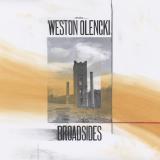
'In 2023, sound artist and composer Weston Olencki toured across the American South. Beginning in their hometown in South Carolina, they snaked a circuitous path from the mountains of West Virginia to the banks of the Mississippi River. As the miles accumulated, so did the initial seeds of new work.
'Instruments and artifacts they acquired hitched a ride in the backseat, while songs and sounds filled their portable recorder: water in its various states, the familiar insectoid buzz of those summer nights, trains cutting through the landscape, the traditional music that lived alongside the communities that kept it. Olencki took it all in, and over time, found ways that these experiences coalesced into a bramble-like perspective of time, where past, present, and future intersect in ways both barbed and beautiful.
'Broadsides, Olencki’s newest solo full-length is the multilayered result of this journey. The album follows their landmark release Old Time Music from 2022, which presented radical interpretations of traditional tunes from Appalachia and throughout the South alongside original compositions that drew significantly on archival recordings. On Broadsides, Olencki rejects delineations between the unmoored avant-garde and the rootedness of one’s cultural heritage, revealing their porous and intertwined nature. “My mother was a quilter. Her mother before that,” they write in the album’s liner notes. “Quilting, like music, is a practice of embedding knowledge and remembrance into the very core of the thing you are making. It’s not just about the materials, but how they’re reassembled, recontextualized, stitched, woven to form new patterns - the minutiae of craft holding significance to those looking to find it. Stories woven from stories, never told the same way twice.”
'Like all great road trips, Broadsides unfolds slowly and continuously, with moments of dramatic reverie punctuating the endless melt of highway in the rearview. We’re immediately confronted by the uncanniness of revisiting old haunts, as Southern storms break through the initial churn of the freight locomotives of Alabama. Olencki’s interpretation of the bluegrass standard “Foggy Mountain Breakdown” captures the euphoria of melancholy in motion. The permutational plucks of banjo are bounced around the frame by a computer, its pitches determined within algorithmic sequences and transcriptions of classic three-finger licks. The tonalities of old-time are smeared and stretched until all that’s audible is the insistence that Heaven might be real.
'In the album’s second half, “Omie Wise,” a murder ballad made famous by Doc Watson, follows an interlude recorded on the river in North Carolina in which the titular character’s body was laid. Ghostly echoes of a dozen other renditions float through the substrata as Tongue Depressor’s Henry Birdsey accompanies them on the pedal steel guitar. The album’s central composition, “all my father’s clocks,” is a profound meditation on entropy and impermanence. The sound of their father’s extensive clock collection ticks away as Olencki pulls a bow across the length of an autoharp sourced from a rural strip mall. The instrument was left as detuned as it was found, the resonance of its deep bass drone and clanging high-end the result of years of neglect and the warping effects of Southern humidity.
'Historically, broadsides were an early form of broadcasting, an often- musicalized telling of current news pasted in the public square. The name was later taken up by Sis Cunningham and Gordon Friesen in the 1960s, whose Broadside magazine published songs and social commentary when American folk music resurfaced as an urgent way of communicating the multifaceted politics of its time.
'Olencki borrows the phrase to recall both this old form of songmaking and that later prominent reexamination of traditional music’s role in modern life, but also to draw attention to the fragmented and machine- mediated way heritage is diffused in this very different, but no less pivotal, moment.
'As a sanitized past is used as justification for current violence and domination, we can turn to these artifacts to better understand the history of ourselves, but only if they are consciously pushed to evolve. Broadsides represents one personal, striking vision of what far-flung futurisms could be respun from = these high, lonesome sounds: a reflection of the unbridled joy and deep sorrow inherent to living together through time, and a desire to push further into the untold and unknown.'
- Bluer Than Blue
- Magnolia
- Dreamloop
- How And Why
- Colours In The Dark
- Senden Daha Güzel
- The Bare Truth Of Me
- Cold Hands Feat. Brian Lopez
- We Were Kids
- Same
The iconic voice of Nouvelle Vague for 20 years, Mélanie Pain continues her unique solo career, blendingpop, folk, and intimate poetry.After three albums acclaimed for their delicacy, she returns with How and Why, a luminous and stripped-down fourth opus. Raw folk music centered on acoustic guitar, without artifice-and that unique voice: soft, deep, elegant. Recorded live with her long-time musicians, the album draws inspiration from Kings of Convenience, Iron & Wine, and Emilíana Torrini. Nine tracks in English, ranging from emotion to melancholy to rebirth, featuring a hypnotic duet with Brian Lopez (Calexico) and a sensual cover of Duman in Turkish. A sunny and peaceful album, the perfect showcase for Mélanie"s voice and words.
- A1: Summer1 (2:29)
- A2: Autumn (3:29)
- A3: Winter (2:18)
- B1: Spring (2:42)
- B2: Summer2 (3:18)
Goodbye Matters retraces Silly Boy Blue’s intimate journey through a year shaken by the loss of a loved one and the emotional transformation that follows. This EP explores the emptiness left by this sudden absence, and how, over time, that void slowly fills with acceptance.
Each track represents a stage of the grieving process, associated with a color and a season, reflecting the emotion that accompanies it.
Summer 1 opens the story with an apparent calmness of everyday life that hides an inner turmoil. Autumn dives deeper into the tangible pain of absence, as memories gradually fade away with the falling leaves of the season.
With Winter, the EP reaches a breaking point. The music is stripped down to its bare essence, conveying an emotional landscape emptied out, where the outer cold mirrors inner loneliness.
Then comes Spring, where sadness still lingers but gives way to a glimmer of hope, symbolizing the struggle between memory and renewal.
Finally, Summer 2 marks acceptance — a last imaginary conversation, a gentle farewell. The cycle closes, yet light returns, offering a peaceful conclusion to this journey through loss and reconstruction.
- You And Me
- You Are Giving Me Some Other Love
Transparent Purple vinyl. Sometime in 2005, a lone box of master tapes escaped an estate sale and made its way through a network of collectors, record dealers, and "junkers" into the hands of leading Ohio soul expert Dante Carfagna, who linked them to Columbus, Ohio's mysterious Prix label (See: Eccentric Soul: The Prix Label). A bit of research turned up Prix proprietor George Beter, who identified most of the unlabeled material. All it took was an endless series of phone calls and letters and two fields trips in Columbus. But one complete mystery wended its way onto our final Prix compilation. "You and Me," a simple but irrepressible demo credited only to Penny & the Quarters, was found tacked onto a mixed studio reel. Our survey of every willing lifer left on the Columbus soul scene, including retired DJs, producers, and important local artists, produced not so much as a glimmer of recognition at the name Penny & the Quarters. Though we loved the song from the first play, it may've ended up a bit buried on our original compilation, as #18 of 19 tracks.Four years later, Eccentric Soul: The Prix Label hadn't exactly become a huge seller, although listeners had repeatedly told us that the unfiltered studio demos that fill out the record's back half were true diamonds in the rough. But neither Penny nor her Quarters had appeared to claim credit for their efforts. Then, completely out of left field, we heard from respected screen actor and avowed Numero fan Ryan Gosling that Penny's piercing bit of stripped down doo-wop was being considered for inclusion in Derek Cianfrance's indie-weeper film Blue Valentine. What we didn't know was that "You and Me" had won a major role in what became an indie circuit hit, and that Penny & the Quarters would instantly assume the role of world's most famous unknown doo-wop group.Every week is a slow news week in Columbus, Ohio, and early January 2011 found the city recovering from the thrill of elevating Ted Williams_the formerly homeless guy with the awesome voice for radio_into a national news sensation. But both major daily newspapers in town, as well as the city's alternative weekly, also ran stories about how a lost and unknown Columbus soul group had become the musical centerpiece of a film already garnering Oscar buzz. That mainstream spotlight aimed at Blue Valentine and Penny & the Quarters did the trick: we finally made contact with the widow of Jay Robinson, lead Quarters' singer and songwriter. Robinson, it turned out, had also been the leader of Columbus doo-wop pioneers The Supremes (later known as "The Columbus Supremes," for reasons which should be obvious). Jay Robinson never did give up on the dream of writing a hit record; even so, the posthumous realization of his dream is cold comfort for his widow and daughter. With their blessings, we returned to those estate sale masters and pulled down another neglected track ("You Are Giving Me Some Other Love") from the still-unknown Penny and her now-partly-known Quarters. "You and Me" is a song that could not be suppressed: not when Prix failed to release it; not when Penny & the Quarters were forgotten; not when Numero stuck it at the bitter end of a much overlooked compilation. Its evolution from estate sale trash to silver-screen gold has finally returned it to big-hole 45, where it probably should have lived all along.
A love letter to the deep history of the dancefloor, the three-tracker begins with 'Scouse Kiss', where Chicago meets Liverpool as Discothèque Credits reimagine a hidden Lil’ Louis-inspired pop mix into the 12” club dub that never was. 'Dirty Talk' follows, transforming an Italo classic, often cited as the blueprint for New Order’s Blue Monday - into a stripped-back proto-house workout from Machine Disco, dripping with machine funk and looped 808 programming. Finally, 'Burnt' burns bright with acid-soaked sharpness – a hypnotic groove built for the deeper hours of the night.
True driven Techno. VAKUUM presents the VAKUUM EP by CONFUSION - a six-track exploration in stripped-down, minimalist sound design. Raw machine energy and hypnotic repetition drive the record, each cut crafted with precision and clarity. The result is a deep, timeless release that embodies the essence of modular production: focused, uncompromising, and endlessly absorbing. A true statement of intent for both the label and the artist.
- 1: Give It Up
- 2: Blue Sunshine
- 3: Feels Like Love
- 4: Soul Sleep
- 5: Wet Dream
- 6: Love Is Distraction
- 7: Chinatown Style
- 8: The Body You Deserve
Psychic 9-5 Club marks the beginning of a new chapter for HTRK. It's an album that looks back on a time of sadness and struggle, and within that struggle they find hope and humour and love. It's Jonnine Standish and Nigel Yang's first album recorded entirely as a duo— former band member Sean Stewart died halfway through the recording of their last LP, 2011's Work (Work, Work).
Though the record is instantly recognisable as HTRK—Standish's vocal delivery remains central to the band's sound, while the productions are typically lean and dubby—they've found ample room for exploration within this framework. Gone are the reverb-soaked guitar explorations of 2009's Marry Me Tonight and the fuzzy growls that ran through Work (Work Work). They've been replaced with something tender, velvety and polished. This is HTRK, but the flesh has been stripped from their sound, throwing the focus on naked arrangements and minimalist sound design.
The album was recorded at Blazer Sound Studios in New Mexico with Excepter's Nathan Corbin, who had previously directed the video clip for Work (Work Work) cut "Bendin." Inviting a third party into their world was no easy decision, but in Corbin they found a kindred spirit. The LP was then refined and reworked in Australia at the turn of 2013, before the finishing touches were applied in New York during the summer.
Of all the themes that run through Psychic 9-5 Club, love is the most central. The word is laced throughout the album in lyrics and titles— love as a distraction, loving yourself, loving others. Standish's lyrics explore the complexities of sexuality and the body's reaction to personal loss, though there's room for wry humour—a constant through much of the best experimental Australian music of the past few decades.
Standish explores her vocal range fully—her husky spoken-word drawl remains, but we also hear her laugh and sing. Equally, Yang's exploratory production techniques—particularly his well-documented love of dub—are given room to shine. They dip headlong into some of the things that make humans tick—love, loss and desire—with the kind of integrity that has marked the band out from day one. Psychic 9-5 Club is truly an album for the body and for the soul.
UK producer Tom Carruthers returns with a scorching 5-tracker for Skylax Records, diving headfirst into the primal roots of jackin’ house, proto-italo, and early machine funk. Known for his raw MPC-driven grooves on L.I.E.S., Clone Jack For Daze, Syncrophone, and Craigie Knowes, Carruthers channels the energy of the underground circa ’86—pure drum machine soul for the dancefloor faithful. Side A kicks off with the title track “Neutralise”, all sharp snares, warped synths and hypnotic repetition—a jack track in the truest sense. “Deep North” follows with ghostly pads and relentless drum programming, while “No More” brings metallic tension and stripped-down funk with a heavy nod to Chicago’s original blueprints. On the flip, “Pascals” weaves cosmic arps through rugged percussion, merging italo sensuality with bleep-era minimalism. The closer, “Cosmic Ride”, is exactly that: a journey through spacey chords, dusty rhythm boxes, and that unmistakable feeling of warehouse euphoria at 4 a.m. Neutralise EP is a raw, timeless record that strips dance music down to its essence—jacking, emotional, physical. To match the sonic purity and timeless aesthetic of the release, we enlisted the iconic H5 studio—a name synonymous with visionary design in music and culture. Known for their groundbreaking work with Daft Punk, YSL, and numerous award-winning visual campaigns, H5 brings a level of artistic sophistication that elevates this EP into a complete sensory object. Their clean, modernist design echoes the stripped yet futuristic vibe of Tom Carruthers’ sound—a perfect fusion of form and function, underground and high art. Vinyl only. No digital. No compromise. For fans of: Virgo Four, Baby Ford, Larry Heard, early Warp, Mr. Fingers, and Beppe Loda.
Munich-based duo Glaskin, brothers Jonathan and Ferdinand Bockelmann, have become pivotal voices in modern techno, known for their residency at the legendary Blitz Club and standout releases on labels like Mutual Rytm and Figure. Their live sets channel dynamic, forward-thinking energy, and now they bring that momentum to FJAAK's ever-expanding CROWD family. With the Blue Light EP, Glaskin deliver four impeccably groovy tracks that balance stripped-down flair and shimmering texture. "Blue Light" opens the EP with mellow synth tones, a lean, hypnotic beat and a vocal loop murmuring 'here we go' that signals the underground journey ahead. Next up is "Captcha", releasing as the single, where a spoken female voice is layered atop rhythmic percussion, marrying atmosphere with groove-driven momentum. On the B-side, "Tape", digs deep into rolling uncompromising techno territory, strict in structure yet irresistibly danceable. The EP rounds out with "Prophat Tool Board", stepping slightly into house-leaning warmth, its broader rhythm and melodic warmth offering a fitting counterpoint to the brooding energy before it. The Blue Light EP is Glaskin's debut on CROWD and a shrewd expansion of the label's sound palette: richly textured techno made for both peak-time impact and immersive listening. To celebrate the release on the label, Glaskin will join label-founders FJAAK for a CROWD night at Nitsa Club in Barcelona on October 10, an event primed to showcase the raw energy and precision behind their studio work. Don't miss this one!
- A1: Brother Bill (The Last Clean Shirt) (3.17)
- A2: It’s All Over Now Baby Blue (4.40)
- A3: Fire On The Sun (2.23)
- A4: As The Crow Flies (3.37)
- A5: Please Send Me Someone To Love (4.42)
- B1: Many Rivers To Cross (4.09)
- B2: Just Want A Little Bit (2.05)
- B3: Riverside Country (3.45)
- B4: Lonely Avenue (5.20)
- B5: The Fool (3.23)
The Original Lineup Reunited
For the first time since their iconic run in the early 1960s, all five founding members—Eric Burdon, Alan Price, Hilton Valentine, Chas Chandler, and John Steel—came together for a raw, soulful reunion. This is the Animals with the benefit of age, experience, and no pressure to chase hits—just great playing.
A Gritty, Understated Gem
Recorded with minimal fanfare in 1977, Before We Were So Rudely Interrupted is a return to the blues and R&B roots that shaped the band's early success. It's stripped-down, honest, and deeply musical—a perfect record for fans of The Rolling Stones, Van Morrison, or Bob Dylan.
Dylan, Jimmy Reed, and the Blues Canon
The album features a standout cover of Bob Dylan's "It's All Over Now, Baby Blue", along with classics from Jimmy Reed, Joe Tex, and Gospel/Blues deep cuts, reinterpreted with grit and grace.
Cult Classic with Lasting Legacy
- A1: That Musician Thats Dead
- A2: Preference Is A Good Friend, Mind
- A3: No One Can Sing That Well
- B1: Last Herald
- B2: Mo**Real
- B3: Things Keep Happening
OOOOH! by Alex Bad Baby Lukashevsky with Cocoa Corner (2025)
Celebrated veteran of Toronto’s music scene, known for his boundary-pushing approach to folk and avant-garde music, twists rock music into strange and brilliant new shapes with the help of young jazz players, U.S. Girls, and his own immensely talented son.
OOOOH! is hard on the outside and soft on the inside. Made in the spirit of unity,
humanity, and poetry — disobediently renouncing the glory of personal triumph for the
generosity of an honest experiment. On the last track of the album you’ll hear “Or do you only ever never want to make a single enemy? / That’s not freedom or humility / It’s nothing, honestly.” Oooh, that's a bad baby!
A celebrated Toronto songwriter and performer, Alex Lukashevsky has always been disobedient. Which simply means, nothing is off the table when he’s looking for his
poetic voice; when trying to find the realest I of the teller. As he sings on the lead track “that musician that’s dead” The musician is radical/ it’s the world that’s demented/ listening with their eyes, the music looks dented/ they’re over-represented.
OOOOH! was recorded in January 2024 at Sound Department in Toronto, engineered by Patrick Lefler (ROY), mixed by Grammy-nominated producer Matt Smith. All the songs were tracked live off the floor in two days, with one extra day for recording vocals, to keep the recording fully alive and breathing. As leader of Deep Dark United, as a solo performer, and a sideman in Brodie Wests’ Eucalyptus and Luka Kuplowsky’s Ryokan Band, Alex has been an outsized influence on the Toronto music scene that spawned acts like Broken Social Scene and Owen Pallett. (Pallett, who has toured with Lukashevsky, went so far as to record an entire album’s worth of Alex’s songs, backed
by a full orchestra.)
Lukashevsky has approached each of his albums and projects as something completely new, using only the musical boundaries he creates with each song. Even when he
has recorded songs with nothing but his voice and his own acoustic guitar accompaniment, the results are never “stripped down” or “back to basics,”
Gong! How do you get to heaven / have fun! have fun!
It’s cool to approach music as a game of “spot the influence”; Burt Bacharach-meets-Black Flag; Lana Del Rey-meets-LCD Soundsystem etc. Glorified mash-ups are promising because of their conversational nature. But they can turn us into hyperboreans; blowing cold air beyond ourselves while doing what we can to remain warm. To devise a game or a narrative is to have a winner and a loser, but we all know that just as you win/ so you lose. And does anything really change? Alex Lukashevsky and Cocoa Corner are more at ease drawing blind contours or playing an old game like consequences. They let things add up without knowing particularly how. Cognition is recognition.
Lukashevsky, in addition to writing all the songs, plays guitar and sings on OOOOH!, doing both in ways that are soulful and spikey at the same time. Joining him on guitar and vocals is his oldest child, Charlie Lukashevsky, who, at 23, is already a talented performer and songwriter in his own right. Cocoa Corner also includes Aidan McConnell, an in-demand drummer and composer, Jack Johnston, a jazz bassist and Barry Harris acolyte, and percussionist Evan Cartwright (The Weather Station, U.S. Girls, Cola, Tasseomancy), who plays steel pan and marching drum.
Working with his son and with other younger musicians is central to the album’s
unpredictable aesthetic. It reinvigorated the sound in unexpected ways. Lukashevsky says, “I had to reconsider my own instincts. I had to deal with being 99 years old.”
In addition to these performers, the album includes a tasty contribution from Meg
Remy, the visionary musician and producer who is the leader of the critically acclaimed
project U.S. Girls. Remy duets with Lukashevsky on the imagistic and sprawling album
closer “things keep happening.”
About that album title: OOOOH! is taken straight from “that musician that’s dead” an
arch and unhinged comment on the exertion required to navigate a lifetime of music making.
Lukashevsky’s delivery of that one emotive word is a kind of cultural posture, but also a
hundred percent primitive expression. The impact is never less than visceral. His vocal
delivery ranges through rich baritone blues to keening falsettos to a kind of sprechstimme that periodically steps out from the music to grab the listener’s shirt. He
doesn’t sound too nice, but he is sincere. When life gives you lemons lament.
For OOOOH! his first official full-length album since 2012’s Too Late Blues, (a collection of knotty-yet-effervescent tunes built upon the enchantingly serpentine harmonies of Lukashevsky and his vocal collaborators, Felicity Williams (Bahamas, Bernice) and Daniela Gesundheit (Snowblink, HYDRA)), Alex has once again broken apart and rebuilt his own approach to music. Or rather (because that sounds too over-determined), he
has allowed his music to build itself into strange new shapes that only fleetingly and
coincidentally, but happily, resemble anything that might be called rock and roll. There is some editorializing within the song’s lyrics— Lukashevsky even cheekily contributes to the “spot the influence” game with the line “Muddy Waters, Rite of Spring!” a funny preemptive strike against anyone already reaching for some variation of avant-blues to describe what the song is up to here. In fact there are many names checked on this record (literally and in spirit); they are the lily pads that trace the path of this expression! Palestrina, Peter Pears and Benjamin Brittain, Andrés Segovia, Stravinsky, Lotte Lenya, Alice Coltrane, Skip James, Chuck Berry, D’Gary, Betty Carter, Mukhtiyar Ali, Chuck D, Yoko Ono, Hailu Mergia, David Bowie, Jane Siberry. rhythm is a skeleton mansion / haunted by melody / feckless prodigy / the world is under a spell / cast by some demon angel / Practice day and night / Try as hard as hell / no one can sing that well Musicians are often worried by the way in which they are prepared to fail rather
than how they would like to succeed; it’s such a deep concern that it tempers their creativity and shackles their process. Current cultural proclivities, tend to comfort a certain kind of artistic failure and abnegate another kind. How many testimonials, full of heartfelt care and investment, have you heard for Taylor Swift, and yet a craftsman like Chris Weisman is often dismissed easily as though he’s doing something anti-social. what’s throwing itself in my ears and my eyes / arrogant devil ad hominem christ.
The music you will hear on this recording veers off in multiple directions at once,
and features a rock and roll spirit with a divergent heart. This is no sclerotic clomp of the Average Rock Song, but in fact a flood of humanity in all its darkness and moodiness and unpredictability. If most performers make songs that are like sports cars or pickup trucks to drive around, Lukashevsky has built something more akin to a rowboat in a tree: it’s weird and beautiful.
- Soldiers Requiem
- When The Walls Come Down
- Walk In Cold
- Jettison
- Live Wire
- The Mule
- Coldbringer
- Blight
- Free Nation
- Hammer Head
- Ghetto Mechanic
- Suspect Device
- Vanilla Blue - Bonus Track
- The Strip (Live) - Bonus Track
- Roller Queen (Live) - Bonus Track
- Backlash Jack (Live) - Bonus Track
Limited edition GRAPE CRUSH vinyl 1000 copies worldwide. Remastered by Bob Weston at Chicago Mastering Service. Originally released in 1988 vinyl reissue includes 4 bonus tracks. "Plenty of bands can claim Naked Raygun as an influence, from post-punkers to hardcore acts. All of them could learn a thing or two or three by studying the whoas. With Jettison... Naked Raygun achieved creative bliss. Here is an album that successfully combines dissonant instrumentation with supremely catchy vocals." - Punknews.org - // Naked Raygun were an extraordinary staple in the Chicago music scene - beginning in the early 80's and continuing until their quiet demise in the early 90's. Their music showed the world that punk rockers could play and be really good at it. Founded in Chicago in 1980, by Marco Pezzati, Jeff Pezzati and Santiago Durango, Naked Raygun released six albums during their eleven year career that would change the sound of punk rock indefinitely. The band is widely recognized as being one of the most influential punk bands of the 80's. Their anthemic style incorporated politics in a uniquely accessible way, melding pop and hardcore into one cohesive sound, that would later be dubbed, "The Chicago Sound". Shortly after their first release, Basement Screams, Durango left to join Big Black permanently, and was replaced by John Haggerty, whose unique style of buzzsaw guitar would define Raygun's sound for their next four albums. Additionally, Pierre Kezdy replaced Camilo Gonzalez and Eric Spicer took over drums for Jim Colao. In 1990, Haggerty left the band to start Pegboy. Bill Stephens joined the band for their final studio release entitled, Raygun...Naked Raygun.
pictured cover sealed in shrink wrap (first time ever on Samosa)
Samosa Records comes back with a real summer bang in the form of the ‘Afro-Ritmo EP’ – a four-track journey into afro soaked vibes courtesy of Anura & Sr. Lobezno and featuring label boss De Gama!
First up on side A is the EP’s title track, the mesmerising ‘Afro Ritmo’. Anura & Sr. Lobezno announce their arrival on Samosa Records with this spicy West African rhythm bomb. Kakaki trumpet fanfares meld with intricate synth stabs and ethereal Oja flute, whilst the solid tribal beats and rolling bass dictate the dance moves. And dance you must…
Track 2 is the deliciously glitchy, conga bonanza ‘Sungu Sa’. Make no mistake, ‘Sunga Sa’ is out to get you from the very first beat – tempting you to go behind the curtain as the haunting guitar lures you ever closer to its secret door. Dark, uplifting and ritualistic, the chant of ‘Sunga Sa’ will live in your head rent free well after the sun has gone down. Don’t say you weren’t warned.
Over on Side B De Gama takes the title track ‘Afro-Ritmo’ and applies his unique sonic rubs, balms and enhancers to create a pulsating after hours jam full to the brim with Afrotropic sparkle and magic dust. Like an unstoppable chugging train steaming through a savanna, De Gama is the conductor supreme as the raspy synth, bluesy guitar riff and uplifting brass fanfares entwine around that pounding beat.
Finally, Track 4 gives us the seriously powerful Javier Morrilas remix of ‘Afro-Ritmo’. The original is stripped right down and given the Big Beat treatment for this insanely good take – a peak time switcheroo of a track that keeps you guessing as to where it’s taking you. As the flutey breakdowns and broken beat madness get you, you will fall in love with this one instantly.
The ‘Afro Ritmo’ EP is a powerful, masterful four tracker from Anura & Sr. Lobezno which is well at home in the Samosa Records cooking pot. Spread the word, buy the vinyl. You won’t be disappointed.
• Reviewed with love by The Black Light Disco
Written, Produced, Arranged and Mixed by Anura & Sr. Lobezno.
Keyboards & Percussions: Anura.
Trumpet: Jimmy Garcia
Sax & Flute: Carlos Ligero
Trombone: Prudencio Valdivieso
*Remix and Additional Productions by Stefano Gamma aka De Gama for De Gama Rec - Rome.
Jazz Guitar & Acoustic Bass by Pietro Nicosia.
** Remix and Additional Productions by Javier Morillas.
All tracks mastered by Francesco Pierguidi at L’n’P Studio – Rome.
Artwork and computer graphics by Nerina Fernandez.
SMS038
DEVO’s Hardcore documents the group’s beginning as pre-punk outcasts in the fertile Akron, Ohio, underground rock scene. Spawned at the nearby college of Kent State, site of the infamous May 4 Massacre, DEVO formed as a conceptual art project armed with the radical philosophy of de-evolution. Brothers Mothersbaugh (Mark, Bob and Jim) and Brothers Casale (Jerry and Bob) along with drummer Alan Myers soon whipped up an otherworldly brand of “devolved blues” that could hold its own alongside the beatnik groove of 15-60-75 (a.k.a. The Numbers Band) or the primal rock poetry of The Bizarros. Recorded on various four-track machines and in tiny studios, basements and garages between 1974-1977, Hardcore reveals their strikingly clear vision: rock ’n’ roll stripped bare of its collective cool and jerked back into propaganda fit for post-modern man. It’s no surprise that these transmissions would soon catch the eye and ear of Brian Eno, who later produced their landmark 1978 debut album. Noisy synth, strangled guitar chops and a primitive rhythmic thud power the early DEVO sound. Threaded beneath it all are lyrical themes of post-McCarthy paranoia, middle-class ephemera and DEVO’s long-running topic of choice: sex, or lack thereof. Few moments in pop music history can match the grinding, pent-up energy of “Mongoloid” and the spastic bounce and sputter of “Jocko Homo” (two anthems presented in their earlier and superior versions here). Cult favorites like “Mechanical Man” and “Auto-Modown” make Volume 1 essential listening. Superior Viaduct and Booji Boy Records are proud to present DEVO’s Hardcore to a new generation of spuds, lovingly packaged with Moshe Brakha’s stunning cover photography. As David Bowie said in 1977, DEVO is indeed “the band of the future.”
- A1: Chattanooga Choo Choo
- A2: Hurricane Dorothy
- A3: Kinukaido
- A4: Nettaiya
- A5: Peking Duck
- B1: Hyoryuki
- B2: Honey Moon
- B3: Sanji No Komori Uta
- B4: Sanji No Komori Uta (Instrumental)
- B5: Hyoryuki (Instrumental)
Black Vinyl[27,31 €]
Erstmals international auf Vinyl – zum 50. Jubiläum neu aufgelegt
Stones Throw Records präsentiert die erste internationale Wiederveröffentlichung von Haruomi Hosonos Kultalbum Tropical Dandy – fast genau 50 Jahre nach der japanischen Originalveröffentlichung von 1975.
Erhältlich als Standard Black Vinyl und limitierte Ocean Blue Edition, jeweils auf 180g-Vinyl mit OBI-Strip und einer neu übersetzten Version der originalen Liner Notes von 1975.
Tropical Dandy markierte Hosonos musikalischen Wendepunkt – ein wagemutiges, genreübergreifendes Werk zwischen Exotica, Jazz und Pop, das als stilprägende Grundlage für das spätere Japanese City Pop gilt.
Haruomi Hosono ist Gründungsmitglied der Folk-Rock-Band Happy End sowie der legendären elektronischen Formation Yellow Magic Orchestra (YMO) und gilt als einer der einflussreichsten Künstler Japans. Sein Werk überschreitet seit fünf Jahrzehnten spielerisch Genregrenzen und Kulturräume.
Diese Veröffentlichung ist die zweite Zusammenarbeit zwischen Stones Throw und Hosono, nach dem Compilation-Album Hosono House Revisited, das u. a. Beiträge von Mac DeMarco, Sam Gendel und John Carroll Kirby enthielt.
Erstmals international auf Vinyl – zum 50. Jubiläum neu aufgelegt
Stones Throw Records präsentiert die erste internationale Wiederveröffentlichung von Haruomi Hosonos Kultalbum Tropical Dandy – fast genau 50 Jahre nach der japanischen Originalveröffentlichung von 1975.
Erhältlich als Standard Black Vinyl und limitierte Ocean Blue Edition, jeweils auf 180g-Vinyl mit OBI-Strip und einer neu übersetzten Version der originalen Liner Notes von 1975.
Tropical Dandy markierte Hosonos musikalischen Wendepunkt – ein wagemutiges, genreübergreifendes Werk zwischen Exotica, Jazz und Pop, das als stilprägende Grundlage für das spätere Japanese City Pop gilt.
Haruomi Hosono ist Gründungsmitglied der Folk-Rock-Band Happy End sowie der legendären elektronischen Formation Yellow Magic Orchestra (YMO) und gilt als einer der einflussreichsten Künstler Japans. Sein Werk überschreitet seit fünf Jahrzehnten spielerisch Genregrenzen und Kulturräume.
Diese Veröffentlichung ist die zweite Zusammenarbeit zwischen Stones Throw und Hosono, nach dem Compilation-Album Hosono House Revisited, das u. a. Beiträge von Mac DeMarco, Sam Gendel und John Carroll Kirby enthielt.
- 1: Brave
- 2: Pass The Salt Feat. Vince Staples
- 3: Carmen
- 4: Perfect Crime
- 5: Mathematics Feat. Kano
- 6: House With A Pool
- 7: I Know You’d Kill
- 8: First Last Dance
- 9: Mother
- 10: Somebody To You
- 11: Forever
- 12: Paris
South London singer, songwriter and cultural powerhouse Joy Crookes has today unveiled the news that her worth-the-wait second album Juniper will be released on September 26th ahead of a full UK & EU headline tour.
A stunningly candid and fearless body of work, the album reaffirms Joy as one of the UK’s most vital and original voices. A once-in-a-generation talent, Crookes delivers a record that is both emotionally raw and sonically rich; humorous, heartbreaking and profoundly human.
Following the success of her 2021 debut Skin, which earned BRIT and Mercury Prize nominations, went Top 5 in the UK charts, and drew acclaim from The Guardian, NME and many more, Joy set out to make an album that pushed her further both musically and personally.
Juniper is the result: a project defined by its depth and dynamism.
Written with a stripped-back approach and produced by long-time collaborators including Blue May (Kano, Jorja Smith), Tev’n (Stormzy) and Harvey Grant (Arlo Parks),
Juniper features standout guest appearances from Vince Staples on the incendiary ‘Pass The Salt’ and Kano on the bittersweet confessional ‘Mathematics’.
Crookes describes the record as “more nuanced” than Skin: “With Juniper, every situation is visceral and I’m very much in it. It’s me in the centre of it all.”
The title itself nods to resilience (an evergreen that thrives in harsh conditions) and the album dives deep into themes of body politics, mental health, queer love, anxiety, industry hypocrisy and the ecstasy (and terror) of falling in love.
Lead singles like ‘Pass The Salt’ and ‘I Know You’d Kill’ showcase Crookes’ lyrical agility – blending poetic detail with razor-sharp wit. Meanwhile, the euro-pop inspired ‘First Last Dance’ channels euphoric melodies to mask deep emotional struggle, and the cinematic ‘Perfect Crime’ sees Joy fully self-actualise in the style of a Western showdown.
On ‘Paris’, the closing track, Joy reflects on a formative queer relationship: “Something I feared so much finally, actually felt like love.” It’s a sentiment echoed across Juniper – a record that captures the beauty and brutality of emotional openness.
The album arrives after a period of personal upheaval for Crookes, including a mental health crisis that shadowed the album’s creation. “I was in the trenches,” she says. “But the studio became my solace. What you hear is live and direct from that time.” Despite the darkness, Juniper radiates warmth, levity, and life, powered by Crookes’ ever-restless creativity and artistic excellence. Ahead of her performance this weekend at BBC Radio 1’s Big Weekend event in Liverpool, followed by a slot at Glastonbury, Joy is pleased to announce a full UK & EU headline tour for the backend of the year.
In celebration of Juniper's release, Joy will head out to all major cities including Dublin, Manchester, Bristol and London where she’ll play the much coveted 02 Academy Brixton for the first time. See below for full routing and ticket info.
- 1: Homage 0:08
- 2: The Juice 6:06
- 3: Echo Springs 5:06
- 4: Boozehound 5:20
- 5: Mireille 7:13
- 6: Fichelscher Sun 2:15
- 7: Ju-Ju Blues 6:35
- 8: Sota El Cel 1:40
- 9: Euporie 10:54
- 10: Eternal Flow 9:26
Finally back in print on vinyl and CD after having been unavailable for several years! First released in 2013, Euporie Tide has become the quintessential Causa Sui record over the years. For many fans this 2LP has served as the perfect entry point to the band's multi-faceted oeuvre. And with good reason – from the first notes of ”Homage” to the peaceful closer ”Eternal Flow” the listener is taken on a beatific ride. The band manages to condense an impressive range of influences into these ten tracks. Previous albums were largely centered around lengthy freeform jamming, but on Euporie Tide, this side of the band is carefully dosed to balance concise, almost proggy song structures. Everything fans of the band cherish so much is here in abundance: the fuzzy downtuned desert-rock riffs, the blissed-out, motoric krautrock, the dynamic builds, and the fragments of electric jazz and kosmische that are woven into the compositions.
Euporie Tide was created following collaborative albums with members of Sunburned Hand of the Man (Pewt'r Sessions) and Tortoise (released as Chicago Odense Ensemble), which certainly had a cross-pollinating effect on this set. Rarely does a band from the European stoner rock scene embrace such a wide range of stylistic influences, and twelve years after the album's initial release, Euporie Tide deservedly stands as Causa Sui's crowning achievement.
Deluxe black 2LP edition with heavy sleeve, wrap-around obi strip and pvc-lined inner sleeves.
Part 1 (Black vinyl)[11,72 €]
- Oh No
- Fail
- World
- Never
- Flag
- Please
- Nothing
- Break
- Home
‘Best tunes for your answering machine’ is the debut album of oblique, introspective electronic music by the mysterious solo artist Tekamolo.
Fusing melancholic synth pop and absurdist trip hop, ‘best tunes for your answering machine’ is a special assemblage of pitch-modified vocals, retrofuturist samples and freeform electronics that coalesces into music both outlandish and bittersweet, playful and profound.
Produced by a renowned artist, opting to conceal their identity under the guise of a new pseudonym, Tekamolo presents a series of curious, incognito confessionals with ‘best tunes for your answering machine’. An album led by a voice like a sentient, heavy-hearted android, the nine tracks collected here contend with themes of inertia, solitude and longing, revealing an inspired, affecting stream of messages from an unknown caller.
Without preconceptions tied to provenance, this is music liberated from the burdens of biographical detail. Music that eschews ego and the cult of the self. An album that can be heard purely for the strange, poignant sounds unfurled throughout.
For Tekamolo, the album signifies an attempt to navigate aesthetic reductionism, as well as an absolute sense of seclusion:
“An audio diary of a lonely soul. Broken, wounded mantra-songs. Memories of things that never happened. Dreams that never had the chance to be dreamed. Disassembled songs. As if testing the limits of emptiness — how much void can a song endure while still remaining a song? How much can be stripped away, how bare can it be, and still, the groove lingers, the melody pierces the memory, sinking into the listener's mind.
These are the skeletons of songs, an attempt to assemble music from the bare minimum — words, sounds, fragments of memory.
The songs are filled with desperate calm. They are not sung to the world, nor to anyone tangible, but solely to oneself and to the unseen. In a way, they could be considered songs of the end of the world: you wake up, and there is not a single person left in the world. At least, no one you can see. You wander through empty streets and deserted shopping malls, humming softly to yourself, hoping that someone — anyone — might hear you.”
‘best tunes for your answering machine’ is a sui generis conception of warped 21st century blues from an enigmatic figure, a work filled with surreal, indelible songs of modern isolation. Lost contemporary hymns, now recovered. Voicemails worth hearing.
- Into My Life
- Blue For You
- Come Tumblin' Down
- Oh
- California
- Frozen Fields Of Snow
- We The People (Feat. Derrick "Solpowa" Rice)
- Catch A Star / No Sign Of Yesterday
- Here In My Hometown
- Next Year People
Man @ Work Volume 2 is the sequel to his 2002 best seller, Man @ Work, and offers
fans an impeccable set of favorites from across Hay's rich catalog, including Men at
Work classics, solo album highlights, and new material. The album opens with "Into
My Life," featuring Gregg Bissonette (Ringo Starr and His All Starr Band) and Cecilia
Noel. The song originally appeared on Hay's 1990 debut solo album, Wayfaring Sons,
and exploded in Brazil in the 90s as the theme song of a popular soap opera, growing
to rival the anthemic "Down Under" as Hay's most popular song in South America. Hay
reaches back to Men At Work's 1983 release, Cargo, for a new recording of the reggae
infected "Blue for You," which segues into a stripped-down version of the infectious
"Come Tumblin' Down" from his 2017 release Fierce Mercy. Other standout tracks on
the album include "We the People" featuring rapper Derrick "Solpowa" Rice, which Hay
was inspired to write in the midst of the polarizing US presidential election in 2024,
and with a haunting performance of "Next Year People" from the 2015 album of the
same name. This version of the song features Hay on acoustic guitar and vocals,
augmented by a string quartet.
After a five-year hiatus, Times Are Ruff is back, recharged and inspired. This return marks a renewed commitment to the underground, bringing that ruff sound.
The label returns to the wax with the sound they are known for, defined by dusty grooves, ruff rhythms and soulful moods.
This record is for the heads. A proper blend of funk, acid, late-night vibes and early morning moods, that keep the floor moving and the soul intact. Pure, stripped-back house music for those who know.
Times Are Ruff—back in the game, staying true to the craft, and ready to deliver more underground cuts.
Format Details: 12” matte jacket, orange & blue side A/B effect colour vinyl, dust sleeve & marketing sticker.
Originally released in 2002, Daylight EP was the follow-up to Aesop Rock’s critically-acclaimed Labor Days album, a cult classic released only six months prior. The EP was built around its titular opening song, “Daylight,” one of the standout tracks from Labor Days, and continued expanding upon the range and depth of Aesop’s multi-talented gifts for writing and producing. In addition to the title track, Daylight EP also included its counterpoint, “Night Light,” an alternate version in concept whose paraphrased lyrics simultaneously refer back to– and stand in stark opposition to– the original's, over darker, more menacing production. The tracklist for Daylight EP boasted seven songs plus a hidden track for a total of eight, and collectively featured production by Blockhead, El-P, Blueprint and Aesop Rock himself, as well as guest appearances from Vast Aire (Cannibal Ox) and Blueprint.
At the time of its initial release, Daylight EP was only offered in CD and digital formats, while the vinyl was stripped back, available only as a three-song 12” single. Now, Rhymesayers Entertainment is pleased to present the complete EP on vinyl for the first time ever, pressed on two-color side A/B effect orange & blue vinyl to complement the original artwork. Finally, fans and vinyl collectors everywhere can own this integral piece of Aesop Rock’s legacy and enjoy the genius behind this project.
With a clutch of EPs under his belt spanning a wealth of pallets, Henzo narrows the focus on his debut studio album “The Poems We Write For Ourselves” - a culmination of persistent iterations over several years, distilling his sonic milieu into something that feels decidedly his own. The album proper is coupled with a debut live performance which reinterprets the tracks and splices them with omitted material from the time of writing - recorded in full in the intimate confines of Manchester’s growingly infamous Stage and Radio basement. Honing his craft in the shadows of Lancashire, Poems is an expansive reflection of the producer’s time spent away committing to the scope of an LP.
A thread of stratified sound design weaves throughout the record, but with a discerning dancefloor proclivity mostly prevalent. Cold opener “Noggin” riffs on noughties Raster-Noton a la Byetone rebuilt with fractal tear out DnB, with closer “Indulgence” following suit on a puckered plod of Dub Techno ambience. More club-focussed moments come in the form of “Rustica Slump” and “Blue Will...”, the former’s sickly sweet vocals resolved by the latter’s stoic UKG/Techno rudeness. “A Bouquet of Clumsy Words” channels mechanical shuffle with a stripped back 2/4 pulse whilst maintaining a firmly FWD>>energy alongside “Plant Your Roots In Me” on a similar vector - swapping out a straight kick pattern for a bludgeoning 808 assault on an early Hessle-indebted tip.
“Take Stock, Touch Grass” harks to golden era ClekClekBoom and Night Slugs with a bare bones kick and vocal motif, updating the formula with a tweaking lead line that places it firmly in the contemporary space. “Swell:Shrink” sings from the same sheet with a shrieking, space age wobble doing the heavy lifting, knocking the pace back to a shoulder-lean swagger on a slow fast conundrum Henzo has shown his flair for on previous releases.
The outliers to Henzo’s more known approach, “Worm Grunting” with Belfast’s Emby, an amalgamation of halfest time DnB and illest mannered Road Rap, plus “The Rest Is The Mess You Leave”, a starkly anti-retro Ghettotek endeavour, give grounds to the LP. Clearly rooted in the comfortable universe of the dancefloor, these tracks expand the producer’s realm into loftier heights as he graduates into long play land.
- 1: Did You Know About) Superspace
- 2: Superspace Heaven
- 3: Superspace Feeling (House Version)
- 4: Superspace Business
- 5: All Is One (In Superspace)
- 6: Superplace
- 7: Superend
- 8: First Cheese In Superspace
- 9: Superchilled
- 10: Superspace Blues
Superspace by Superspace, released 27 June 2025, includes the following tracks: "Superspace Feeling (House Version)", "All Is One (In Superspace)", "Superend", "Superchilled" and more.
This version of Superspace comes as a 1xLP in a(n) Obi Strip, Lenticular Cover packaging.
“Ti Ho Sposato Per Allegria” (1967) is a comedy directed by Luciano Salce, taken from the theatrical play of the same name (1965) by Natalia Ginzburg. The main characters are Pietro and Giuliana, respectively interpreted by Giorgio Albertazzi and Monica Vitti. A lawyer from a good family, serious, accustomed to a calm and regular life who got married to a indolent and dazed girl with a difficult past a month after meeting her at a party. Despite Giuliana's inability to transform herself into a good housewife, his relationship with Pietro continues to flourish, because he seems to find enjoyment in each of his wife's many mistakes. The reason for their union lies not in love but, perhaps, in a genuine sympathy, as strong as it is mutual. The story has become a minor classic with each new representation. On both stage and screen the themes of everyday life, and the more complex and existential ones, are addressed. The subtle irony of the work relies on recounting problematic events in a carefree tone: realities such as abortion, death, separation and the couple's incommunicability are underplayed with naturalness. The funny events of the film are commented on by Piero Piccioni's music, published for the first time on vinyl by Musica Per Immagini, with an harmonious tracklist. For this first orchestra rehearsal with the director, which will be followed by other important soundtracks, the composer makes an effective and elegant synthesis: on the one hand he reworks moods and aesthetic intuitions of some previous and happy experiences, while on the other he identifies and anticipates the first bars of that unmistakable sound between bossa nova, funk and lounge nuances that will characterize almost all the production of the Seventies. In fact, the Turin-native artist simplifies in a positive sense the articulated harmonic structures that have always distinguished his authorial figure – where the so called jazz features are to be considered more than central in the musical texture, as prominent elements of the harmonic syntax – and he tries a melodic reduction that will make the compositions more catchy or memorized, but not easier for this. Lightness of spirit and rarefied elegance are the keys of this new Dionysian world.
2025 Repress
Tobias Bernstrup is a contemporary musician and video artist born 1970 in Gothenburg, Sweden. He received an MFA from Royal College University of Fine Arts Stockholm in 1998. Using the visual language of pop culture, video games, sci-fi, classicism and gothic noir, he has created a stage persona with notorious live performances. Dressed in elaborate costumes of skin-tight rubber suits and fetish gear, Tobias' external appearance is androgynous. He raises questions about representation of identity, the body and physical space in both virtual and non-virtual realities. Between 1997 and 1998 he self-released two limited CD-R EPs. In 2002 his debut album 'Re-Animate Me' was released by Tonight Records followed by two limited 12' singles for the song 27' and the Italian version Ventisette'.
.
27' is a 5-song EP collecting 4 different mixes of the title track plus one unreleased song from the 'Re-Animate Me' recording sessions. The material on this EP is closely connected with the world of computer games which Bernstrup also inhabits. Bernstrup's music is influenced by 1980s Italo disco and synth pop, reminiscent of Kraftwerk, Depeche Mode and Ken Lazlo. On the A-side is the original mix at 115 bpm followed by the Lazer Mix set to an faster beat and additional arpeggiations and heavier bass drum beats. Lyrically the song tells the story of a good looking 27-year old boy from a small town searching for love with any man who can spoil him. On the B-side are both the vocal and instrumental of Ventisette', the Italian translation of the song 27.' Both versions of Ventisette' are stripped back compared to the A-side but keep the melodies in tact. Also released for the first time ever is the demo Dirty Money' a Pet Shop Boys influenced song about male prostitutes ready for a night out working the streets.
All songs have been remastered for vinyl by George Horn at Fantasy Studios. For the jacket Eloise Leigh transformed the original portrait of Tobias into a Warhol-like painted polaroid with a striking likeness to Liza Minelli with blue eye shadow and red lipstick. Each copy includes a photo postcard with lyrics and notes. I would rather create alternative routes to experiencing and understanding the world, understanding what it means to be human today,' says Bernstrup. We are more artificial than we want to admit.'
- A1: Only Fair
- A2: Night And Day
- A3: Happy Person
- A4: Ants
- A5: Lost In A Daze
- A6: Always
- B1: Brighter Side Of Blue
- B2: How The Time Is Tickin
- B3: Ghost
- B4: Nothin' Left To Burn
- B5: Fade Away
'This exclusive re-issue of “Brighter Side of Blue” is limited to only 300 copies on baby blue heavyweight vinyl, with an individually-numbered obi strip, and bespoke essay from Amy Campbell.
This was one of our albums of 2023 (Double J agreed, too making #16 in their Album Of The Year Countdown). Released in mid-January, it soundtracked our late Australian summer. It’s not a record that’s easily pigeon-holed. Is it alt-country, with a nod to Gillian Welch? Is it classic rock, mined from a similar vein that Chrissie Hynde has drawn from? Is it indie-folk, a lighter, brighter Jen Choler? You tell us.
‘Brighter Side of Blue’ was recorded in Bellambi in the Illawara throughout 2022. Featuring Cecil Coleman from Body Type on drums, and Russell Fitzgibbon (who also released Skeleten’s ‘Under Utopia’) on bass and co-production, it’s a beautiful shiny record that glistens like the sea in that part of Australia, a place where the waves meet ancient escarpment.
Bonnie Banane and Joseph Schiano di Lombo present L'Orguasme, an album of bawdy and devotional songs accompanied by the organ of the Cité de la Musique / Philharmonie de Paris. Literally composed and written for pleasure, this work (of the flesh, naturally) pays tribute to the most spectacular expression of ecstasy - a paradise so near and yet so misunderstood. From the most restrained sighs to the most dazzling vocal outbursts, from the foreplay to the eruption, not to mention the bliss that follows the incandescence, Bonnie and Joseph sing about the art of reaching seventh heaven, of genuflection and "la petite mort" ("little death" a French expression for "climax") without shying away from the darker areas: those of guilty, forbidden, feigned, or selfish pleasures, for instance.
By turns light, explosive, mystical, burlesque, and poetic, this music diverts the organ from its centuries-old habits, achieving a union of the profane and the sacred, the crass and the beautiful, the body and the spirit, early music and pop - reminding us of the essential truth: it's better to come than to cry.
While the minimalism of the arrangements initially strikes the ear - no instruments other than the organ accompany these musical escapades - the album is infused with numerous unexpected influences: R&B (La petite mort), swing (Le cri), gospel (Simulation blues), jazz (Le calme après l'œuvrette), medieval ballads (Ronde génitale, Au plaisir), and even a famous 16th-century folk dance called the branle (Branle Censored).
A sexy, lush, stripped-down, and unabashed opus, glorifying what remains glorious: love, music, and the boundless joy of creation.
g B2. Branle Censuré
[g] B2. Branle [Censuré]
LONG AWAITED DEBUT ALBUM PRODUCED BY LIAM WATSON (THE WHITE STRIPES) AT TOE RAG STUDIOS
A RECORD WITH NO DOWNTIME BETWEEN BLUES PULSATIONS, SUNNY MELODIES AND FUZZ GUITARS
- Apartment Life
- The Machinist
- The Men Are Fighting
- Lakeland
- Seven And Seven
- Over & Over, Pt. 1
- Bells And Bells
Fit for Consequences: Original Recordings, 1984–1987 is the first ever archival release from Repetition Repetition, the “two-man electric minimalist band” consisting of Ruben Garcia and Steve Caton hailing from Los Angeles in the mid 1980’s. Repetition Repetition’s unique blend of cosmic art-rock minimalism / maximalism was self-released across a series of cassettes produced in micro editions, and while garnering the attention and participation of luminaries such as Harold Budd, remained under the radar during the band’s existence. Fit for Consequences: Original Recordings, 1984–1987 collects select material from across the duo’s catalog.
It was over a plate of Mexican breakfast food when Ruben Garcia and Steve Caton first told Harold Budd of Repetition Repetition and the worlds they intended to explore by respective way of synthesizers and guitars --- a rendezvous instigated by the former’s fan mail to the legendary composer. If the upstarts entered this restaurant from a one-way street of admiration, they would leave with not only Budd’s interest but, sometime later, a blessing in the wake of many hours shared by the three in Garcia’s Los Angeles home recording studio: “This is going to be difficult, but God help them, I think they’re great,” noted Budd in a USC lecture in 1985. Now several degrees removed from prior rock music aspirations, the real game was afoot.
Between 1984 and 1988, Repetition Repetition operated within something akin to the underground of the experimental underground, although even that designation perhaps overstates the case. The duo’s sparse output consisted of three cassettes self-released on Garcia’s Third Stone Music label: Repetition Repetition (1985), Lakeland (1987), and The Machinist (1987). Their songs would also be included during this period on Trance Port Tapes’ vital scene-scanning compilations assembled by A Produce. Live performances occurred with similar infrequency, but Garcia and Caton counted converts in quality over quantity, numbering among them the aforementioned Budd, a Chambers Brother, and, judging by a memorably drop-jawed reaction following a rare Repetition Repetition gig, Jackson Browne.
Likewise, critical support materialized in the form of KCRW deejays Brent Wilcox and Dean Suzuki, whose steady airplay positioned Repetition Repetition’s music amidst fearless company like Jon Hassell, Hiroshi Yoshimura, and Richard Horowitz. Yet, to hear fellow Trance Port featured players like Tom Recchion and Bruce Licher of Savage Republic tell it, Garcia and Caton moved as ghosts --- a notion more vexingly endorsed by the silence of record companies that failed to come knocking --- and therein lies an overarching truth to the work itself.
Journey to the heart of Repetition Repetition and one discovers a collective ear impossibly attuned to the hypnotic possibilities of stylistic convergence, the resulting music possessed of seamless multimodalities which beckon to a glimmering plane of the disembodied. Where Caton sought his artistic fixes at an intersection of popular genres, Garcia zoned in on the sonically spare, drawing from the same wellspring as the Enos and Rileys of his personal avant-garde pantheon, and in their coming together the two tapped into a deeper cosmic source. Synthetic walls of keyboard sound in forever states of reprise met waves of shimmering --- and at times even punishing --- guitar in reply, their soundscapes hovering convincingly between, as suggested in fittingly dualistic fashion in a press kit assembled by Garcia, such disparate sensations as bird flight in one song and oil drilling in the next.
But don’t call it a push-pull dynamic, as this was a creative partnership founded upon fluidity and organicism by way of, naturally, repetition. In contrast to, say, the Bressonian ideal of repetitive motion as a great stripping away, the concept in the hands of Garcia and Caton equated to ascendancy via continuous unfolding, a maximal route to minimalism. To be sure, their recording philosophy morphed over the course of the act’s short history, and what started as a process defined by consistent in-person interplay developed into a more isolated method formulated by Garcia, who eventually took to his own one-man bedroom-studio sessions in order to fully chart any and all potential ostinato-loaded paths which he could travel down, the Tascam-captured resonances subsequently provided to Caton as blueprints from which to take flight himself, adding layer upon layer of steel to the proceedings.
If the practice and execution changed, however, the evidence certainly didn’t rest in the results: The seamlessness remained, and, despite the brevity of their time together, so has Repetition Repetition. With this finely calibrated collection of songs in Fit for Consequences: Original Recordings, 1984–1987, Freedom To Spend sees to it that the private worlds of Garcia and Caton can now be visited by all rather than just the count-‘em-on-both-hands lucky few whose musical endeavors or collector vocations carried them into this once-distant dimension.
Repetition Repetition’s Fit for Consequences: Original Recordings, 1984–1987 will be released on Freedom To Spend in vinyl and digital editions on May 30, 2025. The collection includes extensive liner notes from Bill Perrine, and wil be offered alongside Over & Over, a supplemental collection of music available exclusively as a mail order cassette from Freedom To Spend and RVNG Intl.
"Irrepressible, off-the-wall and utterly unique - the late 70s/early 80s Latin jazz-funk and leftfield electronic boogie of Japanese composer and pianist Izumi ‘Mimi’ Kobayashi collected for the first time.
A star in Japan, she moved to Europe to record global hits with Depeche Mode and Swing Out Sister, toured the world with the Reggae Philharmonic Orchestra and made beats with Attica Blues’ Tony Nwachukwu. Now based in London, Mimi currently fronts Tokyo Riddim Band - the intergenerational live Japanese Reggae outfit born from Time Capsule’s acclaimed 2023 compilation of the same name - playing live shows and releasing a trio of recordings.
Choice Cuts 1978-1983 collects eight recordings from four of Mimi’s first five albums – Sea Flight (1978) recorded with her group Flying Mimi Band, and Coconuts High (1981), Nuts Nuts Nuts (1982) and Tropicana (1983) under her own name.
The compilation opens with a syncopated electro-funk cover of Sergio Mendes’ ‘Mas Que Nada’ (Tropicana) and the crisp and stripped back techno-pop of ‘Coffee Rumba’ (Nuts Nuts Nuts) with a keyboard bass line that would have made Stevie Wonder weep.
Alongside the off-beat synth jam ‘Quiet Explosion’ (Nuts Nuts Nuts) and piano samba of ‘Espresso’ (Tropicana), there’s two low slung soul-jazz numbers, ‘Naze’ and ‘Angel Sky’, from Sea Flight (1978) that recall the collaborations between Herbie Hancock and Kimiko Kasai. But it is around the two tracks from Mimi’s 1981 album Coconuts High that this compilation revolves (and from whose cover shoot it borrows).
Released on legendary guitarist Takanaka’s Kitty Records label, Coconuts High was recorded in LA with a jazz fusion backing band, including Alex Acuña, Abraham Laborial, Harvey Mason and the Tower of Power horns. A riot of playful Latin-tinged jazz, funk and fusion with the off-beat spirit of Kid Creole & and the Coconuts, the album became a cult hit. Here it’s the sultry, Minnie Riperton-esque ‘Crazy Love’, with its addictive groove and bittersweet melodies that makes the cut, alongside the steel drum-infused carnivalesque bounce of ‘Palm St’.
Choice Cuts 1978-1983 will introduce the idiosyncratic energy and playful verve of this under-the-radar pioneer to a wider audience for the first time. Welcome to the world of Izumi ‘Mimi’ Kobayashi."
- A1: Dekalog - Nymphea
- A2: The Secret Garden Suite
- A3: Mouvements Du Desir- L'amour
- B1: Forgotten We'll Be - Letter From The Father
- B2: Damage
- B3: When A Man Loves A Woman - Homecoming
- B4: Aberdeen
- B5: The Double Life Of Veronique - Van Den Budenmayer Concerto En Mi Mineur
- C1: Twilight- Transient
- C2: The Funeral- The Waltz
- C3: The Double Life Of Veronique - Les Marionnettes
- C4: Eminent Domain
- C5: Lost And Love
- D1: Queen Of Spain - End Credits
- D2: Three Colours Blue- Song For The Unification Of Europe
- D3: Requiem For My Friend - Lacrimosa
- D4: Love Song 1980
Album "My Life - Preisner's Music is a live recording from a concert held in November 2024 in Bielsko-Bia?a, marking the occasion of Zbigniew Preisner receiving Honorary Citizenship of his hometown, Bielsko-Bia?a.
This year, on May 20th, Zbigniew Preisner will celebrate his 70th birthday, and the album is a his gift he made to himself.
The album includes 17 iconic themes composed by Zbigniew Preisner among others from Three Colours, Decalogue, The Secret garden, The double life of Veronique, Damage, When a man loves a woman, Eminent Domain, Aberdeen, Mouvements du desir, Lost and Love, but also Lacrimosa from Requiem for my Friend in the interpretation of Dominik Wania.
Few words from Zbigniew Preisner:
"For years, I've been thinking about reducing my orchestral themes to a single instrument. As a composer, I pay special attention to melody-each of my compositions always has melodic themes.
Ten years ago, I met Dominik Wania, now a jazz star and a brilliant pianist who records albums for ECM. I knew he was the perfect person to bring my idea to life.
The concert you are about to listen to is the result of our collaboration, which has given me great satisfaction. Dominik Wania's interpretation went beyond my wildest expectations. I hope you will enjoy the album."
Reviews of the album:
"When I teach the films of Krzysztof Kieslowski at Columbia University, I always mention that Zbigniew Preisner is one of the world's greatest film composers. He has many fans among my students. And now there is a new album, a haunting distillation of his movie scores into solo piano performances. It demonstrates how he is the master composer of the tritone, trill and tremolo. Listening to his compositions in their own terms - separate from the cinema screen - foregrounds his distinctive and often plaintive melodies.
Because orchestration, lyrics and narrative function are absent, the listener can focus on the richness of the "standalone" music, beautifully performed by Dominik Wania. For example, the memorable score from Kieslowski's "Double Life of Veronique" now feels more ominous than lyrical. From "Mouvements du desir," the tinkling piano sounds grow into cascading notes that envelop the listener. Whether classical (as in "When a Man Loves a Woman" and "The Waltz from The Funeral") or jazz ("The Secret Garden"), the music reigns when there is no movie screen to distract us. This is equally true of the minor-key gems like "Dekalog" and the briskly upbeat "Transient from Twilight" (which invokes for me the joy of Jon Baptiste's compositions).
In addition to Preisner's scores, the mournful "Lacrimosa" is stripped down from a public performance - which included a choir - to a more personal evocation of grief via solo piano. Finally, listening to "Lost and Love" suggests that if Frederic Chopin and Keith Jarrett had an heir together, it would be Zbigniew Preisner".
Annette Insdorf, Film Professor Columbia University
- I Don't Want To Be Nice
- Psycle Sluts
- (I've Got A Brand New) Tracksuit
- Teenage Werewolf
- Readers Wives
- Post-War Glamour Girl
- (I Married A) Monster From Outer Space
- Salome Maloney
- Health Fanatic
- Strange Bedfellows
- Valley Of The Lost Women
"""Disguise In Love"" released in 1978, is the debut album of British punk poet John Cooper Clarke. Renowned for his quick-witted delivery and sharp humor, Clarke fuses punk rock with spoken word, resulting in a one-of-a-kind sonic experience. The album includes tracks such as ""I Don't Want To Be Nice,"" ""Valley of the Lost Women,"" and ""(I Married a) Monster from Outer Space,"" highlighting Clarke's talent for social commentary and dark comedy. Produced by Martin Hannett, known as (one of) the creator(s) of the ‘Manchester sound’, the album captures the unrefined energy of the late '70s punk scene. Other notable artists produced by Hannett include Joy Division, Magazine, New Order, Orchestral Manoeuvres in the Dark and Happy Mondays. ""Disguise In Love"" stands out not only for its incisive, observational poetry but also for its stripped-down and edgy musical accompaniment, solidifying its status as a pivotal work in Clarke's career and a significant contribution to the punk genre. The album comes as a limited edition of 500 copies on translucent blue coloured vinyl."
Limited edition of 500 copies.
Hard Top assembles the previously unreleased 1975 recordings of legendary South African saxophonist Kippie Moketsi (also spelled Moeketsi). The 2LP vinyl edition is presented in a gatefold sleeve featuring artwork by Mafa Ngwenya and comes from As-Shams Archive on the heels of the Tete Mbambisa's previously unreleased African Day album in 2024.
By 1975, at the age of 50, saxophonist Kippie Moketsi had already earned his stripes as a South African jazz figurehead. His tenure with the Jazz Epistles and the cast of the "South African Jazz Opera" King Kong in the late-1950s had not only marked his own rise to fame but also seen him help catalyse the ambitions of a younger generation of iconic artists who would go on to become the defining figures of modern South African jazz. While he didn't enjoy the same international attention as his protégés Miriam Makeba, Hugh Masekela and Abdullah Ibrahim, his humble and challenging career on the local jazz scene until his death in 1983 saw him forge an enduring legacy.
Owing to the efforts of record producer Rashid Vally, Kippie Moketsi's journey through the 1970s is beautifully documented, most notably on the albums Dollar Brand + 3 (1973), Tshona! (1975) and Blue Stompin' (1977), in which he shares the spotlight with Abdullah Ibrahim, Pat Matshikiza and Hal Singer respectively. As a featured performer on Soul of the City's Diagonal Street (1975) and Dennis Maple's Our Boys are Doing It (1977), Moketsi is seen embracing the popular orientations of South African jazz in 1970s but, having come up in the 1940s and 1950s, he never forgot his roots as a dedicated admirer and scholar of traditional American jazz.
While Moketsi did write some memorable compositions, it was in the role of interpreter that he shone most brightly. With its title derived from a good-natured nickname that nodded to Moketsi's elder status by way of his receding hairline, Hard Top is a covers album that looks back in time to the era of rhythm and blues while also indulging 1970s pop and funk with a decidedly South African vibe. Officially joining Kippie Moketsi's catalogue 50 years after it was recorded, Hard Top provides an opportunity to celebrate the multiple dimensions of a South African jazz legend and reflect on the unwavering support of his fan, producer and friend Rashid Vally, who passed away in December 2024.