
In Stock
Disponibile in Stock e pronto per la spedizione
Last In: 69 days ago
11,56 €
Disponibile in Stock e pronto per la spedizione

Der Pianist Vince Guaraldi und der brasilianische Gitarrist Bola Sete begegneten sich zum ersten Mal
während eines Aufenthalts im Club Trois Couleurs in San Francisco – eine schicksalhafte Begegnung, die
eine fruchtbare kreative Partnerschaft begründete, die schließlich West Coast Jazz mit Bossa Nova und
afro-brasilianischen Rhythmen verbindet.
Das 1964 aufgenommene Album „From All Sides“ war die zweite Zusammenarbeit des Duos (insgesamt
gab es drei) und gilt als eines ihrer entspanntesten und fröhlichsten Werke. Das Album ist mühelos und
eskapistisch und gleitet von einer federleichten Interpretation von „The Girl from Ipanema“ zum temperamentvollen Galopp von „Ballad of Poncho Villa“.
Während Guaraldi vor allem für seine zeitlosen Peanuts-Soundtracks gefeiert wird, werden langjährige Hörer
hier melodische Fäden erkennen, die später in diesem beliebten Universum wieder auftauchten. Adaptionen
des wehmütigen „Menino Pequeno da Bateria“ (später überarbeitet als „Little Drummer Boy“) und des
unbeschwerten „Choro“ erschienen später jeweils auf „A Charlie Brown Christmas“ (1965) und „He’s Your
Dog, Charlie Brown“ (1968).
Diese Neuauflage des Albums erscheint als Teil der Original Jazz Classics Series auf 180-Gramm-Vinyl,
gepresst bei RTI, mit vollständig analogem Mastering von den Originalbändern bei Cohearent Audio und
einer Tip-On-Hülle, die das Original-Artwork originalgetreu nachbildet.
dovrebbe essere pubblicato su 27.02.2026

dovrebbe essere pubblicato su 02.12.2024

lp wiBola’s music melds sheer force of spirit with a sound not often heard by ears outside the remote Upper East Region of Ghana. This man who grew up herding livestock in the savannah, far away from the tropical coast and cosmopolitan cities of Accra and Kumasi, has aligned himself with national and international means of expression to transform his hometown sound into something downright avant-garde. His bold fury stems from the kologo—a two-stringed lute with a calabash gourd resonator—and Frafra language vocals, emitted in raspy bursts.
Traditionally, kologo performances occur at pito (local beer made from fermented millet or sorghum) bars, weddings, funerals, festivals or spontaneous jams on the street, which are the environments where Bola honed his craft as a solo musician. In recent years, he came into contact with people like his mentor Guy One who helped him get into the studio to document what is some of the most dynamic music to come out of Ghana since the emergence of hiplife in the mid-'90s.
Volume 7, which came out in 2009, is just one entry in a brilliant series of recordings Bola has released on CD and cassette. Although he employs a traditional instrument and the age-old mode of griot story-telling, Bola embraces elements of up-to-the-minute mainstream Ghanaian music—drum machines, synths, bone-shaking bass. Inspired by pioneering kologo greats like King Ayisoba, Bola has taken a dynamic instrument used by traditional healers and herbalists to sing to god in search of advice and taken it to futuristic heights.
dovrebbe essere pubblicato su 20.10.2024

First time on vinyl
10th Anniversary of the Breaking Bad TV Series
5 x 10' vinyl in 5 different jackets, 1 relating to each season
Each 10' is the same colour, Strictly Limited Edition Albuquerque Crystal Coloured (transparent with a hint of turquoise) Vinyl!
Lift off box-set with Breaking Bad logo on front with special drip-off varnish
Exclusive Breaking Bad Poster & Pollos Hermanos plastic ID badge
Booklet with exclusive pictures and extensive liner notes by Thomas, the musical supervisor of Breaking Bad
One run only of this very exclusive BOX-SET
Individually numbered the manufacturing qty for Worldwide is est 4000 with 800 for the UK - we could get some more
PLEASE ORDER BY 12.00 TUESDAY 25 SEPT TO BE GUARANTEED YOUR QTY
Available worldwide
Weight ESTIMATED 950g
All the essential Breaking Bad songs by Badfinger, Calexico, Far East Movement, America, Fever Ray, Apparat, Whitey, Knife Party, The Peddlers and others
Various dialogies by Walter, Jesse, Skyler, Mike, Gus, Saul and many more
This release will be heavily promoted on social media, including the social media accounts of Breaking Bad (facebook, over 11 million followers!!!).
MOV proudly presents the OST - BREAKING BAD (MUSIC FROM THE ORIGINAL SERIES) 5 x 10' BOX-SET!
A TOP PRIORITY RELEASE with WORLDWIDE RIGHTS!
So far only the score music has been released on vinyl and now finally, for the very very first time, the original soundtrack music is released on vinyl!
Breaking Bad is widely regarded as one of the greatest television series of all time and celebrates its 10th anniversary in 2018.
The legion of fans have been waiting for this to be released for a long time. There will be a huge demand for this exclusive BOX-SET!
This release was never released in any other format (CD, vinyl, digital) before and will only be available on vinyl!
OST - BREAKING BAD (MUSIC FROM THE ORIGINAL SERIES) is presented in a beautiful Lift off box-set with Breaking Bad logo on front with special drip-off varnish. The box-set includes a selection of defining songs, devided in five 10' records on coloured vinyl, each representing a season with accessory artwork. The numbered box-set also includes a booklet, poster and Pollos Hermanos plastic ID Badge. Next to all essential Breaking Bad songs by Badfinger, Calexico, Far East Movement, America, Fever Ray, Apparat, Whitey, Knife Party, The Peddlers and others, the 10' records also include various dialogies by Walter, Jesse, Skyler, Mike, Gus, Saul and many more. The box-set is a ONE-RUN-ONLY and is STRICTLY LIMITED!
Breaking Bad is an American neo-western crime drama television series created and produced by Vince Gilligan. The show originally aired on the AMC network for five seasons, from January 20, 2008 to September 29, 2013. The series tells the story of Walter White (Bryan Cranston), a struggling and depressed high school chemistry teacher diagnosed with lung cancer. Together with his former student Jesse Pinkman (Aaron Paul), White turns to a life of crime by producing and selling crystallized methamphetamine to secure his family's financial future before he dies, while navigating the dangers of the criminal world. The title comes from the Southern colloquialism "breaking bad", meaning to "raise hell" or turn toward crime. Breaking Bad is set and filmed in Albuquerque, New Mexico.
Walter's family consists of his wife Skyler (Anna Gunn) and children, Walter, Jr. (RJ Mitte) and Holly (Elanor Anne Wenrich). The show also features Skyler's sister Marie Schrader (Betsy Brandt), and her husband Hank (Dean Norris), a Drug Enforcement Administration (DEA) agent. Walter hires lawyer Saul Goodman (Bob Odenkirk), who connects him with private investigator and fixer Mike Ehrmantraut (Jonathan Banks) and in turn Mike's employer, drug kingpin Gus Fring (Giancarlo Esposito). The final season introduces the characters Todd Alquist (Jesse Plemons) and Lydia Rodarte-Quayle (Laura Fraser).
Breaking Bad is widely regarded as one of the greatest television series of all time. By the time the series finale aired, it was among the most-watched cable shows on American television. The show received numerous awards, including 16 Primetime Emmy Awards, eight Satellite Awards, two Golden Globe Awards, two Peabody Awards, two Critics' Choice Awards and four Television Critics Association Awards. For his leading performance, Cranston won the Primetime Emmy Award for Outstanding Lead Actor in a Drama Series four times, while Aaron Paul won the Primetime Emmy Award for Outstanding Supporting Actor in a Drama Series three times; Anna Gunn won the Primetime Emmy Award for Outstanding Supporting Actress in a Drama Series twice. In 2013, Breaking Bad entered the Guinness World Records as the most critically acclaimed show of all time.
Ordina ora e ordineremo l'articolo per te presso il nostro fornitore.

originally released in 1990-with Liz Lamere - Never released on vinyl-
Born in Brooklyn, Alan Vega was reared on the rock 'n' roll sound of Elvis Presley and Roy Orbison, but originally struck out on a career as a visual artist and light sculptor, making pieces out of electronic debris. But on the occasion of seeing Iggy Pop fronting the Stooges at The Stooges at the New York State Pavilion in 1969 was an epiphany for Vega. It showed me you didn't have to do static artworks, you could create situations,' he said. That show was the first time in my life the audience and the stage merged into one." It was that eradication of barriers between the two that Vega took to heart.
Their first two albums, 1977's Suicide and their 1980 follow-up, remain two of the era's greatest touchstones, beacons for others seeking to transform their worlds with sound. And even during the group's hiatus through the 1980s, Vega continued to pursue his singular vision across an individualistic solo output. From his 1980 self-titled debut and rockabilly-infused albums like Saturn Strip, through bracing albums like Power On to Zero Hour and IT, Vega forged his own singular path.
For all the darkness and despair that encompasses this moment in our world - and despite his work being depicted as bleak and nihilistic - for Vega there was always a sense of hope and a place for dreams to become reality. People have always told me that my music is angry,' he said. To me, it was always just an energy. It was the way I perceived the world. The key Suicide song was 'Dream Baby Dream,' which was about the need to keep our dreams alive. I knew back then that something poisonous was encroaching on our lives, on all our freedoms.' He fought to his very last breath for that freedom.
Ordina ora e ordineremo l'articolo per te presso il nostro fornitore.

A wild solo project from Rita Lee - done after the breakup of Os Mutantes, and offered up almost as some sort of commentary on mainstream rock in the 70s! There's a much more straightforward approach to the music here - a sometimes-glammy sound that's echoed by the band's space-style costumes and makeup - but there's also some weirdly old-style rock instrumentation too, almost like the way that an artist like Gary Glitter could fold the 50s and 70s together in his music, and come across making something very weird and new. Here, the keyboards are almost stronger than the guitars - and Rita herself plays moog, melotron, organ, and piano - on titles that include "Tem Uma Cidade", "Menino Bonito", "Mame Natureza", and "Eclipse Do Cometa".
dovrebbe essere pubblicato su 24.11.2017

Originally released in 1989, “Synthesis” is the debut full-length album by Artefacto, a pioneering Mexican techno-pop band formed in Tijuana by Bola Modelevsky, Roberto Mendoza and Melo Ruiz. With its distinctive blend of electronic rhythms, synthesizers and futuristic pop sensibilities, the album became an important and highly sought-after release within the Mexican electronic music scene. Despite the album’s innovative sound and the interest surrounding it at the time, “Synthesis” was mysteriously held back from a wider release.
“Synthesis” has since become regarded by collectors as one of the essential releases of Mexican techno-pop, with tracks such as “Complejo de Amor” and “Mundo sin Viento” remaining enduring classics. “Mundo sin Viento” was later featured on “Back Up: Mexican Tecno Pop 1980-1989”, the influential compilation released by Dark Entries, helping introduce Artefacto’s music to a new international audience.
The story of Artefacto and its creators did not end with this chapter. Its members continued to explore new musical territories through projects such as Artefakto, Panoptica, Nortec Collective, and Klansoff, continuing their creative journey within Mexico’s evolving electronic music scene.
For this new edition, “Synthesis” has been newly remastered from the original master tapes and is presented on transparent red vinyl, limited to 350 copies and including a reproduction of the original lyrics insert.
dovrebbe essere pubblicato su 25.10.2026

"After being praised as one of the best releases of 2025 by multiple platforms, the highly praised debut album from Obeka lands on vinyl via YUKU.
The rhythmic dynamics and emotive attitudes of A World No More captures the density of soundsystem culture in Obeka's ancestral roots. YUKU presents the Bermudians debut album capturing a Neo-Colonial dystopia, protest and Afro-Futurism hyperextended through decaying sonic structures of a dark past and its grievances which very much exist today.
Growing into adulthood within the walls of British and European Colonial systems meant the disconnection and lostness in a new country hid me from the world at a young age. Unlike London's vast and culturally engaging migrant communities, the industrial milling town of Stockport introduced a coldness towards people from other countries I experienced in my first year after relocating from Bermuda. I couldn't understand why. Whether cold words thrown towards me or actions upon other people who look like me, it has shown to be a dooming societal virus with no cure. The most comfort was found through what was familiar - drums and rhythmic spirituality of my homeland. It was a safe-haven, a place to empty the anger and confusion. It's been 15 years since relocating and as my sound evolved, it seems classism, racism, oppression and civil control of ethnic peoples has become worse - even now more legalised and normalised. Ogun (a powerful Yoruba deity associated with anger, justice and war) acts as the opening sequence of the record and its symbolism. Using distorted bass frequencies and dissected Regga-Dub immersed in live-sampled ghostly voices of the lost ones. This sonic exercising is also applied in Drillaman - a stampede of industrial framework and metallic instruments wielded over moody Dancehall MC'ing, magnifying two parallel worlds in cocooned evolution. The resurrection of Transatlantic African cultures and identity have never been silenced, rather carried elsewhere through trade routes of enslavement, which was pivotal when composing and completing the album upon returning home to the Caribbean for the first time ever. After reconnecting with my heritage my blurred vision of what's wrong in the world became so clear. Guidance in empty plains seek truth throughout the pain - A statement of finding oneself expressed on the poetic closing track A World No More.
On Fawohodie (A West African Adinkra symbol that represents independence, freedom, and emancipation stamped on the album cover) the motive and atmosphere begins to change. Afro-Caribbean idealism which refers to the philosophical concept that emphasizes the interconnectedness of individuals and the importance of community, often contrasting with Western individualism, begins to take shape in a new universe. We can co-exist. The track framework uses machine-led software forming frequencies we have no control over, then manipulated through decomposing soundscapes, scattered hand-drums and human-made weapons of control - exposing the hidden disparity that's been carried over generations whilst balancing hopeful and musical foundations towards equality and peace. On Pressure and Kuduro! the writing direction attempts to wake people up. Not settling for a composed approach like in past projects, quite the opposite. A call for native sonic awareness, dismantled vocals of protests, eroded percussion using chains, gears and motorised harmonies sculpted in challenging abstract behaviors far outside my comfort zone. A direct abrasiveness and weight I want people to feel, whilst finding hope and solace through enchanting choirs and hypnotic basslines in complete synchrony.
"Purity in sound manifests when you least expect it. The smallest memory or feeling grows from a seed into a sonic language that you, and only you can interpret and release back into the world." "
Disponibile in Stock e pronto per la spedizione

DJ Support: Phil Mison (Cantoma/Ambala), Charlie Bones (Do!You!!!), Frank Booker, Trujillo, Alice Palace, CIAN, DJ Aficionado, No Plastic, Jad & The, Leon D, Moe, Sadeedo, Longboss (Strangelove), Tom Kutsche, Marian Tone, Andy Pye (Balearic Social), Soft Rocks, Wrekin Havoc, Alfresco Disco, Manuel Darquart, Tom Bolas, Danny Russell, Craig Christon (Passport to/Beyond Paradise)
Many Hands - Basement Versionz #2, continuing from #1 with further excursions into Basement Balearica. From Bunker to Beach: Wiggy Dread Italo, Rebel Disco Reggae, Thai Boogie Funk and freshly creased 80s Steppers to help clever selectors get out of, or into trouble.
Disponibile in Stock e pronto per la spedizione

2026 Repress
Originally from Malaga but a Berlin resident for the past 13 years, Carlo is thrilled to unveil his first album released under his own record label, Bisiesto. This label stands out for its unique approach, releasing just one album every four years on leap day, February 29th. In contrast to his previous style, this album blends all his musical influences into a unique mixtape of instrumentals.
Reminiscent of Nightmares on Wax, Kid Loco, and Mushroom Jazz, this album offers a unique auditory experience. Lora Ute brings a hint of tangy mellowness to ‘Because’ balancing dreaminess with playful notes, while Jose Fernancaster, with his immaculate guitar skills, infuses ‘Todo Mal’ with sexy guitar riffs and wahs. Intr0beatz's hip-hop touch enhances ‘Lemon Haze’, while Black Loops, a percussionist at heart, collaborates on ‘Midnight Cruiser’ to encapsulate the solitude of night-time city cruising with a lo-fi sound. Piek rounds off ‘Esperanza’ with an empowering bassline, tying the track together with a golden ribbon.
Disponibile in Stock e pronto per la spedizione

Tom Tom Tom’s Club return to Duca !
Honcho for Average Records, respected digger to You Tube to vinyl star.
Violette Szabo and Smutty Edits follow Duca in presenting his sound.
Four groovers of Cosmic, Disco and Italo adventures for all.
Pantera pumps, straight line, to the heart of the floor.
Spiel Mich, Fühl Mich is the K in Kosmik Space gem, flying high.
Si Si Lineas Blancas, di più. Grazie !!
Finale haha, Tom funny guy. Czech My Machine.
Go Go Go Bolas.
Disponibile in Stock e pronto per la spedizione

King Street Sounds are back again with their fourth installment in the King Street Sounds Sampler Series. This release unearths four classics from house music heroes such as DJ Romain, Mike Delgado, Dennis Ferrer, 95 North, Sabrynaah Pope and Louie Vega.
The EP kicks off with DJ Romain’s “All Day, All Night”. Originally released on “Nite Grooves” in 1996, a perfect example of New York house with a memorable vocal sure to keep you hooked hopefully all day and all night.
Next up is Mike Delgado with “Get Ready”. This track is a certified dancefloor filler, with those fast hitting highs and catchy keys. It is definitely a secret weapon that any DJ should use in case of an emergency.
Flipping over to the B side, Dennis Ferrer is returning once again in this series with “Dem People Go (DF's Kicked Out Mix)” Featuring Bola Belo. This Tribal House classic emulates being in the sun for the listeners, effortlessly bringing that block-party vibe.
Rounding off the EP is 95 North featuring Sabrynaah Pope with “Hold On” (Louie’s MAW Club). An already great track by its lonesome, but with house music icon Louie Vega’s magical touch it makes it a must have for any DJ who wants to get the dancefloor bumping.
King Street sounds have done it again! All killer and no filler.
Disponibile in Stock e pronto per la spedizione

360 mcn white-white light cardboard paper / one side only hand plasticization / 2 separated parts prints / hand gluing / PVC outers / original artwork / gatefold sleeve / Bandcamp limited edition 30x60 cm insert with extended liner notes by Tony Higgins and Interview with Babs Robert and Sébastien Gorlé with exclusive pictures and self-portrait by Babs Robert himself printed on GF Smith "Takeo Tant Select" Canvas Paper tip-on left jacket panel / Exclusive never released Memorabilia from Babs Robert's vault.
Personnel:
Babs Robert - alt sax, tenor-sax, electric tenor-sax, Bin Recorder, Acme siren, Chinese-bell, sleigh-bells, maracas, tambourine,hand-rattle,claves)
John Van Rymenant - baritone-sax, fluegelhorn, Bala, tambourine, sleight-bells, cowbell, triangle, claves
Johnny Peret - vibes, bongo's, cowbell, maracas, castanets, rattle-snakes, tambourine, drums, woodclock, trinagle
Johnny Brouwers - piano, prepared-piano, triangle, cowbell, sleigh-bells, maracas, caves,hand-rattle, guiro, woodblock, tambourine
Paul Dubois - bass, triangle, cowbell, claves, rattlesnakes, hand-rattle, woodblock, tambourine
Michel Gobbe - bass,Chinese-bell, claves
Robert Pernet - drum, tambourine, seven-notes M'Bichi, guiro, alarm-siren, home-made metal xylophone, African telephone-drum, triangle, sleigh-bells, Siku
Notes:
Despite its modest role on the world stage, Belgium has produced a number of internationally renowned musicians and composers. There is the iconic gypsy jazz guitar maestro Django Reinhardt, whose position remains unassailable, and guitarist/harmonica player Toots Thielemans, who became an internationally renowned artist performing and recording with Bill Evans, Oscar Peterson, Ella Fitzgerald, Peggy Lee, Shirley Horn and Quincy Jones. The other key Belgian figure is composer/arranger Francy Boland, co-leader with US bebop drumming legend Kenny Clarke of Europe's leading big band of the 60s, the Clarke-Boland Big Band.
The Love Planet performed in the main clubs of Brussels, such as Blue Note, Pol's Jazz Place, and Smog as well as in major musical events throughout Belgium including to big festivals in 1969 - the Avant-Garde Festival in Ghent and the First International Jazz Event in Liege – where the Love Planet shared the bill with Miles Davis - and the Bilzen Jazz Festival in 1970. The contrast between the musical architecture of the themes and sonic freedom in the improvised playing perfectly illustrated the polymorphism – an order within disorder – which the Love Planet aimed for.
The initial original quartet line-up was Babs Robert (sax), Paul Dubois (bass), Johnny Brouwers (piano), and Johnny Peret / Robert Pernet (dru- ms). On the album session, the quartet was augmented with the addition of John Van Rjimenant (saxes) and Michel Gobbe (bass). As well as their main instruments, the band members also played an array of unusual instruments, principally percussion. This is the first official re-release
of the 'Babs Robert and the Love Planet'. Original copies of the album fetch many hundreds of Euros on the collecting circuit and it remains a curious and fascinating window into a moment in time that still resona- tes some fifty years later. Come with us to the Love Planet. (Tony Higgins)
Disponibile in Stock e pronto per la spedizione
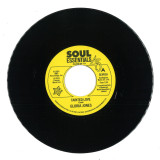
New on Outta Sight, an official reissue of the Gloria Jones classic “Tainted Love”. The song originates from 1964, then made a household favourite from 1981 when made a hit by Soft Cell. Gloria’s 1965 release in the USA was originally a B-side to a non-hit, and it took ten years for it to be discovered in the UK where it was played on the Northern Soul scene. It’s the Motown-like rhythms and arrangements that made it relevant. Gloria re-recorded it herself in 1976, and while still not a hit, the song in NME’s Top 500 greatest of all time and Gloria dubbted ‘The Queen Of Northern Soul’. She was in a relationship with Marc Bolan at the time of his fatal accident. This single is coupled with another northern soul favourite, the Holland/Dozier/Holland song “There’s A Ghost In My House” by Motown artist R. Dean Taylor. It was originally recorded in 1966 and reached No.3 in the UK Charts (1974)
Disponibile in Stock e pronto per la spedizione
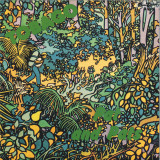
2024 repress.
Ever dreamed to travel to Trinidad & Tobago? Disco Segreta makes this dream come true with it’s 6th release: the much awaited officially licensed reissue of this tropicalo-disco synth bass boogie atomic bomb, from the original analog masters.
Written in late 1983 by Mario Baldoni aka Miro of “Real Life Games” LP (1977) and Brina’s “Stranamore” (1984) fame. Originally released in July 1984 on the small Pineapple label – a sublabel of Armando Sciascia’s “Vedette” – with close to no success and a pressing fault: a glitch on the vocal version, that affected all copies.
This tropical summerish blend of italo and boogie, along with the male/female alternate spanish/english singing, turned into a true classic of the genre over the years, slowly making the playlists of the most respected DJs and diggers worldwide. The 4-tracks 12″ features the original vocal and instrumental versions in their original length, carefully dubbed from the analog stereo masters and taken back to new life through Disco Segreta’s usual respectful mastering. Also, two new remixes are featured.
Disponibile in Stock e pronto per la spedizione

Jazz music has more than its fair share of overshadowed figures that whilst contributing much to the music have little presence in its collective conscious. One such musician is the talented multi-reedist, Sahib Shihab. Born Edmond Gregory, as he was known before he adopted the Muslim faith in 1946, Sahib Shihab's music background shows a deep and significant evolution, influenced by Thelonious Monk, Dizzie Gillespie (his experience in Dizzie's band marked Sahib's switch to Baritone, the instrument he became most readily associated with), and above all by Charlie Parker's Bop. Had it not been for the post-war migration of many top American jazz musicians to Europe, it is quite likely that the legendary Clarke-Boland Big Band might never come into existence. Sahib, one of this musicians disillusioned with the politics and racism of the United States, accepted to join the band of Quincy Jones for an European tour in 1959. When the tour ended, Shihab he remained in Europe where he joined, in 1961, the Clarke-Boland Big Band. The collection 'Companionship', whose line up consists of seven elements which derives from this original band, spotlights the consummate musicianship and individuality of Sahib Shihab and is testimony to his special musical gifts - not only as a top-rank flautist and baritone saxophone but also as a composer. Furthermore, it provides a welcome reminder of the high quality of the Clarke-Boland Big Band's rhythm section, the lively style of vibraphonist Fats Sadi and the power and personality of two of the C-BBB's horn-playing stalwarts, Benny Bailey and Ake Persson. Here's a real rarity, surely a desert island disc. This double album has it all from frantic banging percussive workouts to modal numbers to beautiful ballads. It's a staggeringly good piece of music and worth every penny of the price tag it commands. Let's have a look to the most significant pieces. Francy Boland's "Om Mani Padme Hum", taken from a Tibetan prayer, shows Shihab in exuberant mood, playing against a vigorous percussion background and making dramatic use of his special technique of combining voice and flute. Boland contributes an incisive, effervescent solo. "Bohemia After Dark", a classic original by bassist Oscar Pettiford which he first recorded back in August 1955, finds Shihab in exultant form on baritone. "Companionship" has a Bossa Nova beat and features Bailey on flugelhorn and Shihab on flute, playing with a limpid, floating sound. Bailey's minor-key original, "Stoned Ghosts" was, he says, inspired by listening to some music written by Bela Bartok before he emigrated to the United States. The piece has an infectious back-beat pulse and showcases the superb walking technique of Jimmy Woode. In "Con Alma" Shihab's mellow flute set against a churning 12/8 beat in this stylish Boland arrangement. Woode's performance of the superb Mei Torme ballad, "Born To Be Blue", reveals his great affection for the song. "lt is the perfect combination," he says, "a beautiful melody married to a great lyric. I really love that tune." It is a song of rueful resignation, putting a brave face on the blues. "Balafon" is an up-tempo Francy Boland original written for the French mime artist, Marcel Marceau. The rhythm section really cooks on this track with Kenny Clarke's cymbal work outstanding. Boland's solo here is notable for its neat, left hand punctuations. "Calypso Blues" has been written by Nat King Cole and Don George. lt tells the wry and wistful tale of a Trinidadian in New York desperately homesick for the land where everything 5 so much cheaper (in New York "a dollar buy, a cup of coffee and a ham on rye") and the girls more natural than the artificial, painted beauties of New York. Woode's composition, "Sconsolato" is a haunting theme in A minor and it brings to a close a truly fascinating album. This is dynamic music played with vigour, verve and vitality - and it is an enormous pleasure to rediscover it. A shadowy fugitive from his home in the land of jazz, Sahib Shihab remains a true unsung figure, worthy of more attention. With his equally expert technique on Baritone, Flute, Alto and Soprano saxophones and his capacity to adapt easily to a variety of musical settings. His warm, individual, singsong sound in improvisation and his unusual and interesting compositions mark him out as a hidden treasure in the dusty corners of jazz archive.
Disponibile in Stock e pronto per la spedizione

An aura of mystery is hidden on this magnificent album released on EMI Nigeria in 1974 and today a collector’s cult object was the only one named Moonrakers Band.
Steve Black tells: “We were the original members of The Moonrakers and were based in Zaria, then in 1972 we left band management and started The Elcados. The original management of The Moonrakers sold the name to his elder brother who had a club in Kano and they brought Prince Bola Agbana to get other musicians to continue The Moonrakers while we moved in as The Elcados.”
Moonrakers Band and Elcados were the two bands that inflamed northern Nigeria in the early 70s with a more rocking and virtuoso sound, and especially with tons of rare grooves, then everything else around it.
Coming to the album content tracks like Wait For Me, Cut Your Coat According To You Size, Yara Manyan Gobe, but also Enia Sa Pele and Move on, will make floating camels appear on the dancefloor, or in your house.
Disponibile in Stock e pronto per la spedizione

"Psychedelia in White", das dritte Album des ehemaligen Nick Cave and the Bad Seeds-Mitglieds Mick Harvey und seiner langjährigen musikalischen Partnerin Amanda Acevedo, knüpft an ihr 2023 erschienenes Duett-Debüt Phantasmagoria in Blue an.
Das überwiegend aus Eigenkompositionen bestehende Album bewegt sich zwischen Mystik, Mythologie, Liebe und Verlust. Mit vielschichtigen Arrangements und opulenten Klangtexturen erkundet das Duo neue, experimentellere musikalische Räume. Traumartige Bilder und mythologische Motive verbinden sich mit einer persönlichen Botschaft der Hoffnung und der Sehnsucht nach einem Ausweg aus dem Chaos der Gegenwart.
Zu den Höhepunkten zählen „Perfect Storm“, entstanden in Zusammenarbeit mit dem kanadischen Komponisten Peter McNestry, „Song for Aurora“, eine Glam-Rock-Hommage an Marc Bolan und T. Rex, sowie „The Greatest Delight“, inspiriert von Acevedos Visionen von Schattenwesen und jenseitigen Liebenden.
dovrebbe essere pubblicato su 04.09.2026

Antal, founder of the Amsterdam-based Rush Hour Records & Store and renowned for his global DJ touring and eclectic sets spanning house, techno, rare funk, soul, and jazz, curates a personal selection from the historic label Timeless Records.
For Timeless Presents From The Archives, he handpicked highlights from 1974–1994 by jazz luminaries such as Art Blakey and the Jazz Messengers, Pharoah Sanders, Carter Jefferson, Gary Bartz, Woody Shaw, and more. “I want to thank the Wigt family for allowing me to dig deeper into their catalog to compile a selection of personal jazz favorites. Their passion for jazz and independent labels has inspired me as a DJ and record store owner. A great song is a great song, no matter when or where it was made,” Antal reflects. For this double album, Antal shares his love for modal and spiritual jazz, celebrating a pivotal era in jazz and creating a must-have for collectors, selectors, and new explorers.
Timeless Presents From The Archives 1974-1994 is packed in a gatefold sleeve, featuring notes by Antal and artwork by Dirk-Jan Deckwitz. Affixed on the protective sleeve is the 50th Anniversary Timeless Jazz sticker.
dovrebbe essere pubblicato su 26.06.2026

Artist, painter, curator Leo Vincent, is fired up off the back of supporting Soulwax, on their recent Paris and Netherlands shows. Proudly presenting two debut songs “Hello it’s me again” and “Loving isn’t easy”, co-produced with the brothers, David & Stephen Dewaele, of Soulwax/2manydjs.
Seven years ago, Leo Vincent bluffed his way into a video editing job at DEEWEE. Despite being told to not touch or ruin their gear, he later resurfaced with demos that sounded like he had anyway.
"Don’t know much about history”
"Don’t know much about biographies"
But we do know that by the time Leo Vincent arrives in your town, he will probably have destroyed two more Tascam 8-tracks.
Brussels-based, failed goalkeeper-turned-painter-turned-cameraman-turned-musician Leo, doesn’t seem to be afraid to leave his faders in the red zone for an unorthodox period of time while repairing the pitch knob. Some say it’s disco for night janitors. Some say it’s glam-rock for ravers. Others haven’t found the time to listen yet because they have real jobs.
But to fully grasp Leo Vincent's essence, imagine yourself sitting in the home cinema of the late Marc Bolan while watching a documentary on Scatman John, directed by Jacques Tati and scored by Ween, using only the instruments of Cabaret Voltaire.
Ordina ora e ordineremo l'articolo per te presso il nostro fornitore.
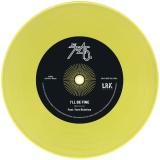
The 7:45s are a soul collective from Manchester, UK – the brainchild of songwriter and bassist Sam Flynn. Inspired by the house bands of labels from Motown to Big Crown, the young collective spotlights guest vocalists on each tune. Named after 7-inch vinyl, The 7:45s write snappy singles that blend the vintage feel of rare groove with the songcraft of perfect pop. BBC Radio 6 Music has played seven songs by The 7:45s this year.
Clocking in at under three minutes, 'I'll Be Fine' is a short and snappy soul sensation. The guitar hooks your ear, the rhythm reels you in, and the arrangement keeps you on your toes – adding exuberant horns, break downs and build ups. Featured vocalist Yemi Bolatiwa shines through the song's bittersweet theme, that it's better to have loved and lost… 'I'll Be Fine' has been played on BBC Radio 6 Music. Craig Charles called it "Proper up-tempo soul of the highest order".
dovrebbe essere pubblicato su 13.03.2026

Mia Zapata was the greatest rock singer of her time. She may have likely been the greatest blues singer in punk rock history, the woman who married the 78 and the '78. Tragedy did not make this true. Mia Zapata made this true, and the ferocious, spring-loaded shrapnel frame that was built around her by Andy Kessler (guitar: metronomic and furious), Matt Dresdner (bass: fluid, punching, beat-addicted and melodic), and Steve Moriarty (drums: martial and explosive) - who, with Mia, combined to form The Gits - made it true. The Gits were formed at Antioch College in Yellow Springs, Ohio in mid-1986, grabbing and swapping pieces of art, thrash, noise, punk rock, classic rock, and all the sorts of magical silly and bookish jingle bells that an old-school liberal arts education handed you; for the next few years they worked on turning it all into something tough, sensitive, both brutal and kind. Andy, Matt, Mia, and Steve moved to Seattle in middish 1989, landing in a house on Capitol Hill where they (and fellow travelers) wood-shedded and rehearsed for the next few years. The Gits put out three EPs in 1990 and '91 before signing with C/Z Records and releasing their first full-length album, Frenching the Bully. Seattle quickly claimed the quartet as their own and embraced the Gits blend of ferocious fangs and soft heart, the slug/slap of the guitars, and the gorgeous, soft underbelly of the poetic emotions. These qualities not only fit in with the doe-eyed/sharp-clawed grunge ethos but earned the Gits the respect of their peers, including Nirvana, who tapped them to open a major local show in 1990. Then other stuff happened, and their frantic, confessional barbed-heart snowball began rolling up hill very, very fast; the Gits "quickly" (hah! After half a decade learning to implode and explode hearts and stomping their boots on manifold beer-softened, Marlboro-weeded wood stages!) inspired rapture, awe, and the levitation that happened when peak emotion meets peak grindage in front of amps spitting out something that sounded like the mad marriage of Bolan swagger and Dischord tension_ all fronted by a genuinely incomparable woman who held her heart in her mouth and shared it, in all its celebration and fear, without hesitation. The Gits were an angry, inflamed slinky fully in tune with and tuned by the Bessie Patti Smith of her time, truly the only singer who could summon Joplin, Poly Styrene, Sam Cooke, Iggy Pop and Ian MacKaye all in the same goddamn song. In 1993, less than four weeks after accepting an offer from Atlantic Records, Mia died. I leave it at that, because this is not about death; it's about an extraordinary life. I do not say, "You should have been there," I say, "We are lucky so many of us were, and I am so glad we have this extraordinary evidence of the power and gifts of Mia and the Gits that you now can hold in your hands." And I note that Frenching the Bully, this extraordinary testament to the soul, shock, fury and feeling of the Gits, has been long out of print on vinyl and CD, and this new edition - remastered by legendary Seattle engineer Jack Endino - joyfully rectifies that. -Tim Sommer
dovrebbe essere pubblicato su 27.02.2026

dovrebbe essere pubblicato su 30.01.2026

Elations Recordings presents "Return of the Airpoets", an exploratory recording from longtime collaborators Reuben Lewis (I Hold The Lion's Paw) & Adam Halliwell (Mildlife, IHTLP), occupying a unique space between contemporary experimental music and avant jazz. Engineered and mixed by Reuben Lewis in 2023, and featuring guest appearances from acclaimed Australian drummer Ronny Ferella.
"Return of the Airpoets" continues a conversation begun with 'Cygon Dance', an extended duo between Lewis and Halliwell from Halliwell's 2023 LP "Freedom Lapse"; a dialogue that stems from a shared love and respect for Jon Hassell's Fourth World music. Sonic pioneer and adventurer, Hassell's futuristic vision advocated possible musics, stressing plurality and multiplicity. Faithful to his vision, Adam and Reuben, as trailblazers rather than imitators, delight in boundless musical possibilities, adopting Hassell's futurism as stock-in-trade, making it their own while augmented with neo noir hues and hints of the tilted electro-funk of Miles Davis' collaborations with Marcus Miller.
These nine tracks flow together as a unified suite, their shadowy presence stitched from fractured narratives: imaginary crimes, murders, dreams, the unspoken. At the same time, you can detect the artists' meticulous attention to sonic detail, feel the undercurrents, the complex layering. This music has been distilled, winnowed, from extended improv sessions, with the artists - as producers - zeroing in on offcuts, shards, and splinters, seamlessly patching together fragments in post-production to construct intricately layered sound collages, taking a leaf out of Tao Macero's book, building from the ground up.
Who are these airpoets? Their mystifying trial suggests the travails of Joseph K, sentenced for unspecified crimes. But I prefer to see them as fugitives escaped from Robert Bolaño's novel, "Savage Detectives". In Bolaño's book, poet Juan Garcia Madero is granted admission to the shadowy group of poets, the Visceral Realists, whose movement has no clear aims, and whose members "walked backward . . . gazing at a point in the distance, but moving away from it, walking straight toward the unknown." Like the visceral poets, these airpoets, Reuben Lewis and Adam Halliwell, set their sights on a point on the distant horizon, setting off without map or compass, drawing nearer and moving away, towards the unknown.
dovrebbe essere pubblicato su 12.12.2025

Miraculous reissue of "Ai No Volare" by Chico & The Gypsies and our own Shigeru Matsuzaki, originally released on 7" in 2014!
Chico & The Gypsies, formed by former Gipsy Kings member Chico Bouchikhi, is France's premier gypsy band, and this is the duo cover album "Love and Passion Gypsies", which was produced to celebrate the group's 20th anniversary. Ai no Bolare" featuring Shigeru Matsuzaki on vocals is a 7-inch cut from the duo cover album "Gypsies of Love and Passion," produced to commemorate the group's 20th anniversary. The B-side couples "Ai No Volare (Japanese Ver.)" sung in Japanese by Shigeru Matsuzaki, which was included only on the Japanese edition of the above album. The song is a great cheer for life, blending the passion and the original Gypsy spirit of Shigeru Matsuzaki, who was asked by some to wonder if he is really Japanese.
dovrebbe essere pubblicato su 05.12.2025

'In collaboration with the children of Nico Kasanda, better known as Docteur Nico, Planet Ilunga proudly presents an anthology dedicated to African Fiesta Sukisa, available as a 3LP set and a digital release with bonus songs. This release is the result of many years of preparations and was realized in close partnership with Liliane Kasanda, Nico’s eldest daughter. Marking forty years since his passing, we felt that the year 2025 was the right time to honor Docteur Nico’s legacy with this original collection.
'Almost all of the African Fiesta Sukisa songs were released on Nico’s Sukisa label which translates in Lingala for “the final accomplishment”. The music on Sukisa, crafted by Nico and legendary vocalists such as Chantal, Sangana, Apôtre, Mizele, Lessa Lassan and Josky, embodies the essence of that powerful phrase with genius, class and depth. The label ran between 1966 and 1975 and released approximately 280 songs. Ngoma also issued the group between 1967 and 1971 and, in addition, reissued material from the Sukisa label. Many of these songs have become part of the collective memory of Congolese society and are still heard, discussed, and analyzed daily across digital platforms worldwide, as well as on numerous Congolese radio and TV stations.
'The album we put together features some of Nico’s signature songs alongside never before reissued tracks from the Sukisa catalog. It furthermore contains a large booklet with song commentary, testimonial interviews from well-known musicians, journalists, fans and Nico’s entourage, besides never before published photography about his personal and musical life.
'Alastair Johnston, author of the book ‘A Discography of Docteur Nico’ and longstanding Planet Ilunga collaborator, designed a stylish booklet and cover using all our collected material. Audifax Bemba, longtime admirer, compiler and connoisseur of Nico’s music, and the author of most of the song commentary in our accompanying booklet, offers his portrait of Docteur Nico:
“After displaying technical virtuosity with African Jazz, expert and accomplished guitar with African Fiesta, which musicologist Sylvain Bemba described as a dream guitar, Nico Kasanda was consecrated ‘dieu de la guitare’ by the public in the late sixties. With his band African Fiesta Sukisa, Docteur Nico displays his wide palette of unusual sounds. While exploring the Hawaiian guitar with its clear, airy, plangent, psychedelic effluvia, he continues to replicate the piano comping technique, and adds two missing strings to his bow: a simulation of the sanza (likembé or thumb piano), whose sounds he reproduces right down to the noisemakers of the tiny tin rings, on the one hand, and the sounds of the Luba balafon on the other. The right note, in the right place, at the right time, is the triptych on which Nico Kasanda’s playing is based, a note dressed in the perfect sound. A guitar of pure emotion. With African Fiesta Sukisa, his playing takes a ‘Chopin-esque’ turn, sending out more notes in a sublime adagio. The true artist is the one who simplifies everything. Docteur Nico is a genius of our time, whose style makes him the supreme exponent of the most important guitar school in Congolese music. He is recognized by his peers as the greatest African solo guitarist of all time. Sculpting sound in a tireless quest for beauty, Nico Kasanda has sublimated the guitar throughout his career.”
[xd] Kamulangu [Outro] (Dr. Kasanda – Sukisa 135) Folklore Baluba
dovrebbe essere pubblicato su 05.12.2025
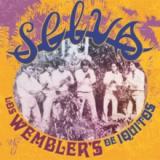
This anthology of Los Wembler's allows us to appreciate the legacy of the iconic group from Iquitos, the most important city in the Peruvian Amazon which is only accessible by air or river, and their key role in the creation and revival of Amazonian cumbia. Los Wembler's emerged as a family band in the late 1960s in the Belén district of Iquitos and are regarded as pioneers of electric guitar-driven Amazonian cumbia from Perú. The selection of songs that make up this compilation dates from the period between 1972 and 1980, at the peak of the band's career. Songs such as 'Sonido amazónico' or 'La danza del petrolero' have become highly influential classics of the genre. Most of these tracks are reissued here for the first time after remaining unavailable for decades. "Selva" includes an insert with liner notes and photos. Pressed on 180g vinyl.
dovrebbe essere pubblicato su 07.11.2025

"NEIL YOUNG COASTAL: DER SOUNDTRACK AB SOFORT ÜBER REPRISE RECORDS ERHÄLTLICH11 SONGS VON DER SOLO TOUR 2023 AUS DEM GLEICHNAMIGEN FILM UNTER DER REGIE VON FILMEMACHERIN DARYL HANNAHCoastal: The Soundtrack enthält 11 ausgewählte Songs aus Youngs 60-jähriger Karriere, die live auf seiner Solo-Tour 2023 aufgenommen wurden, von „I Am a Child“ bis „Vampire Blues“, und Neil Young an Gitarren, Klavier und Mundharmonika. Es ist ein so intimes Live-Album, wie Neil Young es je aufgenommen hat, entstanden in einer Zeit, in der die Welt aus der Covid-Pandemie-bedingten Isolation erwachte. In mehreren Städten aufgenommen, ist es ein Album für die Ewigkeit, da der Singer-Songwriter 11 seiner Songs mit neuer emotionaler Kraft versieht.
Der Film Coastal wurde von der renommierten Filmemacherin und Youngs Ehefrau, Daryl Hannah, gedreht und inszeniert und wird weltweit von Trafalgar Releasing vertrieben. Der Film ist eine persönliche Dokumentation hinter den Kulissen von Neil Young, während er auf seiner US-Solo-Tour 2023 die Küste entlangfährt, und bietet einen hautnahen und intimen Einblick in das Leben eines der kultigsten Songwriter und Musiker der Geschichte. Hannah fängt Young ein, wie er nach Covid auf die Bühne zurückkehrt, und ermöglicht dem Publikum, als beobachtender Teilnehmer einen seltenen, ehrlichen Blick hinter die Kulissen dieser ungeschützten Ikone zu werfen. Es ist eine lange überfällige Feier des Lebens, die aus nächster Nähe beleuchtet, wer Neil Young ist, woher er kommt und in vielerlei Hinsicht, wohin er geht: Coastal.
Coastal Trackliste:Seite Eins:I’m The OceanComes A TimeLove EarthPrime Of LifeThrow Your Hatred DownSeite Zwei:Vampire BluesWhen I Hold You In My ArmsExpecting To FlySong XI Am A ChildDon’t Forget LoveCoastal wurde von The Volume Dealers: Neil Young & Niko Bolas produziert und gemischt. Gemischt in: The Surf Shack Studios, Ventura, CA. Assistenzingenieur: Sterling Uhl. Live aufgenommen von: John Hausmann. Mastering: Bernie Grundman. Coastal Artwork von: Lauren Fisher und Daryl Hannah.Aufgeführt von: Neil Young: Gitarren, Klavier, Mundharmonikas, Gesang Bob Rice: Klavier bei „When I Hold You In My Arms“"
dovrebbe essere pubblicato su 19.09.2025

Dass Hamburg eine gute Adresse für Streetpunk ist, beweisen nun auch BOLANOW BRAWL mit ihrer ersten Langrille ,First Shots!", die auf die bereits knapp neun Jahre zurückliegende Debüt-EP ,Total Escalation" folgt. Man lässt es halt ruhiger angehen im Norden - will's jetzt aber auch noch mal wissen. Der Bandname - eine Kombination aus der Billig-Wodka-Marke BOLANOW und dem englischen BRAWL für Rauferei oder Handgemenge - verweist auf ambivalente Erfahrungen, die die Bandmitglieder unter Alkoholeinfluss im jugendlichen Leichtsinn sammelten. Flotte Gitarrenriffs, treibende Drumbeats und ein rauer, oft rotziger Gesang bilden das musikalische Gerüst der Hanseaten - das im Kontrast zu den eingängigen Leadgitarren-Melodien steht. Singalongs verleihen dem Sound einen bierseligen Touch. Die Mischung aus englischen, amerikanischen und Buxtehuder Stilelementen gibt den zwölf Songs das gewisse Etwas, das den Stil von BOLANOW BRAWL ausmacht. Die alte Plattitüde von den ,Texten, die das Leben schrieb" trifft auch auf die Songs von BOLANOW BRAWL zu. Eigene Erlebnisse, Beobachtungen und Erfahrungen aus Arbeitswelt, Subkultur und Gesellschaft fließen in die Texte ein - ohne erhobenen Zeigefinger, dafür gern mit gehobener Bierflasche. Die Covergestaltung stammt von Alteau, einem frankobelgischen Skinhead und Comiczeichner, der schon mit 14 erste Arbeiten im Spirou-Comic-Magazin veröffentlichte. Seit Ende der Achtziger hat er etliche Plattencover für Punk- und Oi!-Bands gestaltet - darunter Klasse Kriminale, Rancid, Bérurier Noir und The Herberts, bei denen er auch selbst als Sänger aktiv war.
dovrebbe essere pubblicato su 22.08.2025

Saxophonist Sahib Shihab might not enjoy the reputation of some of his peers but he was a fine jazzman. For this legendary album he worked with a small but hugely talented collective of peers that included Francy Boland on piano, Fats Sadi on vibes, Jimmy Woode on bass, and Kenny Clarke on drums. The one of a kind sound they cooked up back in 1970 has endured to this day but has always been hard to find and expensive. This reissue rights that wrong and reminds what a classic it is.
Ordina ora e ordineremo l'articolo per te presso il nostro fornitore.

Released in 1993, The Love of Hopeless Causes is the sixth studio album by British post-punk and alternative rock band New Model Army. The album delivers powerful, politically charged lyrics and intense instrumentation. Key tracks like "Here Comes the War," "Living in the Rose," and "Fate" showcase the band's signature blend of raw energy, thought-provoking storytelling, and anthemic melodies. The album’s themes explore social unrest, personal struggles, and resistance, reflecting New Model Army’s unwavering commitment to their message. Produced by Niko Bolas, The Love of Hopeless Causes was the band's only release under Epic Records. With its mix of fiery rock anthems and atmospheric ballads, the album remains a standout in New Model Army’s discography, appealing to both longtime fans and newcomers to their music. The Love of Hopeless Causes is available on black vinyl.
dovrebbe essere pubblicato su 08.08.2025

Jeroen van der Smut launches the 2nd volume of Smutty Edits. The crew from the first release DJ Mawashi, Tom Bolas and MLiR are joined by Italian Dama and Japanese crew C.O.M.P.A.S… The second edition carries through the concept of 3 electronic and House edits on one side with more disco and synth-pop leaning offerings on the flip.
Ordina ora e ordineremo l'articolo per te presso il nostro fornitore.

A true embodiment of Brazilian Boogie, this is the first official reissue of Brylho's album, founded in Rio de Janeiro in 1978 as Brylho da Cidade. The group was influenced by the Black Rio movement of Tim Maia, Cassiano, and others. Members included Arnaldo Brandão (vocals/bass), Paulo Roquette (guitar), Cláudio Zoli (guitar/vocals), Robério Rafael (drums), Bolão (percussion), and Ricardo Cristaldi (keyboard). Claudio Zoli stands out as an important funk artist of the 1980s, during a time when Pop Rock bands dominated the Brazilian music scene. This album features one of the biggest hits of 1983: the soulful reggae groove "Noite do Prazer." Often described as Rio de Janeiro's answer to George Benson's "Give Me the Night," it's a timeless classic that bridges funk, soul, and Brazilian grooves. On "Se Você For a Salvador," a sun-soaked, feel-good boogie track, younger generations have embraced a new term to describe the sound: Brazilian City Pop. The record also delivers dancefloor heat like the stomping "Jóia Rara," the vibrant soul-reggae fusion "Destrava Maria," the ahead-of-its- time rap-funk hybrid "Cheque Sem Fundo," and the electrifying samba-reggae "Pé de Guerra," rich with Bahian rhythms and energy. Closing out the album are two under-the-radar jazz-funk gems: "Meditando" and "171." Though often lumped into the boogie category, these tracks lean more toward the sleek 1980s jazz-funk sound, reminiscent of UK acts like Level 42.
Ordina ora e ordineremo l'articolo per te presso il nostro fornitore.

“Recorded at BBC Broadcasting House and partially aired on BBC Radio 3’s Late Junction, the first studio encounter between London-based duo Exotic Sin and Swiss percussionist Julian Sartorius is now published in full on this album from Sagome.
Winding through six distinct and interconnected paths, the trio effortlessly create a shared language in this expansive improvised session.
Listening back two years later — the session was recorded on March 24, 2023 — it’s evident how they build at a relaxed pace, offering space for the listener to enter into their evolving sound. Anchored by piano, delicate wood, metal, and air instruments, a fluid system of interactions develops: repeating, deepening, but not fixating. The direction of travel is not cyclical or linear and the pace insists on forward confidently, avoiding the trap or comfort of recurring motifs.
Percussion is not a timekeeper, but a key element, introducing new textures that even on the final track Path 6, trace out a horizon that feels more like a blurred beginning than a definitive end.
In Session, Exotic Sin moves into a lighter, perhaps more playful language for improvisation than on their debut album Customer’s Copy. This could be influenced by Sartorius’ tactile approach to sonic materials or the more stripped-back nature of the improvised session, with less emphasis on synthesised and electric sounds. While the emotional imprint from their debut album—murkier and insistent—remains, it has been aired out to dry. In Session, their sound-world is broad and moves with levity.”
Andrea Zarza Canova – April 2025
Music by
Kenichi Iwasa (electric and acoustic percussion, trumpet, horns, thumb piano, effects).
Naima Nefertari (piano, Yamaha keyboard, flute, bells, percussion).
Julian Sartorius (drums, percussion).
Recorded and mixed live for Late Junction at BBC Broadcasting House, London, on the 24th of March 2023 by Joe Yon and John Boland.
Mastered by Giuseppe Ielasi.
Produced by Silvia Malnati at Reduced Listening for BBC Radio 3.
Extracts from the session were played on Late Junction on the 14th of April 2023.
Artwork by Josef William Back.
Graphic design by Nicola Tirabasso.
dovrebbe essere pubblicato su 30.06.2025

dovrebbe essere pubblicato su 20.06.2025

Recorded August, 1965, Copenhagen, Denmark.
Original LP issue: OKTAV – OKLP 111
Sahib Shihab (Edmund Gregory) played with many of jazz’s finest musicians. Shortly after he became one of the first jazz players to change their names due to an Islamic conversion, he joined Thelonious Monk for his Blue Note sessions. He also played with Art Blakey, Dizzy Gillespie, Oscar Pettiforn and Quincy Jones. A unique musician, he was at home in every musical style, from the experimentalism of Thelonious Monk to the more direct hard bop of Art Blakey. Sahib Shihab’s distinctive sound was rooted in his modernist compositions and arrangements, complemented by an intense, soulful playing style.
In 1959 he toured Europe with Quincy Jones after getting fed up with racial politics in USA and ultimately settled in Scandinavia. He worked for Copenhagen Polytechnic and wrote scores for television, cinema and theatre. He remained there until 1973. During this period, he recorded several albums as leader for European labels such as Vogue, Storyville and Futura.
In 1961 he joined The Kenny Clarke-Francy Boland Big Band and remained a key figure in the band for the 12 years it ran. He married a Danish lady and raised a family in Europe, although he remained a conscious African-American still sensitive to racial issues.
This record, on the Danish Oktav label, his second as a leader and also his rarest is a true masterpiece !!!
Personnel :
Sahib Shihab (Baritone saxophone, Flute, Cowbell)
Poul Hindberg (Alto saxophone, Clarinet)
Ib Renard (Baritone saxophone)
Bent Nielsen (Baritone saxophone, Flute, Clarinet)
Niels-Henning Ørsted Pedersen (NHOP) (Bass)
Alex Riel (Drums)
Allan Botschinsky (Trumpet)
Fritz von Bülow (Guitar)
Bent Axen (Piano)
Bent Jædig (Tenor saxophone, Flute)
Niels Husum (Tenor saxophone)
Svend Åge Nielsen (Trombone, Bass trombone)
Torolf Mølgaard (Trombone, Euphonium)
Palle Bolvig (Trumpet)
Palle Mikkelborg (Trumpet)
Poul Kjældgård (Tuba)
Louis Hjulmand (Vibraphone)
dovrebbe essere pubblicato su 13.06.2025

„Skid Row“ ist das fünffach mit Platin ausgezeichnete Debütalbum der New Jersey Hardrock-Band Skid Row. Das 1989 erschienene Album besteht aus der klassischen Besetzung: Dave Sabo (Gitarre), Rachel Bolan (Bass), Sebastian Bach (Gesang), Scotti Hill (Gitarre) und Rib Affuso (Schlagzeug). Es enthält einige der größten Hits der Band wie „18 and Life“, „I Remember You“ und „Youth Gone Wild“.
dovrebbe essere pubblicato su 13.06.2025

Mia Zapata was the greatest rock singer of her time. She may have likely been the greatest blues singer in punk rock history, the woman who married the 78 and the '78. Tragedy did not make this true. Mia Zapata made this true, and the ferocious, spring-loaded shrapnel frame that was built around her by Andy Kessler (guitar: metronomic and furious), Matt Dresdner (bass: fluid, punching, beat-addicted and melodic), and Steve Moriarty (drums: martial and explosive) - who, with Mia, combined to form The Gits - made it true. The Gits were formed at Antioch College in Yellow Springs, Ohio in mid-1986, grabbing and swapping pieces of art, thrash, noise, punk rock, classic rock, and all the sorts of magical silly and bookish jingle bells that an old-school liberal arts education handed you; for the next few years they worked on turning it all into something tough, sensitive, both brutal and kind. Andy, Matt, Mia, and Steve moved to Seattle in middish 1989, landing in a house on Capitol Hill where they (and fellow travelers) wood-shedded and rehearsed for the next few years. The Gits put out three EPs in 1990 and '91 before signing with C/Z Records and releasing their first full-length album, Frenching the Bully. Seattle quickly claimed the quartet as their own and embraced the Gits blend of ferocious fangs and soft heart, the slug/slap of the guitars, and the gorgeous, soft underbelly of the poetic emotions. These qualities not only fit in with the doe-eyed/sharp-clawed grunge ethos but earned the Gits the respect of their peers, including Nirvana, who tapped them to open a major local show in 1990. Then other stuff happened, and their frantic, confessional barbed-heart snowball began rolling up hill very, very fast; the Gits "quickly" (hah! After half a decade learning to implode and explode hearts and stomping their boots on manifold beer-softened, Marlboro-weeded wood stages!) inspired rapture, awe, and the levitation that happened when peak emotion meets peak grindage in front of amps spitting out something that sounded like the mad marriage of Bolan swagger and Dischord tension_ all fronted by a genuinely incomparable woman who held her heart in her mouth and shared it, in all its celebration and fear, without hesitation. The Gits were an angry, inflamed slinky fully in tune with and tuned by the Bessie Patti Smith of her time, truly the only singer who could summon Joplin, Poly Styrene, Sam Cooke, Iggy Pop and Ian MacKaye all in the same goddamn song. In 1993, less than four weeks after accepting an offer from Atlantic Records, Mia died. I leave it at that, because this is not about death; it's about an extraordinary life. I do not say, "You should have been there," I say, "We are lucky so many of us were, and I am so glad we have this extraordinary evidence of the power and gifts of Mia and the Gits that you now can hold in your hands." And I note that Frenching the Bully, this extraordinary testament to the soul, shock, fury and feeling of the Gits, has been long out of print on vinyl and CD, and this new edition - remastered by legendary Seattle engineer Jack Endino - joyfully rectifies that. -Tim Sommer
dovrebbe essere pubblicato su 30.05.2025

Im »Mellow Mood« benannten, fünften Kapitel der Serie kehrt Oscar Peterson nach dem solistisch bestrittenen Vol. 4 zu seiner Triobesetzung mit Sam Jones (b) und Bob Durham (dr) zurück. Es ist ein Album, auf dem der Kanadier in einigen Stücken die Giganten des US-Jazz feiert. So startet er mit Duke Ellingtons »In A Mellotone«, das er variantenreich und mit überbordender Physis interpretiert.
Die Horace Silver-Komposition »Nica's Dream« leitet er aus lyrischer Contenace zu improvisatorischem Sprudeln, Gershwins »Summertime« spielt er in einer vom melancholischen Melos gänzlich befreiten, nach seinen eigenen Worten »kühnen« Fassung. Mit »On Green Dolphin Street« greift er ein Thema aus dem gleichnamigen Film auf, entfaltet seine tänzelnden Tastengänge über dem Bordun von Jones, der gegen Ende auch ein wunderbares Solo liefert. Mit den abschließenden Stücken umspannt er einen weiten zeitlichen Rahmen: »Sometimes I'm Happy« führt in die Unschuld der Zwanziger Jahre zurück, »Who Can I Turn To« hingegen stammt aus den Sechzigern. Peterson hat es bereits für sein Soloalbum eingespielt, hier wird es nach einem verblüffenden Tempowechsel im Triogefüge ausgearbeitet.
Auf dem abschließenden Volume der Serie »Exclusively For My Friends« setzt Oscar Peterson mit seinen Kollegen Sam Jones (b) und Bob Durham (dr) noch einmal sehr unterschiedliche Glanzpunkte. Das überschäumende, vorwärtstreibende Titelstück kann seine Wurzeln im Gospel nicht verleugnen, kontrastiert wird es mit der schlichten und doch so tiefsinnigen Ballade »Emily«. Mit der Jobim-Komposition »Quiet Nights« (im Original »Corcovado«) demonstriert das Trio, zu welchem Feingespür es bei der Adaption der Bossa Nova fähig ist. Die ansonsten so träumerische Nummer wird hier mit rasant swingender Unbeschwertheit einer erstaunlichen Metamorphose unterzogen. Durch die Auswahl von »Sax No End« verbeugt sich Peterson vor dem europäischen Jazz: Die Komposition stammt vom belgischen Bigband-Leader Francy Boland und wird von Petersons mitreißendem, sehr muskulösem Spiel geradezu in Brand gesetzt. Zum Finale »When Lights Are Low« von Benny Carter: Über zehn Minuten gestaltet das Trio bedächtig und souverän diese versonnene Komposition, wobei Sam Jones mit seinen delikaten Begleitfiguren nochmals eine besondere Rolle zukommt.
dovrebbe essere pubblicato su 30.05.2025
