Scientist's name will be found on many dub releases in peoples record collections.His connection to King Tubby's studio is inseparable and many say when the dub end of Reggae music had fallen on quieter times it was Scientist with his often stripped back style and at other times, wild off the wall remixes that breathed life back into the dub cannon.
Scientist (born Overton Brownie,1960, Jamaica) was in many ways King Tubby's apprentice. Having helped his own father out repairing televisions and such like, he would help Tubby on winding transformer coils, that the amps of the day all needed. His interest in recording grew as he watched the many sessions taking place at Tubby's Dromilly Avenue Studio, learning the ropes as the musicians came and went. His first break happened when King Jammy (then Prince Jammy) was too tired to work on a session booked for producer Errol 'Don' Mais. Scientist engineered the session to every one’s bewilderment and great satisfaction.
His first hit would be a mix of Barrington Levy's 'Collie Weed' and his reputation built on the many versions he cut at Tubby's where he would become the engineer of choice. His pared down mixing style suited the new Dancehall reggae sound that came at the tail end of the 1970's and rolled into the 1980's. Such was his stature that albums were now sold with his name on their jacket, 'Scientist Vs Prince Jammy, 'Scientist meets The Space Invaders' to name but two.
His time at King Tubby's was followed as chief engineer working for the Hookim Brothers at the mighty Channel 1 Studio's and on many of top producer Henry 'Junjo' Lawes tracks, that were hit after hit at the time.
We have compiled some tuff tracks from the late 70's / early 80's just before everything went digital. Some great dub versions to some killer tracks that rocked the dancehalls around this golden time.The mighty Tristan Palmer whose killer cuts 'BadBoys','Stop Spreading Rumours','Eveready' and 'The Greatest Lover’ alongside Michael Palmer's debut release 'Mr Landlord' and Robert Trench's 'Mr Babylon'. The songs stand back-to-back with Tony Tuff's timeless 'Never Trouble Trouble' and the biblical Rod Taylor's 'The Lord is My Light'. Sammy Dread's 'Wah Dah Wah' and the always respectful Dennis Brown's 'Time and Place' all benefited a touch of magic from The Scientist and his laboratory of effects.
Hope you enjoy the set.....
out of Stock
Last delivered 11 months ago available to reorder, subject to availability
Googling “paradise house”, the first results to pop up are an endless list of European b&b’s with whitewashed lime façades, all of them promising “…an unmatched travel experience a few steps from the sea”. Next, a little further down, are the institutional websites of a few select semi-luxury retirement homes (no photos shown, but lots of stock images of smiling nurses with reassuring looks). To find the “paradise house” we’re after, we have to scroll even further down. Much further down.
It feels like yesterday, and at the same time it seems like a million years ago. The Eighties had just ended, and it was still unclear what to expect from the Nineties. Mobile phones that were not the size of a briefcase and did not cost as much as a car? A frightening economic crisis? The guitar-rock revival?! Certainly, the best place to observe that moment of transition was the dancefloor. Truly epochal transformations were happening there. From America, within a short distance one from the other, two revolutionary new musical styles had arrived: the first one sounded a bit like an “on a budget” version of the best Seventies disco-music – Philly sound made with a set of piano-bar keyboards! – the other was even more sparse, futuristic and extraterrestrial. It was a music with a quite distinct “physical” component, which at the same time, to be fully grasped, seemed to call for the knotty theories of certain French post-modern philosophers: Gilles Deleuze, Félix Guattari, Paul Virilio... Both those genres – we would learn shortly after – were born in the black communities of Chicago and Detroit, although listening to those vinyl 12” (often wrapped in generic white covers, and with little indication in the label) you could not easily guess whether behind them there was a black boy from somewhere in the Usa, or a girl from Berlin, or a pale kid from a Cornish coastal town.
Quickly, similar sounds began to show up from all corners of Europe. A thousand variations of the same intuition: leaner, less lean, happier, slightly less intoxicated, more broken, slower, faster, much faster... Boom! From the dancefloors – the London ones at least, whose chronicles we eagerly read every month in the pages of The Face and i-D – came tales of a new generation of clubbers who had completely stopped “dressing up” to go dancing; of hot tempered hooligans bursting into tears and hugging everyone under the strobe lights as the notes of Strings of Life rose up through the fumes of dry ice (certain “smiling” pills were also involved, sure). At this point, however, we must move on to Switzerland.
In Switzerland, in the quiet and diligent town of Lugano, between the 1980s and 1990s there was a club called “Morandi”. Its hot night was on Wednesdays, when the audience also came from Milan, Como, Varese and Zurich. Legend goes that, one night, none less than Prince and Sheila E were spotted hiding among the sofas, on a day-off of the Italian dates of the Nude Tour… The Wednesday resident and superstar was an Italian dj with an exotic name: Don Carlos. The soundtrack he devised was a mixture of Chicago, Detroit, the most progressive R&B and certain forgotten classics of old disco music: practically, what the Paradise Garage in New York might have sounded like had it not closed in 1987. In between, Don Carlos also managed to squeeze in some tracks he had worked on in his studio on Lago Maggiore. One in particular: a track that was rather slow compared to the BPM in fashion at the time, but which was a perfect bridge between house and R&B. The title was Alone: Don Carlos would explain years later that it had to be intended both in the English meaning of “by itself” and like the Italian word meaning “halo”. That wasn’t the only double entendre about the song, anyway. Its own very deep nature was, indeed, double. On the one hand, Alone was built around an angelic keyboard pattern and a romantic piano riff that took you straight to heaven; on the other, it showcased enough electronic squelches (plus a sax part that sounded like it had been dissolved by acid rain) to pigeonhole the tune into the “junk modernity” section, aka the hallmark of all the most innovative sounds of the time: music that sounded like it was hand-crafted from the scraps of glittering overground pop.
No one knows who was the first to call it “paradise house”, nor when it happened. Alternative definitions on the same topic one happened to hear included “ambient house”, “dream house”, “Mediterranean progressive”… but of course none were as good (and alluring) as “paradise house”. What is certain is that such inclination for sounds that were in equal measure angelic and neurotic, romantic and unaffective, quickly became the trademark of the second generation of Italian house. Music that seemed shyly equidistant from all the rhythmic and electronic revolutions that had happened up to that moment (“Music perfectly adept at going nowhere slowly” as noted by English journalist Craig McLean in a legendary field report for Blah Blah Blah magazine). Music that to a inattentive ear might have sounded as anonymous as a snapshot of a random group of passers-by at 10AM in the centre of any major city, but perfectly described the (slow) awakening in the real world after the universal love binge of the so-called Second Summer of Love.
For a brief but unforgettable season, in Italy “paradise house” was the official soundtrack of interminable weekends spent inside the car, darting from one club to another, cutting the peninsula from North to centre, from East to West coast in pursuit of the latest after-hours disco, trading kilometres per hour with beats per minute: practically, a new New Year’s Eve every Friday and Saturday night. This too was no small transformation, as well as a shock for an adult Italy that was encountering for the first time – thanks to its sons and daughters – the wild side of industrial modernity. The clubbers of the so-called “fuoriorario” scene were the balls gone mad in the pinball machine most feared by newspapers, magazines and TV pundits. What they did each and every weekend, apart from going crazy to the sound of the current white labels, was linking distant geographical points and non-places (thank you Marc Augé!) – old dance halls, farmhouses and business centres – transformed for one night into house music heaven. As Marco D’Eramo wrote in his 1995 essay on Chicago, Il maiale e il grattacielo: “Four-wheeled capitalism distorts our age-old image of the city, it allows the suburbs to be connected to each other, whereas before they were connected only by the centre (…) It makes possible a metropolitan area without a metropolis, without a city centre, without downtown. The periphery is no longer a periphery of any centre, but is self-centred”.
“Paradise house” perfectly understood all of this and turned it into a sort of cyber-blues that didn’t even need words, and unexpectedly brought back a drop of melancholic (post?)-humanity within a world that by then – as we would wholly realise in the decades to come – was fully inhuman and heartless. A world where we were all alone, and surrounded by a sinister yellowish halo, like a neon at the end of its life cycle. But, for one night at least, happy."
out of Stock
Last delivered 3 months ago available to reorder, subject to availability
Earthly Measures are very excited to bring to you 'Doroja', an album by Santiago Córdoba & The Bauls of Bengal. Different to past releases, EM explores another part of the world, introducing you to the traditional sounds of Bengal & its talented musicians.
Doroja, is the third album by Argentinian musician Santiago Córdoba, this time in collaboration with The Bauls of Bengal. Recorded at the Hansadhwani Studio in Calcutta, India, where Santiago arrived with only a synthesiser, some effects, and a Legüero Bass Drum (an Argentine percussive instrument used mostly in local folklore) - this album was first conceived in December 2017 during a residency in this mythical city, together with The Bauls of Bengal.
The Bauls believe the body and mind are the sources of all truths and that the expression of freedom cannot be restrained by the labelling of genres or religions, something which is evidently expressed in their music. This provides the perfect foundations for this album to develop without limitations and too effortlessly flow to whichever realms both Santiago and the Bauls of Bengal wish to take us too.
The album combines traditional songs of the Bauls, rhythmic Jhumar instrumental improvisations with the Argentinian legüero bass drum, and other compositions created together in the studio. The result is a melodic mixture/dialogue of cultures, folklore and ancestral sounds with modern influences that help create an experimental and addictive sound full of electronic textures.
Participating in these first recordings: Arpita Chakraborty (vocals), Chandan Ray (dotara), Pijush Baul (Vocals, Dubki) and Tanmoy Pan (percussion), who later, are joined by other artists from different latitudes to achieve a captivating fusion: Matías Romero on strings (Formosa, Argentina), Guilherme Peluci from Mineiro on winds and Daniel Guedes on percussion (Belo Horizonte, Brazil), Porteños Walter Broide on tabla and Cobra Rod on bass (both members of Poseidotica), and the Spanish Ángel Calvo on trumpet.
The album was mixed by Rodrigo Cursach at Delta Uno Estudio, mastered by Daniel Ovie, and the fascinating cover art is by Alejandro Sordi. It will be released on vinyl by the UK based label Earthly Measures, in addition to being available on all digital platforms.
‘Doroja’ means portal, and this album is indeed a magical portal to music, song and dance. Santiago's only means of communication with Bengali colleagues functioned as an astral portal to build the sounds of this journey through strange and unfathomable landscapes that captivate and surprise by building bridges between different cultures of our planet.
Santiago Córdoba is a multi-instrumentalist musician born in the city of Buenos Aires who has been developing his unique sound both with his solo project and with prominent bands from the Argentinian independent music scene. He has been developing his solo career through deep musical and spiritual searching, with the infinite journey as a primary objective.
In recent years, he has lived in places such as Madrid, Beirut and Berlin and has released two albums: ‘Corso’ (2015) and ‘En Other Places’ (2019).
out of Stock
Last delivered 4 years ago available to reorder, subject to availability
"Daft Punk brought me here, he brought me Daft Punk"
Just knowing that this slice of hyper-rare disco dynamite was crafted by Thomas Bangalter's dad should be enough for you to buy this on sight, if only to understand a little bit more about Thomas and Daft Punk's background. But this is so much more than a Daft Punk family curio.
Born Bangalter in 1947, Daniel Vangarde is a French songwriter and producer. In 1975, Vangarde founded his label, Zagora Records, who we have worked closely with on this lovingly curated reissue. For years, Vangarde wrote and produced songs that remained underground, under several pseudonyms and for various artists. Dubbed "the secret father of French disco" this here groove-fulled firecracker - using his Who’s Who moniker - is for disco-funk, library music and cosmic beat lovers.
The intense, evocative opener "Palace Palace" positively throbs with raw energy and sounds, honestly, like something off Daft Punk's Discovery. The title refers to the fashionable Parisian club Le Palace, essentially the Parisian Studio 54. "I’d been to a nightclub in New York, a big ring where people were roller skating with a whistle. The atmosphere was great. The music was all disco. I made this song when I came back. A vocoder transformed my voice. Back then, it wasn’t used much." The track rides a killer groove and is deceptively complex, with layers of fantastic percussion and ace synth work going on all over it. Listed to on repeat, it's brilliance is simply undeniable.
The louche, slo-mo heater "Hypno Dance" is, in Be With's opinion, *the* deadly dancefloor track. A svelte slice of ace space disco again geared towards the roller skating dance mania of the day. So deep, so disco, so instrumental. An unreal track and, as the title hints at, totally hypnotic. The side closes with the somewhat throwaway "Popeden" - it's a jaunty number that you're probably best skipping, in all honesty. Have we ever steered you wrong?
The B-Side opens with the frankly enormous "Roll Jacky Roll" is another thrilling, high class roller-rink jam with beautiful melodies that's adored the world over. The wonky, abstract "Ad Libitum 80" is a super dope, swirling, staccato electro-funk bounce which sounds light years ahead of its time. This might be the real lowkey sleeper gem on this record. CHECK! This remarkable LP rounds out with the huge "Dancin' Machine". It's got sleek drums that emit an absolutely ace swagger and elements of Italo synth funk feels. A relaxed, slow rhythm throughout ensures you can't help but get your funk on when this crashes soundsystems. We'll leave the final word on this to Daniel: "It amuses me to think that my son Thomas was influenced by "Dancin’ Machine" for "Around The World", he says. Both songs being based on an hypnotic repetitive refrain. Both songs being, of course, timeless pieces of Euro genius.
Who's Who really is a fantastic late-70s-early 80s roller disco-funk essential. The audio has been carefully remastered by Be With regular Simon Francis, ensuring it sounds better than ever. Cicely Balston's expert skills have made sure nothing is lost in the cut whilst the records have been pressed to the highest possible standard at Record Industry in Holland.
When it came to the sleeve for this we were presented with an unusual problem: we usually have to rely on an original sleeve as the starting point for the restoration, but instead we were able to scan the original 35mm transparency of the front cover photo. The problem is that with a modern scanner the results were far sharper than when they made the original sleeve. We’ve played around with the exposure and the colour grading but we’re sorry to say that our version of the front cover still ended up looking too good! Don’t hate us.
out of Stock
Last delivered 18 months ago available to reorder, subject to availability
Laurin Rinder & W. Michael Lewis's Seven Deadly Sins is a hugely influential, synth-powered, atmospheric space-disco masterpiece. It's arguably the best American Disco LP ever made. It's certainly one of the most important albums in the history of dance music. And, like its innovative producers, it's absolute genius.
During the mid to late seventies the production team of Laurin Rinder and W. Michael Lewis helped to define the Disco sound that was coming out of Los Angeles with studio projects such as El Coco, Saint Tropez, Le Pamplemousse (with vocals from The Jones Girls), In Search Of Orchestra and many others.
Like all of their work, Seven Deadly Sins comprises beautifully arranged and incredibly well produced deep disco that is revered by aficionados. A seven track, largely instrumental concept album covering each of the sins, it was recorded for AVI in 1977. It's a brilliantly conceived, groove-fuelled album that layers moogy keys and druggy synths over club-ready rhythms. The idea that this record is celebrating rather than condemning the sins is said to be another factor that made the record a big one in the underground clubs.
Opening sin “Lust” is an intense, swelling, seven minute blockbuster synth journey. An ethereal Loft/Garage classic, it's a sprawling, brooding slice of epic dancefloor dynamite that remains a firm favourite of discerning disco heads like Harvey. So ahead of its time, it still sounds ridiculously fresh today, drifting through a multitude of melodies over a smooth, lightly percussive mid-tempo beat. A slow-mo sexy killer.
Up next, the sprightly-manic “Sloth” is nothing like its title. A driving, swaggering instrumental incorporating the same Euro-disco elements as our Daft Parisian friends did a few decades on, it's certainly not for the faint-hearted.
A clear highlight, the cosmic, throbbing proto-techno of “Gluttony” gets things firmly back on track. Pure industrial vibes with dark synth bass punctuated by uplifting melodic sequences that brilliantly utilise guitar and horns, is this the sound of Wax! Trax being born? You won't be able to get enough of this.
Opening up the B-Side, “Pride” is a breezy slice of classic late seventies jazz/funk with deft Hammond and clavinet grooves and expansive horn sections. It's absolutely fantastic. The wicked leftfield vocal cut “Envy” provides more disco pump with squelchy acid synth flourishes, funky guitar and neck-snapping percussive breaks.
The dark proto-techno/house cut “Anger” is a fully on top tour de force of drums. With heavy African percussion throughout and a short Afrobeat section towards the end, it was sampled by Carl Craig and Laurent Garnier for their Tres Demented project and was also a massive Ron Hardy / Music Box favourite. The album is rounded out by the hard-grooving “Covetousness”, another driving jazz-funk workout par excellence with liberal use of the syndrum.
As Laurin Rinder recalled in an interview with Dream Chimney, the duo essentially lived in the studio: “we really had cots, beds and the whole thing, we were just pumpin’ them out. 7 days a week, 3 different projects at the same time. I played drums on everything but had to play a little differently. I had to ask the engineer ‘What’s the name of this group?‘”.
Evidently, their prolific output was the result of a crazy cocaine-fuelled production schedule: “The amount of coke we did, to do all this, you can’t even imagine. $300 a day. I had to have plastic inserts in my nose so I could do more.” Looking at the frankly terrifying cover, you'd have never known!
Be With is beyond delighted to present the first ever legit vinyl reissue of Seven Deadly Sins, carefully remastered by Be With's engineer Simon Francisco to ensure it sounds better than ever. Cicely Balston's expert skills have made sure nothing is lost in the cut whilst the records have been pressed to the highest possible standard at Record Industry in Holland. The unforgettable cover artwork has been reproduced here at Be With - dare you stare back at it for too long?
out of Stock
Last delivered 10 months ago available to reorder, subject to availability
Produced by Grammy Nominated producer Leon Michels (El Michels Affair, Clairo). Big Crown Records is proud to present Derya Yıldırım & Grup Şimşek’s latest album Yarın Yoksa. The show stopping intensity of Derya backed by the psychedelic soul of Grup Şimşek with production by Leon Michels has yielded a stand out record that challenges genre with a broad appeal and a powerful message. They refer to themselves as “outernational” over international as they say it suggests a sound that’s more inclusive or “beyond borders.” Derya, who sings and plays the bağlama, is German born to Turkish parents. Drummer Helen Wells is Berlin-based by way of South Africa while keyboard player Graham Mushnik and guitar/bass player Antonin Voyant are both French. The collective influences they bring to Anatolian music make for a completely unique and fresh sound that both pushes the genre forward and champions its rich heritage. Yarın Yoksa which translates to If There Is No Tomorrow delves into deeply personal pain and collective resistance with a central thread of loss, longing, and hope for change running throughout. The lyrics are poetic and rely heavily on symbolic language, metaphors, and storytelling while the music shifts track to track making each tune stand out on its own but work together perfectly as an album. “Cool Hand”, the first single released on Big Crown in September of 2024, is a beautiful juxtaposition of intensity and light-heartedness over a thoroughly infectious groove. The message is poetic and complicated, repeatedly declaring “I love you, I’m crazy about you” but ultimately finding a sense of peace through accepting a broken heart. “Direne Direne” is a protest song that embodies the struggle and tireless pursuit of justice encouraging people to resist oppression. Derya’s lyrics soar over the psych-soul musical backdrop as her story of personal struggle transforms to a universal call for resilience and strength. The slow and weighty vibe of “Yakamoz” lets onto the meaning of the lyrics even to those who don’t understand Turkish. It is a deeply moving song that captures the profound emotions connected to displacement and loss without knowing if you will ever return. The steady groove of the band, along with the anguished vocals paint a vivid picture of the devastation experienced by the protagonist who ultimately realizes that her roots are within her and anywhere she goes is her home. Nine of the tunes on the album are original compositions but they also take on three Anatollian folk songs with their own inimitable approach. The acapella introduction of “Misket”, a folk song from Ankara/Türkiye, will stop you in your tracks. The tune deals with death and how the living cope and continue a relationship with those who have passed away. Another traditional tune from Sivas that they put their signature sound to is “Hop Bico”, a tune about a playful character named Bico who is a symbol of vitality and spirit. The synth intro grabs your ear from the first note and the earworm chorus encouraging Bico to lead the group in celebration and embrace life through dance has the same effect on everyone who hears it. The band has taken a big step forward that you can hear on this record. Derya’s passion and authenticity is front and centre and the music is too moving to deny. Yarın Yoksa is sure to captivate the hearts and minds of all those who hear it, and just wait till you hear them play it live… Upcoming Tour Dates (+More To Be Added): 18th March The Deaf Institute, Manchester / 19th The Jam Jar, Bristol / 20th Scala, London / 21st Norwich Arts Centre.
out of Stock
Last delivered 14 months ago available to reorder, subject to availability
Produced by Grammy Nominated producer Leon Michels (El Michels Affair, Clairo). Big Crown Records is proud to present Derya Yıldırım & Grup Şimşek’s latest album Yarın Yoksa. The show stopping intensity of Derya backed by the psychedelic soul of Grup Şimşek with production by Leon Michels has yielded a stand out record that challenges genre with a broad appeal and a powerful message. They refer to themselves as “outernational” over international as they say it suggests a sound that’s more inclusive or “beyond borders.” Derya, who sings and plays the bağlama, is German born to Turkish parents. Drummer Helen Wells is Berlin-based by way of South Africa while keyboard player Graham Mushnik and guitar/bass player Antonin Voyant are both French. The collective influences they bring to Anatolian music make for a completely unique and fresh sound that both pushes the genre forward and champions its rich heritage. Yarın Yoksa which translates to If There Is No Tomorrow delves into deeply personal pain and collective resistance with a central thread of loss, longing, and hope for change running throughout. The lyrics are poetic and rely heavily on symbolic language, metaphors, and storytelling while the music shifts track to track making each tune stand out on its own but work together perfectly as an album. “Cool Hand”, the first single released on Big Crown in September of 2024, is a beautiful juxtaposition of intensity and light-heartedness over a thoroughly infectious groove. The message is poetic and complicated, repeatedly declaring “I love you, I’m crazy about you” but ultimately finding a sense of peace through accepting a broken heart. “Direne Direne” is a protest song that embodies the struggle and tireless pursuit of justice encouraging people to resist oppression. Derya’s lyrics soar over the psych-soul musical backdrop as her story of personal struggle transforms to a universal call for resilience and strength. The slow and weighty vibe of “Yakamoz” lets onto the meaning of the lyrics even to those who don’t understand Turkish. It is a deeply moving song that captures the profound emotions connected to displacement and loss without knowing if you will ever return. The steady groove of the band, along with the anguished vocals paint a vivid picture of the devastation experienced by the protagonist who ultimately realizes that her roots are within her and anywhere she goes is her home. Nine of the tunes on the album are original compositions but they also take on three Anatollian folk songs with their own inimitable approach. The acapella introduction of “Misket”, a folk song from Ankara/Türkiye, will stop you in your tracks. The tune deals with death and how the living cope and continue a relationship with those who have passed away. Another traditional tune from Sivas that they put their signature sound to is “Hop Bico”, a tune about a playful character named Bico who is a symbol of vitality and spirit. The synth intro grabs your ear from the first note and the earworm chorus encouraging Bico to lead the group in celebration and embrace life through dance has the same effect on everyone who hears it. The band has taken a big step forward that you can hear on this record. Derya’s passion and authenticity is front and centre and the music is too moving to deny. Yarın Yoksa is sure to captivate the hearts and minds of all those who hear it, and just wait till you hear them play it live… Upcoming Tour Dates (+More To Be Added): 18th March The Deaf Institute, Manchester / 19th The Jam Jar, Bristol / 20th Scala, London / 21st Norwich Arts Centre.
out of Stock
Last delivered 15 months ago available to reorder, subject to availability
Produced by Grammy Nominated producer Leon Michels (El Michels Affair, Clairo). Big Crown Records is proud to present Derya Yıldırım & Grup Şimşek’s latest album Yarın Yoksa. The show stopping intensity of Derya backed by the psychedelic soul of Grup Şimşek with production by Leon Michels has yielded a stand out record that challenges genre with a broad appeal and a powerful message. They refer to themselves as “outernational” over international as they say it suggests a sound that’s more inclusive or “beyond borders.” Derya, who sings and plays the bağlama, is German born to Turkish parents. Drummer Helen Wells is Berlin-based by way of South Africa while keyboard player Graham Mushnik and guitar/bass player Antonin Voyant are both French. The collective influences they bring to Anatolian music make for a completely unique and fresh sound that both pushes the genre forward and champions its rich heritage. Yarın Yoksa which translates to If There Is No Tomorrow delves into deeply personal pain and collective resistance with a central thread of loss, longing, and hope for change running throughout. The lyrics are poetic and rely heavily on symbolic language, metaphors, and storytelling while the music shifts track to track making each tune stand out on its own but work together perfectly as an album. “Cool Hand”, the first single released on Big Crown in September of 2024, is a beautiful juxtaposition of intensity and light-heartedness over a thoroughly infectious groove. The message is poetic and complicated, repeatedly declaring “I love you, I’m crazy about you” but ultimately finding a sense of peace through accepting a broken heart. “Direne Direne” is a protest song that embodies the struggle and tireless pursuit of justice encouraging people to resist oppression. Derya’s lyrics soar over the psych-soul musical backdrop as her story of personal struggle transforms to a universal call for resilience and strength. The slow and weighty vibe of “Yakamoz” lets onto the meaning of the lyrics even to those who don’t understand Turkish. It is a deeply moving song that captures the profound emotions connected to displacement and loss without knowing if you will ever return. The steady groove of the band, along with the anguished vocals paint a vivid picture of the devastation experienced by the protagonist who ultimately realizes that her roots are within her and anywhere she goes is her home. Nine of the tunes on the album are original compositions but they also take on three Anatollian folk songs with their own inimitable approach. The acapella introduction of “Misket”, a folk song from Ankara/Türkiye, will stop you in your tracks. The tune deals with death and how the living cope and continue a relationship with those who have passed away. Another traditional tune from Sivas that they put their signature sound to is “Hop Bico”, a tune about a playful character named Bico who is a symbol of vitality and spirit. The synth intro grabs your ear from the first note and the earworm chorus encouraging Bico to lead the group in celebration and embrace life through dance has the same effect on everyone who hears it. The band has taken a big step forward that you can hear on this record. Derya’s passion and authenticity is front and centre and the music is too moving to deny. Yarın Yoksa is sure to captivate the hearts and minds of all those who hear it, and just wait till you hear them play it live… Upcoming Tour Dates (+More To Be Added): 18th March The Deaf Institute, Manchester / 19th The Jam Jar, Bristol / 20th Scala, London / 21st Norwich Arts Centre.
out of Stock
Last delivered 17 months ago available to reorder, subject to availability
It's hard to imagine El León Pardo, a loyal advocate of some of the most advanced projects in which folklore is the road map and the destination itself, without his kuisi. It's hard to see him with his hands free. Always holding on to that ancestral instrument, that pre-Colombian flute that survived the conquest and has become a symbol of resistance, overcoming the ravages of time, the imposition of ideologies, dogmas and religions. Despite all that, the kuisi continues with its liberating sound, the power of its cry, its invitation to dance, its sound a cure and a blessing. That's why it leads the way in this Viaje Sideral ("Space Voyage"), an astral journey in which the kuisi is the vehicle and the life force of the rhythm. Viaje Sideral feels like floating eternally in the infinite cosmos. This second long player from El León Pardo is inspired by humanity's relationship with the stars, escaping to mythical planes and led into a trance by Caribbean percussions, analog synths, deep bass, electric guitars and the hypnotic vibrations of the kuisis and trumpets that complete the soundtrack of this voyage. Through these nine songs, El León Pardo continues to create a sound of his own, evolving in his intention to pay tribute to the psychedelia of the tropical world of the Caribbean in the 1970s and 80s, but this time also taking as reference artists like Terry Riley, Kraftwerk and Mad Professor, including the roots of ambient and electronic music with the characteristic sound of the kuisi, an encounter of dreamlike and astral sounds, with the music of the bandas pelayeras of the tropics and figures like Pedro Laza and Juan Lara. In this new universe the Cartagena trumpeter dialogs with the past, processing the ideas that have emerged over the years and morphed into his personal search that gives an identity to his ideas, nurtured by figures like producer Diego Gómez (Llorona Records, Discos Pacífico, Cerrero) who awoke his interest in electronic instruments, Edson Velandia and kuisi maestros like Juan Carlos Medrano and Fredy Arrieta. In his sound there is a particular feature, one that contains histories of personal experiences, accompanied by the kuisi, including ancient Zenú flutes dating from between 600 and 800 AD and which helped create the atmosphere of "Invocación." "Viaje Sideral," the song that gives the album its name, was born from a dream in which two stars speed towards the earth and an imminent collision. As the record continues, the stellar connection becomes clear with songs like "Urmah" with Edson Velandia, inspired by an article about extra-terrestrial races and how the Urmah were a race of hominid felines, the greatest geneticists of the universe; and "Cumbia espacial," featuring rapping from N. Hardem, seeking to create that aura of immensity and consciousness of the infinity of the universe.
We are thrilled to announce another underground gem on our label. This time, it's Collage's incredible 4-track EP "Mit den Puppen tanzen" (Dancing With The Puppets). Originally released in 1984 on the small FMusic label, the 12" EP is a true highlight in German Electro and NDW history, becoming a sought-after item among collectors. It features intense lyrics by singer Katrin A. Kunze, with music composed by Markus Kammann and Jürgen Grah.
Kammann and Grah, both originally from Solingen - a small city near Wuppertal - had previously collaborated on the new wave project Schwarze Bewegung with a different singer. Their self-titled LP was released in 1982 on Bacillus/Bellaphon. During this period, the electro sound pioneered by Kraftwerk evolved into electro-funk, sparked by the release of Afrika Bambaataa's groundbreaking track "Planet Rock", which achieved global acclaim. The iconic Roland TR-808 drum machine, masterfully employed by Arthur Baker's production team, revolutionized dance music with further hits like "Looking for the Perfect Beat" and collaborations with Planet Patrol. Markus Kammann cites these tracks, along with black music as a whole, as key influences on his work. In contrast, much of the electronic music emerging from Germany at the time rather leaned towards the styles of artists like Klaus Schulze and Tangerine Dream. Kammann's influences are evident in Collage's EP, which incorporates elements of early electronic hip-hop, such as the scratching sounds in the title track (created with tape rather than turntables) and short rap segments in "Niemals zurück".
By this time, Kammann and Grah had acquired their own Roland 808 as well as a JUNO-60 keyboard. Grah, originally a drummer, played keyboards and vibraphone, while Kammann, primarily a guitarist, also played bass. All the lyrics on the EP were written and performed by Kathrin A. Kunze, who hailed from Cuxhaven, a northern German city. She moved to Wuppertal around 1983 to study literature, and the group Collage was born.
Through Uwe Bauer, drummer of Fehlfarben, and their manager Horst Lüdge (of Profil), Collage connected with Werner Lambertz, a legendary sound technician from Düsseldorf. Lambertz's state-of-the-art studio featured custom-built sequencers capable of triggering the JUNO-60, as well as expensive equipment like a vocoder. Over the course of a week, the group completed all four tracks.
The EP's hard yet playful electro beats were complemented by Kunze's distinctive performance and introspective lyrics, which lent the songs a uniquely German and wavy touch. Her subtle songwriting conveyed a sense of paranoia and sorrow, as seen in lines like "Ich glaub mir selber nicht. Wer hält denn schon, was er verspricht?" ("I don't believe myself. Who stays true to their word, anyway?").
Unfortunately, the EP was never properly promoted and was distributed solely through the independent market via EFA. Despite this, Collage continued working on new material and pre-recorded an album that garnered label's attention. Polydor expressed interest but proposed using the compositions for a solo project with singer Inga Humpe (of Neonbabies), who was already signed to their roster. This would have required replacing Kunze as the vocalist, an idea the group firmly rejected. As a result, the album was never released. In 1987, Kammann, Grah, and Kunze launched another project called Cold End, which released another brilliant and highly sought-after 12" single, Metropolitan Jungle, originally issued on Tam Tam and recently re-released.
The first-ever reissue of "Mit den Puppen tanzen" is limited to only 400 copies - 200 on classic black vinyl and 200 on blue transparent vinyl. The cover art remains true to the original 12" release, designed by the aforementioned Uwe Bauer (aka Bimbo Art). This reissue is a must-have for DJs and collectors alike
out of Stock
Last delivered 18 months ago available to reorder, subject to availability
After digging deep into the overwhelming archives of Discos Fuentes and Codiscos in our previous volumes, this third instalment in the series "Cumbia Cumbia Cumbia!!!" comprises a selection of 28 Peruvian cumbia bangers for the dance floor from the deep vaults of Discos MAG, all of them originally released between 1964 and 1987. "Cumbia Cumbia Cumbia!!!" combines well-known classics and rarities that are difficult to find in their original formats. An invitation to enjoy and be amazed, above and beyond ethnographic and academic concerns. The historical origins of cumbia are nebulous and imprecise. The mythology surrounding it suggests an ancient past when Amerindian, African and European musical sounds were mixed together. MAG had released porros since the label was set up, and by 1957 it was already selling records by the Colombian Lucho Bermúdez, a leading figure in porro and cumbia in orchestra format, from Buenos Aires. Colombian cumbia has come a long way in Peru since those years and put down its own roots, just as it has in other Latin American countries. This third volume of the series "Cumbia, cumbia, cumbia" demonstrates how the rhythm has persisted over three decades of Peruvian recordings, ranging from versions by orchestras and ensembles to original cumbias with electric guitars, with lingering echoes of Caracas-born Hugo Blanco, Tulio Enrique León, Los Teen Agers and Amparito Jiménez. These records were played nonstop in the Peruvian coast, mountains and jungle to the cry of "¡que sigue la cumbia!". Double vinyl LP!
out of Stock
Last delivered 15 months ago available to reorder, subject to availability
A1. Mike Berardi is put in the spotlight with an incredible breaks original. Originally born and raised in Italy, Mike has been bringing exquisite sounds to the concrete jungle for over a decade. Mike Berardi has made a name for himself, even working with big names such as Chez Damier. Having an ear for what dance floors crave, his productions continue to land on huge labels around the world.
A2. Samuel Padden is a producer who needs no introduction. His reputation for making incredible records has brought him around the world, with more and more DJs dropping his originals on the dance floor. The rising star generously delivers another banger to lucky listeners.
B1. Jay Tripwire is clearly an artist who is channeling energy from alternate universes. With a sound unmatched, and a discography like an encyclopedia, Jay Tripwire is undoubtedly one of the greatest producers of all time. We proudly present his mind melting 12-minute minimal masterpiece.
out of Stock
Last delivered 9 months ago available to reorder, subject to availability
We are thrilled to announce another underground gem on our label. This time, it's Collage's incredible 4-track EP "Mit den Puppen tanzen" (Dancing With The Puppets). Originally released in 1984 on the small FMusic label, the 12" EP is a true highlight in German Electro and NDW history, becoming a sought-after item among collectors. It features intense lyrics by singer Katrin A. Kunze, with music composed by Markus Kammann and Jürgen Grah.
Kammann and Grah, both originally from Solingen - a small city near Wuppertal - had previously collaborated on the new wave project Schwarze Bewegung with a different singer. Their self-titled LP was released in 1982 on Bacillus/Bellaphon. During this period, the electro sound pioneered by Kraftwerk evolved into electro-funk, sparked by the release of Afrika Bambaataa's groundbreaking track "Planet Rock", which achieved global acclaim. The iconic Roland TR-808 drum machine, masterfully employed by Arthur Baker's production team, revolutionized dance music with further hits like "Looking for the Perfect Beat" and collaborations with Planet Patrol. Markus Kammann cites these tracks, along with black music as a whole, as key influences on his work. In contrast, much of the electronic music emerging from Germany at the time rather leaned towards the styles of artists like Klaus Schulze and Tangerine Dream. Kammann's influences are evident in Collage's EP, which incorporates elements of early electronic hip-hop, such as the scratching sounds in the title track (created with tape rather than turntables) and short rap segments in "Niemals zurück".
By this time, Kammann and Grah had acquired their own Roland 808 as well as a JUNO-60 keyboard. Grah, originally a drummer, played keyboards and vibraphone, while Kammann, primarily a guitarist, also played bass. All the lyrics on the EP were written and performed by Kathrin A. Kunze, who hailed from Cuxhaven, a northern German city. She moved to Wuppertal around 1983 to study literature, and the group Collage was born.
Through Uwe Bauer, drummer of Fehlfarben, and their manager Horst Lüdge (of Profil), Collage connected with Werner Lambertz, a legendary sound technician from Düsseldorf. Lambertz's state-of-the-art studio featured custom-built sequencers capable of triggering the JUNO-60, as well as expensive equipment like a vocoder. Over the course of a week, the group completed all four tracks.
The EP's hard yet playful electro beats were complemented by Kunze's distinctive performance and introspective lyrics, which lent the songs a uniquely German and wavy touch. Her subtle songwriting conveyed a sense of paranoia and sorrow, as seen in lines like "Ich glaub mir selber nicht. Wer hält denn schon, was er verspricht?" ("I don't believe myself. Who stays true to their word, anyway?").
Unfortunately, the EP was never properly promoted and was distributed solely through the independent market via EFA. Despite this, Collage continued working on new material and pre-recorded an album that garnered label's attention. Polydor expressed interest but proposed using the compositions for a solo project with singer Inga Humpe (of Neonbabies), who was already signed to their roster. This would have required replacing Kunze as the vocalist, an idea the group firmly rejected. As a result, the album was never released. In 1987, Kammann, Grah, and Kunze launched another project called Cold End, which released another brilliant and highly sought-after 12" single, Metropolitan Jungle, originally issued on Tam Tam and recently re-released.
The first-ever reissue of "Mit den Puppen tanzen" is limited to only 400 copies - 200 on classic black vinyl and 200 on blue transparent vinyl. The cover art remains true to the original 12" release, designed by the aforementioned Uwe Bauer (aka Bimbo Art). This reissue is a must-have for DJs and collectors alike
out of Stock
Last delivered 23 days ago available to reorder, subject to availability
LP in printed inner sleeve. The Joy of Coincidences is the debut album from the intriguing Barcelona-born and raised musician and singer-songwriter of British and German descent. The songs are stories and related feelings that reflect upon mankind observed through our eyes in different circumstances. This reflection is told through intimate music coming from folk-inspired pop.
The Joy of Coincidences is the debut album from the intriguing Barcelona-born and raised musician and singer-songwriter of British and German descent. Within the midst of movement, noise and chaos of the city, Bianca Steck searched for calmness and silence in order to write these twelve songs. Whether in a bar, on a tram, under a tree in a park, on a bench or on the balcony of her little apartment in Brussels overlooking the square, there must always be room for curiosity regarding the world we live in. Hence, this album was born through her compelling need for a conscious observation of our society and surroundings.
The songs are stories and related feelings that reflect upon mankind observed through our eyes in different circumstances and the consequent understanding of ourselves along this process. This reflection is told through intimate music coming from folk-inspired pop. Rooted in classical tradition, Bianca Steck chooses instruments such as harp, cello, double bass, upright piano, and flugelhorn and blends these warm sounds with synths, omnichord, drums, electric bass... in a very delicate way in order to create a dreamy landscape of sound. This carefully chosen music together with lyrics that tell real down to earth stories seen through the eyes of her imaginary world are the realm of this work.
BiancaSteck sees coincidences as small and playful interruptions of our everyday concerns, of life. We live in extremely uncertain times where many worries reign over our minds and there needs to be some kind of lightheartedness to move forward, to survive. Within all this complex spiral of thoughts, in the Joy of Coincidences the essential seed of simplicity prevails over the existential crisis.
The album is produced together with Catalan pianist and composer Nil Ciuró and features guest appearance Hania Rani with whom Bianca Steck toured as a support act across London, Paris, Berlin, Utrecht, Antwerp and other European cities and venues.
All demos were recorded in her apartment in Brussels with very simple means and were later on recorded in a studio in the mountains of Catalunya.
2 cuts of timeless deep cosmic house from the MIQUIFAYE MUSIC "WITH YOU I'M BORN AGAIN (SPACE N TONE REWERK)" is ANTHONY's remix of the BILLY PRESTON/SYREETA classic. Re-imagined and reworked for the dancers and DJs. Vocal mix on the A-side and "InstruDUB" mix on the flip. Jazzy, cosmic house. Lush and melodic. vault. As always, ANTHONY demonstrates his unique ability to craft expressive musical environments that are as cerebral as they are physical, and guaranteed to take listeners on a journey.
out of Stock
Last delivered 17 months ago available to reorder, subject to availability
ANAN is a project born from the musical inspiration of DJs Roberto Agosta and Massimo Napoli (Galathea). The name ANAN comes simply from the repetition of the initials of their surnames.
Their new single ‘Naif’ blends African musical roots with a European groove and celebrates the cultural fusion of modern times and explores sounds that transcend borders. Imagine listening to Fatoumata Diawara or Ali Farka Touré meeting St. Germain or Bonobo
This track opens with a pulsating rhythm, featuring traditional instruments, percussion, and the vocal performance of Kadi Koulibaly from Burkina Faso.
Koulibaly manages to convey a sense of joy and vitality, evoking soundscapes rich with texture and dynamic motion. The melody is skilfully combined with electronic and jazz elements, creating an aural experience that invites you to dance. In short ‘Naif’ is a celebration of cultural fusion, an invitation to indulge in rhythm and explore sounds that transcend boundaries.
out of Stock
Last delivered 17 months ago available to reorder, subject to availability
After releasing their well-received 7” and 12” singles ‘Night Time’ and ‘Feel It / So Hot’, Isle of Jura is pleased to present Exotic Illusions, the debut album from D.D. Mirage, the Sydney-based duo of Josh Dives and Disky Dee.
Having first played music together during the mid-2010s in the indie-psyche and punky-shoegaze bands King Colour and SCK CHX, the two Australian musicians/DJs came up in the warehouse party scene that fermented in the wake of the Sydney lockout laws. While organising mixed media events under the Yeah Nah Yeah brand, they discovered the joys of disco, dance-punk and the Balearic beat through Pender St Steppers’ DJ mixes and reissue releases and found themselves changing direction in response.
Written and recorded with a range of vintage keyboards and preamps, instruments and digital studio software, Exotic Illusions is a cosmopolitan love letter to the immaculate blend of Italo disco, Neopolitan funk, Nigerian boogie, cosmic house, synth-pop, UK street soul and lovers rock sounds that have inspired D.D. Mirage since they began this iteration of their ever-evolving musical relationship.
“The name Exotic Illusions refers to our fascination with all of this music made in other parts of the world,” they explain. “During lockdown and thereafter, we indulged in these exotic sounds as an antidote to our lack of travel. This fascination continued as the world opened up again, and we started working on tunes together. It’s also a way of acknowledging that we feel like tourists partaking in these styles and established sounds. They aren’t ours and weren’t born out of the place we’re from, but we hope we’ve been able to add something unique to them.”
In recognition of this, rather than just reinterpreting genre motifs through an antipodean lens, D.D. Mirage opened up lines of communication with some of their favourite musicians from the Neapolitan scene, bassist Daniel Monaco (Rush Hour, Periodica Records) and drummer Andrea De Fazio (Parbleu/ Nu Genea), who recorded the rhythm section for ‘So Hot’. They also wrote to the Manchester-based singer/producer Private Joy, who graced ‘Night Time’ with a smoother-than-silk street soul vocal that helped the single secure crucial plays on NTS and BBC Radio 6.
Opening with the tropical melodies, post-disco machine beats and jilted art-punk singalong chants of the title track, Exotic Illusions unfolds as a series of sturdy, internationally-minded dancefloor excursions. ‘Piranesi’ is boogie with a South American shuffle. ‘So Hot’ is Neapolitan funk with a Leichhardt strut, and ‘Antenna’ (featuring Jofi) is D.D. Mirage’s love letter to ‘80s drum machine bossa nova from Brussels.
On ‘Feel It’, the duo hit a sparking groove that reaches into an eternal sunset of the mind before throwing out a bubbly disco-not disco spoken word bounce on ‘Cat’s Cradle’, featuring psychedelic-pop singer Jermango Dreaming. From there, D.D. Mirage bring it home with a cheeky Aussie drawl on ‘Living Upside Down’ and the nocturnal excellence of ‘Night Time’, making a case for themselves as a significant new force from Australian music to the world.
full sleeve artwork from Bradley Pinkerton.
out of Stock
Last delivered 59 days ago available to reorder, subject to availability
Our debut single with Senpolya was born out of desire to create some modern Russian pop infused with references to the 80s dance music. While making 80s-inspired tunes is popular nowadays, this decade means different things to different people: be it A-ha and Modern Talking or African boogie and Chicago house. But we ended up making neither one nor the other.
The crowd who contributed to this release is absolutely legendary. Each time I listen to it and think of them, a new dimension opens up in my mind, adding up some deeper layers of context Ive immersed myself in over the past few years.
An italian producer and bass player Marco Boccamazzo created the first remix. By adding bass guitar and strings, he took the track back by another ten years.
DJ Popinjay, an alter ego of a tropical disco master who wishes to remain anonymous, provided the second rework.
The third remix or more like an essentially an entirely new track, comes from Sonestrose, a duo consisting of Andrey Algorithmic, an art director of Moscow Powerhouse, and Alexander Basian, the studio's sound engineer.
Ignat Akimov, also known as DJ Pecan and an art director of Esthetic Joys Embassy, crafted the fourth hallucinogenic remix, which spans from acid house with Indian drums to cool jazz sound.
Lipelis and Scruscru help me in making some key decisions about the tracks structure, arrangement, and mixing.
Ilya Varankin made a photo of us (on film!) and Nikita Demin designed the cover picture inspired by Daptone Records.
At last, I want to thank my wife, Masha Dostoewskaya, without whose love and patience I wouldn't have been able to see this project to an end.
out of Stock
Last delivered 19 months ago available to reorder, subject to availability
DREAM DANCE 96Die Dream Dance Vol. 96 steht in den Startlöchern und sorgt bei allen Dance und Trance Fans für Entzücken. Dream Dance 96 erscheint im hochwertigen Digipack auf 3CDs mit den größten Trance und Dance Hits unserer Zeit.Auch das Marketing-Paket lässt keine Wünsche offen: Koop mit "sunshine live", sowie eine massive Online Kampagne inkl. Bannern, Facebook und Youtube Werbung, uvm.DREAM DANCE 96 - folge dem Delphin!
out of Stock
Last delivered 7 months ago available to reorder, subject to availability
As soon as Martin Circus was born in 1969, the band laid foundations for the French "Pop Musique" genre, deliberately turning its back on both French yéyés and rock'n'roll to better embrace psychedelia and the French language. In 1971, they were a pioneering, innovative group moving as fast as a speeding train, building upon everything they found on the way. However, faced with band members changing often, management issues and music evolution, Martin Circus ended up trying to fit in every style: soul, R&B, glam rock, disco, new wave, 80s mainstream music. To follow their journey is to listen to the world shifting along music charts. Behind the scenes, since the very first days of the band, one man had been pulling all the strings. Manager and artistic director Gérard Hugé used to work for both the band and the label - this has never been good news. What he cared about the most was getting records out, no matter who played on them. In the mid-70s, he registered the Martin Circus name, granting himself full power over the band. Deciding that it no longer had either a lyricist or a composer, he made the remaining musicians embark on a series of American 60s hits adaptations. As a result, they made tons of money : "Marylène" was a huge hit and gave them a new impulse. The Martins adopted a new look by wearing shiny Courrèges-style suits and platform boots, and on stage they performed dance moves choreographed by the eccentric Amadeo. They completely fit into the disco craze which was about to take over. Still, their music blended doo-wop and rockabilly with glam rock and funk music. They eventually hit disco with a soundtrack in the mannerof French disco groups such as Space and Voyage. Effortlessly, they released the epic 14- minute "Disco Circus", a track which was to become a real underground gem. DJ and remixer François Kevorkian then released it on the American Prelude label in a self-edited version, shortened to 7 minutes while retaining all the dazzling passages of the original track. It came to be a hit in the clubs of New York and Chicago, making a lasting impression on everyone who heard it. It got sampled on at least 40 tracks over the following decades and featured in dozens of bootlegs and prestigious compilations - by Laurent Garnier, Carl Craig, Juan Atkins, Joey Negro, The Beatnuts, The Rapture, and by Danny Krivit in the DJ culture film Maestro. As the 80s arrived, Martin Circus once again changed the way they looked and their style. Inspired by Devo and their cold dance music, by Buggles' synthpop and Plastic Bertand's postpunk. Throughout their career full of ups and downs, Martin Circus nonetheless managed to keep up with one stable element: contrary to what they seemed, the musicians never took the easy way out. Their playing and arrangements were consistently flawless and polished, they relentlessly dedicated themselves to playing quality music and this can only compel admiration. As Coco Chanel once said, "Fashion goes out of fashion, style never does."
In Mallrat’s (aka Grace Shaw’s) vision of the world, light is more than photons and electromagnetic radiation hitting the eye — it’s a moment of divine intervention. A bold swerve into the metaphysical, this is the premise of the prized Brisbane-born, LA-based pop songwriter and producer’s 2025 sophomore album: Light hit my face like a straight right. Set against a newly informed backdrop of expressive breakbeats and dance music, its 12 songs explore the intangible and mysterious allure of human connection, held together by curious investigations into light — “the closest thing to a concept this album has,” Mallrat says. She reunited with Butterfly Blue producers Styalz Fuego (Troye Sivan, Tate McRae) and Alice Ivy, while bringing into the mix indie electronic producers Chrome Sparks and Casey MQ. Mallrat serves up highs like “Hideaway,” a song where heart-racing garage clashes with her trademark candor: “I’ll be your lucky charm just let me hang around your neck,” she sings. Sleek and early standout “Pavement” gets a gritty underlayer with chopped up vocals from DJ Zirk’s “Born 2 Lose” and mid-album standout “Hocus Pocus” finds Mallrat singing about being pulled “under the spell” of someone new, borrowing a different part of the same DJ Zirk sample to build its shimmering, dancefloor-ready facade. It’s an endeavor that perhaps reaches a peak on “Horses,” the record’s gentle and organic closer which Shaw herself calls “objectively the best song.” Written after returning home to Brisbane and “feeling like an alien,” it gained new meaning in the wake of her late sister’s passing. For Shaw, it’s the convergence of the song’s minimalism, lyrics, space, and the way her voice cracks on the recording as she sings, “Hey, I’m right here, I look different now.” After years of solidifying herself as a master of well-crafted, timeless pop — fielding recognition from New York Times, NYLON, Teen Vogue, Billboard, The FADER, NPR, and more — Light hit my face like a straight right is a step into the art of world-building, bolstered by her intuitive songwriting and clever, studied production.
Black Vinyl / 350 mcn double white coated paper / Poster sleeve / PVC outers / Original artwork / Exclusive 30x30 cm insert with Q&A by Tony Higgins with Ole Matthiessen printed on on 250 gram Gardamat coated paper. Archive picture from original recording session printed on 350 gram Gardamat paper. Archive pictures printed on 375 gram Vintage Bindakote Monolucido. All papers are acid free an printed with food based inks.
Personnel:
Jesper Nehammer - tenor saxophone
Ole Mathiessen – piano
Jon Finsen – drums
Henrik Hove - bass
Notes:
Danish jazz band founded in 1969. Band line up: Henrik Hove on bass, Ole Mathiessen on piano, Jesper Nehammer (later Thors Hammer, Alrune Rod and Entrance) on tenorsax, and Jon Finsen on drums. Played for a while every Monday in the famous Jazzhouse Montmatre in Copenhagen. Tordenskjolds Soldater only made this record (1970). The small record label Spectator Records was founded in 1969 by Jørgen Bornefeldt a former journalist from Danmarks Radio in coorporation with the jazz musician Carsten Meinert. Meinert recorded two albums on the label. He only joined the company in the beginning. Cindarellaistudiet The studio was destroyed august 6th 1972 by a major fire. And that was the end of Spectator Records. From 1969 to the end, the label recorded at least 23 lp albums and 9-11 singles/EP's. The picture shows Henning Kragh Pedersen from Cinderella in Spectators studio. The great Danish rock band Gasolin recorded their first single – Silky Sally - on Spectator Records. It was no success and sold only 155 copies. Silky Sally is now one of the most sought after Gasolin singles among collectors and is of course very expensive.
The music from Spectator Records is mostly jazz, progressive rock and hippie free style. But they also made strange records for children, education etc. Most records were issued in very small numbers (300-500). Some of the best progressive rock in Northern Europe was recorded here.
Quality of vinyl was often poor - even new looking records can have audible problems. Covers and labels are primitive and cheap. On the other hand the creativity could be outstanding - check the Furekaaben cover gallery or the artwork of William Skotte Olsen from Green Grass. Several record from the labels are cult today. A perfect copy of certain records costs a fortune.
Master tapes was never found after the fire in 1972. Unofficial reissues and bootlegs are therefore made on the base of the original records. Recordings that never made it to the vinyl got lost in the fire. Both Cinderella and The Copenhagen based band, Lines lyst, had material readdy for lp's which was never recorded. (Tony Higgins)
In the late 1980s, as techno and house made its way around Europe, mutating as it hopped from city to city, one young DJ from Curacao made a mistake that would inspire a brand new sound. While he was performing at Den Haag's Club Voltage, DJ Moortje accidentally dropped a dancehall track at 45RPM rather than 33, and let it play out. Thirsty for a hi-NRG sound, the crowd loved the squeaky vocals and rapid beat, and bubbling (or bubbling house) was born.For the next couple of decades, bubbling was a crucial part of Holland's Afro-diasporic club landscape. And as a new generation of wide-eyed young DJs and producers began to take the reins, it evolved accordingly. In the late-2000s, Den Haag-based teenage prodigy Guillermo Schuurman followed in the footsteps of his uncle DJ Chippie (one of the genre's co-founders) and cousins DJ Daycard, DJ Master-D, Stiko Jnr and DJ Justme, and began performing and writing beats. Using Fruityloops, he fused familiar bubbling rhythms with rap and R&B samples, trance synths and electro house wobbles, and his tracks quickly became a regular fixture on the Dutch circuit."Bubbling Inside" is a collection of Schuurman's most essential cuts from the era (2007-2009), with a couple of newer productions added for context. Crafted solely for the dance, most of these tracks were never properly released and have been painstakingly hunted down and collected by the Nyege Nyege Tapes together with Sascha Roth from Pantropical in Rotterdam and De Schuurman himself. Hearing them together highlights just how forward thinking the young producer was, steering a Dutch institution into the future.2008's 'First One' is a proto-Berghain belter, with booming bass-heavy kicks underpinning the kind of cheeky melodies that remain the calling card of the genre. 'Pier Je Bil!!' ratchets up the tempo, twisting bubbling's syncopated dancehall kicks into a rapid-fire club clatter and decorating them with steel-pan melodies. Elsewhere, 2019's 'Domina' shows how Schuurman's production style has developed as he mutates trap percussion, dubstep bass and eerie synth textures, while retaining the DNA of bubbling. "Bubbling Inside" is a testament to the evolution of the bubbling genre, as witnessed by one of its most visionary producers.
out of Stock
Last delivered 16 months ago available to reorder, subject to availability
In the late 1980s, as techno and house made its way around Europe, mutating as it hopped from city to city, one young DJ from Curacao made a mistake that would inspire a brand new sound. While he was performing at Den Haag's Club Voltage, DJ Moortje accidentally dropped a dancehall track at 45RPM rather than 33, and let it play out. Thirsty for a hi-NRG sound, the crowd loved the squeaky vocals and rapid beat, and bubbling (or bubbling house) was born.For the next couple of decades, bubbling was a crucial part of Holland's Afro-diasporic club landscape. And as a new generation of wide-eyed young DJs and producers began to take the reins, it evolved accordingly. In the late-2000s, Den Haag-based teenage prodigy Guillermo Schuurman followed in the footsteps of his uncle DJ Chippie (one of the genre's co-founders) and cousins DJ Daycard, DJ Master-D, Stiko Jnr and DJ Justme, and began performing and writing beats. Using Fruityloops, he fused familiar bubbling rhythms with rap and R&B samples, trance synths and electro house wobbles, and his tracks quickly became a regular fixture on the Dutch circuit."Bubbling Inside" is a collection of Schuurman's most essential cuts from the era (2007-2009), with a couple of newer productions added for context. Crafted solely for the dance, most of these tracks were never properly released and have been painstakingly hunted down and collected by the Nyege Nyege Tapes together with Sascha Roth from Pantropical in Rotterdam and De Schuurman himself. Hearing them together highlights just how forward thinking the young producer was, steering a Dutch institution into the future.2008's 'First One' is a proto-Berghain belter, with booming bass-heavy kicks underpinning the kind of cheeky melodies that remain the calling card of the genre. 'Pier Je Bil!!' ratchets up the tempo, twisting bubbling's syncopated dancehall kicks into a rapid-fire club clatter and decorating them with steel-pan melodies. Elsewhere, 2019's 'Domina' shows how Schuurman's production style has developed as he mutates trap percussion, dubstep bass and eerie synth textures, while retaining the DNA of bubbling. "Bubbling Inside" is a testament to the evolution of the bubbling genre, as witnessed by one of its most visionary producers.
out of Stock
Last delivered 20 months ago available to reorder, subject to availability
Volume 1 of this expertly curated project of 90s Italian House - put together by Don Carlos.
If Paradise was half as nice… by Fabio De Luca.
Googling “paradise house”, the first results to pop up are an endless list of European b&b’s with whitewashed lime façades, all of them promising “…an unmatched travel experience a few steps from the sea”. Next, a little further down, are the institutional websites of a few select semi-luxury retirement homes (no photos shown, but lots of stock images of smiling nurses with reassuring looks). To find the “paradise house” we’re after, we have to scroll even further down. Much further down.
It feels like yesterday, and at the same time it seems like a million years ago. The Eighties had just ended, and it was still unclear what to expect from the Nineties. Mobile phones that were not the size of a briefcase and did not cost as much as a car? A frightening economic crisis? The guitar-rock revival?! Certainly, the best place to observe that moment of transition was the dancefloor. Truly epochal transformations were happening there. From America, within a short distance one from the other, two revolutionary new musical styles had arrived: the first one sounded a bit like an “on a budget” version of the best Seventies disco-music – Philly sound made with a set of piano-bar keyboards! – the other was even more sparse, futuristic and extraterrestrial. It was a music with a quite distinct “physical” component, which at the same time, to be fully grasped, seemed to call for the knotty theories of certain French post-modern philosophers: Gilles Deleuze, Félix Guattari, Paul Virilio... Both those genres – we would learn shortly after – were born in the black communities of Chicago and Detroit, although listening to those vinyl 12” (often wrapped in generic white covers, and with little indication in the label) you could not easily guess whether behind them there was a black boy from somewhere in the Usa, or a girl from Berlin, or a pale kid from a Cornish coastal town.
Quickly, similar sounds began to show up from all corners of Europe. A thousand variations of the same intuition: leaner, less lean, happier, slightly less intoxicated, more broken, slower, faster, much faster... Boom! From the dancefloors – the London ones at least, whose chronicles we eagerly read every month in the pages of The Face and i-D – came tales of a new generation of clubbers who had completely stopped “dressing up” to go dancing; of hot tempered hooligans bursting into tears and hugging everyone under the strobe lights as the notes of Strings of Life rose up through the fumes of dry ice (certain “smiling” pills were also involved, sure). At this point, however, we must move on to Switzerland.
In Switzerland, in the quiet and diligent town of Lugano, between the 1980s and 1990s there was a club called “Morandi”. Its hot night was on Wednesdays, when the audience also came from Milan, Como, Varese and Zurich. Legend goes that, one night, none less than Prince and Sheila E were spotted hiding among the sofas, on a day-off of the Italian dates of the Nude Tour… The Wednesday resident and superstar was an Italian dj with an exotic name: Don Carlos. The soundtrack he devised was a mixture of Chicago, Detroit, the most progressive R&B and certain forgotten classics of old disco music: practically, what the Paradise Garage in New York might have sounded like had it not closed in 1987. In between, Don Carlos also managed to squeeze in some tracks he had worked on in his studio on Lago Maggiore. One in particular: a track that was rather slow compared to the BPM in fashion at the time, but which was a perfect bridge between house and R&B. The title was Alone: Don Carlos would explain years later that it had to be intended both in the English meaning of “by itself” and like the Italian word meaning “halo”. That wasn’t the only double entendre about the song, anyway. Its own very deep nature was, indeed, double. On the one hand, Alone was built around an angelic keyboard pattern and a romantic piano riff that took you straight to heaven; on the other, it showcased enough electronic squelches (plus a sax part that sounded like it had been dissolved by acid rain) to pigeonhole the tune into the “junk modernity” section, aka the hallmark of all the most innovative sounds of the time: music that sounded like it was hand-crafted from the scraps of glittering overground pop.
No one knows who was the first to call it “paradise house”, nor when it happened. Alternative definitions on the same topic one happened to hear included “ambient house”, “dream house”, “Mediterranean progressive”… but of course none were as good (and alluring) as “paradise house”. What is certain is that such inclination for sounds that were in equal measure angelic and neurotic, romantic and unaffective, quickly became the trademark of the second generation of Italian house. Music that seemed shyly equidistant from all the rhythmic and electronic revolutions that had happened up to that moment (“Music perfectly adept at going nowhere slowly” as noted by English journalist Craig McLean in a legendary field report for Blah Blah Blah magazine). Music that to a inattentive ear might have sounded as anonymous as a snapshot of a random group of passers-by at 10AM in the centre of any major city, but perfectly described the (slow) awakening in the real world after the universal love binge of the so-called Second Summer of Love.
For a brief but unforgettable season, in Italy “paradise house” was the official soundtrack of interminable weekends spent inside the car, darting from one club to another, cutting the peninsula from North to centre, from East to West coast in pursuit of the latest after-hours disco, trading kilometres per hour with beats per minute: practically, a new New Year’s Eve every Friday and Saturday night. This too was no small transformation, as well as a shock for an adult Italy that was encountering for the first time – thanks to its sons and daughters – the wild side of industrial modernity. The clubbers of the so-called “fuoriorario” scene were the balls gone mad in the pinball machine most feared by newspapers, magazines and TV pundits. What they did each and every weekend, apart from going crazy to the sound of the current white labels, was linking distant geographical points and non-places (thank you Marc Augé!) – old dance halls, farmhouses and business centres – transformed for one night into house music heaven. As Marco D’Eramo wrote in his 1995 essay on Chicago, Il maiale e il grattacielo: “Four-wheeled capitalism distorts our age-old image of the city, it allows the suburbs to be connected to each other, whereas before they were connected only by the centre (…) It makes possible a metropolitan area without a metropolis, without a city centre, without downtown. The periphery is no longer a periphery of any centre, but is self-centred”.
“Paradise house” perfectly understood all of this and turned it into a sort of cyber-blues that didn’t even need words, and unexpectedly brought back a drop of melancholic (post?)-humanity within a world that by then – as we would wholly realise in the decades to come – was fully inhuman and heartless. A world where we were all alone, and surrounded by a sinister yellowish halo, like a neon at the end of its life cycle. But, for one night at least, happy.
out of Stock
Last delivered 83 days ago available to reorder, subject to availability
. The idea for the band was originally conceived by singer-guitarist Joe Woodward whilst writing and recording songs in his kitchen on a 4-track recorder, and over time eventually found help from like-minded friends, Elliot Roberts and Cam Wheeler. The three of them would spend their nights experimenting with cassette recording with the admirable if not challenging aim to recreate the symphonic sounds of Phil Spector on a DIY budget. With growing confidence and having amassed a small catalogue of songs, a few aborted attempts were made to get a live band together before they found help from a second guitarist, Eli Allison, who had recently relocated from Cornwall. As necessity would dictate, the first shows as a quartet made use of a drum machine, but the ideal formation for the band wasn’t truly complete until meeting Nia Abraham, whose live drumming would add a more physical quality to the band’s sound. At the beginning of 2024, they began working more purposefully towards an end goal with the writing and recording of the five-song Nowhere Near Today EP. Though retaining some of their home recording practices, they also made use of a studio facility based in a disused shopping centre basement that was made available through SHIFT, a local artist collective connected to the band. The acquisition of an 8-track Tascam 488MKII, along with the natural reverb of SHIFT’s empty concrete space allowed for further opportunity to experiment with both cassette recording techniques and their still developing live sound, the two environments permitting an all-too-rare creative freedom. The process was transformative for the group, their Spector-inspired ambitions now taking on a more defined shape that skirted around the edges of psych, noise-rock and industrial-pop in a way that increasingly became their own. For a debut EP, the results are impressively realised, a confluence of expansive tremolo guitars, a deliberately primordial rhythm section and a contrasting vulnerable vocal performance that’s both melodic and bracing. It’s a record born both of private experimentation and public performance, who they are on stage and what they express on record informing the other but still distinctly each their own thing, shifting then dovetailing like the waves of feedback that wash through Nowhere Near Today. Still a young band, it’s tomorrow they feel a lot closer to.
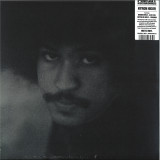
At the forefront of a rising wave of Brazilian artists captivating international audiences, Nyron Higor brings a quiet yet potent sense of wonder to his new self-titled album. Born in Maceió, Higor’s latest work is rooted in the traditions of Northeastern Brazilian music and golden-era MPB. Within the peaceful surroundings of his home, Higor weaves these roots together with global influences and contemporary production techniques, for a uniquely dreamlike vision of hope.
Following the success of his self-released debut Fio de Lâmina—an instrumental record of delicately balanced rhythmic and harmonic patterns, which earned support from tastemakers like Mr. Scruff, Gilles Peterson, and John Gomez—Higor’s new album is a move towards a more expansive, lyrical exploration of transcendence and triumph. As Higor explains, “This album is a test of resistance and a big event in my life as a young Black man from the Northeast and coming from a humble background, financially speaking, its context is political.”
Taking his demos and unfinished tracks to São Paulo, Higor worked alongside friends and collaborators from Brazil’s vibrant contemporary music scene—including fellow Maceioense artists Bruno Berle, Batata Boy, and New York-based Brazilian vocalist Alici Sol—assembling a rich musical landscape and a cutting edge development on the musical world from which he emerges.
For Higor, the process of recording and producing in close collaboration with Berle and Batata Boy allowed him to fully cultivate the emotive power of his compositions. Album opener "Ciranda" sets the tone with a slow frevo rhythm, as wistful trombone melodies and melancholic acoustic guitar harmonies create an atmosphere both intimate and grand. Lead single "São Só Palavras," featuring Alici Sol and Bruno Berle, captures both the lightness and depth of young love in an all too fleeting minute-and-a-half moment of soaring brilliance.
Building upon the instrumental sound of his debut, “Louro Cantador” with its playful organ, birdlike whistles and elegant acoustic guitar, emanates a kind of rare natural beauty, as each sound dances amidst the gentle pulse of Higor's bass—his main instrument.
Through ten carefully crafted tracks, Higor’s acuity for sound and silence draws listeners into a place that feels both deeply personal and universally resonant. “Above all, I value making music that brings me genuine satisfaction. I’m always looking for depth in the things I create.”
This album is a testament to the timeless themes that define Higor’s artistry, as well as his creative drive to overcome the obstacles he faces. Conveying his feelings of jubilance for his work, Higor notes, “This work is liberating, contemplative and victorious!” Each track invites the listener to experience the raw intimacy, the joy and longing, and the otherworldly ingenuity of Brazilian music, which seems to endlessly keep us coming back for more.
CREDITS
Ciranda (Nyron Higor)
Tico Lima: Trombone, Nyron Higor: Drums, Bass, Synthesizers, Electric Piano, Guitar, Molho de Jatobá, Ganzá, Caxixi, and Indigenous Whistle
Louro Cantador (Nyron Higor)
Nyron Higor: Drums, Bass, Keyboards, Guitar, Percussion, and Direct Sound
Demo Love (Nyron Higor)
Nyron Higor: Drums, Bass Synth, Keyboards, and Synthesizers
São Só Palavras feat. Alici, Bruno Berle (Nyron Higor, Batata Boy, Alici Sol, and Bruno Berle)
Alici Sol: Vocals, Bruno Berle: Vocals and Bass, Nyron Higor: Drums, Guitar, Keyboards, Synthesizers, and Whistles
Estou Pensando Em Você feat. Johanna (João Menezes, Rubens Adati)
Nyron Higor: Vocals, Johanna: Vocals. Bruno Berle: Vocals, Rubens Adati: Piano, Guitar, Programming, Stefan Costilhes: Bass, Batata Boy: Programming
Som 24 (Nyron Higor)
Nyron Higor: Sampler, Keyboard, Bass Synth, Vocoder, and Steel Guitar
Pizzicato (Nyron Higor)
Nyron Higor: Double Bass and Keyboards
Eu Te Amo (João Menezes)
Nyron Higor: Vocals and Bass, João Menezes: Guitar, Batata Boy: Rhodes Piano, Bruno Berle: Xylophone
Me Vestir De Você feat. Johanna (Paulo Novaes and João Menezes)
Nyron Higor: Vocals, Johanna: Vocals, Bianca Godoi: Drums, Bruno Berle: Bass, Guitar, Percussion, and Rhodes Piano, Batata Boy: Rhodes Piano and Guitar
===================
Tracks 1, 2, 3, 4, 6, 7, and 8 were recorded by Nyron Higor in Maceió
Track 4: Bass and Synthesizers recorded by Ico dos Anjos. Vocals recorded by Batata Boy at Estúdio Rural
Track 5: Guitars, Bass, Programming, and Pianos recorded at Inhame Estúdio. Coproduced by Rubens Adati
Tracks 9 and 10 Recorded and Co produced by Ico dos Anjos
Mixed by Batata Boy, Ico dos Anjos, Bruno Berle, and Nyron Higor
Mastered by Batata Boy
Produced by Batata Boy, Bruno Berle, and Nyron Higor
Lacquer Cut by Caspar Sutton Jones @ Gearbox Records
Cover photo by Claudio Virginio
Vinyl centre label artwork by Tadáskía
Sleeve design by Alessandro Renaldin
out of Stock
Last delivered 6 months ago available to reorder, subject to availability
Slum Dunk Music is proud to re-release Tropical Punk - a 12" EP by Brazilian mutant punk funk duo Tetine formed by Sao Paulo-born artists/musicians Bruno Verner & Eliete Mejorado, originally released in 2010 - and featuring 4 warm dance punk numbers taken from their the album "From A Forest Near You". The opener "Tropical Punk (Mutant edit)" comes with a brand new mutant funk re-edit with more percussion, more analog synths, warm drum machines, and a funky bassline. The result is a mid-tempo South American cannibalistic disco-pop with catchy lyrics & beautiful half-sang/half-spoken melodies. "Yr Daugther Lies" is a cosmic, experimental/new wave piece with plenty of old school synths, processed vocals, percussive drum machine & spooky live electronics flying around in the mix. It marks Tetine's first collaboration with L.A. electronicists Howardamb. On the B side, "Shiva" comes as a percussive tropical mutnat punk-funk number led by a swinged bassline & Eliete Mejorado's distinct post-feminist spoken word vocals on sordid domesticity set against organic drum beats, dissonant soundscapes, a lost trumpet & some great interplay of raw guitars. The last track "O Espaco" is a relaxed 6-minute cosmic disco piece of Brazilian tropical punk funk on the dangers & delights of being lost in the jungle - sang in Portuguese by Bruno & Eliete - & permeated by a discordant interplay of ultra-funky guitars, abstract synth-bass plus all sorts of FX & live electronics. Tropical Punk finds Tetine celebrating their art-punk roots back to the underground of Sao Paulo with a collection of wild & raw unconventional dance tracks.
GENE CHANDLER was born Eugene Dixon in Chicago 1937. He began to sing in a number of local groups and joined the Dukays who were signed by Carl Davis and Bill “Bunky” Shephard to their tiny Nat label where they recorded ‘Duke Of Earl’, co- written by Chandler. The song was assigned to the Vee-Jay label, for national distribution, and was released in 1961 attributed to Gene Chandler. It went to the top spot on both the pop and R&B charts selling a million copies and marking the start of Chandler’s solo career.
Chandler was at the centre of Chicago's thriving soul scene and when he joined Ewart Abner’s Constellation label in 1963 a string of hits followed breaking both the Billboard Hot 100 and the R&B Top 5.
This long-overdue collection brings together the cream of Chandlers Chicago recordings from the legendary Constellation label, featuring Chandler’s smooth, effortless, vocals, and Curtis Mayfield’s signature sound that filled the dance floors on both sides of the Atlantic.
First ever compilation of his finest Chicago recordings courtesy of the Constellation label Features ten chart hits including four Top 5 Billboard R&B smashes Grammy award winner
Spanish-born producer Digge Shim relocated to Malmö, Sweden a few years back and found his calling in the reincarnation of electro through his relentless output of acid-flavored 303 jams. Besides establishing the Malmø Traxx label he also ran the city’s foremost record shop for electronic dance music.
For his first release on @blundar.co the producer has sourced tracks from his archive of tapes and found a batch of unreleased gems that seemed to fit nicely together in a sort of megamix style. On Side I, he collects some indica-infused ambient and goes all in on Gregorian chants and samples of political speeches. Side II is a head nodding trip through leftfield experiments in downtempo, dubby disco and the tropical ghosts of boom bap.
Mr. K returns to the fertile ground of the Paradise Garage for his latest with two certified floor-fillers closely tied to the legendary club.
TW Funkmasters’ “Love Money” took an unusual path to its eventual elevated status as a dance classic. The brainchild of UK radio reggae jock Tony Williams (the “TW” in the group’s name), it was conceived in response to seminal rap release “Rapper’s Delight,” but with reggae superstar Dennis Brown’s 1978 hit single “Money In My Pocket” as the lyrical inspiration. Indeed, the vocal version of the Funkmasters’ song is considered the UK’s very first homegrown rap tune. But it was the flip side that garnered the most attention in New York however. “The original track was quirky and worked at the Garage,” Danny Krivit says, “but when the dub came out, it really blew up everywhere. After that very few people played the vocal.” Krivit’s edit here takes the influential, futuristic dub and tightens the arrangement up for the 7-inch format. “Love Money” went on to heavily influence the New York City dance underground, with homages coming in the form of subtle tributes (Mateo & Matos’ “Love Style”) to a virtual remake from Larry Levan himself (Man Friday’s “Love Honey, Love Heartache”) to the untold records that have sampled or been influenced by the spacey, heavy groove.
We’re back closer to home and a more traditional source for Garage classics with our flip side, Janice McClain’s “Smack Dab In The Middle.” The Philadelphia born and bred singer burst out of the gate with this very Philly sounding single in 1979. Written and produced by her uncle, the song was recorded when McClain was all of fifteen years old, a fact made more astonishing by a commanding vocal performance that resonated immediately with listeners. Recognizing a good thing when he saw it, disco maven Ray Caviano picked the song up for his newly minted RFC label and enlisted Larry Levan himself to mix it for 12-inch release. It is Levan’s version that provides the jumping off point for Krivit’s edit here — “the original 7-inch version the way it was never seemed worth playing,” Krivit says — and he makes the most of the jazzy Philly disco groove, injecting extra energy in the early minutes of the song with a tasty filtered break unique to this mix.
Pressed and mastered with DJs in mind, this loud and crystal clear single is the perfect combination of bonafide Garage classics and the talents of Mr. K, all on one compact piece of vinyl.
out of Stock
Last delivered 4 months ago available to reorder, subject to availability
Dub Shepherds met Echo Minott in 2016 through the Dub Master Clash project, a dub evening concept that saw several dub producers “battle it out”. A solid friendship was born between the Jamaican and the young Clermont-Ferrand producers.
From these reverb and echo clashes came a 12” maxi, ‘This World is inna Mess’, etching in wax the first collaboration between Dub Shepherds and Echo Minott.
In 2023, Dr Charty and I Fi travel to Jamaica with a bag full of riddims produced at the Bat Records studio, and are greeted on the spot by Echo Minott. Get the picture? We’ll spare you the photos of the trip here, and just select the fruit of this musical journey : five tracks and five dubs between roots and 80’s rub a dub that make up the Mango Tree showcase. Enjoy Music Lovers!
out of Stock
Last delivered 20 months ago available to reorder, subject to availability
Jamwax proudly presents the reissue of Laurel Aitken’s iconic 1966 single, showcasing two R&B dancefloor gems: Last Night and the soulful classic Don’t Break Your Promises. Originally released on the Rainbow label in the UK, this 7-inch record captures the essence of Aitken’s versatility and his pivotal role in bridging the Jamaican and British music scenes.
Last Night draws direct inspiration from the sounds of The Mar-Keys (1961) and Georgie Fame (1966), reflecting the influence of R&B rhythms on Aitken’s work. This release marked a milestone in his career as he gained increasing popularity in the UK, particularly among the mod and skinhead subcultures.
As for Don’t Break Your Promises, it is a cover of Milson Luce’s 1956 release on the Argo label. The song was already a hit in Jamaica, having been licensed the same year by Dada Tewari on his Downbeat imprint. Following Aitken’s rendition, the song inspired several Jamaican covers, including versions by Dandy (1972, Trojan), The Chosen Few (1973, Studio One), and John Holt (1973, Bunny Lee).
Nicknamed the "Godfather of Ska," Laurel Aitken was born Lorenzo Aitken on April 22, 1927, in Cuba. He moved to Jamaica at the age of 11 and became a central figure in the development of ska during the 1950s and 1960s. Before shaping the emerging ska sound, he recorded mento and calypso, laying the foundation for his groundbreaking contributions. His prolific recording career in England included numerous singles on legendary labels such as Blue Beat, Pama Records, and Trojan Records. Aitken’s legacy as a pioneer of Jamaican music and his influence on British subcultures firmly establish him as a key figure in the global evolution of ska and reggae.
Originally released in 1966
Licensed courtesy of Cherry Red Records Limited
out of Stock
Last delivered 17 months ago available to reorder, subject to availability
Nat King Cole was born Nathaniel Adams on the 17th March 1917 in Montgomery, Alabama, USA. His family held a key position in the local black community with his father being pastor of the local Baptist church.
His first professional break came touring with the Broadway show “shuffle along” which eventually found its way to Los Angeles. Where Nat ended up playing at the century club on Santa Monica boulevard. This was an in-place for musicians and Nat’s already developed and incredible piano playing became a great attraction eventually forming a trio with Oscar Moore on guitar and Wesley Price on bass. With Nat’s great voice and add libs the trio were a great success in 1939/40.
In 1943 Cole signed to the infant Capitol records and began his enormous string of hits for that label and eventual amazing career partnership with the great arranger and orchestra leader Nelson Riddle. This was at the time of popular music already pioneered by Bing Crosby and latterly Frank Sinatra and something Nat would become a master of, with his by now incredible, highly developed and unique voice which we all instantly recognise.
Right up until his untimely and tragic death on 15th February 1965, Nat made a string of successful records for capitol, a string of film appearances, and the first black presenter of his own tv show, which ran for many years and introduced a whole host of new and old artists to the television screens. As is so often with people so talented, Nat’s life was short but extremely successful. He was a well loved and admired person with his vibrant and kind personality with many great friends and colleagues and made an enormous contribution to the music industry, civil rights and the world in general.
As a singer and pianist, he was exceptionally talented, and his voice will live on in immortality. His ability to express and sing any song was quite extraordinary to say the least and these recordings are a fine example of that ability. A must have for all music lovers!
out of Stock
Last delivered 20 months ago available to reorder, subject to availability
Infinite Fog are delighted to present another piece of the intriguing COIL puzzle. In the mid 1990s the core team of John Balance and Peter Christopherson were continuing their exploration of the outer reaches of electronic sound production as exemplified by the "Born Again Pagans" release, originally an EP only, featuring both the hugely danceable "Protection" smash which had Danny Hyde's influence writ in large letters all over it, as well as the first outings of their intriguing more ambient/glitch-based ElpH material, probably their most haunting and haunted works. This new 3LP anthology re-edition collects all of the ElpH material which didn't appear on their later "Worship the Glitch" album, namely the pHILM #1 10", a host of very rare compilation tracks as well as a number of at the time unreleased pieces in the same vein. The stunningly presented release also features the ElpH entity's last ever appearance originally available as part of raster noton's award winning 20' to 2000 series of releases, the "Zwölf" EP.
All the material has been lovingly remastered by Jessica Thompson with re-imagined design-work by Oleg Galay and including a replica of the original St. Sebastian on acid poster.
Born in Australia and moving to the UK in her early 30s, Peggy O’Keefe became the resident pianist at the Chevalier Casino in Glasgow in 1962. Initially the residency was for six months, which then turned into six years. It was at this point she recorded her 'Mood Chevalier' LP in 1966, a collection of the band’s favourites but the gold is found in her version of 'Cubano Chant', made famous by Art Blakey and then played across jazz dances ever since.
Peggy’s playing was admired by Cleo Laine and Oscar Peterson, and once had a brief, impromptu duet with Frank Sinatra, Peggy and her band showed their true talent with these two versions of jazz favourites.
Hiding in the shadows for nearly 60 years, Now PANORAMA unearth this gem in their trademark 7 inch format, from a Glaswegian restaurant to a dancefloor near you.
PANORAMA Records is an emerging new label based in London, dedicated to rediscovering and showcasing musical gems with a fresh approach. With early support from notable DJs such as Gilles Peterson, Patrick Forge, Rainer Trueby, Mr Bongo DJs and Zag Erlat from My Analog Journal. Their unique take on Jazz and Funk from the further afield has shown they will become trailblazers in the reissue game for a long time.
out of Stock
Last delivered 21 months ago available to reorder, subject to availability
Village Of The Sun return today with the announcement of their highly anticipated debut LP “First Light”. Due out 4th November on heavyweight vinyl via London analogue specialists Gearbox Records, the record follows their widely acclaimed double A-side single “Village Of The Sun / “Ted”. Village Of The Sun is an enigmatic collaboration between UK jazz virtuosos Binker Golding & Moses Boyd and electronic music legend Simon Ratcliffe of Basement Jaxx fame. Born out of a shared passion for improvised instrumental music, the new project sees all three of the artists steps into relatively new territory, combining their respective sensibilities to create something all at once atmospheric and danceable. Evocative of some of Simon’s inspirations such as Alice Coltrane, Airto Moreira and Masters at Work, Village Of The Sun embodies a hybrid of electronic beats, heady jazz improvisation, and sheer, raw energy, breaking ground between pseudo-Samba rhythms, dreamy ambient textures, and explosive sax and percussion. The new single “The Spanish Master” is a total embodiment of what Village Of The Sun is at it’s heart. Combining atmospheric synth lines with percussive electronics, which gently ebb around Boyd’s intricate drumming and Golding’s expressive sax. With tension building around every element the track careens into a movement of frenetic drumming, electronic idiosyncrasies, and fervent sax breakouts, which find the trio performing at their energetic, adrenaline-fuelled best. The album is truly a project of passion and exploration, and one that refuses to follow just one path. Tracks such as “Cesca” and “Tigris” emphasise Ratcliffe’s ability to weave shapeshifting keys and electronics around Golding and Boyd’s interplay, changing the mood and direction of the track at a moment’s notice. Whereas the title track “First Light” channels the sound of the current UK jazz scene with Ratcliffe imbuing a sense of dramatic tension and release with electronic atmospherics and keys that ferment alongside the almost shamanic, semi-free sax lines and uncomprimising drums. As part of one of British dance music’s biggest ever acts, Basement Jaxx, Ratcliffe and collaborator Felix Buxton led the progressive house sound in the 90s/00s with ground-breaking albums Remedy and Rooty, and by releasing a string of Top 10 singles including Red Alert, Rendez-Vu, Romeo, and Where’s Your Head At?. Ratcliffe’s own solo work includes the 1995 EP City Dreams and the 2011 EP Dorus Rijkers - both releases prove his musical versatility and virtuosity. Speaking about the Village of the Sun collaboration, Simon says, “I’ve always liked improvised instrumental music. It has this intensity and eccentricity that takes me places.
Soul Crooner David A. Tobin is no stranger to the game. The singer, songwriter and one of the Cool Million vocalists was born and raised in the NYC neighbor state New Jersey aka Brick City, which ever since had a massive influence on the US music scene. “Fallin’ in Love” already became a global pushed radio banger and features a classic Soul vibe that elaborates the strong connection of David A. Tobin and Rob Hardt as a songwriting team. Deep and truthful vocals embedded in a grooving and shiny production that will warm hearts and touch souls. The double AA-side “Turnin’ Me On” complements this release and is no less a radio smash and is a smooth up-tempo dancefloor compatible classic Soul tune. This new release on SEDSOULCIETY RECORDINGS is an unreleased exclusive full cover vinyl 45!
Following his recent EP, The Circle of Life, on Pushmaster Discs, Milan's rising techno star Maike Depas returns with a brand-new release on his renowned The Innovation Studio Records. Titled “Sexy Devil Horse”, it is a powerful 10-track collection, featuring many iconic international artists from the Hard Techno space such as Etruria Beat’s headmaster Luca Agnelli, Dutch-based sensation OGUZ and the “Demon of hard techno” also known as Michael Katana, as well as Southern Italian talents CHRS and Gianni Di Bernardo.
This release marks a pivotal moment in Maike Depas’ journey to become one of the highest rated talents in the Hard Techno scene. It will also be followed by a key paradigm shift his label’s business model in 2025. For this occasion, Maike has lined up an amazing group of artists to celebrate those who have shared his musical vision along the way.
The title is meant to be provocative and captivating, just like its content: catchy and fresh enough to attract ravers and clubbers from around the world. Its artwork was created by the master Luden Works. It features a plastic female figure with an undefined appearance, yet with sensual curves and a powerful surge of energy, like a wave enclosed in a sphere, representing Maike’s and The Innovation Studio Records’ logos.
From the galloping rhythm of “Sexy Devil Horse” and “Hear The Sound” to the groovy and elegant “Ce Soir” there is an immediate feel about the artist’s singular touch and eclecticism. Same goes for the tangible contrasts which make a key element of this release, where the minimalistic mood of “StarKiller” and its maximalist counterpart “Dark Serenade” carry the listener through a full-spectrum emotional rollercoaster.
Hard Techno and Psy Trance vibes go hand in hand with ‘90s Trance and Rave echoes, creating a blend of recognisable and innovative samples that can resonate with many different types of audience and like-minded artists. This aspect is fundamental in the direction Maike and his team have decided to take.
It all comes from afar: starting with a classical musical background – playing the piano at Conservatory level for many years, including Berlin’s own Funkhaus. This theoretical and practical knowledge, mixed with a long-time passion for electronic music, made it easier for Maike to shape and cultivate his authentic sound since a very young age.
As part of its evolution, The Innovation Studio Records will officially open its doors to new talent and renowned artists starting in 2025. The team’s vision is to create an international reference point for quality and innovation, shaping a brand-new artistic movement based on combining the modern vision of our generation with our cultural heritage from the past, thanks to the team that we put together, both in terms of approach and technique.
It'll be a structure built from the ground up, combining the best of analogue technology in a modern workflow with the highest level of music hardware, audio monitoring and studio design. In their view, there are two types of productions: those that stay ‘inside the box’ and those that get into your heart.
The desire to unite instead of dividing, to join forces instead of competing, is the key to Maike’s success and a real drive to turn the studio lights on every single day. Despite playing a lot with dystopic, cyberpunk-like atmospheres throughout his artistic journey, music doesn’t feel like a means to escape reality for Maike. In fact, it’s quite the opposite.
The definition Maike uses the most to describe what The Innovation Studio Records wants to become is “a mysterious display cabinet”: a place where an artists will never know what emotion will arise or what direction will be taken next. Although hard work, professionalism and common inspiration will ultimately still be its main fuel, a true sense of community and empathy will be crucial to shape the future Maike and his team have in mind for it.
In a very romantic way, the idea is to re-create the same atmosphere from the Italian Renaissance masters’ workshops. Places where different artists - with opposite backgrounds and styles - could all mingle and inspire each other, in order to foster the creation of something unique. A collective effort for a greater good.
About MAIKE DEPAS
Young hard techno DJ-producer Maike Depas (born Michelangelo De Pasquale) has seen the future of music and it’s called metaverse: “In the future it will blow up,” he predicts. “And it’s going to revolutionize the way we experience music.” Bowled over by Skrillex and Martin Garrix by the age of eight, and DJing at smaller Milan clubs by the time he was eleven, Depas went on to study composition and piano at the prestigious
Milan Conservatory before learning ‘life- changing” lessons from the best in the business at Catalyst’s 4-week Advanced Sound Design course in Berlin’s Funkhaus . His production gets inspired by huge 90s trance synths as much as pounding hard techno from artists such as Kobosil, In Verruf and Amelie Lens.
2024 marked the launch of MAIKE DEPAS 2.0, a tectonic audio-visual shift that entails a wide array of content from DJ sets livestreamed from Berlin’s Teufelsberg and other dystopic locations around Europe to cyberpunk-inspired outfits designed by Demobaza, a cyberpunk-inspired casual couture brand best known for their sustainable Dune X Demobaza collection. Over the course of a developing metamorphosis from a flesh-and-bone individual to a mysterious CGI character, Depas is another step closer to revolutionize the dance music scene through the metaverse.
out of Stock
Last delivered 17 months ago available to reorder, subject to availability
South London’s James Massiah returns to Jon Rust’s Levels imprint with the highly anticipated follow-up to the 2019 underground hit ‘Natural Born Killers’ EP.
The six-track EP ‘True Romance’ is the artist / poet / DJ / producer's richest work to date, autobiographically charting the peaks and troughs of 21st century love, life and relationships.
Massiah’s rap leanings ride over his signature neon productions, taking in an arc of influences including dancehall, dub, acid house, grime and left field pop.
Gritty and shimmering in equal measure, this is essential for devotees of the Dean Blunt, Lord Tusk axis, or anyone switched on to the stream of rap bubbling up from the UK right now.
Heavy rotations from Benji B, Jamz Supernova, Shy One & Scratcha DVA.
A vital release for 2024.
out of Stock
Last delivered 21 months ago available to reorder, subject to availability