Cerca:bot

Generi
Tutto
Dompe - Reload EP

Dompe

Reload EP

12inchDEF2602
Definitive Recordings
17.04.2026

Dompe Delivers Peak-Time House Energy on New Reload EP.
Definitive Recordings welcomes a brand-new three-track EP from Dompe, showcasing his unmistakable blend of classic house foundations, driving grooves, and modern club attitude.

Dompe aka Dominic Wagner is a DJ and producer driven by relentless passion and an instinctive feel for the dancefloor.
Known for pairing distinctive vocals with finely crafted basslines and arrangements, his sound is always moving forward while staying rooted in house tradition. Based in Berlin since 2011, Dompe founded Jackfruit Recordings in 2017 as his personal creative playground, releasing a steady stream of music that has earned both national and international attention. His doublevinyl album ‘Hippie Crack’ sold out quickly and charted strongly on Beatport, followed by ‘French Collection’. In 2025, Dompe made his debut on Definitive Recordings with a standout remix of the label classic ‘Let It Go’ by John Acquaviva, Olivier Giacomotto and Dan Diamond further cementing his connection to the imprint.
Now returning with a full EP, Dompe opens with ‘Reload’, a classic house groover built around a tight rhythm, a looping piano motif, and a chopped, repeated male spoken-word vocal that locks into the groove. It’s raw, hypnotic, and instantly effective on the floor. ‘Wave’ shifts into more percussive territory, drawing on classic tech house energy. Built almost entirely around drums, the track evolves through rolling percussion, catchy vocal snippets, and sharp house synth work before snapping back into a full percussive drive designed for late-night momentum. Closing the EP, ‘Sundown’ delivers a no-nonsense house stomper. Big 909 drums, a 90s-inspired piano theme, and a vocal sample declaring ‘ecstasy’ capture the peak-time feeling of a packed club
in full flow: direct, euphoric, and unapologetically house.

pre-ordina ora17.04.2026

dovrebbe essere pubblicato su 17.04.2026

14,71
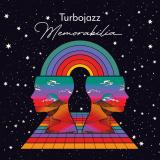
Turbojazz - Memorabilia LP

Following his acclaimed debut album Whateverism, Italian producer Turbojazz returns with Memorabilia, a heartfelt tribute to the roots of dance music culture and a personal journey through memory, community, and sound.
The album delivers a rich and diverse palette of house and soulful grooves, music to dance with both your feet and your ears, and features a heavyweight lineup of collaborators including Robert Owens, Rona Ray, Javonntte, Cor.Ece, Bad Colours, Doni Nicole, alongside longtime allies Veezo and Broke One.
Crafted with reverence and a forward-thinking spirit, Memorabilia is more than an album. It is a message to the dance music world that culture lives on through those who carry it forward.

pre-ordina ora17.04.2026

dovrebbe essere pubblicato su 17.04.2026

21,81
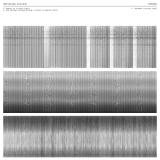
Christina Kubisch - TUNING

Christina Kubisch

TUNING

12inchFAIT-41LP
Faitiche
17.04.2026

Faitiche welcomes a new artist: Christina Kubisch belongs to the first generation of sound artists. Her practice ranges from performances, concerts, to works with video and visual art, but she is best known for her sound installations and electro-acoustic compositions.

TUNING brings together three pieces by Christina Kubisch from different periods of her oeuvre. What they have in common is the way they transform sound phenomena originally considered “non-music” into compositions.

Jan Jelinek: Gaming in Silence (2024) is the most recent work on this compilation. It’s a collage of electromagnetic waves, voice, and abstract sound textures. How did this combination come about?

Christina Kubisch: Gaming was commissioned as a fixed-media composition for the Sound Dome at ZKM Karlsruhe. Since Resonances: The Electromagnetic Bodies Project (2005), I’ve been making recordings in the old and new server rooms at the ZKM and in their permanent collection of historical computer games. Computer games like Asteroids (Atari, 1979) and Poly-Play (VEB Polytechnik, 1986) have specially generated analogue electromagnetic waves that interest me in particular on account of their density, rhythms and textures. I originally studied painting and to me the work of composition often feels like painting an abstract picture. I alter my source material as little as possible, layering and overlapping until a distinctive sound space emerges. In recent pieces, I sometimes combine magnetic waves with field recordings or live instruments. In Gaming it’s my recording of a Chinese song about silence.

JJ: Two persons walking through a street in Madrid (2004) is a recording from your Electrical Walks series. Here we should give a brief explanation of one of your best known works: participants in an Electrical Walk move through public spaces wearing prepared headphones that allow them to receive electromagnetic waves from their surroundings – for example from security gates, ATMs or neon signs. They discover a situation that normally is inaudible to the human ear and they can actively shape it by choreographing their movements. I really admire this piece, not least because there’s no clear dividing line between participants and artist. What exactly do we hear in Two persons walking through a street in Madrid (2004)?

CK: With this early work, I wanted to understand what is heard by people participating in an Electrical Walk in the same place but moving in different ways. The Spanish composer Miguel Alvarez-Fernàndez and I set off from opposite ends of a major shopping street in Madrid, met briefly in the middle, and then continued to the end. We both recorded our walks and I then layered them over one another. You might call it a work of electromagnetic conceptualism.

JJ: Diapason (2009 version) is an installation that plays a composition based on sounds from fifteen tuning forks. This setting is audible in the recording: there’s no dramatic arc, no beginning or end – instead, it recalls a piece of aleatoric music focussing on the decay phase. How did you come to make this work and could you tell us something about your compositional method?

CK: Diapason is part of a series of three pieces that deal with “non-instruments” or instruments that no longer exist: electrical mine bells used to send signals to the workers underground; a historical glass harmonica originally used for medicinal purposes; and tuning forks that were used by doctors to test people’s hearing. All of these methods are no longer in use. The sound of the tuning forks, audible only if held close to the ear, was recorded at the electronic studio at Berlin’s Technical University in such a way that even their decay remained audible. The frequencies range between 64 and 2048 Hertz and they can be adjusted at micro-intervals using small movable weights. The sequence and the duration of the pauses are dictated by chance and were not defined in advance. The 2009 version was created for an installation in the historic Holy Cross Church (Korskirken) in Bergen. Visitors could enter and leave the space at any time, deciding for themselves where and for how long they wished to listen to the sounds played back over an array of small loudspeakers placed on the floor of the apse.

Credits:

Gaming in Silence: commission of the ZKM/Hertzlab, Karlsruhe 2023
elektronic sound processing: Tom Thiel
sound engineering and mixing: Eckehard Güther

Diapason: produced at Elektronisches Studio of TU Berlin
rearrangement: Eckehard Güther

Christina Kubisch, published by Edition Christina Kubisch / Random Musick Publishing

image front: Transitionen 2021 by C. Kubisch, sonagrams of electronic waves (courtesy: Galerie Mazzoli Berlin)
image back: Diapason Tuning Fork, property of Folkmar Hein, Photo: Archiv Christina Kubisch

design by Tim Tetzner
mastered by Giuseppe Ielasi
Thanks to Miguel Álvarez-Fernández, Folkmar Hein, Dominik Kautz and Mario Mazzoli

pre-ordina ora17.04.2026

dovrebbe essere pubblicato su 17.04.2026

27,31
MIGUEL HERRNANDEZ - NEON CYBERWAVE EP

Bosconi Records proudly introduces Neon Cyberwave, the first solo EP on the label by Italian electronic visionary Miguel Herrnandez, marking a milestone in the evolution of an artist who has consistently bridged Detroit-rooted aesthetics with the experimental pulse of the European underground.

Based in the Val d’Elsa region between Florence and Siena, Miguel has forged a unique sonic identity shaped by his devotion to vinyl, his deep connection to the techno capital the “Motor City”, and his passion for deeply rooted yet still futuristic electronic culture.

His productions and DJ sets—built on a seamless fusion of raw electro, deep house attitudes, new beat flavors, and timeless grooves—have appeared on respected labels such as Bosconi, Rawax, and Norm Talley’s Upstairs Asylum. With Neon Cyberwave, he now delivers his most complete and personal statement to date.

The EP opens with “Neon Cyberwave”, a powerful acid-driven stomper built around a rolling 303 bassline, warm melodies, and an emotional breakout moment that captures both the effectiveness and the sensitivity of Miguel’s approach. It flows naturally into “Italo FM”, a track infused with Italo disco spirit—choir-like harmonies, a punchy bassline, and a groovy, ecstatic progression that turns into a genuine dancefloor trigger.

The journey deepens on the flip, where “VHS Direct Drive” introduces a dystopian atmosphere characterized by constantly shifting, unusually toned bass movements—unpredictable yet catchy, fresh yet rooted in classic electro DNA. This is followed by “Electric Soul Stranger”, where Miguel navigates Drexciyan undercurrents and subtle Gigolo-era references, balancing between straight rhythmic propulsion and broken-beat twists to create a cold, mental, transportive electro experience.

The record closes with the epic “Punky Shift”, a dramatic and powerful finale echoing the spirit of artists like The Hacker. Dramatic strings, an intense acid bassline, and a massive groove come together to shape a timeless closing track—one designed for peak emotional moments, sunrise sets, and long-lasting memories.

With Neon Cyberwave, Miguel Herrnandez has crafted a work that feels fresh yet nostalgic, classic yet forward-facing, and deeply personal. It stands as a versatile DJ weapon, a tribute to electro’s past and future, and a defining chapter in the artistic evolution of one of Tuscany’s most intriguing electronic voices.

pre-ordina ora17.04.2026

dovrebbe essere pubblicato su 17.04.2026

14,50
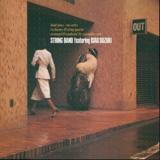
ISAO SUZUKI - STRING BAND (1978)
  • A1: Nica's Dream
  • A2: Avenue
  • B1: Greensleeves
  • B2: Lamento
  • B3: Sheila's Song

This album was recorded by Isao Suzuki with an international string band lineup featuring Hank Jones, Roy Haynes, and Ron Carter. Widely supported by jazz fans both in Japan and abroad, it remains highly sought after and continues to command strong popularity on the used market.

Bass (Piccolo Bass): Isao Suzuki
Bass: Ron Carter
Piano: Hank Jones
Drums: Roy Haynes

pre-ordina ora17.04.2026

dovrebbe essere pubblicato su 17.04.2026

43,49
DANS DANS - LIVE! LP

DANS DANS

LIVE! LP

12inchUNDAY177LP
UNDAY RECORDS
17.04.2026

In the Summer of 2023, Dans Dans were nearing the end of a two-and-a-half-year-long period of intense creativity, during which they had released two celebrated albums, Zink and 6, and had toured extensively in Belgium and abroad. Feeling it was time for a well-deserved break in activity, they decided to play three final, intimate concerts before going into hiding: two consecutive nights at Trix in Antwerp (hometown of drummer Steven Cassiers and guitarist Bert Dockx) and one at Botanique in Brussels (hometown of bassist Frederic Jacques). 'LIVE!', Dans Dans' first ever full length live record, features highlights from these memorable nights, offering excitingversions of several of the group's most beloved compositions from across their back catalogue. While the band is, at the time of writing, getting ready to start working on new material, these recordings from 2023 are a good reminder of the magic Dans Dans are able to conjur when they get together and play. Here is one of the most original instrumental trios of the last two decades in their natural habitat, on stage, performing for a live audience, speaking through their intensely personal music. Here is Dans Dans at full flight, effortlessly blending different musical genres and painting fascinating sonic landscapes full of energy, mystery and contrast.

pre-ordina ora17.04.2026

dovrebbe essere pubblicato su 17.04.2026

23,95
Santamaria Bros - We Got Latin Soul

Santamaria Brothers are the latest incarnation of a lifelong musical journey rooted in rhythm, rebellion, and reinvention. The children of Peruvian and Ecuadorian immigrants to Australia, brothers Pat and Andrew Santamaria grew up steeped in the sounds and culture of Latin America - a deep inheritance that coloured everything they did, even as they moved through scenes and styles far from home.

In their youth, the brothers sharpened their first musical swords playing in globally touring indie bands. As the rhythm section of cult outfit Lost Valentinos, they had the opportunity to see the world and learn from the best; touring with, working alongside, and releasing music through the likes of Soulwax, Ewan Pearson, and Kitsuné. Taking those experiences home, they dove deep into the rave underground, co-founding of the crucial Sydney-centric techno label, warehouse party collective, and long-running radio show Motorik! In that guise,they helped shape the city’s electronic music scene over the past decade from the booth, the studio, the airwaves, and the street.

Now, after years behind the decks and on both sides of the mixing board, Santamaria Brothers return to their roots - releasing music under the family name for the first time. With We Got Latin Soul, they bring it all together on a 4-track EP of club-ready edits (via Sosilly Records). Reworking four towering figures of Latin soul; Mongo Santamaria, Ray Barretto, Pucho & The Latin Soul Brothers, and Joe Bataan — the brothers inject each cut with tasteful touches of Balearic haze and chugging acid house pressure, honouring the originals while making them sing on today’s dancefloors.

This is Latin soul filtered through a unique blend of antipodean rave culture, crate-digging, and relentless reinvention. It’s joyful, percussive, and made for the club - a full-circle moment from two lifers forever finding new ways to move bodies.

pre-ordina ora17.04.2026

dovrebbe essere pubblicato su 17.04.2026

13,87
THE EASTERN DARK - Johnny And Dee Dee / Julie Is A Junkie 7"
  • A1: Johnny And Dee Dee
  • B1: Julie Is A Junkie

To commemorate the 40th Anniversary of the passing of James Darroch, singer/songwriter/guitarist for Sydney's incredible The Eastern Dark, Grown Up Wrong! is thrilled to announce a long-awaited reissue of the band's classic single "Julie Is A Junkie/Johnny and Dee Dee".

Heavily influenced by the Ramones - the band opened their first live show with 'Blitzkrieg Bop' and from then on opened with a new Ramones song every time they played, working through the band's complete catalogue in chronological order - as all manner of hyper-melodic and high energy rock. The Eastern Dark were a classic trio powered by former Celibate Rifles bassplayer James Darroch's blazing guitar and anchored by former Lime Spiders backing vocalist Bill Gibson's hard driving and melodic bass playing (and supreme backing vocals) and Geoff Milne's untouchable beat keeping. They set Sydney's Radio Birdman influenced scene alight in 1984 and quickly built an international following on the back of their classic single. Sadly, just hours after completing what would become their next release - the mini-LP "Long Live the New Flesh" - the band's life, and that of 26-year old James Darroch, was brutally ended in a road accident whilst the band was on its way to Melbourne.

On the back of the tragedy, the band's music lived on and it's global impact was reflected in the influence it bore on numerous bands, from Boston's the Lemoneads to Tokyo's Teengenenete, and obviously a succession of Australian bands from the Hard-Ons through to God and the Meanies and beyond.

After years of searching, surviving members Bill Gibson and Geoff Milne recently found the single's original multi-track tapes, and for the new release, the original recordings have been both remixed and remastered for maximum impact under their supervision.

pre-ordina ora17.04.2026

dovrebbe essere pubblicato su 17.04.2026

14,71
Living Legends - The Gathering LP

Living Legends

The Gathering LP

12inchERE1232
EMPIRE
17.04.2026
  • A1: The Gathering
  • A2: She Wants Me
  • A3: Pants On Fire
  • A4: War & Peace
  • B1: Luva Changer
  • B2: Samba
  • B3: After Hours (Extended Euro Mix)

In the vibrant, post-millennial landscape of independent hip-hop, few collective names commanded as much respect as the Living Legends. A monumental alliance of some of the West Coast's most respected solo artists—including Murs, The Grouch, Eligh, Aesop, Bicasso, Luckyiam, Sunspot Jonz, and Arata—the crew's 2008 album, The Gathering, served as a powerful declaration of their unity and enduring relevance.

The Gathering was a snapshot of a legendary crew working at the peak of their collaborative power. The project masterfully weaves together the diverse styles of its eight members, moving effortlessly from the conscious storytelling of Murs to the soulful, introspective flow of The Grouch and Eligh, and the abstract lyrical dexterity of Aesop. The production, handled largely within the collective, provides a lush, sample-heavy, and distinctly West Coast soundscape that perfectly complements the lyrical fireworks. Tracks like the anthemic title track "The Gathering" and the legendary posse cut "After Hours" showcase the organic chemistry that made the Living Legends a seminal force in underground music.

For the first time ever, this pivotal album is being officially pressed on vinyl. This highly anticipated Record Store Day 2026 release finally delivers The Gathering to the format its rich, soulful production has always deserved. This limited edition pressing is presented on striking Coke Bottle Clear Vinyl, a perfect visual complement to the album's crisp, refreshing sound.

A crucial artifact of independent hip-hop history, The Gathering on vinyl is an essential addition for fans who have supported the Living Legends for decades and a must-have for vinyl collectors looking to own a tangible piece of the era's best crew collaborations. Don't miss the chance to own this definitive, first-ever vinyl pressing of a true underground classic.

pre-ordina ora17.04.2026

dovrebbe essere pubblicato su 17.04.2026

26,01
Guests - Common Domestic Bird LP

Guests is the home recording project of Jessica Higgins and Matthew Walkerdine. Vaguely named as such to avoid any problems with the poster if they pull out of a gig (which has only happened once, about a year and half before any songs were actually written to be fair) but also to capture a sense of reverse hospitality. That is, arriving at your door with a bottle of good wine (can’t turn up empty handed) or a fist full of savoury or sweet snacks (time of day dependant); oversharing at the afters (and then passing out on your couch); reading to your toddler while you make their lunch or put everything back where it was meant to go (only to get torn apart again). So, something about what happens when private worlds meet each other, making or having been made a space for. But at times, it’s a different kind of intimacy, a temporal or material one, like the feeling of crisp fresh sheets, and abundant and soft, body-part appropriate towels in a hotel in a city you’ve been to before and love to go back to.

Their debut record, “I wish I was special”, was variously described as “a collage of concrète experiments and outerzone pop gestures, music that sounds as if it’s been written from the depths of a dream”; “music for people who love music but also hate it too”; “something like chasing ghosts or befriending a wild animal”; “pulling apart nervous sensations with haphazard ease and requisite humour”; and “a melody of refusal, of being all-in (…) finding the exact right WRONG sound to express the discontent”. Common Domestic Bird continues in this vein, layering synthesiser, keyboards and samples over rudimentary drum rhythms and field recordings, which are in turn sung or spoken with to create nine new songs.

Written and recorded between autumn 2024 and summer 2025 in Reading, Berkshire, the music has matured since its last outing, in a way, leaning less into collage and more toward structured composition and melodic depth, yet retains a healthy dose of indeterminacy and off-kilter rhythms for the forever-amateur. The songs on Common Domestic Bird hint at some “about”-ness through a series of discrete vignettes which sound a bit like architecture or end of year lists, gossip or over-thinking subjectivity, like disappearances and impressions, the support structure of the spine, letters and signs offs, things you could really do without and where they should go, hoping you’ll see something that isn’t there, pretences and performance. At times they feel kind of funny, others kind of sad or a bit angry and annoyed, a bit like you really.

pre-ordina ora17.04.2026

dovrebbe essere pubblicato su 17.04.2026

21,64
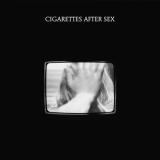
Cigarettes After Sex - Anna Karenina (7")
  • A1: The Crystal Ship
  • B1: Anna Karenina

Cigarettes After Sex return with a double single that showcases both their future and their past. The single featured on the B-side, “Anna Karenina,” is a quintessential Cigs track, sensual, slow-burning, and emotionally oversized, with lyrics so confessional they verge on too much. But its inclusion of spoken word verses adds a striking new dimension to Greg Gonzalez’s world, expanding the band’s intimate palette. Its chorus (“I cried at the end of Anna Karenina, when she threw herself under the train”) might be the most Cigarettes After Sex lyric ever written. The A-side is a long-rumored fan favorite finally seeing release: a gorgeously faithful cover of The Doors’ “The Crystal Ship,” recast in the band’s signature haze. Jim Morrison’s romantic fatalism never sounded more at home.

pre-ordina ora17.04.2026

dovrebbe essere pubblicato su 17.04.2026

10,88
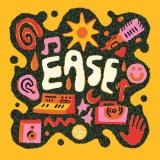
Various - Ease

Various

Ease

12inchSUN-001
Sun & Sound Detroit
17.04.2026

This isn’t a compilation—it’s a vinyl conversation between cities, generations, and musical bloodlines. This inaugural release embodies the spirit of collaboration, community, and cross-generational artistry that defines each artist’s deep musical legacy.

A statement on wax bringing together Glenn Underground, Coflo, Jon Dixon, Kevin Reynolds and sillygirlcarmen, this four-song project documents the shared language of five Artists through deep house, jazz roots, and forward-looking soul. Though these artists have shared DJ booths and dance floors around the world, this release marks a rare moment where their creative voices intertwine on wax. Each track stands on its own, but together they form a continuum—past, present, and future etched into wax. Pressed with intention and made for real systems, this release exists for the heads, the selectors, and anyone who still believes vinyl is where the story lives. Meant to be played—not archived. The kind of tracks that feel alive in the room and grow every time you hear them.

‘Ease’ EP tracks:
Glenn Underground ‘Dive (Into The Deep)’; the Chicago legend & Strictly Jaz Unit co-founder combines deep house, freeform jazz & soul, here in a jazz-infused, laid-back, hypnotic melange of house beat, synth chord riff, rippling arps, with a whisper of disco in the bassline and 80’s electro in the high, singing strings.

Coflo x sillygirlcarmen ‘Never Forget (That Feelin’)’; East Bay CA-based Coflo combines Hawaiian & Portugese roots with a global reach. A collaborative skipping house beat, pattering percussion & melodic jazz synth piano embrace sillygirlcarmen’s soulful voice and heartfelt lyrics. This collaboration marks a merging of emotional storytelling and percussive sophistication.

Jon Dixon ‘Saturday At Northland’; Detroit’s modern jazz & techno fusionist, rooted in long study and prestigious performance of classical & jazz piano both in orchestral and electronic contexts, employs his keyboard virtuosity in a thrilling wave of melodic piano improvisation & complex lively percussion, combining sheer craft with spiritual heft.

Kevin Reynolds ‘I Got Music’; from an Irish/US Detroit family, producer/live artist Reynolds blends techno, jazz, soul, from influences as diverse as 90s underground techno, Kraftwerk & John Coltrane, and roles/performances in multiple prestigious venues & positions. Here, a stealthy beat & Kraftwerk-evoking robotic electro synth theme are joined by a dual vocal used as a riff, while clusters of piano chords flower into jazz motifs.

pre-ordina ora17.04.2026

dovrebbe essere pubblicato su 17.04.2026

15,92
Hannah Lew - Hannah Lew LP

“One foot out the door, another in the otherworld…”
So begins Hannah Lew’s debut, self-titled solo record, soaked in imperious, wide-eyed pop songwriting and a girl-group/post punk aesthetic that belies the artist’s history in the U.S. underground. A towering, hook-laden album, it’s infused with an optimism and surrealism that conversely deals with the times we find ourselves in.

Recorded at home in Richmond, CA and in The Best House studio with Maryam Qudus in Oakland CA, with the assistance of a crack team of West Coast musicians, this album sees Hannah Lew stepping out from behind the legacy of her two groups Grass Widow and Cold Beat. While musically bearing similarities with her previous work, “Hannah Lew” is a bold leap into direct pop territory, making ample use of a vocal style that teases out the inherent melancholy in her melodies. Mastered by Sarah Register, each song is a perfectly honed nugget that frequently pulls the heart in two directions at once.

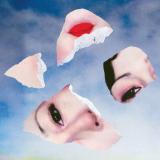
Themes of change, breaking up, shattering old ways of being are shot through the record. For the front cover, a photograph of the artist’s face was printed, ripped up and re-assembled, resembling the creative process embarked upon by Lew for her first “solo” material. The album feels instinctual, almost dream-like in its assemblage of sweeping synths and pulsating, propulsive drum machine beat patterns with Lew’s vocal performances sensitive and caressing over the top. Increasingly relying on the subconscious and dreams to guide her creative process, Hannah Lew frequently abandons literal interpretations or linear narratives, the songs seeming to exist in a swooning, effortless flow-state while remaining emotionally hard hitting.

On an album where every song could be a single, there are kaleidoscopic shades and varying emotional tones in abundance. First single Another Twilight is carried along a pumping, Italo-disco-style 4/4 beat and mono-synth bass line, the low end pulling at the heart and body. Lew’s vocal melody teases the track before swan-diving into a gorgeous chorus as she sings “it’s all over baby and I don’t mind… in decline, I take my time…” The album is suffused with moments like this. On slow builder Damaged Melody, an arpeggiated synth elongates the verse before a cascading synth showers down melodic glitter. The stunning Replica uses dual swirling synth patterns before a driving, synthpop chorus for the ages carries Hannah Lew’s vocal into the stereo field, sailing in on a high register singed with the embers of a break up.

In a departure from previous groups, her solo songs are guided by dreams and free association inspired by Dada and the Surrealist movement and sculpted afterwards. As such, the songs reveal themselves on repeated listens, revealing traces of heartbreak inspired by both personal and global elements - Hannah Lew regards the album “a wartime album.” On Move In Silence, Lew intones “there’s a war outside, just out of view,” revealing the dichotomy at play throughout. With the songs evolving naturally and in a flow state, the pressures and sadnesses of the modern age bleed through, mixed in with Lew’s inherent love, sensitivity and fractured-but-intact optimism. On the swooning, sublime Sunday layers of Numanoid synths open up for the commanding vocal performance pontificating on grief, love, pain as she “feels the ache on Sunday…” As the chorus builds and Lew’s call-and-response vocal adds to the emotional tension, it almost feels like too much to take.

Elsewhere, there are echoes of Hannah Lew’s previous work. On Time Wasted a bass guitar comes in with a heavy, punk attack before the synths and vocal harmonies reminiscent of later Cold Beat elevate everything. The glassy, sweetly resigned closer The Clock sounds like so classic it could be cover, a sweetened Jesus & Mary Chain tune perhaps, before it erupts into volcanic chorus that could only come from Hannah Lew in 2026.

pre-ordina ora17.04.2026

dovrebbe essere pubblicato su 17.04.2026

23,32
Anderson .Paak - Malibu (10 Year Anniversary) (2x12")
  • A1: The Bird
  • A2: Heart Don't Stand A Chance
  • A3: The Waters (Feat. Bj The Chicago Kid)
  • A4: The Season / Carry Me
  • B1: Put Me Thru
  • B2: Am I Wrong (Feat. Schoolboy Q)
  • B3: Without You (Feat. Rapsody)
  • B4: Parking Lot
  • C1: Lite Weight (Feat. The Free Nationals United Fellowship Choir)
  • C2: Room In Here (Feat. The Game & Sonyae Elise)
  • C3: Water Fall (Interlude)
  • C4: Your Prime
  • D1: Come Down
  • D2: Silicon Valley
  • D3: Celebrate
  • D4: The Dreamer (Feat. Talib Kweli & Timan Family Choir)

Ten years ago, Anderson .Paak didn't just release an album; he staged a full-scale takeover of the soul and hip-hop landscape. Released on January 15, 2016, Malibu served as the definitive arrival of an artist who had spent years grinding in the underground before a star-making turn on Dr. Dre’s Compton. While his previous work hinted at his potential, Malibu was the moment the world met the "Cheeky Andy" persona in full—a virtuosic drummer, a raspy-voiced crooner, and a sharp-witted rapper all rolled into one. The album is a sprawling, sun-drenched journey through the Southern California coast, blending 1970s funk, church-reared gospel, and gritty boom-bap into something that feels both nostalgic and entirely futuristic. With a heavyweight production lineup including 9th Wonder, Madlib, Kaytranada, and Hi-Tek, the record maintains a warm, analog texture that was a breath of fresh air in an increasingly digital era. It’s an album that breathes, full of intentional imperfections and the kind of "in-the-pocket" groove that can only come from a seasoned live performer. Beyond the infectious, dance-floor-ready energy of tracks like "Am I Wrong" and "Come Down," the album is a deeply autobiographical masterwork. .Paak uses the 65-minute runtime to unpack his life story with startling clarity, touching on his mother’s gambling addiction, his father’s incarceration, and his own brushes with homelessness with a sense of resilience that never feels heavy-handed. He weaves these heavy themes through a lens of triumph, grounded by vintage surfing documentary samples that give the project its cinematic, coastal atmosphere. It’s a celebratory record born out of struggle, anchored by his impeccable technicality on the drums and a guest list—featuring ScHoolboy Q, Rapsody, and The Game—that feels hand-picked to complement his specific brand of West Coast swagger. A decade later, Malibu stands as a modern classic and the blueprint for the soulful revivalism that would eventually lead .Paak to global superstardom and Grammy-winning heights. It remains a testament to the idea that the most profound music often comes from the most personal places, proving ten years on that the best way to move forward is to stay rooted in the groove.

pre-ordina ora17.04.2026

dovrebbe essere pubblicato su 17.04.2026

97,44
Rickey Kelly - My Kind Of Music LP + Mp3
  • 01: The Ark
  • 02: The Masai
  • 03: Dream Dance
  • 04: Belize
  • 05: As You Are
  • 06: Danakil Warrior

Our latest Holy Grail reissue is this private press spiritual jazz gem out of California from Rickey Kelly and his vibes & marimba. Features Diane Reeves (vocals) & Adele Sebastian (flute)!

Heavyweight 180g LP with tip-on sleeve, individually numbered 1-1000, card enclosed for liner notes & audio download

"Rickey, I know these are your friends, the guys you went to school with, but if you wanna record an album, you record with musicians who have been playing their whole life; whatever you write, they'll put their whole life into it. You play with your friends; they may not even play in tune."

These are the words of Slave guitarist Kevin Johnson, and they were to change the course of young Rickey Kelly's life.

It was 1978, and music student Kelly had approached Johnson with a tape of rough demos of some songs he'd written. A San Francisco native, Kelly had recently moved the short distance south to study music at LA City College in East Hollywood. He was a member of E.W. Wainwright Jr.'s African Roots of Jazz, and was spending up to 10 hours a day in practice on both vibes and marimba. He also played with Horace Tapscott, and had his own band made up of fellow students, but it was his ambition to make an album that led to the conversation with Johnson. It was a turning point in his education, and a decision was looming.

The next thing Johnson said was "You call the best jazz musicians. How'd you like to play with Billy Higgins?", a line that would seal it for anyone; for a youngster like Rickey just starting out in the business, you just don't turn down the opportunity to play with the likes of highly accomplished musicians, especially those of the calibre of legendary jazz drummer Billy Higgins.

Some calls were made and the date was set to record at Studio Masters on Beverly Blvd, a studio set up just a few years previous in 1973, owned and operated by Dot Records founder Randy Wood with his son John. Some of the other music professionals set to record with Kelley that day were flautist Adele Sebastian, bass player Tony Dumas, saxophonist Charles Owens and vocalist Diane Reeves, none of whom had previously played with Kelly before.

Kelly was impressed with the studio, with the gold records displayed on the walls and the famous musicians hanging out. 'It took a lot of humility for me to record with them, I mean I was nobody, nothing, and for not a lot of money either' remembers Rickey in a later interview with Calvin Lincoln, 'It taught me a lot, to practice hard, and study for the rest of your life, to give your all, and there's a lot of all to give'.

As the recording session took place, John Wood was listening in. He was impressed. Kelly didn't have the funds to manufacture and release the album himself, so Wood suggested it was pressed up on his in-house studio label, Los Angeles Phonograph Records, and thus the LP 'My Kind of Music' was released early in 1979. The album also saw a subsequent pressing soon afterwards on Dennis Sullivan's New Note label.

Kelly remains humble and proud of his debut album to this day. 'I was still a beginner' he says, 'These masters walked in, smiling, and gave me something worth gold'.

pre-ordina ora17.04.2026

dovrebbe essere pubblicato su 17.04.2026

24,16
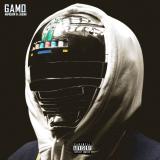
Napoleon Da Legend - G.A.M.O (2x12")

G.A.M.O. (Gods Against Man's Oppression) recounts events leading to Napoleon Da Legend transformation after being bestowed a metal helmet, which is a weapon against our modern dystopia. The album features a blend of soulful and dystopic grit featuring the likes of Vinnie Paz, Goretex, General Steele, Skyzoo, Passport Rav, Nejma Nefertiti, Innocent?, SKAM2?, Eloh Kush, CF, Dontique and more. It has production from Dub Sonata, Maitre D, Homage Beats, Passport Rav Proffeny and Napoleon Da Legend. The result is 23 tracks that blend retro-sci fi "Noir Wave" and modern Boom Bap. It features an exclusive 2 page comic illustrated by UK's Dan Lish. Limited to 300 copies only.

pre-ordina ora17.04.2026

dovrebbe essere pubblicato su 17.04.2026

42,44
ASSAILANTS - The Art of Rolling EP

Ben Sims and Truncate return under their ASSAILANTS guise and drop the long awaited follow up to 2018's 'Chase Sequences' EP on the jointly run 'Obscurity is Infinite' imprint. Original Hardgroove flavours blended with tough Machine Funk, showcasing the sounds they're both individually celebrated for and delivering some unique fusions on this all thriller, no filler EP

pre-ordina ora17.04.2026

dovrebbe essere pubblicato su 17.04.2026

13,24
Owelu Dreamhouse - Owelu Dreamhouse LP
  • 1: Kellen
  • 2: Owerri Disco
  • 3: Tourist
  • 4: Okra Bilalli (Feat. Bilalli)
  • 5: Oluwasam
  • 6: Stutter
  • 7: Daughters Always Listening I
  • 8: Niger River
  • 9: Daughter's Always Listening Ii
  • 10: Struggle For Kasawa
  • 11: Realised
  • 12: Yellow Trumpet

A fiery blend of cinematic soul, psychedelia, and Afrobeat exploring the in-betweens of identity, music, and culture in the 21st century—Owelu Dreamhouse’s debut LP is a deeply orchestrated journey through memory and imagination, led by ex-Saskwatch bandmates Nkechi Anele and Nic Ryan-Glenie, and produced by Henry Jenkins (Surprise Chef).
The band's namesake is a play on Nkechi’s grandmother's village—Owaelu—in Nigeria. Growing up as a woman of color in a predominantly white Australia, Nkechi had fear and hesitation around expressing her Africanness and Nigerianess, and this album is about her journey. Both archival and contemporary, the album’s DNA is laced with musical and historic references as well as a cohesive vision of the present.

pre-ordina ora17.04.2026

dovrebbe essere pubblicato su 17.04.2026

26,68
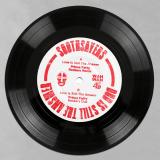
Soothsayers - Love Is Still The Answer (Prince Fatty Remixes) (7")
  • A1: Prince Fatty Rockers Remix
  • B1: Prince Fatty Rockers Dub

Wah Wah 45s are very excited to announce a brand new remixes from dub donPrince Fattyfor beloved Afro-reggae outfitSoothsayers.

Love Is Still The Answeris a beautifully uplifting song, written and sung by long time Soothsayers member and collaboratorJulia Bielabout the eternal power of love and its ability to overcome hate. It appears in its original incarnation on the band's recent, critically acclaimed album,Fly Higher.

Mike Pelaconi, AKA Prince Fatty has been part of the Wah Wah 45s and Soothsayers extended family for many years, and here he delivers a typically crowd pleasing mix, in both vocal and dub form, from the world of Rockers Reggae, calling legendary reggae drummerHorsemaninto the studio, and crafting a lush rocksteady remix with a new horn arrangement and stripped back instrumentation.


"In a world that feels more divided and chaotic than ever,Love Is Still the Answer is a reminder that real change can still come from within. We may feel powerless in the face of global turmoil, but when we choose love - actively, consistently, even in tough situations - we reclaim strength for ourselves. This song calls us back to our shared humanity, to the energy that connects us all. It's an invitation to tune into what really matters, and to rediscover beauty where we may have forgotten to seek it." Robin Hopcraft (Soothsayers)

a A1: Prince Fatty Rockers Remix [feat. Julia B.]

[a] A1: Prince Fatty Rockers Remix [feat. Julia B.]

pre-ordina ora17.04.2026

dovrebbe essere pubblicato su 17.04.2026

18,07
Various - Tchic Tchic: French Bossa Nova 1963-1974  Colored Edition LP 2x12"
  • A1: Les Masques - Il Faut Tenir (1969)
  • A2: Isabelle Aubret - Casa Forte (1971)
  • A3: Christianne Legrand - Hlm Et Ciné Roman (1972)
  • A4: Jean Constantin - Pas Tant D'chichi Ponpon (1972)
  • A5: Billy Nencioli & Baden Powell - Si Rien Ne Va (1969)
  • B1-: Marpessa Dawn - Le Petit Cuica (1963)
  • B2: Jean-Pierre Sabar - Vai Vai (1974)
  • B3: Sophia Loren - De Jour En Jour (1963)
  • B4: Isabelle - Jusqu’à La Tombée Du Jour (1969)
  • B5: Sylvia Fels - Corto Maltesse (1974)
  • C1: Frank Gérard - Comme Une Samba (1972)
  • C2: Ann Sorel - La Poupée Des Favellas (1971)
  • C3: Charles Level - Un Enfant Café Au Lait (1971)
  • C4: Andrea Parisy - Les Mains Qui Font Du Bien (1970)
  • C5: Audrey Arno - Quand Jean-Paul Rentrera (1969)
  • C6: Aldo Frank - T’as Vu Ce Printemps (1970)
  • D1: Christianne Legrand - Cent Mille Poissons Dans Ton Filet (1972)
  • D2: Clarinha - Lemenja (1970)
  • D3: Hit Parade Des Enfants - Aquarela (1976)
  • D4: Jean-Pierre Lang - Tendresse (1965)
  • D5: Magalie Noël - Une Énorme Samba (1970)
  • D6: Françoise Legrand - La Lune

Ever since the late 1950s bossa-nova revolution, Brazil’s influence on French music has been undeniable. Pierre Barouh, Georges Moustaki and a vast array of lesser known artists, all made the Musica Popular Brasileira (MPB) an axis of promotion at the service of a cool and metaphysical, modern and mixed Brazilian lifestyle. Some were seduced by the poetic languors of the bossa, some were looking for fun, and others just loved the American hybridization of jazz-bossa, jazz-samba.


What is bossa nova? One of its creators, Joao Gilberto said: "Its style, cadence, everything is samba. At the very start, we didn't call it bossa nova, we sang a little samba made up of a single note - Samba de uma nota so .... The discussion around the origins of bossa nova is therefore useless”. It is nevertheless useful to remember that these magnificent Brazilian songs, which the guitarist describes as samba, were shifted and balanced around improbable chords. "I like things that lean, the in-betweens that limp with grace," said Pierre Barrouh, quoting Jean Cocteau.


With emotion, arrangements for violin and supple guitar licks, bossa nova rapidly changed. A transformation that can be heard in the Tchic, tchic, French Bossa Nova 1963-1974 compilation, the result of a cultural reappropriation, which traveled through the United States and supplemented itself in France.

A musical revolution that has remained significant, bossa nova was born in Rio. From 1956 to 1961, Brazil lived through its golden years. In five years, the country had invented its modernist style. Elected president in 1956, Juscelino Kubitschek de Oliveira, an elegant man with a broad forehead, brandished a promising slogan: "Fifty years of progress in five years". He quickly got to work. Not worried about increasing debt, he launched the project for a new federal capital, Brasilia, designed by the communist architect Oscar Niemeyer. Volkswagen opened state-of-the-art factories and created the “fusquinha”, the Beetle. In Rio, the Vespa made its first appearance. The Arpoador Surf Club crew run into the “girl” from Ipanema, Helô Pinheiro - the tanned garota ("chick"), between a flower and mermaid, who at 17 walked by the Veloso bar, where the fiery author and composer, Tom Jobim and Vinicius de Moraes, were getting drunk on whiskey. From then on, bossa symbolized cool.

In 1958, Joao Gilberto recorded Chega de Saudade, which the directors of Philips denied, calling it "music for fagots". The marketing director, who believed in it, secretly pressed 3000 78-inch vinyls and distributed them at schools around Rio, creating a tidal wave.

American jazzmen then took over. In particular, trumpeter Dizzy Gillespie and guitarist Charlie Byrd. In November 1962, the Brazilian Ministry of Foreign Affairs funded a "Bossa-Nova" concert at Carnegie Hall in New York, inviting the genre’s pioneers. Unprepared, the show soon turned to disaster. But the troupe was invited to the White House by Jackie Kennedy. The first lady loved "the new beat" and in particular Maria Ninguem, a song by Carlos Lyra, later covered by Brigitte Bardot.

In Brazil, the 1964 military coup quickly ended this euphoria. The destructive atmosphere that ensued pushed many Brazilian musicians to leave, if not to exile. Thus, Tom Jobim, Sergio Mendes and Joao Gilberto arrived to the United States. In New York, Joao Gilberto met saxophonist Stan Getz. At the time, he was married to the Bahianese Astrud Weinert Gilberto, who had a German father. She had never sung before, but she knew how to speak English. Getz therefore asked her to replace her husband on The Girl From Ipanema. The Getz/Gilberto record with Tom Jobim on piano, was released in March 1964. Phil Ramone, the "pope of pop" was in charge of sound.

Bossa nova arrived in Paris through the classic “guitar-voice” channel (Pierre Barouh, Baden Powell, Moustaki…) But France loved jazz and Paris had already welcomed its American contributors. All these good people were to pass through Saint-Germain-des-Prés. The cabaret l'Escale became the Mecca of Latin American sound where one could find Pierre Barrouh and his friends, such as the Camara Trio, samba-jazz aces, whose only record was published by the Saravah label. With a band strangely called Les Masques (a band that included Nicole Croisille and Pierre Vassiliu, among others), the Camara Trio recorded an interesting Brazilian Sound, including the track Il faut tenir which is present on this tasty compilation of rarities.

Other enlightened musicians can also be found on the compilation, such as Jean-Pierre Sabar (songwriter for Hardy, Auffray, Leforestier ...) and the French pop rock organist Balthazar. In 1975, Sabar recorded Aurinkoinen Musiikkimatka on a Finnish label, which featured the crazy Vai, Vai, included on this record. We are now following the footsteps of Brazilian electronic musicians such as Sergio Mendes, Eumir Deodato or Marcos Valle who created funk and disco sounds on their keyboards and synthesizers. A style that influenced Véronique Sanson when she wrote Jusqu’à la Tombée de la nuit in 1969 for Isabelle de Funès, the niece of Louis and a great friend of Michel Berger - Sanson did end up singing this track on her 1992 Sans Regret record.


The pinnacle of exoticism and travel, Sylvia Fels’ Corto Maltese includes bongos, sea mist and ocean sounds. The title was taken from Jacky Chalard’s concept album written in 1974, Je suis vivant, mais j’ai peur (I am alive, but I am scared), based on Gilbert Deflez’s science fiction novel.


However, bossa nova extended the scope of popularity. "In the 1970s, I was a fan of Sergio Mendes, Getz / Gilberto. I fell in love with this music that I knew because I had been an orchestral singer, " explained Isabelle Aubret, who in 1971 delivered a composite record of covers by the very funky Jorge Ben, Orfeu Negro, Tom Jobim, Vinicius de Morais and Jean Ferrat. "I recorded this album for Meys Records in Paris, far from Brazil, with wonderful musicians, François Raubert, Roland Vincent, Alain Goraguer...". The latter wrote the arrangements for Casa Forte, a very percussive title borrowed from Edu Lobo, one of the initiators of the bossa who spent time in California. "Jazz and bossa came together and produced very rhythmic music. I love singing, it allows me to dream, to have fun, to feel a high on stage, and these songs brought me joy, made me swing, my singing felt like a dance.”


The world tours of French singers and their desire for the tropics, often brought them to Rio with its hills, forests, caipirinhas and tanned bodies. There are surprises though, like this Iemenja (Iemenja is the goddess of the sea in the Afro-Brazilian candomblé religion). Not unlike the composer and musician Jean-Pierre Lang, based in Sao Paulo, Claire Chevalier taught Brazil to Brazil. In 1970, the singer and painter published a 45-inch vinyl, Mon mari et mes amants (My husband and my lovers), under the improbable pseudonym of Clarinha (little Claire). She was then living in Rio, with her husband, Joël Leibovitz, who founded a band called Azimuth, and who owned a record label specialized in "sambas enredos" songs for samba school parades.


For its B side, she asked Pierre Perret to come up with lyrics for a song composed by Carlos Imperial: "Oh goddess of the sea, o goddess Iemenja, I bring a white rose to adorn your long hair ..." . "Perret came to see us, and we had fun, remembers Joël Leibovitz. We wrote Lemenja for fun, we recorded it at the Havaí studio, behind the Central do Brasil the central station. Erlon Chaves, the arranger who worked with Elis Regina, joined us" adding his share of Afro-Brazilian percussions and funky brass to the mix.

There is a common misunderstanding in Franco-Brazilian history: that bossa, admittedly hedonistic, is perceived as funny, even though the poets who wrote the texts are often philosophizing on the human condition. Its French interpreters pull it towards a carnival inspired universe, far removed from its fundamental essence. Thus, Jean Constantin covered the famous Samba da minha terra, an ode to the art of samba written by the classic Bahian composer Dorival Caymmi, renaming it with the enticing title of Pas tant de tchi tchi pompon: "On your pier there is no tchi tchi / when you arch your back, you know everything is alright ”(lyrics by Gérard Calvi). This expedited bossa aims for the absurd, but retains a certain elegance.

Indeed, Jean Constantin was not an idiot, the rather large man had a huge mustache and liked fantasy, (Les pantoufles à papa, Le pacha, inspired by cha-cha-cha-cha, salsa and jazz) but he was also the lyricist of Mon manège à moi interpreted by Edith Piaf, the composer of Mon Truc en plume by Zizi Jeanmaire and the soundtrack of François Truffaut’s 400 Blows. Le Poulpe, published in 1970, from which this bossa is extract, was arranged by Jean-Claude Vannier, an accomplice of Serge Gainsbourg’s Melody Nelson. In short: "There is enough of samba / By looking at the parasol / Because my poor cabeza / Is going to die in the sun".

Even the American actress Marpessa Down, who was at the heart of the bossa nova revolution with her role as Euridyce in Marcel Camus’ film Orfeu Negro, winner of the 1959 Cannes Palme d'or, fed the clichée with Je voudrais parler au petit cuica - "Tell me how you manage to always make people want to dance / It's true, I must admit that I cannot resist your magic" - in consequence, once can hear the cuica, a little drum inherited from the Bantu.


But bossa nova had many angles. Societal, of course, pushing actresses who were symbols of women's liberation like Brigitte Bardot, Jeanne Moreau, or Sophia Loren to engage in the exercise of accelerated bossa. In February of 1963, Sophia Loren made a record in French in Rome, Je ne t'aime plus, featuring the song De jour en jour, a bossa written by two Italians, Armando Trovajoli and Tino Fornai, which was released a little later by Barclay. Bossa accompanied the 1960s, a decade of moral liberation. Ann Sorel, who interpreted La Poupée des favellas, caused a sensation with L’amour à plusieurs, a provocative song written by Frédéric Bottom and Jean-Claude Vannier. As for the actress Andrea Parisy, she displayed her bourgeois cheekiness in Marcel Carné's Les Tricheurs before interpreting Les mains qui font du bien. And Magalie Noël, the friend of Boris Vian, who sung Johnny fais-moi mal, was hired to sing Une énorme Samba, composed by Alain Goraguer (arranger to Gainsbourg, Bobby Lapointe and Jean Ferrat) with lyrics by Frédéric Botton.

But in the end, of what wood is bossa nova made of? The answer is given by Christianne Legrand, daughter of Raymond the conductor, and sister to Michel the composer: "With me, with jà" - jà means "immediately" in Portuguese. In 1972, the singer, an expert in vocal jazz and a member of the Double Six, published Le Brésil de Christianne Legrand. Two songs included on the Tchic Tchic compilation that demonstrate how bossa, jazz, funk, rock, etc. work like a swiss army knife: the music is used to denounce broken systems, or miracles, HLM et ciné roman, Cent mille poissons dans ton filet, two songs from the O Cafona soundtrack, a successful telenovela broadcast, at the time in black and white, on TV Globo. The first was adapted in French by the fighter and friend of the Legrand tribe, Agnès Varda. The second is content with a play on words, jostling them into a summer fun.


Véronique Mortaigne

pre-ordina ora17.04.2026

dovrebbe essere pubblicato su 17.04.2026

27,31
Articoli per pagina:
N/ABPM
Vinyl