Due to demand (and that we zero copies of their vinyl studio album left, and only a few of their live vinyl album), we've compiled all the tracks from both (and more - see below), we're reissuing them both on a 2xCD with a 24-page booklet. Before Suicide had really made it to the West Coast, Grey Factor were working in a similar realm - early post-punk, a little before punk (as such) and proto-industrial music. Here's what the band has to say: The future is tricky - and while we may have been left behind, this is our attempt to catch up with it. We offer a double CD capturing everything we've ever recorded. The Future Arrives Without You includes the previously released vinyl LPs - 1979-1980 A.D. Complete Studio Recordings and A Peak In The Signal: Live 1979-1980_plus a few surprises, including our first new studio tracks in 45 years. Both songs are covers, Wire's 12XU and Campag Velocet's Sauntry Sly Chic, and nine more lost studio tracks. 12XU was a jolt of pure adrenaline_two minutes of perfection from one of the era's best bands, a huge influence on us. Sauntry Sly Chic, from a group few remember but we never forgot, had one of the most infectious grooves we had ever heard. We also loved their lead singer's live getup: a cycling helmet and fencing gear. Perfection. These tracks inspired us to head back into the studio after four decades away. On A Peak In The Signal, we've added nine unreleased pieces we call the In-Betweens. Created out of necessity in 1979-1980, pre-recorded and played between our live performances, these sonic interludes filled the dead space while we reprogrammed our temperamental analogue synths between songs. Absurd, experimental, audience favourites.
Smith & Liddle are two young artists from the North of the United Kingdom who have never been to the desert and whose mere existence was a long way off the horizon in the 1970s, yet their music wouldn't be out of place on the FM waves in a Cadillac driving through the California desert at that time.
"Songs For The Desert" is Smith & Liddle's debut album, a collection of great songwriting, beautiful harmonies and wonderful musicianship that also offers an unashamedly a large dose of nostalgia harking back to some of the best eras there ever was.
These songs were created during one of their hometowns rainiest year, offering the duo an escape via their creations, dreaming of being transported to California at a time when the music scene there drifted from legendary stars of Laurel Canyon to the soft rock icons of Fleetwood Mac and The Doobie Brothers.
Elizabeth Liddle & Billy Smith grew up 25 miles away from each other in small towns but only met when Billy was on the lookout for a vocalist years later. The chemistry between the pair was instant, and over time their intertwined musical sensibilities evolved into something unique.
Following years of swapping records and building a transcendent musical connection, Smith & Liddle worked alongside producer Josh Ingledew to record 9 songs that blend Soft Rock, West Coast soul & 60s beats to produce their debut album "Songs For The Desert".
We are happy to have our longtime friend Ian Pooley back on the label. We might have stolen this release from Pooled Music but we couldn't resist to have it on Innervisions. Fresh sounding house music by an old school producer.
2025 Repress Edition!
out of Stock
Last delivered 22 days ago available to reorder, subject to availability
In 1964, Martin Denny looked beyond the Hawaiian and Asian influences of his previous records to find another place to plant his umbrella in the sand, as well as in your drink: the sounds of Latin America. With this new sound to hang his exciting arrangements on, Latin Village has long been considered one of Denny's high-water marks, and Jackpot is thrilled to have this long-cherished LP back in print. This is an album that rips through what was considered "The Now Sound From Overseas," a sophisticated mash-up of sambas, bossa novas, and Latin jazz. From the first track, "Angelito" (the hit song written by Réne y Réne, later to also be covered by Trini Lopez & Herb Albert), all the way through to its closer, "Flying Down To Rio" (a song which Roxy Music later referenced in their 1972 song "Virginia Plain”), the album is a hypnotic listen. Latin Village also drops in some serious jazz numbers, with respected compositions such as "On Green Dolphin Street" by Kaper & Washington (which has been covered by Miles Davis, Bill Evans & Sarah Vaughn), "Malagueña" the sixth movement in Ernesto Lecona's Suite Andalucía & "Corcovado" by Antônio Carlos Jobim (who merged samba with jazz to create bossa nova). Latin Village is comforting in its familiarity within Denny's sonic world, but steps refreshingly out of the smoke-filled Tiki bars of his previous records and straight into the sunlight where this music still strolls around in a listener's heart, soul, and mind. “Latin Village is a triumph of Martin Denny’s search for a new style, post-exotica.” – ALLMUSIC, 4 stars.
At last, after fifty years, the first ever vinyl album by British 60s band The
Montanas!Despite having "turntable hits" such as 'Ciao Baby', 'You've Got To
Be Loved' and 'Let's Get A Little Sentimental', they never had a UK hit
'You've Got To Be Loved', a Tony Hatch & Jackie Trent song, made the US Top 100, but
no album followed.
Includes the US-only 45s 'Heaven Help You' and 'I'm Gonna Change'.
Digitally remastered and released on 180 gram vinyl / 300 gsm board.
Also available on BGO Records: BGOCD1438 The Complete Studio Sessions.
Other vinyl releases available on BGO Records: BGOLP2005 Bang (The James Gang);
(The Searchers) BGOLP2007 A and B Sides 1963-67, BGOLP2009 Meet The Searchers,
BGOLP2010 Sugar & Spice, BGOLP2011 It's The Searchers, BGOLP2012 Sounds Like
Searchers, BGOLP2013 Take Me For What I'm Worth; and BGOLP2015 In Town (Rockin
Berries).
Highly anticipated album by The Cool Kids, who are widely recognized as
architects of the much fable "blog era" of hip hop (they were also early
colleagues of the Fool's Gold family)
The album is mostly focused on the group's own production and rapping, but include
features like Radamiz, Pink Siifu, A-Trak and Sango.
"“Veruschka” is a unique film within the Italian cinematic landscape of the early 1970s — halfway between experimental cinema, visual art, and fashion. Directed by photographer Franco Rubartelli, it tells (in a highly symbolic and almost dreamlike way) the story of Veruschka von Lehndorff, the famous model and muse of the director, who plays herself in a journey of inner exploration and alienation through Africa and the world of fashion photography.
It is not a narrative film in the traditional sense, but rather a visual and sensory experience, made of extraordinary imagery, contemplative rhythm, and a constant sense of aesthetic melancholy. And for this very reason, Ennio Morricone’s score plays a fundamental role: it is the true emotional voice of the film.
For Veruschka, Morricone composed one of his most delicate and spiritual works. The soundtrack is a perfect balance between avant- garde and lyricism, between melody and sonic experimentation."
Jesse Harris’ Freund und Arrangeur Maycon Ananias hatte zusätzliche Aufnahmezeit mit einem estnischen Orchester und lud Harris ein, ein Stück beizusteuern. Das erste Experiment, Dolores, entfachte eine neue kreative Richtung. Obwohl Harris – Grammy-Preisträger und langjähriger Wegbegleiter von Norah Jones, Willie Nelson und Cat Power – bereits mehr als zwanzig Alben veröffentlicht hatte, war es seine erste Aufnahme mit Orchester. Beflügelt von dieser Erfahrung schrieb Harris innerhalb von nur fünf Wochen acht weitere Songs – detailreiche Kompositionen, die von Beginn an für symphonische Arrangements gedacht waren. Entstanden ist ein Album, das zwischen New York, Rio und Talinn aufgenommen wurde und hochkarätige Gäste wie Norah Jones, den brasilianischen Gitarristen Guilherme Monteiro, Jake Sherman sowie Marine Quéméré von Nouvelle Vague vereint.Mit seinen opulenten, zugleich feinfühligen Arrangements taucht If You Believed In Me in Themen wie Erinnerung, Sehnsucht und imaginierte Möglichkeiten ein – in die „Was-wäre-wenns“, die jeden Träumer begleiten. Herausgekommen ist orchestraler Pop voller Wärme, Melancholie und leiser Überraschungen – ausgelöst durch eine einzige Einladung.
Am 12. und 13. Oktober 2024 gaben American Football zwei ausverkaufte Konzerte im El Rey Theatre in Los Angeles als Teil ihrer Tour zum 25. Jubiläum ihres selbstbetitelten Debütalbums. Mit Gastauftritten von Ethel Cain und M.A.G.S. wurden diese besonderen Konzerte für das erste und einzige Live-Album der Band aufgezeichnet. Zeitgleich erscheint gemeinsam mit Prophet Media und Regisseur Steph Rinzler ein abendfüllender Konzertfilm mit Interviews. Sowohl der Film als auch das Album fangen das Erbe und die unerwartet anhaltende Stärke einer Band ein, die ein Genre mitgeprägt hat.
Nachdem American Football 1999 während des Studiums in aller Stille ihr Debütalbum veröffentlichten, lösten sie sich auf, um sich anderen Projekten zu widmen. 15 Jahre später kehrte die Band jedoch mit einer Fangemeinde zurück, die in der Underground-Emo-Szene stetig gewachsen war. Das Album landete später auf #6 der Rolling Stone-Liste "40 Greatest Emo Albums Of All Time", während Pitchfork der Deluxe-Neuauflage den Titel "Best New Reissue" verlieh und die LP als "einflussreichstes Album des Genres" bezeichnete.
Acclaimed electronic musicians, producers and sound architects Max Cooper and Rob Clouth team up for a new collaborative EP; a dark, playful four-track dive into ambient, breakbeat and techno’s subconscious flow, featuring a standout vocal performance from South London rapper FLOHIO.
Recorded over a series of spontaneous London sessions, “8 Billion Realities” channels years of creative exchange between two of the genre’s most quietly innovative artists and is a result of a decision between the longtime friends to refrain from conceptual overthinking in favour of instinct and joy.
As long-time admirers of each other’s audio/visual work, Cooper and Clouth collaborated in London together after both emerging from intense, idea-heavy album cycles. What followed was a series of exploratory sessions, half-improvised, half-built around half-formed thoughts.
The result is a club-ready EP that feels alive and human: imperfect and hypnotically rich.
“Rob Clouth has been one of my favourite electronic music producers since I first heard his work in 2011,” says Cooper. “His work is more full of ideas and structure than anyone else.” “We were both coming from extensive conceptual studio albums and both in the mood for simplifying things and having some fun with the music, so that’s what we did”.
For Clouth, no stranger to Max Coopers Mesh label having previously released an array of EP’s plus his 2020 debut album “Zero Point” this record marks a new chapter, both creatively and personally.“Something pretty new for me is collaborating,” he says. “You kind of have to when to stop, because if you develop an idea all the way to its endpoint, the other person has nowhere to jump in.”
The first “A Moment Set Aside” began as a break from another idea, a live, unplanned improvisation based around arps and ambience. “The track was written in about as long as it took to play it,” says Cooper. “It was pulled from a 1 hour recording session, more or less as you hear it… the energy and excitement grew as the unplanned moment bore some magic.”
“The lesson being that sometimes it’s helpful to set aside a moment without forcing results, and let the subconscious have something to say.” What followed was darker, heavier. “Asymptote” is detuned techno. Subversive and euphoric in its descent. “We found a sort of brain mangling, half consonant, half wandering detuned techno pulse, which we started chatting about being a sort of pit of spiralling body parts we were falling into,” says Cooper. “It was a lot of fun to work on and let loose with bigger kicks than I usually ever get to unleash.”
Then came “8 Billion Realities”, featuring a standout rap performance from FLOHIO; an emerging figure in the UK grime and rap scene. The track was inspired by conversations about algorithmic echo chambers and hyper-personalised online worlds. Frantic, direct, and South London to the core, FLOHIO brings this tension to life. Her sharp, intense flow cuts through distortion and rhythm, landing the track somewhere between chaos and control instantly making it one of the most striking moments in either artist’s catalogue. “A different reality for all 8 billion of us,” says Cooper. “We weren’t sure if it would work… but there was something about the energy of the percussive idea and the story which felt like it might fit.” “Then FLOHIO had a play with it and straight off the bat absolutely killed it, not just with the lyrics and energy, but the harmonising too, it was a beautiful process.”
The final piece on the EP “Candeleda” originated from Clouth’s solo experiments with a live rig made entirely of vocals and keys, using his self-developed “cheatbox” system. “He put forward a beautiful stumbling melodic sequence which we bounced back and forth adding harmonies and synth layers,” says Cooper. “It rounds off a collection covering some of the breadth of music that we both love.”
out of Stock
Last delivered 10 months ago available to reorder, subject to availability
“sitting in the terminal at Barcelona airport, health safety warnings echo through empty architecture. feeling slow, and fast, out of sync with rituals and routines. structure and rhythm disintegrate into micro gestures appearing in random order, a daily psychedelia... amid all of the chaos and distraction in the last few years, it’s only through letting go that I've found solid ground to stand on.”
These are some of the experiences and reflections that gave shape to Slipstream, a hallucinatory mini-album by the artist PVAS and the fourth release on Objekt's label, Kapsela. Slipstream is an aural document of PVAS's interior life, conceived not as a grab-bag of DJ-friendly tracks (although it’s clearly inspired by the club) but as a single, delicately crafted artistic statement. The entire record is shrouded in a flickering haze, worn through by smudged breakbeats and wiry drum machines. “Wetland”, with its swampy percussion and crystalline arps, echoes T++ and Kraftwerk. The radiant incandescence of “Gathering Drift” recalls GAS or Monolake's “Hong Kong.” Sampled breakbeats dip and swerve asymmetrically through “Boba” and “Terminal”. Across the record, textures and voices are reshaped by PVAS's homemade algo-software, UMT, which, in PVAS’ own words, “reconstructs one audio file by sampling another, resulting in output that merges their aesthetic qualities, creating rhythm with non-rhythmic sound files and abusing the stereo field.” But the most striking union of technology and poetic self-exploration comes at the end of the record, in the title track, from words murmured through a classic vocoder:
“when i stop framing myself as a boundaried stone
immovable, and powerful, and heavy
when i stop figuring my deepest space as my own
something which i am solely responsible
i surrender, i surrender”
PVAS is Jordan Juras, a Berlin-based artist who grew up outside of Windsor, Ontario. He has released solo EPs on Isla and xpq?, and is half the duo NUG (3XL, West Mineral Ltd.). In addition to developing music software professionally, he has used his UMT software on records by Lyra Pramuk and Dylan Kerr. Slipstream was recorded from 2022 to 2025.
Written and produced by PVAS
Mixed by TJ Hertz
Mastered by Anne Taegert at D&M
Artwork and design by Brodie Kaman
out of Stock
Last delivered 8 months ago available to reorder, subject to availability
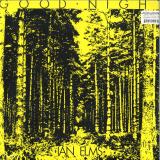
Ian Elms’s cult isolationist synth masterpiece Good Night returns via Dark Entries. Originally released in 1982, Good Night blends Berlin school minimalism and BBC Radiophonic weirdness with the aesthetics of then-nascent DIY punk electronics throughout its fifteen short tracks. According to Elms, these pieces were composed in two broad but interrelated modes: pieces with voice and synthesizer, which are obliquely narrative, and instrumental synthesizer pieces that aspire to capture fleeting emotions. Ian met with producer David Hoser at Octopus Studios and they began constructing pieces using a Polymoog Keyboard 280a, sampled drum tracks, and Elms’s synthesizer. On “The Street Enters the House”, live drums lurch along with skeletal motifs while Elms’s elliptical lyrics evoke domestic discontent. “A Light Moves Across Curtains” features metronomic pummeling and icy strings buttressing the scant cryptic lines from Elms. Instrumental gems like “Goodnight” and “Surrounded by Trees” are built around detuned riffs in round-like structure, both drifting and static like the motion of waves. With original pressings fetching three digits – if you can even find a copy – this reissue is essential listening for fans of John Bender, Transparent Illusion, and the early 80’s DIY cassette scene. Each copy of Good Night comes with a postcard featuring a photograph and notes by Elms. “This record is intended for anyone who by accident or design spends most of their time alone (whether in the body or in the mind).” – Ian Elms.
out of Stock
Last delivered 3 months ago available to reorder, subject to availability
"Love it! Electronic wonkiness at its finest" - Richard Norris (The Grid)
TEA, CAKES AND THE (WO)MAN MACHINE
Curtain Twitcher could only have emerged from Sheffield.
A female electronic duo whose corrupted downtempo post Balearic chug pulses and wobbles, throbs and twitches - full of fat noises and bolshy Moogery.
It's human and appealingly analogue. More Delia Derbyshire's Radiophonic Workshop than DAF, More Tangerine Dream than Depeche Mode. Not your average bloketronica.
Frankly this music doesn't behave itself in any way you might expect. Plugged in post rave pop can be far too orderly. Music should be messy. Even on occasion revealing a tune your mum could hum.
"Leap The Dips" emerged from machine jamming with a creative freedom that only comes from friendship. That friendship is a musical one but it's also real and genuine: "We’ll talk about pretty much owt if you provide the tea and cakes".
funcionário delights in the freedom of creating freeform music for the first time in his career. On “horizonte”, he loosens the reins, his sound follows a wavy, organic structure rather than a rigid, formal one. If it feels freer and more colourful, that’s because it truly is.
Eight years ago, when we first encountered his work, he was composing soundtracks for imaginary video games and crafting sonic landscapes that felt like destinations for sci-fi anime characters. With “Cavalcante” (2022), he broke away from that past. It marked a turning point, he was ready to explore a “fourth world” in both sound and concept. The feedback was overwhelming.
Three years later, “horizonte” marks another evolution. He sends us music regularly, but this album stood out immediately. It felt right: more synth-driven, more open to improvisation. As he put it: “It’s like using oil pastels for the first time and discovering new possibilities. In a way, I’ve found new ways of creating using the same colours.”
Listening to horizonte is like waking up from a dream. Again and again. The opening track, “nascer”, suggests a new dawn, but it’s in “pássaros” that the vision fully takes flight: less processed, more raw, yet still detailed and expansive.
Finding new ways with the same colours has been his quiet mission all along. What’s new here aren't the tools, but the feeling. The movement. The invitation to travel with him. You can hear - and feel - his sense of wonder. Every sound radiates joy. Every moment sparks a new thought. The music moves quickly, but breathes slowly.
Tracks like “renascer” and “o caminho do regresso” echo the spirit of late-70s/early-80s Vangelis, in deep reverence. And just as you approach the end, “fantasma” arrives - a stunning closer, reminiscent of Eno’s “An Ending”. By then, it’s clear: the “fourth world” is behind him. funcionário has moved on. To where? We’re about to discover.
out of Stock
Last delivered 9 months ago available to reorder, subject to availability
The word "amateur" originates from the Latin word "amator," meaning "lover" or "admirer". This Latin term is derived from "amare," which means "to love". The French adopted "amateur" from Latin, and the English then borrowed it from French, initially retaining the sense of someone who loves or is devoted to something. Over time, the English usage of "amateur" also developed a meaning related to a lack of professional skill or experience. How did a word derived from love become a slur? Is love really so defenseless? They say love conquers all, but in reality isn’t love quite ridiculous? It has no intention, no motive, no agenda. How could it possibly prevail? It can’t be bought or sold, or so they say.Its mere existence can't be proven or even measured. What an impossible thing. Trying and failing, time and time again, no wonder cynicism always seems to win. I see “amateurism” as a delighted, even foolish, protest. Protest against everything. Of what’s expected of someone, or expected of someone to desire or strive for. To be elite, to be expert, to be professional, to be a master, to excel and succeed. Where’s the joy in that? I just want to have fun. I want to want. I want to love. And keep doing it, forever. I want to have fun, even when it’s tiring and sometimes even heaven is boring as hell. I want to be bad. I want to do my own thing. “I vant to be alone”. I want to be someone so dedicated to their passion that it starts to seem like there’s something wrong with them. All the way. We can take it all the way, and never get it back. ” - Molly Nilsson Amateur is the 12th studio album by Molly Nilsson. Deep in the teeth of a career that threatens to tip into something resembling a “legacy,” Molly Nilsson celebrates with an album recorded instinctively, quickly and bursting with so many moments of emotional brilliance and clarity it may be her greatest yet. Hers has been a career spent reaching out, perennially powerful in her earnestness, a warrior ridiculously defenceless and armed with a glittering sincerity. Shearing herself of the machinations of the music industry, recording at home, writing direct to the heart. Amateur is a jubilee for losers. A treatise in 13 songs, Amateur states clearly that we should live our life with eternal curiosity, offers us an open hand of comradeship out of the rat race. The songs on the album are both some of the most personal of Nilsson’s career and the most anthemic. First single How Much Is The World asks us to re-evaluate value in the face of a Neo-liberal system squeezing the life out of our loves. Pulsing opener Die Cry Lie satirises the commercialisation of emotion in the form of a shout-along diss-track. With a pounding rhythm track held down by gorgeous chord changes, heartbreaker Valhalla carries the torch for the main themes of the album: never growing up, making mistakes with kindness, moving on. When the drums crash in on the line “It’s going to get better now, you’ll see, going to be much better off without me” there is a world of feeling swirling about in the vocal delivery. One reading of the track might be that it’s a break up song but the subtext is classic Molly Nilsson: by living truthfully, making mistakes, we’re active agents against the myriad oppressions of the world. All The Way takes the theme for a run into the eternal sunset. It’s a manifesto for living fully. “Take it all the way, and never get it back” - it’s the process that’s the important point. The journey not the destination. Big Life, follows on like a part 2: An ode not only to Molly Nilsson’s career of endless gigs, endless connections with people, it’s a massive ode for following your dreams, doing it yourself. Closer The Bitter End is a powerful anthem for friendship, another definition of love infused in Nilsson’s work, A beautifully poignant ode to comradeship til the end, it seems to be the songwriter approaching aging, approaching life’s inevitability with the same vigour and earnestness, the same love of life she enjoyed at the onset of her career. There are moments on Amateur shrouded in reverb, slightly out of focus, forcing the listener to step deeper into the Mollyverse.. Nilsson’s open-armed beseeching to the world permeates every beat, every chord. These are songs exploding with life: the chunky, aggressive bassline on the punker Get A Life can’t hide its massive, catchy chorus. The sweeping Swedish Nightmare might be a tongue-in-cheek self-reference, but at its heart it’s a song about the duality of living life large, what is a dream, what is a nightmare? Molly Nilsson says you can’t have one without the other, and why would you want to? Here’s to making mistakes.
out of Stock
Last delivered 11 months ago available to reorder, subject to availability
For the third time, they had been sent to this forsaken land. It was neither east nor west, neither north nor south. They said it had once been a kingdom, somewhere in the heart of the old continent, something they had pieced together from the ruins scattered across jagged hills sprouting here and there from the ground. Everyone else went islands, dived to the seabed, drilled at the poles, and explored waste in the east, but these two were sent here again, as if someone were trying to get rid of them, just to keep them out of the way.
What were they really supposed to find here? They wandered the land, aimless and bored, like the last bird watching from the sky. Sometimes they landed, took samples for the lab, and then caught a nap by the river bend. They avoided the hot fumes of active volcanoes. Compared to those on other planets, these were more like small, whispered fumaroles, but even so, they had to be careful.
They felt as if they had stepped into a scene from a movie they had once glimpsed. A mad and exhausted conqueror screamed and wildly flailed his arms on a ridiculous wooden raft in the middle of a raging river. It was somewhere in the south of this planet, deep in the jungle. There were many movies made on this planet, but only fragments of the reels survived, and this one quickly became iconic.
When a trumpet sounded in the distance and flooded the land with a booming murmur, when all the fumaroles hissed together, and when wind rolled in, covering the land in heavy fog, both of them knew the third expedition would not be like the previous ones.
At that moment, Kult Masek and Petr Vrba were flying over the land that was once called České středohoří.
out of Stock
Last delivered 7 months ago available to reorder, subject to availability
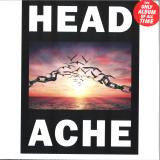
Thank You For Almost Everything is the sophomore album for Headache, a collaboration between writer and poet Francis Hornsby Clark and music-producer Joseph Thornalley aka Vegyn. This new album follows on the surprise underground success of their debut: The Head Hurts But The Heart Knows The Truth (released 31 May 2023) releasing on Vegyn's own PLZ Make It Ruins label. The debut record has streamed over 19.4 million times on Spotify alone and sold over 8,000 physical copies worldwide. The debut gained its popularity entirely organically with zero marketing or PR spend. Since its release, Headache has built a dedicated global fanbase, with several fans even going so far as to get lyrics or the project's logo tattooed on themselves. Thank You For Almost Everything continues the original's distinct style of Trip-Hop / Downtempo Electronica but combining with its own unique (and now imitated) AI-voiced spoken word. For this new album, Headache steps away from the hum-drum of Blighty and instead focuses his gaze to sunnier shores. Recalling personal histories of ruffled hair and school cafeterias, ancient unsolved Albionic riddles, Rome's changing seasons and its poignant graffiti, arguments with girlfriends at luxury hotel beachfront restaurants, and what it truly feels like to be alive in this inscrutable but beautiful world. The project features a further collaboration with artist Cali Thornhill DeWitt who returns to design the packaging and cover for this new album. This double 12" vinyl release, like the first, includes the instrumental versions exclusive to the vinyl version. The album, mixed and mastered by Margo Broom at RAK Studios, will use a similar surprise drop strategy as with the first album. "Follow up to the 2023 debut that gained its popularity entirely organically with zero marketing or PR spend. "Total Streams Since Release (31 May 2023): 19,413,173 (Spotify alone) "Previous vinyl album sold over 8,000 physical copies worldwide. "2nd Disc contains instrumental versions exclusive to vinyl format
out of Stock
Last delivered 9 months ago available to reorder, subject to availability
Tell me something that makes a difference’ demands Gaia Weiss in Tenashee’s debut single. Something that immerses crisp melody into stodgy bass, collides warm dub with icy sound design, all the while slowly expanding like a supernova. ‘Tell me something’ takes the sounds and styles of the past and places them in a gravity-free future, while evoking an ethereal and precise atmosphere.
Gaia Weiss is an actress - not a singer by trade - and summons Charlotte Gainsbourg & Brigitte Bardot to deliver the spoken words as a fractured monologue, guiding us through splintered visions, and detuned chord progressions, in pursuit of the seemingly unattainable; ‘something that can make a difference’.
With this six-chapter journey on the newborn Street Cinema label, Tenashee (DJ Tennis and Ashee, Manfredi Romano and Joseph Ashworth) have crafted and refined - like two artisans from another era - a unique creation: a creature that reconnects electronic music with complexity and richness, fully aware of hyper-contemporaneity, yet capable of resisting surrender to it.
“Blink To Check It’s Real” featuring artist Campbell King - poet and beautiful soul - immediately immerses us in an electronic reality check, with 90s-inspired tweaking and glitching, all woven together with a poem from Campbell that contrasts the dizzying intensity of lust and connection with the comfort of being able to ‘loosen their grip’ and ‘make it safe.’
In ‘I Can See Now,’ Aurelia Ray (the stage name of pop-music-writing powerhouse Caitlin Stubbs) evokes a sense of serenity, pure love, and trust within a refined, spacious piece of minimalist electronica. “Blindsided” is a journey through pure, airy abstraction, a dance floor companion to the glacial trip-hop instrumental “Cold Logic”.
Finally, in “Memories,” the last track in the setlist but actually the first song the duo worked on, conceived and developed five years ago in 2020, the voice of Chinese German artist Mona Yim transports us to a place that is both emotionally introspective and intense, balancing on the edge between desire and reality.
“You should know where I go when I dream,” she states.
Over the course of five years, through exchanges, writing sessions, and fine-tuning in Paris, London, Saint Martin, and Ibiza, the world evolved, but Tenashee’s musical mission remained unchanged. The mini-album reflects the musical backgrounds of its two creators, their unique sensitivity to the present, and their desire to challenge each other with sharp, emotional, yet weightless styles and sounds. It is no longer just DJ Tennis; the successful DJ touring worldwide, organising events, and founding influential labels like Life & Death; nor only Joseph Ashworth with his scientific approach and creativity as a
producer and writer in the competitive world of pop; nor Ashee, with his releases on Circoloco and Aus Music. No, Tenashee is something more.
It is a duet searching for a thread that connects electronic music—past, present, and future—through experimentation, craft, and artistry. The moment has truly arrived for Tenashee to ‘tell us something.’
out of Stock
Last delivered 10 months ago available to reorder, subject to availability
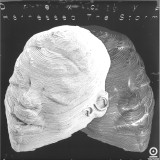
After the re-release of Drexciya's 'Neptune's Lair' and Transllusion's 'The Opening of the Cerebral Gate', 'Harnessed the Storm' is the third album in Tresor Records' great Drexciya reissue program.
Originally released in 2002, 'Harnessed the Storm' was conceived as the opening chapter of the legendary Seven Storms - a series of seven albums created within a single year and released via several labels under different names. 'Harnessed the Storm' was the sole one in the series credited under the main Drexciya project.
The album, which is considered to be one of the pair's darkest, was produced in a time of creative outbreak and emotional turbulence. The duo's confidence was at a peak, new techniques revolutionized musical production, but the duo also had to face Stinson's severe health issues. This led to a radical shift of pace in producing and releasing music. For the Detroit pair it was time to move on from their ground-breaking past. It was time for some shape shifting and wave jumping to occur, in Drexciya's terms.
out of Stock
Last delivered 6 months ago available to reorder, subject to availability
In May, fans were treated to the first new music from Trentemøller since 2022. A new single, "A Different Light," showcased a stunning blend of prismatic space rock and folk. For anyone wondering if it foreshadowed the release of a full-length, Dreamweaver will drop in September, on Friday the 13th.
Featuring 10 tracks that traverse Trentemøller's many musical strengths, Dreamweaver also represents an obvious artistic leap, treading new ground while retaining the overall plot. Tracks featuring vocals come courtesy of of Iceland's Disa, who has been in Trentemøller's fold since the Memoria tour.
Dreamweaver's nylon string-led opening track, and first single from the album, "A Different Light," contains many of Trentemøller's trademarks: exploring dichotomies, musical shadowplay, Nordic frigidity, and warm waves. It opens the door for the steady, hypnotic "Nightfall," with its tetherless vocal, wistful guitars, and early morning desert chill. The third track in the opening trifecta, "Dreamweavers" finds its footing with a percussive soft trot, which starts after what feels like a shortwave radio scan in search of the right chords, eventually dialing in a weightless voice. Ostensibly keeping a ruminative pace with the previous two tracks, the song and, by extension, album soon opens up as the rest of the elements drop into place with a grand, luxurious burst.
Dreamweaver is about to enter its next phase. With the hatch blown off of the portal, the noisy "I Give My Tears," driven by its glissed and fuzzy bass line, pours into the void. It's followed by its sibling, the most chaotic track on Dreamweaver, "Behind My Eyes." Arriving as a piece of noise rock pandemonium, "Behind My Eyes," can't be contained in its plush vault. A whip-crack snare and convulsing guitars smash against each other in the song's verse chamber. The tension builds, as the particles collide, pushing past the point of critical mass, kicking off the chain reaction which is the chorus. At times it harkens back to the proto-gaze tracks that gave birth to dream pop, at others it newly defines what that is. There's no time to contemplate it, though, as the song disintegrates in a microphonic feedback instant.
A respite follows with the somnambulistic pair of "Hollow" and "Empty Beaches." Then, a moment of intensity returns as the soaring textures and tribal drum bursts of "In A Storm" take control, before being taken out with the ambient slo-core of "Winter's Ghost" and "Closure." This diptych wraps up an album which certainly feels on-script for Trentemøller, but is also much more psychedelic than previous offerings.
Dreamweaver will be released on Trentemøller's own In My Room label. It is an exceedingly immersive experience, bound to release any dormant hallucinations you may be harboring.
out of Stock
Last delivered 11 months ago available to reorder, subject to availability
Nils Frahm has unexpectedly confirmed details of a new collection of solo piano music, his first album since 2022’s three-hour Music For Animals. Day will be released by LEITER on March 1st, 2024, and it will be available on limited edition vinyl as well as via all digital platforms. Recorded in the summer of 2022 in complete solitude and away from his studio at Berlin’s famed Funkhaus complex, it is preceded by a single, ‘Butter Notes’, out on January 19. Day may come as a surprise to those who, over the last decade, have watched Frahm shift slowly away from the piano compositions with which he first made his name in favour of a nonetheless still-distinctive approach that’s considerably more instrumentally complex and intricately arranged. In addition, in 2021, having spent the early part of the pandemic arranging his archives, he released the 80 minute, 23-track Old Friends New Friends, a compilation of previously unreleased piano music intended to enable him to ”start over” with a clean slate. Judging from the extended, ambient nature of Music For Animals, it proved a successful gambit, but Frahm has never been able to resist returning to his first love, and those who enjoyed earlier acclaimed albums like The Bells, Felt and Screws will once again revel in Day’s familiar, personal style. Day, which contains six tracks, three over the six-minute mark, is the first in a pair of albums Frahm has lined up for 2024. In keeping with their nature, however, he won’t be making a song and dance about the release. Instead, he’ll resume his ongoing world tour, which has already included fifteen sold-out dates at Berlin’s Funkhaus as well as a show at Athen’s Acropolis. It will continue with shows all over the world, among them several sold-out dates at London’s Barbican in July 2024, where he previously curated a weekend of music, film and art, Possibly Colliding, in 2016. The album is best enjoyed in the manner in which it was recorded, in the intimacy of a peaceful, cosy room. There are muffled pedal creaks on the cyclical, quietly jazzy ‘You Name It’ and, during the palliative ripples of ‘Butter Notes’’ arpeggios, the sound of dogs barking in the streets outside. The compassionate, hesitant ‘Tuesdays’ and emotionally ambiguous ‘Towards Zero’ linger with the poignant persistence of Harold Budd’s earliest work, while ‘Hands On’ is a sometimes brighter, airier tune that sets its own, deliberate pace, and, as he has on occasions before, ‘Changes’ sees Frahm employing elements of his instrument’s construction in a ‘prepared piano’ fashion. Characterised by its confidential mood, Day confirms that, while Frahm is arguably now best known for elaborate, celebratory concerts calling upon an arsenal of pianos, organs, keyboards, synths, even a glass harmonica, he’s still a prolific master of affecting simplicity, tenderness and romance.
out of Stock
Last delivered 11 months ago available to reorder, subject to availability
Following the cult success of the first two EPs and debut album Cinema 3000, Common Saints returns with the highly anticipated EP, Equinox - a release that"s already generating excitement within the Common Saints community. The record blends the signature soul, funk, and psychedelic influences fans have come to love, but this time with a livelier tempo and renewed energy.
out of Stock
Last delivered 11 months ago available to reorder, subject to availability
Anushka Chkheidze + Robert Lippok’s »Uncontrollable Thoughts« on Morr Music is the duo’s debut joint release. The Netherlands-based Georgian composer and the German sound artist from Berlin first met in 2019 in the context of a workshop programme that took place in Tbilisi, and later worked with Eto Gelashvili, Hayk Karoyi, and Lillevan on the massive »Glacier Music II« music and book project, released in 2021. This led them to engage in a less conceptually driven form of musicking and real-time composition that corresponds with their respective environments. They draw on traditions such as minimal music or late 1990s and early 2000s electronica to integrate subtle beats with elegiac organ drones, playful melodies with lush textures. The first document of an ever-shifting intergenerational dialogue, »Uncontrollable Thoughts« is a product of mutual listening outside time.
Though Chkheidze and Lippok had access to professional studios, they chose to rent a simple rehearsal space, equipped with only the bare essentials—bass and guitar amps as well as a small PA—to maintain immediacy in their working process. The music they made together corresponded to and drew on the respective possibilities and shortcomings of this studio, much like their collaboration in general is characterised by the care with which they approach each other's talents and ideas. While both had loosely defined roles—Chkheidze was responsible for the free-flowing beat programming and the evocative distortion came courtesy of Lippok, for example—they individually contributed in different ways to their joint process, which is as free of hierarchies as it is limitless. Hence, the duo’s focus on spontaneity and out-of-the-moment emergence makes them organically move beyond tried and tested conventions, resulting in music that seems to suspend time altogether.
When the first chimes on »Bird Song« announce a piece that sets rattling kickdrums against a backdrop of layered drones and rhizomatically entangled melodic elements, it becomes clear why »Uncontrollable Thoughts« carries this title: The album follows the constant detours of the subconscious of its makers, letting them explore moments of ecstasy such as on »Rainbow,« melancholy with »Field,« and the interplay of suspense and release through the ten-minute-long title track. But the different pieces also tie into one aother in various ways. The dirge-like organ drones on which »Rainbow Road« ends reappear in the beginning of »Uncontrollable Thoughts,« much like Chkheidze’s gentle yet emphatic piano chords on »Field« seem to provide the starting point from which the artist develops the striking motifs of the final piece »Opening«, whose title itself suggests that the record as a whole can and should be enjoyed as a loop. All this creates a unique, idiosyncratic temporal logic.
While there is much that sets Chkheidze and Lippok apart as solo artists, the major shared leitmotif in their respective bodies of work is the sonic engagement with space. »Uncontrollable Thoughts« is hence best understood as an extension of this practice; as an album that maps the geographies of their minds in motion, tracing musical movements as they melt into each other.
out of Stock
Last delivered 6 months ago available to reorder, subject to availability
There is a new artist from Japan followed by the name Kakeru who is giving his Shaw Cuts debut with ãRaw CourageÒ, telling the story of an emperor besieged by an army who then entrusts his child to the Black Dragon Clan heading off to a dangerous journey.
An attempt to usurp the Ming Emperor's throne by the sinister martial artist simply known as ãold monster" and his armies results in most of the palace being massacred. ãQuagmireÒ and its vibrant percussive pattern carried by a heavy broken kick and a driving bassline help the emperorÕs infant son to escape and put in care of the Black Dragon Clan.
En route they are attacked by government forces but rescued by two knights. They prove to be a valuable addition to the party in subsequent encounters with their pursuers. ãMirror ForestÒ and its laid-back atmosphere, mysterious vocal snatches and shining pads carried by an expressive drum pattern help the travellers parrying every sneaky attack on their journey.
Trying to head to the White Dragon Clan in order to seek for help, the squad has to masquerade and take several battles, always protecting the baby in tow. The razor-sharp percussions, corrosive bass and thrashing kick of ãSwayingÒ tremendously supports the warriors in each fight.
Finally they make it to the temple of the White Dragons where they show their Black Dragon seal as a sign of solidarity. But all of a sudden the mood changes. ãBroken BubblesÒ and its menacing atmosphere built up by a monstrous sub bass, reduced but impactful drums and subtle synth elements underline the potential threat. Did they walk into a trap? Is there enough energy left for one big fight? Raw courage is vital now.
out of Stock
Last delivered 9 months ago available to reorder, subject to availability
In between the folds of ceremony and commonality lies a perennial spring of musical expression.
A statement along the time continuum, or a testament to the resilient resourcefulness embedded in that truth, forms the philosophical approach of this album – the first outing of Dídac.
Studying an extensive archive of instruments, artifacts, and field recordings at the Musée d’ethnographie de Genève—a space steeped in folkloric gesture – Dídac encountered a cosmos of liturgical music and folk song. Anchored in reverance for tradition and transformation alike, this album navigates the old-world Mediterranean lore through a post-modern ambient lens, threading drone, gentle rhythm, electroacoustic textures and the crude tactility of archival material into one woven tapestry.
Under the guidance of Dr. Madeleine Leclair, Dídac was invited to work within one of the world’s most extensive ethno- musicological archives—L’AIMP. In the saturated basements and tape-lined backrooms of the museum, he submerged himself in the sounds of ritual and rural life: wax cylinders from the Eastern Mediterranean, tapes of liturgical hymn, the worn edges of communal song.
In a makeshift studio on the fourth floor of the museum, he sifted through the hours of material he collected, gradually discovering that the archive was no static source – It did not dictate; rather, it served as a companion—offering not answers, but questions. Not a beaten track, but a cluster of sonic clues and riddles. Samples do appear occasionally, tenderly interwoven into the dialogue of the songs. In Dídac’s self-titled debut, the past is not worn as ornament or kitsch; it is listened to and responded to. The museum, its archives, and the visit to Geneva became a foundational culisse of sorts, igniting a myriad of rough cuts and improvisational outtakes.
Dídac, or Diego Ocejo Muñoz, was born in Madrid in 1994 to a family of both Catalan and Castilian origin.
Brought up in a religious household, the influence of the Catholic Church innately shaped the social fabric, schooling and daily life. This lingering dominance led the adolescent Diego into a path of rejection of everything sacramental, promptly resorting to subversion in the shape of grafitti, skateboarding and underground music. Only later in life, after a rigorous venture as an acid and electro producer, the Church re-emerged before him in new light, invoking a deep fascination for its mysticism, iconography and choral tradition.
Spain in general and Catalonia in particular, has long served as a crossroads of the eastern–western Mediterranean continuum, with many of its cultures sharing aspects of way of life and ceremony. At the MEG, Diego found himself puzzled with this realization, resulting in a sonic amalgamation that reaches farther away from the rugged mountains of Catalonia than you might perceive at first encounter.
The deeply embedded memory of rite and public ceremony, religious hymn and landscape—sieved through the undercurrent of personal re-emergence, forms the emotional topography of this album. The record does not trace this landscape; it inhabits it. Its repetitive mysticism and ambient, wide-eyed gaze could possibly evoke (perhaps redundant) comparisons to artists such as Dimitris Petsetakis, or Popol Vuh’s late 70’s cinema scores.
The delicate lines between the sacred and the secular – between memory and re-invention – serve as a cipher to understanding this album in its entirety. Titles like Malpàs Mines or Pantocrator’s Portal Outro nudge toward a folkloric and devotional bedrock—places where labor and spirituality coexist, where names preserve both dust and veneration.
Nevertheless, this is far from mere nostalgia. It is a reclamation — singing alongside the spirits of the past, nurturing what still hums beneath the soil. It is an intimate reflection on tradition, rebellion, adolescence, ceremony and fantasy – a pastoral contemplation on what once was and what is to be.
out of Stock
Last delivered 10 months ago available to reorder, subject to availability
CENTRAL's new release is already here! On the B-Side, DJ KAWASAKI has edited the extra-hit “Samurai” to make it an even hotter dance track!
Both sides of the album are perfect for the field!
CENTRAL, a salsa band that has suddenly gained attention after releasing two singles and a full-length album last year, but is actually a group of seasoned salsa veterans, has already released a new single! This time around, CENTRAL has released a cover of “Brazilian Rhyme,” one of Earth, Wind & Fire's many classic songs that still remains a dance floor favorite, with a Latin arrangement that is full of CENTRAL's signature style. The groovy bass, shimmering electric piano, percussion, and outstanding horn arrangement make you want to dance and scream, “This is CENTRAL! The B-Side features DJ KAWASAKI's edit of “Samurai,” a definitive mellow salsa track that has now become a WANT-requested item from all over the world, sublimated into an even hotter dance track!
This summer, dance hard to CENTRAL's salsa!
out of Stock
Last delivered 11 months ago available to reorder, subject to availability
Trystero returns with their new album Humming Fuzz on Knekelhuis — a kaleidoscopic voyage deeper into the band’s expanding cosmos.
Built on plunging basslines, acid-drenched loops, and spiraling kraut-inspired guitar textures, the record drifts between hypnotic repetition and free-flowing, hallucinatory songwriting. It echoes the visionary spirit of Psychic TV and the genre-blurring universe of Weatherall, while carving out a raw, magnetic space of its own.
Recorded once again on a canal barge in the North of France, Humming Fuzz feels like a natural evolution from their debut Sfumare e Vedere — denser, more alive, and charged with electricity. Now expanded with Nelly on bass and Alexia on vocals, Trystero channels this expanded energy into their wild, expressive live performances, soon to ignite audiences on their upcoming tours.
out of Stock
Last delivered 11 months ago available to reorder, subject to availability
Hailing from Raw Culture, Anna Funk Damage returns with his third release on the Roman label, delivering a record as fierce as it is intimate. Tarantola was born out of a winter suspended between contrasting emotions – melancholy, anger, love, confusion – distilled into a sound that transforms personal fragility into collective energy. There’s no pursuit of perfection here, but rather an urgency running through the veins, taking shape across supersonic punk, wave, ambient and industrial.
Each track is an emotional fragment, a bite that leaves its mark: from the electric tension of Vivere Distaccati to the feverish rush of Trasmissione, from the rawness of Decadente to the hypnotic title track Tarantola, which embodies the beating heart of the album. Side B unfolds into more nocturnal and intimate landscapes, from Chiang Mai to the disenchanted sincerity of Lavoro Troppo, closing with a party that carries the bittersweet taste of reality.
Tarantola is a journey into the chaos of human emotions, an album that doesn’t just narrate but pulls you deep into its sonic labyrinth, giving noise back its vulnerable yet powerful soul.
Following the success of Highly Refined Pirates' forward-thinking guitar gymnastics and Menos El Oso's groundbreaking glitch rock, Seattle's premier pop revisionists Minus The Bear dug into some of rock music's most ostentatious years for inspiration for their 2007 album, Planet of Ice. The title alone conjures images of Yes's Relayer album art, and the influence of the elder statesmen's symphonic scope can be felt throughout Planet of Ice's lush and intricate arrangements. You can also hear the band channel the ominous instrumental interplay of Lamb-era Genesis on "Dr. L'Ling", the deceptively savvy musicianship and pristine production of Steely Dan on "White Mystery", and the tightrope walk between ethereal space and pre-metal riffage of Pink Floyd's "Echoes" on "Lotus". Not that Minus The Bear completely abandoned their earlier style_elements of Menos El Oso's sample-driven technique can be heard on the lead single "Knights". But the heart of the song ultimately belongs to the haunting Fripp-esque guitar lines spliced between verses. After being out of print on record since 2010, Suicide Squeeze is proud to reintroduce Planet of Ice's creative marriage of classic motifs and modern musical wizardry with a vinyl remaster courtesy of Bernie Grundman.
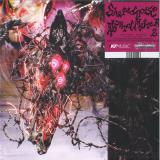
Arriving two years after the first chapter, Absurd Matter 2 isn’t just a sequel, it’s an evolution, redrawing the boundaries established by its acclaimed predecessor. The Berlin-based Italian producer tempers his confrontational sonics with rare moments of introspection, shifting seamlessly between blown-out noise, warped hip-hop, mutant club experimentation, and weightless ambience. Textures disintegrate and reassemble, rhythms flex and crumble, and every detail balances on the edge of fantasy. It’s a poetic, layered response to Nino Pedone’s changing physical reality: the gradual hearing loss and perceptual renegotiation triggered by Ménière’s disease, which struck him in 2022. At first, the experience felt like betrayal, a brutal disconnection from the very sense that had shaped his life. But over time, the disorientation turned into a strange kind of focus. The silence between sounds became as expressive as the sounds themselves.
The first Absurd Matter was a visceral reaction to trauma; the second is more reflective – an ambiguous chronicle of sensory recalibration. Pedone doesn’t represent his altered inner reality through extremes, but through depth, zooming in on illusory distortions, tense rhythmic fluctuations, and fragmented sonics. Dense, immersive, and mystical, the album mirrors Pedone’s evolving relationship with perception itself.
Tinnitus-like feedback wails and noir-ish strings introduce “Repeater”, making it immediately clear that Pedone is painting a more delicately finessed image this time around. Fleshed out by raps from cult MCs billy woods and E L U C I D, the track is marked by subtle, sophisticated contrasts: the blurred, inverted rhythms that couch Armand Hammer’s haunted back-and-forth, and the glitchy interference that offsets the lavish orchestral phrases. Backwoodz associate Fatboi Sharif lends his Lynchian drawl to “Bandage Chipped Wings”, grounding Pedone’s lysergic rhythmic distortions with syrupy, horror-inspired couplets. Pedone also invites discomfort into “Crash Landing”, with droning, metallic tones that contradict South Central rapper ICECOLDBISHOP’s elastic flow. “Bitch, I don't give a fuck about anybody,” he squawks over Pedone’s incongruous rasping textures and time-warped beats, “cash out at any party.” Working alongside London’s Loraine James on production, Pedone reunites with Moor Mother on “I Saw The Light”, blending James’ soft-focus atmospherics with soundsystem-damaging, overdriven bass hits and rusted percussive snips. Moor Mother’s assertive words hover over the wreckage, tightening Pedone’s themes of overstimulation and altered awareness as they stutter and veer off course, vanishing into the backdrop.
Contrasting his more pensive experiments, Pedone’s dancefloor deviations are more concentrated on Absurd Matter 2 than ever before. He torches a stuttering dembow structure on “X”, obfuscating the rhythm’s familiar energy with disturbing audio hallucinations. On “Splintered”, he reunites with Kenyan prodigy Slikback, mangling neon-lit trance arpeggios with dissociated trap rhythms. He sharpens his skills to a fine point on “Oblivion Step”, observing 2- step through a lens of distortion and personal abstraction, shaking blipping synth leads over neck-snapping drums and counteracting the momentum with airless sci-fi soundscapes.
Perhaps the album’s most surprising moment arrives with “Viel”, which features vocals from Los Angeles-based composer Kaitlyn Aurelia Smith. Together, Pedone and Smith chance upon their notion of dub techno, fogging synth stabs and ghostly vocal traces into eerie harmonic distortions. On some level, it’s almost pop music, a far cry from the bleak dissonance of Absurd Matter and a hopeful way to reframe turbulence as transformation. Absurd Matter 2 doesn’t simply document a process; it enacts one. It doesn’t offer clarity; it invites disorientation. It’s not a map of the labyrinth, but a foghorn piercing the darkness.
out of Stock
Last delivered 10 months ago available to reorder, subject to availability
A Place In My Memory Is All I Have To Claim is the new album by Australian atmospheric pop trio Hydroplane, the storied 'offshoot' formed by three quarters of independent pop group, The Cat's Miaow. On this, their first music after two decades plus of radio silence, Andrew Withycombe, Kerrie Bolton and Bart Cummings return to the gentle, close-quarters musical world they shared around the turn of the century.
Recorded during 2024 in Melbourne and Ballarat, A Place In My Memory… picks up the thread Hydroplane set down with its precursor, 2001's The Sound Of Changing Places, though you can hear echoes of their other releases, too, with Withycombe noting a through-line from the group's 1998 "Failed Adventure" single. There's little quite like A Place In My Memory…, then or now, though. Maybe you can draw some connections between Hydroplane and their sister group, The Cat's Miaow, while fellow travellers might include Empress, The Ah Club, and further back, Young Marble Giants, Veronique Vincent (the muffled, ticking drum machine also makes me think of Robin Gibb's Robin's Reign).
There's also an umbilical to the bedroom-crafted electronica doing the rounds in the late nineties and early noughties. Hydroplane hint at this through their approach to songwriting, which often builds creatively around loops as structural devices. Through all this, the trio achieve an effortless, organic weightlessness across these nine lovely songs. Many feature Bolton's clear singing voice, drifting along, while guitars, keyboards, drum machines and loops tickertape away. The constituent parts fit together, but they also have a curiously detached quality - think of abstract cloud formations sharing the same sky.
Hydroplane and The Cat's Miaow often dealt in emotional ambiguity and uncertainty, and the uncertainty of the nostalgic. This was always one of the most appealing facets of their music, and A Place In My Memory… is thus named perfectly. I couldn't dream up a better title for the album and its reflections on history, lived experience, and the inevitable tangle between these two phenomena. These reflections variously address such concerns as human cruelty, flight, space travel, adventurism and spiritualism. There's also "To the Lighthouse", not a direct reference to the Virginia Woolf book, but a great title, nonetheless. (They've always had excellent titles, often borrowed, for songs and albums.)
A beautiful collection of drowsy, sleepy pop, humble and quiet, but resolute in its craft, A Place In My Memory Is All I Have To Claim is dream work in practice; a lovely reintroduction. Welcome back, then.
out of Stock
Last delivered 11 months ago available to reorder, subject to availability
‘Icon’ is an overused word when it comes to describing singers and musicians, but when it comes to Nina Simone there are few artists that the word describes more accurately. The ‘High Priestess Of Soul’ is surely one of the most iconic singers of the 20th century, and one whose fame and acclaim stretches far beyond conventional black American music circles.
Nina Simone has featured on Ace and Kent CDs before but this is the first time she’s had one all to herself. “Let It All Out” is the first and only Nina Simone collection to draw repertoire from every label she recorded for between the late 1950s to the late 1970s.
Not a traditional ‘Best Of’ or ‘Greatest Hits’ package (although the performances included here ARE among her very best, and do include most of her Greatest Hits!) it is a singles collection that presents Nina Simone’s soul and R&B-slanted 45s in chronological order. Invariably they are the definitive versions of the songs, whether she recorded the original versions or not.
As well as almost all of her American pop and R&B chart hits from 1960 onwards, “Let It All Out” also contains all of Simone’s UK chart hits from the same period – several of which were more successful here than they were back home, including both versions of her biggest British hit ‘Ain’t Got No; I Got Life’, a UK #2 that did not chart at all in the US as was the case with the belated UK Top 5 hit ‘My Baby Just Cares For Me’ which also made no chart impression on its home turf…
Carefully curated and concisely annotated, “Let It All Out” lets the listener in to two dozen of Nina Simone’s most celebrated singles. There have been many compilations of her works since she passed away 20+ years ago, but none that gets to the heart – and soul – of her catalogue in quite so direct a manner as this one does.
The most inspiring bands are the ones that can create a world around themselves that is about far more than just the music. The artwork, lyrics, sounds and ethos all merge together perfectly to create its own universe, a secret club. The Lovely Eggs are one such band. And against all the odds, 2025 sees them celebrate their 20th anniversary as a band! Stubbornly and heroically independent, The Lovely Eggs have forged their own path and have achieved mainstream success without ever compromising their DIY ethics. Released on their own label Egg Records, with eye watering artwork by Casey Raymond and hand packed in a black plastic bin bag on neon toxic slime green vinyl, this is yet another collectible release from a band who care as much about the art and ideas in their records as they do about the sound. "We had all these spare songs after we released our last album Eggsistentialism and we didn't really know what to do with them," explained Holly. "They just didn't seem to fit in with the vibe of Eggsistentialism but we'd recorded them and wanted to get them out there." "They're kind of a sketchbook of songs," added David. "They're not polished or laboured over but we thought it would be interesting to release them. It's why we called the record Bin Juice. These were songs we had thrown away. But hopefully people like going through bins collecting trash."
The Dead 60s seminal self-titled album gets a timely Deluxe edition reissue on Vinyl for its 20th Anniversary, on Deltasonic Records
“Back in the day, punk and dub weren’t just sharing space—they were smashing into each other headfirst. Late '70s Britain was a pressure cooker, and for kids like me, growing up between Brixton’s bass bins and the chaos of King’s Road, that collision was everything. Jamaican sound system culture met punk’s raw spirit in a haze of smoke, sweat, and feedback. It wasn’t about genre—it was about energy. Identity. Defiance. so when The Dead 60s came along, post-Britpop and post-bullshit, it felt like someone had dusted off the blueprint and run it through a battered old tape echo. These weren’t just lads with good taste—they understood the assignment. They took the DNA of two rebel cultures and mutated it into something that could stand tall in the 21st century. Dub-soaked, punk-fuelled, dripping with that Liverpool attitude. I remember first hearing them and thinking—yeah, here we go again. Not in a retro way, but in a real way. Guitars that cut like sirens in the night. Basslines fat and warm, straight out the Channel One playbook. Lyrics that painted the grey corners of Britain like CCTV poetry. It was the sound of youth under pressure. The sound of not fitting in—and not wanting to.
Their debut album dropped in 2005, and it hit like a flare in the dark. “Riot Radio” was a pirate broadcast from the concrete frontlines. “Control This” swaggered with menace and reverb. It was like someone opened a time capsule from the punky-reggae party and rewired it for a new generation.
Now, with this 20th anniversary vinyl reissue—complete with the full dub companion produced by Central Nervous System—we get to hear the bones and blood of it all. The dub versions pull the tracks apart and let the ghosts speak. Reverb, delay, space—it’s not just production, it’s meditation. Revolution slowed down to a heartbeat. It’s music that makes you move and think. What they’ve done here is more than remix a record—they’ve revealed its soul. That’s what dub does when it’s done right. And The Dead 60s, they got that. They weren’t tourists in the culture—they were students of it, shaped by it, and ultimately, contributors to the legacy. Liverpool’s long had a love affair with Jamaican music—you can hear it in the streets if you’re really listening. The Dead 60s tapped into that lineage, but they brought their own thing to the table. Punk's fire. Dub’s depth. Ska’s bounce. All filtered through a Northern lens and blasted out like protest graffiti. This 20th anniversary reissue ain’t about nostalgia. It’s a reminder. A celebration. A call to arms. Music like this doesn’t belong in a museum—it belongs on a system, shaking walls and waking minds. Crate diggers, completists, young punks, old heads—this one's for all of you.
So put it on and turn it up. Let the punk edge sharpen your thoughts, and the dub shake your bones ‘cos this isn’t just a reissue - it’s resistance on wax.....”
Lénok’s 'Langue of Tongue' is a descent. An unhinged pinballing down a realm of incomprehension and lunacy, a darkly psychedelic ego-death-spiral into a world of pure, deranged disquiet. It is, and this cannot be emphasised enough, a truly fucked up place. It comes complete with clearly marked borders delineated by its opening and closing tracks '(Entrance' and 'Exit)’. The message is clear: this is less album than zone.
There's no comfort to be found here. It’s like the inner monologue of some insectile, cyborgian abomination, something unfeeling and hostile, something that could only thrive in a mirror world that perverts light and sullies warmth. It's a netherworld: tracks jut out and stab like cold, craggy wastelandscapes, tangled meshworks of alienic transmissions bleed out into deformed knots of gurgling white noise, lacerations of sound roil and heave and claw as if imprisoned within oppressive waveforms.
‘Tongue’ is marked by a kind of wackiness, a demented slapstick that renders its darkness all the more sinister. Voices wail and taunt like schizophrenic spirits trapped between torment and cackling ecstasy. Tracks giggle and skitter as if populated by grinning, snaggletoothed shadows.
‘Langue of Tongue’ is recommended for the curious and advanced listener. This is music for whatever the opposite of escapism is — it’s REAL twisted. But sometimes morbid fascination takes hold. Sometimes you lift the rock, because you can’t help it, and you observe the squirming mess of life it plays host to. What you experience may not be pleasant, but you might just struggle to tear yourself away.
Limited to 250 copies. Death comes to us all. Emmerhoff & The Melancholy Babies do not shy away from this irrefutable fact. The band, celebrating their 30th anniversary in 2026, may now rightly consider themselves distinguished "elder statesmen" of rock. With such perspectives also comes the recognition of the transience of life. There are now more funerals than weddings lingering on the horizon, and the ranks of both the idols of our youth and contemporaries on the music scene are beginning to thin. "The Dying of The Light", its title taken from Dylan Thomas' iconic poem, contemplates and embraces the twilight of life, but also, in the spirit of the poem, fighting spirit and stubborn resistance to the inevitable. Death will come, but until then we will create music and celebrate life. October 2025 will see the release of the band's seventh studio album, recorded at Duper and Solslottet Studios in Bergen, produced by Iver Sandoy and Jorgen Træen.. The music reflects the sombre thematic while also being vital and vigorous. The range is wide, from delicate contemplation to powerful outbursts, strictly composed in one moment and loosely improvised in the next.