A frequent collaborator of THE BANSHEES OF INISHERIN writer/director Martin McDonagh’s, Academy Award®-nominated composer Carter Burwell previously worked on three of his films, starting with In Bruges. He also worked on Seven Psychopaths, as well as his Oscar-nominated score for Three Billboards Outside Ebbing, Missouri, their last collaboration.
For THE BANSHEES OF INISHERIN, McDonagh already had, for one section of the film, a piece in mind that’s performed by a Balinese gamelan ensemble – mostly metallic instruments. Taking that inspiration, Burwell weaved gamelin instruments alongside the score’s three main instruments: the celeste – a keyboard that plays bell sounds, the harp, and the flute to create the film’s highly-acclaimed score.
“The score to Banshees is, like its slow simmering conflict, delicate and nuanced and heartbreaking all at once,” said Mondo Creative Director Mo Shafeek..” It takes small steps backwards and forwards like crashing waves on a lonely island, strings and woodwinds dancing with one another, in a waltz. The whole score plays like a dance between two overlapping voices - occasionally harmonizing, but never connecting. Occasionally beautiful, but always a bit melancholy.”
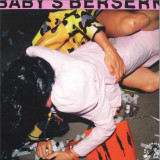
Toy Tonics going New Wave Disco with Baby’s Berserk’s self-titled debut album (to be released on 29 September).
There are many shades of funk in dance music. Berlin’s Toy Tonics label brings up artists that reflect many of these different aspects in dance music. Now the label comes up with a band! A band that is inspired by 1980ies New Wave as well as the Y2K Indie dance scene. Two guys and 2 girls from Amsterdam and Montreal called Baby’s Berserk.
Baby’s Berserk is about taking the freedom to be who you want to be, about being comfortable. Having played in all-girl punk bands since the age of 14, the bands singer Lieselot is an expert on female empowerment. “Dress like a girl and act like a boy,” is a catchphrase she lives up to every day and it clearly is a message that resonates with the band’s wild fans.
In the great tradition of Roxy Music, Throbbing Gristle and Malcolm McLaren, Baby’s Berserk is not just about the edgy music, but also about a very strong own visual style. They readily blend their sounds with underground fashion. What you see is what you get and seeing Baby’s Berserk is feeling right at home. Lieselot is a visionary when it comes to stage presence. Have you always wanted to see an electronic band with a punk attitude perform wearing a mix of haute couture and Flintstone-style rags? Look no further, it’s Baby’s Berserk.
Following on the critically acclaimed singles ‘What I Mean’ (2020) and ‘Toxic Kisses’ (2022), Baby Berserk’s highly anticipated self-titled full-length is now finally about to see the light on Berlin’s Toy Tonics records. Sonically designed for gritty rock venues as well as up-to-date edgy dance clubs, Mano’s lush compositions smoothly intertwine with the highly associative lyrics written by Puggy and Lieselot. Poets and literary addicts may think they’ve just discovered the rock & roll equivalents of Sylvia Plath, Kurt Vonnegut and Allen Ginsberg. To tell you the truth: their wild guess is pretty accurate as the works by these greats lie scattered around the Baby’s Berserk studio for inspiration.
The band was born in a laboratory back in 2019. Tired of being in bands with unruly and unpredictable humans, Mano Hollestelle set out to create a group of high precision robots to create the post-punk sound he had in mind. His outdated technology of floppy disks and cassette tapes worked well to program the androids, until one day a 90s rave mixtape was mistakenly entered into his computer. House music is a feeling and the punk bots instantly got hooked on it upon hearing it for the first time. They could never be reset to factory settings again. Mano worked tirelessly with his androids, currently known by their humanoid names of Lieselot Elzinga, Puggy Beales and Eva Wijnbergen, to fulfil his evil plan to make the rockers dance and the dancers rock. Baby’s Berserk is the fiendish extension of this plot. Beware, the band’s bass driven grooves and computerized beats have been known to cast a spell upon all within earshot.
So what do the songs on ‘Baby’s Berserk’ tell you? That it’s totally fine to have lots of fun in life! To have a boyfriend as an accessory (‘Accessories’), to get inspired by Sponge Bob (‘Dancing with the Fish’) and to blend your spirits with mixers whenever the hell you feel like it (‘Rum ‘n’ Kola’).
Baby’s Berserk member Puggy Beales on ‘Limousine’: “Decant the wine from my tip jar to yours. Soon we'll be on easy street, chauffeured home from the rat race each evening. Is it everything you'd hoped it would be?”
Check not only the debut album but also the forthcoming Remix EP with remixes by Each Other, Niklas Wandt, Sam Ruffillo, Kris Baha and Nicolini.
out of Stock
Last delivered 2 years ago available to reorder, subject to availability
Black Truffle is pleased to announce Tender Membranes, the label’s first release from Swedish-Finnish sound artist and electro-acoustic composer Marja Ahti. Active for a decade in the Finnish underground music scene, in recent years Ahti has developed a distinctive approach to patiently unfolding electro-acoustic constructions, documented on a string of solo releases and collaborative projects with Judith Hamann and her husband Niko-Matti Ahti. Working with concrete and instrumental sounds, field recordings, and electronics, Ahti favours neither disjunctive collage nor monolithic consistency; rather, her work is composed of organically unfolding sequences of details and textures, which, as she says, ‘can stretch out or cut fast as long as they have a sense of inner stillness’, a sense that she connects to moments of heightened attention in everyday life. Tender Membranes consists of four lengthy pieces, partly inspired by the image of the senses and mind as membranes allowing for the passage between inner and outer spaces, sensation and its causes, creating a world. Ahti’s unhurried pacing encourages this sense of listening as an opening or surrender to sound, which can often create the impression that the listener is moving through a space zooming in on details. The opening Shrine (Aether) exemplifies this aspect of Ahti’s approach: a bell clears the air with a single long tone, followed by the ambience of outdoor spaces, crackling electronics, an archival recording of a horsefly on a windowpane. Dozens of these moments, varying in length, density, and intensity, move past the listener’s attention, momentarily brought into focus then slipping away. Like those of the masters of the French musique concrète tradition, Ahti’s sounds are not often recognisable, though they might suggest proximity or distance, open environments or closed spaces, the urban or rural, day or night. In Ahti’s work, we do not encounter spectacular metamorphoses à la Parmegiani but rather a state of ambiguity where the listener is often unsure what is organic and what is inorganic, where the careful productions of the synthesizer might end and sounds discovered in the environment begin. What Ahti calls her ‘poetic way of experiencing and organising the familiar and the unfamiliar’ is sustained throughout Tender Membranes, but each piece has its own character. On Dust / Light, human presence is more overt, as what appear to be whispers, singing, and distant speech thread between high frequencies, untraceable drips and pops, and metallic shimmers. In all this there is a melody that you can sing and to which you may dance makes more prominent use of musical instruments, gaining a sombre beauty from half-buried piano chords and organ tones. On the closing Oh Fragrant Witness, a delicate cloud of subtly bending pitches is repeatedly disrupted by a resounding, almost ominous mass of low tones, at once a strange detour from much of what has gone before and an almost classical finale. Arriving in a sleeve reproducing contemporary Finnish photographer Sini Pelkki’s fragmented visions of the everyday, Tender Membranes is a balm to reawaken tired ears.
out of Stock
Last delivered 3 years ago available to reorder, subject to availability
»This River Only Brings Poison« was released in 2002 as the sixth full-length album of Chris Hooson’s Dakota Suite project. This first-ever vinyl edition of the record includes four bonus pieces and makes it possible for fans to re-evaluate one of the most crucial Dakota Suite albums in the project’s vast discography while also providing new listeners with an entry point into its intricate musical cosmos. With contributions by artists as diverse as steel guitarist Bruce Kaphan and drummer Tim Mooney from American Music Club, Derald Daugherty, and Laura and Chris Donohue as well as long-time collaborators such as David Buxton, Colin Dunkley or Ed Collins, »This River Only Brings Poison« turned out as a sonically rich and stylistically versatile as it is emotionally multi-layered.
»Writing music for me has always been a cathartic exercise,« explains Hooson. While the instrumental pieces generally serve to express a raw sense of his internal struggles, his vocal-led songs communicate them more directly. »Those are the words I cannot say openly. It’s not that I cannot voice them in a conversation, it’s just that they only seem half-formed and not ›true‹ unless they are located within a song,« he says. What makes Dakota Suite unique is that throughout the project’s history, the music and lyrics have always had a single addressee: Hooson’s wife Johanna, whose photographs were used for the album artwork and who is featured on clarinet on »sand fools the shoreline.«
»The title of the record was something that I had said when Johanna and I first met to make her see that the journey she was considering taking would be full of love, but also come at a cost,« explains Hooson. »The songs were written at a time when I was really struggling to think I could be the person that she deserved.« In the end however, »This River Only Brings Poison« marked a turning point in Hooson’s oeuvre after highly productive time with Dakota Suite: it would take another five years until he returned with a new album. »The reason for that was that I needed to accept that she had made her choice to be with me and that was a big thing for me to get my head around,« he says.
Hooson’s highly personal approach to writing songs also has an impact on the ways in which he works with his collaborators when recording them. »The people with whom I play really need to understand how I perceive the world to be able to play what I need,« he says. »My instructions would always be things like, ›This is what the song means to me, this is what I am trying to communicate to Johanna when she hears it, so your cello, for example, needs to sound like you have noticed that the cloud is covering the sun, and the weight of the air on your skin is heavier and it has unsettled you.‹«
For this particular record, he reached out to Mooney and Kaphan as an admirer of their group American Music Club. Expecting to be rejected, he instead found himself on a flight to San Francisco together with multi-instrumentalist Buxton shortly thereafter, about to make what he today calls one of his most cherished recording experiences. After the four musicians finished the basic tracks, overdubs were added in Hooson and Buxton’s respective houses as well as Daugherty’s home studio while Hooson was visiting his old friend in Nashville.
Hooson emphasises that revisiting his older releases can be complicated. »I feel intense feelings, as every record is a diary of who I was in that period and what I was feeling. That is why having to play the songs live is always like having PTSD: I need to re-experience the event that caused me to write the song, and I do not enjoy that.« He remains, however, proud of »This River Only Brings Poison,« pointing especially to the opener »the lepers companion« as what might perhaps be his favourite song of his. »But overall I just hope that Johanna feels it spoke to her,« he says, adding that the two do not discuss his records. »For me it's enough that she is listening to the things I mean to communicate to her.«
Chuwanaga proudly presents Jasual Cazz's inaugural album "Memory Guard". Delving into the heart of jazz fusion, the French trio bridges the nostalgia of bygone years and the avant-garde essence of tomorrow.
Memory Guard surely brings some flavours of the seventies and eighties era with their vintage synthesizers. "Better Before", the joyful "Double Comète" or even "Tell Tale" re-enact this legacy while keeping it always groovy and thoughtful.
But, as if plucked from the ethereal realm of dreams, "Tell Tale", "Mèches" or "Libellule" sound like hidden places, mysterious pieces of music and time where the memory moves forwards.
In the meantime, "Temple", "Jungle Meat" or "L'Arche" venture into modern sonic realms, embracing post-jungle influences that propel jazz into uncharted territories. Body and mind can now synchronize.
Painting an auditory landscape that unfolds in a myriad of hues and forms, Memory Guard really follows the inventiveness of the actual jazz scene but with the emotional intelligence of the French jazz-funk heritage.
Jasual Cazz is the brainchild of Theo Boero on bass, Pierre-Louis Vanier on keys, and Japhet Boristhene on drums, hailing from the vibrant city of Lyon, France.
out of Stock
Last delivered 2 years ago available to reorder, subject to availability
As one of the most triumphant and beguiling directorial debut features to emerge from the fruitful Polish New Wave, Andrzej Zulawski’s 1971 film Third Part Of The Night not only earned the thirty-year-old filmmaker a place next to other radical Polish directors such as Polanski, Skolimowski and Has, but also galvanised a creative bond with long running collaborator and composer Andrzej Korzyński, providing fans of foreign abstract/suspense cinema with a potent creative fusion to match those of Polanki/Komeda, Fellini/Rota and Argento/Goblin, amongst others.
Quite simply one of the heaviest psych rock film soundtracks of all time Andrzej Korzyński’s short and unreleased score matched the blueprint that adorned the drawing boards of conceptual French jazz orch rock composers like Jean-Claude Vannier, Francois De Roubaix and Alain Gourageur, creating a soundtrack that unknowingly begs comparison to Masahiko Satô’s Belladonna Of Sadness and Billy Green’s Stone. As one of the first progressive pop writers to come out of the vibrant (but carefully scrutinised) Polish beat scene with his bands Ricecar 64 and later Arp Life (and composing for national heroes such as Czeslaw Niemen, Niebiesko-Czarni and Test) Korzyński’s growing passion for conceptual rock and jazz music soon lead to instrumental composition and soundtrack scores.
His cinematic debuts scoring two consecutive transitional new wave films for Andrzej Wajda (in collaboration with the radical Polski pop groups Trubadurzy and Grupa ABC) also provided Korzyński with another significant cinematic muse in that of the stunning actress Malgorzata Braunek with whom they would both eventually achieve their finest performances under the direction of the ravenous first-timer Żuławski. Third Part Of The Night (1971) perhaps epitomises that triangular on-screen unison in its vibrant youth and feeds it through a hallucinogenic mangle finding astonishing beauty (within a repulsive synopsis) against a bleak and shattered backdrop and accompanied by progressive, psychedelic orchestral rock music – elements which would intensify for all three creatives with the next film, Diabel, which was banned by the Polish government the following year until 1988.
Third Part Of The Night also marks the public unison of Żuławski and Braunek whose later private romantic relationship is said to form the basis for another defining Żuławski/Korzyński defining endeavour with the 1981 film Possession exactly a decade later, encapsulating a period that bequeaths a previously unopened vault of some of the composers finest and most inspired sonic adventures.
"Creating this record took me around 2 years, I was moving quite a bit, without a steady working or living space, travelling and playing live again for the first time since the pandemic. At first there was creative insecurity and many abandoned ideas, I wanted to make something special for YUKU but everything felt dry and soulless. In my head this was supposed to be a dancefloor record, but this idea quickly became an obstruction in my creative flow.
During this time I started learning modular synthesis, and although there was definitely a learning curve this method of making music gave the record direction and refreshed my way to approach composition. It is also very fun to learn. What came out is a collage of sorts that is more honest and reflective of my emotions and those of the people and spaces that I have exchanged with. Thanks to YUKU and the amazing people that took part in this record and in my life in the past two years. Hope you all enjoy."
- Joaquin Cornejo
out of Stock
Last delivered 3 years ago available to reorder, subject to availability
Brotherhood Of Peace (aka B.O.P.) brought the world some of the best breezy power pop, Southern rock and heavy boogie all packed into one brilliant album in 1976, the fittingly titled Cuttin’ Loose. The album is a free-flowing nine song collection of genre blending would-be hits suited for both ’70s AM gold and FM album rock that never received its proper due, until now. The album flows somewhat similar to the way Big Star combined heavy riffs with airy pop sweetness, but B.O.P. brought more of a blues rock groove to the proceedings, resulting in heavier undercurrents to songs with glowing three-part harmonies and impeccable power trio musicianship. By the mid-’70s, rock ’n’ roll was truly anything goes. Experimentation, excess and inventing new genres was all the rage, and the trio of spritely young men—guitarist / vocalist Dennis Tolbert, bassist / vocalist Mike Arrington and drummer / vocalist Ronnie Smith—gamely tackled whatever sound they pleased. Fortunately, the band captured it all on their lone album, released on the small independent label Avanti Records in March 1976. The Mount Airy, North Carolina trio got its start as teens in 1969 as the backing band to a large 20-50 person traveling church choir called the New Americans. By 1970, the band was ready to move on to performing on their own. First as a sextet, the band soon trimmed down to a three-piece, working the local club circuit like madmen, sometimes playing three shows a day. At the height of their live tightness, B.O.P. recorded the album with local musicians Don Dixon and Robert Kirkland of the band Arrogance who worked at Charlotte recording studio Reflection Sound in October 1975. The band laid out the highlights of their live set in the studio, which ran the range of influences from The Raspberries to Deep Purple, Doobie Brothers to Nazareth, Lynyrd Skynyrd and Grand Funk. The initial pressing of 1000 copies was released in March 1976, but without major label machinery for retail distribution, radio and press, the album never took off. The band mostly sold them at live shows, via consignment at local stores and in limited distribution in the Southeastern region. However, to date, the record still occasionally pops up for sale online worldwide at exorbitant collectors’ prices. Until now, finally getting a proper reissue via Riding Easy Records.
Swiss-born pianist Camille-Alban Spreng, who has resided in Brussels for over a decade, has been active since 2010 in a diverse range of bands and projects within jazz, improvised (electronic) music, art performance and theater. He can be seen on stages all over Europe and trained at various conservatories with renowned players such as Emil Spanyi (HEMU, Lausanne), Eric Legnini and Kris Defoort (CRB, KCB, Brussels).
Together with his regular band ODIL, he has already released two records: 'Something' (QFTF Records - 2016) and 'RESON' (QFTQ Records - 2019), with the collaboration of Leïla Martial, and Valentin Ceccaldi on the latter album. ODIL operates from Brussels but, with in its ranks a pivotal figure with Swiss roots, a French drummer and an Irish saxophonist, is a band with international allure. Nina Kortekaas' unique voice is also an absolute asset.
His third album, titled "Unheimlich," will be released on W.E.R.F. records, one of Belgium's finest jazz not jazz labels. The new album sprung from Camille-Alban's fondness for Allen Ginsberg and the beatnik movement. Poems by Ginsberg are provided with music, notably "Pull My Daisy" (co-written by Jack Kerouac and Neal Cassady at the time) and "White Shroud," with the approval of the rights holders/heirs.
The lyrics that Camille-Alban himself wrote for the album exude the same beatnik vibe. In that sense, the new work is also an homage to Allen Ginsberg. "I love his way of writing: it's funny, twisted, quirky ánd spiritual," Camille-Alban said. "I couldn't think of a better title for the new album. 'Unheimlich' doesn't translate. The black cat in the lobby of a creepy hotel in 'The Matrix,' I think of that image, that atmosphere."
ODIL's music has a narrative character and in terms of form, the compositions are not ordinary. Impro plays a role and the music is unmistakably characterized by a contemporary jazz aesthetic but at their core the compositions are also songs, a unique feature. 'Unheimlich' is a jazz album that can be listened to just as well as a pop rock album.
The Esbjörn Svensson Trio, e.s.t. for short, are still
celebrated today as one of the most important and
influential European jazz bands of the last 20
years.
In 1999, the three Swedes achieved their
international breakthrough with ‘From Gagarin’s
Point Of View’. A star rose in the musical sky and a
unique world career followed. But sometimes stars
shine for much longer than one thinks. On ‘e.s.t.
Live 95’ there are recordings that prove that this
was also true for the Esbjörn Svensson Trio.
The band, founded in 1993, found their very
specific sound early on but it was not initially
noticed outside its home country. In 1995, when
the trio’s namesake still wore long hair and a
headband, these recordings were made at various
locations in Sweden. And whoever hears how the
trio played back then is left breathless.
Much of what distinguishes e.s.t. was already
strongly pronounced here: the coherence and
powerful grip of the playing; the catchy themes that
immediately jump out at the listener and yet do not
become clichéd; the fusion of the music of role
models like Thelonious Monk and Keith Jarrett into
a style of their own, always infected by the forward
thrust of rock. Magical moments were saved for
eternity by these recordings.
Now this e.s.t. early work is available on double
vinyl.
In 1995 the self-titled full-length debut of Die Anarchistische Abendunterhaltung (DAAU) was released. The band consisted of four young, 'classically derailed' musicians who played their own compositions with acoustic instruments such as violin, cello, clarinet and accordion. Their work contained influences from Roma music, Eastern European folk, klezmer and jazz, but was performed with the energy, rebellious spirit and Sturm und Drang of a bona fide punk band. DAAU was part of the fertile Antwerp scene, which also produced dEUS, Zita Swoon and Kiss My Jazz, and soon signed an international record deal with Sony Classical.
The group's influential first record, which has been out of print for a while, is now finally being released again and is available on vinyl for the very first time.
In those early days, DAAU consisted of four young, classically trained musicians who tackled their instrumental compositions with a true punk spirit. 'If we'd had guitars, bass or drums at that time, we would probably have been just another rock band', says accordionist Roel Van Camp, who, together with his schoolmates Buni Lenski on violin, the latter's brother Simon on cello and Han Stubbe on clarinet made up the Antwerp quartet. 'With our acoustic instruments we tried to create our own version of the music we loved listening to, from sixties rock and prog to new wave.'
The quartet, which initially played in streets and cafes, appealed to a diverse audience and sometimes joked that they were a classically trained unit that had 'gone off the rails'. 'As befits teenagers, we wanted to shake things up', Stubbe remembers, 'even though we always kept cherishing our classical backgrounds.' Van Camp: 'Our education was never supposed to feel like a straitjacket. We were free-spirited enough to ignore the laws and regulations of the music academy and to create our own sound. Our compositions were open to influences from Roma music, Eastern European folk, klezmer and jazz'. 'That eclecticism was a direct result of the zeitgeist', Han Stubbe adds. 'We loved different styles and happily mixed them together'.
The monniker Die Anarchistische Abendunterhaltung was derived from Steppenwolf, a novel by German writer Hermann Hesse about a character who was outside society. 'In the book, the narrator talks of a theatre', Van Camp explains. 'And at the entrance there is a warning sign sign that says: if you go in here, you are guaranteed to lose your mind. That was an apt description of the way our music worked'.
Almost all tracks on DAAU's first album were 'Drieslagstelsels' (or 'three-course rotations'). The term referred to an agricultural method of the early Middle Ages, but also to the fact that each song of the group consisted of three major movements. Van Camp: 'The titles of those pieces referred to our method of writing. We piled up a huge bunch of ideas, because we wanted to tell more than just one story. With each composition, we took the listener for a ride'.
In 1995 the self-titled full-length debut of Die Anarchistische Abendunterhaltung (DAAU) was released. The band consisted of four young, 'classically derailed' musicians who played their own compositions with acoustic instruments such as violin, cello, clarinet and accordion. Their work contained influences from Roma music, Eastern European folk, klezmer and jazz, but was performed with the energy, rebellious spirit and Sturm und Drang of a bona fide punk band. DAAU was part of the fertile Antwerp scene, which also produced dEUS, Zita Swoon and Kiss My Jazz, and soon signed an international record deal with Sony Classical.
The group's influential first record, which has been out of print for a while, is now finally being released again and is available on vinyl for the very first time.
In those early days, DAAU consisted of four young, classically trained musicians who tackled their instrumental compositions with a true punk spirit. 'If we'd had guitars, bass or drums at that time, we would probably have been just another rock band', says accordionist Roel Van Camp, who, together with his schoolmates Buni Lenski on violin, the latter's brother Simon on cello and Han Stubbe on clarinet made up the Antwerp quartet. 'With our acoustic instruments we tried to create our own version of the music we loved listening to, from sixties rock and prog to new wave.'
The quartet, which initially played in streets and cafes, appealed to a diverse audience and sometimes joked that they were a classically trained unit that had 'gone off the rails'. 'As befits teenagers, we wanted to shake things up', Stubbe remembers, 'even though we always kept cherishing our classical backgrounds.' Van Camp: 'Our education was never supposed to feel like a straitjacket. We were free-spirited enough to ignore the laws and regulations of the music academy and to create our own sound. Our compositions were open to influences from Roma music, Eastern European folk, klezmer and jazz'. 'That eclecticism was a direct result of the zeitgeist', Han Stubbe adds. 'We loved different styles and happily mixed them together'.
The monniker Die Anarchistische Abendunterhaltung was derived from Steppenwolf, a novel by German writer Hermann Hesse about a character who was outside society. 'In the book, the narrator talks of a theatre', Van Camp explains. 'And at the entrance there is a warning sign sign that says: if you go in here, you are guaranteed to lose your mind. That was an apt description of the way our music worked'.
Almost all tracks on DAAU's first album were 'Drieslagstelsels' (or 'three-course rotations'). The term referred to an agricultural method of the early Middle Ages, but also to the fact that each song of the group consisted of three major movements. Van Camp: 'The titles of those pieces referred to our method of writing. We piled up a huge bunch of ideas, because we wanted to tell more than just one story. With each composition, we took the listener for a ride'.
Bristol's soul jazz kings The Jazz Defenders release a new vinyl 45 single this autumn as a taster for their third album, which is destined for release in spring 2024. Once again, they are bringing together their love of 1960's soul jazz and golden era 90's hip-hop, just as they did on a couple of tracks on their last album "King Phoenix" (Haggis Records 2022). This new single sees them reunited with London MC/rapper Doc Brown, who guested on the track "Perfectly Imperfect", and his flow sits so naturally over the Jazz Defenders' music and beats, you'd think he's a permanent band member.
The A-side "Rolling On A High" is a real old school boom bap style party hip-hop jam. Big beats, rolling bassline (acoustic double bass), Ramsey Lewis soul jazz piano vamps, funky Hammond organ and some punchy horn section business, all topped off with Doc Brown bouncing bars back and forth with that laid back vibe he always brings to the mic. A guaranteed dance-floor bomb, whether you're a breaker, a jazz dancer or simply a Saturday night disco shuffler. The B-side "Looking Back" takes the tempo right down. An 'end of the night' number when the lights in the club are low, the last drinks are being drained and you're thinking and reminiscing about times gone by. The good times and bad, successes and mistakes. And made even more poignant and reflective halfway through when the mellow strings come into the song (once again excellently arranged by pianist/bandleader George Cooper). If "Rolling On A High" is the fire then "Looking Back" is definitely the ice. Proof that the Jazz Defenders can rock the party and grab the dancers but also dig deep with emotive tunes that draw in the discerning listener.
The Jazz Defenders, led by keyboard maestro George Cooper from The Haggis Horns, have been building a reputation as a great musical unit since their debut Blue Note/hard bop-inspired album "Scheming" appeared on Haggis Records back in 2019, which received a huge amount of praise from critics, and subsequently went on to spend 5 weeks in the top ten of the American jazz charts In 2021, their double A-side vinyl single "The Big Man/Love's Vestige" got them the breakthrough they deserved. It garnered heavy support on radio from top folks like Craig Charles (BBC6 Music), Helen Mayhew (Jazz FM), Jamie Cullum (BBC Radio 2), and Worldwide FM resident DJ's Ashley Beedle and Colin Curtis. They further enhanced their reputation as a rocking band with album number two "King Phoenix" and by electrifying audiences at sold out live shows across the UK, including the legendary Ronnie Scott's Jazz Club in London.
Album number three is well on its way but for now, check out this tasty limited edition 45 single on Haggis Records. The JDs and Doc Brown...the perfect combination, still keeping that sweet jazz/hip-hop love affair alive today.
out of Stock
Last delivered 3 years ago available to reorder, subject to availability
Dreams are made and displaced on Mark Fell & Rian Treanor’s oneiric electro-acoustic inception 'Last Exit', borne from long days in the family garden, and assembled into a mesmerising masterpiece of minimalist modal rhythm and atmospheric exploration, into rapt smallsound detailing in breathtaking form. It’s a bit like listening to Virginia Astley’s ‘From Gardens Where We Feel Secure’, with washes of Autechre seeping into the mix from outside.
‘Last Exit…’ originally appeared in a different form as a cassette release for our Documenting Sound series in 2021, and was edited this year by Mark and Rian for this new expanded and altered edition, mastered by Rashad Becker. It renders a painterly,psychedelic, and diaristic depiction of sublime atmospheric tension, occasionally ruptured by their typical, asymmetric rhythm impulses in a form that rudely transcends their respective aesthetics. Across four parts, they kern, juxtapose and diffract synthesised percussion and field recordings into polymetric arrangements riddled with timbral nuance of a highly unpredictable nature.
While patently inflected with nods to Indonesian gamelan, Ugandan folk, Indian Carnatic classical, Morton Feldman-esque minimalism, free jazz improvisation and a sort of rhythmic cubism that speaks to their mutual, voracious listening habits and tastes, the results are arguably without direct compare. Attentive listeners will recognise, however, that ‘Last Exit’ effortlessly transcends their respective styles, achieving a new high watermark of imaginary future-hyperfolk expressed in a sort of personalised but highly relatable meta-musical language.
Seriously, they’re working beyond known conventions here; opening to a sublime frisson of Feldman-esque keys, birdsong and distant car engines, and closing to a combo of just-intoned drone and wafts of distant ballroom music. The 80 minutes in between feel like returning to a dream, with flashes of FM strings dabbed to sloshing rhythms and domestic detritus, tilting into a nervously tentative tension ruptured with abstract dance dynamism and angular free jazz ballistics.
The rejigged recordings also reflect the fidelity of memory recall, expressing an altered perspective on their time spent in the multigenerational family’s Rotherham garden during spring/summer 2020, replete with their mum/grandmother on piano and overheard singing and in convo, but now fraught with a more melancholic, distempered quality that makes for a genuinely unforgettable listening experience. A long-form isolationist fantasy, consider it crucial listening if yr into Robert Ashley's 'Automatic Writing', Graham Lambkin, Autechre or Nuno Canavarro.
Early on, his prodigious technique and wide-ranging style garnered comparisons with the great Oscar Peterson. But there has always been another side to Alexander's playing. Usually, jazz grabs the upper hand, but on occasion he digs deep into his Jamaican roots.
The 1974 We've Only Just Begun recording signals the beginning of Jamaican pianist Monty Alexander's fruitful relationship with MPS, lasting over a decade and encompassing some dozen albums. On many he partners with no one else than fellow Jamaican and one of the fathers of ska, guitarist Ernest Ranglin.
Among others, this Best Of includes tracks from Monty's MPS classics like RASS!, Here Comes The Sun, Montreux Alexander - The Monty Alexander Trio Live At Montreux, We've Only Just Begun, Monty Strikes Again, Cobilimbo, or the untitled Monty Alexander & Ernest Ranglin.
2 Heretik weapons, both same speed (Dj tip ^^), boths ballsining the tribe and both very raving... Transformers remix, longly awaited by the Nout fans and the Toxic fat track, less commercial but very efficient too ! At least this is a full NOUT raving record ! Must Have !
out of Stock
Last delivered 13 years ago available to reorder, subject to availability
Hailing from Wellington, Aotearoa, the land of the long white cloud, Scent is a newcomer to the scene but long time GC of Modern Hypnosis. His first sighting featured a track 'Devils Dread' on Indigo Movement's 5-year digital compilation December 2017.
Heaving at 140 beats per minute, 'Trax' creates a certain energy similar to early jungle riddims. Chopped percussion, giant synth stabs, weighty driving kicks with underlining sub bass and the odd flute build the track to a halt before commencing it's minimal technoesq break down.
'Just a Dream' a rooted scentimental dub which takes you deep into a place amongst your rem sleep with sparse whaling strings and swinging percs.
Scent debut solo release. One to watch.
out of Stock
Last delivered 2 years ago available to reorder, subject to availability
1981 SYNTH CLASSIC BY JAPANESE KEYBOARD WIZARD AND YMO PROGRAMMER HIDEKI MATSUTAKE REISSUED OUTSIDE OF JAPAN FOR THE FIRST TIME IN 40 YEARS. REMASTERED FROM THE ORIGINAL TAPES WITH STRIKING ORIGINAL ARTWORK BY LEGENDARY ILLUSTRATOR PATER SATO INCLUDING ITS STUNNING FULLY ILLUSTRATED
8-PAGE BOOKLET
His name may not be instantly familiar, but Hideki Matsutake has had a huge influence over Electronic music. Starting his career as the assistant of Japanese Electronic Music master Isao Tomita in the early 70s, he went on to work with Ryuichi Sakamoto and then Yellow Magic Orchestra as their keyboard programmer and unofficial fourth member. In 1981 he started his own Logic System project recording "Venus" that year in Los Angeles with Don Grusin, Nathan East and Michael Boddicker, brilliantly mixing Synth Funk, Ambient and Boogie with a touch of Fusion Jazz predating Vaporwave by a mere 30 years. Wewantsounds is delighted to reissue this visionary album, which
comes remastered from the original tapes and features Pater Sato stunning artwork including the rare beautiful 8-page insert with an exclusive interview of Hideki Matsutake by Hashim Kotaro Bharoocha.
The early 80s were prolific for Hideki Matsutake. As the go-to keyboard programmer for the tokyo music scene, he worked on Akiko Yano's "Gohan Ga Dekitayo", YMO's "BGM", Ryuichi Sakamoto's "B-2 Unit", Mkwaju Ensemble's "Mkwaju" and found time to record two Logic System albums in 1981. While the first album, "Logic" had a harder techno feel, the second one "Venus" was different affair. Recorded in Los Angeles at the new state of the art Yamaha Studio, it was loosely themed on the Greek goddess Venus and had a funkier more organic sound. For the album Matsutake had asked a handful of American musicians to provide songs he would then add his synth magic touch to. Michael Boddicker, Don Grusin, Nathan East and Roger Powell duly complied and also played on the album.
The updated sound was achieved by switching from the Moog III to the E-mu modular System (which Matsutake brought over to LA) and other synths like the Prophet 5, the Roland MC-8 and TR 808 and the Yamaha GS-1, a forerunner of the DX7.
The result is an amazing futuristic mix of electronic music and early 80s funk, announcing many genres to come, from techno and house to French electro and Vaporwave. From the breezy ambient synth of "I Love You" to the city pop edge of "Be Yourself" (originally written by Nathan East for Debra Laws) and the vocoder-led Daft Punk-ish "Take A Chance", Venus is a fascinating album that both pushes the boundaries of electronic music and is yet strangely accessible and beautiful.
The other key elements of Venus is the artwork designed by Japanese legendary illustrator Pater Sato. Sato had started in Japan in the early 70s doing many album covers for Japanese artists including Tatsuro Yamashita's cult Spacy LP before moving to New York in 1979 to pursue a career in fashion and advertising. His airbrush style became hugely influential over the years and in 2018, Stella McCartney dedicated a whole Men’s collection based on his Venus. Star make up artist Pat McGrath also regularly posts his artwork to her 3 million fans on her instagram.
The original album came with a beautiful 8-panel insert illustrated by Sato which Wewantsounds has reproduced on this deluxe reissue also featuring remastered sound, OBI strip and a second insert featuring credits and line up plus liner notes by Hashim Bharoocha. The notes will feature an exclusive interview with Hideki Matsutake reminiscing about the making of this visionary album which Wewantsounds is delighted to reissue.
out of Stock
Last delivered 6 years ago available to reorder, subject to availability
Jointly shepherded by Philip Sherburne and Albert Salinas, two friends living in Cardedeu, Catalonia, and on the Balearic island of Menorca, Balmat grew out of Lapsus Radio, a weekly show on Spain’s Radio 3. Balmat’s mission is simple: to foster new ideas, expand upon personal obsessions, and put enveloping sounds out into the world.
“Balmat” means “empty” or “void” in Catalan. But quite apart from any negative connotations, we prefer to think of it in terms of possibility: a space waiting to be filled.
Balmat’s first release comes from Luke Sanger, a Norwich, UK-based artist whose two decades of electronic music making have encompassed a range of tools and techniques, from MaxMSP to modular synthesis. Along the way he has built an extensive catalog encompassing ambient atmospheres, abstract soundscaping, and more. With Languid Gongue, he puts multiple approaches into play. Experiments in microtonal composition balance out pieces in standard tunings, while esoteric electronic machines merge with familiar acoustic treatments and microphone techniques.
The result is a constellation of his signature sounds: freeform new-age fantasia; spring-loaded toytronic arpeggios; quartz-driven braindance clockworks. Drifting between consonant, almost lyrical compositions and shape-shifting textural sketches, the album drifts with the nonchalance of a sky-high cirrus cloud, and it glows as if illuminated from within. When we heard the material, we knew that it was the perfect choice to launch the label. To us, it sounds like a roadmap for points unknown.
out of Stock
Last delivered 3 years ago available to reorder, subject to availability
GLOK is the electronic alter ego of Andy Bell; best-known as the guitarist in venerated shoegazers Ride, alongside stints in other famous groups, with a noteworthy solo careertoo. This October his first album proper as GLOK - 'Pattern Recognition' - is released via Ransom Note Records' sisterlabel Bytes. Although usually renowned for purveying the finest quality jangle, drone and general guitar-based magic, Bell's forayinto dance music should come as less of a surprise than immediately meets the eye. There are parallels between the genres within the sonically-deep layers, hypnotic sound and trance-like headspaces, or, as he puts it more succinctly: "GLOK is all about the push and pull between electronic and psych in my music." Although not a full-blown concept album, 'Pattern Recognition' has a loose thread which takes in a week of life, from weekend to weekend, with each of the vinyl's four sides capturing different mind states across that transition. Each side has a distinct feel that's different to the last but inherently cohesive - much like the changes an individual goes through over 7 days. Across the album with loving craft Andy weaves together throbbing dubbed-out acid, steamy jack trax, levitational psychedelia, sparkling Balearic, techno, Kosmische, shoegaze, art rock and Compass Point-style post punk -with just a hint of ambient, new age and contemporary classical too.
out of Stock
Last delivered 4 years ago available to reorder, subject to availability
Original self-released by Malik king this lp has been on many peoples lists of holly grail private-press jazz wants for years , very rarely turning up on ebay and the like.. selling for up to $500.
Malik King was an important part of the St Louis jazz scene of the 70's & 80's.
He studied under Albert Ayler in NY in the early 70s before returning to the Midwest. He was a member of; The Human Arts Ensemble, the Shirley Le Flore's ensemble "Free N' Concert". He also served as musical director of The Creative Arts & Expression Lab, The African Peoples Continuum, & The Black Arts Alliance, The worrier poets, as well as various Emerging Force Ensembles.
Zimbabwe Nkenya (1953-2022), a creative artist and innovative musician, was brought up on army bases in the USA and Spain. He spent 30 years traveling and performing in New York, New Mexico, Arizona and St Louis. playing with a who's who of jazz. In New Mexico he became an integral part of the scene, producing and hosting the KUNM'S radio show "THE HOUSE THAT JAZZ BUILT" .
Luckily Malik self-released "Time & Condition" in 1982, capturing his work together with Qaiyim Shabazz. It's not just a crate diggers Holy Grail, but an important artistic and historic document of the St Louis scene. Time & Condition stands alone as a (very) individual, spiritual jazz classic.
We hope this reissue will finally grant these musicians the wider acknowledgement & credit they deserved during their life time.
Original self-released by Malik king this lp has been on many peoples lists of holly grail private-press jazz wants for years , very rarely turning up on ebay and the like.. selling for up to $500.
Malik King was an important part of the St Louis jazz scene of the 70's & 80's.
He studied under Albert Ayler in NY in the early 70s before returning to the Midwest. He was a member of; The Human Arts Ensemble, the Shirley Le Flore's ensemble "Free N' Concert". He also served as musical director of The Creative Arts & Expression Lab, The African Peoples Continuum, & The Black Arts Alliance, The worrier poets, as well as various Emerging Force Ensembles.
Zimbabwe Nkenya (1953-2022), a creative artist and innovative musician, was brought up on army bases in the USA and Spain. He spent 30 years traveling and performing in New York, New Mexico, Arizona and St Louis. playing with a who's who of jazz. In New Mexico he became an integral part of the scene, producing and hosting the KUNM'S radio show "THE HOUSE THAT JAZZ BUILT" .
Luckily Malik self-released "Time & Condition" in 1982, capturing his work together with Qaiyim Shabazz. It's not just a crate diggers Holy Grail, but an important artistic and historic document of the St Louis scene. Time & Condition stands alone as a (very) individual, spiritual jazz classic.
We hope this reissue will finally grant these musicians the wider acknowledgement & credit they deserved during their life time.
Organic Analogue makes it to double figures with a sublime new split EP from HVL and Gacha Bakradze. The A-side is opened up with 'Infinitesimal', a stripped back and icy bit of minimal dub techno, then 'AgneffC01' gets more rhythmically physical with scattered beats and hits and 'Collective Genius' is tense, kinetic techno with a real sense of paranoia. 'Routes' is the first B-side joint with Gacha Bakradze bringing some direct but economical drum machine grooves under meticulous percussion and then 'Chain' layers smeared cosmic pads with twitchy details and 'Widow' ends with a heavy heart.
out of Stock
Last delivered 2 years ago available to reorder, subject to availability
Für das Prequel 'Gears Of War: Judgement' (2013) schufen die Komponisten Steve Jablonsky und Jacob Shea eine brodelnde, industrielle Klanglandschaft aus gewaltig klingenden Synthesizern, knackigen Gitarrensounds und sparsamen orchestralen Elementen. Streng strukturierte, emotional angespannte Cues untermalen die Geschichte um Damon Baird und das Militärtribunal von Kilo Squad. Deluxe-Ausgabe auf dunkelrot und dunkelblauem 180g Doppelvinyl mit 30 remastered Tracks im Gatefold-Sleeve.
LILA mainstay Ayaavaaki and ambient veteran Purl speak different languages but used a translator to convey ideas to one another as they made this record. And they very much foment their own unique musical language on Ancient Skies, an album that blends ambient, drone and space music into richly layered soundscapes that are constantly on the move. Each piece is meticulously crafted and suspense you up amongst the clouds, hazing on at the smeared pads and swirling solar winds that prop you up. It's a record that would work as well in the depths of winter as a bright spring day such is the cathartic effect of the sounds. Beautiful, thought-provoking and innovative, this is as good an ambient record as we have heard all year.
e C1 Gateway Realm (Spiral I) Outer Helix (Spiral I)
e C1 Gateway Realm (Spiral I) Outer Helix (Spiral I)
out of Stock
Last delivered 2 years ago available to reorder, subject to availability
Celebrated composer, performer, saxophonist, soloist, band leader, educator, activist, and mixed-media artist Matana Roberts returns with a new installment of their acclaimed Coin Coin series. For over a decade, Coin Coin has been the central artistic project for Roberts, a remarkable exploration of American ancestry and the nature of memory through "sound quilting": modern composition that draws on a wide range of musical sources and traditions, along with research-driven historical and genealogical narratives that yield prose and poetry both spoken and sung, field recordings, and graphic scores. The Quietus declares "when the 12-album cycle is complete, it will be regarded as a singular masterpiece of 21st century sonic and narrative art" and Pitchfork calls it "one of the most provocative ongoing bodies of work by any American musician." Coin Coin Chapter Five: In the garden... is the first new recorded audio chapter since 2019 and centers upon reproductive rights, summoning the story of a family ancestor who died in early adulthood, from a cause kept obfuscated and hushed, shrouded in disinformation and shame. Roberts reimagines diaristic and oral narratives, delivered in strident streams of spoken word that punctuate the hour-long work, with recurring musical themes frequently accompanied by the declarative refrain "my name is your name / our name is their name / we are named / we remember / they forget." As Roberts writes in the accompanying liner notes essay: I find it absolutely disgusting that the same trauma my grand ancestor, whose story we are telling in this chapter, is closely mirroring the experiences of some poor soul today as I write this... Our aforementioned grand, who perished at a young age, leaving her growing children motherless, did not have to die. The negative consequences of her death have reverberated down through generations in my family line, in the same way that a similar resounding might happen for someone else's ancestral line generations from today. While often jazz-adjacent, and with Matana's inimitable saxophone and indomitable voice at the core, Roberts situates Coin Coin outside the Jazz genre and within heterodox pathways of post-modern composition, electroacoustic music, sound collage, experimental voice, and sound art. In the garden... undeniably continues to express and expand upon the project's magnificent iconoclasm, nonetheless being the most jazz-inflected chapter since Coin Coin Chapter Two: Mississippi Moonchile(2013). Recorded in Brooklyn with a stellar acoustic ensemble that includes Stuart Bogie, Gitanjali Jain, Darius Jones, Matt Lavelle, Mike Pride, Ryan Sawyer, Corey Smythe, and Mazz Swift, abetted by some sparkling pieces featuring modular synthesis courtesy of album producer Kyp Malone (Bent Arcana, TV On The Radio), In the garden... traverses a vivid stylistic array of thematic overtures, excursions and set pieces, ranging from spacious textural invocations to gorgeously tempered horn-led compositions to driving free jazz and exhilarating through composed bursts of cacophony. With storytelling spoken-word lead vocals by Roberts channeled recurringly throughout, alongside various other deployments of layered and group voices, the album is alternately a meditation and fever dream of narrative potency. This is some of the most intense and intensive music Roberts has composed and captured to date, richly conceived and deeply felt, restless yet focused, unflinchingly substantive and unique. Coin Coin Chapter Five: In the garden... channels epigenetic trauma and tragedy with teeming complexity and fierce beauty _ a eulogy, testimony, and celebration, melding music and language in a stunning polychromatic flow of vernaculars and poetics. A powerful work of subjective commemoration and historical-cultural communion that speaks indelibly to the present moment.
This EP is the first release to mark the start of a new adventure, illustrating Rude Jude's commitment to a smooth and melodic vintage sound.
Featuring 3 original songs, a cover and an epilogue, it is deeply inspired by the legends of Adult Oriented Rock and a mix of 70s/80s Soft Rock, Jazz and Pop.
The contribution of the talented vocalist, songwriter and violin player, Jon GK can't be understated in creating and interpreting these songs. All the parts are played by musicians and the production is made through as much analog gear from that era as possible. It is not just a tribute but an attempt to carry the torch and bring something new to the current music landscape.
out of Stock
Last delivered 2 years ago available to reorder, subject to availability
It"s a wild ride, but then life with Jeffrey Lee Pierce always was"- Kris Needs
Das Jeffrey Lee Pierce Sessions Project hatte immer das Ziel Jeffrey Lee Pierce als einen der einflussreichsten, aber auch meist unterschätzten US Singer-Songwriter hervorzuheben und seine Kunst in die heutige Zeit zu transportieren, indem Wegbegleiter:innen und Bewunderer:innen die Musik des 1996 viel zu früh verstorbenen The Gun Club Sängers neu interpretieren. Nach "We Are Only Riders" (2009), "The Journey Is Long" (2012) und "Axels and Sockets" (2014) präsentiert "The Task Has Overwhelmed Us" Songs aus Pierce"s The Gun Club- und Solo-Zeiten. Außerdem gänzlich neue Tracks, entstanden aus Song- und Textskizzen sowie Live-Demos, die der 1958 in Kalifornien geborene Pierce vor seinem Tod aufgenommen und niedergeschrieben hatte. Fast zehn Jahre nachdem das Vorgänger Album "Axels and Sockets" veröffentlicht wurde, erscheint mit "The Task Has Overwhelmed Us" endlich das finale Kapitel mit Künstler:innen wie u.a. Dave Gahan, Debbie Harry im Duett mit Nick Cave oder Peter Hayes von The Black Rebel Motorcycle Club als LP, limitierte col. LP & CD.
It"s a wild ride, but then life with Jeffrey Lee Pierce always was"- Kris Needs
Das Jeffrey Lee Pierce Sessions Project hatte immer das Ziel Jeffrey Lee Pierce als einen der einflussreichsten, aber auch meist unterschätzten US Singer-Songwriter hervorzuheben und seine Kunst in die heutige Zeit zu transportieren, indem Wegbegleiter:innen und Bewunderer:innen die Musik des 1996 viel zu früh verstorbenen The Gun Club Sängers neu interpretieren. Nach "We Are Only Riders" (2009), "The Journey Is Long" (2012) und "Axels and Sockets" (2014) präsentiert "The Task Has Overwhelmed Us" Songs aus Pierce"s The Gun Club- und Solo-Zeiten. Außerdem gänzlich neue Tracks, entstanden aus Song- und Textskizzen sowie Live-Demos, die der 1958 in Kalifornien geborene Pierce vor seinem Tod aufgenommen und niedergeschrieben hatte. Fast zehn Jahre nachdem das Vorgänger Album "Axels and Sockets" veröffentlicht wurde, erscheint mit "The Task Has Overwhelmed Us" endlich das finale Kapitel mit Künstler:innen wie u.a. Dave Gahan, Debbie Harry im Duett mit Nick Cave oder Peter Hayes von The Black Rebel Motorcycle Club als LP, limitierte col. LP & CD.
Pünktlich zum 30-jährigen Bandjubiläum präsentieren KADAVERFICKER ihr neues Album "Superkiller (A Musical Journey Between Life And Death)", ein musikalisches und lyrisches Manifest, auf dem sie den bisherigen Weg der Band mit allen Höhen und Tiefen reflektieren.
Das 30-jährige Bestehen einer Band ist ein Zeitpunkt, der Anlass zum Reflektieren gibt.
Zurück auf eine Reise, die - nicht ungleich dem Weg von der Wiege zum Grab - sowohl von Tälern des Leidens als auch von Höhen der Ekstase geprägt ist.
Pünktlich zum 30-jährigen Bandjubiläum präsentieren KADAVERFICKER ihr neues Album "Superkiller (A Musical Journey Between Life And Death)", ein musikalisches und lyrisches Manifest, auf dem sie den bisherigen Weg der Band mit allen Höhen und Tiefen reflektieren.
Das 30-jährige Bestehen einer Band ist ein Zeitpunkt, der Anlass zum Reflektieren gibt.
Zurück auf eine Reise, die - nicht ungleich dem Weg von der Wiege zum Grab - sowohl von Tälern des Leidens als auch von Höhen der Ekstase geprägt ist.
After a total of three EPs, "ZOMBICRON" is now the first regular full album by ROTTEN CASKET, which was mixed and mastered at Tom Meier Studios (a.o. Asphyx, Soulburn etc.) in Enschede (NL). The fantastic morbid artwork is by Toderico Arts, the layout by Phil Jonas. Bram Bryneel is responsible for the band members zombified in the booklet Martin van Drunen (vocals, among others Asphyx), Stefan "Husky" Hüskens (drums, among others Asphyx), Yorck Segatz (guitar, among others Sodom), Patrick van der Breek (bass, among others Disabuse/Born Infected) as well as guitarist, founding member and mastermind/main songwriter Frank Bergesson. ROTTEN CASKET are not an all-star band, but an independent force that crushes everything in its path.
Neues Album der sympathischen Bernauer Ska Punk Band, das erste auf Englisch. "And The Usual Suspects" präsentiert Oxo 86 mit einer Gruppe von Freunden aus anderen, englischsprachigen Bands. Jede Woche wird eine Kollabo auf Spotify und Social Media enthüllt, das endgültige Tracklisting kommt dann 14 Tage vor VÖ. Auch das unzensierte Cover wird dann präsentiert. Oxo 86 und ihre Mates haben einige ihrer besten Songs in Englisch neu aufgenommen. Eine völlig neue Seite einer der beliebtesten deutschen Punk-Bands. Und wie immer gilt, hart feiern, aber mit Haltung. 100 % Oxo 86.
Neues Album der sympathischen Bernauer Ska Punk Band, das erste auf Englisch. "And The Usual Suspects" präsentiert Oxo 86 mit einer Gruppe von Freunden aus anderen, englischsprachigen Bands. Jede Woche wird eine Kollabo auf Spotify und Social Media enthüllt, das endgültige Tracklisting kommt dann 14 Tage vor VÖ. Auch das unzensierte Cover wird dann präsentiert. Oxo 86 und ihre Mates haben einige ihrer besten Songs in Englisch neu aufgenommen. Eine völlig neue Seite einer der beliebtesten deutschen Punk-Bands. Und wie immer gilt, hart feiern, aber mit Haltung. 100 % Oxo 86.
"The Flying Guillotine 2" is the bloody sequel to Serenace's first appearance on Shaw Cuts in 2019, continuing the head-lopping violence with a group of freedom fighters lead by the heroic Ma Teng battling against the evil despot Emperor Yung and his reign of terror.
Teng has developed a protective device, similar to a spiky metal umbrella, that allows him to defend against the deadly flying guillotine attacks of the violent regime. "Current", its bombastic drum patterns, razor-sharp synth waves and vicious vibe strengthens the rebels to resist the brutal assaults.
But the Emperor immediately reacts, creating a double flying guillotine to counter Ma Teng's iron umbrella and the rebel union is left defenseless again. "Aiming From A Distance", a vivid breakbeat cut combining rolling percussion, arpeggiated synth chords and sirens from hell, raises the rebels' hopes to give them another answer.
Secret insurgent Na Lan infiltrates the Emperor's inner circle by gaining his trust with a group of female warriors whom he allows to train with the flying guillotine palace guards. However, Na Lan only wants to steal the plans of the improved weapon and deliver it to the rebel squad, in order to devise another counteracting force. With the crisp bassline and the energy-filled breaks of "Test 21", the rebels can gain an insight into the elaborated guillotine and find a possible way to defeat it.
Farron's profound techno version of "Current" brings in the necessary tension for the final showdown. The improved double flying guillotine VS a new secret defensive system. Will the rebels be able to team up and defeat the tyrant once and for all? No matter what happens, the saga continues.
out of Stock
Last delivered 3 years ago available to reorder, subject to availability
Paolo Mosca makes intricate, multi-layered electronic music. Inspired by the early club sound pushed by the pioneers from his home region Veneto, he fuses house, trance and ambient - and moves forward. The Metaphysics EP displays the artist's passion and ingenuity, unfolding technical skill that makes clear his studio clock is set to 2023 and not 1993. On "Luciddreams" a statically charged beat and organ bass work up a groove. Accompanied by a misty pad and a slow, pensive arpeggiator, it pulses towards the break: there an acid line emerges, finds its spot in the mix, and refuels the track. "Energia" draws from a bolder, more euphoric range. Hand drums, a glittering lead and airy yet restrained chords float soaked in reverb and delay. A lean bass sequence tightly keeps the rhythm as flanged claps and subtly positioned sweeps create extra movement. The second side's opener, "Under the sea" features a formant filter lead meandering within the sweaty framework of heavily gated choir pads and a frugal bassline that eventually gets layered with an M1. Modulated vocals and strokes of additional melody ensure the stereo field again gets used to its full capacity. "Acqua" is a fitting coda. Some familiar patches are deployed over a tumbling beat that takes charge of the pace from the get-go. The palette might seem bright and blissful, but as always, the track's latticework contains enough contrast for a slight feeling of melancholy to keep simmering beneath. Mosca cited his meditation routine, how it helps him materialize ideas and thoughts, as a main drive upon finishing this record. The Metaphysics EP is a ruminative work. Comprised of four explorations in deftly manipulating energy with due attention to balance and momentum, it easily flows between genres, details darting in and out, showing the artist's understanding of composition and dance music history. It is a deep-dive selection of club-oriented cuts we are excited to release on Altered Circuits.
out of Stock
Last delivered 2 years ago available to reorder, subject to availability
After his much-acclaimed Deutsche Grammophon début Arias (“This disc is quite simply a sensation”– BBC Music Magazine), Chilean-American tenor Jonathan Tetelman turns his attention to Giacomo Puccini, to mark the centenary of the composer’s death in 2024. For Tetelman, Puccini is one of the greatest of all composers of Italian opera: “I listen, study and enjoy his music daily. There is always something to learn from him, and my mind is forever open to him. Without Giacomo Puccini, opera wouldn’t be the same. Grazie, Maestro!”. Celebrating the very best of Puccini , the album is released to mark the 100th anniversary of the death of one the world’s most popular opera composers.The album consists of well-known tenor arias such as Nessun dorma, E lucevan le stelle, Donna non vidi mai and Che gelida manina, popular ensembles from "Madame Butterfly", "La bohème" and "Il tabarro" as well as rarities such as Torna ai felici from "Le Villi" and Parigi nè la città dei desideri from "La Rondine".
Originally released on Polydor Records in August 1981, it remains a very special and discrete record and has gone on to achieve a cult status separate from the rest of their august catalogue.
Formed at London's Guildhall School of Music and Drama by way of Paris and the Isle Of Wight, Level 42 marked the union of four talented friends – Mark King, Mike Lindup, and brothers Phil and Roland 'Boon' Gould – complete with Wally Badarou, their very own studio-based synthesiser whizz-kid. From building a fervent following through the nascent Britfunk scene, they signed to Polydor and went on to make a series of fascinating albums.
The sheer invention, melody and imagination of this four-piece was astounding, aided by their secret weapon, French-Belizean Badarou, whom the band had met playing sessions for M, Robin Scott's art-disco ensemble. Although Level 42 had recorded – and made waves – for indie label Elite, they signed to Polydor and released this album, with three of their original calling cards, Starchild, Turn It On and the mighty, UK Top 40 breaching Love Games.
By the mid 80s Level 42 had become arena-filling superstars, with their commercial pop-funk with everyman lyrics that delighted fans not just in Europe, but also in America, too. Hear the roots of that on this frequently surprising, always entertaining debut album. Think of this album as the missing link between Talking Heads and Herbie Hancock.
Out of print on LP for a number of years, this re-issue faithfully replicates the original 1981 Polydor UK release with insert and is pressed onto high quality 180g vinyl.
Blues Lawyer is back on Dark Entries with a new 7” EP of summery alt-pop. Fresh off the heels of their critically acclaimed Dark Entries debut, Sight Gags On The Radio expands the Blues Lawyer universe, one where lovelorn millennials struggle to find their place. The four songs were recorded one afternoon by Rob I. Miller, Blues Lawyer co-founder and chief songwriter, in the band’s Oakland rehearsal space. It was recorded just days before Elyse Schrock (singer, songwriter, drummer, and music video creator) would be leaving the Bay Area – her home for the past decade – due to the soaring cost of living. The first single, “Have Nots,” shows the band moving away from the rapid chord changes that characterized their earlier work towards hazy guitar textures. It is accompanied by a tender music video portrait of the band reuniting in Portland, where Schrock now resides. The video documents the band’s touring life: playing pizza parlors and billiard clubs, sleeping on floors, and killing time between gigs. These touching images are elevated by Schrock’s trademark animations and editing style. Blues Lawyer also experiment with new songwriting configurations on this EP. “True Love’s Only Name,” was musically developed by Blues Lawyer guitarist, Ellen Matthews, lyrically by Miller, and sung by Schrock. Sight Gags On The Radio captures the essence of the band's sound but also reflects their development as songwriters. The outcome is Blues Lawyer’s most compelling artistic proclamation to date. Each 7” is housed in a warm orange toned jacket designed by Eloise Leigh featuring lyrics on the back. Blues Lawyer - Sight Gags On The Radio 7” EP releases Friday, September 29th via Dark Entries days before the band embarks on their first tour of Europe and the United Kingdom.
With his surprising first solo album Edmund November, Edmund Lauret (Nordmann, Kosmo Sound, The Milk Factory) returns to his British roots and the music he grew up with. He also debuts as a singer. "I had been making solo songs for a while, but that process was accelerated during the corona period," he says. "I think there has always been a singer inside of me and now it has come out."
The idyllic setting of the southern English countryside where Edmund and his band recorded the album undoubtedly had an impact on the organic, vintage British character of the music.
The songs are open and expansive like the landscapes around the recording studio. The titles and lyrics also have an elusive character; Lauret prefers to leave them to the imagination of the listener.
What is also striking is that Edmund November is clearly influenced by music from the sixties and seventies, the songs Edmund grew up with. As a young guitarist, Edmund was enthralled by Jimi Hendrix, Donovan, early Pink Floyd and The Beatles.
His influences showed him how to master the balance between harmony and melody. This is how Lauret has always worked with his bands for the past fifteen years, and in that sense his solo work is no different.
Edmund November floats between psychedelic folk and melancholy pop. The songs were recorded live with minimal editing, which only adds to the liveliness of the record. Ten songs take the listener on a dreamy musical trip that showcases Edmund's singer-songwriter qualities.