Auf 'Onliness' blickt Josienne Clarke retrospektiv auf ihre Karriere zurück - mit Neuinterpretation von Fan-Favoriten, Perlen aus ihrem Katalog und mit einem neuen Song zum Abschluss. Durch eine neue Linse und mit Liebe zum Detail liefert sie eine 17 Tracks umfassende Platte von Herzen für ihre Fans. Erhältlich auf CD und in limitierter Auflage als Doppel-LP.
Pressing Info: 180g translucent pink vinyl, limited to 250 copies, download card included. Five years on from their 2018 debut album 'Great Vowel Shift', Lviv, Ukraine-based krautrock outfit Sherpa The Tiger are now returning with their second album, 'Ithkuil, via Fuzz Club Records - with 100% of the profits from the release going to the band to help support them during the war. Where their previous work was centred around vintage synths, minimal ambient and neon-lit kraut-disco grooves, 'Ithkuil' sees Sherpa The Tiger explore more expansive and layered structures and compositions - incorporating intricate guitars, flute, arpeggiators and jazzy piano references, alongside an array of other elements that originate from a broad spectrum of past and present music genres. "This album bears the name of 'Ithkuil' for a reason", the band state: "Like the language we borrowed the title from, the sound of the record has a lot of levels, layers, and orchestral nuances. We consider this album and its pieces a single journey. Every track of the LP works as a mandatory stop for contemplation and reflection that happens on the route of the listener." Sherpa The Tiger began working on the new material in 2019 during their EU live shows in support of 'Great Vowel Shift' and chalk the more textured and cinematic results down to a more collaborative approach. "We wanted to rethink the Krautrock heritage explored on our last album and made a clear stylistic shift that was determined by a totally different approach to our music-making. The tunes on 'Great Vowel Shift' were cooked in a sort of live-looping mode with two musicians jamming. This time, with 'Ithkuil', the process of creation was shared among 4 musicians, and that approach had a great impact on the final result." Several years in the making and now released against a backdrop of war and invasion in their home country, 'Sherpa The Tiger' say that 'Ithkuil' acts as a snapshot of pre-war times: "Since the war caught us in the middle of planning the release as opposed to creating the music itself, the album can be perceived as a wistful reminder of the pre-war life that doesn't seem to be coming back. The life we actually experienced but lost any recollection of and which we are desperately trying to bring back through the music created by the other us now dwelling in an absolutely different reality."
Hawthorne is the powerful new album and short film from Queens-by-way-of-Detroit emcee Motown Priest, a gifted lyricist with a penchant for writing gripping narratives. More than just a gifted storyteller, he also has a phenomenal ear for production that helps to take this project to another level. It’s a cohesive, poignant, and incredible piece of art that serves as a searing look at the world we all live in today. “This album and film weren’t about cheap moralism or heady preaching, it's a very simple idea of confronting who we are, and who we are affects the world around us,” Motown Priest explains. “This is where Hawthorne, in both music and film, connects.” He’s true to his word, too, because the album’s 12 tracks bang just as hard as they make you think. They’re the type of songs you can sit with and unpack, or you can blast them at full volume to make your system rattle - or both. Tracks like “For Sale” and “The Calogero Effect” boast soulful, nostalgic production that fits their more meditative narratives of succumbing to vices and childhood innocence. On the other hand, “Pandora’s Box” straight-up slaps thanks to its distorted guitars and live drums, while “New Religion” is an aggressive, teeth-gritting banger. It’s all part of Motown Priest’s plan to fully engage with his audience while delivering one of the year’s best releases, regardless of genre and medium. In addition to the album, Hawthorne exists as a short film that further explores many of the same themes (ceaseless desire, identity, and capitalism) through the visual format.Within its 35-minute runtime, the film follows the same protagonist as the album, a young man who seeks change and fulfillment but doesn’t consider the pain and damage he causes along the way. It makes for a damning look at so many cultural ills, and it couldn’t have arrived at a more fitting time.
ElCamino, hailing from Buffalo, New York, had a huge 2022 with the release of his Bethlehem EP with Chase Fetti as well as two solo albums, Let There Be Light and ElCamino 3. ElCamino officially signed to Benny The Butcher’s Black Soprano Family imprint in 2022 and was featured on several acclaimed #BSF releases including “80 Bills,” “We Here” and “Saint Maurice” and the B$F album Long Live DJ Shay. Other collaborations with the likes of 38 Spesh, A$AP Ant, Curren$y, Harry Fraud, Jay Worthy and Keisha Plum have proven ElCamino to be one of the hardest-working artists in the game. His notable performance alongside Wiz Khalifa on “Back to Shore” off of the 38 Spesh and Harry Fraud Beyond Belief album was an easy fan-favorite. Here You Go is another high quality release featuring 9 new tracks with ElCamino standing alone and showcasing his supreme lyrical talent. Pressed On Splatter Colored Vinyl! Limited To 500 Copies Worldwide!
Billie Marten has announced her fourth record Drop Cherries for release on 7 April via Fiction Records. Recorded entirely on tape in Somerset and Wales late last summer, Drop Cherries marks the very first time that Billie Marten has both written and co-produced (with Dom Monks) one of her records; following critically-lauded 2021 album Flora Fauna, Feeding Seahorses by Hand (2019) and Writing of Blues and Yellows (2016).
"This is a melancholy, broody, moody and fun project to get lost in” – CLASH
★★★★★ “Few bands are brave enough to try something this ambitious, even fewer have the talent to pull it off” - UPSET
Accompanied by an awe-inspiring film that immerses viewers in 180 degrees of virtual reality, the brand new album finds the band reinvigorated once again, delivering a serene salvo of songs that defy the heavy weight of adulthood, faith and self-redemption through sounds unlike anything they have made before. Following their previous 2021 LP, The Million Masks of God - an acclaimed collection that cried for help as it explored a man’s encounter with the angel of death - The Valley of Vision puts forth a collective, cathartic expression of gratitude that is brought to life in both the songwriting of frontman Andy Hull, and the cinematic story directed by Isaac Deitz.
Writing for the record began with a chance occurrence in the summer of 2021. Hull was looking through his suitcase for his lyric notebook, but instead found a 1975 book of Puritan prayers called The Valley of Vision, which his mom had gifted to him the previous Christmas. The title became a mantra that helped inspire the idyllic yet otherworldly energy that permeates throughout the album and film. An evolution from its predominantly guitar-driven past, the band almost completely abandons the instruments it is used to, and instead plays with primitive yet powerful piano leads and shimmering atmospheres, backed by sub-synth frequencies of bassist Andy Prince and shapeshifting sounds of drummer Tim Very.
"
Released in the UK in January 1967 by Decca Records and February by London Records in the US – Between The Buttons was the Stones’ fifth British and seventh US studio album. Released as the follow-up to Aftermath, this album marked a high point in the band’s career, continuing their ventures into psychedelia and baroque pop balladry, it is among the band’s most musically eclectic works. Brian Jones sidelined his guitar on much of the album, instead playing a wide variety of other instruments including organ, marimba, vibraphone, and kazoo. Piano contributions came from two session players: former Rolling Stones member Ian Stewart and frequent contributor and studio legend Jack Nitzsche. It was the last album produced by Andrew Loog Oldham, the band’s manager and producer of all of their albums to this point.
The album has one of the most striking sleeves of the period, featuring a classic Gered Mankowitz image on the cover. The photo shoot took place at 5:30 in the morning following an all-night recording session at Olympic Studios. Using a home-made camera filter constructed of black card, glass and Vaseline, Mankowitz created the effect of the Stones dissolving into their surroundings – according to Mankowitz… ""to capture the ethereal, druggy feel of the time; that feeling at the end of the night when dawn was breaking and they’d been up all night making music, stoned.”
The songs continued Aftermath’s lyrics of acute social observation and savage insight, their earlier raw, rootsy power enhanced by other influences of the period – notably The Beatles, The Kinks, and again Dylan. It is one of their strongest, most varied LPs, with many great songs that remain unknown to all but Stones devotees.
The inventive arrangements and innovative instrumentation on brooding near-classics like All Sold Out, My Obsession and Yesterday’s Papers brought a new dimension to the music. She Smiled Sweetly shows their hidden romantic side at its best, Connection is one of the record’s few pieces of more conventional driving rock and album closer Something Happened To Me Yesterday includes Keith’s first solo vocal.
The US version includes contemporaneous hits – the two songs that gave the group a double-sided number one in early 1967: the shameless and controversial Let’s Spend The Night Together and the beautiful, melancholy Ruby Tuesday.
Let's get it straight: "This is" is THE album by Ghia. It catches the band at its peak and features 10 songs, including not only their impeccable hit, "What's Your Voodoo?" but a full arsenal of yet unheard, timeless, and soulful music without equal. The songs on the album, which were recorded between 1988 and 1991, could be considered forerunners of the downtempo genre, with one foot in the late 1980s street soul direction but sparkling with touches of synth pop and contemporary jazz-funk. Genre limitations aside, all that Ghia ever wanted to do was create music-good music-and you will hear this in the depth of the compositions.
The album starts with "Keep Your House In Disorder," which has yet again become another classic song from the band's catalog since it was featured as the B-side of the "What's Your Voodoo?" reissue. The song is about a relationship in which the woman has trouble adapting to her boyfriend's turn in life. He tells her to "keep your house in disorder," meaning don't take things too seriously, don't stand still, and you will do better to take the sideroads in life.
"This Is" continues with the downtempo numbers "Crystal Silence" and "Close to You." Both are deep, one-of-a-kind, and previously unissued street soul ballads. On these two tracks, you can still hear the band's roots in jazz-funk. Hence, as a follower of the band's output may have yet recognized, instrumentals of these two tracks can be found on their first LP, "Curaçao Blue." In fact, "Close to You" was one of the band's first compositions. Earlier recordings of the song exist with different singers and different vocals, but it wasn't perfect until Lisa laid down the final version and a choir was added. It's difficult for us to recall any late-80s soul tune as beautiful and intriguing as this one. The final section, which begins with "so much baby we can say," sounds ahead of its time, reminiscent of mid-90s contemporary R&B.
Next up is "Eskimo," an equally brilliant and soulful downtempo composition, but with more focus on synth sounds than the previous tracks. Once more, it showcases the creative lyricism of the song writers, Boberg and Simon, imagining a train ride during a rainy and cold night: "feeling like an Eskimo in an igloo in New York."
Eskimo leads to the aforementioned classic, "What's Your Voodoo?" Originally released in 1991 on the small Mikado label, it was reissued on our label in 2019. We already called this "one of the most wonderful and mystic slow motion synth pop tunes ever recorded"-and we still mean it! Let's face it: this was done before British bands like Massive Attack, Tricky, and Portishead laid the foundation of trip-hop. Dare we call Ghia's music "proto trip-hop"? As a special bonus, the digital version of the LP features a previously unreleased mix of the song, which includes added samples; this should clarify how close Ghia actually was to the sound of the mid-'90s.
"Angel On Your Shoulder" and "L O M E" are two more completely unissued and great tracks from the band's shelved works. Being a bit more uptempo than the rest of the album, they fall between contemporary soul/R&B and synthesized pop music. And of course, another downtempo hit needed to be featured on the album: "You Won't Sleep on My Pillow." It was the original A-side of their single release in 1991, and since then it has been featured on various compilations.
The album concludes with a really strong ballad entitled "I Haven't Got The Power." Here we hear only pianist and keyboardist Lutz Boberg with Lisa Ohm, without further instrumentation. Basically recorded in a live session, this showcases once more the talent and ingenuity within the Ghia project.
Whether you agree or not, "This is" may easily be considered one of the best German late 80s/early 90s soul pop and downtempo albums ever recorded. Cautiously, it may even be submitted as the missing link between mid/late 80s soul by bands such as Sade, and later trip-hop groups like Massive Attack. Let us celebrate Ghia and their music, which had been shelved for more than 30 years but has now finally been released on The Outer Edge.
out of Stock
Last delivered 3 years ago available to reorder, subject to availability
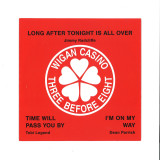
As WIGAN CASINO celebrates its 50th Anniversary you may be forgiven for thinking that those hallowed All-Nighters are but a fading memory from a time passed by. That couldn’t be further from the truth! The impact that it had on the thousands that attended the regular Saturday night gatherings was profound. The spirit of the Casino lives on in the hearts and souls of the faithful and is honoured by the multitude of Soul Nights, All-Nighters, All-Dayers and Weekenders up and down the country throughout the years. Gone, but not forgotten!
The term “Northern Soul” was coined a few years before the inaugural All-Nighter at Wigan Casino – 23rd September, 1973 – but it certainly came of age during its unprecedented eight year reign. It is also encapsulated in the three songs featured here that, collectively, became known as the “Three Before Eight”. The last three records played every Sunday morning, signalling the end of the all-night session.
This special edition anniversary release features all three legendary tracks, and for the first time, sequenced in the same running order as they were played.
out of Stock
Last delivered 3 years ago available to reorder, subject to availability
For the inaugural vinyl release of Psycho Bummer, we bring an EP from one of our label founders, DJ Scam (Brandon Ivers). Jungle and drum'n bass was the starting point for us as DJs, friends, and collaborators, so it seemed fitting to begin the story here.
The EP's opener, "Darkside Geezer", is a tribute to the transition point right before hardcore morphed into jungle in 1993. Although producers worked with a small palette of sounds back then, the emotion and freshness they were able to pull out of their limitations remains unrivaled. "Darkside Geezer" imagines an alternate reality of that period, drawing parallels between it and the transitions that 2020 brought us.
"Sodium Pentothal" is the roughest tune on this release, adopting the sonics of modern drum'n bass production, but channeled through the tropes of the music in its early stages. DJs like Sherelle, Tim Reaper, and Coco Bryce played a tremendous role in inspiring us (and keeping us sane) over the last year, so we wanted to stick to the tempo they helped rekindle.
The closer, "Black Swan", focuses on the simplicity of early hardcore and jungle, but breaks away with glassy chimes and a folding, geometric structure. Made with old samplers and tracker software, "Black Swan" was the first track Scam did for this release and it helped set the tone for what followed.
Psycho Bummer loves the feel of weighty vinyl, so we've opted for 180 gram pressings with a brilliant purple color. The album art, created by Canadian artist Ben O'Neil, is printed on a higloss laminant sleeve, which retains the striking colors of the original digital art.
out of Stock
Last delivered 17 months ago available to reorder, subject to availability
Four luscious, beach-coasting, jet-skiing tracks from the depths of Detroit via Manchester from Hidden Spheres.
Vocal tracks that undulate with 'mmm's and 'uuuh's for the real deal summer feel. Sweeping Rhode lines, organic percussion to make the thumbs raw and those deep, woofing basses that just keep on giving.
Hidden Spheres going for the jugular. Melting the sun like butter on a roasting-hot lobster.
out of Stock
Last delivered 7 months ago available to reorder, subject to availability
yellow marbled vinyl / full colour sleeve / incl. dl code
VISION proudly presents Icicle's third and final album 'Post'.
"Its been a long time since I announced any music let alone an album. Containing 12 tracks, it comprises modern production with raw 90's inspired tech dnb, some techno hybrids and a little brain-melter here and there. It's been a strange journey, writing it largely during the pandemic and hard to finish in near isolation. But I'm really proud to see it released and for it to be heard!"
out of Stock
Last delivered 8 months ago available to reorder, subject to availability
Did you know that miracles happen every day? We don't always see it that way We look at the state of the world and think, "It'll be a miracle if we make it out alive." But miracles are what humans do. We're Earth's most inventive and unpredictable species, when we're allowed to be. Also the most destructive. Miracle-Level is Deerhoof's mystical manifesto on creativity and trust. It celebrates the infinite small wonders of existence that spontaneously present themselves, when not obstructed by our death-driven masters. Musically, Miracle-Level is vulnerable, brave, and brimming with spicy surprises. Deerhoof's 19th album is also their their first to be recorded and mixed in a recording studio. Production was entrusted to Mike Bridavsky, at No Fun Club in Winnipeg, Manitoba. This is also their first album written entirely in Satomi's native language. Deerhoof once again speak in a secret code that only their fans understand, in which hooks abound, and genre is nonexistent.
out of Stock
Last delivered 3 years ago available to reorder, subject to availability
Following in the footsteps of "Mind Palace" and "Lost Spirits", respectively issued in 2018 and 2021, Hidden Empire return to Stil vor Talent with their eagerly anticipated third studio full-length, "Momentum". Going the same route that came to define their sound throughout the years, Branko Novakovic and Niklas Schäfers cook a savvy mix of deep electroid flavours and prog techno magnitude which flourishes in the long-playing format. Orbiting the frontier between proper no-nonsense, floor-focussed effectiveness and a trademark exploratory take on electronics, Hidden Empire here delivers one of their most accomplished slices to date, which not only spans the largest span of their many-faceted influences, from tribal anchorage to hypermodern escapology, but breathes a truly epic wind into it.
Draped in luscious, silken envelopes and easternmost ambiences, "Dawn" gets the ball rolling on a mystique-imbued note, halfway meditation-friendly material and square-shouldered club busting wares. Moving into Afro-infused house grounds, "Modesty" finds Branko and Niklas heading for the deeper end of the spectrum, as they pull out a clinically precise blender of rattling percussions, opaque incantations, lush synth swashes and verbed-out machine talk, tailored for nightly boogie rituals in the forest. "Avalanche" opts for a more brooding, deadlier approach. Cutting its path away from prying eyes, this one finds Hidden Empire pulling the stealth weaponry to absolute hypnotic effect - perfect for serious in-between peak time business with its thick, thriller-like tension, mist-shrouded atmosphere and surgical focus. Featuring Felix Raphael on vocals, "Who We Are", is a pop-influenced chugger that perhaps best defines Hidden Empire's ambivalent style, both hi-NRG and innervated with a melancholy that infuses down to the bass and most functional elements. Geared up for big-room traction with its seesawing synths and clinical drumwork, Raphael's moving timbre does more than offer a sensible counterpoint to the track's overall sturdy backbone, it takes it to a whole other dimension completely.
"Repeat The Good" ft. Wolfson balances out a fast-ticking groove with those subtle melodic lines Hidden Empire champion to astounding vibrancy, offering a particularly satisfying glimpse into their vortical imaginarium, whereas "Last Call" has us journeying to straight out Moroder-esque territories, flush with the aptly configured palette of fuzzy space disco bass, fast-paced Italo churn and vocodized talk for good measure. All in breaks and chopped-up euphoria, "Vivid" runs the hoodoo down in muscular fashion and with impressive levels of energy throughout, all set at cranking up the heat one notch further, while "Rebel" provides us with the kind of rough-around-the-edges EBM horsepower and neon-clad synth engineering that'll get the basement in a state of alert. Encompassing all of the pair's idiosyncratic merger of styles - from pop-laced Italo to spaced-out techno wares, through jagged motorik and heavily mecched-out jacking house, "Alright" shows off Hidden Empire's wide arsenal of pyrotechnics under the most compelling of lights. A more openly jagged and quirky weapon that hatches into a full-fledged solar number around the half, "Momentum" roars up the club's highway at full throttle, proving a formidable asset when it comes to plunging dancers into a state of weird, left-of-centre euphoria.
A stroboscopic eclipse is predicted as "Dark Sun" enters the room, deploying its obscure wingspan over the ravers, not quite a bad omen as it lets more light in with every bar, its brittle piano lines and heart-wrenching vocals cutting a path into the crowd's pulsating hearts. Graceful as Hidden Empire's music can be, a moment of utter exhilarating beauty. "Savasana" wraps up the voyage with a pure slab of cyphered 4x4 seduction, as an ASMR-like voice guides us across the soul-questioning haze that blankets our pathway onto a luminous finale. A piece of elusive nature, clearly designed for the club and yet telling a tale of off-piste initiation through twelve fascinating movements, "Momentum" will undoubtedly etch on the listeners' mind as one of the German pair's most strikingly powerful emanations.
Download:
1. Hidden Empire - Dawn Interlude
2. Hidden Empire - Modesty
3. Hidden Empire - Avalanche
4. Hidden Empire & Felix Raphael - Who We Are
5. Hidden Empire & Wolfson - Repeat the Good
6. Hidden Empire - Last Call
7. Hidden Empire - Vivid
8. Hidden Empire - Rebel
9. Hidden Empire - Alright
10. Hidden Empire - Momentum
11. Hidden Empire - Dark Sun
12. Hidden Empire - Savasana
13. Hidden Empire & Felix Raphael - Who We Are (Instrumental)
out of Stock
Last delivered 20 months ago available to reorder, subject to availability
Hot on the heels of last year’s Mermaids reissue retrospective, Hull’s deep listening house forerunners return: this time revisiting a pair of originals as well as previously unreleased versions.
It’s testament to the depth of feeling that Steve Cobby and David McSherry can conjure, that these tracks sound as potent and impactful as they did when they first came out - and not just for the dance. Throughout their 30+ years, the Yorkshire duo have produced ten albums amid many more collaborations, and transformed the remix into an artform, putting their fingerprints on everyone from Busta Rhymes to The Orb to Radiohead.
This EP collection finds them at the full scope of their powers: from disembodied mood music, to tripped-out dubby beats and raw house sessions for the club. The title track Subtle Body sounds like it drifted in through the window in the middle of a snowy night. Its layered chimes, looped delay feedback and floaty chords (played on a Wurlitzer Electronic Piano that Steve bought from Bill Nelson), mark it out as an enduring piece of ambient music, and a favorite for film-makers, able to soundtrack both haunted memories and afterparty comedowns with finesse. It precedes an unreleased instrumental version of Nightfall from Fila Brazillia’s 2002 album Jump Leads (named Mixmag’s chill album of the year), and as an instrumental, the chunky electro bass and mix of ephemeral tones and bird-like chirrups are brought clearly into focus. The attention to detail is what makes Fila Brazillia’s sound palette so rich, and Nightfall a certified smokers’ anthem.
On the B side, the tempo and temperature rises, and we’re treated to The Light Of Jesus, a favorite from Fila Brazillia’s 1994 debut LP Old Codes: New Chaos. Atop a bumping house groove, the song weaves together smooth organ pads and electrified guitar licks with syrupy bass and gospel-tinged exaltations from Charles Bukowski. The EP rounds out with Room ‘96, a live house jam from Hull’s Room nightclub, and a veritable time capsule back to the halcyon ‘90s rave days, when the lights were still on, everyone was home, and anything seemed possible.
The songs here on Subtle Body might be a window into a time long past, but they remain in the present: and as long as bodies seek pleasure, and dancers want to keep going til sunrise, Fila Brazillia will endure, and soundtrack those moments for us all to get lost in.
out of Stock
Last delivered 7 months ago available to reorder, subject to availability
Emotional Rescue is delighted to debut a first. Rather than a straight reissue of an (obscure) classic or a collection of music by an artist or label, here presented is a compilation of various artists centered around a sound and movement reggae-tinged music and how it influenced and spread from the Caribbean and diaspora.
Drawn from the off kilter digging of archivist, DJ and collector Bruno (perfectliv.es), Nowhere Like Here is not a follow up, but a sideways accompaniment, to his recent and already cult like 'Perfect Motion' collection of left field pop and new wave, recently self-released with Flo Dill (NTS).
This is a special release to celebrate the label's 10th year and beyond, offering a treasure trove of lo-fi and often pop inspired reggae cuts, mixing heartfelt Lovers Rocks style paeans and quirky private press oddities, all guaranteed to 'make-a-move and tap', these are, in the main ridiculously rare or impossible to find alternative bombs, that are just as sound system rocking and massive bass line quaking showcases of the enduring legacy of this Jamaican music phenomenon.
As with much of the early 80s period, the music community was in the throes of a Do-It-Yourself cultural renaissance as small labels, where crazy limited, one off White Labels Onlys came and went. Songs like Avalanche 's 'Your Love is Such a Good Thing 'or Warp Speed's 'Take It To The Night' were part of the claiming the means of production in to their own hands, pressing up the records and self-distributing. This raw, naive exuberance can be heard in the songs themselves. This is not reggae or Lovers as known, but something more expressive. Musical, simply produced, but with intelligible and uplifting optimism that is just superlatively catchy.
While Paul Thompson's 'Can I Take You Home' and Ras Ibuna's 'Black Beauty' are more straight-ahead Lover's style cuts, there is the parallel dance pop private pressing vibrations of the two Keith Robinson songs and Majority's 'Caroline' included all part of a thread; a joining the dots that Nowhere Like Here is at its most basic, a warmth the whole album exudes.
This is not a Lovers Rock Hits of some, but a left-of-center versioning, spread across Double Pack and cut loud for DJ play, fitting the ethos of Emotional Rescue by presenting something most will not have heard before and all the better for it.
out of Stock
Last delivered 7 months ago available to reorder, subject to availability
A Wednesday song is a quilt. A short story collection, a half-memory, a patchwork of portraits of the American south, disparate moments that somehow make sense as a whole. Karly Hartzman, the songwriter/ vocalist/guitarist at the helm of the project, is a story collector as much as she is a storyteller: a scholar of people and one-liners. Rat Saw God, the Asheville quintet's new and best record, is ekphrastic but autobiographical and above all, deeply empathetic. Across the album's ten tracks Hartzman, guitarist MJ Lenderman, bassist Margo Shultz, drummer Alan Miller, and lap/pedal steel player Xandy Chelmis build a shrine to minutiae. Half-funny, half-tragic dispatches from North Carolina unfurling somewhere between the wailing skuzz of Nineties shoegaze and classic country twang, that distorted lap steel and Hartzman's voice slicing through the din. Rat Saw God is an album about riding a bike down a suburban stretch in Greensboro while listening to My Bloody Valentine for the first time on an iPod Nano, past a creek that runs through the neighborhood riddled with broken glass bottles and condoms, a front yard filled with broken and rusted car parts, a lonely and dilapidated house reclaimed by kudzu. Four Lokos and rodeo clowns and a kid who burns down a corn field. Roadside monuments, church marquees, poppers and vodka in a plastic water bottle, the shit you get away with at Jewish summer camp, strange sentimental family heirlooms at the thrift stores. The way the South hums alive all night in the summers and into fall, the sound of high school football games, the halo effect from the lights polluting the darkness. It's not really bright enough to see in front of you, but in that stretch of inky void - somehow - you see everything. The songs on Rat Saw God don't recount epics, just the everyday. They're true, they're real life, blurry and chaotic and strange - which is in-line with Hartzman's own ethos: "Everyone's story is worthy," she says, plainly. "Literally every life story is worth writing down, because people are so fascinating." But the thing about Rat Saw God - and about any Wednesday song, really - is you don't necessarily even need all the references to get it, the weirdly specific elation of a song that really hits. Yeah, it's all in the details - how fucked up you got or get, how you break a heart, how you fall in love, how you make yourself and others feel seen - but it's mostly the way those tiny moments add up into a song or album or a person.
out of Stock
Last delivered 3 years ago available to reorder, subject to availability
Frankfurt's celebrated producer, Philip Lauer returns to Especial, this time teaming up with Berlin based vocalist Dena for a special collaboration, covering Julie Stapleton's soulful House classic with a modern interpretation across a number of versions (vinyl and digital).
After the success of the Hotel Lauer EP on Especial way back in 2016, Lauer has continued his ascendency with albums for Permanent Vacation and Running Back, as well as releasing a string of sure-fire, dancefloor friendly EPs for the likes of Cin Cin, Futureboogie and Skatebard's Digitalo Enterprises.
Born and raised in Bulgaria, before making the move the music mecca of Berlin, Denitza Todorova has a carved a path with her electronic, dance pop stylings across releases for the likes of K7 and Kitsune Music. First appearing on Make It Stay from Lauer's last album, it jumped out as the perfect partnership to bring the raw, soulful and uplifting sounds of the cult V4 Visions label up to date. Founded by Alex Palmer, the label was part of the UK's early 90s club sound, releasing street soul, deep house and more, in Where's Your Love Gone, Palmer and 18-year-old writer/vocalist Julie Stapleton hit on the perfect marriage of Lovers Rock and Street Soul yearning with the haunting sounds of US House. Presented as a new take on the classic, but with utmost respect, the EP starts with the Club Mix, a Larry Heard bassline joins a marimba melody, lifting Dena's vocals of youth's lost love and pain. This is followed by the Demo Mix, a warm, beautiful string laden original take that Lauer and the label felt had to be included.
DJ Slyngshot is welcomed to provide a deep, tech remix. A name to watch via his releases on his YAPPIN label and recent EP for Workshop, his remix is an analogue twist of hypnotic, raw dub techno percussion and counter breaks builds as string and piano join. The EP ends in the Synthapella, as bongos, cowbell and whistle are added to create a drifting Balearic version for late summer nights and dawn that highlight Dena's vocals in a 'sunrise' light.
out of Stock
Last delivered 4 months ago available to reorder, subject to availability
Kerri’s Kaoz Theory label unlocks the vault to two key tracks from the early days of the label that have never pressed on vinyl before.
First up the man himself, Kerri Chandler with a deep, heads down stomper ‘Who’s Afraid Of The Dark’. Kerri at his hard hitting best, as vocal refrains wash over the chunkiest of synth stabs and basslines with crunched up percussion laying the basis for a track that is readymade for smoke filled clubs and pumping sound systems.
On the flip, Josh Butler ‘Sunday Club’ goes deep down the rabbit hole effortlessly moving from ethereal elegance to twisted machine energy, showcasing that light and dark can sit together seamlessly to produce something seriously special.
out of Stock
Last delivered 5 months ago available to reorder, subject to availability
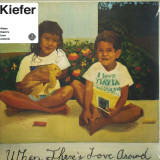
‘When There’s Love Around’ is GRAMMY Awardwinning artist Kiefer’s second album for Stones Throw.
For the first time, Kiefer is joined by a full band, including Sam Wilkes, Carlos Niño, DJ Harrison (Butcher Brown) and many more. Release to be supported with extensive global PR / radio campaigns and national and international touring.
For fans of Kamaal Williams, Kamasi Washington, Blue Lab Beats, Sam Wilkes, Moses Boyd, Yussef Dayes.
Kiefer is one of LA jazz’s most exciting new artists, with a broad international fanbase. Previous press and radio highlights include 6
Music, Radio 1 / 1Xtra, Radio 2, Pitchfork, Mojo, FACT, Mixmag, Drowned in Sound. Double vinyl cut at 45rpm for top audiophile
quality. Bonus track ‘thinking of you’ exclusive to vinyl release. (Not available on digital format.) Available to independent retailers on blue and yellow coloured vinyl. Headline European tour in February 2022.
out of Stock
Last delivered 3 years ago available to reorder, subject to availability
London based imprint High Praise are proud to announce the last addition to their roster. Having released a slew of heralded 12”s on Capitol K’s Faith And Industry Records, Darker Than Wax & XVI Records, London based producer & sound designer Dampé prepares to release his expansive and head-spinning new 12” ‘Glow’. With previous support coming from the likes of Tom Ravenscroft, Dummy, Bandcamp, Boiler Room, Mixmag, DJ Mag and Keep Hush, Dampé showcases why he’s making a name for himself as one to watch in the UK’s vibrant Electronic music scene.
Opening with the hypnotic arpeggio of title track ‘Glow’, the EP launches headfirst into a spinning world of driving rhythms and grainy synth textures. ‘Ravey Emo Tool (Like Me)’ provides a welcome moment of cloud parting serenity. ‘Twenty Two Savanna’ utilizes twisting, contorted breakbeats colliding against trance-like euphoria inducing synth patterns and shuttered vocals. On the flip, second single ‘Clay’ brings a dose of 2-step bounce to the proceedings, with an off-kilter but rock-steady groove. Atmosphere builds steadily as the gated notes and industrial effects of ‘Through The C10’ spill out of the speakers, before ‘King Tide’ brings the 12” to a powerful close with its rippling keys and avalanching waves of low end pressure. A truly impressive offering with incredible attention to detail.
out of Stock
Last delivered 3 years ago available to reorder, subject to availability
Denver producer and visual artist John T. Hastings aka RUMTUM returns to Bastard Jazz for his second album on the label, "Arcadian Daze". The album is a contemplative drive down a nostalgic highway, reflecting on a period of his late adolescence growing up in Ohio, spending time at Arcadia Beach on Lake Erie and discovering the likes DJ Shadow, Madlib, Fila Brazilla, early Four Tet, the original Ninja Tune roster and more. Revisiting these coming of age memories, John purchased an older MPC 2000XL and set out to musically capture the excitement of putting his first nascent loops together, inspired by this pivotal era of electronic music that has since birthed movements like such as Lo-Fi/Chillhop, Vaporwave, LA's mid-2000s Beat Scene / Low End Theory, etc.
The end result of "Arcadian Daze" is indeed filled with that nostalgic spirit paying homage to those aforementioned sounds, but also presents a forward thinking musical palate that's very much grounded in RUMTUM's sensibilities as a producer and time spent learning to program new & vintage outboard gear. The album moves away from the warm, dreamy sounds of last year's "Isles in Indigo" LP, and touches more into a mystical, pensive vibe with elements of darkness and light.
out of Stock
Last delivered 27 days ago available to reorder, subject to availability
Nearly five years on from their acclaimed debut, Bennett Wilson Poole reveal the follow up. It's been a long time coming, but...
That eponymous first album was only ever intended as a one-off collaborative project — a serendipitous series of events which began with a late evening session where the trio wrote ‘Hate Won't Win’. A response to the murder of MP Jo Cox, it was something of a fresh take on Crosby Stills Nash and Young’s classic protest song ‘Ohio’. The release saw Bennett Wilson Poole embraced by the Americana community, playing live on the Andrew Marr show and crowned as ‘UK Artist of the Year’ at the 2019 UK Americana Awards, in front of a watching crowd including Graham Nash himself.
The new album came together in similar fashion; Robin (Bennett) and Danny (Wilson) started writing new songs late into the night whilst on tour to promote the first record — a tour which unfolded from a three-night residency in a London pub into a year-long odyssey culminating in a headline show in Hall One at King’s Place — and before they knew it, there were enough songs to begin recording an unplanned second album.
Where the first record drank deep from 70s US west coast folk-rock, the second has been heavily spiked with 1960s British psychedelia, even featuring a cover by legendary counterculture artist John Hurford (whose credits include 60s artwork for Oz Magazine and International Times).*
Tony Poole’s meticulous and inspired production has spun Robin and Danny’s fresh batch of songs into a delicate web of musical delight. Fans of the ‘spot the reference’ game Tony started on the first record won’t be disappointed this time either, as there are plenty more to be found here.
As with the first album, the lyrics don’t shy away from current affairs – by the end of that year of touring, the band were already playing “I Wanna Love You (But I Can’t Right Now)”, reflecting on the state of US politics, yet optimistic that the problems are only temporary.
Many of the tracks on the new album feature live rhythm section Fin Kenny (drums) and Joe Bennett (bass) for the first time on a BWP record.
The title of the album comes from the lyrics of ‘Help Me See My Way’, the first single, a prayer for strength in difficult times, the trippy animated video for which was originally issued during lockdown. The dreamy positivity of the line "I saw a star behind your eyes" is tempered with the plea "don't let it die away", a message which feels as important as ever two years on.
All three collaborators have had critical acclaim in their own right. Danny Wilson’s credentials go back to his days in Grand Drive with brother Julian, and his consistent high calibre output with his Champions of the World led them to sweeping the board at the first UK Americana Awards with Album, Artist and Song of the year awards richly deserved; Tony Poole’s Starry Eyed and Laughing were hailed as “the English Byrds” on the back of their two CBS-released albums in the mid-seventies and he has since built an enviable reputation as producer and engineer; Robin Bennett has been relentlessly turning out timeless songs from his Oxfordshire base in bands from Goldrush to The Dreaming Spires
ASSASSINS did what many bands do: they grabbed a moment out of the air and slammed it onto tape machines and hard drives with relentlessness, cunning, and an attitude.
It was in Chicago, mid 2000’s, and though there was energy in the music scene, it wasn’t coalescing into anything you could use as a heading in the musical encyclopedia. Drag City, Thrill Jockey, Bloodshot, Tortoise, Andrew Bird, 90 Day Men – amazing labels and bands, but discrete and siloed and separated by boundaries that weren’t very real.
In the midst of that complicated morass, ASSASSINS generated a collection of songs that became the album YOU WILL CHANGED US. And it did.
There was confidence built into the fabric of the project: 5 members, 2 singers, massive synced video walls and samples streaming from laptops swirling in three dimensions around the stage. They could go from subtle atmospheric moments to a gargantuan wall of sound instantly. It was hard to do- months in cold practice rooms troubleshooting sections of songs or reworking synthesizer patches put the band through a self-imposed boot camp. And it brought them together as a sort of hive-mind focused on one thing: that these songs could connect. They could cut through the noise and share a state of mind with other human beings.
And it worked. Those early shows were mind bending. It was fun, loud, drunken, and rewarding- that time together, before the record deal, before the tragic let down of being traded and gobbled up by the major label system. The years after that got more difficult, more complicated, more human.
Leading us here: the musical journey of the Assassins has ended. With the up-coming release of their second and final album THE YEAR THAT NEVER CAME, we finally get to hear, and feel, the final statements of their inspiring chemistry.
In July of 2021, founding member, songwriter and singer Joe Cassidy unexpectedly passed away. THE YEAR THAT NEVER CAME is the culmination and end point of a collaboration that started in the early 2000’s with a chance meeting and excited conversation with Aaron Miller at a gig in Chicago. Quickly joined by David Golitko on keyboards, Merritt Lear on vocals and guitar, and Alex Kemp on bass.
It was Miller who saw Joe Cassidy’s song writing in a new context. Cassidy had been known for his beautiful, post- pop inflected BUTTERFLY CHILD, a thoughtful, regal project where Joe’s emotions could soar. Miller saw a different context for that voice- not dreamy, but immediate, not just hopeful, but demanding. He took Joe’s open hand and suggested that it could be a fist, raised in the air, with a crowd of other people doing the same.
At the time of his death legendary composer and songwriter Jimmy Webb (who wrote such hits as ‘Wichita Lineman and MacArthur Park) said Joe ‘was a creative and generous producer but, more importantly, he was a creative and generous friend.’
With the release of THE YEAR THAT NEVER CAME, this band, this relentless creative force, has to finally relent. No one in the band could see a future ASSASSINS that doesn’t include Cassidy. So in one last act of will, for the love of their friend, they did the rigorous work of finishing the songs that they had started together for the second album.
Assassin’s obsession with the notion of time, from YOU WILL CHANGED US to THE YEAR THAT NEVER CAME, flows from the most natural question we all have to ask ourselves: what do I do now? Because: how we react today to life’s unpredictability - that is the tomorrow we build for ourselves.
Over the past 20 years, The New Pornographers have proven themselves one of the most excellent bands in indie rock. The group’s ninth album and first for Merge establishes them alongside modern luminaries like Yo La Tengo and Superchunk when it comes to their ability to evolve while still retaining what made them so special in the first place. A dazzling and intriguing collection of songs, Continue as a Guest finds bandleader A.C. Newman and his compatriots Neko Case, Kathryn Calder, John Collins, Todd Fancey, and Joe Seiders exploring fresh territory and shattering the barriers of their collective comfort zone. Newman began work on Continue as a Guest after the band had finished touring behind 2019’s In the Morse Code of Brake Lights. Themes of isolation and collapse bleed into this album, as Newman tackles the ambivalence of day-to-day life during the COVID-19 pandemic. But Newman says that Continue as a Guest’s title track also addresses the concerns that come with being in a band for so long. “The idea of continuing as a guest felt apropos to the times,” he explains. “Feeling out of place in culture, in society, being in a band that has been around for so long—not feeling like a part of any zeitgeist, but happy to be separate and living your simple life, your long fade-out.
Living in a secluded place in an isolated time, it felt like a positive form of acceptance: find your own little nowhere, find some space to fall apart, continue as a guest.” Newman discovered new vocal approaches within his own talent. There are new and rich tones to Newman’s voice throughout Continue as a Guest, from his dusky lower register over “Angelcover” to his slippery slide over the glimmering synths of “Firework in the Falling Snow,” to bold tones he embraces on the soaring “Bottle Episodes.”
Another sonic change comes courtesy of saxophonist Zach Djanikian, whose tenor and bass luxuriate all over Continue as a Guest’s alluring chassis, especially on the menacing build of “Pontius Pilate’s Home Movies.” Along with Newman’s usual collaborators, several songwriters contribute. The bursting opener and first single “Really Really Light” is a co-write with Dan Bejar (Destroyer, the New Pornographers). Then there’s “Firework in the Falling Snow,” a collaboration with Sadie Dupuis of Speedy Ortiz and Sad13. “I was feeling like I wanted some help, so I sent it to Sadie and she sent me back this complete song that had these great lyrics,” Newman says. “She included the line ‘A firework in the falling snow,’ and I was like, ‘Yeah, that’s great.’ Sometimes you need that one thing to center the song, and even though I only used a few lines of hers in the end, I couldn’t have finished it without her.”
Even as Newman embraces a collaborative spirit more than ever, Continue as a Guest is a testament to his ability to discover new artistic sides of himself. “I started out as a songwriter more than as a singer, but at some point, you have to sing your own songs,” he says with a chuckle. “For a long time, I felt like the idea of changing a song because I couldn’t hit a note wasn’t okay—I could just get someone else to sing it. But I’m learning now that my songs can actually be a lot more malleable than I thought.” And it’s in that spirit that Continue as a Guest sounds like a thrilling path forward for The New Pornographers, with songs that generate a contagious feeling of excitement for the future as well.
blueblue is the latest full-length from multi-instrumentalist and all-around vibe wizard, Sam Gendel. The record, out via Leaving Records, is a concise, tightly wound song suite whose 14 tracks each correspond to a pattern within sashiko, a traditional style of Japanese embroidery. This conceit remains playfully ambiguous — to what extent, if at all, is Kagome (woven bamboo) meant to evoke the pattern of the same name, for example? But there is an intuitive sense, throughout blueblue, that Gendel has, in this instance, narrowed his focus. To say that blueblue feels richly textural might be a little on-the-nose, thematically, but alas…it does. There is an intimacy, a humility, and a strength at play here that typifies the work of a master craftsman. Only an artist could make it sound so effortless.
A Los Angeleno by way of Central CA, Gendel is by now an institution. Across a dizzying slate of solo releases and collaborations, he has amassed a reputation for not only virtuosic musicianship (primarily as a saxophonist, though the songs that would become blueblue were all initially composed on guitar), but also for his mercurial and prolific output — a corpus of work, which, while obviously indebted to jazz and hip hop (and the farther flung, experimental corners of both) is, in a word, unpindownable.
The bulk of blueblue was recorded in isolation in a makeshift studio built in a cabin floating atop a tributary of Oregon’s Columbia River. Having sketched out a set of guitar melodies, Gendel recorded the album in five-or-so weeks, during which time he became well-acquainted with the river’s tidal rise and fall. This organic rhythm, which daily lifted the house to meet the horizon, later setting it down gently upon the riverbed, permeates t
MC/Lyricist Raw Poetic (aka Jason Moore) announces Space Beyond The Solar System, his new album out December 9th on 22nd Century Sound, and presents its lead single, “A Mile In My Head,” featuring legendary saxophonist Archie Shepp. Although Space Beyond The Solar System could be considered a concept album by its outcome, its inception started from a string of experiments between Moore and frequent collaborator/producer Damu the Fudgemunk. These initial sessions had no specific direction but became the catalyst for what would become a prolific wave of Raw Poetic projects; five of which have been released since 2020.
It was these initial sessions and the demos they produced that convinced Shepp—who is also Raw Poetic’s uncle—to record what would eventually become 2020’s Ocean Bridges, a collaborative album from Raw, Damu, and Shepp, praised by The FADER as “modern masterpiece at the intersection of rap and jazz.” The trio’s collaboration continues on Space Beyond The Solar System, which boasts three tracks featuring the jazz legend, including today’s “A Mile In My Head,” a sprawling and thought-provoking album stand-out.
At two hours, absorbing Space Beyond in its entirety may be overwhelming for most, especially in the present day, but Raw and Damu are very aware of this. With a total of over 40-plus years of experience between the vocalist and producer, the two of them went down memory lane taking every influence and experience in their personal histories to extract ingredients for a groundbreaking statement. Space Beyond The Solar System is their most comprehensive environment to date.
The creation of Space Beyond sparked a conversation between Raw and Damu about their creative chemistry, with Raw likening their direction to a “space beyond the solar system.” His comment was a eureka moment for the two artists, giving their wandering efforts a sense of definition that was needed. “I think we’ve been exploring music beyond our limits for a few years,” says Raw Poetic. “It’s hard to tell where we’ll land, but we are constantly pushing our way out of the norm. Hence the title, ‘Space Beyond the Solar System.’ It’s just to say, this is new territory for us. Where the sky was once the limit, now it’s just the start.”
"Hungarian guitarist Gabor Szabo (1936-82) issued only three live recordings during his lifetime. Significantly, the first of these, The Sorcerer (1967), remains the most popular album in the guitarist’s all-too abbreviated discography. But there were also More Sorcery (1968) and Gabor Szabo Live with Charles Lloyd (1974), offering Szabo totally in his element and at his bewitching best.
Several more of Szabo’s concert recordings have surfaced in the intervening years, including this one, superbly captured for radio broadcast live in 1976 at the 600-seat Agora Ballroom in Cleveland, Ohio. It is a revelation. There is a sense here that concert patrons may have been hearing an altogether different Gabor Szabo than record buyers.
For one thing, Szabo is heard fronting what is likely his own group, rather than an army of studio musicians. In 1976, Szabo was leading a tremendous quartet with George Cables (or Joanne Grauer) on piano, Tony Dumas on bass and Sherman Ferguson on drums. Szabo had not had a band with this much jazz clout since his famed quartet with Jimmy Stewart in 1967-68 – and it is a union worth savoring: Szabo’s records during this period were light, at best, on jazz.
It’s unclear if any of these musicians are on the Agora date, but as Dumas’s “It Happens” opens the program, it’s a good bet, at least, that the bassist is on board here. But as Szabo’s ’76 quartet is not known to have recorded a studio record, Live in Cleveland is the closest thing to what a mid-seventies Szabo jazz album would sound like.
Gone, are the strings, vocals and concessions to commercial consideration so prevalent on so many of Szabo’s studio records at the time. What is present, though, is fine craftsmanship, tremendous interplay, and the exciting improvisation that good jazz always yields.
This particular concert was part of Sansui’s “New World of Jazz,” a series of 13 hour-long jazz concerts recorded at Cleveland’s iconic Agora Ballroom and broadcast over 40 FM radio stations. The series was sponsored by Sansui Electronics, a Japanese manufacturer of audio and video equipment, which previously sponsored a similar series of rock concerts recorded at the Agora as well.
Sansui was promoting its matrix QS 4-channel sound system – offering, what was considered at the time, superior diagonal separation and stereo compatibility. The firm, partnering with Agora Ballroom and Agency Recording Studio owner Hank LoConti (1929-2014), was looking to take advantage of what they rightly felt was the then-current jazz renaissance.
Each show’s 16-track master tape was mixed through the Sansui QS 4-channel encoder,” according to an August 1976 Billboard article detailing the arrangement, “for distribution to the 40 FM stations throughout the United States that bought the series” – allowing for three commercial spots for local dealers to advertise."
The recording is available for the first time on CD and VINYL. Mastering by grammy-nominated Jessica Thompson.
All of us carry a piece of where we’re from with us, but these parcels of fallow land often in a uniquely mysterious way become the prey that nourishes our aspirations. Agnès Gayraud a refined thinker by day that transforms into la Féline at night left Tarbes many years ago in search of greener pastures. After making a name for herself with Adieu l’Enfance (2014), Triomphe (2017), and Vie Future (2019), the author and musician has evolved once again. Her latest release Tarbes reinvents the circle of life and challenges our preconceived notions. She welcomes us to her hometown with sweet and clear melodies over the backdrop of an electronic hum, reminiscent of Mark Twain classic Tom Sawyer. Tarbes is no more than a listen away. Physically prevented from returning to her hometown by the viral threat we all know all too well, Agnès found her way back with a small Electone home organ. The constraints of off-peak hours that called for some DIY savvy, slowly but surely, roused her spirit. With a drum machine, a bass and a guitar, she succeeded in making the young girl inside her smile again. With 13 songs and just as many adventures Tarbes is a concept album that tells the story of a young woman’s formative years, as spent in her hometown. The returning hymn doesn’t only imprint nostalgia, it paints the full emotional portrait of a town. Because for Agnès, Tarbes is not just her theater, but her whole world, showing how fiercely protective she is of her hometown in the song Solazur. Under a magnifying glass of emotion, and with the sentimental testimony that is La Panthère des Pyrénées, the artiste shows us the skeletons in our own closets. Tarbes, more than a brief stopover in a rail journey to the coast, broaches issues that touch on abandonment, desertification, aging and redevelopment that many French towns and cities face today. Alexandre Guirkinger’s photographs serve as album art that illustrates this strangely unique singularity. While fine-tuning this collection of stories, in an oh-so-intimate album where solitude rips away the mask of confidence, Agnès found solace in uniting with other spirits. For 3 songs Tarbes, Jeanne d’Albret and Fum, inspired by an Occitan poem of Louisa Paulin (1888-1944), she invited the young voices of Conservatoire Henri Duparc a building she knows intimately, despite never feeling allowed to enter as a child to breathe the energy of their adolescence into this record. She also collaborated with Lyon’s own François Virot to imbue his delicate rhythms into her work, as well as Belgian guitarist Mocke Depret. Lastly, La Féline entrusted the last production stages to her eternal partner in music, Xavier Thiry, with Stéphane “Alf” Briat on the mixing board. The final piece has a complex tranquility, surrounded by non-verbality, with Jeanne d’Albret, Louisa Paulin and the Pyrénées safeguarding Agnes’ secrets. With the calm reassurance of her metamorphoses, La Féline delivers a slice of silence to her town, serving as both her cradle and theater. Tarbes’ Théâtre des Nouveautés is where Agnès Gayraud, La Féline, has decided to present Tarbes to its residents on October 14, 2022. While “nouveautés” evokes newness, this theater is reminiscent of a future which is already outdated, where modernity is only vague and fictional, carrying reminders of French haute-kitsch accordionist Yvette Horner, whose parents were the caretakers of what was then called the Cani Eldorado a bastion of virtue through the 30s, with its lineup of Catholic films. However, by the 60s, it would have become a temple of pornographic cinema. Tarbes, “Les Nouveautés”, end card. In the mid 90s, then 16 years old, Agnès discovered the volatile dust and the ghosts of the past that were hidden in this apostate theater. This phantom bequeathed song the teenager with the gift of her undeniable talent at her first appearance on stage a high school performance of a guitar-laden ballad sung in Spanish, a language her Andalusian mother has infused her with. On October 14, 2022, Agnès returns to the stage, bass in hand and joined by François Virot (drums), Mocke Depret (guitar), Léa Moreau (keyboard) and the Conservatoire de Tarbes singers to perform the album in its entirety
The undisputed kings of garage rock are back! It’s been 22 years since the last Headcoats album, but now Billy, Bruce, and Johnny return with a brand-new studio album!
Recorded last year at Ranscombe Studios in Rochester. Billy, Bruce, and Johnny kindly answered some pertinent questions…You got back together recently as Thee Headcoats Sect to make the ‘Tribute to Don Craine’ EP. What was it like working with each other again after all this time? BILLY: It was 'fab' and 'gear.' BRUCE: The weirdest thing for me was how weird it wasn't.
It was like time compressed, but to the 'good old days', early on. I was wary that it 'wouldn't be like Thee Headcoats', but it was. JOHNNY: I'm with Bruce and Billy on that one. I think we were all surprised how it all just worked. If I remember correctly, we kicked off role playing like we detested each other. Then we got started and well, you can hear the result.
What were the first songs you ran through when you got in the studio? BILLY: That’s a very good question. No idea. BRUCE: I can't remember. They all sound the same to me. JOHNNY: Bill had stuff on his phone that went “KSSHHCCCKSSHHHH”! So, we did that first. You’ve also paid tribute to Don with a track on the Irregularis album – ‘Oh Leader We Do Dig Thee’.
He was, along with the other members of Downliners Sect, a big inspiration to Thee Headcoats. When did you first become aware of his music and what was he like to work with? BRUCE: We were given (or possibly lent) a reissue of the Sect's first LP around 1977, marketed as 'Punk From The Vaults', which certainly floated our boats and definitely popped our corks, due to the somewhat aggressive yet carefree nature of the tunes and sound in general. Ollie, our old bassist, found an ad in a trade magazine for them with a contact number for a Michael O'Donnell, which I excitedly called almost immediately.
T'was none other than Don his'self and we managed to convince him into venturing down to Rochester to record some tunes with us which became the first Headcoat Sect EP. We were fairly starstruck and presented him with a brand new 'dearstalker' (or 'Headcoat', as they were now known). He was very accommodating and a great laugh and spent the evening with us, regaling us with tales of yore. I recorded a lot of it on cassette, which I may still have somewhere. Gawd bless Don
Over the past 20 years, The New Pornographers have proven themselves one of the most excellent bands in indie rock. The group's ninth album and first for Merge establishes them alongside modern luminaries like Yo La Tengo and Superchunk when it comes to their ability to evolve while still retaining what made them so special in the first place. A dazzling and intriguing collection of songs, "Continue as a Guest" finds bandleader A.C. Newman and his compatriots Neko Case, Kathryn Calder, John Collins, Todd Fancey, and Joe Seiders exploring fresh territory and shattering the barriers of their collective comfort zone. Newman began work on "Continue as a Guest" after the band had finished touring behind 2019's "In the Morse Code of Brake Lights". Themes of isolation and collapse bleed into this album, as Newman tackles the ambivalence of day-to-day life during the COVID-19 pandemic. But Newman says that the album's title track also addresses the concerns that come with being in a band for so long. "The idea of continuing as a guest felt apropos to the times," he explains. "Feeling out of place in culture, in society, being in a band that has been around for so long_not feeling like a part of any zeitgeist, but happy to be separate and living your simple life, your long fade-out. Living in a secluded place in an isolated time, it felt like a positive form of acceptance: find your own little nowhere, find some space to fall apart, continue as a guest." Newman discovered new vocal approaches within his own talent. There are new and rich tones to Newman's voice throughout Continue as a Guest, from his dusky lower register over "Angelcover" to his slippery slide over the glimmering synths of "Firework in the Falling Snow," to bold tones he embraces on the soaring "Bottle Episodes." Another sonic change comes courtesy of saxophonist Zach Djanikian, whose tenor and bass luxuriate all over Continue as a Guest's alluring chassis, especially on the menacing build of "Pontius Pilate's Home Movies." Along with Newman's usual collaborators, several songwriters contribute. The bursting opener and first single "Really Really Light" is a co-write with Dan Bejar (Destroyer, the New Pornographers). Then there's "Firework in the Falling Snow," a collaboration with Sadie Dupuis of Speedy Ortiz and Sad13. Even as Newman embraces a collaborative spirit more than ever, his new album is a testament to his ability to discover new artistic sides of himself. "Continue as a Guest" sounds like a thrilling path forward for The New Pornographers, with songs that generate a contagious feeling of excitement for the future as well.
Over the past 20 years, The New Pornographers have proven themselves one of the most excellent bands in indie rock. The group's ninth album and first for Merge establishes them alongside modern luminaries like Yo La Tengo and Superchunk when it comes to their ability to evolve while still retaining what made them so special in the first place. A dazzling and intriguing collection of songs, "Continue as a Guest" finds bandleader A.C. Newman and his compatriots Neko Case, Kathryn Calder, John Collins, Todd Fancey, and Joe Seiders exploring fresh territory and shattering the barriers of their collective comfort zone. Newman began work on "Continue as a Guest" after the band had finished touring behind 2019's "In the Morse Code of Brake Lights". Themes of isolation and collapse bleed into this album, as Newman tackles the ambivalence of day-to-day life during the COVID-19 pandemic. But Newman says that the album's title track also addresses the concerns that come with being in a band for so long. "The idea of continuing as a guest felt apropos to the times," he explains. "Feeling out of place in culture, in society, being in a band that has been around for so long_not feeling like a part of any zeitgeist, but happy to be separate and living your simple life, your long fade-out. Living in a secluded place in an isolated time, it felt like a positive form of acceptance: find your own little nowhere, find some space to fall apart, continue as a guest." Newman discovered new vocal approaches within his own talent. There are new and rich tones to Newman's voice throughout Continue as a Guest, from his dusky lower register over "Angelcover" to his slippery slide over the glimmering synths of "Firework in the Falling Snow," to bold tones he embraces on the soaring "Bottle Episodes." Another sonic change comes courtesy of saxophonist Zach Djanikian, whose tenor and bass luxuriate all over Continue as a Guest's alluring chassis, especially on the menacing build of "Pontius Pilate's Home Movies." Along with Newman's usual collaborators, several songwriters contribute. The bursting opener and first single "Really Really Light" is a co-write with Dan Bejar (Destroyer, the New Pornographers). Then there's "Firework in the Falling Snow," a collaboration with Sadie Dupuis of Speedy Ortiz and Sad13. Even as Newman embraces a collaborative spirit more than ever, his new album is a testament to his ability to discover new artistic sides of himself. "Continue as a Guest" sounds like a thrilling path forward for The New Pornographers, with songs that generate a contagious feeling of excitement for the future as well.
• Bob Thiele is one of the great producers. For his work with John Coltrane alone, where he gave free reign to the saxophone great's wildest musical visions including “A Love Supreme”, ignoring the usual cost consciousness of a major label, he deserves to be lauded. In addition to this, his eight years at Impulse! saw him recording seminal works by scores of musicians including late-blooming masterpieces by Duke Ellington and Johnny Hodges, and a whole wave of 'new thing' jazzers such as Archie Shepp and Pharoah Sanders. He didn't stop there and when he launched his own label, Flying Dutchman in 1969, he continued to innovate and record music that reflected its times, but that also resonates down through the ages. It is to Flying Dutchman that we are paying tribute on this compilation.
• Gil Scott-Heron's recordings for the label ran to three records, which sold well but not spectacularly at the time. They have since taken on a resonance that makes the album "Pieces Of A Man" in particular one of the most important recordings of the last century, and its opening track 'The Revolution Will Not Be Televised' an anthem. Pianist Lonnie Liston Smith had been on Thiele's final important Impulse! Recording, Pharoah Sanders’ "Karma", and continued to appear on Flying Dutchman, first as a sideman and then as a leader. His 1975 album "Expansions" was the perfect encapsulation of his 'cosmic jazz' and the title track is a moment of near perfection which has become one of the foundation pieces of modern dance music.
• Flying Dutchman's other great discoveries are here. Vocalist Leon Thomas found a new route for jazz vocals in the early 70s, which made him a star and earned him a place in Santana. Gato Barbieri became one of the major saxophone stars of the era, after Thiele enabled him to meld his free jazz leanings to the rhythms of South America. The label also made important recordings with Tom Scott (featured on Thiele's own 'Head Start'), Ornette Coleman and Oliver Nelson, whilst interesting records appeared by Esther Marrow, Harold Alexander and many more.
• This is Flying Dutchman is a considered tribute to the label, and features in depth and fully illustrated sleeve notes. In the year when Bob Thiele's son is gearing up to release the first new music on the label since 1976, it is an apt and timely reminder of the power of the music.
- 2023 Edition - Pressed on Clear Red Wax - LP housed in an expanded Stoughton tip-on gatefold jacket - Includes fold-out poster, sticker and insert, along with a download card for full album, non-album single B-side "The Cowboy Song" and an unedited October 1978 BBC audio interview with John Lydon // Reissue of the pioneering group's debut album First Issue. In 1976 Johnny Rotten and the Sex Pistols set the agenda for punk's year zero with 'Anarchy In The UK', a song that summed up the spirit, sound and attitude of the band in one shocking package. Two years later, the Sex Pistols were in tatters, but Rotten was as unsentimental as you'd hope. He reverted to his real name - John Lydon - and set about forming a band whose very identity kicked against press and media manipulation. Featuring bassist Jah Wobble, drummer Jim Walker and guitarist Keith Levene, his new group were Public Image Limited. The public image would be limited. PiL were a very distinct prospect from the Pistols, founded with a greater thought for rhythm, and with a sound that turned the page from snarling punk to a more experimental sound fusing rock, dance, folk, ballet, pop and dub. But that's not to say Lydon's new outfit lacked vitriol. 'Public Image' hits out against the notorious British tabloid press, who never gave Lydon an easy ride, and against his own Sex Pistols public image - "You only saw me for the clothes I wore". The debut single (and the album that followed) operated as a theme song and a manifesto: "_my entrance/My own creation/My grand finale/My goodbye," as the lyrics had it. It is, essentially, the sound of four people letting loose in a studio - and not caring what anyone else thought. The album was never officially released in the USA back in the day, its sound considered too un-commercial by major-labels for an American release. First Issue has been lovingly reproduced from the original UK 1978 release and this special reissue also comes with a clutch of post-punk era treasures. The 2023 LP edition includes an expanded gatefold jacket, an archive replica fold-out poster, a PiL sticker, insert, and Download Card for the album, the archival BBC interview, and "The Cowboy Song." All of which were approved and coordinated with John Lydon and his personal management.
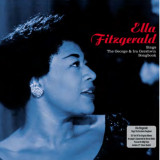
When Ella Fitzgerald began recording her series of albums devoted to the work of
America’s greatest song writers, she elevated the art of Jazz singing into a new
dimension while celebrating a unique musical heritage bequeathed to the world of
popular music. Norman Granz encouraged the bold decision to record five albums all
featuring the extraordinary output of songs composed by the brothers George and Ira
Gershwin during the Golden Age of popular song. Gershwin show tunes had long been
a staple diet for bandleaders, pop-vocalists and star-instrumentalists eager to perform
such exhilarating material as Strike Up The Band, Oh, Lady Be Good!, S’Wonderful and
I Got Rhythm. But there was also a gamut of ballads and romantic dance themes
needing to be interpreted with greater sensitivity. Ella was more than capable of
focusing on lyrics and caressing melodies of songs like Someone To Watch Over Me, A
Foggy Day and Embraceable You. They are among the 53 Gershwin classics she
recorded over an eight month period in 1959 and now featured in this superb collection.
The next album release on Goldie's fast-rising, boutique label Fallen Tree 1Hundred, The Day Out of Time by The Degrees is the Acid Jazz/Soul and Trip Hop long-player from drum and bass man of the moment Break, alsongside singer songwriter isha Campbell, heavily inspired by their home town of Bristol.
The album follows a year of lead-in singles nicely supported by Mary Anne Hobbs, Huey Morgan on BBC Radio 6Music, Mi-Soul, Solar and playlisted on the legendary Jazz FM.
Apparel Music Review:
Perhaps it's nostalgia for that wonderful time when making music was more challenging, at times laborious, and the more tiring was the process that led to the creation the more the final product acquired value, but this album brings you back to those times, without sounding outdated.
We know how much work goes into a record of this kind and, even if today's music world runs fast, presenting hundreds of thousands of releases a day, it is important to remember that records can still be timeless. Well, this is the first thing I thought while listening to this LP for the first time: it is timeless. It sounding ageless is perhaps ascribable to the fact that it recalls that famous sound coming from South-West England in the late 90s/early 00 but, having that musical wave had such an impact and therefore created a sonic standard, it can easily be revived and revisited in a current key without sounding obsolete. In addition, this album is full of different influences coming from R&B, Soul, Hip-Hop which, over the years, have grown and developed to become the daily bread of many listeners who have refined their taste with time, and can now perfectly incorporate the multiple sound stimuli coming from it, as 'The Day Out Of Time' satisfies every type of taste
Running Back welcomes Firas Waez and his studio character 9th House for a flock of heartfelt and intuitive house tracks. Centered around uplifting chords and joyous melodies, upbeat drums and shuffling hi-hats, it feels like being in a circle dance, watching flowers turning into fruits or caterpillars into butterflies.
Made with the tools of today, but with a burdening love for the ancient magic and positivity of this music. The results being highly contagious. Whether its any of the 9th House’s solo works like Reuben or the collaboration with Matrefakt, it’s impossible to hold still. But as no one can live off love alone, there is also an odd one out. The eponym Midas swaps vintage techniques and the love potion of its counterparts for sharp and exact peak-time magic that makes endorphins rush and cheeks blush. Whichever you finally pick of the five tracks, any of them are an amulet against bad times. A Midas’ touch indeed! Happy house painting artwork courtesy of Luciano Calderon via ruttkoswki;68.
out of Stock
Last delivered 8 months ago available to reorder, subject to availability
Circassian-Turkish Producer Sine Buyuka debuts new solo project Sinemis with lush, graceful album ‘Dua’, gently combining the ancestral Sufi music of her homeland with sophisticated techno-inflected ambient. Dua’s life began with a life-threatening illness. “I started feeling unwell last year and no one could figure out the reason,” Sine writes. “It was a scary time, not knowing and trying to manage symptoms while they slowly worsened. In late 2021, while I was visiting my family in Turkey during the Christmas break, I was taken into A&E. After more tests, I had a diagnosis and had surgery in January.” Following this, within the healing process - highly emotional as well as physical - Sine was drawn to the traditional Sufi music of Turkey and the Middle East. Ritualistic music to accompany ancient sema ceremonies, in which whirling dervishes enter a transcendental consciousness through ecstatic movement and repetition. With this influence at heart, Sine began work on ‘Dua’, with a newly-formed artist name to signify new, unfamiliar music from a celebrated electronic producer. For her, the album marks a significant step in her recovery. But it is also a potent marriage of contemporary and ancestral trancestates, interweaving sci-fi synthesis and floor shaking bass tones with mystic imagery, textures and timbres. A meditative, spiritual balm that melds field recordings, found sounds, ambient soundscapes, electronics and acoustic instrumentation to celebrate life and survival in challenging circumstances. The breathy, cinematic tones of album opener ‘Dua’ hover and shiver in preparatory stasis as broken-machine punctuation begins to dot rhythmically through the space. A yearning, repeated vocal sample - a living, beating heart inside the machine - characterises a crucial theme for the album: the marriage of digital instrumentation with the analogue, the human and the organic. Later, ‘Elegy’ reflects its title with heartbreaking chordal shifts and glitching birdsong, conjuring a sound world somewhere between KMRU and Max Richter. Key track ‘Gazel’ moves in glacial slo-mo, like whirling dervishes frozen in time at the peak of their trance. Euphoric ceremony made haunting and poignant without losing a mote of power…Across the album, the timbres of Sufi ritual are often captured by the otherworldly presence of the historic ney flute, said to be as old as the Holy Books. “Sufi music can be created using several different instruments but the ney flute is at the heart of it. The sounds emanating from this fascinating instrument kept capturing my imagination,” Sine tells us. Working both with samples and with Turkish musician Omar Faruk Tekbilek, Sine achieves a rare balance of reverence and recontextualisation for such a time-honoured instrument, here performed by a lifelong student of its intricacies and mysteries. In Sinemis’ hands, the processing and sonic treatment of the ney even sometimes renders it indistinguishable from Dua’s synthesis and sound-design