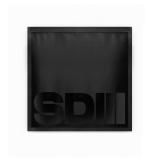
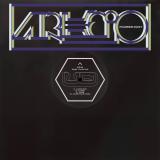
As part of the 20 Years of BM anniversary celebrations, Bondage-Music proudly presents Bondage Games Pt. 11 — a special five-part vinyl series. Each release is named after a constellation, together forming a unique tribute to two decades of Bondage-Music.
With Bondage Games Pt. 11, the label's iconic vinyl series returns in its most ambitious edition to date. Created to celebrate 20 years of Bondage-Music, the series unfolds across five constellation-themed releases, each featuring four exclusive productions from artists closely connected to the label.
The first chapter, Ursus, brings together four exclusive tracks from Roger Gerressen, Sascha Dive, Rhadow and Lola Palmer. From Roger Gerressen's hypnotic groove-driven Patterned Shards and Sascha Dive's unmistakable deep house craftsmanship on Dub Chronicles #10 to Rhadow's atmospheric Ripples and Lola Palmer's warm and emotional Slow Down, the record perfectly reflects the timeless musical identity that has defined Bondage-Music since day one — deep, soulful, groove-focused and made for both intimate listening and late-night dancefloors.
Pressed on heavyweight 180g vinyl and housed in an individually printed sleeve, Ursus continues Bondage-Music's longstanding commitment to exceptional quality in both music and design. The artwork was created by BM's longtime Head of Artwork, Pete Bombart — a close friend and an integral part of the label since its earliest days. His unmistakable visual language has become inseparable from the Bondage-Music identity, earning a loyal following far beyond the music itself.
Whether collected as part of the complete anniversary series or enjoyed on its own, Bondage Games Pt. 11: Ursus is a celebration of the artists, the friendships and the unmistakable sound that have shaped Bondage-Music over the past twenty years.
Cipo delivers 4 deep minimal cuts. Blending dubby textures with hypnotic atmospheric layers, the EP strikes a precise balance between intricate sound design and driving dancefloor energy. Anchored by immersive sub-frequencies and evolving modular rhythms, each track unfolds as a captivating microhouse journey perfectly tuned for late-night sound systems.
“Neither from here nor from there” is often used to describe migrant identities in territorial terms. In the case of Siete Catorce, it works better temporally: his music has always been so far ahead of its moment that it ultimately carved out a space of its own within both Latin American and global electronic music.
Born in Mexicali and shaped between the Bay Area and northern Mexico, his musical identity emerged through hip hop, dubstep, and the independent borderland scenes. After several years in Mexico City — without a clear place inside the local circuit — he created his own space through his music, developing a distinctive DJ/live set and a singular vision of contemporary Mexican electronic music, becoming a key figure within the city’s most forward-thinking underground.
In 2026, he releases El Valle, his first album in nearly three years. The record moves through different currents of electronic music — ambient, techno, cumbia, and tribal — filtered through a unique rhythmic language marked by syncopation, unpredictable breaks, and a constant tension between restraint and energy.
The album opens with “Mexicali,” alongside Andre Pereda, a tribal track stripped down to its percussive essence, evoking the genre through an ambient and synthetic approach. From there, “Aragón” and “El Rancho” progressively increase the tempo and intensity, combining cadenced phrases with minimalist tribal beats and unexpected turns.
In the second half of the album, now moving through territories of 140 BPM and beyond, tracks like “Montecarlo 1” and “Tierra Roja” drift between futuristic bass music and large-scale techno structures. This is followed by the 8-minute epic “East LA,” where Siete Catorce expands the energy of syncopated techno before releasing it into a pre-Hispanic tribal journey with flute and all the drums required for the occasion.
The closing section arrives with “Tlatelolco,” accelerating into an epic cumbia infused with trance references, and “Los Pinos,” a direct and forceful finale sustained by some of the album’s most precise sound design.
More than genres, Siete Catorce’s work is defined by meticulous sound design and an exceptional rhythmic sensibility — qualities that have established him as one of the most respected drum programmers of his generation.
Mining the rich seam between transcendental escapism and crushing physical pressure, Sciama delivers his first album for Samurai Music. Exploring an energetic pitch between half-time and full-tilt 170, the London-based producer sculpts brooding soundscapes of sheer peaks and deep pits, driven by unrelenting but light-footed forward motion and an imposing strain of sound design. As Sciama, Michael Watters has been marking out his exacting sound since 2019 with an assured run of albums on ASC's Auxiliary label. His second EP for Samurai — the Wave Interaction 12" released earlier this year — pointed to his current area of focus inspired by the teachings of electronic music pioneer Daphne Oram. Contemplating the relationship between precise electronic frequencies and human perception, Celetal Form now delivers the full findings of his exploration. Oram coined the term 'celetal' in her 1972 book An Individual Note of Music, Sound and Electronics, trying to sum up a connection between the celestial and electrical. It's this spiritual dimension contained within sound waves Watters is concerned with, and the shape of the music on Celetal Form follows suit. In an opening statement of abyssal ambience, 'Overload Into Silence' establishes an atmosphere that endures throughout the album. Caught between steely textures, vaporous reverb tails and subtle harmonic interactions, the glacial shift of the many layers under Watters' control reveals an intense amount of detail at play even before drums and bass come into play. From there on in, the intensity ramps up from one heavyweight stepper to the next. There is agile, brittle top-end percussion at work on the likes of 'Induced Resonance' and 'Consuming Pulse', perhaps the most closely connected to D&B, while 'Rational Echoes' and 'Scanning Waveband' deal in urgency and techno-coded tension. A half-time roll guides the huge kick drum undulations of 'No Panacea', and 'Celetal Emergence' opens up into more spacious surroundings to let the subtle microtonal inflections of the synth tones set a curious mood. The two 'Intermodulation' tracks bring Watters' exacting approach into sharp focus, pushing the drums back and foregrounding alien frequencies that coalesce into unfamiliar yet strangely uplifting forms. Throughout Celetal Form this uncanny sensation charges the music with a power that reaches beyond its immediate, surface level impact. This intentional reflection on Oram's visionary thinking charges the current sound of Sciama with energetic intrigue that stands apart and invites a mindful, maybe even spiritual, engagement.
2026 Repress
Sun Electric - the legendary Berlin duo of Tom Thiel and Max Loderbauer - returns with Episodes, an enticing new album. While the pair has been active and creating over the years (remember their track 'Every Now And Then' on the 10 Years De:tuned compilation in 2019), Episodes marks their first album of original material in nearly 20 years. Now, with a renewed way of working together, they present fresh and captivating music on the Belgian De:tuned label, built from recordings made with the vintage 1960s Subharchord Synthesizer. Across 6 tracks, Sun Electric takes listeners on a strange yet wonderful journey through shifting moods and sonic textures, capturing their unmistakable sense of exploration and atmosphere. With kind support of the Studio for Electroacoustic Music of the Akademie der Kunste. Stay tuned!
The wonderful Ian Anderson at The Designers Republic created all the graphic work. Mastered by Mike Grinser at Manmade Mastering. Available on 180g vinyl and CD, with a separate digital release through all the usual online stores.
2026 Repress
Sun Electric - the legendary Berlin duo of Tom Thiel and Max Loderbauer - returns with Episodes, an enticing new album. While the pair has been active and creating over the years (remember their track 'Every Now And Then' on the 10 Years De:tuned compilation in 2019), Episodes marks their first album of original material in nearly 20 years. Now, with a renewed way of working together, they present fresh and captivating music on the Belgian De:tuned label, built from recordings made with the vintage 1960s Subharchord Synthesizer. Across 6 tracks, Sun Electric takes listeners on a strange yet wonderful journey through shifting moods and sonic textures, capturing their unmistakable sense of exploration and atmosphere. With kind support of the Studio for Electroacoustic Music of the Akademie der Kunste. Stay tuned!
The wonderful Ian Anderson at The Designers Republic created all the graphic work. Mastered by Mike Grinser at Manmade Mastering. Available on 180g vinyl and CD, with a separate digital release through all the usual online stores.
Bypassing legacy protocols, Sunaas has evolved the Psy-fi sound algorithm. The Altered Reality E.P reconstructs the timeless blueprint with precision-engineered synth design, evolving sequences, and rhythms that ripple through parallel layers of perception. With each composition, the architecture expands further into uncharted sectors of hyperdimensional sound… a new reality is now live…
Klara Lewis’ distinctive talent for disfiguring sound into forms that remain recognisably song-like reaches a new peak here. Her new album Opening is a deceptive recording with veiled melodies and clandestine bangers.
Lewis, creator of worlds, treats music as a mirror that reflects a perspective misaligned with the real image. Her music moves in unusual and often startling ways. Acoustic instruments such as ukulele and piano are subjected to processes of deconstruction and reconstruction, their original forms continually reshaped.
The tracks within Opening offer an array of disorientating tactics; damaged field recordings are suddenly sliced into ominous rhythmical patterns whilst deceptively simple tactics provide foreboding dread. Often alien on entry, the progression of a piece can land in a surprising tenderness, or the other way around. The momentum grows as a physical state but also one which is questioning, desiring, encapsulating a feeling, to explore a further way of expression and ultimately connecting: A new closeness, a new perspective.
Opening is an album in which the protagonist’s manipulation of sonic matter seems to extend beyond the music itself, resulting in a corresponding manipulation of the active listener. Sounds shift, dissolve, and re-emerge in altered forms, creating an experience that feels both intimate and disorienting. Lewis maintains a delicate balance between abstraction and emotional immediacy, drawing the listener into a world where familiar musical gestures are constantly reconfigured in surprising ways.
The works on Opening are refracted through an exploratory and transformative lens, suggesting an artist continuing to redefine the possibilities of musical language as a space where the instantaneous and the eternal come together.
Music by Klara Lewis. Mastered by Stephan Mathieu. Cut by Andreas Kauffelt at Schnittstelle, Berlin. Artwork by Klara Lewis. Design by Klara Lewis & Nik Colk Void. Images from ”En Masse” by Circa, directed by Yaron Lifschitz. Dancer Holly-Rose Boyer.
”Tide” commissioned for compilation album "Dissolving Strawberry" (2020), released by Irrlicht. ”Drip” and ”Feel” originally composed for the film ”Failed Emptiness” (2024) by Mika Taanila.
Quiet, from the Latin quies, evokes a state of being still. In its verb form, quiet means to clear so that something can gradually come into focus. Kind Stranger by Amedeo Cappelletti is where quiet materializes in a more transient, even foreign, way. Each track takes a step back from noise, borne out of a slow return to music, a different pace, and a familiar place left behind for years.
Kind Stranger, released on Aurora Edition on July 24th, is about the strangeness of a return. Cappelletti's melodic scores work their way between faint noise and disquiet, and sonically muse upon the familiar. That is, when given enough time and distance, the familiar can become unrecognizable, demanding stillness to resituate oneself within it.
The album began taking shape when Cappelletti performed at Aurora Edition at Silent Green, just after he had returned to music following a three-year hiatus. In one month, he wrote forty-five minutes of new material from scratch. Then Cappelletti left Berlin after eight years and returned to the Tuscan countryside where he had grown up, back into slowness.
The album develops as an atmosphere in the truest sense. Resampled voices, found sound, and years of sound design practice converge as compositions form by overlapping texture with spatial depth. Kind Stranger cultivates a quietude that envelops the listener.
Vocal recordings made with Matthew Walsh and Sarah McInerney, collaborators Cappelletti met by chance in a Berlin ice cream shop, appear throughout the album like a current, shaped during a residency at MONOM, Berlin's spatial sound institute. Thematically, the record moves through digital addiction, fragmented attention, and the grief of work done in the darkness.
Kind Stranger is an offering to whoever finds themselves here within the quiet, in this particular quality of sound between return and lingering.
Every coastline develops its own rhythm. The Adriatic is no exception.
For decades, Italy’s eastern coast has been shaped by funk, Cosmic Disco, Balearic sounds, Italo Disco, House, Latin rhythms, Brazilian music and countless other influences. Rather than blending into a single style, these musical worlds have lived side by side, constantly inspiring new generations of DJs, musicians and dancers. For more than fifteen years, Soul Fingers and Funk Rimini have explored that landscape from different perspectives. Founded by Claudio Cavallaro in 2013, Soul Fingers grew into a vinyl-driven community where groove matters more than genre. Its philosophy has always been simple: if the groove is right, genres stop mattering. Brothers Ricky and Francesco Cardelli developed Funk Rimini into a project rooted in funk, disco, live performance and electronic production. Anima Adriatica is where these two journeys meet.
The project didn’t begin with the ambition of making an album. It began behind the turntables. As DJs, Claudio Cavallaro and Ricky Cardelli found themselves constantly searching for records capable of connecting distant musical worlds inside their sets; from Afrobeat into disco, from hip hop into Latin, from Brazilian grooves into boogie, from cosmic electronics into deep funk. Sometimes those records existed. More often, they didn’t. So they stopped searching and started writing them. Not records designed to belong to one genre, but records designed to travel between genres. That space between musical worlds became Anima Adriatica.
The music grew through spontaneous jam sessions with Ricky and Francesco Cardelli, drummer Enrico Mao Bocchini and, gradually, a wider circle of musicians, singers and longtime friends, making Anima Adriatica less a traditional band than the beginning of an open collective. Recorded at SynthPosio Studio, founded by Ricky and Francesco Cardelli inside Rimini’s iconic skyscraper, the project also carries a symbolic connection to the building itself, where many Italo Disco classics (including records by Betty Miranda, The Creatures and many others) were recorded decades earlier.
Betty Miranda returns not as a nostalgic guest, but as a bridge between generations. On the title track she performs a spoken-word text written by Claudio Cavallaro, reflecting on the invisible thread connecting the Adriatic dancefloor across time. From Baia degli Angeli to Cocoricò, from the legendary clubs of Riccione to today’s independent communities gathered around projects such as Soul Fingers and Funk Rimini, the places have changed, but the dancefloor continues to tell the same story. Much like Pier Vittorio Tondelli’s Rimini captured the Adriatic through literature, Anima Adriatica imagines its soundtrack.
Brazilian musician Daniel Plentz (Selton) expands that vision on Açúcar and Alegria, bringing another coastline into the story. Across its four tracks, the EP moves naturally between analogue funk, boogie, Brazilian music, underground disco, cosmic textures and the wider Black musical tradition, with All Down The Line paying tribute to the Paradise Garage era.
Released by Bordello A Parigi, the project found its natural home through a shared love of adventurous dance music, records and club culture. More than the title of an EP, Anima Adriatica marks the beginning of an open collective; a meeting point where musicians, DJs, producers and friends continue building bridges between genres, generations and communities.
Because Anima Adriatica doesn’t live inside a genre. It lives between genres. If soul music has always reflected the places where it was born, Anima Adriatica is simply our own Adriatic Soul.
Delsin is pleased to announce the second volume of their extensive compilation series combing through the catalogue of landmark Dutch techno label Djax-Up-Beats. The series, curated by Rush Hour co-founder Christiaan Macdonald, continues with a look at the label's legacy in the development of Dutch techno through the early 90s. This second volume in the Djax-Up-Beats 1990-2005 series comprises 25 tracks, presented again as a main triple-vinyl album plus three additional 12" EPs. The compilation also features again all-new illustration from Alan Oldham, design by Lost Communication and liner notes from music journalist Oli Warwick. Crucially, every track featured on the series has been carefully mastered by Johanz Westerman, bringing the best out of tracks that often had very little post-production treatment before they were originally pressed to wax. Volume 2 - The NL Connection takes a deep dive in the development of Dutch techno. Saskia Slegers didn't run her label with a specific focus on any one place, but she naturally connected with artists close to home. Emergent producers from across the Netherlands found a vital outlet in Djax-Up whether they were short-lived dabblers or dance music devotees on their way to lifelong careers. Volume 2 - The NL Connection looks at the first outings in Dutch techno by originators such as Stefan Robbers as Terrace, Dylan Hermelijn as Planet Gong and Edge Of Motion (with Gert-Jan Schonewille) and Sander Friedeman as Random XS. Whether it was sensitive, melodious machine dreaming, gnarly acid tweaking, jackhammer techno or oddball outliers, you could count on Slegers' label to point you to the best underground club music coming out of the Netherlands. With four more, equally extensive, volumes to come in this series, Djax-Up-Beats 1990-2005 is a thorough exploration of a true totem of techno culture -- a renegade label that operated on its own terms and carried surprises and slammers in equal measure.
Italian sound artist Giulio Aldinucci returns with his 5th album on Karlrecords: "Materia" is unsurprisingly a truly masterfully composed and sound-designed ambient masterpiece that adds perfectly to a series of critically acclaimed albums like “Disappearing In A Mirror” (2018) or “Shards Of Distant Times” – some of which made it onto several year’s best lists.
Giulio Aldinucci is an Italian composer and sound artist from Siena, Italy. His work focuses on ambient and experimental music, blending field recordings, electronic processing, and acoustic elements. Active since the early 2000s, he has released several solo albums on international labels including Karlrecords, Home Normal, and 99chants. His compositions often explore themes of memory, perception, and the relationship between sound and place.
Aldinucci's music is characterized by immersive, multilayered textures and meticulous attention to sonic detail. He constructs expansive soundscapes by integrating processed environmental recordings, choral elements, instrumental timbres, and subtle harmonic shifts. His style draws from both the aesthetics of contemporary ambient and the techniques of electroacoustic music, resulting in works that are at once atmospheric and conceptually grounded. The interplay between organic and synthetic sound sources is central to his approach, blurring the boundaries between the natural world and the constructed sonic environment.
His works have been presented at international festivals. He has also created art installations and multidisciplinary performances. In addition to his solo output, Aldinucci has collaborated with a wide range of musicians and artists, developing projects that intersect sound art, composition, and performance.
Aldinucci about "Materia": "Materia focuses on the idea of sound as a matter, which can be shaped into complex forms by removing excess material from the sound mass.The album originates from the dichotomy between accumulation and subtraction, creating compositions out of frequency-dense audio material in order to unearth what is “hidden” inside the raw sound mass. Unlike sculpture, in music time can be matter too by shattering sounds into milliseconds andrecompose them with a different fragments order, going beyond the traditional notions of rhythm and duration.“
Toy Tonics Italomania Vol. 4 is a compilation dedicated to new ITALIAN DISCO. Not ITALO DISCO.
10 new tracks made by young producers from Italy, exclusively made for Toy Tonics. All songs with Italian vocals.
Made with a lot of love by
Cleeeo, Giorgio Lopez, Magnolia, Juan Soto & Sam Ruffillo, KOKO, Luca Averna, Ricardo Baez, Euro Nettuno, The Cube Guys and Paccone.
The Italomania compilation was initiated by Mathias ‚Kapote‘ Modica. Creative mind behind Toy Tonics and half italian producer himself.
The series is a manifesto to show the status of Italian disco of today.
Kapote invited the most relevant producers to show different new styles of modern Italian disco and house music.
With a wide range of influence: Live disco, indie dance, italo pop, and italo house.
Italian disco is not Italo disco. The last few years saw a big revival of the trashy pop music of the 1980s called Italo disco, mostly with English lyrics.
But this compilation is about something else. It is about this new Italian disco. Toy Tonics wants to show a new way to combine Italianity with dance culture.
The Italomania Vol. 4 Artists
Cleeeo - Come Tocchitu: A sexy and sophisticated disco house track by 22 year old newcomer DJ and producer Cleeeo. Driven by a warm, uplifting groove and strong dancefloor energy. The record is dedicated to Brazil. The vocals move between Italian and Portuguese. This creates a natural bridge between two cultures.
Giorgio Lopez - Italiani Brava Gente: Giorgio Lopez is an important player from the much talked about new music scene from Napoli.
For "Italiani Brava Gente," he teams up with Los Angeles artist Sueño. The track is a tongue-in-cheek take on the stereotypical Italian male. It pays homage to late Italodisco legend Pino D’Angiò. The story unfolds from the perspective of a foreign tourist navigating the contradictions of self-proclaimed Casanovas.
The Cube Guys - Saper Ringraziare: The legendary italo house duo shows their Italian vibes and musical taste with “Saper Ringraziare”. The track captures the warmth of summer and the infinity of urban nights. A combination of early Italo disco elements mixed with their typical groovy beats.
Magnolia - Vesuvio: Magnolia’s “Vesuvio” is a cover version of a song from the 1960s by artist E’ Zezi. While the original is more in a folk vibes, the new version is an irresistible piano house track with groovy, sun-soaked vibes. It is made for the dance floor. This track blends Mediterranean roots with the euphoric energy of modern house. Some might know the vocals already from another cover version by Nu Genea from the previous album.
Juan Soto & Sam Ruffillo - Italomexicano: What happens when a Toy Tonics artist hangs out in Mexico city and teams up with the local scene? The result is here. A blend a Toy Tonics sound and tons of vintage synthesizers and some additional production by Mexican producer talent Juan Soto.
You get "Italomexicano". A fuse of the mystique of Mexican mariachi with the magnetic pulse of Italo disco.
KOKO feat. Elena Moroder - I Can't Understand: This melancholic piano house track is a serious floorfiller! Goosebumps! Italian DJ and producer KOKO teams up with Elena Moroder on "I Can’t Understand". Elena delivers a captivating vocal performance. The track explores the misunderstandings of a relationship where emotions were never fully expressed. It blends an iconic piano melody with warm, uplifting grooves.
Luca Averna - Le Luci Della Pista: Luca Averna is a DJ, producer, and resident at the iconic Pikes Hotel in Ibiza. "Le Luci Della Pista" is an energetic track designed for peak-time Ibiza moments while keeping a strong groove and a playful spirit.
Ricardo Baez - È Venerdì: Ricardo Baez is an Italian-Venezuelan DJ and producer. He is known for his distinctive blend of house, dark electro, italo disco, and leftfield electronics. Well respected in Italy's contemporary electronic scene he has been releasing on labels such as Running Bag, Permanent Vacation, Bordello a Parigi, Correspondant, Mule music, Live at Robert Johnson.
Euro Nettuno - La Notte Chiama: These guys are hot! Part of the Polyamore Crew, one of the rising italian new disco collectives their sound mixes Italo house from the 1990ies, electro and Pop in a very cool new way.
Paccone - J'Adore Napoli: Vincenzo Paccone is a DJ, producer but also very renowned graphic designer. He is co-founder of NSS. A fashion agency that is by now one of the leading italian fashion crews. He has been also working as a designer for Circoloco Ibiza for many years and organizes some of the hottest parties in Napoli currently. He makes his official debut as a producer with “J’Adore Napoli”. It is a vibrant tribute to the house music culture born in Naples. The track draws inspiration from the late 1990s and early 2000s. And is part of a NSS campaign about the ’new coolness of the city of Napoli“.
Josh Ludlow - one half of MAKE A DANCE - one of London’s most beloved duos - steps out on his own for a rare solo outing on legendary London imprint Rhythm Section International.
A late contender for EP of the year - the record meanders menacingly across four tracks of mind-altering, dissociative Brain Music, precision engineered to transport a listener and hypnotise a crowd without losing any dancefloor impact.
Interestingly, Bradley Zero (RS label boss) and Mr. Ludlow have a connection dating back to the late 2000s, when they were both drummers in rock and roll bands...almost 20 years later - a shared love of experimental electronic music has brought them back together, resulting in this spellbinding EP.
Channelling a much darker, heads down, aggressive sound than the uplifting house M.A.D have become known for, the record begins with 'Brain Music’, which serves as a Detroit techno-inspired wormhole of a track, guiding us into a parallel, inner dimension.
Time Upside Down is next up and it becomes apparent we have entered another realm entirely. The introductory bars of the song feel like a long journey down a dark tunnel. The sound design and acoustic backdrop are so evocative you can almost see it. Obnoxious bass notes reverberate through the space created by the track, slowly giving way to flurries of high-pitched, resonant acid lines - the sum of which escape easy classification. It would be lazy to call it house music, misleading to call it techno - but it’s definitely not tech house. Elements of disco, electro, post-punk, balearic and Weatherall-esque chug are all in the mix but essentially, this is its own thing - this is Brain Music.
The record continues to the penultimate track “The Kettle”, which starts off in more familiar upbeat, bongo-house territory before the calm is betrayed by a hovering intensity which grows out of nowhere before making space for a humungous bass synth melody - so big in fact that it has never once failed to elicit club-wide bass-face; which for a mid-tempo track is no mean feat. We round things off with ‘Mean Mother’, the most playful of the bunch: a Chicago house-indebted workout reminiscent of Paranoid London at their most visceral. The track feels familiar and almost safe until the synth-work is cranked up to 11, creating a cacophonous SH-101 build-up into a disco-esque drop that would get even the most reluctant raver jumping up and down for more.
Besides all the theatrics and acoustic world building, the evocative sound design and the insatiable, no-nonsense grooves - the thing that makes these tracks stand out is the attention to detail. No two fills are alike, every embellishment is EQ’d and polished to perfection - yet no immediacy is lost. The tracks feel alive, intentional and constantly evolving. Hyperbole aside - we have a serious, generational talent on our hands whose mastery of the equipment, understanding of the dynamics of the dance and unabashed
playfulness is being harnessed into something that stands out head and shoulders above the crowd.
To celebrate the 20th Anniversary the album is to be released as a 1LP Zoetrope, featuring the original album newly remastered at Half Speed at the legendary Abbey Road Studios. Plus, different artwork designs on side A+B which bring to life original designer Sanna Annukka Smith’s illustrations in mesmerising motions created by expert Zoetrope graphic designer Drew Tetz. Strictly Limited Edition pressing.
Yuki Kawamura - a multifaceted producer, songwriter, DJ, and the founder of Tokyo's iconic DJ warmup bar, Shibuya Oiran - presents a highly anticipated 12" vinyl release on her imprint OIRAN MUSIC.
As a globally active selector, her international footprint includes a monthly residency on Romania's Black Rhino Radio, alongside notable appearances on world-renowned platforms like NTS Radio and The Lot Radio.
Back in Tokyo, her venue Shibuya Oiran - featured in Time Out Tokyo's '50 Things to Do in Japan' as a premier spot to "pregame in stylish surroundings" - serves as a vital cultural hub where legendary international and local DJs gather. Its unique musical ecosystem is perfectly reflected in this release, which features a carefully curated selection of popular remixes from her debut album, Love Forever.
Side A delivers Balearic and dancefloor-ready grooves. It opens with 'Ra' a tribute to Sun Ra featuring musicians Watusi and George Kano, a track that has garnered massive support from top DJs including Red Axes...
The A-side also features brilliant Balearic-infused dance remixes by DJ SHIKISAI and XTAL (known for his work with Traks Boys and (((ssurround)))).
Side B shifts the focus to deep ambient and chillout soundscapes. It includes the previously unreleased full version of R.I.P Sunset',featuring an exquisite violin performance by Neko Saito.
The standout on this side is a stunning remix by renowned Japanese producer Calm. This specific remix holds a special history: Yuki debuted it as her opening track during her historic DJ set at the legendary Cafe Del Mar in Ibiza - making her the first Japanese Female DJ to perform there - where it received an incredible response on the floor.
The striking cover art is designed by HAMADARAKA, an acclaimed and rapidly rising female twin artist duo, produced by Nomadic Gallery in Tokyo.
Originally released in 2000 on Smalltown Supersound, Kim Hiorthøy’s first record Hei captures an artist who had made very little music before – yet it seemingly was the starting point of a musical career that would stay away from easy categorisation. Now, Hei (2026 Remaster) returns on blickwinkel, released digitally and on vinyl on 30 October 2026, as part of an ongoing series revisiting and reissuing Hiorthøy’s work.
Made in Copenhagen with little equipment — an Akai MPC2000, a stereo microphone and a DAT machine — Hei was assembled from samples, sequences and rhythms, with no outboard mixing or processing. Without really knowing what he was doing, the music was created intuitively while drawing inspiration from instrumental hip-hop he was listening to, the techno and drum & bass he admired but did not yet know how to make, and a broader fascination with music that felt personal, homemade and slightly uncertain of its own identity. Hei sits somewhere between those impulses. It is beat-driven without belonging entirely to beat music, experimental without announcing itself as such, but unmistakably coming from a playful series of events and decisions.
In that regard, the title of the closing track might be a fitting description of the album itself and, in hindsight, also of how we can look at Hiorthøy’s subsequent work. Taken from a story by Tove Jansson, the title evokes a state of openness and curiosity, a state where thoughts and impressions are simply given the space to unfold:
“He didn't care to get up, all day he let new images and ideas come and go as they pleased, now and then slept a little and woke up again and had no idea who he was. It was a peaceful and very exciting day.”
There is something of Hei in that state of mind: a willingness to follow an idea without knowing exactly where it might lead, a willingness to follow guts and the heart rather than ratio. Perhaps that is also what makes Hei still feel relevant today. As Hiorthøy puts it when reflecting on the music he made then and the music he makes now: “If I compare the music on Hei to music I’m making now, the general sentiment or smell or air or tree or pull of what I’m looking for and listening after when I work is, I think, for better or worse, more or less the same.”
All music by Kim Hiortøy
Mastered by Stephan Mathieu
Portraits by Kim Hiorthøy
Design by Jelle Martens
La Rama is hyped to bring you the debut 12” of an incredible Montreal based DJ/Producer, Ghazi aka Visionaire Not Millionaire. With some singles on VAs making it out in to the world over the last few years, it was time for Ghazi to have a maxi of his own. ‘Electrika’ arrives with a massive nu-school title track, the Bass/Break rumbler ‘L.O.S.T.’ & the dungeonous ‘Distress’. All this rounded off with our main man Marco Passarani’s second appearance on the label with a Passarani Club Dub!
Straight dance floor power for all your international party needs. Thank you for rocking with us :-)
Music & Mix by Ghazi aka Visionaire Not Millionaire. Mastered & Cut by Marco Pellegrino. Remix by Marco Passarani. Design by KG. Distributed by Mother Tongue & La Rama Records.
Hanne Lippard and Renato Grieco's Today's Special is a suite of language works synthesising melody and diction that integrates the literary and the audible in a repertoire of songs that bask in the melody of voice and the punctuations of structured composition. Working with methods of reduction rather than opulence in both tonal composition and rhetoric, each piece pegs the poetic to the musical with compositional schematics and methods. It is important to state that there is little to none improvisation here, instead, the duo set up matrices, rules and structural links that facilitated meaningful locus of exchange between their two practices. Lippard's texts are a collection of new and previously completed works. In these, as is typical for her work, she enjoys the easy pleasure of wordplay, iterative language, and decontextualised anecdote, as in opener Portrait of a Betrayal, a piece about the loss of a phone and the way it haunted the owner who dropped it, based on a lived experience. Grieco's instrumentation works with Lippard's language art as a form of acoustic typography. "I studied graphic design and I think about how you can express typography through voice," she says. "Renato's use of the viola da gamba becomes like an underline, or a font's brushstrokes, in ways that feel typographical." In this, the classically-trained composer Grieco often finds and echoes the pitch movements of Lippard's voice, intonation mirrored and revealed, linguistic meaning doubled and shadowed by plucked, strummed or bowed strings. His main instrument is the viola da gamba, the instrument considered closest to the human voice for its tonal range and ability to mimic inflections and timbre, and here he brings it even closer to the voice, building systems by which it moves with and around Lippard. He also plays piano and Wurlitzer, and joins her in speaking on Receiver and in conversation for final track The Black Rose. "Hanne's voice is an artist's voice, embodied as the artwork itself," he says. "But where my approach is from the perspective of a composer, hers is around rhetoric and language. We worked towards each other in this sense, Hanne finding a space to welcome my voice, and me designing an acoustic space to enhance her vocal persona." In some tracks the structural connections are obvious - the matched tumbling delivery and stepped pitches of voice and piano in Aficionado sounding like two tipsy friends descending a staircase. In others, like the triptych of tracks Three Rungs Ladder, structured with rules derived from nursery rhymes, or cumulative song (akin to the 12 Days of Christmas). For the Colour 1 and Colour 2 pieces, the duo worked from palettes of colours connected to clusters of harmonies, which underlined the power of the word and its articulation. The absurd Labradorable personifies a people pleaser, A Story About Being Blue is an imagined playful monologue from the Deep Blue supercomputer - requesting in sing-song stop motion to be called Debbie, and Larry - as Grieco echoes in factual reportage. Hurtbeat unpacks and recomposes a tweeted non-apology by a Russian art collector about owning a piece of racist art, Grieco shadowing Lippard's generating a third `drop-shadow' performer from the resonances between the duo, typographic re-articulation of the source material. The Receiver includes lines from Robert Ashley's Improvement (Don Leaves Linda), Ashley existing as a spiritual parent of sorts to the practices contained on Today's Special, and here interpolated as if he is being quoted and written through within the audible world of the piece in a palimpsest of borrowed sentences. Closing track The Black Rose contains its own self-aware comedy, a lightly distorted conversation sourced from a Reddit thread about whether black roses exist, recorded as if it were an internet radio or a low budget podcast, the casual exchange stilted in the delivery of platitudes as scripted speech. Today's Special was developed in person over the course of a series of small residencies - at Deutsche Akademie Rom Villa Massimo, Rome; Fondazione Morra, Napoli; Callie's, Berlin. In these limited periods that rarely stretched beyond a week, Lippard and Grieco developed strategies for the works, keeping tightly locked to musical concepts. This, for Grieco, is about maintaining a solid, meaningful connection within the compositions, and committing to everything having a purpose for existing within the work. Each element pulls its weight; has something to say, literally and metaphorically speaking. In the same way that Lippard's work leaves nowhere for her to hide, he wants the music to exist with its own naked purpose: "It's is about exposing nudity via reduced materials," says Grieco. "This is a form of courage we want to embrace. Once we take off everything, it needs to be extremely precise to maintain a connection with the audience. We have a lot of tools to hide behind now, to protect ourselves and our identities as artists, performers, and in life more generally. It's something I don't want to do. I want extreme reduction: no hiding."
Shape of the Unknown’ is kind of a double LP that fully embraces the idea of exploration. It is CHLOÉ’s most expansive and immersive work to date. ‘Shape of the Unknown’ is CHLOÉ’s fourth proper studio album. Its predecessor, ‘Endless Revisions’, was released in 2017. Nine years have passed. Nine years during which CHLOÉ has continued digging for music, DJing at internationally renowned clubs and festivals including Rex Club, Robert Johnson, Panorama Bar, Nuits Sonores, Glastonbury and many more, releasing EPs and remixes, while also allowing herself the time to explore entirely new creative paths.
The challenge is to capture the unknown, make it her own, endlessly reshape its textures, and ultimately preserve its mystery.
The first single ‘Drifter’, released back in June, already offered a striking glimpse of the sonic territories the album would venture into, driven by its hypnotically contoured basslines. The album's two other singles offer different windows into her world. 'Shapeshifter' captures CHLOÉ at her most hypnotic, balancing stripped-back techno and melodic house through deep rolling grooves, expansive bass chords and subtle rhythmic shifts that constantly reshape the listener's perception without ever disrupting the flow. Later, 'Repeating The Obvious' takes a more leftfield route, pairing staggered rhythms with retro-inspired harmonics and an understated indie dance pulse that feels simultaneously familiar and unpredictable.
CHLOÉ has ventured into live performance through new formats, notably alongside percussionist Vassilena Serafimova; immersed herself in film scoring with soundtracks for Paris la Blanche, Arthur Rambo, The Mountain, Blanquita, Guru and Unsubmissives; and developed compelling collaborations, from High Season, her project with Ben Shemie of Canadian band Suuns (which resulted in the album The Call), to her own organic, experimental audiovisual performances under the name Slo/Mo AV.
Throughout Shape of the Unknown, CHLOÉ blurs the boundaries between deep house, hypnotic techno, electronica and cinematic sound design with remarkable fluidity. The album unfolds as a continuous narrative rather than a sequence of tracks, moving effortlessly between beatless ambient passages, rolling analogue grooves and emotionally charged club music. Organic percussion, sweeping bass movements, melancholic harmonies and richly textured synthesisers create a body of work that constantly evolves, where no section feels static and every transition reveals another layer of depth. There is an unmistakable warmth running through the record, with grainy analogue textures and spacious production giving even its most driving moments an intimate, almost tactile quality.
The album’s title is no coincidence. It evokes a form that has yet to be named, something language itself struggles to grasp. CHLOÉ approaches it through an organic creative process. Each piece must first be performed in the studio, almost as if it were being played live. The album will be followed by a series of live performances and DJ sets, including a show at the Olympia on March 18, 2027.
She is joined by a handful of steadfast collaborators. Jazz trumpeter David Enhco appears on two tracks, ‘Undertow’ and ‘Inner Bass’. But above all, there are the voices: Ben Shemie lends his unmistakable presence to the radiant ‘More Than Just a Feeling’. Olivia Merilahti, singer, songwriter and one half of The Dø, appears on the otherworldly ‘TWYR’. Working with Olivia’s already hypnotic voice, CHLOÉ has approached it like a sculptor, enhancing its strangeness and dreamlike quality.
And finally, impossible to miss is the instantly recognizable voice of Kittin. A longtime accomplice, she lends her distinctive phrasing to CHLOÉ’s music here for the very first time. The strongest collaborations are often those that take their time, arriving only when the moment is right. Same kind, same bass, same vibe, same pride.
The result is an enigmatic, nocturnal record, drifting between introspective listening and dancefloor functionality, revealing an artist who remains far more interested in atmosphere, movement and emotional storytelling than conventional club structures. It is an album that invites us to dream more deeply and to dance again, both within ourselves and out in the open.
Wildweeds Volume II is the followup to Wildweeds (2021), Loren Connors’ first art book, and continues a series of limited artist’s books from Recital devoted to his work outside of music. Following Night of Rain, the book returns to the fragile flower forms of the original Wildweeds, but in a more expansive and varied collection of paintings, drawings, and haiku. Across 108 pages of full-color, hardbound printing, thin stems wander through enormous fields of white, blooming in eruptions of radiant yellow, blue, green, red, and violet. Some pages are nearly empty. Others retain stains, folds, shadows, and the physical disturbances of the original works. The result is a rare survey of Connors’ art, gathering years of paintings and drawings that have largely existed in isolation into one continuous sequence.
The haiku appear throughout the white space as small interruptions, sometimes nearly swallowed by the page. “wandering / into the sky / April mist.” They do not caption the paintings so much as drift alongside them, creating another kind of line, pause, and disappearance. The effect is deeply consonant with Connors’ music: the brief guitar poems of Airs, the shadowed miniatures of Lullaby, and the many other recordings and editions that have established his singular language across decades. A note from Connors’ guitar can hover on the edge of audibility, its beauty emerging through restraint and duration; the paintings possess the same fragility. A line bends, a flower appears. Colors pool and then recede into the surrounding white.
For this volume, Connors mailed hundreds of paintings and drawings as they were being made, arriving in folders with little concern for preservation or presentation. New drawings arrived often, another envelope every few weeks for a year. From this accumulation, the book was photographed, edited, sequenced, and arranged into its present form. In the preface, Yuko Otomo places Connnors’ work within the tradition of Haiga, the Japanese practice of bringing haiku and visual art together. She writes of Mujo, or impermanence, and Ku, or emptiness: the open, shifting space in which things appear and disappear. A flower blooms, a leaf falls, a line fades into the page. Francis T. Patnaude, Jr. describes Connors’ artistic impulse as an attempt to “give form to the formless.” Wildweeds Volume II is an opportunity to spend time inside his quietly accumulated body of visual work: a monograph giving sustained form to years of paintings and drawings. Portrait photograph by Suzanne Langille; art photography and design by Sean McCann.
Cosmic Romance presents the debut album from Sua Galera, a vibrant 8-track journey shaped by friendship, late-night sessions, and a shared love for groove-driven music.
Formed in Dortmund, Germany, located in the middle of the multicultural region Ruhr, Sua Galera brings together nine musicians who first connected through the city’s jazz music scene. Led by keyboardist and producer Eskil Bauer, the collective channels a multinational identity, reflected both in its sound and its name: “Sua Galera,” Portuguese for “your crew.” With vocalists with Brazilian and Moroccan background at the forefront, the project naturally blends diverse cultural influences into a warm and cohesive musical language.
The album moves effortlessly between Brasil funk and Mediterranean-inspired grooves, all filtered through the timeless sound aesthetics of 1970s and 1980s studio productions. Recorded through countless nights spent both in the studio and immersed in live music culture, the record captures the spontaneity and chemistry of a band deeply connected through performance and collaboration.
Perfectly aligned with the Cosmic Romance universe, Sua Galera’s debut delivers an organic, soulful, and rhythm-forward sound designed for DJs and listeners seeking emotionally rich groove music.
Frenchman Janeret heads up the second release on fledgling label Species. Deep in the game for over a decade now, Janeret has an innate ability to blend emotive layers of electronic funk with sultry grooves and hypnotic rhythms. His output is impeccable, each release encapsulating his emotionally rich approach. On the road, he’s an in-demand selector, channelling his love for sharing music that moves people into spellbinding sets from Europe to the USA, Australia and South America.
On the Vibrations EP Janeret embodies the essence of what makes him unique: combining the core foundational components of his sound to produce four dancefloor-ready cuts that epitomise where he’s at right now…
The EP opens with its title cut, ‘Vibrations’, a steppy production with an enchanting riff and mythical melodies. A reggae vocal utters “vibration” intermittently, accompanied by a hip hop sample, demonstrating Janeret’s broad sonic palette. Layered drum arrangement and deep bassline make this one a surefire dancefloor groover.
Up next it’s ‘No End’, a mesmerising trip driven by crisp percussion and a mean b-line. As the drums roll out, Janeret introduces jaunty layers that add cosmic funk to the cut. With each stage of progression the swirling funky synths envelop the listener more and more, immersing you in their wistful vibrations. A spinetingling break allows space for a short breather before the beats come back in, guiding us to the close.
On the flip we have ‘Fazed’, which kicks off with sturdy breaks and a highly effective, simple melody. The low end is immediately captivating, complementing the melody with a little more complexity. Together, the beats, bass and uncomplicated melody build steadily, with more elements added bringing further depth to the cut. This is one for closing your eyes and really losing yourself in the moment.
Finally, ‘Sub Pressure’ closes out the EP with a dreamy, yet bass-heavy atmosphere. Soft pads glide across the top layer, while a hefty b-line balances things out in the bottom end. Janeret’s exquisite production keeps things progressing with subtle elements creeping in throughout, creating a symphony of electronic sound and vibration. Let the brighter layers tantalise your spirit, while the bass moves your body.
Masterful work from Janeret here, with four versatile tracks designed to move the dancefloor across mind, body and soul. Feel the Vibrations…
Originally released in 1990, as a triple album in box set with probably the best work THE KLINIK ever did. A selection of their musical works all recorded between 1984 & 1988 and never released before, the box came as a limited edition in 1990 and was sold out in no time, and therefor very rare and hard to find.
Now Antler Records has revisited the box, remastered into a sound experience like you never had before; 6 sides packed in newly designed inner sleeves with band photo's (by Inge Bekkers) that have never been published before. 6 sides, three heavy weight vinyl albums in one extra broadened single album sleeve. Cold electronics, shivering spheres, minimal and highly atmospheric, a soundtrack for a still to be made film. A sound experience like you never had before!
The Klinik is Marc Verhaeghen-Music & Dirk Ivens-Lyrics
All Tracks recorded in the Lab between 1984 & 1988
Digitally Remastered in 2026 by Pieter De Wagter(Equus)
Vokabularium returns with leksikon vol. 2, the second instalment of the label’s evolving VA series - a carefully curated body of work that reflects the deeper philosophy behind the Copenhagen-based imprint: emotionally driven electronic music built for introspection as much as the dancefloor.
Following the success of the first leksikon compilation, this new chapter expands the label’s sonic identity further, bringing together a diverse collection of artists whose productions move fluidly between melodic techno, leftfield electronica, deep house and experimental club music. Across the compilation, there’s a consistent thread of tension, atmosphere and storytelling - records designed less around fleeting trends and more around lasting emotional resonance.
Founded by Denis Horvat, Vokabularium has steadily established itself as a platform for detailed, synth-led electronic music rooted in analogue textures and cinematic depth. The label has become an extension of Horvat’s own musical language - one shaped by releases on respected imprints including Innervisions, Afterlife and Diynamic, alongside his increasingly distinctive output on Vokabularium itself.
As the thirteenth release on Guy J's Early Morning imprint, this three-track collection unfolds across 25 minutes and 9 seconds, exploring movement, emotion, and introspection through three distinct yet interconnected works.
The release opens with Secret Serv1ce, an uncompromising statement driven by a commanding beat, layered percussion, and psychedelic textures that blur the boundary between reality and abstraction. Its hypnotic momentum earns attention, reaffirming Guy J's command of both studio craftsmanship and musical skills.
At the centre of the release lies Placebo, the collection's longest work. Across nearly eleven minutes, it balances ethereal atmospheres with a meticulously engineered groove. Delicate electronic textures gradually give way to an irresistible melodicmotif that transforms the track's emotional landscape.
Closing the EP is My Existence, an intimate exploration of identity that reflects both the artist familiar to audiences around the world and the quieter dimensions hidden beneath the surface. Synthesizer interplay and forward-looking sound design converge into a navigation through unexplored emotional and sonic terrain while connecting memory, imagination, and rhythm into a unified whole.
With EARLY013, Guy J demonstrates how electronic music can remain both intellectually engaging and physically compelling, inviting listeners to lose themselves on the dance floor while discovering something deeper within the process.
We are honoured and excited to share the fourth Dream Space EP with the world: Domenic Cappello - Celestial Wave.
For more than three decades, Domenic Cappello has been at the helm of Subculture - the innovative and vastly influential Saturday night at Glasgow’s Sub Club. A true master DJ with deep rooted influences from Detroit & Chicago, Dom has consistently pushed things forward over the years and remains at the cutting edge of modern dance music.
Throughout the 90’s and early 2000’s, he put out high-quality records under various monikers on labels such as Soma, 20:20 Vision & Seventh Sign. Fast forward to recent years and Domenic has been on nothing short of a hot streak - releasing music under his own name on Craigie Knowes, Clone Royal Oak and his outstanding ‘Basement Philosophy’ LP on Alien Communications.
He brings the heat once more for this record; blurring the lines of house, techno and electro to deliver four awe-inspiring cuts of electronic music.
‘The Secret Moon Party’ sets things off, nodding to a certain Highland gathering by some of Scotland’s finest purveyors of quality tunes. A warm, gritty bassline carries the track, evolving into a symphony of precise sound design that is in equal parts playful and euphoric.
Dom’s knowledge of the dancefloor shines through on ‘Acid & Love’. This early night floor filler is the alchemy of just about everything you want to hear when things are getting going. Pure warmth and bliss throughout, also holding its place played deep into the late hours.
‘We Loved Your Ears (in memory of Keith)’ is a heartfelt tribute to the one and only Keith McIvor aka JD Twitch of Optimo. Dom wrote this track as something he thought Keith would have loved, and for this one, we’ll let the music do the talking.
Keith was, and continues to be, an enormous inspiration for us and so many others. In his memory, all proceeds from the digital sales of ‘We Loved Your Ears’ and 25% of all vinyl sales will be donated to Beatson Cancer Charity and The Scottish Brain Tumour Research Centre of Excellence.
Closing the EP is title track ‘Celestial Wave’, which does exactly what it says on the tin. A beautiful piece of music and fitting soundtrack for star gazing, moon dancing and dreaming.
BATTISTINO, the artistic alias of Marco Battistini, is an Italian musician, songwriter, producer and DJ. His project is rooted in the meeting point between Italo Disco, French Electro, late-’70s Disco Music and Italian pop culture, reinterpreted through a contemporary vision that avoids nostalgia in favor of a distinctive sonic identity. His main influences include the aesthetic vision of Daft Punk, the musical freedom of Daniele Baldelli’s Cosmic Sound, the international disco movement of the late 1970s, and the golden era of Italian Italo Disco, with a special admiration for Righeira. His productions combine driving synth grooves, pulsating basslines and immediate melodies. Gritty electronic drums, saturated synthesizers and subtle harmonic distortion deliberately break away from the polished sound traditionally associated with classic Italo Disco. The result is a more physical and textured sonic palette that preserves the melodic elegance at the heart of the project. BATTISTINO’s visual identity follows the same philosophy. Elegant, reserved and almost bureaucratic, he prefers to remain behind the scenes rather than at the center of attention. More than a performer, he acts as the curator of a sonic archive, where every track represents a fragment of a larger story.
“Il Segreto” is the opening chapter of a conceptual trilogy inspired by an affair that was never revealed, set on the Italian Riviera in the early 1980s. Rather than telling the story itself, the project explores what remains: silence, forgotten details, invisible traces and memories suspended in time. Music, visual design and imagery all become chapters of the same narrative. Every release is a new file, every track a recovered document, every production another fragment of a story that will never be fully disclosed. BATTISTINO doesn’t tell stories. He preserves them. And, from time to time, he allows part of them to surface.
Continuing his compelling exploration of dubwise pressure at 170, the relentlessly prolific Brendon Moeller returns to Samurai Music with six stunning demonstrations of purposeful minimalism and spatial intrigue. Arriving in tandem with a second EP of introspective meditations on Samurai sub label SAIBAI, Codebreaker finds Moeller's peerless run of shadowy broken dub techno yielding startling new forms as the upstate New York artist continues to mine a rich seam of inspiration.
There's a pronounced economy of sound exacted on Codebreaker that binds the tracks together aesthetically, taken to the furthest reaches of subtlety on 'Dorian Grey Frequencies' as filigree slithers of percussion skitter across a brooding surface of sub bass with little in the way of distraction. This approach allows the microscopic detail of Moeller's engineering to shine through, as every inflection and murmur crackles with lithe movement to give each track its captivating energy.
Fractured beatdowns creep into earshot on 'Static Possession', edging towards Gescom-informed B-boy structures head-spinning in cryo-stasis surrounded by the hum of machines from a distant future and punctuated with occasional bullet points of delay soaked acid. Even when the bass starts to snarl and the hi-hats start ticking faster on 'Interzone Pulse', they're managed with brutal precision and a narrative flow of anti-build-ups that maintains a nail-biting tension throughout.
The decision to lean into a stripped-back sound on Codebreaker shows the faith Moeller places in his particular interpretation of bassweight 170, as his jaw-dropping sound design speaks volumes with the most modest of lexicons in a dialect never heard before.
This is Timmy Stewart & Jordan Nocturne's debut single together as TNI, a raucous percussive club weapon designed by The Night Institute residents to reflect the pair's shared history & energy as DJs.
First up on remix duties is Shit Robot. The Dublin-born, DFA mainstay cranks the energy right up, driving things further forward with punchy drums and bright insistent synths built for the peak of the night.
Irish collective LA Dysto have been on a roll recently, with their unique brand of chugged-out electronics. Here they get psychedelic, dubbing out the vox and adding a driving hypnotic bassline,
The finale belongs to fellow Belfast artist Viper Patrol, who strips the track back to its bare bones and heads off on a tripped out breakbeat mission with even more middle-eastern twists.
Musique Pour La Danse presents a raw, euphoric, and totally essential document of British rave history. LIVE IN MANCHESTER captures like nothing else the pure energy and essence of an era.
Featuring the unstoppable duo Mark Franklin and Nigel Champion, and vocalist Saffron, this legendary 1992 live set delivers iconic tracks like "Anthem", "Adrenaline", and "Malfunction" in their most ecstatic form and many exclusive tracks.
Often copied and sampled, never surpassed, because it simply can't be. If you're only owning one rave record, this is the one.
Includes liner notes by Matt Anniss, re-designed in Büro Destruct with an historical collectible flyers poster 12"x36", with the help of Phatmedia.
Newly mastered and cut at Transition Studios for maximum impact. Simply the best thing for your warehouse soundsystem.
In late 2025, Manchester producer Psychederek established the Via Jupiter label as an outlet for his work.
For the label's fourth release, Psychederek returns with 'The Right Side Of The Ocean', a guitar and percussion themed record that drifts somewhere between balearic pop, new age and loose-limbed disco.
Danny Ward's percussion runs throughout, giving the record a warm, organic pulse beneath its hazy melodies.
'Saint Joan' sets sail with a nostalgic, guitar-led groove, easing us into the world of the EP.
From there, things get a little baggier on 'Aire Salado', a Happy Mondays-adjacent pop song built around Stan Lewis' catchy saxophone riff, with Lois Holmes' backing vocals adding another layer of laidback charm.
'In The Sun' settles deeper into the groove, built around repeating vocal and guitar hooks, dreamy synth pads and a deep, rolling bass line.
Then comes 'Central Drive', where the tempo lifts and the record heads towards disco territory. Its roto-tom driven breakdown takes its time, opening up the groove before eventually slipping back into the track's main synth riff.
Finally, 'Everything Settles' brings things back around, dissolving into an ambient reprise of the opening track. The guitars give way to synths, the vocals become a repeating mantra and the whole thing slowly drifts off into full new-age bliss.
Rapidly gaining momentum, Drumcode’s new DC4 series returns to serve up a collaborative feast for its fourth edition.
Since debuting in summer 2025, DC4 has done exactly what it says on the tin: serving up four elite tracks that deserve the spot to shine.
You know you’re going to get A+ quality when you cue up a Victor Ruiz & Alex Stein collaboration. The Brazilians have a long history of studio jaunts and they deliver the goods via ‘Core’, a brilliant brain-scrambling outing with a strong dramatic arc.
Charles D & Weska follow up last year’s ‘The Answer’ on 1001 Recordings with ‘Can’t Get Enough’ feat. Bexxie. With a foot in prog and techno alike, this is driven by low-slung grooves and Bexxie’s sexy vox, packing an exhilarating energy throughout.
Enter two Drumcode debutants – SCRIPT & OKAYVAL. The former is a fast-rising American artist who is coming off collaborating with Brazilian superstar ALOK, while the latter is a Colombian born, US-based artist whose earned gigs at EDC Vegas and Tomorrowland this year. ‘LIKE THAT’ is a high-energy jam marked by tight rolling percussion and a sharp vocal loop designed for peak-time impact.
Another pair of fresh faces land on the comp as Martin Costas & Gabriel Gil drop ‘It’s All Around’. Lock in for a pulsating slice of prog driven by hypnotic rhythms and lush melodic textures. A versatile cut fit for a variety of party situations.
Split#5 marks the fifth and final installment of the Split series on the Various Artists catalogue of Pi Electronics, pairing Spanish producer Hurtado and Greek producer Nikitas Grs. Despite their distinct approaches, Hurtado's industrial-leaning broken beat funk and Nikitas Grs' psychedelia-infused noise techno converge through a shared aesthetic of textured sound design, raw energy and dark atmospheres. On the A-side, Hurtado showcases his trademark production style through the driving cuts "Show of Force" and "Bad Company", while "The End", featuring vocals by Genevieve GV, reveals a more experimental side of his production. The B-side welcomes Nikitas Grs with two compositions that blur the boundaries between techno, trance and industrial music. The live version of "Susano" unfolds as a rolling, hypnotic dancefloor trip, while "Anoriotos" balances heavy rhythmic impact with an underlying sense of ambient nostalgia. The digital bonus track, "Pollinator 5000", reveals yet another facet of Nikitas Grs' sound palette: a relentless piece of noise-techno that rounds off the release with uncompromising intensity.
We are heartbroken to announce this very special release — a tribute to the genius of Keith McIvor aka JD Twitch (Optimo), who sadly left us on September 19, 2025. Over 20 years ago, when Skylax had no money and was just starting out, Keith was among the very first to believe in us. He delivered four unforgettable remixes of Denise Motto – I M N X T C, sharp, uncompromising cuts that defined the true spirit of underground dance music. At the time, due to limited means, only one made it to vinyl. Now, for the first time, we are proud to present the complete set: four remixes — the unreleased acid mix, blackrabbit whorehouse mix, industrial mix, and alternative mix , all cut loud and mastered with love. This release is more than a record; it is a homage to Twitch, a true pioneer and tastemaker, our generation’s John Peel. His art of digging, his fearless intelligence in music choices, his no-compromise vision — all of it stands in stark contrast to the disposable culture of today’s Instagram DJs. What we celebrate here is the real thing: edgy, sharp, timeless. A piece of history, pressed in vinyl forever. Featuring a stunning artwork by H5 (Daft Punk, Air, Logorama), specially designed to pay homage to the legend. Ultra-limited, no repress.
Second Storey launches new record label High Canopy - with Ladakh EP, 20 years since the artist's first vinyl release. Storey's working template has always been to take on the observations of his inner and outer world experiences, folding them into his expertise as a highly skilled drummer, knack for dream-scape sound design and love of rave and soundsystem culture. High Canopy promises to be an environment that platforms full artistic freedom and homes the mechanised, cerebral dancefloor workouts of Second Storey's studio life alongside his deeper, more experimental terrain. The EP's first stop is 'Blue Eye' named after the spring source of the Bistrice river in Albania. Crystal-clear sound design that echoes the flow of this natural water and sits alongside softly distorted low end. Contrasting 'Urban Hermit' was written in Berlin, during a bout of cabin fever and is a heavy case of gnarled up, spat out, paranoid machine funk. 'Post Columbia' - recorded after an eye opening trip to Bogota- then shifts the tone for the B side into more heady melodic territory with luminous, floating synths evolving throughout the track. ' ABC Conjecture' builds an intense atmosphere as it crawls and morphs across growling, distorted bass with a creeping shuffle of layered elements building overhead. Title track 'Ladakh' completes the EP, inspired by the remote town in the Indian Himalayas on the border of Tibet, AKA snow leopard country. It takes on a special and expansive ambient quality of this deeply precious and spiritual mountain land.
Y-3, the pioneering sports-fashion collaboration between adidas and Yohji Yamamoto, has for three decades dwelled calmly within the ''tensions of existence''. In conceiving the brand's long-awaited return to runway format at Paris Fashion Week, these codes laid the groundwork leading up to the Spring/Summer 2025 season. Whilst the focus for runway is traditionally placed on garments, models, styling, environment, and the pageantry in between, it was crucial that music play an integral role in the conversation. Three seasons later, sound has informed creative direction from the very earliest phases of ideation. Commissioning all-original compositions has become a natural part of this ideology. The return to runway has invited the opportunity to define a new sonic palette for the brand, and beyond that, to usher in a new era of sound for Y-3 that echoes across music & culture. Following this ethos, and with a mandate to support obscure talent, Montreal duo Solitary Dancer have emerged as the first collaborators in shaping the intimate brand architecture of noise & feeling. With a body of work now spanning over a trilogy of seasons, the genre-defying Y-3000 imprint provides an outlet to disseminate & recontexualize the original compositions beyond the traditional runway. The label embodies Y-3's enduring commitment to explore innovation within opposing cultural forces. The works, originally released on Y-3000 as a series of white labels, are now being featured as a 6x 12'' vinyl compilation. Designed by Trevor Jackson and limited to just 99 examples, the recordings will also be made available both digitally and on streaming services for the very first time.
Twelve years have passed since TWINS NATALIA’s debut album, “Destiny Room”, but Dave, Marc and Steve have never really stopped working on new ideas and projects, including the release of a mini-album from Marc’s solo project SHIBUYA STATION. This featured their first collaboration with Greek artist KRIISTAL ANN (also known from PARADOX OBSCUR), who provided the vocals for the track “Madness”. This led to Anna being invited by TWINS NATALIA to perform lead vocals on their cover version of KNOW’s “Knights of Pleasure”. The results were so pleasing that, from then on, Anna was persistently ’pestered’ to work on a TWINS NATALIA EP, which slowly morphed into a complete album entitled “I Died On Mars”. The album is a journey through electronic soundscapes and pure, dark ’80s minimal synth-pop, full of melancholia, haunting melodies, elaborate synth sound design and sequencing, ranging from neat to gnarly, and, of course, KRIISTAL ANN’s charismatic voice icing the cake.
“I Died On Mars” presents us with further surprises: TWINS NATALIA version of “The Dagger In Me” by ’80s Greek post-punk legends THE HANDS OF CAIN, as well as “A Different Hum” by PARADOX OBSCUR, a song that surely needs no further introduction. Anna has not shied away from specially re-recording the vocals for this version, while both versions have been given some distinctly Twins Natalia-specific additions and treatments. Furthermore, Anna has contributed her own composition “Find Me I A Fantasy”, so you’re in for a treat or two, for sure.
Mastering by Nikolas Haldoupis at SoundCave Studios Athens.
Graphic design by Steve Lippert with some original photography by Kriistal Ann.
“When the flesh gets cut off the soul, it’s not the end.”
More than forty years after hardCORPS emerged from a Brixton basement, ‘Metal & Flesh’ returns in a new expanded edition on double vinyl and CD, newly remastered with the full involvement of surviving members Rob Doran and Clive Pierce. Born from the collision of punk, analogue synthesisers, sequencers, disco, reggae and experimental studio techniques, hardCORPS created electronic music that was as physical and emotional as it was mechanical. The arrival of French vocalist Regine Fetet gave the group its defining identity, placing her raw, uncompromising voice against the dense machinery of Hugh Ashton, Clive Pierce and Rob Doran. Working mainly with a Roland System 100, several Roland MC4 sequencers and later an additional MC500 and Atari ST 1040 computers, etc. pp., hardCORPS always transformed limitations, accidents, distortion and human imperfection into part of the music itself. Although rooted in the early 1980s, ‘Metal & Flesh’ refuses easy nostalgia, retaining the tension, space and character that made hardCORPS unlike their contemporaries. Yet, shall we eventually mention Kraftwerk, maybe let’s quote Ian Shirley from Record Collector magazine: „’Je Suis Passée‘ was not only a love letter to Kraftwerk but penned with such verve, passion and precision that Ralf and Florian probably would have accepted a blind date at a Düsseldorf cocktail bar (…).“ And as Martin Rushent famously said in 1990: “Hard Corps were ignored in their time. Perhaps it is the burden of the adventurous and the innovative to be ignored in their time, which is sad. Don’t ignore them now.”
This new edition has been carefully remastered to preserve that character and dynamics rather than simply making the recordings louder or more ‘modern’, while the artwork has likewise been developed to reflect the band’s original identity. Metal & Flesh’ is not merely an artefact of the 1980s, but a rare and fiercely individual document of four people discovering what happens when human instinct and machines collide.
Remastered by Martin Bowes. Graphic design by hard CORPS and Steve Lippert.
Gatefold sleeve gloss lamination, printed inner sleeves with lyrics, two double-sided hand-numbered.
Father Hervé and son Louis return as FRONTMASCHINE with “Rühren”, their most accomplished and refined work to date. United by a shared passion for the rawest and most uncompromising forms of EBM, the duo continues to explore the essence of body music while pushing their sound to a new level of maturity.
On “Rühren”, cold, almost chilling polyphonic synthesizer melodies intertwine with their classic relentless drum programming that sits somewhere between the militant precision of DAF and the mechanical drive of the “Commando days” of Front 242. Every track is built around pure functionality: no unnecessary ornamentation, no concessions—just stripped-down, commanding rhythms designed to move bodies.
This is an exceptionally DJ-friendly record. Each cut is crafted for maximum impact on the dancefloor, making “Rühren” an essential tool and a true secret weapon for any DJ devoted to uncompromising body music. Martial, hypnotic and brutally effective, FRONTMASCHINE once again prove that the most direct approach is often the most powerful.
And the Glass Handed Kites is the fourth album by Danish quartet Mew and marked a highlight in their career. It has won several music prizes in Denmark, including four Danish Music Awards. Gaffa named And the Glass Handed Kites the best Danish album of 2005. Mew also won the 2005 MTV Europe Music Award for Best Danish Act. Pitchfork Media ranked the single "The Zookeeper's Boy" #92 on its list of top 100 tracks of 2006.
This reissue is the expanded edition on vinyl containing 10 bonus tracks, including the Mogwai remix of “Why Are You Looking Grave”, “Dark Design (red version)”, “Animals Of Many Kinds”, the unreleased song “Wherefore Are You Not There”, and many more.
And the Glass Handed Kites is available as a limited edition of 1500 individually numbered copies on white vinyl and includes a 12-page booklet.
Twenty-five years after its original release, Markus Guentner's debut album In Moll returns in a special anniversary reissue on Black Knoll Editions, reaffirming its place as one of the defining ambient recordings of the early 21st century.
Released in 2001 during the formative years of Kompakt's influential Pop Ambient series, In Moll emerged from a period of rapid transformation in electronic music. New technologies, expanding digital networks, and shifting creative possibilities allowed artists to imagine entirely new sonic worlds. Amid this fertile landscape, Guentner's music stood apart. Combining delicate melodic fragments, slow-moving harmonies, and a remarkable sense of spatial depth, In Moll introduced a distinct artistic voice whose impact can still be felt a quarter-century later.
The album arrived shortly after Guentner's contributions to the inaugural Pop Ambient compilation, including the now-beloved "Regensburg 1," named after his Bavarian hometown. Those early recordings immediately captured the attention of Kompakt founders Michael Mayer and Wolfgang Voigt. Recalling his first encounter with the music, Mayer describes listening to a demo CDR with Voigt while wandering through Cologne late into the night, replaying the tracks for hours. "We knew that we had found something outrageously beautiful and we wanted the whole world to listen."
Across its running time, In Moll unfolds like a series of dreamlike landscapes, inviting the listener into a world that feels both familiar and strangely other. Bells, hisses, distant textures, and slow-moving bass tones drift through vast expanses of atmosphere while luminous synthesizer washes seem to blur the horizon in a fine digital mist. The album's transportive qualities are matched by a remarkable sense of compositional discipline. Every gesture feels deliberate, every texture carefully placed. Balancing warmth and melancholy with restraint, Guentner created a body of work that rewards both close listening and complete surrender.
Reflecting on the album twenty-five years later, Wolfgang Voigt describes Guentner as "one of the first, but also one of the most important ambient artists" associated with Kompakt, calling his music "an integral, timeless part of the long history of pop ambient." Music critic and former Pitchfork Editor-in-Chief Mark Richardson, who reviewed In Moll upon its original release, similarly noted that the album "marked the arrival of an important new voice," and today regards it as "one of the finest ambient releases of the decade."
The album's influence continues to extend far beyond its original audience. For many listeners, In Moll served as an entry point into a new understanding of what ambient music could be. Black Knoll boss Rafael Anton Irisarri first encountered the album shortly after its release in 2001. "It immediately opened a door to a world of music I didn't know existed," he recalls. "At a time when I was still discovering my own creative voice, Markus showed me entirely new possibilities for what electronic music could communicate." Simply put, "The Sight Below would not have existed without In Moll paving the way."
Far from a historical curiosity, In Moll continues to feel strikingly contemporary. What once sounded futuristic now feels timeless, its patient pacing, attention to detail, and sense of wonder remaining entirely intact. The album's enduring power lies not only in its influence, but in the curiosity it continues to inspire, inviting listeners to step inside its world and lose themselves within it.
To mark its twenty-fifth anniversary, Black Knoll Editions presents the most complete edition of In Moll to date. Newly remastered in full analog by Rafael Anton Irisarri, this expanded release pairs the original album with a newly reworked interpretation by Markus Guentner himself, revisiting the material through the lens of twenty-five years of artistic development. The anniversary edition also features a new visual presentation designed by Guentner, offering a visual counterpart to the album's continued evolution. Together, these recordings and visuals celebrate both the enduring legacy of In Moll and its ability to reveal new dimensions twenty-five years later.
This 25th Anniversary Edition on Black Knoll Editions celebrates a recording whose quiet impact has only grown with time, preserving a work that remains as evocative, singular, and essential today as it was in 2001.
Twenty-five years after its original release, Markus Guentner's debut album In Moll returns in a special anniversary reissue on Black Knoll Editions, reaffirming its place as one of the defining ambient recordings of the early 21st century.
Released in 2001 during the formative years of Kompakt's influential Pop Ambient series, In Moll emerged from a period of rapid transformation in electronic music. New technologies, expanding digital networks, and shifting creative possibilities allowed artists to imagine entirely new sonic worlds. Amid this fertile landscape, Guentner's music stood apart. Combining delicate melodic fragments, slow-moving harmonies, and a remarkable sense of spatial depth, In Moll introduced a distinct artistic voice whose impact can still be felt a quarter-century later.
The album arrived shortly after Guentner's contributions to the inaugural Pop Ambient compilation, including the now-beloved "Regensburg 1," named after his Bavarian hometown. Those early recordings immediately captured the attention of Kompakt founders Michael Mayer and Wolfgang Voigt. Recalling his first encounter with the music, Mayer describes listening to a demo CDR with Voigt while wandering through Cologne late into the night, replaying the tracks for hours. "We knew that we had found something outrageously beautiful and we wanted the whole world to listen."
Across its running time, In Moll unfolds like a series of dreamlike landscapes, inviting the listener into a world that feels both familiar and strangely other. Bells, hisses, distant textures, and slow-moving bass tones drift through vast expanses of atmosphere while luminous synthesizer washes seem to blur the horizon in a fine digital mist. The album's transportive qualities are matched by a remarkable sense of compositional discipline. Every gesture feels deliberate, every texture carefully placed. Balancing warmth and melancholy with restraint, Guentner created a body of work that rewards both close listening and complete surrender.
Reflecting on the album twenty-five years later, Wolfgang Voigt describes Guentner as "one of the first, but also one of the most important ambient artists" associated with Kompakt, calling his music "an integral, timeless part of the long history of pop ambient." Music critic and former Pitchfork Editor-in-Chief Mark Richardson, who reviewed In Moll upon its original release, similarly noted that the album "marked the arrival of an important new voice," and today regards it as "one of the finest ambient releases of the decade."
The album's influence continues to extend far beyond its original audience. For many listeners, In Moll served as an entry point into a new understanding of what ambient music could be. Black Knoll boss Rafael Anton Irisarri first encountered the album shortly after its release in 2001. "It immediately opened a door to a world of music I didn't know existed," he recalls. "At a time when I was still discovering my own creative voice, Markus showed me entirely new possibilities for what electronic music could communicate." Simply put, "The Sight Below would not have existed without In Moll paving the way."
Far from a historical curiosity, In Moll continues to feel strikingly contemporary. What once sounded futuristic now feels timeless, its patient pacing, attention to detail, and sense of wonder remaining entirely intact. The album's enduring power lies not only in its influence, but in the curiosity it continues to inspire, inviting listeners to step inside its world and lose themselves within it.
To mark its twenty-fifth anniversary, Black Knoll Editions presents the most complete edition of In Moll to date. Newly remastered in full analog by Rafael Anton Irisarri, this expanded release pairs the original album with a newly reworked interpretation by Markus Guentner himself, revisiting the material through the lens of twenty-five years of artistic development. The anniversary edition also features a new visual presentation designed by Guentner, offering a visual counterpart to the album's continued evolution. Together, these recordings and visuals celebrate both the enduring legacy of In Moll and its ability to reveal new dimensions twenty-five years later.
This 25th Anniversary Edition on Black Knoll Editions celebrates a recording whose quiet impact has only grown with time, preserving a work that remains as evocative, singular, and essential today as it was in 2001.
MARGOT is a violinist, composer and producer defined by a deeply emotional orchestral language shaped by classical training and a highly personal approach to string writing. She has collaborated with artists including Beyoncé, Lady Gaga and St. Vincent. Trained from the age of four in North Florida, she moved to New York at nineteen, where her musical world expanded through collaborations and exposure to new scenes, alongside the discovery of artists such as Radiohead, Sigur Rós and Björk via their string arrangements. In 2020, she met pianist and composer Juan Villacrez in Colombia, leading to the creation of the instrumental album The Apartment on Third Street (over 13 million streams) and a long-term creative collaboration.
Her new album The Villain presents a major new artistic statement: a cinematic, immersive instrumental work unfolding across ten movements, shaped by profound personal loss and recorded live in Colombia with a minimum of takes and no overproduction. The physical edition of the record is designed by NYC-based artist Bráulio Amado (known for his work with André 3000, Harry Styles, Frank Ocean and Róisín Murphy), reinforcing the album’s position as a complete visual and sonic object. MARGOT’s writing, violin playing and emotional depth resonate throughout, particularly through arrangements in which she layers her own performances, creating a sound world that is at once intimate, restless and constantly evolving.
Rekombinant is the solo project of Rome based composer and sound artist Alfonso Montagnese. Blending electroacoustic composition, analogue electronics, magnetic tape and sound design, his work explores the physical qualities of sound, embracing imperfection, transformation and degradation as expressive compositional tools.
Borrowing its title from the physical principle of parity symmetry, the album is less interested in scientific theory than in the possibility that an identity may endure even after profound change. Sound is treated as matter, it is stretched, reflected, saturated, compressed and displaced, yet never entirely separated from its origin.
Magnetic tape is the medium through which this question unfolds. Magnetic tape does not preserve sound faithfully, it reshapes the sound. It compresses, saturates, colours and gradually erodes it, producing not a copy but another state of the same material. Every recording becomes both document and transformation.
Most of the instruments used throughout the album were selected from more recent generations of electronic equipment compared to previous works. Their character is not defined by nostalgia, but by their functional and sonic qualities: instruments chosen for how they behave under pressure.
The album consists of fourteen compositions, each one approaching sound as a material in continuous state of alteration and was conceived within what feels like a new Middle Ages, one that is still unfolding. An era marked by increasing fragmentation, uncertainty and the erosion of shared cultural references. The music does not illustrate this condition; it absorbs and inhabits it.
Throughout these fourteen pieces, sound continuously changes its appearance without abandoning its identity. What remains after every inversion, every saturation and every layer of magnetic degradation is not certainty, but persistence.
Parity Symmetry is Conserved is ultimately an exploration of that persistence: the fragile possibility that memory, identity and human experience may continue to exist, even after passing through irreversible transformation.
Other Plans is the fifth full-length album by Swedish composer, producer, and vocalist Daniella Ljungsberg, and her third release on ORTHODOX. Returning to her early training in Baroque and Renaissance music, Ljungsberg reimagines these formative influences through the electroacoustic language she has developed over the years. Across seven tracks, harpsichord, double bass, bassoon, and trombone intertwine with modular synthesis, field recordings, and digital processing, moving between intimate songwriting and minimalist composition. Swedish folk echoes, Baroque sensibilities, and meticulous sound design dissolve into a singular musical landscape shaped by memory, nostalgia, and imagination. Created in a time of uncertainty and disorientation, Other Plans carries a delicate tension between melancholy and hope, transforming the act of looking back into a means of moving forward.
The choice of the title “Unwanted” creates a striking contrast with the elaborate variant designation of the pressing and immediately distinguishes the LP as a physical release; Arising Empire is handling the release, keeping Thrown in the label’s roster.
Musically, “Unwanted” continues the uncompromising direction Thrown already showcased with their 2026 singles: advance releases such as “critic” and “rehearsed” highlight the concise, hard-hitting song structures defined by distinctive riffs, forceful breakdowns and intense choruses. On the LP, Thrown brings these approaches together into a cohesive sequence of tracks that combine immediate aggression with catchy songwriting moments. The “Unwanted” LP on White Grey Blue Splatter vinyl thus rounds out the band’s current chapter of recorded output and underscores Thrown’s profile within the metal scene, while the singles already preview the album’s sonic character.
The choice of the title “Unwanted” creates a striking contrast with the elaborate variant designation of the pressing and immediately distinguishes the LP as a physical release; Arising Empire is handling the release, keeping Thrown in the label’s roster.
Musically, “Unwanted” continues the uncompromising direction Thrown already showcased with their 2026 singles: advance releases such as “critic” and “rehearsed” highlight the concise, hard-hitting song structures defined by distinctive riffs, forceful breakdowns and intense choruses. On the LP, Thrown brings these approaches together into a cohesive sequence of tracks that combine immediate aggression with catchy songwriting moments. The “Unwanted” LP on White Grey Blue Splatter vinyl thus rounds out the band’s current chapter of recorded output and underscores Thrown’s profile within the metal scene, while the singles already preview the album’s sonic character.
The choice of the title “Unwanted” creates a striking contrast with the elaborate variant designation of the pressing and immediately distinguishes the LP as a physical release; Arising Empire is handling the release, keeping Thrown in the label’s roster.
Musically, “Unwanted” continues the uncompromising direction Thrown already showcased with their 2026 singles: advance releases such as “critic” and “rehearsed” highlight the concise, hard-hitting song structures defined by distinctive riffs, forceful breakdowns and intense choruses. On the LP, Thrown brings these approaches together into a cohesive sequence of tracks that combine immediate aggression with catchy songwriting moments. The “Unwanted” LP on White Grey Blue Splatter vinyl thus rounds out the band’s current chapter of recorded output and underscores Thrown’s profile within the metal scene, while the singles already preview the album’s sonic character.
The choice of the title “Unwanted” creates a striking contrast with the elaborate variant designation of the pressing and immediately distinguishes the LP as a physical release; Arising Empire is handling the release, keeping Thrown in the label’s roster.
Musically, “Unwanted” continues the uncompromising direction Thrown already showcased with their 2026 singles: advance releases such as “critic” and “rehearsed” highlight the concise, hard-hitting song structures defined by distinctive riffs, forceful breakdowns and intense choruses. On the LP, Thrown brings these approaches together into a cohesive sequence of tracks that combine immediate aggression with catchy songwriting moments. The “Unwanted” LP on White Grey Blue Splatter vinyl thus rounds out the band’s current chapter of recorded output and underscores Thrown’s profile within the metal scene, while the singles already preview the album’s sonic character.
U//D welcomes Swedish maestro Arkajo to the label with Fourier Dust, a four-track EP built for deep dancefloors. Across the record, Arkajo moves through breakbeat techno, dark 2-step, broken techno and dubstep, with close friend and Naarm/Melbourne stalwart Pugilist rounding things out with a remix of “Chasm”.
A1, “Fourier Dust”, opens the record with a breaky techno groove driven by a ferocious acid bassline, razor-sharp percussion and deeply atmospheric pads. Tough, spacious and hypnotic, it sets the tone for the EP perfectly.
A2, “Illusion”, shifts into darker 2-step garage territory. Wobbling bass, submerged vocals and rolling percussion build throughout, with bongos keeping the groove moving as the track gets progressively deeper. There are clear echoes of the darker UK garage lineage of SP:MC and EL-B.
Flipping to the B-side, “Chasm” moves into techno-bass territory, pairing a wonky 4x4 groove with hypnotic, heavily dubbed vocals. The result feels both spacious and eerie, balancing club pressure with a distinctly psychedelic edge.
Closing the EP, Pugilist’s remix of “Chasm” takes things in a dubstep-leaning 2-step direction. Heavy rolling sub, signature dub stabs, swung percussion and the occasional wub give the remix serious weight — one designed to be felt properly on a big system.
The return of Batty Bass is well and truly underway with a brand-new four-track EP from Hannah Holland. Bringing together Holland with long-time collaborators Kurtis Lincoln and Joy Joseph, the EP delivers four killer dancefloor workouts.
'Action Satisfaction' comes in heavy, driven by a seriously mean, ceaseless bassline and Kurtis Lincoln’s unmistakable vocal, with Joy Joseph’s percussion adding another layer of physicality to the track. Lincoln is an artist, writer and performer whose work moves between fine art, rave culture and performance, bringing a distinctive theatrical edge to his vocal work.
Joy Joseph is a drummer, DJ and live percussionist with a long history spanning East London’s New Wave scene through to collaborations with artists including Mr Hudson, Amy Winehouse and Jessie Ware.
'Mitzubishi' takes things somewhere darker. A sinister, heads-down number built for late-night pressure and packed dancefloors.
The remixes bring two fresh perspectives to the EP’s originals. DJ Spilt, known for his raw take on classic Chicago house, brings down the tempo with a sleazy, low-slung groove that swaps peak-time pressure for after-hours swagger. Meanwhile, Wigs turns Mitzubishi into an even more techno-tinged, heads-down affair designed to lock the crowd in and keep them there.
Mack Loenz delivers his debut album From The Heart on Maceo Plex’s Lone Romantic imprint, expanding his razor-sharp, cinematic sound through analog synthesis and retro-futurist design.
Across its ten tracks, the album moves through a palette that is both nostalgic and forward-facing, with glistening arps, soaring pads and growling basslines shifting between physical club function and emotional extremes of melancholic yearning, romantic tenderness and futuristic intensity. ‘Follow Me’ opens with shimmering arpeggios and driving bass building to a euphoric crescendo, while ‘Switching My Flow’ pushes into heavier territory with gritty hoover synths, skittering vocals and chest-rattling subs. Elsewhere, ‘It’s Complicated’ brings a more tender, melancholic edge with rolling drums and expansive, symphonic synth work, and ‘Trust Issues’ leans into a nocturnal, romantic yet dystopian mood carried by sweeping leads and pitched vocal splicing. ‘Waiting Game’ moves into darker, industrial-leaning tension, before ‘Back To The Stars’ closes on a reflective, emotional resolve.
Shaped by a vision to push electro into a more expressive space, From The Heart carries a clear emotional core throughout. As Mack Loenz puts it, “In a time where there is a lot of darkness, this album is about bringing light, spreading positive energy, and creating moments that people can feel both on the dancefloor and within themselves.” That sentiment runs through the record, shaping a cohesive statement that balances club functionality with atmosphere, emotion and forward-facing electronic production.
In recent years, Teaspoon Ndelu’s work has found a new audience through reissues from labels such as Mr Bongo and Sofrito Super Singles. Mr Bongo’s 2021 reissue of Teaspoon & The Waves brought his 1977 jazz-funk classic back into circulation, while Sofrito’s Soweto Disco featured two tracks from the album, Oh Yeh Soweto and a re-edit of Friday Night, introducing Ndelu’s music to a new generation of listeners and selectors.
Originally released in 1981, Ke Kopa Madulo is a beautiful slice of South African funk from the late Teaspoon Ndelu, sitting somewhere between township soul, funk and gospel. At its heart is Ndelu’s unmistakable voice and this hypnotic electric piano, carried by a deeply infectious groove.
Long sought-after by collectors, the original has become increasingly difficult to find. We’re very happy to bring Ke Kopa Madulo back to vinyl for the first time in nearly five decades with this officially licensed reissue, giving this remarkable piece of South African musical history a new life.
For the dancers, the selectors and the listeners — Ke Kopa Madulo is back.
Mastered by Simbad
Executive producer : Fred “Spider” Jacquier
Graphic Design by Graeme Arendse
Notes : Marc Linge
The 2013 action-adventure game The Last Of Us was originally published in 2013 by Sony Computer Entertainment and was developed by Naughty Dog. The game is played in a third-person perspective and the player controls Joel, a smuggler who is escorting the teenager Ellie across a post-apocalyptic America. The game received critical acclaim, with praise for its narrative, gameplay, visuals, sound design, characterization, depiction of female characters. The Last Of Us became one of the best-selling video games, selling over 1.3 million units in its first week. The game won multiple Game of the Year awards and has been cited as one of the greatest video games ever made.
The Last Of Us also received acclaim for its score, which was made by composer Gustavo Santaolalla. Santaolalla is also known for his work on Brokeback Mountain and Babel, for which he both won the Academy Award for Best Original Score. The Argentinian composer also created the music for the series Jane The Virgin and Netflix’ Making A Murderer. His soundtrack to The Last Of Us was his first in the video game industry. In 2020, he also returned to compose the music to the sequel, The Last Of Us Part II.
The soundtrack of The Last Of Us: Season 1 is available as a limited edition of 4000 individually numbered copies on yellow marble vinyl. This 2LP is packaged in a deluxe gatefold sleeve with linen laminate finish. It includes printed innersleeves and an 8-page booklet with liner notes by writer and creative director Neil Druckmann.
ORUMA is a trio formed by Ola Rzepka (drums, zither, percussion), Artur Rumiński (electric guitar) and Mat Barski (electric guitar). At its foundation is the musical dialogue previously developed by Rumiński and Barski as a guitar duo and documented on the albums “On the Margin” and “At the Junction”. Their encounter with Ola Rzepka during Kraków’s Kakofonie series opened this music to a new sense of dynamics, pulse and
collective form.
ORUMA’s music exists at the intersection of free improvisation, noise, experimental postrock and post-kraut repetition. It avoids the conventional division between soloist and accompaniment. Instead, two electric guitars and drums gradually abandon their individual roles to form a single, constantly shifting sound organism — moving from silence, open space and isolated gestures towards dense masses of sound.
The trio’s debut album consists of five pieces: “Satellites”, “Stranger”, “This Mountain Is Alive”, “A Rough Plan For Nostalgia” and “Hyperborea”. Together, they form a coherent journey: from distant signals and the first moment of contact, through friction and increasing physical intensity, to an expansive fourteen-minute finale.
Ola Rzepka
Drummer, pianist, composer and performer. She graduated from the Karol Szymanowski Academy of Music in Katowice, where she studied at the Faculty of Composition, Interpretation, Education and Jazz. She was also a scholarship student at the Rhythmic Music Conservatory in Copenhagen, studying piano and percussion. She teaches piano improvisation at the Wojciech Kilar State Music School Complex in Katowice and runs her own music lessons and workshops. As a composer, she collaborates with acclaimed theatre directors in Poland, Germany and Switzerland. Her musical collaborators have included Raphael Rogiński and Antoni “Ziut” Gralak. She has performed her original music at numerous avant-garde, popular, jazz, improvised and contemporary music festivals across Poland and Europe. In Jazz Forum magazine’s 2024 Jazz Top critics’ poll, she was named among Poland’s leading drummers.
Artur Rumiński
Guitarist and member of bands including Furia, Thaw and ARRM. He also composes and improvises under his own name and performs in the experimental duo Marmur, which he co-founded with Macio Moretti. He has released several solo albums on labels including Antenna Non Grata, Gusstaff Records, Zoharum and Szara Reneta.
Mat Barski
Guitarist associated with the Kraków and Tricity music scenes. His projects include the duo Ekotonika, the Rumiński / Barski duo. He has released albums through Gusstaff Records and Antenna Non Grata. Alongside music, he works in motion design and visual postproduction. He is a member of the Kraków-based Skład Solny Association, where he coorganises concerts and exhibitions.
Originally created in 1987 as an image album for a luxury Sanyo air-conditioner, Get at the Wave stands as one of the most surprising and enduring works of Japanese ambient music. Recorded using synthesizers and natural field recordings, the album was designed to transport listeners far from the heat and noise of urban life — into open water, gentle wind, and unhurried space. Takashi Kokubo's mastery as an acoustic environment designer is present in every texture, blending electronic composition with an almost physical sense of atmosphere and place. Intimate, expansive, and quietly radical, Get at the Wave is an essential document of kankyō ongaku - and one that sounds more necessary than ever. The remaster and artwork of this vinyl edition were made by the artist. Takashi Kokubo (born 1956) is one of Japan's most influential ambient composers and acoustic environment designers. A pioneer of kankyō ongaku since the mid-1980s, his sound design work has reached virtually every corner of Japanese daily life - from the national mobile phone earthquake alert to the sign tone for iD e-money and the melody call tone for NTT DoCoMo. In 2020, he was included in the Grammy-nominated compilation Kankyo Ongaku (Best Historical Album), cementing his place as a foundational figure in environmental music worldwide.
What makes a life well lived? Career, home, savings, family: these are the milestones that make adulthood legible as success. Friendship, meanwhile, is often treated as something that either endures or doesn’t, more a matter of luck than a relationship requiring its own devotion, maintenance, and care. When really, as the world becomes more isolated and artificial by the day, friendships may be the most important thing a person ever builds.
“A lot of times in life I feel like a late bloomer, like I'm still trying to get my shit together in a way that other people have already figured out,” says Chastity Belt drummer/vocalist Gretchen Grimm. “But then I reflect on my adulthood, and my top priority has largely been my friends, which I do not regret at all.” That priority feels like the guiding principle on the band’s sixth album, All My Friends. Not that they set out to make an album about friendship—during mixing the band's longtime collaborator and engineer, Samur Khouja, pointed out that a lot of the songs referenced the subject. Which makes a lot of sense.
Julia Shapiro (guitar/vocals), Lydia Lund (guitar/vocals), Hunter Truscott (bass/vocals), and Grimm have been making music together for 15 years. Friendship has sustained the Chastity Belt project as its members have grown alongside one another, both as people and as musicians. Across a resonant catalog, they’ve moved from the raucous wit of their early records toward the lush, introspective moods they’ve refined on each album since via trademark intertwining guitars, meticulous rhythms, and double exposure of melancholy and optimism.
All My Friends comprises songs recorded across multiple years, time zones, and studios, including Seahorse Sound in LA, Way Out in Woodinville, and a centuries-old house on the Greek island of Hydra. The oldest track dates back to around 2018; the newest were finished within the past year. These days, the band spans three cities (Los Angeles, Seattle, and Chicago); less writing/rehearsal time means songs are often worked out in the studio, relying on the spontaneity and instinct that comes from knowing one another so well. The result is rawer and less polished than their last couple of records, closer in spirit to the band’s roots.
Immerse yourself in the world of The Hunger Games: Sunrise on the Reaping with the soundtrack pressed on stunning “Pretty with a Purpose” coloured vinyl. Spanning two LPs, this edition showcases the music inspired by the film in an elevated format designed for both fans and vinyl enthusiasts. Featuring premium packaging and eye-catching artwork, this release brings the emotion, drama, and power of the story to your turntable.
The legendary Charlemagne Palestine returns to Black Truffle with KKKAAARRREEENNNIIINNNAAA, capturing a 2025 performance in London alongside two close collaborators of recent years, multi-instrumentalist Daniel O’Sullivan and guitarist Oren Ambarchi. While perhaps still best known for the ecstatic piano clouds of his ‘strumming music’ performances, Palestine’s life-long search for what he calls the ‘golden sound’ has taken in an enormous variety of methods of sound production. Now stretching back an incredible six decades, his exploration of continuous sound forms has led him to mega-instruments from the carillon bells of the Saint Thomas Episcopal Church to the synthesizer armada of the Moog Sound Lab, with stops along the way at many of Europe’s grandest church organs. Just as important, though, has been Palestine’s practice as a singer, beginning with his childhood experience of sacred Jewish music and growing through his studies of Indian and Javanese musical traditions in the 1970s.
KKKAAARRREEENNNIIINNNAAA reimagines a key work showcasing Palestine’s voice, the haunting ‘magic song’ Karenina for falsetto singing and harmonium, recorded in Paris in March 1997 to honour the spirit of Palestine’s recently departed black labrador. In this trio version, which Palestine describes as the ‘karaoke’ version, O’Sullivan controls three cassette machines playing the original recording, their slow drift out of phase creating complex patterns of delays and ricochets as the recorded voice chants the syllables of Karenina’s name and other trance words. Beginning with a held organ tone that gradually expands to fill out the frequency spectrum, the piece soon grows into a dense psychedelic mass, as Palestine’s electric organs and the echoing pre-recorded voices are joined by Ambarchi’s swirling Leslie guitar tones and O’Sullivan’s viola, synthesizer and additional vocals. Atop it all sits Palestine’s live voice, in an extraordinary performance of keening, shamanic intensity, sometimes delivered in melodic unison with his keyboard playing.
Though clearly a work of Palestine’s design that sits squarely within his oeuvre, Ambarchi and O’Sullivan are far from simple accompanists on KKKAAARRREEENNNIIINNNAAA. As the elements of the teeming, emotionally charged stew writhe and twist, different elements come momentarily to the surface, O’Sullivan’s spaced-out viola taking the lead in moments that recall Kosugi’s Catch Wave, Ambarchi’s gliding chords and signature stuttering tones enriching the details of many of the quieter episodes. Throughout all its transformations, the music is buoyed up by a sacred aura, as Palestine intones his hypnotic prayer for the soul of his departed pet. Arriving emblazoned with a striking labrador painting by O’Sullivan on the cover, KKKAAARRREEENNNIIINNNAAA is an essential slice of modern ritual music.
Gyros Heroes is the latest release from Adlibitum Tum Tunes, showcasing the unmistakable synergy between label curator Kirill Matveev and trusted maestro Nicolas Barnes, a resident artist renowned for his consistently refined and emotive sound.
The EP unfolds as a sophisticated blend of deep- and tech-house aesthetics, designed to uplift, move, and connect. It balances percussive bounce with emotional subtlety, offering a graceful flow that is both club-ready and sonically rich.
A1. Kirill Matveev – Am I Happy With That and A2. Kirill Matveev – Once At Dawn deliver the opening momentum, channeling sleek grooves and playful introspection with polished restraint. These tracks glide effortlessly between warmth and drive—embracing the listener without overwhelming.
On the flip side, B1. Nicolas Barnes & Kirill Matveev – Naar Shada blends the duo’s sonic sensibilities into a mood-driven piece with elegant progression and percussive intricacy. Closing with B2. Nicolas Barnes – Qeezy, the record reaches its emotional high point: a dancefloor-oriented yet soul-touched cut that radiates both sensuality and controlled energy.
Gyros Heroes is a finely tuned experience—bright yet deep, emotive yet precise—crafted for selectors who value atmosphere as much as movement. This is an EP that invites you into its positive orbit, reminding us how expressive and graceful club music can be when shaped by masters of tone and detail.
Adlibitum Tum Tunes is a division of MixCult Records
Rooted in Black American dance music and shaped through European club culture, Bound States combines hypnotic rhythms, warm textures and driving low-end into a cohesive, contemporary club record.
From the dense atmospheres of Bones & Harmony to the driving energy of Type X, the EP unfolds as a journey designed for the dancefloor while remaining deeply personal.
Four years on from the much-loved Shelter EP, Orphic return with the Mambe EP, a long-awaited follow-up that sees the duo push further into their signature world of deep, dubwise techno and hypnotic club music. The record opens with the title track, a slow-burning piece of stripped-back techno that unfolds through submerged chords, rolling percussion and finely detailed sound design. Sitting alongside it are two solo productions from each half
of the Orphic project.
Kieran Jandu’s Back To Mine veers into deep, bass-heavy electro, all cavernous sub pressure, fractured drum programming and smoked-out atmosphere, landing somewhere between the weight of Digital Mystikz and the hypnotic, off-centre psychedelia of a Craig Richards set.
DJ Space Taxi takes a different route with Dream Cycle, an introspective, dreamlike cut where shimmering textures, drifting melodies and restrained rhythm combine to quietly draw
you in.
Flipping the record over, two of the underground’s most distinctive voices reinterpret the title track. Polygonia brings her unmistakable fluid, organic touch, stretching the original into a beautifully detailed, living groove, while Konduku strips things back into a
deeply hypnotic, psychedelic excursion that feels tailor-made for the outer edges of the dancefloor.
A beautifully restrained return from Orphic that more than justifies the four-year wait. Four artists, four distinct perspectives, held together by a shared appreciation for depth, space and subtle movement.
Pianeti Sintetici ('synthetic planets' in Italian) is a new conceptual project by Davide Perrone (Primal Code) that draws inspiration from the factories of Magrathea, a planet in Douglas Adams' classic space opera The Hitchhiker's Guide to the Galaxy, where artificial planets are manufactured on commission.
'This concept has always fascinated me, and I chose the name to frame a hypothetical future of synthetic worlds, told with sound,' Davide says. 'I like to imagine the howls of creatures inhabiting solar systems outside our own. Rarefied atmospheres, alien sequences, and unfamiliar tonal scales. So, I see Pianeti Sintetici as an open-ended design research project where I can explore these inspirations.'
Esplora I ('explore') is the first record in a trilogy scheduled for release in 2023. It comes wrapped in a custom-cut embossed sleeve adorned with a captivating interpretation by Hypnus' visual artist Gabriella Holmstrom.
Early support from Brando Lupi, Iori, Takaaki Itoh, Unjin, Eric Cloutier, Forest on Stasys, Konduku, and Saphileaum.
Vocalisations like ‘Hooo’ and ‘Huhuh’ form the wordplay on Use Knife’s upcoming release as these sounds are meant to summon strength, overcome fear and unleash unwavering sonic assault. Set for November 20, the EP ‘Hooo Huhuh’, on the band’s own Hooo Huhuh record label, is Use Knife’s first release since its acclaimed 2nd album ‘État Coupable’ on VIERNULVIER records in 2025.
The journey of Use Knife began in 2020 during a music residency in art centre VIERNULVIER (Gent, be) when Iraqi percussionist Saif Al-Qaissy, Stef Heeren and Kwinten Mordijck, as well as the multidisciplinary artist and scenographer Youniss Ahamad, came together to form Use Knife, later joined by Jerusalem In My Heart’s Radwan Ghazi Moumneh as mixer and guest musician. The project quickly gained the attention of prestigious platforms like The Wire, The Quietus, BBC6's New Music Fix, KEXP, NTS, Inverted Audio, METAL Magazine, Ma3azef, A Closer Listen, and others documenting the universal resonance of Use Knife's message.
Since releasing its debut album ‘The Shedding of Skin’ on VIERNULVIER, a remix EP ‘Peace Carnival’ on Morphine records, and follow-up album ‘État Coupable’, Use Knife has played its visceral audio-visual liveshows at many prestigious festivals like Le Guess Who?, Tremor, Colours of Ostrava, Les Trans Musicales, Rewire, Sonic City, Resonator, Roadburn, Donau, Fusion, Rage Sacrée, Micro, Clandestino, E-fest and many more.
Praised by The Quietus and The Wire for its vibrant and wholehearted performances, Use Knife has been described as an electrifying live act that fully engages its members and audience alike. Their sound, dubbed 'industrial Iraqi EBM', is celebrated for its ability to immerse the audience in a hypnotic state, erasing global borders through real-life connection and dazzling visuals on gigantic projection fabrics, resulting in exhilarating sensory experiences.
Further extending Use Knife's influence, Radio alHara in Palestine has hosted Use Knife's 'Feeding the Gentry' show since 2023, where the band aims to build a community by opening their platform to other guests like Saint Abdullah & Eomac, Monstera Occulta, Cinna Peyghami, Bader, Anthony Sahyoun, ... thus broadening the band's international reach and impact.
Earlier this year, Use Knife collaborated with Rabih Beaini from Morphine Records to re-remix the band’s track ‘To Feed the Gentry’ (feat. Radwan Ghazi Moumneh), blending in the beautiful track ‘Kunna’ by Rully Shabara. The resulting track was included in Beacon Sound’s compilation ‘Gaza is the Moral Compass’ to help support Palestinian-led mutual-aid groups on the ground in Gaza.
The forthcoming 'Hooo Huhuh' EP, releasing on November 20, advocates for the resilience and determination of the people, their collectives and communities, with energetic vocalizations, distorted percussion and throbbing saxophones. The title track, originally mixed by Radwan Ghazi Moumneh and mastered by Heba Kadry during the ‘État Coupable’ sessions, has been surgically reworked into the clubby rant that is ‘Ho Hahaa Huh’ and the drone-like mantra ‘Nobody Can Separate Us محد يكدر يفركنا’.
The limited vinyl edition comes with a 3-color risoprinted sleeve designed by Lebanese artist and graphic designer Farah Fayyad.
One of the most influential dub albums ever made. The remixing techniques used – radically new for 1973 – helped transform the role of the producer and the engineer to that of creative artists in their own right.
First released in Jamaica in December 1972, Upsetters 14 Dub Black Board Jungle is widely regarded as one of the first full-length dub albums and a true landmark in reggae history. Produced by the visionary Jamaican innovator Lee “Scratch” Perry, it marks the decisive moment when dub evolved from incidental B-sides into a fully realized long-playing art form. At a time when Jamaican sound system culture was flourishing, producers were beginning to strip down popular reggae tracks into instrumental “versions,” emphasizing the bass and drums for sound system deejays to toast over while adding echo and reverb effects to make things more interesting and dynamic. While King Tubby, who was in charge of mixing the tracks, was pioneering the technical foundations of dub, Perry expanded the approach by adding the hypnotic and psychedelic sound effects that made this record so rich in ideas, rendering the album more conceptually bold.
The album reworked previously released rhythm tracks by the Upsetters, which were recorded between 1970 and 1972, shortly before Perry opened his own studio – the legendary Black Ark Studio in Kingston. Their tight, groove-driven playing provided a solid backbone for these radical studio manipulations. Using the mixing desk as an instrument, tracks were deconstructed in real time – dropping vocals in and out, isolating drumbeats, pushing bass lines to the front of the mix, and sending fragments of sound spiraling into space through the heavy use of a spring reverb and tape delay effect units. Silence became as important as sound, and the interplay of rhythm and echo created a hypnotic, immersive listening experience.
Upsetters 14 Dub Black Board Jungle established dub as a genre defined by creative studio intervention. It demonstrated that the remix itself could be the main attraction, influencing generations of reggae producers and resonating far beyond into the techniques and aesthetics of post-punk, electronic music, hip-hop, and ambient sound design. By transforming the studio into a creative laboratory and elevating the “version” to an art form, this foundational album reshaped not only Jamaican music, but the whole of modern music production culture.
Andreas Tilliander released »Ljud« in 2001 as the first full-length album under his real name. The year before, the Swedish producer’s »Cliphop« album under his Mokira moniker had established him in the world of adventurous electronic music and the clicks’n’cuts scene. »Ljud« was just as minimalistic, warm, and playful as its predecessor while also notably inspired by house music. It is a timeless record based on happy accidents, playful loops, and lively spontaneity. For its 25th anniversary, Keplar presents a vinyl reissue with adjusted artwork by graphic designer Marc Hohmann and updated mastering by the artist himself.
Tilliander laid the foundation for his two first albums when he got rid of most of his music gear in 1998 after meeting Joel Brindefalk, who was already releasing music on the legendary Börft label. Brindefalk was using a computer as his main instrument and introduced Tilliander to the audio editing suite Sonic Foundry Sound Forge. »What he did with that software is what made me sell most of the hardware except my Nord Modular and a Korg MS-20.« The former synthesizer played an integral role while Tilliander made the tracks for »Ljud,« working primarily in the modular studio environment Jeskola Buzz.
»Ljud« came together in an intuitive process. »It’s still how I work 25 years later: I first make loops, create bits and pieces, and build up my own sound library as a foundation,« Tilliander explains. The Nord Modular and Buzz, which allowed him to swap samples and produce new sounds out of pre-existing ones, provided him with material for loops that formed the basis of the ten tracks. »I would start with a few elements, add more into the mix, then take them out again—arranging the pieces in real time while recording.« The casualness and vivacity of this improvisational approach becomes tangible throughout »Ljud.«
»Ljud« was released on Achim Szepanski’s Mille Plateaux, which had published the seminal »Clicks+Cuts« compilation in 2000. »I was part of that scene and I liked the digital aesthetic of the label,« says Tilliander »Coming from a very analogue setup, working with computer music and this kind of minimalism was very inspiring.« When preparing »Ljud« for the Keplar reissue, he ran the music through an analogue outboard and noticed he was still happy with the way it sounded. »It brought back fond memories. I hope the same is true for people who heard it back then, and that everyone who discovers it now will enjoy it, too!«
Volume 1 - Growth
Resurrection is a long-term musical work that has accompanied Christine Benz for almost twenty years. The first track was created in 2007 (track id - Born after Code), with another piece added nearly every year thereafter.
Throughout this time, she continued to produce other music while steadily developing her artistic language.
Musically, the album moves between minimal techno, ambient and experimental electronic music. Across different phases of her life, Resurrection gradually grew into an archive of her personal and musical evolution.
The complete work unfolds as a trilogy across Volumes 1-3.
At its core lies her fascination with sound as material. Rather than thinking in terms of conventional melodies, she works with textures, vibrations, and spatial relationships. A small number of elements give rise to complex sonic spaces, where minimal changes can have a profound effect. Mistakes, chance occurrences, and unexpected responses from the systems she uses also become part of the music. Even from chaos, remarkable structures
emerge. Whenever unplanned beauty reveals itself, she preserves it as a small “miracle” in which control and chance intertwine.
The complete work unfolds across three chapters: Growth, Structure and Resonance, exploring repetition, frequency, perception, consciousness and technological development in the relationship between humans and
machines. It moves from origin through the formation of an internal order towards connection and interaction.
Volume 1: Growth, draws upon the Fibonacci sequence and the spiral as symbols of natural development, with the music growing through repetition and minimal change into increasingly complex forms. Throughout the
project, technology appears as a tool, a partner and a mirror of our perception, raising the question of whether consciousness, responsibility and empathy can evolve alongside technological progress.
During the project’s long evolution, Donato Dozzy developed an interest in Christine’s distinctive sound design.
In 2021, this led him to propose his own interpretation of Our Determination for Volume 1, subtly reworking the track through his own musical perspective.
The artwork developed by Christine also went through a creative process of its own. The original photographs were taken in a basement around 2019, with a wet curtain draped over her. In 2026, she decided to transform
this visual world into a moving-image artwork. For the production, a film crew reconstructed the entire setting.
The video shoot demanded a great deal from Christine: after several hours beneath the wet curtain, the cold was no longer merely part of the staging. This elaborate creative process gives the artwork its distinctive character
and makes it an essential part of Resurrection.
The first chapter will be released in November 2026 as a double-vinyl edition housed in a distinctive gatefold sleeve with an inside-out finish, matte varnish, and partial raised spot UV varnish. Two further double-vinyl
releases, Structure and Resonance, will complete the trilogy. All three volumes will be released on Pirat Records.Records.
'Life As A Duck' marks the return of Fergus Sweetland's imprint Pressure Systems and the label's first vinyl release. The title originates from a joke between two friends - friends that are ducks. These ducks found one another whilst discovering themselves, trying to navigate a world built for humans. Being a duck is another way of saying neurodivergent; existing adjacent to everything whilst trying to make sense of a strange planet, determined to remain as true to themselves at the same time as trying to be accepted in society. The tracks were made in direct response to a challenge presented to Fergus from a close friend: strip it back. The test was to apply brain-licking sound design to as few elements as possible and work them into functional club tracks. 'Tickle My Tism' meets the challenge. Fergus' signature low end captures the hips as the tension builds, expanding into an unexpected soundscape with precise smoothness. 'Trouble In The Bubble' is a dark yet dubby rolling club track full of texture and soundscapes. Nørbak's remix of 'Trouble In The Bubble' strips things down further with the Portuguese Garage (PTG) version, providing a more club-focused slant to the tune. 'Mind Easer' closes out the EP. The concluding track was written to ease the mind of a fellow duck when their feathers were ruffled by life. Its soothing focus allows one to melt into the sound and calm their mind. It tells you that everything is going to be okay. Expect the unexpected as Fergus' distinct sound design carries you through a four-track journey that emphasises that less is more - from a duck just trying to do his best.
In the seclusion of a house in the Bavarian Forest, something unfolded that felt less like a conventional album production and more like an internal process of condensation. This house wasn’t a studio - it was a retreat. Its 1960s-inspired interiors, creaking wooden stairs, and crackling fireplace shaped the sound of Carl Gari as much as the instruments themselves. Though the house no longer exists, its atmosphere remains present in the recordings.
The music of Carl Gari - Jonas Yamer, Till Funke, and Jonas Friedlich - resists easy categorization, a trait that continues on this monumental new album. From the friction between electronic music and guitar textures, the trio forges a distinctive, idiosyncratic sound. Distorted electric guitars and pulsating basslines intertwine with analog drum machines, tape delays, and intricate effect chains, creating music that is raw, organic, and psychedelic. A new element on the album is the trio’s first use of vocals: Jonas Yamer, usually on bass, raises his voice in a punk-tinged, invented language that hints rather than narrates, unsettling more than it explains.
The guest artists do not merely decorate the sound - they alter its very structure at critical points. Polygonia contributes layered vocals that mesh seamlessly with the album’s technoid architecture. Will Brooks of Dälek delivers a dark rap feature on ‘Poison Shyness (Anti-Social)’, his words carving the sonic space with precision. Coby Sey adds introspective vocals that hover between experimentation and restraint on ‘Inner Link’. New York rap pioneer Sensational introduces a deliberately rough, individual counterpoint on ‘Disco Lights’, while the German percussionist Simon Popp drives the album forward with an uncompromising drum performance that insists rather than accompanies on ‘Zeitesser’.
The cover photographs, taken by Jonas Yamer, project images of corridors onto paintings located in the now demolished house where the album was recorded. Visually, this reflects a key motif of the album: spaces exist only as overlays and echoes - not mystical ghosts, but traces of a place that has physically vanished.
Recorded between 2016-2024 in Neunburg vorm Wald and Munich. With kind support by Kulturreferat der Landeshauptstadt München.
Mixed by Johannes Wagner aka J.Manuel at Apollo Studio, Berlin (A1, D1 w/ Fadi Mohem). Mastered & cut by Stefan Betke at Scape Mastering.
Photography by Jonas Yamer. Packaging design by Sepehr Mokhtarzadeh.
In their countless years of deep digging, Dark Entries has uncovered many curiosities, oddball Italo and synth-wave creatures too rare to live, too funky to die. Dark Entries’s conservationist efforts began with 2020’s Endangered Species Vol 1. Six years later, we are finally treated Endangered Species Vol 2, an even more ambitious effort which features eleven specimens previously deemed extinct, now safely preserved on vinyl. Things kick off with an extended mix of Palazzo di Danza’s “Play That Song For Me,” a lavishly produced German-Italo number propelled by a slinky bassline. Russian Olga Vosconyan’s “Cars” delivers what might be the moodiest song ever produced for a car commercial.
Fuzz Dance maestro Alexander Robotnick appears with a previously unreleased male vocal demo version of “I Wanna Believe,” a legendary track that would later appear under the name Gina & the Flexix. Canadian industrial royalty Dwayne R. Goettel (Psyche) and cEvin Key (Skinny Puppy) team up on the horror-sampling hit-heavy blaster “Bastards.” Belgian EBM progenitors à;GRUMH... report for duty with a slab of machine funk on “The Army.” UK DIY stalwarts Khmer Rouge bring Krautrock-inflected minimalism with “Take Me (Across the Floor Tonight) In Dub.” Endangered Species Vol 2 comes housed in a sleeve designed by Eloise Shir-Juen Leigh, and includes a 16 page booklet featuring liner notes, lyrics, and photographs of each featured project. Please assist Dark Entries in their efforts to preserve the rarest of beasts (and beats).
Amsterdam-based Moody Mehran captures the atmosphere of a soft Mediterranean sunset perfectly. Just in time for late summer, the Dutch-Iranian artist debuts on SEVEN with four trance-infused, uplifting cuts, alongside a remix by Maruwa. The EP channels a distinct Balearic-leaning, '90s trance sensibility. Melodic, sun-drenched and emotionally direct. Built for open-air floors and festival moments, these tracks are driven by shimmering synth sequences, rolling basslines, crisp percussion and psychedelic sound design. It’s a sound reminiscent of trance’s golden era reduced to its essence: simple, euphoric, and highly effective.
DJ Support: Marco Carola, Funk D'Void, Fish Go Deep, Quentin Harris, Carl Craig, Horse Meat Disco, moodymanc and many more
Me Me Me is back after 2 years on ice, with a new focus and new priorities, built around the regional music community being driven by Man Power and friends in North East England.
Written, recorded, performed and pressed in the North East, Newcastle live artist Mac Seldom's Twenty Twenty-Three EP see's the artist find his stride after early outings on Skream's "Of Unsound Mind" label and Scuba's "Hotflush Recordings" and leans into a more house-not-house rhythmic palette to further cement his status as being one of the most exciting and adept sound designers to recently emerge in club music.
Esteemed DJ & Producer Joris Voorn sets aside his dance floor sensibilities for his latest body of work as he looks deeper into his production capabilities with ‘Melatonin’.
The 17-track record serves as a direct, downtempo companion piece to his 2025 dancefloor-focused album, ‘Serotonin’. By stepping away from high-energy techno, Voorn uses this body of work to explore cinematic sound design, rich textures, and weightless, slower-paced arrangements.
Drawing from his years of studio experience, the new album focuses on the Dutch producers influence from ambient and down-tempo soundscapes. Working with long term collaborators and musicians Bram Stadhouders (braem) and Michiel Borstlap, ‘Melatonin’ delivers a thought-provoking listening experience making this an essential purchase to complete the set.
The second chapter of The Third Room's curator-led series is shaped by D.Dan, one of the defining voices of a new generation pushing techno into sharper, more forward-leaning territory. Through his productions, DJ sets and close ties to an emerging network of artists, he has helped shape a sound defined by precision, intensity and subtle experimentation. For his curation, the focus lies on collaboration and alignment. Rather than presenting a wide spectrum, the release draws a tight circle around a shared sound: one defined by contrast and a strong sense of aesthetic cohesion. D.Dan's Bound sets the tone: reduced, warm and controlled, balancing sharp accents with a steady, grounding low-end. On Dynamic, Rene Wise delivers a record's standout moment: a fluid, rolling tool shaped by subtle disruptions and evolving tension. Slither by Connor Wall expands into a more trippy, forward-facing space, while Gensou by Sunju Hargun & DJ MARIA. closes on a fresh, detailed take on acid - understated but effective. Across all four tracks, the release feels tightly unified - less like a compilation, more like a single body of work shaped from a shared sonic language. Contrast plays a central role: between tension and warmth, control and surprise, functionality and detail. Cohesive and focused, the record feels carved from a single aesthetic, where contrast and small, unexpected shifts drive its momentum. Copyright 2026 The Third Room A1 Written and Produced by Theodore Su-Ahn Shin | A2 Written and Produced by Andrew Shobeiri | B1 Written and Produced by Connor Wall | B2 Written and Produced by Sunju Hargun & DJ MARIA. Mastered by Ahmet Sisman (The Third Room Studios) Artwork by Charlotte Ernst Design by Daniel Bornmann (STUEDIO.XYZ) Distribution by Clone Pressing by Matter Of Fact
The Third Room launches its new curator-led series with Oscar Mulero, one of techno's most uncompromising and influential voices. Through decades of releases, DJ sets and his work with PoleGroup, Mulero has helped shape a sound defined by tension, reduction and depth, leaving a lasting mark on contemporary techno culture. For this first chapter, he brings together artists who reflect that same discipline and sonic clarity. Rather than focusing on solo authorship, Mulero shifts towards dialogue - connecting with producers who operate within a shared language, while bringing their own distinct perspectives to the record. He opens with Sonic Synergy, the only solo track: restrained, dub-influenced and immersive, built on warm low-end and gradual development. The centrepiece of the record follows with Reaction Pair, a collaboration with DVS1. Bringing together two of the scene's most established voices, the track unfolds as a fluid, open construction: a rolling, slightly woobly bassline meets evolving chords that build and dissolve tension in continuous cycles, creating a sense of forward motion without obvious peaks. Seven, with Luigi Tozzi, introduces a more spatial dimension, merging Tozzi's atmospheric depth with Mulero's steady drive. Closing track Between the Stars, with Isabel Soto, leans into a timeless, understated energy - functional without ever becoming forceful. Across all four tracks, the EP remains consistent in tone: spacious, spheric and focused on long-form movement. As the first entry in the series, it sets a clear direction - reduced, hypnotic techno built for longevity. ? 2026 The Third Room A1 Written and Produced by Oscar Mulero | A2 Written and Produced by Oscar Mulero & Zak Khutoretsky | D1 Written and Produced by Oscar Mulero & Luigi Tozzi | B2 Written and Produced by Oscar Mulero & Isabel Soto Mastered by Ahmet Sisman (The Third Room Studios) Artwork by Charlotte Ernst Design by Daniel Bornmann (STUEDIO.XYZ) Distribution by Clone Pressing by Matter Of Fact
Structure Series 3 marks the next instalment in Molecular Recordings' ongoing vinyl series, bringing together a selection of artists connected by a common language: deep, functional, uncompromising techno.
Forged between machine pressure, hypnotic movement, and warehouse energy, the release continues the label's tradition of spotlighting both respected figures and emerging producers without distinction. The focus remains where it has always belonged — on the music itself.
Across four cuts, Structure Series 3 moves through shifting textures and intensities, balancing raw groove, atmospheric depth, and precise rhythmic architecture. Built for sound systems rather than algorithms, these tracks are designed to reveal their full weight in the physical space of the dancefloor.
Three decades after its foundation, Molecular Recordings continues to operate beyond trends and short-lived cycles, remaining committed to authentic underground techno and the artists shaping its future.
Structure Series 3 is another transmission from the Molecular network: Built from experience, driven by instinct. Structured for the underground
PYRAMID TRANSMISSIONS are excited to present our next release by one of our favourite artists on the scene, FLECK E.S.C (Franck Collin)
Hailing from FRANCE but resident in TOKYO, FLECK's music is a myriad of Scifi sound design, pulsating funk ridden beats and this release reaches Autechre like intricacy.
He has recorded for many labels such as ELECTRIX, SCIENCE CULT, SHAMELESS TOADY and PYRAMID TRANSMISSIONS among may others.
This is a sonic masterpiece of Electro and IDM!!!!!!
Black Truffle is pleased to present Even Colder Spring, the latest release from the mysterious and wildly prolific Cities Aviv (a.k.a. Wilbert Gavin Mays, who also records as African-American Sound Recordings), a rare appearance from the artist outside his own D.O.T. Audio Arts label. For over a decade, Cities Aviv has twisted hip-hop conventions into the most skewed and splayed forms, layering and lacerating twitching loops, extreme production techniques and his mercurial vocal stylings into hermetic décollage. Across 16 tracks, Even Colder Spring charts Mays’ restlessly experimental approach: what sound like fully formed productions are interrupted suddenly after seconds; interjections of field recordings cue unexpected shifts; details drown under layers of fuzz. His vocal delivery takes in rhythmically intricate rap, barely articulate murmurs and freely melodic song, the latter often with a disorientating lack of connection to the track’s harmonies. The lyrical shifts are as paratactical as the musical movements. Apocalyptic visions of social and cultural uniformity alternate with reflections on mortality, glimpses of everyday life and head-scratching one-liners: ‘Maybe Mars is bougie?’ His reference points are as surprising as ever, the Dante quotes of previous releases joined here by a track named after Henri Bergson’s idea of the élan vital. Australian listeners, in particular, might be especially taken aback to hear ‘Closing Door’ open with the phrase ‘the tyranny of distance’.
While Mays’ work can sometimes be claustrophobically bleak, the productions here are often sparkling, at times touching on the shimmer of private-issue New Age sounds and the more playful end of krautrock. The instrumental ‘Martine Drift’ could almost be a snatch of Cluster’s Zuckerzeit caught through dial-up internet. The distant echoing drums of ‘L_area’ cross Persona’s Som with lo-fi IDM, while closer ‘Final Heaven’ dissolves a cloud of loops across almost seven minutes into ecstatic, rippling distortion. The graphic design, at the artist’s request closely modelled on the format of Corwood Industries, offers as good a clue as any to what awaits the listener on Even Colder Spring: a world at once impossibly opaque and intensely personal.


























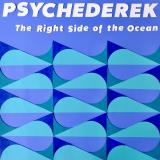

![Denise Motto - I M N X T C (Jack Your Body To The Beat) [JD Twitch Remixes]](https://www.deejay.de/images/l/4/8/1232548.jpg)