Spanish duo Los Suruba have done it all over the last 25 years, captivating dancers with their blend of House, Minimal, Electro, psychedelic, and deep vibes.
They have established their own network of record labels, with almost 250 releases, Nazca being the latest addition. They’ve also released music on labels like Crosstown Rebels, Diynamic, and Get Physical and have been remixed by international artists such as Solomun, Adriatique, Clarian, and Okain. They describe their music as "Memories of the Future," the motto of their brand Nazca.
As DJs, they’ve performed at the world’s best clubs and festivals, bringing their unique sound across the globe, holding residencies from Ibiza to London, and creating countless underground hits.
They are in top form once again with this latest journeying EP, where Los Suruba and their label Nazca return to vinyl releases, featuring two new remixers for this vinyl edition of the ‘+33 EP’.
Innovative opener 'Dial Banger' is a wonky house sound with wet claps and a gurgling bassline that gets ever more wild. It's a playful cut that teases and pleases in equal measure as the low-slung grooves, string stabs, and unhinged leads keep dancers locked.
'Elegancia La de Francia' is a more experimental house affair with eerie synth leads and freaky filtered vocals, making a dark and menacing atmosphere.
Warm melodies infuse the track with soul and make it perfect for the late-night hours.
First remixer Cristina Lazic launched her own label La Zic, earlier this year. It's a platform that looks to uplift and mentor exceptional female talents next to the Italian's own blend of minimal, deep and tech house sounds. Her fantastic take on 'Elegancia la de Francia' is stylish and stripped back with supple minimal drums and the muted synth sounds bubbling away over punchy kicks.
Romanian artist BRYZ has a refined minimal sound that has established him in the European scene over the last decade. He deals in intricate melodies, pulsating rhythms, and atmospheric textures on labels like Storytellers and Esente Records.
His version of 'Elegancia la de Francia' is silky and deft, with sustained pads locking you into a trance while gurgling bass and trippy melodic motifs add great detail to the rolling minimal house grooves.
Since Outlaws in 2020, Ludivine Issambourg's flute has not cooled down. How could it have, when with that album of Hubert Laws covers, it had reached incandescence? Still panting, burning despite the lid of its case left wide open, it awaited the opportunity to continue the adventures that Master Laws himself had praised.
A continuation? Above The Laws isn't quite that.
Although his name still appears, Hubert L. is no longer the sole guide in exploring the vast galaxies of jazz-funk. Through covers but especially as an enhancer of her own compositions, Ludivine has invoked the spirit and intangible presence of Jeremy Steig, Ronald Sneijder, and Bobby Humphrey—the legends of the flute.
Guided by an unescapable groove, with a musical dial set to the late 70s and early 80s, Ludivine has enlisted the help of a brass section this time, a true propulsion engine for funk that can also shift to a soulful breath if the moment calls for it. Supporting the keyboards, there's a Moog laying down its rich layers or twisting tones.
The flutes are used like levers to stabilize the flight or, conversely, to make it soar even faster through the measures. The alto version, which Ludivine had previously used sparingly, adds the necessary velvety note when it’s time to embark on smoother destinations. Speeding up the tempo to make passengers rise from their seats as if danger were imminent; calming the atmosphere to put them in a reassuring cocoon where they can let their thoughts and spirits wander, the improvisations find their place in the compositions observed from the porthole. Detached from gravity, yet still very much in tune with the vibe of cities marked as hot spots on the current jazz scene radar, it's the scent of these streets that permeates some tracks of Above The Laws.
Directed from the control tower by Eric Legnini, Chassol, Alex Finkin, and Michaël Lecoq, Above The Laws benefits from a few stops along the way where precious connections are established. Nils Landgren and his trombone in the colors of the Swedish flag, Laurent De Wilde for a chase between flute and Fender Rhodes, Céline Bonacina’s saxophone for an Afrobeat detour.
But it's at the edge of a journey where organic intensity has continued to assert itself without losing power that Ludivine connected with Brian Jackson for a cover of "Angel Dust," a track from the era when he and his partner Gil Scott-Heron were creating soul masterpieces. One of them featured a flutist by the name of Hubert Laws.
The starting point of Ludivine's latest jazz-funk explorations also becomes the endpoint. Elevated by the ten tracks of Above The Laws, Ludivine Issambourg closes a loop where she has placed her flute and its flourishes in an undeniably leading role. Opening the doors to ambitious orchestrations, unexplored horizons, she weaves into her compositions the experiences, places, and encounters that have shaped her.
Tanukichan, the musical project of Oakland, CA’s Hannah van Loon, has been a prominent figure in modern shoegaze music since 2016, when she first collaborated with Chaz Bear of Toro y Moi. Together, they released an EP and two full-length albums under Bear's Company Records, culminating in 2023's GIZMO. With her new EP Circles, out September 20th, 2024, via Carpark Records, van Loon ventures into new territory by teaming up with a new producer for the first time – Franco Reid.
The genesis of their partnership dates back to the GIZMO campaign, when Reid noticed van Loon wearing an Incubus shirt in a press photo on Instagram. Intrigued by whether or not van Loon was a genuine fan, he sent her a DM. Their shared musical interest sparked a dialogue that eventually led to the creation of the single "NPC" in 2023.
Lead single “City Bus,” offers a reflection on van Loon's childhood bus rides in San Francisco, evoking the stop-and-go rhythm of commuter life through hard-hitting drums and heavy guitar feedback phasing in and out of the mix. Themes of self-reflection and societal belonging permeate the track, echoing van Loon's ongoing personal journey.
While much of Circles delves into internal struggles, “It Gets Easier” takes on a more celebratory tone as van Loon realizes she’s developed a heightened sense of maturity when dealing with hardship. “It feels easier to let go of situations or people that don’t serve me,” reflects van Loon, “Or if they can’t be avoided, at least I don’t have to dwell on the sadness or discomfort I feel when letting someone down.” Introduced by Reid, nu-gaze sensation Wisp, contributes a verse in her similarly ethereal vocal style.
There is a notable shift on Circles when you consider the first three Tanukichan releases were produced by a pioneer of the chillwave genre. With van Loon’s consistently dreamy songwriting and Reid at the helm, Tanukichan enters new sonic territory that feels larger, arena-ready, and more like a highspeed night drive than the hazy summer dream of its predecessors.
"Cadair Idris is one of the Southernly peaks of Eryri (Snowdonia). It sits magnificently at the head of the Tal-y-Llyn pass, and above Dolgellau to the North, with its craggy slopes rising above the tree-line towards the mystical clouds that so o�ften shroud its summit. This mountain is rich with mythology and legend; meaning 'Chair of Idris', it takes its name from the mythical giant king 'Idris Gawr' who was once said to sit atop the mountain and marvel at the heavens. The lake found at the centre of the seat is said to be bottomless, and the surrounding slopes to be the hunting grounds of the Welsh king of the underworld, Gwyn ap Nudd and his Cŵn Annwn. But one of the most intriguing legends owes its existence to the great bardic heritage of Wales. This legend comes as a warning to any wandering soul that might find themselves upon the mountain's slopes at night, for anyone that spends the night on the mountain will come down either a madman or a poet.’"
Cadair Idris by Awen Ensemble, released 12 April 2024, includes the following tracks: "UNSETTLED", "IONAWR", "IF I FALL", "UPON LEAVING THE DREAM" and more.
Releasing as a vinyl 45, Bad Night is the lead offering from The Cromagnon Band's new album Mode. This is the band's second LP and the first of theirs to be released on BBE Music. Mode itself is an album of cinematic and psychedelic dark Funk tinged and tinted with Nordic psych/jazz, classical, boom-bap Hip-Hop breaks and riff heavy rock. Bad Night is backed with Quadrant, a stand alone track that won't be on the album, thus making the vinyl single release a unique addition to the music lover's record collection. That said, these are are two tracks which give both a genuine flavour of the forthcoming album as well as the band's own musical influences and heritage as instrumentalists and producers. The Cromagnon Band's recording technique of taking breaks, riffs and melodies from favourite tracks and then improvising from there with completely live jam sessions in the studio allows them to record in their distinct and trademark 'reverse engineering' style. The trio of Drummer Tom Watt, Bassist Lenny Walker and multi-instrumentalist Bert Page work by making music as a team, playing for hours and united by a love of Hip-Hop breaks and psychedelic Jazz/Rock/Funk and classical music. They choose to record only instrumentals which allows space for Bert to weave intricate soundscape with Fender Rhodes, Moog, Sax and Clarinet over the beats and breaks they have written from their improvised jams. Bad Night b/w Quadrant are the lead releases from The Cromagnon Band's new album Mode. They will be released as a 7" vinyl and digitally.
We’re teaming up with ELUCID and Fat Possum for a limited edition of 300 copies of a Rush Hour black ice coloured edition.
E L U C I D, one half of the illustrious duo Armand Hammer, is here with the full-length follow-up to 'I Told Bessie'. Further experiments in the sonic, expanding on the 'live' side of music paired with the embracing of chaos. Something you haven't heard, or not so for a very long time. E L U C I D is here to reveal the bleakness of reality.
''There is never time in the future in which we will work out our salvation. The challenge is in the moment; the time is always now.''
James Baldwin
A raw, crackling urgency runs through rapper-producer ELUCID’s new album REVELATOR like an underground power line. There is no space here for sepia-toned reminiscences or indulgent self-mythologizing. Intellectual rabbit holes have been filled in with concrete and rebar ; there is nowhere to hide and no off ramp from the audio Autobahn that ELUCID has fashioned—a renegade Robert Moses with gold fronts, bulldozing the homes of the powerful and the complicit. REVELATOR brims with the energy of now, with a refusal to look away. Carpe diem in a murder one mask.
Born in Jamaica, Queens, ELUCID has been on the cutting edge of New York’s underground scene since the mid-2000s. From the beginning, he has defied both convention and expectation. He ran with Okayplayer darlings Tanya Morgan, but his own music eschewed their throwback charm for glitchy noise experiments and bass-swamped culture jamming. His 2016 debut studio project Save Yourself (re-released in a deluxe edition last year) announced him in earnest. But in recent years, his Armand Hammer releases with partner-in-crime billy woods have received significant attention and acclaim. Serving as a followup to his last solo album—2022’s comparatively balmy I Told Bessie—ELUCID hoped to “re-distinguish” himself with REVELATOR, setting himself apart amidst the increasing attention around the music he and his friends are making together.
For ELUCID, this meant setting bold new challenges for himself. One of these was diving further into live instrumentation than ever before—”getting my Quincy Jones on,” as he puts it. The testing ground for this approach was Armand Hammer’s most recent project, 2023’s We Buy Diabetic Test Strips’ Möbius strip soundscapes, warmed with instrumental flourishes and skin-shedding beat progressions. With REVELATOR, though, ELUCID strove to create an atmosphere of chaos, embracing experimental electronics and atonal sample bursts. He worked on much of the album with co-producer Jon Nellen, who comes from a background in avant-garde and Indian classical music. “I wanted to get as freaky as I could at this moment. I wanted people to hear things, maybe for the first time, or in a way they haven’t for a long while,” the rapper explains.
ELUCID arrived at the studio with a collection of noise sources: non-referential samples, glitches and noises. Together he, Nellen, and others created forms out of them and, as ELUCID recalls, “just started playing drums with it.” Their fried, distorted sound was directly inspired by Miles Davis at his most uncompromising—specifically, the tone-clustering funk track “Rated X” from his 1974 double LP Get Up With It. At times, the pairing of rap with avant-fusion sounds also brings Emergency! from The Tony Williams Lifetime to mind, perhaps in an alternate timeline where the late drummer was listening to Ice Cube’s AmeriKKKa’s Most Wanted.
“The World is Dog,” REVELATOR’s lead single, functions as the album’s aesthetic thesis statement. Like the Davis track, the textures are punishing, the tonality is in free-fall, and the driving breakbeat of a groove cuts in and out unceremoniously. Avant-jazz bassist Luke Stewart, who appears throughout the record, holds the whole thing together just long enough for ELUCID to tightwalk over the beat. This tension is exactly where REVELATOR sets itself apart; in a time of drumless loops, and safe soul samples, this is a high-wire act with no safety net. Similarly, the song announces the themes of the album within just a few phrases, evoking the way societies accept and adjust to new levels of debasement and brutality while suffocating under the weight of history: “Can’t clock the kill, all a mystery/Forced past will eating everyone eventually/The world is dog.”
Many of the songs on REVELATOR grapple obliquely with dissolution and disenfranchisement in America and across the world—the grim realities of our domestic sociopolitical climate and our involvement in foreign conflicts. “Much of my artistic and political sensibility comes from the Black arts movement here in New York,” ELUCID explains. “Recognizing the interconnected global struggles against oppression, artists and thinkers created works and actions in solidarity with freedom movements in South Africa and Palestine.” ELUCID cites intellectuals like Amiri Baraka, Kwame Nkrumah, Audre Lorde, Sonia Sanchez, and Nikki Giovanni among his heroes. (One track on the album is specifically inspired by Lorde’s work, “SKP,” citing the scholar’s paper “Uses of the Erotic: The Erotic As Power.”) Songs like REVELATOR’s insistent closer “ZIGZAGZIG,” find ELUCID applying up-to-the-minute messaging, making explicit reference to the conflict in Gaza: “Feed a war machine…from river to sea, in lieu of peace.”
Despite ELUCID’s preference for cacophonous system overload here, the rapper also provides moments of respite. Recorded at The Alchemist’s Los Angeles studio, the laid-back, wheezing “INSTANT TRANSFER” is a collaboration with billy woods, which crystallizes their shared sense of creative determination. “With much momentum behind us and even more on the horizon, I knew a purpose, and that every step was ordered to that purpose,” ELUCID said of the experience. Meanwhile, the jittery “HUSHPUPPIES” is a playful anomaly on the track list, providing a snapshot of ELUCID watching his grandparents in the kitchen while preparing for Friday night fish fry dinners.
“Love still rules over on this side,” ELUCID says. ”I’m raising a family. We are making meaning and finding joy in the midst of all the fucked up-ness of everything around us because the alternative is cowardice and slow death. We remain rooted. We celebrate our people and our wins. Struggle is necessary.”
“IKEBANA” is one of ELUCID’s strongest statements of purpose on the record, blending the record’s heaviest themes with its most hopeful sentiments. supported by a shoutalong refrain and an urgent prog-funk groove. Breaking away from images of dissolution and crumbling societal systems that populate REVELATOR, ELUCID notes that the only way to navigate life’s bleakest landscapes is to cling to love and believe in those around you—to look forward toward something better that may or may not be possible. For the rapper, one of the album’s most trenchant lines comes during a centerpiece of a beat drop: “Being alive/I must look up.”
“The lyric ‘being alive I must look up’ is important especially in the context of this album. Much of the album imagery is harsh and reflects the actual doom some of us experience. But still I/we exist,” ELUCID explains.
Every artist is, in one way or another, the product of their time, bound by life’s leaden gravity to operate within the space of that which is already known. But there are some who are able to shake free of these ties, to shape the culture as it unfolds, to make the present their own.
Revelation, as a concept, points to the scales falling from people’s eyes—something that has been hiding in plain sight becoming clear. “The revelator relates to things that have been talked about, things that have been forecasted,” ELUCID adds. “And now they’re really here, and everyone sees it. And there’s no escaping.” REVELATOR plays out with the unmitigated power of those storms, laying waste to any genre conventions in pursuit of a certain physicality. Here, ELUCID develops a wholly distinctive musical language to explore our fractured modernity.
REVELATOR's packaging was designed by longtime Armand Hammer / Backwoodz art director, Alexander Richter.
'Science, Art And Ritual' is a story of ‘process'. Growing up in Harrow (a then quiet suburb of London) in the 70’s and 80’s from the age of about 10, Kingsuk Biswas aka Bedouin Ascent's ears opened up to sound as he scanned the airwaves. The undeniable righteousness of 80’s dub via David Rodigan’s Roots Rockers shows was the first prominent influence he received, and with punk roots —and his burgeoning record collection— became exposed to the breathless post punk experimentation that followed in the early 80’s sweeping up free jazz, noise, dub and much more. Throughout though, he maintained his fascination with Indian Classical music which was a mainstay in his parent’s house and spoke with the same infinite space as Joy Division's 'Unknown Pleasures', and King Tubby’s Studio dispatches. Through those teens he assembled and de-assembled, knocking about with fellow travellers —punk bands, garage, space rock, noise. Something was happening. On-U Sound, ECM, Factory Records kept him plugged in and sane.
At that time Kingsuk's core studio setup revolved around his vintage Gretsch, Fender Jazz, Moog, TR-606 and rudimentary FX. He added congas, folk instruments, pipes, hand percussion, gongs, and jammed out shards of funk, noise, jazz fusion, electro and ambience into his hungry Tascam Portastudio. By 1987 these had morphed into what we’d now refer to broadly as techno, but the genre didn't exist beyond the reverberating walls of his bedsit, and he hadn’t yet plugged into the global conversation.
'Science, Art And Ritual' was released in 1994 by Rising High Records and was presented as Bedouin Ascent's debut album, although 'Music for Particles' (released in 1995, again on Rising High) was recorded even before —'SAR' sessions span from 1992-1993, whereas 'Music for Particles' were earlier from 1989-1992, with some older 4-track references from about 1986 too.
Weaved in throughout the album are subconscious references to music that Kingsuk heard in the past that still remained within sight as companions. The opening track "Ancient Ocean III", referencing the extinct ocean Tethis, unapologetically channels Tackhead, Colourbox, Mantronix and Lee Perry. The style was also deliberately juxtaposed to the prevailing sound in techno at the time, which had locked onto a rigid form of symmetrical kicks and light snare drums. Elsewhere 80’s soul and funk are frozen and captured in fragile glass lattices. Electric pianos resound throughout, such as in "He Is She", probably a half-memory of 70’s MOR radio from childhood sleepy night drives. A duel between kick drums from three generations of Roland drum machines —TR-808, TR-707 and R-8— is a central theme in "Transition-R", all in conversation, calling and responding. These were not just machines to Bedouin Ascent, but part of an extended family, with heart and soul.
Three decades after seeing the light, Lapsus is proud to present a special 30th anniversary reissue of this
left-field techno gem in a repackaged and redesigned edition. All pressed on a deluxe 3LP marbled vinyl and including a limited lithographic insert print of the original album cover. All tracks have been restored and remastered directly from the original DAT tapes, and the album also features previously unreleased tracks such as "In the Clouds" and "Thru Water" —regularly performed live at that time and produced in the same period as the album sessions in 1993.
'Science, Art And Ritual’ may refer to esoteric traditions in Indian philosophy, but equally embodies the collision of the science, the art and the ritual that is at the core of being immersed in a deep musical journey.
"Diving Solo" is the debut album of an artist who, after years of recognition under a different alias, has now redefined himself as "sr²." Central to this project is a deliberate departure from self-staging—shifting the focus entirely onto the art itself.
The album emerges from a deeply rooted vision that took shape over a decade ago. It navigates the fundamental questions of existence: the inevitability of impermanence, the search for meaning, and the quest to carve one's own path. Each track draws from formative experiences—from the electrifying pulse of countless club nights to the quiet, introspective moments that challenge our understanding of everyday life.
The tracks on this 9-track double LP transcend mere functionality; they evoke profound emotions and offer space for personal reflection. "Perpetuated on Canvas..." delves into how the first encounter with mortality can profoundly shape one's perception of life. "Diving Solo" inspires a break from conventions to seek what truly matters—even if that journey must sometimes be taken alone.
While the album weaves a coherent narrative, every listener is invited to discover their own nuances and shades of meaning within it. For, in the end, the artwork always extends beyond the artist.
Michael Mayer albums don’t come round too often, which is one of many reasons why his fourth collection, The Floor Is Lava, is a genuine event. It’s been eight years since his last one, the collaborative & released on !K7; its predecessors, Mantasy (2012) and Touch (2004), took their sweet time, too. It’s no real surprise, given the many hats Mayer wears – globetrotting DJ, revered remixer, inveterate collaborator, and boss of both Kompakt and Imara – that his solo productions are relatively sparing. But this also speaks to their quality: Mayer’s name on a record sleeve is a sign of quality, of music that’s both looking to the future and calling back to the past, that balances the imperatives of the dancefloor and the loungeroom, that’s as exploratory as it is functional.
On The Floor Is Lava, Mayer seems to be taking the temperature of both the music that surrounds him (past and present), and the ides of the industry he works within. There’s that iconic album title, for a start. “The album’s mindset,” he says, reflecting on those four words together. For Mayer, it’s partly a critique of the way the industry boxes in both producer and listener, focuses them on genre, on market, on the next new thing: “Being a free minded spirit that transcends genres has become an uphill battle.” A battle worth fighting, though, and with The Floor Is Lava, the result is an album that’s varied, quixotic, idiosyncratic, charming, and deeply, addictively listenable.
Throughout, Mayer finds thrills in exploration and juxtaposition, allowing unexpected things to blossom and giving them their life, their platform, throwing the listener exciting curveballs: “It’s a DJ album by a DJ that’s easily bored.” Either easily bored, or endlessly curious, The Floor Is Lava is rich with ideas. It opens with “The Problem”, which looks back to look forward, embracing the rickety way early house productions threw samples together with gleeful abandon. Mayer mentions Pal Joey, and the scene around Rockers Hi-Fi and their Different Drummer imprint, as reference points, and you can hear that freewheeling spirit throughout.
It’s followed by “Vagus”, a slinky, sensual minimal house number that Mayer describes as his “musical catnip”. The flow of these two opening cuts defines the dynamic of The Floor Is Lava, defining the dialectical drive at its core: thesis and antithesis leads to synthesis, but with a welcome prickliness that means you’re always excited, always engaged. It’s also productive in the way it derives energy from rubbing genres and sounds against each other, in unexpected ways, for maximum musical frisson. There’s psychedelic techno on “Feuerstuhl”, more minimal techno with “Ardor” (Mayer mentions ‘Immer 1’ era 90s minimal as inspiration), slippery, Shepard-tone breakbeat through “Sycophant”, a lovely, lush vocal turn on the poppy “The Solution”.
The album closes with the melancholy “Süßer Schlaf”, where Mayer sets a poem by Goethe to one of his most haunted, moving pieces of music yet, in abstract tribute to a lost friend. It’s one of the most affecting moments on The Floor Is Lava. There’s also an update on 2020’s wild Brainwave Technology EP, with the surrealist glitter-stomp of “Brainwave 2.0” (check out those handclaps!),where Mayer’s thinking about the socio-political precipice of the now: “I’m reading with great interest about this whole complex of how humanity is about to cross so many lines and the implications that the resulting financial and educational inequality will bring.”
That’s The Floor Is Lava: then and now, brainwaves and nerve structures, problems and solutions, genres on fire; the real, the unreal, and the surreal. An album for the easily bored and the endlessly curious. Mayer has the last word, telling us all you need to know about the album’s spirit: “Burning for the cause, being zealous, being addicted to the heat of the night, the exuberant powers of music.”
Michael Mayer veröffentlicht nicht oft Alben, was einer von vielen Gründen ist, warum ‘The Floor Is Lava’ ein echtes Ereignis ist. Es sind acht Jahre vergangen seit seinem letzten Werk, dem Kollaborationsalbum &, das auf !K7 erschien; seine Vorgänger, Mantasy (2012) und Touch (2004), ließen ebenfalls auf sich warten. Es überrascht nicht wirklich, da Mayer viele Rollen gleichzeitig erfüllt – weltreisender DJ, vielbeschäftigter Remixer, unermüdlicher Kollaborateur und Chef von sowohl Kompakt als auch Imara – weshalb seine Solo-Produktionen eher sparsam ausfallen. Doch das spricht auch für deren Qualität: Ein Album mit Mayers Namen auf dem Cover steht für Qualität, für Musik, die sowohl in die Zukunft blickt als auch auf die Vergangenheit verweist, die das Gleichgewicht zwischen den Anforderungen des Dancefloors und des Wohnzimmers hält, die genauso erforschend wie funktional ist.
Auf The Floor Is Lava scheint Mayer sowohl die Musik um ihn herum (vergangen und gegenwärtig) als auch die Strömungen der Branche, in der er arbeitet, zu reflektieren. Da wäre zunächst der ikonische Albumtitel. „Die Grundhaltung des Albums“, sagt er, drückt sich in diesen vier Worte aus. Für Mayer ist es teilweise eine Kritik daran, wie die Industrie sowohl Produzenten als auch Hörer in Schubladen steckt, sie auf Genres, auf den Markt und auf das nächste große Ding fokussiert: „Ein freier Geist zu sein, der Genres überschreitet, ist zu einem steinigen Weg geworden.“ Ein Kampf, der sich jedoch lohnt, und mit The Floor Is Lava ist das Ergebnis ein Album, das vielfältig, eigenwillig, charmant und tiefsinnig, aber auch süchtig machend ist.
Im gesamten Album findet Mayer Freude an der Erforschung und Gegenüberstellung von Stilen, lässt unerwartete Dinge erblühen und gibt ihnen Raum, überrascht den Hörer mit spannenden Wendungen: „Es ist ein DJ-Album von einem DJ, der sich schnell langweilt.“ Entweder langweilt er sich schnell oder er ist unendlich neugierig – The Floor Is Lava ist reich an Ideen. Es beginnt mit „The Problem“, das in die Vergangenheit blickt, um nach vorne zu schauen, und die wilde Art, wie frühe House-Produktionen Samples mit fröhlicher Unbekümmertheit zusammenwarfen, aufgreift. Mayer nennt Pal Joey und die Szene um Rockers Hi-Fi und ihr Label Different Drummer als Referenzpunkte, und dieser freie Geist zieht sich durch das gesamte Album.
Es folgt „Vagus“, eine sinnliche Minimal-House-Nummer, die Mayer als seine „musikalische Katzenminze“ beschreibt. Der Fluss dieser beiden Eröffnungstracks definiert die Dynamik von The Floor Is Lava und den dialektischen Antrieb im Kern: These und Antithese führen zu einer Synthese, jedoch mit einer willkommenen Schärfe, die dafür sorgt, dass man immer aufgeregt und engagiert bleibt. Zudem gewinnt das Album Energie, indem es Genres und Klänge auf unerwartete Weise aneinanderreibt, um maximalen musikalischen Nervenkitzel zu erzeugen. Es gibt psychedelischen Techno in „Feuerstuhl“, mehr Minimal Techno mit „Ardor“ (Mayer erwähnt ‘Immer’ Ära Minimal als Bezugspunkt), gleitenden Shepard-Ton-Breakbeat in „Sycophant“ und einen lieblichen, üppigen Vocal-Auftritt im poppigen „The Solution“.
Das Album schließt mit dem melancholischen „Süßer Schlaf“, in dem Mayer ein Gedicht von Goethe vertont und eine seiner bisher eindringlichsten und bewegendsten musikalischen Kompositionen schafft, als abstrakten Tribut an eine verschiedene Freundin. Es ist einer der ergreifendsten Momente auf The Floor Is Lava. Ebenfalls gibt es ein Update der wilden Brainwave Technology-EP von 2020, mit dem surrealistischen Glitzer-Stampfer „Brainwave 2.0“ (hör dir diese Handclaps an!), in dem Mayer über den sozio-politischen Abgrund der Gegenwart nachdenkt: „Ich lese mit großem Interesse über diesen ganzen Komplex, wie die Menschheit dabei ist, so viele Grenzen zu überschreiten und welche Auswirkungen die daraus resultierende finanzielle und bildungstechnische Ungleichheit haben wird.“
Das ist The Floor Is Lava: Damals und heute, Gehirnwellen und Nervengeflechte, Probleme und Lösungen, brennende Genres; das Reale, das Unreale und das Surreale. Ein Album für die schnell Gelangweilten und die unendlich Neugierigen. Mayer hat das letzte Wort und sagt uns alles, was wir über den Geist des Albums wissen müssen: „Brennen für die Sache, leidenschaftlich sein, süchtig nach der Hitze der Nacht, den überschwänglichen Kräften der Musik.“
Fresh off a rework of Papa Levi with single Ribena, London’s jungle pioneers 4am Kru drop their highly anticipated debut album Incognito Rhythm featuring all the tracks that have cemented their reputation as the go-to act for raw, live jungle music.
Having already taken the 2024 festival circuit by storm with appearances at Outlook Origins, Boomtown, Boardmasters, Reading+ Leeds, The Blind Tiger, Parklife Waterworks, Boundary and a milestone Saturday night closing set at Glastonbury’s Temple Stage, 4am Kru continue to draw audiences into the madness of their raucous blend of 1993-1994 influenced jungle. First bursting onto the scene post-lockdown, the falling monitors and flying bodies of their shows were particularly thrilling for ravers who had turned 18 in isolation.
Originally developing their live sound in indie bands while sharing a studio in Tottenham, the duo quickly realized that the traditional DJ set couldn’t contain the energy of their act. They have since surrendered to the chaos of their incredibly physical performances, nursing chipped bones and back injuries, deep finger taping, chalking up and wearing shoes designed for skipping rope whilst rewiring what it meant to move their bodies. Their innovation extends to the equipment, with the duo reinventing a way to deliver their signature throbbing basslines with a Roland SPD SX drum pad as thick as a car tire. Their upcoming UK tour this October promises to further showcase their immersive, disruptive sound.
4am Kru’s latest single Ribena breathed new life into Papa Levi’s iconic British reggae classic Militancy following the release of hard-hitting Wutt this past July, setting the stage for their most ambitious project yet. Their debut album draws from a wide range of influences in addition to 4am Kru’s signature blend of 90s jungle flavours, from obscure slow jam R&B like Angela Bofill, Janet Jackson and Prince, early hardcore bands like Hüsker Dü, off kilter Scottish folk, and even classical music. The project is a snapshot of the incognito, nocturnal world that the duo have dwelled in for the past two years, a time capsule of well-worn songs played between midnight and 4am. An extraordinary debut, 4am Kru’s Incognito Rhythm is an immersive, razor sharp, face melting journey through their show-stopping live sound.
DJ Support: Louie Vega, Danny Krivit, Tedd Patterson, DJ Harvey, Folamour, Michael Gray, John Morales, Simon Dunmore, Terry Hunter, Melvo Baptist, Seamus Haji,Art Of Tones, Birdee, Sophie Lioyd, Hector Romero, CjMckintosh, Moodena, Dr Packer, Da Lukas, Derrick Mckenzie, Danism, Reel People, DJ Pope and more
Part 1 of the remixes from the House Of Glass Album by Italian Master Gianni Bini incl. Versions by UK disco king Dave Lee, Groove Culture owners Micky More & Andy Tee and USA soulful talent Emmaculate. A must have for the lovers of quality Disco Nu disco with live instrumentation.
Dark Entries has assembled a superb collection of covers celebrating 60s garage and soul music by the one and only Patrick Cowley. This LP showcases another side of the great producer's diverse influences, in particular his psychedelic San Francisco roots which can be heard in most tracks. They were mostly written between 1980 and 1982 when he was in prolific form and highlight his virtuosity while paying respects to the music that shaped him. The collection features a reimagined version of Loverde's 'Iko Iko,' a hi-NRG cover of The Doors' '20th Century Fox,' and a haunting take on The Who's "Shakin' All Over." It concludes with a swinging rendition of the Four Tops' 'Baby I Need Your Loving' and is another essential one for the collection.
Emerging producer Très Mortimer dishes out eight huge heaters on the highly-anticipated ‘M1 City’ release, a dedication to the mighty Korg M1, coming to Seth Troxler’s Slacker 85 on 25th October.
Kicking off ‘M1 City’ is the simplistic, but refined and booth-rattling ‘Work That Body’. A crisp M1 stab is the main character in this, amplified by thunderous and high energy drums.
Then there’s ‘Secrets’, a house jam inspired by the likes of MK that utilises TR-909 drums, a subtle rolling bassline, intimately whispered and soulfully sung vocal shots, and, of course, classic Korg M1 synth stabs. Together with dramatic contemporary builds, a highly danceable house smasher is formed.
‘No More’ is pure gasoline for the dancefloor. Très pairs another barrage of clean M1 stabs with a rousing vocal sample that leads into, with the help of a rolling snare, another highly effective house drop. Following the extremely saucy ‘Big Daddy’ skit, we’re dropped straight into ‘One Of Those Nights’, a show-stopping track complete with cutting, sharp stabs, a bulging bassy synth and a West Coast-esque synth sound.
‘Bitch I’m From Chicago’ feat. Gleebz is, as the title suggests, a dedication to the city where house music found its name. Batting off all the poser cities like LA and Miami in the sassy lyrics, it embodies the spirit of Chicago with hefty kick drums and weighty chord stabs.
At the tail end of the release, ‘Let Me Go’ and ‘Love’ (featuring vocalist 7000 (7K)), bring things to a rousing emotive close. Both tracks see Très put clean vocals over piano riffs, giving off differing moods – the former is euphoric, the latter melancholic. Synths bubble beneath, and each track funnels their own respective house grooves, resulting in two tracks fit for both the dancefloor and headphones.
Très Mortiner explains: “The M1 sound is classic. It automatically transports you back to those timeless house songs that never get old. For me, house music is all about connection. People experiencing a little moment of euphoria together when they hear a riff that they all know on the dance floor. That’s what it’s all about. With this project I wanted to tap into that 90s rave sound and spirit. I wanted it to sound like the OG Chicago rave scene.”
“M1 City is my first project to be released on vinyl. I think vinyl is very much alive. It’s essentially for music connoisseurs now. I don’t expect people to have a vinyl collection when all music is always available to everyone on their phones. Nevertheless, I love the idea of some random DJ finding this record in a shop in 10 years. Who knows what I’ll be producing then?”
Très Mortimer is a key figure in Chicago's house scene, steadily building a strong following with his no-nonsense, dancefloor-driven sound. Drawing inspiration from his Polish roots, Trés has signed with major labels like Mad Decent, Insomniac’s IN/Rotation, and Ministry of Sound, while also launching his own imprint, Optics Records. He made his mark with a clever rework of Zombies' 1968 hit ‘Time Of The Season’ (1M+ streams). Standout releases include his downtempo collaboration with plumpy, "BAMBU," and his latest single, "At Night I Think Of You," which was recently given a remix makeover by Seth Troxler and Nick Morgan.
Slacker 85, launched in 2023, is the record label behind ‘M1 City’. Founded by Seth Troxler, it aims to give a platform to "oddball, esoteric and diverse sounds," positioning itself as a counter to the polished, refined dance artists dominating the scene. Troxler, upon the label’s launch, declared that he wanted to create something for "the anti-hero, the kids who could have done it but didn’t care to try”—essentially, "the slacker." So far, it’s delivered a range of releases from artists like Jackmaster, Danny Daze, Dan McKie, and Andre Salmon, offering tracks rooted in house music's past but evolving within its present boundaries.
‘M1 City’, this ode to a piece of gear that consistently finds itself at the heart of house music history, highlights Très Mortimer’s respect for and knowledge of the scene and its key gear. Trè combines this admiration and inspiration of house music’s greats with a modern sensibility, resulting in eight tracks worthy of today’s dancefloors and today’s ravers.
The first in a new compilation series, "How We Walk on the Moon," was selected and supervised by the project "VINYL GOES AROUND," which operates under the concept of "redefining record culture" in the era of subscription services.
The album is themed on "quiet nights." It is not too close to healing/easy listening, but has a beautiful tension and a pure, mellow mood, and the fantastic soundscape that makes you want to listen to it under the moonlight blends into the environment.
The selection of beautiful pieces is a woven ensemble of various genres, including not only ambient and jazz, but also soul, library, and alternative, and will serve as an introduction to the pop side of ambient music, which many people find intimidating. It is a must-listen for all music fans.
In addition, the LP comes with a completely new type of obi called "ORIGAMI" supervised by "VINYL GOES AROUND". It is a special design that further deepens the worldview of the album.
The tracks included are "Harmonica and...", a 7-inch only track by Sven Wonder, an up-and-coming artist who was nominated for the Jazz category of the 2024 Swedish Grammy Awards; "Clouds" by Gigi Masin, which has been cited by Namedaruma, Nujabes, and Bjork; and "Morning Sunrise", a popular song by Weldon Irvin that has been sampled in countless songs since the 2000s. The lineup is set apart from conventional healing/ambient compilations, and will be useful for DJs as well.
This is a record that will make spending an evening with you feel incredibly luxurious, as if your mind is being freed to go on a free-spirited journey.
*****
It is an honor to be included in this compilation alongside so many other talented artists who have been an important part of my musical journey and hold a special place in my heart. - SVEN WUNDER
Trance Pandemic is back with new full cover EP - masterpiece of Dima Phase designer.
The musicians' solo sound is changing, they continue to search for themselves, thereby releasing without losing the atmosphere and drive in their music.
Komponente takes its rhythm from 707 drum machines and 80s synths, adds a TB 303 and wraps it in long pad melodies in Boston Dynamics.
In Acid Explorer, he builds electro-trance with the sound of a nuclear siren using Elektron machines and packs everything into his favorite voice presets from Korg. New and old music technologies are intertwined into one whole, giving birth to new sounds from the late 20th and early 21st centuries.
Kurilo continues to work with modern sound machines, drawing on the best and creating a smooth, even groove.
If you like trance synthesizers, mysterious melodies, then your choice is Eating Raoul, nothing more, a sound inspired by the New York night where Evgeniy currently lives.
Not From New York carries a different trip, but no less atmospheric, deep bass and acid accents - everything you need for a dense sound on your sound system, be it a club or rave party or a home sound system or headphones.
In general, although the release is different, it is united in one thing: atmosphere and melody.
DJ Support: David Morales, Louie Vega, Hector Romero, Dave Lee ZR,Tony Humphries, Kevin Yost, Jimpster, Atjazz, Ron Trent, Dj harvey.
Considered the Master of Italo piano house, Don Carlos is up next on friends Micky More & Andy Tee's label Groove Culture Deep with an EP of Finest Classic Piano house.Features the amazing, warmup Classic House of ‘Italian Paradise Piano’ followed by the Deep heater ‘Soul Emotion' and The Garage Late-night ‘Good Emotion’(Vocal Mix) on the A-side. The flip offers ‘Paranoia’(Piano Edit) and ‘Good Emotion’(Paranoia Mix) both tracks perfectly capture the zeitgeist of house music's golden era of late 80’s early 90’s.
Liquid Memory presents their third release, "Pick up the Slack," featuring the deep and dynamic sounds of Terraflow, the night-time alias of renowned Jazz/House producer AJ Edward. With this project, Terraflow delves into the realms of progressive house, crafting a sonic experience that is darker, faster, and undeniably captivating. This release is a key moment for Liquid Memory, as it marks their first single-artist release. The EP also includes a remix by co label head Ori Raz, providing a different take on Terraflow's “Pick up the Slack”.
The second volume in the "Lisztogrooves" series from Igor Gonya's label Lisztomania is packed with both heavy hitters and emerging talents. Across both sides of the vinyl, you'll find some exceptional tracks, starting with Manuel Sahagun's slick deep house groove "Get Yourself." There's also a taste of US house from Human By Nature, enriched with a rich atmosphere and 90's piano riffs. The A-side concludes with a high-energy, uptempo jackin' filter workout from Serbian mainstay and the MTV Europe Music Awards winner Gramophonedzie. The B-side offers a more stripped-back yet deep and solid groove. French producer Naux builds his arrangement around chord stabs, which serve as the foundation of the track. Stogov delivers a soul-drenched, late-night cruiser with "Walking Wide," while JR From Dallas and Justnique close out the EP with a perfectly seductive slice of deep house, complete with smooth chord work and warm, sneaky vibes. This is another hugely effective and stylish release.
The Blessed Madonna began with three magic words, scrawled in shoe polish on a broken - down box and hung on the wall at a small sweaty party: We Still Believe. “I think you have to give up completely to really understand what hope is. It was like 2011? I had spectacularly, monumentally failed. I left the label. I wasn’t DJing. I wasn’t putting out records. I was divorced and living on my Dad’s couch so naturally my friends and I decided to throw an illegal rave. We didn’t have any decorations, so I took a box and wrote, ‘We Still Believe’ on it. I needed to believe that something better was possible and that’s how it all started.” After years of $50 gigs, strung together by gas money and surfed couches, The Blessed Madonna cemented her reputation as a sublime technician behind the decks with a legacy of fluent and dynamic sets, spanning from disco to techno to house and back. One room sweatboxes, circus tents, theatres, massive festival stages and entire city blocks have all served as the canvas for her shows. After a jam packed 2023, from Glastonbury to Sonar to Boiler Room Bali, The Blessed Madonna has been filling the dance floor everywhere she goes and is now releasing her debut album.
Die erste umfassende Compilation ihrer Art, "Even the Forest Hums: Ukrainian Sonic Archives 1971-1996" erforscht die blühende ukrainische Musikszene des späten 20. Jahrhunderts. Von subtil vom politischen Kurs abweichenden Singles aus der Sowjet-Ära bis hin zu DIY-Aufnahmen aus der pulsierenden Kiewer Underground-Szene zeichnet die Zusammenstellung die Entwicklung der reichen ukrainischen Musiklandschaft anhand seltener Folk-, Rock-, Jazz- und Elektronikaufnahmen nach. Sorgfältig kuratiert in Zusammenarbeit mit dem ukrainischen Label Shukai Records und mit voller Unterstützung der einzelnen Künstler. Vitalii "Bard" Bardetskyi, ein in Kiew lebender Filmemacher, DJ und Autor, führt die Hörer durch die physischen Ausgaben des Albums mit aufschlussreichen Linernotes und Track-by-Track-Details. Die 2xLP ist in einer wunderschönen Klappverpackung untergebracht, die die geliebten und ikonischen Folk-Gemälde der ukrainischen Künstlerin Maria Prymachenko präsentiert. Die Vinylausgabe enthält ein 20-seitiges Booklet mit Künstlerfotos und Linernotes in Englisch und Ukrainisch, gepresst auf Clear Blue Sky & Sunflower Yellow Wachs; die CD-Ausgabe enthält Bonusmaterial in einem 64-seitigen, gebundenen Deluxe-Buch. Ein Teil des Erlöses wird an Livyj Bereh gespendet, eine in Kiew ansässige Freiwilligengruppe, die sich für den Wiederaufbau in den vom anhaltenden Krieg in der Ukraine betroffenen Regionen einsetzt.
After an extensive catalog of digital deep, minimal and tech house releases, Mole Music makes its debut in the realm of vinyl with a fresh selection of dancefloor weapons from a fine array of artists, each offering their unique takes on deep house, tech, and minimal sounds. The A-side kicks off with JHNS "Nevermind", a minimalistic, low-end heavyweight groove driven by rubbery drums and a tight bassline. Steve End & Colau follow with a silky late-night hypnotic track, while El Funkador closes the A-side with an uplifting, drum-shuffling deep house cut, complete with funky synths and chord progressions. On the B-side, "Night Strobe", a collaboration between Alben, LAJE, and Erratic, brings a retro-futuristic feel with a fast-paced, garage-tinged vibe. This sets the stage for HOT DLVRY's "Friction", a thumping deep groove led by spacious chords and keys, all anchored by an analog bassline. To round off this well-balanced compilation, Craftsmanship delivers a warm, humid deep house sound featuring bold chords and punchy drums - one of the defining motifs of this standout EP.
A compilation of highly collectable and rare Surinamese 45's and LP cuts. Compiled by Antal Heitlager & Thomas Gesthuizen this is the follow up to the Kindred Spirits released Surinam! compilation. This volume goes even deeper into the field of 70ties and 80ties funk music from the Surinamese dance floors...Recommended!
RARE & PREV. UNRELEASED PSYCH-FUNK AND GARAGE ROCK !!!
Say hello to Down & Wired Vol. 7 as Perfect Toy Records unleashes yet another instalment in its long-running compilation series! Once more, the label provides a delectable selection of obscure funk and soul-influenced psychedelic and garage rock tracks to delight even hardcore collectors of both genres.
And make no mistake, there is plenty to discover among these eleven tracks. At the funkiest end of things, Function's Free Style morphs from West Coast psychedelia to country funk to swamp rock and back again in its sub-three minute length, Dandy King provide psychedelic funky-soul and The Whiz Kids take a heavy dose of funkiness with them into psych-rock territory – sample fiends watch out for the fat twenty-second drum break towards the end of the latter! Purer psychedelia can be found in the offering from Third Stone while Würzburg band Prisma provide all-out epic psych-rock carnage. And if rock carnage is your thing, you'll be feeling the dirty garage rock onslaught of The Comin' Generation and a previously unreleased cut by Synod - soon to be a 45 single on Perfect Toy. That just leaves The General Store, The Soul Society, The Vestells and another unreleased cut from The Villagers (from whom the label will be dropping more unreleased material soon!), to close the circle by adding a heavy dose of garage soul.
A worthy successor to the previous volumes, Down & Wired Vol. 7 is once again accompanied by an insert containing detailed information and photos of the bands and a download code is also included with every vinyl LP.
The complete uncollected Noise New York studio recordings of Galaxie 500. A twenty-four track chronological journey through rarities and outtakes including never-before-heard songs, from the start of their incendiary career to their final studio session. Uncollected Noise New York ’88-’90 marks Galaxie 500’s first release of new archival material in nearly thirty years and their most comprehensive collection of unreleased and rare material ever. Produced and engineered by Kramer at Noise New York 1988-1990. • Complete uncollected Noise New York studio recordings of iconic indie band • Features rarities and outtakes, plus first release of new archival material in nearly thirty years • Historical photos and liner notes by the band
Willie Roy Turner a native Mississippian, migrated with his family to the South Side of the city of Chicago during the 1950’s. Initially taking up employment at the Golden Rod Ice Cream Company, his first foray into secular music arose when he was accompanied by Muddy Waters Band at Smitty’s Corner Club and performed an impressive recital of the 1959 Big Jay Neely standard “There’s Something On Your Mind” at an Open Mic Night sometime in 1963. A regular talent show entrant, Duke would eventually meet and befriend fellow Mississippian, Garland Green. Green himself had been spotted at the Trocadero Theater by the then husband and wife team of Mel Collins and “Joshie” Jo Armstead, who signed him to their Giant Enterprises production company where he recorded several excellent singles for MCA’s subsidiary, Revue and Uni labels. Green’s third Revue single release, “Ain’t That Good Enough” was composed by Jo Armstead, brothers Howard and Walter Scott and session drummer Ira Gates. It was Green who introduced Duke Turner to the Scott Brothers. The Scott Brothers Review (later known as The Scott Brothers World), one of Chicago’s most respected bands, operated their own production company, Capri Productions, producing songs on both their own and other labels artists. With the Scott’s, Duke recorded his first 45, the upbeat funk mover “Doggie Dog World” b/w “Put Some Soul In Your Dance”. The tracks penned by Duke and respected arranger Johnny Cameron was released on Don Clay’s Omega label in 1968.
Duke then formed his own company, Spinning Top Records, initially releasing “Shake Your Rang-A Tang (Rang-Dang-Du) to be followed by a second single “(Let Me Be Your) Baby Sitter”. Originally intended for release with a b-side entitled “Friendship Or Friends” the studio engineer on the project Ed Cody persuaded Duke to drop “Friendship” in favour of a part 2 version of “(Let Me Be Your) Baby Sitter”. “Friendship Or Friends” was sadly never revisited and with Duke moving to several different addresses across the ensuing years, the tapes eventually became lost. Fast forward half a century, and following a conversation with collector Malcolm Collins who divulged the existence of a acetate of “Friendship Or Friends” won on e-bay by a British collector Russell Gilbert (now living in the Netherlands), the idea of releasing the song was born. When contacted, Russell was only too happy to loan to us the acetate as a mastering reference. Upon receipt of the acetate, we realized in addition to the unreleased “Friendship Or Friends” the version of “Baby Sitter” was a longer and different mix to the released 45 version. After confirming and reacquainting Duke with his long-lost masters a licensing deal was struck which will see the long overdue release of “Friendship or Friends” along with the alternative mix of “(Let Me Be Your) Baby Sitter” as part of a 3- track EP courtesy of Soul Junction Records that also includes the original 1974 version of “Give Me Some Sugar, Baby”, a song now finding favour with the ‘Lowrider’ scene. “Give Me Some Sugar, Baby” became Duke’s signature song, which he recorded again in 1983 under the title of “Sugar Baby Your Love” with his then band ‘Torch’, which included two young musicians that Duke had previously mentored, Terry Coffey and Jon Nettlesbey, the successful 90’s songwriting partnership responsible for several RnB/Pop hits for Howard Hewitt, Alexander O’Neil, Teddy Pendergrass and Keith Washington. Their credits also include Joey Diggs “Always Coca-Cola” hit commercial jingle.
Ambien Baby is the collaborative project by D Tiffany and NAP, which serves as a borderless zone for both friends to channel a freewheeling experimentation with whatever sounds they happen to be jiving with in the moment. Simply put, Ambien Baby is two BFF's letting loose with no rules, just pure freak and joy. The nature of this joint exploration is clearly evident throughout their raucous and varied releases, which have ranged from downtempo to electro and deep into techno and trance regions.
We're delighted to have Ambien Baby landing on Turbo for their collaborative debut on the label. The Canadian connection bears fruit with the Masa EP, which lifts off from a psychedelic foundation drenched in Latin influence. Across the three original tracks, D Tiffany & NAP shift through percussive breakbeats, dubbed-out techno, and trippy vocal chops a-plenty. Roza Terenzi & DNGDNGDNG provide remixes for the late-night affairs.
Kolida Babo is the collaboration between two Greek woodwind musicians from separate regions - Socratis Votskos is from Pella, and Harris P. is from Athens. Their self-titled debut album was recorded in improvised live-take sessions beginning on the night of the “Kolida Babo” folk rituals of music and dance in northern Greece in winter 2013. They explore the ancient music of Armenia and the folk traditions of northern Greece’s Epirus and Thrace regions alongside abstract electronics and free jazz.
Their debut album was released by MIC Records (London) in 2019 to rave reviews. Other notable releases include the Jazzman Records jazz45 series and the soundtrack for the documentary ''Gospel of Michiel'' and "Loxy". Their music was supported by BBC 6Music, BBC Radio 3 - Late Junction, NTS, Soho Radio, WorldWide Fm as well as the Greek National Radio. Last but not least, they have performed in various places around Greece and Europe including festivals like CTM, Archipelago Festival and Vinterjazz Festival.
In their second full-length album Spirits of Mauronoros set to be released in 27/09/2024 by Veego Records, Kolida Babo revisit an old forgotten place in northern Epirus Greece, near the Greek-Albanian borders.
A spiritual music journey dedicated to the old village of Mauronoros (Black Mountain) and its people. This village is one of the many villages in Greece that is totally abandoned as a result of the economic crises and cultural changes that Greece faced in the last century. This profound depopulation of the area left behind ruins that echo its past trials and tribulations. However the traditional sounds of the village keep reappearing in urban centers like ghosts that haunt everyday life. This sonic dialogue between "modern" and "traditional", between "the peaceful countryside" and " turbulent urban centers" sometimes looks irrelevant and outdated but is of great consequence. It transports the listener in an unspecified time and place devoid of any cultural and geopolitical connotations and thus leaves them wondering for a freer and more authentic way of life.
Mit ihrem neuen Album „Sad Girl“ schlägt TSHA ein neues Kapitel auf, in dem sie ihren Tracks ihren eigenen stimmlichen Stempel aufdrückt und sich den Genres nähert, die sie schon immer ausprobieren wollte, anstatt die Anerkennung ihrer Kolleg:innen zu suchen. TSHA zeigt nicht nur die euphorischen oder melancholischen Seiten ihres Charakters, sondern stellt sie alle zur Schau. Es ist ein Werk, das zeigt, dass es in Ordnung ist, traurig zu sein, und dass man darin sogar schwelgen kann - schließlich kann man die Höhen nicht ohne die Tiefen haben.
Es ist das zweite Album des aufstrebenden britischen Stars und folgt auf das Debütalbum, „Capricorn Sun“, aus dem Jahr 2022, das auf einem hellen, melodischen House-Fundament aufbaute und britische Garage- und Rave-Einflüsse einbrachte. Das Album wurde vom DJ Mag und BBC Radio1 Dance zu ihrem jeweiligen Album des Jahres gekürt, während das Music Tech Mag TSHA zur Produzentin des Jahres kürte, was für eine weibliche Produzentin, deren Produktionsfähigkeiten oft übersehen werden, sehr viel bedeutet.
Während sie Freude an Hedonismus und Eskapismus findet, ist „Sad Girl“ auch ein Album, das schwierige Gefühle anspricht. Das Zwischenspiel, „Lonely Girl“, erzählt von ihrer isolierten Kindheit in der überwiegend weißen Stadt Fareham in der Nähe von Portsmouth, in der sie sich Märchen im Stil von „Secret Garden“ ausdachte. „Green“ entstand nach einem Streit mit ihrem Partner, wo sie offen über toxische Positivität singt (auf dem Album singt sie zum ersten Mal). TSHA mag in den DJ-Videos, die sie in den sozialen Medien postet, Selbstvertrauen ausstrahlen und von einem Ohr zum anderen grinsen, aber sie hat auch offen über ihre Probleme mit ihrem psychischen Wohlbefinden gesprochen.
Mit dem Albumtitel lässt sie ihre Teenagerjahre Revue passieren. Er ist eine Anspielung auf emo-mäßige MSN-Screennamen und Hotmail-Adressen - und man kann es in den Anflügen von 00er-Jahre-R&B, rauem Elektro und hymnischem Techno hören, die an die Bittersüße und die Angst des frühen Erwachsenseins erinnern. Zwischen den Momenten der Stille und des Nachdenkens ist es im Kern eine Dance-Platte: heiße Club-Stomper reiben sich an hypnotischen Floorfillern und MTV-tauglichem Pop.
Throughout their lifetime and a handful of releases, the trio have carefully fostered and perfected a style of music that is technical and beautiful but doesn’t shy away from any avant-garde, noisy, or punishing moments.
While you’re able to discern sounds brought from noise rock of the 80s and 90s, post-hardcore of the 90s and early aughts, as well as multiple waves of emo and screamo, Abandoncy’s affinity for abstract structure, strange time, and dramatic pause gives them a style all their own.
At its end it is breathtaking, addictive, and harrowing to experience.
On their third full-length, Assailable Agonism, you find the band pushing even further. All six songs boil over with masterful instrumentation and crushing composition.
Clocking in at just under 19 minutes, it feels like a brief but brutal haunting of all of your personal spaces.
Paranoid, blistering, and all-consuming, coated with the grime of drying riverbeds and dust storms. Through its juxtaposition of melodic and noisy elements, it has a presence that will draw in fans of all different styles of music.
"Assailable Agonism" is released by Vina Records (Italy), The Ghost Is Clear (USA), Learning Curve (USA).
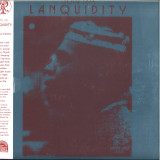
Strut proudly presents a special edition, deluxe repress of Sun Ra’s classic ‘Lanquidity’, for the 25th anniversary of the label. Housed in a tip-on sleeve with OBI strip, this new special editions features an A2 poster including a rare Veryl Oakland photograph of Sun Ra in his home, as well as liner notes by Tom Buchler (Philly Jazz), Michael Ray and Danny Ray Thompson (Sun Ra Arkestra) and Bob Blank. Originally released in 1978 on Philly Jazz, ‘Lanquidity’ was recorded overnight at Bob Bank’s Blank Tapes studio on 17th July 1978 following a performance on Saturday Night Live. “Most critics felt that it was more of a fusion-inspired record,” explains Michael Ray. “As the name suggests, the album is liquid and languid.” Bob Blank adds, “Musically, it was very ad hoc and freeform. There were horn charts but most tracks came out of improvised jams. Sun Ra just did his thing.”
The album 'Lanquidity' consists of five smooth tracks from the Sun Ra discography. It begins gently with 'Lanquidity,' a spontaneous composition by Sun Ra described by Danny Ray Thompson as reminiscent of an Ancient Egyptian Stargazing Ceremony, plotting the stars and planets. 'Where Pathways Meet' follows, featuring Sun Ra's funky interpretation of an Egyptian march, evoking the image of Pharaoh rallying his troops. 'That’s How I Feel' maintains a relaxed groove, featuring reflective trumpet lines from Eddie Gale and solos by John Gilmore and Marshall Allen, with Allen's oboe described as reminiscent of snake-charming. 'Twin Stars Of Thence' dances around Richard Williams' celebrated elastic bassline, while the haunting closer, 'There Are Other Worlds (They Have Not Told You Of),' epitomizes "space music," described by poet Mama Nzinga as 'The essence of light. Spirit takes a ride inside the deep dark space of just being.' Start to finish, Lanquidity remains an effortless, psychedelic pleasure and one of the strongest in the Ra 70's discography.
This new deluxe LP edition of ‘Lanquidity’ features the widely distributed version of the album originally released on Philly Jazz and reflects the album’s original packaging with a metallic foil / magenta sleeve, housed in a tip-on sleeve with OBI strip and featuring both liner notes and a limited edition poster, to celebrate 25 years of Strut records.
SSW Mayu, a multi-talented singer who has appeared in musicals and TV dramas, covers the classic songs of yesteryear as a single cut from a compilation album by Cafe Music!
From Karma Recordings comes their ninth EP. Another huge producer in Dead Dred brings his famous basslines and overhauls the track Tina by DJ Ande. Adding awesome brekbeats and you have a sure fire jungle anthem on your hands Oldskool style.
The second track on the A side is the creepy original Tina which builds to a scary crescendo. We are very proud to be introducing the first vinyl release from Dubious, an absolute jungle master and his track Iron Lung fits on this EP with ease.
Then last but not least we have an absolutely blinding Tina remix from the hardware extraordinaire 12Bit Jungle Out There who hails from down under. An absolutely brilliant 4 tracker not to be missed. Karma Recordings are going from strength to strength.
Layton Giordani continues his rich vein of outstanding form with ‘Freaks at Night’.
‘Freaks at Night’ continues his adventures in sound. Unmistakably a peak-time record, the track still manages to traverse a rich ethereal energy, highlighted by an otherworldly synth line and striking vocal that sets it apart from so many. Teased in sets by Giordani and Beyer going back to last summer, this one’s hugely anticipated.
Four years on from Layton Giordani’s critically acclaimed ‘New Generation’ album, Space 92 – one of techno’s most impressive new artists – steps up for a fitting remix. A masterclass of techno futurism, the 2020 album was a defining release of that year and was an impressive marker of Giordani’s ever-evolving talents in the studio. The title track was a memorable highlight, mixing ambient textures with head scrambling synth effects make it an enduring dancefloor classic. One of techno’s future stars Space 92 has added his touch to ‘New Generation’. With very special results. The Frenchman has super-charged the original, adding in plenty of laser-kissed energy as a barrage of powerful chords and silky pads take the cut into steamrolling territory.
Köhncke rides again with another 12“ having 2 sides that couldn‘t be more different: the A-Side, „Timecode“, is a clock-ticking electronic disco tease promising a joyous release by building up tremendous expectations over its course of 8 minutes – and of course not delivering the final dance floor orgasm since the night has to continue in mutual happiness and expectations on the floor. But well, surely lots of „pre-cum“ spreaded...
The „flip“, „The Answer Is Yes“, displays Köhncke‘s love with The Beatles or Prefab Sprout and the likes, in a masterly programmed digital simulation of the „played“ sound of the likes (Köhncke cannot play any „real instruments“ except for a bit of Barré-Punk-Guitar). It‘s a love metaphor about 2 photons in „entanglement“, which is a proven very psychedelic effect in quantum physics. The photons are „entangled“ and „know“ each other‘s „spin“ in immediacy, thus not bent to the speed of light, even if they are 100000 light years from each other - a theory that even Einstein considered absurd when the pioneers of quantum physics came up with this in the 1930s. So Justus put his fascination with quantum physics into a pop love song metaphor – how much more do you want?
Köhncke kommt zurück mit einer 12“ - 2 Seiten, wie sie unterschiedlicher nicht sein könnten: Die A-Seite, „Timecode“, ist eine tickende elektronische Disco-Versuchungs-Zeitbombe, die über ihre Laufzeit von über 8 Minuten extreme Erlösungsversprechen macht, sie aber selbstverständlich nicht in einem endfinalen Floor-Orgasmus auflöst, denn die Nacht soll ja weitergehen in gemeinsamer Glücklichkeit und Erwartung auf der Tanzfläche. Allerdings, eine Menge „pre-cum“ wird schon versprüht in dieser unwiderstehlichen Spannungserzeugung von Track.
Die „flipside“, „The Answer Is Yes“, stellt Köhnckes Liebe zu den Beatles oder Prefab Sprout etc. ins Licht, in einer meisterhaft programmierten digitalen Simulation des „gespielten“ Sounds der Großmeister (Köhncke kann keine „echten Instrumente“ spielen außer ein bißchen Baréegriff-Punk-Rhythmusgitarre, sein Instrument ist der Sequenzer). Es ist eine Liebesmetapher über zwei Photonen im Zustand der „Verschränkung“, was ein heute wissenschaftlich nachgewiesenes extrem psychedelisches Phänomen aus der Welt der Quantenmechanik ist: die Photonen sind „verschränkt“ und „kennen“ ihren aktuellen „Spin“ (Rotationsrichtung des Teilchens) unmittelbar, also nicht gebunden an die Lichtgeschwindigkeit. Auch wenn sie 100000 Lichtjahre voneneinander entfernt sind – eine Theorie, die sogar Einstein absurd fand („Spukhafte Fernwirkung“), als die Pioniere der Quantenphysik sie in den 1930er Jahren postulierten. Köhncke verewigt seine Faszination für Quantenphysik hier also in Form eine Retro-Pop-Lovesong-Methapher – was will man mehr?
Downloads
Making her return to the stage after 44 years, with tour dates across the US, Australia and Europe, as well as iconic performances at Glastonbury and We Out Here, Asha Puthli’s lifelong career as an inspirational trailblazer has taken on a magical new chapter. We can’t think of many artists that have had as distinctive and diverse a journey as Asha, nor who have been involved in as many different genres of music as her. A musical pioneer who forged a path through ‘60s psych, free-jazz, pop, rock, disco, and more. To mark this golden hour in her stellar career we have repressed her legendary album, ‘The Devil Is Loose', on gold vinyl. Maybe her most well-known record, the 1976 LP features the psychedelic disco-funk-classic 'Space Talk’, where Asha's soaring vocals take listeners on a journey that mirrors her eclectic career. Championed by a wide range of musical scenes and movements, over space and time it has been commandeered as their own. Casting a unique spell on its listeners, each track on the album showcases Asha’s majestic, celestial style and sumptuous vocal range. Backed by breathtaking orchestral-infused, disco-enhanced instrumentation, it’s cinematic and captivating throughout. From the infectious funk of ‘Flying Fish’, to the cosmic transcendence of ‘The Devil Is Loose’ and the choir-channeling ‘Say Yes’, this album is a true masterpiece. At Mr Bongo we are thrilled to be releasing records by such an iconic, musical maverick as Asha. She has blazed a trail so that others could follow. Whether you are buying this album as a replacement for your worn-out original copy or it's the first time you've heard of Asha Puthli and you're just intrigued and drawn in by the cover, we hope you enjoy this quintessential slice of Asha's world.
Celebrating thirty years of collaboration, Loren Connors and Alan Licht performed for two nights at OTO on May 5 and 6th, 2023. The shows celebrated a new release titled “At The Top of the Stairs”; a document of the pair's reunion in 2018 after a period of 8 years not playing together. It’s a dark, swirling two-sided spectral noir session, put out by the duo’s home label, Family Vineyard, and we expected a similar kind of atonal abyss to appear at the OTO residency. On the second night however, with the stage lit in blue, Connors took up a seat on the piano stool whilst Licht picked up the guitar. What followed was the duo’s first ever set with Connors on piano - one of only a few times Connors has played piano live at all - here captured and issued as The Blue Hour. Its spacious warmth came as a total surprise live, but makes complete sense for a duo whose dedicated expressionism takes inspiration from a vast spectrum of emotion. Both opening with single notes to start, it doesn't take long before a surface rises and begins to shimmer between the pair. A run up the keys, the drop of a feedback layer on a sustained and bent note. When the two begin to exchange notes in tandem, brief touches of melody and chord hover and the hush of the room is palpapale. After a while, Connors picks up the guitar, stands it in his lap and sweeps a wash of colour across Licht’s melody. Sharp, glassy edges begin to form, open strings and barred frets darkening the space. When his two pedals begin to merge, Licht finds a dramatic organ-like feedback and it’s hard not to imagine Rothko’s Chapel, its varying shades of blue black ascending and descending in the room. When Connors goes back to the piano for the second side, the pair quickly lock into a refrain and light pours in. It’s a kind of sound that Licht says reminds him of what he and Connors would do when the duo first started playing together 30 years ago. It’s certainly more melodic than some of their more recent shows, and the atonal shards of At The Top of the Stairs seem to totally dissolve. What is always remarkable about Licht is that his enormous frame of reference doesn't seem to weigh him down, and instead here he is able to delicately place fractures of a Jackson C Frank song (“Just Like Anything”,) amongst the vast sea of Connors’ blues. Perhaps it's the pleasure of playing two nights in a row together, or the nature of Connor’s piano playing combined with Licht’s careful listening, but the improvisation on The Blue Hour feels remarkably calm and unafraid. There’s nothing to prove and no agenda except the joy of sounding colour together. Totally beautiful.
We have invited for the first time in our closed creative community the soul and creativity of an old colleague, friend and fellow traveler on the road of DAO of life.
This is K▲NZ
If read from back to forth it comes from ZNAK, which means SIGN when translated into Bulgarian.
Originating and still gravitating in the suburban area of Lyulin district, these areas are known to give birth either to crime, or to art. In the case of Kaloyan “K▲NZ” Gavrailov, the shady Lyulin area, thankfully sparks the latter.
K▲NZ has had a lot of attention in regards to nightlife participation and on behalf of labels, but definitely not yet the deserved one. We are proud to present the platform for his first ever 12″ vinyl release with slightly odd in taste selection, and thus, rich in soul and creativity. -M-E-L-M-A-K-’s LKVBHR-12 installment is to be released also later this summer and by this we would like to tell Kalo: “welcome to the mob, big! Small-town-dogma-free techno rulez!”
Dear Friends,
Can you relax while maintaining a stable structure? The principle of “fang song” in Chinese martial art Taijiquan embodies this balance, where heaviness sinks downward and lightness rises through a vertical axis from heavy rooted feet to head.
As a dedicated Taijiquan practitioner, Littlelake applies this concept in his new EP, featuring four tracks rooted by a distinctive bass heaviness while giving a playful lightness to the overlying sound elements.
The opening track "Tonight's the night" immediately makes clear what is meant: a light-footed 2-step beat dances over weighty bass variations and playful vocal cuts set the tone.
“Passing by” is no more and no less than a true monster speed garage warper blending all the best elements of its genre.
Coming with funky tribal breaks, skillful sample manipulations, and a warm, soulful string foundation, “Watch Your Mouth” defies genre classification—it's in a class of its own.
With "Lost", Littlelake once again proves his ability to create extraordinary dancefloor moments. A jackin' 909 and shimmering dub sounds contrast with a dark Reese bassline, creating a captivatingly ambivalent mood. Don't miss this one.
P.S.: physical release comes with handcrafted, screen printed artwork by fabulous graphic artist Zatina Kessl.
Markus Guentner returns to his longstanding label, A Strangely Isolated Place following the triptych of ‘Theia’, ‘Empire’, and ‘Extropy’, presenting eight inspiring collaborations on ‘Kontrapunkt’.
Collaborations are nothing new to Markus, but it’s hard to see beyond his strong singular presence as a pioneer of long-form ambient and drone. Collabs have punctuated his albums in various places over the years, and he is no stranger to working as a duo amongst other projects, with such a strong conceptual thread throughout his prior ASIP releases, Kontrapunkt represents a literal pivot and counterpoint in his production approach. Instead of music encapsulating a strong conceptual narrative, Kontrapunkt sees Markus create a dialogue between himself and a collection of inspiring production partners.
Kontrapunkt opens with ‘Vanish’, a widescreen cinematic odyssey created in collaboration with fellow German and Affin label-head Joachim Spieth, forming the perfect opener with its modest subtleties. Australian-born Karen Vogt, renowned for her voice layering and looping, brings a beautiful, and natural addition to ‘All Light Will Remain’.
Sonae, who appeared on ASIP’s early digital releases, demonstrates her evolution into experimental flourishes with ‘Farbe Der Nacht’, adding pulsating techno tendencies and a menacing, metallic approach to Markus’ foundations. Multi-instrumentalist Pepo Galán harmonizes beautifully with Markus on ‘Ancestral Images’, adding complex nuances to a slowly evolving euphoric piece.
A master of synthesis, Arovane delivers a powerful display of supercharged electronics and coils of energy on ‘Utopian Fragments’. Benoît Pioulard's renowned expertise with guitars and tape distortion become a perfect counter to the electronics of Markus, blending styles seamlessly on ‘Father Of Waters’.
‘An unstoppable force meets an immovable object’ on ‘While Hunting Nightmares And Dreaming For Peace’, as Abul Mogard adds powerful restraint in a meeting of two drone titans. The album concludes with ‘Presence’, where Hollie Kenniff’s uplifting vocals provide a shimmering finish, perfectly bookending an album of perfected counterpoints and evolutions on the Markus Guentner sound.
Kontrapunkt will be available on Gatefold Black/Grey/Blue marble 2LP, digital and streaming on August 30th 2024. Mastered by Gio at Artefacts Mastering, Berlin, and featuring artwork by Noah M / Keep Adding.
** Includes fold out colour poster (40cm * 20cm), replicating the insert included in the original '76 release **
Only a decade ago Leong Lau remained a well-hidden Malaysian-Australian treasure, known only to small circles of Australian record collectors. In 2013 we met Leong in person at the Brisbane state library, where after a long and somewhat transcendental ‘conversation’, received his blessings to re-release his music.
In 2014, we reissued his sophomore album ‘That Rongeng Sound’ and later in 2021, his sole single ‘late Night Flyer. In 2024, we are going back to finish the triangle of Leong releases, with a repress of his debut 1976 album ‘Dragon Man’. A raw and electrifying album that continues to stand the test of time.
Dragon Man might best be described musically as psyc/rock, however the significant use of soul/funk and jazz melodies adds a unique musical depth that makes it hard to categorise. However, what truly sets Leong apart is his distinct vocal style, delivering half sung/half spoken lyrics in a stereotypical Aussie accent that comes across more like a sermon than what might be conceived as ‘traditional’ songs.
Moreover, in a time where the Australian music industry and its performers’ musical styles were dictated by major labels, Leong began to break down those barriers by self-releasing his music. This rewarded Leong creative control, where he was able to dictate the musical and cultural themes, with songs like ‘Dragon Man’ and ‘Deep In The Jungle’ that both pay homage to his unique Chinese/Malay heritage. That said, Dragon Man is both a significant musical and cultural statement that’s just as poignant today as it was then.