Limited to 500 copies worldwide.
Heavy as f-ck and deep as hell, this devastating split album gleefully corrupts and corrodes Dub’s sunshine reflections. Celebrating rhythm & noise in its dank echo chamber, these demolition dub tracks are built from obsessive studies in distortion, overdrive and seriously ruff textures, amongst an absolutely insane amount of sub-bass level.
‘Disintegration Dubs’ is a three way low end collision, between G36 (The Bug aka Kevin Martin/Gorgonn’s rig torturing beat project) and JK Flesh (Justin Broadrick of Godflesh/Jesu etc…). As the album title suggests, this instrumental pile up of floor crawling, sound system crushers, is a clearer sign than ever, that these three producers crave their dub cuts to be mutant and heavyweight, totally damaged and completely atomised. Dub as sonic obliteration
Anyone previously smitten by Techno Animal’s deeply psychedelic face off with Porter Ricks, on the long out of print ’Symbiotics’, or who worshipped Zonal’s recent rhythmic wreckage via Relapse records, will surely gorge greedily on Disintegration Dubs’. Likewise, newbies, who have snapped up this year’s ‘Fire’ by The Bug or ‘New flesh in dub’ by Godflesh, will find endless pleasure within these dread-tech, annihilated dubs and Industrial strength steppas rhythms. Echoes of Basic Channel, early Iration Steppas, Public Image Limited or even Andy Stott can be heard within this collection’s haunted atmospherics and bulldozing rumble. Yet, these three individual producers have obviously found their own recognisably original sound, within these monolithic grooves, and what makes this album so utterly refreshing, is just how well the three disparate sound manipulators complement each other fully, as they collectively set their sights on some shared, relentlessly futuristic sci-fi vision, for a new form of dub.
Obviously, Martin as The Bug, and Broadrick with his colossal dubs of Godflesh and his filthy back catalogue of JK Flesh releases, have both long since subscribed to the genre, aesthetic and fragmentation of Dub. Meanwhile relative newcomer, Gorgonn, is The Bug’s long time, live soundman, and former bandmate with DJ Scotch Egg in Devil Man, as well as having formed Dokkebi Q with Kiki Hitomi (ex-King Midas Sound), so he is no stranger to the art of deviant dubs either…
G36 dropped their appropriately titled debut EP ’Floor Weapons’, in 2018, on PRESSURE, as well as providing the backing riddim for the first ever release from Jamaican MC phenomena Nazamba, with his startling debut, ’Vexed’. Alternately, Justin has previously released seven albums solo, as JK Flesh, that systematically contorted, distorted and completely bastardised techno for labels such as Hospital Productions, Downwards and Speedy J’s Electric Deluxe… (Next year will also see a full JK Flesh album on PRESSURE too…!)
This album is Mastered by Stefan Betke aka POLE, at Scape Mastering.
Suche:c king
Stevie Ray Vaughan's 1983 debut album, Texas Flood, was a phenomenal success, climbing into the Top 40 and spending over half a year on the charts, which was practically unheard of for a blues recording. The record plays like a dynamite club show, filled with crowd-pleasing originals and covers, all performed with unbridled enthusiasm. Texas Flood was certified gold on August 13, 1990, and certified platinum on January 22, 1992.
With his astonishingly accomplished guitar playing, Stevie Ray Vaughan ignited the blues revival of the '80s. Vaughan drew equally from bluesmen like Albert King, Otis Rush and Hubert Sumlin and rock 'n' roll players like Jimi Hendrix and Lonnie Mack, as well as the stray jazz guitarist like Kenny Burrell, developing a uniquely eclectic and fiery style that sounded like no other guitarist, regardless of genre.
For the first time ever, T-Rock’s debut solo album, Conspiracy Theory will be available on Vinyl, CD & Cassette in time for the album’s 20 year anniversary! The album was first independently released in 2002 on CD-only through Secret Service Inc., the year after T-Rock left Three 6 Mafia's Hypnotize Camp Posse. With guest features from Kingpin Skinny Pimp, Wylecat, Area 51, Odd 1, J-Love, C.I.A., Chilly Rakin, Lyrical Child, 6ix Shot, C-Mac, Miss T., Da Crime-Click, II Tone & 240 North, this album is considered an underground classic amongst fans and critics. This special edition release is pressed on classic black vinyl (limited to 200 copies) as well as a high dispersion silver, and transparent blue variant limited to 150 copies each.
- A1: Get Down Saturday Night Feat Alan Scaffardi
- A2: Live For Funk Feat Sonny King
- A3: Awakening Boogie
- A4: Your Love Keeps Me Groovin’ Feat Kenneth Bailey
- B1: Speed Date
- B2: It’s Gonna Be Alright Feat Frankie Lovecchio
- B3: Trying Feat Kaigo
- B4: 3 Of A Kind
- C1: Act Like You Know Feat Al Castellana
- C2: Riding The Wave
- C3: Spread Your Love Around Feat Randy Roberts
- C4: About Love Feat Alan Scaffardi
- D1: Outstanding Feat Alan Scaffardi
- D2: So Satisfied Feat Frankie Lovecchio
- D3: Meant To Be Feat Dario Daneluz
From a previous album dedicated exclusively to Soul music by the Roman producer Nerio Papik Poggi, this new project in the artistic name 'The Soultrend Orchestra' was born in 2017. The album titlereleased that year, '84 King Street', definied the musical genre to which it is dedicated. In fact, the address is that of the legendary New York club Paradise Garage from where Disco music in the late 70s was definitively launched all over the world by deejays David Mancuso and Larry Levan in the first place. So Soul and Disco are the predominance of this first album which has had great success in the sector so much so that the band has performed live in important European festivals.
This new album entitled Live For Funk starts from where the first left us musically to enter much more on the Funk sound, especially the English one of the early 80s and the American one linked to jazz musicians such as Donald Byrd or Roy Ayers who have been re-evaluated so much in the years starting from the Acid Jazz scene from the 90s onwards.
15 songs in total, including three covers, all three already released as digital singles. The three covers are remakes of cult songs from past
years in the Disco Funk world and exactly Get Down Saturday Night by Oliver Cheatham, Outstanding by the Gap Band and Act Like You
Know by the Fat Larry's Band. In the project Nerio Poggi brought with him his historical musicians such as Alfredo Bochicchio on guitars, Peter De Girolamo on keyboards, Massimo Guerra on trumpet, Fabio Tullio on sax, Simone 'Federicuccio' Talone on percussion and Luca Trolli on drums. In addition to a dozen other guest musicians also 8 different singers among which the names of Alan Scaffardi, Al Castellana, Kenneth Bailey and Danny Losito of Kaigo stand out
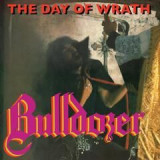
Shadow Kingdom Records is proud to reissue the classic debut album of
Italy's Bulldozer,'The Day of Wrath' in half purple and half clear vinyl with
red splatter.Italy's Bulldozer should require little introduction
During the 1980s, they were the even-uglier alternative to Venom and Motorhead,
and made their name with such anthems as "Whiskey Time" and "Ilona the Very
Best." They also had an utterly wild, over- the- top presentation and visual
aesthetic, all embodied in accurately monikered frontman AC Wild. They were a
cult band before "cult bands" were such a thing in the metal scene. In short, there
was one – and only one – Bulldozer. Their debut album, 'The Day of
Wrath',released iin 1985, became something like bottled magic: Bulldozer never
again sounded as dark and depraved and raw as they did here. While their
successive albums saw the band cleaning up their act and getting thrashier and
are no less beloved, 'The Day of Wrath' is widely/ rightly considered the classic
album from Bulldozer.
Born Don McCarlos,he processes one of reggae's most distinctive voices.
His vocal mannerisms being instantly recognisable over a tune ,yet he remains one of Jamaica's best kept secrets.
We look back to some of his finest moments that set the tone for his popularity that was to follow in the Dancehall period of Reggae.
He began his musical career in 1973,when alongside Garth Dennis and Derrick Ducky Simpson he formed one of Reggaes foremost groups Black Uhuru.
He then joined Wailing Souls before going solo under his shorter name Don Carlos
We find this set hard to beat as most of his classis are represented here and hope you find some magic as we have unearthing and compiling these lost treasures...Respect
The Who veröffentlichen am 8. Juli ihr Album „The Who Sell Out” erneut, was als ein loses Konzeptalbum mit Jingles und Werbespots begann und zu einem der außergewöhnlichsten Alben jeder Ära wurde.
Das ikonische Cover-Design schufen David King und Roger Law und porträtierten damit ein kühnes Abbild der Zeit. In Summe eine glorreiche Mischung aus klassischer, kraftvoller Who-Instrumentierung, melodischen Harmonien und satirischen lyrischen Bildern, die sich für das erst dritte Album der Gruppe herauskristallisiert haben. Das Album wurde 1967 veröffentlicht und enthält Klassiker wie „I Can See for Miles“ , „Armenia City in the Sky” und „Tattoo”. „The Who Sell Out” wurde vom langjährigen Who-Ingenieur Jon Astley mit den Originalbändern gemastert und ist in einer Originalhülle mit Obi und Echtheitszertifikat
verpackt
Diese schwarze Vinyl-Version wurde von Miles Showell in den Abbey Road Studios mit einer Half-SpeedMastering-Technik gemastert, die einen hochwertigen Vinylschnitt ergibt.
Basic Rhythm returns to his Jungle roots for his final release with Planet Mu. Harking back to the golden era of the mid 90s, but with a contemporary slant, Basic Rhythm hands in three dance floor killers, with a remix from the grim reaper himself, Loxy. The titular track, Cool Down The Dance, opens with a jittery fragmented drum pattern and wooshing stereo effects, lending a slightly disorienting feel to the intro before the well known vocal refrain leads into a monster amen drop. Deep subs, amen breaks and steely stabs roll out this dance floor banger. This is followed up with an absolute behemoth of a track. Horse Mout’ utilises an infamous vocal sample in a fresh way, building upon the intro with waves of dubwise effects before launching into a devastating onslaught. With support from scene stalwarts DJ Storm and Flight this one has been smashing up dance floors! The third track is a remix of Cool Down The Dance by Loxy, bringing his inimitable cool production style to the fore, stripping away the amen layers to reveal something for the darker corners of the dance. One for the head noders and the eyes down crew. The final track, Satta, is a nod to the dub of Augustus Pablo, King Tubby, and On U Sound. A slow boiling minimal intro that drops into the extreme minimalism of just a kick drum and sub bass line belies the swagger of the eventual drop. Swinging drums in an almost military pattern tumble and stagger around the core line of kick drum and sub bass, lending this an almost drunken air.
- 1: Approaching Hrafnsey
- 1: 2 .The King
- 1: 3 .Entering The Temple
- 1: 4 .Last Teardrop
- 1: 5 .Blood Tree, Part I
- 1: 6 .Strike, Brother
- 1: 7 .Escape
- 1: 8 .I Will Avenge You, Father
- 1: 9 .The Land Of The Rus
- 1: 0 .A Burning Barn
- 1: Seeress
- 1: 2 .Raven's Omen
- 1: 3 .Storm At Sea / Yggdrasill
- 1: 4 .Iceland
- 1: 5 .I Will Save You, Mother
- 1: 6 .Slave Work
- 1: 7 .Gudrun
- 1: 8 .Follow The Vixen's Tail
- 1: 9 .He-Witch
- 1: 20 .Draugr
- 1: 2 .Mound Dweller
- 1: 22 .To The Games
- 2: 1 .Birch Woods
- 2: First Of Many
- 2: 5 .Svid Night, Part Ii
- 2: 6 .I Am Your Death
- 2: 7 .Come Morning
- 2: 8 .I Am His Vengeance
- 2: 9 .Odinn
- 2: 10 .Valkyrie
- 2: 11 .Vestrahorn
- 2: 1 .Hidden Valley
- 2: 13 .Blood Tree, Part Ii
- 2: 14 .Blod Inside / I Choose Both
- 2: 15 .A Maiden King
- 2: 16 .The Wolf Has Grown
- 2: 17 .The Gates Of Hel / Slain By Iron
- 2: 18 .Hekla
- 2: 19 .Cut The Thread Of Fate
- 2: 0 .Make Your Passage / Valholl
- 2: 1 .Aettartre / End Credits
- 2: 3 .Trollish Sorcery
- 2: 4 .Svid Night, Part I
"Rob wollte, dass sich die Welt von The Northman rau und ungemütlich anfühlt, als wäre es mit Schlamm und getrocknetem Blut bedeckt, also war es wichtig, dass die Musik dies widerspiegelt." Die Komponisten Robin Carolan (Tri-Angle Records) und Sebastian Gainsborough (Vessel) wurden vor eine Aufgabe epischen Ausmaßes gestellt, als Regisseur Rob Eggers (The VVitch, The Lighthouse) sie bat, die Filmmusik für seinen ehrgeizigen Film The Northman zu schreiben. Sie mussten eine Filmmusik schaffen, die sowohl die immensen Recherchen zur Authentizität dieses historischen Stücks aus der Wikingerzeit würdigte; als auch den filmischen Maximalismus des Films für ein modernes Publikum ergänzte. Die Künstler gingen bis an die Grenzen ihrer Kreativität und das Ergebnis ist ein wunderschönes Klangbild, das den Hörer mitten in den Film versetzt. Beim Arrangieren der Partitur zogen die Komponisten den Musiker und Ethnographen Poul Hoxbro zu Rate, um sich inspirieren zu lassen und einen Einblick in die Geschichte der Wikingermusik zu erhalten. Da Robin und Sebastian aus dem Bereich der elektronischen Musik kommen, waren sie keinerlei Beschränkung auf eine kleine Auswahl von Musikinstrumenten unterworfen, nutzten diese aber als Ausgangsbasis. "Elektronische Musik hat ein fast grenzenloses Potenzial, wenn es darum geht, Klänge zu erzeugen, und das ist natürlich eine unglaubliche Sache, aber man kann auch in ein Wurmloch geraten und sich darin manchmal verlieren. Diese Gefahr besteht nicht, wenn man nur ein paar Hauptinstrumente hat, auf die man zurückgreifen kann" so Robin Carolan. Sie benutzten traditionelle Instrumente wie die Tagelharpa, die Langspil, die Kravik-Lyra und die Säckpip, um die filmische Welt von The Northman zu erschaffen, aber sie nahmen sich auch kreative Freiheiten, indem sie Instrumente wie Trommeln hinzufügten, von denen einige Wissenschaftler glauben, dass sie in der Musikkultur der Wikinger keine große Rolle gespielt hätten, einfach weil es keine archäologischen Beweise für echte Trommeln gibt. "Eines der Stücke sollte den Klang eines Bullroarers nachahmen; ein uraltes Instrument, das in heiligen Ritualen oder in der Schlacht zur Einschüchterung von Feinden eingesetzt wird. Es erzeugt einen wirklich verwirrenden, röhrenden Vibrato-Sound und tiefe Frequenzen, die wahnsinnige Entfernungen zurücklegen können." sagt Robin auf die Frage nach einem der einzigartigeren Aspekte der Partitur. Alle Beteiligten haben so viel Mühe in ihre Recherchen und ihre Kreativität gesteckt, und dieser Reichtum ist in jedem Stück offensichtlich. Das Album als Ganzes ist ein cineastisches Meisterwerk aus Klang und Atmosphäre, wunderschön und verstörend zugleich, genau wie der Film, den es so wunderbar begleitet.
- 1: Approaching Hrafnsey
- 1: 2 .The King
- 1: 3 .Entering The Temple
- 1: 4 .Last Teardrop
- 1: 5 .Blood Tree, Part I
- 1: 6 .Strike, Brother
- 1: 7 .Escape
- 1: 8 .I Will Avenge You, Father
- 1: 9 .The Land Of The Rus
- 1: 0 .A Burning Barn
- 1: Seeress
- 1: 2 .Raven's Omen
- 1: 3 .Storm At Sea / Yggdrasill
- 1: 4 .Iceland
- 1: 5 .I Will Save You, Mother
- 1: 6 .Slave Work
- 1: 7 .Gudrun
- 1: 8 .Follow The Vixen's Tail
- 1: 9 .He-Witch
- 1: 20 .Draugr
- 1: 2 .Mound Dweller
- 1: 22 .To The Games
- 2: 1 .Birch Woods
- 2: First Of Many
- 2: 7 .Come Morning
- 2: 8 .I Am His Vengeance
- 2: 9 .Odinn
- 2: 10 .Valkyrie
- 2: 11 .Vestrahorn
- 2: 1 .Hidden Valley
- 2: 13 .Blood Tree, Part Ii
- 2: 14 .Blod Inside / I Choose Both
- 2: 15 .A Maiden King
- 2: 16 .The Wolf Has Grown
- 2: 17 .The Gates Of Hel / Slain By Iron
- 2: 18 .Hekla
- 2: 19 .Cut The Thread Of Fate
- 2: 0 .Make Your Passage / Valholl
- 2: 1 .Aettartre / End Credits
- 2: 3 .Trollish Sorcery
- 2: 4 .Svid Night, Part I
- 2: 5 .Svid Night, Part Ii
- 2: 6 .I Am Your Death
"Rob wollte, dass sich die Welt von The Northman rau und ungemütlich anfühlt, als wäre es mit Schlamm und getrocknetem Blut bedeckt, also war es wichtig, dass die Musik dies widerspiegelt." Die Komponisten Robin Carolan (Tri-Angle Records) und Sebastian Gainsborough (Vessel) wurden vor eine Aufgabe epischen Ausmaßes gestellt, als Regisseur Rob Eggers (The VVitch, The Lighthouse) sie bat, die Filmmusik für seinen ehrgeizigen Film The Northman zu schreiben. Sie mussten eine Filmmusik schaffen, die sowohl die immensen Recherchen zur Authentizität dieses historischen Stücks aus der Wikingerzeit würdigte; als auch den filmischen Maximalismus des Films für ein modernes Publikum ergänzte. Die Künstler gingen bis an die Grenzen ihrer Kreativität und das Ergebnis ist ein wunderschönes Klangbild, das den Hörer mitten in den Film versetzt. Beim Arrangieren der Partitur zogen die Komponisten den Musiker und Ethnographen Poul Hoxbro zu Rate, um sich inspirieren zu lassen und einen Einblick in die Geschichte der Wikingermusik zu erhalten. Da Robin und Sebastian aus dem Bereich der elektronischen Musik kommen, waren sie keinerlei Beschränkung auf eine kleine Auswahl von Musikinstrumenten unterworfen, nutzten diese aber als Ausgangsbasis. "Elektronische Musik hat ein fast grenzenloses Potenzial, wenn es darum geht, Klänge zu erzeugen, und das ist natürlich eine unglaubliche Sache, aber man kann auch in ein Wurmloch geraten und sich darin manchmal verlieren. Diese Gefahr besteht nicht, wenn man nur ein paar Hauptinstrumente hat, auf die man zurückgreifen kann" so Robin Carolan. Sie benutzten traditionelle Instrumente wie die Tagelharpa, die Langspil, die Kravik-Lyra und die Säckpip, um die filmische Welt von The Northman zu erschaffen, aber sie nahmen sich auch kreative Freiheiten, indem sie Instrumente wie Trommeln hinzufügten, von denen einige Wissenschaftler glauben, dass sie in der Musikkultur der Wikinger keine große Rolle gespielt hätten, einfach weil es keine archäologischen Beweise für echte Trommeln gibt. "Eines der Stücke sollte den Klang eines Bullroarers nachahmen; ein uraltes Instrument, das in heiligen Ritualen oder in der Schlacht zur Einschüchterung von Feinden eingesetzt wird. Es erzeugt einen wirklich verwirrenden, röhrenden Vibrato-Sound und tiefe Frequenzen, die wahnsinnige Entfernungen zurücklegen können." sagt Robin auf die Frage nach einem der einzigartigeren Aspekte der Partitur. Alle Beteiligten haben so viel Mühe in ihre Recherchen und ihre Kreativität gesteckt, und dieser Reichtum ist in jedem Stück offensichtlich. Das Album als Ganzes ist ein cineastisches Meisterwerk aus Klang und Atmosphäre, wunderschön und verstörend zugleich, genau wie der Film, den es so wunderbar begleitet.
- 1: Approaching Hrafnsey
- 1: 2 .The King
- 1: 3 .Entering The Temple
- 1: 4 .Last Teardrop
- 1: 5 .Blood Tree, Part I
- 1: 6 .Strike, Brother
- 1: 7 .Escape
- 1: 8 .I Will Avenge You, Father
- 1: 9 .The Land Of The Rus
- 1: 0 .A Burning Barn
- 1: Seeress
- 1: 2 .Raven's Omen
- 1: 3 .Storm At Sea / Yggdrasill
- 1: 4 .Iceland
- 1: 5 .I Will Save You, Mother
- 1: 6 .Slave Work
- 1: 7 .Gudrun
- 1: 8 .Follow The Vixen's Tail
- 1: 9 .He-Witch
- 1: 20 .Draugr
- 1: 2 .Mound Dweller
- 1: 22 .To The Games
- 2: 1 .Birch Woods
- 2: First Of Many
- 2: 5 .Svid Night, Part Ii
- 2: 6 .I Am Your Death
- 2: 7 .Come Morning
- 2: 8 .I Am His Vengeance
- 2: 9 .Odinn
- 2: 10 .Valkyrie
- 2: 11 .Vestrahorn
- 2: 1 .Hidden Valley
- 2: 13 .Blood Tree, Part Ii
- 2: 14 .Blod Inside / I Choose Both
- 2: 15 .A Maiden King
- 2: 16 .The Wolf Has Grown
- 2: 17 .The Gates Of Hel / Slain By Iron
- 2: 18 .Hekla
- 2: 19 .Cut The Thread Of Fate
- 2: 0 .Make Your Passage / Valholl
- 2: 1 .Aettartre / End Credits
- 2: 3 .Trollish Sorcery
- 2: 4 .Svid Night, Part I
"Rob wollte, dass sich die Welt von The Northman rau und ungemütlich anfühlt, als wäre es mit Schlamm und getrocknetem Blut bedeckt, also war es wichtig, dass die Musik dies widerspiegelt." Die Komponisten Robin Carolan (Tri-Angle Records) und Sebastian Gainsborough (Vessel) wurden vor eine Aufgabe epischen Ausmaßes gestellt, als Regisseur Rob Eggers (The VVitch, The Lighthouse) sie bat, die Filmmusik für seinen ehrgeizigen Film The Northman zu schreiben. Sie mussten eine Filmmusik schaffen, die sowohl die immensen Recherchen zur Authentizität dieses historischen Stücks aus der Wikingerzeit würdigte; als auch den filmischen Maximalismus des Films für ein modernes Publikum ergänzte. Die Künstler gingen bis an die Grenzen ihrer Kreativität und das Ergebnis ist ein wunderschönes Klangbild, das den Hörer mitten in den Film versetzt. Beim Arrangieren der Partitur zogen die Komponisten den Musiker und Ethnographen Poul Hoxbro zu Rate, um sich inspirieren zu lassen und einen Einblick in die Geschichte der Wikingermusik zu erhalten. Da Robin und Sebastian aus dem Bereich der elektronischen Musik kommen, waren sie keinerlei Beschränkung auf eine kleine Auswahl von Musikinstrumenten unterworfen, nutzten diese aber als Ausgangsbasis. "Elektronische Musik hat ein fast grenzenloses Potenzial, wenn es darum geht, Klänge zu erzeugen, und das ist natürlich eine unglaubliche Sache, aber man kann auch in ein Wurmloch geraten und sich darin manchmal verlieren. Diese Gefahr besteht nicht, wenn man nur ein paar Hauptinstrumente hat, auf die man zurückgreifen kann" so Robin Carolan. Sie benutzten traditionelle Instrumente wie die Tagelharpa, die Langspil, die Kravik-Lyra und die Säckpip, um die filmische Welt von The Northman zu erschaffen, aber sie nahmen sich auch kreative Freiheiten, indem sie Instrumente wie Trommeln hinzufügten, von denen einige Wissenschaftler glauben, dass sie in der Musikkultur der Wikinger keine große Rolle gespielt hätten, einfach weil es keine archäologischen Beweise für echte Trommeln gibt. "Eines der Stücke sollte den Klang eines Bullroarers nachahmen; ein uraltes Instrument, das in heiligen Ritualen oder in der Schlacht zur Einschüchterung von Feinden eingesetzt wird. Es erzeugt einen wirklich verwirrenden, röhrenden Vibrato-Sound und tiefe Frequenzen, die wahnsinnige Entfernungen zurücklegen können." sagt Robin auf die Frage nach einem der einzigartigeren Aspekte der Partitur. Alle Beteiligten haben so viel Mühe in ihre Recherchen und ihre Kreativität gesteckt, und dieser Reichtum ist in jedem Stück offensichtlich. Das Album als Ganzes ist ein cineastisches Meisterwerk aus Klang und Atmosphäre, wunderschön und verstörend zugleich, genau wie der Film, den es so wunderbar begleitet.
Die Geschichte von The Boppers begann wie ein Märchen über ein paar Teenager aus Stockholm, die zur falschen Zeit am richtigen Ort waren.
Sie gründeten die Band 1977, als der Punkrock auf der ganzen Welt explodierte, und ihre Interpretation des Doo Wop und Rock n Roll der 50er Jahre hätte nicht unpassender sein können, aber sie weigerten sich, sich anzupassen und machten daraus einen Erfolg.
Ihr Debütalbum 'Number One', das hauptsächlich Coverversionen ihrer 50er-Jahre-Lieblingslieder von Roy Orbison, Dion & Belmonts usw. enthielt, verkaufte sich in Schweden über 450 000 Mal! Eine Empfehlung für Fans von Bands wie Rockpile, Drifters, Darts, Dion, Beach Boys, Chuck Berry, Marcels, Blasters, Stray Cats oder Coasters!
Echoes of this summer's 'Shango' still shimmer through systems as Detroit's Waajeed continues to make good on his promise: to 'put paint where it ain't.'
After years of soul, funk and hip-hop explorations as a founding member of the Platinum Pied Pipers (among many other innovative escapades) and, most recently, a soulful remix of Amp Fiddler on Kenny Dixon's Mahogany Music, Waajeed is building on the fresh line of house grooves he commenced this summer. His first pedigree dancefloor tracks in almost 20 years, he taps directly into the source and builds with his own soulful bricks. It's working, too; DJ-wise he's playing alongside Moodyman, Mr. Scruff and Carl Craig this fall, while 'Shango' has enjoyed heavyweight support by The Black Madonna, Carl Craig, Jackmaster, Gilles Peterson and many notable selectors.
- A1: Maria Maria
- A2: Cozinha
- A3: Pilar (Do Pila) (Do Pila)
- A4: Trabalhos (Essa Voz) (Essa Voz)
- B1: Lilia
- B2: A Chamada
- B3: Era Rei E Sou Escravo
- B4: Os Escravos De Jo
- B5: Tema Dos Deuses
- C1: Santos Catholicos X Candomble
- C2: Pai Grande
- C3: Seducao
- D1: Francisco
- D2: Maria Solidaria
- D3: De Repente Maria Sumiu
- D4: Eu Sou Uma Preta Velha Aqui Sentada No Sol
- D5: Boca A Boca
- D6: Maria Maria
Repress incoming...
Far Out Recordings proudly presents Milton Nascimento's Maria Maria. Recorded in 1974 and unreleased until almost thirty years later, the album was written as the soundtrack to a ballet which dealt with the legacy of slavery in Brazil. Raw, atmospheric and emotionally charged, Maria Maria reveals one of Brazil's greatest ever songwriters at his creative peak. Featuring an all-star cast of fellow Brazilian legends including Nana Vasconcelos, Joao Donato, Paulinho Jobim, and members of Som Imaginario, Maria Maria holds what Milton considers to be the definitive versions of some of his classic songs, including 'Os Escravos De Jó' and 'Maria Maria'.
Originally released in 2003 as a double CD package, with Milton Nascimento's 1984 follow up ballet soundtrack Ultimo Trem, Maria Maria will be available on vinyl for the very first time from December 2019, with Ultimo Trem set for vinyl release early 2020.
Milton Nascimento possesses one of the most immediately recognizable voices in Brazilian music: high and sweet and as breathtakingly sublime as that of any soul singer. It was this voice that the legendary Brazilian singer Elis Regina fell in love with back in 1964, having heard Milton perform his song 'Canção do Sal (Sultry Song)' at a private party in Sao Paulo. Ellis went on to record the song in 1967 -giving Milton his first hit in Brazil and beginning a career that has spanned over 50 years.
Born in Rio on the 26th October 1942, Milton moved with his adoptive parents at the age of 18 months to Tres Pontas, a rural town in the state of Minas Gerais, 500 miles north of Rio. He began his musical career as a young teenager, singing in a crooner style he learnt from listening to Brazilian singers and US groups such as The Platters on the radio. Hungry for more opportunities to perform, Milton moved to Belo Horizonte, the capital of Minas Gerais, at the age of twenty. By the beginning of the 60s Milton had made a name for himself both as an accomplished singer and guitarist.
Milton became part of a local network of musicians, film makers, dancers, theatre directors and writers that included the journalist and song writer Fernando Brant as well as lyricist Marcio Borges and his younger brother Lo Borges. Together these four wrote and produced what would become Milton's milestone album, 'Clube da Esquina (Club on the Corner)'. The originality of 'Club da Esquina' shaped the local scene, and it reflects the essence of 'the Nascimento Sound'. Milton's religious upbringing as an Afro-Brazilian Catholic saw him exposed to church choral music from an early age. His love of this genre of music is apparent in both his celestial falsetto and vocal choral arrangements. This collection also displays his early fascination with evocative, non-verbal, scat-style singing, spare, harmonic guitar work and local folk music, jazz and rock.
In 1976, Milton and Fernando Brant teamed up with a new contemporary dance company called Grupo Corpo, whose Argentinian choreographer Oscar Araiz, would become a collaborator with the two musicians. Together, they conceived a show based on the composite life story of the daughter of a black slave called Maria. Nascimento wrote music to Brant's lyrics and "Maria Maria" was premiered in the main theatre of the Belo Horizonte Palacio das Artes that year. "Fernando wrote the lyrics for the ballet, but there were originally no lyrics for the theme song, "Maria Maria'". Milton and Fernando worked on the lyrics together, basing them on folk stories about black women of the countryside. Adds Milton "These memories are mostly things that we witnessed – Fernando and I – rather than what we experienced ourselves.
Milton's music is impressionistic, emotional and romantic. Relying on songs without lyrics as well as evocative vocalizing and choruses, Milton experimented heavily with Afro-Brazilian percussion and taped jungle sounds. His composing method for these recordings was highly unconventional: "I wrote the music for 'Maria Maria' in a tiny Rio apartment with friends and their kids running around and having fun! I love to be in noisy places, surrounded by people", he says.
The music on 'Maria Maria' was performed by an impressive group of young musicians who are today household names in Brazilian music, including Naná Vasconcelos (percussion and effects), Toninho Horta (guitars) and Paulo Moura (sax). Several vocalist including Naná Caymmi, Fafá de Belém, Beto Guedes, and Milton himself, had hits in years to come with reworkings of these songs.
Milton says his compositions follow his visions "like a movie", and he believes that reflects his long love affair with cinema. "I only began composing because of enjoying the movies so much," he says. "I wrote my first song "Peace for the Coming Love" after seeing 'Jules et Jim' (the cult 60s French film directed by François Truffaut), with my friend Marcio Borges. We went early in the morning and watched it four or five times in a row, then went to Márcio's home and wrote the song."
The songs also include solo spoken passages set to music, clearly influenced by this style of French art cinema. On the title track, Maria's story is narrated and translated to music through the use of African Percussion, drums and metal signifying the field slave tools of the day. 'Trabalhos (Works)' runs to work rhythms and whipcracks: no words, just pain. 'Lília' documents the beating of the slave woman. After 'A Chamada (The call)' and the triumphant 'Era Rei e Sou Escravo (I was a king now I am a slave' things begin to turn and Milton employs tropical jungle cries to symbolize freedom. 'Santos Catholicos x Candomble (Catholic Saints vs Candomble)' represents the battle between African and European religions through the music of both sides. Milton's heavenly falsetto pours into 'Francisco' and 'Pai Grande (Great Father)' and the outstanding 'Eu Sou Uma Preta Velha Aqui Sentada no Sol (I'm an old black lady, sitting under the sun)' conjures images of an old woman sitting deep in the forest, her memories painted in drums, piano and voices.
The Silvertones were steeped in the grand tradition of Jamaican vocal trios along with other greats such as The Heptones, The Abyssinians and The Kingstonians. Formed in 1964 by Delroy Denton, Keith Coley and Gilmore Grant, the group recorded under a variety of names in the ska and rocksteady era for Duke Reid’s Treasure Isle and Coxsone Dodd’s Studio One, before hooking up with producer Lee “Scratch” Perry.
Originally released in 1973, The Silvertones’ debut Silver Bullets was recorded at Perry’s Black Ark studio with vocal tracks captured at King Tubby’s Dromilly Avenue studio in a marathon, all-night session. While firmly planted in roots reggae, Silver Bullets’ dense harmonies and relaxed vibe harken back to rocksteady. The album marks an interesting point in Jamaican music where the past and the future are visible in the grooves of a single LP—from classic rocksteady-tinged love songs like “That’s When It Hurts” and “Rock Me In Your Soul” to the Rasta anthem “Rejoice Jah Jah Children.”
Antarctica Starts Here presents the first widely available domestic release of Silver Bullets. This reissue is part of an archival series that focuses on Trojan’s essential ’60s and ’70s catalogue. Liner notes by JR Gonne.
Limited White Teal & Beige Vinyl. Spencer Zahn's second record for Cascine emerged from a series of piano sketches born of daily improvisations in Kingston, New York, where he relocated during the pandemic after 14 years in the buzz of Brooklyn. Inspired by the space and pace of upstate life, he explored a more restrained, resonant mode of playing, letting chords delay all the way to silence, until the seeds of songs took shape. Zahn accompanied himself on upright bass, finessing each piece without cluttering it, focusing on the notion of "the instrument in a room. Recruiting long-time collaborator Andy Highmore for piano duties, the duo booked time at Figure 8 Recording in Prospect Heights to craft the lulling, lyrical 12-track suite of Pale Horizon. The tonality of the instruments was central to Zahn's vision, fusing them to feel like a single entity, with upright bass blending in an elegant gradient with the low strings on the piano. An air of Keith Jarrett and Ryuichi Sakamoto hangs over the collection, acoustic and unhurried, stately but subdued, ruminative daydream melodies heard on the breeze in a quiet garden.
- A1: La Clarte Dans La Confusion (Feat N'zeng)
- A2: Calling Dancers (Feat Alborosie & Promoe)
- A3: Rock Mi Nice (Feat Kabaka Pyramid)
- A4: Madzilla (Feat Troy Berkley & Blabbermouf)
- A5: Eternal Roses (Feat Ken Boothe & Lion In Bed)
- B1: Florilege (Feat Lyricson, Queen Omega & Red Fox)
- B2: Drop (Feat Troy Berkley & Dope Saint Jude)
- B3: La Fleur De L'age (Feat Degiheugi)
- B4: People Is Massive (Feat General Levy)
- B5: Scoville Anthem (Feat Lmk, Reverie & Lady Chann)
- C1: Magistral (Feat Bounty Killer & Troy Berkley)
- C2: Clin D'oeil (Feat Dawa & The Architect)
- C3: Get Back (Feat Chali 2Na & N'zeng)
- C4: Mana (Feat Marcus Gad & Juju Rogers)
- C5: Lift Up Your Head (Feat Troy Berkley & Obf)
- D1: Way To Be Happy (Feat Las Ninyas Del Corro)
- D2: Fi Di Yut (Feat Blackout Ja & Tippa Irie)
- D3: Mumbai 808 (Feat Manudigital)
- D4: Saga (Feat Killa P, Flowdan & Big Red)
- D5: Downtown (Befour Steppa) (Befour Steppa)
Unstoppable elders of the L'Entourloop collective, King James and Sir Johnny, are proud to present on June 10, 2022 their long-awaited third and new album entitled "Clarity in Confusion". Featuring Alborosie, Promoe, Degiheugi, General Levy, The Architect ...
It is now official, 2022 will mark the return of the tireless seniors of the collective L'ENTOURLOOP! After a break to devote themselves to the creation of a new album and a new live show that promises to be exceptional, they are back on the road, more determined than ever!
The success of their last albums "Chickens in Your Town" (2015) and "Le Savoir-Faire" (2017), with their unique "Banging hip-hop inna Yardie Style" never cease to seduce sound-system, vinyl and French classics fans, all over the world.
- A1: Curmudgeon
- A2: Entameta (With Dmx - Remix)
- A3: Hydra
- A4: Live Action Role Play
- A5: Travis Scott Concert (With Born Sun & Bodybag Ben)
- A6: Animal Husbandry
- A7: Covid Santa
- A8: Kaiju Karaoke
- A9: The Long Road
- A10: Verzuz
- A11: Chase (Feat Mf Doom X Kool Keith X Justin Tyme - Bonus Track)
- A12: Desperados (Feat Hus Kingpin - Part 2 - Bonus Track)
Kaiju is the floor-shaking, speaker-knocking new album from Canibus, one of hip-hop’s greatest lyricists who continues to push himself as an artist. It also serves as his first solo release since 2015’s excellent Time Flys, Life Dies... Phoenix Rise, which was produced entirely by Bronze Nazareth. It’s only fitting, then, that ‘Bus would once again work with only one producer for this project, which finds him spitting mind-melting bars over beats from Oxnard, CA beatsmith/rapper Body Bag Ben.
The 11 tracks on Kaiju strike a balance between personal experiences and striking grandiosity that ‘Bus expertly crafts with his pen. They also all boast the rewind-worthy lyrics you’d want from one of the genre’s most creative and truly timeless talents. You can hear this immediately on the opening track, “Curmudgeon,” where he spits raw bars with his signature growl over BBB’s monstrous production. That vibe carries on throughout the record, from the snarling, DMX-assisted “Entameta (Remix)” through to the hip-hop epic of “Verzuz.”
This is truly Canibus at his best, blending surrealist wordplay and turns-of-phrase with sharp, witty commentary about the state of the world today. Even better, he’s backed by some of BBB’s best production to date, which rumbles and stomps as much as it sounds like it’s covered in a thick layer of grime. It’s much like the inspiration for the album’s title—a giant monster (kaiju, in Japanese) like Godzilla rising from a slumber, ready to wreak havoc on his opponents.
Midland are an American country music trio. Having released an EP last summer en route, Midland’s Cameron Duddy, Mark Wystrach and Jess Carson are on the verge of arriving at their ultimate destination with The Last Resort: Greetings From on May 6 via Big Machine Records. The trio spent the pandemic exploring their creative depths, from progressive Country that grew out of “Urban Cowboy” through Dwight Yoakam’s post-traditionalism and arrive with their third studio album. As Midland’s “Sunrise Tells The Story” rises at Country radio, the two-time GRAMMY® nominees dial in their Laurel Canyon-cum-Bakersfield sound for a tension that also promises release. Falling harder than the singer imagined throughout the spicy hook-up song, melting harmonies lean into a more erotically charged proposition. RADIO: BBC Radio 2, BBC local stations (session on BBC Radio Ulster), CountryLine's 'Artist Of The Month', Absolute Radio Country, Downtown Country, Smooth Country PRESS: Entertainment Focus (5* review), Building Our Own Nashville (5* review), Maverick, Americana UK, RNR Magazine, SW London Magazine, country specialist outlets Socials: TW: 62.3K, FB: 307.9K, IG: 276K, TikTok: 91.5K