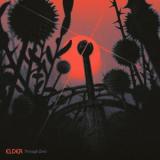
Two decades into their existence, Elder remain an anomaly in the heavy underground - a band with the ability to absorb and shed influences from a myriad of genres without falling into pastiche or losing their identity. Their new album Through Zero is a reaffirmation of their commitment to pushing boundaries and cements their status as leaders in heavy psychedelic rock. Elder has long since mastered crushing riffs, melodic jaunts, progressive patterns, hypnotic grooves and ethereal atmosphere along their path of music-making in the past twenty years. On Through Zero, Elder takes these years of experience and forms possibly their most immediate and engaging record to date, while allowing seeds from outside the sphere of rock music to take root and bloom within their progressive framework. Listeners will find familiar elements of new textures, sequences, and sounds alongside Elder"s iconic take on heavy rock. As always, every spin reveals new details. Recorded in Berlin across several months between tours in 2025, Through Zero is the first album which the band not only produced but also comixed together with longtime collaborator Richard Behrens. The album sounds more like a full extension of the band"s creative intentions than ever before.
out of Stock
Last delivered 4 months ago available to reorder, subject to availability
Red Vinyl. Remastered by Bob Weston at Chicago Mastering Studio from the original analog master tapes. "Slint formed in 1986 as an outlet and pastime for four friends from Louisville, Kentucky. Their music was strange, wholly their own, sparse and tight. What immediately set them apart was their economy and precision. Slint were that rare band willing to play just one or two notes at a time and sometimes nothing at all. 1989's "Tweez" LP hints at their genius." - Steve Albini (Melody Maker, 1991). From the original bio: It's almost always muddy in the lousy little shanty town by the river. All the children's toys are old and rusty, even the plastic ones. Jimmy and Mel fashioned their own toy out of a live chicken that they stole. A knot was tied around the bird's feet with a shoe lace. The two boys painted their plaything yellow and silver and swung it around like a lasso, screaming gibberish and laughing the whole time. Mel got so excited that he wet himself. So, Jimmy slugged him square in the eye. About five or eight miles south east of the shanty town all the fellows in SLINT were suffering from headaches, except the drummer, who only got them when the others didn't. SLINT is a band from Louisville, Kentucky. tweez was its first recording.
out of Stock
Last delivered 4 months ago available to reorder, subject to availability
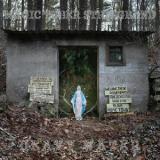
Magic Tuber Stringband act in communion with the natural world around them. Highly skilled players and writers, the trio are leaders within the burgeoning Avant-Folk world. Growing up in Appalachia studying the folk traditions of the region in tandem scientific and observational work in nature, their music appears to weave in and out of the fabric of the landscape. The ensemble continues to stretch the parameters of acoustic instrumental expression with masterful flourishes of dense, textural arrangements, subtle minimalist gestures and deft improvisation. Heavy Water addresses the impact of nuclear production on the environment and the communities within, a musical evocation of destruction and resilience, an embrace of dissonance and tension within moments of transcendence.
out of Stock
Last delivered 4 months ago available to reorder, subject to availability
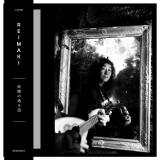
妖精の通る道 (The Path Where Fairies Pass) is the debut vinyl release by Reimaki, the duo of Rei Yokoyama (Triggers Flowers, Stakaidan, Lapiz Trio, 新井薬師自警団, and Fujio, Chiko Hige and Rei), and Maki Miura (Tsubamegami, Les Rallizes Dénudés, Shizuka, Fushitsusha, Ohkami No Jikan and Katsurei). The duo has been an understated presence in Tokyo, playing occasional under-the-radar shows and self- releasing a few CD-Rs, but they’ve recently started to break cover, with a recent cassette on UFO Creations, released in support of a late 2024 tour of China. It’s also a welcome reappearance on the scene for both musicians; Miura’s musical history, in particular, is being reevaluated thanks to a recent string of welcome Shizuka reissues.
But the music Reimaki make together is a different thing entirely, much as it shares some psychological and aesthetic interests with both Miura’s and Nokoyama’s other projects. Their sound is split between two main interests – an extension of glacial, deoxygenating psychedelic improvisations, and a deep interest in medieval European music. They’ve also been known to cover compositions by English prog/improv musician Fred Frith. These various elements of the Reimaki aesthetic are all present through 妖精の通る道, from the fragility of the opening “Novel Amor” through to the smeared, hazy textures of the three extended pieces that comprise the album’s flipside.
There’s a beautiful sympathy in these performances, and a generous simplicity, too; you can sense that this music is informed by decades of finding just the right way to say the right thing in the clearest manner possible. Yokoyama and Miura never overstate things; make the statement, play the song, let it hang in the air for a while, and then move on to the next essential expression. The music is unburdened by self- consciousness. Their take on medieval music cuts to the core of melody and melancholy; their psych- improv side is blurred and drifting without ever lapsing into rote generic gestures.
There’s some shared space with other artists who suspend the timeless within the kaleidoscopic possibilities of the psychedelic – Kendra Smith & The Guild of Temporal Adventurers; Emmanuelle Parrenin; Rosina de Peira – and a tangled folksiness that might put listeners in mind of Jan Dukes De Grey, Comus, Current 93, and Tower Recordings. Accompanied by beautiful photography from street photographer Takehiko Nakafuji, who was also personally chosen by Mizutani to document Les Rallizes Dénudés, 妖精の通る道 is a most unique and necessary trip.
out of Stock
Last delivered 4 months ago available to reorder, subject to availability
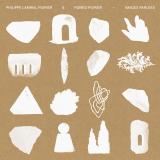
Besides his work as a painter, filmmaker and set designer, Philippe Lamiral Poirier (1951-2025) played guitar and saxophone in the group Kat Onoma, which he co-founded with Rodolphe Burger.
His fifth studio album combines his written texts with music composed by his son, Roméo Poirier, whom he considered to be cut from the same musical cloth as he was. It also confirms what has emerged from his previous albums, namely songs more spoken than sung and whose words evoke images, thus the album’s title – Images parlées.
A book of his paintings, Images traversées, will be published simultaneously with the album.
In this continual back and forth movement between text and image, music has always been present – sensitive and abstract, expressing nothing other than itself. It hollows out a place to tell us where we are. It is life without delay.
Roméo Poirier is working in the field of electronic music, focusing on heavy processing of samples and digital collage. He released albums on the London based record label Kit Records (Plage Arrière), the mancunian record label Sferic (Hotel Nota), and Jan Jelinek’s own imprint Faitiche (Living Room and Off The Record).
out of Stock
Last delivered 4 months ago available to reorder, subject to availability
The 1970s were Marion Brown’s most searching decade, a period during which he sought to move beyond the free jazz of the previous era and find more personal approaches to structuring improvisation and composition. After leaving New York for Europe in 1967, Brown began reshaping his music into what he described as “a more deliberate kind of music that had more structure to it,” pacing it so that moods and modes could develop over time. Albums such as In Sommerhausen, Afternoon of a Georgia Faun, Geechee Recollections, and Sweet Earth Flying trace this evolution: rhythmic structures moved to the foreground, harmony receded, and composition became a matter of orchestrating interlocking rhythmic parts as one would polyphonic lines.
Released in 1976, Awofofora is an overlooked but crucial entry in that sequence. At the time, its use of funk and reggae beats, electric guitars, and grooves drawn from contemporary Black popular music led some to misread it as a jazz-rock detour. In retrospect, it is entirely consistent with Brown’s methodology. As he admired in the Art Ensemble of Chicago, the stimulus comes from within the community. Here Brown filters Afro-Caribbean rhythms and funk through his own sensibility, abstracting their structural qualities rather than adopting surface style.
“La Placita,” making its first recorded appearance, layers distinct rhythmic phrases in a manner reminiscent of African drum ensembles, over which Brown and trumpeter Ambrose Jackson spin extended improvisations. The standard “Flamingo” is reshaped through diasporic rhythm and lyrical soloing, while “Pepi’s Tempo” and “Mangoes” harness crisp funk and reggae grooves to generate what Brown called a “manifestation of community” through collective improvisation. Even the overdubbed solo feature “And Then They Danced” reflects his structural thinking, ingeniously re-voicing a duet composition for two alto saxophones performed by one player.
This was the only recording by a short-lived band that briefly polarized audiences during festival appearances in 1976. Yet Brown consistently sought unity across change: different sounds, same principles — rhythm as structure, melody as architecture, collective improvisation, and above all, the primacy of tone. Awofofora stands not as a departure, but as a vivid synthesis of the elements he had been refining since the late 1960s, its grooves and golden alto lines conveying a sound drawn, in his words, “from life and from the world of experience.”
out of Stock
Last delivered 4 months ago available to reorder, subject to availability
On the 2024 Altered Circuits release Tropicana Tracks Rotterdam-based artist Betonkust paid tribute to the former subtropical pool (now a circular entrepreneurship hub) Tropicana of his hometown. ALT025 is the follow-up: the fallen-from-grace swimming paradise again fuels a club-oriented selection, inspired by, in the artist's words, "the electronic music from 1988 up until now", more specifically "the Benelux-sound". Tropicana Tracks Two kicks off in full gear with the zero swing drums and lately bass rhythms of Don't Think I'll Be Here Too Long setting the stage for intense synth stabs. Its counterpart comes by way of Realxing, which nonetheless uses similar patches. If the A1 is the thrill of the slides, this one feels like blissfully floating in the geothermally heated waters afterwards. Will Support on the reverse side takes on Detroit techno. Minimal in its composition, it is carried by tough, loopy minor fifth synth sections and prominently mixed rides. TV For Lonely People features more big bass catchiness and melancholic, silky melodies, glued together by vintage flanger treatment and chlorine-damp reverb. The production revels in what feels like the quintessential Betonkust sound. Innershades then joins for the encore, and, characteristically, the mood turns a bit darker. Letting Go Of The Dream is an emotional New Beat update, fully equipped with thudding drum works, haunting lo-fi vocals and pivotal 303 programming - a fitting reaffirmation of the long-standing ties between two of Low Countries Electronics's finest ambassadors.
out of Stock
Last delivered 81 days ago available to reorder, subject to availability
A defining transmission in the history of Skylax Records. Originally released across different moments of the Skylax catalogue, these recordings are now assembled as the final chapter of the Skylax House Explosion series — a project exploring the architecture, memory and survival mechanisms embedded within house music culture. The record opens with Move D’s “Outer Rim 64”, originally released in 2018 as part of the Skylax House Explosion narrative. Suspended between motion and distance, the track establishes the conceptual perimeter of this final chapter — a space where rhythm no longer functions only as propulsion, but as orientation. Here the listener stands at the outer edge of the dancefloor’s architecture, where structure persists even as its original social conditions begin to disappear. The sequence continues with Hardrock Striker’s “Motorik Life (DJ Sprinkles Dub)”, originally released in 2011. Rather than operating as a conventional remix, the Dub reinforces the motorik continuum of the original composition, transforming repetition into endurance. DJ Sprinkles preserves the infrastructural skeleton of the dancefloor — its capacity to sustain bodies through duration alone, without narrative resolution or emotional release. The record culminates with “Motorik Life (DJ Sprinkles Mountain Of Despair Remix)”, one of the most politically explicit works ever associated with Skylax Records. Through the relentless repetition of the phrase “mountain of despair,” Terre Thaemlitz dismantles the traditional function of dance music, transforming remix culture into structural critique. Referencing Martin Luther King Jr.’s famous metaphor, the remix removes the promise of redemption and leaves only the architecture of struggle. The dancefloor is no longer presented as escape, but as a temporary condition of survival. Together these recordings reveal house music’s true function: not to resolve despair, but to create temporary conditions in which bodies can continue to exist despite it.
AFTER THE DANCEFLOOR
you cannot preserve a dancefloor
by archiving its sound
because the dancefloor was never sound
it was bodies
finding temporary protection
inside systems designed to erase them
house music was never a genre
it was a survival strategy
when the lights disappeared
the structures remained
and so did we
out of Stock
Last delivered 3 days ago available to reorder, subject to availability
Next in the We’re Going Deep label series, he welcomes 4 tracks of completely fresh material from a relatively unknown Italian producer, Davide Tonini. Hailing from the much fabled Adriatic coastal party town of Rimini in Italy, Davide has been shaping and sculpting Electronic sounds for well over 3 decades now. Having first started releasing music under his ‘Wet Basement’ alias back in 2015, his sonic palette traverses IDM, Techno, Deep House, Acid and Ambient soundscapes.
Having spent decades honing his practice, he has both self-released his music and worked with the long standing Odrex Music in Berlin. And there’s something deeply irresistible about his output that screams class and quiet dedication. In his own words, in around 2005 he got into the world of Eurorack and a few years later, Serge Modular. Since then, he’s been totally hooked...
In more recent times, Davide has recorded and released 2 digital LPs worth of material for ‘Detroit Underground’ under his own name, so it seems fitting that We’re Going Deep are now hosting a debut 12” cut – offering up 4 cuts of trademark sumptuousness. Bringing together the best of influences that touch on the likes of Aril Brikha, David Alvarado, Deepchord, Convextion and Basic Channel, he weaves together their respective magic to a new whole point of inflection that is both of this world and the other. All tinged with a warmth and smile that could only originate in Mediterranean climes.
The aptly named ‘A-1’ kick starts the EP in fine fashion as shimmering chords cut through rays of floatingly filtered synthesis, all beautifully dubbed out to a steady rolling kick and neatly shuffled high-hats, with precision bass notes interjecting to add an additional layer of funk. With bliss set to maximum, this is nothing short of genius. Followed by ‘Bilateral’, Davide offers a touch more space and lets the bottom end lead, whilst neatly filtered chords flicker to and fro - seeping their way into your consciousness as the tight drum work brings you to groove mode.
On the reverse, ‘Drive’ burrows further into emotive depths as Davide bathes you in layers of dub and twinkling melodics, all passed through a hazy film of goodness. Rounding off the EP with the deft touch of Distanze Logaritmiche – a soft roller that steeps you in undulating chords and cavernous effects. This is high class music that deserves patience and your attention to reap the ultimate rewards from a true master of his craft.
out of Stock
Last delivered 9 days ago available to reorder, subject to availability
Music for Swimming Pools has put together their first-ever compilation here and it's a self-titled series that launches with Volume One. It's an assembly of their friends and label family members in with newly discovered gems.
Some cuts are exclusive and some of them hint at projects to come, while some are making vinyl debuts. Pete Herbert kicks off with a seductive downbeat jam, Max Essa's 'Sacaton Skylines' is a new age delight and Gafas Du Soul lays down deep sunset house vibes on the gorgeous 'Embers' amongst many other highlights. A fine first collection for sure.
out of Stock
Last delivered 4 months ago available to reorder, subject to availability
New to the label family artist HAL from Leipzig (with previous releases for Masa Series, Counterchange Recordings & Kann Records) makes his a.r.t.less debut with "Halcyon" for the second release in the XTR series, a three-track journey through dreamy, dubby and slightly acid-touched deep techno, music made for the magic morning hours. The vinyl comes in various random special editions, including glow in the dark, pearl like green and holographic purple, marbled and some black copies for the purists. Enjoy!
out of Stock
Last delivered 4 months ago available to reorder, subject to availability
There is a particular kind of strangeness that arrives on long drives across Europe. Flat light, service stations and fields stretching endlessly past the window. It might look mundane at first glance, but becomes faintly surreal when the tiredness of touring blurs the edges of everything.
That feeling became the quiet engine behind Driving Through Belgium, the debut solo album from Anton Pearson, best known as one of the guitarists in respected post-punk outfit Squid. The title grew from a track that felt like the record’s centrepiece, which itself came from the recurring image of extensive periods on the road across the continent. It is a record shaped in the margins of touring, and finessed in the in-between hours.
Across six pieces, Pearson leans into atmosphere, texture and space. It is ambient in spirit, adjacent to contemporary classical in feeling, but composed less with notes in mind than with sound itself. The compositions rarely began with harmony or melody, with Pearson instead responding to his environment and sounds in real time, placing trust in his instinct.
Although initial inspiration came from the road, the album was recorded in a studio he shares in Brighton, and marks his first fully solo project made in that setting. It gave him access to not only new tools and techniques, but a hitherto un-experienced freedom. Much of the process began experimentally, feeding instruments into unfamiliar chains, pitching loops into unexpected registers and playing with previously unused synthesizers simply to see what they might reveal. Many of the sounds were created out of pure curiosity, wanting to understand a piece of equipment or technology, and then following wherever it led.
The album was built with this experimentation at its core, as Pearson would layer then extract, processing stacks of sound until things blur and confuse. Guitars dissolve into drones, a Pianet Clavinet dances against muddier textures whilst a Korg PS-1000 occasionally cuts through with its glittering top end. On ‘Driving Past the Muscular Cows in Belgium’, a flat, still drone is pushed through valve amps until it growls and tightens with tension, before receding again. Even the trumpet, which Pearson freely admits he is not technically proficient at, is embraced in its naivety, its squeaks left intact rather than corrected. The twin ‘Tintinnabulation’ pieces frame the record with looping, pitched bell like tones, accidental discoveries that became structural anchors. Meanwhile, ‘Teeth to Cut the Grass’ deliberately introduces abrasion, some of the harshest textures on the record, a refusal to become passive background music.
That embrace of imperfection is central. In contrast to the hyper-analytical precision of his band, Pearson was keen to honour first takes. If something felt good, it would stay. The end result is an album that favours looseness, instinct and the energy of creation itself. If Squid thrives on propulsion and tension, Anton Pearson finds his energy in suspension on Driving Through Belgium. It is curious rather than declarative, creating a space where experimentation feels playful again.
Very limited numbers, orders will need to be confirmed.
For his new album, Irreparable Parables, Andrew Wasylyk felt a strong desire to write a set of songs featuring an element hitherto rare in his work: the human voice. Equally strong was the conviction that he did not want to sing them himself.
The Scottish multi-instrumentalist and composer set about assembling a group of guest singers, sending out the songs to wherever they were in the world. The vocals were recorded remotely and then, like migrating birds, winged their way back to Scotland. The result is an album of great beauty which, perhaps preeminently in Wasylyk’s work, expresses the vulnerability and resilience of the human spirit.
Six singers appear on the record, represented by six songbirds illustrated on the sleeve by Clay Pipe Music’s Frances Castle. The cuckoo is a nod to Belle and Sebastian’s 2004 single ‘I’m A Cuckoo’, that band’s Stuart Murdoch being the first voice you hear on the new album. When the vocal for ‘Private Symphony #2’ arrived, says Wasylyk, “it was everything that I was looking for and more. But this is Stuart Murdoch. Of course he’s going to make something incredibly beautiful and thoughtful.”
The song lyrics were, for the most part, written by the singers. The music is Wasylyk’s creation. He navigates a sound world that lies somewhere beyond the borders of classical and jazz, ambient and abstract. It is difficult to describe, but easy to understand, which is to say to feel. That is the way Wasylyk’s work is experienced: as a feeling. It takes you back to childhood, perhaps, to feelings of comfort and safety, or to memories of walks at sunrise and sunset, or to the way a shadow falls on a particular field in a particular place at a particular time in your life. This is consoling music. That is why, though pretty, it is not merely pretty. These are songs to shore up the soul.
Wasylyk writes in a room, in his native Dundee, full of “half broken” instruments. He picks these up, plays a little, seeking an idea, a feeling, a door that lies ajar. The musical palette of Irreparable Parables includes brass and woodwind, a six-piece string section, guitar, bass, drums, vibraphone, Mellotron, Fender Rhodes, tape loops, synthesisers and percussion. The strings were arranged by the cellist Pete Harvey, a long-term collaborator.
Among the other guest vocalists are Gruff Rhys of the Super Furry Animals, Saya Ueno from Japan’s Tenniscoats and Peter Brewis from Field Music. Wasylyk himself takes the lead vocal on the title track, though a throat infection and touch of pitch-shifting have altered his singing in a way that even he, having fallen out of love with his own voice, finds acceptable.
The heart of the record can, arguably, be found in two tracks, ‘Love Is A Life That Lasts Forever’ and ‘Spectators In The Absence of God’, sung respectively by Molly Linen and Kathryn Joseph. The former, bright with trumpets, was inspired by the writing of Derek Jarman. “I was feeling deeply upset about the world and wanted to try and write some- thing that was obviously hopeful,” Wasylyk says.
‘Spectators …’ offers an emotional counterpoint. It is an “apocalyptic hymn” that seems to grapple with watching human suffering from afar, too distant to be at physical risk, but experiencing the psychological wounding, and feelings of helplessness, even complicity, that come with constant awareness of other people’s pain. “Kathryn’s a pal, I love her dearly, and she’s a brilliant artist who really feels what she writes,” Wasylyk says. “The cracked tenderness of her voice is spellbinding.”
The album closes with an instrumental piece, ‘Soul Enters The Ocean Sun Climbs Out Of The Sea’, all piano and strings, that offers a sense of resolution and ascension. A good moment, too, for Wasylyk to reflect upon the artistic companionship that he enjoyed while making this record – the songbirds that answered his call: “These humans are incredible at what they do. I’m deeply grateful and feel so lucky. It blows my mind.”
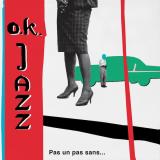
'This compilation Pas Un Pas Sans… The Boleros of O.K. Jazz 1957-77 is a selection of songs from what is one of the most unique and passionate music genres on earth, the Congolese bolero.
'Of all Congolese bands venturing into the bolero, the O.K. Jazz orchestra is by far the king of this musical style which originated in the late 19th century in Cuba. In its nearly forty years of existence, the illustrious band released dozens of boleros, with beautiful compositions, mainly by Franco and Vicky, and occasionally from Kwamy, Edo, Simaro and Mujos among others. The slow form of the bolero allowed Franco, who said in various interviews that he loved all forms of ‘slow music’, to express his most profound soul stirrings and create a style of his own. With the suave voice of Vicky and the breathtaking and dramatic guitar touch of Franco, O.K. Jazz was able to capture the true essence of the bolero.
'The favorite theme in the bolero songs of O.K. Jazz was, without doubt, the joy and pain of love, but it also touches on friendship, city life in Kinshasa, laments, politics and even advertising for a shoe brand like the remarkable song ‘Pas Un Pas Sans Bata’ featured on this compilation.
'All of the songs, except one, were restored and remastered from the original 45 rpm or 78 rpm release. The selection chronologically presented here consists – as always – for a good part of songs never reproduced after their original release.'
'Brooklyn-based pianist and composer Eva Novoa presents Eva Novoa Solo (I), her first solo piano recording and seventh album with 577 Records. Recorded at the legendary Sear Sound Studios in Manhattan, the album captures Novoa alone in the studio, embracing the artistic challenge of vulnerability, introspection, and creative freedom that defines the solo piano format.
'After several years working primarily within piano trio settings and other ensemble configurations, Novoa turned inward, embarking on a deeply personal sonic journey. Solo (I) marks a pivotal moment in her artistic evolution and establishes the foundation for a new series of solo recordings.
'An active and respected member of New York’s experimental and creative music community, Novoa prepared extensively for this session through months of solo performances - mostly in Brooklyn - leading up to the recording. These included a standout solo concert at the Brooklyn edition of the New York Forward Festival, where her approach to the solo format fully crystallized.
'On Solo (I), Novoa expands the traditional piano vocabulary. While the grand piano remains her primary instrument, she also performs on Fender Rhodes and electric harpsichord (the latter to be explored further in upcoming volumes), incorporating Chinese gongs, additional percussion, vocals, and even whistling on select tracks. The result is an intensely intimate and sonorous experience - raw, cinematic, and emotionally charged.
'Eva Novoa Solo (I) is the first installment in a planned trilogy of solo recordings. Across six original pieces, Novoa approaches the solo piano format with boldness, rhythmic fire, and fearless energy. Her percussive use of the instrument, expansive dynamic range, and deep command of tone transform the piano into both an emotional soundscape and a cinematic narrative.
'Recorded in Fall 2024, Eva Novoa Solo (I) captures an intimate session and deeply emotive music shaped by mature technical mastery and a highly compositional approach. Novoa dazzles on piano, Fender Rhodes, electric harpsichord, Chinese gongs, vocals, and whistle, revealing an expansive and deeply personal sonic universe.
'Originally from Barcelona, Spain, Eva Novoa has cultivated her distinctive musical voice since childhood. Now firmly rooted in New York, she has performed internationally and collaborated with some of the most adventurous voices in jazz and beyond.'
OH! is the powerhouse production duo of Massimo Paramour and Gianluca Pighi. Their
debut album, We Come In Peace (Huldigung Records), is a 19-track odyssey that fuses
the grit of post-punk with the neon hooks of classic Synth-Pop. Recorded entirely on
analog hardware at Italy’s Elfo Studio, the record features a global cast of vocalists
including Local Suicide, Sarah P, and iDA fLO. It is a love letter to the era of Tangerine
Dream and The Human League, reimagined for the modern dancefloor.
We Come In Peace is a masterclass in analog synthesis. Eschewing VSTs and samples for
the tactile power of the Moog Subharmonicon and Sequential Prophet Rev 2, OH! has
crafted a record that is musically audacious yet undeniably radio-friendly. From the dark
disco pulse of "Crush" to the shimmering pop of "Falling," this is a project built on
production flair and collaborative magic.
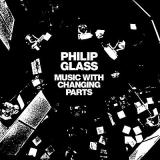
Philip Glass, the great American composer, was already in his mid-30s before his first album appeared, and then only because he produced the double LP himself. Music With Changing Parts was the inaugural release on his own Chatham Square imprint in 1971.
At this point, Einstein on the Beach, Glass' first opera, was still five years away. Yet in Changing Parts, one can already hear much of his vocabulary in full bloom: the buoyant arpeggios, the melding of electronic and acoustic instruments, the elongated drones of human voice, the primary emphasis on pulse (an interest he shared with fellow composer Steve Reich) and the ecstatic potential inherent in repetition.
The album features the original Philip Glass Ensemble – the composer himself, along with Jon Gibson, Dickie Landry, Art Murphy, Steve Chambers and Robert Prado – playing Farfisa organs and woodwinds as well as Barbara Benary on electric violin.
As Glass describes in his memoir Words Without Music, he secured a $500 interest-free loan for the recordings' initial release from the Hebrew Free Loan Society – an organization intended to help immigrants from the Old World upon arrival in the US. Though Glass was merely the grandson of immigrants, the venture wasn't far off the society's charter as Changing Parts helped usher in a new world of sound that would become known as Minimalism.
Chatham Square went on to release albums by other composers in Glass' circle, including Gibson and Landry. The label was named after the Manhattan intersection where Landry had a studio and the ensemble rehearsed.
Born in Baltimore in 1937, Glass first moved to New York to attend Juilliard at just nineteen, having already graduated from the University of Chicago. A staple of the Downtown scene, he can perhaps be appreciated as akin to the likes of sculptor Richard Serra or filmmaker Jim Jarmusch: mavericks who became major cultural figures entirely on their own terms.
This first-time vinyl reissue reproduces the original side-breaks and gatefold sleeve.
Moving Images is a collaborative album by composers Frank Maston and Greg Foat, and marks the inaugural release on Magic Hollow, the new imprint founded by Daniel O'Sullivan. Rooted firmly in the tradition of classic library music, the album draws from the deep, elegant end of the form: vintage keyboards, analogue synthesis, drum machines, and melodic economy, realised with clarity, warmth, and restraint. Recorded in February 2025 at Ritmo Studios in Leysin, Switzerland, high in the Alps, Moving Images unfolds as a suite of finely balanced cues, defined by restraint, texture, and a discerning sense of tone.Swiss bassist Elie Ghersinu features prominently throughout the album, his rich and fluid bass tone providing a continuous anchor. The record draws inspiration from the golden age of European library music, channeling the spirit of De Wolfe and Bruton releases such as Alan Hawkshaw's Frontiers Of Science, the Push Button albums by Karl Jenkins and Mike Ratledge, Edmondo Giuliani's refined orchestrations, and Alessandro Alessandroni's Romance and Drama for Coloursound. Rather than pastiche, Moving Images internalises the discipline and elegance of these recordings, translating their grammar into a contemporary context. Maston Frank Maston's work occupies a space where pop sophistication, orchestral writing, and library traditions intersect. His seminal album Tulips established a distinctive voice defined by melodic confidence and meticulous arrangement, while Panorama, composed for the KPM library, placed him firmly within the lineage of modern composers revitalising the classic library form.Maston's music is characterized by melodic generosity and meticulous arrangement, resulting in work that is elegant, florid, and richly detailed. Greg Foat Greg Foat is a central figure in the contemporary resurgence of library-influenced music, known for his prolific output and deep engagement with the form. A virtuoso pianist, his work bridges jazz, soundtrack composition, and classic library aesthetics, often favouring analogue warmth, strong melodic identities, and ensemble interplay. Foat approaches library music as both a craft and a living language, practical, expressive, and open ended. Moving Images Together, Maston and Foat treat Moving Images as a shared vocabulary rather than a showcase. The album prioritises mood, utility, and suggestion, music designed to serve images and narratives while remaining richly satisfying in isolation. Magic Hollow Magic Hollow is a London based record label founded by composer Daniel O'Sullivan. The imprint is dedicated to contemporary works that engage with library music as a creative practice rather than a fixed genre.Magic Hollow represents a parallel compositional practice in which the sonic self-portrait gives way to openness, economy, and concision.
New Stand High Patrol album, featuring Joe Yorke, Nazamba, Jah Thomas - and remixes from Mad Professor, Androo & Jeanville.
Dub and House Music. Two aesthetics born in the shadows, shaped far from the mainstream music industry. Two underground cultures where independence is often a necessity and ingenuity is essential. Two scenes rooted in the margins of society, with dance, sound systems and minorities at their heart.
From the Jamaican sound system sessions of the late sixties, through the nights at Chicago's Warehouse, to the murmurings of the New York house scene in the early eighties — history shows that house, reggae and dub share far more than many people may assume. Collective action, resistance as a driving force, music moving straight from studio to turntable, shared messages: these are the threads that bind these landmark musical movements together. It is at this crossroads, driven by the spirit of experimentation that defines them, that the members of Stand High Patrol found yet another territory worth mapping.
"Skanking & Jacking", the new Musketeerz album, reveals a side of the Dubadub sound never heard on record before. Built for the dancers and for DJs, the LP brings together the pulse of house music and the vibrant groove of reggae. Uncharted territory, never interfaced like this before. The result of a meticulous blending of styles, house, reggae and dub intertwine across 12 extended tracks. The sound is carefully crafted. Built on immersive loops and interlaced with micro-variations that give it an organic texture. Born from the interaction between being and machine. This is not about simply bringing worlds closer together; it's about mobilising influences to chart a new sonic galaxy.
Beyond it's aesthetic statement, "Skanking & Jacking" also stands out for its international cast. The most extensive Stand High Patrol have ever assembled on an album. From England, Italy, Switzerland and Jamaica, the guest vocalists, producers and MCs deepen the sense of dialogue between cultures and styles. At the mic, Joe Yorke, Marina P, Nazamba and Jah Thomas join the Dubadub Musketeerz on their explorations. Each appearance subtly reshaping the contours of the project.
Never fixed, always in motion, "Skanking & Jacking" pays tribute to the traditions that shaped it and closes, as a final nod, with remixes from Jeanville, Androo and the legendary Mad Professor. The album stands as further proof of a crew that shows no signs of stopping its reinvention. Available on stream, digital and double LP on May 29th.
out of Stock
Last delivered 8 days ago available to reorder, subject to availability
■ Human is a deeply “human” cover album by Gota Nishidera (NONA REEVES), focusing on the world of 80s–90s Japanese kayokyoku and new music.
Following his well received 2023 solo cover album Sunset Rain, this new release features an unprecedentedly wide ranging selection of songs spanning works
by Kyohei Tsutsumi, Reiko Yugawa, and Eiichi Ohtaki, all of whom Nishidera either learned from directly or profoundly respects for their devotion to the study and
practice of pop music.
■ After experiencing major success across Asia including two China tours with NONA REEVES and solo performances in Taiwan Gota Nishidera revisited the essence
of Japanese pop music from a renewed perspective. The result is a meticulously crafted collection of eight ultimate tracks, tightly packed with the charm of Japanese
pop. Born in 1973, Nishidera absorbed the new wave of Japanese music that began in 1980 in real time, and here he updates that experience for the present day.
With arrangements and vocals filled with deep affection for the originals, he offers a modern and fresh reinterpretation of these classics.
■ The album is produced by long time collaborators Yuzuru Tomita, Tomoya Yamagata, and rising talent Yudai Ohi. On the track “Woman (from W’s Tragedy)”,
Nishidera performs a duet with Megumi Mashiro of Hicksville, a vocalist he has worked with for many years on NONA REEVES recordings and live shows.
■ Mastering is handled by ambient/balearic maestro Calm, delivering a stunning final sound.
■ The jacket design is created by Keita Fukumi, producer of the YouTube channel Gota Nishidera Channel NGC. Shot at Nishidera’s local barbershop in Sangenjaya
during his usual haircut, the artwork vividly captures the “human” essence at the heart of this project."
There are two versions of the record - classic black vinyl and transparent green limited edition (100 numbered copies) - both 180g with printed inner sleeve.
"PORTRETY" (Portraits) is a one-of-a-kind series – it focuses on artists known for their strong connection to the drums. Each person invited to the project is given freedom in their work. Ultimately, the track created for the album must be signed with the real names of our protagonists – that's our sole criterion.
This is how a kaleidoscope of sounds and eight original perspectives on music emerges.
LINER NOTES by Bartek Chaciński:"For part III of the compilation series focusing on Polish drummers, I’d like to start, as per usual, with a one liner…
There are three types of drummers: Those that can count, and those that… can’t.
Ok, but looking past the punchline, it turns out that there is, in fact, a third type: Drummers who can count, and pretty well too, but still struggle with triple rhythms. Amongst those who have ascended the heights of triple rhythm perfection you will certainly find, Piotr Gwader. One of the leaders of the movement, we could call an “Oberek Revival. He even proposed a new form: Footberk - splicing of Polish Folk dance and Chicago Footwork. He performed live with the OG of Footwork - RP Boo (Arpebu), but equally, he could successfully form a footberk duo with Jacek Prościnski, another protagonist from “Portraits 3”. Prościnski has been deeply immersed in the world of electronic dance music for years and offers us yet more proof of those interests here.
Triplets are also no stranger to Ola Rzepca (synonymous with the Drekoty Trio), in whose music there is no shortage of rhythmical complications and tempo changes. The same can be said of the improv-friendly contemporary jazz presented by Patrycja Wybrańczyk. These two Polish drummers show how versatile this discipline is on the Polish jazz scene. These qualities have already been well documented by Marcin „Groh” Grośkiewicz, but never so strongly as here.
Szymon „Pimpon” Gąsiorek is a musician who has made unconventionality the foundation of his individual style. Yet even in the piece by Jan Pieniążek (a dynamic and equally versatile drummer), we find an element of surprise in its melancholic atmosphere and construction, which introduces a triple rhythm while pushing the drum parts into the background. Portraits, on the other hand, does the complete opposite with its protagonists - it positions them in the foreground as the creators of specially commissioned original works. From this perspective, perhaps the most familiar names here may be Emade and Albert Karch, who are known as outstanding music producers and among the most interesting in Poland. “Portraits III” has presumably given them a momentary break from producing other artists, while for the music industry, it’s also a pleasant break in the rhythm and a shift of emphasis."
There are two versions of the record - classic black vinyl and transparent green limited edition (100 numbered copies) - both 180g with printed inner sleeve.
"PORTRETY" (Portraits) is a one-of-a-kind series – it focuses on artists known for their strong connection to the drums. Each person invited to the project is given freedom in their work. Ultimately, the track created for the album must be signed with the real names of our protagonists – that's our sole criterion.
This is how a kaleidoscope of sounds and eight original perspectives on music emerges.
LINER NOTES by Bartek Chaciński:"For part III of the compilation series focusing on Polish drummers, I’d like to start, as per usual, with a one liner…
There are three types of drummers: Those that can count, and those that… can’t.
Ok, but looking past the punchline, it turns out that there is, in fact, a third type: Drummers who can count, and pretty well too, but still struggle with triple rhythms. Amongst those who have ascended the heights of triple rhythm perfection you will certainly find, Piotr Gwader. One of the leaders of the movement, we could call an “Oberek Revival. He even proposed a new form: Footberk - splicing of Polish Folk dance and Chicago Footwork. He performed live with the OG of Footwork - RP Boo (Arpebu), but equally, he could successfully form a footberk duo with Jacek Prościnski, another protagonist from “Portraits 3”. Prościnski has been deeply immersed in the world of electronic dance music for years and offers us yet more proof of those interests here.
Triplets are also no stranger to Ola Rzepca (synonymous with the Drekoty Trio), in whose music there is no shortage of rhythmical complications and tempo changes. The same can be said of the improv-friendly contemporary jazz presented by Patrycja Wybrańczyk. These two Polish drummers show how versatile this discipline is on the Polish jazz scene. These qualities have already been well documented by Marcin „Groh” Grośkiewicz, but never so strongly as here.
Szymon „Pimpon” Gąsiorek is a musician who has made unconventionality the foundation of his individual style. Yet even in the piece by Jan Pieniążek (a dynamic and equally versatile drummer), we find an element of surprise in its melancholic atmosphere and construction, which introduces a triple rhythm while pushing the drum parts into the background. Portraits, on the other hand, does the complete opposite with its protagonists - it positions them in the foreground as the creators of specially commissioned original works. From this perspective, perhaps the most familiar names here may be Emade and Albert Karch, who are known as outstanding music producers and among the most interesting in Poland. “Portraits III” has presumably given them a momentary break from producing other artists, while for the music industry, it’s also a pleasant break in the rhythm and a shift of emphasis."
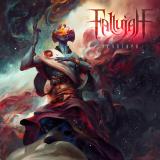
Tech-metal outfit FALLUJAH expand horizons and solidify their position as one of America’s most exciting artists on their new album, Xenotaph, through Nuclear Blast. The Bay Area-based quintet’s confidence in the lineup that made their previous album, Empyrean (2022), such a resounding success—earning high marks from Metal Injection, New Noise, and Guitar World—has been reconfigured slightly, with guitarist Sam Mooradian (INHALE EXISTENCE, SAM MOORADIAN) and drummer Kevin Alexander (DISEMBODIED TYRANT. BROUGHT BY PAIN) bringing their jaw-dropping musical proficiency to the fold, as vocalist Kyle Schaefer, guitarist Scott Carstairs, and bassist Evan Brewer enter a new chapter with FALLUJAH. Moored by singles ‘Kaleidoscopic Waves,’ ‘Labyrinth of Stone,’ and ‘Step Through the Portal and Breathe,’ Xenotaph is FALLUJAH personified, reinvigorated, and re-imagined.
As a details-oriented record Xenotaph benefits from moments of low tension, atmospheric delight, and Schaefer’s winged clean vocals. This
dynamic isn’t particularly new to Fallujah, but the group spent considerable time honing what each song needed—from blast-laden speed runs and jazz-fusion solos to vocal restraint and brutality—which resulted in a brighter, more exhilarating experience. Musically, it truly feels like the listener is embroiled in the album’s sci-fi concept and Peter Mohrbacher’s stunning cosmogonic cover art, which is aesthetically in line with his previous covers (Dreamless and Empyrean) for FALLUJAH. Close encounters with ‘Step Through the Portal and Breathe’, ‘Labyrinth of Stone,’ and ‘Kaleidoscopic Waves’ spark wonder and stimulate the soul.
New album of one of the biggest Reggae/Dub french soundsystem starring MacGyver, Rooty Step & Pupajim (who worked with Alpha Steppa, Biga Ranx, High Tone, Mungo's Hi-Fi ...).
Since their inception at start of the 2000s, Stand High Patrol have rocked sound systems to their own riddim, assimilating and re-purposing the codes of the genre in their own unique style. From tiny bars in Brittany to huge festival stages, on independent radio or across national airwaves, the crew have quietly trod their own path, never compromising their core value of independence. Connoisseurs have long recognised Stand High’s credentials both as a dub group and a leading sound system, but they stand out from the crowd because of their ability to deliver the unexpected, whether live or on record. Their ability to draw such a diverse audience is testament to this atypical approach to making music.
In 2020, almost 20 years since their humble beginnings, the collective presents their fifth album, “Our Own Way”. As with their first two albums “Midnight Walkers” and “Matter Of Scale”, now considered as classics in their genre, this new opus asserts itself as the latest representation of the crew’s versatile approach to crafting sound. Their music, a blend of its own known as “Dubadub”, has always borrowed influences from multiple sources, and over the course of their career their roots in dub and reggae have intertwined with hip-hop, jazz, new wave, trip-hop and numerous other genres. The ‘Dubadub Musketeers’ have never ceased experimenting, forever seeking to increase the sonic territory they cover, day after day. Both live and recorded, they’ve made it a point of honour to never offer up the same thing twice. Any resemblance that “Our Own Way” might bear to those first two albums is a consequence of this obvious creative continuity, rather than of going “back to basics”.
In contrast to the last two Stand High Patrol records, the hip-hop inspired “The Shift”, or the Bristol indebted “Summer On Mars”, “Our Own Way” doesn’t have a unifying concept or theme. Rather than being limited to a single aesthetic, the LP pays respect to the entire canon of Jamaican music, all unified under Stand High’s inimitable production values. With the wealth of experience gained during the recording of their last two records, the collective decided to aim for a freer project, letting themselves be guided by their own music and their own instincts. The end result is a musical portrait of what Stand High Patrol is in the present moment.
The tracks that make up the new LP burst out of the studio, each born out of unbridled, impulsive creativity. Previously unheard compositions and specially re-tooled dub plates have been assembled into a tracklist that shifts and moves like a classic Dubadub Musketeer live set. Each step of the process has been refined by years of practice : composition, effects, and the final mix. Throughout “On Our Way”, the brutal dub stepper, though still a favourite for sound system sessions, is noticeable by its absence. Instead, it’s the full weight of the crew’s reggae heritage that’s expressed in the mix. It's not just the depth and weight of each tune that strikes the listener, but also the spaces heard between the notes that grab and hold their attention.. The sense of a trip, whether musical, internal or geographic, is omnipresent throughout the LP, linking each track to those before and after. “Our Own Way” finds Stand High Patrol exploring as usual, yet also narrating their journey as they’ve rarely done before.
out of Stock
Last delivered 4 years ago available to reorder, subject to availability
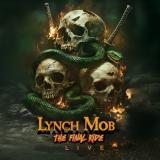
A legendary chapter of hard rock history comes to a thunderous conclusion with The Final Ride, the ultimate live release from Lynch Mob, capturing the band’s final run on stage with uncompromising power, precision and attitude. Available on CD/DVD, Blu-ray and LP, The Final Ride delivers a fully immersive live experience, meticulously recorded, mixed and mastered by Chuck Alkazian at Pearl Sound Studios, ensuring outstanding sonic clarity while preserving the raw intensity and immediacy of a true Lynch Mob performance. The setlist is a powerful career-spanning journey, combining cornerstone Lynch Mob classics with three iconic Dokken-era songs that remain inseparable from George Lynch’s legacy. Explosive performances of “Lightning Strikes Again,” “It’s Not Love,” and “Paris Is Burning” ignite the crowd and serve as a direct bridge between past and present, while Lynch Mob anthems such as “River of Love,” “No Good,” “Hell Child,” “Let the Music Be Your Master,” “Street Fighting Man,” and the timeless closer “Wicked Sensation” showcase the band at full force. At the heart of The Final Ride stands George Lynch, whose unmistakable guitar tone, phrasing and musical authority continue to define generations of hard rock and metal guitarists. He is backed by a formidable lineup featuring Gabriel Colon (vocals), Jaron Gulino (bass) and Jimmy D’Anda (drums), delivering a tight, aggressive and emotionally charged performance worthy of the band’s legacy. The Final Ride is more than a live album—it is a farewell, a celebration and a definitive statement. Captured with premium production values and released across multiple physical formats, it stands as an essential document for fans, collectors and anyone who has followed the enduring impact of George Lynch and Lynch Mob on hard rock history. The final curtain falls—but the fire still burns.
Full colour sleeve with rare use of the Italian only movie artwork.
A few years ago I issued the soundtrack to Virgin Witch, the score to an underground 1971
kinky British London / posh stately home horror that seemed more like an excuse to show as
many racy cars and devilish nude scenes as possible. This fleapit film was written by Hazel
Adair - the writer of legendary long-running TV series Crossroads, and her business partner at
the time Ken Walton (yes, the wrestling commentator). Virgin Witch was cheap and successful
enough to allow the whole team another go at the sexploitation game through their newly
formed production company Pyramid Films. Sex Clinic was the quick follow up; I say Sex Clinic,
the initial cinematic title was Clinic Xclusive, which was also called With These Hands, which
was also called La Masseuse Perverse. This film also came out in 1971 and they used the
musical services of Ted Dicks once again. Dicks had originally met Adair in 1960 through a cast
member performing in his first musical, Look Who’s Here.
If you are not aware of the great Ted Dicks, his quick bio reads as follows: born London 1928,
was educated through both grammar and art school and after National Service flirted with both
art and music. He worked with a series of very talented song writers - including Barry Cryer -
finally sparking properly with writer Myles Rudge. Together “Dicks and Rudge” had a hit with
their musical And Another Thing which starred Lionel Blair and Bernard Cribbins. Their talents
were spotted by producer George Martin and they followed this show success up with a series
of truly classic novelty pop chart hits, again with Cribbins - “Hole In The Ground” and “Right Said
Fred”. If you are not aware of the classic A Combination Of Cribbins LP they wrote, go and find
it. It includes “Gossip Calypso”, a triumph of novelty song writing that somehow manages to
squeeze in the lyric “Oxy-aceteline welder”, and is possibly the only song ever to do so. They
wrote further hits (winning an Ivor Novello for “A Windmill In Old Amsterdam”) and were in
constant demand throughout the 1960s and 1970s, working with artists such as Petula Clark,
Matt Munro, Bruce Forsyth, Topol and Kenneth Williams.
By the late 1960s Ted had also penned a handful of instrumental library cues including the
classic “Busy Boy” for the Standard Library company that got picked up as the theme for the
brilliant TV kids fantasy show Catweazle in 1970. It’s a light, kooky, hummable tune that lodged
its way deep in the mind of any child under 12 over the following decade.
When I first got the reels for Sex Clinic I’m not sure what I was sonically expecting - much of
Dicks’ music blends musical hall with jazz and some brilliant novelty - and maybe I was also
imagining a different kind of film to the one that was actually made. Turns out Sex Clinic is more
like a sleazy drama than an erotic adventure - I’ve read reviews that call it “nothing more than a
naked Crossroads”. Even knowing this I had no idea what the music was going to sound like. So
I was thrilled when it was almost the musical opposite of what I imagined. We have here a great,
easy jazz score. Not a proggy, wild or free jazz score, this is lightish, vibes-led, bluesy and really
charming, which gets slightly more lively when the naked pool party sequence kicks off, and
drifts effortlessly into more seductive midnight moods as and when required. And having now
seen the film, musically it’s unusually at odds with the on screen nudity, blackmail and revenge.
But like most of Ted’s work, the music sticks in your mind. Unlike the film. Which I suggest you
try and avoid unless you like watching plump randy middle aged men with terrible hair pursue
women half their age.
TRACKLISTING: There were no notes or titles to any of the cues on the reels. So I have just simply labeled the sides as per the reels that came in:
WRWTFWW Records is thrilled to announce their 5th archival release taken from cult Tokyo label FORM@ RECORDS' catalogue, this time with the first-ever vinyl edition of Re-Form Ver-1.0. The remarkable, yet not widely known, 1999 remix compilation is now available as a limited edition 45rpm cut double LP housed in a heavyweight sleeve, as well as in digital format.
Originally only available on CD in extremely limited quantities, Re-Form Ver-1.0 resurfaces as a fascinating document of FORM@ RECORDS' late-1990s creative peak. Re-imagining key pieces from the label's catalogue, the remix collection offers a rare glimpse into Tokyo's electronic underground, where techno, house, ambient, and IDM breathe freely through FORM@'s soulful and exploratory vision.
Highlights include two remixes of Missing Project's adored gem "Poisson D'Avril" (including its well known ethereal ambient Galaxy Dub which appeared on Music From Memory's Virtual Dreams II) as well as the otherworldly Fossil (aka the legend Virgo) Mix of Penance's "Cure & Soul". Throughout, the compilation balances dancefloor sensibility with introspective listening, embodying the warm human approach to machine music FORM@ RECORDS excels in.
Another essential time capsule from a crucial era of underground music, Re-Form Ver-1.0 echoes the spirit of Warp's Artificial Intelligence era, alongside the forward-thinking energy of Ken Ishii, Carl Craig, The Black Dog, and Ian O'Brien, while keeping its feet and individuality firmly rooted in local context - the magic recipe for creating a universal, timeless language of electronic expression.
Re-Form Ver-1.0 follows the vinyl edition of Virgo's Landform Code (1998) and Remnants (1999), as well as the FORM@ compilations Art Form I (1997) and Art Form 2 (1998), further expanding WRWTFWW's archival series dedicated to uncovering hidden gems of late '90s Japanese electronic music.
out of Stock
Last delivered 4 months ago available to reorder, subject to availability
London-based musician, composer, and NTS resident Kit Grill presents his extraordinary new album 'Andøya', inspired by a solo residency on the eponymous Norwegian island, a profoundly dramatic territory situated in the Vesterålen archipelago, inside the Arctic circle.
With evocative, sonorous ambient, drone, minimalism, experimentalism, and modern classical music, Grill captures the environmental essence of a remarkable region; an isolated Nordic landscape of small coastline villages, raw peatlands and sublime mountain ranges, surrounded by wide, open views of the Arctic ocean.
Drawn from his experience on solitary excursions around the island - hiking, exploring, and encountering the locals - 'Andøya' is a beautifully stark, stirring exploration of acoustic phenomena, seclusion in nature, and the expressive power of unique landscapes. For Grill, the trip entailed a surreal day-night cycle, and his experience has had far-reaching, existential implications, both for his practice and his perspective:
"On the 8th January 2025 I travelled to the Norwegian island of Andøya, in the Arctic Circle for a three week solo residency. Surrounded by sea, snow, and mountains, I lived in isolation and travelled around the island each day documenting the landscape. At 10am, the background light of the sun beneath the horizon would light the day and in the 4 hour window of light, I would hike into the mountains and explore the wilderness. It was a profound experience that changed the way I thought about sound, solitude, and what it means to be alone in nature."
"Since returning, I created a body of music informed by that time to try and capture the vastness and unpredictability of the Arctic landscape. The album moves through the sensory extremes: ice cracking, storms forming and fading, the rumble of tectonic plates, waves crashing, harsh winds, trudging through snow, and the sharpness of freezing air. The album aims to reflect both the landscape itself and the shifting emotions that came with living in isolation and the Arctic environment. The music and photography serve as a recorded diary of my time there, documenting the experience."
'Honesty Flowers' is the fourth studio album from Italian multi-instrumentalist Alessio Ferarri under the Upupayāma moniker. An epic double album set due for release May 29th 2026 on Fuzz Club, 'Honesty Flowers' finds Upupayāma's ever mind-blowing brew of organic psychedelic rock meets global grooves at its most percussive, lively and distorted. Equally hedonistic and heady, it courses through rhythmic funk grooves, doubled-down scorched fuzz riffing, winding motorik jams, tranquil drones and pastoral acid-folk across its seventy minute run time. A six-piece band live, where things take a more ever-evolving improvisation-based approach (see their recent 'Live At Fuzz Club Festival '25' LP), on the recordings Ferarri writes, plays and records everything himself – guitars, keys, flute, sitar, and an arsenal of percussion all feature. Never not working on new music, Ferarri started laying down these new tracks in his home barn studio in a small mountain village overlooking the city of Parma before its 2024 predecessor 'Mount Elephant' even hit the racks. The result was mixed by Chris Smith at Kluster Sounds (Kikagaku Moyo, Wax Machine) and mastered by Joseph Carra (King Gizzard, Babe Rainbow, ORB) On the new record, Ferarri says: "Honesty Flowers was born from listening to lots of funk music from all over the world, lots and lots of African music, and from listening to myself as I spent whole nights playing all kinds of percussion instruments. I would fall into a sort of trance and play the same rhythm for hours on congas or on a djembe. It's an album that was born above all from the beauty of being able to narrate the unknown and recognise yourself in it, which could translate into telling stories and bringing them to life.
When funk music exploded onto the global pop scene in the late sixties, many of Jamaica's leading music-makers were inspired to incorporate elements of the exciting sound into their work. The result was the fascinating and compelling funky reggae style that proved immensely popular with record buyers on both sides of the Atlantic throughout the early ‘70s.
Pioneers of the sound included such celebrated producers as Lee ’Scratch’ Perry and Lloyd Charmers, whose recordings are heavily represented on both the CD and LP versions of this irresistible collection.
Collected here are some of the finest examples of the funky reggae, performed by some of reggae music’s most accomplished artists, from Ken Boothe and Lee Perry’s Upsetters to British-based acts, Greyhound and The Marvels.
Moods & Grooves Records proudly announces Turn-A-Round, the long-awaited return of D. Wynn & The R-Tyme Production. Marking his first release since 2002 on KMS Records, D. Wynn reconnects with the deeply soulful Detroit sound that defined his earlier work—timeless, emotive, and built for the dancefloor.
At the center of the release is “Love Ain’t Easy”, a heartfelt, soul-driven track featuring vocals from Record Time favorite Lavell Williams. The song carries special significance as Williams’ final known musical recording prior to his passing in 2018, giving the record both emotional weight and historical importance. The EP also includes “Use Me (U Turn Remix)”, a fresh take on R-Tyme’s most recognized work—previously reimagined by Carl Craig—alongside “Funk N The Drums,” a raw, percussion-heavy cut driven by deep funk and rhythmic intensity.
A foundational figure in Detroit’s electronic music movement, D. Wynn was instrumental in shaping the culture as part of the legendary Music Institute era, alongside pioneers such as Derrick May, Alton Miller, and Chez Damier. As one half of R-Tyme with Derrick May, he helped deliver seminal recordings including “Use Me” and “Illusion/R-Theme” on Transmat, leaving a lasting imprint on the global electronic music landscape.
This is more than a comeback. It’s a continuation of a legacy.
out of Stock
Last delivered 66 days ago available to reorder, subject to availability
Chins For Lefty is the debut album and first recording by Gichard, a new duo chronicling the absurdities of end-stage capitalism and mouldering social rituals from their vantage point in Glasgow, Scotland. Recorded primarily in the band’s home studio straight to tape, Chins For Lefty combines gorgeous, ramshackle melody, DIY kosmische punk, drum machine + synth and, in vocalist/lyricist Lisa Jones, an absurdist commentator on the human condition as it navigates the anxieties of the modern world. Instrumentalist Chas Lalli’s swirling music accompaniment stitches an evocative mix of musical styles, the ragged wind beneath the lyrics’ wings.
Although the duo first collaborated in their previous group Dragged Up, their disparate musical and artistic backgrounds make for an alluring mix in Gichard. Lalli has spent the last 20 years in the Glasgow underground, most notably in the noise rock group VOM, while Lisa Jones’s practice was in poetry and spoken word. Beginning as co vocalist in her previous band, in Gichard her lyrics are centre stage; the vision concocted alongside Lalli amounts to a total world-build.
Chins For Lefty scans almost like a novel, with each track elucidating a skewed universe that bears only some resemblance to the one you and I partake in. Like all works of fiction Gichard’s songs are rooted in reality and the lived experiences of its authors, but here characters are exaggerated, social mores and habits are pulled apart to reveal their inherent alienness. Universal emotions are laid bare, the bright light of anxious examination searching out every hairline fracture in our relationships. Distorted and cracked, the mirror that Gichard hold up to our world is also pretty damn funny.
Opener Cholesterol Test launches an expansive, cosmic guitar and synth intro that belies the Tascam-tape recorder it was recorded onto, like a Chromatics cut substituting anxiety for overt sexuality. Here Jones intones an apology to a non-responsive recipient, in the medium of a long voice note forensically deconstructing an interaction from the night before. Over punk guitars and shuffling, lo-fi drum machine splutters, the narrator in Asking The Apes “prefers things to people” before being taken hostage in the city zoo to confess an obsession which consumes the protagonist, ending with the immortal two liner “I sleep in a cocoon of old newspapers at the end of your street / And I think I have been fired from my job,” On album standout Posthumous Hologram, the narrator is faced with a human simulacra, in this case an undead pop star; the face of the encroaching technological singularity. Yes, it does requests, it can do My Way in 200 different language options. But what are the implications? While you’re left pondering, the alternating deadpan verse delivery and undeniably catchy chorus keep you company.
By the time Break Up With Johnny Dogbirth rattles into view, the band are satirising a suburban inanity blown up to cartoon proportions, soundtracked with a drawled musicality that recalls Rowland S. Howard’s post-Birthday Party balladeering. This approach is furthered on Human Resources: over an angular guitar+bass track, Jones’s short story recalls Dry Cleaning’s erudite lyrical post punk. On Soft Face, Lalli’s guitar and drum machine are swathed in echo and delay, as Jones dissects dating rituals with a west of Scotland drollness. Hamming It Up brings a porcine perspective in a short story that begins with the line “I was breastfeeding discreetly in the service station. She didn’t mind.” What follows is a passage punctured with canned laughter and a narrative involving tribute acts, modern farming techniques.
Brilliant first single Your Private Hell closes the album, the closest the group get to earnest perhaps, filtered through a surreal central Scottishness. While Your Private Hell might seem like a sardonic take down of romance, perhaps it’s the very distillation of love in all its awkwardness, selflessness and weirdness. Here there’s a distinctive Glasgow-ness to this doomed romance: the protagonist falls for an outsider, offers them cheap jarred hot dogs and carbolic soap (the infamous, excoriating soap dished out in schools and government buildings throughout Scotland), offers to cover up a murder, stalks them in the all-night Spar. It’s a short story of intrigue, murder and the irresistible pull of self-sacrifice to share in someone else’s suffering. If that’s not love, what is it? You can see this vision mapped out in black and white on their video for 'Your Private Hell'.
Zum 60-jährigen Jubiläum von Raumpatrouille - Die phantastischen Abenteuer des Raumschiffs Orion erscheint die siebte Veröffentlichung unserer Peter-Thomas-Reihe als erweitertes, klanglich überarbeitetes Reissue auf CD und LP. Der ikonische Soundtrack gilt bis heute als einer der prägendsten der deutschen TV-Geschichte - futuristisch, rhythmisch, wagemutig. Peter Thomas verlieh der Serie eine einzigartige Klangsignatur, deren Strahlkraft weit über das Bildschirmformat hinausreicht. Der legendäre Vocoder-Countdown und Titelthema wurden zahllos gesampelt, gecovert und neu interpretiert - u. a. von Pulp, Pizzicato Five, Die Fantastischen Vier und Mousse T. In Zusammenarbeit mit Philip Thomas konnten vier bislang unveröffentlichte Stücke aus dem Nachlass des Komponisten ergänzt werden. Die LP basiert auf der Philips-Originalausgabe von 1966, erweitert um die neuen Titel - und enthält ausschließlich Musik, die in der Serie zu hören war, mit einer Ausnahme: "Bolero on the Moon Rocks", dessen Sample Pulp 1998 zu This Is Hardcore inspirierte. Die CD bietet über 60 Minuten Originalmusik, inklusive rarer Outtakes, ohne später hinzugefügtes Füllmaterial.
Zum 60-jährigen Jubiläum von Raumpatrouille - Die phantastischen Abenteuer des Raumschiffs Orion erscheint die siebte Veröffentlichung unserer Peter-Thomas-Reihe als erweitertes, klanglich überarbeitetes Reissue auf CD und LP. Der ikonische Soundtrack gilt bis heute als einer der prägendsten der deutschen TV-Geschichte - futuristisch, rhythmisch, wagemutig. Peter Thomas verlieh der Serie eine einzigartige Klangsignatur, deren Strahlkraft weit über das Bildschirmformat hinausreicht. Der legendäre Vocoder-Countdown und Titelthema wurden zahllos gesampelt, gecovert und neu interpretiert - u. a. von Pulp, Pizzicato Five, Die Fantastischen Vier und Mousse T. In Zusammenarbeit mit Philip Thomas konnten vier bislang unveröffentlichte Stücke aus dem Nachlass des Komponisten ergänzt werden. Die LP basiert auf der Philips-Originalausgabe von 1966, erweitert um die neuen Titel - und enthält ausschließlich Musik, die in der Serie zu hören war, mit einer Ausnahme: "Bolero on the Moon Rocks", dessen Sample Pulp 1998 zu This Is Hardcore inspirierte. Die CD bietet über 60 Minuten Originalmusik, inklusive rarer Outtakes, ohne später hinzugefügtes Füllmaterial.
Toronto’s Ducks Ltd. (formerly Ducks Unlimited), the bright jangle-pop duo of Tom McGreevy (lead vocal, guitar, bass, keyboards) and Evan Lewis (guitar, bass, drum programming), accomplish the impossible. The pair craft songs that play to very specific inspirations without drowning underneath them—immediately evidenced on their critically acclaimed EP, Get Bleak, and sharpened on Modern Fiction, their debut LP. “The Servants, The Clean, The Chills, The Bats, Television Personalities, Felt,” Evan rattles off. “Look Blue Go Purple is one I reference a lot with our production.” Echoes of ‘80s indiepop abound, but they never overwhelm. This is not a nostalgic record, after all, nor is it a derivative one. Instead, across 10 cheery-sounding songs, Ducks Ltd. explore contemporary society in decline, examining large scale human disaster through personal turmoil (hence the title, taken from a university course called Gnosticism and Nihilism in Modern Fiction, influenced by Graham Greene novels. Bookish indie fans, look no further.)
Writing the album was intimate. Tom drafted the nucleus of a song on an unplugged electric guitar and brought it over to Evan’s apartment, where the pair sat in his bedroom, placing percussive beats from a drum machine under nascent melodies, passing a bass back and forth, adding organs and bridges where necessary. “It’s computer music trying extremely hard not to sound like computer music,” Tom jokes. Fearful that limited and expensive studio time would kneecap the project creatively, eroding their charming naivete, the pair re-recorded the album in a storage space owned by Evan’s boss. Ornamentation through collaboration followed: there’s Aaron Goldstein on Pedal Steel in the Go-Betweens’ “Cattle and Cane”-channeling interlude “Patience Wearing Thin,” Eliza Niemi on cello (“18 Cigarettes,” a song loosely inspired by a 1997 Oasis performance of “Don’t Go Away”), and backing harmonies from Carpark labelmates The Beths (on an ode to friendship at a distance, “How Lonely Are You?,” “Always There,” and on the sped-up Syd Barrett stylings of “Under The Rolling Moon.”) While in his native Australia due to covid-19, Evan worked closely with producer James Cecil (The Goon Sax, Architecture in Helsinki) on Modern Fiction’s finishing touches—at one point, in the mountains of the Macedon Ranges in Victoria, recorded a string quartet (featured on “Fit to Burst,” “Always There,” “Sullen Leering Hope,” “Twere Ever Thus,” “Grand Final Day.”)
It’s danceable, depressive fun, with some relief: in “Always There” and “Sullen Leering Hope,” Modern Fiction’s faithful heart. “There’s a tendency in my writing, because of my world view, to be very bleak.” Tom explains. “A quality I don’t always see in myself and really appreciate in others is the courage to go on.” And yet, the record manages resiliency—enough for pop fans to fall in love with.
For well over a decade, MONOLORD have caused mass riff hypnosis with longform epics steeped in repetition, volume, and heaviness. One of heavy music’s most consistent and beloved bands, MONOLORD are gearing up for their next chapter with a new album titled Neverending. In looking for a new take on the genre, MONOLORD approached the legendary producer Sylvia Massy, known for her work with Tool, System of a Down, and Johnny Cash, among many more. The payoff from this new process is undeniable. Neverending feels like the culmination of 13 years of heavy, molten music, with a keen eye towards creating a sharper album. “The recording of this album is an example of the spirit of MONOLORD’s camaraderie,” says bassist Mika Häkki. “We’ve looked back and seen for the first time how much we have done as a band collectively, and realized what an intense 13 years it has been.” "The lyrics on this album are more personal than before because I went through some major life changes in the last couple of years,” guitarist/vocalist Thomas Jäger says. “I usually write about religion and how people are superstitious, but this record is more about relationships between people. But it’s not all about me. Sometimes I’m writing from another person’s perspective.” Neverending’s lead single “You Bastard” offers listeners a sharp contrast: A propulsive groove offset by lyrics about suicide. There’s two sides to suicide,” Jäger points out. “There’s the person who commits suicide and the people who gets left behind...The choruses represent the person left behind, and that person is calling the other a bastard—but it’s not pointing fingers or saying, ‘You suck.’ It’s more like, ‘You left me here with all the bullshit.’ It’s an understanding that life is not easy." Though it might not be immediately obvious, album opener “Iodine” was inspired by 70's rock epics like Lynyrd Skynyrd’s “Free Bird,” The Eagles’ “Hotel California,” and Led Zeppelin’s “No Quarter." Elsewhere, album closer “It’s Neverending” is the first MONOLORD song that Jäger doesn’t sing on. Instead, the death-metal style vocals are performed by former Entombed bassist Jörgen Sandström, (also of Grave, Domedagen and Firespawn.) 13 years on, MONOLORD’s path takes a new turn, and Neverending becomes the band’s most befitting album title. “It's been a wild ride and still is,” says drummer Esben Willems. “I've spent a quarter of my life in this band. Looking back, I'm incredibly proud of what we've accomplished along the way, and in many ways, this album feels like the essence of everything we've done so far. My mindset is the same it's always been, to be the absolute best the three of us can be.”
CQ Wrestling are today announcing their sophomore album Resistance for release on 29th May.
There’s a saying that simmers beneath the sonic assault of Resistance, the new album from CQ Wrestling. “Nothing changes if nothing changes,” recites Jake Mac, who knew of this idiom before 2024; before the loss that turned his and bandmate Charlie Woods’ worlds upside down; before the “year of complete mayhem, mess and chaos” that followed. From the outside looking in, the Brighton-based duo may have seemed on the top of the world. Then known as Chappaqua Wrestling, the exhilarating energy of their debut album Plus Ultra had seen the band lauded as future British music scene conquerors. The pair had a major label record deal to their name. Sweat dripped from the walls at headline show after headline show, in front of rapturous fans – and yet something felt amiss.
“We were selling out tours and people were loving the music, but honestly, we just felt f****** lost,” says Woods. Then tragedy struck. “It completely derailed us,” says Mac, recalling how the sudden death of his father – “a big part of the project” since its inception – sank them both into a period of grief and introspection. Amid the mourning emerged a desire to transform.
RESISTANCE is an album forged in the embers of personal tragedy and hammered into shape by desire, resilience and resolve. Detailing a metamorphosis, new single ‘Pacifico’ draws a line in the sand for the band as they recover from a time of tremendous upheaval to find themselves following their own creative compass, with renewed vitality.
"This album is a collection of songs above all about trying to find joy and hope in dark times”.
Miles Davis's Kind of Blue was the number-one jazz album in history. It totaled five songs. There are four more songs from that same historic group, recorded in the same time period and at the same studio. And here they are. These songs deserve to stand on their own with artwork to highlight the quality of the music and that matches the time period of the recording. This is a rare opportunity to have a smash follow-up to what many consider the greatest jazz record ever!
Through the years, these four remarkable performances — all from a single recording session in 1958 and all exemplary of the sound of Miles Davis' legend-loaded sextet of that year — have not been served well. They have been largely treated as add-ons for other compilations. Now, for the first time, Analogue Productions, the audiophile in-house reissue label of Acoustic Sounds, Inc., together with Quality Record Prssings, has deservedly given these tracks a stellar stand-alone release for jazz fans to savor!
The once-in-a-generation lineup that recorded these tunes is the very same that would be immortalized for the enduring classic they would record almost a year later, Kind of Blue. Davis played trumpet sublime with his ensemble sextet featuring pianist Bill Evans, drummer Jimmy Cobb, bassist Paul Chambers, and saxophonists John Coltrane and Julian "Cannonball" Adderley.
Undervalued since their recording, the tunes on this album reflect historial and musical significance. They offer early glimpses into the modal jazz that Kind of Blue would bring to the forefront. Using modes common in modern classical music, rather than the chords of popular songs, Miles had begun to experiment with the new approach on the Milestones recording sessions previously.
Analogue Productions is proud to present Birth of the Blue in an exclusive first-of-its-kind stand-alone release that reflects our reputation for meticulous production, capturing authentic sound with clarity, depth and fidelity that exceeds the audiophile standard. 180-gram 45 RPM double LP pressed at Quality Record Pressings.
Features:
• Pioneering Ensemble: Captured the same rare and short-lived alignment of jazz legends including Miles Davis, John Coltrane, Cannonball Adderley, Bill Evans, Paul Chambers, and Jimmy Cobb, as heard on the historic Kind of Blue.
• Innovative Sound: The session represented a crucial transition in jazz, blending elements of hard bop with early modal jazz influences, showcasing the ensemble's experimentation and forward-thinking approach.
• Undervalued Legacy: Despite its historical and musical significance, the session's recordings have been historically overlooked, often relegated to being add-ons in compilations rather than recognized as standalone masterpieces.
• Modal Jazz Precursor: Offered early glimpses into the modal jazz that would later be fully realized in Davis's groundbreaking album "Kind of Blue," laying the groundwork for future jazz innovation.
• Impact on Artists: Served as a critical point of development and confidence for the musicians involved, particularly Bill Evans, who noted the significant impact of this experience on his own identity and style.
• Historical Context: Occurred at a peak moment in Miles Davis's career, following his signing with Columbia Records and his critical and commercial successes with albums such as ‘Round About Midnight and Miles Ahead.
Josh Mason’s new collection, "Wave Salt +7," emerges from an oblique origin. Unearthed from a dormant hard drive, it documents a set of work sessions only partially recoverable, their original continuity and intent fractured by time and technical failure. What remains is a constellation of mercurial gestures that proves, against all odds, to be entirely consonant with Mason’s ongoing musical concerns.
In a sense, the very condition of partiality proves generative, with elision operating on multiple levels - structural, sonic, and archival - shaping both the music itself and the circumstances of its (re)appearance. Phrases surface only to be truncated or displaced, hovering at the edge of resolution, and transitions are implied rather than fully enacted. Absence functions not as a deficit, but as an important compositional resource.
Central to the album’s sound is a distinctive use of vocoding. Deployed not to simulate vocal presence but as a tool for tonal sculpting, it yields a shifting lattice of smeared harmonics, angular melody, and attenuated noise. Sounds are pressed through one another, their edges softened, shifted, or selectively erased, producing surfaces simultaneously articulated and porous. Rather than reconstructing a lost whole, the album posits a mode of listening attuned to gaps, interruptions, and unstable forms. Even so, in keeping with Mason’s broader practice, this music remains grounded in melodic logic and a distinctly human scale, ensuring that its fragmentary structures register not solely as experiments, but as expressions of proximity and feeling.
Back in 2023, Bruce was approached by a band of young and ambitious lads, who wanted him to mix their debut album 'Nacre'. Being fans of his music, they hoped to utilise his renowned, club-informed and emotive sound design to add a shade of hypnotism and psychedelia to their singular strand of post-rock. The band of course were Quade, and the union proved to make perfect sense: Bruce excelled in gracefully fulfilling the band's vision, sealing their relationship for projects to come.
A couple years on, both Quade and Bruce had really proved the scope of their abilities: the sophomore album 'The Foel Tower' won the hearts of fans and critics across the board, who celebrated its "gorgeous" and "tender" sound to great acclaim. The world they had built clearly stood defined and dignified, though at the same time, Bruce couldn't help but wonder if there was more to be said. Besides, the sheer abundance of emotion and rich textures therein, suggested a great deal of potential for further exploring. So with the band’s blessing, he embarked on versioning the album.
Bruce was off the leash: total freedom leant him the ability to dub in wild style, weaving and wrestling with drum, bass et al, connecting to the arrangements' true feelings and expanding them to full frame. The "doomer sad boy, ambient-dub, folk, experimental post-rock" of the original, was blown into a whole new, hypnotic realm: through rattling analogue distortion and huge spaced out effects, Bruce's efforts stand as an exploding supernova of dub and noise, refracted through the band's themes of grief, beauty and the great British countryside.
To be released on his label Poorly Knit, this remix album once again proves Bruce's deft of touch and skill in reworking material. Maximising the sonic potential of such a promising and talented band he marks his personal contribution towards what will surely continue to be a fulfilling and illustrious musical journey for Quade.
Available digitally and on super limited cassette (50 copies)