Deep in the sea lives one of Earth's most ancient creatures: the Nautilus. Hunted for its beautiful shell and now, through our global evolution, endangered, like so many other beings. Perhaps most astonishingly, no one has ever observed a baby Nautilus in the wild. The title track of this debut EP takes you on a dark journey, searching through the deep ocean for this elusive animal.
On the other side, I don't believe in Fermi’s Golden Rule, is a sonic interpretation of a statement made during a quantum field theory lecture, questioning the experimental mathematics often used to derive the famous rule. But actually, trying to express the confusion about quantum physics in general.
The dub-infused EP is mainly inspired by the pioneering magic of Detroit’s electronic music scientists and the experiments of European electro wizards.
Excited to share this bomb new release from Scottish techno/house legend Stephen Brown, whose discography reads like a Who's Who of classic techno labels: Transmat Detroit, Djax-UpBeats, Cocoon, Subject Detroit, Theory...
With its instantly recognisable vocal hook, Test 1 is a bona fide, party-starting hand grenade of a tune and destined for track ID requests wherever it drops. Backed by the raw, Chi-town groover Move It (which wouldn't have sounded out-of-place on one of Brown's Djax-up-Beats releases: all off kilter pads, detuned hats and a slamming kick) plus the deeper Tell Him, itself a masterclass in subtlety and groove, this 3-tracker really is quite a package.
All killer: no filler, The Safari EP is essential for fans of proper underground house & techno. Stephen Brown's releases have been falling into the "buy-on-sight" bracket for DJs in the know for many moons now. This release is no different! High quality from Edinburghs finest.
The Seasons Recordings vaults have been dug into once more for a new reissue of some classic tackle from Natural Rhythm aka original house duo Thomas White and Pete Williams, who began working together in 1998. This EP originally dropped in 2000 but eschews the turn of the millennium trend towards prog and trance and stays nice and deep, from the dusty loops and cowbells of 'Fundamental' to the hefty, dubby kicks and sparse arrangement of 'Growth'. 'Zen' picks up the pace with tumbling toms that drag you forwards into nice introspective synth work, and 'Theory' is a dark ambient soundscape to close.
Deep techno, sometimes nostalgic and melancholic: that what Zooloft Records is. Giorgio Gigli and Francesco Baudazzi (Obtane), balancing soul and body, give birth to intense storytelling through sound, enhanced by an intimate reflection about childhood innocence.
Introspection is driven by a vein of subtle and rarefied nihilism, pervaded in each release. Project's graphics evoke the idea of abstract thoughts written on blank paper, where shadows meet memories.
Future, maybe, is the memory of a beautiful past. So, we are here, today, and proud to present you a special, collector-item vinyl boxset, limited to 100 pieces only, handsigned and remastered, containing the full Zooloft discography.
Aural Imbalance returns to Curvature for the first time since the label’s very first release with an EP of stunning atmospheric and old school bliss. A1 - Ghosts of Midi - String Theory (Aural Imbalance remix) Kicking the EP off with a spirited remix of the immense Ghosts of Midi track String Theory, delicate padwork and subtle hats open proceedings before Aural Imbalance deploys a brisk, heavily chopped and spliced Circles break to drive the luscious atmospherics atop a deep, moody 808 bassline. Synths, pads and strings jostle playfully across the soundscape before the breaks fall back before we are treated to a blissful extended ambient outro. A2 - High Time Taking us right back to the early 90’s with crunchy, rustic amen breaks that immediately burst into the mix, Aural Imbalance flexes his old school muscle with a flurry of thumping, distorted breakbeats with an earthy analogue sub bass rumbling below. Synths and light strings add character and juxtaposition to the track to complete an enjoyable and very dancefloor friendly throwback classic in the making. B1 - Magnetism Chunky, belligerent breaks smash their way into a drum-riddled intro as Aural Imbalance unleashes an old school amen workout for the ages. Punctuated by cheerful, swirling sounds of sonic phosphorescence, the drums are chopped and filtered liberally as an earworm melody works its way into the mix. Magnetism is a perfect example of how old school breakwork and atmospheric ambience are such a perfect match. B2 - Night Vision Switching things up with a more introspective vibe, Night Vision sees Aural Imbalance opening with trancey synths before thick drums with metallic snares and dense kicks are introduced - carefully and elegantly arranged with a thoughtfully constructed pattern. The synths continue to surf the audio waves with deep 808 bass accompanying the beats and micro melodies layering throughout.
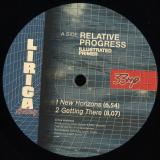
Celebrating 1 year of Lirica with a special reissue of this heavily sought after album from UK duo Relative Progress, remastered with a fresh design, still paying homage to the original asthetics
2026 repress
Special Characters, the acclaimed deep house project hailing from New York, comes to uswith "Subsurface Incantations"-a sonic journey that pays heartfelt tribute to the classicgrooves and textures that defined house music's golden eras. This latest record is astatement piece for the Based Faith imprint, and features a captivating remix from Berlin'sIron Curtis, a favorite among DJs and collectors for his deep, analog-driven interpretations.Blending evocative pads, intricate drum programming, and his signature in transforming abassline, Iron Curtis's take on the B-side seamlessly bridges the timeless with the modern,making this EP an essential addition to any discerning selector's crate.
Committed to the art of vinyl culture, "Subsurface Incantations" will be pressed strictly as avinyl-only release, with no represses planned.
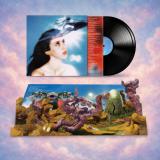
Magdalena Bay, the Los Angeles-based duo of Mica Tenenbaum and Matthew Lewin, create magical pop music that floats in the ether of our collective social cosmos. While they call California home, their essence lies in the clouds, emitting unique yet familiar frequencies of synthesized nostalgia, kitschy catchiness, and warped neo-hooks. Suited for the times, Magdalena Bay blends the known and felt with innovative sonic landscapes.
Tenenbaum and Lewin met as teenagers in a Miami high school music program. Tenenbaum, who moved from Buenos Aires to Florida at age one, and Lewin, a guitar shredder influenced by his dad’s prog and concept rock records, quickly recognized their kindred spirits. They formed a prog band called Tabula Rasa and began a romance. Both were skilled musicians; Tenenbaum a pianist and singer, and Lewin self-taught in production and music theory. Despite attending different colleges, they maintained their band, traveling hours to rehearse before realizing two things: their relationship was undeniable, and prog rock wasn’t resonating with young audiences.
Shifting their focus to pop, they explored its craft, leading to the creation of Magdalena Bay. They learned the complexities of pop writing and production, striving to create something interesting within the genre. Describing their music broadly as "pop," they released several EPs and singles before debuting their album, "Mercurial World," in 2021. Praised for its melodic hooks and meticulous production, it was often labeled as "synth-pop."
Their success is reflected in streaming numbers, social media followers, and festival appearances. Magdalena Bay's stylized online aesthetic complements their music, creating a cohesive artistic vision. Tenenbaum says, “We love extending the world of our music past sound into videos or graphics.” Lewin adds, “We’re trying to create an atmosphere or an emotional quality with it.” This integrated approach, termed "world-building," is central to their artis
One of the most innovative and ambitious albums ever made, Genioh Yamashirogumi’s Ecophony Rinne is a sonic masterpiece featuring over 200 musicians that expanded the limits of what music and sound could do.
Before Akira there was Ecophony Rinne. Originally released in 1986, Ecophony Rinne is a four-part symphony of “ecological music” by Geinoh Yamashirogumi that married ancient tradition with technological innovation, and changed the way we listen to music in the process.
Half-speed mastered at Abbey Road by Miles Showell, Time Capsule’s high-tech analogue reissue is the first to reproduce composer Ōhashi’s ground-breaking “Hypersonic Effect” theory on vinyl, cutting frequencies beyond the realm of human hearing into wax to capture the full spectrum emotional impact of this extraordinary work.
Founded by genius polymath Tsutomu Ōhashi aka Shoji Yamashiro, Geinoh Yamashirogumi is a shapeshifting collective of over a hundred members from across disciplines. Rejecting professional musicianship, Ōhashi cultivated an ethos where neuroscientists, psychologists, doctors, journalists, engineers and students could critique society through artistic expression and pursue their research in ethnomusicological performances that spanned global traditions, Eastern spirituality and Western classical form.
Ecophony Rinne represents the pinnacle of this vision - an expansive orchestral suite made with over 200 musicians that channeled Ōhashi’s thinking about mankind’s relationship with nature, and fundamental questions of life, death and rebirth.
Here pipe organ synths made from sampled Tibetan horns sit alongside field recordings from Central African forests, Buddhist mantras circle dummy head microphones, Javanese Jegog percussion ensembles pulse like verdant ecosystems, and the acoustics of temples, caves and landscapes are conveyed in the mix. Weaving together culture, nature and technology, it is a record that vibrates with the polyphony of life on Earth.
But Ecophony Rinne was not only musically innovative. Noticing the difference between vinyl and CD versions of the album where digital reproduction limited the sound, Ōhashi developed a theory of “Hypersonic Effect”, determining that ultra-high frequencies above 20khz can impact human perception even if they are inaudible. At once a physical and a psychological experience, to listen to Ecophony Rinne is to feel music differently.
The rest is history. After its release, Ōhashi was approached by director Katsuhiro Ōtomo to produce the soundtrack for Akira, the work for which Geinoh Yamashirogumi is best known. Emerging from the shadows at last, Ecophony Rinne was its transcendental blueprint, reissued in its most complete hypersonic form on vinyl for the first time.
Rather than describe nature, Ecophony Rinne embodied it. Rather than reflect culture, Ecophony Rinne defined it. Rather than explore technology, Ecophony Rinne changed it. As a work of art, it is more relevant than ever. You won’t have heard anything like it.
Siccar Point is the second album release from Intertoto, and is a study of the geographical extremes on the east coast of his native Scotland. The eight pieces of music on the album serve as vignettes portraying this ancient headland, while also acting as an allegorical reference to the pioneering work of Scottish geologist James Hutton, who proposed that geological features are not static but undergo continuous transformation over indefinitely long periods of time.
With this theory — and the striking landscape — in mind, Jamie Coull, aka Intertoto, imagines tectonic forces through tension, space, density, and texture. Divergent and convergent boundaries are realised in different moods throughout. Siccar Point opens with the irregular drift of Raw Lunar Concrete, a track that undulates asymmetrically, pulling you off balance before settling into the pulse of Condor Launch and Cloud Chamber — the more veiled club moments of the album.
Further into the strata, Siccar Point mines deep into the dense textures of Metallic Veins and Redox Dub, before closing with the cascading outro Foraber, shimmering with tones that imagine a view outward from the rocky promontory — beyond the vanishing point.
Münchenbuchsee, a suburb of Bern, Switzerland. Stephan Eicher is the youngest of three children. His father, a radio and TV repairman, is also a jazz violinist and a sound tinkerer in his spare time. In the family home's converted fallout shelter turned studio, Mr. Eicher experiments with homemade sequencers, tortures handcrafted drum machines, and abuses reel-to-reel tape recorders—all under the fascinated gaze of young Stephan.
The boy quickly develops a musical curiosity, exploring sound through various experiments and wanderings. Alongside his younger brother Martin, Stephan crafts audio plays on a homemade multi-track recorder (essentially several cassette decks hooked together!), which they write, record, add sound effects to, and perform for family and friends. Just a couple of nice kids, really...
Then comes 1972, and Lou Reed's Transformer album changes everything for the Eicher kids. For 13-year-old Stephan, it's a revelation—especially "Vicious", the opening track, which he plays on repeat for months. He convinces his father to buy him an electric guitar. Not stopping there, his father also builds him a tube amp using an old radio.
Then comes adolescence. A rough one. Stephan leaves home at 16 and moves to Zurich. With obvious artistic talent, he persuades his art teacher to help him get into F+F, a radical, alternative art school—despite his young age. Accepted, he starts learning video techniques, determined to become a filmmaker.
At F+F, Stephan organizes Dada-style happenings and concerts with a group of friends known as the Noise Boys. Among them: one of his teachers on bass, Veit Stauffer on drums (who would later found ReR/Recommended Records), his girlfriend Sacha on vocals, and Stephan on guitar. In one of their early performances, they release a remote-controlled mouse covered in dull razor blades into the audience to create panic and chaos. Keeping with this aggressive, confrontational spirit, they once played a concert while wearing headphones blasting Tristan and Isolde, trying to perform their own songs simultaneously—to maximize the cacophony. The goal was always the same: clear the room.
Their “songs,” if you can call them that, followed suit. Take "Hungeriges Afrika", for instance—performed entirely with power drills and some drum feedback.
To make ends meet, Stephan returns to Bern on weekends to work as a waiter at the Spex Club, the city’s main punk venue. On September 16, 1980, during a show by proto-electro group Starter, the police raid the club and arrest everyone. Stephan, who manages to avoid arrest, seizes the opportunity to “borrow” Starter’s gear left behind. He suddenly finds himself in possession of a Roland Promars synth, a Korg MS20, and a gorgeous CR78 drum machine, which he runs through a Big Muff distortion pedal to get that perfect gritty sound.
He then sets out to reinterpret some Noise Boys tracks, reworking them during impromptu sessions recorded on a dictaphone (yes, a dictaphone—now the lo-fi sound makes more sense, doesn’t it?). He ironically titles the resulting cassette "Stephan Eicher spielt Noise Boys" ("Stephan Eicher plays Noise Boys"). This gem features seven tracks, which are the ones reissued here.
Back in Zurich, he visits his friends Andrew Moore and Robert Vogel, who have a DIY cassette duplication setup. They make 25 copies of Stephan Eicher spielt Noise Boys for Stephan and his friends. Robert encourages him to visit Urs Steiger of Off Course Records and play him the tape.
Without much hope, Stephan shows up at Urs’s office. But Urs is instantly hooked and suggests releasing a 7” single. Due to space constraints, they reluctantly drop two of the seven tracks ("Hungeriges Afrika" and "One Second"). As for the musical score featured on the cover—it was randomly chosen and remains a mystery to this day. Calling all music theory nerds!
The 7-inch is pressed in 750 copies and released in the first week of December 1980—a date Stephan remembers well, as it’s the same week John Lennon was killed. Smartly, Urs sends a promo copy to François Murner, Switzerland’s answer to John Peel, who hosts a show on alternative station Sounds. Murner falls in love with the record and starts giving it airtime. To Stephan’s surprise, sales follow—and people actually seem interested in his music.
Even this modest underground success scares Stephan a bit. He stops making music for a year and moves to Bologna, where he works as a programmer at Radio Città, a feminist radio station.
Meanwhile, Stephan’s younger brother Martin, who’s also involved in the punk scene, joins the band Glueams as a singer and guitarist. Glueams, named after the fanzine run by two of its members (drummer Marco Repetto and bassist GT), eventually rebrands as Grauzone. Stephan is invited to their shows to project hacked Super 8 visuals live on stage.
Urs Steiger, now working on a compilation titled Swiss Wave – The Album, asks Grauzone to contribute alongside bands like Liliput, Jack and the Rippers, The Sick, and Ladyshave (Fall 1980).
For the album, Martin tasks Stephan with producing their recording sessions. Under Stephan's artistic direction, two tracks emerge: "Raum" and "Eisbär". During "Eisbär", Martin plays a minimalist bass line borrowed from post-punk band The Feelies (just an open string). Drummer Marco Repetto struggles to keep time. Later that evening, unhappy with the takes, Stephan builds a four-bar drum loop from a ¼-inch tape and uses it instead of the flawed original. He then adds bleepy synths and wind sounds to complete the track’s icy vibe before handing it over to Urs.
The Swiss Wave – The Album compilation is released quietly at first, but things snowball thanks to "Eisbär", which eventually becomes a smash hit—selling over 600,000 singles.
Meanwhile, Stephan plays in a rockabilly band called SMUV (named after Switzerland’s social security agency) and begins producing artists, including the debut album of Starter (1981), which includes a more pop-oriented version of "Minijupe".
By early 1982, Stephan starts spending time with the post-punk girl band Liliput (formerly Kleenex). They’re older than him, and he happily drives them around in his Renault Major, acting as their roadie.
By 1983, Grauzone—signed to the major label EMI, which turned out to be a misstep—is falling apart. Stephan begins to pivot toward a more mainstream pop sound with his debut solo album Les Chansons Bleues.
The Golden Gate Quartett VA5 marks the fifth vinyl Various Artists release on Golden Gate Club Records, continuing the label’s tradition of carefully curated club music with character and depth.
This new chapter brings together a sharp selection of artists - SaPu, Tripmastaz, Cesare vs Disorder, and the trio Alex New, Gruman & Zlene - each contributing one track and guiding listeners through hypnotic rhythms, subtle textures, and a distinct raw energy.
While each contribution carries a clear individual signature, the tracks share a cohesive spirit, balancing low-end weight, atmosphere, groove, and punch, all while maintaining a refined sense of swing.
Golden Gate Quartett VA5 stands as both a statement and a celebration, showcasing diversity within a unified sound and reaffirming Golden Gate Club’s commitment to quality, timeless club music crafted with dedication for the dancefloor.
French talent Hyden makes label debut on Mutual Rytm with conceptual new techno EP, 'To Whom It May Concern'. Hyden is a potent force in the French underground, creating powerful techno with dense percussion, immersive grooves and subtle nods to classic influences - all through his own unique lens. Having delivered standout releases in recent years, here he offers up sounds "anchored in psychoanalysis, time, and emotional residue" as he makes his mark on SHDW's Mutual Rytm imprint, delivering influences of dream logic and surrealism as the palette moves between brutality and introspection. "It's hypnotic music for moments of rupture where something breaks or breaks through". Opener 'Manifest Content' is inspired by Freudian theory and explores the surface illusions of thought and dream. It's about the dissonance between what we perceive and the deeper meaning that slips away beneath and is a deep and dubby techno track with flashes of unsettling melody. 'Bruises' is emotional trauma made sonic. This piece delves into invisible scars and traumas, residues of past conflict or intimacy - it's slow-burning, heavy and raw. 'Jikan' is a meditation built on time and its erosion. Inspired by the Japanese concept of impermanence, it reflects fleeting moments, decay and the tension between stillness and motion with jacked up but warm drums and turbulent bass. Next, 'Free Will' is born from inner conflict and plays with deterministic rhythms and evolving layers, questioning whether we are truly in control or just passengers in a prewritten sequence. The vocal mentions, "creatures, you're out of time" to bring darkness to the intense but sleek rhythms. The streamlined physicality of 'Swarm' channels the primal force of collective movement and is a nod to the loss of individuality in group behaviour. In addition, the package is loaded with digital bonus cuts. 'Yumehara' is a dive into surreal dream-states and evokes subconscious landscapes where logic dissolves and emotion reigns, while 'Lu Bu' is brutal and warlike and named after the legendary Chinese general that captures impulsive violence, betrayal and reckless glory with relentless energy and rhythm. Lastly, 'Neon Pale' is a synthetic dreamscape about fading beauty under artificial light - a melancholy ode to cities at night and the loss of warmth in modern life.
Dedication is Stevie Bensusen and Lashley Todd, two friends born and raised in Seattle, WA, who started singing together in high school. Their dynamic blend was undeniable and it made all the sense in the world to form a band together. And if and when the planets were somehow aligned and they were gifted with adequate financing, go into the studio and record their voices. Convinced that their unmistakable vocal blend would be better served by recording their own material (songs both written and arranged by Stevie) that would showcase their voices, both solo and together. After attending Boston's Berklee College of Music to study theory and composition, Stevie returned to Seattle with a batch of new tunes and arrangements in his portfolio. He and Lash focused on rehearsing the material and looked for a chance to take their sound into the studio. As luck would have it, someone liked their prospects enough to bankroll their studio sessions. They hired and rehearsed the top-notch players that would make up their masterful rhythm section, then booked time at now legendary Kaye-Smith Studios in Seattle to cut and mix their tracks. What came from those sessions are four powerful and sophisticated R&B performances, being made available only on the Final Bell label by Super Disco Edits. Their adventures in the unpredictable world of recorded music are now beginning to unfold. Which brings us to this moment in time when audiences in the UK can finally discover, and appreciate . . . Dedication.
Dedication is Stevie Bensusen and Lashley Todd, two friends born and raised in Seattle, WA, who started singing together in high school. Their dynamic blend was undeniable and it made all the sense in the world to form a band together. And if and when the planets were somehow aligned and they were gifted with adequate financing, go into the studio and record their voices. Convinced that their unmistakable vocal blend would be better served by recording their own material (songs both written and arranged by Stevie) that would showcase their voices, both solo and together. After attending Boston's Berklee College of Music to study theory and composition, Stevie returned to Seattle with a batch of new tunes and arrangements in his portfolio. He and Lash focused on rehearsing the material and looked for a chance to take their sound into the studio. As luck would have it, someone liked their prospects enough to bankroll their studio sessions. They hired and rehearsed the top-notch players that would make up their masterful rhythm section, then booked time at now legendary Kaye-Smith Studios in Seattle to cut and mix their tracks. What came from those sessions are four powerful and sophisticated R&B performances, being made available only on the Final Bell label by Super Disco Edits. Their adventures in the unpredictable world of recorded music are now beginning to unfold. Which brings us to this moment in time when audiences in the UK can finally discover, and appreciate . . . Dedication.
Welcoming London-based artist House on the Strand to the Eastern Nurseries fold following his impressive 2024 debut, "Heroine", Ruben Elbrond-Palmer channels a sombre, cinematic sense of sound with "Unrest".
Interpolating the visual sensibilities of some of his favourite artists, filmmakers, and photographers into the sonic field, Elbrond-Palmer’s palette cuts loose from the percussive elements of his previous work, blending analogue synthesis with repurposed guitars, haunting melodies, and field recordings that call to mind the hazy delirium of a dusty summer’s day. Sitting at its core, "Unrest" places harmony front and centre, with each sombre movement rising and falling as electric fences hum, helicopters hover overhead, and unknown events are set in motion.
Deceptively simple, the resultant album is gestalt—an elegy of melancholic moments, lost to the world.
Mastered by Ike Zwanniken of Hysterical Love Project - mainstay mastering engineer behind majority of INDEX, Co:Clear & Theory Therapy Releases
Established in 2019, Eastern Nurseries is a platform for deeply emotional contemporary electronic music based between Porto and Newcastle upon Tyne. Curated by Rui P. Andrade (aka Canadian Rifles) and Christopher Macarthur Owen (aka Burning Pyre).
The label has released a steady yet considered magna of records from Hasfeldt, Emma Acs, innerinnerlife and VAs encompassing the likes of Conna Harraway, Severin Black & Slowfoam.
On the A-side, STIPP and Vromo deliver a dense, timeless, straight-to-the-point four-on-the-floor cut, followed by an immersive floor-filler from STIPP.
Flipping to the B-side, Khas showcases his signature sound with two powerful, deep and hypnotic techno tracks.
“Everything flows – nothing remains, there is only an eternal becoming and changing” is a well-known formulation of the river theory of the Greek philosopher Heraclitus, also known as panta rhei (ancient Greek: πάντα ῥεῖ, “everything flows”). This teaching states that everything in the universe is subject to constant change and that nothing stays the same forever. The metaphor of the river illustrates this: You can't step into the same river twice because both the river and you are constantly changing. The water is constantly flowing, but the river stays in one place. Thus, reality is constantly changing, even if sometimes perceived as constant.”
„Same Same but Different.“ Always different – always the same. Chill-Out DJ Heraklit
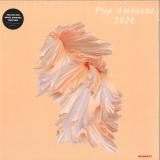
For the 26th time, the most consistent of all ambient compilations, in a constant flux of static change, is released on Kompakt. Joining good friends from the early days and reliable confidants are some new additions to the non-hierarchical charts of contemplative rapture culture.
Leading the way is Micå, a Japanese electronic musician whose finely chiseled, graceful musical style has made it onto the new collection with two pieces. Also making his debut is Richard Ojijo, a seasoned sound engineer known, among other things, for his long-standing collaboration with the artist Marcel Odenbach and the Cologne-based label Magazine. Oskø aka Max Hytrek, a multi-talented newcomer to Kompakt and the music scene, debuts with his rapturously ecstatic piece "Ar Vag." He's followed by Sebastian Mullaert, appearing for the second time—this time teamed up with Sebastian Lilja aka Hush Forever. After his surprise return last year after a 20 year hiatus, we are delighted that Tetsuo Sakae aka Pass Into Silence is back again this year with one of his distinctive sound gems. As are Dirk Leyers (Closer Musik) and Mikkel Metal. 18 tracks are featured on this CD. "Erlösung" (Redemption) is the title of Segensklang's closing track. A kind of ambient bolero into infinity. Or at least until next year...
And what would Pop Ambient be without the iconic, artistic cover design of Veronika Unland, who once again, in her unmistakable way, says through the digital flower: The eye always listens...
When Chuck D proclaimed "Bass, how low can you go?" on Public Enemy's anthemic 'Bring the Noise,' maybe he was pre-empting or inciting the 10,000 fathoms-deep, spine-bending basslines and sub-quake tremors of 'Implosion.'
Implosion is a crushing split album, appropriately released on The Bug's own PRESSURE label. Mapping out a new form of spectral dub, the sound is deliberately immersive, introverted, and yes, definitely implosive. In pursuit of heavy lids, blurred vision, and merciless bass bin punishment, it’s one part meditation, two parts low-end theory, and essentially a confession of devoted sound system addiction.
As expected from a tag team featuring British soundlab explorer and 'London Zoo' composer Kevin Martin, aka The Bug, and Michael Fiedler, aka Jah Schulz—a long-time graduate of Germany's new school of sound system reggae culture—the duo approaches their target differently yet share the goal of keeping their sound "raw" (Fiedler) and "brutally minimal" (Martin). This proves that opposites can attract, even if their tools are different and their methods sometimes diverge.
From such a disparate combo, hailing from different geographical and aesthetic backgrounds, contrasts are certainly on display, even within each artist's own contributions. From the melancholia and transcendence of 'Alien Virus (West Indian Centre, Leeds),' to the duality of ascension and descension on 'Hope,' or the Sunn 0))) in dub, visceral drone of 'Dread (The End, London),' to the tripped-out repetitions of 'Midnight,' which reinvents Chain Reaction for post-millennials, the result is both sacred and narcotic. Each track illuminates the emotional impact and atmospheric pressure being explored across this deceptively sparse album—a mastery of tone and texture.
This collection might be as reduced, minimal, and deep as The Bug has ever gone, perhaps echoing the solemnity of his recent Kevin Richard Martin Black release and invoking the futurist steppas self-pioneered on his previous Pressure album. Alternatively, Fiedler‘s Ghost Dubs project ventures into his most heavyweight direction yet, which is no mean feat considering his previous, the critically acclaimed album Damaged, was a monstrously massive triumph of analogue weight and enviable sound design.
Implosion is ice-cool, a stark contrast to the warmth and sociability of traditional Jamaican roots and the current trends in digi-dub. Instead, the mood is soaked in tension and intense dread, finding an unexpected melting point where classic dub's stark rhythm attack, isolationist ambience's eerie drift, dub techno's floatation strategies, and even the relentless riffs of doom metal collide. As the bass-obsessed pair drop what is arguably the heaviest ambient dub album to emerge from any electronic sector—a moody counterpoint to The Orb's fluffy clouds, etc, Martin has cited The Roots Radics, Black Jade, and On U Sound's Pounding System as heavily influencing his approach to the album, while Fiedler has expressed his admiration for Adrian Sherwood's productions and Rhythm & Sound's enchanting soundscape. Yet, the super heavyweight pulsations, emotive resonances, and bone-rattling vibrations detonated here effortlessly go far beyond these influences.
Shadowy and elusive, there’s a mysteriousness at this record's core. A haunting moodiness oscillating between nostalgia and future shock. Despite the deadly fixation with SLOW and HEAVY, the album maintains a totally hypnotic swing throughout. Implosion and its lead single 'Imploded Versions' are testaments to being enveloped in bass, seduced by bass, submerged in bass, and utterly crushed by bass, as The Bug and Ghost Dubs seek to craft a new form of dub for zonal headz and Babylon seekers.
Mastered by Stefan Betke (a.k.a. POLE) at Scape Mastering studio, this record is heavy as f-ck without resorting to continuous distortion. It’s low-end worship taken to an absolute extreme, yet remains highly listenable and definitely danceable, albeit at the slowest of paces. Sacred and narcotic, this is low-end worship amplified to the max. Dive in if you dare.
“We All Jack” marks the first vinyl release from the Heattraxx label — a true celebration of the Chicago house scene. The original track features a powerful Klassik Mix by K'Alexi Shelby, his second release on the label, a living legend of Chicago house who earned critical acclaim with The Ron Hardy Memo and is now back on the label stronger than ever. The record also includes three heavyweight remixes: Sirus Hood, a longtime friend of the label, talented artist and producer, founder of Mood Child, and deeply connected to the Chicago scene — having produced a documentary featuring interviews with some of the most iconic names in house music; The Checkup, label head of Heattraxx, delivers his deep and driving grooves as seen on labels like Kaoz Theory, Snatch! and House Puff; and Joe Smooth, another legendary Chicago pioneer, known for classic acid house sounds and immortalized by the anthem “Promised Land.” A tribute to house heritage, infused with the spirit of the Windy City in every beat.
Efficient Space honours trailblazing Australian imprint Volition Records with Volition Cuts Vol. 1. Evolving from Andrew Penhallow’s time at GAP Records, which smuggled Cabaret Voltaire, The Fall and the Factory catalogue into the region, Volition shifted focus to homegrown talent over imported sounds. Echoing its precursor’s blend of indie friction and electronic curiosity, the label wired itself into the pulse of club and rave culture, linking city scenes and amplifying them for the mainstream. With retina-scorching design, uncompromising packaging and top-tier remixes, Volition consistently bent the major label machine to its will.
No Volition retrospective would be complete without Sisters Underground’s intergenerational anthem ‘In the Neighbourhood’. Otara teenagers Brenda Makamoeafi and Hassanah Iroegbu brought their Pasifika perspective to Proud (An Urban-Pacific Streetsoul Compilation), a commercial success that platformed NZ rap and R&B with a clarity that outshone its overseas counterparts. The quiet architect of Volition’s sound, producer prodigy Robert Racic flipped the classic as a hip-house dub before his untimely passing in 1996.
Its A-side companion comes from Brisbane synth-pop unit Boxcar, who signed to Volition after frontman Dave Smith handed a cassette to Tom Ellard of Severed Heads during a school newspaper interview. That unlikely handoff led to their 1990 debut Vertigo. Here, their ritual-laced, body-jacking industrial is retooled by Miami freestyle maverick Tony Garcia.
Further cherry-picking from the VOLT vaults, Sexing The Cherry unleash a bleep-addled meltdown from Brisbane’s Edwin Morrow and Cherryn Lomas. ‘This Is A Dream’ was recorded exclusively for High (A Dance Compilation), the first all-Australian V/A to top the ARIA charts, propelling the local movement into national consciousness.
Closing the sampler, Sydney’s Single Gun Theory joined Volition as they moved from post-punk abstraction and electronic collage toward downtempo, sample-based mysticism. Their 1994 ambient-pop reverie ‘Fall’ is reimagined by Stuart Crichton and Apollo 440’s Norman Fisher-Jones as full-throttle Goa trance, a final surge that channels the label’s relentless push into new terrain.
Volition Cuts Vol. 1 is dedicated to the loving memory of Volition’s visionary founder Andrew Penhallow, and key contributors Robert Racic and Edwin Morrow.1
New sounds from the gaullic underground on Violent Cases’ latest release, the first one since many moons. Two long tracks born out of myths and mist to take you on a mental journey.
Side A’s „Chaos Theory“ sets off at 145 bpm. Synth layers and strings over deep bass create the atmosphere. Drama. Then a brilliant incorporation of a classic guitar solo in mid track. Unique.
Side B „Pagan Blade“ is a joint venture with Ciklo and ups the tempo to 160 bpm. Rolling and riding it’s pushing the dance floor while the pagan assassin whispers the rhythm.
You can tell the artists have honed their skills playing live, these tracks will unfold their full potential and deepness on a proper system.
Stunning full sleeve artwork by Darkam. Graphically edited and arranged by TDSIGNZ. Mastered by Stefan ZMK in the low countries.
Each copy includes an artwork poster, artwork sticker and digital download link.
Club U Nite Records presents a Split EP you don’t want to miss!
Two labels. One vinyl. Maximum vibes. Club U Nite Records (Cat. No. CUNT035) and Theory Of Swing come together for a split EP that’s dripping in deep, oldschool energy. Strictly for the heads, this limited-edition wax is pure heat – and it’s not gonna last long.
On the Theory Of Swing side, Italy’s rising DJ & Producer St. David sets the tone.
"Undagroov" is a secret weapon, ready to ignite any underground set with its deep female vocals and hypnotic house piano. It’s a straight-up vibe.
Follow it up with "Get On Dance" – a filthy swing groove with jazzy keys that keeps things raw and real. St. David doesn’t miss.
Flip to the Club U Nite side, and it’s all about Mellow Man.
"Club U Nite Is In The House" is a straight-up club slammer – dirty, heavy, and designed to make the system shake.
Then, Mellow closes things out with "Favourite Song" – another brilliant throwback to the golden era of house. Early ‘90s feels, soulful vox, and infectious piano riffs that will have the floor in a frenzy.
Don’t sleep on this one – this limited vinyl is flying fast!
Buckle up, electronic aficionados! Queen of Coins is about to drop a six-track sonic odyssey that’s your one-way ticket to Electro, Italo-Disco, and Detroit Techno nirvana. This isn’t just an album, it’s a masterclass in psychedelic dancefloor alchemy, tailor-made for DJs who crave cutting-edge sounds while paying homage to the genre’s founding fathers.
From the slow-burning hypnosis of “Head Tension” to the heart-racing throb of “16K Cal,” this release is a BPM rollercoaster that echoes the spirits of legends like Legowelt, Drexciya, and Francisco. But make no mistake – Queen of Coins isn’t just rehashing the past, the Queen is propelling these influences into the future.
“Bring it to the top” is pure condensed energy, engineered to shake every powerful soundsystem while maintaining an emotional depth that’ll hit you right in the feels. Speaking of feelings, “Damaged Souls” is the track you didn’t know you needed – a poignant electronic love letter to all those “what if” moments that haunt our dreams.
But don’t think for a second that Queen of Coins is all melancholy. “Oreo Cake” swoops in with its irresistible bouncing bassline, serving up a fat slice of low-end theory that’ll give your mind, body, and soul the workout they’ve been craving. It’s a reminder that in the realm of Queen of Coins, the future is bright, and the beat goes on.
Remember the mantra, ravers: Queen of Coins is “Music to grow with Expanding your soul Thriving in Prosperity.”
This isn’t just an album release; it’s a coronation. Long live the Queen of the electronic underground!
Following the groundbreaking debut of “Resurrection Part 1,” Dean Dennis and his project Sector are back with “Resurrection Part 2.” After his influential time with Clock DVA, Dennis aimed to push boundaries by blending industrial techno, hip-hop, drum and bass, jazz fusion, and Detroit house into a unique, experimental sound.
“Resurrection Part 2” delves deeper into this sonic landscape, offering listeners an immersive experience. Each track, carefully selected from Dennis’s personal archives, combines the raw energy of past recordings with modern production techniques, creating a bridge between history and innovation.
This second installment is more than a continuation; it’s an evolution. With hypnotic rhythms, stimulating melodies, and an enveloping atmosphere, “Resurrection Part 2” transports listeners to an alternate dimension where music transcends traditional boundaries.
In July 2019, eleven years after Jay-Z became the first hip-hop artist to headline Glastonbury, Stormzy became the first English rapper to follow suit. Wearing a customised stab-proof vest designed by Banksy, the South London rapper delivered an explosive performance and finished by thanking the “legends for paving the way,” name-checking Wiley, Dizzee Rascal, and Giggs. Despite how unlikely it seemed for decades, UK rap was now firmly a part of pop music and the greater hip-hop canon.
Rich, nuanced, and often misunderstood, the history of UK rap is a story of music that refused to stand still. Factoring in socioeconomics, gender, identity, music industry disruption, and innovation, What Do You Call It? charts the artform’s first four decades, beginning when rap landed on our island in the early 1980s. Shaped by sound system culture, inspired by punk, and accelerated by rave, it has evolved from Britcore, UK hip-hop, and trip-hop of the late twentieth century to garage, grime, and drill.
Through cultural theory, historical research, and original interviews with key figures and collaborators in the UK rap scene, from pioneers like Malcolm McLaren, Soul II Soul, Tricky, Roots Manuva, and Roll Deep to modern artists like Dave, CASISDEAD, Little Simz, Loyle Carner, and Skengdo x AM, adds a rich human dimension to the UK rap story — one that helped change British music and culture forever.
“A long overdue exploration of rap music in the UK and its longstanding – albeit overlooked – legacy and influence. In an era when UK rappers dominate the charts, star in major movies and TV shows and front huge advertising campaigns for multi-national corporations, Kane traces back the arduous journey from maligned sub-culture to celebrated mascot of neoliberal capitalism.” Jehst
“David Kane writes with a deft touch and possesses a disarming and deeply insightful interview style. Sparking life, humour, and sorrow across every page of more than three decades of UK rap history.” Charlie Dark MBE
“Kane builds bridges in a rich musical universe full of heroes and villains—and plot twists. With an inimitable style, he merges culture high and low to bring new meaning to the music. What Do You Call It? is a landmark tome for UK rap music.” Brian DiGenti, Wax Poetics
“A mind rich in ideas” Stanley Ledbetter, The New Yorker
Köhncke rides again with another 12“ having 2 sides that couldn‘t be more different: the A-Side, „Timecode“, is a clock-ticking electronic disco tease promising a joyous release by building up tremendous expectations over its course of 8 minutes – and of course not delivering the final dance floor orgasm since the night has to continue in mutual happiness and expectations on the floor. But well, surely lots of „pre-cum“ spreaded...
The „flip“, „The Answer Is Yes“, displays Köhncke‘s love with The Beatles or Prefab Sprout and the likes, in a masterly programmed digital simulation of the „played“ sound of the likes (Köhncke cannot play any „real instruments“ except for a bit of Barré-Punk-Guitar). It‘s a love metaphor about 2 photons in „entanglement“, which is a proven very psychedelic effect in quantum physics. The photons are „entangled“ and „know“ each other‘s „spin“ in immediacy, thus not bent to the speed of light, even if they are 100000 light years from each other - a theory that even Einstein considered absurd when the pioneers of quantum physics came up with this in the 1930s. So Justus put his fascination with quantum physics into a pop love song metaphor – how much more do you want?
Köhncke kommt zurück mit einer 12“ - 2 Seiten, wie sie unterschiedlicher nicht sein könnten: Die A-Seite, „Timecode“, ist eine tickende elektronische Disco-Versuchungs-Zeitbombe, die über ihre Laufzeit von über 8 Minuten extreme Erlösungsversprechen macht, sie aber selbstverständlich nicht in einem endfinalen Floor-Orgasmus auflöst, denn die Nacht soll ja weitergehen in gemeinsamer Glücklichkeit und Erwartung auf der Tanzfläche. Allerdings, eine Menge „pre-cum“ wird schon versprüht in dieser unwiderstehlichen Spannungserzeugung von Track.
Die „flipside“, „The Answer Is Yes“, stellt Köhnckes Liebe zu den Beatles oder Prefab Sprout etc. ins Licht, in einer meisterhaft programmierten digitalen Simulation des „gespielten“ Sounds der Großmeister (Köhncke kann keine „echten Instrumente“ spielen außer ein bißchen Baréegriff-Punk-Rhythmusgitarre, sein Instrument ist der Sequenzer). Es ist eine Liebesmetapher über zwei Photonen im Zustand der „Verschränkung“, was ein heute wissenschaftlich nachgewiesenes extrem psychedelisches Phänomen aus der Welt der Quantenmechanik ist: die Photonen sind „verschränkt“ und „kennen“ ihren aktuellen „Spin“ (Rotationsrichtung des Teilchens) unmittelbar, also nicht gebunden an die Lichtgeschwindigkeit. Auch wenn sie 100000 Lichtjahre voneneinander entfernt sind – eine Theorie, die sogar Einstein absurd fand („Spukhafte Fernwirkung“), als die Pioniere der Quantenphysik sie in den 1930er Jahren postulierten. Köhncke verewigt seine Faszination für Quantenphysik hier also in Form eine Retro-Pop-Lovesong-Methapher – was will man mehr?
Downloads
Resonance is one of the most powerful forces this world has,
simply because there is no way to stop it. A drop of
condensed water separates itself from the concrete ceiling.
Propelled only by its own weight, it plummets down towards
a cacophony of naked bodies and §ailing arms to shatter on
a the forehead of an ecstatic dancer. And while all this is
happening, a voice resonates through the entire room,
making the walls shake and the crowd lose themselves even
further : “Move Your Body, Move Your Soul”. Narciss emerges
from a grimey basement in Berlin to bring us two heavy
utility dance§oor cuts on Actions Speak Louder Than Words,
his ¦rst Solo EP on Seelen. The title track is truly something
to behold. With a breakneck tempo, hard hitting percussions
and a legendary house vocal, it wields an absolutely
hypnotizing power that, before you know it, will make
everyone in attendance grind and juke till the early morning
hours. There is a palpapable vibe of mid 90s Detroit-Techno
but still it manages to cut out an identity for its own, with
razor sharp sound-design and a very uplifting attitude for its
genre. And while the tracks arrangement and sound-design is
very minimal, it is on Brennpunkt that Narciss really §exes
his trademark way of building tension with remarkably few
elements. Everything here is stripped down to its most
functional core. The synth-lead is simple yet menacing, the
kick-drum hits like a boxer, and you can be pretty sure that
the hihats will leave burns if you get too close to the record.
As is custom on this label, the B-side is dedicated to thereconstructive efforts of friends or family. This time the
mastermind of Manhigh and Grounded Theory, Mr. Henning
Baer, and Seelen’s very own Shaleen have both let their
actions speak. Henning Baer has taken on the title track in
his Remix and has transformed it into a true vintage electro
cut. A distorted synth and pad add heavy grit to the original’s
vocal, and the warehouse sized kickdrum will knock anyone
unprepared off their feet. Meanwhile Shaleen’s reinterpretation of Brennpunkt strips it down even further,
swirling the original’s elements into a groovy maelstrom.
This version rumbles, clicks and sneers, with sampled voices
from a Shakespeare play giving the whole ordeal a truly
macabre feeling. This is a tool for only the most darkest of
warehouses when the night is at its peak. So now, to
summarize this record : it is a call to action. And because of
this, it continues to resonate, even when the last track has
been played. And a resonance can never be stopped.
After is great success on last Theory Of Swing, Gourment De Funk is finally come back with a new fresh banger EP on Urban Underground Grooves.
This funky groovy pots will make your party always on fire. Dancefloor Essential that will take you back in the Filter Funk Era of Subliminal records of 99’-2000.
Mixed and Mastered by St. David at TOW Records in Bari, Italy
FOXBAM INC is back to build on the momentum of their first EP with a second one that packs a mighty punch. This one kicks off with EBY, who this year has been cooking up acid for 40 years and here offers the warped low ends and garage-techno power of 'Goldtooth'. Foxtrot vs Ma Bla then mashes up old school samples with earth-shattering bass on 'Deep Down Inside' and bRz vs Stije is a double-time hard techno stomper with warped synths and twisted bass that is inspired by and named after ISCO, a concept from Einstein's general theory of relativity that makes predictions about the dynamics of black holes.
Okain returns to Talman Records with a four-track EP, offering a glimpse into his two-decade journey as a producer. Continuing his legacy of providing DJs with robust dance floor material, this EP stays true to form.
Opening the EP is "Wake Up," a tribute to early 2000s tech house, featuring crisp percussion, sharp stabs, and haunting vocals. Following is "Take Me Up," capturing the essence of UK garage with its thick Reese bassline and distinct vocal hooks.
Turning to the flip side, the EP ventures into darker realms with "Secret Science," blending dub-inspired synths with a weighty sub bass, perfect for late-night atmospheres. Closing the journey is "Swing Theory," a groove-driven track fusing minimal house elements into its infectious rhythm.
Caedite Eos is thrilled to present another intense various artist EP for its forthcoming vinyl release,showcasing a talented lineup of Spanish artists.Kicking offthis EP is Hurtado with his track "No Surrender". With previous releases on Overstep,Body Theory, and Shiv (a label he co-runs with UVB), Hurtado brings his signature style, deliveringa relentless onslaught of heavy offbeat techno.Following suit is Neurite, making his debut on this EP with "Black Eyes".
As co-owner of Madrid'sunderground techno party "Crudo", Neurite brings a fresh perspective with breakbeat techno,weaving tension-filled atmospheres and lively percussions into his captivating track.
Returning to the label is SlugoS with "Self-Inflicted". Fresh from his recent release on SacredCourt, SlugoS, the label owner, presents an elegant hard techno gem designed to ignitedancefloors with its infectious groove.
Rounding up this EP is TKNS with "Cacharreo y Dinamita". A familiar face on Caedite Eos, TKNS, known for his previous work on the label and a recent remix for EKKA, delivers a breakbeattechno journey that steadily builds to a climax after the main break, showcasing his talent andcreativity as a dancefloor killer.
This EP encapsulates the essence of Caedite Eos - a celebration of cutting-edge techno withdiverse influences and uncompromising energy, destined to leave a lasting impression on technomusic enthusiasts worldwide.