Kowton & Parris in deep concentration...
In accordance with relativity, they are in some sense interchangeable, but we do know that they form co-equal parts of a larger 'thing' called space-time, and it is only within space-time that the most complete understanding of the motion and properties of natural objects and phenomena can be rigorously understood by physicists. Space and time are to space-time what arms and legs are to humans. In some sense they are interchangeable, but you cannot understand 10,000 years of human history without including both arms and legs as part of the basic human condition.
Suche:can dee
Lance Ferguson's Raregroove Spectrum is a collection of newly recorded versions of classic funk, soul, jazz and latin vinyl rarities, which features some of Melbourne's finest musicians across the album, including past and present members of The Bamboos, The Putbacks and Hiatus Kaiyote.
This 2 track single provides just a hint of what delights the full Raregroove Spectrum album contains - Lance explains that much of the inspiration for the re-works comes from his experience as a DJ; "Some of these versions can almost be looked at as DJ re-edits, sometimes we're extending what may be a really short track into something longer, or teasing out the elements in a song that really make it work on a dance-floor. It's essentially what someone does with a club re-edit, except we went the extra step and re-recorded the whole thing with a live band".
First up is a reinterpretation of a super obscure deep funk acetate 45 released by Keb Darge, Egg Roll - the follow on track is Lance's take on The Soul Vibrations The Dump.
The forthcoming album reaches further - and includes James Mason's 'Sweet Power, Your Embrace' as a sun-drenched Samba, or Anderson Paak's sure shot tune 'Am I Wrong' given an 1980's style Boogie/Jazz Funk makeover to the epic, widescreen Jazz-Funk of Pleasure's 'Joyous' - Rare Groove Spectrum provides new perspectives on the obscure to the well-loved, from old-school to new sounds - this is rare grooves re-grooved... beautifully.
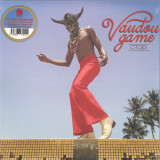
No one had been through those doors in years. Unchanged, seemingly untouched, just a Guard watching over it, one wondered whether the place would ever see the light of day again. Built in the 70s by Scotch, there were only twenty such places in the entire world. Twenty studios, all identical. Most had undergone a digital makeover in the 80s, but not this one; situated in Lomé, this studio had stayed true to its original form. Silent and uninhabited but waiting for one thing, and one thing only: for the sacred fire to be lit once again. That of the Togolese Recording Office, is studio OTODI for those in the know. Through thick layers of dust, the console was vibrating still, impatient to be turned on and spurt out the sound so unique to analog. That sound is what Peter Solo and his band Vaudou Game came to seek out.
The original vibrations of Lomé's sound, resonating within the studio space, an undercurrent pulsing within the walls, the floor, and the entire atmosphere. A presence at once electrical and mystical sourced through the amps that had never really gone cold, despite the deep sleep that they had been forced into. In taking over the studio's 3000 square feet, enough to house a full orchestra, Vaudou Game had the space necessary to conjure the spirits of voodoo, those very spirits who watch over men and nature, and with whom Peter converses every day.
For the most authentic of frequencies to fully imbibe this third album, Peter Solo entrusted the rhythmic section to a Togolese bass and drum duo, putting the groove in the expert hands of those versed in feeling and a type of musicianship that you can't learn in any school. This was also a way to put OTODI on the path of a more heavily hued funk sound, the backbone of which maintains flexibility and agility when moving over to highlife, straightens out when enhanced with frequent guest Roger Damawuzan's James Brown type screams, and softens when making the way for strings. Snaking and undulating when a chorus of Togolese women takes over, guiding it towards a slow, hypnotic trance. Up until now, Vaudou Game had maintained their connection to Togo from their base in France. This time, recording the entire album in Lomé at OTODI with local musicians, Peter Solo drew the voodoo fluid directly from the source, once again using only Togolese scales to make his guitar sing, his strings acting as channels between listeners and deities...
- A1: Introduction
- A2: City Of Dreams
- A3: Over The Edge
- A4: The Night Shift
- A5: Paper Chase
- A6: Outside Looking In
- B1: Midnight Sun
- B2: Behind The Wheel
- B3: Thicker Than Blood
- B4: A Sort Of Homecoming
- B5: Winner Take All
- C1: Death Mask
- C2: Jackie's Eyes
- C3: The Fading Faces
- C4: Mind Games
- C5: The Maze
- C6: Threshold
- D1: Flashback
- D2: Blood Sport
- D3: Survival Instinct
- D4: Hall Of Mirrors
- D5: Eulogy
- D6: The Messenger
- E1: Love Theme
- E4: Cruise Control
- E5: Wave Goodbye
- E6: Magic Gardens
- E7: An Eye For An Eye
- F1: The Point Of No Return
- F2: Cremation
- F3: The Nightshift (Reprise)
- F4: Memories Are Forever
- F5: Echoes Of The Mind
- F6: Streets Of Fire
- E2: Through The Gauntlet
- E3: Ghost Town
The neon lights that decorate a dive bar's window cast a vivid reflection in rainwater on the pavement outside, as steam rises from deep beneath the ground. A slow pan across the scene, past alleys cast in shadow, twilit corners & glass doorways streaked with the mist of humid bodies fuming inside: the camera catches the denizens of an unnamed city, studying faces heavy with secrets too sad to bear. Cut to the motorway. Sleek cars barrel through the night. Sirens moan. Engines rev. You're behind the wheel, over the edge as the credits roll.
This film does not exist — but the soundtrack does. Symmetry is Johnny Jewel & Nat Walker, & Themes For an Imaginary Film is their two-hour cinematic opus pokus, a sprawling score for a movie that screens only in your mind. A 'conceptual tangent between Glass Candy, Chromatics, Mirage, & Desire's more abstract sides,' as Jewel himself describes the project, Symmetry is a vigorous, electric, restless exploration of ideas on the bleeding edge of instrumental sound. Analog synthesizers roll and crest, drums collide, keys cascade clear & crystalline. These themes evoke the phantasmic images that inspired them: urgent and ethereal, sinister & romantic. It's a neo-noir epic of pink fog & femme fatales hidden behind rain drenched windshields after dark.
Produced By Johnny Jewel & Nat Walker
In the sweltering North-Eastern Brazilian state of Pernambuco lies the coastal city of Recife, where Amaro Freitas is pioneering the new sound of Brazilian jazz. For the prodigious young pianist, the spirit of his hometown runs deep. From the Afro-Brazilian maracatu born on the sugar plantations of slavery, to the high intensity carnival rhythms of frevo and baião, Amaro's heavily percussive approach to jazz is as indebted to these Pernambuco traditions as it is to Coltrane, Parker and Monk.
As with many of the greats before him, Amaro began playing piano in church aged 12, under the instruction of his father, leader of the church band. As his natural talents became obvious, the young prodigy quickly outgrew his father's instruction. He won a place at the prestigious Conservatório Pernambucano de Música but had to drop out as his family could not spare the money for the bus fare. Undeterred, Amaro gigged in bands at weddings and worked in a call centre to fund his tuition. The transformative moment came at age 15 when Amaro stumbled across a DVD of Chick Corea concert, 'he completely blew my mind, I'd never seen anything like it but I knew that's what I wanted to do with a piano'.
Despite not actually owning a piano, Amaro devoted himself to studying day and night - he would practice on imaginary keys in his bedroom, until eventually striking a deal with a local restaurant to practice before opening hours. By the age of 22 Amaro was one of the most sought-after musicians in Recife and resident pianist at the legendary jazz bar Mingus. It was during this time he met and begun collaborating with bassist Jean Elton and the pair went in search of a drummer. 'We kept hearing about this crazy kid who was playing in 7/8 or 6/4, we knew we had to meet him'. Hugo Medeiros joined, and the Amaro Freitas Trio was born.
'I want to show the simplicity of music, to break the stigma that the piano is for a particular social class. Yes, it's a difficult instrument, which many people do not have access to, but with it you can express everything.'
Following his critically acclaimed debut album Sangue Negro (black blood), the title of his sophomore release Rasif is a colloquial spelling of Amaro's home town. A love letter to his native northeast, Amaro explores its traditional rhythms through the jazz idiom, employing complex mathematical patterns reminiscent of some of the most challenging works by fellow Brazilian masters Hermeto Pascoal, Egberto Gismonti and Moacir Santos.
Preferring to see the piano as a though it were a drum with 88 unique tones, Amaro's intelligence and emotion intertwine on every track, from album opener 'Dona Eni': a scorching reconstruction of the baião rhythmic structure, played in seven measures instead of two, to the serene homage to the coastal reef and its ecosystems on the title track 'Rasif'. 'Aurora' is a suite of three parts, representing the sun's journey from the light and soft of the rise, to the aggressive dissonance at its midday zenith and descending chromatic cadences as the sun sets.
Due for an Autumn release on Far Out Recordings, Rasif sees Amaro Freitas take a deserved step onto the world stage. Having already made a name for himself in Brazil, Amaro and his phenomenal band will embark on their first European tour later this year.
Amaro Freitas - Piano
Hugo Medeiros - Drums & Percussion
Jean Elton - Double Bass
Henrique Albino - Baritone Sax, Flutes & Clarinet
All compositions by Amaro Freitas
Produced by Amaro Freitas
Recorded by Bruno Giorgi @ Carranca Studio, Recife, Brazil
Mixed and mastered by Bruno Giorgi @ Quarto Studio, Rio de Janeiro, Brazil
Executive producer and management: Laercio Costa
'All the things' begins with a Sega-like soundtrack jam produced as a birthday song for Silvestre's Portuguese neighbour. It evolves to the Ep single 'All the things', a tribute to t.A.T.u. as a slow bpm club tool which makes us want to dance while drinking a cheap can of beer.
'Montanha-russa' and 'Noite Cerrada' take us to the familiar dreamy vibes present in Silvestre's previous projects, with deep lush sounds created created in the late hours of the night.
To bring us back to the dancefloor, Silvestre follows with 'Ir ao IKEA' and 'Tito&Hector', the latter being a killer banger with reggaeton vibes.
The EP wraps up with 'Bomba de gasolina' which gently pulls you into an ironically comforting post-apocalyptic ambient. "
The first LP release for connected comes from Nandu and as with his previous EP releases the LP is a unique genre crossing palette containing elements from Deep House,House,AfroHouse,Electronic Techno and beyond brought together in Nandus' original style. Truly an LP that begs to be listened to from start to finish. In Nandus' own words: 'One mans high can truly be, another mans anxiety. In some parts of life this is very clear like having a baby, do drugs, to work, not to work, be an artist, be a banker and so it continues. Yin & Yang and the whole idea of duality is another way to describe this. When you go left you say goodbye to right - at least for the moment you choose left. What you choose is up to you. It wasn't always my dream to get up at 3pm to change diapers, but it was always my dream to have a family. And here the sacrifice is not even mentionable. It's more than worth it. But when you sometimes in life make a choice that you regret but which always will follow you, or when uncontrollable powers force you into another direction, it can easily switch the poles between high and low. In these cases you just have to look forward, but not without looking back. You need to learn, take it with you, and do better next time. This album is about how my highs also can be my anxieties."
With a knack for crafting up-front, jacking house music, Danish producer Niles Cooper proves he's right at home with the Super Tuff family. Just after his first release on his own Pale Springs imprint, his follow-up EP for Brooklyn's Super Tuff appropriately pays homage to its NYC influences. The title track "House Gospel" is a heartbreaking peak hour track full of old-skool NYC garage flavor. It is impressively followed by a remix from Berlin's Black Loopsia certified deep house belter. On the B-side, "Floor Juuc" is a rolling early morning chugger with a bassline reminiscent of "I Get Deep." Rounding out the record, Cooper shows his versatility with "If We Try We Can Start Anew" jumping into darker DnB territory with well-cut breaks and moody ambient chords reminiscent of Burial. Welcome home Niles!
- A1: Mahy - Antilles Méchant Bateau
- A2: Guy Conquete - Ban Moin Clé A Titine
- A3: Dolor - A Dardonnel
- A4: Joseph Lacides - Yo Ka Biguiné Joseph
- A5: Tino Saint-Val Mam\'Zelle Cancan
- A6: Dolor - Ki Vino
- A7: Dolor - Socié Cabrite
- B1: Gaby Siarras - Moana
- B2: Joseph Lacides - Citation Créole
- B3: Casimir Letang - Ménage Chalviré
- B4: Manuela Pioche - Pas Ban Moin Coup
- B5: Gerard Valton - Bel Mè A Présent
- B6: Beaujour - Ti Té Ya
- B7: Josianne Saint-Louis - Jeines Gaçons
- B8: Dolor - Vini Sauvé Moin
Fifteen track completion of deep biguines and Gwo Ka from the '60s French West Indies. The vinyl edition included a 4 page booklet + download code.
Biguine is a rhythmic style of music that originated in Guadeloupe and Martinique in the 19th century, which fuses 19th-century French ballroom
dance steps with African rhythms. Gwo Ka is found among all ethnic and religious groups of Guadeloupean society.
It combines responsorial singing in Guadeloupean Creole, rhythms played on the Ka drums and dancing. Gwo Ka is the musical and cultural product of the
region's African ancestry, forcibly brought to the Caribbean through slavery. Gwo Ka exists only in Guadeloupe, which is a very different island from much of
the Caribbean, in that it remains a 'department' of its original colonial master, France. Here the currency is the Euro and the baker sells croissants and café
au lait. This constant 'European-ising' of the island means that Gwo Ka plays a fundamental and important role in the defining of Guadeloupean identity.
'Antilles' Méchant Bateau', a low-tempo number with a bolero feel, indeed a pure case of the blues, and a terrific saxophone solo. What else would you
expect to set the tone for this selection, in which beguine regains its original colours, in the darkness of the Gwo Ka drums. This 45 by André Mahy, released
under the Aux Ondes sublabel, was recorded in the 1960s at Célini's, one of Guadeloupe's two main houses. Through its drum rolls and harrowing chant, it
recalled how, long before the mid-1960s, the Antilles' history was written in an ocean of teardrops - namely the Black Atlantic.
- Upward Bound' is a long lost, incredibly rare and very expensive classic disco era album! It combines soul, funk with and slick pop appeal into a great cocktail of grooves and melodies! This will drive you to the dancefloor and make you sing along at the same time! The lush arrangements, tight grooves and powerful soul vocals with catchy harmonies make this album an instant evergreen. I'm least surprised that the arrangements should pose a challenge to every rhythm section and that the catchy melodies instantly stick to the listener. The flashing horn arrangements are amazing! The funky bass grooves and guitar riffs weave a cocoon of sound around your soul. The sound is certainly clean but also vivid and the music feels grounded despite it's larger than life expression. The swirling backing vocals in combination with the lead singer are the icing on the cake that already consists of catchy and outstanding songs. This is more funk and soul than simple disco music. There is depth in the arrangements with awesome details as you delve deeper into each single track. You can of course groove along and just enjoy the songs as they are, but be sure to at least be on the lookout for the beautiful ornaments in each song. This music will surely move you, it makes it impossible sit still . In this album you'll find a wide range of funky music, from Slow groovers to fast paced tunes, you will get them all. Some with a deep atmosphere, some energetic, all of them memorable with arrangements that keep your attention going even with the 50th spin on your turntable. To my opinion this album is an unmissable gem of the disco era at it's peak! The original album retails at $ 400 going up, rarely a decent copy could surfaces on the market once a year. So here's a chance for you to grab an affordable copy of this well-deserved and long overdue reissue on vinyl and be enchanted!
Warehouse Find!
Helsinki-based producer Saine makes his Delusions debut following amazing output on such revered labels as Voyage Recordings, Odd Socks, Omena and Fina. A producer who can flit from hazy instrumental hip hop through to raw, dusty house at the flick of a switch, Saine has built a solid following amongst lovers of left field leanings we've come to expect from the likes of Max Graef, Glenn Astro, Henry Wu and Leon Vynhall.
On lead track Act Natural we find Saine in perhaps his heaviest mood to date, delivering a crunchy uptempo house jam which retains his unique sound despite being aimed firmly at the dancefloor. A speaker wobbling eighth note bassline locks down the groove whilst familiar, much-loved frag- ments from the rave days punctuate the crackling beats. Add to this some simple syncopated chords and you have a winning formula for a timeless track which looks to the future whilst respectfully doffing it's cap to the past.
Jus Right continues in a deeper, more musical fashion with Saine getting busy on his synths, building up layers of warm pads and soloing Moog lines. A prominent vocal brings a soulful touch whilst the minimal, almost hihat-less groove adds an original and fresh feel to this blissful track.
Flipping over we have Low Key, a shuffling deep house number loaded with sliced Rhodes samples, echoing vocal hits, clipped percussion and sublime bass. As the atmosphere thickens, everything falls away to silence before rebuilding, creating some nice tension in the arrangement.
Finally we have Pontchartrain offering up an excellent remix of Jus Right. The Detroit native responsible for some mighty fine releases for the likes of Rocksteady Disco, Lovedancing, Soul Clap, Kolour LTD and Whiskey Disco takes things in a more straight-up house direction with heavier beats, 909 hats pushed to the fore and a distinctively old school feel to the mix.
For their next release Kontrapunkt goes deeper into the realm of experimentation. It reaches from neo
trance techno tracks to some spiritual influenced tribal tracks. There will be discoveries in the breaks
area as well. And in the end it is all about how rough techno can sound today
Canadian Duo Mdd Make Their Slam Debut Following On From Their First Release In 2018 On And Imprint Inner Surface. Unforgiving, Dark And Distorted Techno At Its Best. Somber Vocals And Murky Atmospheres Create A Wicked Tension Throughout The Ep. Manni Dee Also Features For The First Time On Slam And Gives His Contribution By Remixing Opal Fall Into A Driving Dance Floor Stomper.
Nigh/Tmare's most recent EP, entitled 'Hypnagogia' on Thrènes Records, is the perfect example of the artist's uncompromising attitude. The integral work on this project is the perfect sublimation of experimental overtones, rugged beats, and techno punch, making for a candid, outstanding, and diverse approach with a lot of edge.
The opening track, 'Inside Me', perfectly encapsulates the dark, melancholic atmosphere and the robust dynamism we find throughout the EP. Operating a more technoid and ethereal approach on 'Without Believing', Nigh/Tmare successfully communicates his urge to express his dystopian feelings of loneliness and despair. The journey continues with "Deflagration of Hell", which comes as a daring lamentation from deep inside the darkness. Killawatt's rework on this one heads off a bit of the original and discharges its emotional intensity by offering a new audaciously powerful dynamic. Finally, 'Despite Everything' keeps the perfectly balanced feel of the EP; it offers a subtle touch of dreaming and a hidden optimism. The digital edition includes an exclusive track and a longer version of Killawatt's interpretation.
Set for release in both physical and digital formats on October 12th, Hypnagogia EP marks Nigh/Tmare's first EP for Swiss-based record company Thrènes (which takes its name from the Greek word for funeral lament) and are a label dedicated to the release of tenebrous electronica and techno.
is it the best jazz record from japan, as the french-born english disc jockey, record label owner and music collector gilles peterson once assumed or is it maybe the best jazz record of all jazz records
well, everybody needs to decide by himself and has to listen to 'watabase', the second solo piano album of the japanese jazz pianist fumio itabashi, that was originally released in 1982.
tokyo based mule music unearth it, remastered the original recordings and brings it back to the global stores in order to seduce all music lovers that embrace notes who come straight from the heart and soul.
while diving deep into the seven compositions on 'watarese', any sensible listener finds out, that the instrumental piano pieces are somehow soulfully connected to what keith jarret plays on his legendary 'the köln concert' live album for the munich based ecm record company.
like jarret, itabashi does not play his notes academic. he let them fly, gives them some kind a life of their own, hits the piano keys deeply emotional and injects his compositions and interpretations some kind of nervous human soul.
in terms of style some call his 'watarase' recordings post-bop, others contemporary jazz. none of such definitions fit really, as all is just that kind of agitating jazz that melts spirituality with humanity. three tunes, the epic 'someday my prince will come' as well as 'msunduza' and 'i can't get started', are interpretations of compositions by the us-american movie score pioneer frank churchill, south african pianist dollar brand and russian-american composer and songwriter vernon duke.
all other four compositions been written and recorded by the 1949 born itabashi who started to play the piano when he was eight years old. while studying at the tokyo based kunitachi college of music, he fell in love with jazz.
his love was so deep, that he starts to work in the 1970's with such legendary japanese jazz musicians like trumpet player terumasa hino, drummer takeo moriyama and saxophonist sadao watanabe.
till today fumio itabashi is a vital part of the japanese jazz culture as a live performer and film score composer. those who want to see how he makes love with his piano should check the world wide web for the french documentary 'jazzed out', that captured his unique way of playing in one episode.
but as music is always firstly for the ears, and not for the eyes, this little letter in-front of you would rather like to recommend to play the 'watarase' recordings loud to get hooked by the highly infectious piano gems that have been recorded at nippon columbia 1st studio in tokyo on 12th and 13th of octo-ber 1981.
they will haunt you. they will come for good. and they will force you to be a good friend with the repeat button - whatever medium you chose to surrender to the piano jazz music of fumio itabashi.
Moritz Simon Geist, media artist and robotic musician, publishes his first record. It is the world's first techno record played entirely by self-made futuristic robots. This is the 4-track EP to the following full-length album out 16. Nov. 2018. All of the sounds on his records are played by robots: small motors that beat on metal, futuristic 3D-printed robo-kalimbas, salvaged parts from old hard drives that click and cut. It took Geist several years to build, tweak, test and play all his DIY robotic instruments. His 'Sonic Robots' try to push the boundaries of the imaginable. He did so already in 2012 with his well-known oversized 808 robot - an iconic drum machine gotten real, 4 by 2 meter, filled with robotic parts which play the instruments live and in front of the audience. Now, Moritz Simon Geist goes even further to discover the unknown and futuristic world of techno robotics. For this quest he teamed up with the berlinian sound wizards from Mouse On Mars and dug deep in the history of mechanical music and experiments of early electronic music.
On the 4-track EP 'The Material Turn' Moritz Simon Geist turns materials into sounds. The opener 'Entropy' is a bassy club-track, played by futuristic bass-kalimbas, a psychedelic pattern of tonal glasses and pneumatic hi-hat patterns. It is core piece to this EP and is also featured in the main video. Even without a visual part, listening to his music, a sound world opens up which is unheard before: in definition, reference and organic nature. Geist: 'When you listen to robots playing, you realize, that they sound precise, but in contrast to digital sounds they transport an immense organic feeling. No beat is like the other, everything is played with actual acoustic physicality and thus actual error. On the same time, the repetitive nature of the robots make it perfect for playing electronic music. Its industrial and organic at the same time.' The second track 'Under Deconstruction' is a metal-on-metal slammer with a heavy beat played on a big sheets of metal. 'I often try to compose a track around one instrument', explains Geist, 'letting the sounds take a lot of room so they can stand out.' The B-side starts with 'Supercharged' - a heavy drone, reminding of the darked sides of music concrete. Here, tuned air fans, and a metallic percussion robot create the texture. 'Detok' closed the EP with an up-tempo club track, featuring complex rhythmic textures and well defined robotic percussion elements. What Moritz Simon Geist came up with is a stunning record of what is possible today - to explore the sound of mechanics that keep on filling our world. Geist creates a smashing soundtrack for both the precise automation and physical fragility that shapes today's society.
The Strictly Rhythm imprint is legendary and is instantly recognisable by connoisseurs worldwide. It's a label that has contributed time and time again to dance music culture across it's almost 30 year lifespan. Countless classics passed through the NYC offices of Mark Finkelstein and Gladys Pizarro and this brand new 'Strictly Classics' series looks to celebrate this cornerstone dance label and it's immense catalogue by going back to the archives and presenting some double-header action for diehard fans and newcomers alike. That's right, the 'proper' mixes, reissued from source and remastered to the highest spec, each track spread across one side of a 12" for optimal sonic playback.
Number 3 in the series kicks off on a proper old-school tip with CLS' mammoth 'Can You Feel It' from 1991, a collaboration between Todd Terry and Benji Candelerio CLS made a huge and lasting impression with this euphoric and anthemic slab of dancefloor madness. Instantly recognisable from it's ravey riff and funky drum programming, file this one under 'rave classic'! Over on the flip side we have South Street Player's smoothed out '(Who) Keeps Changing Your Mind', a rolling and deep jam from Roland Clark and George Morel that came out in 1993. This one's some lights down, honest to god soulful house music, skipping garage drums and that organ driven groove offer the perfect vehicle for Clark's gorgeous vox to soar over. Yet another set of absolutely essential SR cuts from the archive!
Remastered with love by Optimum mastering, Bristol from original master sources. Made in conjunction with Strictly Rhythm 2018.
lovely Mystical Electronics!' (richard Dorfmeister / Tosca / Kruder & Dorfmeister)
Ah! Kosmos - Das Ist Ein Beständiges Wunder, In Dem Wir Hier Mittendrin Stecken. Beim Hören Ihrer Tracks Bleibt Immer Wieder Nur Stauen. Den Soundtrack Zu Love & Awe Spielt Seit Einem Halben Jahrzehnt Basak Günak, Sound-designerin, Produzentin Und Multi- Instrumentalistin Aus Istanbul.
Auch Auf Ihrem Zweiten Album - beautiful Swamp Verbindet Sie Elastische Bis Hart Knisternde Percussions Mit Melodischen Soundlandschaften. Dabei Gehören Der Universalismus Der Musik Und Persönlicher Freiheit Untrennbar Zusammen: Tief Im Gewebe Ihrer Tracks Aus Downbeat Und Deep House, Aus Türkischen Klangtraditionen Und Exotischen Revieren Stecken Auch Ängste, Glück Und Düsternis: Günaks Musik Fängt Auf, Was Sie In Ihrem Leben Zwischen Istanbul Und Berlin Verarbeitet Und Überwindet. Den Hörenden Bleiben So Nicht Nur Soundscapes Zu Erkunden, Sondern Vielschichtige, Emotionale Kosmen, Die Mit Jeder Neuen Klangschicht Ihre Widerhaken Ins Hirn Schlagen.
Schon Mit Ihrer Ersten Lp bastards' Bewies Sich Günak Als Grenzüberschreiterin, Oszillierte Zwischen Dem Mut Zum Glückseligen Flow Und Avantgardistischem, Düsteren Post-rock. Mit Ihrem Neuen Album beautiful Swamp', Das 2017 In Berlin Und Istanbul Entstanden Ist, Be- Wegt Sich Ah! Kosmos Weiter Jenseits Aller Genre-grenzen: Günak Baut Aus Polyrhythmen Und Folktronischem Instrumentarium Eine Mystische Klangwelt, In Die Man Hineinsinken, In Die Man Sich Forttragen Lassen Kann. Für Ihre Organischen Klang-cluster Hat Sie Auf Diesem Album Ihre Eigene Stimme Als Material Entdeckt, Wird Als Person Greifbarer.
Ihre Musik Ist Körperlich, Trägt Würdevoll Spuren Von Auseinandersetzungen. Die Transzendenz Von - beautiful Swamp Ist Eine Flucht, Ja, Aber Eine Nach Vorne. Der Titelgebende Sumpf Vielleicht Auch Eine Ursuppe, Aus Der Immer Neue Klangwesen Schießen. Mit Dem Druck Gelebten Lebens Und... Es Sind Überirdisch Schöne, Allesamt.
Ah! Kosmos Arbeitet In Erster Linie Allein. Wenn Günak Sich Auf Musikalische Begegnungen Einlässt, Dann Auf Besonders Intime Und Intensive. Wie Die Mit Der Jazzsängerin Elif Çaglar, Die Im Song - beyond Dreams Zu Hören Ist, Oder Mit Dem Gitarristen Özgür Yilmaz, Zu Hören Auf Dem Track - wide . Selen Ansen, Eine Der Wichtigsten Türkischen Intellektuellen Ihrer Generation, Hat Für Günaks Neues Werk Ein Gedicht Verfasst, Mit Dem Passenden Titel in The Dark Woods'.
Ihr Wichtigster Partner Aber: Das Publikum. Ah! Kosmos, Das Ist Genauso Sehr Ein Live-projekt - Und Eines, Bei Dem Die Musik Unmittelbar Auf Die Stimmung Im Floor Reagiert. Bei Jedem Ihrer Auftritte Nehmen Ihre Klanglandschaften Eine Neue Gestalt An. Sie Performt Solo Oder Begleitet Von Einem Gitarristen, War Bereits Support Für Acts Wie Sigur Rós Und Jonny Greenwood's Junun Project (barbican Hall) Und Spielte Auf Wichtigen Festivals Jenseits Aller Schubladen, U.a. Auf Dem Sónar Festival Barcelona Und Dem Venice Electro Festival, Dem Tokyo Electronic Music Of Arts Festival, Dem, Prague Quadrennial Und Dem Arena Theater Festival Nürnberg.
Zudem Komponiert Sie Für Zeitgenössische Tanz- Und Theaterproduktionen, Kurzfilme Und Perfomances. Im Frühjahr 2018 Nahm Sie An Dem Projekt sonár Calling Gj273b' Teil Und Schickte Eine Elektronisch Verfremdete Version Ihres Songs i Don't Belong Here' Ins All. Wahrscheinlich Fühlt Man Sich Ihrem Sound Sehr Verbunden, Dort Draußen.
After a string of acclaimed EPs on Heist, Dirt Crew and Quartet Series, Amsterdam's Nachtbraker presents 'When You Find a Stranger in the Alps', his first longplayer on his own Quartet Series imprint. The good-humoured Dutchman - tongue always firmly in cheek - has always refused to stick to the 'sound du jour' and the industry's conventions, following his own path instead, continually willing to step out of his comfort zone. 'When You Find a Stranger in the Alps', a nod to his favourite Coen Brothers' movie, is testament to Nachtbraker's studio prowess and drive to explore new sonic pastures and styles. The album consists of thirteen tracks, made over the course of 2,5 years in his studio at Volkshotel Amsterdam. Constantly shifting through different settings and moods, the album feels like a deep dream, with vivid details, blurry edges and a warped sense of time. The word 'stranger' in the title references to this dream state in which you sometimes can be a stranger to yourself. Album opener 'The Dream Sequence' sets the mood with a lo-slung hip-house groove that relies heavily on field recordings, like the sound of one of the capital's trams. 'Flambo', a delectable slice of up-tempo French filtered house, is aimed straight at the dance floor. Nachtbraker dims the lights on 'NSFW', cleverly manipulating samples from adult oriented flicks, and turns in a hilarious skit with 'LOL'. Flip over for 'Randy', a quintessential Nac