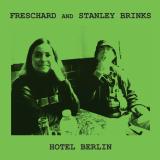
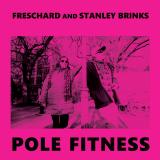
Stanley Brinks is renowned for his unique anti-folk style: both playful and suggestive, insightful and entertaining. Brinks was born in Paris, France, in 1973. He studied a bit of biology and worked as a nurse for a while. Half Swedish, half Moroccan, strongly inclined to travel the world, he soon began spending most of his life on the road and developed a strong relationship with New York.
By the late 90s he’d become a full time singer-songwriter – André Herman Düne – as part of three piece indie-rock band, Herman Düne alongside his brother, David-Ivar. Several albums and Peel sessions later and after a decade of touring Europe, mostly with American songwriters such as Jeffrey Lewis, Calvin Johnson and early Arcade Fire he settled in Berlin. The early carnival music of Trinidad became a passion, and in the early 21st century he became the unquestioned master of European calypso, changing his name to Stanley Brinks.
Under this moniker he has recorded well in excess of 100 albums, collaborated with the New York Antifolk scene on numerous occasions, recorded and toured with traditional Norwegian musicians, and played a lot with The Wave Pictures.
Freschard grew up in a farm in French Burgundy. Aged 18 she moved to Paris, where she baked pies and cakes in a cafe. There, a local musician and regular customer called Stanley Brinks wrote a few songs for her to sing. Homeless in Paris, she saved up just enough money to get herself a ticket to New York. There she found an old electric guitar and started writing her own songs. In 2004 she moved to Berlin, where she recorded her first LP, "Alien Duck". Her second album, "Click Click", recorded in 2006, features electric guitar by Stanley Brinks. On her third album, she plays the drums herself. On her fourth “Shh...” she also plays the flute, and she breaks out the washboard on her fifth “Boom Biddy Boom”. Press for Stanley Brinks and Freschard.
“an absolute joy.” Q.
“...a set that’s as wistful and charming as it is playful and self-concious.” Uncut.
“quietly charming” Pitchfork.
Stanley Brinks is renowned for his unique anti-folk style: both playful and suggestive, insightful and entertaining. Brinks was born in Paris, France, in 1973. He studied a bit of biology and worked as a nurse for a while. Half Swedish, half Moroccan, strongly inclined to travel the world, he soon began spending most of his life on the road and developed a strong relationship with New York.
By the late 90s he’d become a full time singer-songwriter – André Herman Düne – as part of three piece indie-rock band, Herman Düne alongside his brother, David-Ivar. Several albums and Peel sessions later and after a decade of touring Europe, mostly with American songwriters such as Jeffrey Lewis, Calvin Johnson and early Arcade Fire he settled in Berlin. The early carnival music of Trinidad became a passion, and in the early 21st century he became the unquestioned master of European calypso, changing his name to Stanley Brinks.
Under this moniker he has recorded well in excess of 100 albums, collaborated with the New York Antifolk scene on numerous occasions, recorded and toured with traditional Norwegian musicians, and played a lot with The Wave Pictures.
Freschard grew up in a farm in French Burgundy. Aged 18 she moved to Paris, where she baked pies and cakes in a cafe. There, a local musician and regular customer called Stanley Brinks wrote a few songs for her to sing. Homeless in Paris, she saved up just enough money to get herself a ticket to New York. There she found an old electric guitar and started writing her own songs. In 2004 she moved to Berlin, where she recorded her first LP, "Alien Duck". Her second album, "Click Click", recorded in 2006, features electric guitar by Stanley Brinks. On her third album, she plays the drums herself. On her fourth “Shh...” she also plays the flute, and she breaks out the washboard on her fifth “Boom Biddy Boom”. Press for Stanley Brinks and Freschard.
“an absolute joy.” Q.
“...a set that’s as wistful and charming as it is playful and self-concious.” Uncut.
“quietly charming” Pitchfork.
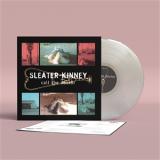
Sleater-Kinney feiern das 30-jährige Jubiläum ihres zweiten Albums ,Call the Doctor" mit einer neuen Vinyl-Ausgabe auf "Northern Light"-farbenem Vinyl. Sleater-Kinney ist eine gefeierte amerikanische Rockband, die 1994 in Olympia, Washington, gegründet wurde. Die Kernbesetzung der Band besteht aus Corin Tucker (Gesang und Gitarre), Carrie Brownstein (Gitarre und Gesang) und Janet Weiss (Schlagzeug). Sleater-Kinney waren bekannt für ihre feministische, linksgerichtete Politik und waren ein fester Bestandteil der Riot-Grrrl- und Indie-Rock-Szene im pazifischen Nordwesten. Call the Doctor ist Sleater-Kinneys zweites Studioalbum. Es wurde von John Goodmanson produziert und ursprünglich am 25. März 1996 bei Chainsaw Records veröffentlicht. Das Album wird oft als Sleater-Kinneys erstes richtiges Album angesehen, da Tucker und die Co-Sängerin und Gitarristin Carrie Brownstein zum Zeitpunkt der Aufnahmen ihre früheren Bands, Heavens to Betsy und Excuse 17, verlassen hatten. Die Besetzung bestand aus Corin Tucker (Gesang, Gitarre), Carrie Brownstein (Gitarre, Gesang) und Lora Macfarlane (Schlagzeug, Gesang). Call the Doctor landete 1996 auf Platz drei der ,Pazz & Jop"-Kritikerumfrage von The Village Voice. 2010 wurde das Album von der Redaktion des Rolling Stone auf Platz 49 der Liste der 100 besten Alben der Neunziger gewählt. ,Sleater-Kinney ist Amerikas beste Rockband" - Greil Marcus, Time (2001). ,Tauscht Sexarbeiterinnen-Rollenspiele, Puppenteile, Gender-Bending und andere gängige Female-Rock-Klischees gegen Geschichten vom alltäglichen Kampf ... Sleater-Kinney beweist, dass Punk immer noch neue Wege bietet, Nein zu sagen" - Johnny Ray Huston, SPIN
out of Stock
Last delivered 87 days ago available to reorder, subject to availability
The second Jai Alai album takes its name from a track on Winners (1979) by New York band Kleeer, who evolved from Pipeline via The Universal Robot Band before becoming a major force on the soul and boogie scene; their full-length “Open Your Mind” is simply sublime.
Two originally unreleased tracks will delight completists of Aretha Franklin and Dionne Warwick. Aretha co-produced “The Boy From Bombay” with Quincy Jones — perhaps a little too quirky at the time — while Warwick’s Ashford & Simpson-produced “Someone Else Gets The Price” has all the hallmarks of a missed hit.
Philadelphia’s Pieces Of A Dream, discovered by Grover Washington Jr., were fêted across Europe throughout the 80s. Their Elektra album Imagine This (1983) yielded the wonderfully moody “It’s Time For Love”. Further mining of the Elektra vaults yields a highly collectable Phat Phili Mix of Teddy’s “Believe In Love”, alongside a jewel from Leon Ware’s Rockin’ You Eternally (1981). I was lucky to know this genius, still underappreciated as a master of sensuous soul; “Got To Be Loved” ranks among his finest.
There’s not enough space here to fully cover Gerald Levert’s “What About Me”, but my liner notes to the Jai Alai release JAR14 “Top Of My Head” detail just how talented he was — and this is further proof.
The two least-known artists make a strong impression. Andy Bey’s “I Know This Love Can’t Be Wrong” recalls Jon Lucien at his best, while Phajja — a promising Warner Bros. signing in 1997 — disappeared after just two albums; their Cutfather & Joe production here is as polished as The Emotions.
By the time Etta James recorded “Evening Of Love”, she was four decades into her career, delivering this beautiful ballad with total assurance. Truly epic Southern soul.
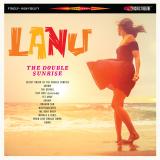
Lance Ferguson (The Bamboos, Menagerie, Rare Groove Spectrum) presents his lush Exotica inspired 2016 album on LP for the first time in a limited edition deluxe gatefold sunset swirl coloured vinyl edition, with each pressing having a unique pattern.
For fans of Air, Martin Denny & DJ Shadow.
'The Double Sunrise' is a re-imagining of Exotica seen through Ferguson’s own lens, which includes Pop and Hip Hop elements plus samplers, synths and drum machines thrown into the mix. That combination of beats and lush cinematics owes as much to Exotica pioneer Martin Denny as it does to Air and DJ Shadow.
Guest vocalists include Melanie Pain (Nouvelle Vague), who brings a sweet Francoise Hardy and Jane Birkin influence to her songs, and Australian singer Meg Washington. As well as her own successful career, Bamboos fans would know Washington from her vocals from “The Wilhelm Scream” and “King Of The Rodeo”, as well as “Beautiful Trash” from the 2011 Lanu album ‘Her 12 Faces’.
Ferguson's own instrumentals are also gems of lush, nostalgic delight.
Reviews for ‘The Double Sunrise’
“Even with the clear influence of South Pacific exotica, this second LP is still typical Ferguson: tight, snappy and doused in retro airs.” - Rolling Stone Magazine
“Bamboos supremo Lance Ferguson uses South Seas exotica as a jumping-off point for a record that deftly crosses datelines. Giddy effervescent soundscapes such as “Tiny Dots” sit back to back with breakbeat grooves like “Nightmarchers””. The Age
“This is one of those summer albums you will return to every year. Stunning.” The Daily Telegraph
“The concept for The Double Sunrise is very specific, but it's executed brilliantly...It's one of those records that evokes a place and a feeling that most of us only ever dream about.” - Double J Radio (Feature Album)
Nach der Veröffentlichung von „idea 1“, kündigt Kelela ihr neues, drittes Album an, das am 10. Juli bei Warp Records erscheint – und veröffentlicht die zweite Single „linknb“, produziert von Oscar Scheller.
Der Track entstand in einer Phase der Schreibblockade und begann als Mantra, das Kelela schrieb, um sich wieder an die Arbeit zu bringen. Angeführt von einem labyrinthischen Gitarrenriff über treibenden Metal-Drums ist „linknb“ ein Song über Selbstvertrauen, das man sich durch Schwierigkeiten erarbeitet hat, darüber, sich nicht klein machen zu lassen. „Es ist nicht schwer, mutig zu sein / Es ist leichter, zu viel preiszugeben / Ich weiß nur, dass ich den Weg geebnet habe, unterbezahlt.“
Das von Mischa Notcutt inszenierte Video versetzt Kelela in die Mitte einer urbanen Traumlandschaft. Als enger Freund und Kelelas ehemaliger Kreativdirektor war Notcutt die naheliegende Wahl. Das Video lässt Realismus und Abstraktion ineinanderfließen und verwandelt eine einsame Reise in eine Meditation über Selbstfindung und Erneuerung.
Mit „new avatar“ rückt alles, worauf Kelela hingearbeitet hat, in den Fokus. Sie begann ihre ersten Songs in der Indie-Szene von Washington, D.C. zu schreiben, bevor die Clubmusik und die elektronische Produktion, die ihre frühe Karriere prägten, die Oberhand gewannen. Mit „new avatar“ schließt sie den Kreis: R&B, unterlegt mit verzerrten Gitarrenklängen, trifft auf neue Schnittstellen in der Tanzmusik und gipfelt in einem Sound, der aus all den musikalischen Einflüssen schöpft, die sie je geprägt haben. Das Album enthält zudem Kollaborationen mit PinkPantheress, A. K. Paul und Fousheé.
„Dieses Album findet Trost in der Konfrontation“, sagt Kelela. „Ich möchte nicht, dass die Musik von dem ablenkt, was wirklich in der Welt vor sich geht; ich möchte, dass sie in dieser verrückten Zeit Sinn ergibt und den Menschen gleichzeitig hilft, mit der Schönheit und Freude in Kontakt zu kommen, die sie ebenfalls erleben.“
Das Album setzt sich mit einer Welt auseinander, die aus allen Nähten auseinanderfällt, und mit der Klarheit, die das Überleben erfordert.
„Die Leute sollten auch wissen, dass meine Freunde und ich ständig lachen und dass Humor kein Abwehrmechanismus ist; er ist Ausdruck dafür, wie scharfsinnig wir die Dinge einschätzen und wie klar wir die Welt sehen.“
Im Kern schildert „new avatar“ eine vielschichtige Erfahrung, und obwohl die Außenwelt präsent ist, schwächt sie Kelelas Entschlossenheit zu keinem Zeitpunkt.
About Kelela: Throughout her globally revered, boundary-pushing career, Kelela has established a lane of her own in R&B and electronic music. On her long-awaited third album, new avatar, the singer/songwriter (through the versatility of the guitar) challenges perceptions of these genres, while weaving together fragments of lived experiences to shape a world of connection and resilience during times of unrest.
The songs journey through Black femme rage, joy as resistance, Gotham City-esque dystopia, misogynoir, romantic tension, and more. It’s anchored by production that demands a broader rethink about alternative, rock and indie music.
Kelela’s defiant nature has propelled her so far already — from her hometown of Washington, D.C to world stages. In 2013, she released her debut mixtape, Cut 4 Me. She continued solidifying her revolutionary R&B sound with 2015’s Hallucinogen EP, with The New York Times naming its single, “Rewind,” one of the “25 Songs That Tell Us Where Music Is Going”. By 2017, she released her electric debut album Take Me Apart (which was followed by 2018’s TAKE ME A_PART, THE REMIXES), building upon her intimate storytelling.
After a nearly five-year hiatus, she returned in 2023 with her groundbreaking second album, Raven, and its critically-acclaimed counterpart, RAVE:N, The Remixes in 2024. Raven has been hailed as one of the ‘Best Albums of 2023’ by Pitchfork, Billboard, Vulture, Variety, and more, while the remixes solidified her as a leader in the dance music space.
In 2025, Kelela showcased yet another innovative side of her artistry with her live album In The Blue Light, which hit #5 on the Contemporary Jazz chart and #20 on the Jazz Albums chart. Now, with new avatar, Kelela displays the masterful intention she puts into forming new sonic cityscapes. But don’t confuse it with escapism: “I don't want the music to be a distraction from what's really going on in the world; I want it to help you get into it.”
out of Stock
Last delivered 56 days ago available to reorder, subject to availability
Nach der Veröffentlichung von „idea 1“, kündigt Kelela ihr neues, drittes Album an, das am 10. Juli bei Warp Records erscheint – und veröffentlicht die zweite Single „linknb“, produziert von Oscar Scheller.
Der Track entstand in einer Phase der Schreibblockade und begann als Mantra, das Kelela schrieb, um sich wieder an die Arbeit zu bringen. Angeführt von einem labyrinthischen Gitarrenriff über treibenden Metal-Drums ist „linknb“ ein Song über Selbstvertrauen, das man sich durch Schwierigkeiten erarbeitet hat, darüber, sich nicht klein machen zu lassen. „Es ist nicht schwer, mutig zu sein / Es ist leichter, zu viel preiszugeben / Ich weiß nur, dass ich den Weg geebnet habe, unterbezahlt.“
Das von Mischa Notcutt inszenierte Video versetzt Kelela in die Mitte einer urbanen Traumlandschaft. Als enger Freund und Kelelas ehemaliger Kreativdirektor war Notcutt die naheliegende Wahl. Das Video lässt Realismus und Abstraktion ineinanderfließen und verwandelt eine einsame Reise in eine Meditation über Selbstfindung und Erneuerung.
Mit „new avatar“ rückt alles, worauf Kelela hingearbeitet hat, in den Fokus. Sie begann ihre ersten Songs in der Indie-Szene von Washington, D.C. zu schreiben, bevor die Clubmusik und die elektronische Produktion, die ihre frühe Karriere prägten, die Oberhand gewannen. Mit „new avatar“ schließt sie den Kreis: R&B, unterlegt mit verzerrten Gitarrenklängen, trifft auf neue Schnittstellen in der Tanzmusik und gipfelt in einem Sound, der aus all den musikalischen Einflüssen schöpft, die sie je geprägt haben. Das Album enthält zudem Kollaborationen mit PinkPantheress, A. K. Paul und Fousheé.
„Dieses Album findet Trost in der Konfrontation“, sagt Kelela. „Ich möchte nicht, dass die Musik von dem ablenkt, was wirklich in der Welt vor sich geht; ich möchte, dass sie in dieser verrückten Zeit Sinn ergibt und den Menschen gleichzeitig hilft, mit der Schönheit und Freude in Kontakt zu kommen, die sie ebenfalls erleben.“
Das Album setzt sich mit einer Welt auseinander, die aus allen Nähten auseinanderfällt, und mit der Klarheit, die das Überleben erfordert.
„Die Leute sollten auch wissen, dass meine Freunde und ich ständig lachen und dass Humor kein Abwehrmechanismus ist; er ist Ausdruck dafür, wie scharfsinnig wir die Dinge einschätzen und wie klar wir die Welt sehen.“
Im Kern schildert „new avatar“ eine vielschichtige Erfahrung, und obwohl die Außenwelt präsent ist, schwächt sie Kelelas Entschlossenheit zu keinem Zeitpunkt.
About Kelela: Throughout her globally revered, boundary-pushing career, Kelela has established a lane of her own in R&B and electronic music. On her long-awaited third album, new avatar, the singer/songwriter (through the versatility of the guitar) challenges perceptions of these genres, while weaving together fragments of lived experiences to shape a world of connection and resilience during times of unrest.
The songs journey through Black femme rage, joy as resistance, Gotham City-esque dystopia, misogynoir, romantic tension, and more. It’s anchored by production that demands a broader rethink about alternative, rock and indie music.
Kelela’s defiant nature has propelled her so far already — from her hometown of Washington, D.C to world stages. In 2013, she released her debut mixtape, Cut 4 Me. She continued solidifying her revolutionary R&B sound with 2015’s Hallucinogen EP, with The New York Times naming its single, “Rewind,” one of the “25 Songs That Tell Us Where Music Is Going”. By 2017, she released her electric debut album Take Me Apart (which was followed by 2018’s TAKE ME A_PART, THE REMIXES), building upon her intimate storytelling.
After a nearly five-year hiatus, she returned in 2023 with her groundbreaking second album, Raven, and its critically-acclaimed counterpart, RAVE:N, The Remixes in 2024. Raven has been hailed as one of the ‘Best Albums of 2023’ by Pitchfork, Billboard, Vulture, Variety, and more, while the remixes solidified her as a leader in the dance music space.
In 2025, Kelela showcased yet another innovative side of her artistry with her live album In The Blue Light, which hit #5 on the Contemporary Jazz chart and #20 on the Jazz Albums chart. Now, with new avatar, Kelela displays the masterful intention she puts into forming new sonic cityscapes. But don’t confuse it with escapism: “I don't want the music to be a distraction from what's really going on in the world; I want it to help you get into it.”
out of Stock
Last delivered 46 days ago available to reorder, subject to availability
Time to welcome Soul 223 to the label with his debut Delusions EP entitled Fear Of Stopping. Something of a complete legend in our eyes and ears, Steve Pickton has been releasing top drawer tuneage for over two decades both as Stasis on influential labels such as B12 and Peacefrog and more recently as Soul 223 on equally well regarded imprints like Delsin, Soul Jazz and Neroli. Always one to shy away from any limelight or self promotion it's true to say that this underrated British producer remains something of an anomaly, staying true to his underground roots where faceless, shadowy and obscure reigns supreme over the latest over-exposed cover star. This ethos naturally carries through into his music where you will always find both expansive beauty and unrefined rawness in equal measures ensuring his tracks always sound fresh rather than over produced or contrived.
Fear Of Stopping opens the EP with a low-slung disco groove providing the backbone for intermittent pad washes and reversing stabs. The focus here is firmly on the drums and simple conga riff with thankfully very little else to deter you from this sublime slice of abstract dance music.
Next up we have a remix from another ridiculously talented producer who chooses quality over quantity, having only ever had one release under his own name, albeit for one of the most respected labels in the world; Rush Hour. Maxi Mill came to our attention having released one of the tracks of 2011 namely To The Next. On this, his first ever solo remix he brings a brilliant bump to the EP with a raw, warehousey and bass-heavy workout. Just the right amount of strings and pads keep the deep vibe intact but the filtering bass and jacking drums definitely take this one to the floor.
Flipping over we have Walberswick in it's Hoist Covert Mix incarnation. Almost thirteen minutes of spaced out, deep Detroit house music awaits you, ready to lure you in and cocoon you with it's warm and hypnotizing machine funk. Lovely to hear the old Stasis influence working it's way into this one sounding both decidedly old-school and completely futuristic and otherworldly as only the best tracks ever do.
Closing the EP we have Birdbrook Rain dropping the BPM's for a beautifully sparse track that brings with it an almost desolate and disconnected feeling, echoing synths providing a naive melody while a dusty pad shifts simply beneath. A little slice of magic concluding a fresh and interesting EP, we hope you agree.
Originally self-released in 2023, Stella Kola, the debut album from Beverly Ketch (Jow Jow, Weeping Bong Band) and Robert Thomas (Sunburned Hand of the Man, Dalthom), now returns in a renewed edition—bringing wider attention to a record that already felt like a quietly essential artifact from the moment it first appeared.
Given the pair’s respective roots—and the presence of collaborators drawn from across the Northeast experimental underground—one might expect “a brutal blast of acid swirl.” Instead, what emerges is something far more unexpected. The album is “steeped, not in noise and dissonance, but in the fragrant, captivating folk of Linda Perhacs, Judee Sill, Karen Dalton, and Bridget St John.”
From the opening moments, especially on “Rosa,” the record reveals its core sensibility: “a ballad that digs deep into the psychedelic-folk tradition until it takes root in a freshly sporous permaculture.” What follows is a set of songs that feel both carefully assembled and organically grown—delicate structures held together by a wide circle of contributing musicians, including Wednesday Knudsen (flute), P.G. Six (harp, guitars, keys), Gary War (synth), Jen Gellineau (viola, violin), Willie Lane, L. Gray, and others.
Rather than functioning as studio additions, these collaborators form a genuine collective presence. “The family affair feeds into the album’s charms,” and the feeling is unmistakably communal. Like many of the ‘60s folk records it echoes, Stella Kola carries “the feeling of community and camaraderie” at its core, shaping a warmth that runs through the entire release.
The album’s emotional palette leans toward a quiet, persistent melancholy: “the best records from that era also carried with them an inherent sadness and Stella Kola’s songs wash over the listener with a beautiful woe.” Its sound edges into the terrain of Fairport Convention and Pentangle, with references to “Beggar’s, Kings, Dark Damsels, and Tarot,” yet never settles into revivalism. Instead, Ketch and Thomas extend the tradition outward, refracting it through their own distinctly American, underground language.
As one early description of the album notes, “the masterful restraint of ‘Rosa’ and the rest of Stella Kola’s shimmering debut evokes Anne Briggs, C.O.B., Pentangle and similar ancestors that knew the best way to honor traditions was to widen the heritage even further.”
Even among a prolific and unpredictable network of underground musicians, Stella Kola stands apart. “It’s early in the year, but it’s hard to see an album, especially a debut, capturing the heart as hard as this one.” With its return in reissue form, the album reasserts itself not just as a hidden gem, but as an essential document of contemporary folk experimentation—an intimate, collective work that continues to unfold with time.
Reissue of Spirit Caravan's debut album. Jug Fulla Sun follows a sonic continuum that began in the late '70s when Scott "Wino" Weinrich emerged from the outskirts of Washington, D.C., with the Obsessed, his stripped-down hybrid of biker rock and metal. That outfit made tremendous strides in bridging the gap between the long-haired metal contingent and the still developing, though already rabid, D.C. hardcore scene. Jug Fulla Sun shows Wino augmenting his trademark brand of doom-laden guitar work and slow-fuse vocal ferocity with greater lyrical depth and overall textural breadth. The songs are rich, refined, articulate, and created by a lifer, a true veteran of the hard music scene. Wino has obviously gone to great lengths here to subordinate his outlaw vision to a more expansive, comprehensive view of mankind, and of greater truths. The somewhat nebulous scope of his lyrics is enhanced by Lungfish vocalist/tattoo artist Dan Higgs' cryptic cover painting. An excellent album. - All Music
REISSUE of Spirit Caravan's debut album. Neon green vinyl, limited to 350 copies. Jug Fulla Sun follows a sonic continuum that began in the late '70s when Scott "Wino" Weinrich emerged from the outskirts of Washington, D.C., with the Obsessed, his stripped-down hybrid of biker rock and metal. That outfit made tremendous strides in bridging the gap between the long-haired metal contingent and the still developing, though already rabid, D.C. hardcore scene. Jug Fulla Sun shows Wino augmenting his trademark brand of doom-laden guitar work and slow-fuse vocal ferocity with greater lyrical depth and overall textural breadth. The songs are rich, refined, articulate, and created by a lifer, a true veteran of the hard music scene. Wino has obviously gone to great lengths here to subordinate his outlaw vision to a more expansive, comprehensive view of mankind, and of greater truths. The somewhat nebulous scope of his lyrics is enhanced by Lungfish vocalist/tattoo artist Dan Higgs' cryptic cover painting. An excellent album. - All Music
For nearly four decades, since its founding during the mid 1980s, the Belgian imprint, Sub Rosa, has continuously plumbed the depths of numerous, radical creative histories, assembling a catalog of releases that has almost no equivalent, while remaining nearly impossible to nail down. That said, for most of its run, Sub Rosa has been primarily recognized for its rigorous explorations of the lesser explored shadows of experimental sound practice (sound-art, sound-poetry, early electronic and electroacoustic music, free-improvisation, etc.), delivering a remarkable body of artifacts that have collectively helped to rewrite history in their wake. While it's always been impossible to anticipate where the label might take us next, threading their catalog are plenty of releases that throw further wrenches in the cogs, expanding our understanding of what they pursue, as in the case of a handful of titles, appearing as early as the 1980s, dedicated to ethnographic field-recordings from various parts of the world. Among the most striking and celebrated of these was 2017's Ethiopian Urban And Tribal Music: Mindanoo Mistiru / Gold From Wax, comprising an astounding body of recordings made by Ragnar Johnson and Ralph Harrisson in Ethiopia during 1971, reissuing material originally released by Lyrichord the following year. Now, Sub Rosa returns to the incredible work embarked upon by the pair and captured on that same trip with Ethiopian Musics 1971, comprising the recordings originally released by Ocora shortly after their completion, expanded in this edition to include an entire disc of never before released music. Widely regarded as some of the most important field-recordings ever made of indigenous Ethiopian folk music (as captivating and intoxicating as they are revelatory: providing insights into the roots of the country's singular traditions of popular music and jazz that have come to be celebrated the world over), this incredible collection is issued by Sub Rosa in a beautifully produced 2LP edition, complemented by a four page insert providing detailed descriptions of each song, as well as notes by the ethnomusicologists and recordists, as well as a 2CD edition, with a twelve page booklet. Insanely good and absolutely essential for any fan of field-recording, ethnomusicology, the music of Ethiopia, or the label's mission at large. Once again, Sub Rosa has defied our expectations and delivered a remarkably important intervention in the history of recorded sound.
Located in the Horn of Africa region of East Africa, few cultures are distinctly singular, while being so diverse (containing 80 distinct ethnic groups who speak 70 languages and 200 dialects) as that of Ethiopia. The home to some of the oldest surviving sects of Judaism, Christianity, and Islam (each contributing important aspects of its collective cultural body), particularly the country's culinary and musical traditions have become celebrated the world over, and (generally speaking) feel entirely independent of those of its neighbors. Given this, it's unsurprising that, during the summer of 1971, the young ethnographer, Ragnar Johnson, accompanied by Ralph Harrisson, traveled to Ethiopia to begin his brief career as a field recording ethnomusicologist, capturing material on reels of magnetic tape that would be subsequently released across three LPs for Lyrichord and Ocora, respectively, coming to form a cornerstone of documentation and study of the country's many indigenous musical traditions, as well as providing wide, global access to them for the first time. While Johnson's recording career was relatively brief, ending toward the end of the decade when he began to focus more on teaching in UK universities, with a focus on the anthropology of art and social anthropology, his impact on the field was lasting. Between 1971 and 1979, in addition to those he made in Ethiopia, he made hugely significant recordings in Yemen (also issued by Lyrichord before being reissued by Sub Rosa) and Papua New Guinea, which were originally released by David Toop's Quartz Publications to wide celebration, before being revisited by Ideologic Organ in 2023.
While it's worth noting that commercial releases of ethnomusicological recordings by labels like Folkways, Lyrichord, and Ocora were still in their relatively early days when he entered the field, Johnson's recordings quickly stood apart for their vivid qualities and clarity of space, allowing them to stand the test of time. As he later stated: "I used a Uher Report L stereo tape recorder, BASF quarter inch tapes at a recording speed of seven and a half inches per second with two directional microphones mounted to record an isosceles triangle of stereo sound," he reveals. "The location of the microphones and musicians was critical. The musicians were fully informed of all aspects of the recording process."
Johnson's recordings are extremely vivid, there is a clear sense of space and the cries of the flutes exist across the entire stereo field. It's a reflection of Johnson's skill as a field recordist that his recordings continue to be reissued over forty years later. "I used a Uher Report L stereo tape recorder, BASF quarter inch tapes at a recording speed of seven and a half inches per second with two directional microphones mounted to record an isosceles triangle of stereo sound," he reveals. "The location of the microphones and musicians was critical. The musicians were fully informed of all aspects of the recording process… I used to enjoy being in the moment and hearing something wonderful despite the stress of the vigilance required to ensure that the recordings were accomplished according to plan. The responsibility is to record and document the music as effectively as possible so that it has been preserved for posterity. It is better to actually record music than to sit in a seminar room debating the ethics of recording music." It is this very ethos and sense of clarity that can be encountered across the length of Ethiopian Musics 1971.
For the sake of clarity, the two LPs of material that comprise Ethiopian Musics 1971 should be regarded as a single body of recordings alongside those made in Ethiopia by Ragnar Johnson and Ralph Harrisson during the summer of 1971 (previously issued by Lyrichord and reissued by Sub Rosa), and as two that have, until now, remained historically distinct. The first LP gathers that material released by Ocora during the early 1970s on Musiques Ethiopiennes, while the second comprises (as far as we can tell) twelve never before issued recordings, expanding the journey and making this the definitive edition of the release with its incredible total of 23 recordings of songs, allowing it ever greater scope to achieve the recordists' modus operandi of capturing the broadest and most diverse cross section of Ethiopia's many musical cultures, ranging from different forms of urban music captured in Addis Ababa, documenting largely orally transmitted idioms within which lyrical content is given greater emphasis than the instrumental components (played on masenko fiddles, craar and bagana lyres, washint flutes and kabaro drums), to folk idioms hailing from the Danakil desert and the border regions with Sudan and Kenya. There are songs sung and played in bars, divination chants, laments, dances, Christian songs, and Amharic sung poetry, to only begin to scratch the surface.
Ethiopian Musics 1971 is one of those rare albums where each musical moment is pure, intoxicating gold, while also being greater through the sum of its parts. There are the many songs, forming a rich tapestry of remarkable range across the respective two LPs/CDs (moments that wondrously flirt with sonic abstraction; hypnotic rhythms; pulsing chant; melodies that, in structural arrangement and tonal combination, help us reframe how such a thing might be understood, and a great deal more), each imbued with a remarkable directness and emotive sensibility, and there is the stunning quality of these recordings themselves, transporting each sound to our ears as though we intimately share its creator's space, while being imbued with the pure heart and remarkable spirit with which they were made. As we said before, it's little wonder, once heard, why these recordings and this music feels as fresh and relevant (enduring more than 50 years) today as when they were made. Once again, Sub Rosa has raised the bar with this essential addition to the incredible work that Ragnar Johnson and Ralph Harrisson did back in Ethiopia during 1971, radically expanding our access to the sounds that they captured with these stunning, beautifully produced 2LP and 2CD editions. Absolutely engrossing from the first sounding to the last, this one can't be missed.
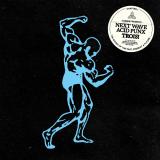
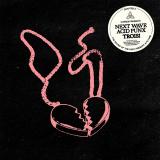
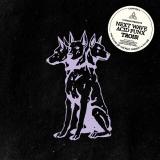
Starting in 2021 the critically acclaimed Next Wave Acid Punx series has seen Luca Venezia, aka Curses, celebrate the music that has shaped both his life and career. Across the first two compilations Luca took usfrom the industrial and post-punk sounds of the late 70s, through the emergence of EBM, new beat and freestyle in the 1980s and onto the music he both makes and plays himself in clubs today. Bringing the series to a close Next Wave Acid Punx TROIS sees the Berlin-based musician and DJ return full circle, this time exploring the sounds that first initiated him into Brooklyn's rave scene and the music that, in some way, continues to embody its eclectic spirit today.
Spread across three 2LPs and 3CDs Next Wave Acid Punx TROIS captures a moment whose influence can still be heard reverberating around clubland today. With the nascent rave scene obliterating boundaries, this was a moment where the darker, harder industrial electronic sounds of the mid 1980s were crashing headfirst into the ecstatic wave that was washing over clubland creating thrilling juxtapositions. Whether in the clubs and warehouses of New York, London, Frankfurt, Valencia and beyond, electronic music would never be the same again as countless new genres we take for granted today were born from the chaos and energy that had been unleashed.
Featuring 46 hard-to-find, new and exclusive tracks, Next Wave Acid Punx TROIS both documents that fertile period and shows how, despite rumours to the contrary, that early anarchic spirit can still be found today. From the Detroit Techno of Model 500 to Nitzer Ebb's EBM and the proto-Trance of Age of Love and onto brand new tracks from some of today's best producers such as Zaatar, Italo Deviance and Leona Jacewska, this compilation closes out a series that has to date revelled in exploring the darker corners of clubland in uplifting style.
This is Chapter 1.
out of Stock
Last delivered 9 days ago available to reorder, subject to availability
Starting in 2021 the critically acclaimed Next Wave Acid Punx series has seen Luca Venezia, aka Curses, celebrate the music that has shaped both his life and career. Across the first two compilations Luca took us from theindustrial and post-punk sounds of the late 70s, through the emergence of EBM, new beat and freestyle in the 1980s and onto the music he both makes and plays himself in clubs today. Bringing the series to a close Next Wave Acid Punx TROIS sees the Berlin-based musician and DJ return full circle, this time exploring the sounds that first initiated him into Brooklyn's rave scene and the music that, in some way, continues to embody its eclectic spirit today.
Spread across three 2LPs and 3CDs Next Wave Acid Punx TROIS captures a moment whose influence can still be heard reverberating around clubland today. With the nascent rave scene obliterating boundaries, this was a moment where the darker, harder industrial electronic sounds of the mid 1980s were crashing headfirst into the ecstatic wave that was washing over clubland creating thrilling juxtapositions. Whether in the clubs and warehouses of New York, London, Frankfurt, Valencia and beyond, electronic music would never be the same again as countless new genres we take for granted today were born from the chaos and energy that had been unleashed.
Featuring 46 hard-to-find, new and exclusive tracks, Next Wave Acid Punx TROIS both documents that fertile period and shows how, despite rumours to the contrary, that early anarchic spirit can still be found today. From the Detroit Techno of Model 500 to Nitzer Ebb's EBM and the proto-Trance of Age of Love and onto brand new tracks from some of today's best producers such as Zaatar, Italo Deviance and Leona Jacewska, this compilation closes out a series that has to date revelled in exploring the darker corners of clubland in uplifting style.
Starting in 2021 the critically acclaimed Next Wave Acid Punx series has seen Luca Venezia, aka Curses, celebrate the music that has shaped both his life and career. Across the first two compilations Luca took us from the industrial and post-punk sounds of the late 70s,through the emergence of EBM, new beat and freestyle in the 1980s and onto the music he both makes and plays himself in clubs today. Bringing the series to a close Next Wave Acid Punx TROIS sees the Berlin-based musician and DJ return full circle, this time exploring the sounds that first initiated him into Brooklyn's rave scene and the music that, in some way, continues to embody its eclectic spirit today.
Spread across three 2LPs and 3CDs Next Wave Acid Punx TROIS captures a moment whose influence can still be heard reverberating around clubland today. With the nascent rave scene obliterating boundaries, this was a moment where the darker, harder industrial electronic sounds of the mid 1980s were crashing headfirst into the ecstatic wave that was washing over clubland creating thrilling juxtapositions. Whether in the clubs and warehouses of New York, London, Frankfurt, Valencia and beyond, electronic music would never be the same again as countless new genres we take for granted today were born from the chaos and energy that had been unleashed.
Featuring 46 hard-to-find, new and exclusive tracks, Next Wave Acid Punx TROIS both documents that fertile period and shows how, despite rumours to the contrary, that early anarchic spirit can still be found today. From the Detroit Techno of Model 500 to Nitzer Ebb's EBM and the proto-Trance of Age of Love and onto brand new tracks from some of today's best producers such as Zaatar, Italo Deviance and Leona Jacewska, this compilation closes out a series that has to date revelled in exploring the darker corners of clubland in uplifting style.
Just as you were getting your head straight coming off the 21st Trip … Brown Acid dose # 22 drops, continuing to fry your mind in a revolving trap-door Twilight Zone alternate world of early hard rock… populated by real life characters so far out they can look like a cheesy wedding band but sound like Blue Cheer! Uncanny! This music comes at you from many angles. Teens in a garage colliding with booze, drugs and girls for the first time, lounge lizard hustlers with snazzy stage clothes and fuzz boxes… gnarly backwoods troublemakers meet blow dried glam rock wannabes here, seamlessly clobbering your head with sound rather than each other! An electric post-psychedelic bar brawl for your mind awaits, unfasten your seat belt, crank it up and fly! Sounds Synonymous "Babylon" out of Flint, Michigan 1969 rip the devastating Blue Cheer classic a new one, immediately swarming you with organ swells and distortion before collapsing into a tuff funk groove, a psychedelic James Brown vibe shot through with dirty howling fuzz guitar, vocals nailing the messed up but confident relaxed sneering attitude of the original Cheer eruption. The Bumps "Shining" from Seattle 1969 resides right at the transition of ‘60s psych into early prog, well constructed, no diluting things artsy fartsy style, a compelling heavy riff, spacious vocal harmony hook floating above a turbulent take on getting your shit together and shining like a star. Fat chance, but you can dream, the band did and their dreams kick ass across time to right now or you wouldn’t be here.
Coulda been a hit back then, definitely a hit now. Riverside "Farmer" explodes out of Austin, Texas 1974, economical but brilliantly structured riffs and power chords, intense dynamic tension/release, fantastic screaming leads over shifting angles of attack during the middle break… it’s all here with a detached confidence in the vocal that swaggers back in time to the late ‘60s in its proto-heavy psych adjacent assault. Cincinnati Joe & Mad Lydia "Get It Together" for real in Cincinnati, Ohio 1970. The song says everything you need to know: “You may think that you’re the very best, miles and miles ahead of the rest, but be sure when you’re put to the test you get it together!” These words are deployed in a manner similar to Peter Green’s “Oh Well”, intermittently stated between killer gnarly guitar and gushy organ attacks. Bar band heaven and hell rolled up into one big ball, the vocals get all the way out there! Straight Up "Fire" takes the monster 1968 Crazy World Of Arthur Brown hit into faithfully executed but surreally minimalist territory, Minneapolis, Minnesota 1974. Genius version of a key song that presciently cuts to the chase regarding Brown Acid’s incinerations of psychedelic idealism, you’re gonna burn, burn, burn… as that moment climaxes you can gawk at their preposterous flashy lounge band stage outfits and realize side one must end because everything is totally scorched into eternity. Scrap Iron "Poopsie" is a primitive two chord stomper with spiraling fuzz and organ riffs, singer marking his territory caveman style. “Poopsie, you’re my woman” he commands, but gets weirdly insecure she’ll blow him off at the altar by the end of each verse. Snarly wah-wah ices this toxic cake out of Carteret, New Jersey 1973. Focused delivery so single-mindedly crude it creates an inescapable instant brain-worm. Lady "Live Show Tigers" is amongst the most potently life affirming trash rockers you’ll ever hear, one outrageously triumphant but fiercely sloppy anthem about living it up like a star, strutting the stage glammed up New York Dolls drag style but with a Dictators sense of humor. Tasty slightly off kilter guitar leads all through, going serendipitously berserk on the fade. Picture disc single out of L.A. 1980. Fantastic fun rock star rock at a very raw local street level where any time is party time.
Killer Frog "Hard Times" on Masochist Records from Chicago, Illinois 1972 takes less than two minutes, an action packed James Gang style bar band rocker with a bit of punky sneer in the face of misfortune. These guys never even heard of flower power. They are killer frogs. Good Humore "Killer" does kill in stripped down hard rock trio style, Warren, Michigan 1976. No frills guitar, bass and drums groove tight, snaky primordial riff, snarly licks. “She’s a killer of a woman, knows just what she’s doing…” The singer knows she’s a femme-fatale roadhouse predator but she’s so hot the inevitable wreckage seems a bargain. Ride it out like the extended jam on the fade knowing she’ll be back for more! Sarawest "Space Rider" winds up the 22nd Trip lost in a twisted two chord space adventure from the point of view of an alien visiting our planet seeking knowledge but finding out we are stupidly destroying ourselves, so he gotta split sneering back at us like we wasted his time “I got no time for loving… I wanna be a space rider, space rider”. Toronto, Canada 1974, a vibe lurking in some strange but funny void between late ‘60s outsider garage psychedelic rock complete with reverb-y acid guitar leads and late ‘70s retro-futuristic D.I.Y wisecracking from inner space… taking the piss out of outer space!
Just as you were getting your head straight coming off the 21st Trip … Brown Acid dose # 22 drops, continuing to fry your mind in a revolving trap-door Twilight Zone alternate world of early hard rock… populated by real life characters so far out they can look like a cheesy wedding band but sound like Blue Cheer! Uncanny! This music comes at you from many angles. Teens in a garage colliding with booze, drugs and girls for the first time, lounge lizard hustlers with snazzy stage clothes and fuzz boxes… gnarly backwoods troublemakers meet blow dried glam rock wannabes here, seamlessly clobbering your head with sound rather than each other! An electric post-psychedelic bar brawl for your mind awaits, unfasten your seat belt, crank it up and fly! Sounds Synonymous "Babylon" out of Flint, Michigan 1969 rip the devastating Blue Cheer classic a new one, immediately swarming you with organ swells and distortion before collapsing into a tuff funk groove, a psychedelic James Brown vibe shot through with dirty howling fuzz guitar, vocals nailing the messed up but confident relaxed sneering attitude of the original Cheer eruption. The Bumps "Shining" from Seattle 1969 resides right at the transition of ‘60s psych into early prog, well constructed, no diluting things artsy fartsy style, a compelling heavy riff, spacious vocal harmony hook floating above a turbulent take on getting your shit together and shining like a star. Fat chance, but you can dream, the band did and their dreams kick ass across time to right now or you wouldn’t be here.
Coulda been a hit back then, definitely a hit now. Riverside "Farmer" explodes out of Austin, Texas 1974, economical but brilliantly structured riffs and power chords, intense dynamic tension/release, fantastic screaming leads over shifting angles of attack during the middle break… it’s all here with a detached confidence in the vocal that swaggers back in time to the late ‘60s in its proto-heavy psych adjacent assault. Cincinnati Joe & Mad Lydia "Get It Together" for real in Cincinnati, Ohio 1970. The song says everything you need to know: “You may think that you’re the very best, miles and miles ahead of the rest, but be sure when you’re put to the test you get it together!” These words are deployed in a manner similar to Peter Green’s “Oh Well”, intermittently stated between killer gnarly guitar and gushy organ attacks. Bar band heaven and hell rolled up into one big ball, the vocals get all the way out there! Straight Up "Fire" takes the monster 1968 Crazy World Of Arthur Brown hit into faithfully executed but surreally minimalist territory, Minneapolis, Minnesota 1974. Genius version of a key song that presciently cuts to the chase regarding Brown Acid’s incinerations of psychedelic idealism, you’re gonna burn, burn, burn… as that moment climaxes you can gawk at their preposterous flashy lounge band stage outfits and realize side one must end because everything is totally scorched into eternity. Scrap Iron "Poopsie" is a primitive two chord stomper with spiraling fuzz and organ riffs, singer marking his territory caveman style. “Poopsie, you’re my woman” he commands, but gets weirdly insecure she’ll blow him off at the altar by the end of each verse. Snarly wah-wah ices this toxic cake out of Carteret, New Jersey 1973. Focused delivery so single-mindedly crude it creates an inescapable instant brain-worm. Lady "Live Show Tigers" is amongst the most potently life affirming trash rockers you’ll ever hear, one outrageously triumphant but fiercely sloppy anthem about living it up like a star, strutting the stage glammed up New York Dolls drag style but with a Dictators sense of humor. Tasty slightly off kilter guitar leads all through, going serendipitously berserk on the fade. Picture disc single out of L.A. 1980. Fantastic fun rock star rock at a very raw local street level where any time is party time.
Killer Frog "Hard Times" on Masochist Records from Chicago, Illinois 1972 takes less than two minutes, an action packed James Gang style bar band rocker with a bit of punky sneer in the face of misfortune. These guys never even heard of flower power. They are killer frogs. Good Humore "Killer" does kill in stripped down hard rock trio style, Warren, Michigan 1976. No frills guitar, bass and drums groove tight, snaky primordial riff, snarly licks. “She’s a killer of a woman, knows just what she’s doing…” The singer knows she’s a femme-fatale roadhouse predator but she’s so hot the inevitable wreckage seems a bargain. Ride it out like the extended jam on the fade knowing she’ll be back for more! Sarawest "Space Rider" winds up the 22nd Trip lost in a twisted two chord space adventure from the point of view of an alien visiting our planet seeking knowledge but finding out we are stupidly destroying ourselves, so he gotta split sneering back at us like we wasted his time “I got no time for loving… I wanna be a space rider, space rider”. Toronto, Canada 1974, a vibe lurking in some strange but funny void between late ‘60s outsider garage psychedelic rock complete with reverb-y acid guitar leads and late ‘70s retro-futuristic D.I.Y wisecracking from inner space… taking the piss out of outer space!
Nonesuch Records releases Let X=X, by Laurie Anderson with Sexmob. This triple-LP/double-CD set was recorded live during a 2023 tour by Anderson and the jazz band Sexmob – Steven Bernstein and Briggan Krauss on brass, Kenny Wollesen on percussion, Douglas Wieselman on winds and guitar, and Tony Scherr on bass. Its cover and interior packaging feature paintings by Anderson. The album features 23 songs, including many favourites from throughout Anderson’s career, performed in new arrangements – plus one by Lou Reed and Metallica, ‘Junior Dad’. Anderson and Sexmob play more US and international dates this spring and summer (details below).
The New York Times said Anderson and Sexmob’s concert at the Brooklyn Academy of Music (BAM) ‘wasn’t a historical recreation of past recordings; Sexmob’s sound is a beefier one than on Anderson’s albums. With musicians who can double on electric guitar and bass clarinet, its members offered a rich range of textural variation throughout the evening.’
Laurie Anderson is one of America’s most renowned – and daring – creative pioneers. Her work, which encompasses music, visual art, poetry, film, and photography, has challenged and delighted audiences around the world for more than 40 years. In a recent 60 Minutes profile, Anderson Cooper said she ‘is a pioneer of the avant-garde, but... that doesn’t begin to describe what she creates... It’s experienced by audiences who come to see her perform: singing, telling stories, and playing strange violins of her own invention... she blends the beautiful and the bizarre, challenging audiences with homilies and humor. She blurs boundaries across music, theater, dance, and film.’ The Washington Post has said she ‘doesn’t just tell stories; she draws out every word with a kind of physical pleasure, tasting its flavor as she probes the everyday mysteries of life.’
Anderson released her first album with Nonesuch Records, the critically lauded Life on a String, in 2001. Her subsequent releases on the label include Live in New York (2002); Homeland (2010); the soundtrack to her acclaimed film Heart of a Dog (2015); and her Grammy-winning collaboration with Kronos Quartet, Landfall (2018). Nonesuch released a re-mastered edition of Big Science in 2007 for its 25th anniversary, followed by a vinyl LP re-issue in 2021; the album includes Anderson’s beloved, surprise hit, song, ‘O Superman’, which also is featured on Let X=X. Her recent Nonesuch release was 2024’s Amelia, about renowned female aviator Amelia Earhart’s tragic last flight.
Anderson’s virtual-reality film La Camera Insabbiata, with Hsin-Chien Huang, won the 2017 Venice Film Festival Award for Best VR Experience, and, in 2018, Skira Rizzoli published her book All the Things I Lost in the Flood: Essays on Pictures, Language and Code, the most comprehensive collection of her artwork to date. Recent exhibitions and installations of Anderson’s work include Habeas Corpus at New York’s Park Avenue Armory; her largest exhibition to date, The Weather, at Washington, DC’s Smithsonian’s Hirshhorn Museum of Modern Art; and Looking into a Mirror Sideways at Stockholm’s Moderna Museet, which was her largest European exhibition to date.
Laurie Anderson was awarded the 2024 Stephen Hawking Medal for Science Communication, along with Christopher Nolan and David Attenborough, and the International Astronomical Union named a minor planet in her honour: Asteroid 270588, Laurieanderson. That same year, she was awarded a Grammy Lifetime Achievement Award.
Un-American Activities is the 11th Studio album by Molly Nilsson. Written and recorded entirely on location in California at the former home of writer, poet and early opponent of the National Socialist regime in 1930s Germany, Lion Feuchtwanger and his wife Marta. An album of experimentation, genre-mashing and, above it all, Nilsson’s instantly recognisable melodic skill and empathy, it continues the songwriter’s explorations of power, freedom, oppression and its opposing force, a love unbound.
After accepting an artist residency as part of the Villa Aurora program, Nilsson began work crafting a new album from scratch in a new environment, afforded the freedom, space and time to challenge her practice and take her music into new territory. The resulting work, Un American Activities, is a love note not only to the artist who was among the very first to be declared an “enemy of the state” by the Nazi regime but also to both the eternal struggle he fought and the human spirit that pervades all of Nilsson’s best work. It is also a double-pointed poison pen letter: a critique of the new forms of oppression wielded by her temporary adopted country of the USA but also an acknowledgement of the promise it always offers but never fulfils.
Along with the novel use of colour and photography in the artwork for Un-American Activities, there are swathes of new techniques, genres and timbres new to Molly Nilsson’s music in evidence, 16 years into her music career. On Jackboots Return is an icicle-cold New Beat track that deals directly with the current situation in Germany and the resurgent Nazi-affiliated AfD. The question the song asks is, what’s the timeframe we’re talking about? Is this the 30s, or somewhere a lot closer to home? The beat is picked up on The Communist Party, Nilsson’s deepest bow to House music, evoking the early 90s Rave pioneers, Belgian 80s music and Vogue-era Madonna. Here the lyrics are direct quotes from the McCarthy-era, anti-Communist pamphlet 100 Things You Should Know About Communism in the U.S.A. The Beauty Of The Duty does to pounding Electro what Nilsson’s last album Extreme did to Metal: subsume it into the Molly Nilsson aesthetic. It goes hard.
While Un-American Activities finds Nilsson experimenting, creating instinctive music on a first-thought-bestthought basis there are still “classic” Molly moments liberally spread throughout. Excalibur feels like the Molly of old, an absolute star of a chorus refrain smudged with the vaseline of fuzz and hope, Red Telephone is wide-eyed, slathered in reverb and chorus effects, distorted with soaring melody, a heart-tugger that tugs the body upwards to the heavens with each evolving wave. Glistening digital tones wash through the album, providing a Y2K etherealness to Nilsson’s audacious Stars and Stripes reference to Wetcheeks. Perhaps the album’s standout, however, is Palestine (Somewhere Over The Rainbow), which is suffuse with empathy, solidarity and, in referencing the classic socialist-penned canon song from The Wizard Of Oz, speaks directly to the tradition of fighting oppression with full hearts of hope.
out of Stock
Last delivered 2 years ago available to reorder, subject to availability
"What if, alongside the mainstream history of music, with careers and discographies spanning ten or fifty years from album to album, there was an underground, minority history, that of artists and projects with only one record? A flash, a burst of brilliance, a gem, but no follow-up, no repetitions, no decline.
"This will most likely be the case for this album by Amarante-Cerisier, a duo formed by Mauricio Amarante (RadikalSatan, Équipage, travelling companion of Canan Domurcakli and Austin Townsend) and Marine Debilly Cerisier (dancer, performer, writer, co-founder of alternative cultural venues in Marseille and Brussels), with these eight poetic songs in French having more in common with the visionary essence of certain songs from the early 1970s (Brigitte Fontaine-Areski, for example) than with the post-modernism of the ‘nouvelle chanson française’ of the1990s and 2000s.
"But – and this is undoubtedly no coincidence – this is also the case for two unique albums, which had no immediate follow-ups but which, 50 and 20 years after their release, inspired Mauricio and Marine's album and discreetly found their way into it:
"At the very end of the 1960s, Tchékov Minosa (Marine's grandfather) embarked on a journey to the East with his partner Brigitte de Saint-Preux, during which they were married ten times, in ten different traditions (in Kurdistan, among the Kuchi people of northern Afghanistan, among the Kalash people of north-eastern Pakistan, in Rajasthan,etc.). This three-year journey was documented in numerous articles in the European press, in documentaries, in a book... and on a double LP of traditional music recordings released in 1973 by Le Chant du Monde. And sampled today by Mauricio Amarante at the end of the track ‘Parfois’.
"In the early 2000s, Austin Townsend, a tall, bony figure, washed up on the banks of the Garonne River near Bordeaux, arriving from New Zealand. With a voice that was sometimes very Bob Dylan-esque, at other times buried in the gravelly depths of the low frequencies, he strung together contemporary blues songs on his only album, Introvenus (Potagers natures, 2007), beautifully accompanied in subtle tones on banjo and double bass by Mauricio and Cesar Amarante (alias Radikal Satan). Beyond this unique record, Mauricio played extensively with Austin in concert. And when his friend died in the spring of 2024, he received his guitar, used the instrument for some of the tracks on the upcoming Okraïna record, and decided to dedicate the album to him.
"In our conception of music, fleeting appearances, unexpected reunions, and timeless records outside the dictates of current musical trends thrill us more than overly well-planned career paths."
Loftsoul a.k.a. DJ Uchikawa revisits and remixes three tracks from the Loftsoul Recordings catalogue for 2026.
Dear Friend featuring Lisa Millett was the first release on the label in 2010 and instantly became a highly collectable classic. Uchikawa refreshes the track with his customary deep and soulful yet driving energy, maintaining all the musical elements that define his unique fusion of the organic with the electronic.
Wait For You featuring Carla Prather gets retouched with a deep rolling groove and riding hammond organ melody creating a smooth bed for Carla’s haunting vocal.
Uchikawa’s cover version of the Grover Washington classic Mr Magic first appeared under his Rhythm Of Elements guise in 2008. It features the great pianist Makoto Kuriya laying down a sublime solo over the infectious groove and Hideki Ikeuchi killing it on guitar. The 2026 Remix comes with a full-on laid-back jazz double-bass line as the background for the exquisite solo performances.
out of Stock
Last delivered 5 months ago available to reorder, subject to availability
The album features the group playing Gary McFarland arrangements of Kuhn's compositions, accompanied by a string section on several tracks, with Kuhn delivering stream of consciousness lyrics in an unplanned and largely improvised fashion in the studio. However, that wasn't the only surprising aspect to the session. Airto Moreira's appearance was more by chance than design, he having just popped by the studio, again, unplanned. The 'Steve Kuhn' album is all the stronger for these extemporaneous and serendipitous elements and showcases a band at the top of their game; tight and funky yet relaxed and flowing like molten gold, with stabs and washes of keyboard from Kuhn. Splashes of free playing enter the session, but the band never stray too far from a melodic and harmonious centre of gravity. Kuhn's deft keyboard skills provide melodic embroidery to the impressive rhythmic textures and tonal colours of Carter, Cobham and Moreira. As if the music wasn't enough, the album is given extra significance by the fact that, within a few months of the recording, McFarland would die after being mysteriously poisoned by methadone in a New York bar. In a sense, it is a valedictory album from McFarland, channeled by Kuhn and the band. It's among the hardest of Kuhn's albums to find so this reissue is most welcome. Luxuriate in the glow of Kuhn's Fender Rhodes and the pliant funky bass of Ron Carter; immerse yourself in the percussive interplay of Moreira and Cobham, a pairing that has rarely sounded so good. This is such an exquisite album; you will lose yourself in its delicate power and find yourself coming back to it again and again. "It's a beautiful picture, and it helped me to comprehend things, life a bit, you know. And as I'm thinking about it, I hope it does that for whoever listens to it too." - Thundercat, Musician Details: Heavyweight Vinyl 45 RPM Cut / Original glued prints on Thick Cardboard 700 gram / 2 Separated parts hand-glued / Glossy lamination / PVC outer / 30x60 cm insert printed on 300 gram DNS paper with interview to Steve Kuhn by Tony Higgins.
Kēpa is built whole, even if life has broken a few bones along the way.
Back when he was a pro skater, he gave everything to the board. Today, he gives that same intensity to the stage, delivering hypnotic cine-concerts where motion, sound, and image blur into one. The only falls left now are the ringing final chords of his guitar — not just an instrument, but an extension of his body.
Fingerpicking is his native tongue. So much so that Kēpa no longer sings — he lets the strings speak. Percussive, alive, essential. This music isn’t about performance, it’s about living: a personal quest, a way to reach others by first going inward. Moving against the current without fighting the wind. Finding breath, essence, and remembering we’re all drifting on a spinning planet, surrounded by forces bigger than us.
It’s easier to look away. Easier to follow noise, fear, or false prophets. Harder — and braver — to truly connect.
Released in late 2025, Hotline Service opened the door, offering a wide-open, spiritual escape. With SOUL WASH SERVICES— produced by Timber Timbre — Kēpa goes further. Warmer, deeper, more focused. The album feels like sunlight on asphalt, a long drive with the windows down, time slowing just enough to let something real surface.
A kindred spirit to Hermanos Gutiérrez, Kēpa plays the role of a modern, pagan preacher — guiding us through a dusty, golden road movie that unfolds entirely inside the listener. His music doesn’t shout; it cleans.
Kēpa does it all: writes, plays, films, edits, mixes. Music becomes image, image becomes music. Nothing is separate, on record or on stage. There’s no excess, no showboating — just an open invitation to slow down, go deeper, aim higher.
Tracks like Solarium and Paradisiac reach the peaks with minimal gear: five strings, a few picks, and total control of touch and space. Listening to Kēpa feels like checking in with yourself — a quiet inner trip shaped by sounds from every corner of the world. Blues, not to feel them, but to leave them behind.
After years devoted to picking, his playing has become something sacred.
And if you let it, it carries you with it.
out of Stock
Last delivered 5 months ago available to reorder, subject to availability
Tauchen Sie ein in das glitzernde Lebensgefühl der 1970er Jahre! Mit „70s Disco Hits Vol. 3“ holen Sie sich die größten Dancefloor-Klassiker einer unvergesslichen Musikära direkt nach Hause – energiegeladen, zeitlos und voller Groove.
Diese exklusive Vinyl-Compilation vereint ikonische Künstler und Welthits, die die Disco-Welle geprägt haben:
• Donna Summer – Die „Queen of Disco“ begeistert mit ihren elektrisierenden Hymnen und unverwechselbarer Stimme.
• Barry White – Samtweiche Soul-Vibes und unverkennbarer Groove.
• Blondie – Disco trifft New Wave mit ikonischem Sound.
• Stevie Wonder – Funkige Rhythmen und musikalische Meisterwerke.
„70s Disco Hits Vol. 3“ bringt das Gefühl von Spiegelkugeln, Plateauschuhen und durchtanzten Nächten zurück – eine musikalische Zeitreise in die goldene Ära der Disco.
Let the music play – und machen Sie Ihr Wohnzimmer zur Tanzfläche!
out of Stock
Last delivered 80 days ago available to reorder, subject to availability
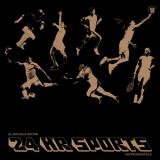
Field Green Vinyl. Big Crown Records is proud to present the instrumental version of El Michels Affair's 2025 instant classic 24 Hr Sports. The roster of vocal features on 24 Hr Sports is amazing, Clairo, Norah Jones, Florence Adooni, Shintaro Sakamoto, two different choirs, and even some singing from the man himself, Leon Michels. The background vocals contributions are amazing; Lady Wray and Kevin Martin from Brainstory to name a few. But alas, there's a new energy that shows up in the listen when you pair it down to the impeccable musicianship and Leon's tried and true "Midas Touch" production. Leon plays a ton of instruments across the album and is joined by the regular cast of heavy hitters; Homer Steinweiss, Nick Movshon, Dave Guy, Marco Benevento, Hether, and more. There is even a saxophone solo by the late, great Rahsaan Roland Kirk.Some would argue this is some of the best music being made by some of the best musicians of our time. We wouldn't argue with anyone...we let the music do what it does.
When it comes to vocal jazz, the ladies win. "Body and Soul" features great jazz standards sung by some of the best- known and most influential female jazz vocalists in history. Ella Fitzgerald, Billie Holiday, Nina Simone, Dinah Washington & Sarah Vaughan. This album presents signature recordings by these legendary ladies during concerts between 1956 and 1960, from Berlin, Paris to New York.
From out of nowhere comes a unique collaborative album from Edvard Graham Lewis (WIRE) & Mark Spybey (ZOVIET FRANCE). Mixing lush electronic rhythms, sonic collage, ambient soundscapes and manipulated field recordings, these six compositions form an album with a strong identity. That this is such a vital and fertile partnership should come as no surprise. After all, both men have made careers out of creating confidently questing musics. Lewis with Wire, He Said, Hox, Dome etc. and Spybey with Dead Voices on Air, Beehatch, Altered Statesmen, Zoviet France and so on. This new album however, is something different again: experimental, yet tightly focused, and not averse to the groove or the sly hook. The pair met via an appearance on a podcast in November 2022, hosted by cEvin Key of Skinny Puppy. They hit it off immediately. “We did a live chat with Graham - which I think, went on for about three days” jokes Spybey. It was Spybey who first broached the idea of collaboration. “It was a bit like shy bairns get nowt: I just said ‘maybe we should make something together.’” And so, with no plan other than to see what might develop, the duo began to assemble the compositions at long distance. Indeed, Lewis and Spybey only met in the real world after the album had been completed. “Mark sent half a dozen tracks in a stereo mix,” says Lewis. “And I looked at the ’topography’, to see where the spaces might be. So then I’d add to those areas. But then, when do you take it away? Sometimes you let it drop off a cliff, land in the shingle, and it gets washed out to sea again.” The process moved at a pace. “Almost everything each of us brought, ending up being incorporated in some way.” Says Spybey. “We didn’t really go down any cul-de-sacs.” As Lewis observes “We have such a sympathetic tone.” Full of inventive sonics that draw on both men’s previous work, ‘Lewis/Spybey’ offers up a richly detailed soundworld
out of Stock
Last delivered 7 months ago available to reorder, subject to availability
"Rough and ready blues played with unmitigated intensity…scorching and soulful, joyous and stomping.
—Living Blues
Electrifying and raucous…one of the few authentic links to pure Chicago blues.
—Chicago Tribune
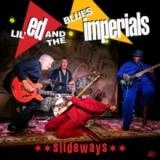
Lil’ Ed & The Blues Imperials are the reigning champions of raucous, slide-stoked Chicago blues. They’ve achieved legendary status with over 40 years of critically acclaimed recordings and raucous foot-stomping gigs on club, theatre and festival stages all over the world. Slideways is a tour-de-force of old-school Chicago blues played with contemporary urgency.
Shows in support begin on street date in Chicago, followed by Milwaukee, Minneapolis, Columbus, Cleveland, Dayton, New York and Syracuse amongst others. Touring will continue throughout Spring and Summer.
Press, radio and social media focus on album and tour dates, pitching stories and reviews to over 1000 print and internet media contacts around the world. Over 1400 radio programmers worldwide will be serviced and solicited for blues specialty show and selected Triple A and Americana rotation airplay. The album is certain to be welcomed with open arms by the blues media.
Slideways is bursting with Lil’ Ed’s rollicking slide-work and rough-hewn vocals on a joyous blend of smoking slide guitar boogies, raw-boned shuffles, and heart-stopping slow blues. As always, The Blues Imperials supply rock-solid, road-tested and gloriously riotous backing."
Water can retain or wash away memory; flowing or freezing. It gives life and shapes earth, while frozen imprints of an ancient past are waiting to melt – back into sound or fluid motion, or simply to dissipate and disappear. For their split release, Yoichi Kamimura and Olli Aarni offer two distinct reinterpretations of a performance recorded live at the Temppeliaukio Kirkko – a church in Helsinki built directly into solid rock and bathed in natural light – meditating on glacial landscapes and water cycles, using shared field recordings that bifurcate into two sonic visions of “ice journey”.
Yoichi Kamimura’s extensive recordings formed the bedrock of the original performance, notably from time spent on Suomenlinna Island just outside Helsinki in 2021, aiming to capture the remnants of the glacial movements that formed the area’s geology. Elsewhere, the voices of ringed seals, underground waterways of Kyoto, and icy rivers in Lapland from Kamimura’s library float in as well. “The small, charming, and gentle islands floating in the Baltic Sea—some with little cottages and restaurants—reminded me of the drifting ice in the Sea of Okhotsk between Japan and Russia,” describes Kamimura. Fragments of a Christmas choir creep in too, recorded at the church on Suomenlinna Island. Titled Kōri no ryokō , Kaimimura’s reinterpretation of the performance emphasises a shared future across all icy sea regions of the world: thawing ancient memories and the threat of disappearing entirely.
On Jäämatkailu, Olli Aarni presents his own expansive reworking of the same source material, heavily processed alongside his own field recordings from Vantaanjoki river and Suontee lake in Finland. “I was thinking about the processes of erosion, water carving rock, the prehistoric glaciers over the landscape in my own environment,” explains Aarni. The soundscape hums with both intimate details and macrocosmic flow, and a submersible bass rumble hinting at an iceberg far below the tip, morphing at time scales beyond human comprehension.
Side A is composed by Yoichi Kamimura using field recordings of drift ice (Shiretoko, Hokkaido, 2019–2022), the Lake Biwa Canal (Kyoto, 2020), the Therme Vals baths (Vals, 2017), spring water (a fountain next to Saint Benedict Chapel, 2017), a Christmas choir (Suomenlinna Church, Helsinki, 2021), ice in the Juutuanjoki River (Inari, 2021), and recordings from Yoichi’s and Olli’s concert (Temppeliaukion kirkko, Helsinki, 2021), KORG iPolysix, and KORG minilogue xd.
Side B is composed by Olli Aarni using the aforementioned sounds + field recordings of the river Vantaanjoki and the lake Suontee, sampled sounds, and a computer.
out of Stock
Last delivered 7 months ago available to reorder, subject to availability
Maurice “Mobetta” Brown has always thrived at the crossroads—between jazz and hip-hop, improvisation and songcraft, trumpet and microphone. With Betta Days, the Grammy-winning trumpeter, composer, and MC sharpens his genre-bending vision into one of his most dynamic statements yet.
The album plays like a conversation between worlds: lush horn arrangements sit beside hard-hitting beats, verses weave seamlessly through melodies, and Brown’s trumpet leads with equal parts fire and finesse. A student of jazz tradition who came up in Chicago’s storied scene, he’s since expanded his reach into hip-hop and soul, collaborating with icons like Aretha Franklin, Santigold, Talib Kweli, and Anderson .Paak. Betta Days captures the spirit of all those influences while standing firmly in Mobetta’s lane.
At its core, Betta Days is about resilience and growth—finding light even in heavy times. The songs carry a message of pushing forward, fuelled by the energy of community and the joy of creation. Whether he’s delivering sharp verses or soaring trumpet lines, Maurice Mobetta Brown reminds listeners that the future is wide open, and that better (or Betta) days are always ahead.
out of Stock
Last delivered 8 months ago available to reorder, subject to availability
Once again Trunk Records comes through with an album of sublime 1980s new age synthwave
music from an artist and library company you have never heard of.
With most Trunk LPs we write the story about how Jonny came across the music. And yes, this LP is no different...over to Jonny…
“My first encounter with Peter Patzer was when I was writing and researching the updated and fully expanded version of The Music Library Book, published by Fuel. The initial book - called The Music Library, was the first ever overview of library music and the wild, unpredictable graphic art of their sleeves. It was first published in 2005 and featured about 400 sleeves and about 120 library companies over 200+ pages. The book was based on over a decade of intense library LP collecting by myself and a handful of other geeky weirdos and made for fascinating and revealing reading and looking. It was a great education for many entering this odd, hidden musical world for the first time. The book quickly sold out.
A few years later the price of the original book had gone bananas. But the geeky weirdos like me had all carried on voraciously consuming and collecting library music so I strongly felt the first book could easily be doubled in size with new info, new sleeves and many newly discovered lost library companies. Which is exactly what I set about doing. The Music Library expanded edition came out in 2015. You have to realise here that The Music Library book was very much a first - until its unexpected arrival (and even the arrival of the much larger expanded edition) there was no published survey, accessible catalogue or anything about international library music. It was still an odd old world shrouded in some historical mystery - even the internet had not really caught up. And I was still finding unusual British one-off library LPs, more unusual Italian library diversions, hidden French funky things and then I finally found Peter Patzer. From Germany.
Hidden away in a very obscure music library corner. All on his own.Peter was unusual in that he was an artist and musician who made his own music and issued it all on his own library, called Crea Music, based out of Bremen in North Germany. Over a series of eight whitevinyl LPs produced in the 1980s Peter Patzer created synth heavy experiments for possible use in film, TV, video and anything else coming along. All his LPs had the same simple red, white and blue sleeve and a typed name and number. Across the eight LPs Peter goes to musical space, creates post-disco funk,travels to Vegas, goes all geological and more.
The eight Peter Patzer / Crea Music LPs are as follows:
This is a compilation of some of the music featured across those eight LPs, and yes, it was initially
licensed a few years ago but I held it back as I wasn’t sure people were quite ready for the plugged-inway out drifting 1980s electro sound of Peter Patzer with his synth washes, rhythms and chords. Or maybe I wasn’t ready. Anyway it’s here now... and if this sells out there could be another Peter Patzer LPbut with all his longer 7 minute compositions which there wasn’t room for here.
out of Stock
Last delivered 8 months ago available to reorder, subject to availability
If you've been following the Payfone story over the last 13 years, you'll know that Phil Passera and Jimmy Day's long-running collaborative project has specialised in one-off musical morsels - sublime songs cooked up in cahoots with all manner of guest musicians and vocalists. Never ones to rest on their laurels, Day and Passera have now delivered a full six-track tasting menu in the shape of Lunch, their hotly anticipated debut album.
Recorded over an 18-month period at Passera's Barcelona studio and Day's studio in Brighton, Lunch is an unsurprisingly assured and musically detailed affair that's entirely made up of previously unheard songs. Unlike acid-flecked recent single 'Volt To Volt', which delivered a tweaked take on late 1980s house music, the album's six tracks showcase the trademark sound the duo has been developing since first joining forces 13 years ago.
Trawl back through Passera and Day's high-quality catalogue, which includes outings on Leng, Golf Channel Recordings and Defected as well as their own OTIS imprint, and that distinctive musical recipe becomes clear. Rooted in their love of classic drum machines and their trusty JUNO-60 synthesiser, the Payfone sound combines equal amounts of electronic and organic instrumentation, warm and inviting downtempo and mid-tempo grooves, and pertinent and thoughtful lyrics delivered with panache by an impressive roll call of guest vocalists.
Lunch, then, is a standalone sonic statement - an initially vinyl only album on their own OTIS imprint - that continues this impressive lineage. Like all Passera and Day's collaborative work, it is free of samples, with the pair preferring to create their own sounds from scratch. Opener 'Movin' On', featuring the honeyed vocals of former XL Recordings artist Willis Earl Beal AKA Nobody and slap-bass from Jo Gabriel Harris (who also features on three other songs across the album), is a deep and effortlessly evocative mid-tempo delight that perfectly sets the tone for what's to come.
Brooklyn-born April Pittman and Russian/Armenian vocalist Zara Kian lend their talents to woozy, sun-baked shuffler 'Paperman' before regular Payfone collaborator Ludmilla Rodriguez headlines 'Joan of Arc', a veritable Mediterranean breeze rich in tumbling analogue synth synths, elastic bass and tumbling guitar solos. Those yearning for a touch of lightly disco-flecked dancefloor heat will savour 'Spend The Night', where Los Angeles singer Collette Tibbetts AKA Carmella The Balls, accompanied by virtuoso keys courtesy of Parisian pianist Gabriel Cazes, rises above a sweet, melodious, dub disco-adjacent backing track. In contrast, 'Pamela' is low-slung and hypnotic, with 'Sofian' vocalist Barbara Alcindor ushering us through a deep, heady groove-scape.
Fittingly, Passera and Day round off Lunch via a vibrant and potent sweet treat, 'Pony Bar'. Headed up by the J.J Cale-esque lead vocals of man of mystery Leon Lace, the pedal steel-sporting song joins the dots between dusty Americana, kaleidoscopic Balearic beats and lilting, slow-motion disco. Like the rest of the album, you'll be thinking about it long after you've washed down the last few musical mouthfuls.
out of Stock
Last delivered 3 months ago available to reorder, subject to availability
Epicentre was an R&B/funk group formed in Seattle, Washington by keyboardist Ric Ulsky. The band developed a loyal following, playing the extensive NW club, concert and dance venues throughout the mid-to-late 1970s. Their sound was a blend of melodic R&B and powerhouse funk that dependably filled music venues throughout the Western US. Bernadette Bascom was the lead vocalist, who captivated audiences with her powerful yet velvet-smooth voice and commanding, magnetic stage presence.
In 1978, Epicentre worked with Seattle producer Don McKinney to record their music in Seattle's now legendary Kaye-Smith studios. The result was seven strong, fully -produced R&B songs, with occasional horn and string orchestrations tastefully added to the final versions.
Their music quite literally sat on a shelf for decades until McKinney decided that all the hard work and talent should no longer remain undiscovered and it needed to find its audience. He restored and digitized his copies of the master tapes and looked for an opportunity. A chance call to the former leader of the group, Kell Houston, led to a serendipitous introduction to UK boutique/funk/R&B label founder Russell Paine. The result was an agreement to release their music, starting with two songs, "When You Were In Love With Me", and "Magic Carpet."
Footnotes: Lead singer Bernadette Bascom became a protegé of Stevie Wonder, and was the first artist to be signed to his label Black Bull , starting a period of collaboration between the two. Bermadette is the daughter of Reverend Dr. Marion C. Bascomb (1925-2012), one of Baltimore's major civil rights voices and pastor emeritus of Baltimore's Douglas Memorial Community Church. Ric Ulsky eventually left the group to play keyboards and tour extensively with The Association. You can also find Epicentre's music on the compilation album "Seattle Funk, Modern Soul & Boogie: Volume II 1972-1987." In addition to Bernadette, the musicians on the 1978 sessions are Kell Houston, keyboards, Michael Cox, bass, John Carmondy, guitar, and Ricky Lynn Johnson, drums and vocals. While their recorded material is primarily original, Stacy Christensen from Seattle's Gabriel contributed two of his compositions. Label credits: Epicentre featuring Bernadette Bascom. Recorded at Kaye-Smith Studios, Seattle, Washington, August 1978"When You Were in Love With Me" and "Magic Carpet" written by Bernadette Bascom. Produced for Epicentre by Don McKinney
out of Stock
Last delivered 7 months ago available to reorder, subject to availability
The vinyl LP at the heart of this éthiopiques 31 tracks 2 to 11 was one of the very last vinyl records ever released in Ethiopia. But above all it represents, we felt, the absolute masterpiece of the Ethiopian Groove – the Swan Song of Swinging Addis. The album leaves a clear idea for posterity of the level of sophistication and mastery that modern Ethiopian music had achieved, before being crushed under the Stalino-military heel of the Derg – as the bloody revolution that was unfolding came to be called.
Ethiopia1976.
The Revolution that broke out in February 1974 rolled on in a ruthless march. The whole of Ethiopian society was utterly stunned. The bouquets of flowers handed joyfully to the first tanks of the coup d'état were to wilt very rapidly. From September 1976 to February 1978, 18 months of Red Terror (the name given by the junta itself) spilled blood throughout the country. This fratricidal conflict took its heaviest toll among students and youth. The shift from feudalism to a cruel and primitive Stalinism left the country's citizens deeply traumatised, and snuffed out any pretence of activism, whatever the sector of society. This ice age was to last for seventeen long years.
ሙሉቀን፡መለሰ Mulukèn Mellèssè Muluqän Mälläsä
It was three tracks by Muluken that served as the opener for éthiopiques-1 more than 25 years ago. Seven more tracks appeared on éthiopiques-3 and 13, all accompanied by The Equators, which was soon to become the Dahlak Band.
The first track, Hédètch alu, also the very first piece that Muluken ever recorded, left audiences both unsettled and amazed. Reflecting the singer's extremely young age (he was just 17 at the time), this angelic voice mystified many, who thought they were in fact listening to a feminine voice. He was not yet 22 when he released his last vinyl record in 1976 with Kaifa Records (KF 39LP), one of the very last to be issued in Ethiopia, before the cassette tape became the dominant medium for music distribution – and before the new revolutionary regime put a stop to all independent musical life, via an unspeakable barrage of prohibitions and other persecutions.
Mulu qèn, literally, “A well filled day”. This tender maternal intention wasn't enough to ward off the cruelty of fate. His mother's premature death drove Muluken to leave his native Godjam, in northeast Ethiopia, to live with an uncle in Addis Ababa. Born Muluken Tamer, he took his uncle's last name – Mèllèssè.
The spelling Muluken appeared in his administrative records. Transcription of Amharic to the Latin alphabet, both in Ethiopia and for scholars, gives rise to controversies and quibbles that can never be neatly settled. French allows for a closer approximation of the original pronunciation, thanks to its battery of accent marks, confusing as they may be to anglophones.
Between rather accommodating administrative record-keepers and the various versions that pop up in interviews given by the artist, Muluken's year of birth oscillates between 1953 and 1955…
1954? One thing is certain: the artist's talent made itself known very early indeed, because he got his start in 1966-67, at the age of 13 or 14. Photos from the period attest to his extreme youth. It's a strange sort of initiation for a very young teenager to become a sensation in the heart of Addis's nightlife at the time, Woubé Bèrèha – the Wilds of Woubé. And what's more, in the club of the Queen of the Night, the Godjamé Assègèdètch Alamrèw herself, the very same that was portrayed by Sebhat Guèbrè-Egziabhér in his novel-memoir Les Nuits d’Addis Abeba2… The legendary female club owner who is remembered to this day by the capital's ageing boomers.
Muluken first tried his hand at the drums, before he grabbed the microphone. He emigrated briefly to the Zula Club, across the street from the old Addis Post Office, one of the ground-breaking bars of the burgeoning musical scene, before joining the Second Police Band in 1968, for around three years. He spent a few months with the short-lived Blue Nile Band founded by saxophonist Besrat Tammènè. As the musical scene grew increasingly successful, and pulled slowly but decisively away from its institutional ties, Muluken released his first 45rpm single in February 1972 (Amha Records AE 440). It was included in two LP Ethiopian Hit Parade compilation albums in September of the same year. All in all, Muluken released eight two-track 45s and the same number of original cassette tapes between February 1972 and 1984, the year that he departed for permanent exile in the USA. After converting to Pentecostalism in 1980, Muluken gradually abandoned all secular musical activity. In 1985, at the end of a concert in Philadelphia, he decided to quit concerts and recording for good. Mèlakè Gèbré, the historic bass player from the Walias band who was playing with him that night, recalls that everything appeared so irredeemably diabolical in Muluken's eyes, that it was to be the end of his contribution to Ethiopian Groove.
The end of the story, the beginning of a legend.
Dahlak Band, forgotten by History
Aside from his personal history and vocal talents, it must be remembered that Muluken Mèllèssè was one of the biggest names in the musical innovations that marked the end of the imperial period. These éthiopiques aim to convince those who are just discovering this hidden gem... As for Ethiopians themselves, they are to this day captivated by this singular and atypical figure in the Abyssinian pop landscape – even though he withdrew from public life some 40 years ago. Incorrigible devotees of poetic twists, of more or less hidden meanings, Ethiopians appreciate above all the care Muluken took in choosing his lyrics and the writers who penned them, such as Feqerte Haylou, Alemtsehay Wodajo and, here, Shewalul Mengistu (1944-1977). Love songs, written by women, a far cry from the conventional drivel that pleases sappy sentimentalists.
Muluken is equally acclaimed for his perfectionism when it came to music, the opposite of the overly casual approach that is all too common. He remained a faithful partner of musicians who came from a lineage that borrowed from several inventive and pioneering bands (Venus, Equators, Dahlak). Amongst them were certain artists who began their musical lives with Nersès Nalbandian at the Haile Sellassie Theatre and who come of age in around 1973 – at just the wrong time, you might say. Among them were the pillars Shimèlis Bèyènè (trumpet), Dawit Yifru (keyboards) and Tilayé Gèbrè (sax & flute). Most notably Tilayé Gèbrè, certainly one of the most important musicians, composers and arrangers of his generation, of the end of the imperial era, and of the early years of the Derg.
It was only in 1981 that a miraculous opportunity arose for Tilayé to escape the Stalinist paradise of the dictator Menguistou Haylè-Maryam. Once again it was Amha Eshèté (1946-2021) who provided a solution. The spirited and courageous producer, who had been in exile in Washington since 1975, succeeded, thanks to his incredible perseverence, in bringing the Walias Band to the USA. It was, in fact an extended Walias Band comprising ten musicians3, six of whom chose to slip away after a few concerts and the recording of an LP (The Best of Walias, WRS 100). Tilayé Gèbrè was one of these. He has been living in the USA ever since. There he joined the then-nascent Ethiopian diaspora, which lived largely unto itself, and was making only very modest headway in the American musical market. It seems unfair that Tilayé Gèbrè and the Dahlak Band were not able to benefit earlier from the public recognition that they do deserve.
A similar draining away of the top-rate talents would lead to the reorganization of the major groups of the “Derg Time”. The remaining artists spread themselves around between Ibex Band (renamed Roha Band), Ethio Star Band and a remodeled Walias Band. That spelled the end of the Dahlak Band.
With this record, produced by the essential Ali Abdella Kaifa a.k.a. Ali Tango, we can appreciate everything that the Derg not only destroyed, but also prevented from flourishing. This gem of Ethiopian-style afrobeat came out in 1976 (and, by way of a parenthesis, before the FESTAC 1977 in Lagos, which was attended by an impressive delegation of Ethiopian musicians — although Fela was already personna non grata in his own country). Despite everything that might distinguish this ethio-groove from Fela’s music – no colonial axe to grind, no question of political confrontation with the authorities, no claims to negritude or Africanism for the Ethiopian musicians, and less extrovertion! –, this LP fits beautifully into the saga of intense and electrified soul of the new “African” groove that Fela and Manu Dibango embodied so well from that point onwards.
In restoring this record to its place in the afrobeat epic, it can be seen that, if nothing else, the timeline bestows a legitimate pedigree and a historical primacy to works that had no international impact when they were originally released.
Warning! Masterpiece!
out of Stock
Last delivered 3 months ago available to reorder, subject to availability
Swedish DJ, producer and songwriter Johan Blende debuts on Hell Yeah with a journey to the heart of a grown-up dancefloor in the Med.
Blende is a master of mixing up retro 70s and 80s sound into modern dancefloor delights. He's been doing it for two decades on a wide range of cultured labels from Studio Barnhus to Eskimo, always with a rare charm and leftfield perceptive. With this EP, he taps into the magic of hazy afternoons turning into euphoric evenings by the sea.
'Off To Mallorca' jangles with taught bass notes and sunburnt vocals. Distant synths glow, the jumbled percussion injects just the right dose of ass-wiggling funk and this playful yet sophisticated cut builds toward a blissful rapture. 'Television' ups the ante with prickly acid panning about the mix over sleazy, low-slung drums. Tension simmers as edgy synth motifs stalk the groove and anticipation builds before the whole thing explodes into a cosmic disco payoff. It's raw, unpredictable, and perfect for when things start to get a little weird.
'Como No Brasil' gazes skyward and basks in a wash of shimmering melodies and breezy, wordless vocals that drift like clouds over layered, sun-drenched rhythms. It’s a dreamy, tropical float until a surprise acid storm rolls in and moves things from tranquil paradise to dancefloor hypnosis. Finally, 'Carousel Bagatelle' is a layered, late-night trip that feels both playful and introspective. Hypnotic synths swirl around screwy acid lines and supple, dubbed-out house drums that spin you into a daze.
Blende’s debut on Hell Yeah lands like a postcard from a perfect party - sun-dazed, acid-kissed and endlessly replayable.
out of Stock
Last delivered 4 months ago available to reorder, subject to availability
For his last solo record ‘Through a Room’, Bill Nace shifted his usual saturated guitar sound and added tapes, hurdy gurdy, doughnut pipe, bird calls and the mysterious Japanese taishōgoto. Setting up for the final night of his three day residency at OTO with only the taishōgoto soundchecked, Nace hoped that Parker would arrive with his small soprano as its opposite. “I’ve been interested in state change, you know, playing until there’s a shift in time.” Known for his development of multiphonics to produce a constantly shifting pattern, Evan Parker has evolved an instantly recognizable sound - his work the soprano most distinct. Happily, it was the soprano Evan brought with him and as soon as the two start to play they entwine - taking off in a double helix of keys and reed primed for endless reconfiguration. Space warps under the velocity of playing, the pitch rising unrelentingly. It felt like unending lift off in the room, sheer energy until the last note makes remember your feet have been on the floor the whole time. Total time bending shredding.
–
"They had never played together before. They had never even met each other before this springtime 2024 concert at London’s Café Oto.
Evan Parker, circular breathing maestro of the saxophone, a legend in the universe that is Free Improvisation since the late 1960s and Bill Nace, one of the most intriguing experimental “noise” guitarists of the 1990s/2000s underground scene.
For those of us who have been enamored by the live and documented work of both these gents, this Café Oto duo was a must-hear event. It could have gone anywhere musically and that would have been totally fine. Particularly with Evan having a history of being thrown into a variety of challenging collaborations throughout his career, employing the learned elegance of trust in his own sensitivity to listening, responding, leading, following, sparring, intertwining, dialoguing, creating in the instant and, essentially, dignifying the non-hierarchical grace of chance.
The aesthetics of socialist consideration in Evan Parker’s playing, in his community of expanded and personal technique, for a younger player such as Bill Nace, strikes an exemplary model. This notion of respect would be entirely the reason Nace, when offered a residency at the most critical “new music” room in England, would request to play in duo with Parker.
Bill Nace came to prominence mostly during the apex of experimental music activity in and around Western Massachusetts in the early days of the aughts, with a focus on visual art and free improvisation guitar action. He could be found in the daytime hours, his head hanging down over a notepad, penning fine-tuned illustrations and abstract line drawings, while in the evenings he’d be attending any number of basement noise gigs, many of which he’d be participating in. His guitar style came across as being informed as much as by the physicality of his writing utensils in friction to the page as it was to his hearing and redefining of radical recordings ranging anywhere from the Black Unity Group to Black Flag.
Utilizing various metal files and other small cylindrical objects Bill would allow his guitar and amplifier to be in tandem with the improvisatory movements of his body as the instrument balanced, intentionally and, at times, precariously, upon his lap. The performances came across thrilling and daring and they would be mostly in the context of venues nothing more than a low-ceilinged damp and dank New England basement, a clutch of people hanging onto rusty pipes or sitting up on dilapidated washer/dryer machines, the shards of Bill’s “file guitar” sounds ringing out like the most alive music on Earth.
By the time Bill reached Café Oto in early 2024 he had relocated to Philadelphia all the while releasing a succession of collaborative LPs on his Open Mouth label to present his developing progression of solo and collaborative work. He also would find himself considerably engaged with playing the electric taishōgoto, a keyboard-activated string instrument from Japan which can exist as a one, two, four, five, or six string oblong sound object. Bill’s approach to the taishōgoto would not be too unlike his approach to the traditional electric guitar, though no outboard implements such as files, sticks, and rocks are utilized. The similarity would lie wholly with Bill’s full immersion of high velocity action-playing where, with the taishōgoto, an electric drone beauty occurs. The flurry of sonics and resultant harmonics emanating from the amplifier (which Bill opts to dial into with borderline loud-as fuck volume settings) furthers the meta-mantra properties of the instrument in an astounding display of drone dynamism.
This sound world of Bill’s two-stringed taishōgoto on this Café Oto night worked beautifully with Evan Parker’s improvisatory saxophone conceptions. The duology achieved instant lift off at ground zero only to find it’s eventual finale as if it were organically ordained. Time seemingly morphed from its ancient human construct of control, rendered inconsequential to the torrential transcendence of the room wildly activated by the magic resonance of the multi-directional pan-spatial sonance of the music as if it were some beatific blessing. It was one of those nights where art as a liberating force of spirit gifted the listeners with an offering of exaltation and joy. It was entirely mystical and mind blowing. A night of Total Music."
Old-time and traditional music stay exciting for their contrasts. Exacting instrumentation honed through mentorships and late-night jams at fiddler's conventions tangles with a community-sourced inventiveness that influences variants and new sounds. Joseph Decosimo is a master of this genre for this very reason, blending deep technique with an openness and curiosity that keep his music crackling with life. A "marvelous fiddler" (No Depression) and banjo player who braids "exultation and veneration" (INDY Week) into his music, on his third solo album Fiery Gizzard Decosimo gathers a close-knit ensemble of friends from his musical career to infuse his interpretations of fiddle and banjo pieces with a contagious communal joy. As an artist working with traditional music from the South and Appalachia, Decosimo chooses songs based not only on historical significance and lineage but also his own sensory approach. For Fiery Gizzard, his ear was tuned to otherworldly tones and mystery, sourcing from field recordings such as Virginia fiddler Luther Davis' hypnotic version of "Shady Grove" while amping up the music's psychedelic potential. On the middle Tennessee banjo composition "Flowery Girls," a VHS of bluesman Abner Jay inspired Decosimo to rig up a pickup inside a fretless banjo and play it thr ough a tube amp to capture some of Jay's edge and funkiness. But to round out the sound and keep it kinetic meant galvanizing a genre-eschewing crew to jam out - and not in a "spaced-out drooly" kind of way, he laughs, but as a sort of "responsive conversation." Decosimo has always been a community-minded artist. He began playing as a seventh graderin Tennessee, fostering relationships with older players at jams and in homes, a learning mode natural to his inquisitive nature and desire for musical connection. A folklorist by intuition, he later became one by profession, studying with old-time legend Clyde Davenport, teaching in East Tennessee State University's renowned bluegrass program, and receiving his PhD at the University of North Carolina with a dissertation titled "Catching the `Wild Note': Listening, Learning, and Connoisseurship in Old-Time Music." In North Carolina, Decosimo kicked about in the verdant environment of Durham and Chapel Hill's folk and indie scenes, collaborating with artists including Alice Gerrard, Hiss Golden Messenger, and Jake Xerxes Fussell. This community has influenced his own music, including his "sublime and strangely heartening" (Bandcamp Daily) 2022 release While You Were Slumbering and Beehive Cathedral, Decosimo's 2024 "Appalachian mountain music treasury" (New Commute) trio album with Luke Richardson and Cleek Schrey for Dear Life Records. Continuing on this path, Fiery Gizzard is home base for a loose outfit of mostly Tarheel-based musicians from within and beyond traditional music. Inspired by a tour with fiddler Stephanie Coleman (Nora Brown), guitarist Jay Hammond, and synth builder and multi-instrumentalist Matthew O'Connell, Decosimo assembled studiomates based on close friendships and comfort. Coleman, O'Connell, and Hammond contribute to Fiery Gizzard, along with bassist and producer Andy Stack (Helado Negro, Wye Oak), horn player Kelly Pratt (Beirut, David Byrne), Mipso and Fust's Libby Rodenbough, Joseph O'Connell (Elephant Micah), and trad/experimental artist Cleek Schrey. Decosimo's fiddle and banjo work is virtuosic, intricate and simple simultaneously, a testament to his many years of study. On some tracks, his playing or lovely, plain-hearted singing is the centerpiece, such as on his interpretations of Texan street preacher Washington Phillips' 1929 recording "I Had a Good Father and Mother" or the Eastern Kentucky fiddle barn-burner "Glory in the Meetinghouse," famously played by Luther Strong for Alan Lomax. But there's also a trusting open-door policy, like where Southern Appalachian tune "Ida Red" relaxes into Coleman's sweet, confident fiddling and Hammond's loping guitar. As a bandleader, Decosimo's confidence and enthusiasm for the music reveal the heart of traditional music and how it can come to life through community. Fiery Gizzard is Joseph Decosimo as a powerful champion of traditional music - a sponge who soaks up as much as he squeezes out, a responsive artist who makes his genre accessible, and a magnet who can bring musicians of all sorts into his orbit with his same passion.
NOW Music proudly presents the next release in our “NOW That’s What I Call An Era” series – NOW That's What I Call An Era - Disco: 1973-1980 – a dazzling celebration of the golden age of disco.
This stunning 3LP set, pressed on blue, violet and pink vinyl, showcases 48 essential tracks that lit up the dancefloors, charts, and airwaves at the height of disco fever — an era when glittering anthems, euphoric grooves, and iconic vocal performances defined nightlife around the world.
LP1 opens in iconic style with Chic’s monumental ‘Le Freak’ followed by Sister Sledge’s equally legendary ‘We Are Family’, and Gloria Gaynor’s empowering #1 ‘I Will Survive’. Anthems follow from Sylvester with ‘You Make Me Feel (Mighty Real)’ and Chaka Khan with ‘I’m Every Woman’, ahead of the timeless ‘Young Hearts Run Free’ by Candi Staton and the first side finishes with production by Chic’s Nile Rodgers and Bernard Edwards on massive hits for Diana Ross with ‘Upside Down’, and Sheila & B. Devotion with ‘Spacer’. Flip the LP over for Amii Stewart’s version of ‘Knock On Wood’ followed by The Three Degrees, Eruption and the first smash from Boney M., ‘Daddy Cool’. The Village People topped the chart with ‘YMCA’ which has become an enduring party favourite, which leads to the infectious ‘Let’s All Chant’ from the Michael Zager Band, Lipps Inc. with ‘Funkytown’ and to close the first LP, sci-fi disco from Dee D. Jackson with ‘Automatic Lover’.
LP2 begins with Donna Summer’s epic version of ‘MacArthur Park’, before Earth, Wind & Fire with The Emotions bring pure euphoria on ‘Boogie Wonderland’, and McFadden & Whitehead with the floor-filling ‘Ain’t No Stoppin’ Us Now’. Great vocals from Marvin Gaye and Harold Melvin & The Blue Notes come ahead of George McCrae’s ‘Rock Your Baby’, one of the collections’ earliest and inspirational moments. UK artist Tina Charles hit the top with ‘I Love To Love’, and Andrea True Connection complete the side with the ear-worm ‘More More More’ whilst over on the other side legends Frankie Valli & The Four Seasons hit dancefloor gold and the #1 spot with ‘December, 1963 (Oh, What A Night)’, ahead of The Trammps with their era-defining ‘Disco Inferno’. A Taste Of Honey, Grace Jones and a second appearance from Diana Ross are up next – before the LP closes with an enduring classic, ‘Follow Me’ from Amanda Lear, Patrick Juvet’s ‘I Love America’, and Frantique with ‘Strut Your Funky Stuff’.
LP3 bursts to life with the international smash and UK #1, ‘Yes Sir, I Can Boogie’ from Baccara, before a huge hit cover from Belle Epoque with ‘Black Is Black’. Next; Alicia Bridges, Rose Royce and UK chart toppers The Real Thing, ahead of funk-infused disco brilliance from Kool & The Gang and Barry White – whilst the side closer is Yvonne Elliman’s ‘If I Can’t Have You’, from the Saturday Night Fever soundtrack and over on the final side there’s a stellar run of Disco nuggets: kicking off with Elton John’s irresistible ‘Are You Ready For Love’, originally released in 1979 and a #1 in 2003 along with ‘Boogie Nights’ from Heatwave, The Emotions with ‘Best Of My Love’, and LaBelle’s influential ‘Lady Marmalade’. The anthemic ‘Got To Be Real’ from Cheryl Lynn is next ahead of the trio of closing tracks: Odyssey with the sublime ‘Native New Yorker’, Thelma Houston’s Grammy-winning ‘Don’t Leave Me This Way’, and fittingly, Donna Summer’s iconic ‘Last Dance’, ending the collection in perfect style.
An unforgettable journey through the songs that defined the dancefloor: NOW That’s What I Call An Era – Disco: 1973-1980 — the definitive celebration of disco’s golden age.
out of Stock
Last delivered 10 months ago available to reorder, subject to availability
,Sad Sappy Sucker" (oder mit dem ganzen Titel auf dem Cover ,Sad Sappy Sucker Chokin on a Mouthful of Lost Thoughts") ist ein Compilation-Album von Modest Mouse aus dem Jahr 2001. Ursprünglich sollte ,Sad Sappy Sucker" 1994 das Debütalbum von Modest Mouse werden, wurde dann aber für ein paar Jahre auf Eis gelegt, bis es schließlich 2001 nach dem Erfolg von ,The Moon & Antarctica", dem dritten Album der Band, rausgebracht wurde. Einige Songs wurden in den Dub Narcotic Studios in Olympia, Washington, von Beat Happening-Frontmann Calvin Johnson aufgenommen. Das Album wurde offiziell von Johnsons Label K Records veröffentlicht und enthält neun zusätzliche Titel, die zur ursprünglichen Trackliste hinzugefügt wurden. Die ersten 15 Titel bilden das ursprüngliche Album "Sad Sappy Sucker". Die Titel 16 bis 24 stammen aus dem Anrufbeantworter von Isaac Brock, der einen ,Call to Dial a Song"-Dienst eingerichtet hatte. (Quelle: Wikipedia)