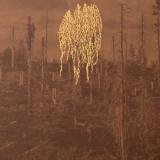
'Cupar Grain Silo' is Sam Annand's first release on the Blackford Hill label. Its nine tracks blur the lines between ambient electronica and sonic history, as synthesised melodies and rhythms reverberate through the extreme acoustics of the disused Cupar Grain Silo in Scotland. Built in 1964 as a sugar store, the silo towers 60 metres above the surrounding Fife countryside. Its industrial life was short: in 1971 it was closed, and barring a short period as a grain store, remained empty for decades.
In 2014, Sam Annand was given access to the silo as part of the Resono project, set up to study a series of highly reverberant locations across Scotland. The ambitious industrial architecture of the Cupar Grain Silo has given the space a reverberation time of 36.5 seconds. This measurement describes the time a sound takes to decay or 'fade away' in a closed space. To put this in perspective, the Cupar Grain Silo reverb time is around three times longer than that in cathedrals like York Minster and St Paul's.
"The acoustics are immediately noticeable when climbing the ladder into the main chamber", Sam says. "The sound of your voice begins to circle around and above you, inviting you to shout, clap and bang objects to excite the space into revealing its intimidating architectural voice."
Sam began to experiment with musical compositions which responded to the unique acoustics of the silo space. He used impulse responses – a short, sharp sound like a gunshot – to record these acoustics, allowing him to experiment with the silo's reverb in his production. Sam's compositions were performed using a modular synth system, a Roland Juno-6 polyphonic synthesizer and a bowed ride cymbal.
"Chords can be constructed in time by hanging successive single notes in the air," Sam describes, "The flutter echoes from the immediate cylindrical walls can be used to create bursts of scattering spatial imagery and harmonic blooms, following short percussive moments."
Originally recorded on 21st May 2016, 'Cupar Grain Silo' is now released on 12" vinyl with an accompanying booklet of imagery and essays. The compositions are at once true to the unique architectural acoustics of the silo whilst also being playful and experimental with the creative possibilities it offered. Arpeggiated melodies ebb and fall across extended call-and-response shapes formed by the silo's reverb; modular drum patterns crackle like dying machinery; whilst bowed drones waver and wash over.
"We all love reverberation," reflects Prof. Peter Stollery, Professor of Composition and Electroacoustic Music at the University of Aberdeen, on the project. "As kids, we play in it – yelling in forests and caves, surreptitiously dropping objects in huge churches – mouths wide open at the lingering smears of sound which come back to us."
In 'Cupar Grain Silo', Sam Annand has harnessed the extraordinary acoustics of the disused silo to tap into this sense of joy and amazement that reverberation can bring.
Parsley Sounds was the glorious debut album for Mo Wax by Parsley Sound. The album was one of the iconic label’s final releases before it closed in 2003 and locating a clean copy has been extremely tricky of late, unless you're flush enough to drop 150 notes on it. Mercifully, the Be With reissue, put together with invaluable assistance from the group, should remedy this situation. It's a lo-fi, bass-heavy, blunted beat treat, warped with heat haze and dreamy soft-psych and has been criminally under-heard for far too long.
As with most cult-like records, Parsley Sounds has many influential fans, far and wide. From Four Tet and Caribou to NTS's modern day breakfast hero Flo Dill, its reputation has only grown in stature. At the time, the notoriously hard-to-please Pitchfork garlanded it with a scarcely achievable 8.8 whilst, just recently, the Numero Group's Rob Sevier described it as a "visionary bit of proto-Salvia Palth (or Steve Lacy)" via a Ghostly International missive.
Parsley Sound comprised super-talented duo Preston Mead and Dan Sargassa. They released an early single (the perfect "Twilight Mushrooms", featured here) on Warp Records as Slum, before signing to Mo Wax. Hidden behind a wall of sound - fuzzy layers of beats, bleeps and symphonic synths - they were convinced they made mainstream pop music. And, in many respects, Parsley Sounds really is a beautiful pop album. It overflows with memorable, gorgeous melodies and inspired songcraft. As the contemporaneous Pitchfork review correctly had it: "Parsley Sounds is one of those rare records that manage to sound modest while frequently pushing the sonic envelope."
Killer opener "Ease Yourself And Glide" is a thing of aching, soft-psych, wonky beat-beauty. A melodic masterpiece, part Crosby, Stills & Nash, part proto-Koushik, it presents a melancholy falsetto, surging bass and blunted lead guitar. As it climaxes, gorgeous strings are ushered in to see us out. Sublime. "Twilight Mushrooms" is up next and it's an acid-drenched, strung-out acoustic-led campfire wonder. Amid layers of tape-hiss and beautiful, sun-dappled strings, its understated vocal track provides a haze of wistful innocence.
The breezy "Spring's Near" is a krautrock-inspired chiming instrumental of heavenly excellence, its warm, skipping, motorik groove and dreamy synths completely infectious. Another total highlight, the technicolour "Yo Yo" initially presents itself as a more abstract, bleepy offering but as it organically swells into ever more beautiful places, with the addition of a choppy insistent drum loop, flute bursts, horns and sweeping strings, it puts one in mind of early Manitoba and Four Tet releases. Shimmering, blissed-out greatness.
The celestial harmonies and glistening harps of the wonderfully beatless, serenely sullen "Ocean House" are very much in conversation with late-60s meditative psych whilst, closing out Side A, the jaw-dropping, lushly experimental effort "Find The Heat" comes on like Arthur Russell meets Brian Wilson. Yep, *that* good.
Side B opens with the warped, bleepy "Stevie", a brief but beautifully wonky, soulful and intricate instrumental. The more upfront vocals that propel the fuzzy "Platonic Rate" have a refreshing swagger to them, the heavy bass and neck-snapping in-the-red beats too much for any system to deal with whilst the guitars and strings have a sweeping, cinematic feel which just beguiles. The slow, urbane soul of "Candlemice" will stop you in your tracks, no matter what you're doing. It carries a delicate sadness, as does much of the album in that classic "down lifting" style we so love here at Be With.
The fuzzing, buzzing "Templechurchmansions" is a searing, soulful dubwise detonation. Heavily stoned with slow-burning jazzy snatches and a tense, moody atmosphere, it's a Tricky-adjacent gem. The album rounds out brilliantly with the ominous instrumental "Neon Breeze" before giving way to the propulsive, almost incongruous punk-funk / disco-dub of secret "untitled" track "Caution", a scratchy, smacked-out groove-fuelled workout with a female vocal dripping with 'tude. Just sensational.
Under the watchful eye - and attentive ears! - of Parsley Sound themselves, the audio for Parsley Sounds has been carefully mastered by Be With regular Simon Francis, with a few much needed tweaks here and there, according to the artist's wishes. Cicely Balston's expert skills have made sure nothing is lost in the cut whilst the records have been pressed to the highest possible standard at the always stellar Record Industry in Holland.
Preston and Dan always thought the colours on the first vinyl pressing looked a bit "washed out" vis-a-vis the original artwork which was way more vibrant. We feel we've got it popping back to the original intention with the restoration work here at Be With HQ. So with the audio and artwork now approaching completeness after 20 years, this long overdue re-issue could be considered its definitive vinyl release.
Leng’s San Francisco connection has long been strong, with the 40 Thieves collective – and their friend Cole Odin – providing some of the label’s most memorable releases of the last decade. That Bay Area connection comes to the fore once more on the imprint’s latest release, which sees Odin join forces with fellow San Francisco resident Marshall Watson, a long-serving producer, engineer and live performer known globally for his Balearic-minded productions.
‘Voyager’, the pair’s first collaborative single, is a genuine meeting of minds. It combines Odin’s love of low-slung dub disco, dancefloor psychedelia and low-tempo cosmic house with Watson’s
picturesque Balearic synths, sparkling piano riffs and immersive sound design. It’s this blend that dominates on the EP-opening Original Mix, an infectious workout that gets progressively more blissed-out and saucer-eyed as it progresses. Listen carefully and you’ll hear some suitably psychedelic guitar solos nestling amongst the heady washes of sound, sun-bright piano riffs and weighty bass.
Those languid, stretched-out guitar parts naturally take a more prominent role on the Extended
Guitar Mix. On this alternative take, the pair deliver a lightly tweaked take on the original groove, stretching it out while overlaying eyes-closed guitar solos, pots-and-pans percussion and a more DJ-friendly outro. It’s effectively an extended club mix – the club in question being a Bay Area basement at 5am. To round off the EP, Odin and Watson dust off their dancing shoes and pay tribute to San Francisco great Patrick Cowley. On the appropriately titled Cosmic Rave Mix, the pair swap their bass guitar for a pulsating sequenced bassline, trance-inducing synth sounds, and locked-in electronic loops designed to take you to a higher state of consciousness. By the time the track’s familiar piano refrain drops midway through, you’ll be reaching for the lasers in no time at all.
Celebrating thirty years of collaboration, Loren Connors and Alan Licht performed for two nights at OTO on May 5 and 6th, 2023. The shows celebrated a new release titled “At The Top of the Stairs”; a document of the pair's reunion in 2018 after a period of 8 years not playing together. It’s a dark, swirling two-sided spectral noir session, put out by the duo’s home label, Family Vineyard, and we expected a similar kind of atonal abyss to appear at the OTO residency. On the second night however, with the stage lit in blue, Connors took up a seat on the piano stool whilst Licht picked up the guitar. What followed was the duo’s first ever set with Connors on piano - one of only a few times Connors has played piano live at all - here captured and issued as The Blue Hour. Its spacious warmth came as a total surprise live, but makes complete sense for a duo whose dedicated expressionism takes inspiration from a vast spectrum of emotion. Both opening with single notes to start, it doesn't take long before a surface rises and begins to shimmer between the pair. A run up the keys, the drop of a feedback layer on a sustained and bent note. When the two begin to exchange notes in tandem, brief touches of melody and chord hover and the hush of the room is palpapale. After a while, Connors picks up the guitar, stands it in his lap and sweeps a wash of colour across Licht’s melody. Sharp, glassy edges begin to form, open strings and barred frets darkening the space. When his two pedals begin to merge, Licht finds a dramatic organ-like feedback and it’s hard not to imagine Rothko’s Chapel, its varying shades of blue black ascending and descending in the room. When Connors goes back to the piano for the second side, the pair quickly lock into a refrain and light pours in. It’s a kind of sound that Licht says reminds him of what he and Connors would do when the duo first started playing together 30 years ago. It’s certainly more melodic than some of their more recent shows, and the atonal shards of At The Top of the Stairs seem to totally dissolve. What is always remarkable about Licht is that his enormous frame of reference doesn't seem to weigh him down, and instead here he is able to delicately place fractures of a Jackson C Frank song (“Just Like Anything”,) amongst the vast sea of Connors’ blues. Perhaps it's the pleasure of playing two nights in a row together, or the nature of Connor’s piano playing combined with Licht’s careful listening, but the improvisation on The Blue Hour feels remarkably calm and unafraid. There’s nothing to prove and no agenda except the joy of sounding colour together. Totally beautiful.
The initial release from Washington DC based Enman Recordings is a hypnotic deep groover centered around an evolving synth lead that builds to create beautiful tension. The remix is helmed by none other than Parisian House legend, Franck Roger. His remix has his signature bounce, guaranteed to lift any dance floor! The Bside No Accident is a tough dance floor banger with carefully selected jazz horns and spoken words from one of the icons of jazz.
The EP closes out with Fall In, a stripped down house groover with heavily saturated drums. It adds beautiful piano samples and vocals to lift the track. Great for getting those dance floors warmed up.
Reissue of this 1981 gem from New York's Warren Doris. Remastered from the original 16-track tapes.
A veteran of the NYC's nightlife and dance music scenes, Warren worked with names like Mark Kamins & George Benson, and produced the Larry Levan favourite Affinity - Don't Go Away before leaving the music industry and starting life as a high school teacher.
Lost In Space by New York City based Warren Doris flew under the radar upon its initial release in 1981. Despite radio play in the Northeastern US, the tune never completely broke out and instead became a closely guarded secret among soul music aficionados. More than four decades after its release, the emotional power of Warren's vocal performance and the lush, swelling arrangement have cemented the record's well deserved status as a holy grail for collectors.
Meticulously remixed and remastered from the original 16-track tapes by Warren himself, this new edition of Lost In Space does justice to the original with three all new cuts; The familiar extended mix and new radio edit pair with an instrumental version and a heavy dub of “Let It Show” the flip side on the original pressing.
“This was my breakup song for my ex-wife. I was 28 and she was 32 at the time. Now here we are 43 years later. It was originally released on my label, Maya Communications. At the time it got a bunch of airplay in New York, South Carolina, and Washington D.C., but I got jerked by the distributors on my money, so I couldn't keep up with the demand for the repress. The fact that it stayed enough to be selling for $1000 says a bunch.” - Warren Doris
EN:
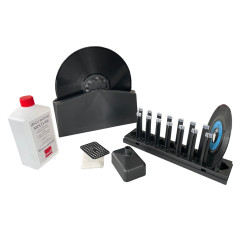
Makes LPs durably antistatic with the alcohol-free Disco-Antistat mixture, a special liquid that automatically removes dust, dirt particles and dried liquids without leaving any residue and deep into the grooves.
The care set consists of:
Wash case with inserted goat hair brushes
Label cover with hanging axle for LPs, singles and 10 inch discs --> Adapter included
1 litre cleaning fluid DISCO-ANTISTAT Mixture (alcohol-free)
Funnel incl. filter grid and filter fleece (5 pieces), with which the liquid is filtered back into the bottle after use.
Drip stand (drying rack) with drip tray for up to 15 LPs or singles (slides into the casing after use)
Device can be stored in our original Archifix box (Art. 1202431) to save space.
DE: Disco-Antistat, das praktische Pflege-Set für die Grundreinigung.
Macht LPs dauerhaft antistatisch, mit der alkoholfreien Disco-Antistat-Mixture, einer Spezialflüssigkeit, die selbsttätig, rückstandslos und rillentief Staub, Schmutzteile, sowie eingetrocknete Flüssigkeiten entfernt.
Das Pflege-Set besteht aus:
Waschgehäuse mit eingesetzten Bürsten aus Ziegenhaar.
Labelschutz mit Aufhänge Achse für LPs, Singles und 10 Inch. --> Adapter inklusive
1 Liter Reinigungsflüssigkeit DISCO-ANTISTAT Mixture. (alkoholfrei)
Trichter inkl. Filtergitter und Filterflies (5 Stück), mit dem die Flüssigkeit nach Gebrauch wieder in die Flasche zurückgefiltert wird.
Abtropfständer (Trockenständer) mit Auffangschale für bis zu 15 LPs oder Singles (wird nach Gebrauch in das Gehäuse geschoben)
Gerät kann platzsparen in unserer Original Archifix-Box (Art. 1202431) verstaut werden.
The Black 80s make a long overdue return to Freerange following their 2014 release Move On (from which the Kollektiv Turmstrasse remix become something of an underground anthem). The duo hailing from Montreal and consisting of Hollis P Monroe and Overnite have been responsible for some seriously influential tracks over the years, not least Hollis' bonafide classic from 1997 - I'm Lonely. For The Rest is a slice of sultry, stripped back house heaven which drips with soul and will melt the hearts of all who hear it. The key to the tracks beauty is in the minimalism of the production keeping everything paired back to the bare bones and placing all the focus on Overnite's vocal which twists and mutates thanks to some clever use of FX. Who better to work their magic on the remix than German producer Show-B
who comes fresh off his incredible Jaap Ligthart Remix and Washint EP on his own Lossless label . Here he pushes the original through his sonic mangle, injecting steely atmospherics and layers of synths to forge a driving, muscular version which will sit perfectly amongst the sounds of Dixon, Mano et al and has already been getting early spins from Ame´. A second remix from Carlos Sanchez completes the package (on the digital
version) staying truer to the original vibe but adding delicate pads and whispering strings for some late night bliss.
Coral Morphologic and Nick León’s Projections of a Coral City marks a series of collisions between distant
worlds: the organic and the artificial, the Eocene and the Anthropocene, sea and cement—and even, perhaps, ambient music and activism.
Coral Morphologic are the Miami duo of marine biologist Colin Foord and musician J.D. McKay; since 2007, they have used a variety of multimedia projects to generate environmental awareness of marine biodiversity—most notably Coral City Camera, an underwater webcam streaming live from an urban reef ecosystem in PortMiami.
Their citymate Nick León is a linchpin of South Florida’s contemporary leftfield electronic scene, with releases for Tra Tra Trax, Future Times, and NAAFI, and credits on records by Rosalía, GAIKA, and Iceboy Violet, among others.
This collaborative project dates back to 2022, when Coral Morphologic mounted a monumental projection-
mapping installation on Biscayne Boulevard. For five nights in late November and early December, macroscopic films of corals played out across the exterior of Knight Concert Hall. The installation was, on the one hand, a glimpse into a possible future, imagining how the city’s skyline might appear if unchecked global warming and rising seas led coral reefs to colonize the built environment. But it also represented a look back into the deep past, a reminder that Miami is literally built from marine limestone mined from the Everglades. Its concrete foundations began life, eons ago, as a marine ecosystem—the same ecosystem that may one day reclaim them. As above, so below.
As an album, Projections of a Coral City is a suite of interconnected movements spread across two sides of vinyl. The tones are watery, the mood elegiac, the colors a washed-out pastel. Forms that appear static on the surface gradually open up to reveal hidden depths teeming with microscopic movement. You might detect resonances with other aquatically minded works—Jürgen Müller’s Science of the Sea, Harold Budd’s liquid piano compositions, even the slow-moving melancholy of Dr. Roger Payne’s Songs of the Humpback Whale. But ultimately Projections of a Coral City creates the impression of a world unto itself—a hauntingly beautiful space at the meeting point between sorrow and hope.
——-
Balmat is a label with a cloudy outline. Jointly shepherded by Albert Salinas and Philip Sherburne, two friends living in Cardedeu, Catalonia, and on the Balearic island of Menorca, Balmat grew out of Lapsus Radio, a weekly show born almost ten years ago. Balmat’s mission is simple: to foster new ideas, expand upon personal obsessions, and put enveloping sounds out into the world.
“Balmat” means “empty” or “void” in Catalan. But quite apart from any negative connotations, we prefer to think of it in terms of possibility: a space waiting to be filled.
Reissue of the 1997 album from Britpop outfit Salad
RIYL Elastica, Echobelly, Sleeper
Critically received as one of their best albums, the album shows a clear development from theirearlier playing days and imbibes a more refined, skilled sound palette
Produced by veteran musician and producer Donald Ross Skinner, guitarist for Edwyn Collins and Julian Cope
Features the tracks ‘Cardboard King’ and ‘Yeah Yeah’
Pressed up on 140g black vinyl
Comes with an exclusive signed print from lead singer Marijna Van Der Vlugt
Following up last year’s Acrobatic Thoughts album, Panoram delves even deeper into his own musical universe with Keep Looking Where The Light Comes From. We find the producer in confident form, exploring the fuzzy fringes of beauty and chaos. The result is an album that sounds even more like himself and yet surprising at each turn.
Opening track Feathers sounds like only Panoram can, buzzy arpeggiated distortion takes flight somewhere in the direction of a distant multiverse where Animal Collective and Boards of Canada soundtracked Koyaanisqatsi. But the psychedelic drift is all Panoram’s own, conjuring a stark sense of the uncanny with the repeated phrases. The digital guitar and vocal loops of I Can Only Repeat Your Love are practically on the brink of collapsing in on themselves, to the point where the structure begins to shift like a collapsing monument. Flat Stones nods towards ASMR, as flute and woodwind tones caress the ears and a whispered voice teases out an altered state.
It’s this dreamlike mood that pervades the whole album, a maximal effect that’s wrung from minimalist compositions. The Wide House picks up the baton from Laurie Anderson to trip gently through different states of awareness, while the piano patterns of Blank Sheep float through the synth ambience like ideas entering an empty dream. There Is A Hole Here is another mutant loop that unravels as it proceeds - the rhythms turn into a pulse, and despite what the lyrics say, it does indeed mess around with your brain.
Panoram balances dance tropes, classical composition, ambient drones and a washed out, fuzzy twist on avant garde pop, and manages to transform it all into a uniform whole that fits all those puzzle pieces together. Yet such is the assuredness of Panoram’s production that it sounds effortless. At this point, the music is more like a midwife, manifesting your future self‘s enlightened consciousness with surreal effect.
Brandon Spivey & Richie Anderson have been producing incredible music since 1993 when they released under the name "Prole Sythesis" on Alien Reign records. In 1994 they put out a series of highly sought after picture discs on the UK label Kill Out Recordings under the name A'Simetric. They went on to produce releases on USA labels Drop Bass Network & Six Sixty Six records out of Milwaukee!
These tracks are a mixture of new and old tracks. The original 90's tracks recovered from old DATs!
This release has some seriously special artwork by Mattthieu Bourel aka EK Dojo. He's had work commissioned by the New York Times, The Guardian, Washington Post, Esquire, New Scientist, Vice Managzine and many more. He has also done album covers for Venetian Snares, Carl Craig & Somatic Responses in the past.
Also comes with a free download code for the digital release of this EP.
LTD 200 COPIES
microCastle’s third offering of 2023 welcomes Ditian back to the label for his first artist EP. Splitting time between Buenos Aires, Berlin and Barcelona, the Argentinean artist has carved out a unique place in the electronic underground over the last half decade. With an immediately recognizable sonic signature, Ditian channels languages of varied musical landscapes, churning them into his own complex rollercoaster of intricate electronica. A sound that is equally at home on rebellious dance floors around the world or in the sweet spot of a late-night leftfield listening session. A short but meticulous discography reflects Ditian's choosy nature; with Exit Strategy, Innervisions and TAU serving as the primary landing spots for his musical output. Having remixed Ivory’s ‘Arpstairs’ for his microCastle debut last summer, a project which was followed by a contribution to Dixon and Ame’s Secret Weapons 15 collection to begin the year, Ditian now returns to the label with a four-track showcase entitled ‘Serpenta’.
The crushing title track crashes in and sets any preconceived ideas of Ditian’s music alight, forecasting jet force propulsions and wild signal bending synths. As somewhat of a departure from his previous experiments, Ditian’s clustered pungi mutations provide an enduring main theme, while a wonderfully warped break is sure to cast a paranoid spell over the dancefloor.
‘Venena’ follows in fine style and further hammers down Ditian’s elusive vision. Dizzying, rapid-fire sequences of rhythm, granular textures and heavily manipulated synths travel to the very edges, while maelstroms of drums and contorted basslines highlight a high-octane second act.
‘Inertia’ lands at the collection’s midway point and does so in remarkably twisted fashion, stepping decisively on the gas and steering into shadowy transgressions. Never one to shy away from darkness or pushing boundaries, Ditian’s metallic storyboarding rises and falls across act one, consciously withholding energy, as grooves pulse and effects orbit, creating tension that eventually gets resolved as clusters burst open and oscillate in kaleidoscopic fashion.
Ditian’s creative attitude reveals itself further on collection closer ‘Influenza’. Presenting some of his most club-adjacent rhythms yet, it’s a clever coax of billowing tones and scrappy melodica which get wrapped up in a concordant fog, eventually getting washed away; because after all, the oceanic drones are all the better when they’re magnified to full size.
Bingo Club demands no rules for entry. Everyone knows your name. The hours are endless and the dress code remains
unspoken.
Martin Rousselot opened the doors to the Bingo Club at the dawn of the 2020's. Joined by Neysa Barnett, Vassili
Yatchinovsky, Marie-Paule Bargès and Emile Larroche, Bingo Club puts down its signature sound-stamp and juggles with
styles of different kinds; if five songs throb to the clank-clank of New York trains, five more drift lazily like Marseille's sailspotted waves.
Group signifiers and visual tropes are reduced to a molten wash of melodies and images that, whether heard or seen, unite
kindred spirits.
Whether as a duo or as a soloist, in English or in French, a warm mix of soothing voices is blanketed by soft rock
instrumentation. The videos are filmed with an analogue camera across the four corners of the globe.
A first EP, "Separated," released in 2020, sees a collaboration with Al Carson (Weyes Blood, Ariel Pink, Jessica Pratt...). In
2021 the single "Someday," featuring Annie Lime & Jonas San, comes out. In 2022, Bingo Club presents its debut album «
Better Lucky Than Beautiful », produced and mixed in Paris at Studio CBE by David Mestre (Sebastien Tellier, Chassol, ...).
The album is a collection of ten songs, written in different times and places, like a musical travel diary or sound-postcards.
Altered Circuits dives deeper in the world of playful and versatile club music with roots in the early 90's! There's an obvious parallel between Ildec's DJ performances and his own music.
Part of a scene with a focus on extended, broad-minded sets, the Ibiza-based artist lets his yearning to unearth and play obscure gems flood into his production process. The "Ahora Si EP" is testament to this adventurous spirit as it tackles a wide array of tempos, styles and moods.
Opener "El Principio" and closer "Grt Plschr" display Ildec's fondness of hazy, recondite atmospherics. With its sustained ambient chord, delay-washed newsreader samples and manipulated themes, the former sounds like a fever dream radio bulletin.
On the latter, a broody motif meanders alongside loosely played drums, while a buried bass guitar occasionally reveals itself. "El Break Del Dia" furtherly explores some of these elements, but this time with the dance floor front of mind.
Languidly morphing bass sequences and staccato synth salvos build up anticipation. When a slowly emerging, ceaselessly arpeggiating organ lead finally materialises, the track explodes. Natural flow is partly traded for sturdier form on the remainder of the EP. "El Break De La Noche" lets an ever-modulating lead groove alongside rigid, dry drum beats.
Descending tom fills, truncated squeaks and a top layer LFO gone haywire complete this sparse yet exciting cut. "La Nueva Version" has a similarly efficient bassline as its bedrock. An interplay of zaps, risers, transposed percussion, and other dusty cartridge samples pulls it left and right while subtle disorienting hints of speech thicken the mix.
On "Modificacion", Ildec moulds his take on progressive and tech house into its toughest shape. A druggy, bleepy lead twirls in and out of the track, carried by the road-tested combo of a taut drum pattern and a piercing backbeat bass. Ominous chords and equally menacing vocals mark its aim: to create tension in the club. It is a standout on a diverse, daring EP we are delighted to present as the fifth release on our label.
Angelo is an LP, named after a car, featuring nine songs Brijean have crafted and carried with them through a period of profound change, loss, and relocation. It finds percussionist/singer Brijean Murphy and multi-instrumentalist/producer Doug Stuart processing the impossible the only way they know how: through rhythm and movement. The months surrounding the acclaimed release of Feelings, their full-length Ghostly International debut in 2021 which celebrated tender self-reflection and new possibilities, rang bittersweet with the absence of touring and the sudden passing of Murphy’s father and both of Stuart’s parents. In a haze of heartache, the duo left the
Bay Area to be near family, resetting in four cities in under two years. Their to-go rig became their traveling studio and these tracks, along with Angelo, became their few constants. Whereas Feelings formed over collaborative jams with friends, Angelo’s sessions presented Murphy and Stuart a chance to record at their most intimate, “to get us out of our grief and into our bodies,” says Murphy. They explored new moods and styles, reaching for effervescent dance tempos and technicolor backdrops, vibrant hues in contrast to their more somber human experiences. Angelo beams with positivity and creative renewal — a resourceful, collective answer to “what happens now?”
Angelo the car is a 1981 Toyota Celica they got off Craigslist during their first stint in Los Angeles, where Murphy and Stuart have since settled. “Such a bro-y, ‘80s dude car, it’s been super fun to drive around in a new town,” Murphy says. “He’s older than us, he’s a classic, he’s got a story.” It is a spiritual vehicle with a cinematic appeal, first dropping them off in an alleyway for the scene-setting intro, “Which Way To The Club.” The question is quickly resolved by “Take A Trip” as a cruising bassline mingles with crowd sounds, hand-claps, cuíca hiccups, whip-cracks, even a horse neigh. Brijean have found some club on this cross-dimensional trip — the kind of
imagined space or chamber within one’s self capable of “shifting a fraction of who you are,” says Murphy. They wrote the track with the simple intention to be “as free as we could be,” adds Stuart, likening the flip on the B section to a realm unlocked: ”What if the world changed completely? You open the door to a new room.”
Next is “Shy Guy,” a motivational anthem for the wallflowers among us. Murphy sets up the daydream: “We are in junior high, we’re on the dance floor, what’s going down, who is dancing, who is not, how are we gonna make them dance?” The narrator, the MC, hypes up the room as conga-driven rhythms bounce between languid synth and guitar lines. “Show me how to move...I feel something...I know you feel it too,” Murphy sings sweetly, calling back to the opening lines of Feelings, and this time the audience chants it back. It is easy to picture Brijean performing this one — something they only got to do a handful of times until more recently, opening shows for Khruangbin and Washed Out, an experience they found informative. Murphy explains, “It was inspiring to be out there and let loose more. To see how people can expand their expression on stage gave me more liberty with how I viewed my musicianship. My role for so long was to be a backup percussionist, so why would I ever leave the drums, you know? But then after playing all these runs, you see these artists and realize you can, you have permission.”
“Angelo” and “Ooo La La” deliver the danciest stretch in Brijean’s catalog to date. The title track adopts a deep house pulse replete with strings, hi-hats, and kicks. The latter opts for a funkier groove that foregoes verses in favor of warbled hums and extended breakdowns. What follows is perhaps the duo’s dreamiest run, a comedown initiated with the honey-hued interlude “Colors” drifting into “Where Do We Go?”, a tropicália reverie where Murphy contemplates the passage of time and space.
It all culminates in “Caldwell’s Way,” a fond farewell to their Bay Area community — “a part of my life that I knew couldn’t come back,” says Murphy. Above shimmering organ sounds, lush strings, and the birdcall of their former neighborhood, she wistfully articulates the uncertainty of moving on by remembering the characters dear to them. There’s the wisdom of their neighbor, Santos, who refused payment when helping them move out: “I’d rather have 100 friends than 100 dollars.” And the song’s namesake, Benjamin Caldwell Brown, a friend and club night cohort for many years. “I’m only miles away, maybe I’m just feeling lonely,” the line resigns to warm nostalgia, and “Nostalgia” runs the closing credits to this healing and transportive collection.
Fan favorite dark dance outfit Boy Harsher have contributed a sumptuously eerie track for the David Gordon Green directed finale to the iconic Halloween franchise. Sacred Bones and Nude Club (Boy Harsher's imprint) are joining forces and releasing a proper 12" maxi single containing four versions of the track "Burn it Down," to be released in tandem with the original score provided by John Carpenter, Cody Carpenter, and Daniel Davies. Boy Harsher said of the experience: "During an extremely brief period of rest between tours, we got this call from the music supervisor of Halloween. The director, David Gordon Green, had listened to our music and wanted to use something for the final installment in the trilogy - Halloween Ends. We flew to New York the next day to meet the team and discuss the possibilities. It was totally surreal. Obviously we're huge fans of Carpenter and the franchise is a fav, but to work with Gordon Green was also so special, his early films (George Washington, Undertow, Snow Angels) were heavy influences on our work. The real kicker is that Halloween Ends was shot in Savannah, GA - the birthplace of Boy Harsher and where we met. Unbelievable. It all felt too synchronous, and we knew we had to make something work although we were about to leave for a multi-month tour that week. We flew home to Massachusetts, dug through old demos, and found "Burn It Down". In the end it was the perfect energy for the bittersweet love affair between Allyson and Corey, so during a couple days off - we cleaned it up and made it come alive."
Sometimes it only takes a short getaway to the beach at the beginning of a new romance to open your heart to the wonders of the universe. On this record CV Vision taps into the ebb and flow of the sea, the cycle of coastal processes, and repositions the library sounds he’s mastered so well somewhere on the other side of the bay.
White noise washes like gentle waves up against analog synths and acoustic guitars, while the full spectrum of holiday possibilities are reflected: Surf’s Up (Let’s Trip) captures that roadtrip excitement, albeit with some psychedelic twist. But it’s not all sunshine - CV Vision makes sure to show the grey clouds too, with the sweet melancholy of Rainy Days.
Somewhere between dune rides and underwater dives, camp fires and sunsets, CV Vision captures a weekend at the beach in song. After a short moment of reflection (and some hallucinatory assistance), he wrote the lyrics and pieced the record together in the following weeks, to create what you see and hear now.
Instrumental interludes brush up against ballads and field recordings, to paint a wonderfully rich audio postcard from deep within CV Vision’s heart.
Ian Pooley returns to Radio Slave’s Rekids with Studio A Pt. 2 this February. The second entry in a three-part series of music based around his studio, Ian Pooley’s ‘Studio A Pt. 2’ for Radio Slave’s Rekids imprint sees the bonafide house legend deliver another choice selection of grooving
hardware productions.
Leading the A-side is the fluttering synths and warped vocal samples of ‘JV Organ & Matrix’, which twists and turns through delightful FX and rumbling bass. ‘Version 2’ of the track follows, contorting elements of the original into a heads-down groover, with washed-out processing and stereo wizardry meeting classic dub techniques.
On the flip, ‘Back Up’ keeps it live and direct with hard-hitting, chunky drums and menacing acid lines, with an additional stripped back digital ‘Beats Bass’ version included. Rounding out the 12” is 101202, a dreamy slice of razor-sharp house, with gorgeous, filtered pads drifting in tandem with strung out low end and skippy percussion.
Active since the early 90s, the German DJ/producer has released on the likes of Force Inc, V2 Records, and his own Pooledmusic, remixing for the likes of Deee-Lite, Carl Cox and many more, as well as being one of the few to be remixed by Daft Punk.
On his fourth album proper, Now Here No Where, Danish producer Kölsch (aka Rune Reilly Kölsch) is charting new terrain. Fans of his ‘years trilogy’ – 1977, 1983 and 1989, released on Kompakt over the past decade – were privy to a kind of sonic diary, an autobiography, tracking the artist’s early years through three albums of superior, meticulously rendered techno. Calling in collaborators where needed – most notably, the strings of Gregor Schwellenbach – there was still something deeply personal going down, not quite hermetic, but internally focused; the albums proved not only Kölsch’s mastery of his chosen form, but also his capacity to make techno personal, individual, and to trace histories of the self through music. But on Now Here No Where, Kölsch finds his feet firmly planted in the present. Reflecting on his new album, he notes, “It is fascinating to write about memories and feelings that have had years to manifest and develop, but how would I approach current emotions?” It’s a good question: our past coheres through the narratives we build around memories, but the moment we’re in, the newness of the now-ness, is harder to navigate; this story is as yet untold. For Kölsch, this makes Nowhere Now Here “an album about life in the year 2020. A time defined by confusion, misinformation and environmental challenges. It is an emotional interpretation of personal and mental challenges, observations and personal growth.” Kölsch does this with music that effortlessly balances emotional heft with the dancefloor’s brimming desires. It’s a space that Kölsch has navigated for a while now – one of techno’s breakthrough acts, an in-demand DJ across the globe and a prolific and restlessly creative producer, he’s also Kompakt’s biggest-selling act – but Now Here No Where ratchets up the lushness, making for a delirious drift across twelve tracks that are at once perfectly poised and deeply trippy. “Great Escape” is an elegant swoon, an opener that pivots on a sigh and a prayer; then “Shoulder Of Giants” bustles into view, subliminal clatter and an aching violin line giving way to a riff that glows with fluorescence and iridescence. “Remind You” combines an odd ECM jazziness with notes from a twenty-first century torch song; “Sleeper Must Awaken” mines huge buzzing synths and lets them float, in and out of sync, with reduced, ticking beats; “Traumfabrik” (dream factory – there’s a giveaway) is oddly lush, the tones malleable and plastic, morphing across a glitching undertow. There are sad, emotional washes of strings throughout the penultimate “While Waiting For Something To Care About”, while “Romtech User Manual”’s patterns twist and shape in the light. Throughout, Kölsch never keeps his eye off the dancefloor, and you can tell this is his still his home. “The amount of energy and joy I experience every time I perform, has a profound effect on me. It has inspired me so much of late and has become an integral part of my musicality.” “The way we join in expressing our hope for the future every weekend has given me so much,” Kölsch concludes. The club as a temporary autonomous zone, as a space both of freedom and of politics; somehow, that’s all here, Now Here No Where. “Most of all, it is an album about hope.”
Auf seinem vierten Album “Now Here No Where” betritt der dänische Produzent Kölsch (alias Rune Reilly Kölsch) neues Terrain. Seine Trilogie mit den Jahreszahlen 1977, 1983 und 1989, die in den letzten zehn Jahren bei Kompakt erschienen war, hatte seine Fans durch eine Art akustisches Tagebuch, eine Autobiografie geführt, die die frühen Jahre des Künstlers über die Länge von drei großartig produzierten Techno-Alben nachgezeichnet hatte. Wo es nötig war, wurden Kollaborateure hinzugezogen - allen voran für die Streicher, arrangiert von Gregor Schwellenbach -, dennoch zeichnete die Musik immer auch etwas zutiefst Persönliches aus, etwas nicht Hermetisches, auf eine bestimmte Art immer auch nach Innen fokussiert. Die Alben bewiesen nicht nur, wie sehr Kölsch die von ihm gewählte äußere Form beherrscht, sondern auch seine Fähigkeit, Techno zu etwas Persönlichem und Individuellem zu machen und der eigene Geschichte durch Musik näher zu kommen.
Auf “Now Here No Where” steht Kölsch nun mit beiden Beinen fest auf dem Boden der Gegenwart. Mit Blick auf sein neues Album stellt er fest: "Es ist faszinierend, über Erinnerungen und Gefühle zu schreiben, die Zeit hatten, sich zu manifestieren und zu entwickeln, aber wie nähere ich mich meinen aktuellen Emotionen?”. Eine gute Frage: Unsere Vergangenheit wird im Innersten zusammengehalten durch Geschichten, die aus Erinnerungen entstehen, aber der Moment, in dem wir uns befinden, die Neuheit des Neuen, ist schwieriger zu beschreiben; die Geschichte ist noch nicht erzählt. Für Kölsch ist “No Here Now Where” daher "ein Album über das Leben im Jahr 2020. Eine Zeit, die von Verwirrung, Desinformation und ökologischen Herausforderungen geprägt ist. Es geht dabei um die emotionale Interpretation von persönlichen und mentalen Herausforderungen, von Beobachtungen und der eigenen, individuellen Weiterentwicklung".
Kölsch tut dies mit Musik, die mühelos kleine Gefühlsausbrüche mit den großen Sehnsüchten der Tanzfläche in Einklang bringt. Es ist dieser Zwischenraum, in dem sich Kölsch schon seit einiger Zeit bewegt, als weltweit gefragter und gefeierter Live Act, DJ und so unermüdlicher wie kreativer Produzent (nicht umsonst ist Kölsch der “biggest-selling-artist” bei Kompakt), doch “Now Here No Where” treibt all das noch weiter auf die Spitze: ein enormer Sog entsteht, der uns über zwölf Tracks hinweg gefangen hält wie ein perfekt ausbalancierter Trip. Der Opener "Great Escape" ist pure Eleganz, ein Track, der irgendwo zwischen Seufzer und Gebet hin und her schwankt; dann drängt "Shoulder Of Giants" ins Blickfeld, ein unterschwelliges Geklapper, eine wehende Geige, schließlich ein schillernder Riff, der in der Dunkelheit zu leuchten und zu glühen scheint.
"Remind You" kombiniert seltsamen ECM-Jazz mit einem sentimentalen Liebeslied des 21. Jahrhunderts; "Sleeper Must Awaken" schürft im Bergwerk riesiger Synthesizer, mal im Takt, mal aus dem Takt ticken die minimalen Beats; "Traumfabrik" ist ungewöhnlich “lush”, die einzelnen Töne, geschmeidig und modelliert, zerfließen in einem glitzernden Abgrund. Das vorletzte Stück "While Waiting For Something To Care About" wird von traurigen, emotionalen Strings untermalt, während sich die Strukturen von "Romtech User Manual" im Licht drehen und immer wieder neu formieren. Die ganze Zeit über behält Kölsch die Tanzfläche im Auge, und man merkt ihm an, dass sie immer noch sein Zuhause ist: "Die Menge an Energie und Freude, die ich bei jedem Auftritt erlebe, hat eine tiefe Wirkung auf mich. Sie hat mich gerade in letzter Zeit stark inspiriert und ist zu einem integralen Bestandteil meiner Musik geworden.”
"Die Art und Weise, wie wir an jedem Wochenende gemeinsam unsere Hoffnung auf eine bessere Zukunft zum Ausdruck bringen, hat mir viel gegeben", so Kölsch abschließend. Die Vision des Clubs als eine temporäre autonome Zone, als ein Raum von großer Freiheit aber auch von politischen Ideen, das ist irgendwie alles hier drin, Now Here No Where. "Es ist vor allem ein Album über Hoffnung."
Percussionist Jamie Muir was a member of King Crimson during the recording of Larks' Tongues In Aspic, in 1973. Staying less than a year with Robert Fripp, the Scot had already cut his teeth with another master guitarist, Derek Bailey, as part of the Music Improvisation Company, along with Evan Parker, Hugh Davies and Christine Jeffrey, whose eponymous 1970 album was one of the first releases on ECM. Muir and Bailey recorded Dart Drug eleven years later, in 1981.There's no shortage of great percussionists in the brief history of free improvised music but on the strength of Dart Drug alone Jamie Muir deserves a place at High Table. Unlike for example Han Bennink and John Stevens, though, you can't hear echoes of any particular jazz drummer in Muir's playing, even if he has expressed appreciation for Milford Graves (who himself sounded like nobody else who'd come before him).What on earth did Muir's kit consist of Some instruments are clearly identifiable (bells, gongs, chimes, woodblocks); others could be... well, anything. Old suitcases thwacked with rolled up newspapers Tin cans and hubcaps inside a washing machine Who cares It sounds terrific - but if you're the kind of person who faints at the sound of nails scraping a blackboard, you might want to nip out and put the kettle on towards the end of the title track.Dart Drug is consistently thrilling, and often very amusing - but it's certainly not easy listening. In music we talk about playing with other musicians, whereas in sport you play against another opponent (or with your team against another team). Why not play against in music, too That's precisely what happens very often in improvised music, and Bailey was particularly good at it. How can a humble acoustic guitar hope to compete with a Muir in full flight Sometimes Bailey's content to sit on those open strings, teasing out yet another exquisite Webernian constellation of ringing harmonics and wait for the dust to settle in Muir's junkyard, but elsewhere he sets off into uncharted territory himself.'The way to discover the undiscovered in performing terms is to immediately reject all situations as you identify them (the cloud of unknowing) - which is to give music a future.' Bailey evidently concurred with this spoken statement by Muir, including it in his book Improvisation.Derek Bailey is no longer with us, of course, and Muir gave up performing music back in 1989. All the more reason for seeking out this magnificent, wild album.
RFBCOLOURS 002 bring L'Atelier on board. This pair from Amsterdam bring you a 4 track EP with a digi only bonus. It starts off with Again, which hits that great sample hard and gets the party started on a disco vibe with a house twist. Then theres XTC which carries on where the A1 left off. On the flip we see a serious piano workout on top of a a grooving drum arragement. To finish off the vinyl package we see Times Are Ruff take the remix on a deeper tip with some seriously crunchy basslines and rolling groove. Then if that wasnt enough theres a digital bonus that will warm up any willing club room.
Feedback:
Telonius (Gomma)
'thanks nice one'
Laurin Fedora (Sleazy McQueen (Morris Audio / Paper Recordings))
'I'm looking forward to this vinyl. Nice return to late 90s filter disco!'
Following up from the stunning 'You Will Soon Find That Life Is Wonderful' 12' on Phonica's Special Edi- tions imprint, Sad City returns to the label with his new EP 'Introduction To Lisboa/ Sloe'.
Glasgow-based producer Gary Caruth has evolved a highly original sound; deep, lush and widescreen electronics, from melancholic to ecstatic. Sonically, he continues where his last record left off and feels like the perfect companion to that well-received debut for Phonica. The record as a whole is composed of field recordings, with the basis for the first half of the EP, 'Introduction to Lisboa,' utilising sound recorded in and around Lisbon. He explains, 'I wanted the music and field recordings to meld at times, to obscure what was conventionally the musical element and what were field recordings, blurring the line between found sound and composition in the creation of a whole other.'
Opening track 'Introduction To Lisboa' builds and builds from near silence to a cacophony of field record- ings and looped horns. It melds into 'Baixa Saxaphone', where carefully paced percussion patiently enters over a wash of synth. From then on a delicate balance of restrained percussion and spine-tingling atmos- pherics interplay before descending into a blissful outro.
As with the previous EP, the 12' is packaged in technicolour artwork by acclaimed London designer Jack Featherstone.
Ideal Audio presents the fourth and final instalment of Oliver Huntemann and Dubfire's seminal ELEMENTS series. These techno heavyweights have worked together on numerous projects over the years, but it is their Elements collaborations that have shone impressively as a complete body of work. AGUA is the final piece of the music puzzle and completes the series that first saw the light of day back in 2010 with the scorching FUEGO.
2011 brought us TERRA, firm and powerful with its devastating breakdown. 2013 saw us breathe in the mystical AIRE, harnessing the elements of the previous tracks to build a fresh and magical moment. AGUA, as its name suggests, flows effortlessly, helped in no small part by the sultry vocal of Xenia Beliayeva, but kicks in equal measure.
Signing off in such style has also lead to Ideal Audio drafting in some heavy weight talent on the remixes. Carl Craig, under his C2 moniker, dives straight in to strip the original to its core. A single drum beat, siren, clap... and then the kick. Petar Dundov twists the original's elements into a bubbling acidic stream that washes over us. An impressive package for an impressive finale!
Teen of Denial: Joe’s Story is a freshly reimagined take on Car Seat Headrest’s beloved breakout, Teens of Denial, now celebrating its 10th anniversary.
On the original album, Toledo often used the name “Joe” as a pseudonym – a sly homage to Daniel Johnston. Revisiting Teens in the run-up to its 10th birthday, he felt called to give Joe a unique backstory and began tweaking the album to tell that tale. The group returned to the studio with Teens producer Steve Fisk to update accordingly – tweaking lyrics, revising arrangements, and recording new songs in the “Denial-style,” including ‘Optimistic Son” and the anthemic ‘Joe Drives Again’. The result retains Teens’ dark edge and youthful cynicism, but allows a bit of hard-won compassion into the mix.
From Will Toledo:
Sometime last year, it was suggested to me that we do something for the ten-year anniversary of ‘Teens of Denial,’ so I started looking back on the album to see what we might do. In spite of some of its songs being a regular part of my life for the past decade, it wasn’t a record I’d thought much about as a whole since it came out. Most of the songs I’d come up with over a two-year period at the end of my college days, when I was struggling a lot with cynicism and misplaced aggression. But by the time the songs were done, I was living in Washington, Car Seat Headrest was a full band with a record label, and in spite of the turmoil of the writing process, the final album was pretty enjoyable for everyone to work on.
This time, looking back at the songs, I started to feel like there was a story being told through the album, though I’d never imagined it as being a narrative work. On ‘Hi, How Are You?’ Daniel Johnston had used the name “Joe” in the titles of a few tracks –“No More Pushing Joe Around,” “Keep Punching Joe” – as a sort of joke, a stand-in for himself. I borrowed the idea, and the name, for titling songs on ‘Denial.’ This time, I started thinking - who is Joe? And how do the songs, in the way they’re sequenced on the album, reflect what he’s going through? As I started asking this question, a story emerged with startling wholeness and clarity, like finding the foundations of an ancient city while digging in my backyard. As I kept digging, certain songs from the original album fell by the wayside, as they seemed misplaced in this new context; others asked for new lyrics, to fully give birth to the story contained in the music.
The resulting work feels more like the album ‘Teens of Denial’ was meant to be. When you’re writing from a dark space, it’s hard to have perspective on where you’re at. This time, I could pull from memories of that darkness, and use the distance and additional perspective of ten years of life to shed a fuller light on the experience. Joe is a character going through some of what I experienced, and some of his own problems. Telling his story, and not just my own impressions of life at the end of the teen years, brought a new level of compassion and wholeness to the album. It gave us the opportunity to write new material in “Denial style”, embracing a snappy and simple(ish) rock aesthetic, and in an additional blessing, we were able to team up once with Steve Fisk, a joy and inspiration to get back into the studio with after ten years. We mixed the material at his house in Tacoma, and were constantly amazed at the lack of divide between past and present, as we’d punch in vocal overdubs ten years later into the same gear, hearing my voice now running alongside a 2015 Will. For someone coming across this album or this band for the first time, this is how they’d hear the record, not as a relic of the past but as a new piece. It was immensely rewarding to experience that on our side.
For anyone familiar with ‘Teens,’ comparisons with the original will be inevitable, but I do hope that as much as possible, people can come to this album on its own terms, approaching it as a teen, hearing the music and story for the first time. I believe music is an ongoing story, and albums don’t always do justice to its dynamic, ongoing nature. What gives it life is the new ears that hear it, and the new hearts that engage with it. I’m so grateful that this is a work that people have kept coming to, and I hope that this presentation does them honor with a fresh offering to the conversation. We’ve known that “it doesn’t have to be like this”; now we can wonder - “what it if were like this?”
There is a hush most of us only knew as children, the warm drift between familiar household sounds and being carried to bed, a place that belongs to you and to some self you have not met yet. June McDoom’s debut full-length, Follow the Light, lives in that dream space and then keeps walking, slipping out of time and waking somewhere new, barely familiar enough to feel like home yet wholly your own. She came up in a Jamaican household on the edge of the Florida Everglades, an existence built of extended family, communal care, bass and harmonics. Her father, a carpenter and a student of sound, built his own speakers and kept three sound systems going across as many rooms. His low end would rise through her bedroom floor like some wayward cat while she lay above it with folk records, finding harmonies that were new and hers alone. Two musics in one room. Lushness as past and premonition. She found folk on her own, somewhere between the cast recording of The Sound of Music and Simon and Garfunkel, while everyone around her called it sleepy music. She did not mind being the only one. The solitude let her fall for harmony first, before words, before anything else, and harmony is still the thing she reaches for. Generationally speaking, the music was already in the air. Her grandfather, Colin Smith, is a distinguished mento man who played banjo and guitar and built his own rumba boxes, worked to keep Jamaica’s oldest acoustic folk form alive. Mento is the root of all of it: ska, rock steady, reggae, dub and everything after. He is the one who put a guitar in her hands. An inheritance, a gift and a map. Even her name is part of it, though she will tell you she landed on it more by feel than reason. She records as June McDoom, born Alyssa, June being a nickname one of her grandmothers, Joan, went by, a name she thought was cool to carry and simply liked the sound of. An etheric channel that reverberates all the same. A dub all its own.
Made slowly and by hand with her longtime partner Evan Wright, Follow the Light lays the harmony of folk over the rhythm of dub, with Dionne Warwick, Minnie Riperton, Pentangle and the washed guitars of Cocteau Twins haunting its outer edges. Voice and guitar seeking each other out first, then everything else stacked across long days in the studio they keep at home, restraint kept on purpose. The lead single “Without You” is the whole method surfacing, split open and sparkling like a geode in a creek bed. Angelic heroics, and nothing less.
At the heart is family. Her grandmother Aggie, the light behind “Memory,” guiding still. And underneath, the quieter truth the record keeps: none of us are only one person, but a continuum of selves, the ones who shaped us and the ones we have yet to meet. Future you is an ancestor your current self gets to greet. Press play and the same invitation is yours: A few minutes out of time, a place that turns familiar the longer you stay until you surface somewhere new and find it was yours all along
There is a hush most of us only knew as children, the warm drift between familiar household sounds and being carried to bed, a place that belongs to you and to some self you have not met yet. June McDoom’s debut full-length, Follow the Light, lives in that dream space and then keeps walking, slipping out of time and waking somewhere new, barely familiar enough to feel like home yet wholly your own. She came up in a Jamaican household on the edge of the Florida Everglades, an existence built of extended family, communal care, bass and harmonics. Her father, a carpenter and a student of sound, built his own speakers and kept three sound systems going across as many rooms. His low end would rise through her bedroom floor like some wayward cat while she lay above it with folk records, finding harmonies that were new and hers alone. Two musics in one room. Lushness as past and premonition. She found folk on her own, somewhere between the cast recording of The Sound of Music and Simon and Garfunkel, while everyone around her called it sleepy music. She did not mind being the only one. The solitude let her fall for harmony first, before words, before anything else, and harmony is still the thing she reaches for. Generationally speaking, the music was already in the air. Her grandfather, Colin Smith, is a distinguished mento man who played banjo and guitar and built his own rumba boxes, worked to keep Jamaica’s oldest acoustic folk form alive. Mento is the root of all of it: ska, rock steady, reggae, dub and everything after. He is the one who put a guitar in her hands. An inheritance, a gift and a map. Even her name is part of it, though she will tell you she landed on it more by feel than reason. She records as June McDoom, born Alyssa, June being a nickname one of her grandmothers, Joan, went by, a name she thought was cool to carry and simply liked the sound of. An etheric channel that reverberates all the same. A dub all its own.
Made slowly and by hand with her longtime partner Evan Wright, Follow the Light lays the harmony of folk over the rhythm of dub, with Dionne Warwick, Minnie Riperton, Pentangle and the washed guitars of Cocteau Twins haunting its outer edges. Voice and guitar seeking each other out first, then everything else stacked across long days in the studio they keep at home, restraint kept on purpose. The lead single “Without You” is the whole method surfacing, split open and sparkling like a geode in a creek bed. Angelic heroics, and nothing less.
At the heart is family. Her grandmother Aggie, the light behind “Memory,” guiding still. And underneath, the quieter truth the record keeps: none of us are only one person, but a continuum of selves, the ones who shaped us and the ones we have yet to meet. Future you is an ancestor your current self gets to greet. Press play and the same invitation is yours: A few minutes out of time, a place that turns familiar the longer you stay until you surface somewhere new and find it was yours all along
The first INVT album to get pressed on vinyl, 8 AM Swim captures the Miami duo's swung, dub-influenced take on tech house, garage, Miami bass, and Latin club music. Pressed on 12" black vinyl. Housed in a matte sleeve featuring a washed lilac-purple texture. INVT-001 Written, Produced, & Mixed by INVT Mastered at Analogcut Mastering Distributed by Clone bandcamp for all INVT releases
Richly progressive folk-informed heavy post-rock and a sick burn to boot. - The Obelisk Rebecca Vernon (SubRosa), the driving creative force behind THE KEENING returns with her second album, Devotion. The new album sees Vernon and company releasing one of the year's most evocative albums; a truly compelling mix of slow burning, ethereal post-rock, folk, goth, and soaring doom. For Vernon, the writing process for Devotion took place in two starkly different environments. It ranged from the contemplative solitude of a friend’s cabin in a deserted Idaho ski resort, to the hectic reality of a 55+ senior living community in Spokane, Washington, where she was staying with her father. This shift resulted in an explosive album with a subtle duality that resonates throughout its most poignant moments. Take the lead single, "A Little Bit of Blood," for example. Quiet, acoustic guitar strums give way for Vernon's haunting vocals, before the backing instrumentation explodes into a soaring chorus reminding the listener that sometimes the best paths taken are the most difficult. "You drew a little bit of blood to show me Just a little bit of blood to make me see It took a little bit of blood to wake me Just a little wound in the night to free me" In a 2024 interview with Decibel Magazine, Vernon discussed the drastic shift in heavy music's themes in recent years, highlighting a willingness to convey raw emotion: "Metal is beginning to share more vulnerable things, more confessional things. Metal has almost become a safe place to talk about those things. People are being open with their struggles. Twenty years ago, they wouldn't have." Devotion lays these emotional confessions bare and showcases a truly bright burn. Devotion was recorded in April 2022, again at Hallowed Halls in Portland, with Billy Anderson and Nathan Carson featured in their same roles as heard on Little Bird. Once again, Vernon showcases her writing prowess, having a heavy hand on all the instrumentation for Devotion; Vernon played drums, guitar, piano, organ, and hammered dulcimer, and provided most of the vocals on both albums, with a few guest vocalists added to the mix.
4/5 REVIEW IN MOJO: “HEARTBEAT TONES DISSOLVE INTO BEAUTEOUS SHIMMER AND STELLAR SYNTH MEDITATIONS GIVE WAY TO CAREFULLY ORCHESTRATED ELECTRONICA.”
4/5 REVIEW IN UNCUT: “IT'S MASTERFUL, THOUGH IT WILL LEAVE YOU FEELING LIKE A SPECK OF GRAVEL IN A SELF-DESTRUCTING WORLD.”
NME - 8/10 review (w/c 14 October) "He’s mastered this stylistic skittishness and you’ll do well to find much dispute about his talent."
NARC - 5/5 review (October issue) "An immersive soundtrack to your own personal psychodrama."
WIRE - ONE PAGE REVIEW (October issue) "The sentiments it stirs to life are shadowed and ambiguous, simultaneously personal and impersonal. It is also fantastically immersive, dragging the listener into its turbulent undertows, then washing them back on dry land, intact but changed.’’
Virgins was recorded during three periods in 2012, mostly in Reykjavik, Montreal and Seattle, using ensembles in live performance.
While this album remains committed to a painterly form of musical abstraction, it is also a record of restrained composition recorded live primarily in intimate studio rooms. This record employs woodwinds, piano and synthesizers towards an effort at doing what digital music does not do naturally—making music that is out of time, out of tune and out of phase.
Some pieces go off the rails before forming into anything, others eschew crescendo
compositional structures or bombastic density while going sideways instead. It points to the ongoing development of Hecker's work. It suggests illusory memories of drug- hazed jams or communal music performance that may have never been performed or been heard.
It is an offering of music into the void, a gift of digital filler between distractions. Yet hopefully it also stands as a document of the enduring faith in the narcotic, enigmatic function of music as long-form expression.
Mixed by Valgeir Sigurðsson and Tim Hecker. Additional assistance by Randall Dunn and Ben Frost. Mastered by Mandy Parnell at Black Saloon Studios in London, UK.
Have Isaac Carter & Callum Asa made the most tasteful tech house EP of recent memory? The short answer is
yes....
Isaac and Callum, known for their respective club nights: OCHI and Planet People have been quietly chipping away at the coalface of underground dance music for quite some time now.
Isaac - perhaps known more widely as a regular at Circoloco & Phonox has shared bills with the likes of Moodyman, DJ Bone, Kai Alce, Laurent Garnier and Marcellus Pittmann whilst being championed by Joy Orbison, Ben UFO, Moxie, Seth Troxler, Raresh and Floating Points to name but a few. With such an impressive CV and wide ranging support, it’s wild to note that the first EP released on his own label, OCHI only came out in 2023. His star is clearly ascending with rapidity - so when we throw long term collaborator Callum Asa into the mix, things start to get really interesting. Calum has been running Planet People for the last couple of years, welcoming incredible names such as Shed, Surgeon, Willow, Ploy, Cooly G, Rroxymore and so many more. Steel sharpens steel and having been surrounded by such esteemed talent, it’s clearly rubbed off on the pair who present 4 polished, meticulously constructed, club ready masterpieces, each with their own distinct feel and an insatiable groove.
‘Feel Me’ sets the scene with a descending baseline that would eek a wiggle out of the most reluctant spectator. The twisted dub eeks out even more groove, locking in a more sinister bounce for the heads. By The time ‘Understand’ get’s into full swing, we’re already under the spell of Carter & Asa, this is the kind of roller that could go on forever and ever. The synth embellishments and washes of analog synth pull us deeper and deeper in, prepping us for the finale , ’Try You’ which simmers with deep, brooding intensity.
The magic of the dup’s appeal is that this EP will find its way into the bags of the deepest diggers and also appeal to a new generation of house fans. Elements of it are accessible , but in the right hands - the EP will open a portal to new worlds.
Elastica’s iconic self-titled debut album is set to be reissued by Rough Trade Records on 2 October in a new edition boasting rarities and b-sides.
Striking their own, distinct path in March 1995, Elastica proved uniquely fresh-sounding as the London four-piece delivered on the reputation they had built up gigging around the capital beyond in the months ahead its release.
Home to the likes of Line Up, Waking Up and Connection, singles at once timeless yet in the moment, Elastica’s debut captured the fraying emotions, hazy experience and burning energy of life, love and after-hours adventure.
Absorbing atmospheres and attitudes of their post-punk and new wave forbears, Justine Frischmann (vocals, guitar), Annie Holland (bass), Donna Matthews (guitar, vocals) and Justin Welch (drums) poured their own identities into the album’s 15 tracks which balancing youthful swagger, with sage-like observation and a knowing cool that made Elastica and their debut effortlessly timeless.
The Unwound album that ended all Unwound albums. Recorded in a moldering farmhouse basement at the crest of the new century, Leaves Turn Inside You is the no-wave response to Spector’s wall of noise call. Infinite layers of choppy guitar stabs and bridge scrapes, guttural bass thronk, thrift store synths, and monotone chanting wash over suffocating rhythms to deliver the world’s only choral grunge LP. This 25th anniversary edition has been remastered from the original analog tapes and is housed in a glorious silver foil jacket with added emboss, deboss, spot varnish, and a replica 12x24” poster . Reinvented for you.
The Unwound album that ended all Unwound albums. Recorded in a moldering farmhouse basement at the crest of the new century, Leaves Turn Inside You is the no-wave response to Spector’s wall of noise call. Infinite layers of choppy guitar stabs and bridge scrapes, guttural bass thronk, thrift store synths, and monotone chanting wash over suffocating rhythms to deliver the world’s only choral grunge LP. This 25th anniversary edition has been remastered from the original analog tapes and is housed in a glorious silver foil jacket with added emboss, deboss, spot varnish, and a replica 12x24” poster . Reinvented for you.
Life Creates Itself is the new album by Bill Baird, releasing September 25th, 2026 on Royal Oakie Records. After years of restless wandering that took him from the Bay Area to India to Abbey Road and back again, Baird has returned home to San Antonio, Texas. Inspired by Lone Star legends Doug Sahm and Roky Erickson, the album inhabits a world where outsider country, avant-garde pop, and psychedelic folk dissolve into one.
Produced by longtime collaborator Jasper Leach (Tony Molina, Color Green) and mastered by indie-rock legend KRAMER (Galaxie 500, Daniel Johnston, Will Oldham), Life Creates Itself was recorded at Sear Sound in New York City in a single remarkable day — fitting for an album as indebted to Arthur Russell and Captain Beefheart as it is to Sir Douglas Quintet and Townes Van Zandt. The sessions brought together a constellation of collaborators around Baird and Leach, including Pedrum Siadatian (Allah-Las, PAINT), Phil Carluzzo, Austin Day, Oliver O'Haver, Jordan Johns, Michael Vattuone, Clara Kennedy, and Carluzzo’s dog Ernie.
Lead single "Yanaguana" — the original Payaya name for San Antonio, meaning either "land of many waters" or simply "where I am right now" — serves as a thesis statement for the album, a restless soul reckoning with what it means to finally come home. Meanwhile, "Karma Loan" is a fuzzy, sprawling psych track that spilled out of Baird during a deep immersion in Bach that features cello by Clara Kennedy and closes with a sound collage of spiritual gurus hawking easy paths to enlightenment. Then there's "Horse Moon" — built around pedal steel that shimmers like rays of moonlight, drifting through vignettes from a late night walk across New York City, with Pedrum Siadatian's lead guitar lending the whole thing an unhurried, dreaming quality. The night they tracked it, Baird climbed to the roof of Sear Sound and watched a full moon wash the city in a warm glow.
Baird has never sounded more at home, and Life Creates Itself may be his most cohesive record yet – a songwriter record through and through that stands apart from the rest of his discography. Royal Oakie Records is proud to release Life Creates Itself on September 25th, 2026, available on vinyl LP, CD, and digital download/streaming worldwide.
Some recordings herald the future in ways that are impossible to see in real time. Teodros Makonnen With His Organ (ቴዎድሮስ መኮንን ከኦርጋኑ ጋር), by the artist Teodros Makonnen, also known as Teddy Mak, is one of those. Today, electronic sounds, synthesizers, and digital production are taken for granted in Ethiopian music, but in the early 1980s, they were novelties that polarized opinion. Even to this day, the story of Teodros Makonnen’s legacy has never been properly told. He played a decisive role in defining the sound of the digital era of Ethiopian music that emerged in the 1980s and beyond, both as a keyboard player and as a producer, songwriter, performer, and sound designer.
Ethiopian music was at a crossroads in the early 1980s. Much like music in the rest of the world, technology and automation heralded either a quantum leap in musical development or the annihilation of musicianship, depending on who you’d ask. The changes were incremental nonetheless, but with the benefit of hindsight one can clearly see that the changes meant different things in different contexts. Drum machines and electric organs came to replace many hotel bands because, all of a sudden, one musician could control drums, melody, and accompaniment. Teodros was one of the first musicians in Ethiopia to explore the possibilities this opened up.
Teodros’ father, Captain Makonnen Beri, was a chief pilot at Ethiopian Airlines and a music enthusiast at that. This would prove important to his development, as Makonnen brought back a piano from Germany, which would lead to the first steps in Teodros’ long musical career. Captain Makonnen’s work as Head of Flight Operations and as a pilot exposed him to the wider world that was far from commonplace for most Ethiopians. In a house where music captivated the whole family, the piano gave Teodros’ talent an outlet. Not only was a piano at home rare in Ethiopian households, his father also brought an Indian teacher to their home to teach Teodros and his brother, Captain Samuel Makonnen, music theory (solfeggio or ear training) and piano. Teodros and his youngest brother, the late great Dereje, a member of both the legendary Ibex Band and the Ethiopian reggae group Dallol, took up music from that point onward, with Teodros beginning to develop his proficiency at the age of eight. His father encouraged him to practice tirelessly at home, and Teodros later received musical schooling at the German School in Addis Ababa. His obvious talent led to studies and formal education at the Yared School of Music, followed by continued studies in American jazz at Northern Virginia Community College in Virginia. Teodros cut his teeth professionally in his mid-teens, not only as a keyboardist, but also as an arranger for the Wabi Shebelle and Dahlak bands in the 1970s. He mastered electronic sequencing early, rising to prominence through the midnight recording sessions held during the military curfew. The pressures imposed by the curfew required precise and disciplined recordings, and Teodros delivered just that. This, in turn, led to collaborations with iconic artists such as Mulatu Astatke, Aster Aweke, Menelik Wossenachew, Tilahun Gessesse, Mahmoud Ahmed, and Alemayehu Eshete. In those days, he sat in as a keyboardist with the Dahlak Band when Dawit Yifru took a hiatus to study in Russia, and also with the Ethiostar Band. He secured a residency at the Wabi Shebelle Hotel with the Shebele Band, together with Zelalem Tadese (drums), later succeeded by Elias Bekele, Mulugeta Hailu (bass), Teferi ‘Bibisha’ Mengesha (guitar), Kumelachew G/Selassie (trumpet), and Teshome Deneke (saxophone). A friendly competition developed between the bands associated with the Ras Hotel (the Ibex Band), Ghion Hotel (the Dahlak Band), and Wabi Shebelle Hotel (the Shebele Band). The music scene at Wabi Shebelle saw teenagers commanding the spotlight in an industry otherwise dominated by musicians of an older generation. At the Wabi Shebelle Hotel, Teodros met a diplomat from Saudi Arabia and later visited him at his home in Addis Ababa, a meeting that had unexpected musical consequences. The man owned a Yamaha double-deck keyboard. That evening, they recorded Teodros Makonnen With His Organ (ቴዎድሮስ መኮንን ከኦርጋኑ ጋር) in one take. This recording, a cornerstone in the early digital sound of Ethiopian music, came about almost by chance, simply because Teodros got the opportunity. Traditional Ethiopian songs were cast in a wholly electronic style. Once freed from backing duties, Teodros’ keyboards could explore dreamlike soundscapes that took Ethiopian music in new directions. Even though the cassette contained well-known Ethiopian songs, they were given highly original arrangements, performed on an electric organ with drum machine backing and rhythm patterns that left the listener with suggestive, lingering sounds. “Libesh Kabashen” (also known as “Anchi Bale Game”) and “Odu Gol Golesa” wrap you in the very stuff that dreams are made of. Originally released on cassette only, this recording exudes a mystique that surpasses even some of the most obscure Ethiopian recordings of the day. It remained more or less unknown outside of Ethiopia until now. Some of the tracks, like “Addis Fikir,” are permeated with an almost naive buoyancy, free-floating sounds that lost contact with the ground the moment they were conceived. Others, like “Meche New Hageren Yemayew” and “Lelitu Alnega Alegn,” carry a moodier, quirkier timbre, with pulsating rhythms in the background. Yet even the darker pieces contain an unmistakable wave, something essentially Ethiopian. If most recordings of Teodros’s contemporaries at the time were teeming with atmosphere, his songs seem instead at home in the stratosphere, almost ethereal. Some of the music here could be filed under “lullabies,” were it not for the recurring, almost brooding feeling that engulfs the listener on the aforementioned tracks. You could easily be forgiven for drifting into a blissful haze as the music washes over you.
Up to the advent of electronic music production, Ethiopia was totally dominated by big bands on the one hand, and small groups on the other. The former were tied to large institutions such as the military, the latter emerged from the entertainment industry, in hotel bars and nightclubs. These groups were commercially driven, and bands ultimately had to foster a mercenary approach to employment, albeit not to the passion for music. In the light of this, Teodros’ musical legacy can be seen in two ways. On the one hand, he is a key player in Ethiopian music from the 1970s onwards, leaving an indelible mark through hundreds of compositions and arrangements, including soundtracks for numerous documentary films and advertisements for different companies. On the other hand, the way he and others employed electronics brought Ethiopian music onto a fork in the road.
The replacement of traditional instruments with electronic equipment was seen as impending doom by some. Others, like Teodros, saw new avenues for performance, production, and creativity. Just as later producers like Abegasu Shiota of Admas, Teodros was a trailblazer who opened paths that it took Ethiopian music as a whole more than a decade to rush into. The hotel scene had already been pushed toward electronic music by financial necessity and cost-cutting. Today’s revived global interest in Ethiopian music from the seventies and eighties, alongside a broader resurgence, has changed the reasons for using digital means of music production. They have become tools for musical dreaming. This is where the dreaming began.
out of Stock
Last delivered 11 days ago available to reorder, subject to availability
Liam Hayes is an acclaimed American musical artist known for his songwriting and uncompromising approach to making records. He started cassette multitracking while a preteen and made his first real studio recording at twenty one. This started an obsession that ultimately led to his releasing a 7” single (Found A Little Baby/Three Quarters Blind Eyes) on a small US indie label. Those tracks garnered the attention of the UK music press, and on the strength of those songs a career was launched. The follow up was highly anticipated by critics and listeners alike, but rather than playing to expectations he delivered a highly personal album of solo piano/vocal songs (More You Becomes You). Not one to repeat himself, Hayes started off the millennium by serving up the extravagant pop/soul opus (Fed). Both records are now considered to be masterpieces.
Hayes’ songs are recognised for their exquisite melodies, poetic lyrics and distinctive vocals. He’s released seven albums, two singles and a soundtrack, and applies his craftsmanship to a variety of genres from orchestrated pop to stripped down rock. Comparisons to Brian Wilson, Laura Nyro, Carole King, Harry Nilsson, Badfinger (and even Prince) are numerous. His music takes the best of radio and stellar classic pop records of the 60’s and 70’s and brings it into the present.
Along with making records Hayes has appeared on screen performing his music in High Fidelity (directed by Stephen Frears) and A Glimpse Inside the Mind of Charles Swan III(directed by Roman Coppola) which he also wrote the soundtrack for.
In this, their first production for Hayes, are (executive producer) Terrence Washington and (multi-instrumentalist/producer/arranger) Vincent Carlo with additional contributions from Terrence’s father, legendary arranger TOM TOM 2084 (Chi-Lites, Phil Collins, Plush).
His latest album, Dancing Backwards, sees Liam stepping through the shadows in his life and into a new musical day.
Petrozavodsk is a heavy drone trio based in Porto and Barcelona. They add dub, experimental and improvisational elements to a crushing, drone metal sound.
“Forest Fire” is the band’s vinyl debut, and is a more concentrated, expansive, and heavy offering following their debut tape “Winter War”.
Side A kicks off with “Forest I”, a collaboration with electronic artist Container AKA Ren Schofield (US/UK). The noise/rave veteran remixes the band’s guitars into a hot bubbling swampy mess that feels very alive, propulsive, punishing, yet fun – Container fans would know.
“Forest II” is all dubbed-out drone-rock, with blackened guitar, monotonous low thrusts, and a snare that is coming from an extremely far distance – everything echoing and shaking, dubwise almost-noise effects from the drum kit eroding in wide stereo.
Side B is one longform piece “Fire” with slow-motion guitar washes, and a bass that sounds like a high rise falling down. It nods to the genre’s touchstones (Boris’ “Amplifier Worship”, Sunn O)))) while carving its own path. A downtuned wall of heavy sound.
Recorded in Catalunya and Portugal, all amps turned up high. Mixed and mastered by Moa Pillar in London, with additional mixing on “Forest II” by the band’s guitarist Anton Vasin.
Guitar: Anton Vasin
Bass: Matvei Podgornov
Drums: Ivan Zoloto
Layered guitars, synths and wordless vocals set the scenery in this epic, beautiful and introspective solo debut by musical wanderer Lynn Wright.
Wright, who has mostly eschewed developing a fixed artistic identity throughout his already long career, has preferred to remain on the periphery of collaborative projects and behind the scenes. It took until recent times for him to make “Before The Sinking Plains”, which arrives as his first solo recording after decades of traversing underground scenes in New York and beyond. Wright defines the album as “a collection of atmospheric compositions structured as songs or songs masking as atmospheric compositions.”
The album began during a long neurological illness as guitar loops Wright would make each morning in his apartment and let play quietly in the background. At some point he began recording the ones he liked and adding layers of treated guitars, vocals, and synths, and then, eventually, giving them defined structures. The album features none of the aggression of his louder bands and improvisatory projects, but retains the dark hues.
Before The Sinking Plains lives on the familiar peripheries of our post-everything sound world, with elements of everything from washed-out dream pop and atmospheric drone works to sparse noir folk and minimalist vocal composition moving within the linings of Wright's subtle yet grand pieces, creating a perfect backdrop for watching the sky merge with the vast open fields.
Since relocating to Berlin some years ago from New York, he has worked closely with composer Simon Goff, who mixed his current album, as an editor, engineer and composer on various film and recording projects. He also plays lap steel guitar in Swans bassist Dana Schechter’s band Insect Ark. This is just the top of the iceberg when it comes to Wright's collaborations and projects throughout the years.
Leap Life is Saul Williams’ first solo album in over 10 years and marks a major return for one of the most influential voices in spoken word and experimental music. Named after Saul’s leap year birthday, the project has been carefully sequenced by composer and producer Carlos Niño as a fully immersive, front-to-back listening experience.
The album expands Saul’s sound into electronic and ambient territories while remaining rooted in spoken word, with rich sound design built from nature recordings, environmental textures, and expansive instrumentation. It also sees Saul step further into the role of producer, drawing influence from Fela Kuti, Black church traditions, and South African electronic music. The record features a standout cast of collaborators including Kamasi Washington, Georgia Anne Muldrow, Moor Mother, Gonjasufi, and Surya Botofasina, alongside material developed with Robert Del Naja (Massive Attack). Released via Big Dada, the album marks a full-circle moment with the label where Saul originally launched his solo career.