Crash landing onto the scene in 2017 with his now legendary NTS broadcast of 2 hours of unheard music, the ultra-mysterious and enigmatic Michael J. Blood has gone on to release a series of sought after, lush and rugged future classics on his own imprints Blood Inc. and BodyTronixxx. Allegedly hailing from Manchester in the North of England, Blood’s sound is hard to pin down but instantly recognisable. Rooted in the twin foundations of modern dance music—Detroit and Chicago—while schooled in the sweaty basements of Manchester’s fêted club scene, his music feels both original and familiar, timeless yet unplaceable.
Weaving together a hypnotic narrative that feels both archival and futuristic, Cause & Effect Vol. 1 brings together some of Blood's rare and hard to find bangers from a variety of his early sold out projects. The collection mixes the pulse of Chicago with the grit and cosmic dreams of Detroit, while never losing sight of the North of England’s sophisticated late-night sleaze. Blood’s dance-floor eclecticism and raw, infectious mutant beats drive a soulful, jazz-louche energy into every track. The result is a collection of atmospheric grooves that weave together hypnotic rhythm and smoky texture, blurring house, techno, broken beat, and jazz-soaked electronics into a heady trip. Cause & Effect Vol. 1 maps out the restless evolution of Blood’s sound, a testament to his instinct for rhythm, atmosphere and dance-floor alchemy. House for the heart, techno for the mind, both built for the body. It’s in the Blood.
Underground Macedonian techno rebel Stojche known for his no nonsense vibrant and dynamic Detroit schooled productions enters the dolly family! With releases on label like a.r.t.less, Syncrophone and Fuse Brussels he is an artist well in tune with his craft. 'Cause & Effect' is another consistent Stojche voyage, remaining true to his sound that stands for high quality techno with a heavy dose of funk and emotional content that simply never misses!
non in magazzino
Ultima consegna 6 mesi fa riordinabile senza garanzia
Preservation Records dug out two killer blue eyed soul tracks from the Mirage vault.
Here is the original version of "Just Cause I'm Guilty", taken from the unissed tracks from the group. Shelved for over 40 years.
The soulful B side is another sureshot killer soulful track, you have probably heard it by Ruben Howell and Carl Carlton. This version made it to a mega limited demo 7" run on Warner Brothers, but never had an official release. The track is so good that it deserved a place on our Mirage releases.
Carefully remastered and cut by Timmion for Preservation Records.
In collaborating with iconic vocalists Matthew K. Heafy (Trivium), Josh Middleton (Sylosis) and Anthony Lucero (Cult Leader), Burner take a striking step forward to claim new territory while consolidating their extreme and unique sound into the heaviest and bleakest incarnation of their craft yet. Vocalist Harry Nott elaborates on the themes behind the new album: "If It All Returns To Nothing looked outwards to the world's chaos throughout history, No One Is Coming To Save Us instead looks inwards at its proposed cause; humanity's violent, animalistic nature, begging us for change. This is an album about human behaviour: that people create endless cycles of violence by repeating the mistakes of the past, forging a brutal history that we fail to learn from. But, at the same time, the album is about questioning whether we can ever get past those sins and repetitions. This is a record that is mournful as much as it is angry and engaged. It longs to bitterly recall the moments of greatness and sacrifice in our shared history that created the better world we currently destroy. It longs to look back at these moments for inspiration and optimism, at a time where it feels like hope is running thin. The album is also a struggle for hope, not just that humanity can overcome hatred and violence, but that we can look back on our greatest moments and take courage to build a better world. No One Is Coming To Save Us reflects this duality in its title: that no one will come to save us from the violence and tragedy we create as part of our humanity. But it also proposes that it's up to us to change - to overcome a violent human nature and usher in a better tomorrow."
When Network Records originally issued “Innovator” in 1991 we knew that the music contained within was timeless. At that time, of course, we had no grasp of how well Derrick’s epic soundscapes would time travel. We christened the collection - “Soundtrack For The Tenth Planet” - because it seemed like the music (and Derrick) had indeed arrived from another world.
The release has been acclaimed as iconic because Derrick, the madcap and maverick philosopher of Detroit Techno, introduced the concept of dance music with a musical and emotional agenda way beyond anything that had come before. Beats with beauty. Literally the strings of life. Where fellow musical geniuses Chic had previously urged everybody to simply "Dance, Dance, Dance" mood alchemist Mayday merged simple yet cerebral dreamscapes with strange and urgent complex dance rhythms and invited us all to Dance And Dream. And in a strange juxtaposed way helped birth the hedonistic Acid House scene with classics “Nude Photo” and “Strings Of Life”
The energy is frenetic, but merged with a new age ambience. The gems collected on this offering were iconic in 1991, now they cause mass hysteria when Derrick turns his one time musical experiments, created in a tiny room in Detroit, and turns them into epic concerts with orchestras and musicians across the globe. “Hand In Hand” existed in 1991 and we wanted to release it then, but it’s taken until now for the complete 13 minute recording to finally meet the world.
It will be revered, because like all of Derrick May’s music it is life affirming. Emotions Electric indeed.
The original “Innovator” release was housed on one single slab of wax. This time around we have expanded it to two discs to make space for “Hand Over Hand” and also so everything elsewhere - masterpieces remastered - can be presented in a complete and superior fashion. Whatever the tweaks, changes and updates etc all these years on, this music still sounds gloriously alien and groundbreaking. But there’s still no Tenth Planet.
"Innovator" remastered by Curvepusher, London 2019. Re-presented by Network Records in conjunction with Derrick May.
Phonica returns to reissuing rare underground dance music with a limited pressing of the sought after 'Electric Nite / Atmospheric' 12" by Yoogie Van Bellen and Christian Linder.
Originally released way back in 2001 on the Marc et Claude's label, the initial pressing has surged in value over the past few years due to its gradually increasing scarcity, no doubt due to its appearance in many underground sets. A lot of recent interest was caused by 'Electric Nite' being the final track in Jane Fitz's legendary set at Houghton 2025, which has been archived by Resident Advisor and has now had over 110,000 listens (!)
In fact, both 'Electric Nite' and 'Atmospheric' are longform psychedelic-tinged Techno/Trance beauties, perfect late night material for the more open-minded DJs and dancers out there.
Balaise was the original title of Vers le Nord’s debut album. In French slang, balaise means something in between badass and flamboyant. The word keeps popping up throughout the record, like a teenager’s graffiti scrawled on a bus shelter after a few drinks. Balaise robots. Balaise ghosts lurking in the shadows. Balaise is the barfly who fantasies about becoming a street vigilante. In many ways, Matthieu Pellerin's new solo project is entirely contained within that word: a gigantic piece one man against the world cobbled together, a monument shaped by hand using layers of synthesizers sounding like cathedral organs cast in concrete.
Stitching this type of freak together took time. Five years, or what sounds like forever in an age obsessed with career trajectories and content strategies. But for Matthieu Pellerin, it was never about career plans or taking the easy road. Or he would have dug up the rotting corpse of Oi Boys, his now-defunct band, whose brief existence and explosive popularity once united sullen skinheads, gothic street punks, and old school punks alike. Or he would have fully embraced the Metz scene, now that the Great International Triple Alliance of the East (Noir Boy George, The Dreams, The Feeling Of Love...) and rising solo acts like Tune Zitoune, Josy Bazar, Fantôme Josepha, and Tony Gerrano have somehow transformed this sprawling open-air heroin camp into an unlikely capital of cool. But Vers le Nord doesn't point East, and it is as a lone rider that Matthieu Pellerin can fully reveal his songwriting scope.
With Le Seul Élément, his first solo project, the Lorraine native had already shown a rare gift for crafting worlds. Picture vast sonic masses stretching like industrial zones, noise-filled fog pierced by pale neon lights and landscapes caught somewhere between the gnarliest dive bar and a doomsday bunker. And slipping through the soul-crushing slowness and fractured blackened atmospheres, one could perceive a throwback to his years plotting in black metal-tinged Loth and Bishop.
Vers le Nord populates those landscapes that once were rough sketches. Damaged characters reign supreme, with a plethora of exquisite mutts brought to life, rather than outcasts committed to the cause. Where Nuits Blanches —his new supergroup featuring members of Rixe, Lion's Law, Headbussa and La Femme— pulls no punches with raw confessions, Pellerin switches gear for tales of robot apocalypses, vagrants and fam-seeking school shooters, delivered with William Sheller-esque rhymes and striking images. Yet even within fiction, he manages to create something deeply intimate, almost defining, showing very little effort: he is a natural. All in all, à l’aise (at ease). Songs resonate deeply with the listener, perhaps because of Pellerin’s odd way or always addressing someone without ever really naming them, a floating, obsessive and inescapable “you” calling us out.
Despite all of the darkness, Vers le Nord stirs deep emotions. There is something of Type O Negative or Anna von Hausswolff in its constant collision of the ludicrous and the epic gothic, its bleak romanticism that never tells a sordid tale. While the vocals remain rooted in a distinctly French punk lineage—think No Class, La Souris Déglinguée and OG Bérurier Noir—the reactor core is hidden somewhere else. Oneohtrix Point Never feels like a closer relative with his ultra-emotional music made of cold synths and disembodied anthems, swallowing and regurgitating forty years of icy, contemplative new wave across ten songs. It comes as no surprise that Lila Ehjä and Aimable, two rising specialists in lowering the temperature below seasonal norms, appear on “Enterrez-moi bordel” (“Bury Me, for fuck's sake”), a grandiose, spectral and magnificently arrogant finale. And in the end, Vers le Nord starts where the original idea was hiding all along: somewhere amid the ruins, definitely balaise and yet somehow, completely à l'aise.
Half a century after its original release, legendary Lebanese musician and singer Marcel Khalife—renowned oud player and global icon of both music and activism—returns with a new recording. On this album, he reinterprets four of the five tracks from his debut, Promises of the Storm. A bold defiance of time and history.
Why revisit the same album, 50 years later? The reasons are many, but one stands above the rest: history itself seems to be repeating. The narrative unfolds once more in the same dire circumstances as half a century ago, as if time has folded in on itself, returning everything to its starting point. The urgency, the necessity—it all remains, pressing and inescapable. We must begin again.
In 1976, a young Marcel Khalife found himself exiled in Paris, fleeing the Lebanese Civil War and his family’s Christian village, where his progressive, left-wing ideas had placed him under a kind of house arrest. He was one of the few to openly and unwaveringly champion the Palestinian cause. The situation quickly became untenable, especially since, just a month before the war began in March 1975, Khalife—fresh out of the conservatory—had given his first public concert to great acclaim. Then, everything collapsed. What does one do when trapped at home? Read books, play the oud, and turn those readings into songs. In his family’s de facto prison, Khalife began setting the poetry of the great Palestinian poet Mahmoud Darwish to music. These songs, born of confinement, he carried with him into exile, driving to Paris where a producer offered him the chance to record an album. Naturally, the tracks were the ones he had been improvising at home from Darwish’s poems. The album’s title, Promises of the Storm, echoed the war that was just beginning. Khalife recalls that the album became a hit after a concert at the Fête de l’Huma, where 500 copies were sold in a single day. “Everything started there, and it never stopped,” he remembers. He would meet Mahmoud Darwish shortly after, at a dinner organized by mutual friends. From that moment, a deep friendship blossomed between the two men.
With Darwish’s words and Khalife’s music, the songs of Promises of the Storm are imbued with a powerful evocative force—melancholy, tenderness, and poetic resistance in the face of violence. The album catapulted Khalife to international stardom, leading to endless tours and recordings, yet he never abandoned his commitments.
Now, 50 years later, Promises of the Storm returns in a fresh recording, because history is repeating itself. After the Israeli bombings in Lebanon at the end of 2024, Khalife, who was on tour, found himself stranded in Paris. He remembered a recurring request from his son, musician Bachar Mar-Khalife, who had often urged him to re-record his now-classic debut album. One morning, oud in hand, Marcel knocked on his son’s door and said, “Shall we? I’m ready to record.”
These new versions are stripped down, raw, and intimate—just the solitary strings of the oud. Khalife sings as never before, his voice no longer marked by the fragility of youth but imbued with something deeper, freer, unshackled. It soars high yet resonates low, always clear, as if to escape sadness, to evoke love and violence, desire and exile. In just four songs, Khalife encapsulates a lifetime, and a philosophy of life. Rita tells of a love of Darwish’s, with the haunting line (translated from Arabic): “Between Rita’s eyes and mine, a rifle.” Oummi invokes the figure of the mother as a metaphor for the lost land. Promises of the Storm is a meditation on revolution, the hope for change, the melancholy of defeat, and the power of thought. Passport captures, through poetry, the feeling of being stateless—a citizen of everywhere and nowhere.
Time has only strengthened these texts and this music. History never repeats itself without a valid, indispensable reason for the present. That reason is fully contained in Marcel Khalife’s new interpretations, which have never sounded so clear, so right, so essential.
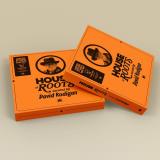
David Rodigan MBE and Defected Records announce the release of House Of Roots; a specially curated three-track remix project by the legendary tastemaker, DJ & broadcaster, reimagining Defected classics as they’ve never been heard before.
House Of Roots has been born out of a partnership that’s blossomed since David first touched down at Defected Croatia in 2025, with his performance becoming one of the defining moments of the entire festival. After returning to Croatia for this summer’s festival finale, Rodigan - this time armed with the House Of Roots remixes - delivered another landmark set, underlining exactly why he remains such a revered DJ & selector.
The House Of Roots project reimagines Defected’s rich catalogue through the lens of reggae, dub and drum & bass in a celebration of music genres that have continually inspired one another throughout the decades.
Enlisting legendary drum & bass originator Shy FX, jungle maximalist CLIPZ, and fabled dub reggae producer & engineer, Prince Fatty, to remix three of the label’s seminal records - Fish Go Deep’s 2006 classic ‘The Cure & The Cause’, Soul Central’s ‘Strings Of Life’ (2004) and The Vision’s ‘Heaven’ (2019) - House Of Roots marks some of David’s most important and intriguing curatorial work yet.
House of Roots comes as a limited edition 7” box set including the 3 remixes plus exclusive dubs and instrumentals plus a 16 page sleeve note collectors booklet.
Turbo was a part of Joe Robinson and Sylvia Robinson’s All-Platinum Records set up in New Jersey which operated from 1967 to 1979. At one stage the fiercely independent and proudly black owned label threatened to become another Motown or Philadelphia International. That never happened, but the Robinson’s dream of worldwide success came later when Sylvia discovered Rap, recorded Rappers Delight by The Sugarhill Gang and Sugar Hill records was born.
Music historian Steve Guarnori describes All Platinum as "probably the most unusual record company there ever was. Dysfunctional, but at the same time wonderful."
The All-Platinum chaos extended to Turbo. But despite anarchy - some superb albums went straight from manufacture to be deleted and sold as cut-outs - sublime music was created. This 10" 6-track release collects together some of the most hallowed Turbo releases which between them have become cherished by collectors.
Brother to Brother "The Bottle" captures the label at its most astute. Gil Scott-Heron and Brian Jackson’s original version was an album only track on Strata-East so Turbo seized the opportunity to quickly make a worthy cover version and rush release it a single which enjoyed success.
"Ton Of Dynamite" by Frankie "Love Man" Crocker was Turbo’s debut release in 1968 (it actually sounds a later recording). At the time Frankie was a DJ on WWRL radio station in New York and the release was essentially a reward for his previous support of All-Platinum releases. The record (a b-side) is actually made Willie & The Mighty Magnificent who went on to re-record it as
"Funky 8 Corners". It took until 1975 for "Ton Of Dynamite" to get recognition when it became an anthem as the UK Northern Soul scene adopted it as part of the movement away from old skool 1960’s Soul. Whatever its’ provenance, "Ton Of Dynamite" is now revered by the Rare Soul and Funk communities.
The Optimistics "Man" from 1971 is another b side single. The group specialised in smooth harmony Soul but "Man" is a funkier affair which won support from Rare Soul aficionados and will cost you £600 plus if you are lucky enough to locate a copy of the hard to find 45.
Willie & West "Attica Massacre", also from 1971, is an even more elusive single. It is a powerful protest against the killing of 29 prisoners, many black, following a riot at a prison - Attica Correctional Facility in New York. The deaths and a subsequently discredited cover up caused outrage. John Lennon was amongst the first musicans to make a recording about the bloodbath, but the most emotional protest is this Willie & West track. Only 300 copies were manufactured of one of the most powerful civil rights recordings ever made. The vocal sounds like anti-War Edwin Starr at his most bristlingly aggressive.
Perhaps the strangeness of All-Platinum is best illustrated by the later success of Lonnie Youngblood "Sweet Sweet Tootie" which is essentially the backing track of "Attica Massacre" plus exquisite sax playing by Lonnie. Despite it selling 100,000 plus copies the label did not see this as a reason to reissue "Attica Massacre". Strange. Or as Marvin asked "What’s Going On"?
The New Sounds "Don’t Take Your Love From Me" was only issued by Turbo as an album track. Despite good music on it the LP was poorly (it at all)/ promoted and flopped. The superb "Don’t Take Your Love From Me" is a long time Northern Soul / X-Over favourite.
Larry Saunders mesmerising "On The Real Side" made no impact when released on Turbo in 1974 but was nevertheless issued in the UK by London Records. The Northern Soul discerning dancers instantly latched on to its combination of uplifting lyrics, heartfelt vocal and clomping beat and since then its’ appeal has extended across the whole of the Soul community. Without doubt an all time classic.
So six treasures from a label that despite frequently advocating cash out of chaos frequently conjured up awesome music.
ANORAX is grateful to have the opportunity to present this very special Soul selection.
Brouqade returns with a heavyweight contribution from one of Mexico’s finest: Sakro takes the helm, delivering a 12" that strikes the perfect balance between hypnotic depth and peak-time functionality. After months of building anticipation on dancefloors worldwide, becoming a secret weapon, these four tracks have finally found their way onto wax.
This EP is a masterclass in rhythmic tension and psychedelic storytelling. Sakro places the groove unapologetically at the forefront. The listener is submerged in a dense atmosphere defined by:
Rolling Basslines & Trippy Textures
Across the four tracks, Sakro explores the intersection of raw house energy and sound design. The nuances whether modular bleeps or unexpected percussive shifts, intensify the groove rather than distracting from it. It’s this specific blend of sophistication and grit that has already caused a stir in some Sets.
180g 2027 Repress They Say: “Descriptive scores for scenes of visual impact”.
We say: Arguably the single greatest album in KPM history. An ensemble piece of staggeringly heavy works from none other than Brian Bennett, John Scott, Steve Gray, Jim Lawless and Johnny Pearson.
For our immense pleasure, Visual Impact includes the insanely ace “Nuplex” by Brian Bennett, a nagging, sweeping, punchy funk piece that exists in a world of its own. If you don’t know, get to know - the record’s worth getting for this track alone. The same goes for the beautifully paced, string-drenched, horn-fed LP opener “Canaveral Scape”, courtesy of John Scott. Truly sublime. Other highlights on the A-side include Bennett’s easy, bass-heavy jazz groover “Sequence Of Events” and the spare, building, undercover funk of Steve Gray’s aptly-named “Low Profile”.
The B-side is straight-up fantastic. The percussive, vibey exotica of Jim Lawless’s “Keeping Pace” is followed by five tracks of slick, weighty funk breaks from Johnny Pearson. Check the pure groove of “Jaguar” with its head-nod drum break intro, the creeping piano-strings combo and… er… giant neck-snapping breaks of “Giant’s Causeway”, the speaker-smashing progressive bass groove of “Fugitive”, the tense "Rock Climb" and the sheer heft of "Heavy Load". Library largeness. If that isn’t enough, John Scott’s incessant “Flight Of The Phoenix” ends the session, brilliantly pilfered by M.O.P. for their much-loved “We Run New York”.
Originally released in 1976 but wonderfully timeless, Visual Impact is a rare example of a library record that’s genuinely great listen from start to finish. Just too good…
As with all of our KPM re-issues, the audio for Visual Impact comes from the original analogue tapes and has been remastered for vinyl by Be With regular Simon Francis. We’ve taken the same care with the sleeves, handing the reproduction duties over to Richard Robinson, the current custodian of KPM’s brand identity.
And don’t worry! Those KPM stickers aren’t stuck directly on the sleeves!
In certain circles, this is a record that would easily be called „eternal“. Back in 1996, when it was originally released, it sounded like nothing else - and still does. The sixth record of Frankfurt’s soon to be imperial Playhouse label and Losoul’s first outing on the label, it hot-wired many things at once: house and techno, US roots and European fruits, grittiness and wittiness, high tech funk, the expansion pf playtimes and the concept of minimalism in dance music. Elegance met effectiveness.
A composition that hooked you and also caused a stir elsewhere. Daniel Bell licensed it to his Elevate label and commissioned a very young Theo Parrish to remix it, Michel De Hey did the same with his EC Records and treatments by Gerd among others.
Here you finally get both of those carefully restored, remastered and reissued next to the originals. Amply placed on a double 12“, it also features the previously unreleased D1. Stemming from the same time and era as Open Door it rings and feels like a compact lost brother. Addictive as on the very first day and here to stay.
A deliberate sonic and emotional architecture that doubles down on intensity to shatter and rebuild the listener in one unrelenting wave.
Third album from System Olympia, following acclaimed releases like New Erotica Collection LP (2023) and Delta Of Venus LP (2020), solidifying her as a bold, self-produced voice in electronic and italo-disco-inspired music.
Releases on Okay Nature Records (her own independent label), with digital out now (March 6, 2026) via Bandcamp/Spotify and limited-edition black vinyl 12" LP shipping from April 6, 2026-fully written, recorded, produced, and mastered by System Olympia herself.
Extended tour in the months ahead, kicking off with confirmed live events including a Double Climax Listening Party, plus performances at The Cause (60 Dock Road, Outside) in London on April 3, 2026, and Burgess Park in London on August 2, 2026-expect further dates to build momentum through spring/summer 2026.
The Trip To Vega is about deep outer space odyssey that occurs in the process of traveling from Earth through the Cosmos to another "favorable" star system 25.3 light-years away.
The time is year 2097, Sept 23rd.
To this day, Earthlings have managed to dodge some of nature's more dangerous extremities, massive volcanic eruptions, Earthquakes, solar burst that knocked out the Planet's entire electrical grid for 3 years, numerous plagues of disease, food and fresh water shortages, domestic and International Wars and many other life-changing operas, but for this event, what remains is a realization that has no remedy. The cause: Earth's physicality has changed. It is no longer favorable for living things.
It is the constant shifting of the planet's internal tectonic plates which has unfortunately produced an unexpected and impassable dilemma.
Because of the collisions, deep within the planet's core, the planet is now producing an extraordinary amount of sound that includes a specific harmonic frequency that erodes the natural senses of all life on Earth.
It is intensifying. It is intolerable and it is unlivable.
Yet, some humans prefer to stay, to "ride it out" like the Titanic captain going down with his ship. Some, in total disbelief as some have concluded it is the second coming of Jesus Christ. But for most, the decision is clear. Tolive another day, leaving is the only rational choice.
At an increasing rate, scientific research data shows that humans and most animals, excluding the Jellyfish will eventually lose the usage of hearing and are to greatly suffer from an array of other neurological and psychological effects. The sense of touch and taste, sleep depreciation, severe nerve damage, constant hallucinations. Everyone will lose many of their cognitive abilities within an estimated 12 months from now.
On this day and every 7 days afterwards until all registered passengers have departed, the first of a fleet of large number of massive size spacecraft carrying approximately 1 million humans per vessel will permanently leave Earth to begin the long and adventurous trek across outer space to a new home: Vega.
This is not a precautionary tale as there is nothing to learn. Instead, a decision has been made and a Trip To Vega is the consequence.
XPRESS Singles Vol.2 is here, and its a certified dance floor weapon. Here at TDE we're stoked to welcome back mystery London duo Dirty Supercar with a brand new cut, Nothing But The Music.
Powered by the deep, soulful vocal of Elliot Chapman, it’s a direct call to the floor. Lush, emotive strings glide over choppy 70s guitar licks, all driven by a throbbing house kick and bouncing bassline combination that hits with precision. It’s a confident, fully-formed house record that speaks to both classic and contemporary sensibilities.
On remix duties, Italian house music heavyweight Angelo Ferreri steps in with a fresh rework that’s already slamming our worldwide parties. A consistent force in the global house scene for over a decade, Ferreri’s catalogue spans chart-topping releases, millions of streams, and support from the scene’s most respected selectors. Regularly ranking among Beatport’s top-selling artists, his signature blend of groove-led, feel-good house is unmistakable. Here he delivers a version that’s primed for peak-time impact. Tested, refined, and truly defined house heat.
Fesh off strong support from Purple Disco Machine, DE SOFFER returns to TDE in fine form. The nu-disco specialist delivers two standout remixes, reworking 20 Buck Funk by Bustin’ Loose and Hot by La Felix. The latter was one of our label’s biggest records of 2025 and gets a slick extended treatment. Meanwhile, 20 Buck Funk is reimagined with a sharp, modern nu-disco edge. Both featuring West Coast's Relaye on the rap, these're both tight, energetic, and fiery Nu Disco bangers ready to cause club carnage.
A seriously strong vinyl package from front to back. Pressed on a limited run of 300, this is one for the collectors and the selectors alike.
Following Parnell March’s Back Bar Grooves EP in February and November’s release of the Dust Tears (lead song from Sarah/Shaun’s debut) remixes, Edinburgh’s Hobbes Music label returns with a second EP of dream pop from husband-and-wife duo Sarah/Shaun (pronounced simply Sarah Shaun), alias Sarah and Shaun McLachlan (pronounced McLochlun), who wooed hearts and wowed critics with debut EP ‘It’s True What They Say?’ last year.
‘It’s True What They Say?’ attracted fans across the board: Artist Of The Week in The Scotsman, rapturous reviews from The Skinny and Tokyo's Ban Ban Ton Ton blog, BBC 6Music airplay courtesy of Nemone (Mary Anne Hobbs' Morning Show), more radio play from Radio Scotland's Roddy Hart & Vic Galloway, plus Simone Butler (Primal Scream) and Jim Sclavunos (Bad Seeds) via their respective Soho Radio shows, not forgetting ringing endorsements from the likes of David Holmes, Youth, Kevin Bales (Spiritualized), Brent Rademaker (Beachwood Sparks) and Julian Corrie (Franz Ferdinand).
They played gigs supporting Glasgow's huge Glasvegas, at festivals (Kendall Calling, Dunbar Music, Hidden Door), plus a slew of venues across the Scottish capital, ending the year with a trio of shows supporting Glaswegian 80s pop legends The Bluebells at Aberdeen’s Tunnels, Dunfermline’s PJ Molloys and Edinburgh’s Liquid Rooms, while The List magazine tipped them among their Ones To Watch For 2025, with journalist Fiona Shepherd suggesting they were “blending the starry-eyed pop of Sonny & Cher with the electronic experimentation of Chris & Cosey.”
Very much the companion piece to the debut EP but arriving a full twelve months later, Someone’s Ghost is emblematic of the duo’s desire not to rush things or release anything half-baked.
“I’ve always wanted to create the perfect pop record and I do really feel that we’ve achieved that with this one,” says Shaun. And he’s clearly not the only person who thinks so.
REVIEWS, FEEDBACK ETC:
"I LOVE that! Dreamy dreamy pop." ROY MOLLOY (Marvellous Crane/Alex Cameron) on BLAST RADIO, Sydney
“the Scottish music scene’s cream of the cool... buzzy drum beats, high, distant chimes, and heavenly electronics…. very ethereal.” THE SKINNY
"Listening to Sarah/Shaun is like eavesdropping on a noir dreampop, long-distance phone call between them both, across two separate sonic locations. On this stunning 4-song EP, Sarah’s voice, effortlessly mesmerising, draws you into these big beautiful and haunting passages of perfect dream-pop. All beautifully produced in a multi-layered-scape of low-fi analogue textures, epic cinematic crescendos, intense electro-pulse grooves and warped psycho-pop guitar riffs. Within the songs lurk a sense of unresolved emotions, longing and pathos. There are shades of classic Lee Hazelwood & Nancy Sinatra but also Post-Punk Electronica and Beach House. But what a unique sound they’ve created of their own. I love it" DAVID MCCLUSKEY (The Bluebells)
"Absolutely beautiful" SEAN JOHNSTON (A Love From Outer Space)
"Lovely stuff here! Total quality." MARTYN 'MASH' HENDERSON
"Ooooh. Everything the last record promised is here. Well done" GEORGE T aka George Demure (Accident Machine)
"Vince clark Era Depeche Mode in places" KEVIN BALES (Spiritualized)
"Sounds cool. Well done" PETE KEMBER (Sonic Boom, Spacemen 3)
"Glorious, it (Debbie Harry) grabs hold of you and doesn't let go." IAIN DAWSON aka RAVECHILD (Everyone Wants To Play The Hits Podcast)
SOMEONE’S GHOST
Born out of an incredibly anxious, stressful time, the songwriting process for these recordings has been something of a personal tonic for Shaun…
“There was a period when I was having nightmares,” he reveals. “Apparently I was saying there was someone in the room, I was talking to that person and Sarah was seeing all this while I was still asleep.
So, I was thinking that this was my ghost. I started writing songs because I was going through something and I was dealing with something and writing songs was a comfort. My ghost was a comfort, whether it was real or not. The idea of it was a comfort.”
“I firmly believe that everyone has someone who watches over them but all of the songs are essentially about being there for someone,” he says. “Everybody needs someone but also everyone needs to stay real and keep what you have, keep it close, never let it go. If you don’t have it, continue to tell people you’re there for them. It’s about loving and hoping people will be good to you in return.”
While Shaun took the songwriting lead on Filter Of Love and EP closer The Sound Which Stresses The Sound Of My Ears, Debbie Harry was originally instrumentally conceived by producer Jaguar Eyes, alias Ali Chisholm, later lyrically completed by Shaun, and the EP’s lead track, Anhedonia, and one of its stand-outs (much like Starbed on the debut) was conceived by Sarah, as a result of experiencing a bit of a spiritual epiphany of her own.
“When I first heard the word Anhedonia, I didn't know what it meant but when I found out I thought about it quite a bit. How sad it would be to have no enjoyment in anything,” she explains. “This song is really about my own personal beliefs. When I have been down, that's one of the things that helps me the most. It talks about trying to make amends but realising, for some things, you can't. But I think with any kind of faith comes hope… which is always a good thing.”
A record about hope, truth, honesty, a belief in something bigger than oneself… and all set to a soundtrack that wouldn’t feel out of place in a David Lynch or Eighties feature film. What more could anyone ask for, really?
There’s equally a desire to offer something universal and positive to anyone who tunes in. The labels for the 12” edition reveal the dual mantras “Who just wants to survive?” and “It’s about time to live a little”, with both messages also engraved in each record’s run-out grooves. T-shirts accompanying debut EP It’s True What They Say? bore the slogan “Kill Them With Kindness” - leading caps intentional. Shaun carries the acronym KTWK everywhere he plays, as a reminder: it’s stitched into his guitar strap. And this particular wee pebble has already caused a few ripples: people have been approaching him at gigs to acknowledge their appreciation and respect for it.
"We feel we have made an honest, open, colourful, body of work,” say the duo. “We hope to go out and play the songs with the guys (our band) and then potentially make more records. We are taking things as they come. Everything has been organic so far, after all. We are looking forward to whatever this brings."
Best Intentions announces Inverse, a new 4-track EP from Melbourne-based producer and DJ; Pugilist, arriving 12 December on digital and limited white-label 12" vinyl. Marking his first release on the London imprint, Inverse sees Pugilist expanding further into the shadowy, percussive terrain he has become known for, merging future-focused techno, lo-fi industrial, and the energy of early hardcore breaks through his own atmospheric lens. The EP captures both the toughness of the dancefloor and the subtle experimentation that runs through his catalogue. A Scottish/Kiwi artist now based in Melbourne, Pugilist has built a reputation for stylistic range and rhythmic depth. His releases on Modern Hypnosis, Samurai Records, and 3024, along with the recent launch of his own imprint Ruff Kutz, demonstrate his ability to move across tempos and moods while maintaining a distinctive sonic identity. On the decks, he is celebrated for tightly curated sets, deep crates, and an array of unreleased dubs. Speaking on joining the Best Intentions roster and the inspiration behind the project, Pugilist shares: "Stoked to be joining the Best Intentions fam with 4 x retro rave rollas across the hardcore continuum, from minimalist Techno, to smoked out Electro, to krusty Hardcore and Breaks. This EP is a mix of styles which have informed my production style over the years. It is great to be putting out music with a shared vision for giving back for a greater cause. I have been a fan of the label since its inception so jumped at the chance to do a 12". I will be donating my share of profits to the Asylum Seeker Resource Centre - a wonderful Melbourne-based charity for asylum seekers here in Naarm. They do wonderful work." The EP's closing track, FKRY, a collaboration with POD, brings warped leads, stepping drum work, and old-school jungle tension into a modern, heavyweight techno frame.
Makyo taps into his love of roots reggae for this deep, dark and dreamy cover of Things Ah Get Tough by the legendary Bristol band Talisman. The Tokyo-based producer transforms the original, while keeping true to the essence of the original, whose lyrics meditate on the greed and destruction caused when corporations benefit from a nation’s downfall.
Makyo has charted his own course through the world of dub, often with an eastern or tribal twist, since the early 90s, working with collaborators like Bill Laswell, Natacha Atlas and Muslimgauze, but with this release, he’s entering a new phase.
“I’ve listened to this song for years,“ notes Makyo, “and it just felt more relevant than ever when I started working on it in 2024, with all the wars, election madness, wildfires, inflation and nuclear posturing. The mood just seemed to reflect where people were at.”
Having overcome crippling tinnitus and hyperacusis (to the point that he couldn’t even listen to music for several years), Makyo’s finding joy in the past whilst looking to the future, with this sparse and bittersweet version of Talisman’s tune the first in a series of contemporary covers he has planned.
Die legendären und sich ständig weiterentwickelnden Zamrock-Pioniere WITCH (We Intend To Cause Havoc) verschieben mit ihrem neuen Album 'SOGOLO' weiterhin die Grenzen. Nach ihrem bemerkenswerten Comeback und dem von der Kritik gefeierten Zango von 2023 - ihrem ersten Album seit fast 40 Jahren - beweist 'SOGOLO', dass ihr innovativer Geist nach wie vor ungebrochen ist.
Abgeleitet vom sambischen Wort für 'Zukunft', verwebt 'SOGOLO' den von der Garage inspirierten Psych, Funk und Rock, den WITCH in ihrer Blütezeit in den 1970er Jahren buchstäblich miterfunden haben, mit dem experimentellen Geist des Augenblicks. Aufgenommen in Berlin während ihrer Welttournee, strotzt 'SOGOLO' vor Dringlichkeit, Aufregung und Entdeckungen, wie immer angetrieben von der magnetischen Präsenz des Frontmanns Emmanuel „Jagari“ Chanda.
Die Geschichte von WITCH ist fast zu außergewöhnlich, um sie zu glauben. Bekannt als die „Beatles von Sambia“, gründeten sie die Zamrock-Bewegung und veröffentlichten in den 70er und frühen 80er Jahren sieben Alben. Tragischerweise beendete die Aids-Epidemie die Zamrock-Ära und kostete allen Bandmitgliedern außer Jagari das Leben. Ihre Musik wurde 2012 wiederveröffentlicht und löste eine weltweite Wiederentdeckung aus, die zu ihrer triumphalen Rückkehr führte. Zango wurde von der New York Times in den höchsten Tönen gelobt, es gab ausverkaufte Welttourneen und einen preisgekrönten Dokumentarfilm, der weltweit ausgestrahlt wurde.
Mit 'SOGOLO' bestätigen WITCH, dass ihr kreatives Feuer noch immer brennt und beweisen, dass ihr Vermächtnis noch lange nicht zu Ende ist.
- Ltd. Col. LP: (Zamrock Dust (aka Opaque Natural) LP in einfacher Außenhülle und bedruckter Innenhülle)
An abstract painting with expressionist hues and futurist echoes, a mix between action painting and informal art: this is the first impression from Grischa Lichtenberger's live performance recorded at the Pino Pascali Museum in Polignano a Mare. The artist, based in Berlin, makes the rhythms creak, cuts them with a laser, weaves imaginative harmonic coils, smoothes with electric razors and draws figures with echoes and industrial clangs.
Then he uses ferrous materials that, with a precision lathe, are abraded and cause sparks. Suddenly steel springs fall to the ground, generating a cascade effect. In the distance, you can hear the roar of speeding cars and the ringing of bells.
Lichtenberger pulps, compresses, dilates, mixes, electrifies, heats up, liquefies: he does all this in just less than forty minutes, treating the sound material with violence, transforming it from time to time, shaping it and succeeding in the arduous task of controlling its effects. It is as if Luigi Russolo, Alva Noto and Thomas Brinkmann were closed in a workshop on the edge of a highway, parodying the famous definition of techno.
Giosuè Impellizzeri
This exciting 45, features two previously unheard 60s, New York soul, dance tracks.
Big Apple session singer and occasional composer, Doris Willingham, first had a rare release on the Hi- Monty label in 1966 and then in 1968 cut four sides for drummer Bernard “Pretty” Purdie. All were produced by Richard Tee and co-written with Doris. They were licensed to Ed Kassner who launched his Jay Boy label with ‘You Can’t Do That’ in both the UK and the USA. A change of strategy caused the US label to be discontinued after two releases and the UK then switched primarily to home-produced recordings. The two best Willingham sides lay dormant at President’s tape library until Ace released the killer ballad ‘Too Much To Bear’ in 2005. The fourth track is this superb dance number featuring the great Purdie band, no doubt featuring his usual bassist Jimmy Tyrell, who arranged the Hi-Monty 45.
The Taylor Brothers ‘Holding On’ is a much grittier affair, produced by Maxine Brown’s husband at the time, Mal Williams. The duo were Bennie “Earl” Bunn and Sam “The Man” Taylor and they wrote this, the third track recorded at the session that produced the ‘People In Love’ single on Joy. Sam had been a major mover in NYC black music circles since the 50s with his own bands and had fingers in many pies. The duo gave a performance worthy of some of the great 60s male soul couplings.
For our second release we invited Semoa who delivered an amazing blend of the minimal and electro genre. The EP includes a remix from the legendary Mihai Pol, who took the project to a whole new level.
"We gotta dance, cause it won't be long before we get lonely again.
To friends who talk in their sleep at night and the apartment next to the drugstore,
we'll go farther and farther away,
fed with the knowledge of life-saving advice."
Hard Times continues its legacy of championing house music’s finest with another landmark release that brings things full circle. This time, the label welcomes none other than Leeds legend Paul Woolford - one of the most prolific and versatile electronic artists of today - to reimagine one of house music’s most cherished anthems, Karen Pollard’s ‘Reach Out To Me.’
Originally released in 1996, ‘Reach Out To Me’ quickly became a club classic and an archetypal vocal house anthem. Now, Woolford - known for his ability to straddle both underground credibility and mainstream success with ease - boldly takes on the challenge of remixing the iconic track, delivering not one but two impressive reworks that showcase both sides of his production persona.
“‘Reach Out To Me’ has always been one of my favourite US garage records, so when the opportunity to rework it came up one hazy summer evening last year, I knew it had to be done,” says Woolford. “Both mixes have been road-tested and have caused havoc in all sorts of situations, from warehouse raves to basement afters to peak-time sessions and beyond.”
The first remix sees Woolford take the track deep and epic, building to a soaring, anthemic breakdown that pays homage to the song’s timeless energy. Meanwhile, his breakbeat-driven Special Request version adds a UKG twist, built for peak-time destruction in the hands of all selectors.
A true labour of love, these remixes breathe new life into the beloved classic while staying true to its soulful roots. Hard Times fans, house heads, and bass-driven ravers alike can now experience Woolford’s masterful reimagining of ‘Reach Out To Me.’
180 G. BLACK VINYL WITH LINER NOTES IN CREOLE, FRENCH, ENGLISH
Originally released in 1979, "Spiritual Sound" lives up to its name, a soaring, triumphant album, six tracks of spirit magic from Guadeloupe.
Telluric, intense, terribly alive, the gwoka drums of Guadeloupe carry the identity of a painful and fervent island. Marked forever by the crime of slavery, Guadeloupe's créolité cherishes the ka drums and their natural environment: the low-pitched boula drum with male goatskin, the high-pitched soloist makè drum with female goatskin, the chacha, ti bwa, triangle, calabash and other percussion instruments that surround them, and the voices - the fiery, proud, timbred, urgent voices of the gwoka.
This album is also a legend for its voices: in his then dazzling youth, singer Lukuber Séjor was one of the first gwoka artists to largely feminize the chorus of répondè, who converse with his text delivered in a straight and powerful voice.
And everything here sets new standards. In 1979, Mizik Filamonik - Spiritual Sound proclaimed a spiritual patriotism of ferocious intensity. The album by Lukuber Séjor - whose spelling alone is a battle - sets out to give Guadeloupe the intangible weapons of self-respect and self-knowledge, through a singular practice of traditional music.
The genesis of gwoka music is less straightforward than one might imagine... The drums performed the servile task of accompanying the work of slaves in the fields and during the “corvées” imposed by the administration, before being freely practiced by the common people after the abolition of 1848. At the heart of the conviviality of the Guadeloupeans furthest from the cities - geographically and socially - the gwoka drums come out for carnival, funeral wakes and neighborhood celebrations, but also during strikes, fits of anger and armed vigils of the riots and revolts that have punctuated the island's history. For generations, governors of the colony and then the prefects of the overseas department of Guadeloupe have been viewing the gwoka as a potential for turbulence and a threat to public order.
But as the Beatlesmania, “chanson engagée” and rock revolutions unfolded in Europe, young people turned to the drums of mizik a vié nèg (“bad negro music”, in Creole), which Guadeloupeans had learned to despise by following the “assimilation” process advocated by the school system and most of the political class. At the end of the sixties, in a Guadeloupe mourning the deadly repression of the May 1967 social movement, they played traditional music, refusing to wrap it up in tourist prettiness and madras folk costumes. Instinctively, they played a rough and contemporary gwoka, led by the incendiary Guy Konkèt. This was the era of decisive 45 rpm records such as Robert Loyson's Kann a la richès, which brought to light the fieriest words of union rallies.
At his home in Sainte-Anne, Lukuber Séjor played with flautist Olivier Vamur and his brother Claude Vamur, who cobbled together a drum kit from tin crockery and became, a few years later, the most influential drummer in Kassav'.
These were the years of the Bumidom program, when young Guadeloupeans were encouraged to emigrate to mainland France. At the age of twenty, Lukuber Séjor embarked on the liner Irpinia, disembarking at Le Havre and taking the train to the Gare Saint-Lazare - the route taken by thousands of young West Indians who went on to study or looked for work, all the while trying to maintain a link with their homeland. In this case, it's at the Antony university residence, where Lukuber played the drum and participated in a thousand gwoka updates and aggiornamentos, while exile reinforced the need for a spiritual link with the native land.
In 1978, Guy Konkèt played at the Salle Wagram, a historic event for West Indian music. After serving as répondè - i.e. backing vocalist - on one of his home-recorded albums, Lukuber joined his live band. Little by little, he became one of the key artists on a circuit parallel to French show business. At a student party in Caen, he met a young woman from Martinique who, at the time, was more motivated by her ambitions as a visual artist than by her vocation as a musician. Her name was Jocelyne Béroard and, a few years before she plunged into the Kassav' adventure and became the greatest West Indian singer of her generation, she designed the cover of Lukuber Séjor's LP.
This ambition was obvious and imposed its will. A more or less regular band was formed, with Roger Raspail, Rudy Mompière and Éric Danquin on ka drums, Claude Vamur on ti bwa, Olivier Vamur and Françoise Lancréot on flutes and Annick Noël on keyboards. Lukuber Séjor is set on wanting to extend the gwoka palette to other instruments, as the jazz-rock revolution opens a thousand new doors. Annick Noël will play a wide range of timbres and textures on electric piano and synthesizer. Another novelty: the répondè are two men and two women, Roger Raspail, Olivier Vamur, Françoise Lancréot and Maryann Mathéus ...
Mizik Filamonik - Spiritual Sound is a self-production in which the singer and leader sank all his savings, allowing him no more than a single day in the studio. The first side is more of a musical manifesto, with the first two tracks, Éritage and Penn é plézi, being instrumentals. The third, Son, forcefully celebrates the need for Guadeloupeans to connect with the gwoka. In fact, Jocelyne Béroard's cover shows a tambouyé in the shadow of a cloudy sky, against which a radiant sun is rising and whose light will soon flood the entire landscape. The silhouette and face of this man strongly evoke the immense Vélo, master of the ka, rejected at the time on the fringes of society.
The second side of the LP is surprising. Formally, three tracks are explicitly linked like the three parts of a triptych. Primyé voyaj evokes the appalling tribulation of Africans deported as slaves to Guadeloupe; dézyèm voyaj speaks of the Bumidom program and the economic, political and social forces driving young Guadeloupeans towards the mirage of prosperity in France; twazyèm voyaj closes the cycle with the emigrants' return from Europe after years away from their island...
This gwoka, obsessed with the need to save Guadeloupe spiritually, appeals far beyond the politicized audience. Mizik Filamonik - Spiritual Sound instantly became a classic, although Lukuber Séjor never really made a career for himself as a musician.
After all, the album was released in 1980, with no promotional resources in France or Guadeloupe - and therefore no concerts. The thirty-two-year-old author, composer and performer made his own third trip back to Guadeloupe. He set up a small woodworking business, which he lost in Hurricane Hugo in 1989. His other activity, teaching in a medical-educational institute, became the core of his professional life. He continued to be an active campaigner - a campaigner for the Creole language, a campaigner for the reawakening of identity, a campaigner for special education, a campaigner for a thousand causes that he ignited with his generous and perceptive enthusiasm, such as the defense of breadfruit fries...
The echoes of his 1979 album have not died down. Of course, the use of Penn é plézi as the theme tune for Radio Guadeloupe's funeral notices from 1980 to 1992 kept him in the collective memory, but he continues to sing and compose sporadically, as with his all-female
vocal group Vwapoulouéka... Still convinced that music is a means of liberating the spirit, he continues the journey of a young man eager to deploy the power of Creole music and language.
DJ Support: Danny Howard, Annie Mac, Mistajam,Pete Tong, Charlie Hedges, Kraak & Smaak, Maxinne,Todd Terry, Alex Preston, Full Intention, GW Harrison,DJ Rae, Rudimental, Alaia & Gallo, Illyus & Barrientos,Johan S, David Penn, Sam Divine, Riva Starr, Claptone,Nice7, Dario D’Attis, Mousse T, S-Man, Huxley, KCLights, Friend Within, Dombresky, Gorgon City, ChrisLake, Format:B, Pirupa, TCTS, Alan Fitzpatrick, LowSteppa, Mat.Joe, Raumakustik, Eskuche
Coming out the traps strong, our next 4-track vinylsampler series kicks things off with Toolroom’s very own Mark Knight who continues his impressive string of collaborations with Darius Syrossian appearing alongside him for the first time on the label. Mark and Darius, along with studio maestro James Hurr,stumbled on this classic ‘Let’s All Chant’ sample and together proceeded to write a peak-time, tech house slammer around it. With relentless energy and lush vocal licks and that all-familiar 90’s sample, this one works a treat on the dancefloor.International House don Low Steppa is next for a special release with Malta’s finest, Jewel Kid. Their track ‘Big Busta’ oozes ATTITUDE! Slamming tech house drums, an insatiable groove and a tongue-in-cheek vocal that will raise many a smile on the dancefloor. Another certified club weapon for sure! CASSIMM kicks off the flipside on the vinyl with another peak-time club weapon as he returns with ‘Say Yeah’ alongside vocalist Mahalia Fontaine. The Italian born House music maestro is on fine form as always here, hot on the heels of his ‘Love Desire’ record that went stratospheric in late 2023 on Claptone’s ‘Golden Recordings’ label. With a big bassline and oodles of dance floor energy alongside Mahalia’s rasping, diva style vocal adding that classic house vibe to proceedings! Finally, we round things off with the once mysterious but now ‘unmasked’ house duo ‘Wh0’ with a rip-roaring club banger! Remixing for the likes of The Prodigy, Basement Jaxx, Calvin Harris and Meduza whilst collaborating with Armand van Helden, Nile Rodgers and David Guetta under his Jack Back alias.This track is a heads down, no-nonsense, tongue-in-cheek club weapon! Seriously powerful drums, aplayful acid line and a very cheeky vocal that will cause a stir on many a dance floor!
Countless radio plays on Radio 1 from Danny Howard,Sarah Storie, Pete TongOther notable radio plays – Kiss FM, Toolroom Radio,Sirius XM, Data Transmission Radio, Radio 1 DanceAnthems, Radio 1 Party Anthems, Rinse FM, SelectRadio, Tomorrowland Radio
Germano Ventura is an Italian DJ, Producer and owner of the record label HOWL. A resident at the famed Circolo Degli Illuminati club in Rome, his busy touring schedule sees him play at some of the country’s most iconic venues such as Il Muretto in Jesolo and Cocoricò Riccione, sharing the decks with artist like Ricardo Villalobos, Zip and Loco Dice. Known for his dark and minimalistic style, his productions often take inspiration from early House tracks, even more so here in his debut EP “Mai Day” for Memento. The title track’s swinging groove and percussions match catchy New York House vocals, a nod at what could be heard at the Big Apple’s clubs Studio 54 and Limelight. “Time 22”pounding drum sounds and raw beats bring on funky sounds reminiscent of the ball room scene seen in the documentary Paris is Burning, while closing track “F8” boasts hip-hop vocals and some naughty electro-disco melodies, ready to cause some serious voguing on the dance floor.
A highly talented artist who has grown to make a notable impression amongst the scene’s most revered tastemakers, DJ/producer and label owner Jhobei is an individual who continues to blossom. His deep, expansive sound has already welcomed material on Up The Stuss, Limousine Dream, Mindhelmet and Picnic Records, amongst others, while featuring as a co-founder of London-based collective and label Bizarre Trax. In addition, his work as one-third of dynamic trio Felon5, coupled with his unique sound, has taken him from Albania’s ION Festival to Los Angeles, alongside making a handful of appearances for FUSE and its sister brands on home turf at fabric, The Cause and Village Underground - plus 2024’s Open Air event at Barking Park earlier this year. Building on that relationship, late September brings fresh music as Enzo Siragusa invites the exciting selector to make his label debut with an array of impressive productions across his ‘Age Of Virality’ EP. A-side opener ‘Swarming’ is all action and kicks things off with authority as a snaking bassline guides a garage-influenced trip through bumping low-ends and hooky vocal samples, while ‘Machine Language’ delivers a mix of playful tones amongst sweeping melodies while delivering a heavy dose of robot funk. On the flip, ‘Defusion Solution’ is a heady late-night excursion through skippy percussion and cosmic tones, with ‘Rising Sun’ stripping things back to deliver a classy, hazy journey as organic percussion grooves unravel effortlessly. Digital buyers are treated to a bonus cut in the form of ‘Kontrol Urload’, a sci-fi leaning cut merging glistening neon synth motifs with punchy kicks and zipping effects for maximum impact.
Unrecognisable” is a story about a city where buildings are used as weapons in a war between the government and the people. The initial chapter, “Eiffel Shard”, was published as an online graphic novel with an interactive soundtrack. It depicts a phone call between Paris Hell and Geneva Heat, two members of the resistance group Unrecognisable. During the call, Paris informs Geneva that a deadly building, The Shard, is now under the authorities’ control. What’s worse — the government also got hold of a secret building transformation plan developed by the resistance. Paris tells Geneva that the Unrecognisables decided to abandon the plan due to the number of civilian casualties it would inevitably cause. A series of intricate explosions would force the building’s glass surface to rip through the surrounding areas, destroying everything in its path and leaving only a pointed metal structure standing: an Eiffel Shard.
The second chapter, “Paris’ Dream”, was performed by Lolina as an improvised gig. Samples from the soundtrack to chapter one accompanied a video showing the protagonist sneaking into The Shard at night. The narrative continues with Paris’ anxiety dream of her time working on the Eiffel Shard project alongside another Unrecognisables member who she fears has betrayed them by handing over their dangerous plan to the government.
The third chapter is now being released as an album of new music. In a declining city, Paris and Geneva are tour guides to be followed at your own risk. Lies and petty crimes, mistrust, betrayal and, inevitably, war are the setting in which they seek to devise a plan for resistance. As members of a secret group, they hide their identities and meet after dark. Under dim lights of city streets and closed-down clubs, it’s hard to tell a dodgy detective from an eager philosophy student, friends are enemies in disguise, and it’s advised to park your car sideways for a fast getaway.
On this concept album, Lolina performs the role of both characters, her own voice often made unrecognisable by pitch-shifts and distortion. It was recorded almost exclusively on a Casio SK-200 sampling keyboard boasting 1.62 seconds total sampling time. No beat preset (total of 20) is left untouched, unchopped or unlooped. Not one of the 49 mini keys is idle. Retains samples when turned off.
When Cicadas appear in the area they cause a huge uproar. It’s hard to escape the distinctive noise these critters make, reaching up to 120 decibels. The hypnotic, trance-inducing sound disappears with the insects. A few months after Cykada's explosive debut, the world was hit by turbulence and from Cykada there was silence - fortunately only seemingly, because the next cycle began underground, in the privacy of the studio. It was there that the cicadas matured, waiting for a metamorphosis.
The year 2019 was very successful for Cykada, with a brilliantly received debut album, concerts at numerous festivals in the UK and Europe such as Glastonbury, Wilderness, London Jazz Festival, BAM Festival, La Defense Jazz Festival or Love Supreme Festival, along with constantly composing and preparing material for the second album. As the musicians entered the studio, the coronavirus pandemic was already in full swing across the globe. It was clear then that the world would never be the same. With increasing restrictions Cykada went underground, waiting for changes to surface again. Unfortunately the expected change that was happening seemed only for the worse - Brexit and its socio-economic consequences, worldwide disinformation, accelerating climate catastrophe and Russian invasion of Ukraine. The collapse of the old world order is the perfect moment for metamorphosis and with this message Cykada steps out again into broad daylight, matured and carrying a message with their long-awaited second album “Metamorphosis”.
The meaning behind the title is multifaceted. It refers both to changes taking place in our society and changes to our world as nature defends itself from human stupidity and greed. It is also a reference to the personal and musical development of the band members in that difficult period. It all became a foundation to bravely attempt to make new beginnings.
The metamorphosis is also clear in the musical aspect of Cykada. Their debut album was already difficult to shoehorn into specific genres with their sound that balanced jazz, electronics and elements of global music styles. With the second album their eclectic style has evolved into something distinct and innovative, combining folk/jazz song form and improvisation with heavier sounds inspired by sound system culture and rock. The band grew into a septet thanks to multi-instrumentalist Rob Milne, expanding the horn section to 3 instruments and galvanising its sound. But the biggest change that happened compared to the first album is the singing of Cykada leader Jamie Benzies in singles “So Divided” and “The Crack in the Bricks”. Both songs carry an important message, showing us that the changes in the world are already happening and that only we can make it head in the right direction. This unique sonic mix along with the message unleashes a powerful energy that the musicians want to send to and infect every listener.
Wigan Casino - the original UK dance culture super club - ran its’ first Nothern Soul All-Nighter in September 1973. It’s last session was in December 1981, and by then its 500 plus frantic All-Nighter had firmly stamped Northern Soul as an integral part of the British music landscape,
Wigan Casino Classics 1973 - 2023 proudly celebrates 50 years since the birth of the most important ever Northern Soul venue with 14 all time classic floor fillers. The Sandi Sheldon, Major Lance, The Seven Souls and Johnny Robinson gems were originally released on the Uber cool Okeh label but despite being part of the mighty Columbia Records empire sank without trace on release in the USA only to be discovered (and revered) by UK Soul devotees.
The Metros and Lorraine Chandler tracks were produced by Detroit’s mighty Pied Piper Productions crew and demonstrate that Motown were far from the only Motor City set up that knew how to conjure up truly breathtaking music.
In Northern Soul lore there is an intriguing story behind all 14 tracks - who produced and wrote them, which Rare Soul detectives - the original crate diggers - discovered them, what DJs played them..
But at the centre of it all is Wigan Casino, the seen better days Lancashire dance hall where 2,500 plus Soul fanatics flocked to every weekend to dance dance dance at the pre Rave era ultimate Rave. The recent 50th Anniversary celebration in Blackpool attracted a 5,000 turn out. The legend lives on.
This release marks the return of the always style wise Joe Boy label. Their trademark on point graphics are reinforced with the LP front sleeve being devoted to an iconic photograph by Francesco Mellini taken at the last ever Casino All-Nighter.
This is the second time out for the Wormholes on AllChival following on from their You Never See the Stars When it Rains anthology release. This one is a previously unreleased album recorded in a concise burst of seven nights in Dublin’s Sun Studios in the spring of 1996. It was originally envisaged as being The Wormholes’ second album, the follow up to their 1994 debut Chicks Dig Scars. Unfortunately the end result of the sessions - Parijuana - would not only be ignored by their label of the time (Roadrunner Records) - but would also just as quickly be dismissed by the band themselves.
Eamonn Crudden, the manager of the band, had manged to extract some money from Roadrunner to record demos of new tracks as soon as the release cycle for their debut was over. The budget was so tight that it covered studio time but was not even enough to buy the master tapes. With things going south with the label – a classic 90’s tale of the A&R man who championed their cause heading off elsewhere the minute they signed - the intention was to go in and aim to record an album rather than demos - with the intention of releasing it on another independent label to keep the momentum around the band going.
However by this stage the Wormholes were totally wrapped up in listening to Can, Faust and generally exploring music based on casual recording, improvisations and extemporization. For them the album was too ‘rock’ and – having been dropped by Roadrunner - they no longer felt under any obligation to release it. To them it was time for a fresh start. Their next recordings would not be ‘for’ anyone but themselves. Today bassist Anto Carroll admits that “at times we were our own worst enemies” and with the benefit of hindsight both he and guitarist Graham Blackmore wish they had gone ahead and released this album at the time. However, back then, they thought they could do better and they did go on to make inventive and unique sounding versions of some of these songs with Stan Erraught producing just a short time later. These recordings were eventually released by Dead Elvis in 1999 - along with a couple of ‘adjusted’ tracks from the Sun Studios sessions - on Parijuana: 4 Years in Captivity.
It’s highly unlikely that listeners today will share the band’s view that the abum was too ‘clean’. This version of Parijuana is dirty, raw, messy with plenty of experimentation and extemporisation. The songwriting is as strong as that on their Chicks Dig Scars debut. The music is played with a new confidence and swagger, very much the sound of a band rooted in a wave of US ‘lo-fi’ finding their own sound. It’s the missing link between their conventional Pavement/Sebadoh influenced debut to the more drawn out, free roaming and extemporised second album proper Scorpio The Album.
Y'all ready to mangle peoples heads??? Most of you are, but not YOU,-YOU know who you are, get out of here with your NU Garage chipmunk vocal Bass-Hop shit...
Mr. Cool aka Louie Fresco aka El Cabrone has some heat right here.
Get it- heat, cause he's from Mexico City, and cause the ep is Picante.
Pride is some dank ass bassment shit right here.
Percussive grooves for days, mind melting sounds and a nice tripped out vocal to round it all out.
Pride has a modern minimal shuffle, and that swingy greasy percussion that the Mexicans do
so well,its even low rumble that hits just right in the booty.
A perfect combo of blended brains and brawn!
On the flip we have the K-Dot. I hope it's referencing some new drug that is microdot acid and K combined in a mind warping 250Mg tablet.
This song sounds just like that, mind bending, face melting grinding madness, it rolls and rolls and evolves and evolves.
Put that record on and just watch people make twisted faces and dance like they are puppets getting their strings pulled.
Mr. Cool nailed this, and I question his sanity, and life choices. Nobody normal makes music like
this.
If you don't like this record now, you probably will in 18 years when it's the jam all over again cause a 65 year old Raresh drops it at Sunwaves 309.
Mind you if we keep this global warming shit up, all our vinyl gonna melt. Live in the moment and buy records now.
Crucial Toronto rapper / producer / DJ myst milano. returns with thrilling new album Beyond the Uncanny Valley, an exhilarating ride through hedonistic experimental hip-hop and house music that reinterprets the breadth of Black electronic music with addictive singular energy.
“I offer Beyond the Uncanny Valley as a working anthology of Black electronic music across generational, geographical and genre lines,” myst milano. writes. “I thought a lot about staples of Black art across the world that can be traced back to Africa, and that link the diaspora regardless of where our people end up and throughout all eras.”
A mighty example of this omnivorous and multifaceted awareness of Black creativity, Beyond the Uncanny Valley is a tidal wave, swallowing up Canadian House, Detroit Electro, Chicago Footwork, UK Jungle and Dubstep, Jersey / Baltimore / Philly Club, Southern Hip-Hop and West Coast Funk into the trail of euphoric destruction left by myst milano.’s trademark grimy, sweaty, lusty neo-R&B take on contemporary hip-hop.
Opening with “Thirteen”, the album hits with punch and immediacy. The track’s thumping kick and swirling, haunted synthesis represent myst milano.’s keen ability to nurture perfect symbiosis between production, arrangement and lyrical theme. It is equal parts dreamy, provocative, sexy and powerful, and, together, entirely unique to myst’s creative voice. As with Beyond the Uncanny Valley as a whole, it is evocatively storytelling, mixing vivid imagery with slick wordplay. We are introduced to myst’s groupie (formerly “a hater”), as their crew “causes damage you can’t afford”, while witty threats and erudite posturing flow out over a steadily expanding instrumentation that mimics myst’s breathless, sweatbox DJ sets.
“Ring Ring” is another key track. Glitching nuclear alarms give way to a bulldozing kick drum and in-the-red distortion on myst’s voice. The vocals hit at breakneck speed while the production retains a dirty, dirging stomp. It is formidable, intense, fun, and intimidating in all the right ways.
Underpinning the album is a mechanised female voice that has possessed the record like a replicant ghost. “When we go beyond the uncanny valley, we reach a state of perfect harmony where the robot has mimicked the human to the point of being indistinguishable,” myst says. “Who are we when we become perfect imitations of what the world wants instead of who we really are, which is imperfect and flawed and a little uncanny, anyway?” While the music of Beyond the Uncanny Valley is human, with real emotion and expression, it occasionally flirts with the beyond, reaching into a near future where reality and technology bleed into one.
Beyond the Uncanny Valley is myst milano.’s second full length, following 2021’s rapturously received debut Shapeshyfter, and a monstrously successful accompanying house remix on the UK’s legendary Defected Records.
Next up on Toolroom’s 4-track vinyl sampler series is another tasty collab from label founder, Mark Knight with legendary House DJ and producer Todd Terry and the Darryl James & David Anthony Project. Diving straight back into that classic 90’s House sound, Mark Knight delivers a taste of his finest production to date after unearthing Todd Terry’s edit of ‘Buddah’ by Darryl James & David Anthony Project, shaping up a seriously killer reworking of this gem fresh for the dance floor in 2023.
Next up, renowned German selector Eddie Thoneick makes a label debut with his club orientated big room weapon ‘Take It Back’. Taking it back straight through to the dance floor, Eddie Thoneick has become a name synonymous with high quality productions, providing remixes for Armand Van Helden, Steve Angello, Bob Sinclar and David Guetta. Eddie’s chunky production style shines through on ‘Take It Back’, offering up a slice of raw Tech House with deep, rumbling bass lines, metallic percussive elements and a resonating hook which will cause uproar in any club its played in.
Up next is another heater from DJ, producer and Toolroom Academy tutor Pete Griffiths who drops what can only be described as a House anthem in the making, with his brand-new track ‘Get Together’. A peak time record that sees Pete Griffiths dive deep into the sound of 90’s nostalgia, dropping a seriously well-produced and classy House banger. Also featuring on the record is American R&B, Gospel vocalist Ann Nesby, formerly the lead vocalist of the Sounds of Blackness ensemble who brings her powerful vocals to the forefront, elevating this release to anthemic status.
Last but not least, Hungarian duo Muzzaik return to the label with StadiumX on their collab track ‘Echoes’. Together, Muzzaik and StadiumX bring their signature sound to Toolroom with ‘Echoes’, a record that’ll command any dance floor it’s dropped on. Featuring a toughened-up groove, rolling bass line, and chopped vocal cuts mixed with just the right amount of edge.