The central theme of Steady is perseverance. Each track is based on a personal story or a fleeting encounter with people these past few years, from close friends to total strangers, either at home or on night shift commutes. People navigating their own hardships, almost giving up but always struggling through. More broadly, it’s about multiplicity, and contradiction. These central figures displaying hope and determination within a city of development and neglect, uniformity and chaos - an unfiltered representation of a city with all its jagged edges, darkness, and shards of light. It's broken and disheveled, but never not beautiful, just like the people in it. Musically, Steady continues where Bleach (debut album) left off - a sonic language of glitch, decaying tape and analogue distortion through which hints of RnB and soulful ballads bleed through. With a greater emphasis on beats, albeit lopsided on pitch-shifted tape loops, Steady feels more self-assured, more confident, more recognisable. At the same time, it's never stable or predictable - choruses break down early, harmonies bend into beating microtones, tracks emerge before others have finished. The symphonic scope of Bleach is still retained in Steady though. This is music of motivic development, of micro and macro form, of meticulous refining. The work of two classically trained composers, the album's chaos is heavily considered and carefully shaped. Hours of improvisation sessions have since been painstakingly refined into ten distilled tracks, owing to Steady's three year gestation.
"A marvellous piece of lazy rock"n"roll that does for the current American new wave what Teenage Fanclub"s "A Catholic Education" did for British guitar music... Almost unintentionally they"ve forged one of the most refreshing American noises for ages," - NME "Perhaps because one half of Pavement lives in New York City and the other in a sleepy, rural, central California town called Stockton, the spirit of the band"s music is split right down the middle. Simultaneously sophisticated and unpretentious, heartfelt and totally goofy - but always entirely sincere - Pavement exhibits its genius casually. The group"s first full-length album, Slanted and Enchanted, is brimming with beautiful pop songs, soured a bit by the rhythmic clamour of harder guitar rock. You can hear Pavement"s effortless charm in the evocative lyrics of songs like "Loretta"s Scars" ("How can I make my body shed for you?") and, ultimately, in the sheer, clangy joyfulness of the band"s playing. Pavement does lapse occasionally into superdense experimental noise fests, but it more than compensates for these indulgences with 10 cuts of solid songwriting. No matter where Pavement lived, it would be brilliant." - Entertainment Weekly
"A marvellous piece of lazy rock"n"roll that does for the current American new wave what Teenage Fanclub"s "A Catholic Education" did for British guitar music... Almost unintentionally they"ve forged one of the most refreshing American noises for ages," - NME "Perhaps because one half of Pavement lives in New York City and the other in a sleepy, rural, central California town called Stockton, the spirit of the band"s music is split right down the middle. Simultaneously sophisticated and unpretentious, heartfelt and totally goofy - but always entirely sincere - Pavement exhibits its genius casually. The group"s first full-length album, Slanted and Enchanted, is brimming with beautiful pop songs, soured a bit by the rhythmic clamour of harder guitar rock. You can hear Pavement"s effortless charm in the evocative lyrics of songs like "Loretta"s Scars" ("How can I make my body shed for you?") and, ultimately, in the sheer, clangy joyfulness of the band"s playing. Pavement does lapse occasionally into superdense experimental noise fests, but it more than compensates for these indulgences with 10 cuts of solid songwriting. No matter where Pavement lived, it would be brilliant." - Entertainment Weekly
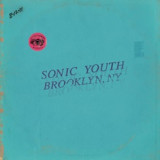
The final U.S. show, a triumphant and blistering bookend to the storied career of one of the most influential bands in rock music, featuring a unique and expansive eighty-five minute set list that spans Sonic Youth’s nearly three decade catalog. Mixed from multitrack by longtime live engineer Aaron Mullan and mastered and cut by Carl Saff. On August 12, 2011 Sonic Youth played their final US show on an outdoor stage overlooking the East River at the Williamsburg Waterfront in Brooklyn. Fitting that their storied career would bookend with a panoramic view of New York City where it all began 30 years before, having left in their wake one of one of the most powerfully influential careers in rock music. Following incredible sets from Kurt Vile and Wild Flag, the band took the stage. As the sun went down over the city, Sonic Youth ripped through a 17 song set that spanned from deep cuts off their first studio album and highlighting many other albums all the way through to their last, like a band with everything to prove. Or as Brooklyn Vegan’s Andrew Sacher said at the time: “While most bands who are thirty years into their career are either fading away or living off of the nostalgia of their older material, Sonic Youth continue to sound and perform as fresh as ever.” Steve Shelley explains the uniquely career spanning set list of Live in Brooklyn 2011 and how it came to be, as well as the importance of outdoor NYC summer shows in Sonic Youth’s legacy: “This show was a culmination of a run of really special outdoor summertime shows in New York City for us, starting in ’92 with Summerstage in Central Park when we played with Sun Ra. For the Williamsburg Waterfront show I wrote out the set list to present to the band and it was a lot of material we hadn’t played in a while, a lot of deep cuts, so I wasn’t sure if everybody would feel like doing it. After worrying about which songs the band might say yes or no to, I threw those concerns out the window and I just made a list of songs that I thought would be a great set. We practiced the week of the show at our space in Hoboken and put the set together. First we’d try and make sure we had a guitar in the song’s tuning, then we’d try to remember the arrangement and try and put it together, sometimes re-learning bar by bar. In the end I think the whole song list made it through. Even as early as ’86 and ’87 we stopped playing ‘Death Valley 69’ and ‘Brave Men Run’ with any regularity. We’d just get excited about new material coming into the set and songs would get ‘retired’ and wouldn’t get played again for years. So on this particular night in Brooklyn a lot of those retired songs and deep cuts got dusted off and played for this show. It turned out to be a pretty special event with a really special song list.” The band would go on to fulfill a contracted festival run in South America a few months later but, by then, the group’s center was severed beyond repair and the festival appearances didn’t hold the same kind of weight. “The stage was facing the East River from the Williamsburg, Brooklyn waterfront, and I recall the sun going down in the west during our set. It was a pretty magical, if kinda weird day. Fitting, somehow, that our ‘last show’ should be in New York City, our home and where it all began…” Lee Ranaldo The Williamsburg Waterfront show would fondly become referred to as ‘The Last Show’ by fans and band alike, equally for its triumphant high energy performance, its unique and expansive set list and locale. Newly remixed and remastered, Live in Brooklyn 2011 is presented for the first time on 2xLP, 2Xcd, August 18, 2023.
Selected Songs 1997-2003 compiles some of the finest moments in the recording history of Hydroplane, the Melbourne-based indie-pop three-piece that operated alongside The Cat’s Miaow through the second half of the nineties. It’s the third release in what feels, now, like a loosely planned series by World Of Echo, documenting the music made by this group of friends in Melbourne sharehouses (The Cat’s Miaow’s Songs ’94-’98, 2022), or in the case of The Shapiros (Gone By Fall, 2023), while traversing the International Pop Underground.
Hydroplane would be familiar to anyone already following these breadcrumb trails – Andrew Withycombe, Bart Cummings and Kerrie Bolton were the group’s core, all members of The Cat’s Miaow. With Cat’s Miaow drummer Cameron Smith itinerant, having moved to London, the trio used this opportunity to expand their music. It’s a subtle, but important shift. If The Cat’s Miaow was about the perfect, minimalist, two-minute pop song, Hydroplane’s music was far more open-ended, embracing the loops and drones, sampled house-y shuffle beats, the burbling of a Roland Jupiter-4 synth, all of which the trio joined, effortlessly, to their endless capacity for moving, elegant melodicism.
They may have only planned to release one seven-inch single, but the sound Hydroplane created was so bewitching, so compelling, that the project’s lifespan ran for around half a decade, and they ended up releasing three albums, including a self-titled debut recently reissued by Efficient Space, and seven singles. There are all kinds of compelling things happening in the music compiled here – the hazy repetition of the gentler side of Krautrock is in here, somewhere, which also suggests Stereolab at their most intimate and disarmed; the gently drifting guitars, gauzy and oneiric, set the songs adrift and floating, each one lost in its own imagined, distracted world. Songs like “The Love You Bring” set indistinct tonal floats across dance rhythms, in a way not quite heard since My Bloody Valentine’s “Instrumental” – but with the added gift of Bolton’s gorgeous voice.
This loose coalition with dance music, and the quiet experimentalism at the heart of Hydroplane, also gestures towards peers like Hood, Acetate Zero and Other People’s Children, and releases on renegade labels like Wurlitzer Jukebox and Enraptured. Like those groups and labels, The Cat’s Miaow were reconciling independent pop music’s past – sweet melody and melancholy, chiming and droning guitars – with the futures promised by DIY electronics and nascent digitalia, the interface of indie and IDM that led to some of the underground’s most blissful, texturally swoonsome music. All that is here, but also, the poise of the melodies is pure Cat’s Miaow, though, with Bolton’s voice sailing, pacifically, over some of the most pared-down, gorgeous music made during their decade.
It was a time, too, when such music could make waves – “We Crossed The Atlantic”, one of their early singles, was picked up by John Peel, who played it repeatedly on his legendary radio show, the song reaching #13 on his 1997 Festive 50. That the song itself was a cover of a tune by 1960s Australian beatnik-pop-poet Pip Proud felt even more perfect – a group of outsiders paying tribute to another outsider, played on the radio one of the few broadcasters brave and human enough to take a chance on this music. But it was a time where everything was up for grabs, and genres were flowing into each other: folk songs went drone; indie re-discovered noise; ambient pop floated, again, out onto the dancefloor. And while they may have been sequestered away in Melbourne, Australia, Hydroplane felt core to that scene, a quietly driving force.
Compiling material from across their brief but mercurial career, this double album perfectly captures the magic and mystery of Hydroplane’s dreamlike, perfect pop songs.
out of Stock
Last delivered 3 years ago available to reorder, subject to availability
Detroit's Rebecca Goldberg, aka 313 Acid Queen, releases 5 techno bangers incl. Mark Broom remix on Phoq U.
Phoq U Phonogrammen, the rebellious U-TRAX sublabel, returns after 26 years with its eight release, produced and manufactured in Detroit. Detroit native Rebecca Goldberg, who has previously released music and performed live under her 313 Acid Queen alias, will present her brand new People Mover EP at the Detroit Movement festival, on May 26, 2023.
The EP features 5 dancefloor fillers, including the Detroit-style remix by Mark Broom of the opening track Automated. The EP is inspired by transportation, industry and travel, as well as the city of Detroit of course, paying homage to the original minimal techno music and the evolution of technology and industry.
All tracks are live jams, recorded in one take on all hardware instruments. Rebecca tries to do as little post-work as possible, with just a little bit of final arrangement. Her work often incorporates field recorded sounds, and for this EP she used samples recorded while riding on the Detroit People Mover itself, the elevated automated light rail system in downtown Detroit. Goldberg started a sound walk group called Detroit Frequency and the recordings were taken on during the first event last summer.
The EP kicks off with the fast-paced Automated, that echoes the hypnotic minimal techno sound of Robert Hood. Mark Broom added an extra dose of 909 funk in his Mark Broom remix, which provides the track with even more pumping rhythms and making it sound even more 'classic Detroit'.
The B-side opens with Elevated, that features industrial-ish DPM sounds on a bed of pure acid, as if Goldberg wants us to remember why she is named the 313 Acid Queen.
Staying On meanwhile, puts a repeating DPM announcer's voice central stage, making it a fascinating piece of minimal techno. The closing track Linear Motion creates a dark atmosphere, with eerie, down-pitched DPM sounds that makes this a spooky techno trip that we believe many people will love.
out of Stock
Last delivered 18 months ago available to reorder, subject to availability
Indonesian City Sound: Panbers’ Psychedelic Rock and Funk 1971-1974
The Pandjaitan Brothers or Panbers came from the North Sumatra minority Christian group, the Bataks, whose ancestry traces back to an island at the center of Lake Toba. As a minority group within Indonesia's Muslim-dominated society, this ethnic minority has produced top military generals, celebrity lawyers, and a legion of pop and rock superstars.
Suffice to say, some of the biggest names in the country's pop history were Bataks. Panbers fit the bill perfectly.
The band's strong Christianity belief looms heavily in the music they produce. The prominent use of the Hammond organ in their early materials is evocative of church music the band members have been around in their whole life. Bandleader Benny Pandjaitan's fills his characteristic wail with existential dread, with many utterances of the word "mengapa" (why).
Guilt is another central theme Pandjaitan repeatedly comes back to in his lyrics. But they balance it with joy, on songs such as "Come on You Dance" "Let's Dance Together" or "Haai" (a play on the word high), where references to recreational substances are plentiful.
Although they modeled themselves after the era's rock bands Beatles and fellow countrymen Koes Plus, Panbers had a unique aversion to the electric guitar. In "Jakarta City Sound," a fiery three-note guitar solo is laid so far down in the mix that they are barely audible. In "Haai" they modify the guitar to sound like a jungle instrument playing traditional North Sumatran music. In "Rock and the Sea," arguably their most well-known song globally, they decided to ditch electric guitar altogether and replace it with a sitar.
In the absence of an electric guitar, Panbers had to rely on Doan's inventive bass playing and Asido's drum works to do the heavy lifting - and boy, do they deliver (Their 1971 debut "Volume 1" saw plenty of drum breaks). In this compilation, listeners will hear recordings from Panbers' fertile four-year period - a time that produced in some of the grooviest and hardest-sounding psychedelic music in Indonesia's rock history.
For those uninitiated on the glory Panbers, consider this compilation an introduction to some of earliest and heaviest rock sound to come out of Indonesia.
out of Stock
Last delivered 3 years ago available to reorder, subject to availability
Brutal Nature Redux is a continuation of Rhys Fulber’s “Brutal Nature” album and art concept, featuring remixes by carefully curated artists. Years of Denial’s take on “Rogue Minority” injects some emotion and humanity into the stark and aggressive original while preserving the driving bass riff and lifting it into the sound of a futuristic tribal gathering. Berlin’s Sarin is up next, leaning into the future EBM style he also shares with Fulber but amping up the intensity and apocalyptic dance floor elements of Central State Institute. Night Render is given a darker and more sinister sheen by up-and-coming Bulgarian producer, Evitceles. The nature elements of the original are replaced by a cinematic dystopia, akin to salvaging lost technology in a ruined city. Orphx add their rhythmic sophistication to “Stare at the Sun, tripping and refining the original down to its base elements while tuning Sara Taylor’s (Youth Code) screams across what appears to be several channels of short wave radio. Qual’s radical re-interpretation of “Pyrrhic Act” brings elements of Fulber’s past history in EBM right to the fore, creating a groove that’s both retro and very modern, slowing it down so the tension hangs heavier in the air. Lastly but certainly not least, Vanity Productions highlights the “nature” of “Fragility”, accentuating it with delicate clouds hanging in an air of contemplation; darkness and light coexisting in thick emotional textures. A fine way to close out this collection of cohesive individualism.
out of Stock
Last delivered 2 years ago available to reorder, subject to availability
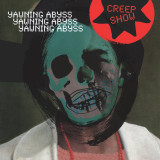
In the five years since Creep Show’s acclaimed Mr Dynamite album was released it’s fair to say that we’ve all been through a fair bit. Sitting here, in 2023, things don’t seem to be getting any better. There’s the cost of living crisis and political meltdowns; we're in deep water with global warming and to top it all there’s a war on our doorstep.
Back in 2018 everything seemed less complicated. Sure, there was stuff to get riled about, but we knew nothing about what was to come. Mr Dynamite was a fairground ride into the dark corners of a world that was on the brink of being blitzed in a blender. It was a record teetering on the edge. Five years down the line you’d expect the follow-up, Yawning Abyss, would double-down and bring the white-knuckled, teeth-gritted fury of the last five years to the boil. And yet….
A quick recap? No problem. Wrangler + John Grant = Creep Show. And Creep Show? “A band of musical misfits who have found a voice or two”, says Wrangler’s Ben “Benge” Edwards, whose Bond villain studio on the edge of a moorland is Creep Show Grand Central as well as home to an analogue synth arsenal that could sink ships.
Wrangler have known each other for a while. Tunng’s electronics wizard Phil Winter and Cabaret Voltaire’s trailblazing, pioneering frontman Stephen Mallinder go way back, while Phil and Benge crossed paths in the 21st century when they seemed to be increasingly in the same venues at the same times. Meanwhile, Mal had been living in Australia since the mid-90s and when, in 2007, he returned to the UK his old pal Phil suggested he meet Benge and the three of them immediately began working together.
Wrangler collectively bumped into Grant at their soundcheck for Sheffield’s Sensoria Festival in 2014 where they were playing with Carter Tutti. A friendship blossomed and when they were invited to perform together for Rough Trade’s 40th anniversary show at London’s Barbican in 2016, well, they jumped at the chance... and Creep Show was born.
Let’s talk about the new album... What is the ‘Yawning Abyss’? You might well ask. According to Mal, it’s “a cosmic event horizon that I can see from my attic window when stand on a chair”. Yeah. Thanks.
“On this album”, offers Benge, feet firmly on the floor, “Wrangler wrangled some vintage synths, mostly Roland, Moog, and the ‘Crystal Machine’ - then John Grant joined in the fun at Memetune Studios where lots of musical experiments were carried out. Then Mal and John ran off to Iceland with the master tapes and recorded a load of madcap vocals. Back at Memetune, me and Phil were left to try and make sense of it all. Which wasn’t hard because what they did in Iceland was totally magnificent.”
Which kind of brings us back to where we began. You’d imagine ‘Yawning Abyss’ would be blowing steam out of its furious ears. Mr Dynamite but kicking a wasps nest. Repeatedly. And yet…
Opener ‘The Bellows’ comes on like a modular ‘Radio Ga Ga’, the singalong ‘Moneyback’ (“You want your money back? / I didn’t think so”) sounds like Godley & Creme’s ‘Snack Attack’ meets Prince Charles And The City Beat Band (“Pennies, pounds, dollar bills, signed agreements, death wills”). ‘Yahtzee!’ is an unhinged electro breakdance party in four minutes and nine seconds.
Where Mr Dynamite was menace, a mélange of mangled voices, with Grant and Mallinder being heavily treated, pitched up or down, rendering their contributions largely indistinguishable, Yawning Abyss takes a more direct approach. You hesitate to say feelgood, but there’s a skip in the step here for sure.
The title track plays John Grant’s vocal straight. Completely. It’s good, so very good. Like ‘Axel F’ covered by Vangelis. The delicious shimmering synths of ‘Bungalow’ also plays those Grant pipes with a straight bat. ‘Matinee’ delves into darker, very funky territory. With Mal upfront it comes on like ‘The Crackdown’. Choice lyric: “You are starting to breakdown / And it’s so fun for me to see / You should have thought of that / You should have come prepared / You can see what’s happening and you look a little scared”.
So, you know, not all feelgood. But it does feel good. It’s probably best to draw your own conclusions... This is Creep Show after all.
The »Icol Diston« compilation, released in 2002 on DIN, comprised the three first EPs released by Uwe Zahn under his Arovane moniker. Following up on vinyl reissues of his path-breaking debut album »Atol Scrap« as well as 2000’s »Tides,« the German Keplar label finally makes »Icol Diston« available in its entirety on vinyl for the first time in a remastered version with new artwork. This expansive reissue sheds a new light on Zahn’s first two outings as a producer on the »I.O.« and »Icol Diston« EPs on Torsten ›T++‹ Pröfrock’s legendary label as well as highlighting his radical inventiveness as a remixer with the two renditions of Pröfrock-produced material offered on »AMX.« Taken together, these musically complex and emotionally rich electronic compositions form the prologue to an artistic story like none other while also documenting a very specific era in cultural history.
The energy running through Berlin and its boundaryless electronic music scene at the end of the 1990s is reflected by and refined through these eleven tracks. »There was an overwhelming dynamic of liberation reverberating through the city—through the clubs, the arts, the people,« says Zahn today. At this early stage in his career, he had a head full of ideas and slowly started filling up his studio with samplers, synthesizers, and sequencers to put them into practice. »I would compose percussive structures in my mind during long metro rides and record them once I was back at the studio as well as composing melodies spontaneously on my sequencer.« The Yamaha QY700 would become his sketchbook that allowed him to experiment with different patterns, creating polymetric figures out of discrete musical elements.
Zahn’s sessions, recorded live in stereo and straight to DAT, resulted in two very different EPs of original material. His debut »I.O.« showcases a playful and gentle, albeit dubby and at times moody aesthetic. The four tracks are exercises in sonic worldbuilding, creating vast spaces and filling them with a plethora of intertwining melodies and rhythms. Its successor »Icol Diston« drew on similar parameters, but painted a very different picture in terms of atmosphere and mood. »Berlin’s history felt still so tangible and yet somewhat ghostly during the 1990s, and it is a reflection of all that,« explains Zahn. »The weight of its past, starting with World War II up to the end of the GDR, clashed with an atmosphere of departure, a new zest for life among the people in the city.« It is perhaps no surprise then that the five tracks put a firmer focus on beats, at times even approximating techno or electro grooves despite never eschewing the complexity that is so central to Zahn’s work.
The »AMX« EP features two remixes of tracks originally produced by Pröfrock under two different guises. »Außen vor« had been released under his Dynamo moniker and was reworked by Zahn after having been introduced to his label owner’s Studio 440 sampler, sequencer and drum machine. By leaving the groove at the core of the original track mostly intact but infusing it with more dub as well as anthemic synth drones, Zahn gave it more depth both sonically and emotionally. With his remix of »No. 8,« released under Pröfrock’s tongue-in-cheek pseudonym Various Artists, Zahn followed a more radical approach which led him even deeper into dub territory. »I used a relatively short sample as the tonal foundation and then added an incredibly deep bass and percussive elements,« he explains. Widely different from the original version, it perfectly translated the spirit of this singular masterpiece into another stylistic idiom.
The »Icol Diston« compilation is imbued with a forward-thinking spirit that remains exhilarating until today. It captures the sound of one unique artist, but also electronic music during that time more broadly. This is the sound of opening a new chapter, the willingness to venture into the unknown.
All tracks composed and recorded by Uwe Zahn in 1998/99.
D1 is a remix based on the track by Dynamo. D2 is a remix based on the track by Various Artists.
Originally released on three 12inches by DIN in 1998/99 and on CD in 2002.
Remaster and cut by Kassian Troyer @ D&M.
Cover art by Jim Kühnel based on a photograph by Uwe Zahn.
Text by Kristoffer Cornils.
out of Stock
Last delivered 3 years ago available to reorder, subject to availability
Arovane's acclaimed 2004 album »Lilies« has been out of print on vinyl for nearly 2 decades now. It finally gets a well-deserved reissue through the Berlin based Keplar label. The new version has been remastered by Kassian Troyer at Dubplates & Mastering and comes with a brand new cover artwork.
»Lilies« was a follow-up to »Tides« in every sense, exploring a trip to Japan and drawing on shimmering textures and the sort of melodies that you might need some time to recover from. There's a hugely evocative sense to these tracks, emotionally driven, free of complexity or conceit, piano melodies providing the central focus for a twilight cascade of light that seems perfect for the Tokyo skyline - just as the sun sets. It's an album that radiates warmth and vulnerability, fusing the technological might at the heart of each track (and at the heart of the city) with an age-old understanding that certain echoes of sound, small melodic changes and cushioned lullabies can imprint sounds on your mind like childhood memories - remembered forever. Like a dreamlike score, or maybe even an alternate soundtrack to »Lost in Translation« - the sort of music that intertwines with images and stays in your mind indefinately.
After coming back from Tokyo and completing the production of »Lilies«, Uwe Zahn disassembled his studio in the big flat in an old building in Berlin's Prenzlauerberg district and stored it away in boxes. He needed a break from making music. »Lilies« was the last album prior to a nine-year hiatus for Arovane, ending in 2013 with the release of »Ve Palor«.
out of Stock
Last delivered 2 years ago available to reorder, subject to availability
Synth lovers rock at its best! Jamaican born and New-York based, Laury Webb is a singer, musician, producer, actor, former model and writer. He's been called both the Opera Dread and the Frank Sinatra of Reggae.
Laury's musical career began with a role as keyboardist and later backing vocalist with the reggae vocal group The Meditations (with whom he continues to perform).
Laury Webb posses a unique and eclectic vocal style. He has performed at some of New York city's premier musical venues, including Lincoln Center's Alice Tully Hall, The Village Gate, S.O.B.'s, The Ritz, The Lion's Den, Joe's Pub, Leopard Lounge, Kenny's Castaway, Central Park Summer Stage, The Baggot Inn and The Brooklyn Bowl.
After enjoying years of being a back-up musician, Laury launched a solo career with his Tigerbone Band. During that period he recorded and releases singles "Woman My Queen" and "It Seems The Same".
He was fresh out of college and touring with The Meditations, when he purchased a small organ for his girlfriend/mother of his two children for Christmas. By the time her birthday came around he was so broke and could not afford to purchase a birthday present for her so he gave her a writing pad and pen and told her to write down whatever came out of her mouth, and he sat at the keyboard and began playing and singing. “Woman My Queen”, was the result.
“It Seems The Same” was begun in America but I did not finish writing it till the music was recorded. My cousin, Barry Biggs, worked with me on this one. We both sang on the backing tracks.
Written, Composed & Arranged by Laury Webb
Artwork by Parade Studio
Woman My Queen:
Recorded at Quadrasonic Studio (New-York) in 1986
Backed by The Tiger Bone Band
Bass: Leroy Guy
Keyboard: Laury Webb
Drums: David Ranglin
Guitar: Royo
Mixed by Peter Lewis
It Seems The Same:
Recorded at Music Mountain Studio (Jamaica) in 1987
Keyboard & Drum Programming: Winston Wright
Backing Vocal: Laury Webb & Barry Biggs
out of Stock
Last delivered 3 years ago available to reorder, subject to availability
All the best music has a community underneath it. The extended family around London’s Total Refreshment Centre (TRC) connects continents and generations, creating the rich relationships in full effect on Transmissions From Total Refreshment Centre. It’s an eclectic and electric collection that draws from new school jazz, hip hop, dub, soul, funk, and drill: sounds you’ll hear trailing out of cars as they spin up the Kingsland Road or spiraling out of doorways like so much smoke. Turn it up loud to hear the widescreen young cousins of Guru’s landmark Jazzmatazz in full effect: top players from London, Chicago, and Melbourne seeking out new collaborations, new ways of working, or just new tunes, always coming back to that central truth – that we all need each other.
out of Stock
Last delivered 3 years ago available to reorder, subject to availability
An elusive Soul/Funk masterpiece from mid-70s Lakeland, Florida. The Riley siblings; Carrie, Horace & James laid the foundation for the two songs they would bring to Auburndale's custom recording studio, Central Sound to be released on the Nashville/Florida label, 'Music City'. Jerome McNeil, William Freeman, Bruce Bolden & Sam Graham would complete the outfit and be collectively known as 'Carrie Riley & The Soul Fascinations'
It's been 15 years since Now Again & Jazzman showcased the Deep Funk rarity 'Super Cool' on their Florida Funk compilation, however it's James Riley's group harmony B-side, 'Living In A Lonesome House With You' that has remained at large, unknown, collectively showcasing the talent encapsulated by The Fascinations.
'During the early 70’s The Riley family members who formed the Fascinations (originally the Soul Fascinations), James, Horace and Carrie along with a few friends, were destined to develop and perform musically as music flowed through our veins. Our father was a musician who played piano and sang the blues. As children we gathered around an old upright piano after dinner to hear our father play and sang. By the time I was 14 and my brothers, James and Horace were 16 and 17, we had all learned to plan an instrument. My focus was on vocals with many role models to learn from in the music industry such as; Dianna Ross, Chaka Khan, Gladys Knight and Mable Staple. My brothers loved the Commodores, Kool and the Gang, Rick James and Earth Wind and Fire. The Isleys’s were a favorite of ours also. James was the driver of our success in recording as he made sure we practiced for hours on end. Sometimes we would practice popular songs until 2 in the morning. James began to write songs and develop melodies that he would share with Horace and I. We would make suggestions for revisions such as arrangements and melodies. Before long we traveled to Miami where we recorded, Super Cool which was our title song, 'Living in A Lonesome House' and a few other tracks. 'Super Cool' is a song that is personal to me. It is a song about relationships and trust, while the Lonesome house song was about love affairs and breakups. So much great music came out of the 70’s. I am grateful that our music contributed to the industry during a time when great music was about love and relationships.
Lovingly
Carrie'
out of Stock
Last delivered 3 years ago available to reorder, subject to availability
With his new album, Gecko Turner confirms that he is a standout artist in the global groove scene, a must for the outernational sounds aficionados.
Somebody From Badajoz is the fifth studio album in his much lauded discography and his first in seven years, eagerly anticipated by both his fans and himself: "this business of dedicating yourself to music and making songs... it's a long game."
With the release of his first two, remarkable, albums, Guapapasea! (2003) and Chandalismo Ilustrado (2006), Gecko started cultivating what one astute journalist defined as Afro-maduran soul—the "maduran" bit referencing Extremadura, a region in central-western Spain.
Badajoz, Gecko's birthplace, is the biggest city in the area, on the border with Portugal, by the Guadiana River. It is a place that oozes history, where there is constant movement at the border, and people's character is friendly and open-minded with foreign habits.
Gecko's Afro-maduran soul isbuilt on Afro-American music and drenched in Brazilian, African, Latin American and Jamaican sounds. There are also echoes of a youth marked in equal parts by our man's admiration for the Beatles and the flamenco that could be heard everywhere in Badajoz in the seventies. It makes for a singular sound and a musical language of its own—spicy, succulent, full of nuances, but with a very personal flavour.
The album opens with the Nigerian talking drums of Twenty-twenty Vision, (neo) soul in a magical falsetto, carried by a sumptuous orchestral arrangement with a cinematic flavour: "I'd been thinking about doing something called 'Twenty-twenty Vision' for some time, making a play on words with the vision we have of the world after the year 2020 and the medical expression, which, in ophthalmological terms, means 'normal or complete vision.' Beyond that particular song, I think that's the mood of the album: a look at society in the twenties of the 21st century and the feelings and demons it produces."
It's followed by De Balde, a very special song born from a posthumously discovered lyric by the great writer Carlos Lencero, a regular collaborator of Camarón, Pata Negra, and Remedios Amaya, and also from Badajoz. While conceived as a fandango, Gecko has moulded it into his sound in such a seamless way it now seems as if the words could only have been written to be embraced by the percussion, brass, and backing vocals heard on the album. It's the only lyric on Somebody From Badajoz not written by Turner, still it sits rather comfortably with the rest, sharing the same emotivity and sensitivity, as well as the trademark humour and irony.
Other tracks see more protagonism for the rhythm.The beat-driven Ain't No Fun Preachin' to the Choir features Gecko's vocals walking the thin line between singing and talking over a phenomenal afro-disco-funk-infused trailblazer. In Am I Sad? it's impossible to not bob your head to the queen of Papatosina's mongrel rhythm, as close to the banks of the Guadiana river as it is to the shores of the Mississippi. Qué Siesta Tan Buena, He Babeao Y To! is an ode to the snooze in true Afro-Maduran fashion. And in Come And Try, the Caribbean influence is evident—lovers' rock that invites you to dance in good company.
In these songs, and throughout the album, for that matter, the musicians accompanying Gecko, who himself plays many of the instruments as well, shine brightly. All hailing from Extremadura, Javi Mojave (percussion), Álvaro Fdez 'Dr. Robelto' (bass), and Rafa Prieto (guitar) have been carrying him with delicate forcefulness since he started out as a solo artist. At the same time, the wonderful and essential voices of Deborah Ayo, Astrid Jones, Fani Ela Nsue, and Miriam Solís give the album a sunny variety of colours. And there are many more—a sensational group of musicians contributes dazzling harmonic bursts to many of the songs. The palette of sounds is very diverse and rich in textures and nuances, including, for example, the ngoni, bells, and various repurposed kitchen utensils.
The groove is always around, moving between the magical border sound of Everybody Knows Somebody From Badajoz and Little Dose, the silky soul of The Sibariteo Appreciation Society, and the exultant celebration of End Of The World (which surprisingly sees Gecko turning to the occasional use of autotune), a piece that could be used for the final credits of a Monty Python film and, in fact, closes the album.
Gecko Turner has done it again with Somebody From Badajoz, looking to the future without losing sight of the roots. In times of upheaval all over the globe, when people are looking for purity, he delivers a formidable piece of work: risky, optimistic in spite of everything, and with a decidedly bastard sound. Let's rejoice.
out of Stock
Last delivered 3 years ago available to reorder, subject to availability
With his new album, Gecko Turner confirms that he is a standout artist in the global groove scene, a must for the outernational sounds aficionados.
Somebody From Badajoz is the fifth studio album in his much lauded discography and his first in seven years, eagerly anticipated by both his fans and himself: "this business of dedicating yourself to music and making songs... it's a long game."
With the release of his first two, remarkable, albums, Guapapasea! (2003) and Chandalismo Ilustrado (2006), Gecko started cultivating what one astute journalist defined as Afro-maduran soul—the "maduran" bit referencing Extremadura, a region in central-western Spain.
Badajoz, Gecko's birthplace, is the biggest city in the area, on the border with Portugal, by the Guadiana River. It is a place that oozes history, where there is constant movement at the border, and people's character is friendly and open-minded with foreign habits.
Gecko's Afro-maduran soul isbuilt on Afro-American music and drenched in Brazilian, African, Latin American and Jamaican sounds. There are also echoes of a youth marked in equal parts by our man's admiration for the Beatles and the flamenco that could be heard everywhere in Badajoz in the seventies. It makes for a singular sound and a musical language of its own—spicy, succulent, full of nuances, but with a very personal flavour.
The album opens with the Nigerian talking drums of Twenty-twenty Vision, (neo) soul in a magical falsetto, carried by a sumptuous orchestral arrangement with a cinematic flavour: "I'd been thinking about doing something called 'Twenty-twenty Vision' for some time, making a play on words with the vision we have of the world after the year 2020 and the medical expression, which, in ophthalmological terms, means 'normal or complete vision.' Beyond that particular song, I think that's the mood of the album: a look at society in the twenties of the 21st century and the feelings and demons it produces."
It's followed by De Balde, a very special song born from a posthumously discovered lyric by the great writer Carlos Lencero, a regular collaborator of Camarón, Pata Negra, and Remedios Amaya, and also from Badajoz. While conceived as a fandango, Gecko has moulded it into his sound in such a seamless way it now seems as if the words could only have been written to be embraced by the percussion, brass, and backing vocals heard on the album. It's the only lyric on Somebody From Badajoz not written by Turner, still it sits rather comfortably with the rest, sharing the same emotivity and sensitivity, as well as the trademark humour and irony.
Other tracks see more protagonism for the rhythm.The beat-driven Ain't No Fun Preachin' to the Choir features Gecko's vocals walking the thin line between singing and talking over a phenomenal afro-disco-funk-infused trailblazer. In Am I Sad? it's impossible to not bob your head to the queen of Papatosina's mongrel rhythm, as close to the banks of the Guadiana river as it is to the shores of the Mississippi. Qué Siesta Tan Buena, He Babeao Y To! is an ode to the snooze in true Afro-Maduran fashion. And in Come And Try, the Caribbean influence is evident—lovers' rock that invites you to dance in good company.
In these songs, and throughout the album, for that matter, the musicians accompanying Gecko, who himself plays many of the instruments as well, shine brightly. All hailing from Extremadura, Javi Mojave (percussion), Álvaro Fdez 'Dr. Robelto' (bass), and Rafa Prieto (guitar) have been carrying him with delicate forcefulness since he started out as a solo artist. At the same time, the wonderful and essential voices of Deborah Ayo, Astrid Jones, Fani Ela Nsue, and Miriam Solís give the album a sunny variety of colours. And there are many more—a sensational group of musicians contributes dazzling harmonic bursts to many of the songs. The palette of sounds is very diverse and rich in textures and nuances, including, for example, the ngoni, bells, and various repurposed kitchen utensils.
The groove is always around, moving between the magical border sound of Everybody Knows Somebody From Badajoz and Little Dose, the silky soul of The Sibariteo Appreciation Society, and the exultant celebration of End Of The World (which surprisingly sees Gecko turning to the occasional use of autotune), a piece that could be used for the final credits of a Monty Python film and, in fact, closes the album.
Gecko Turner has done it again with Somebody From Badajoz, looking to the future without losing sight of the roots. In times of upheaval all over the globe, when people are looking for purity, he delivers a formidable piece of work: risky, optimistic in spite of everything, and with a decidedly bastard sound. Let's rejoice.
‘Change’ is the brand-new album by Anika, the first solo music from theBerlin based artist in 8 years.
A British ex-pat and former political journalist, Anika has collaborated withBEAK>and Tricky and released two albums with Mexico City’s Exploded.
View to great acclaim. The single ‘Change’ tackles personal growth as well as wider issues and grapples with eternal questions as to whether one can ever truly change.
It has been 11 years since the release of her last solo album, 2010 cultfavourite ‘Anika’; she suddenly found herself with a lot to say. “This album had been planned for a little while and the circumstances of its inception were quite different to what had been expected. This coloured the album quite significantly. The lyrics were all written there on the spot. It’s a vomit of emotions, anxieties, empowerment and of thoughts like - How can this go on? How can we go on?”
The intimacy of its creation and a palpable sense of global anxiety are
seemingly baked into the DNA of Change. Spread across nine tracks, the central feeling of the record is one of heightened frustration buoyed by guarded optimism. The songs offer skittering, austere electronic backdrops reminiscent of classic Broadcast records or ‘High Scores’-era Boards of Canada, playing them against Anika’s remarkable voice - Nico-esque, beautifully plaintive and - in regards to the record’s subject matter - totally resolute. Incantatory tracks like ‘Naysayer’ and ‘Never Coming Back’ are both a call to arms and a warning. “‘Never Coming Back’ was written after reading Rachel Carson’s ‘Silent Spring’,” she explains. “I was living in the old East countryside outside of Berlin, where there seemed to be no shortage of birds. Apparently their numbers have dropped significantly, but it is one of these changes that we never really stop and notice. We take things for granted, until it’s too late. With all this other noise
going on, care for the environment has quickly been moved to the backburner. So long as we get what we want NOW and on demand, who cares about whether we are taking care of the future?”
out of Stock
Last delivered 3 years ago available to reorder, subject to availability
Scene Unseen return with their second release, following the debut release from Jinjé and this time we see a release from a pioneer in the Chilean electronic music and Hip-Hop scenes, DJ Raff.
Having released more recently on the label Big in Japan (the previous label from the Scene Unseen camp), with his beautiful Resistancia EP, the label were keen to welcome him back onboard for the new project.
Raff’s routes were originally in the Hip-Hop scene back in his native, Chile. His influence of this scene cannot be understated, as his name appeared in the credits of over 50 Hip-Hop releases coming out of the country. Most notably with Anna Tijoux and Makiza, as well as seeing his own track ‘Latino & Proud’ used in the EA Sports game, FIFA 2012 and then later as the theme music for the Comedy Central show, Broad City.
As time moved on, so did Raff’s sound and he started to move into more of an instrumental focus, moving away from any vocals and the Hip-Hop rhythms. Since then he has released on Mutante Discos, Nacional Records, Wonderwheel Recordings and his own Pirotecnia label, among others. As well as remixing for the mighty Dengue Dengue Dengue, Landikhan and more.
DJ Raff has played events like Sonar Barcelona, Mutek.ES, Lollapalooza (US, Argentina, Chile), RBMA Mexico and Red Bull also invited him to mentor at the 2015 RBMA Bass Camp academy in Chile. His last album 'Movimiento' was released in 2017 on Nacional records and earnt him a nomination for best electronic music artist at the Pulsar awards in Chile.
Raff’s new EP for Scene Unseen, Estado Líquido, is an EP of true beauty once again, showcasing four tracks that combine his signature Latin American vibes with his hip-hop influences.
The title track opens the EP with the calm samples and inspiration from the sound of the ocean, an emotive nod to the people attempting to travel from Africa to Europe over the years and the struggles they have faced.
“Basta” translates to “Enough” in Spanish, this track is inspired by the large-scale protests in Chile back in 2019 and lasting until March 2020. An electronic hip-hop beat alongside a constant synth arpeggio that was something more common to his early productions. Casualidad is a reference to a more personal stage of Raff’s life, with soft, bright, and uplifting melodies flowing between more fine percussive works.
Final track, Ceremonia, combines percussive African rhythms with melancholic Synth leads and pads, alongside a deep solid bass line and repetitive chants. The repetitive chants and percussions hold together the opposite worlds of happy festive rhythms and nostalgic melodies, taking the song to a place where both feelings combine in harmony.
Artwork is made by DMNC (Francisco Meneses) a designer, art director and VJ from Santiago de Chile. Previous work is linked to 3D animation and he actively collaborates with various electronic music projects across Latin America.
out of Stock
Last delivered 3 years ago available to reorder, subject to availability
The Art and Soul of Network is well and truly captured on this beautiful collection.
Fittingly for a remix selection, Network’s iconic artwork is reconstructed by Trevor Jackson, the designer of those original graphics. He has lovingly reworked the maverick indie house label’s distinctive branding for this 2 x 12 double album selection which rewinds to some of Network’s finest moments.
Network was based in Birmingham but as this release demonstrates had an international outlook and an alchemist touch for joining together disparate talents which lent itself well to the world of remixology.
Dave Lee’s remix,when he was working under his Joey Negro pseudonym, of The Reese Project’s awesome Direct Me is arguably his finest ever work. The original track fused Detroit electronica with the Motor City’s ever present Soul Music stirrings. Dave simply made the superlative perfect . The result was not only an iconic Network release but one of House Music’s greatest recordings.
There was possibly no better example of Network’s deft touch when it came to selecting unlikely combinations of people to work together than Day By Day. . Andrew Pearce, a raw but incredibly gifted 18 years gospel singer, was plucked of the streets of Wolverhampton and promptly despatched to Detroit where producer Kevin Saunderson and songwriter Ann Saunderson gave him the complete Reese Project template on the mesmerising Day By Day. Then Chez Damier & Ron Trent were drafted in to create their Urban Sound Gallery masterpiece of a remix. It truly is a gem.
Ann Saunderson is also central to Surreal’s hypnotic Happiness, not only as songwriter but as the vocalist too. Network then did their “let’s try this” thing by letting loose Italian house godfathers The Fathers Of Sound on the track parts. They threw down and created a progressive (but dreamy) house anthem that is to this day massively in demand.
Slo Moshun’s game changer (House slows down into Hip Hop then ramps up back into House) Bells Of New York was produced by Mark Archer & Danny Taurus.It became huge literally overnight. Various attempts to remix it were tried but in the end it was back to Mark who demonstrated that sometimes the original creator of a track is best able to re-imagine it by coming up with his much loved Beefy Bells remix.
Inner City’s stark and brutal Ahnonghay saw Kevin Saunderson going back to his Detroit Techno roots. Fittingly it was one of the UK’s disciples of that innovative Belleville Three era,Dave Clarke, who supplied the awesome remix contained here.
Rhythmatic’s Mark Gamble created a British Bleep House anthem with the sledgehammer Demonz. The original won the support of John Peel with repeated BBC Radio plays underlining incessant club plays. Again it’s the original artist who does that remix thing best with Mark’s Sequel mix managing to improv his classic original.
Neal Howard’s Indulge was the debut Network release. His music sounded like it was from another planet and he was hailed as Chicago’s answer to Detroit genius Derrick May..Here we present Derrick’s Mayday remix of To Be Or Not To Be which was the flip to Indulge. This was Network’s debut release, and it is hard to imagine a label having a more euphoric greeting card.
The album concludes with a remix of a track recorded at a live concert in 1989.. To be clear THE TRACK that defined that year’s Acid House cultural revolution. Derrick May brought along Carl Craig to perform with him as Rhythim Is Rhyhim when invited to support Inner City at London’s Town And Country Club . Luckily Kool Kat - the predecessor to Network - recorded for posterity an historic rendition of Strings Of Life. Roll on a few years and Network went into the vaults and asked Ashley Beedle to work on the tape. He completely remoulded it and conjured up a new incarnation of Strings Of Life.
Network - we coninue…
out of Stock
Last delivered 8 months ago available to reorder, subject to availability
Violence is the self-titled third album from Baltimore born/ New York based artist, multi-instrumentalist, and cult figure Olin Caprison.. Their compositions are known for vivisecting and seamlessly merging the idiosyncratic features of hip hop, metla, RnB, and electronica, creating a language all their own. A dense multilayered opus, the album takes us on a journey through religious ceremony, nightmarish visions, and the forgotten corners of a decaying cityscape, leading us to the celebratory catharsis of the club. Entirely written, produced and performed by Violence, the project is an ambitious and singular vision that takes their unique sound to transcendent new places. The album initiates with Small Body, a solemn hymn inspired by the procession of nurses encircling a congregation in black pentecostal tradition. It's freeform chanting and syncopated body percussion invoke the trancelike rhythms of call and response music. A hollowed chamber of reverence that pulls us deep into the vision of the album. It's followed by Reptile, a horrifying slab of industrial intensity that merges multiple narratives seen throughout history to interrogate a side of victimhood not usually explored. A baroque masterpiece of intricate instrumentation and celestial theatre, guitar melodies blast across a delicately woven tapestry, reflecting the manic, distorted, and unstable mindset of the central figure.
Eck Echo records is set to release a mixed bag of original songs and remixes by one of digital cumbia's founding fathers, Peru's Tribilin Sound. Plastic Toy Sounds turns "Virgenes del Sol" into a woozy cumbia-dub with bright, shimmering guitar lines. Loris, adds squiggly sawtooth synths to the already irresistible beat of "Sarita", and Chancha Via Circuito offers up an atmospheric take on "Condorcanqui" that sounds like DJ Shadow and Augustus Pablo soundtracking a Peruvian heist while Peruvian duo Dengue Dengue Dengue reinvent "El Carmen's" Afro-Peruvian festejo groove as ageless ambient techno. Eck Echo records is set to release a mixed bag of original songs and remixes by one of digital cumbia's founding fathers, Peru's Tribilin Sound. Jalea is the affectionate term used by seafood-craving Peruvians for one of the country's signature dishes. In this jalea the menu consists of four original tracks highlighting the artist's career on one side, and four selected remixes by iconic producers from Mexico, Argentina, and Peru. Tribi arrived on the scene as digital cumbia was busy spreading its wings from Buenos Aires, soon to take over Latin America (and later the world), with Lima the next city to catch the bug. Ernesto had been DJ'ing in clubs since the mid-90s, and experimenting with Peruvian cumbia since the mid-00s, but the birth of his alias Tribilin Sound allowed him to go wholesale into his beloved chicha, reinterpreting grooves by classic Peruvian groups like La Pintura Roja, Los Titanes and Chacalón y la Nueva Crema, as well as proving to be a dab hand at a mash-up. Soon, he found himself at the heart of a like-minded community, releasing a debut self-titled album with Peruvian label, Terror Negro, and following it up with Aquí Siempre Bailamos (2014) for pan-Latin collective Sello Regional. Coming from a club background, rhythm has always been central to Ernesto's approach, his adopting of Peruvian styles never deviating from the necessity to get bodies moving, and the remixers here seem to take delight in stretching out his rhythms. Mexico's Plastic Toy Sounds turns "Virgenes del Sol" into a woozy cumbia-dub with bright, shimmering guitar lines; another Mexican, Loris, adds squiggly sawtooth synths to the already irresistible beat of "Sarita", and Chancha Via Circuito offers up an atmospheric take on "Condorcanqui" that sounds like DJ Shadow and Augustus Pablo soundtracking a Peruvian heist while Peruvian thunder-duo Dengue Dengue Dengue reinvent "El Carmen's" Afro-Peruvian festejo groove as ageless ambient techno..
out of Stock
Last delivered 3 years ago available to reorder, subject to availability
"Matasuna Records" musical journey takes the listener this time to "Panama" - a country in Central America, which offers a rich and breath-taking variety of musical treasures. In a first reissue, two songs from the legendary "Loyola Records" label were selected, both released in 1969: one by "Camilo Azuquita" and one by the group "Panama Brass". Two super-rare tunes that fetch crazy prices, if you're lucky enough to find a copy at all. Available for the first time as an official remastered reissue on 7inch vinyl - the song by Panama Brass even makes its 7inch premiere. Don't sleep on it!
The A-side features the killer boogaloo tune "Borombon" by "Camilo Azuquita". Its take of the song composed by "Javier Vasquez" is undoubtedly the best version of this song. The striking piano, driving bass and rich horns are fueled by percussive accompaniment and especially by Azuquita's powerful voice. A terrific song that has also recently gained new notoriety in movies and series - such as "Better Call Saul".
The B-side features the instrumental Latin Jazz/Guaracha tune "Con La Mano En La Biblia" by "Panama Brass" - an orchestra led by the excellent organist "Cristobal Munoz Jr." and consisting of Panama's best musicians. A no less energetic and furious song composed by "G. Garcias". The musicians of the orchestra combine a great musicality and diversity in the song, delivering a special delicacy.
"Camilo Luis Argumédez" is a singer and composer born in "Colon (Panama)" on February 18th 1945. He became world famous under his stage name Camilo Azuquita. He began his career at a young age, when he participated in various competitions organized by local radio stations. He left Panama for the first time for an engagement in "Lima (Peru)" - the prelude tocountlesstrips.
After returning to Panama, another engagement in 1966 took him to "Puerto Rico", where he also recorded music. Due to a tour he was involved in, he ended up in "New York City" where he made new & fruitful acquaintances with other artists that resulted in some more recordings.
In 1968 he returned again to Puerto Rico, where he joined a band to record an album. In the following years, tours and concerts followed, as well as an engagement in a club where he musically accompanied many stars of Latin American music.
Between 1972 and 1976 he spent four years in "Los Angeles", where he performed in night clubs, recorded two albums and toured California with his own band "Melao". In LA, through a brother of the "Fania" boss, he got a contract with "Vaya Records", a subsidiary of the Fania label, which brought him back to New York City in 1976. There he joined the band "Tipica'73" and their two following albums brought him much success.
A tour led him to "Paris", where he met the journalist "Pierre Goldman". A proposed project became reality two years later: Azuquita opened the first Parisian Salsa Club. As this became a complete success and the audience filled the club on each of the evenings, a first engagement of one month was extended to several years. In France, he performed at the world-famous "Olympia Theater "or played at the "Old Bourget airport", opening for a live concert by reggae legend "Bob Marley" in front of 75,000 people. From France, he traveled throughout Europe, where the performances in front of European audiences brought him enormous prestige.
From 1985 to 1987, "Azuquita y su Melao" toured extensively in "California", where he signed a 1-year contract at "Club Candilejas" in "Hollywood" in 1988. In the following decades, he recorded many more albums - in NYC, Cali (Colombia), France or Havana (Cuba), among others. In addition, he was still very active on tours, festivals and concerts around the globe. An extremely remarkable artist, whose activity has brought him to the top.
---
"Panama Brass" was an orchestra directed and orchestrated by the excellent organist "Cristobal Munoz Jr." The orchestra consisted of one of the best musicians of Panama at that time. Munoz was an exclusive artist of "Loyola Records" at the time and was considered a promising or up-and-coming conductor. That this album could be realized at all had only been possible thanks to Hubert J. Pretto. Pretto, then Assistant Vice President & General Manager of "Coca Cola Panama" arranged the funds necessary for the realization of this album and supported the campaign to promote music culture in Panama. This album would remain the only one released by this group.
out of Stock
Last delivered 3 years ago available to reorder, subject to availability
In 2003, Pisco Crane assembled a six-piece band from motivated and talented like minds in the Kinshasa slums where he grew up. Pisco had been involved with a handful of local rap acts when he was younger, but after meeting legendary instrument builder Bebson De La Rue, he was inspired to follow a new path. He set about building instruments from the discarded trash that surrounded his city: bits of old computers or oil cans were fashioned into bass guitars and drums, and keyboards were bashed together using springs, metal pipes, and offcuts of tubing. If there was a core philosophy that guided Pisco at this stage in his journey, it was that everyone should have access to instruments, no matter where they come from or what their budget might be. And following in the footsteps of Bebson, Pisco locked into a Congolese tradition that touches on the eccentric genius of globally lauded artists like Konono Nº1 and Staff Benda Bilili. Over the years, Fulu Miziki's notoriety grew in the Kinshasa underground - their utopian vision of the future was infectious. Eventually, they were joined by performance artist, sculptor and fashion designer Lady Aisha, who offered the band unique colour and a soulful central focus. Influenced by Kinshasa's street performance scene, Aisha helped the band devise vivid masks and costumes that were as electric and singular as the instruments they played, and the scene was set. In 2020, as the world was plunged into lockdown, footage of Fulu Miziki went viral and their star began to grow exponentially, with a video of the band preforming the track 'Tikanga' racking up millions of views on Facebook. The band used this opportunity to work on documenting their sound, and shored up at the Nyege Nyege studios in Kampala for a year to assemble a definitive album. Recorded by HHY & The Macumbas' Jonathan Saldanha, this record captures the band's furiously innovative mixture of industrial sonics, spiritual jazz, punk, and Congolese soukous pressure. At their best, Fulu Miziki sound almost completely out of time, curving pounding rhythms around microtonal clanks, rousing chants and spiky sonics. On 'Mutangila', there's a hint of disco in the 4/4 stomp, but it's been shifted into a post-punk ritual, adorned with complex bell percussion and overlapping vocals. 'Congo' is even harder to define; electrified buzzes form a bassline, but it's the mindboggling rhythms that shuttle the track into psychedelic realms, led confidently by Lady Aisha's limber rhymes. Fulu positively slither on the sultry, industrial-influenced 'Sebe', while 'Tikanga' reminds of Congo's rumba-derived soukous traditions, materializing the sounds into the future with tight, pounding percussion and head-melting fx. The story of Fulu Miziki is sprawling and complex and constantly evolving, with various offshoots and band iterations. Two members left the band in 2016 to form KOKOKO! with French producer Débruit. Not long after they recorded this magnum opus album, several other original members left to form a similarly named outfit currently based in Europe. This other incarnation recently released an EP of electronic productions without the band founder Pisko Crane and lead vocalist Lady Aicha, on the UK based Moshi Moshi records. Pisco and Lady Aicha currently lead a different outfit in Kinshasa made up of completely new musicians. This full-length is the remaining proof of Fulu Mziki at their most vital and most complete - it won't be repeated - and can never be recreated. It's an essential portrait of one of the Democratic Republic of Congo's most innovative contemporary outfits, and some of the most surprising hybrid music you're likely to hear.
out of Stock
Last delivered 19 months ago available to reorder, subject to availability
DJ Different dons his Terraform alias as he begins his journey in ‘Entering The Void’ on CYBERDOME; exploring phat electro bass-lines and party-starting ghettotech energy with its crosshairs fixated firmly on the club environment.
Born and raised in the culturally rich city of Malmo, the Swedish producer has previously released on London based label Deeply Cultured, Distant Hawaii, Mood Of Era, 1Ø PILLS MATE and Traxx Underground, spanning atmospheric techno, ethereal breakbeat and chunky electro.
‘Ultrasonic’ is an ear-wriggling cut of stripped-back psychedelia. As David Holmes would say, all the best electronic music tracks are made up of only a few components. Here, typical electro synth stabs, robotic vocal sampling and sparse precision allows the track room to breathe, whilst maintaining a deep and funk-driven groove.
‘Ghettotech’ sounds how you would expect it to; pounding kicks, frantic atmospherics and lairy screw-face hype combine on a certified fire-starter, before ‘Exiting The Void’ introduces itself on a footwork vibe that evolves into a sequence of interstellar-dungeon dub-electro.
‘The Rise of the Slavs’ takes its inspiration from the diverse group of tribes who lived in Central and Eastern Europe in the 6th to 10th centuries, establishing the foundations for the Slavic nations; it’s marching rhythm beaming historical context into 21st Century dance music.
out of Stock
Last delivered 2 years ago available to reorder, subject to availability
Endlich können die Millionen Fans von "Stranger Things" ihre Leidenschaft für ihre Lieblingsserie durch den Kauf von physischen Produkten (vor allem LPs, aber auch CDs und sogar Kassetten, eine Anspielung auf die 80er Jahre als zentrales Thema der Serie) zum Ausdruck bringen! Noch mehr als in den vorherigen Staffeln spielt die Musik eine wichtige Rolle in der Erzählung, insbesondere das Kate-Bush-Phänomen "Running up that hill", das natürlich im Soundtrack enthalten ist, sowie "Pass The Dutchie" von Musical Youth und "You Spin Me Round" von Dead or Alive, die in den ersten Episoden sehr auffällig waren. Supererwartetes Kultprodukt: Vorbestellungsstart am 1. Juli, wenn die zweite Hälfte von Staffel 4 startet. Enfin les millions de fans de "Stranger Things" vont pouvoir matérialiser leur passion pour leur série préférée en achetant en physique (surtout le LP, mais aussi le CD et même la cassette, clin d'oeil aux 80's thème central de la série) ! Plus encore que pour les saisons précédentes la musique joue un role prépondérant dans la narration avec en particulier le phénomène Kate Bush « Running up that hill » évidemment présent sur la BOF ainsi que Pass The Dutchie de Musical Youth, You Spin Me Round de Dead or Alive très remarqués dans les premiers épisodes. Produit culte super attendu : lancement de précommande à ne pas manquer pour le 1er juillet, date de lancement de la 2e partie de la saison 4.
The 'Privacy Angels' dwell in a liminal zone, a folk magical world sprawling within some remote nodes of the digital universe. An a-chronic plane of contradictions in which the spiritual and the machinic exist in a contrast that, instead of leading to mutual annihilation or subjugation, produces weird forms of life and uncanny forms of beauty. Like flowers sprouting from glitching fluxes of data transmissions, in the corrupted memory of a heavenly landscape. It is the vision of Italian (though London-based) musician and multidisciplinary artist Nicola Tirabasso, channeled through his usual musical avatar VISIO, a dimension he came in contact with while retreating in his native Sibillini Mountains in Marche, central Italy. A type of forced hermitage dictated by the global pandemic and whose idyllic premises were constantly unbalanced and contaminated by the constant presence of the digital world. But again, it is by means of this contrast that art is born. While channeling the magic, the fables and even the superstitions the locals have imbued the region with, Tirabasso developed them into audial spirits of electronic abstraction. A juxtaposition of mystic retreat and information-age alienation that, for some brief, ineffable and baffling moments, seemed to make him able to hear the angels. The album itself is a collection of digitally broken folk songs and logarithmic chants of praise. Acoustic instruments are broken down, replicated and re-materialization, while computer-generated ghosts and synthetic tones are allowed to exist and resonate in ancient spaces. Most of the actual recordings have been in fact made at desecrated XVI church in a town near Montappone, not far from the birth place of XX century painter Osvaldo Licini, whose influence echoes all throughout the region. Licini’s idiosyncratic mix of primitivism, futurism and orphic realism similarly echoes all throughout the record, with VISIO even paying tribute to his painting ‘Angelo Ribelle’ in titling one of the tracks. Collaborations made in person and through file-swaps have traversed the album’s conception and enrich its palette by presenting different versions of reality. Haunter co-founder Daniele Guerrini (Heith) co-produced every track with Tirabasso and gave a fundamental contribution to the album’s final form. Elsewhere, City and Kenichi Iwasa evoke their own privacy angels and let them dance with VISIO’s. Be it, in the depths of the earth or in the dissolution of a digital cloud, it is just as possible to (un)know the divine. Genre: Electronic / Experimental Listen: Track list: 1. Moonchild 2. Extasi Exile 3. Youth Grows Forever 4. Untitled X 5. Blessed Mystery 6. Years Of Silence 7. angelo ribelle
WRWTFWW Records is absolutely honored to announce the release of Kenji Kawai’s complete soundtrack to Mamoru Oshii's 1993 superb political thriller science-fiction mecha anime PATLABOR 2: The Movie, available on vinyl for the first time ever and housed in a beautiful heavy gatefold sleeve with obi, as well as on digipack CD. Both versions come with liner notes by the great Masaaki Hara.
A true soundtrack maestro, Kenji Kawai is behind the legendary soundscapes of cult animes and movies such as Ghost in the Shell, Avalon, Ring, Ip Man, and Seven Swords among numerous others. PATLABOR 2: The Movie (Original Soundtrack) is one of his most experimental offerings, an outstanding palette of emotion-filled ambient atmospherics and percussion mastery breathing beautifully through Kawai’s minimalism meets modern classical approach. His symphony of moods paints a delicate picture of urban isolation, a central theme in the movie, but doesn’t hide hints of hope for a joyful future.
PATLABOR 2: The Movie (Original Soundtrack) is an ideal companion to Kenji Kawai’s Ghost in the Shell soundtrack, already available on WRWTFWW Records.
It started, as it so often does, with two old friends hanging out.
John Shima and C P Smith were joking around one evening in their home city of Sheffield. At some point, Smith challenged Shima that, if the latter could produce a record using nothing more than a small modular synth setup, then Smith would release it on his Central Processing Unit label. As heads will know, while Shima has drops on imprints like FireScope and Subwax Excursions to his name, he had never previously released anything via CPU. Shima accepted, and thus we now have his CPU debut, the four-track EP CPU Modular 1.
The specific setup that Shima worked with for these tracks was Smith's Doepfer A-100P6 Suitcase, a small but mighty combination of modules and programmers. It's no surprise that Shima was able to familiarise himself with the equipment in double-quick time - after all, Shima was an early adopter of the Eurorack modular format back in the day. What emerged from the CPU Modular 1 sessions was a quartet of devastatingly effective DJ tools, mid-set rollers which will get the dance moving something crazy.
Opener '003' kicks the EP off as it means to go on. There's something at once stiff-necked and buoyant about the rhythms here, all thwacking Roland tones and snares which crack like someone whipping a length of sheet metal. While the beat barrels unyieldingly onwards, the programming in the tuned modulars is more exploratory and even trippy, full of delay-laced bleeps and flighty rhythmic motifs. It comes together for a cracking mix in the vein of artists like Jerome Hill and London Modular Alliance. Second A-side cut '010' is no different, the street-beat groove and grumbling low-ends underpinning all manner of modular wizardry.
CPU Modular 1 is really timeless stuff, a set of percussion-heavy, future-focussed beats which recalls Smith's own CPU drop 'DJ Tools Vol.1 - 808 Tracks'. '011' kicks of CPU Modular 1's second-half with a dose of Drexciyan dystopia, playing an atonal loop off of an insistent bass wiggle and neurotic hi-hats. Even when Shima tightens or slackens the modulars here, '011' remains unyielding, a dose of pure 'Wip3out' energy that you could happily groove to all day long. The EP closes out with '005', a gnarled, gurgling production which still retains the dancefloor punch of the rest of the record.
For his Central Processing Unit debut, John Shima was tasked to produce four tracks using a single small modular setup. Unsurprisingly given the pedigree of this seasoned machine-funk pro, Shima aced the assignment.
out of Stock
Last delivered 4 years ago available to reorder, subject to availability
WRWTFWW Records is absolutely honored to announce the release of Kenji Kawai’s complete soundtrack to Mamoru Oshii's 1993 superb political thriller science-fiction mecha anime PATLABOR 2: The Movie, available on vinyl for the first time ever and housed in a beautiful heavy gatefold sleeve with obi, as well as on digipack CD. Both versions come with liner notes by the great Masaaki Hara.
A true soundtrack maestro, Kenji Kawai is behind the legendary soundscapes of cult animes and movies such as Ghost in the Shell, Avalon, Ring, Ip Man, and Seven Swords among numerous others. PATLABOR 2: The Movie (Original Soundtrack) is one of his most experimental offerings, an outstanding palette of emotion-filled ambient atmospherics and percussion mastery breathing beautifully through Kawai’s minimalism meets modern classical approach. His symphony of moods paints a delicate picture of urban isolation, a central theme in the movie, but doesn’t hide hints of hope for a joyful future.
PATLABOR 2: The Movie (Original Soundtrack) is an ideal companion to Kenji Kawai’s Ghost in the Shell soundtrack, already available on WRWTFWW Records.
out of Stock
Last delivered 4 years ago available to reorder, subject to availability
LP Black Vinyl, DL card. ‘Devasting, with slow, burning songs that shudder and wince’ NY TIMES. Peel Sessions is an essential nine-track set catching Boston’s mighty Come at the peak of their powers. The collection includes two sessions recorded for John Peel in both 1992 and 1993, plus a previously unreleased live track ‘Clockface’ from 1991, unwrapping the blueprint of their sonic idealism. Raw, loud and live, exactly where the band’s dissonant blues noise rock originates. 1992’s four track session is direct from their debut; but more mangled, strangled and abrasive. The follow-up set from a year later includes live favourite ‘Mercury Falls’ and ‘City Of Fun’ neither of which surfaced as studio recordings. The sessions feature the masterful guitar interplay of two central pivots of the post-post-punk and alternative noisnik underground, Chris Brokaw (Codeine, Pullman, Thurston Moore, Ryley Walker, Lemonheads) and Thalia Zedek (Uzi, Live Skull, solo). The session’s line-up is completed by the addition of Sean O'Brian and Arthur Johnson’s visceral bass and percussion, documenting an essential era for the band. Peel Sessions follows their recently released ‘Don’t Ask Don’t Tell’ reissue, part of Fire Records forthcoming reissue series for the seminal group
After 6 years and 7 volumes, the Tramp Records crew invites you to join them on yet another enlightening journey into soulful Jazz, Folk and Funk from the 1970s.
This 8th volume contains nineteen Jazz, Soul and Folk nuggets from between the late 1960s and the late 1970s. One of the many highlights is the opening track by Bobby Cole which is most likely one of the finest independently produced vocal jazz recordings ever put on wax. So true. Oscar Brown Jr. and Mark Murphy sends its regards. But that's just the beginning. Praise Poems Vol.8 covers a wide selection of genres, from big band jazz (Helmut Pistor's Big Rock Jazz Band and Germany's own Ladykiller) to psych-pop (Portraits in Sound, Harve and Charee and Allison & Shaffer), from folk-rock (Flash, Garndarf and the incredible Fang Buzbee) to AOR (The Menagerie and Penn Central), completing the set with a handful of melancholic folk beauties, most notably Hans Hass Jr.'s mind-blowing "Welche Farbe hat der Wind".
Very few compilation series' release as many as eight volumes and those that get that far often start to run out of quality music or meander too far from their original artistic direction. That certainly is not the case with the "Praise Poems" series which leaps from strength-to-strength as our team of compilers and researchers continue to unearth lost and often overlooked music from an era long gone. Many of these records were released in small quantities as private pressings or by small regional labels. Obviously, those labels neither had the budget, expertise, nor options to promote their releases in a sweeping way. Therefore the majority of these artists failed to find the wider audience their music so richly deserved.
out of Stock
Last delivered 4 years ago available to reorder, subject to availability
WRWTFWW Records is absolutely honored to announce the release of Kenji Kawai’s complete soundtrack to Mamoru Oshii's 1993 superb political thriller science-fiction mecha anime PATLABOR 2: The Movie, available on vinyl for the first time ever and housed in a beautiful heavy gatefold sleeve with obi, as well as on digipack CD. Both versions come with liner notes by the great Masaaki Hara.
A true soundtrack maestro, Kenji Kawai is behind the legendary soundscapes of cult animes and movies such as Ghost in the Shell, Avalon, Ring, Ip Man, and Seven Swords among numerous others. PATLABOR 2: The Movie (Original Soundtrack) is one of his most experimental offerings, an outstanding palette of emotion-filled ambient atmospherics and percussion mastery breathing beautifully through Kawai’s minimalism meets modern classical approach. His symphony of moods paints a delicate picture of urban isolation, a central theme in the movie, but doesn’t hide hints of hope for a joyful future.
PATLABOR 2: The Movie (Original Soundtrack) is an ideal companion to Kenji Kawai’s Ghost in the Shell soundtrack, already available on WRWTFWW Records.
out of Stock
Last delivered 4 years ago available to reorder, subject to availability
Does returning to a place have a sound? Can the ear have a memory? And what if places which we return to are just empty shells? Choreographed rooms which we need to play, fill from scratch each time with fragments from the past and present, layer upon layer, familiar and still somehow always new and differently assembled. Paula Schopf’s Espacios en Soledad are acoustic walks around present day Santiago de Chile, the city where she was born - which she always left, had to leave and to which she always returns - but more than anything also through her own memories which resonate throughout the public places, squares, streets though still in their own way remain strange.
„Every immigrant in the world has a piece like this - a kind of missing link, something which is incomplete. And every time one returns to the home country you are looking for it. For me it was a matter of sound.“ (Paula 2019).
In the mid 70s leaving Santiago was a flight of exile as a child with her family. Leaving in 1990 was an autonomous decision to head for Europe, Berlin, where the wall fell, where the heavens opened up all at once and electronic music became a kind of new home to so many. Paula Schopf belonged there. For her the Ocean Club at Tresor club was a central place where friends and mentors like Gudrun Gut and Thomas Fehlmann made it possible for her to get really into it. Dancing, being and feeling your body, forgetting oneself in the bass and beats, who one is and where one’s from, to becoming the DJ Chica Paula. Chile was very far away during this time, Latin America was more just a code, a musical and habitual cliche to be cautious of. This was especially true for the culture of the Chilean exile, the pathos of the “Canto Nuevo”, the sound and ideologically charged instruments of the „música andina“, for example the Zampoña, Quena or Charango. Techno was the greatest thinkable alternative to this even if or perhaps because so many kids exiled from Chile became key figures in the German and European scene: Ricardo Villalobos, Dandy Jack, Cristian Vogel, Matias Aguayo and many more.
How does returning to a place sound? Does the ear have its own memory? The field recordings which were recorded in Santiago de Chile in 2016 and form the central sonic material for Espacios en Soledad represent the paradox for Schopf’s return to her home country after emigrating: the inevitable drifting apart of her own lived time from that of her former home. Already the Venezuelan and Colombian hawkers are unmistakable signs of the deep change in Chilean society which has happened in recent years due to immigration. Which is in contrast to the old lady who sits on the floor in a pedestrian zone and without break sings the same three songs by Violeta Parra and then keeps falling asleep while doing so. The fragile presence of her voice is joined with a repertoire which is almost mythologically timeless in Chile in a particularly moving way.
By layering, ordering and conjoining such found sounds from modern day Santiago this piece become about the urban sound of Chile’s present. But more than anything by doing this Paula Schopf becomes an arranger of her own sonic memory or sound-triggered memories of returning to this city. Just as techno and Berlin helped her for such a long time to get away from too strong of an identification as a Chilean in exil, now with Espacios en Soledad she has found a way to bring these two seemingly disparate lives and remembered worlds together.
Matthias Pasdzierny
out of Stock
Last delivered 16 months ago available to reorder, subject to availability
Exceptional recordings by this New age maestro. Only recently re-discovered by his friend JD emmanuel & the band Sun Araw. Originally released on cassette in 1983 and now for the first time vailable on 180g Vinyl. For fans of Joanna Brouk, JD Emmanuel and Pauline-Anna Strom.
Randall McClellan was a founding member of the electronic music studio at the Eastman School of Music in 1967 where he later received a Ph.D. in Composition, Theory and Musicology. A growing interest in North Indian music and vocal technique prompted him to develop his personal compositional practice into an active platform for inducing altered states of mind. He constructed his concerts to be spaces for harmonization of mind and body through a musical practice informed by his esoteric studies of ancient mystery schools and sacred geometry, believing these to be primarily teachings on intentional resonance.
These performances were given between 1977 and 1983 in semi-darkened spaces that allowed listeners to relax on carpeting while being enveloped by sound. Each improvisation lasts from twenty-five to forty-five minutes. An entire performance is up to three hours and is designed to provide an environment of meditative sound. They gained in popularity and were soon attended by larger audiences. His final live performance took place at New York City's Alternative Museum in October, 1983.
The “Music of Rana” Enviromental Series uses synthesizers, drone box, tamboura, voice and tape delay to create an environment of continuously evolving multi-layered melody. Described as subtle, graceful and of other worlds. The name RANA, meaning “Sunbreath”, has its origin in ancient philosophical concepts that recognized vibration as the fundamental creative force and central principle of the many esoteric mystery schools of the ancient world. It is now evident that the use of music for its ability to alter mind states and for its effectiveness as a therapeutic aid was music’s original purpose and an important concept of these mystery schools. In the broadest sense, the practice of music for its healing ability may well stand as our oldest continuous musical tradition.
This album is the first volume in the series, previously issued as a cassette in 1983, and part of the cassette box set published by Sun Ark in 2013. This music is based on principles outlined in Randall’s book, The Healing Forces of Music: History, Theory and Practice. These compositions are selected for their meditational and healing abilities. EQ settings of treble and bass levels determine the music's effect upon you. Please explore until the most comfortable settings are found.
FACT MAG: "These deeply meditative pieces are an expert take on how subtleties and concentrated listening go hand-in-hand. There is inherent beauty here, but it’s the deeper aspects that make the biggest impact."
out of Stock
Last delivered 4 years ago available to reorder, subject to availability
Exceptional recordings by this New age maestro. Only recently re-discovered by his friend JD emmanuel & the band Sun Araw. Originally released on cassette in 1983 and now for the first time vailable on 180g Vinyl. For fans of Joanna Brouk, JD Emmanuel and Pauline-Anna Strom.
Randall McClellan was a founding member of the electronic music studio at the Eastman School of Music in 1967 where he later received a Ph.D. in Composition, Theory and Musicology. A growing interest in North Indian music and vocal technique prompted him to develop his personal compositional practice into an active platform for inducing altered states of mind. He constructed his concerts to be spaces for harmonization of mind and body through a musical practice informed by his esoteric studies of ancient mystery schools and sacred geometry, believing these to be primarily teachings on intentional resonance.
These performances were given between 1977 and 1983 in semi-darkened spaces that allowed listeners to relax on carpeting while being enveloped by sound. Each improvisation lasts from twenty-five to forty-five minutes. An entire performance is up to three hours and is designed to provide an environment of meditative sound. They gained in popularity and were soon attended by larger audiences. His final live performance took place at New York City's Alternative Museum in October, 1983.
The “Music of Rana” Enviromental Series uses synthesizers, drone box, tamboura, voice and tape delay to create an environment of continuously evolving multi-layered melody. Described as subtle, graceful and of other worlds. The name RANA, meaning “Sunbreath”, has its origin in ancient philosophical concepts that recognized vibration as the fundamental creative force and central principle of the many esoteric mystery schools of the ancient world. It is now evident that the use of music for its ability to alter mind states and for its effectiveness as a therapeutic aid was music’s original purpose and an important concept of these mystery schools. In the broadest sense, the practice of music for its healing ability may well stand as our oldest continuous musical tradition.
This album is the first volume in the series, previously issued as a cassette in 1983, and part of the cassette box set published by Sun Ark in 2013. This music is based on principles outlined in Randall’s book, The Healing Forces of Music: History, Theory and Practice. These compositions are selected for their meditational and healing abilities. EQ settings of treble and bass levels determine the music's effect upon you. Please explore until the most comfortable settings are found.
FACT MAG: "These deeply meditative pieces are an expert take on how subtleties and concentrated listening go hand-in-hand. There is inherent beauty here, but it’s the deeper aspects that make the biggest impact."
out of Stock
Last delivered 4 years ago available to reorder, subject to availability
Airplay from Mary Ann Hobbs, Liz Alker and Tom Ravenscroft and beyond
Reviews in Mojo, The Wire, Quietus, Uncut and more
On October 9ththe multi-instrumentalist Jack Wyllie (Portico Quartet/Szun Waves) presents his new project Paradise Cinema. It was recorded in Dakar, Senegal in collaboration with mbalax percussionists Khadim Mbaye (saba drums) and Tons Sambe (tama drums).
The impressionistic and dream-like quality of 'Paradise Cinema' is a stunningly effective realisation of Wyllie's experience, in ahypnagogic state of aural consciousness:
"I had a lot of nights in Dakar, when the music around the city would go on until 6am. I could hear this from my bed at night and it all blended together, in what felt like an early version of the record."
Atmospherically 'Paradise Cinema' is vaporous and enigmatic, but also percussive; existing in a paradoxical sound-space that's amorphous,yet still purposeful, serene, but propulsive and aesthetically sharp.
Khadim Mbaye and Tons Sambe, provide the rhythmic backbone of the record. There are traditional elements of mbalax rhythm, but it is often deconstructed or played at tempos outside of the tradition, so while it hints at a location it occupies a space outside of any specific region.
'Paradise Cinema' is also informed by notions of hauntology – a philosophical concept originating in the work of French philosopher Jacques Derrida– on possible futures that were never realised andhow directions taken in the past can haunt the present.
On the album's title Wyllie comments, "there are a handful of old cinemas in Dakar – these big modernist buildings dotted around the city built around independence. They're old and derelict now, but feel to me like monuments to that period, when the city was flooded with utopian ideas about its potential futures."
As such it sits closely to 4thworld music – situated in an imagined culture and time that never came to pass. And while it contains rhythmic references to Senegal it combines these elements with ambient and minimalist music to produce a sound that sits outside of any tradition.
Setting the tone for the long-player's themes is the optimism-driven, balmy beauty of 'Possible Futures', where rich-toned drums throb and levitate in a stratospheric ether.
Like a time-lapse video of plants in bloom, 'It Will Be Summer Soon' is the sound of anticipation and growth. Rhythmically it flickers and flutters, evoking rainfall, or the blurred wings of a bird in in flight.
Casamance moves through field recordings drifting in and out of focus, beats pitched-down low and unfurling saxophone, whilst the ambient 'Utopia' was made mainly with processed saxophone and suggests a longing for a perfect world.
Galloping percussion juxtaposes with a wistful mood on 'Liberté' – a title that referencesa derelict modernist cinema in Dakar of the same name– a hauntological landmark, made more poignant by the its name being part of the French national motto.
Tying into the cover artwork, Jack explains, "the 'Digital Palm is a telecommunications mast disguised as a palm tree in central Dakar. As a modern piece of technology that on first glance looks natural, it mirrors the combination of modern and acoustic elements."
Perhaps eliciting a time that never came, or maybe still in hope of it yet to come, 'Eternal Spring' concludes the LP's otherworldly beauty with hypnotic drums powering a subtly-building, sparkling and powerful crescendo.
Jack Wyllie is a musician, composer, electronic producer who draws on influences of jazz, ambient, and the trance-inducing repetition of minimalism.
Wyllie performs and records in Portico Quartet, Szun Waves (withLuke Abbott and Laurence Pike)and Xoros. He has also collaborated with Charles Hayward, Adrian Corker and Chris Sharkey and released on Ninja Tune, Babel, Leaf, Real World and Gondwana.
Khadim Mbaye and Toms Sambe play in various mbalax groups in Dakar. Khadim has also toured internationally with Cheikh Lo.
out of Stock
Last delivered 5 years ago available to reorder, subject to availability
Liz Phair announces ‘Soberish’, her highly-anticipated new album and first collection of original
material in eleven years. Produced by Phair’s longtime collaborator Brad Wood - known for helming
Phair’s seminal albums ‘Exile In Guyville’, ‘Whip-Smart’ and ‘whitechocolatespaceegg’ - ‘Soberish’ is
released via Chrysalis Records.
Almost thirty years since her peerless debut album ‘Exile In Guyville’ was released (voted #56 in
Rolling Stone’s 2020 list of the 500 Greatest albums Of All Time), Phair returns with a new record that
will both intrigue and satisfy her long-standing fans and introduce her to a smart young audience
whose contemporary heroes have been reading from Phair’s playbook since they first picked up a
guitar.
Liz Phair has achieved the kind of status in her industry rarely bestowed on recording artists. Her
albums in the 1990s were central to the indie rock canon of the day. Her image was featured in
countless magazines, early Apple commercials and Gap ads. Her eponymous album for Capitol
Records in 2003 took Phair in a pop direction that ruffled some critics’ feathers but nonetheless went
gold, galvanizing a host of new fans, particularly among young women who fell in love with hits like
‘Why Can’t I’ and ‘Extraordinary’, tracks that were featured in several major films and TV shows,
including 13 Going On 30, Raising Helen and How To Deal. Liz has picked up two Grammy
nominations and a spot in Pitchfork’s Greatest Albums Of The 90s, with over five million record sales
to date (including three US gold albums). She sang ‘God Bless America’ at the opening game of the
Chicago White Sox World Series victory in her hometown in 2005.
‘Soberish’ is a portrait of Phair in the present tense, taking all of the facets of her melodic output over
the years and synthesizing them into a beautiful, perfect whole. She’s at the top of her game in the
recording studio, drawing upon years of experience in television composition to weave through the
songs daring and unexpected sound design. With Brad Wood’s exquisite engineering and masterful
production, the result is a wholly fresh yet satisfyingly familiar sound that challenges on the first listen
and seduces with each subsequent play through. The earworms are strong with this one.
Phair says, “I found my inspiration for ‘Soberish’ by delving into an early era of my music development,
my art school years spent listening to Art Rock and New Wave music non-stop on my Walkman. The
English Beat, The Specials, Madness, R.E.M.s Automatic for the People, Yazoo, The Psychedelic
Furs, Talking Heads, Velvet Underground, Laurie Anderson, and the Cars. The city came alive for me
as a young person, the bands in my headphones lending me the courage to explore.”
None of the arrangements on Soberish are traditional songwriting standards but the hooks are so
catchy, the imagery so compelling, that the listener is drawn effortlessly along with the music. There
are the off-kilter, unexpected guitar chords listeners will recognize as her signature style, a mainstay
from her earliest work; the instantly knowable choruses of her most pop-friendly songs of the early
2000s; the frank lyricism and storytelling that has opened doors for countless women picking up
guitars and attempting to speak about their experiences.
Phair shares insight into the meaning of her title: “‘Soberish’ can be about partying. It can be about
self-delusion. It can be a about chasing that first flush of love or, in fact, any state of mind that allows
you to escape reality for a while and exist on a happier plane. It’s not self-destructive or out of control;
it’s as simple as the cycle of dreaming and waking up. That’s why I chose to symbolize ‘Soberish’ with
a crossroads, with a street sign. It’s best described as a simple pivot of perspective. When you meet
your ‘ish’ self again after a period of sobriety, there’s a deep recognition and emotional relief that
floods you, reminding you that there is more to life, more to reality and to your own soul than you are
consciously aware of. But if you reach for too much of a good thing, or starve yourself with too little,
you’ll lose that critical balance.”
17 Track compilation of all of their studio recordings, remastered and pressed on Electric Blue Vinyl. Presented in gatefold sleeve with never seen before photographs ,a printed lyric inner sleeve and poster.
The VIP’s were formed in 1978 while at Warwick University. Within weeks they were gigging at clubs in the Midlands, often on the same bill as THE SPECIALS in Coventry. Soon they found a manager, Clive Solomon, who with Timmy Mallet (now a TV and Radio presenter) and both students at the university, financed the group’s first single the EP ‘Music For Funsters. In the summer of 1978 they built up a loyal following in London. The single was picked up by John Peel, who played it constantly on his BBC radio show through the year. The 3 track EP, featuring ‘I’m Perfect’, ‘I Believe’ and ‘Boys of the City’ was released on Clive Solomon’s own ‘Bust’ label.
In 1979 the VIP’s could be found playing all over the country, frequently on the same bill as Squire, stablemates on Clive Solomon’s label.
In early 1980 they went into Olympic Studios in Chiswick to record some tracks with ex-THE ANIMALS bass player and SLADE/Jimi Hendrix manager Chas Chandler. The track ‘I Thought You Were My Friend’ was recorded at these sessions A few weeks later a major record deal was agreed with Gem Records/RCA and ‘Causing Complications’ came out in March. To coincide with the release the VIP’s went on tour supporting SECRET AFFAIR.
After the tour the single ‘The Quarter Moon’ was released, another track produced by Mike Leander. It received extensive airplay around the UK and beyond, and was also picked as BBC Radio 1’s Record of The Week by DJ Mike Reid on his Morning Show, as well as being Radio Luxembourg’s ‘Power Play’ for two weeks. The constant touring, recording and radio play had earned them a spot on Top of The Pops but they were suddenly told -on the afternoon that they were due to appear - that an industrial dispute at the BBC had resulted in the show being cancelled. Disappointed, they continued to record and tour, this time with MADNESS, THE BEAT and DEXYS MIDNIGHT RUNNERS amongst others. This time Bob Seargent (of The BEAT and HAIRCUT 100 fame) was recruited to give ‘Need Somebody To Love’ that sparkle and edge to capture The VIP’s live sound on vinyl. Although perhaps the most representative of the band’s sound, Top of The Pops again eluded them.
By the end of 1980 the VIP’s were selling in Spain, Germany, Italy and France through the RCA label but they seemed to be losing heart with the business. Illness -Jed had been touring with a collapsed lung - and tensions saw the band play their last concert at Leicester University. A fourth and final GEM single, ‘Things Aren’t What They Used To Be’ (a song taken from their earlier Mike Leander recording sessions) proved to be their last. With several songs still to be recorded, it was a frustrating time for all.
Paul Shurey and Guy Morley has already made alternative plans for THE NEW VIP’s and recruited Simon Smith from THE MERTON PARKAS to play drums while Paul returned to his native keyboards. With Tony Conway on guitar and Andy Godfrey on bass they became MOOD SIX.
Paul Shurey played a central part in the birth and proliferation of the Rave movement in the 80’s, 90’s and 2,000’s, initiating a great a great many DANCE RAVES all around the world. Very sadly he died in 2017. He was also a gifted artist/cartoonist, and it’s his picture which graces the album’s sleeve. He is a brother very greatly missed.
Guy Morley works in film editing and Andrew Price is involved in developing community projects in and around his native Bristol.
“We became lifelong friends and shared a great and very exciting rock and roll dream.”
Songwriter and fingerstyle guitarist, Jason McNiff releases his 7th full length album, Dust Of Yesterday, on April 16th. Produced and engineered by Roger Askew (Joe Strummer, Wilko Johnson, Christy Moore) the album was recorded throughout the summer and autumn of 2020 in Roger's home studio in Eastbourne, UK. It features McNiff's signature acoustic guitar work throughout with significant contributions from Beth Porter (of Eliza Carthy's band) on cello and Basia Bartz (most London based folk bands) on violin.
His first album since leaving London - McNiff is now based in Hastings - Dust of Yesterday is an elegy on moving away from a beloved place and a lament for lost youth. We are treated to a musical tour of McNiff's life to date, from his 8-year residency as a Flamenco guitarist in a Spanish bar in Waterloo (Damaged Woman) to hopping the northbound train from King's Cross, hiding in the lavatory up to Nottingham (A Load Along). All the songs on Dust of Yesterday, in one way or another, speak of the past. But it is not bleary-eyed nostalgia.
"I read somewhere that it is possible to literally change the past and I became very interested in this idea. It so happened around the same time that I discovered the Greek/Egyptian poet, Cavafy. In his poems he would talk about the past, but the memory is not a thing of the past, but something that is still part of him in the present. I could relate to that. "
Musically, Jason is influenced by the British acoustic guitarists (Jansch, Graham, Wizz Jones) and the great folk/rock troubadours of the 60s and 70s. He loves Mark Knopfler in the early days; the English teacher turned reluctant rock star, singing about Leeds and Newcastle and sounding like JJ Cale. For McNiff, the lyrics are central, and he has been especially captivated by those considered poets and writers as well as musicians. He loves literature and cites Hemingway, Chekhov and the aforementioned Cavafy, as major influences in his work. ( He has 'translated' Hemingway's 'For Whom the Bell Tolls' into a song on a previous album, 'Nobody's Son')
Jason McNiff was born in Bradford, Yorkshire in 1974 to an Irish father and Polish mother. Academically gifted, he did well at school and went to the University of Nottingham to study French and Russian. He fell in with the Folk & Blues scene in that city before moving to London in the mid-nineties to do another degree in English Lit. He was just in time to catch the Bert Jansch residency at the 12 Bar club. For 6 months, every Wednesday night, McNiff would be in the front row of Soho's tiny club learning fingerstyle from the master. He would later sign his first record deal with Snowstorm Records, a label run by Bert's brother-in-law and found himself opening for Bert on numerous occasions.
There followed a string of albums on various labels, including 2003's Nobody's Son (Americana UK album of the year) and 2011's April Cruel (nominated for best alt-country album at the Independent Music Awards in the US.)
As a musician, life is often lived on the road. Each city leaves its imprint on the artist as they develop their craft. Touring, recording, and keeping up with friends and family took Oddisee beyond his hometown of Washington DC to Australia, Europe, Asia, Africa, and South America. From cities like East Africa's Khartoum in Sudan, to cosmopolitan jaunts like Paris & Tokyo. The influence of these travels can be heard on every one of the 24 tracks included on "Traveling Man". Each track was produced while Oddisee stayed in the city it was titled after. The result is a 24 city sonic tour of the world. Listen as Oddisee guides you through his instrumental journey around the globe. Visit the lonely winter streets of Detroit, festive San Francisco, hypnotic Khartoum - or let your swagger loose with the theme music of Chicago or the bounce of South Central. Oddisee sees the world, so that you can hear it.