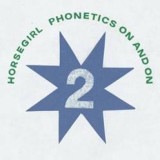
Seit der Veröffentlichung ihres gefeierten Debüts "Versions of Modern Performance" 2022 (u. a. mit Höchstwertung um US-Rolling Stone) hat sich vieles für Nora Cheng, Penelope Lowenstein und Gigi Reece verändert. Im Herbst desselben Jahres zog die junge Band von Chicago in die Ostküstenmetropole, wo Penelope und Nora an der New York University ihr Studium begannen und das erste Mal überhaupt Musik außerhalb des elterlichen Zuhauses schrieben. Der Einfluss der neuen Umgebung macht sich unmittelbar im Sound bemerkbar. Zugleich wendet sich der Blick in Zeiten beispielloser Veränderungen nach innen. Im Januar 2024 kehrten Horsegirl nach Chicago zurück, um die neuen Songs aufzunehmen. Im "The Loft" Studio stellten sich dort ein Fokus und eine Intimität ein, wie sie wohl nur entstehen können, wenn es schlicht zu kalt ist, das Gebäude zu verlassen. Cate Le Bon führte die Band derweil in neue, helle und klare Sound-Gefilde, die Raum und Textur gegenüber den dichten Soundflächen des Debüts in den Vordergrund rücken und das charakteristische Songwriting von Horsegirl betonen. Dazu zählt auch der erstmalige Einsatz von Violinen, Synths und Gamelan. Die Leadsingle "2468" ist ein Beispiel für die offenkundige Experimentierlust auf "Phonetics On and On". Mit seinen Raincoats-artigen Streichern und energischen Drums verdreht einem der Song in seinem fortlaufenden Crescendo immer mehr den Kopf. Das dazugehörige Video stammt von der Schriftstellerin und Regisseurin Eliza Callahan und wurde von Alexa West choreographiert. Es ist schwer vorstellbar, dass Songs wie die auf "Phonetics On and On" augenblicklich von irgendwem anderes stammen könnten als von diesem Trio bester Freundinnen. Nora, Penelope und Gigi schreiben mit ungefilterter Aufrichtigkeit über Szenen ihrer Jugend als Momentaufnahmen des Lebens. Die Liebe zueinander ist dabei in jedem Augenblick spürbar und resoniert durch und durch im Zusammenspiel auf ihrem zweiten Album. Horsegirl gründeten sich 2019 in der umtriebigen DIY-Szene Chicagos. Die damals 17- und 18-jährigen Schülerinnen zählen Yo La Tengo und Pavement zu ihren erklärten Vorbildern. Ihr Debüt, auf dem Steve Shelley und Lee Ranaldo als Gäste zu hören sind, nahm die Band in Steve Albinis Studio mit John Agnello (Sonic Youth, Dinosaur Jr.) auf. Zuletzt tourten Horsegirl u. a. mit The Breeders.
Buscar:cha os
- A1: Ripper Sole - Stomp
- A2: Army Of Me - Björk
- A3: Girl U Want - Devo
- A4: Mockingbird Girl - The Magnificent Bastards
- A5: Shove - L7
- A6: Drown Soda - Hole
- B1: Bomb - Bush
- B2: Roads - Portishead
- B3: Let’s Do It - Joan Jett & Paul Westerberg
- B4: Thief - Belly
- B5: Aurora - Veruca Salt
- B6: Big Gun - Ice T
It’s a tough call which is the bigger cult classic, the Tank Girl movie or its accompanying soundtrack, but on balance, we’d have to go for the soundtrack. Yeah, the film had a cast composed of some of the most colorful characters (Iggy Pop, Ann Magnuson) and character actors (Malcolm McDowell, Ice-T, and of course the almighty Lori Petty!) in show biz.
And, its dystopic, resource-starved desert setting, intense action sequences, and lead female character mark it as a feminist (albeit funnier) precursor to Mad Max: Fury Road. But check out the soundtrack’s bona-fides: assembled by Courtney Love herself, it features a Who’s Who of ‘90s female rock including Hole, Björk, L7, Veruca Salt, and Belly among others. Plus, it even has tracks that were exclusive to its release, like a unique version of Devo’s “Girl U Want,” “Mockingbird Girl” by The Magnificent Bastards (a side project of the late Scott Weiland of Stone Temple Pilots), and a duet of “Let’s Do It, Let’s Fall in Love” between Joan Jett and The Replacements’ Paul Westerberg. In short, if there ever was a score that needs to be on wax, this would be it. We’ve done it right, too, with a gatefold jacket featuring the trademark comic book art and stills from the film, and neon coral vinyl pressing for its 30th anniversary!
- 1: Prepad
- 2: Svetski Osmeh
- 3: Daj Mi Sansu
- 4: Progresio Sam
- 5: Djuskaj
- 6: Kupatilo Je Shvatilo
- 7: Meterology
- 8: Otisli Smo
Original[30,88 €]
ŽUR (‘Zhure’, party) is absolute cult and one of the most rare Yugoslavian disco funk albums, originally recorded in 1981, reissued on Everland Music for the first time since the original vinyl came out more than 40 years ago. The album was carefully and brilliantly remastered by grammy nominated sound engineer Jessica Thomson.
Boban Petrović is a legend of Belgrade's sophisticated disco funk scene from the late 70s and early 80s.
Back in the second half of the 70s Boban started one of the first disco clubs in Belgrade and he was one of the biggest organizers of private house parties.
The finest balance between Boban Petrović's big-hearted party-maker-turned-philanthropist personality and his hustler one was achieved on Žur.
On Žur, he is at home, in his safe place, since the parties, the music and the people are the first out of many things he had completely figured out in his life. He is at the top of his game, occasionally bothered by a casual heartbreak, but always feeling himself, coming out playful and fundamentally peaceful, satisfied and ready to transcend himself in order to put the rest of the world in the limelight. In fact, Žur isn’t about the party, music, lyrics or its, hands down, beautifully balanced sonics. It’s about Boban and the funk he lived thoroughly. The funk before, but the funk he lived after this album even more so. All the ups and downs that he faced since the moment the first needle dropped on a Žur record to this very day are on this album as the unwritten destiny of that lighthearted character he played.
In short, ŽUR represents the essence of underground club life in Belgrade from the late 70s, when the album was recorded.
The quality of this trust is confirmed by the fact that Boban Petrovic's music is still actively listened to today, not just anywhere, but at the finest club events.
High end production and extremely authentic arrangements outside the mold of classic disco music, and lyrics that literally convey the vibe of his already jet-set lifestyle in Belgrade at the time.
Shortly after his musical career, Boban Petrovic became a businessman of the conscious class. He was living in Spain on his own luxury yacht for years, he had a private airplane, a car park. But all this time living on highest class level he never lost his identity. In all his offices, yacht, airplane and everywhere was playing loud funk music and he was dressed like a musician who just finished or need to start a gig.
Along the way Boban also wrote two books: Rokanje 1 & 2 describing the time when the album ŽUR was created.
The ŽUR album is one of the the holy grails of disco funk music releases on a global level.
ŽUR (‘Zhure’, party) is absolute cult and one of the most rare Yugoslavian disco funk albums, originally recorded in 1981, reissued on Everland Music for the first time since the original vinyl came out more than 40 years ago. The album was carefully and brilliantly remastered by grammy nominated sound engineer Jessica Thomson.
Boban Petrović is a legend of Belgrade's sophisticated disco funk scene from the late 70s and early 80s.
Back in the second half of the 70s Boban started one of the first disco clubs in Belgrade and he was one of the biggest organizers of private house parties.
The finest balance between Boban Petrović's big-hearted party-maker-turned-philanthropist personality and his hustler one was achieved on Žur.
On Žur, he is at home, in his safe place, since the parties, the music and the people are the first out of many things he had completely figured out in his life. He is at the top of his game, occasionally bothered by a casual heartbreak, but always feeling himself, coming out playful and fundamentally peaceful, satisfied and ready to transcend himself in order to put the rest of the world in the limelight. In fact, Žur isn’t about the party, music, lyrics or its, hands down, beautifully balanced sonics. It’s about Boban and the funk he lived thoroughly. The funk before, but the funk he lived after this album even more so. All the ups and downs that he faced since the moment the first needle dropped on a Žur record to this very day are on this album as the unwritten destiny of that lighthearted character he played.
In short, ŽUR represents the essence of underground club life in Belgrade from the late 70s, when the album was recorded.
The quality of this trust is confirmed by the fact that Boban Petrovic's music is still actively listened to today, not just anywhere, but at the finest club events.
High end production and extremely authentic arrangements outside the mold of classic disco music, and lyrics that literally convey the vibe of his already jet-set lifestyle in Belgrade at the time.
Shortly after his musical career, Boban Petrovic became a businessman of the conscious class. He was living in Spain on his own luxury yacht for years, he had a private airplane, a car park. But all this time living on highest class level he never lost his identity. In all his offices, yacht, airplane and everywhere was playing loud funk music and he was dressed like a musician who just finished or need to start a gig.
Along the way Boban also wrote two books: Rokanje 1 & 2 describing the time when the album ŽUR was created.
The ŽUR album is one of the the holy grails of disco funk music releases on a global level.
- Generique
- Les Mannequins D'osier
- L'heure Du Jazz
- Coeurs Brises
- Regarde Les Riches
- Les Hommes Qui Passent
- Bessie
- Tropic Blues Bar
- L'enterrement De Sidney Bechet
- Kennedy Rose
- Une Derniere Semaine A New York
- Patou Blues
- Generique (Orchestral)
Black Vinyl[30,46 €]
The 1990 album Scène De Vie was the big follow-up album to her debut Mademoiselle Chante and it confirmed the singer's talent and potential. The album went straight to the top of the French charts and featured several successful singles, including ""Les Hommes Qui Passent"", ""Les Mannequins d'Osier"", and ""Kennedy Rose"". The album eventually reached 2 million sales worldwide and received a diamond status. The album also had great success in Germany, Switzerland, Belgium, Canada, and Russia. Scène De Vie is available as a limited edition of (1000?) individually numbered copies on crystal clear vinyl and includes an insert.
- 45: Lux
- 431: 42
- Vienna Sur Mer
- Runde Um Runde
- Ich Kann Nicht Schlafen
- Alles Ist Gleich
- Tourist
- Verbautes Haus
- Hinter Jalousien
- Der Regen In Wien
- Mädchen Mit Herz
- Lass Uns Spazieren
- Wolfgang Von Kempelens Sprechmaschine
LIMITED 2 LP[30,04 €]
"Wien - die Stadt mit dem wahrscheinlich schönsten Namen. Allein der Klang ist schon Musik." (Andreas Dorau) Grund genug, der österreichischen Hauptstadt ein ganzes Album zu widmen. Die Idee dafür entstand, als Dorau gemeinsam mit zwei Freunden an einem Stadtplan Lübecks arbeitete und dessen brachliegende Geschichten abseits der üblichen Attraktionen erforschte. In Dorau entflammte die Faszination für das Porträtieren einer Stadt aus der Sicht des unvoreingenommenen Touristen, des Besuchers und Außenstehenden. Musikalisch spannt das Album einen weiten Bogen und bietet sowohl wunderschöne Pop-Momente ("Der Regen in Wien"), knarzigen Kawaii-Minimalismus zusammen mit der Kölnerin Stefanie Schrank ("Lass uns spazieren gehen") aber auch Stücke, die sich in ihrem Charakter jeder Einordnung entziehen ("Alles ist gleich"). "Wien" ist somit nicht das erwartbare Album, das der Titel zunächst vermuten lässt. Vielmehr bietet die Platte Einblicke in Andreas Doraus" persönlichen Zugang zur Stadt, die zuweilen auch ein schwierig-schmieriges Verhältnis offenbaren. Und während Popmusik aus und über Österreich im Grunde schon bei Mozart und Schönberg begann, ist Pop aus Deutschland über Österreich vermutlich eher eine Neuerung. Wenn es dann auch noch ein norddeutscher Musiker ist, der ein monothematisches Album über die österreichische Hauptstadt macht, drängt sich fast zwangsläufig die Frage auf: Ist das schon Austro-Pop?
- 45: Lux
- 431: 42
- Vienna Sur Mer
- Runde Um Runde
- Ich Kann Nicht Schlafen
- Alles Ist Gleich
- Tourist
- Verbautes Haus
- Hinter Jalousien
- Der Regen In Wien
- Mädchen Mit Herz
- Lass Uns Spazieren
- Wolfgang Von Kempelens Sprechmaschine
- Platz Auf Erden
- Ottakringer Lightboy
- Rauchen In Wien
- Ich Schwöre
- Tiere Im Prater
- Teddy
- Ein Augenblick Mit Unterschrift
- Schlangen In Der Stadt
- Austropop
- Der Spleen
- Nichts Ist So Wie Es Einmal Schien
Black Vinyl[23,49 €]
"Wien - die Stadt mit dem wahrscheinlich schönsten Namen. Allein der Klang ist schon Musik." (Andreas Dorau) Grund genug, der österreichischen Hauptstadt ein ganzes Album zu widmen. Die Idee dafür entstand, als Dorau gemeinsam mit zwei Freunden an einem Stadtplan Lübecks arbeitete und dessen brachliegende Geschichten abseits der üblichen Attraktionen erforschte. In Dorau entflammte die Faszination für das Porträtieren einer Stadt aus der Sicht des unvoreingenommenen Touristen, des Besuchers und Außenstehenden. Musikalisch spannt das Album einen weiten Bogen und bietet sowohl wunderschöne Pop-Momente ("Der Regen in Wien"), knarzigen Kawaii-Minimalismus zusammen mit der Kölnerin Stefanie Schrank ("Lass uns spazieren gehen") aber auch Stücke, die sich in ihrem Charakter jeder Einordnung entziehen ("Alles ist gleich"). "Wien" ist somit nicht das erwartbare Album, das der Titel zunächst vermuten lässt. Vielmehr bietet die Platte Einblicke in Andreas Doraus" persönlichen Zugang zur Stadt, die zuweilen auch ein schwierig-schmieriges Verhältnis offenbaren. Und während Popmusik aus und über Österreich im Grunde schon bei Mozart und Schönberg begann, ist Pop aus Deutschland über Österreich vermutlich eher eine Neuerung. Wenn es dann auch noch ein norddeutscher Musiker ist, der ein monothematisches Album über die österreichische Hauptstadt macht, drängt sich fast zwangsläufig die Frage auf: Ist das schon Austro-Pop?
CLEAR VINYL[21,81 €]
Seit der Veröffentlichung ihres gefeierten Debüts "Versions of Modern Performance" 2022 (u. a. mit Höchstwertung um US-Rolling Stone) hat sich vieles für Nora Cheng, Penelope Lowenstein und Gigi Reece verändert. Im Herbst desselben Jahres zog die junge Band von Chicago in die Ostküstenmetropole, wo Penelope und Nora an der New York University ihr Studium begannen und das erste Mal überhaupt Musik außerhalb des elterlichen Zuhauses schrieben. Der Einfluss der neuen Umgebung macht sich unmittelbar im Sound bemerkbar. Zugleich wendet sich der Blick in Zeiten beispielloser Veränderungen nach innen. Im Januar 2024 kehrten Horsegirl nach Chicago zurück, um die neuen Songs aufzunehmen. Im "The Loft" Studio stellten sich dort ein Fokus und eine Intimität ein, wie sie wohl nur entstehen können, wenn es schlicht zu kalt ist, das Gebäude zu verlassen. Cate Le Bon führte die Band derweil in neue, helle und klare Sound-Gefilde, die Raum und Textur gegenüber den dichten Soundflächen des Debüts in den Vordergrund rücken und das charakteristische Songwriting von Horsegirl betonen. Dazu zählt auch der erstmalige Einsatz von Violinen, Synths und Gamelan. Die Leadsingle "2468" ist ein Beispiel für die offenkundige Experimentierlust auf "Phonetics On and On". Mit seinen Raincoats-artigen Streichern und energischen Drums verdreht einem der Song in seinem fortlaufenden Crescendo immer mehr den Kopf. Das dazugehörige Video stammt von der Schriftstellerin und Regisseurin Eliza Callahan und wurde von Alexa West choreographiert. Es ist schwer vorstellbar, dass Songs wie die auf "Phonetics On and On" augenblicklich von irgendwem anderes stammen könnten als von diesem Trio bester Freundinnen. Nora, Penelope und Gigi schreiben mit ungefilterter Aufrichtigkeit über Szenen ihrer Jugend als Momentaufnahmen des Lebens. Die Liebe zueinander ist dabei in jedem Augenblick spürbar und resoniert durch und durch im Zusammenspiel auf ihrem zweiten Album. Horsegirl gründeten sich 2019 in der umtriebigen DIY-Szene Chicagos. Die damals 17- und 18-jährigen Schülerinnen zählen Yo La Tengo und Pavement zu ihren erklärten Vorbildern. Ihr Debüt, auf dem Steve Shelley und Lee Ranaldo als Gäste zu hören sind, nahm die Band in Steve Albinis Studio mit John Agnello (Sonic Youth, Dinosaur Jr.) auf. Zuletzt tourten Horsegirl u. a. mit The Breeders.
Pianist Masako Ohta and trumpet player Matthias Lindermayr are back on Squama with 'Nozomi', the follow-up to their 2022 debut 'MMMMH'.
The Japanese title, which translates to ‘hope’, felt fitting, as the album was conceived during a time of personal loss for Ohta, during and after which music proved itself as a beacon of hope.
The music on Nozomi unfolds gently, with Lindermayr’s airy tone and lyrical playing being wrapped in Ohta’s chordal backing that moves from tender to tense and back over the course of the album. While most tunes were written by Lindermayr, the only exception being an interpretation of Ryuichi Sakamoto’s ‘Hibari’, the arrangements are largely improvised, letting the duo’s intuition guide the course and build the form.
Solemn slowness has become a signature trait of the Munich-based duo and it makes listening to their new record a healing retreat from the frantic chatter of the present.
- A1: Hit Man
- A2: You're Billy
- A3: Animal Abandon
- A4: Madison
- A5: Cabbage Alley
- A6: It's So Weird
- B1: We Don't Have A Choice
- B2: A Personal Attack
- B3: Superego
- B4: Not Technically Divorced
- B5: What's Our Story?
- B6: All Pie Is Good Pie
Mutant, in partnership with Netflix, are proud to present Graham Raynold’s score to Richard Linklater’s film HIT MAN.
A Romantic Comedy Noir, loosely based on the true story of a nebbish philosophy professor named Gary Johnson who moonlighted as an undercover police officer, HIT MAN is Richard Linklater and Glen Powell’s meditation on identity. Linklater, a filmmaker who has shapeshifted many times over his storied three decades of storytelling, has reteamed with his frequent music collaborator Graham Reynolds, to produce a jazzy, romantic, dark, and playful score.
Reynolds has worked in each of these modes before with Linklater, but never all at the same time. It stands defiant in contrast the version of the Gary that we meet at the beginning of the film - allowing the character to meet the score on its level by the time we approach the twisted finale. This score proves that genre, like identity, can be a limitation placed on both films and film music.
This physical release is limited to 500 copies worldwide, and features a forward by Graham Reynolds and packaging designed by Mutant co-founder Mo Shafeek.
Free jazz poetry by a spry, 85 year old Joe McPhee, adapting his renowned improvised practice to words - juxtaposed with Mats Gustafson’s sparing brass and electric gestures. It’s an utterly timeless and transfixing salvo, another shiny notch for Smalltown Supersound’s Le Jazz Non Series.
As a common ligature to the OG free jazz scene of ‘60s NYC, with formative binds to its European offshoots and the experimental avant garde, Joe McPhee is a true force of nature who has represented jazz at its freest over a remarkable lifetime. In duo with Swedish free jazz and noise standard bearer Mats Gustafson, he upends expectations with an astonishingly vivid and upfront example of his enduring contribution to freely improvised music. In 11 parts he variously reflects on everything from the neon sleaze and scuzz of NYC to contemporary US politicians and laugh out loud imitations of his previous sparring partners such as Peter Brötzmann, with a head-slapping immediacy that leaves you reeling, spellbound.
McPhee’s flow of rare, organic cadence, ranging from urgent to contemplative and dreamlike, is blessed with a unique turn-of-phrase that surely mirrors his decades of instrumental work. Gustafsson, meanwhile, dextrously takes up the mantle with a multi-instrumental spectrum of sounds, leaving McPhee unbound and able to float and sting on the mic. There’s obvious wisdom in his perceptively penetrative observations, as derived from a rich cultural life well spent, but also a playful naivety and levity in his ability to veer from almost melodic speech to explosive aggression and a knowing, bathetic wit. It’s perhaps hard to believe that McPhee only started incorporating and performing spoken word in his work in the past ten years, a half century since his declaration of “What Time Is It‽” announced his arrival on a legendary debut ‘Nation Time’ (1971), ushering in one of free jazz’s most singular characters in the process.
Oscillating between discordant reflections on life as a touring musician, set to Gustafsson’s skronk and culminating in a snort-worthy imitation of Peter Brötzmann’s gruff German accent, on ‘Short Pieces’ or the glowering growl and noise exhortations of ‘Guitar’, he evokes a more sweetly consonant calm in ‘When I Grow Up’ and eerie threat of ‘The Dreams Book’, and viscerality of ‘Disco Death’, where Gustafson’s tonal versatility comes into hugely mutable play, whilst McPhee’s extraordinary, unaffected voice is a constant. It’s perhaps McPhee’s balance of cool measuredness and wellspring of barbed energies that allows us, at least, to get the most out of this one; not stifling with mannered or manicured enunciation that can trigger certain icks; keeping close to the nature of spoken word in a way that avoids cliche and becomes inherently critical of it within his purposeful, non-hesitant clarity and unflinching approach.
Bonding over their disillusionment with exhausting world tours and the relentlessness of the music industry, David Bardon, Oscar Robertson and Olivier Huband formed Sunglasses For Jaws in 2017.
Over the course of their albums, they have collaborated with Clementine Brown (Penguin Café Orchestra), Miles Kane (Last Shadow Puppets) & Rosetta Carr (Alabaster Deplume). Hailing from London, this band takes you on a unique musical journey, skilfully blending the lounge, experimental and groovy influences of the 70s with a contemporary twist that leaves plenty to the imagination.
Recorded in 1997, Mountain Top features the commanding vocals of Tony Roots, backed by the legendary Firehouse Crew and produced by the visionary Fada Waz (Clifton Carnegie). This record’s release was driven by the people, evidenced and encouraged by the countless wheel-ups and sing-alongs during King Original’s international tour dates over the last three years whenever this seminal recording was dropped in the set.
Tony Roots, known for his cultural and spiritual themes, delivers a powerful vocal performance, reminding us that life’s most important journey is overcoming obstacles to find ‘Jah Love on the Mountain Top.’ This message is as relevant in today’s fast-paced, easy-come-easy-go consumer culture as it was when recorded three decades ago.
The Firehouse Crew renowned for their work with iconic acts like Luciano and Sizzla—shine brightly on this riddim, with the MPC drum machine-centered sound of 90s Jamaican roots reggae. An up-tempo 4/4 steppers beat layered with rich analogue textures and soulful instrumentation defines this timeless recording.
The first of many collaborations between Studio 55, Before Zero Records, and Footsie, the King Original legacy continues into the future, honouring the enduring contributions of Fada Waz and his collaborators.
Clifton Carnegie aka Ras Wazair aka Fada Waz - Clifton Carnegie, known as Ras Wazair, founded King Original Sound System in 1973, establishing it as East London’s foremost reggae sound. Operating under his Studio 55 moniker, he collaborated with legends like Johnny Osbourne, Barry Brown, Michael Prophet, Cornell Campbell, and Frankie Paul through imprints such as Original Sounds, Studio 55, and Original International. A mentor to many of the UK’s top sound systems and a key figure in London’s RasTafari community, Ras Wazair’s connections with prominent Jamaican artists, bands, and producers like Fattis Burrell ensured that Jamaican music remained an influential force in the UK sound system scene.
King Original
Founded in 1973 by Fada Waz, King Original Sound System shaped East London’s reggae scene for over two decades. Fada Waz and his son Footsie—a UK Grime pioneer who in later years expanded the legacy through his KO LP series and sold-out King Original mixed-genre events at London’s top venues—worked together until Footsie assumed full control following Fada Waz’s passing in 2021. Having worked with artists such as Dizzee Rascal, Arctic Monkeys, The Prodigy, D-Double E, Wiley, and Skepta, Footsie’s dedication to King Original has reinvigorated the legacy that underpins all UK bass music—the reggae sound system. Joining Footsie is his brother, Wazair’s last born Ras D also Jah Model, and long-time collaborator Sir Spyro, producer of two UK number-one hits with Stormzy and son of UK reggae stalwart Nerious Joseph. Armed with cutting-edge QSS sound system technology, King Original continues to set trends, shaping the future of UK bass music.
Tony Roots
Hailing from Manchester, Jamaica, in the 1980s, Tony Roots emerged alongside iconic figures like Garnet Silk and Tony Rebel. While his peers remained in Jamaica, Tony moved to the UK, where he went on to release ten albums and numerous singles, including hits like Grow Your Natty Dread Locks and Hola Zion. A steadfast champion of Rastafari, Tony has collaborated with legends such as the Firehouse Crew, earning worldwide respect and a devoted following within both the reggae community and the UK sound system scene.
The Firehouse Crew
Formed in 1986, The Firehouse Crew became a cornerstone of the 1990s roots-reggae revival. Initially associated with King Tubby’s Firehouse label before establishing their own, the band rose to prominence through collaborations with producer Philip “Fattis” Burrell at Xterminator Records. Their contributions to timeless albums like Luciano’s Where There is Life highlight their extraordinary musicianship. Over the years, The Firehouse Crew has backed iconic artists such as Sizzla, Buju Banton, and Beres Hammond, cementing their legacy as masters of roots reggae.
- Main Title
- Eiko-Maru Sinking
- Bingo-Maru Sinking
- Uneasiness On Odo Island
- Ritual Music Of Odo Island
- Storm On Odo Island
- Frigate March
- Odo Theme Island
- Godzilla Appears On Odo Island
- Horror In The Water Tank
- Shinagawa Pandemonium
- Attack Godzilla
- Godzilla Comes Ashore
- Fury Of Godzilla
- Deadly Broadcast
- Godzilla To Tokyo Bay
- Repel Godzilla
- Devastated Tokyo
- Oxygen Destroyer
- Prayer For Peace
- Frigate March Ii
- Godzilla Under The Sea
- Ending
Waxwork Records is thrilled to present GODZILLA 70th Anniversary Original Motion Picture Soundtrack by composer Akira Ifukube. Released in 1954 by director Ishirô Honda, Godzilla holds the record for being the longest- running franchise in film history. Waxwork Records worked closely with Toho to create this deluxe 70th Anniversary release, featuring a re-mastered score and all-new art.
When ships begin to go missing near Odo Island off the coast of Japan, the locals look to the government for help. Paleontologist Kyohei Yamane (Takashi Shimura) is sent to investigate the situation. There, he discovers the horrors of Godzilla, who soon begins attacking the Japanese mainland. As the military’s efforts to destroy the monster continuously fail, scientist Daisuke Serizawa (Akihiko Hirata) is called upon to use his “Oxygen Destroyer” to kill the beast. Finding Godzilla in Tokyo Bay, Serzawa’s machine is used and finally, the beast is felled.
Since its release, Godzilla has continued to terrorize audiences around the world. The film has influenced countless filmmakers, with both Akira Kurosawa and Steven Speilberg citing it as one of their favorite films. The genius use of practical special effects and miniatures changed how the Japanese film industry made movies for decades. Godzilla has spawned over thirty sequel films and countless video games, comic books, toys, TV shows, and more becoming a pop culture phenomenon in the process.
The film’s score by Akira Ifukube has become an instantly recognizable piece of film music. Given only the script and a week in which to compose, Ifukube crafted a score that feels as enormous as the kaiju himself. Godzilla’s theme has become a staple of nearly all subsequent Godzilla films and was considered by Ifukube to be the greatest piece of music he had written. Using low-pitched brass and string instruments, Ifukube gives the score a massiveness and weight that complement the terror and destruction brought about by the rampaging monster. Ifukube also used a deeply resonant stringed instrument to create Godzilla’s iconic roar, a trick used to create the roar throughout the franchise.
Waxwork Records is beyond excited to present this vinyl release of Godzilla for its 70th Anniversary. Re-mastered, pressed to colored vinyl, housed in a deluxe gatefold jacket with matte satin coating, an art print, and featuring all-new artwork throughout by Robert Sammelin.
“Deep Meaning” is the debut album by Maria Wildeis, a Cologne-based artist and expert in real-time sound design for installations.
The tracks on “Deep Meaning” oscillate between club and experimental music and are characterized by a lightness unique to debut works. Particularly notable is the inventive use of synthetic, organic, and sampled vocal elements. Voices constantly morph into melodies and back; words become notes, chords turn into text. Maria’s real-time approach to composing is evident throughout, making this album an unscripted adventure. Before you uncover the deep meaning, it has already swept you away.
Maria Wildeis researches spatial aspects in art and music, working with digital sound modeling and procedural sound synthesis. She also runs Gemeinde Köln, an art space in Cologne, Germany, which she founded in 2018.
Recorded in Cologne. Music by Maria Wildeis. Tracks 2,4 co-written by Daniel Ansorge. Additional production by Daniel Ansorge and Jens-Uwe Beyer. Mixed and mastered by Daniel Ansorge at Magazine Studio Cologne. Supported by the Cultural Office Cologne.
- Prologue
- The Toy Room
- The Castle
- Giorgio Unleashed
- The Family Tomb
- John’s Despair
- Giorgio Snaps
- Il Castello Di Giove
- Giorgio Abducts Becky
- The Final Battle
“Waxwork Records is thrilled to present CASTLE FREAK Original Motion Picture Soundtrack composed by Richard Band (Re-Animator, From Beyond, Puppet Master). This 1995 direct-to-video release directed by Stuart Gordon (Re-Animator, From Beyond) has gone on to become a sought after Horror cult classic.
Jeffrey Combs and Barbara Crampton star as John and Susan Reilly, and Jessica Dollarhide as their blind daughter Rebecca. After visiting John’s newly inheri- ted 12th-century castle, the family soon realizes that they are not alone amongst the medieval stone walls. Chained up in the dungeons is Giorgio, the hideously disfigured son of the castle’s former owner. When Gior- gio escapes and wreaks havoc upon the unsuspecting Reillys, the family is brought to their breaking points.
Richard Band is an award-winning American com- poser who has written the music for over 100 fea- ture films, television series, and more. His score for Castle Freak features the innovative use of a string quartet in the film’s prologue, bringing a classical flair to his tense and terrifying score.
Waxwork Records is proud to release Castle Freak on vinyl for the first time. Featuring a heavyweight die- cut gatefold jacket with all new artwork by Anthony Petrie and pressed on “”Dungeon Splatter”” colored vinyl.”
- Tempat Angker Part 1+2
- Tempat Angker Part 3+4
Tempat Angker (haunted place) is a Halloween mixtape compiled by music researcher and artist Luigi Monteanni, aka Neurotica Exotica.
To celebrate a second year of fieldwork research in West Java and to bring together the longing for All Hallows’ Eve partying with the archipelago’s richness in local and historical horror folklore tropes, figures, characters and stories, Artetetra’s co-founder cuts up 120 minutes of soundtracks, sound effects and dialogues from the glorious and extensive Indonesian horror movies tradition counting more than 700 titles.
Hear it from speculative horror and sci-fi filmmaker Riar Rizaldi (whole essay in the tape’s leaflet):
“The popularity of cinematic media during the New Order era led to the unprecedented development of more rapid and large-scale production methods. Genre films, particularly horror and fantasy, emerged as some of the most prolific outputs, with hundreds being produced annually. The filmmaking process was accelerated, and post-production ᅳ especially sound design ᅳ was completed as swiftly as possible. Notably, veteran composer and musician Gatot Sudarto, who had worked extensively on drama films in the 1970s, became a regular contributor to studios producing horror and fantasy films in the following decade ᅳ although composer Embie C. Noer was also active during this period, his focus was more on action “sword and sandals” films. Gatot’s influence in the music departments of these films was significant, helping to create an authentic soundscape. He adapted many of the compositional techniques used in European horror films (mostly the usage of harpsichord) at the time, blending them with the bass synths characteristic of American horror, while incorporating local and regional instruments to tailor the sound to Indonesian audiences.”
By sampling excerpts from 43 movies spanning the ages from the early seventies to the two thousand and tens, mostly trying to portrait the sound influence of the vintage horror era made popular by the “queen of horror”, actress Suzzanna, Tempat Angker throws you into decades of experimentation in conjuring the sound of Indonesian terror. Unearthly screams, bombastic fights, bamboo music, eighties synthy extravaganza, ominous sound effects, sexy dangdut, evilish pitched vocals, gamelan, eerie laughters from beyond and even calls to prayer fill the air in the spooky month!
Soolmaan is a sextet led by Belgian oud player and composer Tristan Driessens, accompanied by Nathan Daems, Christos Barbas, Annemie Osborne, Andrea Piccioni, and Levent Yildirim. Together, they create sound tableaus that float freely between the Bosphorus and India, with flute, sax, ney, cello, piano and tamburello igniting an imaginary folklore infected by jazz. Releasing their second album ‘Kashgul’ on the 24th of January with Zephyrus Records. (Vinyl / CD)
Driessens began his career immersed in the classical music of the Ottoman court, founding the Lâmekân Ensemble in 2011. After training under oud virtuoso Necati Çelik in Istanbul, he returned to Belgium in 2016 to form Soolmaan, an ensemble that reflects his multi-faceted identity. Rooted in Eastern modal traditions, Soolmaan’s music bridges jazz, folk, and classical influences, creating a unique and contemporary sound.
Their 2017 debut album, ‘Letters to Handenberg’, was described as "oriental chamber jazz," with Istanbul serving as a common thread. With Kashgul, their latest release, Soolmaan explores Ottoman makam, Indian raga and Anatolian halk muzigi, blending these traditions with a contemporary modal language. Created during Driessens' artist residency at the Concertgebouw of Bruges, the album features original compositions alongside reimagined works by Ravi Shankar, Amjad Ali Khan, and Art Pepper.
With improvisation as a connecting factor, Soolmaan’s music invites listeners into rich, boundary-crossing soundscapes where tradition and innovation meet. Kashgul exemplifies the ensemble’s ability to craft an immersive musical experience that resonates deeply with diverse audiences.
Upcoming concerts
December 8, 2024
Begijnhofkerk, Sint Truiden, BE
December 12, 2024
De Bijloke, Ghent, BE
December 14, 2024
De Bijloke, Ghent, BE
- A1: I Hope You Die
- A2: The Inevitable Return Of The Great White Dope
- A3: Mama's Boy
- A4: Three Point One Four
- A5: Mope
- B1: Yummy Down On This
- B2: The Ballad Of Chasey Lain
- B3: Rsvp
- B4: Magna Cum Nada
- B5: The Bad Touch
- B6: That Cough Came With A Prize
- B7: Take The Long Way Home
- C1: Hell Yeah
- C2: Right Turn Clyde
- C3: This Is Stupid
- C4: A Lap Dance Is So Much Better When The Stripper Is Crying
- C5: The Ten Coolest Things About New Jersey
- C6: Along Comes Mary
- D1: The Bad Touch (The Eiffel 65 Mix)
- D2: The Ballad Of Chasey Lain (The Flirt Mix)
- D3: Hope" (The Pet Shop Boys Extended Remix)
Hooray for Boobies ist das dritte Studioalbum der Bloodhound Gang.
Zur Feier des25-jährigen Jubiläums des Albums wird es auf 180g-Vinyl in Splatter-Optik neu aufgelegt.
Das Album war ein großer kommerzieller Erfolg und hat sich weltweit über 4 Millionen Mal verkauft.
Das Album erreichte Platz 14 in den US Billboard 200 Charts und wurde in Deutschland, Australien und
Österreich zur Nummer eins.
Hooray For Boobies enthält fünf Singles: „Along Comes Mary“, ‚The Bad Touch‘, ‚The Ballad of Chasey
Lain‘, ‚Mope‘, und ‚The Inevitable Return of the Great White Dope‘. „The Bad Touch“ war ein großer
internationaler Hit, der in fünf Ländern die Nummer eins und in weiteren 10 Ländern die Top 20 erreichte.
Das Album enthält verschiedene Sketche zwischen den Songs. Der erste dieser Sketche mit dem Titel
„Mama’s Boy“ ist ein improvisiertes Telefongespräch zwischen Jimmy Pop und seiner Mutter. In „That
Cough Came With A Prize“ wird 15 Sekunden lang gehustet. „This Is Stupid“ ist ein willkürlicher Track,
der von dem Gesangsduo vorgetragen wird, das auch in ‚Right Turn Clyde‘ zu hören ist. „R.S.V.P.“ enthält
einen kurzen Monolog der erwachsenen Schauspielerin Chasey Lain. Und „The Ten Coolest Things About
New Jersey“ schließlich besteht einfach aus zehn Sekunden Stille!
Die Jubiläums-Trackliste enthält auch drei seltene Remixe: The Bad Touch (Eiffel 65 Remix), The Ballad
Of Chasey Lain (The Flirt Mix), Mope (The Pet Shop Boys Extended Remix).
LP limited to 500 LP copies. Nina Garcia ’s first solo record widely available via international distribution. Nina has collaborated with artists like Stephen O’Malley, Sophie Agnel, Fred Frith, Antoine Chessex, Louis Schild, Leila Bordreuil, and supported for bands like Sonic Youth, SUNN O))). After a decade of performing concerts under the Mariachi guise, Nina Garcia has finally unveiled her unique approach in Bye Bye Bird, her first album under her name. Bye Bye Bird is her second solo album. With no pretence or demonstration, the album is a captivating blend of chiaroscuro, melodies, and raw emotion. Nina Garcia’s album takes on an almost documentary-like quality by adopting a simple approach to gesture and sound recording. It offers a candid portrayal of a moment, a lack, a state, and a breathtaking energy. With ostinato as her only credo, Nina Garcia’s music is an experiment in freedom, where the peaks answer the abysses, and the power of movement and the emotion of sound serves as her compass. From very short (01:28) to never very long (07:34), the eight tracks that make up this set explore a moment, a space, a mechanism, an intention or a way of doing things. As a common feature of almost all these pieces (all but one, the last), Nina Garcia explores a new technique. She adds to her instrumentation, reduced to the essentials (a guitar, a pedal and an amp), an electromagnetic microphone which, when held in hand, makes it possible to listen in on the exact zones where the vibration of the string creates a sound amid vast spaces of silence. The guitar is unplugged, and the body/instrument relationship changes in dimension. In this series of variations, you can get caught up in masses of noise seen from very, very close up, evocations of melodies in the making, feedback on ridgelines, pulsations that hold their own, modulations weakened by exhaustion and harmonic bursts that hint at better days to come. Neither hopelessly chthonic nor beatifically ethereal, Bye Bye Bird is a sum of musical pieces that make a whole and give voice to echoes of what has been, the presence of what is and the hope of what will be, a record movement in the form of flight and salvation. Since 2015, Nina Garcia has been researching and creating around the electric guitar, halfway between improvised music and noise. On numerous stages in Europe and North America, she has played occasionally with Stephen O’Malley, Sophie Agnel, Fred Frith, Antoine Chessex, Louis Schild or with Luke Stewart and Leila Bordreuil’s Feedback Ensemble, in addition to more regular formations in which she participates, such as the ensemble Le Un, mamiedaragon, Autoreverse (with Arnaud Rivière), duets with trombonist Maria Bertel and percussionist Camille Émaille, and the installation piece De Haut En Bas, De Bas En Haut Et Latéralement (with Christophe Cardoen, Jennifer Caubet, Etienne Foyer, Anna Gaïotti and Romain Simon). “Nina Garcia has been actively moving the art of noise guitar into surprising and intriguing new spaces. She has been at it for some time now, a bit of a secret weapon all the while hiding in plain sight. As I listen to her music and ruminate upon seeing her perform it brings me to a realization which I have with very few musicians: the ego inherent in making art can be transcended through a purity of direct action. At least that’s the feeling I have when experiencing Nina’s music which comes across as serious and radical and wholly engaged in the moment of its creative impulse.