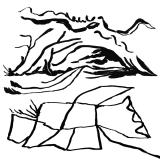
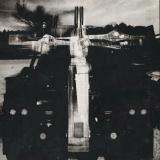
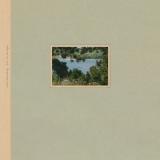
We’re very happy to announce the vinyl release of kuniyuki’s masterpiece “all these things”.
Originally it’s released on only cd in 2007. it was his 2nd album but it’s substantially his first album because the first album was a col-lection of kuniyuki’s early productions.
The first track “the guitar song” is one of our most favorite song of kuniyuki,it’s like a real good mixture of jazz, fusion, world music and electronic music.
The second track featuring african vocalist and percussionist “omar guaindefall”,we still love amazing henrik schwarz remix.
The third track “you get me” featuring our favorite singer “josee hurlock”,we’ve knew about her from the fantastic album “residue” by hefner in 2000. she is featured to the fourth track “all these things” too. we’re hoping to repress an amazing joe claussell remix.
The fifth track “flying music” featuring our good friend “alex from tokyo” as poetry reading and shuichiro sakaguchi( a popular trumpeter in tokyo) as a trumpeter. this long version was put to single cut release on 12inch.
The sixth track “the session” is a collaboration of song with henrik schwarz. they have met at mule musiq’s party in tokyo and clicked immediately.
The seventh track “touch” sounds very nostalgic african jazz or spanish fusion which is popular these days as balearic music.
The last track “rain of ocean” is a primitive african minimal deep house.this song is put to the single cut from this album(not put to the album) and we almost forgot this song but when we’re compiling the vinyl edition of album, we noticed how this song is beautiful.
Here are the collection of eight timeless and genreless music.
out of Stock
Last delivered 5 days ago available to reorder, subject to availability
Psychedelic MasterpieceOriginally released on Capitol Records in 1969, Euphoria’s debut album A Gift From Euphoria is an unsung album; one with incredible sonic radiance, masterful songwriting, and everlasting harmonies—with their fantastical combination of psychedelic, folk, country, and hard rock. The 15 songs set up a journey through the best of what had been happening within modern music by 1969. Comparisons to The White Album are apt as it leaps from genre to genre with shocking confidence, as if they knew this was their only chance to say it all on a record. But it was too good to last as this was the only album Euphoria made, one that is critically championed in hindsight and highly sought after nowadays, and it is Jackpot Records honor to be able to bring it to you. Now reissued from the original analog master tapes with the original cover artwork exclusively for RSD 2026.
Cathartic avant-rock, literate DIY folk & experimental composition exploring displacement, love, climate change, belonging & the places we call home - RIYL Jim O’Rourke, Richard Youngs, This Heat, Richard Dawson, Flying Nun. ‘Real Home’ is the new album by the Manchester-born, London-based artist Kiran Leonard. His sixth album proper (not including innumerable tour-only CD-Rs and short-run cassettes), since his precocious debut in 2013, ‘Real Home’ finds Leonard invigorated by inspiration and experience, making passionate, literate, and mercurial music that explores displacement, love, memory, climate change, connections to home and more. Encompassing songs recorded after moving to South London, ‘Real Home’ reflects on ideas of belonging and domesticity through folkloric, stream-of-consciousness songwriting. Across nine tracks, Leonard traces lived impressions of the household and the city, expressing sentiments of dislocation, alienation and stasis, but contentment too. Infusing the avant-rock effervescence, terraced dynamics and visionary lyricism of his music with what he defines as a greater sense of openness, Leonard is as versatile, fervent and imaginative as ever on ‘Real Home’, yet his music is somehow more intimate, affecting, and acutely expressive. Shaped by dual considerations of simplicity and formalism, ‘Real Home’ is by turns beautiful, allusive, and ruminative, an album on which Leonard considers what his songs have resembled in the past and what they mean now. In recent years, Leonard has crafted eloquent chamber music inspired by the likes of James Joyce and Clarice Lispector (‘Derevaun Seraun’), responded to contemporary politics and communication breakdown in the digital age (‘Western Culture’), and compiled solo works and ensemble recordings for a longform ode to Jonas Mekas and to one of Leonard’s enduring themes; home (‘Trespass On Foot’). On ‘Real Home’, Leonard reiterates this abiding thematic focus yet ascends to new, different heights, in music of cathartic delicacy and dissonance where all the myriad dimensions of his work to date seem to crystallize. There are sinuous songs about struggle and defying the pace of city life through drift and diversion (‘Pass Between Houses’), stirring songs of intense feeling and crescendo, described as a form of speculative detective fiction (‘Theatre for Change’). There are touching solo piano ballads (the title track), symbolic contentions with carbon capture and climate change (‘Utopia of Bog’), modes of experimental minimalism (‘Void Attentive’), and other profuse feats of compositional range, embroidered with wild tendrils of narrative and lyrical depth. A record to pore over, and get lost in. Exemplifying the vast aesthetic scope of Leonard’s music, lead single ‘My Love, Let’s Take The Stage Tonight’ is inspired by country lodestar Hank Williams, Russian poetry and a late period love poem by William Carlos Williams. Yet for Leonard, the song signals a sense of accessible materiality, and is the product of a more linear approach to writing songs: “My imitation of the great Hank Williams, in spirit if not in substance…This is one of the best efforts on Real Home at a song-as-object. Looking at it now I realise I was trying to write a song that made itself known as a song to the listener, and I wonder whether that’s crucial if you want a song to transcend its context. And that this is either accomplished through a total openness – by being inviting, by laying the tricks of the song out plain to see, as Williams and his many ghostwriters did so well – or by adopting a knowing aloofness, positioning oneself against the listener but letting it be known that that’s what it’s doing. In this song I try both, but mostly the former: as in, I wanted to write a song where every line follows on from the next.” Imbuing the endlessly elaborate and inventive qualities of his music with a newfound streak of candid, clear-cut melodicism, Leonard has reached a special place in his artistry, on a record that feels familial, and expresses closeness. Assembled with affiliates including Lauren Auder, Otto Willberg, Jasper Llewellyn (caroline), Tom Hardwick-Allan (Shovel Dance Collective), Magda McLean (caroline, The Umlauts), Alex Mckenzie (caroline, Shovel Dance Collective), Isabelle Thorn (Dear Laika) & more, the recording process had a significant influence on the subject matter of ‘Real Home’, in sessions defined by close-knit camaraderie and artistic eccentricity: “The theme of the home obviously recurs throughout the record; the album was mostly recorded in domestic spaces with friends, and the name of the album is Real Home. I like the qualifier ‘real’, like you’re getting past the cloak of the word and towards the thing-itself…also nearly all the percussion in this record was recorded on items from my dad’s shed (jam jars, sandpaper, blocks of wood, etc). Real home record!” ‘Real Home’, like anything by Kiran Leonard, is a record of dazzling multiplicity. Yet it’s a companionable prospect with a central premise; a collection of songs where listeners old and new can find a home. An album led by a scene; of Leonard standing at the threshold, ready to welcome you inside. “Exceptional songs that linger” - The Guardian // “An autodidact of amazing talent & energy” – Pitchfork // “A ridiculous amount of talent…confrontational, celebratory, provocative or perverse – he manages all of these emotions & more” - The Quietus /
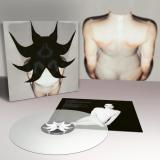
Over the last decade, Portrayal of Guilt have solidified themselves as a pillar in the extreme underground music scene. With relentlessly consistent releases like 2023’s orchestral nightmare Devil Music, and year-round world touring with the likes of Deafheaven, Uniform and Pg. 99, POG have unquestionably carved their own path.
Defying accurate categorization since formation, the three piece blends elements of black, death and nu metal with crust, screamo, powerviolence and hardcore, with the bands forthcoming LP …The Beginning of The End” continuing to further obscure genre lines. The band takes the unhinged discordance to the next level on album standouts “Ecstasy” and “Human Terror”, with KoRn-like guitar dissonance, punishing death metal lows, and haunting spoken passages confidently riding the line between Life is Peachy and Scum.
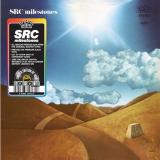
SRC were no strangers to the Detroit Grande Ballroom live scene (that also featured The Stooges, MC5 & Alice Cooper), but SRC’s anglophile-leaning compositions made their records stand out from that pack. Beloved and championed by GENESIS' PETER GABRIEL & DJ JOHN PEEL, SRC were a band that sonically was a cross-section of the UK pop of The Zombies and the inventive, garage rock leanings of The Pretty Things (with a healthy dose of Blue Cheer thrown in!). For their second album, Milestones, SRC added new, ambitious sonic elements, creating a high-wire act that now encompassed funk, prog, and heavy rock. Anchored, as always, by the stun-ray lead guitar playing of Gary Quackenbush and keyboards of his brother Glenn, the band finds themselves still able to crush the listener with unforgettable hooks, but now with an added healthy side of sonic theatrics. This new re-issue joins our trio of other late 60s Capitol re-issues, including the original SRC S/T LP, the reverb-drenched debut masterpiece from Gandalf, and Europhia’s Abbey Road-produced genre-hopping A Gift From Euphoria. Now reissued from the original analog master tapes with the original cover artwork, exclusively for RSD 2026.
A personal record for Mike shaped by memory, places, and renewal. Walking the streets of his birthplace, St. Louis, Zito reconnects with the sounds, stories, and hard lessons that forged his signature blend of soul-driven blues and fearless storytelling. Thirteen years after Gone to Texas, this album feels like a defining moment, marking a new chapter for Mike, his family, and a life reclaimed in the city that started it all. The songs paint vivid snapshots of city life and personal reckoning, from late- night regret and self-awareness to raw portraits of neighbourhood survival and street-level truth. Tracks like "Downtown at Midnight" and "Grand Avenue" capture the grit, temptation, and consequences of the past with unflinching honesty, grounding the album in lived experience and emotional weight . Zito's writing is direct and cinematic, pairing tough reflection with compassion and hard-earned wisdom.
At its heart, Outside Or The Eastside is a celebration of second chances, an album dedicated to better days, family, friendship, love, and joy found in everyday moments. Life's unpredictable paths open doors you never expect, and for Mike Zito, this record embraces that truth with warmth, humour, and swagger. It's a record about choosing connection over chaos and moving forward with gratitude, purpose, and the volume turned up
With Texas- sized defiance and drive, he's spent four decades flying the flag for his own brand of honky-tonk, outlaw country, western swing, and rockabilly. That signature sound has a name -- "Ameripolitan" -- and its originator is Watson himself: a singer, songwriter, guitarist, producer, actor, cultural architect, and rulebreaking traditionalist for the modern world, championing the traditions that fly in the face of the homogenous mainstream. With Unwanted, he fires another doublebarreled shotgun blast of country twang and honky- tonk bang fueled by the heartaches, hard- won lessons, and high- speed thrills of a life largely logged on the road. Singing with a booming voice that could cut through the chaos of a packed dancehall, Watson runs the show like a roots-rock ringleader. He salutes his vices on the galloping "Willie Waylon and Whiskey," reflects upon a lifetime of loss with the gorgeous ballad "If You Really Loved Me (Outlive Me)," and gets wistfully contemplative on "Life is Like a Song." Entirely written and produced by Watson, Unwanted is the sound of an Ameripolitan diehard with plenty of life left in the tank, speeding toward a horizon of his own making.
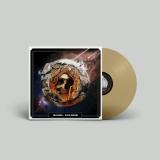
It's a realisation that the ground beneath our feet is alive, and we're all just passengers on its pulse. It's that hum of dread and wonder that defines Armed For Apocalypse's fourth full- length album: a towering, grooved- out, post- metal monolith carved from grief, power, and purpose. Formed in Chico, California between longtime friends Nick Harris (drums) and Cayle Hunter (guitar), Armed For Apocalypse is a what- if turned war machine. Over the years, the band has endured enough shakeups and setbacks to bury most acts: relocations, divorces, day jobs, family changes and not to mention complete lineup overhauls. But where others fractured, AFA sharpened.
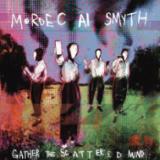
One which lyrically questions some of the radical changes affecting society. A society of increasing division and tension. Social media, influencers, online dating, the distraction of mobile phones, young adults financially trapped in the family home, AI, and bullying: are all scrutinised. Musically, the style has moved on since the last album, 'Things Are Getting Stranger On The Shore'. New members, Luxagen (keys, vocals) and Steve Thompson (bass) have added their considerable musical talents to an already strong line up of Mordecai (vocals, guitar) Tabitha (Sax, clarinet) and Michael Creech (drums, percussion). The new direction tips a nod to the "Art Rock" and "New Wave" music of the 1970's, with plenty of modern innovation in store to keep things sounding fresh and exciting. Previously, Mordecai Smyth has worked with Terry Bickers (House of Love/Levitation) and recently played live shows supporting Bickers' new band. He has had three albums released by Mega Dodo and has written soundtracks to historical films for the British Film Institute. 'Gather The Scattered Mind' is limited to 100 copies, comes in a gatefold sleeve with lyric insert.
Lily Allen's third chart topping album 'Sheezus' is now available for the first time on crystal-clear vinyl. The #1 album includes the hit single 'Hard Out Here'.
A century-old grand piano, a secluded house surrounded by the greenery of Brittany, no internet connection, and a reel-to-reel recorder.L'Écho de Bretagne, the new EP by Niklas Paschburg, set for release from fall 2025 via Nettwerk Music Group, is a solo piano record as essential as it is intense. An album made of silences, space, slowness. A music that doesn't chase impact, but truth.
the album release is march 26th - 2026.
If his previous work, Mexican Alps (2025), marked the first time the German composer and producer created an ambient-electronic album without his instrument of choice, the piano, L'Écho de Bretagne emerges as a direct response to that absence. "It was exactly the lack of piano that brought about the need for this new record, which instead puts that instrument, so vital to me, at the very center, stripping everything else away," Niklas explains.
Born in 1994, Paschburg has shaped over the years a musical path deeply connected to travel, nature, and introspection. From his debutTuur Mang Welten(2016) toOceanic(2018),Svalbard(2020),Panta Rhei(2023), and the aforementionedMexican Alps— alongside soundtracks, remixes, and collaborations with artists like RY X, Hania Rani, Ásgeir, and Bryan Senti — his sound bridges neoclassical, electronic, ambient, and pop-driven composition.
WithL'Écho de Bretagne, the Hamburg-born, Berlin-based musician continues his exploration by seeking solitude in nature, much like he did onSvalbard, but this time with an even more radical choice: disconnecting completely from the internet, and switching off both computer and smartphone for a while, in order to fully immerse himself in his new music. "I rented an old cottage in Paimpol, Brittany, where I knew there was a grand piano," he recounts. "When I got there, I discovered that not only was the piano more than a hundred years old, but it was also of an unknown brand, never restored, and quite difficult to play. But that gave it a unique character, and I didn't give up. Sure, it was an instrument left to its own fate, I couldn't play anything too fast. But how fascinating was that? I'm convinced that setting limits, instead of giving yourself total freedom when composing, can become an extraordinary source of inspiration."
As for the decision to temporarily detach from a life that demands we stay constantly connected, Niklas describes it as both a creative and human experiment. "I had my laptop and phone with me, just in case, but I kept them turned off. That choice made me wantL'Écho de Bretagneto be a fully analog work, even in how it was recorded." A way of clearing the mind. "I don't think I've ever been as calm as I was during those days in Paimpol. Even though I was working on a very specific project and didn't have much time, that period was more relaxing than any vacation."
Not that it was free of hiccups. "I'd borrowed a reel-to-reel recorder small enough to travel with me, but after recording a session on the piano, I realized it wasn't working properly, the sound was distorted, full of crackles. I got worried, because I wasn't near any big city where I could find a technician. Luckily, I figured out the problem was the old tape reels I had brought along. That was the only time I had to go online, to order new ones. But it was just for a moment. I shut everything off again right after." At that point, Niklas was waiting for the new tapes to arrive. He found out, completely by chance, from a local UPS courier that they had been delivered to a nearby village. "Since my phone was off, I couldn't track the shipment. So one day I asked this delivery guy, who didn't know anything about it. But from that point on, we'd see each other daily and talk… That's what being disconnected also means: reconnecting with people around you, even strangers. It was thanks to that courier that I found out where the tapes had ended up. And he even helped me get them back, writing directions for me on a scrap of paper."
But there's another element that makes this new EP unique.L'Écho de Bretagnewas recorded entirely live; its tracks are all improvised, complete with their imperfections. This approach leads to a sound that is pure, profoundly organic, and deeply authentic, intentionally preserved to give the listener the feeling of a live performance happening in their own living room. The touch of fingers on the keys, the breath of the wood, the tension of the vibrating string, all become part of the music. There is no construction, only expression. "Even now, when I listen back to it, I feel that moment I gave myself to step away from everything: from reality, from words, from noise." The result is a collection of suspended melodies and atmospheres, reflecting a state of the soul. A refuge from the rush of time. A pause from the world.
Goosey makes his Crosstown Rebels debut with ‘Wrapped Up In Your Love’, featuring remixes from Daniel Steinberg. Out on 10th April 2026, the Barcelona-based artist lands on Damian Lazarus’ imprint for the first time with a vocal-driven house cut backed by two reworks from Berlin mainstay Steinberg.
A vocal-led slice of modern house lands on Crosstown Rebels as UK DJ/producer Goosey makes his label debut with ‘Wrapped Up In Your Love’ on 10th April, a record that channels a classic touch through a contemporary lens. Built around slick drums, warm basslines, and an unmistakably uplifting vocal hook, the track leans into the nature of the dancefloor while keeping its groove firmly locked from start to finish.
The original mix leads the release with bright, feel-good energy, while the ‘Club Dub’ strips things back to the track’s rhythmic core, letting the drums, bass, and melodic touches breathe deeper into the groove. Berlin house mainstay and Arms & Legs co-owner Daniel Steinberg then steps in on remix duties, delivering two reinterpretations. His main remix sharpens the original’s hook with skippy percussion and rich M1 organ stabs, while his ‘6AM’ remix stretches the elements into deeper territory built for after-hours dancefloors.
out of Stock
Last delivered 13 days ago available to reorder, subject to availability
RSD title from 2022 pressed again. Reissue of the sought-after deep/spiritual jazz album, the first time it’s been pressed from the master tapes. All analog lacquer by Bernie Grundman. Bobby Hamilton founded the band Anubis in Syracuse, New York, and they put out their awesome ‘Ecology’ single on Charles Bazen’s Salt City imprint. It’s a highlight on the Soul-Cal anthology Now-Again issued in 2012, something akin to Terry Callier and Gil Scott Heron’s most soulful works. Shortly after issuing that single, Bobby put together the Bobby Hamilton Quintet Unlimited and recorded and issued ‘Dream Queen’ in 1972. The last clean copy Bobby Hamilton had, he sold to the musician Jamie XX in 2021 for a princely sum. Few originals will ever surface again, its original run of 500 units having disappeared into the ether decades ago. This is your chance to hear a masterwork of deep, spiritual jazz lacquered directly from its original master tape in an all analog transfer by the legendary Bernie Grundman.
out of Stock
Last delivered 6 months ago available to reorder, subject to availability
For their second full-length album, Under My Umbrella, Miss Grit has lifted the lid on their internal world, lasering in on the anxieties and heartbreak of the past two years, following their acclaimed debut Follow the Cyborg.
On this album, Margaret Sohn – aka Miss Grit (they/she) – channels the noirish atmosphere of classic trip-hop bands, while adding a hefty dose of maximalism and a dream-pop sensibility. The title is a nod to the iconic Rihanna song and embraces Sohn “…letting people in more on this record and trying not to shy away from that. I’m leaving the cyborg behind, I’m letting it all out.”
This record started to take shape when Sohn returned from an intense touring schedule where they’d driven themself around North America totally alone. When they returned home, Sohn found themselves yearning to capture that specific, less restrained energy of playing live.
Under My Umbrella not only presents Sohn’s gift for complex production, but also the boldness of finding your voice, and ultimately is about coming to terms with yourself, your imperfections, and your complex interior world.
The album features the group playing Gary McFarland arrangements of Kuhn's compositions, accompanied by a string section on several tracks, with Kuhn delivering stream of consciousness lyrics in an unplanned and largely improvised fashion in the studio. However, that wasn't the only surprising aspect to the session. Airto Moreira's appearance was more by chance than design, he having just popped by the studio, again, unplanned. The 'Steve Kuhn' album is all the stronger for these extemporaneous and serendipitous elements and showcases a band at the top of their game; tight and funky yet relaxed and flowing like molten gold, with stabs and washes of keyboard from Kuhn. Splashes of free playing enter the session, but the band never stray too far from a melodic and harmonious centre of gravity. Kuhn's deft keyboard skills provide melodic embroidery to the impressive rhythmic textures and tonal colours of Carter, Cobham and Moreira. As if the music wasn't enough, the album is given extra significance by the fact that, within a few months of the recording, McFarland would die after being mysteriously poisoned by methadone in a New York bar. In a sense, it is a valedictory album from McFarland, channeled by Kuhn and the band. It's among the hardest of Kuhn's albums to find so this reissue is most welcome. Luxuriate in the glow of Kuhn's Fender Rhodes and the pliant funky bass of Ron Carter; immerse yourself in the percussive interplay of Moreira and Cobham, a pairing that has rarely sounded so good. This is such an exquisite album; you will lose yourself in its delicate power and find yourself coming back to it again and again. "It's a beautiful picture, and it helped me to comprehend things, life a bit, you know. And as I'm thinking about it, I hope it does that for whoever listens to it too." - Thundercat, Musician Details: Heavyweight Vinyl 45 RPM Cut / Original glued prints on Thick Cardboard 700 gram / 2 Separated parts hand-glued / Glossy lamination / PVC outer / 30x60 cm insert printed on 300 gram DNS paper with interview to Steve Kuhn by Tony Higgins.
Vienna sludge doom masters TARLUNG return with their most focused and destructive statement to date. Axis Mundi is a massive slab of low tuned heaviness forged in the darkest corners of sludge and doom.
Built on suffocating riffs, dragging tempos, chugging grooves and feral vocal delivery, TARLUNG create a sound that feels both crushing and hypnotic. The band move between oppressive sludge weight, bleak doom atmospheres and abrasive noise soaked tension, shaping long, immersive compositions that pull the listener into a collapsing sonic landscape.
While rooted in nasty, direct sludge doom, TARLUNG also explore experimental textures, subtle dynamic shifts and rare moments of contemplation within the chaos, only to be swallowed again by waves of uncompromising brutality. This is an album made for listeners who want weight, tension and depth, not just volume.
For Fans Of: YOB, Crowbar, Weedeater, Iron Monkey, Dopethrone, Thou, SUMA
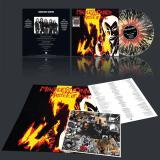
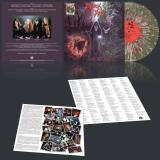
Purple Haze started out in Linköping in 1981. When singer Christer Göransson joined them towards the end of the year, they soon changed their moniker to Genocide (after the Judas Priest song of the same name) and supported local metal heroes Axewitch. A final name change was to follow: In August 1983, the band, now called Mindless Sinner, recorded a four-track demo entitled »Master Of Evil«, consisting of the title track, “Broken Freedom”, “Key Of Fortune” and “Screaming For Mercy”. This attracted Swedish label Fingerprint Records, and they in turn released the NWOBHM-inspired material as a mini-album with an awful cover and getting the band’s name wrong (spelling it Mindless Sinners). By then, the line-up of the band was Anders Karlsson (bass), Magnus Danneblad (guitar), Jerker Edman (guitar), Tommy Johansson (drums) and vocalist Christer Göransson. »Master Of Evil« originally saw the light of day on Fingerprint in January 1984. Christer Göransson takes us back to the early days of Mindless Sinner saying: “We wanted to record an album, but we couldn’t afford the studio cost. We were lucky to win a music contest, and the price money paid for the studio. I remember walking into the studio, and we thought it was like a spaceship in there, with all the buttons and flashing lights everywhere. We recorded the four songs that would become »Master Of Evil«. We then gave the tape to the Axewitch guys, and they played it to their record label at the time Fingerprint/Web Records and they liked it so much that they signed us as well.” Over the years, the music of Mindless Sinner has often been compared to the Tygers Of Pan Tang from England but Christer Göransson doesn’t see too many similarities: “We really love Tygers Of Pan Tang but I don’t think they were a big influence. It was more Judas Priest, Iron Maiden, Saxon, Black Sabbath, Ozzy, Dio etcetera. That kinda stuff.” In addition to the four tracks of the original edition of »Master Of Evil«, the current High Roller Records pressing also contains the five songs of the band’s first demo tape from early 1983 (including “Mindless Sinner”, “Higher And Higher”, “We All Go Back”, “Heavy Metal Will Never Die” and “City Games”). All nine tracks were mastered by Patrick W. Engel at his Temple Of Disharmony in November 2025. Cutting by SST Germany on Neumann machines for maximum quality on all levels ... The ultimate audiophile re-issue of this Swedish metal classic!
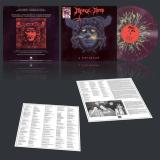
Manilla Road's »The Courts Of Chaos« album was originally released in 1990. It was the band's last release for Black Dragon and also the last release before the band temporarily split up (if we do not take 1992's »Circus Maximus« into account, which was actually supposed to be a solo album). All in all it was a very tough time for Manilla Road. When he was still alive, Mark Shelton commented in an exclusive interview: "Yes, you are correct with all of that. Our releases were not selling as well as they had years before and it seemed like metal in general was having a hard time surviving the times that followed the conversion to CD technology. Right after Manilla Road broke up, I started putting together a solo project that accidentally turned into a band. So we named it Circus Maximus and signed a deal with Black Dragon but they decided to release it as a Manilla Road album because they thought it would sell better. »The Courts Of Chaos« was the last album that was a real Manilla Road project on Black Dragon." “»The Courts Of Chaos« was a tough album to get done because the atmosphere within the band was tense, to say the least”, continued The Shark. ”We all knew it was going to be the end of an era and that this line-up would most likely never do another album.” Although »The Courts Of Chaos« might not be the strongest Manilla Road effort, Mark did not consider it a “throwaway album” whatsoever: “It does not seem to get mentioned as much as many other albums of The Road. But when it does come up, it seems like that person is really sold on the project being one of our better ones. It does, in my opinion, have some really killer songs on it. 'Dig Me No Grave' is still in our show. It's always a challenge to play but I love doing that one live and it still seems to appeal to our audience. “ Another highlight on »The Courts Of Chaos« is "DOA", a cover of a Bloodrock number. Manilla Road were not known for playing too many covers. Mark Shelton explained: "I grew up in that era and yes, I love that old stuff and could be called a collector of sorts, I guess. This was the only cover song that Manilla Road has ever put on an album. We chose this song because it was the only one that all three of us could agree upon. I wanted to do some obscure hit from the old days and turn it into a Manilla Road style song. I'm still fairly fond of the version and still like to listen to it every once in a while."
Mystic Force was a progressive power metal band from Baltimore, Maryland. After releasing several demo tapes, they signed a contract with the German label Rising Sun Productions. This resulted in two albums, “The Eternal Quest” (1993) and “A Step Beyond” (1995). Their third album, “Man Vs. Machine,” followed in 2001 on Siegen Records. After Mystic Force broke up, drummer Chris Lembach and guitarist Rich Davis formed the group Shift and recorded two albums with them. Rich then started his own solo project (for which he played all the instruments and sang), before looking for suitable fellow musicians again and releasing the CD “Inside The Upside Down” in 2024. Mystic Force was originally formed in 1984 by guitarists Rich Davis and Marc Rouchard together with bassist Keith Menser. After numerous line-up changes in the early days, they finally found suitable bandmates in Chris Lembach (drums) and Bobby Hicks (vocals). In 1987, Mystic Force released their first 4-song demo, followed by “Blind Vision” a year later. After selling large quantities of self-produced cassettes (the first 4-track demo is said to have sold over 5,000 copies), it was time for their first vinyl release. In 1990, the album “Take Command” was released on the English label C.M.F.T. Records, which included the first demo and four brand new tracks: “Take Command,” “Awakened By The Dawn,” “Immortal Souls,” and “Silent But Deadly.” Later that year, the 12“ single ”Shipwrecked With The Wicked“/”Eternal Quest" was released in a limited and numbered edition by the band's own company, Pro-duction. The widespread distribution of Mystic Force's material (also via underground distributors such as Oliver Jung's “Demolition”) led to an increasing number of labels taking an interest in the band. Ultimately, the choice fell on Rising Sun Productions, who released the debut album “The Eternal Quest” in 1993, featuring tracks such as “Shipwrecked With The Wicked,” “Another World,” and “Answers Of The Mystery”—a forgotten gem of progressive power metal somewhere between Fates Warning and Hades.
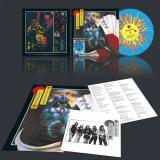
Around 1983 it looked as if Tokyo Blade were destined to become the next Iron Maiden. But somehow it wasn’t to be – history was not kind to them! In the end Tokyo Blade never became the next superstars of the glorious New Wave Of British Heavy Metal movement. “Night Of The Blade” was the follow-up to Tokyo Blade's extremely successful self-titled debut album. The band's second record was originally released in 1984 on the English Powerstation label and contained classic Tokyo Blade songs such as “Lightning Strikes”, “Unleash The Beast” or the title track. On the other hand, Tokyo Blade presented some more melodic numbers such as “Someone To Love” or “Rock Me To The Limit”. This slight alteration of the band's musical direction was partly due to the change of the vocalist (Alan Marsh was substituted by Vicki Wright). Guitarist Andy Boulton comments on the differences between Marsh and Wright: “Vic was a different person to Alan, but Alan had been a friend I had known for quite a long time and was a key figure in the band's early success, it was a sad day when we parted ways. Alan was just different from Vic and he had his own distinct sound. I don't want to talk about who was better or whatever, it's for the fans to decide. The material on 'Night Of The Blade' was all brand new, no leftovers from from Killer or Genghis Khan.” Tokyo Blade's debut (1983) and “Night Of The Blade” (1984) are two of the best albums of the entire New Wave Of British Heavy Metal period. “Night Of The Blade” was recorded by Vicki James Wright (vocals), Andy Boulton (guitar), John Wiggins (guitar), Andy Wrighton (bass) and Steve Pierce (drums). High Roller Records is proud to re-issue this long-deleted classic once again on glorious vinyl.
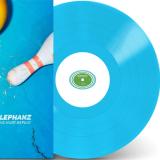
Fifteen years after their first album "Time for a Change", and drawing on the experience of two others ("Elephanz" 2017, and "Rien de personnel" 2023), ELEPHANZ now returns with a fourth album that carries the scent of first loves, the kind you sing from the heart with your hands gripping a guitar.
"Love. Hurt. Repeat." tells, across ten songs, the story of a return to oneself, like coming home after years spent roaming the world, only to realize that everything you needed to understand yourself was already there at the starting line.
To help you understand what this new album makes me feel, I'd like to tell you about my first meeting with Jon and Max in 2009, when I became the band's bassist. Sixteen years ago, I discovered these two young men and set off in their family Kangoo van on my very first tour.
Through our early rehearsals around the piano of their childhood, I discovered their love for pop music in all its breadth, always in search of harmonies and melodies that touch the heart in the simplest way and gently ease your sorrows along the way. With them, I learned to appreciate the mainstream hits I had previously dismissed on principle, and I discovered the demanding art of melody as I listened to them sing about love and friendship through unforgettable catchphrases.
Listening today to some of the songs from their new album, I think back to those two young men with a big-city rock look, shut away in the living room of their family home, talking only about leaving that dull countryside behind to live the big life in the capital (Streets of Rage). What I once took for a kind of revenge against the hostile environment of their adolescence was in fact an almost vital need to find their place among others, to feel understood in order to feel at ease in their own skin.
Today, I find them again with the same guitar and the same inexpensive Juno as back then, but with the confidence shaped by years of concerts, writing, studio encounters, and all kinds of experimentation. The music of this fourth album has never been so close to that of their earliest days, but their voices have been set free. They no longer sing about who they dreamed of becoming, but about who they have always been, their most distant concerns, sometimes even their darkest ones, yet always in search of the light.
It is as if ELEPHANZ had to travel all the way around the world to come face to face with themselves again. There is no longer any shame in being who you are, and it is even the best way to understand yourself, to exist and to heal. To heal from grief and heartbreak, to understand the child you once were and the one who carried them (Mother), to forgive yourself and finally learn to love yourself.
That is what makes this record as sensitive as it is powerful and strikingly truthful. It was written and recorded like a cry, live, in just a few weeks, using the instruments of their beginnings: sharp bass and drums, powerful guitars, and synthesizers that are at times soaring, at times carriers of liberating melodies. The art of ballads remains, as does that of universal pop songs.
There is a beautiful urgency here, the urgency of finding oneself again in order to understand oneself through both pain and beauty, and "Love. Hurt. Repeat." is its most perfect expression.
Brisk is the debut album by Polish-Hungarian flutist Juli Deák (*2000), based in Budapest. Comprised of seven solo flute pieces, the album offers a concentrated snapshot of Deák’s musical world—one shaped by classical training, experimentation, improvisation, and folk influences.
The project began taking shape in 2021, as Deák moved away from the polished ideals of classical performance toward a more personal and exploratory approach. Early fragments only revealed their meaning in front of an audience, whose responses encouraged her to continue developing the material. With over 15 years of musical experience, Deák combines technical precision with a willingness to embrace vulnerability and chance.
Breathing lies at the heart of Brisk. More than a functional necessity, it becomes an expressive and structural force. Through close listening, breath feels tactile and intimate, placing the performer almost within reach. Techniques such as circular breathing, overblowing, harmonics, singing while playing, and wind tones allow the flute to unfold into multiple voices, while percussive key clicks provide a steady rhythmic pulse.
Deák foregrounds sounds often excluded from classical music—breathy tones, unstable pitches, squeaks, and audible inhalations—treating them as essential expressive tools. This focus reflects her long-term exploration of the flute’s physical and expressive limits and connects directly to her ongoing solo practice, The Breathing Project, of which Brisk is a distilled release.
Active across classical, contemporary, jazz, and experimental scenes, Deák has collaborated with ensembles including Konstmusik-systrar and the VENI ensemble, and performed at festivals such as Norbergfestival and Ung Nordisk Musik.
Across its seven pieces, Brisk balances immediacy and rigor, inviting focused listening while remaining open and bodily. It documents a musician in motion, attentive to sound as sensation, gesture, and breath, and committed to honesty
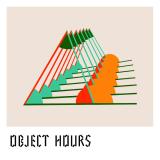
Leather-jacket krautrock? Indeed. Welcome to the world of Carrboro NC's Object Hours. These generous saviors consist of three Triangle scene lifers who all worship the riff but imagine what happens if the riff fell into the middle of your favorite CAN LP. Yes, it lives up to the hype.
"Solved By Walking" was recorded in the winter of 2025 at Betty's in the Chapel Hill woods, these are mighty rock slabs ready for all seasons. Rock believers have felt the ripples and knew the day was coming. Object Hours is a band that fits right in on stage alongside acts as varied as Kim Gordon and Tropical Fuck Storm, bringing the house down in these and similar moments. These are songs that groove, peel paint, sandblast, inspire unconscious movement, make your head bob - frequently all at the same time. These are the jams inspired by the time that you heard "Fun House" coming out of that dude's car with the windows down in the middle of the summer, the ones inspired by the kids who own 3 copies of "Daydream Nation," the ones who listen to the last 1:30 of Wire's "Too Late" over and over. This is the band that has a timer on stage so they don't keep each song playing for days on end, the band whose Bandcamp bio succinctly summarizes their approach thusly: "We try to keep songs under 25 minutes for your sake." Every word here should be inspiration for you to *want* and *need* to hear this record and every word here is true. Just you wait.
Real heads know and the rest of the heads are getting ready to find out. Get ready for Object Hours' "Solved By Walking".
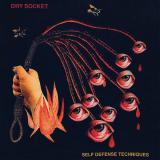
Dry Socket is a politically charged hardcore band from Portland, Oregon, known for blistering performances and emotionally uncompromising songwriting. Rooted in the raw aggression of classic hardcore, their sound channels the urgency of early Ceremony, G.L.O.S.S., and Negative Approach while carving out a distinctly modern, inclusive space within the genre, one where anger, grief, and survival are not just themes, but lived realities.
Their music confronts systems of violence, coercion, and control with unflinching honesty, creating room to be unapologetically furious, vulnerable, and alive at the same time. Every riff lands like a strike; every lyric feels torn from experience rather than abstraction.
Since forming, Dry Socket has toured extensively across the U.S., Europe, and Mexico, sharing stages with Gorilla Biscuits, The Hope Conspiracy, Torso, and more.
Their latest record, Self Defense Techniques, centers on survival under constant pressure. Inspired by the practice of dehorning rhinos to protect them from poachers, removing a vital part of the animal in order to keep it alive, the album examines the compromises people are forced to make to endure a hostile world. Horns are tools for protection, communication, care, and identity. To survive, so many of us are taught to remove our own.
Across the record, Dry Socket interrogates life inside systems that demand silence, obedience, and self-erasure. Songs wrestle with exhaustion, spiritual betrayal, and economic violence, oscillating between fury and grief. Self Defense Techniques isn’t about triumph, it’s about endurance, documenting the cost of staying alive while refusing the lie that softness is weakness or that silence is peace
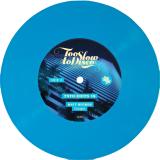
We here at TSTD are longtime fans of UK producer/musician/Label maker MATT HUGHES. For a few years he is delivering tasteful, deep, dubbed reworks for Too Slow To Disco, some in Edit form, but also his 2 official remixes for Goodvibes Sound on The Sunset Manifesto 2.
Both new TSTD Edits on this 7 inch are slow disco masterworks, he is giving the originals his trademark deep, warm versions. Who is the guy….?
Matt Hughes is a music producer from the north of England. A purveyor of all things funk, soul, disco, jazz and house! Most recent releases have been with Outcross Records, Bubblegum Pop, Editorial and Too Slow To Disco. A large number of Matt's works have been released under the MAM project with Miguel Campbell remixing the likesof the Climbers, Deadmau5 and Flight Facilities, as well as putting out releases via Wolf+Lamb, Future Classic, Hot Creations, Outcross Records, BPitch Control and Editorial Records to name a few.
Among his most notable collaborations are works with Derrick McKenzie, drummer of Jamiroquai; Drop Out Orchestra, Art Of Tones, amongst others. Each of these collaborations has allowed him to explore new musical dimensions, enriching his characteristic sound with diverse and fresh influences.
With a musical style deeply rooted in disco, funk and jazz, Monsieur Van Pratt combines classical elements with contemporary touches, creating a sound experience that is both nostalgic and innovative. His work not only stands out for its technical quality, but also for its ability to connect emotionally with the listener, making him a central figure in the evolution of modern dance sound.
out of Stock
Last delivered 39 days ago available to reorder, subject to availability
One of the all-time Balearic greats gets an official re-rub by friend of Balearic London, Holmes Price. Taking the charms of the classic Cool And Breezy Jazz Version- produced by Pete Waterman's in-house team at his '80s powerhouse PWL Records, and also included here in all its glory - rearranging the phrasing and adding a meatier contemporary house groove, it's the perfect update for the modern dancefloor that we hope will also introduce the timeless 'original' mix to some new ears.
out of Stock
Last delivered 5 days ago available to reorder, subject to availability
With Zera, Len Faki returns to Figure with a tightly focused EP that moves between raw, driving functionality and more open, atmospheric moments. Across five tracks, he explores variations in groove, tone and energy, balancing direct, floor-ready structures with a more fluid and spacious approach.
Opening cut Maschine Girl locks into a restless, forward-driving groove. Crisp percussion and a tightly coiled low end create immediate momentum, while sharp synth fragments and metallic accents add a nervous edge. The track stays stripped and efficient, letting its steady build and controlled tension carry the energy.
Kobold follows with a darker and more twisted tone. Warped synth figures weave through a heavy rhythmic backbone, giving the track a slightly mischievous character while maintaining a firm, heads-down drive. The interplay between tonal movement and grounded percussion keeps the groove dynamic without breaking its focus.
Closing the A-side, Maschine Girl (Version) revisits the opener from a different angle. Elements are tightened and subtly rebalanced, shifting the emphasis further toward rhythm and direct impact. More reduced and tool-like in nature, it pushes the groove forward with a sharper, club-ready feel.
On the flip, Zera unfolds with a broader sense of space. Hypnotic synth movement and layered atmospheres sit atop a firm low-end framework, gradually building intensity while maintaining a deep, immersive flow. The track thrives on its slow development, drawing the listener further into its evolving structure.
Rounding out the release, Zera (Hardspace Mix) reimagines the original with a heavier, more physical approach. The groove becomes more pronounced and the rhythmic pressure more direct, tightening the structure into a denser, floor-driven tool that emphasises impact and propulsion.
With Zera, Len Faki delivers a cohesive and wide-ranging release that connects raw, driving tools with more expansive, early morning-leaning grooves — further reflecting the breadth and versatility that has defined his output in recent years.
out of Stock
Last delivered 5 months ago available to reorder, subject to availability
KITCHEN. LABEL is proud to present AGATE, the latest album by Japanese artist MEITEI, marking a deepening of the world he first shaped through his Kofū trilogy released between 2020 - 2023.
Named after the mineral agate, a stone formed through slow accumulation, pressure, and time, the album reflects MEITEI’s patient approach to sound. AGATE brings together extended and newly rearranged works from across the Kofū cycle alongside new compositions and passages, refining material developed through years of performance and sustained practice.
The album presents seven tracks:
HAŌ (Previously unreleased track)
SHIN-OIRAN (Remodeled from Oiran I, Kofū 2020)
SHIN-SADAYAKKO (Remodeled from Sadayakko, Kofū 2020)
SHIN-WAROSOKU (Remodeled from Wa-rōsoku, Kofū III 2023)
KYŪGEKI (Remodeled from Shinobi and Akira Kurosawa, Kofū II 2021)
SHIN-OIRAN II (Remodeled from Oiran II, Kofū 2020)
SHIN-EDOGAWARANPO (Remodeled from Edogawa Ranpo, Kofū III 2023)
Across these works, MEITEI expands the musical vocabulary first introduced in Kofū, a sound he once described as “lost Japanese mood.” While Kofū drew from fragments of folklore, theatre, ghost stories, and forgotten urban memory, it was never an act of historical reconstruction. Rather, it reflected a sensibility of the past observed from the present. With AGATE, this worldview is clarified as Shinpu, a process of discovery in which historical awareness becomes a foundation for contemporary creation rather than a constraint.
During five years of Kofū tours across Japan, Europe, and Asia, MEITEI performed this material in a wide range of spaces, from underground live houses and listening rooms to culturally significant sites. These environments influenced pacing, dynamics, and structure, shaping how the material evolved over time. AGATE is therefore not only a studio album, but the result of material refined through repeated performance.
If the Kofū albums were windows into forgotten eras, AGATE explores what lies beneath, sediment and strata formed through time and pressure. MEITEI’s approach to sound mirrors the nature of agate itself. Grains become texture. Texture becomes narrative. Voices drift through decaying layers of sound, while ancient instruments are used in non-traditional ways, forming distinctive percussive rhythms and melodies that appear and vanish without fixed resolution.
The album’s visual materials were developed under MEITEI’s direction through physical art-making processes. The cover artwork originates from a letterpress print created by Kamisoe, a Karakami atelier in Nishijin, Kyoto, using Kyo-karakami paper. The original artwork, produced through traditional woodblock techniques on handmade washi, was subsequently reproduced on print for the album edition. Kamisoe continues to reinterpret this historical Kyoto craft with a contemporary sensibility.
The title calligraphy was created by Bio Xie, whom MEITEI personally invited to participate in the project. During his performances abroad, MEITEI encountered in Taiwan a lingering atmosphere reminiscent of “Shitsunihon” — a sense of old Japanese memory that quietly endures beyond time. He was deeply drawn to Bio Xie’s distinctive use of Chinese characters, which resonated with this experience, and asked him to contribute to the visual expression of AGATE.
In parallel, MEITEI continues to reinterpret Japanese sensibility through his concept of “Shitsunihon,” presenting it as a contemporary musical language. The refined Kyoto motifs envisioned by Kamisoe and the distinctive calligraphic expression by Bio Xie intersect with MEITEI’s singular artistic direction, weaving together a newly articulated worldview.
The accompanying visual imagery, including the liner photographs, was created by photographer Hiroshi Okamoto, who was also responsible for the visual direction of MEITEI’s previous work, “Sen'nyū.” It draws from MEITEI’s lived experiences of winter seas, solitary cliffs, and breaking waves. These scenes symbolize the inner conflicts of the ten years he spent living in Hiroshima, and his confrontation with solitude and the sounds he creates.
AGATE will be released on 17 April 2025 via KITCHEN. LABEL on 180g vinyl, CD, and digital formats. The album is mastered by Kelly Hibbert, known for his work with Flying Lotus, Madlib, and J Dilla.
With AGATE, MEITEI returns to the material of Kofū with greater focus and discipline, continuing an ongoing process of working forward with inherited material.
out of Stock
Last delivered 3 months ago available to reorder, subject to availability
Promised Land is the long-awaited debut album from contemporary showstopper Vintage Culture. Enlisting the help of peers NomBe, Maverick Sabre, The Temper Trap, and Elderbrook, the album marks the producer and DJ's seguing from progressive house to electro, evincing a globetrotting, jetsetting sound that hardly ever fails to hold back on emotion. Including prior single 'Come Come' alongside newer, angelic progressive cuts like 'Weak' with Sabre, this is a stark debut from the Brazilian creative force.
out of Stock
Last delivered 3 months ago available to reorder, subject to availability
'Matsuli Music is proud to announce the first vinyl reissue of Philip Tabane’s Sangoma ("Spiritual Healer") since its 1978 release. Remastered from the original tapes with lacquers cut by Frank Merrit and pressed on 180g heavyweight vinyl at Pallas in Germany, this definitive edition re-asserts the power of one of South Africa’s landmark recordings. Featuring new liner notes by cultural critic Kwanele Sosibo and artwork restoration by Siemon Allen, Sangoma returns in full force through an extended Malombo line-up, fronted by Tabane's spellbinding guitar - ancestral, timeless, and unbound.
'Philip Tabane (1934–2018), the mercurial guitar genius of South African music, forged a sound that was as rooted in the spirit world as it was in daily life. With the Malombo Jazzmen of the 1960s, Tabane disrupted Western notions of “jazz,” bringing the resonant rhythm of cowhide malombo drums into the foreground. While outsiders and the uninitiated often reached for labels like “primitive yet sophisticated,” Tabane and his collaborators named it more truthfully: “music of the spirit.”
'By the time of Sangoma, Tabane stood at a crossroads. Fresh from a period of three years’ touring in the United States where he graced the Newport Jazz Festival, and played alongside Miles Davis, Herbie Hancock, Pharoah Sanders and others, he brushed off comparisons with characteristic self-assurance: “No, I don’t play like Miles. Miles plays like me.” Back home in South Africa, and with a newly signed international distribution deal with WEA Records, he harnessed this momentum into a larger band setting, capturing a rare intensity.
'The result was Sangoma—an album that bridges contradictions: expansive yet intimate, celebratory yet haunted by exile and return. Tracks such as “Sangoma,” “Hi Congo,” and “Keya Bereka” are not simply performances but living testaments, songs that would remain in his repertoire for decades. Unlike the moody, immersive character of much of his work, here Tabane is on the move—urgent, restless, uncontainable. As he announces on the second track, “Maskanta wa tsamaya” (“something that kicks ass”).
More than four decades on, Sangoma is both an historical document and a timeless invocation. From his home in Mamelodi to the world and back again, Tabane’s spiritual healing endures—raw, electric, and unbowed.'
out of Stock
Last delivered 5 months ago available to reorder, subject to availability
'At the beginning of the 1960s, at the Berklee College of Music, Byard Lancaster met some feisty friends: Sonny Sharrock, Dave Burrell and Ted Daniel. It is easy to see why he rapidly became involved in free jazz. Once he was settled in New York, he appeared on Sunny Murray Quintet, recorded under the leadership of the drum crazy colleague of Albert Ayler.
'In 1968, the saxophonist and flutist recorded his first album under his own name: It’s Not Up To Us. The following year he came to Paris in the wake of… Sunny Murray. He would come back to France in 1971 (again with Murray) and in 1973 (without Murray for a change). This is when he met Jef Gilson, the pianist and producer who encouraged him to record under his own name again. On Palm Records (Gilson’s label), he would release four albums: Us, Mother Africa, Exactement and Funny Funky Rib Crib.
'Us, the first of the four records was recorded on November 24th, 1973 with Sylvin Marc on electric bass (a Fender… Lancaster?) and the evergreen Steve McCall on drums.
'On the album, the trio works from the John Coltrane model; free jazz shook up by the timely contributions of the bassist, followed by a mesmerizing atmospheric music. Then, Lancaster delivers a sinuous solo path, which is a reminder of his unique tone. On the album’s companion single, the trio launches into great black music of a different genre which would lead the clairvoyant François Tusques to claim that Byard Lancaster is an “authentic representative of soul/free jazz”, to sum up this is Great Black Music!'
out of Stock
Last delivered 5 months ago available to reorder, subject to availability
'A few months after recording Us, Lancaster recorded Mother Africa along with Clint Jackson III, a trumpeter, partner of Khan Jamal or Noah Howard on other recordings.
On march 8th, 1974, Lancaster and Jackson headed up a group composed of Jean-François Catoire (electric and double bass), Keno Speller (percussion) and Jonathan Dickinson (drums). Together, they create an immediate impression. From the first seconds of We The Blessed, they develop a free jazz which rapidly abandons any virulence under the effect of blues and soul based interventions.
When Gilson’s composition Mother Africa begins, listeners are transported into the studio, listening to the musicians setting up: chatting and joking… Then comes the melody: a dozen or so notes of a repeated theme which is accelerated and deformed according to their whims… The jazz played by the association Byard Lancaster / Clint Jackson III is rare: creative AND recreational. We the blessed, is apt listening to this again today!'
out of Stock
Last delivered 5 months ago available to reorder, subject to availability
ESHU hits 20! From The Hague to Nijmegen, a first release by Deniro marks ESHU's 20th release. The long going techno producer and DJ from The Hague has already proven himself in many styles of techno, from fast and tripping acid techno to melodic Detroit influenced works and stripped down drum tracks. Still, dub techno is close to his heart and makes the connection with ESHU real. Over the course of three tracks Deniro matches ESHU's vision flawlessly, warm and hazy dub techno drifters with an emotive touch including a collaboration with a champion of the genre Steve O'Sullivan.
out of Stock
Last delivered 10 days ago available to reorder, subject to availability
Following the success of the first vinyl release from the Moroccan label Sotor Records, featuring Zadig, Perc & Oscar Mulero, Sotor writes a new chapter in its discography with its second vinyl release. Meaning "lines" in Arabic, Sotor reflects its commitment to championing the diversity of the techno genre.
The label's ninth release, "Processing Range," is a musical ode to the lines of space-time. With four original tracks from the Portuguese producer, Sotor invites you on a techno journey between mental tension and physical release.
The album opens with DJ Dextro's "Controle," which delivers a massive, sharp rhythm, dystopian synths, and a true immersion into a techno black hole.
The journey continues with the second track on side A. This time, DJ Dextro unleashes an uncompromising version of "Blue Dot," achieving a precarious balance while showcasing his signature percussive style. The Portuguese artist delivers the perfect track to unleash a crowd.
On the B-side, DJ Dextro offers us the eponymous track, "Processing Range." We're quickly drawn into an allegory of this decadent modern world where humanity is rushing towards its own destruction. Expect dusty techno rhythms and that sumptuous synth that sounds like the end of times. Probably a future classic!
And you'll finish on a gentler but no less dynamic note from DJ Dextro. He concludes the EP with "31 Atlas," which will leave you weightless with its galloping bassline and abyssal synth.
out of Stock
Last delivered 4 months ago available to reorder, subject to availability
The Owl (real name John Deevechis) has long used his Owl imprint to deliver high-grade, inventive and irrepressibly addictive re-edits. Here, the York-based producer hands over the reins to the previously unheard Nite Hawk, an artist whose identity has so far been a closely guarded secret. Our shadowy hero begins with the superb 'Disco System', an infectious, effects-laden revision of a low-slung, turn of the 80s disco workout rich in dubbed-out vocal samples, super-funky bass and piano loops, and tease-and-release dynamics that only add to the track's inherent energy. On flip-side 'Search Lite', Nite Hawk makes merry with a boogie-era workout, turning it into a glorious fusion of non-stop dub disco bass, rolling house beats and chanted vocal snippets.
out of Stock
Last delivered 21 days ago available to reorder, subject to availability
Neues, viertes, Solo-Album vom dänischen Psych-Rock-Zauberer Uffe Lorenzen aka Lorenzo Woodrose aka... Seit zehn Jahren interpretiert Uffe Lorenzen (bekannt von u.a Baby Woodrose und Spids Nogenhat) auf allen seinen Alben ein altes dänisches Lied. Das gilt für seine drei Soloalben und die beiden Alben seiner aktuellen Rockband Lydsyn. Auf seinem neuen Soloalbum Glemte Spor ("Vergessene Spuren") hat er ein komplettes Album mit 10 Interpretationen von Liedern aus den Jahren 1967 bis 1999 aufgenommen. Einige davon sind dänische Klassiker, andere sind eher unbekannte Lieder, die er sich zu eigen gemacht hat. Viele davon können als Protestsongs betrachtet werden oder haben einen anti-war Charakter. ,Ich habe festgestellt, dass ich die Herausforderung, Songs anderer Leute zu interpretieren und sie zu meinen eigenen zu machen, wirklich mag. Sie zu verändern, zu interpretieren und vielleicht sogar zu verbessern. Viele der Songs werden den meisten Menschen unbekannt sein, während andere dänische Klassiker sind. Was sie gemeinsam haben, ist, dass sie mich irgendwie zu dem gemacht haben, der ich bin", sagt Uffe Lorenzen. Das Album wurde zusammen mit Morten Hart Grabowski in einem kleinen Studio in Kopenhagen aufgenommen. In mehr als 20 Sessions haben sie zusammen eine Liste von 50 Songs auf die zehn reduziert, die schließlich auf dem Album gelandet sind. Laut Lorenzen fanden die Aufnahmen in einer sehr entspannten Atmosphäre statt: ,Wir haben etwas Gras geraucht und Rotwein getrunken, was den Prozess sehr entspannt gemacht hat, und ich glaube, das hört man dem Endergebnis auch an." Später übernahm Flemming Rasmussen den Mix und das Mastering in seinem berühmten Sweet Silence Studio. Glemte Spor erscheint am 24. April bei Bad Afro Records und die erste Auflage ist auf 1000 Exemplare auf schwarzem Vinyl limitiert.
Die einflussreichen Shoegaze-Pioniere Failure kehren nach einem halben Jahrzehnt mit ihrem siebten Studioalbum Location Lost (Failure Records/Ardouus/Virgin) zurück. Das Album enthält neun neue Tracks, die eine fokussierte, moderne Vision ihres charakteristischen alternativen Space-Rock-Sounds präsentieren, darunter der faszinierende Track "The Rising Skyline" mit Paramores Hayley Williams. Das Album folgt auf die Hulu/Disney+-Dokumentation der Band aus dem Jahr 2025, "Every Time You Lose Your Mind", die die Karriere und das Vermächtnis der Band abdeckt.
Die einflussreichen Shoegaze-Pioniere Failure kehren nach einem halben Jahrzehnt mit ihrem siebten Studioalbum Location Lost (Failure Records/Ardouus/Virgin) zurück. Das Album enthält neun neue Tracks, die eine fokussierte, moderne Vision ihres charakteristischen alternativen Space-Rock-Sounds präsentieren, darunter der faszinierende Track "The Rising Skyline" mit Paramores Hayley Williams. Das Album folgt auf die Hulu/Disney+-Dokumentation der Band aus dem Jahr 2025, "Every Time You Lose Your Mind", die die Karriere und das Vermächtnis der Band abdeckt.