Chins For Lefty is the debut album and first recording by Gichard, a new duo chronicling the absurdities of end-stage capitalism and mouldering social rituals from their vantage point in Glasgow, Scotland. Recorded primarily in the band’s home studio straight to tape, Chins For Lefty combines gorgeous, ramshackle melody, DIY kosmische punk, drum machine + synth and, in vocalist/lyricist Lisa Jones, an absurdist commentator on the human condition as it navigates the anxieties of the modern world. Instrumentalist Chas Lalli’s swirling music accompaniment stitches an evocative mix of musical styles, the ragged wind beneath the lyrics’ wings.
Although the duo first collaborated in their previous group Dragged Up, their disparate musical and artistic backgrounds make for an alluring mix in Gichard. Lalli has spent the last 20 years in the Glasgow underground, most notably in the noise rock group VOM, while Lisa Jones’s practice was in poetry and spoken word. Beginning as co vocalist in her previous band, in Gichard her lyrics are centre stage; the vision concocted alongside Lalli amounts to a total world-build.
Chins For Lefty scans almost like a novel, with each track elucidating a skewed universe that bears only some resemblance to the one you and I partake in. Like all works of fiction Gichard’s songs are rooted in reality and the lived experiences of its authors, but here characters are exaggerated, social mores and habits are pulled apart to reveal their inherent alienness. Universal emotions are laid bare, the bright light of anxious examination searching out every hairline fracture in our relationships. Distorted and cracked, the mirror that Gichard hold up to our world is also pretty damn funny.
Opener Cholesterol Test launches an expansive, cosmic guitar and synth intro that belies the Tascam-tape recorder it was recorded onto, like a Chromatics cut substituting anxiety for overt sexuality. Here Jones intones an apology to a non-responsive recipient, in the medium of a long voice note forensically deconstructing an interaction from the night before. Over punk guitars and shuffling, lo-fi drum machine splutters, the narrator in Asking The Apes “prefers things to people” before being taken hostage in the city zoo to confess an obsession which consumes the protagonist, ending with the immortal two liner “I sleep in a cocoon of old newspapers at the end of your street / And I think I have been fired from my job,” On album standout Posthumous Hologram, the narrator is faced with a human simulacra, in this case an undead pop star; the face of the encroaching technological singularity. Yes, it does requests, it can do My Way in 200 different language options. But what are the implications? While you’re left pondering, the alternating deadpan verse delivery and undeniably catchy chorus keep you company.
By the time Break Up With Johnny Dogbirth rattles into view, the band are satirising a suburban inanity blown up to cartoon proportions, soundtracked with a drawled musicality that recalls Rowland S. Howard’s post-Birthday Party balladeering. This approach is furthered on Human Resources: over an angular guitar+bass track, Jones’s short story recalls Dry Cleaning’s erudite lyrical post punk. On Soft Face, Lalli’s guitar and drum machine are swathed in echo and delay, as Jones dissects dating rituals with a west of Scotland drollness. Hamming It Up brings a porcine perspective in a short story that begins with the line “I was breastfeeding discreetly in the service station. She didn’t mind.” What follows is a passage punctured with canned laughter and a narrative involving tribute acts, modern farming techniques.
Brilliant first single Your Private Hell closes the album, the closest the group get to earnest perhaps, filtered through a surreal central Scottishness. While Your Private Hell might seem like a sardonic take down of romance, perhaps it’s the very distillation of love in all its awkwardness, selflessness and weirdness. Here there’s a distinctive Glasgow-ness to this doomed romance: the protagonist falls for an outsider, offers them cheap jarred hot dogs and carbolic soap (the infamous, excoriating soap dished out in schools and government buildings throughout Scotland), offers to cover up a murder, stalks them in the all-night Spar. It’s a short story of intrigue, murder and the irresistible pull of self-sacrifice to share in someone else’s suffering. If that’s not love, what is it? You can see this vision mapped out in black and white on their video for 'Your Private Hell'.
Поиск:char
Все
Originally released in 2019 as the Belgium artist was ascending to the top of the scene, Charlotte de Witte’s dark and twisted remix of Eats Everything's incredible 'Space Raiders', helped cement her as a Techno force of nature. Now for the first time the remix alongside the original version is available on vinyl!
Romphea lands on Scottish imprint Hilltown Disco with his debut EP, Blind Protocols. A producer who’s been making serious waves worldwide, Romphea’s forward-thinking take on electro has already found a home on respected labels such as Pinkman, Tiger Weeds, FERMA, and recently on Hilltown Disco’s charity compilation.
Romphea distills his sound on ‘Blind Protocols’ into a fierce club-ready statement. The A-side delivers three break-neck electro cuts, loaded with acidic pressure and gripping, sweat-driven drum workouts. Flip it over and the EP slips into darker territory, leaning into EBM influences with two killer remixes from Hayter and Timothy J. Fairplay.
Limited to 300 copies on vinyl.
- A1: Michael Andrews - Something Bad’s Better Than Nothin’
- A2: Kevin John Agosti - The Reason
- A3: Ron Eliran - Sky Dust Drifter
- A4: Sunburst - Special Lady
- A5: Virgil Charles Mashburn - Why Should It Be
- B1: Randy Ream - Divorce Song
- B2: Ray Daly - Leave Me Alone
- B3: Richard David Spano - After So Long
- B4: Kerry - Stargazer
- B5: Black Water - All Night Company
2026 Repress
An anthology born out of isolation and deep introspection, Sky Dust Drifter is a cosmic medley of sun-soaked AOR, psychedelic folk, and soft rock. This soundtrack was driven by the lonesome cowboy, a lockdown savior leaving me adrift in desert winds and dimly lit country bars.
Long-distance trades and masked meetups yielded a collection of private press LPs and 45s from ten different artists spanning 1973 to 1980. This seemingly random stack of records revealed songs living entangled in themes of hard luck, heartache, and the inevitable loneliness of existence. Adorned in cracked leather and chrome, this album is an aimless wander from the soil to the stars.
Featuring an unreleased English version of the compilation’s title track “Sky Dust Drifter” (originally released only in Hebrew), the record shifts from laconic afterthoughts to bold proclamations. From Michael Andrews’ blue-eyed soul assertion “Something Bad’s Better Than Nothin’,” to the searing electric guitars and bold synths of Sunburst’s “Special Lady,” Sky Dust Drifter thrives on solitude in a universe of unconditional self-rule where loneliness is not darkness but rather a blazing light of autonomy.
- A1: Return Of The Knödler Show 2 52
- A2: The Frogs Of Miwa - Cho (1) 4 52
- A3: Waiting (I) 5 38
- A4: An Old Friend Passes By 3 46
- A5: Coco Bolo Strip (1) 5 25
- B1: Peace And Pipe Utopia 3 14
- B2: Unidentified Dancing Object 1 44
- B3: The Call (I) 2 41
- B4: Wenn Das Rohr Dommelt 4 03
- B5: Mariahilf (Live Version) 3 36
- B6: Watching The Shades (I) 2 59
- B7: Playing The Table Music (Ii) 2 43
- C1: Could Be Nice Too 5 29
- C2: Ox Of Inner Depth 4 51
- C3: Ymir Shows Up 3 58
- C4: Could Be Nice 5 24
- C5: Playing The Table Music (I) 4 23
- D1: Coco Bolo Strip (Ii) 4 52
- D2: Locusts Looking Like Men 5 55
- D3: Waiting (Ii) ︎ 3 36
- D4: No Stove 2 29
- D5: An Old Friend Passes By Again 3 00
- D6: Heimkehr Der Holzböcke 3 16
Black Truffle is thrilled to announce Dalbergia Retusa, an extensive double LP selection of the solo guitar music of Hans Reichel, compiled by Oren Ambarchi. Last heard on Black Truffle as one quarter of the joyously anarchic Bergisch-Brandenburgisches Quartett, Hans Reichel (1949-2011) is one of the great figures of experimental guitar music. Though perhaps lesser known than peers like Derek Bailey, Fred Frith and Keith Rowe, Reichel’s rethinking of the instrument was in some ways the most radical of all. Early on, he dispensed with existing guitars to build a series of his own that explored the use of additional strings and fretboards, moveable pickups, extra bridges, special capos, and other innovations documented in the extensive booklet accompanying this release.
Reichel was a long-term resident of Wuppertal, the small Western Germany city that became an unlikely centre of European free jazz in the late 1960s, also home to Peter Brötzmann and Peter Kowald. His solo debut Wichlinghauser Blues was an early entry into the FMP discography and began a relationship with the label that stretched into the 1990s; all the solo performances heard here were first released on FMP. As Reichel says in the charming archival interview with Markus Müller included here, he was ‘always a cuckoo’s egg at FMP’, a label that began as an outlet for roaring European free jazz. What strikes the listener right from the opening selection on Dalbergia Retusa—‘Return of the Knödler show’, from 1987’s The Dawn of Dachsman—is the extraordinary beauty of Reichel’s music, at once alien in the shimmering sonorities and unconventional pitch relationships made possible by his invented instruments, and deeply lyrical, even romantic in its harmonic content. Growing up in West Germany in the 1960s, Reichel’s formative influences were mainly British and American rock bands, a background that shines through in many of the pieces included here: ‘An old friend passes by’ is haunted by the ghost of Hendrix’s rhythm guitar, and the wild closer ‘Heimkehr der Holzböcke’, taken from a rare 1975 7” and the only piece to use overdubbing, layers errant hammer-on and slide tones over a Canned Heat boogie chug.
Reichel was an important source for the development of Oren Ambarchi’s own extended approach to the electric guitar. Appropriately enough, his selection opens with the very first piece by Reichel he ever heard, on a flexidisc included with a 1989 issue of Guitar Player magazine. Though Reichel collaborated with others extensively in many settings and also performed on violin and his other major contribution to instrument invention, the daxophone, his music for solo guitar remains at the core of his oeuvre. Focusing exclusively on solo pieces recorded between 1973 and 1988, the 23 pieces on Dalbergia Retusa showcase the range and consistency of Reichel’s work, allowing the listener to see how his performances developed hand-in-hand with his instrumental inventions. On a piece from his very first LP, played on an 11-string instrument (partly strung with piano strings and using a schnapps glass a slide), we hear his intensive exploration of fret-hammering to create zither-like, chiming tone, which Reichel would hone further in later years with a double fretboard guitar specifically designed to be hammered rather than fretted and picked. On a piece from 1979’s Death of the Rare Bird Ymir, Reichel uses two steel-string acoustic guitars at once, with beautiful results: ‘some even say too beautiful’, he jokes in the interview included here. Many of the pieces from the 1980s make use of varieties of the ‘pick behind the bridge guitar’, instruments of uncanny harmonic richness primarily designed to be played on the ‘wrong’ side of the bridge. At times the unexpected behaviour of attacks, resonance, and decay can almost seem electronic, conjuring up the technology-assisted work of Henry Kaiser or even Fennesz, but realised solely through Reichel’s unorthodox techniques on his invented instruments. Extensively illustrated with photos and Reichel’s own plans and drawings of his instruments, Dalbergia Retusa is an essential introduction to the unique world of Hans Reichel. Rarely has music been at once so strange and so beautiful.
Brooklyn Sway's 8th installment arrives from outside with more unexpected debuts and riotous returns to form. Experienced Barcelonian Larry Lan's epic 10-minute opener 'WTNG' is minimal goes post-punk, repurposing well-known, undisguised lyrics into an aggressive take on early Perlon and explanation enough for his recent album drop on Cadenza. BKS vets N/UM return with 'A Free Woman in Queens' showing off a reduced side of their sound adjacent to mid-00s minimal with plenty of character, its stripped intro giving way to a fuller, dubbed-out second half, with the cheeky vocal and instrumental touches joined by a swelling pad. Featuring spoken vox from Mari Blue and the debut of BKS co-head Asha Jasz alongside DeWinter and Jay Prouty, 'Acid in Your Coffee' takes the dirtier route, with layers of zapping electronics, an insistent single-note acid bass, and synths drifting between tones and textures all veering off like its vocals before eventually returning to center. LA/Bucktown scallywag $coe brings it home with 'The Devil is a MF Liar', an acid jam whose profanity-laced vocal samples don't require divine intervention to decipher. Bookended by a pair of interludes, the first on the power of repetition and the last in memoriam BK legend Big Sexy in his own words, and again featuring striking artwork from notable NYC street artist Fumero, BKS keeps that Sway from going astray.
Ribe & Roll Dann serve up potent techno on Mutual Rytm with 'Virtus Occulta'.
Built around concepts of unacknowledged work and enduring merit, the release marks their first EP on SHDW's widely
respected label.
Based in Toledo and Madrid, Ribe & Roll Dann are exciting residents at Laster Madrid and Lanna Club, two of Spain's leading venues. Emerging as driving forces in their national techno scene, they have also made an impact on the global landscape, making wider moves through collaborative releases on Klockworks, and individual outings on a number of other influential labels. Having previously featured in the label's Federation of Rytm IV compilation, the pair make their full EP label on SHDW's Mutual Rytm imprint to open March with a deep dive into their expansive sound.
Opener 'Sub Terra' is a pure club tool that is direct, physical and rooted in the underground with a seriously heavy low end. 'Extra Lumen' is more restrained but still built on a steady, forceful rhythm with controlled energy that prefers to operate in the shadows. 'Ars Non Placens' stays true to the idea that music is not made to please, but to exist on its own terms with hunched drums and dubby undercurrents. Next, 'Meritum Negatum' fizzes with static electrical charge and minimal drum funk and is a direct reflection on overlooked skill and unacknowledged work, before closer 'Virtus Persistens' delivers a continuity and a steady pulse rather than an explosive ending, keeping you locked throughout.
In addition, three digital bonus cuts come alongside the vinyl package. 'Labor Inauditus' speaks to hours of technique, production and booth experience that remain invisible. Next come the taught, rubbery rhythms and unrelenting atmosphere of 'Silentium Testium', while 'Sine Aplausu' - which means without applause - brings a ghostly late night vibe that you will never want to end.
reActive Lab proudly unveils its first vinyl release, marking a defining moment for the label's evolution. reActive Lab Collective 001 brings together four of the label's core members - Chrivu, Dragne, Flavius, and Pattern Tusk - to craft a 12" that perfectly captures the collective's sonic DNA: deep groove, subtle minimalism, and timeless house energy. The record opens with Chrivu - "Cell Division", a vibrant house piece driven by a confident bassline and crisp percussive motion. Built with clarity and flow, it sets the tone for a journey anchored in groove and precision. Dragne - "Get Funk" follows with playful rhythm and low-end warmth - an irresistible combination of swing, bounce, and character designed for the dancefloor. On the flip side, Flavius - "The Interview" introduces a more introspective dimension - stripped-down yet immersive, balancing atmosphere with emotion through delicate textures and steady rhythm.
Closing the release, Pattern Tusk - "We Went On" blends soulful depth with minimal intricacy, offering a smooth, driving finale that resonates with both feeling and functionality. reActive Lab Collective 001 stands as more than a debut - it's a declaration of artistic identity. A 100% in-house release from reActive Lab, crafted with authenticity and intent. A promising first step in what's clearly a long-term commitment to sound, craft, and community. Short Description: reActive Lab makes its vinyl debut with reActive Lab Collective 001, a powerful VA featuring Chrivu, Dragne, Flavius & Pattern Tusk. Four deep and groovy house cuts blending energy, warmth, and minimal precision - a pure statement of the label's identity.
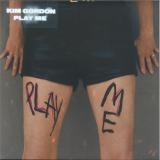
Kim Gordon hat Kunst und Noise über Jahrzehnte immer wieder neu gedacht - und dabei nie an Schärfe verloren. Vierzig Jahre nach ihren Anfängen wirkt ihre Vision noch immer provokant. Dieses Abenteuer setzt sie mit ihrem dritten Soloalbum "PLAY ME" fort, das am 13. März bei Matador Records erscheint. Mit der Ankündigung erscheint die erste Single "NOT TODAY", begleitet von einem Kurzfilm der Modedesignerinnen und Filmemacherinnen Kate und Laura Mulleavy (Rodarte). Gordon trägt darin ein eigens für sie gefertigtes, handgefärbtes Seidentüllkleid. Der Song offenbart eine neue, fast poetische Spannung in ihrer Stimme: "Da kam eine andere Stimme zum Vorschein", so Gordon. "PLAY ME" ist ein konzentriertes, direktes Album, das ihren Sound um melodischere Beats und den motorischen Drive des Krautrock erweitert. Entstanden ist es erneut mit Produzent Justin Raisen (Charli XCX, Sky Ferreira, Yves Tumor). Die Songs sind kurz, prägnant und stark rhythmusorientiert - fokussierter und selbstbewusster als zuvor. Nach "No Home Record" (2019) und "The Collective" (2024, zwei Grammy-Nominierungen) richtet Gordon den Blick auf die Gegenwart: Tech-Macht, KI-getriebene Kulturverflachung, den Abbau demokratischer Strukturen und den absurden Alltag des Spätkapitalismus. Trotz dieser Themen ist "PLAY ME" ein nach innen gewandtes, geradezu körperliches und ebenso emotionales Album. Mit verzerrten Stimmen und schroffen Beats legen Songs wie "Square Jaw", "Dirty Tech" oder "Busy Bee" gesellschaftliche Realitäten frei. Der Titeltrack entlarvt die Logik einer durchkuratierten Komfortkultur. "PLAY ME" ist radikal gegenwärtig, widerständig und kompromisslos eigenständig.
MARCO FRATTY - MARCO FLASH - ALEX TIME EP VOL. 4
is the continuation of the Audio Music World project,
which brings together the best productions available on the
digital market, produced
by its founder Marco Fratty, an active member of the historic
HouseDance group FPI Project.
Specifically, the Electro-Funk influence that characterizes
these productions is the
cornerstone that has made this new sound a trend among
adult audiences who have always followed a certain style of
music.
This is the first release from the label, signed by Lukio (aka Luciano Gentile).
Four tracks built around a constant sense of depth and a clear focus on the dancefloor. The approach is straightforward: solid grooves, controlled saturation, and a sound palette designed for long sets and proper systems.
MPC-driven drums provide a strong backbone, while Blofeld pads and the vintage character of the Yamaha TQ5 add texture without cluttering the mix. The EP moves between minimalist passages and rougher, tech-driven sections, maintaining tension and cohesion throughout.
This record sets the foundation of the project: hardware-driven sound, deep dancefloor functionality, and a long-term vision.
Jim O'Rourke and Jos Smolders teamed up again after their first collaboration, Additive Inverse from 2021. Over a period of three years, both artists worked in sessions of a day, each in their own studio.
The result is sometimes like a warm cloud of sounds, suddenly breaking up into a rhythmic, irregular pattern, after which it dives into introverted mindsets. The music is in constant flux
The project followed the same workflow, but this time Jim took the lead and kicked off with a salvo of sounds that he extracted from his Kyma System. Both Jos and Jim were quite interested in the spectral character of sounds. Jim applied Kyma algorithms while Jos granulated his basic recordings. That way, textures are built, quite slowly moving from warm to gritty, from hard surfaces to deep sonic wells.
With CONVENT009, Carebears deliver another quirky and sharply crafted slice of underground house music, joined by Tommy Vicari Jnr for a remix that fits the record’s off-center spirit perfectly. Dry, minimal, playful and built with real club instinct, The Pagemaster sits in that sweet spot where character matters more than obvious effect. Another tasteful and quietly effective tool for those who like their records with personality.
Onysia delivers another deeply textured installment of its Split Series, bringing together J Gabriel, Thomas Melchior, and Bruno Pronsato for a record full of subtle detail, groove intelligence, and unmistakable late-night character. Subtle, classy and built with real understanding of space, tension and groove, ONYSIA013 is a refined underground statement for lovers of depth, detail and timeless club music.
- A1: Black Line - Myele
- A2: Mbamina - Nzoumba I-Robots 1975 Unreleased Edit-44100
- A3: Mbamina - Watchiwara
- B1: Oxid - Bright Heron
- B2: Oxid - Oxid Trail
- C1: Stratosferic Band - Nowhere - Reverberated Unreleased Version
- C3: The Boston Garden - Lady Pick-Up
- D1: Mbamina - Nzoumba Unreleased-44100
- D2: Oxid - Oxid Trail Unreleased Extended Version
Daniele Baldelli
"A pleasant surprise to find in this release various atmospheres and sounds that have always been part of my DJing. It even made me rediscover M’Bamina, whom I used to play back in 1974 at the Tabù Club in Cattolica.
There are afro vibes as well, with Black Line – Myele, which is featured on one of my Cosmic tapes, and Nowhere by the Stratosferic Band recalls a track I used to play at the Baia degli Angeli…
Excellent work!"
Voom Voom Music was an independent Italian record label based in Turin, founded and managed by record producer Ivo Lunardi (Turin, December 6, 1940 – December 9, 2010). A pivotal figure in the Piedmont music scene, Lunardi was active both as a DJ and as the owner of several disco clubs.
The label operated for several years in the latter half of the 1970s, releasing mainly productions connected to the Italian dance and pop scene.
Since 2016, the original master tapes from the Voom Voom Music catalog have been owned by Gianluca Pandullo (I-Robots), a close friend of Ivo and Luca Lunardi. Through his labels Opilec Music and Turin Dancefloor Express, Pandullo oversees their preservation and historical enhancement.
The artistic direction of Voom Voom Music was marked by a distinct sonic identity — eclectic yet visionary. The Turin-based label founded by Ivo Lunardi embraced a sound that blended disco, pop, and rock influences, interwoven with African American grooves in a pioneering, international perspective.
Voom Voom Music was among the first Italian labels to introduce this kind of musical language in the country. A prime example is the Italian edition of the debut album by B.T. Express, Do It ('Til You're Satisfied), released in LP, 8-Track Cartridge, cassette, and 7" single formats.
The label’s productions clearly reflected the influence of black and funk music, as evidenced by the references and inspirations running through its catalogue. The track “Lady Pick-Up”, for instance, includes direct nods to “Do It Good” by KC & The Sunshine Band and Manu Dibango’s iconic “Soul Makossa”, revealing a musically refined and contemporary sensibility.
Among the label’s most representative works is Splash (1977) by the Stratosferic Band, a project conceived by Luigi Venegoni — producer, songwriter, and guitarist of Arti e Mestieri. Venegoni’s artistic journey spanned from progressive rock to space and Italo disco. The album artwork was designed by Piero D’Amore (1944 - 2022), a charismatic and multifaceted figure of Turin’s art scene (one of his works was even acquired by the MoMA in New York).
The record includes a disco reinterpretation of Van Morrison’s classic “Gloria”, and “Splashdown”, a track fusing the disco-rock energy of Rockets and Space. In contrast, “Nowhere” revisits the 1975 single by Hokis Pokis, a soul/disco band from Nassau County (New York), transforming it into a vibrant disco-funk number.
Another significant expression of the label’s catalogue is the afro-rock sound of M’Bamina, an Italo-Congolese group whose rhythmic energy and dialogue between African percussion and Western funk evoke the style of international formations such as Osibisa — themselves linked to a rich artistic history in Italy.
Das zweite Album des Palace-Records-Gründers Andrei Nikolsky ist stark von Soundtrack- und Library-Musik der Vergangenheit beeinflusst, darunter auch von einem seiner Helden, John Cameron (Kes, KPM, Bruton), der auf dem Album mit dem Song "Swing Time" zu hören ist. Die Platte bietet eine Mischung aus ungewöhnlicher Elektronik, modalem Jazz und experimentellem Disco. Weitere Mitwirkende sind Mitglieder seiner Band The Kanpai Quartet (Charlie Searle, Euan McGinty, Dan Kabakov) sowie die Schlagzeuger Filippo Galli, Mike Bandoni (aka Funkshone) und Felix Weldon (Johnny Dankworth, Ian Shaw, Jean Toussaint, The La's).
- "Verdammt nochmal, Mann, was für ein Jazz!" - Sarah Evans (BBC6-Produzentin)
- "Ein wunderschönes Album! Perfekt für meine One Jazz-Show." - Dom Servini (Wah Wah 45s)
- "Schöne Soundsammlung." - Rory More (Les Hommes)
- "Die neuen Tracks klingen super! Ich mag die Anspielungen auf Disco und die verschiedenen musikalischen Richtungen." - Paul Osborne (Project Gemini)
With Mr. Coconut, Cosmo Dance delivers a four-track EP that strengthens a distinctive sonic identity, blending retro aesthetics, club culture and cinematic sensibility into a cohesive body of work.
The title track unfolds through refined dynamic control. Warm multilayered percussion, textured guitars and a deep yet restrained bassline create an organic groove that evolves gradually rather than relying on obvious drops. The production favors subtle progression and hypnotic growth, resulting in elegant, mature dance music.
Goodbye expands the project’s narrative dimension. Inspired by the atmosphere of Italian ’70s library music, the track represents the protagonist’s theatrical exit from the club — not a melancholic farewell, but a charismatic closing scene. A playful detail emerges when Dandolo (Cosmo Dance’s alter ego) delivers an ironic “cough solo” precisely as an off-voice introduces Mr. Coconut, adding a self-aware cinematic twist.
Dub nuts explores deeper dub-informed territory. Built through layering and subtraction, the track showcases careful spatial control and restrained low-end management.
The EP closes with the Coccappella Version, a stripped-down reinterpretation of the title track focused solely on percussion and voice, revealing the rhythmic backbone of the project.
Mr. Coconut is a refined balance between club functionality and cinematic storytelling — controlled, elegant and unmistakably personal. It’s not about peak-time fireworks — it’s about atmosphere, detail and identity.