- A1: Charlie Palomares Y Su Yuboney - Vives Boogaloo
- A2: Nilo Espinosa Y Orquesta - Baby Boogaloo
- A3: Los Hilton's - Hilton's Descarga
- A4: Silvestre Montez Y Sus Guantanameros - Silbando
- A5: Alfredo Linares Y Su Sonora - El Pito
- A6: Melcochita Y Karamanduka - Booga Jazz
- B1: La Sonora De Lucho Macedo - Caramelos
- B2: Mario Allison Y Su Combo - Un Regalo Para Ti
- B3: Coco Lagos Y Su Orates - Descarga Jala Jala
- B4: Tito Chicoma Y Su Orquesta - Fat Mama
- B5: Alfredo Linares Y Su Sonora - Cool
- B6: Nico Estrada Y Su Sonora - Ven Pa' Mi Casa
- C1: Mario Allison Y Su Combo - Ensueno
- C2: Charlie Palomares Y Su Yuboney - Push Push Push
- C3: Al Valdez - Que Rico Sabor
- C4: Tito Chicoma Y Su Orquesta - Clap Your Hands
- C5: Coco Lagos Y Sus Orates - Mamblues
- C6: Mario Allison Y Su Combo - Uno-Dos-Tres
- C7: La Sonora De Lucho Macedo - Guayaba
- D1: Alfredo Linares Y Su Sonora - Yo Traigo Boogaloo
- D2: Nico Estrada Y Su Sonora - Juan Jose
- D3: S Montez Y Sus Guantanameros - El Diablo
- D4: Alfredo Linares Y Su Sonora - Linares Blues
- D5: Nilo Espinosa Y Orquesta - Do The Boogaloo
- D6: La Sonora De Lucho Macedo Con Lina Panchano - Moliendo Cafe
- D7: Al Valdez - Guajira
quête:chico
Reissue of the Count Basie Orchestra's 1970 album 'High Voltage',
arranged by Chico O'Farrill and featuring Eddie "Lockjaw" Davis, Cecil
Payne, Joe Newman, Freddie Green and Harold Jones among others
When in January, 1970 Count Basie entered the studio with his 17-piece big band
to record 'High Voltage', he ushered in the last full decade as bandleader of his
Orchestra. The Orchestra had left its imprint on the sixties by recording with the
likes of Frank Sinatra and Ella Fitzgerald. There would be more great albums with
star vocalists in the seventies, but the band's purely instrumental works, which
had begun in 1965, would also continue. Back then Basie had engaged acclaimed
Cuban composer/arranger Chico O'Farrill to arrange the music for such concept
albums as "Basie Meets Bond" and "Basie's Beatle Bag", transforming them into
crossover gems.
On 'High Voltage' O'Farrill demonstrates his affinity to Basie's big band sound, this
time with a repertoire of standards. For this album, Basie specifically chose
pieces the band had never recorded in their more than 30-year existence. This is
saying something, since the band covers such an impressive span of jazz history,
from the beginning of the swing era to the bop-influenced bands of the 50's on
through to the present album.
The Count's new drummer Harold Jones propels Fred Fisher's "Chicago" with a
tremendous drive. The Rogers and Hart classic "Have You Met Miss Jones"
features beguilingly dense deep- register horn lines and an almost languorous
piano, and Eric Dixon's tasty flute solo spices up "The Lady Is A Tramp". With its
smoky sophistication, Eddie Lockjaw Davis' Tenor dominates "Bewitched",
whereas guest trumpeter Joe Newman's muted tongue-in-cheek solo highlights
"Day In Day Out". Of course, Basie himself also steps forward: for instance, on the
Fats Waller-like intro to "I'm Getting Sentimental Over You", and with the playful
grace notes on "If I Were A Bell"." Reminiscent of the Las Vegas shows the band
performed with Frank Sinatra, "Get Me To The Church On Time" is also a
masterful dialogue between the horn sections.
Ransom Note stalwart Bawrut presents his debut album "In The Middle", featuring vocalists Liberato, GlitterU¥U¥, Cosmo and Chico Blanco. The LP is a striking eleven-track journey through sunset pop, electronic melancholia and delusive migrations taking place around the Mediterranean.
This album comprises hits from the repertoire of the most famous Cuban and Boriquen orchestras in the late '50s, performed by young Peruvian percussionist Ñiko Estrada and his sonora. However, due to contractual restrictions, the album was released under the fictitious Sonora MAG name.
Fascinated by the music of the Cuban orchestras broadcast on the radio and the colourful and flamboyant outfits they sported when played Lima, Ñiko Estrada named his first band Los chicos de Cuba (The Cuban Boys). In 1958 he put together his own group, sonora, signing to the local label Smith and recording a number of hits. At the same time, he also agreed to anonymously record more music for MAG, the Peruvian company owned by Manuel Guerrero. An imaginary Sonora MAG was born…
"El Negro Bembón con la Sonora MAG" includes, with the only exception of the instrumental track 'Té Para Dos', mostly vocal songs -guarachas and boleros- by the likes of Manolo Castro, Rafael "Chivirico" Dávila, and Vicky Zamora, being her take on 'Pepito' the biggest hit of the album.
This album is currently almost impossible to find in its original edition, so we are now happy to present the first ever reissue of "El Negro Bembón con la Sonora MAG" in its original artwork and 180g vinyl pressing.
- 1: July Tree – Nina Simone
- 2: Stumblin’ In – Chris Norman & Suzi Quatro
- 3: Sometimes I’m Happy – Johnny Guarnieri
- 4: Ac–Cent–Tchuate The Positive (Single Version)
- 5: Blue Sands
- 6: But You’re Mine – Sonny & Cher
- 7: My Ding-A-Ling (Live At Fillmore Auditorium, San Francisco, Ca/196)
- 8: Peace Frog – The Doors
- 9: Let Me Roll It – Paul Mccartney And Wings
- 10: Life On Mars? – David Bowie
- 11: Slip Away – Clarence Carter
- 12: Diamond Girl (Album Version) – Seals And Crofts
- 13: Greensleeves – Mason Williams
- 14: Barabajagal – Donovan
- 15: Softly Whispering I Love You – The Congregation
- 16: Licorice Pizza – Jonny Greenwood
- 17: If You Could Read My Mind – Gordon Lightfoot
- 18: Walk Away – The James Gang
- 19: Lisa, Listen To Me – Blood, Sweat & Tears
- 20: Tomorrow May Not Be Your Day – Taj Mahal
We are extremely excited to announce that Licorice Pizza: The Original Motion Picture Soundtrack will be released on Friday 10rd December 2021 on both CD + Vinyl. Licorice Pizza is the story of Alana Kane (Alana Haim) & Gary Valentine (Cooper Hoffman) who grow up & fall in love in San Fernando Valley (1973). Written & directed by filmmaker Paul Thomas Anderson. Sean Penn, Bradley Cooper, Tom Waits & Benny Safdi also star. Limited movie release in the U.S. Nov 26 and goes wide in US on Dec 25. Radiohead's Jonny Greenwood composed the film's score & Paul Thomas Anderson curated the soundtrack also features songs by David Bowie, Paul McCartney and many more to be revealed. The title pays homage to the California record store, Licorice Pizza.
[d] 4 Ac–Cent–Tchuate The Positive (Single Version) [feat. Vic Schoen & His Orchestra] – Bing Crosby & The Andrew Sisters
[e] 5 Blue Sands [feat. Buddy Collette] – Chico Hamilton Quintet
[g] 7 My Ding-A-Ling (Live At Fillmore Auditorium, San Francisco, CA/1967) [feat. Steve Miller Band] – Chuck Berry
- 5: Blue Sands
- 7: My Ding-A-Ling (Live At Fillmore Auditorium, San Francisco, Ca/196)
- 1: July Tree – Nina Simone
- 2: Stumblin’ In – Chris Norman & Suzi Quatro
- 3: Sometimes I’m Happy – Johnny Guarnieri
- 4: Ac–Cent–Tchuate The Positive (Single Version)
- 6: But You’re Mine – Sonny & Cher
- 8: Peace Frog – The Doors
- 9: Let Me Roll It – Paul Mccartney And Wings
- 10: Life On Mars? – David Bowie
- 11: Slip Away – Clarence Carter
- 12: Diamond Girl (Album Version) – Seals And Crofts
- 13: Greensleeves – Mason Williams
- 14: Barabajagal – Donovan
- 15: Softly Whispering I Love You – The Congregation
- 16: Licorice Pizza – Jonny Greenwood
- 17: If You Could Read My Mind – Gordon Lightfoot
- 18: Walk Away – The James Gang
- 19: Lisa, Listen To Me – Blood, Sweat & Tears
- 20: Tomorrow May Not Be Your Day – Taj Mahal
We are extremely excited to announce that Licorice Pizza: The Original Motion Picture Soundtrack will be released on Friday 10rd December 2021 on both CD + Vinyl. Licorice Pizza is the story of Alana Kane (Alana Haim) & Gary Valentine (Cooper Hoffman) who grow up & fall in love in San Fernando Valley (1973). Written & directed by filmmaker Paul Thomas Anderson. Sean Penn, Bradley Cooper, Tom Waits & Benny Safdi also star. Limited movie release in the U.S. Nov 26 and goes wide in US on Dec 25. Radiohead's Jonny Greenwood composed the film's score & Paul Thomas Anderson curated the soundtrack also features songs by David Bowie, Paul McCartney and many more to be revealed. The title pays homage to the California record store, Licorice Pizza.
d 4 Ac–Cent–Tchuate The Positive (Single Version) [feat. Vic Schoen & His Orchestra] – Bing Crosby & The Andrew Sisters
[e] 5 Blue Sands [feat. Buddy Collette] – Chico Hamilton Quintet
[g] 7 My Ding-A-Ling (Live At Fillmore Auditorium, San Francisco, CA/1967) [feat. Steve Miller Band] – Chuck Berry
- 1: O Mar
- 2: I_Still Hear_The Roar Of A Distant Crowd
- 3: Small Piece With Walfisch And Autodrum
- 4: ??
- 5: Icaro
- 6: Cycloïd-E
- 7: Móbil
- 8: Escucha Para Acelerador De Partículas, Parancatadora Y Voz
- 9: Música Nocturna
- 10: Tripa Con Dientes
- 11: Uma Isis Esfera
- 12: Aerodrones
- 13 1: Prepared Dc-Motor, 1 Mdf Wheel, Touch Fasterner, Mdf Box 25X25X9Cm
HIGHLIGHTS: Objetos Musicais is a collection of 13 sound pieces created by artists from South America and Switzerland, who work in an intermediate zone among the craft of luthiers, visual arts and experimental music. Their works evoke the visionary ideas of Walter Smetak, a Swiss composer who lived in Salvador, Bahia (Brazil) Smetakian spirit tunes in with a new community of contemporary artists, who relate to the work of the so-called "experimental luthiers": artists who build their own instruments, lead them towards radical extended versions or take the exploration towards the building of resonant machines. DESCRIPTION: Objetos Musicais is a collection of 13 sound pieces created by artists from South America and Switzerland, who work in an intermediate zone among the craft of luthiers, visual arts and experimental music. Their works evoke the visionary ideas of Walter Smetak, a Swiss composer who lived in Salvador, Bahia (Brazil). Smetak was a pioneer of musical experimentation in that country and developed, in the 60s and 70s, a musical poetics that was captured in two seminal albums, Smetak (1974) and Interregno (1980), both of which, after being out of print for a long time, have been reissued today, hence the motivation for this tribute. On those two albums, Smetak combined Afro-Brazilian ritual traditions, theosophy, microtonality studies, collective improvisation and the use of unconventional musical instruments, which he called Plasticas Sonoras. Smetak came to build around 150 acoustic instruments, many of which are true sound sculptures of great visual impact. This latter aspect is the most directly evoked one on this album-and it so happens that the Smetakian spirit tunes in with a new community of contemporary artists, who relate to the work of the so-called "experimental luthiers", artists who build their own instruments (Marco Scarassatti, Phillipp Laeng, Maria Anália), lead them towards radical extended versions (Ruben Dhers, Claudio Merlet), develop hybrid projects involving instruments and sound sculpture (Javier Bustos, Alvaro Icaza and Verónica Luyo, Juan Pablo Egúsquiza, Edgardo Rudnitzky) or take the exploration towards the building of resonant machines (Nicole L'Huillier, O Grivo, Zimoun, Cod.Act), without these categories being mutually exclusive, but rather tending to mix, thereby opening up new sonic possibilities. This new community of artists has begun to create a whole new field of research and, in a way, a new discipline, understandable within the context of this new paradigm opened by the maker culture, which has pushed creators and developers from all over the world to conceive alternative-anti-hegemonic and DIY-forms of production. Therefore, this collection allows the artists to evoke Walter Smetak but also to connect his work to this new scene-to which it precedes-a link for this new art that makes its way at some point among the work of experimental luthiers, sound art, experimental music and the DIY ethics. Curated by Luis Alvarado and Chico Dub. Art by René Sánchez. Limited edition of 300 copies on vinyl. This project is part of the experimental music and sound art platform Incidencias Sonoras: COINCIDENCIA, by the Swiss Arts Council Pro Helvetia.
Recording with a sextet at the New York jazz club Sweet Basil in August 1977, McBee’s band included Chico Freeman on reeds, Dennis Moorman on piano, Joe Gardner on trumpet, Steve McCall on drums, and Famoudou Don Moye on percussion. Two complete albums of music were released by Enja Records from this engagement, the ground breaking recordings Music From the Source 1978 and Compassion 1979.
“Few groups today sound as fresh, generate as high an emotional charge, or leave as lasting an impression as McBee’s sextet,” Chris Albertson wrote upon the release of these recordings. “It is as if each member were a unique piece of a puzzle, carefully placed to complete precisely the breath taking picture intended. The music is adventurous enough to satisfy any aural daredevil who has not completely lost his or her sense of beauty, yet all the basic jazz values have been preserved with due reverence.” Chris Albertson
With his debut release for Peckham club and label institution Rhythm Section International, Hackney-raised Jerome Thomas is declaring the dawning of a new age for British soul music.
Jerome’s school was a home filled with non-stop music; whether that was bootleg CDs of Rare Groove from East London’s Sunday markets to late 90s R&B on The Box or family favourites; Marvin Gaye, Curtis Mayfield, Al Green, Chico DeBarge, Jill Scott. He learnt his prodigious vocal craft of ad-libs and harmonies by listening to Brandy’s ‘98 LP ‘Never Say Never’ on repeat.
Working with a live 6 piece band of assorted ages and musical backgrounds from rock to classical jazz, Jerome’s sound is a 180 degree turn from the direction of travel of UK R&B which has trended towards producers tracks made inside the computer. Jerome composes the pieces, then allows space for interaction with his long term musical collaborators. The ‘organic decisions’ open up the scope of his music as they jam and record. The result is a sound that could been made in the 70s, the 90s or the 00s. He’s the new blood of the sophisticated British sound that traces back to artists like Mica Paris, Soul II Soul and Omar.
For Jerome, music has literally been a life saving vessel for self expression. Like 1% of the population, he has a stutter, which disrupts the fluent flow of his speech. The stutter disappears when he sings, freeing his voice as it’s transformed into an instrument. As an introverted, intuitive Pisces, the songwriting process lets him explore and express his internal cosmos; “a lot of my songs are like diary entries addressed to people I haven’t been able to talk to or speaking about desires I am too embarrassed to talk about”. Jerome describes his sound using the acronym FOE, standing for “Freedom of Expression” and “Fusion Of Everything”. His music is a space for him to dissolve boundaries and binaries.
“As soul beings we are all a mixture of masculine and feminine; a mixture of our Mum and our Dad”. His fine falsetto explores a register that can read as masculine or feminine. The romantic story that runs across the two vinyl sides of “That Secret Sauce” is told without specifying a gender point of view. As Jerome says “we all experience the same thing with romantic situations, so I didn’t want to pin it to one side”. Like many of the great soul records, a close listen to “That Secret Sauce” reveals its romantic narrative; from first meeting to sexual infatuation to the dissolution of the affair, the breaking up and the moving forward - keeping your energy clear. It’s a tale as old as time, retold.
Long sought after by collectors, DJs and lovers of hard salsa and boogaloo alike, 'Yo Traigo Boogaloo' is now lovingly reissued in replica form with the original cover art, remastered from the studio tapes, reproducing that magical MAG studio sound for today's aficionados to enjoy like it was 1969 all over again. Alfredo Linares is a globetrotting pianist, composer, bandleader and producer from Peru with a long, prolific career in latin music. His long sought after by DJs and collectors of hard salsa and boogaloo alike, 'Yo Traigo Boogaloo' is now lovingly reissued in replica form with the original cover art, remastered from the studio tapes, reproducing that magical MAG studio sound for today's aficionados to enjoy like it was 1969 all over again. Details: Alfredito "Sabor" Linares is a globetrotting pianist, composer, bandleader and producer from Lima, Peru with a long, prolific career in hot Latin music spanning more than half a century. Though Linares has come to recent international fame through his work with William "Quantic" Holland, he was already quite popular and famous in his adopted countries of Colombia and Venezuela in the 1970s and 80s during the salsa boom. However, his career began in Lima, backing timbalero Ñico Estrada at age 17 in 1961, and Alfredito's first notable recording as a sideman was a few years later on the now legendary 'El Combo de Pepe' album for IEMPSA/Odeon. Subsequently Linares would advance his career by recording two fabulous records under his own capable leadership as Alfredo Linares Y Su Sonora at the end of the decade for the MAG label. These releases capitalized on recent developments in New York Latin music, namely Latin jazz, boogaloo, descarga (jam session) and what would later be marketed as "salsa" with roots in the Cuban guaguancó and guaracha genres. One can hear direct inspiration coming from Joe Cuba, Ricardo Ray, and Eddie Palmieri, especially on the first album, 'El Pito', and yet by the second record, there are plenty of original tunes as well. More importantly there is a 'swing' and assertiveness to the playing (and arrangements) that prove every bit as authentic, tough and danceable as their New York inspirations. As Linares himself recounts, "In that era, we fought against a generation that was half-blind, because the people who understood what we were doing were few. We had to fight hard for our space in Perú, that's where the swing comes from." That special 'swing' also emanated from Linares' ace backing band, which happened to be a talented stable of MAG studio musicians who all understood Cuban and jazz music: percussionists Mario Allison and Coco Lagos, bassist Joey di Roma, Kiko Fuentes and Carlos Muñoz on lead vocals and Melcochita on coro (vocal chorus). According to Linares, the studio band was "open-ended, some musicians came some days, others on other days_Nilo Espinoza on saxophone, Betico Salas and Tito Chicoma on trumpets. Otto de Rojas played piano, and so did Charlie Palomares, who played vibraphone. Another good musician was guitarist Carlos Hayre." Though the recordings were cut "live in the studio" and many were basically composed on the spot, the intrinsic strength and maturity of the performances on 'Yo Traigo Boogaloo' stand the test of time as one of Peru's most important contributions to tropical music across the decades, establishing Alfredito Linares as a master of the idiom and serving as a harbinger for great things to come for him in Colombia and Venezuela. Long sought after by collectors, DJs and lovers of hard salsa and boogaloo alike, 'Yo Traigo Boogaloo' is now lovingly reissued in replica form with the original cover art, remastered from the studio tapes, reproducing that magical MAG studio sound for today's aficionados to enjoy like it was 1969 all over again. Pablo E Yglesias DJ Bongohead of Peace & Rhythm
New album from the Parisian producer.
Label say:
Because, at La Creme Garcia Club, a private circle of discerning smokers in Barcelona, Blundetto was in heavy rotation in the playlists. So heavy that these people of good taste for legal activity on this side of the Pyrenees yet prohibited from profits, had the idea of becoming the privileged partners of a new album. Without scrutiny, without intervention in the artistic, but with a single watchword: let Blundetto return to his first love of world sound.
The result is a stereo trip illustrated by Mossy Giant's artwork. A trip around the world without leaving your couch.
An offer that cannot be refused.
Ten years had passed since Bad Bad Things; it was the occasion to celebrate this decade by reviving its state of mind. The one who mixes collaborations, atmospheres, and styles. Exiled to the green, in musical autarky from several albums, Blundetto has therefore returned to the rhythm of city life and studios. He has changed his way of operating, opened his repertoire, and invited friends to new titles that he had written for them.
The circle of intimates already present on Bad Bad Things (Hindi Zahra, General Electric, Chico Mann) has widened to include regular accomplices (Biga Ranx) and to extend to artists with whom Blundetto felt an obvious connection (Crime Apple, Leonardo Marques). Guided by this roadmap written by Blundetto, all succeeded in painting with their colors and spreading their musical soul in the project, either taking the rhythmic direction of Brazil, Africa, or Latin America, getting dizzy in Jamaican fumes or chopping at the salient angles of hip hop.
Dive into the new openings of Clément Petit’s arrangements, now more sophisticated than those on which Blundetto evolved, and now capable of bringing an orchestral dimension made of strings and brass, creating a direct opening on the emotions, an automatic generator of images to accompany the soundtrack by the producer Blackjoy.
Whatever the orientation, each guest becomes a unique and essential part while Blundetto remains the common thread, the cement and the final varnish of a musical mosaic called Good Good Things.
- A1: Fireflies & Palmwine
- A2: Big Man (Feat Shungudzo)
- A3: Patty Cake
- A4: Rebosando (Feat Chico Mann)
- A5: Body Yako (Feat Kongo Elektro & Thornato)
- A6: Ghost Dance
- B1: Fly Where You Want (Feat Jesse Royal)
- B2: Mi Poni (Feat Zuzuka Poderosa)
- B3: Makubenjalo (Feat Ongx & Epplesauce)
- B4: Yalla (Feat Karenbe)
- B5: Come Along (Feat Sye Elaine Spence)
- B6: Ghazal (Feat Alsarah)
- B7: New Story
The globetrotting beat maestro is back, with a truckload of tropical vibes and the irresistibly danceable soundtrack to your Summer! 3 years after releasing his groundbreaking collaborative album with singer Chico Mann (which landed him live sets on Boiler Room & KCRW's Morning Becomes Eclectic as well as a feature on NYTimes "Best Songs Of The Week") DJ/producer Captain Planet returns with NO VISA, set to drop June 26th on Bastard Jazz Recordings. In his trademark "Gumbo Funk" sound, the album mixes rhythms and musical styles from the Caribbean, Latin America, the Middle East and Africa, over highly danceable electronic beats, all firmly rooted in the hip hop, dancehall and house music that the Captain grew up playing as a DJ. Seamlessly bouncing from Brazilian Baile Funk, to Afrobeat, to Roots Reggae and Latin House, the entire record delivers the uplifting feel of one of the Captain's legendary boundary-crossing DJ sets. Building on these traditions he draws from, the Captain has created something fully original and unique.
NO VISA, the 5th full-length album from producer Charlie Wilder (aka Captain Planet), is both a return to form and a launchpad into the future. With 13 songs that feature vocalists from around the world, long-time fans will recognize several previous collaborators as well as the global influences that have always been central to Captain Planet's music. New friends, like prolific Zimbabwean-American singer Shungudzo (who has recent hits with Oliver Heldens & Rudimental), and Jamaican reggae star Jesse Royal, bring powerful subversive messages to the music as well. Showcasing the Captain's production chops and songwriting talents equally, the album unveils a unique musical landscape, a place where our political boundaries and cultural hierarchies begin to dissolve, where foreign languages mingle together and deep rooted traditions dance with the future.
With NO VISA, Captain Planet unveils a fully matured and truly unique form of electronic music- one that bridges gaps between worldwide cultural diasporas as well as contemporary dance music sub-genres (house, hip hop, dancehall & global bass). Throughout every Captain Planet song, it's clear to hear his inspired appreciation for breaking the boundaries between genres and bridging continents through rhythm.
Yes, at last! Kinky keyboard porn! Whisper porn! Vinyl Porn! And all at the same time.! And what an ASMR treat we have for you here.
Recordings of 12 incredible bespoke mechanical keyboards made and recorded by the master of this modern art, Taeha Types. Yes, this is actual typing sounds on amazing future/retro/cutting edge keyboards. Every track different. Every keyboard different. Listen and weep - Or sleep - Or something ... An INCREDIBLE & UNIQUE listening experience. The first mechanical keyboard album EVER !!!
For the last few years a small scene has been growing. The mechanical keyboard scene. It’s now quite a big scene actually.
It makes total sense as most of us use keyboards everyday, so why not have an amazing keyboard to use instead of the total crap one you have. I mean just look down. It’s shit isn’t it. So, some people worked out that things could be improved - A lot. - So they started to make incredible, kinky keyboards, using both old and new tech: and the possibilities and options in construction are endless.
There are key cap options (GMK ABS, PBT etc etc), spring options (Cherry MX, Pandas, Alps etc etc) and even backplate options (steel, aluminum, copper etc etc), and of course case options too. And all these options make a big or little difference. And once made these keyboards are carefully lubricated spring by spring to give them that little extra smoothness and “ping”.
The results are beautiful, fetishistic, futuristic in an odd retro style, and they sound AMAZING when they are typed on. This is classic ASMR / whisper porn, the gentle click and rattle of carefully lubed springy keyboards make the hairs on the back of your neck rise. Either that or they gently woo you into a peaceful, sublime state. This is a classic and groundbreaking new Trunk album for our modern stressful times.
The recordings on this album are the first ever release of mechanical keyboard sounds. They are from a selection of (enhanced) keyboards from the 80s, 90s and now. They were recorded by the master maker of the modern mechanical keyboard, Nathan from Taeha Types.
He has a large following on Instagram, YouTube (videos of his hands typing on his keyboards hit 10K in just a couple of days after upload), and he now has over half a million views on his Twitch channel where he constructs keyboards live.
Sleevenotes on the album have been put together by Jonny Trunk and Stu London (AKA Futurecrime) from the London mechanical Keyboard scene. He knows what the fuck he is talking about. And you might not understand it, but you can catch up real quick - like I did.
- Album mastered by Jon Brooks, who also really understand these
sounds. And if you don’t, don’t worry - lots of others will.
"Timeless", Goldie's first album in 1995, changed the face of the musical culture in England by democratizing the drum & bass scene, conscripting Goldie as a local star. But not only: with the
enthusiastic support from artists such as David Bowie, he crossed the Channel and the Atlantic.
However, while everyone was waiting impatiently the following of "Timeless", Goldie had other plans: with "Saturnz Return" (1998) he came back with a concept album of 150 minutes (in its CD version), innovative, experimental and cleavable.
21 years later, his radical and innovative vision was taken up and adapted by many artists, from Carl Craig to Pete Tong. For the first time, thanks to London Music Stream label, "Saturnz Return" is finally ready to receive the critical reception it should have received when it was released. The avant-garde has become a reference.
- A1: Why Am I A Rastaman
- A2: Revolution
- A3: Going Home
- A4: Rolling Stone
- A5: Humble African
- A6: Where Is The Love Feat. Marcia Griffiths
- A7: Poverty
- B1: Too Much Ginals
- B2: Never Give Up
- B3: Weeping
- B4: It's Hard To Live
- B5: Fishes & Fry
- B6: Home Grown Feat. Morgan Heritage
- B7: Poor People Hungry Feat. Tony Rebel
Wiederveröffentlichung des Albums aus dem Jahr 2000! - "Humble African" ist für viele Experten der beste Longplayer, den Roots-Ikone Culture aka Joseph Hill in den 90er & Nuller Jahren veröffentlicht hat. Mit den Gästen Marcia Griffiths, Morgan Heritage und Tony Rebel sowie einer starken Besetzung an Musikern als Rhythmusgruppe mit kompletten Bläsersatz von Dean Fraser (Saxophon), Chico Chin (Trompete) und Nambo Robinson (Posaune). Am Mischpult saßen bei der Aufnahme die Toningenieure Errol Brown und Shane Brown, den finalen Mix übernahm Stephen Stanley unter der Federführung des Produzentenduos Lynford "Fatta" Marshall & Collin "Bulby" York aka Fat Eyes Team.
A wonderful reminder of Big Boi's unparalleled prowess in the rap game. He has literally been doing this longer than some rappers have been alive.' - High Snobiety
Big Boi is one of the OGs of hip-hop and he's still reinventing himself more than two decades after entering the game.' - XXL
An all-star affair.' - Rolling Stone
Big Boi reveals June 16 as the release date for his highly-anticipated third full-length solo album and first release for RCA Records, Boomiverse.
Tonight, the seven-time GRAMMY® Award-winning, RIAA diamond-certified hip-hop luminary, producer, and member of OutKast takes the stage at NBC's The Voice for the very first time. Big Boi and Levine will team up to perform Mic Jack' live during the semifinals. In addition, he's set to debut the song's official music video in revolutionary fashion.By Shazam-ing the performance, fans can unlock the exclusive premiere of the visual. The Voice airs at 8pm ET/7pm CT on NBC.
Kill Jill' and Mic Jack' have already begun to amplify excitement for the album's arrival. Kill Jill' has racked up over 3.1 million Spotify streams to date, while Mic Jack' garnered 1.5 million Spotify streams in just a few weeks. Big Boi unveiled the songs during a high-profile Apple Music Beats 1 premiere before performing Mic Jack'' on The Tonight Show Starring Jimmy Fallon. In addition, both tracks continue to draw critical praise.
One of history's tightest and most clever rhyme mavericks, Big Boi's indelible influence courses throughout two generations of rap music. As one-half of OutKast, he achieved seven GRAMMY® Awards, sold 25 million records, and created a string of music's most influential work, including Aquemini, Stankonia, Southernplayalisticadillacmuzikand Speakerboxxx/The Love Below—which went RIAA Diamond making OutKast the first and only hip-hop artist in history to win the GRAMMY® for 'Album of the Year.' Big Boi's 2010 solo debut, Sir Lucious Left Foot: The Son of Chico Dusty, bowed at #3 on the Billboard Top 200 and received unanimous critical acclaim with Pitchfork proclaiming it one of the "100 Best Albums of the Decade 'So Far'" and topping year-end lists from Time, Paste, Vibe, and more.
His 2012 follow-up Vicious Lies and Dangerous Rumors enamored tastemakers and fans alike and boasted collaborations with A$AP Rocky, Killer Mike, Kid Cudi, and more. In 2015, Big Boi collaborated with Phantogram to create supergroup Big Grams. Their debut self-titled album was released to critical and fan delight.
YANGA brings a new dimension to the rapidly growing scene of Afro-Latin independent music taking shape in Los Angeles and concentrated in the fertile enclave known as the Inland Empire. Intertwined with other intrepid musical explorers who call the IE home, YANGA has sprouted their own distinct branch on the tree of Caribbean music and culture.
Much like their cousins and Names You Can Trust label mates of the same Southern California region (QUITAPENAS, EL SANTO GOLPE and BUYEPONGO), YANGA creates new recipes based on a traditionalbouillabaisseof Afro-Carib rhythm, sharing a few ingredients and musicians to develop a deeper chemistry and cohesiveness but cohering into their own piquant flavor.
YANGA's singular focus and strength is their inspiration from and adherence to the beloved rhythms found throughout the Caribbean coast of Colombia — rhythms like cumbia,garabato, tambora and zambapalo. These rhythms form a touchstone and a proud statement of purpose for their debut on Names You Can Trust.
Led by John D'Alessandro's accordion and the fiery female voice of Eddika Organista (El Haru Kuroi), this new recording is an intense ode to the band's fundamental influences, conceptually crystallized in the studio of Chicano Batman bassist Eduardo Arenas with veteran Marcos Garcia (Antibalas, Chico Mann, Here Lies Man) crafting the mix. It's a realized and impeccably executed scene of dark, gritty and saturated drums and bass, the entire sonic landscape dosed with subtle psychedelia and studio wizardry that never overshadows the band's natural performance or their reverence for the classic sounds of the tropical '70s. The finished product is a perfect juxtaposition between vintage and modern. This special edition, double-issue single packed with deep dancefloor grooves are a sure-shot entry into the timeless canon of Afro-Caribbean recordings.
YANGA brings a new dimension to the rapidly growing scene of Afro-Latin independent music taking shape in Los Angeles and concentrated in the fertile enclave known as the Inland Empire. Intertwined with other intrepid musical explorers who call the IE home, YANGA has sprouted their own distinct branch on the tree of Caribbean music and culture.
Much like their cousins and Names You Can Trust label mates of the same Southern California region (QUITAPENAS, EL SANTO GOLPE and BUYEPONGO), YANGA creates new recipes based on a traditionalbouillabaisseof Afro-Carib rhythm, sharing a few ingredients and musicians to develop a deeper chemistry and cohesiveness but cohering into their own piquant flavor.
YANGA's singular focus and strength is their inspiration from and adherence to the beloved rhythms found throughout the Caribbean coast of Colombia — rhythms like cumbia,garabato, tambora and zambapalo. These rhythms form a touchstone and a proud statement of purpose for their debut on Names You Can Trust.
Led by John D'Alessandro's accordion and the fiery female voice of Eddika Organista (El Haru Kuroi), this new recording is an intense ode to the band's fundamental influences, conceptually crystallized in the studio of Chicano Batman bassist Eduardo Arenas with veteran Marcos Garcia (Antibalas, Chico Mann, Here Lies Man) crafting the mix. It's a realized and impeccably executed scene of dark, gritty and saturated drums and bass, the entire sonic landscape dosed with subtle psychedelia and studio wizardry that never overshadows the band's natural performance or their reverence for the classic sounds of the tropical '70s. The finished product is a perfect juxtaposition between vintage and modern. This special edition, double-issue single packed with deep dancefloor grooves are a sure-shot entry into the timeless canon of Afro-Caribbean recordings.
In 1975, the prolific and multi-talented Brazilian comedians Chico Anysio and Arnaud Rodrigues recorded an album based on the protagonist of one of their most celebrated TV series. Sporting a dodgy moustache and an equally troubling haircut, Carioca conman Paulo Maurício Azambuja (played by Anysio) would flog his own mother's leg if he could, and his ever-ridiculous scams are inevitably always destined to fail. This soundtrack/musical re-imagining of the series combines jazz-funk with samba soul and MPB, with the help of cult Brazilian trio Azymuth. Keyboard maestro Jose Roberto Bertrami, who arranged the album alongside renowned conductor and composer Jose Menezes, elevates the groovy odd-ball sound to another dimension, with his set up including Fender Rhodes, Arp Strings, Arp Omni, Clavinet and Hammond organ. Remaining Azymuth members Ivan Conti (drums) and Alex Malheiros (bass) provide the signature Azymuth foundation, and saxophone prodigy Victor Assis Brasil and legendary multi-instrumentalist producer Durval Ferreira also feature.As well as its distinctly comedic character, what makes the music so special is the coming together of traditional samba roots, and Azymuth's ahead-of-its-time psychedelic funk influence. Each side ends with a comedy monologue, complete with live audience laughter, but before that you get seven tracks of weird and wonderfully emotive Brazilian groove music.
The music on this EP was conceived in China, between 1989 and 1993. The original tracks were mixed to DAT in real time, in a small neighbour-proof studio inside my apartment in Macau, a 19th floor with a view to the hurricanes. There's a small, unexpected or improbable story behind each track, some little magic fused with the local atmosphere, certainly guaranteeing their lasting authenticity 25 years later.
TAIPEI DISCO
Late 80s Guangzhou was an exotic city where the traditional past coexisted in harmony with the present and even already with the future.
I'd rather spend my weekends in Guangzhou than diving into Hong Kong consumerism - as most ex-pats in Macau did. I took a cab at the border and travelled 150 Km through chaotic roads with family and friends until reaching the hot, humid, mega South China metropolis.
We ate on street joints in the evenings, went on to a karaoke bar and ended up at Taipei Disco, the only proper club in town. All the others were inside hotels and played generic music or they were seedy, sleazy, smoky cabarets.
Taipei Disco used to be a cinema and played cantonese pop music and anglo-saxon pop/rock (that was new). The spacious dance floor was generously lighted, the atmosphere was airy and modern. Boys and girls were in the habit of dancing in pairs, one in front of the other, observing a respectful yet sensual distance. When the girl took a few steps back, the boy went along and vice versa. With legs and feet (more than the upper bodies) synchronized with the music, they never exceeded in extroversion. Cool.
I always carried a MicroComposer and a portable DAT recorder in my travels through China and weekends in Canton. Any spontaneous musical idea was imediately recorded and memorized. The MicroComposer allowed multitrack recording, which was very handy on the road. Based on the emphatic choreography of Taipei Disco's dancers, i started to compose a rhythm track while sitting at a table, with headphones, listening to Cantopop in the background. As if by magic - not a rare occasion in music - everything began fitting together. Odd as it may seem, the track ended up sounding more germanic (Kraftwerkian) than Cantonese pop.
The story ends in a circle: the cantonese DJ at Taipei Disco, whom i used to ask to play certain records, wanted to play my music at the disco when it was basically only just a rhythm track and little else. From a cupboard under his set up he took out a battered keyboard (unrecognizable brand) and invited me to play over the track with the available sounds on the keyboard. The circle was complete, with Cantonese clubbers happily dancing forwards and backwards, as if it were another Cantopop hit.
I didn't get payed but the house offered us free ice cream cups in which little Portuguese flags were sticked.
The track would be finished later, in studio, with vocoder strings ensemble and synth solos.
TAIPEI DISCO (LIVE)
The live version of 'Taipei Disco' was recorded during a live set at the China Pop venue, in Macau, 1993. China Pop was a rock club built in the ample space of an old fishing warehouse, located in the labyrinthic Inner Harbour area. It was decorated with large Mao Zedong and Cultural Revolution posters and memorabilia and had a unique atmosphere, fusing Pop Art with film noir. We began our performance at 1AM, pretty early for Macau's nightlife standards. We were lucky. An audience showed up. And in Macau there were always several friends among the audience, which tranformed a musical performance into a relaxed party.
The atmosphere was particularly surreal on that night. The front row was dominated by French Crazy Horse dancers, a sort of Oriental Moulin Rouge. The girls had finished their last performance of the evening at the Crazy Horse and were still energized from their show. During our performance, right in front of us and perfectly synched, we could hear the famous irreverent screams of can-can dancers. You always had to expect the unexpected in Macau.
RED MAMBO (IMPROMPTU)
I was familiar with the Portuguese-speaking African countries well before having lived in China. I found myself returning several times to one in particular, always attracted by its magic and very distinct, identitary culture and music: Cape Verde.
During the early years of DWART a lot of the inspiration for drum machine rhythms (Roland's TR series) came from African music, especially from new musical trends that gained full autonomy with Cape Verde's independence from Portugal, as was the case with funaná.
I had the privilege of having known and befriended some of the greatest Capeverdian composers, musicians and singers during the 70s and 80s, such as Bana, Luís Morais, Cesária Évora, Paulino Vieira, Chico Serra, Tito Paris, and historical bands such as Bulimundo (ambassadors of funaná) and Os Tubarões (great innovators of morna, coladera and funaná, with the sonic impact of an afro-beat big band).
When Luís Filipe de Barros began playing Os Tubarões for the first time on Portuguese radio, that was the turning point for African music in Portugal. The 'Tabanca' album was so widely heard and talked about that it quickly got a Portuguese release through one of the big labels of the time.
The mystic of this band from the Santiago Island would reach the East. Os Tubarões played to a packed room in Macau in 1992, and after the bombastic gig we arranged a dinner and party at my place.
We ate and drank generously and the moment came for a jam session at the small studio on the 19th floor. Because Os Tubarões didn't all fit in the studio, we recorded an impromptu with only three of the musicians: Tótó Silva (electric guitar), Mário Russo Bettencourt (bass) and Zeca Couto (piano). And there we were improvising without barriers, suddenly detached from cultural roots, labels and constraints, a truly unique moment. The track is now being released exactly as it was recorded, imbued with the real communion between the musicians. And it could only be titled 'Red Mambo'. I wish to dedicate it to the memory of Ildo Lobo and Jaime do Rosário, founders of Os Tubarões, sadly and too soon departed from the land of music.
L_cio DOC Records welcomes L_cio for a beautiful full-length album entitled 'Poema'.
L_cio is a Brazilian artist who brings his own flute playing to his music. He has previously collaborated with the likes of Portable on the huge hit 'Surrender' and is a live act who has held residencies at plenty of key clubs in Brazil. He's also toured all over the world from Egg London to Robert Johnson in Frankfurt and released on labels like Perlon, Soul Clap Records and D.Edge. His eight-track album is an emotive affair with deep house grooves embellished with his own spine tingling instrumentals and flute.
'Paqe' kicks things off with five minutes of springtime sounds and fluttering flutes that carry you off into clear blue skies. 'Canto' is more driving, with crisp drums and synth stabs all getting you into a groove. 'Forte' then drops into techno mood with powerful kicks and busy snares then 'Complet' re-sets with two minutes of blissful flute lead ambience that is utterly calming.
'Poema' is another beautiful interlude with floating synths and shimmering synths and 'Avante' brings back house drums with dramatic synths and icy hi hats. 'Canto2' again blesses you out with more exquisite flutes and some melancholic organ work and closer 'Lagoa' is a dreamy track with animal sounds, flutes and languid chords all encouraging you to get horizontal. .
Continuously growing serious followers, L_cio live performances and recent releases on DOC Records ('Chico Buarque Construção Revisited'; 'Vazio'; 'Traffic'; 'People Talk'; 'Schwantes'), will definitely secure a major place in the realm of electronic music.
Beautifully crafted in collaboration of DOC Records label boss Gui Boratto, 'Poema' is a truly unique album that showcases L_cio's truly uniquess and magical sound.
Baiano & Os Novos Caetanos was a band formed by prolific and multi-talented Brazilian comedians Chico Anysio and Arnaud Rodrigues. Satirising Brazil's Tropicalia movement in the 1970s, the duo took a friendly crack at the likes of Caetano Veloso and psychedelic rockers Novos Baianos, with their righteous tropicalista alter-egos 'Baiano' and 'Paulinho Boca de Profeta' poetically denouncing the dictatorship while simultaneously mocking those who took themselves too seriously. Jazz funk legends Azymuth play backing band with keyboard maestro Jose Roberto Bertrami also responsible for the arrangements on the album. Azymuth's free and funky psych sounds combine with accordion, harmonica, brass and plenty of rural Brazilian rhythms, for a hugely varied album drawing on MPB, funk and soulful samba rock. The album also features Orlandivo who co-wrote many of the songs, and renowned multi-instrumentalist and producer Durval Ferreira.
Tony Clarke is from Waterhouse, St. Andrew Jamaica. At the tender age of 10 he started following sound systems like Sir Mike The Musical Dragon with the great toaster Prince Ruff at the controls, and King Tubby's with the legendary U-Roy. Tony Clarke did his first recording in New York in 1971 at Hugh Hendricks recording studio called "Righteous Man" of which he played both bass and lead guitar. The band was later managed by the legendary band leader/trombonist Carlos Malcolm.
Tony Clarke decided to write the song 'Going Home' to reference the roots of his music. In those days and even now good reggae music that was being recorded in the United States was not receiving the approbation from home because, in Jamaica they felt that the best reggae music could only come from and be created in Jamaica to substantiate the true feeling of the genre. So he decided to go back to Jamaica and record 'Going Home' at Harry J Studio with Sylvan Morris as engineer. The rhythm track was played by Lloyd Parks (Bass), Devon Richardson (Drum), Andy Bassford (Lead Guitar), Winston "Bo-Pee" Bowen (Rhythm Guitar), Franklyn "Bubbler" Waul (Keyboard), David Madden & Junior "Chico" Chin (Horns). He also recorded the cover version to 'Hey Little Girl' originally done by Dee Clark. For this 12'' vinyl edition, the artwork was done with a vintage photo of Tony Clarke in front of his house at Waterhouse and extended liner notes on the back cover.
avorite Recordings proudly presents Natureza, first album of Joao Selva. The story of Natureza is made of the meeting between two passionate artists who are Jonathan "Matuto" Da Silva and Bruno "Patchworks" Hovart.Born and raised in Ipanema and son of a pastor, Jonathan Da Silva grew up in a community of ex-prisoners and converted artists. He made his first guitar notes before his 10th birthday, under the watchful eye of Wanda Sa (muse of the bossa nova), and influenced by a father who in addition to his work, was also a true music lover with a collection, where black music, rock and classical meet. From the age of 18, Jonathan began a life of entertainer, traveling the world to offer shows for disadvantaged children and intensively practicing the Brazilian traditional music arts (Capoeira Angola, Maracatu, Samba de Roda, Coco de Roda...). It was later in France and in Lyon that he put down his instruments. There he formed the trio Forro de Rebeca in 2008, touring the all country and winning many praise in media. The trio recently joined forces with American producer Maga Bo on the project Sociedade Recreativa, whose album was released in 2016 on The Jarring Effects label.Bruno Hovart is a recognized producer, multi-instrumentalist, and remixer. After passing through Angers, Birmingham and London, he's based in Lyon since 2001. Bassist and guitarist for various bands, he switched to production in the mid-90s. Passionate about music and tireless creator, Bruno has practiced in almost every imaginable style, when it comes to groove music, collecting many aliases and projects for more than 10 years: Patchworks, Voilaaa, Uptown Funk Empire, Mr President, Taggy Matcher, Mr. Day, Hawa, John Milk, Lightnin 3, The Dynamics or Metropolitan Jazz Affair ... Nothing resists and escapes his talent and production skills. Thus, when he discovered and met Jonathan and his music, Bruno saw an immediate opportunity to broaden the spectrum of his discography a little more, by looking at Brazil. Beyond its traditional heritage, Brazil has always been a land of extremely varied music, influenced by the international scene. Soul, Jazz and American Pop did inspire many local stars such as Chico Buarque, Carlos Jobim, Gilberto Gil, Tom Zé, or Erasmo Carlos. Both fervent lovers of this movement and these names, it's with the idea to pay them a faithful tribute, that Jonathan and Bruno began the Joao Selva adventure. Together they gave birth to Natureza and embark us for a trip into the heart of the Tropicalist Pop influences of Jorge Ben and Caetano Veloso, the intoxicating Funk of Tim Maia, and the social poetry of Vinicius de Moraes.
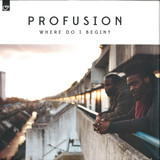
Profusion (noun): an abundance of something rich.
The sonic partnership of K15 and Emeson originated in the days of MySpace. A future of combining their skills was inevitable, and now in 2017, it's time to unleash their debut studio album into the ether.
The solo-projects of Tottenham-raised Kieron Ifill (aka K15) date back a decade, but were truly kick-started on labels such as Kyle Hall's Wild Oats and WotNot Music, with a number of genre-crossing releases dropping ever since, including the WU15 project (along with Yussef Kamaal's Henry Wu, on Eglo Records). Additionally to his production work, he has established himself internationally as a DJ, from the Jazz Cafe to the CoOp parties.
Partner in Profusion, Emeson, has many skills to his bow - singing, songwriting, producing, promoting, DJing (under the alias Ed Nice) and acting. As a musician, his varied skill-set has seen him work with Chico Hamilton, Carla Duke, Karmasound, Uzo Madu and Chris Jerome. A frontman for soul-jazz groups LifeSize, The One and Saturn's Children, he has featured on releases for BBE and Tokyo Dawn, and appeared live on stage at the likes of Ronnie Scott's.
The debut single was supported by tastemaker blogs Wonderland, XLR8R and Stamp The Wax, has been bumped by selectors such as Lefto and Jazzie B, and played on NTS, Worldwide FM, Mi-Soul, LeMellotron, Balamii Radio, Itch FM, Invader FM, Soho Radio and various stations across Europe and the US.
This album is full to the brim with summery sun-soaked synths, drifting across the warmest of basslines and heavyweight beats. Emeson's rich vocals gracefully ride atop of K15's delectably bruk twist on neo-soul sonics and electronics, this is some seriously classy contemporary London soul music, that manages to incorporate flashes of various dance music techniques, sound-system etiquette and jazz-tinged rhythms. As future-thinking as it is subtly retrospective, it doesn't lend itself to one genre, it intentionally embodies the best of many. An array of everything that is great about British black music in 2017. The message the album conveys itself couldn't have come at a more poignant time. Where do we begin
Profusion - an abundance of something rich indeed.
- A1: Abayomy - Obatala (Pd)
- A2: Zebrabeat_Zebrabeat Afro - Amazônia Orquestra (Zebrabeat)
- A3: Burro Morto - Lúcifer Colômbia (Daniel Jesi/Burro Morto)
- A4: Ive Seixas - Cervejas Populares (Ive Seixas)
- B1: Iconili - O Rei De Tupanga (Iconili)
- B2: Zulumbi - Zulumbi (Rodrigo Brandão / Lúcio Maia / Pg / Dengue)
- B3: Passo Torto - Faria Lima Pra Cá (Kiko Dinucci / Rodrigo Campos)
- B4: André Sampaio E Os Afromandinga - Ecos De Niafunke (André Sampaio)
- B5: Fabrício - Feito Tamborim, Pará Céu (Fabrício.)
Over the past few decades, there has been a seismic shift in Brazil's musical landscape. A plethora of varying musical undergrounds has developed across the nation. While Rio and São Paulo have been overwhelmed with networks of talented musicians for a long time, creative life is now bursting all over the country. Amplificador exists to document and propagate the wonderfully diverse music currently blossoming from Brazil's vivacious and geographically varied musical undergrounds. Presenting an up-to date insight into Brazilian music, this compilation draws together some of the components of 'Novíssima Música Brasileira' (brand new Brazilian music), ranging from afro-grooves to rock, to modern samba and MPB. The music reaches back across Brazil's incredibly rich musical and cultural traditions, while also taking in influence from other movements around the globe.
Having begun life in 2012 as a Brazilian music blog run by Marcelo Monteiro, Eduardo Rodrigues, Mateus Campos, and Ricardo Calazans, the aim of Amplificador is to document and propel to wider audiences, Brazilian music of the '00s and '10s generation. This is a task made more significant by obvious changes in the way music is consumed. 'People are no longer obliged to listen to what the radio and TV are presenting. There is a whole new generation that wants to listen to new bands and new sounds and we try to connect those bands with other bands, producers, fans and even the mainstream.' These changes in technology and the way music is discovered and shared have developed parallel to the proliferation of these emerging scenes. The ostensible decentralization of the music industry means the promoting and filtering work of journalists and blogs, like Amplificador, have become increasingly important, as people try to keep up with the tsunami of new music and media flooding the country on a daily basis.
Marcelo uses the example of the Mangue Beat movement to explain a trend in contemporary Brazilian music that looks both inwards, to Brazil's own musical traditions and outwards, to movements around the world to create a novel, localised identity: 'The 90's Pernambuco art-social movement was inspired by Coco, Maracatu and Forró all mixed with modern riffs and grooves. The mythical
revolutionary Chico Science, his Nação Zumbi, Mundo Livre, Siba, and many others do this blend perfectly. There are also the references to the older generations and masters - Gil, Caetano, Luiz Gonzaga, João Gilberto, Tim Maia, Jorge Benjor - as a constant inspiration for all bands.' This is very much the case for the Brazilian artists of today.
Music is unquestionably informed by place. Brazil has always been famed for its regional differences in this sense. Indeed there are still pronounced variations between the scenes of Rio, Sao Paulo, Natal, Goiânia, Belo Horizonte and Belém for example, there are also great divergences within cities and while technology has brought changes to the way musical influences are shared, there are cultural differences, rooted in folkloric traditions, that aren't going away. Expressing his appreciation for this fact, while highlighting the potential of Brazil's spread of musical flavours, Marcelo explains that 'what we have now is new ingredients to make an even better mixture.'
This compilation heavily features music from a scene in Brazil's current musical make-up, which draws inspiration from African music, particularly Afro-beat music. Abayomy Afrobeat Orchestra from Rio formed because of their shared love of the music of Fela Kuti, uniting initially in 2009 for a jam session in his honour. But what sets Abayomy apart from other groups of a similar nature, is the fact that their sound also brings with it the songs and rhythms of candomblé. In this sense, Abayomy was the first band of its kind. The thirteen members of the orchestra have a palpable current of Rio's musical heritage - its rhythms and culture - running through them. So while their sound is distinctly African, it is also inherently Brazilian. Similarly, Zebrabeat Afro-Amazônia Orquestra draw upon traditional guitarradas and carimbos from the state of Pará and fuse these with the poly-rhythms of Afrobeat to create another regional hybrid, which stays true to both its Amazonian and African roots, yet which results in a very fresh, Brazilian sound. From Belo Horizonte (capital of Minas Gerais), Iconilli are another key band on Brazil's Afro-groove scene. With influences as varied as funk, jazz and psychedelic rock, congado, mining harmonies, maracatu, coco, ijexá, carimbó, Iconilli somehow manage to balance all of these sounds in such a way that makes it impossible to pin them down. From the Northeastern city of Joao Pessao, Parayba, Burro Morto's pshychadelic afro sound leans more towards rock and funk influences, with hint of regional Brazilian rhythms such as frevo and forro. They add another flavour to the Brazilian afro-groove scene: just one of the many exciting facets of Novíssima Música Brasileira.
While African-inspired music features heavily on the compilation, it is just one of the many styles within. Ive Seixas has a fresh approach to MPB, based on traditional rhythms and instrumentation, punctuated by a pop sensibility, coupled with a powerful female vocal. As an artist she is a product of a 'Do It Yourself' outlook to creativity, taken from her love of rock growing up. In 2013 she embarked on a project of street performance: wandering, like a lonely troubadour with just her guitar. Ive and her project began to gain notoriety and shortly after, her first EP was recorded, featuring some important names of South Rio's underground scene. 'Cervejas Populares' taken from the EP, is a beautiful, sombre piece of modern Brazilian pop, with a traditional samba rhythm. Another artist of the new MPB scene is Fabricio, from the city of Vitoria, who's 'Feito Tamborim' melds rock and funk and is also clearly reminiscent of the old Brazilian masters. It's an appreciation for the national musical heritage, alongside a keen ear for melody and an acceptance of foreign influences that results in these promising new sounds of Brazilian MPB.
Sao Paulo's super group of the underground 'Passo Torto' have been at the helm of an emerging scene in the city: an innovative approach to samba which draws in and experiments with afro grooves, jazz melodies and rock structures. Their sound is naturally very Brazilian, but the nylon twang of Faira Lima Pra Ca, interspersed with ominous strings and light rolling percussion, seems reminiscent of Captain Beefheart or Tom Waits, as the band lament their frustrations with their native city through their music.
The Future of Novíssima Música Brasileira looks very bright. The main challenge (and purpose of this album) is to get the music beyond Brazil's underground and into view of international audiences. In the last 10 years this goal has become somewhat more attainable, as the Brazilian government has begun to see the internationalisation of the nation's culture as a strategic objective, with public projects gaining increased investment and backing. The continuing project of Amplificador is to reinforce this international bridge by writing, filtering and promoting the scene as a whole. There is a wealth of great music currently blooming in Brazil and using new media tools, Marcelo and the team, alongside many others, will passionately continue to get the voices of Brazil's underground heard.