
Search:clarity
8
Formed in Taipei in 2013, Scattered Purgatory (破地獄) has occupied a liminal space between drone, ambient, psychedelic folk and ritualistic kosmiche experimentation. Their early work, including ‘Lost Ethnography of the Miscanthus Ocean’ (2014) and ‘God of Silver Grass’ (2016), blended dense instrumental drones, improvisational guitar, and ambient textures rooted in the heat, humidity, and urban pulse of Taiwan. Over the years, the duo-turned-band has drawn on Krautrock, minimalist electronic music, and heavy drone traditions while remaining firmly grounded in Taiwanese geography and culture.
‘Post Purgatory’ emerges after a three-year hiatus following the pandemic, a period the band describes as pivotal to the album’s conception. “The feeling of loss and uncertainty has later become the inspiration of this record, and ‘time’ is the main theme – it can heal or it can destroy,” they explain. Musically and lyrically, the record traverses Taiwanese, traditional Chinese, and English, reflecting the multilingual fabric of Taipei life. While there isn’t a linear storyline, metaphor and poetry imbue the lyrics with reflections on love, loss, and the human experience, interlaced with influences of Hokkien and Mando pop and traces of trip-hop.
Recorded half in their home and half at the studio where they composed their first album, ‘Post Purgatory' integrates precision, clarity, and digital production techniques. Guest contributions—from White Wu’s dynamic drumming to Minyen Hsieh’s tenor saxophone and dotzio’s sci-fi-infused vocals—expand the band’s sonic palette, creating a doom metal record shaped by electronic sensibilities.
‘Post Purgatory’ is a statement of loss and re-empowerment, a bridge between their past and present. Through it, Scattered Purgatory reclaim their distinctive voice, presenting a sound that is at once rooted in Taiwan, informed by global musical traditions, and unflinchingly forward-looking.
credits

- Tractor Beam
- My Maker
- Light On Our Feet
- Cruise
- Agony Freak
- Dead End
- Butterfly
- Nowhere
- Hell
- Ricochet
- Reverie
also available
RED COLOURED VINYL EDIT[21,81 €]
This is her first album in five years, she returns with a renewed sense of clarity and control, asserting herself as a generational songwriter with a sharpened perspective. While her early work chronicled the emotional turbulence of young love, Ricochet reveals a deeper fixation: time, mortality, and the quiet terror of watching the things you love slip away. The album"s 11 songs are steeped in introspection, anxiety, and acceptance - an acknowledgment that the world keeps turning regardless of what"s unfolding in your own small orbit.

11
also available
Black Vinyl[21,81 €]
This is her first album in five years, she returns with a renewed sense of clarity and control, asserting herself as a generational songwriter with a sharpened perspective. While her early work chronicled the emotional turbulence of young love, Ricochet reveals a deeper fixation: time, mortality, and the quiet terror of watching the things you love slip away. The album"s 11 songs are steeped in introspection, anxiety, and acceptance - an acknowledgment that the world keeps turning regardless of what"s unfolding in your own small orbit.

- 1: Up In The Air
- 2: Miracle
- 3: 2005
- 4: Freak Out
- 5: Snow Days
- 6: 100Mph
- 7: Floating Through Time (Interlude)
- 8: L Train
- 9: Lost Signals
- 10: Lulu Boy
- 11: Ten Years
“If I never make it home, thank you for everything.” — “Ten Years” It’s hard to believe twenty years have passed since The Academy Is… released their breakthrough debut Almost Here, a record that quietly shaped an underground era. In the years since, the band grew up, lived full lives, and ultimately found their way back. Almost There serves as a conceptual companion to their debut, reexamining the past from the present with clarity, reflection, and experience. “Almost Here was about leaving home,” William Beckett reflects. “This album is about finding your way back.” The songs capture the bittersweet truth that time moves fast, carrying a quiet urgency to chase what matters before it slips away.

- 1: Toninho
- 2: Shapeshifter
- 3: Grönbete
- 4: Saga Nomri Ngen
- 5: Monkurt
- 6: Olikheter
- 7: Chime Blues
- 8: Ses Vid Horisonten
April Records proudly presents the new album from Stockholm Stockholm-based bassist and composer Jon Henriksson - a confident and flexible statement that deepens his place within contemporary Scandinavian jazz. Following the success of his 2023 debut Harmonia which placed second in Orkesterjournalen s Golden Album " readers " poll, Henriksson returns with music that foregrounds collective interplay, shifting forms, and a strong compositional voice. Born in Gothenburg and now active across Sweden and Europe, Henriksson has collaborated and toured with artists including Lars Jansson, Hakan Broström, Erik Söderlind, Klas Lindquist, Jonas Kullhammar and Christina von Bülow. Alongside leading his own ensembles, he remains a soughtsought-after bassist in a wide range of projects, balancing a deep connection to the jazz tradition with a modern, exploratory approach. Shapeshifter is built around a core quartet of tenor saxophone, piano, double bass and drums, expanded with guitar on three tracks and trombone on two. The album moves fluidly between contrasting moods, from forceful and driving to reflective and restrained, with each piece shaped by the musicians " intuition and responsiveness. The title reflects Henriksson s compositional philosophy: allowing roles, textures, and forms to evolve as the music unfolds.The ensemble brings together long long-standing musical relationships. Pianist Rasmus Sorensen and Henriksson have collaborated since their studies at Skurups Folkhögskola (Henriksson is a longstanding member of Sorensen s own trio), while drummer Jonas Bäckman forms part of a well well-established rhythm section partnership with the bassist across numerous projects including the Britta Virves Trio. Saxophonist Karl Karl-Martin Almqvist, a member of the Danish Radio Big Band, completes the quartet, with guitarist Pelle von Bülow and trombonist Rasmus Holm joining the session shortly before recording to expand the album s sonic palette where the music called for it. Originally conceived as a quartet album, Shapeshifter took its final shape in the lead lead-up to recording as additional instrumental colours were introduced organically. The piece Toninho , a tribute to Brazilian guitarist and composer Toninho Horta, features acoustic guitar and subtle wordless vocals, reflecting melodic influences that sit naturally within the album s contemporary jazz framework. Across the record, space, pacing, and interaction remain central. Rather than forcing constant motion, the music allows ideas to develop with clarity and intent, resulting in an album that highlights Henriksson s growing assurance as a composer and bandleader, while keeping the collective at its core.

Al Wahem (“The Illusion”) is the new full-length release by PRAED, the Swiss–Lebanese duo of Raed Yassin and Paed Conca. Recorded between Beirut and Berlin, the album returns to the group’s central aesthetic: a rhythm-driven weave of Egyptian shaabi, electronics, improvisation and the gritty pulse of street-level sound. Nearly twenty years into the project, PRAED have distilled their approach into four pieces that subtly shift the listener’s bearings, reordering grooves and fragments until familiar elements take on new identities.
The twenty-minute title track sets the tone. A tightly interlocking two-drum foundation from Pascal Semerdjian and Ayman Zebdawi shapes a structure that expands steadily: synth figures branch outward, clarinet and bass lines act as internal guideposts, and brief vocal calls from Yassin and guest singer Mayssa Jallad sit inside the texture rather than leading it. PRAED’s shaabi keyboard language is present, but the duo stretch it outward, building tension and movement through patient accumulation.
“Al Hathayan,” at 4:46, tightens the focus. Conca’s clarinet moves between melodic arcs and clipped rhythmic gestures, threading through electronic loops that surface and disappear. Zebdawi’s percussion adds a raw, tactile quality, placing acoustic patterns and electronics in direct conversation. The piece acts as a bridge between the album’s two long-form compositions.
Side B begins with “Al Maraya,” a thirteen-minute piece that relies on electronic, bass and clarinet interplay. The atmosphere nods to the breadth of PRAED Orchestra!, but remains anchored in the duo’s rhythmic foundations. Rather than building mass, the layering creates a sense of depth, as if new spaces were opening inside the groove.
The album closes with “Assarab,” featuring keyboardist Amr Said. Semerdjian and Zebdawi again form a dual percussive axis, while synths hover between melody and pulse, and themes recur in widening circles rather than building vertically. The porous boundary between electronic and acoustic sources — processed clarinet mistaken for a sequencer, rhythmic figures springing from live drums — is where the album’s theme of “illusion” shows itself most clearly.
Al Wahem follows a long arc: early releases on Annihaya, a key appearance on Ruptured Sessions Vol. 5 – Live at Radio Lebanon (2013), later albums on Akuphone, and the large-scale PRAED Orchestra! documented on Morphine Records. This new Ruptured/Annihaya co-release brings the duo back to a concentrated format, reorganizing their familiar materials with renewed clarity and intent.

Internal Battle sees Indra MC and Jman united over the riddim, each bringing their own unmistakable lyrical fire to the table. This is a heavyweight steppa built for the soundsystem!
Opening with an epic, cinematic intro that builds tension bar by bar before dropping into a thunderous steppa style and pattern. Deep subs, militant drums, and razor sharp flows collide as both vocalists dive into both the chaos and clarity of the mind’s internal war.
Internal Battle captures that raw clash between doubt and determination, shadow and strength. Crafted for late night sessions, stacked speaker boxes, and conscious crowds, this one hits with purpose and power.

4
After a long hiatus broken by their inclusion in Om Unit's final epic Acid Dub Versions set, Alter Echo & E3 step out once more with the four-track “No Peace EP.”
With past releases on storied labels including ZamZam Sounds, Moonshine, Scrub A Dub, Lion Charge, LavaLava, and Khaliphonic, the duo opted to forego labels for this one, instead dropping the first release on their own AEE3 imprint.
The main mix of the title tune is a pounding dystopian slow-stepper collab with old friend & sparring partner Ishan Sound, dusted off and rebuilt after years on dubplate. Shot-through with stinging percussion, swirling with leaden atmospherics and dread truths, this one’s an absolutely uncompromising piece of supremely heavy steppers.
RSD’s remix opts for crystal clarity, extra layers of percussion, an emotional mid-range melody, and of course the huge bassweight Rob Smith is known & loved the world over for.
Om Unit’s “Kaliuyga Verse” recenters the tune on deeply spiritual indigenous wisdom spoken by Floyd “Red Crow” Westerman. This long-form rework fleshes out the instrumentation with classic UK dub percussion and FX, plus flute and much more, transmuting the original’s darkness into something magisterial and hopeful while maintaining absolute heaviness.
AEE3’s "Southeast Rock" closes the EP with a slower tempo meditation powered by a melodic bassline, chopped drums, dub tech stabs and righteous horns, an introspective ganja tune that will stay with you long after the runout groove.

- A1: ) Colour Chant
- A2: ) Still & Moving
- A3: ) The Reader’s Lamp
- A4: ) Sun In My Room
- A5: ) Carry A River In Your Mouth
- B1: ) Catch Up, Isobel
- B2: ) A Ship In The Sky
- B3: ) Some Circling
- B4: ) There Was Always A Golden Age
London quartet The Leaf Library return with their bold new album After The Rain, Strange Seeds. A luminous collection of pastoral indiepop, drawing inspiration from suburban isolation, unreliable memories and the surreality of the weather. Their most immediate and melodic work to date, the richly evocative songs brim with chiming guitars, buzzing organs and warm, dulcet strings, evoking Yo La Tengo’s more contemplative moments, The Clientele’s autumnal jangle pop and early Stereolab’s motorik melodicism. The sound of the album is defined by mixer John McEntire, whose work with Stereolab and Yo La Tengo (as well as a member of Tortoise/The Sea And Cake) have been major inspirations to the band.
The album explores themes of memory and place, albeit through an abstract haze – returning again and again to specific moments frozen in time: midsummer bright hot days in the Chilterns (“Sun In My Room”), meteorology and the strange movement of the weather (“Colour Chant”), red kites circling over suburban motorways (“Some Circling”), and the uncanny feeling of dusk and nighttime creatures on “The Reader’s Lamp” (titled by celebrated film director Peter Strickland). The lyrics are vivid yet elliptical, strung with abstract ideas and imagery, conjuring a gently unsettling, though never unwelcoming atmosphere. Not quite trusting your own recollection of things, while marvelling at the oddness of the natural world, the album’s title a good summation of the mix of strangeness and hope contained within.
As on past albums the band - founded by singer Kate Gibson and ex-Saloon guitarist Matt Ashton in the mid 2000s, and now completed by drummer Lewis Young and bassist Gareth Jones - have involved their extended musical family, including guitarist Mike Cranny (of fellow drone pop travellers Firestations) and keyboardist Irina Shtreis, both members of the Leaf Library live band. The album also sees the return of James Underwood’s Iskra Strings, a quartet that features on 4 tracks, with sumptuous arrangements by Daniel Fordham, as well as regular contributor Melinda Bronstein on vocals and Will Twynham (Dimorphodons) on harpsichord. They also welcomed Paddy Milner (on Hammond organ) and Scott McKeon (guitar) – both current members of Tom Jones’ band – for a startlingly delicate rolling crescendo to closing track “There Was Always A Golden Age”.
After The Rain, Strange Seeds is their 4th studio album. The result is The Leaf Library’s most accomplished and affecting work, John McEntire’s mix bringing a bold clarity to the band’s meticulous arrangements – closer to how they sound live than anything they’ve done before.

6
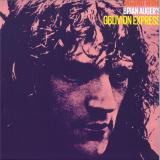
Strut Records highlights a landmark in British jazz-rock with Second Wind, the 1972 album from keyboard visionary Brian Auger and his powerhouse group Oblivion Express. Capturing a fully matured lineup, the record finds Auger expanding his fusion language - bridging jazz sophistication, funk-driven rhythm, and soul-infused songwriting with the clarity and fire that defined his early ’70s work.
Though Auger’s roots lie in the lineage of hard-swinging jazz organ and the improvisational fire of the ’60s British scene, he has never been an artist content with tradition. With Second Wind, he moves further into a hybrid language that fuses rhythm with harmonic depth and groove, without sacrificing sophistication. His playing is expansive yet precise, translating the electricity of live performance into a studio work that breathes with immediacy.
At the heart of this era of Oblivion Express is the telepathic rapport among its members. Vocalist Alex Ligertwood (in one of his earliest major recordings before Santana fame) brings a soulful intensity that feels both grounded and forward- looking. Second Wind contains tracks that have become deeply significant in Auger’s discography - original compositions Second Wind, and Truth to name a few - but it was Auger's high octane revisioning of Eddie Harris' Freedom Jazz Dance, (adding new lyrics to the original instrumental) that genuinely broke barriers. The track became a DJ friendly classic and highlighted the groups deeply original approach.
The rhythm section of Barry Dean and Robbie McIntosh balances weight and fluidity, giving Auger the space to stretch across Hammond organ, Rhodes, and keys with characteristic boldness. Their collective sound is one of seamless motion: jazz-inflected lines swelling into rock-driven crescendos, funk-leaning grooves locking with vocal hooks, moments of quiet clarity emerging between bursts of improvisation.
Second Wind stands as a pivotal moment in Auger’s discography: a record that bridges the exploratory spirit of his earlier projects with the more groove-oriented approach that would soon bring international attention. More than five decades later, it remains a vivid document of a band carving out its own language. Music born of instinct, collaboration, and a restless desire to push beyond the expected.

- A1: _Etude No. 1 (Edit) - 04:36
- A2: _Etude No. 2 (Edit) - 03:37
- A3: _Etude No. 3 (Edit) - 02:28
- A4: _Etude No. 5 (Edit) - 05:08
- A5: _Etude No. 6 (Edit) - 03:27
- B1: _Etude No. 8 (Edit) - 03:45
- B2: _Etude No. 10 (Edit) - 03:27
- B3: _Etude No. 16 (Edit) - 03:41
- B4: _Etude No. 17 (Edit) - 05:23
- B5: _Etude No. 18 (Edit) - 03:19
With Figures of Glass (Piano Etudes – Edits), Vanessa Wagner offers a new listening perspective on Philip Glass’s Piano Études, shaping a curated selection of edited versions drawn from her acclaimed recording of the complete cycle. These edits do not alter the substance of the works; rather, they refine their temporal focus, revealing their emotional force with renewed clarity.
Conceived in parallel with Figures of Glass, a hybrid project developed with visual arts collective Scale, the release extends a dialogue between piano and light, sound and space. Between piano and light, Vanessa Wagner interprets Glass’s Études at the heart of a scenographic installation, exploring the visual imagination embedded in the composer’s music. Minimal structures become spatial gestures; repetition opens onto perception, colour, and resonance. Taken together, these edits form a coherent arc through Glass’s language: from tension and propulsion to suspension and introspection, from rhythmic urgency to contemplative stillness. Wagner’s approach is marked by precision, restraint, and a deep attention to resonance, allowing each piece to unfold with an assumed expressive sobriety.
Figures of Glass also exists as a live creation, presented for the first time in Paris at the Théâtre du Châtelet on April 7, 2026. In both recorded and staged forms, the project invites contemporary listening contexts — from focused headphone listening to immersive visual environments — while reaffirming the Piano Études as a major landmark of 21st-century repertoire. Bridging modern classical piano, minimalist writing, and spatial listening formats, Figures of Glass (Piano Etudes – Edits) speaks equally to traditional classical audiences and new listeners discovering Philip Glass through curated, editorial-driven experiences.

- 1: First Light
- 2: Cantata
- 3: Hands N Feet (Feat. Estee Nack)
- 4: Make Me Wise
- 5: Coonspeak
- 6: Equiano (Feat. Shabaka Hutchings)
- 7: The Lorax (Feat. Billy Woods)
- 8: Fainting Goats (Feat. Breeze Brewin)
- 9: I Say Self
- 10: Visitation Place
- 11: Alive Herbals
- 12: Parental Advisory
Two turntables and a microphone. There is a truth in the clarity of that simple coda, a truth that also belies the breadth of what is possible within its confines. Sometimes you gotta get reminded. I Guess U Had To Be There, the new album from NYC rapper ELUCID and veteran producer Sebb Bash, is one of those ones. So fresh it sounds like it was made tomorrow, but bet money you could put this on in ’89 and get heads bopping.
There are moments in music when masters of their craft cross paths at the height of their respective powers—records like Madvillainy, Liquid Swords, Dr. Octagonecologyst, and Hell Hath No Fury—where the result is more than the sum of its parts. ELUCID and Sebb Bash find themselves in this heady, seemingly effortless ephemera on I Guess U Had To Be There. Everything is both familiar and groundbreaking. The beats shift and flip under ELUCID’s feet but he tightropes it all, delivery nimble as a mountain goat, producer and rapper moving in perfect synchronization. Some shining stars make memorable appearances: billy woods, Breezly Brewin, Estee Nack, Shabaka Hutchings. But this is a two-man show, and the duo keep the spotlight where it belongs. I Guess U Had To Be There is a captivating, convention-defying listen and a high-water mark for two of the best artists in the genre.

- 1: Melantroduction
- 2: Without
- 3: Adorer And Somebody
- 4: A Summer's End
- 5: Solicitude, Silence
- 6 2: Sec. And A Tear
- 7: Lastdance
- 8: Morning... Gray
- 9: Diotima
- 10: Re-Silence
For here lies one of the most influential bands in the realm of gothic metal, a group with doom and death metal roots that has flourished for over three decades, boasting thirteen albums that have garnered devoted acclaim. This injustice is now being set right by The Circle Music , beginning with the vinyl release of the classic album "Burning: A Wish", which emerged twenty-four years ago. "Burning: A Wish", released in the twilight of the year 2001, stands as a dark reliquary of dreams lost to the velvet fog of melancholy. To revisit it now, two dozen years later, is to unseal a time capsule of gothic ache, doom- laced longing, and the tormented tenderness that only Lacrimas Profundere could conjure at their creative height. It was a candle-lit corridor between worlds. A slow fall into velvet shadows. A scream muffled by rain.
By the time "Burning: A Wish" was released, Lacrimas Profundere had already begun to evolve from their early death- doom origins, shaping their identity with the sophistication of seasoned mourners. The death growls had receded, replaced by the haunted, baritone croon of Christopher Schmid, whose voice is an echo from a chapel ruined by time. Yet, while the growls faded, the emotional gravitas remained intact, transmuted into melody, into baroque gloom, into something more sorrowfully refined. Produced with lush, theatrical clarity, the album never drowns in its own atmosphere, it breathes with it, moves with it. The soundscape is dominated by somber guitar textures, languid tempos, and subtle orchestral touches. From the very first notes, it is clear that this is music for ruined lovers and moon-drenched graveyards.
This is the hallmark of Lacrimas Profundere 's style: an emotional minimalism that does not explain or elaborate, but merely opens wounds and lets them breathe. That this album has remained, until now, absent from the warm embrace of vinyl is both tragic and oddly poetic. For what format better suits a record such as this than the one that cracks and hisses like an old seance? Vinyl is tactile, intimate. It requires attention, reverence. To place Burning: A Wish on a turntable is to light a candle in the dark.

- Greensleves
- Borderick
- Light Blue
- Dive
- Impromptune
- Saturn
- Stronger Than Pride
- A House Is Not A Home
- A Nod To The High Priest
- Why?
Recorded spontaneously in a single afternoon, the album captures an unguarded musical conversation between two of the most compelling voices of their generation. Born in Brixton and now based in Harlem, Ruben Fox has emerged as a major presence on the international jazz scene, renowned for the depth of his sound, the emotional clarity of his ballad playing, and a voice rooted in tradition while speaking firmly in the present. His work follows collaborations with artists including Wynton Marsalis, Barry Harris, Roy Hargrove, Jon Batiste, and George Coleman, and builds on the critical acclaim of his 2021 debut Introducing Ruben Fox.
Micah Thomas is one of the most celebrated pianists of his generation, praised for a style that is both restlessly inventive and deeply grounded in the history of the music. A Jerome L. Greene Fellow and Juilliard alumnus, Thomas has worked extensively with Immanuel Wilkins, Joshua Redman, Ambrose Akinmusire, and Billy Drummond, and has been recognised by DownBeat, Jazz Magazine, and The New York City Jazz Record as a defining contemporary voice. Fox and Thomas first developed their musical relationship while studying at Juilliard, where they regularly played duo sets. In Two Minds was recorded on a whim at Chris Pattishall's apartment in Washington Heights, with no rehearsal, no edits, and no agenda beyond mutual respect, listening, and shared musical values. Over three hours, the pair simply showed up and played.
The result is an intimate, conversational record that foregrounds generosity, empathy, and deep musical listening. Sparse, direct, and emotionally rich, In Two Minds offers a rare document of two artists meeting in real time, balancing history, intellect, warmth, and spontaneity.

“Behind the Noise“ marks a powerful new chapter in Aleqs Notal’s musical journey.It's a declaration, a rupture and a surge of heat aimed straight at the dance floor and the soul, engineered to move thebodies and the foundations.The E.P. includes 4 tracks sculpted with a cutting-edge groove that fuses the weight of dub, the propulsion of DetroitTechno, and the warmth of House Music into one timeless movement.In an era drowning in gloss and shallow repetition, "Behind the Noise" rises as a manifesto for honesty, for the craft andfor music that dares to makes you feel and meditate.Through his music, Notal is urging us to listen deeper, to move with clarity, and to remember what lies beneath thesurface.Behind the Noise, there is truth..and it hits hard!

Soft Echoes presents the first physical edition of ‘In a Few Places Along the River’ by Abul Mogard as a limited run of 500 vinyl copies. Originally released digitally in 2022, the album now appears in its intended form, marking the label’s second release.
Three long pieces, composed between 2019 and 2022, emerged from Mogard’s meticulous experimentation with analogue and digital instruments. Slowly evolving harmonic fields of layered drones and spectral textures drift across the record. They are enhanced by reverb from Scotland’s Inchindown oil tanks, which hold the longest reverberation of any man-made structure, giving the music a haunting resonance and a sense of suspended space.
‘Against a White Cloud’ and ‘In True Contemplation’ open the album with their nocturnal tones that gradually intensify into dense, immersive waves of sound. Side B is devoted to the 21-minute elegiacal piece ‘Along the River’, which flows between weight and silence, unfolding with reflective depth and moments of subtle transcendence. As one listener observed, “His music doesn't break the wilful suspension of disbelief: you stay in its trance.”
“Recording for this album began in 2019, when I was still living in London,” Mogard explains. “The first version of ‘Along the River’ was created at my studio near Brick Lane. It started with experimenting around a chord progression inspired by a classical piece I had once been recommended, though, strangely enough, I no longer recall what it was. Early in 2022, I revealed the identity behind Abul Mogard and wanted to mark this new period, so I decided to release it quickly, by myself, as digital-only.”
After returning to Rome, Mogard created the other two pieces, working with new digital instruments alongside his modular synthesiser, and integrated recordings from the London sessions. The music reveals a patient attention to texture and space, defining his usual restraint. Mogard adds, “I was trying to explore very subtle changes in the spectral characteristics of the music using extremely slow, intertwined tones.”
Described by critics as one of Mogard’s most melancholic and absorbing releases, the album maintains an austere beauty and contemplative weight, leaving a lingering impression that lasts far beyond the final note.
The music has extended beyond the album itself, with tracks appearing in films and contemporary artworks. Most notably, Swedish artist Peder Bjurman’s ‘Slow Walker’ audiovisual installation and French filmmaker Fleuryfontaine’s politically charged animated film ‘Soixante-sept millisecondes’.
Mastered by Rafael Anton Irisarri and cut to vinyl by Lupo, the record emphasises the clarity and depth of Mogard’s frequencies, with each layer precisely balanced. The cover artwork and design are by Marja de Sanctis, who has collaborated with Abul since his first cassette release in 2012.

- A1: What's Wrong?
- A2: Overkill
- A3: The Anatomy Of A School Shooting
- B1: Glenwood Projects (Feat. Uncle Howie, Necro & Goretex)
- B2: Peace Sells
- B3: Unstoppable
- B4: Death Smiles At Murder (Feat. Mr Hyde)
- C1: Chasing The Dragon (Feat Necro)
- C2: Alien Workshop
- C3: Canarsie Artie's Brigade (Feat. Necro, Q-Unique & Goretex)
- C4: Porno Director (Feat. Goretex & Sabac Red)
- D1: American History X
- D2: Uncle Zowie
- D3: Legend Has It
- D4: The Final Scene
- D5: Chasing The Dragon (Moshpit Mix) (Feat. Necro)
16
also available
CASSETTE[22,65 €]
Twenty years ago, ILL BILL released “What’s Wrong With Bill?”, a raw, unfiltered snapshot of where his mind was at during a dark, creative and transformative time. Chaos and clarity in musical form, a record built from trauma, truth and the New York streets that raised him. He never imagined it would become what it did: a cult classic with a revered mystique that continues to be quoted and debated 20 years later. This album captured ILL BILL at his most urgent, most aggressive and most alert to the madness around him.
For the first time in two decades, “What’s Wrong With Bill?” is being reissued on 2LP vinyl, a complete capsule including an alternate variant cover, 20th anniversary commemorative OBI strip, and, for the first time ever, a cassette edition, alongside a remastered limited edition CD. This is more than nostalgia, it’s encapsulated arcana, proudly representative of an era when Hip Hop was dangerous, fearless and alive. This one is for the true believers who never forgot.

12
Irlam's dastardly duo are back with another bonza bucket of bass, breaks and badness as they fire up Studio Krust for another high octane session.
Sure to top the Fairground charts and further enrage the Hell's Angels, 'Synthetic Stupidity' sees the pair unleash their full force unabashed, as they hit a purple patch full of new found and frankly quite surprising productivity (rumours of a European-wide sputnik shortage are the likely catalyst).
Fractionally distilling their many collective years of dance music experience into 12 refined pieces of advanced club kinetics that skirt between the syncopated intricacies of breakbeat science and maxed-out 4/4 propulsion.
More hyped-up vox & frantic sampling, more tension, tons of one-finger keyboard melodies, and - as usual - moments of sonic tomfoolery to flummox the assumers.
With their drug debts paid off and a forced clarity of mind, 'Synthetic Stupidity' is a more expansive, deeper and unhurried project; allowing Bosco and Metrodome the space and time to truly deliver the zenith of their sound.
This, is DJ ABSOLUTELY SHIT!!!
