Unreleased boogie-funk tracks from 1982 London. Music from an obscure, yet adored era/location, featuring the band that laid the groundwork for McKenzie and Gardiner, a certified UK Boogie Funk group from back in the day, known by funk/boogie aficionados and crate-diggers worldwide. “I’ll Keep Loving You” and “No Use Hidin’” are the final demos from the group Class of ‘78, which is the 7-piece band that predated the duo of McKenzie and Gardiner. It showcases a more loose live group feel on these two unearthed cuts recorded in 1982. “I’ll Keep Loving You” and “No Use Hidin’” are proper boogie-funk era tunes: both are spacey upbeat love songs with elements of disco, funk, lounge, and new wave
Buscar:class of 78
2026 Repress
The long-awaited sequel to Ophidian's cult classic Blackbox (2003) arrives: "Blackbox: Kasamaan" picks up where the original left off, and strays further into the darkness.
Expect Industrial Hardcore and Hard Techno with grinding, distorted kicks, warped percussion, detailed rhythms and intricate sound design, all while being cloaked in haunting, eerie atmospheres.
- A1: Les Masques - Il Faut Tenir (1969)
- A2: Isabelle Aubret - Casa Forte (1971)
- A3: Christianne Legrand - Hlm Et Ciné Roman (1972)
- A4: Jean Constantin - Pas Tant D'chichi Ponpon (1972)
- A5: Billy Nencioli & Baden Powell - Si Rien Ne Va (1969)
- B1-: Marpessa Dawn - Le Petit Cuica (1963)
- B2: Jean-Pierre Sabar - Vai Vai (1974)
- B3: Sophia Loren - De Jour En Jour (1963)
- B4: Isabelle - Jusqu’à La Tombée Du Jour (1969)
- B5: Sylvia Fels - Corto Maltesse (1974)
- C1: Frank Gérard - Comme Une Samba (1972)
- C2: Ann Sorel - La Poupée Des Favellas (1971)
- C3: Charles Level - Un Enfant Café Au Lait (1971)
- C4: Andrea Parisy - Les Mains Qui Font Du Bien (1970)
- C5: Audrey Arno - Quand Jean-Paul Rentrera (1969)
- C6: Aldo Frank - T’as Vu Ce Printemps (1970)
- D1: Christianne Legrand - Cent Mille Poissons Dans Ton Filet (1972)
- D2: Clarinha - Lemenja (1970)
- D3: Hit Parade Des Enfants - Aquarela (1976)
- D4: Jean-Pierre Lang - Tendresse (1965)
- D5: Magalie Noël - Une Énorme Samba (1970)
- D6: Françoise Legrand - La Lune
Ever since the late 1950s bossa-nova revolution, Brazil’s influence on French music has been undeniable. Pierre Barouh, Georges Moustaki and a vast array of lesser known artists, all made the Musica Popular Brasileira (MPB) an axis of promotion at the service of a cool and metaphysical, modern and mixed Brazilian lifestyle. Some were seduced by the poetic languors of the bossa, some were looking for fun, and others just loved the American hybridization of jazz-bossa, jazz-samba.
What is bossa nova? One of its creators, Joao Gilberto said: "Its style, cadence, everything is samba. At the very start, we didn't call it bossa nova, we sang a little samba made up of a single note - Samba de uma nota so .... The discussion around the origins of bossa nova is therefore useless”. It is nevertheless useful to remember that these magnificent Brazilian songs, which the guitarist describes as samba, were shifted and balanced around improbable chords. "I like things that lean, the in-betweens that limp with grace," said Pierre Barrouh, quoting Jean Cocteau.
With emotion, arrangements for violin and supple guitar licks, bossa nova rapidly changed. A transformation that can be heard in the Tchic, tchic, French Bossa Nova 1963-1974 compilation, the result of a cultural reappropriation, which traveled through the United States and supplemented itself in France.
A musical revolution that has remained significant, bossa nova was born in Rio. From 1956 to 1961, Brazil lived through its golden years. In five years, the country had invented its modernist style. Elected president in 1956, Juscelino Kubitschek de Oliveira, an elegant man with a broad forehead, brandished a promising slogan: "Fifty years of progress in five years". He quickly got to work. Not worried about increasing debt, he launched the project for a new federal capital, Brasilia, designed by the communist architect Oscar Niemeyer. Volkswagen opened state-of-the-art factories and created the “fusquinha”, the Beetle. In Rio, the Vespa made its first appearance. The Arpoador Surf Club crew run into the “girl” from Ipanema, Helô Pinheiro - the tanned garota ("chick"), between a flower and mermaid, who at 17 walked by the Veloso bar, where the fiery author and composer, Tom Jobim and Vinicius de Moraes, were getting drunk on whiskey. From then on, bossa symbolized cool.
In 1958, Joao Gilberto recorded Chega de Saudade, which the directors of Philips denied, calling it "music for fagots". The marketing director, who believed in it, secretly pressed 3000 78-inch vinyls and distributed them at schools around Rio, creating a tidal wave.
American jazzmen then took over. In particular, trumpeter Dizzy Gillespie and guitarist Charlie Byrd. In November 1962, the Brazilian Ministry of Foreign Affairs funded a "Bossa-Nova" concert at Carnegie Hall in New York, inviting the genre’s pioneers. Unprepared, the show soon turned to disaster. But the troupe was invited to the White House by Jackie Kennedy. The first lady loved "the new beat" and in particular Maria Ninguem, a song by Carlos Lyra, later covered by Brigitte Bardot.
In Brazil, the 1964 military coup quickly ended this euphoria. The destructive atmosphere that ensued pushed many Brazilian musicians to leave, if not to exile. Thus, Tom Jobim, Sergio Mendes and Joao Gilberto arrived to the United States. In New York, Joao Gilberto met saxophonist Stan Getz. At the time, he was married to the Bahianese Astrud Weinert Gilberto, who had a German father. She had never sung before, but she knew how to speak English. Getz therefore asked her to replace her husband on The Girl From Ipanema. The Getz/Gilberto record with Tom Jobim on piano, was released in March 1964. Phil Ramone, the "pope of pop" was in charge of sound.
Bossa nova arrived in Paris through the classic “guitar-voice” channel (Pierre Barouh, Baden Powell, Moustaki…) But France loved jazz and Paris had already welcomed its American contributors. All these good people were to pass through Saint-Germain-des-Prés. The cabaret l'Escale became the Mecca of Latin American sound where one could find Pierre Barrouh and his friends, such as the Camara Trio, samba-jazz aces, whose only record was published by the Saravah label. With a band strangely called Les Masques (a band that included Nicole Croisille and Pierre Vassiliu, among others), the Camara Trio recorded an interesting Brazilian Sound, including the track Il faut tenir which is present on this tasty compilation of rarities.
Other enlightened musicians can also be found on the compilation, such as Jean-Pierre Sabar (songwriter for Hardy, Auffray, Leforestier ...) and the French pop rock organist Balthazar. In 1975, Sabar recorded Aurinkoinen Musiikkimatka on a Finnish label, which featured the crazy Vai, Vai, included on this record. We are now following the footsteps of Brazilian electronic musicians such as Sergio Mendes, Eumir Deodato or Marcos Valle who created funk and disco sounds on their keyboards and synthesizers. A style that influenced Véronique Sanson when she wrote Jusqu’à la Tombée de la nuit in 1969 for Isabelle de Funès, the niece of Louis and a great friend of Michel Berger - Sanson did end up singing this track on her 1992 Sans Regret record.
The pinnacle of exoticism and travel, Sylvia Fels’ Corto Maltese includes bongos, sea mist and ocean sounds. The title was taken from Jacky Chalard’s concept album written in 1974, Je suis vivant, mais j’ai peur (I am alive, but I am scared), based on Gilbert Deflez’s science fiction novel.
However, bossa nova extended the scope of popularity. "In the 1970s, I was a fan of Sergio Mendes, Getz / Gilberto. I fell in love with this music that I knew because I had been an orchestral singer, " explained Isabelle Aubret, who in 1971 delivered a composite record of covers by the very funky Jorge Ben, Orfeu Negro, Tom Jobim, Vinicius de Morais and Jean Ferrat. "I recorded this album for Meys Records in Paris, far from Brazil, with wonderful musicians, François Raubert, Roland Vincent, Alain Goraguer...". The latter wrote the arrangements for Casa Forte, a very percussive title borrowed from Edu Lobo, one of the initiators of the bossa who spent time in California. "Jazz and bossa came together and produced very rhythmic music. I love singing, it allows me to dream, to have fun, to feel a high on stage, and these songs brought me joy, made me swing, my singing felt like a dance.”
The world tours of French singers and their desire for the tropics, often brought them to Rio with its hills, forests, caipirinhas and tanned bodies. There are surprises though, like this Iemenja (Iemenja is the goddess of the sea in the Afro-Brazilian candomblé religion). Not unlike the composer and musician Jean-Pierre Lang, based in Sao Paulo, Claire Chevalier taught Brazil to Brazil. In 1970, the singer and painter published a 45-inch vinyl, Mon mari et mes amants (My husband and my lovers), under the improbable pseudonym of Clarinha (little Claire). She was then living in Rio, with her husband, Joël Leibovitz, who founded a band called Azimuth, and who owned a record label specialized in "sambas enredos" songs for samba school parades.
For its B side, she asked Pierre Perret to come up with lyrics for a song composed by Carlos Imperial: "Oh goddess of the sea, o goddess Iemenja, I bring a white rose to adorn your long hair ..." . "Perret came to see us, and we had fun, remembers Joël Leibovitz. We wrote Lemenja for fun, we recorded it at the Havaí studio, behind the Central do Brasil the central station. Erlon Chaves, the arranger who worked with Elis Regina, joined us" adding his share of Afro-Brazilian percussions and funky brass to the mix.
There is a common misunderstanding in Franco-Brazilian history: that bossa, admittedly hedonistic, is perceived as funny, even though the poets who wrote the texts are often philosophizing on the human condition. Its French interpreters pull it towards a carnival inspired universe, far removed from its fundamental essence. Thus, Jean Constantin covered the famous Samba da minha terra, an ode to the art of samba written by the classic Bahian composer Dorival Caymmi, renaming it with the enticing title of Pas tant de tchi tchi pompon: "On your pier there is no tchi tchi / when you arch your back, you know everything is alright ”(lyrics by Gérard Calvi). This expedited bossa aims for the absurd, but retains a certain elegance.
Indeed, Jean Constantin was not an idiot, the rather large man had a huge mustache and liked fantasy, (Les pantoufles à papa, Le pacha, inspired by cha-cha-cha-cha, salsa and jazz) but he was also the lyricist of Mon manège à moi interpreted by Edith Piaf, the composer of Mon Truc en plume by Zizi Jeanmaire and the soundtrack of François Truffaut’s 400 Blows. Le Poulpe, published in 1970, from which this bossa is extract, was arranged by Jean-Claude Vannier, an accomplice of Serge Gainsbourg’s Melody Nelson. In short: "There is enough of samba / By looking at the parasol / Because my poor cabeza / Is going to die in the sun".
Even the American actress Marpessa Down, who was at the heart of the bossa nova revolution with her role as Euridyce in Marcel Camus’ film Orfeu Negro, winner of the 1959 Cannes Palme d'or, fed the clichée with Je voudrais parler au petit cuica - "Tell me how you manage to always make people want to dance / It's true, I must admit that I cannot resist your magic" - in consequence, once can hear the cuica, a little drum inherited from the Bantu.
But bossa nova had many angles. Societal, of course, pushing actresses who were symbols of women's liberation like Brigitte Bardot, Jeanne Moreau, or Sophia Loren to engage in the exercise of accelerated bossa. In February of 1963, Sophia Loren made a record in French in Rome, Je ne t'aime plus, featuring the song De jour en jour, a bossa written by two Italians, Armando Trovajoli and Tino Fornai, which was released a little later by Barclay. Bossa accompanied the 1960s, a decade of moral liberation. Ann Sorel, who interpreted La Poupée des favellas, caused a sensation with L’amour à plusieurs, a provocative song written by Frédéric Bottom and Jean-Claude Vannier. As for the actress Andrea Parisy, she displayed her bourgeois cheekiness in Marcel Carné's Les Tricheurs before interpreting Les mains qui font du bien. And Magalie Noël, the friend of Boris Vian, who sung Johnny fais-moi mal, was hired to sing Une énorme Samba, composed by Alain Goraguer (arranger to Gainsbourg, Bobby Lapointe and Jean Ferrat) with lyrics by Frédéric Botton.
But in the end, of what wood is bossa nova made of? The answer is given by Christianne Legrand, daughter of Raymond the conductor, and sister to Michel the composer: "With me, with jà" - jà means "immediately" in Portuguese. In 1972, the singer, an expert in vocal jazz and a member of the Double Six, published Le Brésil de Christianne Legrand. Two songs included on the Tchic Tchic compilation that demonstrate how bossa, jazz, funk, rock, etc. work like a swiss army knife: the music is used to denounce broken systems, or miracles, HLM et ciné roman, Cent mille poissons dans ton filet, two songs from the O Cafona soundtrack, a successful telenovela broadcast, at the time in black and white, on TV Globo. The first was adapted in French by the fighter and friend of the Legrand tribe, Agnès Varda. The second is content with a play on words, jostling them into a summer fun.
Véronique Mortaigne
Stevie Cox and Ansboy: two powerhouses of the Glaswegian club scene join forces for their collaborative debut EP on Rhythm Section INTL- ‘Twice Like Rice’. It’s a weighty four-track EP designed for the dancefloor, taking in myriad influences from dub techno, breaks, trance and good old fashioned house music. The Ep is full of deep, pulsating rhythms, lush textures and emotive peaks - all road tested in Stevie’s Iconic home turf: Sub Club.
Stevie Cox has long been a name long ruminating on everyone's lips, as a resident DJ of the iconic ‘Sub Club’ with an ever-growing tour schedule and back catalogue of releases via the likes of Klasse Wrecks and Optimo. Whilst the name Ansboy may be new to some, it is a fresh alias for the grammy nominated producer and mixdown engineer Robert Etherson who has long been a staple in the Scottish scene with an international touring repertoire under his belt.
The two friends met in their hometown of Glasgow and began their musical journey together last year after Robert taught Stevie how to do mixdowns. The pair clicked effortlessly, quickly discovering they shared the same passion for emotive, deep and progressive dance music. Their first track together - which took shape in the form of ‘Drift’ - a high-energy synth led anthem, came out with a special selection of tracks curated by Bradley Zero for his exclusive SHOUTS Summer sampler in 2025.
For the Twice Like Rice EP, their work evokes all corners of the dancefloor, kicking things off with ‘GC’ - a peak time breaks-infused trancey-heater - a master class in building dancefloor tension which gives way into a searing crescendo. Things spin towards a darker percussive focus on the more intense ‘Twice Like Rice’.
On the b-side things return to blissful euphoria with ‘Virgil’ - a warm up dub-techno ballad, before the emotional release of ‘Subculture closure’ inspired ‘Carter21’.
Transamericas reissues Atom™’s Kraftwerk-goes-chachachá classic
After 25 years out of print, El Baile Alemán — the cult album by Señor Coconut (one of Atom™’s many aliases) — returns on vinyl via Transamericas. What began as a half-joke (“The only way I’d cover Kraftwerk is as chachachá or death metal…”) became a fever-born epiphany: Kraftwerk’s electronic minimalism recast through a tropical imagination — where chachachá, mambo, and cumbia intertwine with glitch, breakbeats, and distressed samples.
Long before reggaeton and trap filled stadiums and playlists, Señor Coconut was already mapping the fault lines between Latin rhythm and electronic form.
Originally released in Japan in 2000, El Baile Alemán caught the ear of Kraftwerk’s Florian Schneider, who unexpectedly championed the project. This reissue has been cut from Atom™’s 2022 remasters, preserving the album’s detail for a new generation of listeners. In the second half of 2026,
Transamericas will also reissue El Gran Baile (1997), his first outing — a rawer but equally idiosyncratic fusion of what Atom™ was going to frame as electrolatino.
Jeff Mills does the dance a favour with remastered and unreleased cuts of some all-time classic.
Mills presents a previously unreleased version of the savage “Suspense” from his Drama EP AX006, 1993, alongside the haunting synth pads and fizzing 909 hustle of “Gamma Player” from Millsart’s Humana AX012, 1995 on the A-side.
The flipside features a fresh cut of the bleeping, intrepid deep-space sound design of “Transformation B (Rotwang’s Revenge)” from his Metropolis soundtrack, and the hypnotic energy of “Hydra and Synergy,” as used in his Exhibitionist 2 (2015) mix.
SOPHIE’s ‘OOH’ and ‘GET HIGHER’ are now available as a double A-side 12" vinyl. This release follows the single-series packaging format used for the other singles from PRODUCT: one track and slide image per side, black vinyl in a black inner sleeve, screen-printed with a white SOPHIE logo housed in a clear archive bag.
Earlier in 2025, Numbers marked 10 years since SOPHIE’s game-changing singles collection PRODUCT, with a special edition featuring 11 songs across Deluxe Vinyl and Compact Disc.
SOPHIE classics ‘BIPP’, ‘LEMONADE’ and ‘VYZEE’ were joined by two immaculate PRODUCT-era songs ‘OOH’ and ‘GET HIGHER’ recorded and produced at the time, each with colourful single artwork completing the set.
‘OOH’ is one of SOPHIE's earliest productions that has been through several revisions since 2011. It was one of three original tracks that Numbers had signed when SOPHIE uploaded the song alongside 'BIPP' and 'ELLE' to her Soundcloud, and while it had been through several iterations and speed changes, this finalised version was completed by SOPHIE in 2019.
SOPHIE once described ‘OOH’ as “hi tech club dance pop”. Musically speaking, the earworm hook is carved out by her signature portamento-infused synths and candy-coated lyrics, a firm cult classic approved by AG Cook and Charli XCX. Initially titled 'MAKE RESPECT', the track was first performed live by SOPHIE in 2011 to a handful of lucky people at a beach afterparty surrounding Sonar Festival, Barcelona and later that year at Manhattan's New Museum. The vocal was recorded as the first track in the same one-day recording session as SOPHIE's debut single 'NOTHING MORE TO SAY', released on the Huntley & Palmers label, where Sophie's songwriting was performed by the London vocalist Jaide Green.
The genesis of the ‘OOH’ and ‘NOTHING MORE TO SAY’ recording session is lore-worthy in its own right: after watching Jaide Green perform live with Olly Murs during the sixth series of The X Factor in 2009, SOPHIE reached out and invited Jaide to record in her home bedroom studio.
‘GET HIGHER’ was born during joyous sessions in 2013, when SOPHIE’s beat was introduced to the vocalists Cassie Davis and Sean Mullins. The track feels like a visionary precursor to ‘Vroom Vroom’, and doesn't sound out of place next to the sub-clang intensity of SOPHIE’s ‘HARD’ and ‘MSMSMSM’. Striking a playful balance between blissed-out hyperpop and club-ready Atlanta trap, it showcases SOPHIE’s signature, laser sharp sound design. Originally released as a bonus track on the Japanese CD edition of PRODUCT, ‘GET HIGHER’ has remained a hidden gem.
• Digital download card
RE:VERSAL is a home for pioneering dance and electronic music, featuring classics, gems, and rarities from the world’s largest music archive.
The label's first release features an assortment of big hitters who shaped the dance music scene, such as Soul II Soul, The Orb, Masters At Work, and those like Kruder and Dorfmeister, who elegantly brought dance tracks into the world of downtempo. This release is the first of its kind, combining multiple major labels, genres, and artists under one roof.
A strictly limited one-time pressing on high-quality 12" 180g heavyweight vinyl.
Roots in the past, fruits in the present.
a A1: Back To Life (However Do You Want Me) Masters At Work House Remix - Soul II Soul, Caron Wheeler
[a] A1: Back To Life (However Do You Want Me) [Masters At Work House Remix] - Soul II Soul, Caron Wheeler
[a] A1: Back To Life (However Do You Want Me) [Masters At Work House Remix] - Soul II Soul, Caron Wheeler
[a] A1: Back To Life (However Do You Want Me) [Masters At Work House Remix] - Soul II Soul, Caron Wheeler
[a] A1 | Back To Life (However Do You Want Me) [Masters At Work House Remix] - Soul II Soul, Caron Wheeler
Metallic Print Sleeve
Johnny Sais Quoi releases his debut release on Music From Memory - a 7-track LP entitled ‘Love On Ice.’ Channelling the spirit of Italo-pop and New Wave, ‘Love On Ice’ was crafted in the whirlwind of spontaneity and energy that changing circumstances often bring. Born from transition and exploring themes of leaving, arriving, coming together, and breaking up, ‘Love On Ice’ serves as an outlet to process, escape, and celebrate the challenges of a new life.
Johnny crafts exquisite dancefloor-focused pop—familiar yet unique, imbued with his own touch, a distinctive sensibility, and a knack for infectious hooks. The opener, ‘No Guilty Pleasures,’ sets the tone immediately as Johnny works his magic with a palette of synths, drum machines, picked guitar, and processed vocals. The title track, ‘Love On Ice,’ delivers a classic Italo-infused dancefloor bomb, featuring a driving synth bass line overlaid by hypnotic arpeggios. There is much here for the dancer, but ‘Love On Ice’ also ventures beyond the dance floor; the closing tracks ‘Ref 23’ and ‘Let's Find A Home’ are prime examples, both showcasing Johnny’s depth and range with their melancholic, mellow atmosphere.
Australia's powerhouse Hammond Organ trio Cookin' On 3 Burners serve up a heavy double-sider, offering DJs and collectors a taste of what's to come from their first studio LP in six years, due October 2025. With a 27-year legacy in the global funk and soul scene, CO3B have earned praise from the likes of Dusty Groove, Wax Poetics, and Rolling Stone Australia, and boast over 2 billion streams worldwide — thanks in part to their breakout hit "This Girl" (Kungs remix).
Side A – Cookin' The Books
A gritty, upbeat Hammond-led instrumental cooked low and slow in the heart of Melbourne's funk scene. It's all business up front — deep pocket drums, greasy organ licks, and guitar work that snaps and struts. No vocals, no fat — just a raw funk workout that's ready for the crates.
Side B – Give a Little Bit More (feat. Stella Angelico)
A classic-feeling, mid-tempo soul joint with a message that cuts deep. Longtime collaborator Stella Angelico delivers a powerful vocal performance about generosity, empathy, and turning things around when it matters. With uplifting lyrics, smooth horns, and a groove that nods to vintage 45s, this one lands straight in the heart — timeless, spiritual, and soul-drenched.
Captured live to tape at Soul Messin' Studios using vintage gear, the record oozes warmth and authenticity. Supported with airplay from Craig Charles (BBC6) and limited to just 500 copies on black vinyl in a Soul Messin' Records disco sleeve, this 45 is a must-stock item for funk, soul, and groove-focused retailers.
FFO: The Meters, El Michels Affair, Menahan Street Band, Quantic, Daptone Records
FIRST-EVER VINYL RELEASE OF CULT 1980 CASSETTE-ONLY ALBUM BY EGYPTIAN SINGER NAGAT EL SAGHIRA, CURATED AND ANNOTATED BY DISCO ARABESQUO. INCLUDES PRODUCTION BY EGYPTIAN FUNK LEGEND HANY SHENOUDA
Following the highly-acclaimed "Sharayet El Disco" compilation, Wewantsounds is delighted to team up with Disco Arabesquo for the reissue of Nagat El Seghira's cult 1980 album "Eyoun El Alb"
Originally released only on cassette on the Egyptian label Soutelphan, the album has since become a sought-after classic on the Arabic groove scene and this is the first time it is released on vinyl. Consisting of four tracks, the album features two tracks produced by Hany Shenouda whose group Al Massrieen is a reference on the Arabic disco funk scene.
Remastered for vinyl by Colorsound Studio in Paris, the album features the original cassette artwork plus a two page colour insert featuring liner notes by Disco Arabesquo.
When it comes to Arabic Divas, Oum Kalthoum, Fairuz and Warda usually take the lead in the poll list. But in her native Egypt, singer Nagat Al Saghira comes very close to this triumvirate. Born in Cairo in 1938, Nagat began singing when she was still a child gaining her stage name "El-Saghira" ("the young one") at this occasion as she started giving concerts at the age of seven, pushed by her father, the famed calligrapher Muhamad Hosny (Nagat's half-sister is the renowned actress Soad Hosny).
Nagat quickly rose to fame in the late forties and became an essential part of classic period of Arabic music, interpreting songs by such titans as Mohamed Abdel Wahab, Baligh Hamdy and Kamal Al Taweel. She also sang the works of Syrian poet Nizar Qabbani whom she introduced to a mainstream audience. Nagat started singing shorter songs but then upgraded to longer ones, often performing/recording them live as it was the trend in the 60s and 70s.
One such song is "Eyoun El Alb" ("Eyes of the Heart") which makes up the whole of Side 1 of the original cassette. Written by Mohamed El Mougy and Abd al-Rahman al-Abdouni, Eyoun El Alb is a love song made up of several distinct sections enhancing Nagat's hypnotic singing, accompanied by a percussion-heavy, traditional Egyptian orchestra.
Side 2 is the "diggers" groovier side featuring two floaters,"Bahlam Ma'ak" ("I Dream with You") and "Ana Basha El Bahr" ("I Adore The Sea") produced by cult Egyptian musician and producer Hany Shenouda, whose albums with his group Al Massrieen are highly sought after on the Arabic funk and Disco scene. One Al Massrieen track features on the "Sharayet el Disco" set compiled by Disco Arabesquo who notes that "Hany Shenouda had made waves with his new musical style that weaved in western funk and disco sounds into Egyptian music"
Both tracks feature an infectious slow-burning groove and incorporate funk influences with fat bass and lines of synth and clavinet that adds a funky tone to Nagat's soft singing. The third track "Fakra" ("Do You Remember") brings the best of both world with a syncopated rhythm and arrangements that are slightly more traditional than the Shenouda-produced tracks.
Originally released in Egypt on Cassette in 1980 on the venerable Soutlephan label, the album is now making its vinyl debut on Wewantsounds annotated by Disco Arabesquo and remastered for vinyl by Colorsound Studio in Paris for the joy of Arabic funk and Global beats worldwide.
This year marks the 75th anniversary of the release of John Lee Hooker's 'Boogie Chillen'. Recorded in Detroit in September 1948 by Bernard Besman - who had his own Sensation label - it was licensed to Modern Records in Los Angeles and released on 3rd November. The flip side was 'Sally May'.
To say that the single caught fire is an understatement. It is believed that 'Boogie Chillen'' shifted in the region of a million copies in 1949 placing Hooker on the map as a blues guitarist and singer of the first rank - where he stayed until his death in 2001.
The original was, of course, released as a 78rpm single. In 2020 we issued 'Boogie Chillen' with 'Boogie Chillen' #2 on the flip as a limited edition of 500 copies that played at 78rpm.
We now present 'Boogie Chillen'' and 'Boogie Chillen' #2' as a limited edition 7" single that plays at 45rpm. Despite being 75 years old, this classic recording still sounds so fresh and rhythmically propulsive it is hard to believe that you are listening to one man and his guitar playing live and stomping his feet in a room. Besman caught lightening as it flashed, just like Sam Philips did some years later with Elvis Presley in Sun Studios.
There are classics. There are stone cold classics. And there is 'Boogie Chillen''.
Marbles is the legendary 1970 proto punk / dance classic from John McLaughlin’s US debut album 'De?otion', recorded at the time in which he played on Miles Davis' Bitches Brew and taped the Record Plant session with Jimi Hendrix.
Marbles didn't just deliver jazz rock's most danceable 4/4 beat, played by Band of Gypsies / Electric Flag drummer Buddy Miles. It is also centered with a once-in-ageneration bass line performed by Billy Rich. Larry Young's otherworldly Hammond textures predate a lot of what synthesizers were about to do much later, and the blowtorch energy emanating from John McLaughlin's cranked amp went beyond what most would had dared during the defining era of heavy rock guitar. An apex achievement at the intersection of jazz rock, guitar rock and dance music without parallel, before or since.
Background: John McLaughlin arrived in New York in 1969 to join Tony Williams' new group Lifetime which also featured Larry Young and eventually Jack Bruce (of Cream). On the second day in town he found himself in the studio with Miles Davis, recording 'In a Silent Way.' His playing would also take center stage in Bitches Brew, Jack Johnson, On The Corner and several other Davis key works of his much beloved first electric era. In between a busy schedule with Lifetime and Davis, McLaughlin also recorded two solo albums in 1970, 'De?otion' with an all-electric group and ‚'My Goa|’s B?y?nd' as its acoustic counterpart. By the time he formed his group Mahavishnu Orchestra in 1972, John McLaughlin was firmly established as the most important practitioner of his instrument of his generation within and well beyond the emerging jazz rock / fusion genre, and he has continued to evolve and surprise until today.
Here, a thorough remaster is supplemented by a new and throbbing techno version by Stefan Goldmann.
This year marks the 75th anniversary of the release of John Lee Hooker’s ‘Boogie Chillen’. Recorded in Detroit in September 1948 by Bernard Besman – who had his own Sensation label – it was licensed to Modern Records in Los Angeles and released on 3rd November. The flip side was ‘Sally May’.
To say that the single caught fire is an understatement. It is believed that ‘Boogie Chillen’’ shifted in the region of a million copies in 1949 placing Hooker on the map as a blues guitarist and singer of the first rank – where he stayed until his death in 2001.
The original was, of course, released as a 78rpm single. In 2020 we issued ‘Boogie Chillen’ with ‘Boogie Chillen’ #2 on the flip as a limited edition of 500 copies that played at 78rpm.
We now present ‘Boogie Chillen’’ and ‘Boogie Chillen’ #2’ as a limited edition 7” single that plays at 45rpm. Despite being 75 years old, this classic recording still sounds so fresh and rhythmically propulsive it is hard to believe that you are listening to one man and his guitar playing live and stomping his feet in a room. Besman caught lightening as it flashed, just like Sam Philips did some years later with Elvis Presley in Sun Studios.
There are classics. There are stone cold classics. And there is ‘Boogie Chillen’’.
Ye (Kanye West) and Ty Dolla $ign‘s 2024 album VULTURES 1 (as the supergroup, ¥$) is Ye‘s first collaborative album since his 2018 album with Kid Cudi, KIDS SEE GHOSTS, and as such, delivers celebratory, reunion-like energy. Bridging R&B, classic soul-sample rap, and the lo-fifi electro stylings of late-era Ye, VULTURES 1 manages to fuse Ye‘s go-to productions methods with Ty Dolla‘s efortlessly smooth vocals. This results in an unpredictable and dynamic listening experience.
An obscure bit of Brazilian folk rock from the early 70s - recorded with an easygoing, laidback style that's really wonderful! The group's working mostly here in a blend of acoustic guitar and percussion and some of the guitar work is done by Jorge Amiden of O Terco, using a strange three-necked guitar that looks mighty weird in the picture! This instrument seems to be played using a bow at times - creating a "guitar strings" sort of feel that gives the record a bit more class than you might expect from its relatively rootsy setting and there's also some great subtle production on the vocals that compresses them slightly, in a way that links the record to some of the other South American rock of the time. Titles include "O Jogo", "Tributo Ao Sorriso", "Blusa Le Linho", "Voce Pole Ir Alem", "Do Zepo Adiante", "Transe Uma", "Cara Ou Coroa", and "Venha Pisar Na Grama".
Technics' SL-1200 turntable is back! This beautiful, matte black MK7 version is a direct-drive turntable with a 'coreless' motor that is lighter and more powerful than before. Thanks to its design, not only is it extremely reliable, but cogging issues should now be a thing of past. That means you can concentrate fully on doing what you do best.
SL-1210 MK7: Classic turntable with a modern look
Apart from its colour, the MK7 SL-1210 may look familiar, but it has a few new additions on board. This includes a microchip that comes from Blu-Ray technology and makes the turntable more accurate, also when scratching. It's possible to adjust the power as well as the braking time of the motor and, if you have a stylus that supports it, you can make use of 'reverse platter play'. Another change is the use of removable cables instead of fixed ones.
Die Technics 1200-Serie
Der originale SL-1200 wurde im Jahr 1972 als direktgetriebener Plattenspieler vorgestellt und erfreute sich sehr schnell einer außerordentlichen Beliebtheit. Er wurde weltweit ungefähr 3,5 Millionen Mal verkauft. Charakteristisch waren von Anfang an das hohe Antriebsmoment, die einfache Bedienung und die hohe Langlebigkeit. Er wurde sowohl von Audio-Enthusiasten als auch von DJs hochgeschätzt. Letztere verhalfen dem SL-1210 zum Kultstatus, gerade im Bereich der elektronischen Dance Music. Auch heute noch wird diese Modellreihe von DJs in aller Welt außerordentlich geschätzt.
Höchste Klangqualität getreu den Maßstäben der Technics Philosophie
Eisenkernloser Direktantriebsmotor für eine stabile Rotation und kräftiges Antriebsmoment
In einem direktangetriebenen Plattenspieler wird ein langsam rotierender Motor verwendet, der direkt mit dem Plattenteller verbunden ist und die Bewegung unmittelbar an diesen weitergibt. Das bringt zahlreiche Vorteile mit sich: Das Gerät erreicht eine beeindruckende Umdrehungspräzision, ein extrem kraftvolles Antriebsmoment, eine hohe Zuverlässigkeit über die gesamte Lebensdauer und ist wartungsfrei. Lange Zeit wurden dem Direktantrieb kleine Unregelmäßigkeiten in der Rotation durch das sogenannte Rastmoment nachgesagt. Für den neuen SL-1210MK7 wurde daher ein neuer Direktantriebsmotor entwickelt, der mit einem eisenkernlosen Stator arbeitet und damit die Ursache für das Rastmoment vollständig behebt. Gleichzeitig erreicht die Antriebskraft der Rotormagnete im SL-1210MK7 ihr Optimum. Der Spalt zwischen dem eisenkernlosen Stator und den Rotormagneten wurde so verbessert, dass es dem Drehmoment des früheren Modells SL-1200MK5 ähnelt. Das gleichmäßige Rotationsverhalten und kräftige Antriebsmoment ermöglichen eine präzise und originalgetreue Klangqualität bei allen Schallplatten.
Der empfindliche Tonarm sorgt für eine hochpräzise Abtastung des Schallplattensignals
Der Tonarm, der die in der Schallplattenrille enthaltenen Musikinformation ausliest, ist eine statisch ausbalancierte Konstruktion in S-Form – typisch für Technics Modelle. Das Tonarmrohr besteht aus leichtem, hochfestem Aluminium, während die Lagersektion der kardanischen Aufhängung über ein gefrästes Gehäuse sowie hochpräzise Lagerelemente verfügt. Dies sorgt für einen hervorragenden Abtastvorgang mit einem Minimum an unerwünschten Nadelbewegungen selbst unter rauen Bedingungen, wie z.B. beim Scratching.
Zweischichtiger Plattentelleraufbau mit verbesserter Vibrationsdämpfung
Der Plattenteller des SL-1210MK7 besteht aus einer zweischichtigen Konstruktion. Vibrationsabsorbierender Kautschuk überzieht die gesamte Unterseite des Tellers, der aus einem Aluminium-Spritzguss gefertigt ist. Diese Verbundkonstruktion verhindert unerwünschte Resonanzen und bietet hohe Stabilität bei überragender Vibrationsdämpfung, wodurch die Schallplatte vor schädlichen Vibrationen gestützt wird. Das Ergebnis ist ein ungestörter, authentischer Klang.
Hochstabiles Gehäuse und effektive Dämpfungsfüße für umfassenden Vibrationsschutz
Das Chassis des SL-1210MK7 besteht aus einem sehr stabilen, extrem vibrationsarmen Gehäuse. Das Aluminium-Spritzguss-Chassis ist fest an einer Konstruktion aus ABS(Acrylnitril-Butadien-Styrol-Copolymer)-Kunststoff befestigt, das mit Glasfasern verstärkt ist. Die somit erreichte Zweischichtkonstruktion bietet eine Festigkeit und Vibrationsdämpfung auf höchstem Niveau und garantiert somit eine originalgetreue, dynamische Soundreproduktion.
Für eine optimale Dämpfung sorgen die Dämpfungsfüße aus einer Feder-Gummi-Konstruktion. Der hohen vertikalen Dämpfung steht ein sehr steifes Verhalten in der horizontalen Bewegung gegenüber. Diese Kombination sorgt für eine unkomplizierte Handhabung besonders beim Scratchen und für eine sehr gute Störfestigkeit – auch bei sehr hohen Schallpegeln.
Abnehmbares Netz- und Signalkabel für höhere Flexibilität
Die Netz- und Phonokabel des SL-1210MK7 sind abnehmbar, sodass sie, z.B. im Falle eines Defektes, schnell ausgetauscht werden können. Die vergoldeten Phono-Anschlussbuchsen sichern dabei beste Klangqualität und Kontakteigenschaften.
Hoher Bedienkomfort trifft auf innovative Funktionen
Anpassung des Start-/Abbremsmoments
Der SL-1210MK7 überzeugt mit innovativen Motorregelungstechnologien, die vor allem bei der neuesten Generation von Blu-ray-Spielern eingesetzt und perfektioniert wurden. Durch einen Microcomputer hält der Regler sowohl dem normalen Abspielvorgang als auch anspruchsvolleren DJ-Anwendungen wie z.B. dem Scratching problemlos stand. Zudem kann der Nutzer das Startmoment und die Abbremsgeschwindigkeit an seine individuellen Vorlieben anpassen.
Pitch-Funktion für eine präzise und stabile Feinregulierung der Geschwindigkeit
Die Umdrehungsgeschwindigkeit des SL-1210MK7 kann auf 33-1/3, 45 oder 78 U/min eingestellt werden.* Der Pitch-Einstellbereich liegt bei ±8%/±16%. Dies ermöglicht eine hochpräzise und stabile Feinanpassung der Geschwindigkeit sowie das perfekte Matchen z.B. zweier SL-1210MK7 Einheiten im DJ-Betrieb.
* Die Verwendung von 78 U/min wird über den Haupt-Ein-/Ausschalter aktiviert.
„Reverse Play” für maximale Kreativität
Werden die Geschwindigkeitstaste und die Start-/Stop-Taste gleichzeitig gedrückt, dreht sich der Plattenteller in die Gegenrichtung. Die Reverse Play-Funktion wird über den Haupt-Ein-/Ausschalter aktiviert. Dies eröffnet dem DJ neue, kreative Möglichkeiten. Dafür muss das Tonabnehmersystem allerdings für den Scratch-Betrieb ausgelegt sein.
Traditionelles Design – perfekt für den DJ-Einsatz
Nadelbeleuchtung dank heller, langlebiger LED
Bei der Teleskop-Nadelbeleuchtung kommen ein neuer Druckmechanismus sowie eine helle, langlebige weiße LED zum Einsatz. Zudem wurden der Beleuchtungsbereich sowie die Belichtungsintensität angepasst. Verglichen mit den Vorgängermodellen ist somit eine bessere Sichtbarkeit der Nadel gewährleistet – selbst in sehr dunklen Umgebungen.
Durchgängig schwarzes Design
Die Bedienelemente sowie der Tonarm des SL-1210MK7 sind in Schwarz gehalten. Gleichzeitig wurde die Form der Bedienelemente der früheren Modelle beibehalten. In Kombination mit der matten Textur des schwarzen Gehäuses strahlt der Plattenspieler einen coolen Chic aus. Die LED-Tastenhinterleuchtung kann individuell in blau oder rot angepasst werden.
Technische Daten SL-1210MK7:
Technologie zur Umdrehungskonstanz
Eisenkernloser Direktantriebsmotor
Hochpräzise Motorregelung
Konstruktion zur Vibrationsentkopplung
Vibrationsdämpfender Plattenteller
Steife Gehäusekonstruktion
Dämpfungsfüße mit Feder-Gummi-Verbund
Hochwertige Bauteile
Tonarm hoher Empfindlichkeit
Vergoldete Anschlussbuchsen
Technics Definitive Design
Aus der SL-1200 Serie entwickelt
Plattenlaufwerks-Sektion
Typ: Direktgetriebener Plattenteller
Umdrehungsgeschwindigkeiten: 33 1/3, 45, 78 U/min
Pitchbereich: ±8%, ±16%
Anlauf-Drehmoment: 2.2 kg・cm
Anlaufzeit: 0.7 s. aus dem Stand auf 33 1/3 U/min
Gleichlaufschwankungen: 0.025% W.R.M.S.
Rumpeln: 78dB (IEC 98A-bewertet)
Plattenteller: Aluminium-Druckguss
Durchmesser:332mm
Gewicht:ca. 1,5 kg (inkl. Gummi-Auflagematte)
Tonarm-Sektion
Typ: Universell, statisch ausbalanciert
Effektive Länge: 230mm
Überhang: 15mm
Spurfehlwinkel:
Innerhalb 2° 32' (an der äußeren Rille einer Langspielplatte (30cm/12")
Innerhalb 0° 32' (an der inneren Rille einer Langspielplatte (30cm/12")
Kröpfungswinkel: 22°
Tonarm-Höhenverstellung: 0 - 6mm
Bereich der Auflagekraft: 0 - 4g (Direkte Abtastung)
Gewicht des Headshells: Ca. 7.6g
Tonabnehmer-Gewichtsbereich:
ohne Zusatzgewicht 5.6 - 12.0g (14.3 - 20.7g (einschließlich Headshell))
mit Zusatzgewicht 10.0 - 16.4g (18.7 - 25.1g (einschließlich Headshell))
Bohrungsabstand der Tonabnehmermontage: JIS 12.7mm
Headshell-Kabelanschlüsse: 1.2mmφ 4-Pin
Anschlüsse
PHONO (RCA) x 1, Erdungs-Schraubklemme x 1
Allgemein
Netzspannung: AC230 V, 50 Hz
Leistungsaufnahme: 11 W (Ca. 0.2W Standby)
Abmessungen (B x H x T): 453 x 173 x 372 mm
Gewicht: Ca. 11.2kg
Zubehör:
Plattenteller, Gummi-Auflagematte, Staubschutzhaube, Single-Adapter, Gegengewicht, Hilfsgewicht, Headshell, Überhangschablone, Schraubensatz f. Tonabnehmer-Befestigung, Phono-Anschlusskabel, Erdungskabel, Netzkabel, Bedienungsanleitung
A year on from the release of his critically acclaimed album ‘Billy Valentine And The Universal Truth’ released in collaboration between Flying Dutchman and Acid Jazz Records, Billy returns with a brand new take on a classic of conscious soul. Returning to the studio with Bob Thiele Jr and the band that is made up Larry Goldings, Pino Paladino, Jeff Parker, James Gadson and John Philip Shenale, he has recorded three new numbers for release on the deluxe version of the album. The first to be released is his take on Gil Scott-Heron’s ‘Lady Day & John Coltrane’ which held audiences in rapt attention when performed live over the last year.
The return of Gaussian Curve - Gigi Masin, Jonny Nash and Marco Sterk’s much-loved trio are back for the first time since their 2016 sophomore album 'The Distance', presenting two new tracks entitled 'Winter Sun' and 'Fever Dream'.
Both tracks originate from recording sessions that took place in Amsterdam in 2016 for 'The Distance'. Despite not finding a place on the final album and being left as unfinished sketches for six years, the tracks represent an important part of the Gaussian Curve story which the band felt compelled to complete. Coinciding with the decision to perform a handful of live shows in 2022, they finally revisited the sketches, mixing and arranging them with the goal of giving them the full release that they deserve.
The trio’s trademark sound hits from first moments of 'Winter Sun'; a lush slow builder with all the classic GC ingredients; Nash’s airy and spacious guitar lines interplay with Masin’s warm rhodes, underpinned by Sterk’s subtle use of electronics and the minimal rhythm of a CR-78 drum machine.
On 'Fever Dream', the trio subtly expand their palette; a gently building 303 bass line and 808 rhythm form the foundations of the piece, with Masin’s vocals adding to a slow-burning intensity. Arguably a fuller sound hinting at new areas of exploration for the trio, but unmistakably Gaussian Curve.
The Dam Swindle curated compilation Heist Classics Vol. 02 delivers even more of the label’s biggest hits in a beautiful limited-edition package.
It’s safe to say that in it’s 10 years of existence, Heist Recordings has given us plenty of amazing music and has cemented itself as one of the key labels in today’s house scene. The first 3 compilations of this year have had an amazing response with radio and club tastemakers (re)discovering some of the best music that has come out on Heist. With support from Paul Woolford, Luke Slater, Antal, James Zabiela, Nightmares on Wax, a 10/10 in Faze Mag and various radio plays on BBC R1 with Pete Tong, Annie Mac and more, it’s safe to say that everyone has been loving these releases. Now, Dam Swindle conclude their 10-year anniversary releases with Classics vol. 2: a limited-edition collection with hits from Crackazat, Andy Hart, Kassian, Makèz and Nachtbraker.
The release kicks off with ‘Alfa’: Crackazat’s biggest hit to date (and that’s saying something, coming from a producer that has delivered jam upon jam in his career). It’s a signature Crackazat song with an off-kilter live key loop, shuffling percussion and pumping low end.
Andy Hart’s ‘Epsilon Girls’ was originally released in 2014 and has helped cement the artist and label’s position in the house music landscape. A vintage Barbara St. Clair loop gives the track a lovely human touch, which is countered by layers upon layers of glimmering electronics.
Different Planets is the track that really kickstarted the career of the talented duo Makèz. Released in 2019, the track has everything we’ve come to love from their recognizable sound: lively drums, catchy hooks and warm & jazzy chords. UK duo Kassian are represented on this package with their track ‘8th Movement’. Their sound has progressed towards techno in recent years which has given them support from artists across the board such as Ben UFO, Special Request and many more. Their Heist classic ‘8th Movement’ - still housey in its core - already has hints of their newfound style in its sound design and rolling energy.
We end the record with what might be Nachtbraker’s biggest track of his career: ‘Hamdi’. You’ll find him currently at work with artists such as Shanti Celeste where he recently released his Capichone EP, but the sound he developed in the early part of his career had Heist written all over it. ‘Hamdi’ is a proper anthem, with African drums, an ecstatic vocal sample and a killer groove.
The vinyl release of Heist Classics Vol. 02 is printed on colored 180grams heavyweight vinyl and is limited to 1000 records with a special design by our Art Director Bas Koopmans (Wellness.)
Enjoy the music and play it loud!
Lars & Maarten
Reissue of one of the Ultimate Soukous banger !
Originally recorded in 1992 in Paris , « Eki Bis « is a party classic. The chorus « 100 % 100% » became a common expression all over the world helped by the hypnotic guitars of the maestros Diblo Dibala and Rigo Star and a smashing uptempo electro acoustic drum beat.
Le Cobra de Sundama is a famous singer from Kinshasa (Democratic Republic of Congo ) who composed more than 12 albums backed by great band such as Empire Bakuba , and was considered as The voice like Kofi Olomide or Papa Wemba mixing lingala and French street expressions.
After many concerts and tours allover the continent , he finally settled in Angola . The B side features a Dj / radio edit with the addition of few electro synths . Produced in Paris by the great producer Jacky Toto and now officially licensed.
Remastered by The Carvery and pressed on limited 500 Deluxe vinyl copies
- A1: Farinha Do Desprezo
- A2: A. Vapor Barato
- A2: B. Revendo Amigos (Volto Prá Curtir)
- A3: Mal Secreto
- A4: 78 Rotações
- B1: Movimento Dos Barcos
- B2: Meu Amor Me Agarra E Geme E Treme E Chora E Mata
- B3: Let's Play That
- B4: A. Farrapo Humano
- B4: B. A Morte
- B5: Hotel Das Estrelas
Jards Macalé’s biography is a testament to the electrifying energy of music and the unwavering spirit of artistic rebellion. Macalé has remained true to his vision, unapologetically embracing the unconventional and challenging the status quo. His music, a conduit of emotion and a mirror to society, continues to weave a sonic tapestry that resonates with the souls of listeners.
In 2022, Macalé celebrated the momentous 50th anniversary of his debut solo album, a groundbreaking masterpiece released by Philips in 1972. This iconic record gifted us timeless tracks such as “Vapor Barato”, “Mal Secreto”, “Farinha do Desprezo”, “Revendo Amigos”, and “Hotel das Estrelas”. Its sheer brilliance united the realms of Brazilian music, infusing samba and bossa nova with the fiery essence of rock, classical harmonies, and the improvisational spirit of jazz. As the years passed, a new generation of musicians and fans discovered this gem, fueling its resurgent popularity and inspiring fresh collaborations.
Last year, Jards Macalé assembled a formidable new band, igniting stages across Brazil with a tour that now sets its sights on Europe. Together with Gui Held on guitar, the Paulo Emmery on bass, and Thomas Harres on drums, Macalé conjures an exhilarating homage to his illustrious body of work. This live performance embodies the untamed spirit and boundless musical freedom that define this visionary artist, transporting audiences to a realm where the past intertwines with the present in a breathtaking display of artistic prowess.
- A1: What's Wrong?
- A2: Overkill
- A3: The Anatomy Of A School Shooting
- B1: Glenwood Projects (Feat. Uncle Howie, Necro & Goretex)
- B2: Peace Sells
- B3: Unstoppable
- B4: Death Smiles At Murder (Feat. Mr Hyde)
- C1: Chasing The Dragon (Feat Necro)
- C2: Alien Workshop
- C3: Canarsie Artie's Brigade (Feat. Necro, Q-Unique & Goretex)
- C4: Porno Director (Feat. Goretex & Sabac Red)
- D1: American History X
- D2: Uncle Zowie
- D3: Legend Has It
- D4: The Final Scene
- D5: Chasing The Dragon (Moshpit Mix) (Feat. Necro)
CASSETTE[22,65 €]
Twenty years ago, ILL BILL released “What’s Wrong With Bill?”, a raw, unfiltered snapshot of where his mind was at during a dark, creative and transformative time. Chaos and clarity in musical form, a record built from trauma, truth and the New York streets that raised him. He never imagined it would become what it did: a cult classic with a revered mystique that continues to be quoted and debated 20 years later. This album captured ILL BILL at his most urgent, most aggressive and most alert to the madness around him.
For the first time in two decades, “What’s Wrong With Bill?” is being reissued on 2LP vinyl, a complete capsule including an alternate variant cover, 20th anniversary commemorative OBI strip, and, for the first time ever, a cassette edition, alongside a remastered limited edition CD. This is more than nostalgia, it’s encapsulated arcana, proudly representative of an era when Hip Hop was dangerous, fearless and alive. This one is for the true believers who never forgot.
This double LP of instrumental Hindustani, Carnatic and folk 78rpm shellac records from India comes with a full color 12-page insert of gramophone record ephemera, shops, labels, manufacturing details and graphics. The LPs feature over 25 artists recorded between 1904 and 1959 playing a panoply of instruments: jalatarang, dilruba, sarod, clarionet, pakhawaj, violin, been, kazoo, shehnai, tabla, sarangi, sitar, vina and more.
Artists include Imdad Khan (the first sitarist ever recorded), Ahmedjan Thirkhawa, Bundu Khan, Amir Hussain, Allauddin Khan (who taught Ravi Shankar), and others both forgotten and revered.
The Indian classical instrumental tradition is one of incredible proficiency and expressiveness using instruments and techniques created over generations that seem to perfectly and uniquely compliment Indian culture, landscape and tradition. Sympathetic strings resonate inside sitars and sarangis to manifest shimmering reverberant spiritual spaces; horns, reeds and flutes extend the range, volume and melodic inventiveness of the voice; a mind-boggling array of elaborately turned percussion instruments allow for rhythms as complex or as simple as the flowing Ganges river. Classical music in India was perhaps at its height during the 78rpm period as the Raj era was ending and the world was globalizing.
2-LP gatefold with 12 page full-color booklet insert - features never reissued recordings and is the long-anticipated follow up to the Indian Talking Machine book/CD (Sublime Frequencies 099), which was also produced by Robert Millis from his collection of 78rpm records and ephemera.
Mia Zapata was the greatest rock singer of her time. She may have likely been the greatest blues singer in punk rock history, the woman who married the 78 and the '78. Tragedy did not make this true. Mia Zapata made this true, and the ferocious, spring-loaded shrapnel frame that was built around her by Andy Kessler (guitar: metronomic and furious), Matt Dresdner (bass: fluid, punching, beat-addicted and melodic), and Steve Moriarty (drums: martial and explosive) - who, with Mia, combined to form The Gits - made it true. The Gits were formed at Antioch College in Yellow Springs, Ohio in mid-1986, grabbing and swapping pieces of art, thrash, noise, punk rock, classic rock, and all the sorts of magical silly and bookish jingle bells that an old-school liberal arts education handed you; for the next few years they worked on turning it all into something tough, sensitive, both brutal and kind. Andy, Matt, Mia, and Steve moved to Seattle in middish 1989, landing in a house on Capitol Hill where they (and fellow travelers) wood-shedded and rehearsed for the next few years. The Gits put out three EPs in 1990 and '91 before signing with C/Z Records and releasing their first full-length album, Frenching the Bully. Seattle quickly claimed the quartet as their own and embraced the Gits blend of ferocious fangs and soft heart, the slug/slap of the guitars, and the gorgeous, soft underbelly of the poetic emotions. These qualities not only fit in with the doe-eyed/sharp-clawed grunge ethos but earned the Gits the respect of their peers, including Nirvana, who tapped them to open a major local show in 1990. Then other stuff happened, and their frantic, confessional barbed-heart snowball began rolling up hill very, very fast; the Gits "quickly" (hah! After half a decade learning to implode and explode hearts and stomping their boots on manifold beer-softened, Marlboro-weeded wood stages!) inspired rapture, awe, and the levitation that happened when peak emotion meets peak grindage in front of amps spitting out something that sounded like the mad marriage of Bolan swagger and Dischord tension_ all fronted by a genuinely incomparable woman who held her heart in her mouth and shared it, in all its celebration and fear, without hesitation. The Gits were an angry, inflamed slinky fully in tune with and tuned by the Bessie Patti Smith of her time, truly the only singer who could summon Joplin, Poly Styrene, Sam Cooke, Iggy Pop and Ian MacKaye all in the same goddamn song. In 1993, less than four weeks after accepting an offer from Atlantic Records, Mia died. I leave it at that, because this is not about death; it's about an extraordinary life. I do not say, "You should have been there," I say, "We are lucky so many of us were, and I am so glad we have this extraordinary evidence of the power and gifts of Mia and the Gits that you now can hold in your hands." And I note that Frenching the Bully, this extraordinary testament to the soul, shock, fury and feeling of the Gits, has been long out of print on vinyl and CD, and this new edition - remastered by legendary Seattle engineer Jack Endino - joyfully rectifies that. -Tim Sommer
- 1: Where The Seas Fall Silent
- 2: Kill Switch
- 3: Promised To Me
- 4: The Fallen
- 5: Looking Glass
- 6: Dead Ringer
- 7: Wretched
- 8: The Family
- 9: Killing Stone
Portland, Oregon dark rock trio HOAXED return with their stunning new album Death Knocks. Three years in the making, the group—featuring vocalist/guitarist Kat Keo, drummer Kim Coffel, and new bassist/vocalist April Dimmick—have honed their stygian craft to perfection. "We've added another element to the writing and collaboration process," says the band. "April comes from a classic heavy metal background, and her influence is in these songs. We've also had experiences on tour that have helped shape these songs. You can hear influence from the bands we toured with and learned from. We played together for three years as we wrote this album, and we learned a lot about our styles, and our sound evolved naturally together on stage. So, when we sat down to write this album, it didn't feel like a departure or a change." Anchored by the witchy spell of opener "Where the Seas Fall Silent," the rock-hardened groove of "Kill Switch," and the dimly lit power pop of "The Family," HOAXED upped the tempo, sawed the edges (Dimmick's raspy menace intimidates), and strengthened their ties to the golden gods of heavy metal. Indeed, cyclical riffs, dynamic rhythms, and bottom-heavy bass propel Death Knocks through its filmic, hard-nosed gloom, but Keo's sorcerous vocal hooks seal the deal. Often smartly paired with Dimmick's angels' n' demons, her performance effuses fragility and potency across the album's alluring expanse. HOAXED recorded Death Knocks at Falcon Recording Studios with producer/engineer Gabe Johnston (Unto Others, Vintersea) and enlisted Arthur Rizk (Power Trip, Kreator, and more,) for mixing and mastering. In total, the group spent eight days in February and March tracking Death Knocks. While most bands spend months ironing their metallic mettle, Hoaxed's expeditious time at Falcon engendered a polished, big-sounding force befitting their larger-than-life songs. Short: Portland, Oregon dark rock trio HOAXED return with their stunning new album Death Knocks. Three years in the making, the group—featuring vocalist/guitarist Kat Keo, drummer Kim Coffel, and new bassist/vocalist April Dimmick—have honed their stygian craft to perfection. FFO: Ghost, Tribulation, Bloody Hammers, Khemmis, Unto Others, GGGOLDDD, Katatonia. Pallbearer
Second LP of duets by these longtime VHF family staples, here delivering 2 side-long epics of “minimalist” bliss. Both sides feature Daniel on piano and Richard on zither, with rippling waves of sound recalling classics like Charlemagne Palestine’s “Strumming Music” (Dan is a frequent collaborator with C.P.) and Richard’s “Advent.” “Persian Carpets I” is a real-humans performance full of tiny variants in rhythm and attack, rising and falling in intensity – sometimes a rush of sound, sometimes a cloud of soft overtones and phantom notes. “Persian Carpets II” is more spare, with quiet and careful piano alongside Richard’s subdued accompaniment – a gorgeous bath of pointillist sound that rewards close listening.
- 1: Watching From A Distance
- 2: Footprints
- 3: Bridges
- 4: Faces
- 5: Echoes
WARNING celebrates 20 years of their groundbreaking album Watching from a Distance with a deluxe gatefold 2xLP/CD. Led by guitarist and vocalist Patrick Walker, every moment of WARNING's Watching from a Distance feels monumental; the album is widely considered to be one of the most emotionally-driven and profoundly Doom Metal records. From the onset, the album's eponymous opener crawls with a sombre melody that carries the emotional heft of WARNING's musings on love and longing. The band's classic track "Footprints" showcases Walker's ability to match his colossal riffs with a visceral, gut-wrenching vulnerability that was previously unheard of. Walker ruminates about his weakest moments; his vocal deliveries ranging from dejection to despair. The end result is truly "heavy" in every sense of the word - and a timeless take on the genre with thundering drums, lead-pipe backing bass, and swirling guitars. Fast-forward to the present day, and WARNING's introspective sensibilities resonate as hard as they ever have. Watching from a Distance showcases a band and moment in time that honed in on what "Doom" could really be. "I leave behind me the ruins Of the fortress I swore to defend I leave behind me foundations, I'll leave you a man I'll need you to mend And through all the battles around me I never believed I would fight, Yet here I stand a broken soldier, Shivering, naked, in your winter light" Short: WARNING celebrates 20 years of their groundbreaking album Watching from a Distance with a deluxe gatefold 2xLP/CD. FFO: Yob, My Dying Bride, Katatonia, Candlemass, Pallbearer, Pagan Altar, Khemmis
Hydro-grind maniacs CEPHALIC CARNAGE presents the deluxe 25th anniversary reissue of their monumental Relapse Records debut album Exploiting Dysfunction! The 2LP/2CD reissue was remixed and remastered by Dave Otero (Cattle Decapitation, Allegaeon, Khemmis) and features CEPHALIC CARNAGE classic tracks "Hybrid" & "Rehab" + previously unreleased bonus and demo tracks!
- 1: Sons Of Art
- 2: River Running
- 3: Lime Blossom
- 4: Galilee
- 5: Robin's Rest
- 6: Songs Of The Ainur
- 7: Return Of An Angel
- 8: Late Autumn Sunshine
The album is made up of two sessions recorded for BBC Radio 1 at Maida Vale Studios, from 1973 and 1978 that feature vocalist Norma Winstone, trumpeter Henry Lowther, saxophonists Art Themen, Tony Coe and Alan Wakeman, trombonist David Horler, bassists Dave Green and Jeff Clyne, and drummers Trevor Tomkins and John Marshall. The material, all composed by Garrick, includes some favourites from the classic LPs 'Troppo' and 'October Woman'. He wouldn't record the tracks "River Running" and "Galilee" until decades later, so this is the first time these '70s arrangements have been released. Whereas "Robin's Rest" and the title track are exclusive to this album - providing a fascinating insight into this uniquely talented artist.
Garrick was at the forefront of British jazz from the mid-1960s until his death in 2011 aged 78. He was a key member of The Don Rendell / Ian Carr Quintet, composing the jazz gems "Dusk Fire and "Black Marigolds" and released a series of seminal 1960s and 1970s LPs including 'Cold Mountain', 'The Heart is a Lotus' and 'Black Marigolds'. Remastered by Caspar Sutton-Jones @ Gearbox Records, 'Late Autumn Sunshine' is available as a 2LP set housed in a gatefold sleeve (a limited edition of 600 copies) and 'mini-LP' gatefold CD, with sleeve notes by Daniel Spicer (Jazzwise, The Wire). 'Late Autumn Sunshine' celebrates Michael Garrick's memory and should introduce him to many new fans.
- A1: You Can Close Your Eyes
- A2: Heaven (Butterflies)
- A3: Thom Thumb
- A4: Fairytale Lullaby
- A5: Norwegian Wood
- A6: Keep An Eye On Summer
- B1: I Know (A Little)
- B2: Where Did My Apple Fall?
- B3: Sweet Melody
- B4: Icarus
- B5: Something Heavy
Following the kaleidoscopic ambition of Djesse Vol. 4, Jacob returns with The Light For Days – a stripped-back, emotionally resonant body of work that is reflective of the quiet core of his artistry.
Recorded in just four days in the very room where his career first took flight, The Light For Days trades scale for intimacy, spotlighting Jacob’s unmistakable voice and a deepening relationship with the guitar. The result is a collection of originals and handpicked covers that feel immediate, heartfelt, and timeless.
The Light For Days is a powerful reminder of the versatility that has earned Jacob seven GRAMMYs across various genres. For those who’ve seen Jacob live, this record will feel like coming home. For everyone else, it’s an invitation to see and to hear him in a new light.
- 05: Mabo Maboe (Traditionnel) + Gigue De La Quatrième Suite En Mi Bémol Majeur Pour Violoncelle
- 06: Bombé (Extrait) + Ruht Wohl, Ihr Heiligen Gebeine
- 08: Mamoudo Na Sakka Baya Boudouma Ncombi (Traditionnel) + Prélude N°14 Bwv 883
- 12: Okoukoué (Traditionnel) + Cantate 147
- 01: Cantate 147 (Extrait)
- 02: Sankanda (Traditionnel) + Lasset Uns Den Nicht Zerteilen
- 03: Mayingo (Traditionnel) + Fugue Sur Mayingo
- 04: Herr, Unser Herrscher (Passion Selon St. Jean, Chorus N°1)
- 07: Pepa Nzac Gnon Ma (Traditionnel) + Prélude De La Partita Pour Violon N°3
- 09: Agnus Dei (Messe En Si, Bwv 232)
- 10: Ikokou (Traditionnel)
- 11: Inongo (Traditionnel) + Invention À Trois Voix N°3 En Ré Majeur Bwv 789
- 13: Was Mir Behagt, Ist Nur Die Muntre Jagd (Chorus Dit &Quot; La Chasse &Quot;)
- 14: Cantate 7, Jésus Que Ma Joie Demeure
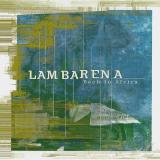
Combining Bach with traditional Gabonese music, Lambarena pays tribute to Albert Schweitzer, a doctor and musician who settled in Lambaréné in 1913. Conceived by Hughes de Courson and Pierre Akendengué, this extraordinary project brings together more than 250 artists and blends organ, baroque choirs, and African percussion in a musical celebration of rare intensity. A true timeless classic, it is now available for the first time on double vinyl, accompanied by a 4-page bilingual booklet (English/French) recounting the history of this unique album.
b 02: Sankanda (traditionnel) + Lasset uns den nicht zerteilen [Passion selon St. Jean]
[e] 05: Mabo Maboe (traditionnel) + Gigue de la quatrième suite en mi bémol majeur pour violoncelle [extrait]
[f] 06: Bombé (extrait) + Ruht wohl, ihr heiligen Gebeine [Passion selon St. Jean, mouv. 62]
[h] 08: Mamoudo Na Sakka Baya Boudouma Ncombi (traditionnel) + Prélude n°14 BWV 883 [extrait]
[l] 12: Okoukoué (traditionnel) + Cantate 147 [extraits]
- A1: Nina Simone - Chilly Winds Don't Blow - Bolden. Remix
- A2: Ella Fitzgerald - What Are You Doing New Year’s Eve? - Two Another Remix
- A3: Louis Armstrong, The Commanders - 'Zat You, Santa Claus? - The Heavy Remix
- A4: Count Basie - Good Morning Blues - The Real Tuesday Weld Clerkenwell Remix
- A5: Mel Tormé - The Christmas Song (Chestnuts Roasting On An Open Fire) - Dargz Remix
- A6: Billie Holiday - I've Got My Love To Keep Me Warm - Yesking Remix
- B1: Nina Simone - I Am Blessed - Ginton Remix
- B2: Ella Fitzgerald - We Three Kings - Tourist Remix
- B3: Dinah Washington - Silent Night - Brazilian Girls Remix
- B4: Shirley Horn - Winter Wonderland - Christian Prommer Remix
Verve // Remixed Holiday returns this season with a fresh spin on timeless cheer. Inspired by the beloved 2008 release, this vibrant reimagining of classic holiday tracks from Verve Records’ legendary catalog features five brand new remixes from a cutting-edge lineup of DJs and producers: Ginton, Bolden., Tourist, Two Another, and DARGZ. Their genre-blurring interpretations bring new life to beloved recordings, fusing modern electronic textures and grooves with jazz, soul, and holiday nostalgia.
This release offers a renewed celebration of the season—where vintage vocals meet forward-thinking production. From cozy fireside vibes to festive dance-floor energy, Verve // Remixed Holiday bridges generations of sound and spirit.
Pressed on “Crystal Clear” vinyl, this is a must-have for collectors and a holiday essential you will putting on all year long.
Swedish trio Death And Vanilla follow their much-praised re-imagined soundtracks to `Vampyr' (2017) and `The Tenant' (2018) with their interpretation of the soundtrack to cult 1968 TV show `Whistle And I'll Come To You'. Ltd White Vinyl LP, Soundtrack / Electronic / Indie At a time when post-ambient electronica and bedevilled folk music are co-habiting, and the public's interest in Pagan rites and rituals has been sparked by a new generation of fans. The bizarre storyline of Whistle And I'll Come To You seems even more pertinent_ and strangely haunting. The Jonathan Miller-adapted 1968 ghost story was originally part of BBC's Omnibus series and featured Michael Horden as a fussy professor who discovers an ancient whistle which summons up the spirits. A black and white folkloric tale in the style of The Wicker Man, the original TV programme received rave reviews. The esoteric live score was recorded at the Hypnos Theatre in Malmö. The 42-minute soundtrack utilises stuttering tape loops on `Intro' before breathing new life into the primitive John Carpenter-like drum machine on `Supernatural Breakfast', while `Walk On The Beach 2' sounds like a hauntological rendition of a Broadcast classic. Indeed, that effect is amplified on `Nightmares', with its swirling wind and other-worldly choral effect, before the feeling of some supernatural presence is suggested on the penultimate cut `Evidence Of Spiritualism'.
"Under the guidance of Norman Granz, Stan Getz and Gerry Mulligan collaborate for the first time as the primary horns on Getz Meets Mulligan in Hi-Fi. Recorded in 1957, this record offers the unique opportunity to listen to the two jazz stars trade instruments on the first three tracks (‘Let's Fall in Love’, ‘Anything Goes’, and ‘Too Close for Comfort’) with Getz on baritone sax and Mulligan on tenor. The music gels with the help of a world-class rhythm section featuring Lou Levy on piano, Ray Brown on bass, and Stan Levey on drums. While a massive musical success, the duo never recorded again in this quintet format, making this record a rarity.
Verve’s Acoustic Sounds Series features transfers from analog tapes and remastered 180-gram vinyl in deluxe gatefold packaging."
- A1: Love Is All I Bring
- A2: Cocaine In My Brain
- A3: Time So Hard
- A4: Don't Want To Wait In Vain
- A5: Money Alone Is Not Enough
- A6: Some More Love
- A7: Hear & Deaf
- B1: Marijuana In My Brain
- B2: Bathe In A Washpan
- B3: King Pharaoh Was A Bald Head
- B4: Dub It In A Three Mile
- B5: I Want To Squeeze You
- B6: Rastafari Rule
- B7: Concubine
Dillinger one of the most consistently successful DJ’s to come out of the Jamaica, fondly remembered for his massive ‘Cocaine In My Brain’ hit from the great CB200 album and the later reworked ‘Marijuana In My Brain’ which gave Dillinger crossover hits in both England and Europe. But the versatile DJ has many more strings to his bow.
Dillinger (born. Lester Bullocks,1953 Kingston, Jamaica) began his musical venture around 1971, working asa DJ to Sound Systems run by Prince Jackie and El Brasso.1974 saw his first vinyl release in the form of ‘Freshly’ for Producer Yabby U and in 1975 he came with the great ‘Brace A Boy’ for the young Mr Augustus Pablo.But his first album release was through Coxsone Dodd’s Studio One setup, where he let Dillinger fire some vocals over classic Rocksteady rhythms. It took the form of ‘Ready Natty Dreadie’. It was his time at Joseph ‘Jo Jo’ Hookim’s Channel One Studio that produced his second album set(a crossover release and fore mentioned) the timeless 1976 classic ‘CB 200’. It contained three big singles in ‘Plantation Heights’, ‘Cocaine In My Brain’ and ‘Crank Face’. The reworked ‘ Marijuana In My Brain’ even became a No 1 hit in Holland in 1979.
We have taken our set of tunes from his classic 70’s period when Mr Dillinger could do no wrong.Alongside the big ‘Cocaine’ and ‘Marijuana’ hits the great opening track ‘Love Is All I Bring’ sees him working over Alton Ellis ‘Still In Love With You’ which Itself turned into ‘3 Piece Suite’. ‘Money Alone Is Not All’ where he works over Barry Brown’s ‘Mr Money Man’, ‘Hear and Deaf’ working over Johnny Clarke’s ‘Nobodies Business’. ‘King Pharaoh Was A Baldhead’ has him working Frankie Jone’s ‘ Jesse Black’ cut. ‘Concubine’ reworks the Mighty Diamond’s ‘Mother Winney’ and ‘Time So Hard’ sees Dillinger telling it like it is over Ronnie Davis’ original ‘ Time So Hard’ cut, empathizing the points in fine style.
A classic set of tunes all ‘Killer No Filler’ from the master of rhyme himself we hope you agree…..
When João released “Quem é Quem” in 1973, he had already been in the music industry for over 20 years, gaining national and international recognition. Nevertheless, the album marked the beginning of a new phase in his career: the surprising multi-instrumentalist included lyrics in his songs for the first time. It is one of his most important albums, which now returns to shelves on 180-gram vinyl as part of the “Classics on Vinyl” collection from Polysom.
The album was produced by Milton Miranda and Marcos Valle, with arrangements by João Donato, Maestro Gaya, Lan Guest, Laércio de Freitas, and Dory Caymmi. It features 12 tracks, the vast majority of which are authored by him, with collaborators such as Geraldo Carneiro, Lysias Ênio, Paulo Cesar Pinheiro, Caetano Veloso, and João Carlos Pádua. The only exception is the song “Cala Boca Menino” by Dorival Caymmi.
- A1: Spanish Grease (Dorfmeister Con Madrid De Los Austrias Muga Reserve Mix)
- A2: How Long Has This Been Going On (Mj Cole Remix)
- A3: Who Needs Forever (Thievery Corporation Remix)
- B1: Is You Is Or Is You Ain’t My Baby (Rae & Christian Remix)
- B2: Feeling Good (Joe Claussell Remix)
- B3: Return To Paradise (Mark De Clive-Lowe Remix)
- C1: See-Line Woman (Masters At Work Remix)
- C2: Don’t Explain (Dzihan & Kamien Remix)
- C3: Wait Till You
- D1: Summertime (Ufo Remix)
- D2: Strange Fruit (Tricky/Tool Remix)
- D3: Hare Krishna - Hail Krishna (King Britt Remix) See Him (De-Phazz Remix)
The Verve Remixed volume debuted in 2002, its concept – inviting top DJs and producers to select songs from the label’s storied vaults – was an instant success, introducing classic jazz recordings to a new generation of listeners and kickstarting a global trend of jazz-electronic fusion.
Now back on vinyl for the first time in 20 years, with the series’ inaugural project VerveRemixed we hear what happens when Master’s at Work meet Nina Simone, and Dzihan & Kamien take on Billie Holiday. Experience the interpretations of renowned remixers with this refreshed physical format.
- A1: Chariot Sound – やさしさに包まれたなら ; Producer – Grey October Sound
- A2: To4Nori– 帰らざる日々; Producer – Grey October Sound
- A3: Judo125– あの夏へ; Producer – Grey October Sound
- A4: Baseline Lab– 海の見える街; Producer – Grey October Sound
- A5: Coco– 風のとおり道; Producer – Grey October Sound
- B1: Grey October Sound– ナウシカ・レクイエム; Producer – Grey October Sound
- B2: Achamico– もののけ姫; Producer – Grey October Sound
- B3: Adon (9)– アシタカせっ記; Producer – Grey October Sound
- B4: Judo125– 6番目の駅; Producer – Grey October Sound
- B5: Achamico– 君をのせて; Producer – Grey October Sound
Picture Vinyl[41,13 €]
Following the release of Ghibli Jazz and Ghibli Reggae comes a brand new compilation of Ghibli covers from underground hip-hop producer Grey October Sounds.
Lofi Ghibli is the definitive Ghibli cover album - a 10-track record containing covers of Carrying You (Castle in the Sky), a Town with an Ocean View (Kiki’s Delivery Service),
Yasashisa Ni Tsutsumareta Nara (Kiki’s Delivery Service), and other iconic Ghibli songs. Grey October Sounds’ deft production takes classic Ghibli melodies and melds them
with hip-hop instrumentation, adding an all new dimension of chill to Joe Hisaishi’s compositions. With homages to both Ghibli and the aesthetics of lo-fi hip-hop, the artwork
by illustrious illustrator Rika Nagatani is the cutest thing to ever grace P-VINE’s catalog! With one of our iconic obi-strips attached, this is sure to be one for the collectors!
So put this on your turntable, take a deep breath, and chill out.