In 2016, Cliche Morph offered the aquatic textures of "Liquid Materia". "Hidden Madness" is the return and a new beginning. Four tracks of intense introspection mark a collaboration and a founding, Deep Sound Channel and Postdynamic. Atmospheric and immersive, from the needle drop the listener is immediately drawn into the subterranean chambers of this cerebral piece. A stark beat is the guide rope, a snare that echoes and ricochets into the cavernous expanse of cold currents and all too real phantoms. Feeding off that palpable paranoia, Psyk pours a thick resonating syrup over the original before pulling the switch. Darkness descends, distortion and reverb dominate with a steady kick delivering some form of solid ground. Respite? No hope. Pound and thud tell the arrival of "Exorcist". Industrial groans and a clanking larynx are cut through by haunting strings, a meagre echo of humanity in this absorbing and unsettling track. Blazej Malinowski closes. Drum patterns are amplified and concentrated in the producer's purge of "Exorcist", hi-hats hissing as the spectral refrains of the original shift in shape and form. A 12" that plumbs the physical and the psychological depths of sound.
quête:cliche
Dopamine Dreams is the latest album by Berlin-based French producer Cosmo Vitelli and California-based Dutch experimental electronic musician Truus de Groot, the driving force behind Plus Instruments. Cosmo Vitelli’s third album, the acclaimed Medhead LP, released in 2022, featured de Groot’s lyrics and voice on several tracks. This collaboration went so well that both artists decided to work together again, and Dopamine Dreams is the result.
Ascetic Limited is excited to present our seventh release returning with our VA series and a new design line from Plastica. Side A begins with Trastiber by Fabrizio Lapiana. Fabrizio's work needs little introduction, known for his ambient backdrops and mesmerizing melodies this track is a perfect fit for our catalogue and any DJ wanting to ensure a moody ambience and great for opening doors into deeper realms.
Secondly we have Journey with Castenada by Greenbeam & Leon, the duo from Georgia. The residents of Khidi club in Tbilisi, take us on a heavy set journey with their particular sound that ranges from tripped out to industrial bangers. A Journey with Castaneda is an ode to mind exploration and the psychedelic realms we can find within ourselves.
On the B side Aleja Sanchez, known for her pounding yet well thought out tracks, provides her track Sanctuary, truly mesmerizing from the Colombian mainstay. This track reflects in totality the sound we strive to provide on Ascetic Limited, pounding yet deep a perfect balance of body mind and soul.
To close it out, Cliche Morph s Sinusoid is a broken bass line heavy hitter with amazing sound design that will fit into any set, from the most moody to the deepest of selections. Overall a perfect track to close out our fourth VA selection, reflecting our concept as a label.
"Cliché's Principle' exhibits the two-sided aura of an artist long familiar with the cultivation of DIY ethos: an effortless expulsion of playful immediacy and the unfolding of a musician well versed in unpretentious composition. Lucy Cliché's five track EP for Fleisch Records is a jacking romp through 120-125bpm electro/new-beat, swooning through downcast ambience, lobotomised vocal samples and sweat-drenched hardware rhythms.
Lucy's musical oeuvre piles high; as a figure in the Sydney underground for the past 15 years she has always explored sounds that playfully antagonize the status-quo; the dysfunctional no-wave approach of her band Naked On The Vague and the manipulated tape ambience of Half High echo throughout Cliché's Principle in the form of chorus buzzed synth chords, abstract drones and ethereal evocation. While there is the strong presence of a live veteran at work behind the machines, Cliché's Principle holds five tracks produced purely with the intention of paving the dance-floor.
- A1: A Cruel Story
- A2: Ketamine Karaoke
- B1: Chiens De L'enfer
- B2: A Cruel Story (I:cube Remix)
- B3: A Cruel Story (Fx Mchn Remix)
- B4: Chiens De L'enfer (Percapella)
Orestt is one of those talented producers with a sporadic discography that remains viciously underrated. On L'Age de Glace EP, the producer's first appearance on I'm a Cliché since the Moment of a Crisis compilation, we proudly present new material as well as a hard to find tune self-released by Orestt a decade ago.
- A1: Yan Cook Mill
- A2: Yan Cook Mill (Unbalance Remix)
- B1: Yan Cook Berg
- B2: Yan Cook Mill (Jeff Rushin & Nicole Rosie Remix)
- C1: Cliche Morph The Landfill Of Masks
- C2: Cliche Morph Extension Of Illegality
- D1: Cliche Morph The Suffering Of Mind
- D2: Cliche Morph The Suffering Of Mind (Fanon Flowers Remix)
- E1: Doka / Shltr Skarn
- F1: Doka / Shltr Skarn (Tripeo Remix)
- F2: Doka / Shltr Sovite
In just five years, The Spy has gone from underground newcomer to one of the most talked-about names in the European electro and EBM dark electro scene. Early releases on Osáre Editions and Mechatronica quickly placed him on the radar of forward-thinking clubs and selectors across Europe. Now landing on Oráculo Records, he presents his most wave-driven and club-oriented material to date: pure, physical electro built for dark rooms and late hours. Driving basslines and sharp machine rhythms—infused with subtle, classic post-punk tension—define a sound that connects the dancefloor with the shadows, drawing clear parallels to artists like L.F.T, Credit 00 or Gesloten Cirkel. This is music made to move bodies without sacrificing attitude—raw, confrontational, and far removed from formulaic club clichés. Five years in, the message is clear: this is not hype, but momentum—an artist fully in command of a modern electro language built for the underground. Presented in ONE-OFF truly limited edition of 300 copies lacquered pressed on 180 gr. high quality solid BLACK vinyl. All tracks have been specially remastered and mastered for vinyl by Daniel Hallhuber at Young and Cold Studios (Germany).
4/5 Mojo review: ‘Sparse, hypnotic big-room techno that builds from the bass drum up
Double LP is released on 140gm black vinyl in a transparent gloss foil sleeve, artwork and design by Ian Anderson for Designers Republic. Circuitry Electronic launches with a release that stands as a statement of intent - an artist with few true peers within English electronic music, with an album that jumps out of the speakers and slaps you around the chops. G-Man is Gez Varley - one half of Sheffield pioneers LFO, and thirty years into his solo career, with his first vinyl album release since Avanti on Force Inc way back in 2002. Speaking to DJ magazine in 2014 Gez recalled his early days working with Mark Bell as LFO: “We were influenced by groups like 808 State. Unique 3, Nightmares On Wax and also stuff like Kraftwerk, Detroit techno and early electro. So when we first hooked up and made tunes together we just wanted to rock the dancefloor at our local club The Warehouse”.
Their eponymous track ‘LFO’ – a classic of the bleep and bass techno movement – was one of the first releases on the Warp label, gate- crashing the UK’s Top 20 whilst annoying Simon Mayo along the way. Having worked with the likes of Richie Hawtin, Karl Bartos, Laurent Garnier, Art of Noise, Radiohead, YMO and Alan Wilder, in addition to the LFO output, you'd expect Gez to know his way around a techno dancefloor rhythm and drum pattern, and this is an inventive funk-filled journey that never veers too far into experimental territory yet avoids the cliches and generic tropes that too often lose the listener when techno manifests in album form.
- A1: Cliché - 木漏れ日 (Komorebi)
- A2: Nejauši - The Dome
- A3: Kristaps Puķītis - Lielās Kož Nost Mazās
- A4: Dj Keda Feat. Ieva Dreimane-Sidare - Gaisma Nāk
- A5: Baziits - Ceļš Tik Šaurs (Antons Megamikss In Da Haus Mix)
- A6: Niklāvz Feat. Kenji - Chill Hot
- B1: Ksenia Kamikaza - See The Sea
- B2: Eque - Give Us One God
- B3: Omiros - Sapnis Pirms Miega
- B4: Alter V - Some Day
- B5: Existal - Mind Vortex
Liepāja’s Elektrons is a contemporary electronic music compilation on vinyl, bringing together artists connected to the Baltic city of Liepāja. The LP features eleven original tracks that reflect the diversity and vitality of the local electronic scene — from deep techno and liquid funk to experimental ambient, IDM, and broken beats. Across the record’s two sides, Liepāja’s Elektrons brings together a diverse constellation of producers shaping the city’s electronic identity. The A-side features Cliché, Nejauši, Kristaps Puķītis, DJ KEDA feat. Ieva Dreimane-Sidare, BAZIITS, and NiklāvZ feat. Kenji, moving fluidly from intricate IDM textures and atmospheric experimentation to liquid funk rhythms and high-energy drum’n’bass. The B-side continues the journey with Ksenia Kamikaza, Eque, OMIROS, ALTER V and Existal, exploring deep and peak-time techno, minimal house and progressive sonic structures.
- A1: C’est Loin
- A2: Là Où Tu Veux (Deixa A Gira Girá)
- A3: Pas Tant De D'chichi Ponpon
- A4: Assez
- A5: Le Soleil En Haut
- A6: Tout L’or
- B1: Désillusion
- B2: Attends-Moi
- B3: O Sapo
- B4: Horssaison
- B5: Presque Rien
- B6: Vou Festejar
For his sixth solo album, Ezéchiel Pailhès returns with a new collection of songs infused by a sunny wandering spirit.
Within each of the twelve songs on SOL is a thread of melancholic happiness that has permeated much of Pailhès’ music and songwriting. He addresses love, the passing of time, hope, lost illusions, fleeting moments of grace, the temptation of forgetting, a need to escape, and desire. All this is
insulated by understated orchestrations that blend acoustic and electronic instrumentation with deft confidence.
The Portuguese and Brazilian concept of saudade—a form of melancholic longing and nostalgia— pervades, thanks in part to Pailhès decision to record the album in Rio de Janiero and to reinterpret some of the finest works of Música Popular Brasileira (MPB). In particular, he revisits a handful of
lesser known classics from the mid-century samba and bossa nova era—originally written or performed by talents including Vinícius de Moraes, João Gilberto, Tom Zé, Dorival Caymmi, João Donato, Os Tincoãs, and Ataulfo Alves.
The shift from Brazilian Portuguese to French and the decision to adapt rather than perform a straightforward cover versions, allows Pailhès to invent a form of prosody and euphony (the musicality and harmonious combination of words) that feels vibrant and unlike anything else in today’s French
chanson landscape.
“Some lyrics are simple translations from Portuguese, in what I’d call an expanded version. For others, I started from a single word or a single phrase and embroidered an entirely new text that carried me elsewhere,” explains Pailhès. “I allowed myself great interpretive freedom, while preserving the humanist dimension of the original songs. I’ve always been deeply moved by the way Brazilians transfigure reality through heightened emotion. I love this visceral and spontaneous country, which always seems to live through emotion. And above all, I love its music both popular and unifying,
bringing together all social classes. In that sense, it’s very political music, but even more so utopian, made by the people and for the people.”
On this new album, however, the French artist was keen to avoid cliché. Each song is therefore built around a carefully balanced interplay between Pailhès’ piano and synthesizers, alongside restrained arrangements of percussion, brass, bass, and cavaquinho (a small four-string plucked guitar). These parts were recorded in Rio de Janeiro with two musicians who regularly perform alongside the legendary Caetano Veloso—Kainã Do Jêje and Alberto Continentino—joined by Thomas Harres, Antônio Neves, Eduardo Neves, and Gabriel Loddo.
Since the 1960s, France and Brazil have shared a long-standing cultural and musical relationship. Some Brazilian artists, most famously Gilberto Gil, took refuge in France during the dictatorship years (1964–1985). But above all, French chanson quickly fell in love with the richness and ingenuity of
bossa nova and samba, translating and reinventing them in the language of Molière. Throughout the 1960s and 1970s, albums and hits by Henri Salvador, Georges Moustaki, Pierre Barouh, Pierre Vassiliu, and Claude Nougaro all drew from the MPB repertoire.
Fifty years later, with SOL, Ezéchiel Pailhès reinvents this rich Franco-Brazilian musical legacy, bringing to it a personality and modernity that stand confidently alongside those of his forbears.
- 1: Intro
- 2: Sciatiq
- 3: Sakakinik
- 4: Regarding Others Ft. Talin
- 5: Flayosc Ft. Jules Regard
- 6: Proud B - Pt1
- 7: Proud B – Pt2
- 8: From The Ending F. Mathieu Fabre
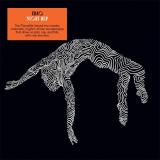
Growing together both personally and musically… That is indeed the good fortune of the musicians in the Marseille-based trio ubaq. We’re talking about bassist Antoine Carletto, guitarist Lucas Schemidt, and drummer Antoine Saussol, winners of the Rezzo springboard competition at Jazz à Vienne 2025. In their early twenties, they met in their late teens while still honing their musical skills. Nearly ten years later, they burst onto the scene, in perfect harmony, with their very first album, “Night WIP,” a follow-up to their EP, “20bis,” released in 2024. They owe their stylized stage name—written in lowercase with a “q”—to the ubac, that side of a mountain with very little sun exposure, where twilight reigns. “We liked that idea because we’re night owls,” says bassist Antoine Carletto. Hence the “night” for “nuit” and the “WIP” for “Work In Progress,” explains guitarist Lucas Shemidt. ubaq’s music is characterized by a nocturnal, melancholic heaviness, pierced by beams of light. “We love creating music that soothes us and highlights the precious nature of composing and playing in complete harmony,” says Antoine Carletto. “We cultivate complex tones, sometimes difficult to bear, whether they’re nostalgic or even verging on depression. But we manage to convey emotions without falling into clichés,” adds Antoine Saussol. Night and twilight serve as the perfect catalysts for this trio, which moves forward with perfect chemistry and harmony.
On this album, they feature the German-Armenian rapper and singer Talin, who is also based in Marseille. She appears on the track “Regarding Others,” where she chants that even though the year 2026 may see mothers weeping in every corner of the world, she still manages to smile. Thus, this track explores the three musicians’ relationship with the world and the necessity of looking at others. The unsettling “Sciatiq,” the haunting “Sakakinik,” and the ambivalence of “Flayosc”—the final track, on which the trio features trombonist Jules Regard—owe their titles to the musicians’ own observations and experiences. The multi-faceted track “Proud,” in two parts, is a tribute to Lucas Schemidt’s mother, who has since passed away. The presence of wind instruments—whether Jules Regard’s trombone or Mathieu Fabre’s saxophone on the intense track “From The Ending”—adds textures missing from the natural landscape depicted in “Night WIP.” This debut album captures the obsessions and introspective wanderings—sometimes anxious, sometimes enchanted—of a trio that cultivates melody as a pledge of warm fulfillment.
Early DJ Support: Massimiliano Pagliara, Paranoid London, Logan Fisher, Terry Farley, James Holroyd, Rocky (X Press 2), Francois K, Marcel Vogel, Sean Johnston, Austin Ato, Ron Basejam, Richard Rogers, Oliver Dollar, Crazy P and many more
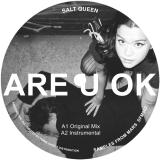
Creating an international name for itself over the past decade as a sample pack label, Samples From Mars made its inevitable venture into the music world originally as a home for founder Teddy Stuart’s work. Long before making samples, Stuart garnered credits working as a grammy-nominated recording engineer in the hip hop world, and DJing / producing with Justin Strauss as A/JUS/TED, for labels such as DFA, Domino Records and Southern Fried Records. Now the label is set to release a variety of genres - house, disco, techno, ambient, all with a vintage tinge and a focus on high quality, analog production.
Enter Salt Queen. Visual artist and musician Magali van Caloen together with Samples From Mars founder, Teddy Stuart. Based in New York, the duo combine hardware dance aesthetics with dry, salty takes on familiar club moments into music that sits somewhere between funny, raw and unpredictable.
Salt Queen’s debut ‘ARE U OK’ is an acid-laced, deadpan spoken word track with an opening line that snaps any room to attention. A disorienting club encounter unfolds over Italo-inflected 808s and a relentless 303 bassline. There are no chords and no melodies - just a skeletal groove and an intimate voice circling the dancefloor. Drifting between concern and provocation, the vocal runs through cliché club conversations before destabilizing completely into a siren-laden crash out. The ‘Freak Nasty Club Mix’ ditches the plot and lets the hardware breathe, with a thick SH-101 bassline anchoring the first half before a sudden switch into an unrelenting acid pattern that refuses to settle. Two versions of the same wild night out.
- A1: Any Sof
- A2: Baphomet
- A3: Black Ny
- A4: The Smiling Knife
- B1: Thelema
- B2: The Name Will Be Adrian
- B3: Do The Mussolini (Headkick)
- B4: Mega Therion
- B5: Leather Mask
- C1: Aiwass
- C2: Scarlet Woman In Disguise
- C3: Suburban Ritual
- C4: We Are Stars
- D1: Stuck In Malkhut
- D2: Triad Of Gods
- D3: The Book Of Law
- D4: White Stains
- D5: Unveiled
Possibly one of the best Mental Groove releases to date. Symbols & Sacrifice is raw, beastly, and savage — a cinematic and esoteric journey from the depths of Sindaco’s universe. A masterfully crafted experience across four sides, this release blurs the lines between ritual electronics, hypnotic repetition, and uncompromising raw techno. A powerful and immersive statement, pressed on audiophile-grade vinyl for full heavy sonic impact.
Under the name of Sindaco is hidden a complex yet mysterious project where different styles and cultures live together.Obscure kraut rock, no wave, black metal and Detroit techno collide in what can be considered songs more than simple tracks. All is played by Sindaco with analog equipment without the help of computers. All is driven to create the best soundrack possible. The idea is to avoid all the typical cliches of the contemporary electronic productions and push the boundaries into a new way of tropical futurism. Be involved by the unespected waves of sounds coming from another world!
- A1: Calvin Harris, Clementine Douglas – Blessings
- A2: Hugel, David Guetta / Kehlani, Daecolm – Think Of You
- A3: Lady Gaga – Abracadabra
- A4: Oimara – Wackelkontakt
- A5: Alex Warren – Ordinary
- A6: Tate Mcrae – Sports Car
- B1: Rosé & Bruno Mars – Apt
- B2: Jazeek – Akon
- B3: Kendrick Lamar With Sza – Luther
- B4: Lola Young – Messy
- B5: Sabrina Carpenter – Manchild
- B6: Myles Smith – Nice To Meet You
- C1: Zartmann – Tau Mich Auf
- C2: Nina Chuba – Wenn Das Liebe Ist
- C3: Maroon 5 Feat Lisa – Priceless
- C4: Kamrad Be – Mine
- C5: Miley Cyrus – End Of The World
- C6: Benee – Cinnamon
- D1: Abor & Tynna – Baller
- D2: Bac – Rosaroter Tee
- D3: Gigi Perez – Sailor Song
- D4: Leony – By Your Side
- D5: Benson Boone – Sorry, I M Here For Someone Else
- D6: The Weeknd Feat Playboi Carti – Timeless
- E1: Demi Lovato – Fast
- E2: Chrystal – The Days (Notion Remix)
- E3: Alle Farben, Majestic – From Disco To Disco
- E4: Lisa Feat Doja Cat & Raye – Born Again
- E5: Teddy Swims – Bad Dreams
- E6: Unheilig – Wunderschön
- F1: Shirin David Feat Ski Aggu – Atzen & Barbies
- F2: Katseye – Gabriela
- F3: Sabrina Carpenter – Tears
- F4: Disco Lines, Tinashe – No Broke Boys
- F5: Lady Gaga – The Dead Dance
- F6: Sarah Connor – Ficka
- G1: Kontra K X Ness – Geboren Um Zu Leben
- G2: Clockclock – Adore Ya
- G3: Glockenbach Feat Tom Walker – Home
- G4: Mgk – Cliché
- G5: Royel Otis – Moody
- G6: Aymen & Sira – 30 Mal Am Tag
- H1: Ed Sheeran – Azizam
- H2: Gracie Abrams – That S So True
- H3: Olivia Dean – Man I Need
- H4: Lewis Capaldi – Survive
- H5: Roy Bianco & Abbrunzati Boys – Bella Napoli
- H6: Noah Kraus & Wir Sind Helden – Nur Ein Wort
Was lief musikalisch in 2025? BRAVO The Hits gibt Aufschluss! 48 Tracks aus den Charts auf 2 CDs,
4 LPs und Download. Hier ein paar Beispiele: Ed Sheeran ”Azizam”, Oimara ”Wackelkontakt”, Jazeek
”Akon”, Alex Warren ”Ordinary”, Gracie Abrams ”That’s So True”. Aber auch brandneue Titel, wie Lady
Gaga ”The Dead Dance” und Sabrina Carpenter ”Tears” sind zu finden. 2026 kann also kommen!
Some records are answers to questions no one asked out loud. With Where is Acid Eric, Cornelius Doctor & Tushen Raï deliver a psychedelic missive from a parallel timeline — a time-traveling tribute to Goa’s golden age, filtered through their unmistakable signature.
Returning to their home base, Hard Fist, the duo steps into new territory with this release, and yet, it feels like they’ve been heading here all along. This isn’t a retro-fetishist trip, nor a copy-paste homage. It’s a reimagination of a sound, a space, and most of all, a spirit.
The EP is rooted in the mythic nights of late-80s and early-90s Disco Valley, where British acid house collided with Indian hedonism, where freedom wasn’t a pose but a necessity, and where dancefloors became temporary utopias. But in the hands of Cornelius Doctor & Tushen Raï, this past gets warped, stretched and reanimated with 2025’s tools and sensitivities.
Across three extended tracks, the duo summons a sound that’s dense yet breathable, tribal yet precise, nostalgic yet futuristic.
They weave Goa’s swirling trance lines with broken rhythms, analog squelches, and post-industrial textures. The acid lines are sharp, but never cliché — more mantra than gimmick. Voices float in and out like half-remembered chants. Basslines slide, hypnotize, and then vanish in a cloud of smoke. It’s not a flashback. It’s a vision.
The title, Where is Acid Eric, feels like a lost broadcast — part question, part invocation. Eric is a symbol. IS Eric a ghost ? The true legend of a forgotten raver on a dusty Anjuna morning. What matters is the search. The longing. The dance.
Hard Fist, true to its form, continues to blur the lines between ritual and rave, tradition and invention. And with this record, Cornelius Doctor & Tushen Raï don’t just revive a genre — they reconnect with an ideal: dance music as exploration, as transcendence, as resistance.
One foot in the dust, one foot in the cosmos. The answer isn’t important. The trip is.
The saga of squelch continues. After the first round proved that the acid line might be the most durable cliché in dance music (and still the best one), part two turns the resonance knob a little further.
Steve Bug & Stefan Braatz, Deetron, Todd Osborn, and Mathew Jonson with The Mole join forces for another ode to the silver box - less museum piece, more perpetual motion machine. Proof that you can't retire a sound that never had a desk job.
Once again, Gasius supplies the visual psychedelia, while the tracks handle the auditory side of the trip.
Dial 303, accept the charges, and remember: the only thing more reliable than acid is its ability to surprise you.
The electronic producer Franz Kirmann returns to Bytes for his eighth solo album. The “Almadies” are long wooden boats used by Senegalese fishermen. It is also the name of the neighborhood where Kirmann grew up, in the suburbs of Dakar, Senegal, near the Atlantic Ocean. "These new compositions are the result of sound experiments conducted over the past few months and reflections on the concept of mind-constructed geographies," Kirmann explains. "The way memories and souvenirs shape an image of a place or country that is part reality, part fantasy, part cliché, yet also deeply personal. This experience is influenced by education, social background, history, and other socio-economic factors. " The ten tracks are crafted from collages of electronic sounds blended with field recordings from various places Kirmann has visited — from Dakar to the Caribbean, as well as London and Paris. His aim is to blur the line between electronically generated sounds and real soundscapes, creating music where it becomes difficult to distinguish the real from the constructed. All the sounds on the album were produced using synthesizers and field recordings. No drum machines, percussion or traditional acoustic instruments were used. Influences include Brian Eno and John Hassell’s Fourth World, Vol. 1: Possible Musics (1980), described by Hassell as "a unified primitive/futuristic sound combining features of world ethnic styles with advanced electronic techniques" , which also works in the context of Almadies. Another big influence was Ariel Kalma’s Le Temps Des Moissons (1975) as well as artists including O Yuki Conjugate and Robert Aiki Aubrey Lowe to Susumu Yokota and Michael Banabila.
‘Moonshot’ is a genre-defining EP heavily influenced by electro and dark wave music.
It crafts intense, pulsating beats that seamlessly blend intricate rhythmic patterns, bleak pad synths, and a driving atmosphere into powerful, club-focused tracks — all layered with groovy basslines and sharp breakbeat energy. What sets it apart is XXOK’s haunting voice, delivered in both Korean and English — a personal interpretation of introspection and melancholy that adds emotional depth and resonance.
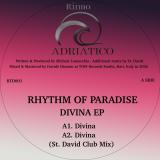
Rythm Of Paradise launches his brand new label “Ritmo Adriatico” with "Divina EP", a sonic manifesto of Italian house music. This four-track journey blends the power of main stages with the warm intimacy of clubs, always driven by a profoundly Mediterranean soul. A first release that doesn't just present a sound, but tells a story.
The EP opens with main track "Divina" , powerful and immediate groove built for the dance floor, wrapped in warm atmospheres and bright pads that create a sense of high energy, with emotional breaks that reminds French Kiss sound.
Followed by its remixed version of Divina by St. David where he reimagined and elevate the impact on main stages. The bass becomes more prominent, the groove expands, and the voice became more hypnotice, without ever falling into cliché.
B1. Italia Novanta is where, Ritmo Adriatico reveals its beating heart. "Italia novanta " is a respectful and modern tribute to the golden era of Italo House, diving into the Mediterranean soul of the 90s, reinterpreted with today's power.
Closing with B2. Te Quiero where takes the dreamy atmospheres and immerses them in a deep, meditative dub treatment of spacious bass lines and captivating Italo house piano licks.
Written and Produced by Michele Lamacchia.
Mixed & Mastered by St. David
Jeff Parker’s 2016 album The New Breed was a turning point for both Parker and for International Anthem, changing the trajectory of his solo career as well as drawing an abundance of attention to our fresh imprint despite our then very limited catalog. Most importantly though, the album is the first to give voice to Parker’s wholly unique take on sample-based beat construction augmented by a crack squad of improv-savvy LA breezers—the high-level crew of Paul Bryan (bass), Josh Johnson (alto sax), and Jamire Williams (drums), augmented by Jay Bellerose (drums) and Ruby Parker (vocals).
What began as Jeff’s interest in understanding his own idea of hip-hop processes (and how they related to his work in jazz) expanded into a blueprint for much of his work since then. (see also: The New Breed’s rock-solid followup Suite For Max Brown, the gentle deconstructionist solo guitar of Forfolks, and the long-form slow bloom dub improvisation of The Way Out of Easy—all released via International Anthem)
The IA11 Edition LP features our IARC 2025 obi strip, plus a new 16-page 11x11" insert booklet with unpublished session photos, new liner notes by New Breed bassist / co-producer Paul Bryan, and an in-depth conversation between JP and IARC co-founder Scott McNiece.
“...equally rooted in jazz and funk, and built upon beat-making experiments…”
- Jason P Woodbury, Aquarium Drunkard
A Colourful Storm proudly presents a remastered first-time vinyl editions of Lone Capture Library's modern-day DIY environmental masterpiece, All Natures Most Mundane Materials. "Environmental"? While this certainly wasn't recorded for dinner party ambience nor was it commissioned by Harrods, it does document a haphazard wander through the English countryside, feeling the air and the earth, detaching oneself from confinement and attempting to make sense of it all. Its protagonist is Rory Salter, London's restless improvisor extraordinaire, who has contributed to dozens of solo and collaborative releases in an ecosystem branched from his Infant Tree private press. Under his alias Malvern Brume, he is responsible for some of the most enchanting sides of contemporary concrète that's graced our ears: dérives revealing beauty and curiosity within London's urban banality. And while we'd argue that Lone Capture Library applies this approach but seeks the peculiar within the pastoral, there also lies a certain hermetic recklessness, with its disruptive details and discarded sonic bric-a-brac.
"I'd walked from Swindon to Avebury and back, which is about a 21-mile round trip. I'd been a muppet and did the whole thing down the A4361, which is not a road suitable for walking on - there was a lot of jumping into the hedges to avoid lorries. Turned out, there was a really nice walk across the fields I could have done instead. But maybe that sums it up quite well. Instinctive and very impulsive. The day following, I was at home and recorded it in single takes, improvised and straight to the tape. There was a good deal of significance for me in walking to the stones, passing the Hackpen Horse, being in the landscape and dealing with some brain rot after being stuck in a house, anxious and depressed. There was a sense of freedom and detachment. It was all about the materials of the earth and the body and fucking the brain off for a bit - just wanting to move between places. I dunno, it's all very cliché."
** Cassette release
""A Synonym for Repetition" weaves together a tapestry of parallels, all intricately linked to Japan. The project initiates with a collaboration with a Tokyo-based musician, which ultimately fails to materialise during Jason Kolar’s recent visit to the country.
From an original approach that has to mutate in its starting phase, the record was conceived from the beginning to embody a sincere homage to Ryuichi Sakamoto, also a Tokyo native. Shaping ideas within the context of a city with a vibrant soundscape, through an exploration where tradition and modernity intersect in an ongoing quest for correspondences.
Yet, the barriers of language and cultural disparity emerge, casting a veil over the perceived connections and rendering them more projection than reality. This dynamic delineates the space observed from an external perspective, perpetually distant from true understanding, framing it in the fields of imagination, both Japan and Sakamoto. Nonetheless, Kolar tries to pay an honest ode to the artist and its scenic background, with all the implications and contradictions of this kind of process, even with the risk of falling into clichés, pastiches, and Eurocentric bias.
Connecting it to ‘vertical listening’ rather than to an obvious tribute exercise, he has morphed his sound to a synthetic and midi approach, aiming to set an ironically fictitious stage, one that resembles something, but it’s not really it."
Bogotá-based Colombian composer Eblis Álvarez, known as Meridian Brothers, has been concocting a unique blend of psychedelic sounds since 1998. With his latest project, "Mi Latinoamérica Sufre," Álvarez explores the untapped potential of the electric guitar in a tropical Latin context. Drawing inspiration from African highlife and soukous traditions, Álvarez crafts a fearless sonic experiment infused with invention, playfulness, and emotion. Unlike typical tropical guitar records, this album eschews distortion and clichés, opting for a pure, clean approach. Through intricate compositions blending cumbia, champeta, soukous, Brazilian tropicalia, and underground psychedelic rock, Álvarez pays homage to the golden era of Congolese rumba, Ghanaian highlife, and Nigerian afrobeat.
"Mi Latinoamérica Sufre" delves into the ego trip, presenting a humorous yet introspective journey of self-discovery and identity. The central character, Junior Maximiliano the Third, navigates through the complexities of self-discovery using psychedelic substances, political philosophy, and folklore. As he grapples with nostalgia, paranoia, and shared suffering, Álvarez showcases his vocal prowess, creating a sonic theater of the mind. Accompanied by visual narratives from Colombian artist Mateo Rivano, the album portrays various psychological states of disorientation, self-pity, enlightenment, and optimism. "Mi Latinoamérica Sufre" emerges as a worthy and innovative addition to the concept album tradition, offering a distinctive blend of bitter-sweet flavors inspired by Latinoamérica.
Oráculo Records proudly presents the vinyl debut of one of the most promising contemporary Italian post-punk acts. The Bolognese duo delivers a fresh take on what this movement should embrace today. Their approach combines elements of krautrock with some dub influences and grunge clichés, resulting in an advanced proposal that invites repeated listening.. Presented in a ONE-OFF truly limited edition of 300 copies lacquered pressed on 180 gr. high quality solid BLACK vinyl. All tracks have been specially mastered for vinyl by Daniel Hallhuber at Young and Cold Studios (Germany).
Two gypsies with pedigree backgrounds in Flamenco got together with a drum machine in a studio during the early 80's and the result was Chipen, a somewhat poppy chart oriented project featuring Peret Reyes the grandson of legendary Catalan Gitano musician Peret (aka "El Rey de la Rumba") and Johnny Tarradellas. "Volao" is a mid tempo effort to bridge Pop and Rumba, mixing catchy funk guitar riffs with elements of Flamenco in unprecedented ways. "Chiribiri" sounds like it could be the theme song to a Catalan morning show or even a Japanese 80's Toyota Camry ad, reeks of stereotype and cliche, except that Chipen is the real deal, as real as the darkness of the hair dye on the cover photo. Extended version of Volao on the B side. Remastered at Manmade Mastering in Berlin.
That true beauty lies in the essentiality and meticulous combination of a few elements is sometimes not just a cliché. The delicate blend of Roland CR-78, acoustic guitar and dissonant organs that intertwine in Open Windows is a vivid demonstration of this. It is these few elements, now distant and hinted at and now close and deafening, that paint the backdrop of melancholic nostalgia where laconic whispers move the listener within the paintings that bear the sonic signature of Human Figures. To Daniel Lewis’ new project, which has seen its springboard through releases on the label of his friends at Frigio Records, perhaps the adjective “new” is already quite tight. He has built a very recognizable sonic tibre, an influence of producers and listeners at different latitudes of the post-punk and wave scene.
In the 8 canvases of Open Windows the folk tradition is repainted in a more contemporary guise: the sweet and sad litanies are alternated with fast and frenetic stornelli in which the combination of tradition and experimentation constitutes the stylistic signature. The open window through which the listener has the opportunity to look out in this album does not, however, give onto a natural external panorama. It projects into an inner world where introspection and silence are the only chance to grasp its sublime beauty.
It's been 40 years since Michal Turtle released his seminal, ground-breaking album "Music From The Living Room" into the world and promptly disappeared back into the aether.
An extremely obscure cult classic known only to deep diggers and aficionados of the finest order, it wasn't until Music From Memory reissued some of the tracks from it via retrospective compilations of Turtle's unreleased music almost 30 years later that his name become more widely known and a new generation were able to discover the artist's unique and pioneering style of experimental electronic music production, the majority of it very much ahead of its time, and to this day, still timeless.
Invisible Inc contacted Turtle in the summer of 2023 about releasing something else by him and it was during this exchange of emails that ideas were expressed about releasing not simply a straightforward reissue of "Music From The Living Room" to mark its 40th anniversary (the album has never been reissued in full) but rather a re-imagined/re-constructed take on the album bringing contemporary techniques, styles and newly recorded vocal and instrument parts into the mix and breathing new life into these wonderful compositions.
Collaborators old and new were brought into the studio and the songs re-created from the ground up. Familiar songs like "Are You Psychic?" and "Village Voice" get overhauled and echo remnants of their original counterparts but simultaneously sound like completely new tracks. The always mesmerising "Phantoms of Dreamland" is represented through a live recording at Café Oto featuring original album vocalist Lucianne Lasalle and regular collaborator HOVE on electronics. The remaining tracks, however, will be completely new to the ears of most people, never having been reissued or heard in these new forms ever before.
Regardless, whether in some way familiar or not, these hypnotic and repetitive pieces of beautiful sound art, all very different in style from one another, have an entirely new identity that even diehard devotees of the originals will fall in love with.
“Holy shit. This record is amazing. 'Are You Psychic?' is really something” dj_2button Dummy Hand / Weirdos Inc.
“What a record!” Cosmo Vitelli I'm A Cliché
“Amazing release. Probably your best release yet! Does everything an amazing record should and more...” Alexis Le-Tan Oddity Radio / Full Circle / Offen Music
"Industrial punk from this mysterious duo, primitive but original and catchy.Punk as it used to be, confrontational, cynic, mean and with a dark sense of humour. Hailing from Barcelona they also are part of the infamous duo Ca de Bestiar, which is sort of the reverse of this project: while in Ca de Bestiar the punk component prevails over the industrial one in España the punk element is only left on the vocals and the attitude. And as with Ca de Bestiar, they enlist Viktor L.Crux as producer and mixer.
They avoid cliches but also avoid pretension, these tracks sound natural like there was not much thought put into it but pure instinct, which is an exceptional feature these days. Daring djs will find that tracks like ""Bushido"" or ""Ayudame"" are unexpected bangers.
FFO: Esplendor Geometrico, Dame Area, Liasons Dangerouses, Le Syndicat Electronique, Ca de Bestiarr"
Melts In Your Mind is the mercurial new LP by Healing Force Project, aka Italian producer Antonio Marini.
An amorphous, shapeshifting, intangible proposition, Melts In Your Mind represents Healing Force Project at it’s most fluid and alchemical yet, a melon-twisting amalgam of jazz, dub and acid house tropes mulched and rearranged in inimitable style. Seemingly live and erratic polyrhythms, liquid basslines and expressive roving keys combine with kitchen sink sample hits and rogue licks for a thrilling, constantly shifting, alive sound. It’s music that’s difficult to grasp on first or even fourth listen, and as such continues to reward on repeat. Rather than going somewhere, tracks just go, rarely repeating motifs but riffing on, digging into and working out.
Behavior Of Waves sets the scene discretely enough, a simple bass refrain that is eventually overcome with an urgent rhythm that stumbles over itself into a post-dub cavern. The title track resembles a scramble of disparate earthly sounds - lurking synthesizer, restless popping drums, West African balafon and a muted vocal sample - sucked into the same swirling black hole and dropped into another dimension, completely cohesive. Equator acts as loose-limbed palette cleanser, an unmoored drift gently driven forward by an insistent snare roll and improv piano stabs. Inharmonious Layer stands out on the record for being less reliant on samples and by it’s relatively predictable unfolding, a queasy acid lope from the darkest corner of a deviant dancefloor, while on Diaphonization Marini flexes his aptitude with drum sampling, a bouncing excursion in sampled loops interrupted by unironic jazz cliches, the product of an omnivorous lover of the genre’s high and low. Melts In Your Mind closes on the droning tambura, ethereal pads and scattered rhythm of Two Waves In The Dark, a suitably metaphysical and ultimately peaceful resting place for a record that challenges perceptions from the outset.
Marini has released records as Healing Force Project on Firecracker, Berceuse Heroique, Bedouin and most recently Beat Machine Records. He’s based in Treviso, Italy.
Melts In Your Mind was written, produced and mixed by Antonio Marini. It was mastered by Chris Wang. Art and design by Ginji Kimura.
- A1: Approach 1' 52
- A2: Omaggio A Fellini 1' 50
- A3: Pipes 4' 05
- A4: Orgal 3' 38
- A5: Babbel 3' 54
- A6: Yaya 4' 21
- B1: Ba Loon 3' 17
- B2: Clocking 3' 37
- B3: Wail 8' 34
- B4: Bottom 3' 34
- B5: Feeder 1' 36
- C1: Spindrift 3' 35
- C2: Surfer 4' 00
- C3: Low Roller 3' 24
- C4: Still 4' 56
- C5: Beating 3' 51
- D1: Picolo 5' 41
- D2: Wire 2' 07
- D3: Knock 6' 21
- D4: Wah 3' 02
- D5: Aah 1' 40
Tod Dockstader's Aerial series, an electronic/drone masterpiece, is cherished among fans of the artist's work and this second volume is available in an audiophile quality double LP edition.
Tod Dockstader's Aerial series is sourced from his life long passion for shortwave radio. Dockstader collected over 90 hours of recordings, made at night, and comprised of cross signals and fragments plucked from the atmosphere.
Opening with airwave drones, Dockstader gradually allows elements to slowly come and go, summoning an ominous atmosphere of ethereal cloud clouds. Malignant placidity continues, giving the feeling of eavesdropping upon late-night audio activity not unlike discovering number stations while sweeping the dials. These sounds pull you in as their density and rhythms come and go.
Backward voices, deep echoing choruses of conversations flowing under the surface, ocean sounds, pulsing electro-rhythms, all seem to be created via the collaging of many hours of source recordings. A masterwork of collage and juxtaposition by an overlooked pioneer of American electronic music.
Artwork by John Brien (Imprec) is inspired by the propagation of shortwave radio signals throughout the earth's atmosphere.
"This return of Dockstader is something to cherish, not just because his output has been so limited and scarce but because what we do have is so intriguing, persuasive and cliche-free; the music of an inspired explorer who trails in nobody's slipstream." The Wire
"One of the great figures of musique concrete composition." Dusted
The Aerial project
I've written before of my interest in shortwave radio, in the notes to the Quatermass CD. Also, in the notes to the Omniphony CD (which has my first "Aerial" mix, "Past Prelude," in it), I mentioned "The Aerial Etudes," which was my working title for what became the three CDs you have. And, at the end of an interview with Chris Cutler (which can be found in the "Unofficial TD Website"), the piece I mentioned I was starting to work on at the time became Aerial.) When I was very young, people got most of their entertainment from radio. They called it "playing the radio," as if it were a musical instrument. That's what I've tried to do in this piece. About this time, a few people encouraged me to look into using a computer for this work.
I'd never used one, but I saw it would allow me to keep my mixes digital - no more transfer losses. So, at the end of 2001, I got a computer and an editing program for it, and spent what seemed a long time learning it. I began selecting mixes and loading them into the computer in late March, 2002. Out of the 580, I selected 90 "best" mixes - eventually reduced to 59, the ones on the CDs. Finally, in assembling the CDs, I followed David Myers' suggestion to allow each piece to flow into the next - making a continuous journey to the end. Tod Dockstader, 14 september 2003
About Tod Dockstader: Dockstader moved to New York in 1958 and became a self-taught sound engineer and sound effects specialist and apprenticed as a recording engineer at Gotham Recording Studios. It was around this time that he started to use his off-work hours to experiment with mixing and manipulating sounds on magnetic tape (musique concrète). By 1960 he had amassed enough material to assemble his first record Eight Electronic Pieces which was released on the Folkways label in 1961 (this would later be used in the soundtrack of Fellini’s Satyricon). The last of the eight pieces was later re-worked into his first stereo piece. In 1961 he applied to use the facilities at the Columbia-Princeton Electronic Music Center and was denied access by Vladimir Ussachevsky. Ussachevsky’s official reason was the “overstrained” scheduling of the studios, although many suspect that Dockstader’s lack of academic training was a factor in the decision. He continued to create music throughout the first half of the 60s, working principally with tape manipulation effects. His last piece at Gotham was Four Telemetry Tapes in 1965, after which he left to work as an audio-visual designer on the Air Canada Pavillion at Montreal’s Expo ‘67. It was around this time in 1966 that some of Dockstader’s pieces were released on three Owl L.P.s, and his work became known to a larger audience. He achieved modest recognition and radio play alongside the likes of Karlheinz Stockhausen, Edgard Varèse, and John Cage.
2022 Repress
Dear Friends,
25 years of KOMPAKT is no reason to get hysterical. Then again, it's a nice occasion to have a laid back look at the situation in electronic music today. Minimal techno in all it's varieties is now established as the worlds best dance music, as you may know. So far, so good. What's next Nothing. Dance on!
I've gain two essential insights with the passage of time. First off, that music which over the years only knew 'faster, better, stronger' and 'forwards ever - backwards never' can constantly repeat, quote and loop itself without killing itself. A music that suspends the meaning of time and eventually can set a parallel, better universe of fantasy against the twisted grimaces of reality. Again and again.
And secondly, that getting older living in/with this music is a quite relative term to which ideally a serenity of age can ring a bell. This shows that 25 years after 1993 so many protagonists, enthusiasts, DJs, musicians, relentlessly rave fighters - with all personal advancement - are still there and still celebrate, play or produce this/theirs music; and compete themselves and their music just with that.
Two such heroes of the neat and tidy bass drum culture are with no doubt T.RAUMSCHMIERE aka MARCO HAAS and REINHARD VOIGT. From day one, those two figureheads have given live-techno the glam of stage-diving rock 'n' roll, long before vodka and beer prevailed as alternative lube for ecstatic dancefloors.
Even better they both now raise the glass at the longest techno-bar in the world named KOMPAKT EXTRA/SPEICHER. With DREI MILLIONEN KO¨LSCH, Reinhard Voigt continues to establish his savvy 'way into sound', which he's pursued for a few years now on his many releases. He's turning genre cliche´s into a very personal take with his defiant mix of the deepness of a lonesome cowboy and his implicit faith in the dancefloor and gives the music a very personal touch of ennnoblement of the faith in itself. Technos dignity shall be inviolable.
For me, AUGEN ZU by T.RAUMSCHMIERE is one of the most beautiful masterpieces of bass-heavy 'Umta Umta' techno. A few strikingly brilliant vocal lines from the master himself, put through the machines and combined with a relentlessly sequencer that says it all. This cheers my heart and we will always need such tracks to remind us of ourselves. And to forget about ourselves. Smash hits of unreason! Or the prettiest declaration of love to a music which gets its magical moments from what's happening between the bass drum-beats. But only by this when the bassdrum remains linear and will do so forever. Both Marco Haas and Reinhard Voigt know that. Because after techno comes always techno.
Wolfgang Voigt - May, 2018 Wolfgang Voigt - May, 2018
25 Jahre KOMPAKT sind kein Grund sich aufzuregen. Aber dennoch ein schöner Anlass, einen gelassenen Blick auf die Lage der elektronischen Musik zu werfen. Denn der globale Minimal-Techno, in seinen unterschiedlichen Spielarten, hat sich bekanntlich längst als beste Tanzmusik der Welt etabliert. Recht so. Was nun Gar nichts. Weitertanzen.
Zwei essentielle Erkenntnisse haben sich bei mir im Laufe der Zeit durchgesetzt: Erstens - dass eine Musik, die über Jahre nur ein »Höher, Schneller, Weiter« oder ein »Forwards Ever - Backwards Never« kannte, sich ständig wiederholen, selbst zitieren und loopen kann, ohne daran zu ersticken. Die Bedeutung von Zeit und Vergänglichkeit im besten Sinne außer Kraft setzen und der hässlichen Fratze der Realität eine parallele, bessere Welt der Fantasie entgegensetzen kann. Immer wieder.
Und zweitens: dass »Altern in/mit dieser Musik« ein sehr relativer Begriff ist, dem bestenfalls Altersgelassenheit etwas sagt, Alter. Das zeigt sich immer wieder im schönsten Sinne, wenn 25 Jahre nach 1993 so viele Akteure, Enthusiasten, DJs, Musikanten, unkaputtbare Kampfraver, bei aller persönlichen Weiterentwicklung, immer noch da sind und immer noch diese/ihre Musik abfeiern, auflegen oder eben produzieren und sich und ihr Tun auch nur daran messen lassen müssen.
Zwei solche Recken der gepflegten Bassdrumkultur sind zweifelsohne T.RAUMSCHMIERE aka MARCO HAAS und REINHARD VOIGT. Zwei Rampensäue der ersten Stunde, die Live-Techno den Glam des Rock'n'Roll Stagedivings gegeben haben, lange bevor Vodka und Bier sich als alternative Gleitmittel eines ektatischen Dancefloors in der Breite durchgesetzt hatten.
Umso schöner, dass sich eben diese Beiden mal wieder an der längsten Techno-Theke der Welt, genannt KOMPAKT EXTRA/SPEICHER über die beiden Seiten einer Schallplatte hinweg musikalisch zuprosten. Mit dem Track DREI MILLIONEN KÖLSCH setzt REINHARD VOIGT seinen smarten »way into sound« fort, den er schon seit ein paar Jahren auf diversen Veröffentlichungen konsequent verfolgt. Mit einer trotzigen Mischung aus lonesome cowboyhafter Deepness und dem unbedingten Bekenntnis zum Dancefloor schafft er es, den Klischees des Techno eine sehr persönliche Note der Veredelung des Glaubens an sich selbst zu geben. Die Würde des Techno ist unantastbar.
Der Track AUGEN ZU von T.RAUMSCHMIERE ist für mich eines der schönsten Meisterstücke in der Tradition des oktavbassgeschwängerten Umta-Umta Techno. Einige wenige markant brilliante Textzeilen, vom Meister selbst in deutscher Sprache durch die Maschinen geschickt, gepaart mit einem Sequenzer der keine Gefangenen macht, lassen keine Fragen offen. Da geht mir Herz und Rucksack auf. Solche Tracks werden wir immer brauchen, um uns an uns selbst zu erinnern. Um uns immer wieder selbst zu vergessen. Smash-Hits der Unvernunft! Oder die schönste Liebeserklärung an eine Musik, die ihre magischsten Momente immer aus dem gezogen hat, was zwischen den Bassdrumschlägen passiert. Das funktioniert aber nur, wenn die Bassdrum gerade ist und es für immer bleibt. Und Marco Haas und Reinhard Voigt wissen das. Denn nach Techno kommt immer noch Techno.
Wolfgang Voigt, Mai 2018
Restock
It’s a cliché to say an electronic artist is mysterious, but in the case of Guavid it really is true. With just one previous release on Analogical Force, it was tricky even tracking the enigmatic producer down, let alone persuading him to release more of his sublime music. And yet here we are, with a four-track EP of timeless electronica. A bit of a departure from his work on AF, this time the tracks are stripped back electro and techno, the space in the grooves allowing a sense of funk to come through. Essential stuff.
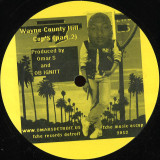
After more or less owning 2011 with a surprise album, a collaboration with urban crooner Colonel Abrams, an ahead-of-the-game reissue of Marc Kinchen and the all-conquering "Here's Your Trance Now Dance", FXHE don Omar S kicks off a new year with Wayne County Hills Cops Pt 2 (where, we ask, was Part 1?), a hook-up with the mysterious OB IGNITT. The eponymous A-Side is characterised by the kind of glistening synths last seen on "Here's Your Trance...", with a rugged analogue bass line giving the track with the requisite bump. A tired cliche it may be, but this could easily soundtrack an 80s cop movie: clearly Omar has this in mind given the 12"'s title and the fact the record's centre label features a doctored image of Eddie Murphy from Beverly Hills Cop! On the flip, Omar S provides his own remix, drowning the synths in dubby textures and showering them with shuffling hats for a more heads-down take. Another killer 12" - business as usual at FXHE, then.
- A1: Tout Est Bizarre (Feat Agnès Hélène)
- A2: Abanije (Feat Nayel Hóxò)
- A3: Soy Dos (Feat Agnès Hélène)
- A4: Viv Li (Feat Olivya)
- A5: Laissez Passer (Feat Agnès Hélène)
- B1: Ta Logbe Jongo (Feat Nayel Hóxò)
- B2: Soulshine (Feat Nayel Hóxò)
- B3: En Synchro (Feat Agnès Hélène)
- B4: Aïshododo (Feat Nayel Hóxò)
- B5: L’or & Le Sang (Feat Agnès Hélène)
Ayô Dele — which means "joy comes to me" in Yoruba — is neither a slogan nor a promised miracle. It is a breath of fresh air. That of an album born in the interstices, where the word find their way between shadow and light, between the disorder of the worldand the impulse to be .
At the heart of the project, Julien Gervaix and Damien Tesson, multi-instrumentalist beatmakers, share a groove language that is both dense and airy, where every detail breathes and finds its place.
With background in Afrobeat, Dub, Funk, Soul, Roots Reggae, and Electronic Music, they treat the studio to be their playground. Their music is a hybrid groove that speaks to the body: round or bouncing basslines, brass oscillating between melodic warmth and funk energy, textured guitars, arpeggios, enveloping Rhodes, clavinet that slides, presses, and embraces. Everything comes together with precision and flexibility, in an inventive and warm composition. The meeting of their experiences and sensibilities gives rise to open, generous music, made for dancing and vibration.
With Ayô Dele , Ireke is embarking on a new chapter: the duo is refining its style,allowing the voices to breathe. The groove remains the driving force but opens up to intimacy. This intimacy is carried by two unique female voices: Nayel Hoxo, a Beninese-Nigerian singer/rapper, and Agnès Hélène, who has already made a name for herself on Tropikadelic with "Petit a Petit". They don't sing side-by-side; they coexist, respond to each other, and sometimes intersect. But each follows her own path: Nayel, with the power of her words in Yoruba, offers songs of elevation, healing, and resistance — a light born in the cracks Agnès explores these cracks themselves: what wavers within us, what reinvents itself in bonds, glances, and gestures.
For one track, Olivya (Dowdelin) joins this dialogue in Martinican Creole. Her sunny soul sketches the contours of gentle resistance and celebrates rediscovered light.
Ayô Dele embodies a quiet yet radical determination: to smooth nothing over, to let plurality, contradictory emotions, and mixed heritage live. An album that moves forward through vibrations, that speaks of emancipation without slogans, love without clichés, anger without uproar.
Two women, two inner worlds: a sensitive complicity, a shared breath. Music that seeks not effect, but echo, weaving a living soundscape between reinvented traditions and contemporary textures. An alchemy faithful to the spirit of Underdog Records, where music unites and brings people together. Ayô Dele : "joy comes to me." A lucid joy, crossed by shadows, patiently regained. Music that welcomes, releases, gives, and in doing so, makes us feel good.
In a saturated world, Ayô Dele chooses nuance: transmission without emphasis, joy without naivety. An album that vibrates more than it demonstrates, that connects more than it imposes, and which, in its quiet clarity, resonates with a deep desire to be fully alive.
- A1: Les Masques - Il Faut Tenir (1969)
- A2: Isabelle Aubret - Casa Forte (1971)
- A3: Christianne Legrand - Hlm Et Ciné Roman (1972)
- A4: Jean Constantin - Pas Tant D'chichi Ponpon (1972)
- A5: Billy Nencioli & Baden Powell - Si Rien Ne Va (1969)
- B1-: Marpessa Dawn - Le Petit Cuica (1963)
- B2: Jean-Pierre Sabar - Vai Vai (1974)
- B3: Sophia Loren - De Jour En Jour (1963)
- B4: Isabelle - Jusqu’à La Tombée Du Jour (1969)
- B5: Sylvia Fels - Corto Maltesse (1974)
- C1: Frank Gérard - Comme Une Samba (1972)
- C2: Ann Sorel - La Poupée Des Favellas (1971)
- C3: Charles Level - Un Enfant Café Au Lait (1971)
- C4: Andrea Parisy - Les Mains Qui Font Du Bien (1970)
- C5: Audrey Arno - Quand Jean-Paul Rentrera (1969)
- C6: Aldo Frank - T’as Vu Ce Printemps (1970)
- D1: Christianne Legrand - Cent Mille Poissons Dans Ton Filet (1972)
- D2: Clarinha - Lemenja (1970)
- D3: Hit Parade Des Enfants - Aquarela (1976)
- D4: Jean-Pierre Lang - Tendresse (1965)
- D5: Magalie Noël - Une Énorme Samba (1970)
- D6: Françoise Legrand - La Lune
Ever since the late 1950s bossa-nova revolution, Brazil’s influence on French music has been undeniable. Pierre Barouh, Georges Moustaki and a vast array of lesser known artists, all made the Musica Popular Brasileira (MPB) an axis of promotion at the service of a cool and metaphysical, modern and mixed Brazilian lifestyle. Some were seduced by the poetic languors of the bossa, some were looking for fun, and others just loved the American hybridization of jazz-bossa, jazz-samba.
What is bossa nova? One of its creators, Joao Gilberto said: "Its style, cadence, everything is samba. At the very start, we didn't call it bossa nova, we sang a little samba made up of a single note - Samba de uma nota so .... The discussion around the origins of bossa nova is therefore useless”. It is nevertheless useful to remember that these magnificent Brazilian songs, which the guitarist describes as samba, were shifted and balanced around improbable chords. "I like things that lean, the in-betweens that limp with grace," said Pierre Barrouh, quoting Jean Cocteau.
With emotion, arrangements for violin and supple guitar licks, bossa nova rapidly changed. A transformation that can be heard in the Tchic, tchic, French Bossa Nova 1963-1974 compilation, the result of a cultural reappropriation, which traveled through the United States and supplemented itself in France.
A musical revolution that has remained significant, bossa nova was born in Rio. From 1956 to 1961, Brazil lived through its golden years. In five years, the country had invented its modernist style. Elected president in 1956, Juscelino Kubitschek de Oliveira, an elegant man with a broad forehead, brandished a promising slogan: "Fifty years of progress in five years". He quickly got to work. Not worried about increasing debt, he launched the project for a new federal capital, Brasilia, designed by the communist architect Oscar Niemeyer. Volkswagen opened state-of-the-art factories and created the “fusquinha”, the Beetle. In Rio, the Vespa made its first appearance. The Arpoador Surf Club crew run into the “girl” from Ipanema, Helô Pinheiro - the tanned garota ("chick"), between a flower and mermaid, who at 17 walked by the Veloso bar, where the fiery author and composer, Tom Jobim and Vinicius de Moraes, were getting drunk on whiskey. From then on, bossa symbolized cool.
In 1958, Joao Gilberto recorded Chega de Saudade, which the directors of Philips denied, calling it "music for fagots". The marketing director, who believed in it, secretly pressed 3000 78-inch vinyls and distributed them at schools around Rio, creating a tidal wave.
American jazzmen then took over. In particular, trumpeter Dizzy Gillespie and guitarist Charlie Byrd. In November 1962, the Brazilian Ministry of Foreign Affairs funded a "Bossa-Nova" concert at Carnegie Hall in New York, inviting the genre’s pioneers. Unprepared, the show soon turned to disaster. But the troupe was invited to the White House by Jackie Kennedy. The first lady loved "the new beat" and in particular Maria Ninguem, a song by Carlos Lyra, later covered by Brigitte Bardot.
In Brazil, the 1964 military coup quickly ended this euphoria. The destructive atmosphere that ensued pushed many Brazilian musicians to leave, if not to exile. Thus, Tom Jobim, Sergio Mendes and Joao Gilberto arrived to the United States. In New York, Joao Gilberto met saxophonist Stan Getz. At the time, he was married to the Bahianese Astrud Weinert Gilberto, who had a German father. She had never sung before, but she knew how to speak English. Getz therefore asked her to replace her husband on The Girl From Ipanema. The Getz/Gilberto record with Tom Jobim on piano, was released in March 1964. Phil Ramone, the "pope of pop" was in charge of sound.
Bossa nova arrived in Paris through the classic “guitar-voice” channel (Pierre Barouh, Baden Powell, Moustaki…) But France loved jazz and Paris had already welcomed its American contributors. All these good people were to pass through Saint-Germain-des-Prés. The cabaret l'Escale became the Mecca of Latin American sound where one could find Pierre Barrouh and his friends, such as the Camara Trio, samba-jazz aces, whose only record was published by the Saravah label. With a band strangely called Les Masques (a band that included Nicole Croisille and Pierre Vassiliu, among others), the Camara Trio recorded an interesting Brazilian Sound, including the track Il faut tenir which is present on this tasty compilation of rarities.
Other enlightened musicians can also be found on the compilation, such as Jean-Pierre Sabar (songwriter for Hardy, Auffray, Leforestier ...) and the French pop rock organist Balthazar. In 1975, Sabar recorded Aurinkoinen Musiikkimatka on a Finnish label, which featured the crazy Vai, Vai, included on this record. We are now following the footsteps of Brazilian electronic musicians such as Sergio Mendes, Eumir Deodato or Marcos Valle who created funk and disco sounds on their keyboards and synthesizers. A style that influenced Véronique Sanson when she wrote Jusqu’à la Tombée de la nuit in 1969 for Isabelle de Funès, the niece of Louis and a great friend of Michel Berger - Sanson did end up singing this track on her 1992 Sans Regret record.
The pinnacle of exoticism and travel, Sylvia Fels’ Corto Maltese includes bongos, sea mist and ocean sounds. The title was taken from Jacky Chalard’s concept album written in 1974, Je suis vivant, mais j’ai peur (I am alive, but I am scared), based on Gilbert Deflez’s science fiction novel.
However, bossa nova extended the scope of popularity. "In the 1970s, I was a fan of Sergio Mendes, Getz / Gilberto. I fell in love with this music that I knew because I had been an orchestral singer, " explained Isabelle Aubret, who in 1971 delivered a composite record of covers by the very funky Jorge Ben, Orfeu Negro, Tom Jobim, Vinicius de Morais and Jean Ferrat. "I recorded this album for Meys Records in Paris, far from Brazil, with wonderful musicians, François Raubert, Roland Vincent, Alain Goraguer...". The latter wrote the arrangements for Casa Forte, a very percussive title borrowed from Edu Lobo, one of the initiators of the bossa who spent time in California. "Jazz and bossa came together and produced very rhythmic music. I love singing, it allows me to dream, to have fun, to feel a high on stage, and these songs brought me joy, made me swing, my singing felt like a dance.”
The world tours of French singers and their desire for the tropics, often brought them to Rio with its hills, forests, caipirinhas and tanned bodies. There are surprises though, like this Iemenja (Iemenja is the goddess of the sea in the Afro-Brazilian candomblé religion). Not unlike the composer and musician Jean-Pierre Lang, based in Sao Paulo, Claire Chevalier taught Brazil to Brazil. In 1970, the singer and painter published a 45-inch vinyl, Mon mari et mes amants (My husband and my lovers), under the improbable pseudonym of Clarinha (little Claire). She was then living in Rio, with her husband, Joël Leibovitz, who founded a band called Azimuth, and who owned a record label specialized in "sambas enredos" songs for samba school parades.
For its B side, she asked Pierre Perret to come up with lyrics for a song composed by Carlos Imperial: "Oh goddess of the sea, o goddess Iemenja, I bring a white rose to adorn your long hair ..." . "Perret came to see us, and we had fun, remembers Joël Leibovitz. We wrote Lemenja for fun, we recorded it at the Havaí studio, behind the Central do Brasil the central station. Erlon Chaves, the arranger who worked with Elis Regina, joined us" adding his share of Afro-Brazilian percussions and funky brass to the mix.
There is a common misunderstanding in Franco-Brazilian history: that bossa, admittedly hedonistic, is perceived as funny, even though the poets who wrote the texts are often philosophizing on the human condition. Its French interpreters pull it towards a carnival inspired universe, far removed from its fundamental essence. Thus, Jean Constantin covered the famous Samba da minha terra, an ode to the art of samba written by the classic Bahian composer Dorival Caymmi, renaming it with the enticing title of Pas tant de tchi tchi pompon: "On your pier there is no tchi tchi / when you arch your back, you know everything is alright ”(lyrics by Gérard Calvi). This expedited bossa aims for the absurd, but retains a certain elegance.
Indeed, Jean Constantin was not an idiot, the rather large man had a huge mustache and liked fantasy, (Les pantoufles à papa, Le pacha, inspired by cha-cha-cha-cha, salsa and jazz) but he was also the lyricist of Mon manège à moi interpreted by Edith Piaf, the composer of Mon Truc en plume by Zizi Jeanmaire and the soundtrack of François Truffaut’s 400 Blows. Le Poulpe, published in 1970, from which this bossa is extract, was arranged by Jean-Claude Vannier, an accomplice of Serge Gainsbourg’s Melody Nelson. In short: "There is enough of samba / By looking at the parasol / Because my poor cabeza / Is going to die in the sun".
Even the American actress Marpessa Down, who was at the heart of the bossa nova revolution with her role as Euridyce in Marcel Camus’ film Orfeu Negro, winner of the 1959 Cannes Palme d'or, fed the clichée with Je voudrais parler au petit cuica - "Tell me how you manage to always make people want to dance / It's true, I must admit that I cannot resist your magic" - in consequence, once can hear the cuica, a little drum inherited from the Bantu.
But bossa nova had many angles. Societal, of course, pushing actresses who were symbols of women's liberation like Brigitte Bardot, Jeanne Moreau, or Sophia Loren to engage in the exercise of accelerated bossa. In February of 1963, Sophia Loren made a record in French in Rome, Je ne t'aime plus, featuring the song De jour en jour, a bossa written by two Italians, Armando Trovajoli and Tino Fornai, which was released a little later by Barclay. Bossa accompanied the 1960s, a decade of moral liberation. Ann Sorel, who interpreted La Poupée des favellas, caused a sensation with L’amour à plusieurs, a provocative song written by Frédéric Bottom and Jean-Claude Vannier. As for the actress Andrea Parisy, she displayed her bourgeois cheekiness in Marcel Carné's Les Tricheurs before interpreting Les mains qui font du bien. And Magalie Noël, the friend of Boris Vian, who sung Johnny fais-moi mal, was hired to sing Une énorme Samba, composed by Alain Goraguer (arranger to Gainsbourg, Bobby Lapointe and Jean Ferrat) with lyrics by Frédéric Botton.
But in the end, of what wood is bossa nova made of? The answer is given by Christianne Legrand, daughter of Raymond the conductor, and sister to Michel the composer: "With me, with jà" - jà means "immediately" in Portuguese. In 1972, the singer, an expert in vocal jazz and a member of the Double Six, published Le Brésil de Christianne Legrand. Two songs included on the Tchic Tchic compilation that demonstrate how bossa, jazz, funk, rock, etc. work like a swiss army knife: the music is used to denounce broken systems, or miracles, HLM et ciné roman, Cent mille poissons dans ton filet, two songs from the O Cafona soundtrack, a successful telenovela broadcast, at the time in black and white, on TV Globo. The first was adapted in French by the fighter and friend of the Legrand tribe, Agnès Varda. The second is content with a play on words, jostling them into a summer fun.
Véronique Mortaigne
Solo 500 delivers another irresistible donut that takes the form of this 2-sided celebration of afro-latin & jazz-funk classics. GSC dusts off 2 deep catalog selections here — & part of the appeal is that neither side is a played-out sample cliché. This one is for heads who already burned through the obvious joints.
Side A digs into Manu Dibango beyond the endlessly flipped “Soul Makossa” universe. “The Panther”, from the 1973 album “Africadelic”, isn’t one of his commonly sampled tracks — & that’s exactly why it hits so hard. Low-slung Afro-funk, stalking bass & suspense-building horns that feel like a break record even if they haven’t been rinsed by every golden-era producer. Selectors who chase texture over recognition will understand the power here immediately. It’s the kind of cut hip-hop heads love not because they’ve heard it before — but because they haven’t.
Side B moves into Latin jazz-funk royalty. Ray Barretto is one of the most sampled percussionists of all time, but “Together” (from the 1969 album of the same name) sits slightly off the obvious break-beat path. Instead of a clean, isolated drum loop, you get rolling congas, warm keys & a communal groove that’s been DJ-tested far more than it’s been sampled. This is the type of Barretto cut that crate-diggers pull when they want rhythm to breathe — bridging jazz floors, disco-leaning sets & hip-hop selectors who think like musicians, not beat miners.
- A1: The Whip Hand
- A2: Aegis
- A3: Dyslexicon
- B1: Empty Vessels Make The Loudest Sound
- B2: The Malkin Jewel
- B3: Lapochka
- C1: In Absentia
- C2: Imago
- C3: Molochwalker
- C4: Trinkets Pale Of Moon
- D1: Vedamalady
- D2: Noctourniquet
- D3: Zed And Two Naughts
Noctourniquet And then everything went black, at least for a while, at least for The Mars Volta. In the months and years following their fifth full-length, Octahedron, Omar kept on at his usual fearsome creative pace. In fact, he ramped up his output considerably, starting up his own Rodriguez Lopez Productions label and releasing a slew of solo albums. It was a practice he’d begun shortly after De-Loused’s release, with his solo debut A Manual Dexterity: Soundtrack Volume One, but as the decade reached its close, Omar grew to rely upon his solo recordings as an outlet for his prolific creativity, these albums often exploring musical pastures far beyond even The Mars Volta’s wide-ranging parameters. Before choosing to release music under his own name, Omar would always play it to Cedric first, to see if the frontman thought it had potential to become Mars Volta music. Shortly after Octahedron’s completion, Cedric flagged one batch of tracks Omar had cut with Deantoni Parks, a brilliant drummer and composer who’d briefly occupied the Mars Volta drumstool in-between Jon Theodore and Thomas Pridgen’s tenures, and whose volcanic creativity and unique, unpredictable approach to rhythm and composition had quickly made him one of Omar’s favourite artistic foils.
As with the music that made up Octahedron, the new tracks Cedric had optioned for The Mars Volta often veered far from the riotous, Grand Guignol visions of their earlier releases. It possessed the punchy, song-based focus of Octahedron, though this was a considerably darker, more menacing strain of pop, with synthesisers figuring heavily in the productions. Cedric took the tracks in 2009 and set about writing songs to the music. But no more new Mars Volta music would be heard until 2012. The years that passed in-between were nonetheless momentous, and busy, witnessing an unexpected reunion of the members of At The Drive-In, and Cedric joining his own side-project, Anywhere. But there wasn’t any sign of life within the Mars Volta until Omar, Cedric and their bandmates took to the road for a series of live shows in the spring of 2011, billed as The Omar Rodriguez-Lopez Group, debuting the songs that would become Noctourniquet. The album followed the next year, and it remains one of The Mars Volta’s finest, its electronic textures staking out unfamiliar but fertile new ground.
An unsettling, subtly turbulent listen, Noctourniquet found Cedric sketching out a story about “some sort of device that stops the darkness from bleeding”, drawing influence variously from the nursery rhyme Solomon Grundy, the Greek myth of Hyacinthus and the song Birth, School, Work, Death by British underground rockers The Godfathers. It was an album of dystopian futurism, signalled by the paranoid cyber-rock of opener The Whip Hand and its unnerving chorus, “That’s when I disconnect from you”. But it was also an album of inspired, unexpected moves and uncanny invention, like how Dyslexicon seemed to eerily evoke Blondie’s Rapture, before rushing headlong into its bruising chorus, tempos shifting restlessly throughout like quaking earth beneath the listener’s feet, or how Aegis put a brave new spin on The Mars Volta’s trademark rewiring of salsa’s overdriven passions, or how Cedric had never sounded as scary as he did on The Malkin Jewel’s mutant burlesque shuffle. Tracks like Molochwalker were sleek and concise in a way The Mars Volta had never really attempted before – which was all part of Omar’s plan.
“It had all been guitar, guitar, guitar, overdubs, everything fighting for space in the same frequency,” he explains. “So for Noctourniquet, it was all about subtracting elements, of sticking to how I made demos.” Deantoni’s presence helped revivify the group, playing against cliché and expectation, and taking each song in unexpected directions. “I’d beatbox a rhythm for him to play, to go with my guitar part, and he’d come back with three or four alternate options. It was so great.” Similarly, Cedric had never sung better than on Noctourniquet, staking out a fearsome spectrum from the chilling Tom Waitsian growl of The Malkin Jewel to the keening, beautiful vocalisation on Vedamalady, rising to match some of Omar’s most deft, most immediately effective and melodic songs yet. Indeed, Noctourniquet is the sound of a band discovering new ways to do familiar things, renewing their commitment to their mission, finding fresh inspiration a decade in, and shaking off any complacency that might have come with ten years of acclaim and success.
The album brings together the best songs from the 45 tracks he has been working on recently and shows why Melle is one of the most sincere voices on the Dutch music scene. 'Before I Lose It' is raw, personal and direct. The album is a search for identity and authenticity in sound and lyrics. The album shows that Melle not only seeks authenticity in his music, but also dares to share personal stories in his lyrics. From his long-term relationship to the search for identity and social awareness, he tackles topics such as inequality, discrimination and the influence of capitalism on our daily lives, without ever becoming cliched. This mix of intimate and socially conscious themes makes "Before I Lose It" both relatable and profound
"Only a clarinet sings – minimal, quivering, wavering. Breathing mad notes in the cracks between notes, weaving a dazed, fuzzy kind of magic. The latest recordings by Museum of No Art are tripping – floating in suspense, somewhere out in the irrational corners of the world inhabited by the haunted elegance of Ben Bertrand or Bernhard Herrmann. But still, entirely her own – a quiet revolt of classical clichés in search of a new dawn for lunatic woodwinds. She sings through her instrument and it sings to her. It carries her, and she lets it. A distinctive timbre tumbling through tonal fog. Four freely formed compositions for dispari. One petite and tempting. Two mid-length wanderers – teetering, wobbling. And one epic piercer. All drifting in inspiring airs. Ephemeral, nebulous, fragile, like the desolate candy snowman, melting on a warm tongue, threatened with complete dissolution. Fleeting like a stolen glimpse of the intimate curve of an anonymous stranger’s neck."
Having established himself as one of the most exciting contemporary dance producers with a string of stellar releases, Japanese producer boys be kko returns triumphantly with the Nagasawa EP, four floor cuts bursting with emotion, shimmering in Tokyo technicolor, and perfectly at home on Bliss Point.
Nagasawa kicks off with a bang. “ChuKii” is a peak time heater: breaks, chopped vocals and punchy toms sear over a low end groove that proves body music can funk. Melodic acid explodes like a firework mid-track, taking the dance floor to psychedelic new heights.
The club psychedelia continues with “Mold Mold”, a minimal, subterranean system roller adorned with swells, bells, and deep, guttural growls dubbed to the vanishing point.
“Sant Esteve (kko Edit)” is melancholic and contemplative jazz house, eschewing cliché and twinging with nostalgia for that moment you felt most free.
“Humor is an important part of my music”, boys be kko reflected over lunch as Izakaya smoke billowed past his face. “Oignon”, the fourth and final track on Nagasawa, is an airy and joyful slice of sampledelia that makes good on this promise. An enormous smile of a track sending listeners off with a slice of sonic sunshine and, dare we say, hope.
Continuing the VA series with different artists from around the globe the fourth instalment has landed. The 9 track LP features already familiar to the label artists as well as many new faces unified by the idea of the love for the non-standard audio frequencies. With the dystopian artwork by the label’s visual guru Gkoner and the music by the nine talented artists the disc has obtain its shape. With the vast range of sound being present but all tied in the concept of the label’s musical ideology, the “Untitled IV” is born and armed for different settings where electronic music can be blasted loud on huge sound systems or in complete solitude does not matter at all. What matters is the love of music the listener brings making it all come together with a complete and fulfilled sense.
- A1: Everybody's Talkin
- A2: Midnight In Harlem (Swamp Raga Intro With Little Martha)
- B1: Rollin' And Tumblin
- B2: Bound For Glory
- C1: Nobody's Free
- C2: Darling Be Home Soon
- D1: Learn How To Love
- D2: That Did It
- E1: Uptight
- F1: Love Has Something Else To Say (With Kissing My Love)
- F2: Wade In The Water
The Tedeschi Trucks Band is an 11-piece ensemble made up of guitarist-vocalist Susan Tedeschi's and guitarist Derek Trucks' band,
known for their unique mix of rock, blues, gospel, soul, and Americana. Their 2011 debut album won them the 2012 Grammy Award
for Best Blues Album and since then have released four more studio albums and three live albums, of which this is their first.
The songs on this album are compiled from recordings made on three tour dates in October 2011 and feature tunes from their debut
album rearranged, expanded, and extended in true jam band fashion. But, they never seem to resort to clichés; guitar prodigy
Derek Trucks introduces the bands’ hit “Midnight in Harlem” by an Indian raga played as a slide guitar solo, just to give an example.
Stevie Wonder’s “Uptight” furthermore showcases their love for soul and jazz. In short, as one reviewer put it succinctly:
“Everybody's Talkin' is what every live album should be: an accurate, exciting reflection of a hot band playing full-throttle.”
Everybody’s Talkin’ is available as a limited edition of 1500 individually numbered copies on red coloured vinyl.
DJ Vibe, widely regarded as one of Portugal’s most influential and sought-after DJs, has played a pivotal role in shaping the country’s electronic music scene. Not only has he been instrumental in launching some of Portugal's most iconic clubs, but he is also behind some of the biggest anthems in the scene, such as “So Get Up” and “Dance With Me,” both released in 1994 on Kaos Records and Tribal America. Since the early 90s, he has released music on seminal labels such as Nervous, Twisted, and Innervisions, among many others.
From the underground rave scene to iconic club parties, from radio airwaves to packed dance floors, from DJing to production - DJ Vibe has traversed many paths in his decades-long career, contributing to the foundation of the modern "dance culture" that emerged in the mid/late 80s.
After over four decades of dominating clubs and festivals worldwide, what’s left to accomplish? For DJ Vibe, the answer is simple: a new adventure fueled by the same passion and excitement that defined his career. In 2024, he took a bold step forward with his debut album, Frequências—his first full-length work under his own name.
Frequências is an album defined by freedom and passion—two words that might sound cliché but perfectly capture its essence. A balanced body of work that seamlessly moves between high-energy moments for the dance floor and introspective chapters ideal for late-night reflection and relaxation.
'Total Spook' mixtape is Artetetra's homage to the forgotten cassette and CD culture of mass-distributed commercial Halloween sound effects, horror tales, and spooky music productions across the eighties and nineties.
Mainly produced in the U.S. these objects featured some of the famous names of the entertainment and commercial industry such as Prince's Dr. Fink (yes, that synth master), Elvira, the Mistress of the Dark and Hallmark as well as unknown and anonymous creatives and artists. In these tracks engineers, musicians and producers arguably had carte blanche in experimenting with extreme samples and vocal manipulation, time-based effects, extended techniques, spooky sound fonts and stock sound effects developing their unique ideas around the sound ambience of the Halloween and horror imagery's campy cliches.
After digging around 30 hours of material gathered from dedicated YouTube channels and playlists such as the ones created by 'Beetlemuse' and 'Caleb Jones', I have compiled a 100' mixtape showcasing some of the most endearing, weird and experimental sound designs long forgotten in the vaporware-like consumer culture of the '80s and ‘90s.
The new album by "Thomas Sarrodie & Bi-Polar Blues" marks a fresh start, strongly inspired by the band"s participation in the International Blues Challenge in Memphis. This almost initiatory journey to the heart of Blues and Rock has ignited the energy and soul that make this new album the work of an inspired trio (guitar/vocals, double bass, drums), driven by the group"s extensive experience, yet remaining unique and original. With a guitar rooted in blues, blended with contemporary rock energy and 1960s psychedelic echoes, Thomas Sarrodie & Bi-Polar Blues captivates with its enchanting slides, a baritone tuning, a surprising double bass, and a swirling drumbeat. Formed twelve years ago by Thomas Sarrodie (guitar, vocals) and Sylvain Blanquiot (bass), the Thomas Sarrodie Group established itself on stages across Occitania with various drummers, until Jérémy Cazorla joined behind the kit. Influenced by Stevie Ray Vaughan and Jimi Hendrix, Sarrodie adds a personal touch, avoiding clichés, as evidenced by three studio albums and a vibrant live recording. Eager to evolve, the trio incorporated double bass, slide, and baritone tunings, reshaping their sound toward a rootsy blues while retaining rock energy. Renamed Thomas Sarrodie & Bi-Polar Blues, the group embarked on a new tour and the recording of an eponymous EP. This EP reflects their ambition to push boundaries, with compositions evoking the Delta or the Hills, tinged with R.L. Burnside"s influence, while honoring a 1960s tradition with a modern approach.
- Buffalo Sky
- Ridin Hi
- Mexicali
- Like A Stray
- The Ballad Of Billy Major
- Pink Flamingos
- Frontier Romance
- Montana
- Massive Jesus
- Ragdolls
"Entweder du machst, was alle machen, besser als alle anderen oder du machst, ganz was anderes..." Was Sergio Leone für den Western war, ist Johnny Indigo für die Rock Musik. Anders, rauher, echt und kompromisslos. Johnny Indigo ist das Soloprojekt von dem Wahlwiener Mathias Kollos, der bereits für viele Künstler hinter den Kulissen und auf verschiedensten Bühnen tätig ist und war. Jetzt hat er den Schritt nach vorne getan und tritt mit seiner Band "The El Dorado Wildfire" mit eigens für Live arrangierten Versionen von seinem Debut Album "American Daydreams" gemeinsam auf. Wie klingt das verschmitzte Grinsen von Terence Hill? Was hört man, wenn Clint Eastwood seine unvergleichliche Miene verzieht? Den eigenständigen Mix aus Alternative Rock, Southern Rock, Country und Blues von Johnny Indigo. Das Album vermischt Roots und Country Elemente mit modernem Rock und Blues. Ästhetisch geprägt von dem Image der Spaghetti Western, ohne in unnötige Cliches zu verfallen. Vergangene Acts wie Led Zeppelin, Jimi Hendrix oder die Rolling Stones werden ebenso nicht vernachlässigt wie moderne Formationen wie Queens Of The Stone Age, The Black Keys oder Rival Sons.
- Cliché
- Alcoholic Heart
- Tattooed Like Me
- Radio Callboy
- Glory Hole
- Where Is My Hope?
- Two Day Session
- Brainmelt
- Brigitte Bordeaux
- Fame
- Not My Thing
- Red Lips
Dass Hamburg eine gute Adresse für Streetpunk ist, beweisen nun auch BOLANOW BRAWL mit ihrer ersten Langrille ,First Shots!", die auf die bereits knapp neun Jahre zurückliegende Debüt-EP ,Total Escalation" folgt. Man lässt es halt ruhiger angehen im Norden - will's jetzt aber auch noch mal wissen. Der Bandname - eine Kombination aus der Billig-Wodka-Marke BOLANOW und dem englischen BRAWL für Rauferei oder Handgemenge - verweist auf ambivalente Erfahrungen, die die Bandmitglieder unter Alkoholeinfluss im jugendlichen Leichtsinn sammelten. Flotte Gitarrenriffs, treibende Drumbeats und ein rauer, oft rotziger Gesang bilden das musikalische Gerüst der Hanseaten - das im Kontrast zu den eingängigen Leadgitarren-Melodien steht. Singalongs verleihen dem Sound einen bierseligen Touch. Die Mischung aus englischen, amerikanischen und Buxtehuder Stilelementen gibt den zwölf Songs das gewisse Etwas, das den Stil von BOLANOW BRAWL ausmacht. Die alte Plattitüde von den ,Texten, die das Leben schrieb" trifft auch auf die Songs von BOLANOW BRAWL zu. Eigene Erlebnisse, Beobachtungen und Erfahrungen aus Arbeitswelt, Subkultur und Gesellschaft fließen in die Texte ein - ohne erhobenen Zeigefinger, dafür gern mit gehobener Bierflasche. Die Covergestaltung stammt von Alteau, einem frankobelgischen Skinhead und Comiczeichner, der schon mit 14 erste Arbeiten im Spirou-Comic-Magazin veröffentlichte. Seit Ende der Achtziger hat er etliche Plattencover für Punk- und Oi!-Bands gestaltet - darunter Klasse Kriminale, Rancid, Bérurier Noir und The Herberts, bei denen er auch selbst als Sänger aktiv war.
MEMOTONE, aka Will Yates, has announced details of a new 12-track album, smallest things, set for release on World of Echo on 1 August 2025 on vinyl and digitally.
The album launches today with first track, ‘Time Is Away Theme’, a live favourite that is finally available on album. Watch the video HERE Talking about the release, Will has said, “Staring at a square inch of neglected concrete, I recognise the beauty of existence. Quietly hysterical. While humanitarian catastrophes bubble across the planet, the tides remain in constant and disinterested motion. Your money is worth less than the dusty moss that powders this pavement.
It's certainly not worth a life. We are the smallest things, along with everything else." Will Yates has made music as Memotone since 2007. He operates in the tradition of what Robert Fripp has called 'a small, independent, mobile, and intelligent unit.' If you book him, he will come. When he arrives, he will have everything he needs to make his complex, engaging music: a clarinet, a guitar, synths, samplers and pedals, quickly unpacked in the corner of a club, gallery or village hall. Starting small, he will build layer upon layer of melody, accompanying himself and cutting across himself, creating a music that avoids cliche and moves beyond easy description. His recordings have followed the same trajectory. Moving quickly, he has released fifteen or so albums across various labels (including Trilogy Tapes, Discrepant, Soda Gong). Taken together, these recordings are the sound of a skilled, inventive composer pushing at the edges of what he wants to listen to himself. It is possible to hear a variety ofinfluences in his music: folk and jazz forms, the textural inventiveness of British DI electronica and Chicago post-rock and the blurred sci-fi brass of Jon Hassell are all discernible. But mostly, Will's work seems to stem from a constant drift between long hours in his home studio, and time spent outside in the woods and hills around his home in Wales.
Listening to the album, lushness creeps in at the edges, tiny green shoots appear on what might at first appear to be bare soil. smallest things sheds the skin of Will's previous recordings, removing the electronics and the looping and layering of previous work, to create something almost entirely acoustic. But don't be fooled into imagining music that's folksy, pastoral or twee. Opening track 'I Could See the Smallest Things' is a statement of intent. Widely spaced guitar is underpinned by earthy cello and sleepwalking clarinet, making a gorgeous threadbare pattern, which recalls a Morton Feldman miniature or a Morandi still life.
Beyond the skill involved and the years of self-taught music making that have gone into putting this record together, it is Will's close, careful attention and his talent for existing, observing and creating in the moment that make his work special. Memotone will perform at World of Echo’s annual birthday celebration on 8 Nov Expected Music, when they take over Walthamstow Trades Hall for an inter-genre, day-long investigation into some of the more outré manifestations of the contemporary worldwide underground.
Musikalisch schon immer auf der Schnittstelle zwischen Rap, Gitarrensounds und sogar Country unterwegs,
legt mgk (Machine Gun Kelly) diesen Sommer sein wohl bisher wichtigstes und persönlichstes Projekt vor
– „lost americana“ erscheint am 08.08.25.
„lost americana“ ist mgk’s kompromisslose Neuerfindung und der Beginn einer Ära, bei der es um klassisches Storytelling, Identität und Selbstentfaltung geht.
Angeführt von der ironischen und doch retrospektiven Leadsingle „cliché“ verwischt das mittlerweile siebte
Album die Grenze zwischen Satire und Authentizität und vereint Humor, Nostalgie und Kulturkritik auf
mgks’s einzigartige Weise.
„lost americana“ nimmt Hörer*innen mit auf eine emotionale und ehrliche Reise durch staubige Diners,
dem simplen Leben von früher und der eigenen Selbstreflexion.
Seit seinem ersten Album „Lace Up“ (2012) ist mgk (damals noch unter den Namen Machine Gun Kelly
bekannt) zu einem der einflussreichsten US-Musikern avanciert.
Singles wie „Bloody Valentine“ und „My Ex’s Best Friend” wurden zu weltweiten Hits, die beiden letzten
Alben „Tickets To My Downfall“ und „Mainstream Sellout“ zu Nr. 1 Charterfolgen, „Tickets To My
Downfall“ wurde zudem in der Kategorie „Best Rock Album“ bei den Grammys nominiert.
lost americana“ erscheint am 08.08.25. als CD und auf Vinyl
- 1: Press Play
- 2: Pop’s Love Suicide
- 3: Tumble In The Rough
- 4: Big Bang Baby
- 5: Lady Picture Show
- 6: And So I Know
- 7: Trippin’ On A Hole In A Paper Heart
- 8: Art School Girl
- 9: Adhesive
- 10: Ride The Cliché
- 11: Daisy
- 12: Seven Caged Tigers
Experience the Double-Platinum 1996 Album in Audiophile Sound for the First Time
Mobile Fidelity’s Numbered-Edition 180g 45RPM 2LP Set Is Sourced from the Original Analogue Tapes
1/2” / 30 IPS analogue master to DSD 256 to analogue console to lathe
If great art, as many believe, is inherently polarizing, then the Stone Temple Pilots’ Tiny Music… Songs from the Vatican Gift Shop easily ranks as the California-based band’s finest album. Simultaneously celebrated and castigated upon release in spring 1996, the group’s third full-length finds vocalist Scott Weiland and company expanding their “grunge” palette with a smart blend of glam rock, psychedelia, jangle pop, and other related styles. Having benefited from long-view reassessments that shed the biases and meanness of initial criticisms, the double-platinum effort is now largely and rightly seen as a creative masterwork. All the more reason why it deserves reference-grade production.
Overseen by producer Brendan O’Brien, Stone Temple Pilots used bedrooms, hallways, bathrooms, and the lawn to capture a broad blend of textures, spaciousness, and ambience that helped underline the group’s obvious (and somewhat unexpected) leap from normal “alternative” status to an artist whose aspirations went beyond that of many of its contemporaries. You can hear the multitude of details and tonalities with previously unattained clarity, presence, and scope on this fantastic reissue, which also delivers the impact and punch every rock record deserves. Another tremendous asset: The depth, grain, and pitch of Weiland’s voice.
For all the contagious choruses and glossy melodies that help make Tiny Music… Songs from the Vatican Gift Shop sparkle, the vocal performances of the late singer arguably rank as the best that the much-missed Weiland committed to tape. None other than the Smashing Pumpkins’ Billy Corgan — who, like many peers and critics, felt a pressing need to reevaluate the record as both time marched on and the self-importance attached to the “alternative” scene faded — praised Weiland’s efforts by noting: “Like Bowie can and does, it was Scott's phrasing that pushed his music into a unique, and hard to pin down, aesthetic sonicsphere.”
Smooth and diverse, those traits are everywhere on Tiny Music… Songs from the Vatican Gift Shop. From the clever combination of emotional closeness and distance he brings to the catchy albeit ultimately melancholic “Lady Picture Show”; to the lounge-fly balladeering that causes “And So I Know” to lightly swing akin to a bleary-eyed house band’s final number at a 4 A.M. bar; to the effortless cool and laissez-faire casualness he articulates on the grinding “Pop’s Love Suicide”; to the dimensional raspiness, defiant energy, and let-loose wail that sail through the crunchy “Big Bang Baby.”
The latter tune, the record’s first single and per Weiland a conscious attempt by the band to deconstruct its prior approaches, clearly borrows from the Rolling Stones’ “Jumpin’ Jack Flash.” Because of it, the song drew all kinds of barbs from naysayers. Their disdain extended to most material on Tiny Music… Songs from the Vatican Gift Shop, which indirectly references other prized acts such as the Beatles, Cheap Trick, T. Rex, and Lush. Those cynics failed to grasp that Stone Temple Pilots were paying homage and having a blast, with even Weiland, then battling serious substance-abuse and legal issues, getting in on the action.
Stone Temple Pilots’ skeptics also turned a deaf ear to the records’ stellar pop craftsmanship, sticky hooks, and sly commentary on music-industry machinations and fame. Not to mention the band’s intent, made clear from the outset. In an interview conducted in 1994, guitarist Robert DeLeo stated: “The last thing I wanted to do with this band was make everybody believe we invented something.”
Seen through that lens and the hindsight afforded history, and appreciated independent of the self-righteous authenticity standards of the day, Tiny Music… Songs from the Vatican Gift Shop sounds borderline fearless while authoritatively checking all the right boxes for fun, flavor, and finesse. Part winking send-up, part tribute to the glitter rock age, and part middle finger towards the hip crowd that didn’t know what they were missing, this mid-90s classic repeatedly invites you to drop the needle and press play.
- A1: Chicago, January 13Th, 2020
- A2: Makaya Mccraven - The Jaunt
- A3: Junius Paul - Asé
- A4: Dezron Douglas & Brandee Younger - The Creator Has A Ma
- A5: Resavoir - Taking Flight
- A6: Irreversible Entanglements - Open The Gates
- A7: Angel Bat Dawid - We Are Starzz
- A8: Rob Mazurek - Abstract Dark Energy (Parable 9)
- B1: The Most Amazing Time
- B2: Damon Locks - Rebuild A Nation
- B3: Dos Santos - A Shot In The Dark
- B4: Daniel Villarreal - In/On
- B5: Anna Butterss - Pokemans
- B6: Sml - Industry
- B7: Jeremiah Chiu & Marta Sofia Honer - Snacko
- C1: Jeff Parker - Cliche
- C2: Jamire Williams - And Then The Anointing Fell
- C3: Carlos Niño & Friends - Please, Wake Up
- C4: Thandi Ntuli With Carlos Niño - Voice And Tongo Experim
- C5: Tom Skinner - Quiet As It's Kept
- C6: Ruth Goller - Next Time I Keep My Hands Down
- C7: Alabaster Deplume - A Gente Acaba (Vento Em Rosa
- D1: Old Fashioned Chicago Music
- D2: Jaimie Branch - Theme
- D5: Charles Stepney - Step On Step
- D6: Tomin - Angela's Angel
- D7: Asher Gamedze - Melancholia
- D3: Ibelisse Guardia Ferragutti & Frank Rosaly - Mestizx (B
- D4: Ben Lamar Gay - Oh Great Be The Lake
Gilles Peterson presents International Anthem is a compilation chronicling the legendary London-based radio host, DJ, label head, curator and cultural impresario"s long-standing affinity for and interaction with artists and music from the Chicago-born record label International Anthem. The tracks on this compilation were chosen by Peterson via an extensive review of track lists from his broadcasts on BBC Radio 6 Music, Worldwide FM, and various syndicated radio programs. The compilation also includes a previously unreleased track recorded live on the Peterson-founded online radio station Worldwide FM. This album is released via International Anthem as part of their "IA11" series of releases and events - where the label celebrates their eleventh year of existence by looking back on their first ten years while establishing new standards for the next ten years.
- A1: Mal De Mer
- A2: Surely You Rally
- A3: Not For Us
- A4: In The Dark
- 5: The Hook Stuck
- B1: Lord Marchpane
- B2: Effective Forthwith
- B3: Achilles Past
- B4: Fainting
- B5: There's A Place
- C1: Much More
- C2: Maybe Tomorrow Then
- C3: Madcap Girl
- C4: The Knife Cliche
- C5: Hope Davis' Face
- D1: Listen You Wait
- D2: Bright Blue Sun, Gold Sky
- D3: The Tents Around The Lake
- D4: Spanish Vamp
- D5: If Only 6. Early Departure
For All The World, the black watch's twenty-fifth (and first double) album is a darkly poppy, brightly moody, many-splendored take on a number of the great themes: Death and Sex, Memory and Lament and Hope and Love. And it is, arguably, this heralded Los Angeles band's most sonically ambitious and moving record yet, since front man/novelist/ex-English professor John Andrew Fredrick formed the group in 1988 in Santa Barbara after he'd seen a London-by-way-of-Canada band called The Lucy Show play to twelve-or-so people in his hometown.
Having recorded 2024's Weird Rooms with producer Misha Bullock and Fredrick's son Chandler at Bullock's studio in Austin, TX, the TBW founder was keen to repeat the experience with, he says, more straightforward, classic psych/jangle/shoegaze songs. The result, though artistically satisfying, spurred a yen in John to write more songs as a sort of reaction against the batch he'd carried with him from LA to Texas. "We had such a productive time recording ‘Weird Rooms’ that I wanted to repeat the experience... without repeating the experience. And once it was over and I left Misha to do what he pleased with respect to mixing and overdubbing, all I could think was 'I need to write another album now.'" So Fredrick brought longstanding producer/engineer and TBW-associate Scott Campbell (Stevie Nicks, Acetone) along this time to help out with engineering and good cheer.
Fredrick, who has been "accused" of being "astonishingly prolific," learned that bandmate Andy Creighton had recently become unemployed, seized the opportunity to have yet another multi-instrumentalist flesh out the new songs he quickly wrote after he came back from Austin. “Achilles Past,” the first single, is in fact a song that John wrote when the production team thought the album was done—and the front man avers that it’s often the case that a very strong song comes to him, as it were, in the eleventh hour. The same could be said for “Listen You Wait”—another number that came late to the Austin sessions.
Nevertheless, the recording of the first half of For All The World has Creighton's signature indelibly stamped on it - especially on such tracks as “Fainting” and “Surely You Rally”- just as the latter half highlights Bullock's formidable talents. "They're both not just brilliant musicians and they understand my aesthetic and bring their own sensibilities to bear on my stuff. Our respective tastes meet in, you guessed it, The Beatles' realm - the great shadow that hangs over all I do, at least."
"There's A Place," the final song on side two, serves in fact as a distinct homage that's been a long time coming for a band that included a cover of "It's All Too Much" as a bonus track and that release a quite punkish, uptempo version of "Eleanor Rigby" on a 7".
Spanish label Andermedt delivers a peerless debut with a solid mindf*ck. The lost and found magic chest of Laurine Frost's never-ending protest against the cliche of techno. A more than 5year old archive winks back at Frost's earlier 4/4-based works, but Cabaret Nord represents grotesque and his characteristic dark mysticism in a yet unheard intensity. Tight funk, earth-shaking drums, playful structures on a wide and dark veil.
* mastered and cut by Stefan Betke.
* 180 gr. heavyweight vinyl with premium packaging and hand-drawn illustration.
After 45 years, Trigger’s never-released second album, Second Round, invites listeners to rediscover the hard rock sound that made the band a standout act of the 1970s. In early 1979, Trigger walked out of Electric Ladyland Studios with a completed second album. Mere months had passed since their self-titled debut came out on Casablanca Records, home to KISS and Parliament. The band had toured with Cheap Trick and The Godz, met Bruce Springsteen and Joni Mitchell, and things were looking bright. But Casablanca unexpectedly went bankrupt, and the label’s artists went into freefall. Trigger unsuccessfully sought interested parties, shelved the recordings and disbanded; a disappointing end for a band who dominated the Jersey Shore club scene on their way up with fiery, kick ass live shows. RIP Trigger: 1973-1979. Jump to 2024. Guitarist Richie House is living in Northern New Jersey with his wife, enjoying a relaxing afternoon at the community pool with neighbors. One of them, Andrew Wexler is shocked to discover his friend had a band in the ’70s. He listens to their recordings, and as an avid record collector, assumes the mission of getting that unheard second album released. He writes to Ba Da Bing, a label with Jersey roots. Much excitement ensues. Second Round’s long-awaited release will now be available. All original members—Derek Remington (vocals/drums), Jimmy Duggan (guitar/vocals), Tom Nigra (bass guitar/backing vocals), and Richie House (lead guitar/vocals)—are present on the recordings. Sadly, Duggan and Nigra have passed away, but Remington and House have overseen this reissue, with songs sourced directly from the analog masters.. The Trigger of today maintains a high level of quality, albeit with a bit less flair, and even less hair. And there’s more going on here than at first listen. While the band carries the earmarks of their era—melodic hard-rock fashioned for Saturday night parties—they override the cliché with incredibly catchy songs. How would a ripping song like “Back Talk” have been received in 1979? It’s a question we’ll never be able to answer, but the raw energy of the track spans generations. “One In A Million,” however, with its full harmonies and forceful chorus, could have easily made the soundtrack for Fast Times. Celebrate the discovery of this lost gem by giving it a listen. You’ll be Trigger happy…
- 1: Baptism By Fire
- 2: Cadillac Man; Glory Days
- 3: Gilding The Lily; Gunfight
- 4: Killerstown; Don't Ever Stop Lovin’ Me
- 5: Mickey Roses
- 6: I Really Love You
- 7: Human After All
- 8: It’s A Shame
- 9: In Plain Sight
- 10: Religion Kills
- 11: The Special One
- 12: River Of Death
- 13: Written In Heavy Blood
- 14: Love Will Find You One Day
Brand new double LP on orange vinyl limited to 300 copies worldwide from Tyla (The Dogs D’amour) featuring the latest single ‘Cadillac Man’ - 'It’s becoming a bit of a cliche these days to say 'I dreamt this idea, song, story film book etc' But that's exactly what I did with the song 'Cadillac Man' the lyrics and the video idea and the melody as it was just after noon I jumped out of bed and scribbled the lyrics an picked up my trusty black Gibson J200 the guitar I've written nearly every song on since the day I bought it brand new in 1991. It was then I realised id dreamt the chords too!' I was 62 years old when I began writing and recording this album in the Autum of 2023 and I'm lookin' at 64 this July. I sent some of the songs to Simon (Hanson) who slapped on the drums then I sent them to Jamie Turnbull ('In Vino Veritas' / Tyla’s Dogs D'amour producer) knowing he was a great guitarist, but I didn't know just how good! This is the first album I have ever done that you can and even I do, play air guitar too! The songs flowed and i seemed to have captured most if not every human emotion in a Genie's lamp which I am now putting in your trusty hands and ears and eyes and soul. I beg you pop the cork, and I can guarantee that some if not all of your wishes will come true.' 'Gilding the Lily' Is the album I've been trying to write wanting to write, all my life.'
The lost companion EP to The Unbearable Tightness of Being, by Ohio's,
Sweetheart
Recorded by the band in a warehouse in Columbus, Ohio, spring 2005.
A single sided 12" record containing one 12 minute song. Limited to 300 copies on
180 gram vinyl and digital.
This record is meant to go together with EW017- Sweetheart- The Unbearable
Tightness of Being LP. We highly suggest getting both records.
Sweetheart's latest offering, "The Process Of Making Us Well," serves as an intricate
sonic landscape woven with a fearless fusion of genres, defying the established
norms of post- hardcore. This one- track EP, released under theExpert Work Records
banner, is not just an auditory journey but a rock-solid proof of their ability to blend
post-hardcore, noise rock, punk, screamo, emo, and indie influences into an immersive
sonic experience that transcends conventional boundaries. Setting themselves apart
from the early noughties post- hardcore scene, Sweetheart skillfully navigate away
from the cliches that often haunted many underground acts of the era. "The Process
Of Making Us Well" unfolds as an epic composition, a 12-minute sonic odyssey that
takes the listener on a transformative journey. The band showcases a mastery of
dynamics, skillfully transitioning from serene, ethereal instrumentations to intense,
powerful crescendos, creating an emotional landscape that captivates the listener
from scratch to finish.
Released as part of Expert Work Records' series, "The Process Of Making Us Well"
holds the distinction of being Sweetheart's longest recorded piece. The record arrives
in a high- quality cardboard sleeve, decorated with an entirely minimalistic lettering,
leaving audio content in the sole focus. It's a wise choice, considering that
Sweetheart's music deserves your utmost attention. "The Process Of Making Us Well"
is an essential exploration into endless possibilities of post- hardcore, noise rock,
screamo, and emo music. Sweetheart, sadly overlooked amidst a sea of similar bands
during their era, emerges as a beacon of innovation with this remarkable release. "The
Process Of Making Us Well" solidifies Sweetheart's status as one of the best bands of
their time, a hidden gem deserving of retrospective recognition and appreciation
Free jazz poetry by a spry, 85 year old Joe McPhee, adapting his renowned improvised practice to words - juxtaposed with Mats Gustafson’s sparing brass and electric gestures. It’s an utterly timeless and transfixing salvo, another shiny notch for Smalltown Supersound’s Le Jazz Non Series.
As a common ligature to the OG free jazz scene of ‘60s NYC, with formative binds to its European offshoots and the experimental avant garde, Joe McPhee is a true force of nature who has represented jazz at its freest over a remarkable lifetime. In duo with Swedish free jazz and noise standard bearer Mats Gustafson, he upends expectations with an astonishingly vivid and upfront example of his enduring contribution to freely improvised music. In 11 parts he variously reflects on everything from the neon sleaze and scuzz of NYC to contemporary US politicians and laugh out loud imitations of his previous sparring partners such as Peter Brötzmann, with a head-slapping immediacy that leaves you reeling, spellbound.
McPhee’s flow of rare, organic cadence, ranging from urgent to contemplative and dreamlike, is blessed with a unique turn-of-phrase that surely mirrors his decades of instrumental work. Gustafsson, meanwhile, dextrously takes up the mantle with a multi-instrumental spectrum of sounds, leaving McPhee unbound and able to float and sting on the mic. There’s obvious wisdom in his perceptively penetrative observations, as derived from a rich cultural life well spent, but also a playful naivety and levity in his ability to veer from almost melodic speech to explosive aggression and a knowing, bathetic wit. It’s perhaps hard to believe that McPhee only started incorporating and performing spoken word in his work in the past ten years, a half century since his declaration of “What Time Is It‽” announced his arrival on a legendary debut ‘Nation Time’ (1971), ushering in one of free jazz’s most singular characters in the process.
Oscillating between discordant reflections on life as a touring musician, set to Gustafsson’s skronk and culminating in a snort-worthy imitation of Peter Brötzmann’s gruff German accent, on ‘Short Pieces’ or the glowering growl and noise exhortations of ‘Guitar’, he evokes a more sweetly consonant calm in ‘When I Grow Up’ and eerie threat of ‘The Dreams Book’, and viscerality of ‘Disco Death’, where Gustafson’s tonal versatility comes into hugely mutable play, whilst McPhee’s extraordinary, unaffected voice is a constant. It’s perhaps McPhee’s balance of cool measuredness and wellspring of barbed energies that allows us, at least, to get the most out of this one; not stifling with mannered or manicured enunciation that can trigger certain icks; keeping close to the nature of spoken word in a way that avoids cliche and becomes inherently critical of it within his purposeful, non-hesitant clarity and unflinching approach.
- A1: Welcome (Feat. Brittney Carte)
- A2: All Live (Feat. Abstract Orchestra)
- A3: All Live Pt. 2 (Feat. Sango, Phat Kat, & Daru Jones)
- A4: To The Disco (Feat. Abstract Orchestra)
- A5: Yeah Yeah (Feat. Karriem Riggins)
- A6: Just Like You (Feat. Larry June & The Dramatics)
- A7: F.u.n
- B1: Request (Feat. Abstract Orchestra & Earlly Mac)
- B2: So Superb (Feat. Cordae & Earlly Mac)
- B3: Keep Dreaming (Feat. Karriem Riggins & Fat Ray)
- B4: Factor (Feat. Elijah Fox & Eric Roberson)
- B5: Since 92 (Feat. Robert Glasper)
F.U.N. Is Now Available In A Limited Frosted Shadow Colored Vinyl Pressing!
The latest full length album from Detroit mainstays Slum Village, F.U.N., has now made its way to vinyl. The 12-track project is their first album in nearly ten years and includes fresh collaborations with Larry June, Cordae, Eric Roberson, Robert Glasper , Karriem Riggins, Abstract Orchestra, Sango, Phat Kat, Daru Jones, Earlly Mac, The Dramatics and more. 2015's critically acclaimed Yes! further cemented T3 and Young RJ's ability to effectively carry on the legacy of the seminal rap group, retaining its essence while evolving its sound with fresh new energy. However, with last year's sold out tour in Europe, and the release of the Larry June and The Dramatics-assisted "Just Like You", it was revealed that the duo was back in the lab together working on a new Slum Village album. F.U.N. finds Slum Village expanding on their signature certain sound, but still staying close to their hometown roots: Young RJ explains- “We wanted to just try something new, so we focused on making Disco-inspired music,” and T3 notes that the recording process all “began with collecting old Disco records.” For fans who wonder why the sonic shift, and why the long hiatus between proper albums, T3 says “Slum is still here. We’re still relevant and we’re still trying to push the envelope. Sometimes people put too many rules on music, and without sounding cliche, we wanted to just have fun with this album.” F.U.N., indeed.
Founded in 1994, LA's Aberdeen were an underground twee-pop group who’s tight discography of beautifully melodic, melancholic and dreamy songs envelope the cliche topics of summer sunshine, young love, and the lack thereof. Since 2006 the band has been helmed solely by lead writer & producer John Girgus.
Their music primarily resided on the Bristolian cult label Sarah Records, where they would release of some of their most beloved tracks such as 'Byron' and 'Fireworks' in the mid 90s. They are a band who's stripped back sound had a blissful focus on the love of melody whose influence has subconsciously woven itself throughout the current generation of underground pop and indie music.
We are super excited to announce the re-pressing the bands first 3 EPs in their entirety, with additional bonus tracks, on vinyl for the first time in 30 years. These are very special songs by a band whose permeance on vinyl was integral to the flexi disc adoring generation of the Sarah movement..
SOILWORK is a band that has been through a lot. We don’t have to try and tidy things up by using clichés like personal and/or musical differences. It has been hell. We have lost loved ones and significant others have fallen ill. We are not young anymore, and our reality these days is the hellhounds on our tails, the ghosts in our subconscious and the coldness of existence that starts eating at your soul the very day that you leave the womb. We can no longer escape the fact that we’re vulnerable to the shortcomings of life itself. Verkligheten is the Swedish word for reality, the entity that we’re all trying to escape from. Verkligheten is our attempt to try and go somewhere else, to express all those things that are born in between hypnagogic states and frenzies of hyperrealism. Verkligheten is the otherworldliness of Swedish suburban anxiety, accompanied by blastbeats and slide guitars.
Marionette presents 'dessus oben alto up', the first collaborative recording by Andrea Belfi and Jules Reidy. Hailing from different ends of the globe (Australia and Italy) but both longtime residents of Berlin, Reidy and Belfi’s approaches have much in common, bringing together compositional precision and electroacoustic rigour with improvisation freedom, the immediate gratifications of rhythmic pulse, and an overtly lyrical sensibility. Working together during a residency at the sound studio of Berlin’s Callie’s, an arts institution housed in a 19th century machine factory, the pair (with Marco Anulli manning the desk) have conjured up four expansive pieces where the beautifully recorded percussive clarity of Belfi’s drums threads through a sparkling haze of guitars and electronics.
Opener ‘dessus’ begins with Reidy’s distinctive just-intoned guitar figures, shimmering over a delicate substratum of Befli’s brushwork and bass drum accents. As in all of Reidy’s recent work, the guitar is twisted out of cliché by the unfamiliar tuning and electronic processing. Hanging almost inaudibly in the background for much of the piece, a rush of synthetic tones surges into the foreground to end it. ‘oben’ is built from kinetic patterns of picked guitar arpeggios, locking into irregular grooves with Belfi’s drums, which move from elegant rolls and cymbal patter to driving closed hi-hats and explosive rock interjections. Around the traditional instruments and across the stereo field, electronic sounds swarm and swirl, fizzing and popping in a sun-drenched soundscape that at points suggests both vintage analogue synth destruction and glitching harmonies. ‘alto’ begins in similar territory but turned up a notch, eventually settling into a propulsive 6/8 groove of shifting drum accents, manically strummed 12 string acoustic, and burbling synth chords.
The B side is dedicated to the fifteen-minute ‘up’, where the strategies adopted on the other pieces are put in the service of a more relaxed, slowly unfolding epic. Anchored by a steady pulse throughout, the piece combines chiming guitars, dubbed-out bass lines and constantly adjusted percussive details into a complex flux of sound. Change is at once so subtle and so ever-present that, at any given moment, the listener can never be entirely sure quite how they got there.
Continuing our quest to get all of the classic early AMT albums released on vinyl, we turn to 2004’s 'Mantra Of Love’, and with the help of Makoto Kawabata’s studio wizardry, we’ve made it possible.
This latest instalment in the ‘Acid Mothers Temple Vinyl Archives - First Time On Vinyl’ series (as with the three previous SOLD OUT releases in the series) have all been meticulously put together with the help of Makoto Kawabata with the original CD artwork recreated for these vinyl editions from archive photos stored in the vaults at the Acid Mothers Temple in Osaka, Japan and the original audio remastered by James Plotkin.
Here’s what others had to say upon it’s original CD only release back in 2004 …
“Acid Mothers are strong folk. You'd think they'd tire quickly, all tucked away on their island, strewn about on tree roots while baking their lungs and throats to a knotty green tinge. But instead of waltzing through life like hippies, they manage to not only tour and put out records every year, but also to fill those albums with 30-minute jams and assorted freakouts. And while evil jam bands would fill that space with guitar work taken from the Classic Rock Manual of Clichés, Makoto Kawabata and company assault listeners with frighteningly dense walls of white noise, psychedelic swirl effects and, yes, even guitar solos-- albeit ones that are more Merzbow or Keiji Haino than Gary Rossington. Truly, AMT's endurance and threshold for cosmic lashings are both worthy of admiration.
But how much AMT can you take in one sitting? If there's anything this band has taught us-- via records such as 2002's Electric Heavyland and the ferocious Acid Mothers Temple & the Melting Paraiso U.F.O-- it's that they're not afraid to reach for the upper regions of consciousness. On Mantra of Love, they offer two titles over the course of one hour, never faltering along the way, and it's as if we listeners are just brief visitors passing through a never-ending, spontaneous group trip. For all I know, Kawabata has hundreds of hours of this stuff on his hard drive-- at any single moment, this record's sheer volume of sound is a clamor to behold. However, if you aren't dialed into that the particular space AMT inhabits (for me, it's the mystical fire-baptism standby), you might not hear their glorious noise for all the, well, glorious noise.
"La Le Lo" begins as a lengthy psychedelic ballad sung by Cotton Casino (who doubles on "beer & cigarettes"), who is accompanied by her own ghostly backing vocals. The band is playing a mantra as Casino waxes earth-mother stylings to the moon. The serenity is broken by a patented AMT rave led by Kawabata's electric sitar (!) solo. Ace rhythm section Tsuyama Atsushi ("monster bass") and Koizumi Hajime hold things together, as does the generally decent recording quality (not a given for these guys), but the real money is in effects-- lots and lots effects. Much like France's Richard Pinhas or AMT's countrymen in Les Rallizes Denudes and High Rise, the band understands the collaborative power of solo + overdriven Moog sirens and screams. And, also like those artists, Acid Mothers can go on all night if need be. About 25 minutes into this piece, any hell that hadn't already broken loose gets its due, and the band speeds to a fiery climax before winding down into glimmering astro-ambience.
The second track, "L'Ambition dans le Miroir", also begins as a minor ballad featuring Casino's haunting solo vocal. The Mothers set her up with a faux-blues drag and a thick buffer of synth-rays; when Casino actually enters, she fights for airtime with an array of falling stars and cosmic dust. However, this time there is no overwhelming solo to power the comedown. Casino intermittently coos in the background while droning horns keep the auxiliary pixie haze from evaporating. As they showed on In C and La Novia, AMT are more than adept at creating calmer storms-- listeners just have to catch them in the right light. Mantra of Love doesn't necessarily capture the most inspired moments in their canon but as usual with this band's records, it's rarely at a loss for moments of horror or grandeur.”
Acid Mothers Temple & The Melting Paraiso U.F.O. : Cotton Casino - Vocal, Beer & Cigarettes - Tsuyama Atsushi - Monster Bass, Vocal, Cosmic Joker - Higashi Hiroshi - Synthesizer, Dancin' King - Koizumi Hajime - Drums, Percussion, Sleeping Monk - Kawabata Makoto - Guitar, Bouzouki, Electric Sitar, Violin, Hammond Organ, Speed Guru
Human existence in digital times is accompanied by a constant noise of language, words and opinions. It"s a cacophony, it"s all too much. The more is said and written, the less is said at times. The Berlin band neànder has no words. Guitarists Jan Korbach, Michael Zolkiewicz and Patrick Zahn and drummer Flo Häuser rather speak through their instruments. This is not a cliché, but can be heard and felt on the new album "III". Everything is in motion here, one thinks of endless landscapes and unknown worlds. And by the way, if we have refrained from categorizing genres in this text so far, it is because neànder cannot be assigned to any genre in a meaningful way. Of course, this music is somehow post-rock, grunge, metal, prog, ambient and even pop - but at the same time it"s not. You might have to imagine it a bit like Godspeed You! Black Emperor, Prong, Mogwai, Black Sabbath, Faith No More and Venom would play a session together in 2024 and the result would be "III".
Clothilde’s new album sounds like a constant departure from almost everything. Up until now, her music pieces seemed uncontrolled, a total commitment to the machines. She was, somehow, in between us - listener, audience - and the idea of a machine producing sounds she doesn’t seem to control. Of course, none of this was entirely true, she was mostly in control, but the fantasy, the orchestration of it was beautiful. It was sci-fi-ish, Metropolis-magnificent.
In “Cross Sections” everything is purposely under control. We feel, without being told, that Clothilde is directing the narrative, inviting us to partake of this raw and austere electronic sound, forcing us to learn to enjoy it. This is new. Whereas before she would expect you to stay put and listen, eventually you would understand and give in. Or your body would. Now she is telling you to be there, she doesn’t want to be alone, she wants us to feel this subterranean urgency at all costs.
The real eureka moment comes with “Medullary Rays”, when we start cohabiting with the sounds, when they feel familiar. The darkness becomes real; it is palpable how she is stretching each sound and making them come to life at every moment. It is violent, brutal. Like every track, it's a relief when it ends, it's like coming out of a car crash alive. Much of the A side of is Clothilde pushing the boundaries of her sound. She is not testing but finding new ground and sharing it with us. She is exorcising, demolishing and building over and over again, she is crying and screaming, dozing off with the demential levels of bass, making us constantly listen to alarm bells. She is scaring the shit out of us.
The B side keeps the levels of anxiety high up, especially on the 13-minute “Ring”. Surrealistic drones come and go, every second sounds like the end of something, the accumulation of tension is torrential and it never, never stops. We hope there is a conclusion to this. But there is not. “Cross Sections” builds and feeds on this darkness but, in a way, it is self-contained. Never explodes, never releases itself from itself. It is a continuous process of catharsis that it is never over. It never aims to be. Like, you know, life itself.
We've all been there. It feels familiar. Now it has a sound, or sounds. It can be heard and it is outer dimensional. “Cross Sections” is a tremendous effort from an artist trying to survive something. You never know what is. You don’t need to know what it is. It is just there. Cliché but it has to be said: highest possible volume on this one.
- A1: Slit My Wrist
- A2: Twist My Sister
- A3: Dead In Hollywood
- A4: Love At First Fright
- A5: People Hate Me
- A6: She Was A Teenage Zombie
- A7: Die My Bride
- B1: Grave Robbing U.s.a
- B2: 197666
- B3: Dawn Of The Dead
- B4: Let's Go To War
- B5: Dressed To Depress
- B6: Kill Miss America
- B7: B-Movie Scream Queen
- B8: Motherf**Ker I Don't Care
Beyond the Valley of the Murderdolls is the debut studio album by American horror punk supergroup Murderdolls. It was released in 2002. The album reached number 40 on the UK Albums Chart, and sold over 100,000 copies in the U.S.
Murderdolls are a side project for Slipknot drummer Joey Jordison and Static-X guitarist Tripp Eisen.
The music on the album is fast and macabre, stuck in a time warp that hurtles them backwards to the decayed sounds of the '80s. Call it gutter-punk, glam rock, or hair metal, every style is displayed here in its despondent glory, bearing close comparisons to shock-punkers the Misfits. The Murderdolls draw inspiration from movies such as Friday the 13th, Night of the Living Dead, and Phantasm. The 15 tracks found here are full of tongue-in-cheek horror clichés.
Beyond the Valley of the Murderdolls is now available on black vinyl and contains a 6 panel insert.
Water ripples all around, and echoing sounds stretch out into a shady sub aquatic habitat. Its dark corners slowly burst into view as cresting noises reveal fresh caverns teeming with liquid life. This is Sueños acuáticos, the latest sonic exploration from Lamina, a musical project by French artist, Clarice Calvo-Pinsolle. Built from years of carefully gathered field recordings, the album constructs immersive, detailed soundscapes where watery environments, caves, and forests intertwine with digital manipulations.
Rooted in the myth of the ‘Lamina’, a creature from Basque folklore, the project blends this oral tradition with technology to build a geological myth. The Lamina’s world—a nocturnal ecosystem of water and stone—serves as the foundation for the album’s sound design. Lamina reshapes these natural recordings into something new: stretching, pitching, and layering them to build intricate sound environments that feel simultaneously organic and synthetic. “I transform these sounds much like I would sculpt in ceramics,” explains Calvo-Pinsolle, “by adding, removing material, and imagining landscapes.
Drawing from hydrofeminist and posthuman ideas, particularly those in Astrida Neimanis’ Bodies of Water, the album treats sound like water—shifting, flowing, connecting, and buoying life. Tracks flow into one another without clear boundaries, much like the natural currents they represent. The result is a continuous listening experience, inviting deep focus on texture above melody.
Lamina is exploring the potential of the field recording as a compositional tool. Natural sounds, like trickling water or wind through trees, are processed out of recognition—or cliché. A sense of weightless immersion takes hold as Lamins’a music unfolds, and listeners float freely and choose their own adventure in the Lamina’s home. Less a set of songs than its own evolving environment, Sueños acuáticos (‘Aquatic Dreams’ in English) is a meticulously constructed work in which we can freely float.
Something About Livingis an album of live recordings by experimental jazz composer/multi-instrumentalist Robert Stillman. The music was captured over the course of Stillman's time as the solo support act for The Smile (Thom Yorke, Jonny Greenwood, Tom Skinner). The album weaves excerpts from various theater and arena shows along the tour's North American routing into a seamless whole, creating a 40-minute program that represents an expanded version of Stillman's ever-transforming live set.
Something About Livingis the product of a steady, on-stage evolution that happened over the course of the nearly 60 shows opening for the Smile across the EU, UK, US, Canada and Mexico. However, the creative origins of the set began in relative isolation during the pandemic, through Stillman's work on projects like his multi-media installationUnseen Forcesand his monthly broadcast for Margate Radio, both of which drew upon solo improvisation using saxophone, cassettes, Yamaha DX7 synthesizer, and effects.
"At the time The Smile asked whether I'd like to open for them on their first tour, I felt like I'd already been preparing without really knowing it," says Stillman. "I'd been doing this music constantly, but always for a hypothetical audience" During the pandemic, Stillman's solo set-up served as the research lab where he worked on all the concepts he was interested in: solo improvisation, creating and manipulating cassettes, FM synthesis, analogue delays chains, no-input mixing, and non-metric rhythmic pulses. So when he was offered the first Smile tour, the idea was to bring "the lab" onto the stage.
What Stillman could not have prepared for was the experience of playing in venues with capacities of up to ten thousand listeners. "The first tour was in summer 2022, so not that long after the worst of the pandemic, when I had pretty much made peace with the idea that I might never be able to perform for an audience again. Then all of a sudden I found myself in front of huge numbers of people, and felt the massive responsibility of being with an audience, of this thing I'd done alone for so longactually being witnessed, and it was completely overwhelming!" On the flip-side, Stillman also recalls, was a new appreciation of how powerful the live performance was as a social phenomenon. "It's a cliche, but also true: the moment of making and hearing music in a shared time and space has a very specific meaning and power; there was a sense that everyone in the venue was necessary to make it real, regardless of what they were doing, or how they felt about it. There was an inevitability about it that I'd never fully appreciated."
Over the course of the tours that followed, Stillman transformed this appreciation of the shared moment into an ethic of spontaneity that guided the development of his live set. "An important reference for this set has always been an Animal Collective show I saw when I first moved to New York, probably in 2001 or so, that has always set the high-water mark for what I wanted to do live- they were improvising a lot, and out of what would seem to be absolute chaos they'd find their way to something structured, and then back out again into the unknown. It was so thrilling to witness".
ThoughSomething About Livingcompiles recordings from different dates along the tour, Stillman has edited and mixed them into a work that seeks to reflect the ebb and flow between 'chaos and control' that characterizes his live set. Among the compositions featured are some from previous album releases ("Time of Waves", "What I Owe", "What Does it Mean to Be American") as well as some new compositions ("The Dream of Waking", "Renaissance 2.0," and the title track, "Something About Living").
The album/track title "Something About Living" is a reference to a line from Stillman's favorite film,My Dinner With André: "André Gregory is explaining the value of life experiences that, as he says, are'to do with living'.That really struck me, the way he articulated it. I strongly believe live music situations can ask these kinds of questions, for performers and audiences. I hope that's reflected in this music."
[a] 01: Time of Waves (Live in Miami FL) [Live]
[b] 02: What Does It Mean to Be American (Live in Forest Hills NY) [Live]
[c] 03: The Dream of Waking (Live in St Augustine FL) [Live]
[d] 04: Something About Living (Live in Richmond VA) [Live]
[e] 05: What I Owe (Live in Chesterfield MO) [Live]
[f] 06: Renaissance 2.0 (Live in Chesterfield MO) [Live]
25 years ago, this record sprang on the scene— a record holding a voice impossible to draw comparison to, and lyrics and stories alien to anything that resonated from The Opry’s stage beforehand. Mary was the first openly queer person to play The Opry, and for us at KRS, this record encapsulates things new, exciting, bold, while being an absolute standout to what the realm of Americana has to offer. This is an authentic American experience, cliches weren’t needed. Mary is a legend. This record will always feel new, exciting, and bold.
2024 coloured (violet) vinyl repress for this year's Sonic Cathedral's 20th anniversary! Hull/Leeds based five-piece bdrmm release their much anticipated debut Bedroom on July 3, via Sonic Cathedral. The 10-track album was recorded late last year at The Nave studio in Leeds by Alex Greaves (Working Mens Club, Bo Ningen) and mastered in Brooklyn by Heba Kadry (Slowdive, Beach House). It's a hugely accomplished debut and a real step up both sonically and lyrically from their early singles, which were rounded up on last year's If Not, When? EP. Musically, there are nods to The Cure's Disintegration, Deerhunter and DIIV, while the band reference RIDE and Radiohead. There are also echoes of krautrock and post-punk, from The Chameleons to Protomartyr, plus the proto shoegaze of the Pale Saints' The Comforts Of Madness, not least in the cross fading of some tracks, meaning the album is an almost seamless listen. As a result, Bedroom becomes an unexpected and unintentional concept album, running through the different stages of a break-up set against the backdrop of the ups and downs of your early twenties. "The subject matter spans mental health, alcohol abuse, unplanned pregnancy, drugs_ basically every cliché topic that you could think of," reveals frontman Ryan Smith. "But that doesn't mean they ever stop being relevant. It's a fucker growing up, but I'm lucky enough to have been able to project my feelings in the form of this band, surrounded by four of the best people I've ever met." And that band name, in case it needs explaining, is pronounced the same way as the album title. "I never thought I'd get to the stage where I would have to explain it so much," says Ryan. "We have been pronounced as Boredom, Bdum and my old boss thought we were a ska band called Bad Riddim. We're all sarcastic cunts, so Bedroom spelt correctly seemed like the perfect title." He's right. The perfect title for the perfect debut album. "A modern day shoegaze classic" - NME "The general roller coaster of being twenty-somethings in post-Brexit England who find themselves awash with a shimmering soundscape that recalls Oshin-era DIIV, Deerhunter's Microcastle, or even The Cure at their most ambiently grandiose" - Under The Radar
- A1: Gonna Get You
- A2: Working Woman
- A3: Coffee High
- A4: Everything Holds Blame
- A5: Snake Charmer
- A6: Free Vibes (Instrumental)
- B1: Love Alarm
- B2: Out Of Fashion
- B3: Nothing For Nothing
- B4: Magic Time Machine
- B5: The Time Is Right For Love
- B6: Hold Fast
- C1: Working Woman (Kenny Dope Mix)
- C2: The Time Is Right For Love (Swing-O Aka 45 Remix)
- C3: Coffee High (Bellevilloise)
- C4: Snake Charmer (Instrumental)
- C5: Free Vibes Part 2 (Vocal Version)
- D1: Burn This Disco Out
- D2: Magic Time Machine (Maida Vale)
- D3: June (Printemps De Bourges)
- D4: Hold Fast (Jr Blender Remix)
- D5: The Time Is Right For Love (Flute Version)
- D6: Working Part 2 (Instrumental)
15 years onwards from the original release in October 2009, "This Is …" by Gizelle Smith & The Mighty Mocambos remains a classic in its genre. Upfront, raw and melodic, this super sister funk album has not aged at all. Now, in 2024, it is time for a proper re-release with unreleased bonus tracks, rare remixes and a limited edition double vinyl album. Welcome to the deluxe version of "This Is …" by Gizelle Smith & The Mighty Mocambos.
Read here what the original release sheet said about the album:
"Strong album – packs a serious punch" Craig Charles Funk and Soul Show, BBC 6 Music
"A breath of fresh air" Keb Darge
"Really amazing stuff, full of killers" Nick / Record Kicks
"Definitely recommended" Peter Wermelinger, Funky & Groovy Music Records Lexicon
"What a fantastic album – this is proper funk" Tobias Kirmayer, Tramp Records
Ever since their first collaboration on the "Mocambo Funk Forty Fives" compilation, things have gained momentum for Gizelle Smith, the "Golden Girl of Funk", and the much respected Hamburg-based label and live band The Mighty Mocambos. Their first single "Working Woman" became an overnight smash and a prime-time club favourite of funk & soul DJs from all over the world. Initially released on the Finnish private press label Old Capital, producer legend and Grammy nominee Kenny Dope (Masters at Work, Bucketheads) picked up and remixed the song for his own label Kay Dee Records. Gizelle Smith & Mocambo now step up with a full-length album of bonafide sister funk. In the days of digital recording and Pro Tools editing, they show true exception to modern techniques and create their highly regarded, unique and raw soul sound, by making use of simple dynamic microphones and reel-to-reel tape machines. In a genre which is often littered with overused clichés of the past, the charismatic Gizelle Smith adds a lot of her own flavour rather than slavishly copying icons of bygone decades. The result is a refreshing alternative to post-millenium plastic pop without being a mere retro rip-off. From the heavy and determined "Gonna Get You" to vulnerable, gospel-tinged laments such as "Coffee High", "This Is Gizelle Smith & The Mighty Mocambos" is just as deeply rooted in the music from the golden era of soul as it is a modern masterpiece in its own right. Blazing horns, soulful guitars, driving drums and basslines combined with Gizelle's gripping and powerful voice all weave together to create a long player that is varied and coherent at the same time.
Sunset Rubdown are set to release their fourth studio album_the first in fifteen years!_Always Happy To Explode.Twenty years ago Spencer Krug began using the name Sunset Rubdown for his solo bedroom recordings, experiments too low-fi and odd for what was then a blossoming Wolf Parade, but by 2005 Sunset Rubdown had evolved into a full band, with Michael Doerksen, Jordan Robson-Cramer, and Camilla Wynne joining Krug on stage and in the studio. The band recorded their third critically-acclaimed album, Dragon Slayer, in Chicago in 2008, then went on to play their last show in Tokyo in 2009, with the implicit knowledge it was their last. They broke up quietly, their certitude that they'd never reunite growing as the years rolled on. Then one night more than a dozen years after their final show Krug had a dream (he really did) that the band reunited, and the first thing he did upon awakening was email the band to see if the dream might be made real. The answer was a resounding yes, and soon enough Sunset Rubdown was onstage again. The first show in fourteen years was in Montreal, where they had formed so long ago. The tour was a success, most crucially in terms of having fun, the main condition of their continued pursuits. This fun was thanks in no small part to their blithesome new member, bassist Nicholas Merz. And thus they decided to make a new album together. The record is composed of nine songs cherry-picked from demos that Krug has been posting to his Patreon page over recent years, with the songs in many cases being pared down from their previous incarnations, yet no less lush. Being a band is no easy feat, perhaps especially as members age and spread across the continent, but it certainly is a privilege. With Always Happy to Explode, Sunset Rubdown have made something that captures their gratitude and the energy of their joyous (and sometimes difficult) reunion.
Volume Two in the Electro Sampler Series of Nijmegen's finest Shipwrec. Another compelling electro V/A with tracks by Konerytmi and Ian Martin, amongst others. SES1 set out what quality electro means for Shipwrec. The first in the series brought together six musicians from far and wide, musicians who journey through the colder edge of their analogue instruments with a clear ear for the floor. SES2 starts where its predecessor left off. The genre bending Ian Martin opens with the frigid funk of "Metaphysical Travellers." Stripped back, the track is bare in terms of its elements. Despite such meagre ingredients, Martin concocts an engaging and rich work of darkened grooves and sinister undercurrents. o-0._.0-o is the playful pseudonym of acid freetekno enthusiast Owen. His contribution, "Acidrobotik", releases a free and wandering 303 lines that forges a bubbling path through crisp percussion. The flip brings an artist better known for his work in techno. Cliche Morph delves into the clinical side of his palette and emerges with the stunning "Placebo." Balancing alienated and arctic blasts with a thawing warmth, the outcome is pure classic electro. A rising star of machine music follows, Fleck E.S.C. A dirty bassline is further sullied by layers of gritty distortion and glitched vocals in this re-wired work of ghetto. A legend of electronics closes, Kirill Junolainen. Under his lauded Konerytmi moniker, this synthesiser shapeshifter delivers "Kuva Alkio." Stuttering bass and tight drums are the foundation from which sci-fi inspirations take hold, sailing strings tethered by a terse snare as SES2 is brought to a triumphal close.
- A1: Welcome (Feat. Brittney Carte)
- A2: All Live (Feat. Abstract Orchestra)
- A3: All Live Pt. 2 (Feat. Sango, Phat Kat, & Daru Jones)
- A4: To The Disco (Feat. Abstract Orchestra)
- A5: Yeah Yeah (Feat. Karriem Riggins)
- A6: Just Like You (Feat. Larry June & The Dramatics)
- A7: F.u.n
- B1: Request (Feat. Abstract Orchestra & Earlly Mac)
- B2: So Superb (Feat. Cordae & Earlly Mac)
- B3: Keep Dreaming (Feat. Karriem Riggins & Fat Ray)
- B4: Factor (Feat. Elijah Fox & Eric Roberson)
- B5: Since 92 (Feat. Robert Glasper)
The latest full length album from Detroit mainstays Slum Village, F.U.N., has now made its way to vinyl. The 12-track project is their first album in nearly ten years and includes fresh collaborations with Larry June, Cordae, Eric Roberson, Robert Glasper , Karriem Riggins, Abstract Orchestra, Sango, Phat Kat, Daru Jones, Earlly Mac, The Dramatics and more. 2015's critically acclaimed Yes! further cemented T3 and Young RJ's ability to effectively carry on the legacy of the seminal rap group, retaining its essence while evolving its sound with fresh new energy. However, with last year's sold out tour in Europe, and the release of the Larry June and The Dramatics-assisted "Just Like You", it was revealed that the duo was back in the lab together working on a new Slum Village album. F.U.N. finds Slum Village expanding on their signature certain sound, but still staying close to their hometown roots: Young RJ explains- “We wanted to just try something new, so we focused on making Disco-inspired music,” and T3 notes that the recording process all “began with collecting old Disco records.” For fans who wonder why the sonic shift, and why the long hiatus between proper albums, T3 says “Slum is still here. We’re still relevant and we’re still trying to push the envelope. Sometimes people put too many rules on music, and without sounding cliche, we wanted to just have fun with this album.” F.U.N., indeed.
Last Summer, Daniel Foggin, guitarist, writer and chief architect of Smote, uprooted himself from his usual home in Newcastle to live and work in a farmhouse in Kelso, near the Scottish border. “Through the summer when I was working up there, myself and Rob (Smote drummer) would finish work and go sit by a small river and have a couple of beers in the sun, and it was the best thing ever” he relates “So I guess the philosophy is that to some people it looks like any other stream, but to us it was supreme happiness.” Hence came the title of the fourth Smote album proper, one largely recorded in this same farmhouse – A Grand Stream. It’s an album that’s the truest incarnation thus far of his vision for this band – a full-scale psychic voyage into the ether and a drone-and-repetition-fuelled series of incantations that takes simple, primal ingredients and utilises them for the purposes of aural sorcery, summoning spectres and revelations aplenty in its wake. Whilst the folk-tinged, ceremonial ambience that Smote have made their trademark is present and correct here, utilising Swedish classic psych heaviness and Swans textures as fuel for the ominous rhythms of ‘Coming Out Of A Hedge Backwards’ and the uplifting cadences of opener ‘Sitting Stone Part 1’, Foggin and his cohorts also waste little time exploring new more eerie and ethereal textures and dimensions. The meditative ‘Chantry’ in particular sees them gravitate towards a headspace akin to the drone-based epiphanies of Kali Malone’s ‘Does Spring Hide Its Joy’ filtered through the transcendent amplifier worship of ‘Earth 2’. A Grand Steam takes this band – one who’ve always eschewed the cliches and stumbling blocks of all contemporary psych rock in favour of their own unique and wyrd vision – into a realm in which they transcend through willpower and skill alike into something preternaturally thrilling, mapping out their own crepuscular new territory Question is; dare you step over the threshold?
Pirates Press Records is proud to re-release Close My Eyes, the 2002 album by NYC ska-reggae legends The Slackers - a complex and nuanced album that shows the band's versatility and capacity for both commentary and introspection. It is often said - to the point of cliche - that New York City is a "character" in the work of the city's most noted filmmakers. A similar statement could be made about the artistic symbiosis between the city and The Slackers. From the Bronx-born accent of lead vocalist Vic Ruggiero to the band's embrace of cosmopolitan musical traditions from a melting pot of cultural origins, New York defines The Slackers at least as much as the band have contributed to defining the sound of New York for well over 30 years.Therefore, it bears mentioning that - aside from a 2002 collaborative album by "The Slackersand Friends" - Close My Eyesis the band's first proper studio LP released after the traumatic terrorist attacks on their home city in 2001, and the band took enough time to reckon with the global fallout of this tragedy. "So feel free go steal and rob, revolution ain't my job," sings Ruggiero on the title track. "And if I sing your happy song, please don't tell me I am wrong." It is the statement of an artist searching for a way to still sing about joy and life in uncertain times of great upheaval. And ultimately the band must reckon with these times. On "Real War," toaster Marq Lyn takes lead vocals as the band addresses the march to war that was omnipresent in those early days of the 21st century, stating in no uncertain terms that it was "Time to fight the real war_ Against hunger and poverty_ For racial equality." The Slackers make it clear that while the machinations of hawkish politicians grind on, the real needs of people all over the world are left behind. This tension between a dangerous world and the struggles of one's personal life are present throughout the record, and the band weaves stories from the whole spectrum of human emotion, war, heartbreak, joy, and everything in between. Bookended by instrumental tracks, opening with the energetic "Shankbon" and ending with moody dub reggae, these veteran virtuoso players ultimately take listeners on a masterful journey through the human experience.
Summer and the seventh part of Running Back‘s revered various artist series are here. This time consisting of five tracks across the spectrum of cunning and contemplative dance music. Taking over the a-side duties, Ricardo Baez and Josh Micky demonstrate the uncanny alliance of pianos and Italo bass lines for heavy modern disco hitters: high times, fun stuff. BSS‘ Jannis puts that concept on its head with a different kind of piano track. Hypnotic deep house minus all its cliché-ridden traps. Bryolfur and Running Back mainstay Storken opt for trippy and tricky disco with Twist, while Jonus Eric ticks all the IDM and brain dance boxes with Ribbon.
Easy to swallow and value for money.
Comes with insert and download coupon.
Imagine a Latin remake of Back to the Future. The mad scientist is Arsenio Rodriguez (the godfather of salsa) and the young student who travels through time with him is Eblis Alvarez (Meridian Brothers). This album can only be described as the perfect soundtrack for that movie that never was.
After the massive buzz generated by his first solo album, Mentallogenic, Alex Figueira got back in the studio to work in a more collective fashion this time, carefully assembling the second album of his largest project to date, Conjunto Papa Upa; a team of 6 musicians, spanning 3 generations of some of the best talent in the Latin and avant-garde scenes.
In an era where tropical music is dominated by purely electronic and rhythmically uniform sounds, the ten songs encompassed in “Fruta Madura” (“Ripe Fruit”) wander through the most diverse tempos, rhythms, and motifs effortlessly. A real breath of fresh air that gracefully incorporates soul, funk, jazz, psychedelia, and electronics into a solid tropical, irresistibly polyrhythmic foundation, without ever succumbing to the many genre clichés.
The distinctive production and catchy songwriting of Figueira shine in a very distinctive light on this second full-length. Living up to his reputation (Miles Cleret, founder of Soundway Records, called him “one of the scene's truly authentic and eccentric producers”), he takes the opportunity to show he’s not afraid to keep walking his own path.
Taking the band for a wild ride through the traditions of Africa, America, and the Caribbean; contrasting them with a ridiculously wide plethora of vintage, contemporary, and futuristic sounds, and pivoting on the exuberant musicality displayed by his musicians; the result leaves no doubt: this album is destined to be considered a future classic of the exciting tropical psychedelic music of the 21st century.
Addressing the most diverse themes in this new collection of songs, things take on a much more mature tone, as the title clearly suggests.
The opening track “El segundo es más sabroso” (“The second one is tastier”) sets the tone in the most assertive way imaginable, with the band boldly declaring, through multiple metaphorical references (laid upon a crazy mix of Dominican merengue, Detroit techno, classic and free jazz, dub, and electro), that the bar will be set higher with this second album.
The remaining compositions touch upon the most diverse subjects, with a fair dose of humor, sarcasm, and postmodern “magic realism”. “El Algoritmo” (The Algorithm) is a parranda-cumbia hybrid (for lack of a specific term) about the omnipresence of technology in our lives. The sophisticated Latin soul of the titling track “Fruta Madura” makes a case for the beauty of the maturity process. Some key philosophical teachings of Marcus Aurelius (the role of causality, the impositions of “the logos” and the importance of self-control) get a twisted cumbia treatment on “Reos del Deseo” (Prisoners of Desire). “No le pongas Coca-Cola” (“Don’t put Coca Cola in it”) shows us the most satirical side of the band, accusing those who mix Coca Cola with Rum of committing "sacrilege", on a powerful base of Dem Bow (the grandfather of Reggaeton), intertwined with touches of soul, salsa, and Cuban comparsa.
"Háblame Claro" (“Talk to me clearly”) is a story of heartbreak that evokes in its first part the spirit of the erotic salsa of the 80s (a subgenre deeply despised by purists), and after an unexpected samba interlude, leads to the hardest salsa of the 70s (a subgenre adored by purists), to end up in the surprising form of pure Afro-Cuban ceremonial music.
“Tu mamá tenía razón” ("Your Mom Was Right") is an attempt to exalt the spirit of the Latin American soap opera in the key of “acid bachata”, to recount a real-life case, witnessed by the band on countless occasions: the partying woman who arrives at the show accompanied by her bitter husband, who obviously does not like to dance. A very cheeky song to talk about the very serious and pertinent topic of female empowerment.
“La misma vaina” (“The same thing”) with its indescribable blend of bantú, candomblé, and Mozambique rhythms with abstract synthesizers, is an ode to adventure in favor of the aversion to taking risks and seeking predictability.
“Amigas picadas” (“Salty friends”) is another humorous song recounting another real-life case witnessed by the band on countless occasions: a love encounter sabotaged by the girlfriend's friends, who all happen to fancy the same guy. A jazzy take on the ancient Dominican rhythm of pambiche (grandfather of merengue), with generous psychedelic touches, resembling the classy late 60s releases of Guadeloupe's legendary producer / label owner Henri Debs.
“Vinimos a hablar” (“We came to talk”) takes sarcasm to the highest level, to ridicule the absurdity (also experienced by the band firsthand) seen in live music venues where people pay a ticket to go and have conversations that could be carried out much better on any bar, where no band is playing. The music alternates between a delicate melody with loose, sparse percussion and a full-on, pumping Angolan semba, with a techno kick drum included; bringing things to an apotheotic grooving finale, where the peculiar swing of Venezuelan calypso from the Callao region is thrown on top of all the precedent elements; closing the album in the most uplifting, “end of the carnival parade” feel.
The artwork is a delicate and impactful oil painting by Colombian artist Kevin Simón Mancera, who has collaborated many times with the label before (“Maracas, tambourines and other hellish things” tape and the Lola’s Dice LP).
What the experts are saying:
“Alex (Figueira) dove into this work with a brutal cohesion between lyrics and synths. Timbre poetry, sound poetry (you name it). And that, superimposed on his always impeccable percussive base, confirms the title of “avant-garde visionary of our beautiful Latin music”".
EBLIS ALVAREZ (MERIDIAN BROTHERS)
“Papa Upa's infectious quirkiness is a balm against boredom. A mature album, but without an expiration date”.
GLADYS PALMERA
“Here there is a lot of strength, drum, cadence and psychedelia, lost dance rhythms, united in an intercontinental Latin/African/and Caribbean journey, a unique winning combination that we could consider the new “Ritmo Figueira”.
DISCODELIC
Conjunto Papa Upa are:
Alex Figueira - Timbales, percussion, vocals.
Gerardo Rosales - Congas, percussion, vocals.
Ramón Mendeville - Bongos, percussion, vocals.
Randy Winterdal - Bass.
Andrew Moreno - Guitar.
Nico Chientarolli - Organ, piano, synths.
All songs written by Alex Figueira.
Arranged and performed by Conjunto Papa Upa.
Recorded, produced, mixed and mastered by Alex Figueira at Heat Too Hot, Amsterdam.
As deep as it comes, two unwinding cuts of beautiful deep house..
Hand scrubbed textured record sleeve, with custom stamp by Ciaran Birch.
“Escape” from abusive family ties is almost a cliche in modern media. In practice, the threshold for self-informed decoupling from said abuse is often socially out of reach for those that have in fact been abused, both physically and/or psychologically.
We feel shame for even entertaining the idea of getting rid of people in our lives that are joined to us by blood. Instead of genuine mutually-assured connection, we feel duty-bound to them - no better than a minimum wage retail job without which we would become homeless. Had these people been anything other than family, we would have ditched them long ago. I encourage a decoupling from the family unit and giving up on any hope you had for improved relations.
This record has been mastered without compression in an attempt to counter the over saturation of three minute, brick-walled, max-energy production trends in contemporary dance music.
Sea Blue Vinyl[27,31 €]
Eight years since the breathtaking Somewhere Anywhere EP, The Mad Walls return to re-ignite psych rock with this gorgeous, floatily heavy, effortlessly groovy and sublimely sinuous debut LP. Driven by bone shaking acoustic guitar, visceral drums, wonderfully trippy basslines and the throwaway perfection of Christopher Mercado’s spooked vocals. Pure rock n’ roll yet devoid of cliché. Informed by, but no way in hock to, early MC5, Skip Spence, Sonic Youth, Syd Barrett and Jefferson Airplane when they still all lived together.
Recorded on tape in Mercado’s garage, there’s a DIY heart with epic results across sixteen songs. Only one track over three minutes and some under thirty seconds. “It’s just chatter about life and human feelings. Stylized human expression”. - Is Christopher's self effacing explanation of his mind bending, playful, storytelling. It opens with the walloping drum canter/bass attack of WHO WANTS TO DIE FOR RELIGION. Passes through the furious distorted acoustic guitar solo on I TELL YOU HOW I FEEL. The woozy, elastic time-stretching of COOL TRIPPER. The brief, funky lurch of IN YOUR DREAM YOU ARE NO ONE. The almost lush, cinematic SEVEN DAYS which conjures Serge Gainsbourg by way of Moby Grape. HIP COMMA’s floaty strut and the groovy raga of MAKA THE NATIVE, which has not one but two ‘breath solos’. CLOUDS OF DUST is a skeletal Krautrock fragment and THERE ONLY IS a luminous psych-pop single. Final track APPLES ends the album with a sinewy twelve bar blues and a killer psych guitar break. Bliss.
Somehow the MAD WALLS manage woozily florid and sharp as a blade. Studiedly detailed but effortless. Whip smart and dumb. And as we said at the start - just gorgeous…
Black[25,17 €]
Eight years since the breathtaking Somewhere Anywhere EP, The Mad Walls return to re-ignite psych rock with this gorgeous, floatily heavy, effortlessly groovy and sublimely sinuous debut LP. Driven by bone shaking acoustic guitar, visceral drums, wonderfully trippy basslines and the throwaway perfection of Christopher Mercado’s spooked vocals. Pure rock n’ roll yet devoid of cliché. Informed by, but no way in hock to, early MC5, Skip Spence, Sonic Youth, Syd Barrett and Jefferson Airplane when they still all lived together.
Recorded on tape in Mercado’s garage, there’s a DIY heart with epic results across sixteen songs. Only one track over three minutes and some under thirty seconds. “It’s just chatter about life and human feelings. Stylized human expression”. - Is Christopher's self effacing explanation of his mind bending, playful, storytelling. It opens with the walloping drum canter/bass attack of WHO WANTS TO DIE FOR RELIGION. Passes through the furious distorted acoustic guitar solo on I TELL YOU HOW I FEEL. The woozy, elastic time-stretching of COOL TRIPPER. The brief, funky lurch of IN YOUR DREAM YOU ARE NO ONE. The almost lush, cinematic SEVEN DAYS which conjures Serge Gainsbourg by way of Moby Grape. HIP COMMA’s floaty strut and the groovy raga of MAKA THE NATIVE, which has not one but two ‘breath solos’. CLOUDS OF DUST is a skeletal Krautrock fragment and THERE ONLY IS a luminous psych-pop single. Final track APPLES ends the album with a sinewy twelve bar blues and a killer psych guitar break. Bliss.
Somehow the MAD WALLS manage woozily florid and sharp as a blade. Studiedly detailed but effortless. Whip smart and dumb. And as we said at the start - just gorgeous…
"Since 2012, New York City singer-songwriter Nate Amos (Water From Your Eyes, My Idea) has recorded and self-released hundreds of songs under the This Is Lorelei moniker, and perhaps surprisingly, after a decade plus, ""Box for Buddy, Box for Star"" marks the first attempt at a traditional, intentionally written full-length album. Amos describes the bulk of This Is Lorelei’s discography as “unedited diary entries,” written and recorded without much forethought, regard for genre or reverence for albums as thematic bodies of work, so oddly enough, ""Box for Buddy, Box for Star"" is both a fresh start and the culmination of years of diligent, interesting songwriting.
""Box for Buddy, Box for Star"" embraces traditional pop songcraft and a confessional, carefully written brand of lyricism, dabbling in the kind of classic singer-songwriter cliches he never imagined toying with—but not without the counterbalancing force of shitpost-y irony, which listeners have come to expect from Amos. Inspired by the gritty romanticism of Shane MacGowan and the Jim Croce mimicry of Tim Heidecker’s ""What the Brokenhearted Do…"", the LP exudes both a grizzled charm and youthful intensity. Sonically, Amos adorns the record with quaint country gestures—a full-circle artistic choice for Amos whose father is a veteran bluegrass musician.
And it wouldn’t be a Nate Amos release without a few curveballs, like “Dancing in the Club,” a bouncy auto-tuned pop song, which he likens to Bruce Hornsby-via-Blink-182, or “Perfect Hand,” an intimate piano-led track with vocal samples, alarm bell-like effects and skittering electronic beats. He also mischievously opens the album with a red herring of sorts, “Angel’s Eye,” a twangy sci-fi country duet about an angel who abducts a cowboy and unintentionally falls in love."
Cliché-defying, internationally beloved Chicago bluesman is on the cutting edge of today’s contemporary blues scene. As one of the genre’s most creative artists, Cannon blazes his own path with imaginative songs fueled by potent guitar solos and his soulfully authoritative vocals. Shut Up & Play! is Toronzo Cannon’s third Alligator release and features 11 striking new originals delivered with purpose and passion. From scorching-hot blues to a gospel-inspired rave-up to deep, slow burners, the songs tackle the gamut of human emotions, all sparked by Cannon’s dynamic guitar work and commanding, cathartic singing.
Black Cassette Tape, handmade printed fabric case, riso printed paper cover, DL code.
Limited to 40 copies.
Tot Onyx is a solo project of Tommi Tokyo, who loves to work with sound and body. As the founder
of the experimental live act group A, Tommi has explored her ideas of breaking the preconceptions
of live performance by incorporating use of the body, live-painting, noise and poetry. Adept at
bending expectations, the band’s formative early work echoes the experiential vocabulary in which
Tommi continues to develop today. A practice in the rejection of tradition and cliché, which in Greil
Marcus's words, "Share the principles of negation, rebellion, destruction and détournement”.
Her rst self-released EP T.O.1 is a collection of fragments of Onyx's live performances from recent
years, recorded in her studio as part of her creative process during the preparations. While her
albums (1st album Senno I released in 2022 on iDEAL Recordings, and the forthcoming album in
2024, info tba) are highly conceptual and revolve around specic subjects, this EP serves more as her
diary, in which she aims to share with the public how her thoughts are shaped by time through the
practice of performing live.
Black Cassette Tape, handmade printed fabric case, riso printed paper cover, DL code.
Limited to 40 copies.
Tot Onyx is a solo project of Tommi Tokyo, who loves to work with sound and body. As the founder
of the experimental live act group A, Tommi has explored her ideas of breaking the preconceptions
of live performance by incorporating use of the body, live-painting, noise and poetry. Adept at
bending expectations, the band’s formative early work echoes the experiential vocabulary in which
Tommi continues to develop today. A practice in the rejection of tradition and cliché, which in Greil
Marcus's words, "Share the principles of negation, rebellion, destruction and détournement”.
Her rst self-released EP T.O.1 is a collection of fragments of Onyx's live performances from recent
years, recorded in her studio as part of her creative process during the preparations. While her
albums (1st album Senno I released in 2022 on iDEAL Recordings, and the forthcoming album in
2024, info tba) are highly conceptual and revolve around specic subjects, this EP serves more as her
diary, in which she aims to share with the public how her thoughts are shaped by time through the
practice of performing live.
THE 1968 ALBUM ON WHICH JOHNNY CASH BECAME A LEGEND: AT FOLSOM PRISON AMONG THE MOST IMPORTANT AND POTENT STATEMENTS OF THE 20TH CENTURY
Johnny Cash already knew his way around Folsom Prison when he and his band stepped inside the institution’s forbidding walls on the morning of January 13, 1968 to record At Folsom Prison. He’d played there two years prior. But this time was different.
Cash took the stage that day for two shows amid a darkening sociopolitical atmosphere and a raging war in Vietnam, as well as the knowledge his career and health hung on by a thread. The Arkansas native shared many of the long odds and abject failures of the inmates for which he performed. The songs he chose, and the conviction with which he delivered them, say as much. The point at which Cash transformed from a country star into a legendary artist, and a bold statement about the American prison state and its commitment to rehabilitation, the triple-platinum At Folsom Prison remains one the most important, potent, and fabled records of the 20th century.
You can hear it echo off the walls of the room; pulse through the itchiness of the Tennessee Three’s acoustic-based boom-chick rhythms; crackle in the announcements conveyed over the intercom; ring in the comedy of the off-cuff remarks and pair of novelty tunes; sense it in palpable energy that wells up within Cash and his audience. And you can experience it like never before via Cash’s knockout singing. The bedrock foundation of all his music, the singer’s baritone resonates with profound degrees of depth, pliability, and passion that underscore how much this appearance meant to him — and the extent he was living the narratives.
Indeed, every song on At Folsom Prison serves a purpose and speaks to the conditions — mental, emotional, physical, geographical, legal, social — the inmates confronted on a daily basis. Beginning with the explicit messages of the opening “Folsom Prison Blues,” Cash makes it clear he understands and shares many of their plights. Not for nothing did the myth of Cash having done hard time persist for decades once this record hit the streets. That’s how real it is, and how dedicated Cash remains to conveying every note with the same truth he invests in the impromptu comments he makes between and amid songs.
Listen to the sorrow, regret, pity, and loneliness of Merle Travis’ “Dark as the Dungeon,” Cash pulling syllables til they threaten to break and inhabiting the mood of bleak phrases such as “pleasures are few” and “the sun never shines.” Witness the isolation, dejection, and sadness punctuating the walking-blues “I Still Miss Someone,” matched in gravity by a solemn reading of “The Long Black Veil” — a traditional dirge that involves murder, cheating, and deception. Cash cuts even deeper on a heartbreaking solo rendition of “Send a Picture of Mother” and plainspoken version of Harlan Howard’s “The Wall,” detailing a suicide disguised as jailbreak through cliched-jaw deliveries that softly curse the impossible situation.
In chronicling temptations, mistakes, mortality, punishment, and life “inside” — for better or worse, the stories of the disenfranchised, forgotten, written-off, and unrepentant — At Folsom Prison also has a blast playing the outlaw role. Cash captures wild-eyed craziness and out-of-control mayhem on a revved-up take of “Cocaine Blues,” taking extra satisfaction in its dastardly tales by way of voice that shifts into character for the sheriff and judge. The gallows humor and racing drama of “25 Minutes to Go”; quicksilver accents and resigned acceptance of “I Got Stripes”; train-whistle blare and twangy locomotion of “Folsom Prison Blues” — all fight the law only to see the law win.
Cash remains deeply committed at every moment, and inseparably connected with the tortured souls removed from the goings-on of the outside world. No wonder all but two songs here stem from the day’s first performance that saw Cash, Luther Perkins, Marshall Grant, and company give everything. As does the Man in Black’s soon-to-be-wife, June Carter. The couple’s fiery duet on “Jackson” scorches; their combination of surrender and fortitude “Give My Love to Rose” puts us in the dying protagonist’s shoes.
And with the closing “Greystone Chapel,” famously penned by convict Glen Sherley, who watched it all happen under the watchful eye of guards, Cash separates the corporeal from the spiritual, relaying lessons about salvation and survival. Heady themes to which he’d return for the remainder of his illustrious career.
The music from LES TONTONS FLINGUEURS (aka Crooks in Clover aka Monsieur Gangster) is as instantaneously recognizable as the James Bond theme thanks to a short and recurring melodic motif that can still stick in the heads of 21th century kids. Monothematism is a word used by musicologists to refer to the use of stylistic variations based on a single musical theme as can be heard in the Tontons : on the banjo, during the nose punch sequences, played jazz, blues, gloria or Hully Gally style. Though the Tontons music may on first listen sound nothing different than a straightforward yet catchy soundtrack, it turns out to be a real exercise in style. When reading Michel Magne's autobiography " L'amour de vivre " it clearly appears that mixing folk music and sound experiments was a mindful artistic choice. In the movie, Antoine Delafoy (Claude Rich) who is engaged to Patricia (the Mexican's daughter) is merely a Michel Magne caricature. He embodies a contemporary music composer in search of the " absolute anti-chord " by using a water tap. " We don't really know what it is but it's amusing ". In reality and despite his classical musical education, Michel Magne has indeed had a venture into avant-garde music, going as far as organizing an infrasounds concert at the Salle Gaveau venue (Paris) on July 15th, 1954. Infrasonic frequencies which quickly made the audience run for the toilets. On December 3rd,² 1956 his low-frequency sounds contributed to an " empirique " show at the Théâtre des Trois Baudets (Paris) with Alexandro Jodorowsky, Jean Michel Rankovitch and Tinguely. At the same time he wrote music on words by Françoise Sagan for Mouloudji. Again with this desire to cross the boundaries of musical genres. He recorded in 1959 an album of " musiques tachistes " from which a show with dances was staged by Michel Descombey. His taste for provocation and avant-garde did not prevent Michel Magne from composing and arranging popular music. He hence wrote the music for six Georges Lautner movies including the famous Tontons Flingueurs in 1963.Being part of the avant-garde long-haired world what could Michel Magne think of Michel Audiard ? A most kind character who had nevertheless been burned by supporters of the " nouvelle vague " including journalist Henry Chapier who described Les Tontons Flingueurs as being " chansonnier " cinema (in Combat 1963), meant for disenchanted quinquagenarians. Audiard had responded to Truffaut, another of his dispisers : " Dad's movies filled theaters, son's movies empty them. We should have been warned : with its seaside sounding name the Nouvelle Vague (new wave) drove millions of viewers out on the countryside ". In between melodic effectiveness and daring arrangements and tonality, Michel Magne's work is worth being listened to with fresh ears, cleared of clichés !
Yuval Havkin, also known as Rejoicer, is one of the foremost exponents of downtempo music, inspired by the fusion of jazz and hip-hop. His new album thus draws on his early influences while exploring the world of calm, melodic electronic music that borders on ambient.
This Is Reasonable has a chill-out feel to it, a record filled with melodies and atmospheres that, throughout its eleven tracks, conveys a sense of calm and floating, akin to ambient music. Stripped of the clichés of the genre, the album is built around subtle melodies and rich harmonies from keyboards and synths, which borrow as much from the spirit of jazz as from the inventions of electronica, whilst being supported by a gentle groove. This equilibrium is perfectly captured by Rejoicer's moniker, a term that evokes both the idleness of artificial paradises and a soft, caring form of spirituality.
Musical path
Yuval Havkin was born in Israel in 1985, and grew up in England before returning to his homeland. He began studying classical piano as a child, but was put off by such conservative teaching and turned to hip-hop and beatmaking in his teens. Throughout the 2000s, he learned his skills "on the job", working with musicians he met in Tel Aviv, a local scene that nurtured a sense of community and emulation. Back then, he was particularly impressed by the grooves and electronic inventions of Detroit producer Dabrye, who had a revelatory effect on him, before he discovered legendary musicians Madlib and Jay Dee aka J Dilla, who led him down the path of beatmaking.
Yuval Havkin's music career got off to a more serious start in the late 2000s with the creation of his own label, Raw Tapes, both based in Tel Aviv. Blending jazz, funk and hip hop, whilst still embracing pop influences, the label's productions showcased the richness of the new Israeli scene combining cool, elegance, playfulness, and a degree of research and inventiveness, thanks to the talent of artists and bands such as Duo Brothers, Maya Dunietz, iogi, Nitai Hershkovits, the Buttering Trio and Rejoicer, the artist's most personal project.
In 2018, Rejoicer's warm and engaging sounds caught the attention of the prestigious Los Angeles label Stones Throw, renowned for having signed his idols Madlib and J Dilla, not to mention Aloe Blacc and Peanut Butter Wolf (its founder). Two albums followed, Energy Dreams (2018) and Spiritual Sleaze (2020), both of which demonstrate his instrumental mastery, jazz culture and lush orchestrations. Both albums are on a par with more renown sampling prodigies of the beat scene, and gave him his first international recognition.
Now based between Los Angeles and Savyon, near Tel Aviv, this hyperactive and instinctive artist simultaneously pursues a career as a composer, musician and label owner, member of numerous bands and collective projects (Apifera, PlayDead, collaborations with Jimi Prasad and Avishai Cohen) while also offering his studios and production skills to other artists.
“Fela Kuti meets Aphex Twin”
This new Rejoicer album, which follows three earlier jazz-tinged records, marks a new and more personal musical direction for an artist who previously favored group work and collaborations. Following his meeting with Mathias Duchemin, founder of the Circus Company record label and a keen enthusiast of the new Israeli jazz scene, Yuval chose to delve into a more electronic and sequenced style of music, playing Prophet 6 and 8 synths, a Juno 60, a Minimoog and his Fender Rhodes keyboard, in contrast with the more organic sounds of his previous albums.
While a few tracks on this new album may sound like a laid-back version of some of the Warp label's early electronic classics by Aphex Twin or Boards of Canada, Yuval Havkin claims to have also been inspired by the great Fela Kuti, particularly in his search for harmonies between bass, keyboards and percussion, and by his elder trumpet-playing friend Avishai Cohen, a musician he particularly admires.
Beyond these various influences, This Is Reasonable is an album of compelling and bewitching melodies. The moods, peacefulness and sheer beauty of This Is Reasonable are, indeed, quite paradoxical, in stark contrast to the country's tragedies (the title explicitly refers to recent political disputes in Israel) and the war currently raging less than a hundred miles from his studio. A paradox fully embraced by the artist, who views his music as a response to the violence of our times.
Vana is a true Estonian lowkey gem, a duo (Ajukaja & Edith Karslon) who deal boldly with pop music clichés. On their debut 7” they cue up a track by beloved 80’s Estonian beachtown band to give it some new attire. A version & context of their own. They manage to lift a pseudo reggae track to present day & make it resonate here & now. Easy does it.
The B–side sees Vana on a pop trek. “Kuu Maa” is a real heart melter with its dreamy vocals, arousing piano line, guitar licks & funky bass. Grab that dictionary to catch each & every chunk of emotion on here. Or just let it slowly sink in. Lets go!
Loup Vert is the first jazz album of French pianist Julien Grassen Barbe, joined for the occasion by double bassist Sébastien Bacquias and drummer Fabien Duscombs. Conceived and composed in the Pyrenees mountains, recorded around Paris, it is an album of twelve tracks that came as a response to the proposal of Julien Galner (producer, founder of HIDD label). Loup Vert is the name of a fetish, a creature that breathes inspiration. Informed by many influences, from Frédéric Chopin to Morton Feldman, from Erik Satie to Herbie Hancock, through Keith Jarrett, Madlib and Naftule Brandwein, Julien Grassen Barbe's music opens a space dedicated to improvisation, melody, and the exploration of textures. Trained in classical music, graduate of the conservatory of the Hautes-Pyrénées region, where he is originally from, Julien Grassen Barbe is a songwriter and a musician, but also an ethnomusicologist, specialist in Jewish music, and a published author. A trip to New-York, land of Thelonious Monk, had a deep impact on him. He used it as a time for jam sessions, lessons with some of his favorite musicians, Aaron Parks, Aaron Goldberg, Barry Harris. Between 2014 and 2016, he explored pop, invited by Chateau-Marmont and Exotica to collaborate on two records as a keyboardist. It is on this occasion that he got closer to Julien Galner, producer, founder of the HIDD record label who asked him to record a jazz record. They entered the studio to record Loup Vert, a project that is a cross between impressionism, cinema, be-bop, mathematics and improvised music. Most of the pieces were written by Julien Grassen Barbe, mixing acoustic and electric/electronic worlds.
Perc Trax hits 100 releases with Perc returning with his first album in seven years. 'The Cut Off' is Perc's fourth album following 'Wicker & Steel' (2011), 'The Power & The Glory' (2014) and Perc Trax's best ever selling release 'Bitter Music' (2017).
'The Cut Off' see's Perc deliver his most dance floor focused album to date, serving up enough energy to keep contemporary dance floors moving, whilst avoiding both the cliched 90's throwback hard techno formula that is dominant right now and the stuckist 'real techno' blueprints that are still endlessly regurgitated having been established over 30 years ago.
Across the album Perc's well established industrial credentials collide with giant sized synth riffs, driving acid lines (a first for a Perc album) and all manner of drones, choral performances, urban textures and even a dentist's drill (on 'Static'). Gliding arpeggios and slow moving melodic lines feature more on this album than ever before without dulling the sharp edges of Perc's music.
'The Cut Off' more than any previous Perc long player is an album that focuses on the club, the dancer and the dance floor. Yes, there are moments of respite between the classic Perc percussive workouts, but they are far outnumbered by the varied collection of club tracks that come at the listener from every angle.
Collaborations include Sissel Wincent, a regular collaborator with Peder Mannerfelt. Perc remixed Peder & Sissel's 'Sissel &Bass' track to great effect in 2019 and now Sissel returns the favour appearing on 'Static', the album's only full vocal track. Also collaborating with Perc is EAS, one of America's fastest rising techno artists who delivers the raw acid lines that power album highlight 'Cold Snap'. Finally London based metal vocalist Leandro Bastos adds his abrasive vocal tones to 'Imperial Leather', the first single to be taken from 'The Cut Off'.
The 'Cut Off' was recorded in Perc's own studio and mixed by Perc at Map Studios in London. The album was mastered by Matt Colton at Metropolis Studios. Album design was handled by Lucas Grassmay, who previously worked on I Hate Models' debut album on Perc Trax in 2019. The album will be supported a run of dates around the world where Perc will be performing a special live set based around the album as well as his infamous DJ sets.
During the late 1970s, after No Wave pioneer Lydia Lunch met saxophonist James Chance, she began setting her angry and disjointed poetry to anti-music, founding her ground-breaking band Teenage Jesus and The Jerks with Lunch’s shouted lyrics matched by her non-conventional use of electric guitar. The group’s self-titled debut EP is a fast and furious affair, produced by Robert Quine of the Voidoids/Lou Reed, with future Nick Cave drummer Jim Sclavunos on bass and Bradley Field on minimalist percussion; steeped in aggression and audacity, it’s an awesome disc that rebuffs punk’s easy cliches and refuses to be categorized. This reissue also includes the ‘Pre’ EP and the tracks from the legendary No New York compilation.
Dancefloor fire bombs from Kolt, a DJ and producer thus far mostly operating under the crew name Blacksea Não Maya (with Perigoso and Noronha). This is his first Retirement record. No quotation marks here, Kolt is actually stepping down from a fruitful decade-long career as DJ and producer.
Fat, techno-ish, idiosyncratic big room afro mind melt sounding like no other hyped or non-hyped dance cuts out there. Futuristic and decidedly non-European in structure, this set of 4 tracks carries a more synthetic DNA than previous material, if we exclude his quasi-gothic slow burners in BNM's "Máquina de Vénus" LP. But in "Verdadeiro" Kolt is all virtual open arms and bare chest, appearing to satirize this idea of the megastar DJ. But what comes across is distinctive and alive (consequently deadly on the club sound system), wiping out the floor of any zombie-preset-DJ vibes.
Take "Bateste" as an example: an evil bassline, wtf beeps, a vocal snippet prodding the dancers and a final blissful 30 seconds to ease you out. "Shaman" is the final track, its title just maybe nailing the atmosphere felt by people on the dancefloor. Shamelessly epic and in your face, a simulation of a throwback to a more clichéd clubland but just so left of centre that one can't find a complete correlation to fit the picture. Yes, we all go OMG.
Post-Punk (Originally Called New Musick) Is A Broad Musical Genre That Emerged In 1977 In The Wake Of Punk Rock. Post-Punk Musicians Moved Away From Punk's Traditional Elements And Raw Simplicity, Adopting Instead A Broader, More Experimental Approach That Included A Variety Of Avant-Garde Sensibilities And Non-Rock Influences. Inspired By Punk's Energy And DIY Ethos, But Determined To Break With Rock Clichés, Artists Experimented With Styles Such As Funk, Electronic Music, Jazz And Dance Music; Dub And Disco Production Techniques; And Ideas From Art And Politics, Including Critical Theory, Modernist Art, Film And Literature.
These Communities Have Produced Independent Record Labels, Visual Art, Multimedia Performances And Fanzines. These Three Compilations Are By No Means 'Best Of' Or Collections Of Chart Hits. They Are Compilations That Endeavour (And We Think They Do Well) To Take A Wide-Ranging Look At The UK And American Post-Punk Scene In The Years From 1978 To 1984, But Here Almost Everything Stops In 1981, Giving Space To Bands And Artists That Almost Always Didn't Make It Beyond The 45 Rpm Mark. A Representation Of The True 'Outside Of Everything' Of The Era.
- A1: Pushing Feat Derane Obika
- A2: Right Of Me Feat Derane Obika (On My Dace Side Version)
- A3: Back In The Underwater Feat Reiwa Pia
- A4: Walkin’ A Dream Feat Derane Obika
- A5: Hold The Line Feat Derane Obika
- A6: Cat With Camera
- B1: Fall Into The Flame Feat Derane Obika
- B2: I Am Believe Feat Derane Obika
- B3: Don’t You Worry Feat Derane Obika
- B4: Are U Ready? Feat Derane Obika
- B5: Watergate Feat Manuela Amalfitano
- B6: I Am Believe Feat Derane Obika (Dreamy Vibe)
The debut album by musician and producer GO.SOUL.MAP. is a little gem in which pop and soul intersect and the clichés between
mainstream and underground leap. A sexy and pensive nocturnal journey, immersed in thirteen songs between soft bass and space disco trips, with the voice of Londonbased Derane Obika of Living Sounds.
The selection of songs in this album were made with the hope to bring the listener to deep thought, the lyrics and melodies seamlessly
married to tracks that drive the listener's emotions.
Produced, written and performed by Derane and Salvo, they came together by chance and were inspired to make the album making
sure to balance the sound between the Lyrics, Melody and Music to insure that not only the songs are heard but the experience
remembered and both spirit and soul are touched.
The album is truly "Music From The Heart"
Behind the alias GO.SOUL.MAP. hides one of the most authentic and purest talents of the current Catania music scene. Of which,
moreover, under other guises and names, he has been an indispensable pillar for over a decade. An artist of immediate sensitivity, not only artistic. His training is fairly canonical: as a child, he studied piano. From there, as if following the movements of concentric circles, the passion for synths, drum machines, the world of samples and the recording studio. Above all, an uncommon ability to breathe in music. Accepted and found without prejudice, but always with the need to reveal a distinctive track, a signature. Touring between bars, streets, concerts and clubbing. An experience very consistent with the subject matter of this disc. Which is, in fact, the debut of a nonrookie. An ambitious record, because it possesses a sound that is as sexy as it is thoughtful and a writing style, exemplary, that lies on that borderline that, in the stereotype, defines underground and mainstream. Fields that instead it crosses naturally and between which it moves without any particular problems. After all, the music comes not from the malice of the intellect but from the nuances, tender or vehement, of naivety.
Peaceful Sound For Broken Minds is a pop record, pop soul, of modern urban pop. Yes, labels, even in the sense of tags, are definitely that. Of course, it is the way in which ideas are rendered that makes the difference. The record is about the need to find one's peace, but it is the fall that it shows and not the landing. With honesty and, above all, style. That is, mastery of means and an important file work with which to decline that therapeutic soul pain in which his songs are immersed.
We wait for hours more, the initial Fall Into The Flame and I Am Believe seem to tell us from there we move on. Hold The Line is where trip hop forgets itself, immersing itself, to the point of blurring, with the retro atmospheres of someone like Curtis Harding. Pushing has a space disco cadence that, more pronounced, we also find in the lunar expedition sound of Watergate. The exotic visions of Back In Underwater, between the stardust of Air and the innocence of Plone, become more jazzy in Cat With Camera. Just as in the urban streaks of Don't You Worry, which in upbeat mode would sound like a great reggae song, or Are U Ready, or in the disco funk of Right Of Me, the soulful accent of Derane Obika of Living Sounds emerges, a Londoner of Nigerian origin who grew up listening to gospel, Prince and Stevie Wonder, whose voice guides us through the songs of Peacefull Sound For Broken Minds. Which is a new point for that work of redefining the standards of pop today that Space Echo is doing. Throwing the clock overboard, because the time it wants to capture is nothing more than the movement of its hands.
Red Vinyl[20,97 €]
REKORDER is "a kind of retrospective of myself", says M.RUX about his second, long-awaited solo album. For over 10 years, Marten Rux aka M.RUX appears as a DJ, producer, editor, remixer and multi-instrumentalist all over the world and has developed an idiosyncratic sound that opens up subtle fields of tension: M.RUX mixes a sound between experimental sound design and hooklines that stay in your ears forever. Between wild percussion and contemplative harmonies, between ecstasy and meditative calm. In his DJ and live sets, M.RUX usually steps up to the controls with a smile, discreetly bobbing his head, while the audience goes wild. He circumnavigates clichés with trustworthy certainty and develops his very own guiding threads in his selection beyond BPM or genre straitjackets. One constant is his warm, often stoically slow kick drum, which holds all that playfulness together. REKORDER is a manifestation of this typical M.RUX sound. Similar to his concept album "Vermonische Melodien" from 2020 (on the Pingipung label), the artist's curiosity is directed towards the musical visions of the past. When new music technology projected great visions of the future and when new sounds had not yet solidi ed into clichés. REKORDER refers to the recording device, spelled in a German way, because most of the recordings were made in Germany (and in England as well). Phonography is a miracle that has only been around for 150 years: Technology gifts upon us prosthetics for remembering sound. Every recording is a process, and every playback a new performative act. Recordari (Latin) is a beautiful word. It literally means to take something to heart (cor) once again (re-). This doesn't just refer to remembering, but also to a ponderous, loving, sometimes doubtful contemplation. It is a perfect headline for M.RUX’ approach to processing sound. REKORDER draws deeply from its own archive, which has ourished quite splendidly during the pandemic. Multi-instrumentalist M.RUX mixes his own recordings of banjo, guitar, auto-harp, synths, percussion and jews harp with fragments from sessions with friends that have accumulated since 2020. They unfold in the process of re-listening in the mix and transform into a solid musical tapestry. A typical gesture for this album? M.RUX bows deeply to the history of pop music - especially the blues and its melancholy, coolness and shuf ing groove. The harmonic framework of the album is based on blues scales throughout. Instead of conveying blue emotions via lyrics or the tone of the voice, as the original genre does, the synthesizer takes on this role on REKORDER. With his sound design, M.RUX achieves an ecstatic sorrow in his melodies, this gurgling portamento that is reminiscent of R&B (or even the ingenious title melody of the series "Bojack Horseman”). If voices are heard on REKORDER, then as hypnotic fragments that guide us through the groove as conjunctions: "Because...", says the voice in the track of the same name. That's enough. There are no lyrics, no literal weariness, no love-songs or storytelling, REKORDER processes all of this into timbres and groove as vessels for the album’s individual, contemplative melancholy. Never forgetting, with a gentle smile, to swing a leg.
Black Vinyl[17,61 €]
LIMITED RED COLOURED VINYL!
REKORDER is "a kind of retrospective of myself", says M.RUX about his second, long-awaited solo album. For over 10 years, Marten Rux aka M.RUX appears as a DJ, producer, editor, remixer and multi-instrumentalist all over the world and has developed an idiosyncratic sound that opens up subtle fields of tension: M.RUX mixes a sound between experimental sound design and hooklines that stay in your ears forever. Between wild percussion and contemplative harmonies, between ecstasy and meditative calm. In his DJ and live sets, M.RUX usually steps up to the controls with a smile, discreetly bobbing his head, while the audience goes wild. He circumnavigates clichés with trustworthy certainty and develops his very own guiding threads in his selection beyond BPM or genre straitjackets. One constant is his warm, often stoically slow kick drum, which holds all that playfulness together. REKORDER is a manifestation of this typical M.RUX sound. Similar to his concept album "Vermonische Melodien" from 2020 (on the Pingipung label), the artist's curiosity is directed towards the musical visions of the past. When new music technology projected great visions of the future and when new sounds had not yet solidi ed into clichés. REKORDER refers to the recording device, spelled in a German way, because most of the recordings were made in Germany (and in England as well). Phonography is a miracle that has only been around for 150 years: Technology gifts upon us prosthetics for remembering sound. Every recording is a process, and every playback a new performative act. Recordari (Latin) is a beautiful word. It literally means to take something to heart (cor) once again (re-). This doesn't just refer to remembering, but also to a ponderous, loving, sometimes doubtful contemplation. It is a perfect headline for M.RUX’ approach to processing sound. REKORDER draws deeply from its own archive, which has ourished quite splendidly during the pandemic. Multi-instrumentalist M.RUX mixes his own recordings of banjo, guitar, auto-harp, synths, percussion and jews harp with fragments from sessions with friends that have accumulated since 2020. They unfold in the process of re-listening in the mix and transform into a solid musical tapestry. A typical gesture for this album? M.RUX bows deeply to the history of pop music - especially the blues and its melancholy, coolness and shuf ing groove. The harmonic framework of the album is based on blues scales throughout. Instead of conveying blue emotions via lyrics or the tone of the voice, as the original genre does, the synthesizer takes on this role on REKORDER. With his sound design, M.RUX achieves an ecstatic sorrow in his melodies, this gurgling portamento that is reminiscent of R&B (or even the ingenious title melody of the series "Bojack Horseman”). If voices are heard on REKORDER, then as hypnotic fragments that guide us through the groove as conjunctions: "Because...", says the voice in the track of the same name. That's enough. There are no lyrics, no literal weariness, no love-songs or storytelling, REKORDER processes all of this into timbres and groove as vessels for the album’s individual, contemplative melancholy. Never forgetting, with a gentle smile, to swing a leg.
Malka Tuti is proud to present the solo debut EP by mister Andrei Rusu,
one half of Khidja.
After a series of stellar remixes in the past year to Cosmo Vitelli (on Im a Cliché), Dadalus & Bikarus, Santaka & Nic Arizona, Rusu is finally ready to present his own original solo materials to the world.
Ahead of a full LP planned on MT for later this year, Rusu is presenting us with 2 fresh new tracks. The A-side is a 120bpm dirty and distorted super- trippy banger for the biggest floors and the darkest rooms.
On the B-side Rusu collaborates with an artist known to the followers of the label - Decha, who contributes her signature expressive vocals on this half time industrial dub track. This time however, the vocals run through the hands of Rusu who soaks them with distortion and even more punk attitude, almost echoing the energies of the late Genesis P-Orridge.
The release includes 2 remixes by a couple of master remixers who also happen to be part of our extended family.
Remixing the title track, and off the success of his 2 incredible albums
released on 2023 (Music From Memory & Offen), Philipp Otterbach supplies a remix for the books, channeling the original track’s intensity through oceans of reverb, whimsical samples and addictive trippy rhythms.
For the Hedesch Remix we’ve asked one of our favourite remixers out there aka Black Merlin to contribute his cut and boy he didn’t disappoint (does he ever?)
Black Merlin supplied us with a long and addictive psychedelic synthetic and very dubby journey for the b-side.
On 180 grm audiophile black vinyl and is stickered to say this. This six-song, half-hour LP the band's affecting a more rural, lonesome-sounding tone and a moodier, more deliberate pace; the more traditional feel meshes well with Anton Newcombe's twisting of country-gospel lyrical clichés into rock & roll attitude. Originally released in 1999, reissued now.
Big Crown Records is proud to present Zero Grace, Liam Bailey's sophomore album on the label. Following the success of 2020's Ekundayo album, the tried and true chemistry of Bailey and producer Leon Michels (El Michels Affair) is on full display again as they take the sound they established and push it further. On Zero Grace they lean more into the bleeding heart singer-songwriter side of Liam. The result, much like Bailey himself, is impulsively honest without reserve. Born and raised in Nottingham, England, the son of an English mother and 2nd generation Jamaican English father, Liam will admit his early childhood was fairly chaotic and filled with "all the cliche racism that happens when people started mixing up in the '80s in England." Liam got his early influences from his mom's record collection. Bob Marley and Dillinger, Stevie Wonder and The Supremes, The Beatles and Jimi Hendrix would eventually shape the singer/songwriter we know today. Fast-forward to 2005, Liam is in London performing at every open mic and acoustic night he could, hustling with hopes of landing a record deal. It was through this time that Liam first teamed up with Michels, musician/producer luminary, and the co-founder of Brooklyn's own Big Crown Records. Liam flew out to New York and those first sessions together produced the now classic tunes "When Will They Learn" and "I'm Gonna Miss You" which still gets spins at Reggae spots around the globe and were co-signed by heavy hitters like David Rodigan & Don Letts. That first trip to NYC brought a lot of industry attention to Liam, including being noticed by a just-famous Amy Winehouse who heard one of Liam's apartment-made, lo- recordings, and liked what she heard. Regardless of the audio quality, Liam's particular sound shone through - all guitar, warm-rough and genuine soul. Eventually Liam signed to Polydor and wound up bumping against the typical major label industry obstacles. They already had an idea of the Liam they wanted to make, promote, and push With the typical large advance enticement, Liam did his best to trust that path. "Maybe I can make it work,' that's what you're thinking," Liam remembers, "but, you quickly find out that you can't." Zero Grace is full of freedom and love, in fact, working with Leon Michels and Big Crown Records has encouraged Liam to be himself. On album opener "Holding On '' Bailey speaks to his observations & fears when looking out at the world in front of him and also to the dedication it has taken to get on the other side of his personal trials & tribulations. "Dance With Me" is an instantly infectious two-stepper that nods to those incredible soul records that were coming out of Jamaica during the early Reggae days. Bailey steps into the dance with hopes of finding a new love and pulls us all out on the dance oor with him. "Disorder Starts At Home" is another close to the chest tune that addresses the difficulties he struggles with from his early chaotic childhood and his progress in getting past them. "Mercy Tree" is a powerhouse of Reggae Rebel Music. Bailey addresses the racial tensions that plague humanity and encourages everyone to step up and do their part to help foster equality. What starts out as a declaration of injustice turns into a call for action and an inspiration for hope.
Following her contribution to this Spring’s Gudu & Friends Vol. 1 compilation, Lady Blacktronika steps out with a full EP for Peggy Gou’s Gudu label.
Whether operating as Lady Blacktronika or her Femanyst alias, Akua Grant has built a deserved reputation as one of house and techno’s most daring and unique artists - one that dates back 25 years now, when she first debuted as a vocalist.
“House and techno” can be a cliched catch-all term, but in Grant’s case, she really has explored the extremes of both sides. Her early Lady Blacktronika work, when she earned the nickname The First Lady of Beatdown, saw her produce and narrate a style of deep house that was both sensitive and transgressive, while as Femanyst, she explores some of techno’s darkest corners, all distorted kicks and serrated edges.
Her EP for Gudu kicks off with some serious intent: ‘Baby I Got It’ chops its vocals rough and raw, pairing them with marching drums and the sort of idiosyncratic synth-work that feels like a Blacktronika signature at this point. ‘Sing the Blues’ and ‘Hold My Hand’ take things smoother, but without ever deferring to type — as ever with Grant’s music, she works with such sleight of hand that it’s easy to skip back three minutes previous and wonder how the hell we got here. Her tracks are just that hypnotic and hallucinatory.
Closing the EP, Octo Octa provides a remix of ‘Hold My Hand’ that extends things to a full 12 minutes (note: slightly shorter on the vinyl due to time constraints), taking us out with crushed percs and held pads over some undeniable drum work.
This EP marks the final release of Gudu’s busiest year to date, with music on the label in 2023 coming from Special Request, Matisa, Mogwaa, Hiver, Matrefakt, DMX Krew, Dukwa, Brain de Palma, Lady Blacktronika, Salamanda and Closet Yi.
- A1: People Shrink - Remix By Andy Moor (4:17)
- A2: Like A Chicken In The Corn - Remix By Desmond Denker (2:03)
- A3: Donkeys Don't Grow Here - Remix By Phanton (1:27)
- A4: Exploding Dub Syndrom - Remix By Yürke (4:10)
- B1: Dub Specie Ludens - Remix By Dubby King Knarf (5:48)
- B2: Du Büst Dood Dub - Remix By Istari Lasterfahrer (4:28)
- B3: Danger They Say - Remix By Begritty (3:35)
All tracks licensed from Makkum Records | Produced and mixed by remix artists | Mastering by Detlef Funder, Paraschall Studios Düsseldorf | Artwork by Darko Kujundžic
It's the kind of project that brings the old mad scientist cliché out for an airing, "It's insane, but it just might work." The insanity in this case being a motley cast that features Andy Moor (The Ex, Amsterdam), Desmond Denker (Cologne), Phanton (Cologne), Yürke (Düsseldorf), Dubby King Knarf (Knarf Rellöm, Hamburg), Istari Lasterfahrer (Hamburg), Begritty (Cologne) laying down their versions of tracks from the demento-a-go-go-electro-pop-rock-mono-mind known as Zea.
How could we resist the spasmodic schizoid psychedelic menace of that devilish Dutch juggernaut called Zea. This bastardised twelve inch slab of wax has Zea sonically re-assessed, dissected and twisted in side out. And it had to happen, it had to be made.
"Standing up I forgot what came to mind when I was lying on the kitchen floor. Standing up I forgot what came to mind, something I tried to remember before." It's the punky pop intro of the song 'Staande ben ik vergeten wat ik dacht toen ik lag', the Dutch translation of the first sentence of the song that provided the title for this collection of remixes. Zea, a.k.a. Arnold de Boer, a musician who skips sitting down, who either jumps or lies on the floor fumbling with a dictaphone trying to remember the ideas that just came to mind jumping around from the couch straight into the kitchen, trying to write the next song while cooking spicy food that makes his head explode. It's all inthere, everyone is in there; shrinking people, growing people, dead people. And all "Sub specie ludens" (from the perspective of human play).
- A1: Lab Technicians - We Gave You Life (Original Version)
- A2: Nine-L - Untitled (Houston, We Have A Problem B2)
- A3: Sykosis 451 - Monsoon
- B1: Original Clique - U = Underground
- B2: Original Clique - Now Hear Me Now
- B3: Mi7 - Show I
- C1: Napoleon - Fortuna
- C2: Napoleon - La Chaux Du Fonds
- C3: Ragga Head - Give The People What They Want
- D1: Return Of The Living Acid - Big Dipper
- D2: Ministry Of Fear - Original Cliché
- D3: Nine-L - Untitled (Houston, We Have A Problem A2)
volume I[25,17 €]
Indie darlings Peaness are aiming high once again with charming, harmony-driven pop perfection in the form of two original Christmas classics this festive season. Both songs “Kiss Me Sweet Pea” and “Sad Season” will be released on their own label Totally Snick Records.
Lead single “Kiss Me Sweet Pea” is an unapologetic pop-produced single embracing many of the Christmas cliches - including sleigh bells, a key change, and a nod to the classic Noddy Holder scream. B side and second single “Sad Season” follows a more sombre style with its stripped-back jazz standard approach to production and songwriting, which gives a more intimate piece of work from what we’ve come to expect from Peaness, with front person Jess Branney featuring alongside a piano and a string arrangement.
Two previously unreleased collages for magnetic tape, both realized at the Studio di Fonologia Muisicale RAI in Milan. These pieces are precious testimonials to Aldo Clementi's intense and ongoing interest in electronic music in the 1960s. The electronic composition »Collage 2« from 1960 was his first experiment with electronic music. »Collage 3« dates back to 1966. It's an electronic collage on »Michelle« by The Beatles.
The composer wanted to replace old concepts and clichés which had become popular and common, through the use of "natural wells of timbre, live and organic, springing from a world of symmetry and fixed blocks." This original idea underwent a drastic transformation when the RAI (the Italian radio) commissioned Clementi to write a longer work. To his initial desire to start from scratch was added the problem of a longer duration. It was only when Clementi had almost completed the piece that he gave it its final title of "Dies irae," owing to the extreme tension that accompanied its composition.
In a recent interview, the California artist Jim Haynes was asked to name his top five noise albums. In quick fashion, he listed off Kill The King, Send, Desnos, Persona, and Carcinosi. Since then, he's equivocated on which albums to choose, but the artists behind such works remain as the adjacent signposts and landmarks to his own constructions of industrial noise. How those records connect to the output from Haynes is found in their unique combination of smoldering dynamism and psychological inquest. For over twenty five years, Haynes has been an autodidactic clinician into the processes of corrosion, decay, and rust, turning his attention away from visual practices and more to the metaphoric crucible of noise and sound. By now, it seems like a cliche that the pandemic changed everything; but since that viral encroachment, there is a noticeable shift in Haynes' work post 2020. It's more aggressive and yet more controlled: a rarification and telescoping of the research into decay for more potent noise and more potent metaphor.
The tools for Haynes' work remain limited: motors, electronics, shortwave radio, found objects, all applied with considerable pressure. Compositionally, Inauspicious is a very rough moire pattern from overlapping elliptical structures that can negate and obfuscate just as easily as they can compound and aggregate. The album surges and collapses upon the two twenty minute chunks of controlled noise that follow an internal logic that snakes from brooding power drones, spectral radio transmission, and an aktionist demolition cast upon metal, glass, and unfortunate wooden objects. Rupture and release. Purge and pulse.
Before he was in Sugar or became the Drive-By Truckers’ producer-of-choice throughout their career,
David Barbe led the Athens, GA trio Mercyland, who made one minor classic with 1989’s No Feet On
the Cowling. The legendary Athens, Ga post-punk band’s sole album originally released in 1989 has
been fully Remixed & Remastered. For this 2023 Reissue, Barbe went back to the master tapes and
was able to remix the album to the robust sound that he intended it to be back in 1989. The "lost
American Underground classic" album now sounds bigger and better than ever. Finding a raw but
tuneful midpoint between British post- punk and American rock & roll, the band never sacrifices
melody for power (or vice versa), adding counterpoint vocals and lyrics that explore the human
experience without falling into obvious clichés.
- A1: L'impératrice – La Lune 3 13
- A2: Bon Voyage Organisation – Shenzhen V 5 57
- A3: Marvin & Guy – Makin' Love 9 12
- B1: Monika – Secret In The Dark (The Juan Maclean Edit) 6 28
- B2: Joakim – Nothing Gold (Todd Terje Remix) 9 03
- C1: No Zu – Ui Yia Uia 6 38
- C2: Sounds Of Inner City – Mary Hartman, Mary Hartman (Instrumental) 6 19
- C3: Leonxleon – Acid Disco 7 29
- D1: Tensnake – Need Your Lovin (Tiger & Woods Remix) 7 37
- D2: Bufiman – Running (The Chase) 4 22
- D3: S3A – Theuz Hamtaak 5 52
Disco is back! From Paris to Melbourne, Berlin or Athens, a new blend of 70s inspired disco sound is currently taking the dancefloors by storm with artists like Monika, L'Impératrice or LeonxLeon, creating a stir on the international scene. Paying their dues to the pure form of Disco, these new artists, far from mimicking the clichés, are adding an unmistakable millennium twist to the genre. This is Disco 2.0
Behind the alias GO.SOUL.MAP. hides Salvo 'Dub', one of the most authentic and purest talents with a marked sensitivity,
not only artistic, of the current music scene in Catania, of which, under other guises and names, he has been an indispensable pillar for over a decade.
The debut album of this project is anticipated by two preview tracks that will be released not only digitally, but also in physical format on 7" / 45 rpm.
The launch single is 'Pushing', an explosive track in a Nu-disco key, modern but firmly rooted in the past, with a production that enhances the sound of the keyboards; full of 70s/80s Funk and Soul, it also has a Disco-Pop vein that makes it perfect for radio. The track is excellently performed by Derane Obika of Living Sounds. A Londoner of Nigerian origin, as well as an exceptional singer, Derane is also the author of the song's melodic lines and lyrics, which can be interpreted as a dialogue between an imaginary interlocutor and his spiritual guide journeying through the maze of life.
The 'Pushing' 45 will feature as a B-side an exclusive instrumental version (the one sung by Reiwa Pia will be included on the full-length) of 'Back In The Underwater', a track that combines a Hip-Pop groove with cinematic atmospheres.
GO.SOUL.MAP.'s debut album is titled 'Peaceful Sound for Broken Minds' and is scheduled for release February 28th 2024, a little gem in which pop and soul intersect and the clichés between mainstream and underground leap. A SpaceNu-Disco, Soul and R&B journey in which Derane Obika's fundamental contribution to the lyrics and melodies of no less than nine tracks out of twelve stands out! - This is a greatly anticipated album made for the ears of music lovers performed and produced by musicians with same love for the art of music.
Dont miss it!!!!!!
Fire and water collide again: On her latest album "Wandering Through Time", Swiss sorceress ASHTAR opens up a menacing yet ethereal world of opposing forces, fans of emotional yet dirty Blackened Doom Metal should willingly enter. ASHTAR - a duo at first - emerged on the scene in 2015 with their critically acclaimed debut album, "Ilmasaari", voted by Tom G Warrior (Celtic Frost, Triptykon) as one of his favorite albums of the year in Deaf Forever magazine The follow-up, "Kaikuja", released in 2020, took the project's unique blend of black and doom metal to the next level. Since then, ASHTAR has shared the stage with renowned bands such as Inter Arma, Primordial, Bell Witch, Bolzer, and Schammasch.
Now, with "Wandering Through Time", frontwoman Witch N. takes the helm as a one-woman band, pushing the limits of her creative expression to new heights. On her latest offering, she aims to express the darkness, power, and magic of most notably female forces in nature in a saturnine and poetic way. The deeply personal songs take listeners on a journey through the darkest corners of the human soul while embracing the beauty of the natural world. They never fail to showcase Witch N.'s accomplished songwriting and her talents in delivering tortured, gritty screams as well as super- heavy, leaden guitar riffs. Consequently, she names metal masters such as Winter, Darkthrone, and Black Sabbath as her major influences.
From the gloomy and depressive "Into the Gloom" to the tragic tale of the Waterman in "The Submerged Empire", each track is a cathartic work of art. The lyrics transcend metal-cliches of fantasy and lore by telling stories about personal growth, finding soulmates within a cold world, and keeping one's own inner black flame alive. Recording and mixing of the album were handled by V. Noir at Inferno Studio in Switzerland. He also provided additional guitars and jaw harp. The album was mastered by Greg Chandler (Esoteric) at Priory Recording Studios in Birmingham, UK. The front cover photo was captured by Raphael Wolf, while Anti Graphic laid his skilled hands on the new logo design. For Fans of: Oranssi Pazuzu, Wolvserpent, Mizmor, Mantar, Blut aus Nord, Dark Buddha Rising, Eagle Twin, Glorior Belli
David Byrne is a modern renaissance man - and that’s not just a cliché. From the heady days as co-founder of the celebrated art new-wave group Talking Heads (1976-88) through his own constantly evolving and innovative solo music career, he has pursued his muse on many different artistic fronts. He’s been the driving force behind a body of work that has been both intellectually daring and commercially successful...and he shows no signs of slowing down decades later. This show, captured on November 28, 2001, came on the heels of his hit single, “Like Humans Do” and the release of the album Look Into The Eyeball, which was another typically eclectic musical stew reflecting a variety of styles and influences, from Philly soul to a D.C. Go-Go inspired groove and his first-ever Spanish composition, “Desconocido Soy.” Critics at the time called it his best work in years, and his performance on the Austin City Limits stage shows why. Joined by Austin’s own eclectic tango ensemble Tosca, Byrne takes us down many different musical roads in his ACL debut. Of course, besides the brilliant songwriter and performer that he is, he’s also an accomplished performance artist, photographer, web journalist, film writer / director, composer of motion picture soundtracks, and founder of his own world music label, Luaka Bop Records. He also has a collection of Grammys, Oscars and Golden Globes on his mantel. His music may be complex and poetic, but he makes no bones about his ultimate intent: “I want to move people to dance and cry at the same time. - Terry Lickona (Producer Austin City Limits)
It’s frequently been difficult for us, as a band, to limit ourselves to “normal” pop song lengths and structures….as evidenced in pretty much all of our releases to date. From time to time we feel the need to loose the ropes that bind us and let our Long & Tedious flag fly freely. Truth Or Consequences, New Mexico is the result of said untethering.
We’ve always found the idea of exploring a single note over long stretches of time interesting and this song is that idea taken to an extreme logical conclusion. It’s an exploration of the note A in all it’s possible variations.
Lyrically the song is an extravaganza of navel gazing. There’s a cliche in the literary world nowadays of authors writing novels about the trials, tribulations and rewards of writing a novel. Truth Or Consequences, New Mexico is just as sickeningly self-referential, exploring the obsessive urge to create art of all kinds and how it turns into a cycle of imbibing real life experiences, then spitting them back out in whatever artistic discipline you happen to find yourself practicing. A kind of snake eating it’s own tail….but with the kind of self pitying pretentiousness that only folks who think they’re very clever indeed (that’s us) would want to impose on themselves.
Remastered Re-Release des 1980er Albums des belgischen Synth-Pop-Trios, inkl. des Songs 'Euro-Vision', mit dem Telex Belgien beim Eurovision Song Contest repräsentiert haben.
Glasser, the elevated electronic project from Cameron
Mesirow, releases her anticipated third album, ‘crux’, via
One Little Independent Records.
‘crux’ takes Glasser’s entrancing blend of dreamy
experimental pop and layered electronics to explore
themes of personal identity, emotional vulnerability, and
the human experience. The album maps journeys of selfdiscovery as she unpacks intimate experiences with a
maturity and cathartic outlook. Specifically, the tracks on
‘crux’ discuss the death of an old friend, her meditations
on the fragility of life and the delicacy of relationships in
times of uncertainty.
More than anything it’s about the importance of creativity
and writing while healing, and on an individual level,
looking inward and the examination of one’s grief, anxiety,
and insecurities. Musically it searches outward, it includes
the use of traditional folk, Celtic to communicate her
Scottish roots, and Eastern-European styles, all introduced
to her lush, atmospheric production, intricate vocal
harmonies, and complex rhythms.
“Soaring vocals with free-flowing, rhythm-obsessed
eclecticism that make for a notably welcoming collection of
atmospheric, electronics-brushed pop” - Pitchfork
“It’s Glasser’s sonic constructions which holds our interest
first and foremost; a bolder and more up-front sound” -
The Line of Best Fit
“Potent, sexually charged and teeming with life. Make no
mistake, this isn’t sex as male-gaze-pandering titillation,
packaged in clichéd, chart-friendly couplets, but sex from a
singular female perspective: intimate, all-encompassing,
ecstatic. This is pop for consenting adults: music for awake
minds” - Dazed
180gr./Insert/1000 Cps On Crystal Clear Coloured Vinyl
To Get Her Together (Ltd. Crystal Clear Vinyl) is an album by Anouk, released in 2022. To Get Her Together (Ltd. Crystal Clear Vinyl) includes a.o. the following tracks: “To Get Her Together”, “Ms. Crazy”, “Little Did I Know”, “Better Off Alone” and more. The album is a Coloured Vinyl, High Quality, Insert pop LP.
The album appeared suddenly - Within about a week, A Family Light was
pretty much fully written - "Despite the old cliche, the inspiration for this
album stemmed from heartbreak," describes band member Sergio
Trevino
"Fresh out of a failed relationship, I took to writing, resisting the temptation to
create bitter or angsty love songs. I tried to channel my emotions into something
larger. Looking back, with the benefit of time and distance from the album, I
realize that it kinda became a response to my observations of the family
dynamics, and how strange and complicated those predetermined roles are.
The Esbjörn Svensson Trio, e.s.t. for short, are still
celebrated today as one of the most important and
influential European jazz bands of the last 20
years.
In 1999, the three Swedes achieved their
international breakthrough with ‘From Gagarin’s
Point Of View’. A star rose in the musical sky and a
unique world career followed. But sometimes stars
shine for much longer than one thinks. On ‘e.s.t.
Live 95’ there are recordings that prove that this
was also true for the Esbjörn Svensson Trio.
The band, founded in 1993, found their very
specific sound early on but it was not initially
noticed outside its home country. In 1995, when
the trio’s namesake still wore long hair and a
headband, these recordings were made at various
locations in Sweden. And whoever hears how the
trio played back then is left breathless.
Much of what distinguishes e.s.t. was already
strongly pronounced here: the coherence and
powerful grip of the playing; the catchy themes that
immediately jump out at the listener and yet do not
become clichéd; the fusion of the music of role
models like Thelonious Monk and Keith Jarrett into
a style of their own, always infected by the forward
thrust of rock. Magical moments were saved for
eternity by these recordings.
Now this e.s.t. early work is available on double
vinyl.
At the essence of this album is Ark & Pit's supreme happiness, and freedom, from adhering to the rules of arrangements and musical clichés. The delicacy in which these ten tracks are made seems at first listen to be almost breakable, like a painting on a spiderweb. Each track flows into each other like a downward bound slinky - intentionally scattered and unpredictable. The only musical rules adhered to here are those which are pure and good, all others have been discarded… This is punk by day and house by night. This is summersaults, 90s hip-hop, skateboarding in L.A and hands in the air. This is truly how a duo, or brothers (which they are), work. Text by Bruno Pronsato
Bonded over the struggles of the pandemic and a mutual love for Motown, Soul and Afrobeat, Denmark"s renowned outlet for jazz, April Records proudly presents "Moko Jumbie", the debut by it"s latest outfit "A Plane To Catch". The vibrant Danish jazz scene came to a crashing halt along with the rest of the world in early 2020, and a tight-knit community of up-and-coming musicians were thrust into a void, robbed of the largest part of their livelihood and joy, live performance. Gathering in a graffiti-smudged artist"s space in an old industrial facility in Copenhagen"s outskirts, they created a space for themselves to improvise in a funky, groove-based setting. What came out was an expression of longing for all that was lost during the pandemic - a musical antidote to the loss of fun, joy, community, movement, travel and youthful abandon that the pandemic had temporarily put a halt to. Exploring the rich exchange between West African musical traditions and Western funk and soul, this is music meant for dancing, transporting the listener to dance floors both real and imagined. Featuring warm, raw production the record creates a real sense of energy and intimacy, as if the listener is in a dark club with an electric jam band. Through the eight compositions the quintet joyfully navigates familiar harmonic clichés from 70"s soul tunes, a variety of infectious toe-tapping grooves, playful improvisations and melodic duo horn arranging. Explorations of darker tonalites popularied be Ethio-Jazz legend Mulatu Astatke provide a welcome departure through harmonic contrast and propulsive polyrhythmic groove. The title "Moko Jumbie" derives from a mythical character in Afro-Caribbean folklore. During carnival season masked Moko Jumbies can be seen dancing on stilts in colorful garments, towering over the crowds. Part gods, part healers, part ghosts, and most importantly: moving expressions of freedom and the perfect mascot for this celebratory album.
Repress coming!
High Focus Records is proud to present 'Put That Soul On Me' a brand new 3 track offering from arguably one of the best voices to emerge from these shores in recent years : Rag N Bone Man.
Since having been introduced to the world via High Focus Records in early 2013, Rag N Bone Man's career has flourished in an incredible way and it has become a widely known fact that, as cliche as it may sound, he is the next big thing. From gathering attention from the likes of tastemakers Zane Lowe, Rob Da Bank, Mistajam & getting daytime radio play on BBC Radio 1 among others to working with Hip Hop legend DJ Premier and touring all over the country with chart toppers Bastille, it is a proven fact that Rag N Bone Man's voice has the power to touch the hearts of millions no matter what genre of music you are into. With such a universally recognised talent, its going to be hard for nay sayers to deny the infectious flute grooves of 'Put That Soul On Me' or the slow pounding bass of 'Across The Sky'.
Dirty Dike, normally known for his outlandish lyrics and larger than life provocative character takes the back seat on this release, allowing his signature crunchy production to do the talking. Dirty Dike's instrumentals provide the perfect back drop for the smooth rumblings of Rag N Bone Man, the pair complement each other perfectly as the beat and the voice are just as heavy as one another, both putting on a fantastic display of skill and raw talent which has been synonymous with all High Focus Releases.
The title track, 'Put That Soul On Me' is a catchy celebration song, a festive underground tune praising 'that neat sweet soul' whilst denigrating those 'wack ass drums and played out synths' over swirling flutes. Following the festivities we have 'Across The Sky', a bass heavy downtempo number which explores the side effects of different drugs, upon which our protagonist asks for a helping hand before the heart wrenching saxophone kicks in. High Focus Records fans will be pleased to see that the infamous Rag N Bone Man 'exclusive Bars' from the HFTV channel is finally seeing an official release. 'My Business', which set the internet on fire upon its release on the channel, getting retweeted by the likes of super producers DJ Premier and 9th Wonder, is the third track on this project and features a guest verse from Contact Play legend Ronnie Bosh. With these three unmissable tracks on one piece of wax, The 'Put That Soul On Me' 12'' is going to be the soundtrack to your summer.
A tale of two Indians recorded in Cologne, Stockholm & Berlin.
Anurag Choudhary & Pawas Gupta are Non Solo.
Friends from more than two decades, these gentlemen decided to bring together their knowledge of music at Anurag's apartment in Stockholm back in 2008. Anurag’s life journey took him to Stockholm,
Sweden and Pawas’ culminated in Berlin, Germany; both cities a cultural and a musical powerhouse in their own right. Anurag, a professionally trained Flautist (bamboo Flute or “Bansuri”) in the traditional Hindustani Classical Music and Pawas, someone who has been exploring the realms of electronic music since 1997 as a DJ and releasing records under different monikers since 2007 decided to bring in their forces on a gloomy Stockholm afternoon.
You may ask, why Non Solo? Well, for obvious reasons!
In traditional Indian classical music you are trained as a soloist, mastering a single instrument and each instrumentalist has a deep understanding of the common syntax and rules of engagement that produce some brilliant duets. Both Anurag and Pawas have been pursuing their solo music careers and mastering their craft. However, ‘Non solo’ brought these two (soloists) together to collaborate on something that has not been done before in this way so two soloists coming together and forming NON SOLO.
It all started over a “Fika” which translates to “ a concept, a state of mind, an attitude and an important part of Swedish culture. Many Swedes consider that it is almost essential to make time for fika every day.
It means making time for friends and colleagues to share a cup of coffee (or tea) and a little something to eat” in Anurag’s favourite Cafe, not to forget his exquisite palette for Coffee. After a short brainstorming on how to create something new and fresh without it being too cliched and with the help of impeccably roasted coffee beans that were freshly brewed, the men decided to jam it out to see where this goes.
The first attempt resulted in the second track on the record “Svar” which means “note or tone” which was a one take track. Motivated and excited, they both decided to continue working on this project.
A few months later Anurag visited Pawas' previous Studio in Cologne to record, where Sarang, Tandav and Bhoop were born. Even though the creation had happened, they felt it wasn't the right time to put
it out there just yet. However, time flew by and after almost 14 years of waiting, the men came back to what they had created and decided it was now the time to release it.
The title track “Sarang” is inspired by raga Brindavani Sarang, where Anurag infuses the romantic and mystical flavour of this raga with his flute and Pawas brings his deep repertoire of electronic grooves and
atmospheric sounds to create an intelligent track that touches the listeners.
Svara is inspired by raga Hansadhwani (translated ‘svan song’ or ‘sound of swan’) is an endearing melange of Indian classical and house music.
Tandav is a high energy track based on a variation of Sarang raga. With Pawas’ in-depth knowledge of both Indian classical percussion and electronic music….. This track combines multiple rhythmic layers
manifesting in one exhilarating track that is filled with polyrhythmic cadence and interludes.
Bhoop is melancholy and nostalgia infused into one melodious offering inspired by raga Boopali laid over a bed of organic drums and bass.
The Feel:
Svara is falling in love, the feeling you get when you are walking after that first wonderful date, smile on your face and so much anticipation and joy in the heart for all that excitement that is about to come.
Sarang is being in love, when you start to experience all those emotions you didn’t know even existed inside your heart. It is a complete journey.
Bhoop has a tinge of melancholy, longing and missing each other , while Taandav is coming back together after a long time away from each other. Re-discovering each other and re-experiencing all those
emotions at an even deeper level and celebrating the togetherness, be it in friendship or relationship.
Non solo is first in its kind to bring the melodious/musical depth inspired by the raga traditions to the exhilarating rhythmic world of deep house and electronica.
Available now in your favourite digital store and on limited edition Vinyl with an exquisite typographic artwork by Shantanu Suman in collaboration with Masala Movement's Manoj Kurian!
Band: VORNA Album: Sateet palata saavat Release Date: September 27th Clichés almost always have a true core. That artists from the (European) Far North tend to melancholy is one thing that has already been confirmed many times. VORNA is no different. The band from Tampere has been in existence since 2008, and still is today in its original line-up. The six-piece group is well-rehearsed and has continuously developed its sound over the years. With pride and self-confidence the musicians grasp their playing as "Finnish melancholic metal". This means songs with a dark mood and an emotional state-of-mind, which cause reactions from the developing atmosphere. The melancholy comes to bear on different levels, but without ever slipping into pessimistic gloom. VORNA's access to the heavy spectrum is broad and open-minded. The six musicians are guided by their emotions and transform them into dark tuned music. Starting from a base between Folk and Black Metal, the Finns have enriched their playing since 2008. The symphonic extension of the third album underlines the atmospheric and melodic composition of the songs. "Sateet palata saavat" means something like "Return to Rains". In other words: something is brewing before the sky opens its floodgates and the power of nature discharges. This picture fits very well to what VORNA musically have to offer. "Sateet palata saavat" develops to be tense and intense. VORNA's vocals, left in Finnish, don't compromise the access to VORNA's "Finnish melancholic metal". The underlying emotions can be empathized and create an interaction with the listener right from the beginning. The organic songwriting of VORNA underlines the down-to-earth approach, the Finns are following. Partially, however, "Sateet palata saavat" sounds uncanny and creepy.
"La Zarra is the enigmatic sensation that is representing France at the Eurovision Song Contest
The album “Traîtrise », now released on Vinyl The voice of La Zarra is theatre, a cabaret in full performance. Canadian-born singer-songwriter, La Zarra mixes genres, erases eras and outlines a new path where clichés implode and finally disappear. Influenced by Piaf, Barbara or Brel, she also finds her inspiration in Damso, PNL or SCH. while hip hop crosses into the songs. On her album ""Traîtrise"", human relationships are laid bare and it is often poignant, intense. Free woman, femme fatale, and future star. Format; LP"
Drawing influences from Doom, Psychedelia, Post- Metal, and Grunge, Burial Clouds' well crafted songwriting is ambitious in sonic scope. Heavy without being cliche, complex without falling into self-indulgence and epic without pretension.
Burial Clouds were originally an instrumental band, but have recently been joined on vocals by actor/ musician Michael Malarkey (Vampire Diaries, Project Blue Book). With this addition the band have reached a new level of expansiveness through Malarkey's crooning blues-esque vocals and blistering screams.
Today sees Belgian-Caribbean provocateur Charlotte Adigéry and her long-term musical partner, Bolis Pupul announce their debut album Topical Dancer, due for release on March 4 2022 via Soulwax’s iconic label DEEWEE.
Cultural appropriation. Misogyny and racism. Social media vanity. Post-colonialism and political correctness. These are not talking points that you’d ordinarily hear on the dancefloor but Charlotte Adigéry and Bolis Pupul are ripping up the rulebook with their debut album Topical Dancer. The Ghent-based duo, who broke out with their 2019 Zandoli EP, are rare storytellers in electronic music: they take the temperature of the time and funnel them into their playful synth concoctions – never didactic and always with a knowing wink.
Their debut studio record – which cements them as a duo under both their names for the first time and is co-written and co-produced by Soulwax – is both a triumph of kaleidoscopic electro-pop and “a snapshot of how we think about pop culture in the 2020s.” It captures Charlotte and Bolis’s essence as musical collaborators and the conversations they’ve had over the past two years on tour, as well as their perspectives as Belgians with an immigrant background, Charlotte with Guadeloupean and French-Martinique ancestry and Bolis being of Chinese descent.
Beyond the album’s thematic heft, Topical Dancer reflects Charlotte and Bolis’s idiosyncratic sound: it’s thoughtful but it bangs. Their take on familiar genres is always off-kilter; songs sound undone or a little wonky; but these are nocturnal heaters to make the club throb. “We like to fuck things up a bit,” laughs Bolis. “We cringe when we feel like we're making something that already exists, so we're always looking for things to combine to make it sound not like a pop song, not like an R&B song, not a techno song. We’re always putting different worlds together. Charlotte and I get bored when things get too predictable.”
Topical Dancer is fizzing with ideas – there’s certainly no filler among its 13 tracks. But above all, perhaps, it has a restlessness, a desire not to be boxed in and to escape others’ narrow perceptions of who they are. It’s summarised by the refrain of their new single, ‘Blenda’: “Don’t sound like what I look like / Don’t look like what I sound like.” “One thing that always comes up,” says Bolis, “is that people perceive me as the producer, and Charlotte as just a singer. Or that being a Black artist means you should be making ‘urban’ music. Those kinds of boxes don’t feel good to us.”
‘Blenda’ in particular references how “I am a product of colonialism,” says Charlotte, “and I feel guilty for taking up space in a white country.” The song was inspired in part by Reni Eddo-Lodge’s book Why I’m Not Longer Talking To White People About Race. “It talks about the colonial past and post-colonial present in the UK,” Charlotte continues, “but that isn’t merely a British or American problem, Belgium is part of that as well.” She says that her home country is likewise “oblivious to a big part of its history” which “results in general ignorance and a lack of understanding and empathy towards Belgian inhabitants of immigrant descent.”
On Topical Dancer, it’s less about finger pointing or being dogmatic about all the things they speak about. It’s about emancipation through humour. “I don’t want to feel this heaviness on me,” says Charlotte. “These aren’t my crosses to bear. Topical Dancer is my way of freeing myself of these issues. And of having fun.”
- A1: Ana Frango Elétrico – Saudade
- A2: Pedro Fonte – Clichê
- A3: Bala Desejo - Lua Comanche
- A4: Ava Rocha - Boca Do Céu
- A5: Exército De Bebês - Avós Da Experiência
- A6: Thiago Nassif - Soar Estranho (Feat. Arto Lindsay, Vinicius Cantuária & Gabriela Riley)
- B1: Negro Leo – Mulato
- B2: Mari Romano – Amélie
- B3: Rosabege - Sigo Num Site / Mármore
- B4: Dora Morelenbaum - Vento De Beirada
- B5: Cadu Tenório & Juçara Marçal - Candombe - La Cacundê Iauê
- B6: Jonas Sa – Gigol?
- C1: Troá – Bandeide
- C2: Marcelo Callado - Simbora (Feat. Silvia Machete)
- C3: Ovo Ou Bicho – Moços
- C4: Lê Almeida - Apreço Antigo
- C5: Vovô Bebê - Briga De Família (Feat. Ana Frango)
- D1: Joana Queiroz - Dois Litorais
- D2: Raquel Dimantas - Flecha Azul
- D3: António Neves & Thiaguinho Silva - Das Neves
- D4: Letrux - Dorme Com Essa
- D5: Os Ritmistas - Sambolero
The popularity of Brazilian music from the 60s, 70s and 80s has experienced quite the renaissance; artists such as Gal Costa, Gilberto Gil, Arthur Verocai, Joyce et al, have become household names to an international audience passionate about global sounds. However, even for die-hard fans and collectors of Brazilian music of the past, discovering contemporary Brazilian artists is not always easy, nor accessible. But, if you know where to look, you will see that there is a resurgence well underway that can be epitomised by an exciting new wave of Brazilian artists beginning to break through and gather momentum overseas. It’s with thanks to Sound and Colours, a website devoted to promoting Latin American music and culture, that we can help shine a light on one particular collective, bursting with creativity and camaraderie.
‘Hidden Waters: Strange and Sublime Sounds of Rio de Janeiro’ is compiled by Joe Osborne (founder of specialist Brazilian music platform Brazilian Wax) and Russ Slater (editor at large of Sounds and Colours). Focusing solely on the 'Rio Scene', rather than taking on the mammoth task of tackling Brazil as a whole, this collection presents 20-plus ground-breaking artists selected from Rio’s resurgent music scene. By presenting a snapshot into the pulse of the city and the vibrant musicians that live in it, ‘Hidden Waters’ collates tracks from a wide spectrum of musical genres from the avant-garde edge to bossa nova, samba, Candomblé, lo-fi rock, jazz and funk.
‘Hidden Waters’ showcases musicians such as iconic Rio mainstays Negro Leo & Ava Rocha, Brazilian jazz upstart Antônio Neves, critically lauded Avant-pop trailblazer Thiago Nassif, breakthrough artists Ana Frango Elétrico and Letrux, lo-fi psych rocker Lê Almeida, plus the Latin Grammy-winning Bala Desejo who are set to explode onto the world stage. The music featured on ‘Hidden Waters’ is unequivocally Brazilian, swelling with samba, bossa nova, funk, and jazz. But it’s within the album's blend; from sunny psychedelia to dusky synth-pop via experimental electronics, that marks the compilation as the sound of modern, multicultural Rio.
This comprehensive compilation comes with album artwork designed by Rio music’s leading album artwork designer, Caio Paiva. It features essays by professor and music critic Bernardo Oliveira and music journalist Leonardo Lichote, plus extensive notes on each track by the artists themselves.
Fat Mike hat u.a. damit Karriere gemacht, sich selbst aufs
Korn zu nehmen, und er hört auch jetzt nicht damit auf. Mit
zukünftigen Klassikern wie ‘Punk Rock Cliche‘, ‘My Favorite
Enemy‘ oder ‘Don't Count On Me‘ ist er immer noch bereit,
sich die Sahnetorte selbst ins Gesicht zu klatschen. Ihre
Entschlossenheit, weiterhin fesselnde Musik zu machen, die
Messlatte für Punk hochzuhalten und das Beste für ihr
Punkrock-Vermächtnis zu tun, macht NOFX einfach unaufhaltsam. Ganz einfach: NOFX machen nichts halbherzig.
— Das neue Studioalbum jetzt auch als schwarzes Vinyl!
— Die neuen Tracks bilden zusammen mit dem ‘Single
Album‘ (von Februar 2021) zwei Hälften eines imaginären
Doppelalbums
— 10 energische, bissige, ironische, humorvolle Songs, die
das Vermächtnis der Band weiterhin stärken
— Die CD-Version (1001612FWR) ist weiterhin erhältlich
‘’Ace Todmorden label makes a significant discovery on its own doorstep: a superb cache of ‘loner folk’ songs recorded in the early-70s by Hebden Bridge’s answer to Nick Drake’’ UNCUT PLAYLIST
"This is music that can confidently hold its own with pioneers such as Davey Graham, Michael Chapman, Bert Jansch and Jackson C Frank, as influenced by jazz, blues and steel guitar as any of the old songbook classics from ancient Albion.” Benjamin Myers
"Defiantly Northern and out of this world" Folk Radio
Anti-counter culture loner folk from a teenage attic in the heart of rural Northern hippiedom.
Today the valley town of Hebden Bridge in West Yorkshire is world-renowned as something of a bohemian backwater. It wasn’t like this back in the late 1960s and the early 1970s, when a disparate selection of radicals, drop-outs, heads, musicians, artists and writers started to be attracted to the Calder Valley. Local lad and future poet laureate Ted Hughes called the area “the fouled nest of industrialisation”.
Over time, those seeds of radicalism and collectivism ensured Hebden Bridge evolved into a place where people could be themselves and all shades of individual oddness not only tolerated but actively encouraged. But back at the turn of the dreary 1970s it remained a monochrome world defined by its unforgiving surrounding landscapes, where the old gritstone over-dwellings were stained with soot and rain lashed down for weeks.
It was here that Trevor Beales, who was born in 1953, grew up, and from where he drew musical and lyrical inspiration.
Perhaps it was this dual nationality heritage, unusual in the valley’s largely white working class population at the time, that gave the teenager Trevor Beale’s music an outsider’s perspective. The discovery of Bob Dylan, Django Reinhardt, The Byrds and James Taylor at a young age, lead to him picking up a guitar at the age of ten, and he was soon writing his own originals and performing them at local (though often remote) folk clubs and pubs.
Recorded in the attic of the family home at Ivy Bank in Charlestown on the verdant wooded slopes at the edge of Hebden Bridge between 1971 and 1974, these early recordings are collected here for the first time and mark Trevor Beales long-overdue solo debut.
In these songs is a suffer-no-fools sense of realism that is defiantly Northern, yet also expresses a worldliness that belies Beales’ young years, whilst also showcasing an inherent storyteller’s ear for narrative. Here is a postcard from the past at that crucial musical period of transition, when the idealistic exponents of the 1960s emerged into an austere new decade that was to be shaped by strikes, rising unemployment and economic upheaval.
Two aspects of this music make it remarkable: Beales’ natural ability showcases a sophisticated guitar-picking style that was leagues ahead of many of his (older, more recognised) contemporaries. This is music that can confidently hold its own with pioneers such as Davey Graham, Michael Chapman, Dave Evans, Bert Jansch and Jackson C Frank, as influenced by jazz, blues and steel guitar as any of the old songbook classics from ancient Albion.
Secondly, his lyrics are a far cry from either the naïve bedroom scribblings of a teenager who has barely left his upland home, nor do they fall foul of the type of lazy cliches and sub-Tolkien imagery that was still in abundance in the early 1970s. Most remarkably the earliest songs here were laid down less than a year after he left school (an unearthed report written by his headteacher on July 3rd 1970 noted he had “a considerable ability and interest in music”, though his education ended abruptly when he simply walked out of a science lesson one sunny day while at sixth form, never to return).
Trevor’s music is grounded in reality – his reality. ‘Then I’ll Take You Home’, for example, considers the Guru Marajai, who encouraged his acolytes to give over their worldly possessions, yet who drove a Rolls Royce and lived like a playboy. Unsurprisingly, this latest in a long line of spiritual charlatans found several followers in Hebden Bridge, and Beales casts a disdainful eye over the growing popularity for such false prophets.
With its ancient narratives and propensity for myth-making, folk has certainly produced it’s fair share of cult figures who have enjoyed rediscovery or career resurgence and with this debut compilation of home recordings, rescued from cassette tapes, Trevor Beales might just be the latest addition. Certainly he was the real deal.
Crucially, Beales' music is never jaded or cynical, but instead possesses a poet’s ear, a strong sense of self and some sound critical faculties. And much of it recorded at an age when he could neither vote nor order a pint of heavy.
Trevor Beales died suddenly and unexpectedly on March 29th 1987, aged 33. He left behind Christine and their young child Lydia.
Das dritte Album von Filter, The Amalgamut, wurde 2002 veröffentlicht und knüpfte an den Erfolg ihres Platin-Albums Title of Record von 1999 an. Das Album brachte Klassiker wie ”Where Do We Go from
Here” und ”American Cliché” hervor. Das Album hatte einen anfänglichen Erfolg und stieg auf Platz 32 der Billboard 200 Charts ein.
Das dritte Studioalbum von Filter, The Amalgamut, ist zur Feier des 20-jährigen Jubiläums des Titels zum ersten Mal auf Vinyl erhältlich. Nach dem Erfolg des Platin-Albums Title of Record aus dem Jahr
1999 brachte The Amalgamut aus dem Jahr 2002 die Fan-Favoriten ”Where Do We Go from Here” und ”American Cliché” hervor. Die Vinyl-Edition ist ein 2-LP-Set in einer Klapphülle mit bedruckten
Innenhüllen.
- LP1: Looking For Saint-Tropez (Remastered)': A1 Moskow Diskow
- A2: Pakmoväst
- A3: Café De La Jungle
- A4: Ça Plane Pour Moi
- A5: Some Day / Un Jour
- B1: Something To Say
- B2: Rock Around The Clock
- B3: Victime De La Societe
- B4: Twist À Saint-Tropez
- LP2: Neurovision (Remastered)': A1 A/B
- A2: Réalité
- A3: Cliché
- A4: En Route Vers De Nouvelles Aventures
- A5: Tour De France
- A6: We Are All Getting Old
- B1: My Time
- B2: Plus De Distance (More Than Distance)
- B3: Euro-Vision
- B4: Dance To The Music
- B5: Lakelele
- B6: Soul Waves
- LP3: Sex (Remastered)': A1 Brainwash
- A2: Drama, Drama
- A3: Haven’t We Met Somewhere Before
- A4: Long Holiday
- A5: The Man With The Answer
- B1: Carbon Copy
- B2: Exercise Is Good For You
- B3: Dream-O-Mat
- B4: Dummy
- B5: Sigmund Freud’s Party
- LP4: Wonderful World (Remastered)': A1 L’amour Toujours
- A2: So Sad
- A3: Raised By Snakes
- A4: It Could Happen To You
- A5: Second Hand
- B1: Tell Me It’s A Dream
- B2: Vertigo
- B3: The Voice
- B4: Radio-Radio
- B5: Wonderful World
- LP5: Looney Tunes (Remastered)': A1 I Don’t Like Music
- A2: Temporary Chicken
- A3: Spike Jones
- A4: Beautiful Li(F)E
- A5: Dingo Bells
- B1: I Want Your Brain
- B2: Baby, When?
- B3: Peanuts
- B4: Happy End (I Wanna)
- B5: Rendez-Vous Dans L’espace
- LP6: How Do You Dance? (Remastered)': A1 On The Road Again
- A2: How Do You Dance?
- A3: This Is Your Song
- A4: The Number One Song In Heaven
- B1: J’aime La Vie
- B2: White Noise
- B3: Move!
- B4: Jailhouse Rock
- B5: Do Worry
Mixed Colours Vinyl
Nach der 2021 erschienenen Best-Of-Compilation 'This is Telex' erscheint jetzt der komplette Katalog des belgischen Synth-Pop-Trios als aufwändige limitierte 6CD-Box und als limitierte 6LP-Box, inclusive der Alben 'Looking For Saint Tropez', 'Neurovision', 'Sex', 'Wonderful World', 'Looney Tunes' und 'How Do You Dance?'.
Diese Studioalben wurden alle neu gemastert und von den Bandmitgliedern Dan Lacksman und Michel Moers neu abgemischt, wobei der Geist der Originaltitel erhalten blieb und gleichzeitig eine neue Frische hinzugefügt wurde, um eine endgültige Version jedes Albums zu schaffen. Das Boxset ist eine Zeitreise der Karriere des belgischen Synthpop-Trios, von ihrem Debüt 1979 bis zu ihrem letzten Studioalbum How Do You Dance? (2006).
“This music is staggeringly original and innovative, and while it’s possible to locate it in a chain of circumstance that links it to ‘Industrial’ music, P16.D4 indulged in none of the empty cliches associated with the genre, worked incredibly hard, and seem to have been aiming at a form of sound art that was much more profound, varied, subversive, and potentially dangerous. Kuhe In 1/2 Trauer’s accompanying credits indicate their radical approach to making music: lots of improvisation, lots of live electronics, extensive use of tape-loops, some conventional instrumentation, and much that isn’t – like the milk churn on ‘Paris, Morgue’ or the use of baking tray and washing machine elsewhere. Even when guitars, drums or keyboards are used, they’re played very weirdly. It’s not even made clear who was doing what; the main credit is ‘Concept,’ which I assume means that one of the three devised the framework in which the noise would operate itself, and while RLW gets the lion’s share of these credits, a lot of the cuts are evenly divided among the team and I have no doubt that the group operated in a very democratic or libertarian manner. None of this prepares you for the insane and troubling sounds that reach your ears, composed with scant regard for conventional logic and following an exciting, absurdist path, especially in the matter of tape edits and juxtapositions of recordings.” - Ed Pinsent, The Sound Projector.
“Though this German group started out as a the new wave band P.D., by the time of Kuhe in 1/2 Trauer, their first LP under the P16.D4 name from 1984, they had developed far beyond into extremely experimental music similar to other post-industrial artists working with abstract avant-garde soundscapes. There’s a bleak industrial feel to the gritty, lo-fi electronics and tape loops, while the group throws in enough curve balls to keep it interesting. On some pieces, strange, looped choirs bubble out of throbbing pulses and drones of feedback, while others have clanging and clattering, and elements of musique concrète and improvisation blur the boundaries even further. The opening track, “Default Value,” is one of those disorienting pieces with noises flying everywhere, while “Paris Morgue” takes excerpts from one of their old P.D. tracks and messes it up with additional instruments, while the ungainly titled fourth track throws in a heavy texture of percussive noises to create an edgy ambience about to teeter off the edge, and the even darker and more ambient title track takes the tension even further. Arrhythmic and amorphous and capable at moments of becoming quite noisy and abrasive, while at others far more somber and quiet, Kuhe in 1/2 Trauer is quite a fascinating release.” - Rolf Semprebon / AMG
P16.D4 was a German electronic noise music collective, active primarily from 1980 to 1988. P16.D4 embraced tape cut-ups, musique concrète, endless recycling and transformation of previously published material, and many long-distance collaborations with like-minded artists such as DDAA, Vortex Campaign, Nurse With Wound, and Merzbow. Their active participation in the international industrial tape scene yielded collaborative output such as their release Distruct, where bands such as Nurse with Wound, Nocturnal Emissions, Die Tödliche Doris, and The Haters provided the source material. The longest-term collaboration was with the installation and conceptual artist Achim Wollscheid, who used P16.D4 sounds as the basis for LPs he recorded under the name SBOTHI. Ralf Wehowsky, the only constant member of the group, later released solo material under the alias RLW.
Members of P16.D4 were also involved with Selektion, a collective of people involved with sound as well as the visual arts. Selektion published LPs, CDs, books, visual art and design.
The collective worked in a strongly improvised, spontaneous and anti-professional way, using acoustic and electronic instruments, using existing sound fragments, duplicating and alienating them, using repetition, distortion, changes in speed and playing direction. For this they used not only sounds of other artists but also their own material from earlier productions. Late works of the collective are associated with musique concrete.
Hot off the heels of Official UK no.1 and soundtrack to the first summer after lockdown Afraid To Feel, skyrocketing duo LF SYSTEM satisfy fans' cravings for a powerful disco anthem with follow-up single Hungry (For Love).
Still relishing in the success of Afraid To Feel, the duo have now earned over 150M total global streams, landed Clara Amfo’s ‘Hottest Record’ on BBC Radio 1 and certified Platinum, all before being crowned the Official UK no.1 after rocketing past Beyonce, Harry Styles, Drake, George Ezra and knocking Kate Bush off the no.1 spot.
Remaining there for eight consecutive weeks as the longest running no.1 record of 2022 behind Harry Styles, Afraid To Feel is the longest running dance no.1 in chart history, matching Calvin Harris’ One Kiss and cementing the nation’s appetite for a credible dance smash.
Now set to share a slice of Scotland across the UK with their new release, LF SYSTEM will host the ultimate pattie parties with pop up raves at independent fast food chains across Edinburgh, Manchester, and London. Meanwhile, later this month LF SYSTEM will give 100 fans a chance to hear Hungry (For Love) for the first time in an exclusive live set at Metropolis Studios with a special vinyl pressing that features Afraid To Feel on the b side, marking the first time the smash hit will be available on vinyl since its release.
For Conor Larkman and Sean Finnigan of LF SYSTEM, their success follows humble beginnings in the Scottish countryside, playing football against each other as teenagers on rival teams and raving at Scotland’s best clubs. They give credit for their dance hits to home village parties, soundtracked by Motown where Sean's Dad would share classic 70s records with them to dig into. Naturally, LF SYSTEM soon dropped disco edits of their own in 2020 including Dancing Cliché, which Danny Howard discovered and played for nine weeks on his BBC R1 show, earning over 4M streams and further plays from Sarah Story and Charlie Hedges.
Since then they have captured the attention of the whole industry and have played a bucket list headline Boiler Room set in Edinburgh, marking a full circle moment for the lads who were previously club residents for its promoters FLY CLUB. Continuing a flourishing tour schedule across the summer, LF SYSTEM graced BBC Radio 1’s Dance Party Weekend in Ibiza, played b2b with Danny Howard at Amnesia and sold out their first headline show at Night Tales in London.
Hungry for their next anthem, LF SYSTEM demonstrates a soaring dexterity of two ambitious producers deep in their creative prime, now whisking up a weapon exuding vibrancy and disco-edged orchestral joy. Sampling Sandy Gang’s bubbly 70s record Hungry and featuring warm sonic textures blended with rousing strings, Hungry (For Love) is set to leave fans drooling for more.
Italian, French-speaking and blessed with a Belgian accent Christophe Clébard brings a coherence that prevails both for his person and for his music: a wobbly mound, which sometimes resembles a series of explosions, sometimes a pile of layers cut by a flood of words from which parts can be distinguished. Relying on the amplified intonation of a saturated microphone, a pounding rhythm box and a synthesizer, his performances absorb the hearing to spit it out in a universe where nothing has any meaning, except "we're going to die". A punchline that he chants far from the cliché darkness of the dark wave, since for him death is jubilant and colorful, with the grim reaper as the owner of the nightclub. A nightclub well anchored in his head, without a future, with the upcoming emptiness and the hazy memory of his Christian upbringing.
All tracks composed and recorded by Christophe Clébard at les ateliers claus. The album was recorded during a residency at Les Ateliers Claus during the month of April 2021, mixed by Piccolo Bruno and Christophe Clebard, mastered by Elvin Vanzeebroeck at Rare Sound Studio. Photos and Cover projects by Jonas Meier.
With L'Amour Aux Mille Parfums, mim comes out of the shadows, naked, and gives a very personal vision of love that is at once accessible, profound and complex.
mim writes a politics of intimacy that grows out of the rubble of free pop tinged with experimental song. He turns clichés and expectations on their head in his own way in a "post-modern love" music that lowers its weapons and invites laughter and a form of enlightenment. Surprising and invigorating.
To accompany him in this adventure, he invites his friend, Charlène Darling, and together they stage their friendship in a dialogue full of sincerity and laughter. mim & Charlène had already collaborated on the excellent album "Saint Guidon".
Translated with DeepL Translator (free version)
We've heard it a million times: the story of the diary in music, the coming of age, the coming of age, the coming of age record. We've heard it a million times times, but never like this. With L'Amour aux mille parfums, mim comes out of the shadows, naked, and gives a very personal vision of a a record with a heavy heart, hemmed in by inner turmoil as much as by questions by inner turmoil as much as by questions about a socially stifling era. a kind of intimate politics that grows out of the rubble of a free pop tinged with experimental song.
L'Amour aux mille parfums is divided into two segments: a "social" A side and a "mystical" B side. and a "mystical" side B, both of which Mim has conceived of as two proponents of a of a vision embedded in the reality of the desire for love shattered by the outside world. world. Pas Malade is, according to its author, "a piece that breaks the screen, almost documentary". Bienvenue (which opens the album) states loud and clear, without any aesthetic irony "better a broken heart than a closed one". The The narrative and musical path of this album is naturally freed from the of love to wander with a certain malice in the sensitivity of the musician and the sensitivity of the musician and those who listen to him. It turns clichés and expectations on their head in its own way. clichés and expectations in his own way, writing a kind of "post-modern love" music music that lowers its weapons and invites laughter and a form of enlightenment.
Cosimo and The Hot Coals represents the very
roaring sound of 20s, a time machine will drag
you to the New Orleans infamous jazz clubs
where history was made.
This new record is a journey on the early
American railways.
A journey made by an Italian emigrant
discovering the American dream and looking
forward to meet the love of his life. One of the
most liked "new school" band by Michael Bublé
with over 3 milions views on TikTok.
It's been 5 years since Nicolas Cubillos started his musical odyssey with his band Lachinos. In 2020 they released their first EP America Lachina with the label Goutte d'Or Records. Through these four songs full of lysergic magic, they offer an ode to Latin American music that was danced at home.
In the fall of 2022, Lachinos will release his second EP entitled Costa Brava, still on Goutte d'Or Records. This record, which mixes surf rock, merengue, cha cha cha and cumbia with Japanese tints, is a sincere exploration through their colorful and festive universe.
With the added bonus of two brilliant remixes by Voilaaa and Matias Aguayo Currently, the group is composed of important actors of the avant-garde music scene in Peru and Colombia: Ernesto Velarde
(Moldes, Juan Wauters) on drums, Santiago Jimenez (Mamíferos, Las Migrañas) on keyboards and vocals, John Socha (Romperayo, Nkumba System, the Caribbean Makina) on bass.
Introducing Jaisiel; The Canary Islands’ answer to Bacalao. After years modestly honing his craft in Madrid and Tenerife and re-appropriating forgotten dollar bin gems for his label Ears On Earth, Jaisiel has found a home on Antinote with his shimmering ‘On the Universe’ EP. Tinged with a late 80s sound are 3 tracks of convertible top down, shirts unbuttoned, neon glow dance music.
Opening the Maxi 12” is the ecstatic ‘Talk To Nature’ replete with chirps, coos and woofs. Its catchy melody a subtle nod to ATB’s seminal anthem 9PM (Till I Come) which was once quoted as sublimating sexuality with its “purring titillation”. There is an equally evocative fluidity to ‘Talk To Nature’ found in Jaisiel’s use of pitch bent guitar, climaxing snare rolls and pounding kick drum. However it’s all very lighthearted when compared to ‘Embrace The Unknown’ a driving and mystical track filled with vocoder commands, tinny drones and synth stabs whose accompanying pointed bass line makes this the perfect song for peak time transitions. Raving into the sunrise on the Carretera El Saler is ‘On The Universe’ a contemplative and melancholic closer. Still vibrating with residual dance NRG, the central vocoder breakdown beckons you to reach for trance, to consider The Universe, as it were.
What ties together this On The Universe EP is Jaisiel’s penchant to upcycle 80s and 90s trance dance sounds in a clear and fresh flavour, distinctly Spanish, while simultaneously using just-enough-cheese catch phrases without being too cliché or pastiche. Talk To Nature, Embrace The Unknown, On The Universe…
Futurismo are proud to present a deluxe remastered vinyl package of the classic 1980 album: Red Exposure by the uncompromising Chrome.
Arguably considered the San Francisco bands greatest work, Red Exposure, the fourth album to feature core members Damon Edge
and Helios Creed, was the definitive version of Chrome’s idiosyncratic approach to sound: a projected vision of near future dystopia via an undefinable guise of experimental space rock and punk-tinged alien soundscapes. Here, the band simultaneously draw from the otherworldly noises of their past records, whilst pushing their synthesizers forward into, albeit oblique, pop song structures.
Edge’s vocals are structured more like an instrument than a voice, lyrics painting images of humanities future on the edge of total destruction. As Creed’s guitar work multilayersit’s way into a completely different aural spectrum, beautiful yet violent, slashing against rhythmic pulsations, loops and experimentations, to create a sound that even today feels beyond the here and now. This distillation of the bands repertoire seemed to envision a deconstruction of rock ‘n’ roll, aimed to break past the shell of cliché that it would of course eventually come to inhabit. Which is why despite it’s age Red Exposure remains a record that still sounds like the sonic product of a far off civilisation, making this disk of new wave nihilism vital for fans of Space rock, Krautrock, Throbbing Gristle, Cabaret Voltaire and Suicide.
The deluxe remastered version of this out of print 1980 LP is presented here in ltd edition coloured vinyl. It comes packaged in a chromed mirrorboard sleeve, contains a large screen printed poster printed with neon ink featuring unseen photographs of the band, and a bonus track.
Ringleaders in new Rock N Roll Massive Wagons have announced their
new album 'Triggered' out on Earache Records
Having grown from beloved local heroes (becoming the first ever Lancashire
band to achieve a UK Top 40 album with their UK #16 album 'Full Nelson' in 2018)
to national treasures within the New Wave of Rock'n'Roll, Massive Wagons have
crafted an all new album of heavy duty rock'n'roll that stays true to the band's
influences whilst also pushing past the boundaries of what fans have
experienced on previous albums. Adding twists of tough punk and twinkles of
yacht rock, whilst keeping frontman Barry "Baz" Mills' iconic lyricism and the
band's electrifying no-nonsense rock recipe, the album proffers tracks which will
prove to be huge anthems in the live arena.
Baz explains how 'Triggered' stands out compared to the band's previous albums:
"I think this album is a lot more British sounding. I think we've managed to bring
our sound more up-to-date, it sounds fresh and exciting. It has much more of a
punk vibe about it, that being said, it’s still full of everything we love about guitar
music."
He continues:"There are some very angry, passionate songs in there. We all dug
really deep writing this one, some of them were a real labour of love. I think we
truly have made our best album yet. I know that's a cliché, but our other albums
felt like they had a foot in the previous one somehow, be it leftover songs, a
certain sound or style... But I think this one stands alone as a unique sounding
Wagons album."
My Morning Jacket, Wilco, Jack Johnson. Originally released in 2004, Mason Jennings 4th full length is an understated masterpiece of sensitive songwriting, minimalist production, and wonderful folk grooves. It's heartfelt and intimate, but Jennings never succumbs to earnestness or folk rock cliches. He captures the essence of vintage, pre-electric Dylan with poetic and timeless ballads about love and loss. This is one of Mason’s most popular releases, available for the first time ever on vinyl. Mason’s career has spanned over 25 years and 15 albums. Mason Jennings has close to 60,000 followers and over 180,000 monthly listeners on Spotify. First time available on vinyl. Track listing: 1 Crown 2 The Light, Pt. 2 3 Empire Builder 4 Fourteen Pictures 5 Lemon Grove Avenue 6 KeepinIt Real 7 Ballad of Paul and Sheila 8 Southern Cross 9 Drinking as Religion 10 Ulysses
Reflecting upon their new album Different Bridges, Nutrients discovered a
time capsule from the dullest days of the pandemic
The 10 hopeful songs manage to sonically sound as optimistic as their lyrics.
Unbeknownst to the band, they were composing an ode to the way life had once
been. Lyrically, Teeple subconsciously penned love letters to everything he had
taken for granted: parties, air travel, even just meeting new people. The band's
sun-drenched guitars continue to jingle and jangle on Different Bridges, yet this
time around, other ingredients are in the spotlight. Sean McKee's basslines
ecstatically bounce around on the album's title track opener, while Iulia Ciobanu's
ghostly harmonies and tense keys soar on the jazzy, lounge pop bop Nauseous.
Ben Fukuzawa's steady cadence and vivacious fills animate tracks like the spritely
closer, Kool Kat '22. Saxophone by guest Emily Steinwall shimmers alongside the
buoyant congas, bongos, and triangle added by percussionist Juan Carlos
Medrano. Still, guitar work on songs like the wordplay-adorned I and the nostalgic
House Fire Painting sturdily underpin Taylor Teeple and Will Hunter's smooth
songwriting. Compositionally, the band has freshened up forgotten cliches from
'70s soft rock and '80s new wave and incorporated them into a signature sound
listeners first discovered on their self- titled debut. Some of the more oblique
noodling may bring to mind bands like Steely Dan, while certain funk-lite grooves
evoke British pop groups like Orange Juice or Haircut 100. Contemporarily,
Different Bridges would likely find fans in listeners of fellow Canadians TOPS,
Video Age, or even Drugdealer. That optimism was perhaps a bit….well optimistic,
the band now recognizes. But they still believe that keeping a positive mindset is
key to creating music you can be proud of, and living a fulfilling life in general.
There’s no escaping the motherlode - that eternal continuum of high drama and overheated amp stacks fit to raise the pulse and revivify the spirits. It’s merely an unmistakable band chemistry that transforms base hard rock into gemstones, and this process is an increasingly rare phenomenon in the here and now. Luckily for Stockholm’s alchemists LUGNET, they are one of the few. Here in these steamrollering grooves and strident anthems is just the kind of swagger and bravado on which rock built its foundations in the ‘70s, yet without any of the cliches or the bloated self-importance. The roots of LUGNET may be visible to see, and the primal stomp of early Deep Purple, the apocalyptic sermonising of Black Sabbath and the cinematic majesty of Rainbow can easily be detected in the almighty sturm-und-drang. Yet this sound is delivered with charisma and maverick energy that effortlessly summons fresh vibrant life to a classic form. The spark that lit LUGNET originates in 2009, when Fredrik Jansson-Punkka (also drummer of Angel Witch, and whose storied history includes stints in Witchcraft, Abramis Brama and Count Raven) met bassist Lennart ‘Z’ Zethzon at Sweden Rock Festival and the two first discussed getting together to jam. Three years later this finally came to fruition and guitarists Bonden Jansson and Mackan Holten joined the fray, alongside vocalist Roger Solander. An original plan to play ‘70s blues-rock with Swedish lyrics was ultimately warped and transformed into the monumental attack of 2016’s self-titled debut proper on Pride & Joy Music. The road to ‘Nightwalker’ saw changes afoot in the band, as Solander was replaced by the soulful pipes of Johan Fahlberg, who matches the swashbuckling charm of the Dio/Coverdale tradition with flourishes and personality all his own, whilst Bonden Jansson made way for wunderkind new guitarist Matti Norlin. This was a quantum leap on from the debut, replete with fiery interplay and incisive song writing, from the slow Zeppelin-esque catharsis of ‘Death Laughs At You’ to the monstrous ‘Stargazer’-esque grandeur of the mellotron-assisted finale ‘Kill Us All’. The aftermath saw Lugnet traverse from strength to strength, a notable highlight being packing out their tent at Sweden Rock Festival in 2018 even whilst a certain Birmingham-birthed Prince Of Darkness himself occupied the main stage across the field. Michael Linder (formerly of Troubled Horse) soon replaced Mackan Holten, and this line-up has subsequently amassed enough material for two albums, with all members throwing their hat into the ring song writing-wise. One of these ‘Tales From The Great Beyond’ has already been recorded at SolnaSound Recording with the dream-team of Simon Johansson (Wolf/ Soilwork) and Mike Wead (King Diamond/ Mercyful Fate) at the helm / mixed by Marcus Jidell (Avatarium/ Candlemass). Just like for the debut album, the front cover artwork was designed by Vance Kelly. Whatever the future holds for Lugnet, only a fool would bet on the result not being a spectacular explosion of righteousness. This machine is firing on all cylinders, and rockers of all persuasions would be well advised to get on board or get out of the way. Track listing: Still A Sinner; In Harvest Time; Another World; Out Of My System; Svarv; Eaten Alive; Pale Design; I Can’t Wait; Black Sails; Tåsjö Kyrkmarsch
Glasgow's Starry Skies return to grace our ears with the sophomore
album Be Kind
Deciding on the theme of the album being the need for more kindness at a time
when we need it the most, songwriter and singer Warren McIntyre explains:
"There are not enough people being kind to each other… It's really clichéd but it's
nice to be nice. I decided I wanted to be more straightforward lyrically and send a
simple message about spending the rest of my time on this planet being as kind
as I can as much as I can." From BMX Bandits to Teenage Fanclub, The Pastels to
Cosmic Rough Riders, Glasgow specialises in finely poised guitar pop. Be Kind is
full of upbeat and uplifting pop - perfect for all seasons
The Crystal Furs are a queer indie pop/rock band from Portland, OR. They write melodic, textured songs about anxiety, architecture, lesbians, and queer feels - loud music for quiet hearts. In Coastal Light is the band’s fifth album, following on from 2020 LP Beautiful and True, and hears them honing their blend of grungey riffs and 60s-girl-group vocals. As featured on: KEXP, WFMU, BBC Radio, Freeform Portland, KBOO Portland, Portland Radio Project, Chasing Infinity on WRUW, Get In Her Ears, Grrls Like Us “Had Portland’s (via Forth Worth) The Crystal Furs been around in the late 80s – early 90s there is a possibility they would have been signed to Sarah Records, home of OG jangle pop bands like The Field Mice and The Sea Urchins. Then again with their sunny, bright melodies, they might have found themselves riding the charts alongside The Bangles.” 50Thirdand3rd “It’s something of a well-worn expression, that adult life is about ‘finding oneself’, but it certainly seems for the Buchanans, and their band, that all of the changes in their life have enabled them to do just that. And what they’ve found are winning alt. indie-pop purveyors in the mould of Helen Love. Beautiful And True is an album whose title could not be clearer: it is what it says it is.” Get In Her Ears “Think of those jangly C86 tunes mixing genteel harmonies, spiraling keyboards, melodic guitar/ bass sounds and wistful vocals and you begin to get the drift here.” Into Creative “From the opening tones of the Farfisa organ on ‘Comeback Girls’ the lo-fi indie pop shines through, with jangly guitars, unassuming instrumental breaks and a naturalistic production that puts the Furs right there in the room with you.” Cambridge Music Review“Retro without being jaded, cute without being cliched what The Crystal Furs do so well – and demonstrate deeply on both tracks in this release – is as we’ve said pair light, sparkling and downright danceable melodies with dark-hearted lyrics emerging from shadowy inner worlds and harder lived experiences.” Popoptica 1. Winter Stars 2. Charlatan 3. Miss Hughes 4. California Misses You 5. Stay With Me 6. Mr Moses 7. Rose-Colored Glasses 8. We Never Sang 9. Please Fade Away10. Girl in the Background
2022 reissue of »Black Sea«, originally released in 2008. Fennesz uses guitar and computer to create shimmering, swirling electronic sound of enormous range and complex musicality. "Imagine the electric guitar severed from cliche and all of its physical limitations, shaping a bold new musical language." - (City Newspaper, USA). His lush and luminant compositions are anything but sterile computer experiments. They resemble sensitive, telescopic recordings of rainforest insect life or natural atmospheric occurrences, an inherent naturalism permeating each piece.
With their album "B-3 Vol.1" the Hanoverian Lutz "Hammond"
Krajenski aka krajenski. on the B-3 organ, Ben Kraef from Berlin on
the saxophone and Peter Gall from southern Germany on the drums
break new ground even if the old path of the Hammond-infected Blue
Note refinement always remains in view.
An organist, a saxophonist and a drummer - the classic organ trio has been arousing special expectations to Jazz listeners since the glory days of Jimmy Smith, Groove Holmes and the McDuffs and McGriffs. The organist can spread out, the saxophonist can follow him and the drummer swings and provides the groove "in the pocket". With their album "B-3 Vol.1" the Hanoverian Lutz "Hammond" Krajenski aka krajenski. on the B-3 organ,
Ben Kraef from Berlin on the saxophone and Peter Gall from southern
Germany on the drums break new ground even if the old path of the
Hammond-infected Blue Note refinement always remains in view. KraefKrajenski-Gall do their thing and that very consistently. They play with the different readings of the format with reflections from Jimmy Smith to Larry Young. They play with expectations and play around clichés with sophisticated twists and tongue-clicking rhythmic and harmonic treasures.
It's an album to dig out the phrase "No fillers, all killers" for.
Hooveriii - A Round of Applause Time after time, we all talk about … well, time — often in aphorisms and cliches. X is “a waste of time,” while Y is “time well spent.” We are all apt to lose track of time but, perhaps in equal measure, we have plenty of time on our hands. We think we have all the time in the world -- until we remember that time flies, after which our time runs out and we’re dead (for a long time). Since 2020, internal clocks have had to be readjusted with the pace of life ebbing and flowing. For Los Angeles psych-rock sextet Hooveriii (pronounced "Hoover Three") that adjustment seeped its way into their songwriting and ultimately their forthcoming album, A Round of Applause. The record cherrypicks from an array of genres — pop, girl-group ditties, synth-ish keyboards and funk —but the end result is a cohesive long-player with songs that revolve around the Spanish Inquisition (“Stone Man”); or follow “the legendary Peruvians who run long distances in the Andes Mountains (“The Runner”). “I let my imagination run wild,” Hoover said. Elsewhere on A Round of Applause, the Hooveriii frontman finally recorded a song, “The Pearl,” that he wrote in 2017. “It sounds like a Harry Nilsson jingle like to me, a fantasy song,” he continued. “It's more like a nursery rhyme than a song with an important message. You know, it's just like keeping things fun. … Nilsson didn’t take everything so fucking seriously. We want to avoid that self-seriousness. We're a bunch of goofy musicians.”
The new Cristian Vogel album "1Zhuayo" sounds as if non-musicology & ultra-blackness is not an end or a destination to be arrived at, but as if it is the point of departure, much like tomorrow relates to the day after tomorrow. As if we have left the space of certainties and are moving instead into one of manifold possibilities. They are anticipated in the micro-structures of sound, which is the process of playing with and against the software. Beyond genre delimitation and fragmentation, it is non-music in the post, without itself immediately becoming a cliché, like deconstructed club music or hyperpop. Without being superficially conceptual, the musical material alone succeeds in creating a different, coherent, sonically possible world.
- 1: The Rain Drops
- 2: Another Time
- 3: Melted Car (Feat. Karina Gill)
- 4: Deep In Squalor (Feat. Griffin Jones)
- 5: Hey There Flower
- 6: Cliché (Feat. Kati Mashikian)
- 7: Say It Now (By Françoise Hardy)
- 8: Uneasy
- 9: Ode To Little Bird (Feat. Alexis Harper)
- 10: September Skies (Feat. Karina Gill)
- 11: The Portal
- 12: The Word
- 13: Unled Lives (Feat. Hannah Lew)
- 14: Saint Matthew
Solo bedroom-pop project of Michael Ramos (Flowertown, April Magazine, Hectorine). Mostly recorded between last Christmas and New Year's during a window of isolation at home, “Hey There Flower” preserves Tony Jay’s prowess at making beautifully eerie lo-fi pop; like a hazy memory where your favorite Sixties girl-group melody is perpetually slowed down. Without a band to practice with, Tony Jay recorded the music alone, but recruited a slew of friends to remotely record backing vocals: Karina Gill (Cindy), Griffin Jones (Galore), Kati Mashikian (Mister Baby), Alexis Harper (Al Harper), & Hannah Lew (Cold Beat). "Hey There Flower", the most recent release from the prolific and mysterious Tony Jay delivers real melodies -- both lacey with vocal harmonies and dusty with layered guitars -- as fans have come to expect. This release also carries forward and elaborates on Tony Jay's tradition of songs that express a kind of naked honesty about things we all know -- love and loneliness and all that -- while communicating at the same time a wry edge of skepticism, so that the songs are like coins spinning on edge before landing heads, tails, or lost under the couch. Tony Jay brings us into a nostalgia where we recognize moods from music of the past -- Marc Boland definitely comes to mind, as well as Velvet Underground of the Nico era, and Tony Jay even covers Francoise Hardy on this collection -- but the songs create a three dimensional space with what feels like a thousand layers so that instead of being thrown back in time, it's like stepping into a little world with its own laws of nature, of which the listener gets just a few hints. - Karina Gill, Cindy/Flowertown. “Hey There Flower” is introduced by thudding snare beats eliciting reverb-stained tattered noisy guitar scrapes, to weave abrasive shimmery emotive vibrations, imbued with shattered nostalgic dreams, lit by brittle yet dazzling forsaken keyboard flows, over submerged and distorted male vocal’s whispery deluge of obsessive longing, lonely melancholy, and dark desire to exude a hazy gritty concoction of awkward sadness and brooding unrest.” White Light // White Heat // “What Tony sketches are concise commentaries on love, loneliness and a few things in between. His mode of expression is sparse, intense, and captivating. The arrangements are invariably lo-fi and slow tempo, blanketed with a fuzzy hiss. And it only took one listen to decide that it is a very special album. It has a '60s feel, albeit washed in an eerie slowcore machine. An ace example is "September Skies", which could be the 1965 'last dance' at the prom for the introverted students.” - When You Motor Away
Gondwana Records sign LA bassist and composer Seth Ford-Young's Phi-Psonics project and announce a remastered deluxe-edition of The Cradle featuring bonus material
Phi-Psonics is a meditative, immersive instrumental group from Los Angeles, led by bassist Seth Ford-Young and featuring Sylvain Carton on woodwinds, Mitchell Yoshida on electric piano, and Josh Collazo on drums. Their deeply soulfulmusic draws on jazz and classical influences together with Ford-Young's own musical experiences, relationships, and his introduction to spirituality, yoga and philosophy at a young age, to create something uniquely its own. Phi-Psonics' name and ultimate aim is to find 'Phi' – the golden mean – in art, nature and self. Ford-Young explains:
"It's a bit of a cliché, but music saved my life many times and instilled in me a belief in the great power of healing through art. It is my hope and intention that this music provides healing to someone somewhere."
Originally from Washington DC area, Ford-Young moved to California in the early 90s and fell in love with the deep sounds of the upright bass and the music of Charles Mingus, John and Alice Coltrane, and Duke Ellington along with Bach, Chopin, Pärt, and Satie. He immersed himself deeply in music and keen to learn combinedintense personal study with collaborations, tours, and recordings with artists such as Tom Waits, Beats Antique, and John Vanderslice. In 2010 he moved from the San-Francisco Bay area to the Los Angeles hills and continued his explorations. But great music is rarely just about music and Ford-Young's meditative, soulful music draws on more than just the twin wellsprings of jazz and classical music:
"My mother was a yoga teacher from the early 70's until recently and taught me yoga and meditation at an early age, my stepfather is an Aikido instructor and student of the teachings of Gurdjieff. Those were all early areas of study that I came back to many times throughout my life. Phi-Psonics has been a project that unapologetically synthesizes some of these ideas into our music".
It's this mixture of influences, musical and extramusical, that gives the music of Phi-Psonics it's immersive quality and quiet power. Revealingly the music that would becomeThe Cradle, wasn't written specifically for an album, originally Ford-Young was just writing down what was coming through. As time went by and the album began to take shape, the world situation seemed to be getting darker and his compositions aim to offer hope as a response to the negative influences that abound today. Remarkably for such a beautiful sounding record, it was recorded at the composer's home, rather than in a studio, but the relaxed nature of this process gives the music an airy lightness that propels the music to some magical spaces.
Originally self-released on vinyl in a limited run just as the world went into lockdown, The Cradle reached Matthew Halsall (founder of Gondwana Records) when he aws looking for music for his Worldwide FM show and he was blown away, hearing a kindred spirit at work. Halsall explains:
"Phi-Psonics make beautiful, humble and honest music, it's not showy, but it has a deep vibe that will elevate your mind and soul if you let it. When we heard The Cradle we reached out and are really super delighted to welcome Seth and his band to our label". Whereas for Ford Young: "Connecting with Matthew and the Gondwana records family has been a light in the darkness of the last years - to have my music make connections even as we are more isolated."
Ford-Young is currently putting the finishing touches to the second Phi-Psonics record, but aware that only a select few had heard The Cradle, let alone had the chance to buy a copy, and entranced by its deceptive simplicity and elevating energy, Halsall suggested that Gondwana present the album as a remastered 'deluxe edition' with an extended running time featuring extra tracks and new artwork from Daniel Halsall.
The Cradle starts with First Step, perfectly setting the tone for the whole album, it is a beautiful, soulful slice of musical calm gently propelled by Ford-Young's resonant bass and elevated by sublime flute and Wurlitzer electric piano solos. The seductive title track The Cradle was written way back in 2011 during a time of great personal change that led the composer to a feeling of newness and nurture. The magical, winsome Desert Ride is inspired by many rides through the grandly cinematic Mojave Desert. You can experience how incredibly full of life it's harsh landscape is if you slow down to its tempo. The gentle, sublime Mama is a tribute to mothers of all kinds, beautiful and heroic. Drum Talk was largely improvised, Ford-Young and the band agreed on a topic and recorded their conversation. Choosing their notes based on how Josh's drums were tuned. Like Glass is named for the special properties of Glass. Like some music, glass is delicate, yet has structure. The first of the two bonus tracks Still Dancing was written during the early days of 2020 in response to the challenges we all were facing then. It's a reminder that the figurative dance continues and that real dancing is essential. And the second, The Searcher, also written as a response to 2020, is a gently hypnotic song about the introspection and growth that can spring from a difficult situation.
This then is The Cradle, a quiet self-contained masterpiece, life-affirming and elevating in equal measure and the first offering from a wonderful new voice in spiritual jazz and the latest members of the global Gondwana Records family.
- 01-01: Hail (Ede _ Vietnam)
- 01-02: Celebrating The Festival (Cham Hroi _ Vietnam)
- 01-03: Funeral Music (Krung _ Punong _ Cambodia)
- 01-04: Buffalo Sacrifice (Jarai _ Cambodia)
- 01-05: Kids Routine After School (Krung _ Cambodia)
- 01-06: Duet Gongs (Coho _ Vietnam)
- 01-07: Funeral Music (Churu _ Cambodia)
- 01-08: Ghet Khil (Ede _ Vietnam)
- 01-09: Offering To The Spirits (Punong _ Cambodia)
- 01-10: Sre Don (Ma _ Vietnam)
- 01-11: Preparation For The Buffalo Sacrifice (Vietnam)
- 01-12: Chasing Birds To Protect The Rice Fields (Bahnar _ Vietnam)
- 01-13: Cutting The Bamboo (Mnong Prang _ Vietnam)
- 01-14: Song For A Dead Man (Ede-Bih _ Vietnam)
- 01-15: Harvesting (Mnong _ Vietnam)
- 01-16: Funeral Music (Se Dang _ Vietnam)
- 01-17: Harvesting (Tampuan _ Cambodia)
- 01-18: Buffalo Sacrifice (Jarai _ Vietnam) 01-19. Melody For Funeral Music By Mouth (Tampuan _ Cambodia)
- 01-19: Melody For Funeral Music By Mouth (Tampuan _ Cambodia)
- 01-20: Threshing (Ede-Bih _ Vietnam)
- 01-21: Hail (Ede _ Vietnam)
- 02-01: Rooster Dance (Isneg Grop _ Luzon Philippines)
- 02-02: Music For Funeral Ceremony (Sumba _ Sumba Island Indonesia)
- 02-03: Hedung Dance (Lamaholot _ Solor Island Indonesia)
- 02-04: Gong Music Ensemble (Kenyah _ Borneo Indonesia)
- 02-05: Manang Sirang Ritual (Iban _ Borneo Indonesia)
- 02-06: Tau Todu (Sumba _ Sumba Island Indonesia)
- 02-07: Soka Dance (Lamaholot _ Solor Island Indonesia)
- 02-08: Harvesting (Pagaddot) (Ifugao _ Luzon Philippines)
- 02-09: Tadok (Kalinga _ Luzon Philippines)
- 02-10: Harvesting (Kandingngang) (Sumba _ Sumba Island Indonesia)
- 02-11: Eagle Dance (Turayan) (Kankanaey _ Luzon Philippines)
- 02-12: Cole Oha Ritual (Lamaholot _ Adonara Island Indonesia)
- 02-13: Ritual For Calling Back Spirits (Bissu _ Saluwesi Indonesia)
- 02-14: Ambience_ Rambu Solo (Toraja _ Saluwesi Indonesia)
Gongs have played an integral role in the mythogeography of Asia. This is not music that aligns with national borders or ideas of homogenous populations, let alone racial stereotypes and exotic clichés. What connects all of these tracks is a simultaneous feeling of entrancement and social cohesion. Communal and collaborative, its form is hypnotically repetitious, melodies and rhythms spread out among the players using the technique of hocketing in which a flowing line is distributed among all the musicians. The effect is mesmerising, immediately intoxicating to anybody who loves Chicago footwork, free improvisation, Sun Ra or young hip hop producer Jetsonmade. The music is simple yet mysterious and enveloping, a sound world in which to disappear. A theory exists but this is not explained. - David Toop (extracts from the liner notes)
This project, Massif and Archipelago, is a field recording project initiated by Japanese sound artist Yasuhiro Morinaga, documenting traditional gong music by different Southeast Asian ethnic groups. The project aimed to examine the impact of the natural and social environment on the gong music culture of Southeast Asia. During the project, he visited over 50 different ethnic groups and made hundreds of recordings. This album presents a selection of the unique gong music from different ethnic minorities. The selected music has been divided into two broad sections: one focussing on the music from the Massif, i.e. mainland Southeast Asia (Central Highland of Vietnam and Northeast Cambodia), the other on music from the Archipelago, maritime Southeast Asia (the Luzon Islands of the Philippines, Borneo, Sulawesi, and the Flores Islands of Indonesia).
French finest synth-pop band Bon Voyage Organisation release his second opus after a feature on Cocktail d'Amore 10 Years compilation.
"La Course" is a cinematic, synthesized and library-esque journey that could be a mixed-up between Italian early 80's productions and french 00's disco.
"This record marks the beginning of a new attitude towards recording," says Bon Voyage Organisation's Adrien Durand. "Switching from a busy studio that I shared to having my own very quiet cabin in the North West of Paris has inspired me to adopt a more meditative approach."
Whilst it's fair to say Durand has been constantly on the move for some time - be it touring or producing records for the likes of Amadou & Mariam, Papooz and Bagarre - there's a sense of new momentum, as well as stillness, that hangs over this record. One that's fully instrumental and as he describes being more free.
The band's trademark glistening production, disco flair, shimmering electronics and incandescent melodies still remain but a more intuitive and striped back approach was favoured this time around. Some of this attitude stemming from an evening opening for Kamasi Washington. "Because of the constraints of being an opening act we played as an instrumental quintet instead of our usual 9-piece band," says Durand. "We rehearsed the day before, our set opened with John Coltrane's 'Naïma' followed by a hard-bop ish version of Kraftwerk's 'Trans Europe Express'. It felt so good to perform that repertoire in that configuration that I had the vision of bringing this aspect of the band in the studio."
There was also a removed sense of pressure with this record - no major label expectation of a radio friendly record, combined with a deconstructed approach to songwriting. "Since 2014 I've been working mostly on projects involving a lot of conventional songwriting," Durand says. "I was keen on producing a record based on performance and atmospheres more than repertoire." He also sought inspiration from a perhaps unlikely source: The Arctic Monkeys. "I was really encouraged by them going out of their comfort zone on their last album - it really caught my attention in a Bowie / Berlin period way."
The result of the album is one that oozes the natural momentum of experimentation, texture, mood and intuition while managing to retain a sonic coherence. In a none-obvious and zeitgeist clichéd way, there is perhaps a more jazz-leaning approach to the record that weaves between soft subtle moments to the more atonal and experimental, all underpinned by sweeping, engulfing soundscapes and the usual touch of non-Western musical flourishes. This vibe came from a distinct lack of editing, says Durand. "In the studio we had everyone sitting in the same room - sometimes up to 6 players - and I never edited the playing. I just went on to record some additional synth and percussion, insert the soundscapes, and mix the record."
This less is more approach, avoiding indulgence and superfluousness, is something Durand can't help but feel is an artistic response to the pace of modern life. "There is a frenetic approach to everything," he says. "People want to binge on everything, expect ultra fast changes on any political cause etc. The response is a big comeback of things like the practice of meditation, yoga and ambient music." There are times when this record falls into the territory of meditative ambience, as on the immersive plunge one takes swimming through the beautiful 'Un Am Ricain En Danger'. It's an album to bathe in and to be carried along by, it's gripping by being so rather than fighting for your attention
Ultimately the record is one that feels it's been allowed room to breath, a sonic sphere in which musicians have been allowed to roam as freely and thoughtfully as the listener. "This record is about welcoming the music and being able to let each musician express themselves during the recording process," says Durand. "This is a valuable trade that takes time."
Very limited vinyl pressing, 500 copies in a gatefold sleeve, a printed inner housing white and marbling effect vinyl with full download included. CD in a 4 panel digipack with a 4 page booklet. New Heavy Sounds is very proud to bring you Moongazer, the 2nd album by the 4 piece stoner rock powerhouse from Italy, TENEBRA. The band had already made waves on the scene with their debut album ‘Gen Nero’ before delivering ‘What We Do is Sacred’ their debut EP for New Heavy Sounds last year, 3 killer tracks that were but a taster of things to come. Moongazer takes the story a stage further with 9 slabs of crushing fuzzed up grooves, fuelled by 70’s proto metal, hard rock, punk, psych-blues and noise, loaded with great riffs and melody and topped off by gutsy soulful vocals. Musically, you could say that TENEBRA occupy similar musical terrain to bands such as Graveyard, Witchcraft, Kadaver and other bands of that ilk, but TENEBRA are very much their own beast. They have all the chops of course, but are musically less slavish, often adding a twist that keeps the songs fresh and now. There’s also very little reliance on Sabbath-isms (apart from one cheeky nod) and though occult rock is also part of the vibe, the music steers well clear of the cliches. In fact the band bring a clutch of left field influences into their melting pot as well, from June of 44 and Love Battery to the Misfits and the psych grunge of Screaming Trees. Of the 4 members, Claudio (bass), Emilio (guitar) and Mesca (drums) came from the hardcore and post-hardcore squat scene that gathered around Bologna, whereas their formidable vocalist Silvia (the youngest of the crew) is immersed in the underground rock of the '60s and' 70s. When you hear her sing you’ll know where she’s coming from as she has one helluva rock voice, laced with whiskey, smoke, grit, late nights and a whole lotta soul. Think Maggie Bell meets Betty Davis with a smattering of Gillan, and you'll be in the right ballpark. So what you get with ‘Moongazer’ is a band revelling in the spirit of 70’s rock rather than recreating it. ‘Heavy Crusher’ lulls you with its dreamy intro, but it’s not long before the riffs hit with Silvia in full effect. This pretty much sets the tone for the record, coiling proto metal riffs, executed with gusto and joie de vivre. And as with every track on this album, Silvia belts it out like she absolutely means it man. ‘Cracked Path’ continues the journey and ups the heavy fuzz a notch or 2. First heard on ‘What We Do Is Sacred’ (full length album version). ‘Black Lace’ is a brooding beast, epic and melodic, almost a ballad, with a heap of soul lurking within, courtesy of Silvia’s mighty voice. ‘Carry My Load’ keeps the brooding vibe going till the loping off kilter killer riffs kick in. This is definitely Silvia at her most Gillan-esque. ‘Winds Of Change’ does just that, dial things down to bluesy, almost psych feel, with dreamy solos and a hooky guitar break. ‘Stranded’ is a full on stoner rocker as is ‘Space Child’ with its short homage to the dark lords, there’s even a a sax solo. Never one’s to just play it straight these guys. ‘Dark And Distant Sky’ is pure proto metal, a la Bloodrock or Grand Funk, it truly rips, and once again, it’s construction veers it away from anything approaching what you’d expect. ‘Moon Maiden’ is the album’s closer, featuring Gary Lee Conner (no less) of the aforementioned grunge legends Screaming Trees, guesting on guitar. It’s a fitting and epic closer, by turns hard ‘n’ heavy, psychedelic and chock full of great ideas. MOONGAZER is without doubt an accomplished sophomore release that deserves to be heard and appreciated, purely because, though it may appear to reside in the world of stoner, it is so much more.
- 1: One
- 2: Music Music
- 3: Birth Of A Fish
- 4: Powdered Water Too (1)
- 5: Powdered Water Too (2)
- 6: Color My World Mine
- 7: Liquid Sovereignty
- 8: A Murder Of Memories
- 9: Blindly Firing
- 10: Big Shots
- 11: Void (Internal Theory)
- 12: The Dive (1)
- 13: The Dive (2)
- 14: Well Being
- 15: Eyes Of Today
- 16: Read Wiped In Blue
- 17: Void (External Theory)
- 18: On This I Stand
Micheal “Eyedea” Larsen and Gregory “DJ Abilities” Keltgen first met in the mid-90s and soon began a working relationship that would play a prominent role in the burgeoning Indie-Rap movement of the time. After numerous successes across nearly every notable MC or DJ battle of the late ‘90s and early ‘00s, including HBO’s Blaze Battle, the Rocksteady Anniversary, Scribble Jam, the DMC’s and more, they had already cemented their legacies both as individuals in the battle scene and as the dynamic duo, Eyedea & Abilities, for their live performances and showmanship. However, determined not to be dismissed as one-dimensional, they set out to prove they were to be taken just as seriously at writing and recording. Together, they developed a near symbiotic creative union that produced three albums—First Born; E&A; and By The Throat—before Eyedea tragically passed away in 2010, at the age of 28.
The release of their debut album, First Born, had revealed their talents to be much more versatile and expansive than previously expected. The boastful arrogance and punchlines that had become synonymous with battling were notably scarce on the album. Eyedea chose to tackle subjects that were more conceptual and philosophical in nature, focusing on matters of reality and altered states of perception while pushing his urgent, dense delivery into darker, more abstract terrain. Meanwhile, DJ Abilities was able to craft worlds of depth and emotion, pairing hauntingly suspenseful beats with meticulous turntablism. The resulting album was rich in ambition, ideas and humanity. First Born came at the forefront of an exciting new era of underground hip-hop, delivering messages that emphasized questions over answers, ambiguity over certainty, and self-expression over exploitation, to an audience that was eager to expand their horizons beyond the commercial programming and clichés of the time.
The Frightnrs escort Daptone into the world of long-playing reggae with both the sweetest and the roughest record of the decade.
Crafted under the meticulous eye of black-belt reggae mastermind/producer Victor Axelrod (AKA Ticklah), Nothing More to Say is a rocksteady masterpiece the likes of which has not reared it's head since the golden era of Studio One. However, you'll find no imitation here - none of the faux-jamaican cliches of lesser reggae bands. Like all things Daptone, this record is above all soulful and honest.


![Fabrizio Lapiana / Greenbeam & Leon / Aleja Sanchez / Cliche Morph - VA_07 [including poster]](https://www.deejay.de/images/l/0/1/936901.jpg)