Limited edition cloudy clear vinyl. Combining processed recordings of wind and water with analog synthesizers and chamber orchestra, Elori Kramer's The Blue of Distance is an audio dissertation on the role technology plays in our relationships to geography and nature, unspooling into an examination of memory and longing across seven sections that layer filmic minimalism over churning electronic soundbeds. Half of the suite was written in the Adirondack mountains during summer amid lakes, rivers, and moss-laden forest floors, while the other half was conceived on a frozen Lake Superior island in deep winter, creating a subtextual dialogue between the two extreme settings. Kramer, who was born in 1990 and grew up alongside the internet, uses her music to explore nature in the actual and the virtual world, through direct experience and facsimile alike, focussing and blurring the line between the two. "Looking back at my videos of that summer-- which is where the processed audio came from-- I tried to remember what it had felt like to be there," she recalls, "thinking about questions of reality versus imagination; physical versus digital; and the ways in which memory shifts through our minds and technology." The title The Blue of Distance was derived from Rebecca Solnit's book A Field Guide to Getting Lost, referring to the phenomenon of faraway mountains appearing blue due to light particles getting lost over distance. "If we were to go up to the mountains that appear blue from far away, we would see that they weren't actually that color." she says. "This beauty is made possible because of their distance," much in the same way that the splendor of a lush season is only fully realized in the throes of a bleak one, and the joy of an event can only be felt when it has long since been consigned to remembrance. R.I.Y.L Kaitlyn Aurelia Smith, Philip Glass, Steve Reich, Josiah Steinbrick, Emily Sprague
his is the first vinyl re-issue of Marc Almond’s 4th solo album, “The Stars We Are”, since the album’s original release in September 1988. This re-issue is a limited edition double vinyl that couples the original album with a second record that compiles together all the Bsides of the associated singles as well as two first-timeon-vinyl extended versions of album tracks ‘The Stars We Are’ (Full Length Version) and ‘These My Dreams Are Yours’ (Through The Night Mix). The final extra track included is Marc's solo version of ‘Something’s Gotten Hold Of My Heart’, which after the album’s original release, was re-recorded with the 1967 hit song’s original singer Gene Pitney, creating a duet that became a UK #1 single for four weeks in early 1989.
“The Stars We Are” was the first of two albums recorded for Parlophone and was Marc Almond’s return to a highly infectious and chartable pop. The first single ‘Tears Run Rings’ confirmed the revitalised, unabashed pop that characterised the record and reached #26 on the UK Singles Chart. The album was recorded with an assembled band ‘La Magia’ which comprised of former Willing Sinners members Annie Hogan, Billie McGee and Steve Humphries as a core unit. The album is a shimmering arc of musical textures, compulsive melodrama and euphoric uplift. As well as further
singles ‘Bitter-Sweet’ (UK#40) and ‘Only The Moment’ (UK#45), the album contains an homage to goth sensibilities in ‘Your Kisses Burn’ a duet with Nico (her last ever studio recording) as well as an extravagant mini-operetta, ‘Kept Boy’, a duet with cult chanteuse
Agnes Bernelle.
Contains sleeve notes from celebrated cult poet and biographer, Jeremy Reed.
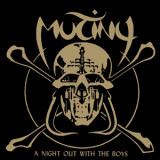
- Rare P-Funk album from 1983 - Funkadelic/Parliament All-Star Line-Up - First ever vinyl reissue - Comes with a repro of the original insert - 180g Black Vinyl Edition - Limited to 500 copies, comes with obi strip // Jerome "Bigfoot" Brailey is an American drummer who started performing in the early 1970s with several R&B groups from the likes of The Unifics, The Chambers Brothers and The Five Stairsteps where he developed his unique style and finesse on drums. Later in 1975 he joined George Clinton's P-Funk collective and has appeared on many of Parliament & Funkadelic's most popular recordings (some of which he also co-wrote). Brailey played on classic albums like `Mothership Connection' and `One Nation Under A Groove'. Samples from that body of work (and his drum arrangements) have since then appeared on hundreds of hip hop and contemporary R&B songs by renowned artists such as Kendrick Lamar and Childish Gambino. Jerome Brailey is a member of the Rock and Roll Hall of Fame (inducted in 1997) and part of their `50 greatest drummers in the Hall' list (stating that his drum style kept Parliament-Funkadelic rooted in the old-school `James Brown-style funk')_next to this achievement, he was proclaimed by Rolling Stone as one of the `100 Greatest Drummers of All Time' for his steady kick drum, shifty hi-hat action and intricately unpredictable snare patterns. Brailey earned numerous Gold and Platinum records with the P-Funk Organization and has worked as a session drummer for many talented artists such as Herbie Hancock, Buddy Miles, Snoop Dogg and Pharoah Sanders. George Clinton's funk empire was not without its disagreements and Jerome Brailey's `Mutiny' project was a direct result of just such a disagreement (as well as one of the more notable offshoots of the P-Funk axis). Mutiny performed in a style not far removed from the classic P-Funk style and with a lot of emphasis on the dual lead guitar work, but what makes them unique compared to their contemporaries is that at times their recordings also emit a darker, more sinister feeling. Besides Brailey on drums (and on most of the lead vocals) Mutiny featured a funk-alumni line-up and released three amazing and collectible albums: `Mutiny On The Mammaship' (CBS, 1979), `Funk Plus The One' (Columbia, 1980) and `A Night Out With the Boys' (J. Romeo, 1983)_these were followed by two comeback albums: `Aftershock' (Rykodisc 1995) and `Funk Road' (Catbone, 2013). The `Mutiny' album we are proudly presenting you today (A Night Out With The Boys) is an underrated gem made by musicians who defined the funk scene of the '70s and '80s! Featuring an all-star line-up that includes Rodney Curtis (Fred Wesley, Maceo Parker), Michael Hampton (Funkadelic-Parliament, Deee-Lite), Kenni Hairston (Cameo) and Maceo Bond of Osiris/Afrika Bambaataa fame! `A Night Out With The Boys' has it all: Jerome's trademark drumbeats, funky bass grooves, driving riffs accented by stinging synth parts, slow spacey (and prominently featured) guitars, top-notch lead vocals and chants that recall Sly Stone's "Loose Booty". The whole album is a hot dance jam with crisp percussion_an extremely infectious, locked-in-the-pocket bass-heavy monster-funk-bomb that any serious self-respecting funk fanatic must have in his/her collection!
• The Creation was formed in 1966 from beat combo The Mark Four, and was quickly signed to a production deal with Shel Talmy, The Who’s producer. The first release was the urgent “Making Time”, which featured guitarist Eddie Phillips playing his guitar with a violin bow, two years before Jimmy Page started doing so.
• Alongside the “We Are Paintermen” LP, “How Does It Feel To Feel” rounds up the remainder of the recordings they made with Shel Talmy. This LP features the 2016 stereo mixes of Creation classics “How Does It Feel To Feel” (both the UK and US versions), “Life Is Just Beginning” and “Sylvette”. The last 60s lineup of The Creation, which featured future Face and Rolling Stone Ron Wood, is represented by all four sides of their two single releases.
• Pressed on 140 gram clear vinyl, the inner sleeve features 60s photos of The Creation from the collection of designer Phil Smee.
• The Creation was formed in 1966 from beat combo The Mark Four, and was quickly signed to a production deal with Shel Talmy, The Who’s producer. The first release was the urgent “Making Time”, which featured guitarist Eddie Phillips playing his guitar with a violin bow, two years before Jimmy Page started doing so.
• In January 1985, The Mark Four reformed for a one-off show in Cheshunt, and subsequently Eddie Phillips and original lead vocalist Kenny Pickett reunited to make some new Creation recordings. At the time, only two tracks – “Spirit Called Love” and a new version of “Making Time” – were issued as a single in 1987, before the record label went out of business. These two tracks plus the remainder of the recordings were finally issued as the album “Psychedelic Rose” in 2004.
• The album is pressed on 140 gram clear vinyl.
“The earth shall rise again...”
AMOR/LEMUR finds the Glasgow quartet AMOR in partnership with Norwegian improvising ensemble LEMUR to hopeful and ecstatic effect. Conceived before the onset of Covid 19 but finished during spring lockdown, their eponymous EP is the most loose, alive and elevated recording in AMOR’s catalog. AMOR/LEMUR takes the template of throbbing avant disco expanded upon on previous recordings for Night School and lifts it into new
territories, with new tonalities and unexpected turns on the journey. More than anything, the expanded, near- cinematic expression of human connectivity feels like a lightning new energy to grasp in the dark.
Following a revelatory concert in Glasgow in January 2020 wherein the two sets of musicians met and performed together for the first time, a recording session was arranged the following day, resulting in the most elevated permutation of AMOR’s art to date. Each track was built upon a rhythmic bedrock of percussion and drums performed by Paul Thomson and samples/synthesizer by Luke Fowler. Thomson used bamboo Javanese gamelan (most notably on For You) and scrap metal, as well as traditional percussion and drums while Fowler incorporated processed ambient field recordings recorded in enclosed acoustic spaces around Glasgow. Singer/pianist Richard Youngs contributes some of the most bright and mindful work of his career. Acoustic bass player Michael Francis Duch, whose lush playing as ever provides the elastic spine to each song, scored the string parts for LEMUR on piano at home in Norway. The addition of swelling strings and drones fills out the AMOR sound significantly, lending a sonorous tone to 8 minute, epic closer For You or an ascending melodic introduction to Stars Burst that feels like a new morning dawning on a world saved from certain death. With the circumstances of lockdown forcing the musicians to work differently, a thread of optimism and utopia grounded in the moment weaves through these tracks. Unravel reveals a spine tingling vocal from Youngs. It’s a song about the simultaneously grounding and ecstatic effect of love, feeling connected to others. It’s a simple message, “I’m finding myself in your smile, always unravels me” speaks of ego death, the dissipation of the material into a nirvana of pure energy, the power of surrender. This isn’t a quasi-religious message, this is the power of each other, a love song to connection in a temporary age of isolation. Stars Burst is a play on the inner and outer cosmos, with narrator Youngs exploring wonder to a pounding galloping rhythm and snake-charming synth. It’s an open dance, with the group locked in together for the wild ride. Fear is the centerpiece of the record, starting with drones and scraped overtones before swirling synth notes filter upwards to meet reverberating minor chords. Over 8 minutes of tight but loose playing, Youngs is the shaman instructing us to use Fear as a celebration of the moment, embrace it and jump into the unknown. The only way to overcome your fear is to feel it, use it as an energy. The use of the studio as an instrument throughout side 2 is particularly important, with the dubbing and mixing prowess of engineer Paul Savage (who mixed unattended due to lockdown restrictions) and tape manipulations performed by Jason Lescallet coming into play. For You closes out with a largely instrumental, evolving composition that uses many of the abstract and novel aspects of this permutation to aid the trance. It’s massive, an unfurling creature with unexpected tonalities and serious heft.
Four albums in, the convenient and generalized catchphrase for Here Lies Man’s erudite sound — if Black Sabbath played Afrobeat — might seem a little played out. But Ritual Divination is perhaps the best rendering of the idea so far. Particularly on the Sabbath side of the equation: The guitars are heavier and more blues based than before, but the ancient rhythmic formula of the clave remains a constant.
“Musically it’s an opening up more to traditional rock elements,” says vocalist/guitarist/ cofounder Marcos Garcia, who also plays guitar in Antibalas. “It’s always been our intention to explore. And, as we travelled deeper into this musical landscape, new features revealed themselves.”
The L.A. based band comprised of Antibalas members have toured relentlessly following their breakout 2017 self-titled debut. Their second album, You Will Know Nothing and an EP, Animal Noises, both followed in 2018. Third album No Ground To Walk Upon emerged in August 2019. All of them were crafted by Garcia and cofounder/drummer Geoff Mann (former Antibalas drummer and son of jazz musician Herbie Mann) in their L.A. studio between tours. Ritual Divination is their first album recorded as the full 4-piece band, including bassist JP Maramba and keyboardist Doug Organ.
Ritual Divination continues with an ongoing concept of HLM playing the soundtrack to an imaginary movie, with each song being a scene. “It’s an inward psychedelic journey, the album is the trip,” Garcia says. “The intention and purpose of the music is to create a sonic ritual to lift the veil of inner space and divine the true nature of reality.”
Likewise, musically and sonically, the album is self-reflexive. “On this album the feel changes within a song,” Garcia says. “Whereas before each song was meant to induce a trancelike state, now more of the songs have their own arc built in.” Similarly, the guitar sounds themselves herein eschew the fuzz pedals of previous recordings, going for the directness of pure amp overdrive and distortion using an interconnected rig of 4 amplifiers. And, here, the well-versed live band is able to record as a unit, giving it much more of a live and dynamic feel.
Rough Trade named the band’s self-titled debut in their prestigious Top 10 Albums of 2017. BBC 6 & Classic Rock Magazine deemed it among the year’s best, as well as countless other press outlets singing its praises. Each subsequent album furthered the band’s reputation for genre-smashing rhythmic experimentation, topping many year-end lists as well as earning features from countless metal and indie rock outlets, plus cover stories in weekly papers.
“We’re very conscious of how the rhythms service the riffs,” Garcia explains. “Tony Iommi’s (Black Sabbath) innovation was to make the riff the organizing principle of a song. We are taking that same approach but employing a different organizing principle: For Iommi it was the blues, for us it comes directly from Africa.”
Ritual Divination will be available on LP, CD and download on January 22nd, 2021 via RidingEasy Records.
Four albums in, the convenient and generalized catchphrase for Here Lies Man’s erudite sound — if Black Sabbath played Afrobeat — might seem a little played out. But Ritual Divination is perhaps the best rendering of the idea so far. Particularly on the Sabbath side of the equation: The guitars are heavier and more blues based than before, but the ancient rhythmic formula of the clave remains a constant.
“Musically it’s an opening up more to traditional rock elements,” says vocalist/guitarist/ cofounder Marcos Garcia, who also plays guitar in Antibalas. “It’s always been our intention to explore. And, as we travelled deeper into this musical landscape, new features revealed themselves.”
The L.A. based band comprised of Antibalas members have toured relentlessly following their breakout 2017 self-titled debut. Their second album, You Will Know Nothing and an EP, Animal Noises, both followed in 2018. Third album No Ground To Walk Upon emerged in August 2019. All of them were crafted by Garcia and cofounder/drummer Geoff Mann (former Antibalas drummer and son of jazz musician Herbie Mann) in their L.A. studio between tours. Ritual Divination is their first album recorded as the full 4-piece band, including bassist JP Maramba and keyboardist Doug Organ.
Ritual Divination continues with an ongoing concept of HLM playing the soundtrack to an imaginary movie, with each song being a scene. “It’s an inward psychedelic journey, the album is the trip,” Garcia says. “The intention and purpose of the music is to create a sonic ritual to lift the veil of inner space and divine the true nature of reality.”
Likewise, musically and sonically, the album is self-reflexive. “On this album the feel changes within a song,” Garcia says. “Whereas before each song was meant to induce a trancelike state, now more of the songs have their own arc built in.” Similarly, the guitar sounds themselves herein eschew the fuzz pedals of previous recordings, going for the directness of pure amp overdrive and distortion using an interconnected rig of 4 amplifiers. And, here, the well-versed live band is able to record as a unit, giving it much more of a live and dynamic feel.
Rough Trade named the band’s self-titled debut in their prestigious Top 10 Albums of 2017. BBC 6 & Classic Rock Magazine deemed it among the year’s best, as well as countless other press outlets singing its praises. Each subsequent album furthered the band’s reputation for genre-smashing rhythmic experimentation, topping many year-end lists as well as earning features from countless metal and indie rock outlets, plus cover stories in weekly papers.
“We’re very conscious of how the rhythms service the riffs,” Garcia explains. “Tony Iommi’s (Black Sabbath) innovation was to make the riff the organizing principle of a song. We are taking that same approach but employing a different organizing principle: For Iommi it was the blues, for us it comes directly from Africa.”
Ritual Divination will be available on LP, CD and download on January 22nd, 2021 via RidingEasy Records.
Itzhak Perlman, the supreme violinist of his time, performs the supreme works for unaccompanied violin. In preparing the Bach Sonatas and Partitas, Perlman sought authenticity through the score itself, not through musicological research: “Music is a language, and, performed responsively, with musical logic as guide, it will make sense.”
Bach’s Sonatas and Partitas are a landmark not only of the solo violin repertoire but of all music history. No composer before or since has created a comparable architectural miracle, or made better use of the violin’s polyphonic capabilities, than did Bach in this set of six works. The improvements in instrument-making introduced by such experts in the field as Niccolò Amati and his pupil Antonio Stradivari meant that performers and composers could now push the tone and power of the violin to bold new limits. The Second Partita also includes a Chaconne which appears to stand outside space and time. Its complexity, power and splendor make it in a way the keystone of the entire musical edifice — a magnificent set of variations on a single theme which exploits the violin’s full harmonic and contrapuntal potential. While the great virtuosos of the nineteenth century, Paganini chief among them, expanded the instrument’s technical capabilities, Bach had already established its limits in terms of polyphony.
Perlman made several earlier attempts at recording the set, none of which was ever released, then performed it live on stage at venues around the world. In other words, he had the wisdom to wait until he had achieved a level of excellence in both performing and understanding this music before committing it to disc. The most practised of ears may detect a subtle difference in tone between the C major and A minor Sonatas, which he recorded on the “Soil” Stradivarius, and the other four works, recorded on the Guarneri del Gesù “ex-Sauret”.
A folk/bluegrass troubadour from Vermont who delves into shape-note traditions and Appalachian ballads and makes it all beguilingly his own. His guitar lines have the fancy fingerwork of a crack banjo player and his banjo lines have the tugging suspensions of a jazzer.’ – Guardian
‘Amidon is a rare Americana artist whose … signature banjo-strewn style … and disparate mix of influences play into a sound that is at once archaically rootsy and savvily refined.’ – Wall Street Journal
Sam Amidon considers his new self-titled album the fullest realization to date of his artistic vision. It comprises his radical reworkings of nine mostly traditional folk songs, performed with his band of longtime friends and collaborators. Amidon produced the record, applying the sonic universe of his 2017 The Following Mountain to these beloved tunes, many of which he first learned as a child. ‘Pretty Polly,’ for example, was one of the first traditional tunes he learned to play, and ‘Time Has Made A Change’ is a song that his parents – singers who were on the 1977 Nonesuch recording Rivers of Delight with the Word of Mouth Chorus – sang around the house when he was young. Amidon will perform two concerts at Kings Place in London on October 3. A limited number of tickets will be available in the venue, as well as tickets to stream the event from home. Further details are available here.
Amidon and his frequent band of multi-instrumentalist Shahzad Ismaily and drummer Chris Vatalaro were joined in the studio by Belgian guitarist Bert Cools (who played on his last EP), as well as Amidon’s wife, Beth Orton, who adds vocals on three songs. Acoustic bassist Ruth Goller and saxophonist and labelmate Sam Gendel also play on the album, which was mixed by Leo Abrahams. Sam Amidon was mostly recorded live in the studio. Amidon arranged the songs, which are traditional tunes, with the exception of Taj Mahal’s ‘Light Rain Blues’, Harkins Frye’s ‘Time Has Made A Change’, and ‘Hallelujah’, which is an 1835 William Walker shape-note tune using earlier words by Charles Wesley, found in the Sacred Harp collection of early American folk-hymns.
Sam Amidon is Amidon’s fifth recording on Nonesuch and follows the 2019 EP Fatal Flower Garden (A Tribute to Harry Smith). Additional recordings include his 2017 album The Following Mountain and Kronos Quartet’s Folk Songs the same year, on which he was a featured singer along with Rhiannon Giddens, Natalie Merchant, and Olivia Chaney; Lily-O in 2014; and his label debut, Bright Sunny South, in 2013.
THERION have always been a band that have challenged themselves to explore new paths, while remaining true to their musical core values. For their 17th studio album, mastermind Christofer Johnsson and his collaborator Thomas Vikström have created something that has been previously unthinkable to the guitarist and the singer. "We have done the only thing that was left of all the different angles to explore", explains Christofer. "We have decided to give the people what they kept asking for. 'Leviathan' is the first album that we have deliberately packed with THERION hit songs."
True to the Swede's words, the album opens with the catchy and swift tune 'The Leaf Of The Oak Of Far' featuring female and male antiphonal singing as well as a choir that seems to have evolved straight out of THERION's breakthrough full-length "Theli" (1996). This is immediately followed by the obvious highlight 'Tuonela', in which Christofer cleverly underscores this hit-track's Finnish vibe by employing NIGHTWISH’s "metal voice" Marko Hietala. Next up in this parade of future fan-favourites is the title track 'Leviathan' that offers classic THERION material with operatic female vocals and a massive choir.
Christofer Johnsson's passion for classic voices, choirs, and orchestral elements as well as his penchant for epic melodies in combination with rock and metal shines clearly through the following sing-along ballad 'Die Wellen Der Zeit', which indicates another nod to German romantic composer Richard Wagner. "Ever since 'Theli', Wagner has been and will always be at the core of THERION", emphasises Christofer. "When we started to combine metal and opera, it was something new and original. Today, symphonic metal has long been a firmly established genre."
When THERION came into being in 1988 by changing name from the already existing band BLITZKRIEG, which was founded a year earlier, Christofer had rather taken inspiration from SLAYER's "Reign In Blood" among other classic metal albums. At the beginning, the Swedes were firmly rooted in death metal, a genre which they helped to define, as witnessed by their debut album "Of Darkness...." (1991). Yet even back then, there were hints of "something else" lurking beneath the rough surface.
The use of female vocals is another core ingredient of THERION today, which developed gradually. CELTIC FROST had basically introduced the female element to extreme metal on "To Mega Therion" in 1985. THERION began with both a female and male vocalist emulating a church like choir already in their sophomore full-length 'Beyond Sanctorum' (1992). With Symphony "Masses: Ho Drakon Ho Megas" (1993) and "Lepaca Kliffoth" (1995), Christofer continued to developed his trademark sound by gradually drifting towards cleaner vocals and more keyboards. With "Theli", the Swedes had firmly established a reputation of pushing the boundaries of metal in the 90s – among such acts as their compatriots TIAMAT, THE GATHERING, and MOONSPELL that were often referred to as "gothic metal" at the time.
THERION continued to break new ground leaving inspiration for others to follow in their wake: On "A'arab Zaraq - Lucid Dreaming" (1997), Christofer further explored the use of Near Eastern music in metal which he had already begun in 1992, while "Secret Of The Runes" (2001) dared to have Swedish lyrics in some songs. While critics were left confused and fans challenged, THERION were often ahead of their times and vindicated in hindsight. Even the band's 25th anniversary excursion "Les Fleurs Du Mal" has by now overcome the initial shock the album caused and is only beaten in terms of streaming by the classic "Vovin" (1998).
When Christofer faced the question of where to go next after the dramatic "Beloved Antichrist" (2018) had finally fulfilled his musical mission, his answer is "Leviathan" named after a giant sea monster from Judeo-Christian myth that has roots in Babylonic lore: THERION have created a giant hit album – and for the first time in the history of the Swedes, their fans are not asked to explore something new, but simply to lean back and enjoy the best from their band!
Terry Gross is an engrossing trio composed of guitarist Phil Manley (Trans Am), bassist Donny Newenhouse, and drummer Phil Becker. The trio are also connected as owners and engineers at Bay Area recording spot El Studio, where they began improvising together as a way to test the boundaries and gear of the studio. Their loose, organic chemistry burgeoned into a deep camaraderie and a sound both expansive and exacting. The three experienced musicians crafted their first fulllength album through the pure joy of playing together with no expectations. With the tapes rolling on their rehearsals, the band captures the exuberance of live performance and elevates those recordings through a deft use of the studio as their collective instrument. On their debut LP Soft Opening, Terry Gross channels their cosmic powers and considerable chops into a gleefully mesmerizing odyssey fit for an arena. Soft Opening took shape over the course of 2016-2019, with Terry Gross writing and refining their songs. "Space Voyage Mission" and "Worm Gear" parallel one another as sinuous jams that pulse with adamantine fervor. Each mountainous epic churns spellbinding repetition and simplicity into dizzying gallops that take hairpin turns into sinewy riffing and elysian vocal melodies. Phil Manley's guitar takes on a constellation of tones across "Space Voyage Mission" with drifting delays soaring over the Newenhouse and Becker's driving rhythm section which all succumb to frothing overdrives that spin the song into entirely new pastures. The hypnotic throb of "Worm Gear" grows all the more enchanting as Newenhouse and Becker add subtle shifts to the single-chord barrage. "Specificity (Or What Have You)" contrasts these two in its more traditionally pop-oriented structure while retaining its predecessors wide-eyed energy and delves further into the album's lightheartedyet-earnest take on sci-fi tropes from space and time travel to the singularity. As Terry Gross, Phil Manley, Donny Newenhouse, and Phil Becker are sonic scientists traversing the borderlands of rock. Soft Opening captures the simple joy of a no-holds-barred trio in stunning detail, transporting the listener into the splendor and freedom of rock.
This limited edition vinyl release is a double disc pressing on 180g
heavyweight, translucent ORANGE vinyl. The beautiful record sleeve is a gatefold design to fit both LPs.
This vinyl is a limited release to 1000 pressings; each vinyl is hand numbered.
Kate Rusby’s album, Hand Me Down, started life a few years ago whilst she was rehearsing for the Jo Whiley Show on BBC Radio 2. Jo asks her live music guests to perform songs of their own plus any cover version of their choice, Kate’s choice at that time was Oasis’ “Don’t Go Away”; on her second visit to the show she chose by ‘Friday I’m in Love’ by The Cure.
“As a folk singer, it’s what I do, re-interpret existing songs, but usually the songs are much, much older. After playing a version of Oasis’ ‘Don’t Go Away’ on the BBC Radio 2 Jo Whiley show, about 5 years ago, it dawned on me that not just the very old songs are handed down through the generations, but also favourite songs of any age, of any generation.
Songs are precious for many different reasons. With ‘Don’t Go Away’ proving so popular on the last album and hearing the reaction when we performed it on tour, I decided, “Right, that’s it! I am doing a whole album of covers.”
It was always the plan to make this album this year, lock-down just made it more intimate. We have laughed and we have cried, we have danced and we have sung. All of that is here, engrained in every track.”
For years Supercrush confined themselves to the limitations of the
two-song 7’ single format, demonstrating a mastery of hyper efficient
song-craft, while leaving their audience wondering if a more expansive work would ever emerge.
SODO Pop answers that question, delivering on the promise of those 7’ singles and then some with 36 minutes of guitar pop alchemy. With a full-length album, the band is for the first time afforded the space to stretch out, allowing for explorations into more ambitious song structures, varied compositions, and additional instrumentation.
But those who enjoyed the of the brevity of the band’s early material needn’t worry, there are still plenty of compact two and a half to three minute gems here in the tradition of the group’s tried and true superpop formula.
This reissue of Billie Holiday’s ‘Lady In Satin’ recorded in 1958 with Ray Ellis and His Orchestra also includes eleven bonus tracks recorded a year later with the same personnel.
The 20-page booklet contains complete information with specially prepared liner notes by Penguin Guide to Jazz’s writer Brian Morton and by France’s prestigious Jazz Magazine. “Every track is performed in an inimitable and extraordinary way, and the tragic mood never falls into the pathetic. Even today Billie continues to influence the style of innumerable singers and instrumentalists, both male and female. What’s the secret?
Just the fact that Billie Holiday simply invented a way of singing.” Penguin Guide to Jazz
Switch is the tenth studio album by Dutch rock band Golden Earring, released in 1975 as the follow-up of the band’s international breakthrough album Moontan. Switch actually marked a switch for Golden Earring, as it was more influenced by funk and prog than any of the band’s previous or subsequent releases. Lead single “Kill Me (Ce Soir)” perfectly demonstrates how Golden Earring experimented with a new sound. This reissue comes with a 4 page insert. Switch is available as a limited edition of 1500 individually numbered copies on transparent blue vinyl.
Danish indie rock duo The Raveonettes first met in Copenhagen in
2001, after which they quickly began recording their first EP Whip It On. Their first full album Chain Gang of Love followed in 2003, and it quickly gained recognition as lead single “That Great Love Sound” was featured on the soundtrack of FIFA 2004. Upon release, Pitchfork complimented the album for its high-quality production, tightly controlled melodies and called the album a glorious buzz. Mixing raw garage rock with catchy, sweet lyrics, Chain Gang of Love demonstrates The Raveonettes’ knack for crafting compelling songs.
Chain Gang of Love is available as a limited edition of 1500 individually numbered copies on translucent red vinyl.
Houston’s reputation for developing first-class jazz acts is well-established, as a stream of young players have been distinguishing themselves for decades…among those musicians and mentors who stood tallest, Bubbha Thomas was no exception (and a major key-player) in this long tradition of talent.
Before becoming an artist and educator, Bubbha Thomas (born 1937) was a Fourth Ward kid who grew up in a music-filled household. In High School he divided his time between music & basketball (he excelled at both) and studied with jazz legend Conrad “Prof” Johnson. “Prof” would later bring jazz glory to Texas with the Kashmere Stage Band, the group of teenagers who would win the “Best High School Stage Band In The Nation” prize in Mobile, Alabama in 1972 and who were anthologized in 2006 on Now-Again’s ‘Thunder Soul’ (which led to the 2010 Jamie Foxx documentary of the same name).
After finishing college, Bubbha got drafted in the service (he was a Korean War veteran) and would return to Houston in the early 1960s where he found work as a session drummer for the Duke and Peacock labels. Thomas drummed on recordings by O.V. Wright, Buddy Ace and the Mighty Clouds of Joy. He was playing his own stuff and backing luminaries such as R&B singer Chuck Jackson and homegrown legends like Lightnin’ Hopkins. Bubbha Thomas also teamed up with some of his equally legendary peers (like guitarist Melvin Sparks & organist Leon Spencer) and eventually established his own group, the Jazz Merchants.
Bubbha learned every style that was thrown at him and he played straight-ahead jazz with renowned artists before the political and social upheaval of the late 1960s led him to a path first charted by Coltrane and Sun Ra…the result of these new found influences was the incredible spiritual jazz ensemble ‘The Lightmen’, who released four incredible recordings in the 1970s. Their first album ‘Free As You wanna be’ predates the deep-set, maverick jazz issued by the likes of Tribe and Strata East and is a harbinger of some of the best in the 1970s jazz underground. The Lightmen albums eventually fell out of print until 2017 when the Now-Again record label brought them back into circulation and generated new interest in Bubbha Thomas’ work.
Thomas had a storied career as a drummer and bandleader, but perhaps his most enduring work is that as founder of Houston’s Summer Jazz Workshop, a remarkable program that nurtured upcoming talent for generations...we can’t begin to count the number of young people who benefitted from the exposure to music-arts because of Bubbha Thomas and what he meant to the Houston music community. In his career he earned five Grammy nominations and authored a pair of books. Next to this he was also a writer/editor for several local newspapers, ran one of the first Houston African American Television shows and he hosted a radio program on KYOK. Impressive to say the least!
Bubbha Thomas passed away in March 2020 at the age of 82. It was obvious he was a principled, fiery & wise person…and any anger he felt at America’s (and the world’s) injustices he met with music, intellect, activism and unity!
Next to his work with ‘’The Lightmen’’, Bubbha also released the fantastic (solo) album ‘Life & Times’ in 1985. ‘Life & Times’ (which we are proudly presenting you today) is particularly interesting to boogie-enthusiasts because of its high doses of funky twerks, solid grooves, crazy synth work, soulful vocals and excellent drum-beats courtesy of Mr. Thomas himself. You’ll quickly find yourself shaking hips the moment the needle hits the first track! The whole album is backed by a fantastic cast of all-star players and includes Howard Harris (Ruth Copeland), Dwight Sills (Bobby Lyle - TLC), Jerry McPherson (Donna Summer), Leo Polk (Kashmere Stage Band), John Gordon (Strata East) and Jackie Simley (Queen Latifah - Lionel Richie). All of the above makes this LP an essential purchase for any self-respecting fan and collector.
Tidal Waves Music now proudly presents the FIRST ever vinyl reissue of this fantastic album (originally released in 1985 on Lightin’ Records). This rare record (original copies tend to go for large amounts on the secondary market) is now finally back available as a limited 180g vinyl edition (500 copies) complete with the original artwork.
Music For Nations release - the Norwegian music constellation Wardruna are renowned for their innovative and genrecreating renditions of older Nordic traditions. Composer Einar Selvik initiated the group in the early 2000s. Since the debut album in 2009, Wardruna have had vast worldwide success, transcending music genres, cultures and languages. The group has previously charted in both Germany and the UK and topped the North American Billboard World music chart for several consecutive weeks. The group's massive musical contributions to History Channel's TV series 'Vikings' has exposed their music to a broad audience worldwide.
Netflix's acclaimed series Suburra: Blood on Rome (available in over 190 countries) focuses on the deep connections between politics and organised crime in the Italian capital. The soundtrack to the third and final season was written, produced and performed by Roman rapper and songwriter PIOTTA, whose "7 Vizi Capitale" was already the theme song for seasons 1 and 2. His music beautifully complements the gripping plot and the characters' journey, capturing the atmosphere of a side of Rome unknown to many. The vinyl LP contains 10 previously unreleased tracks, including 2 instrumentals and a remix; the CD features 3 bonus tracks.
With 9 albums under his belt, Tommaso Zanello, also known as PIOTTA, is one of the pioneers of Italian hip hop. Active on the Roman rap scene since the mid-90s, he earned national fame with his award-winning single "Supercafone" (1998), which was later used by Sky Japan as a theme song for the Italian football championship. He can boast collaborations with hip hop legend Afrika Bambaataa and English musician Captain Sensible and has toured the United States with the Vans Warped Tour.
Abbey Lincoln, often remembered for her seminal work with Max Roach, was a powerful performer and indeed one of the greatest Jazz voices of all time. "Straight Ahead" stands as one her best albums. Lincoln is matched here by a ultra-stellar line up including Jazz masters such as Booker Little — trumpet, Julian Priester — trombone Eric Dolphy — alto saxophone, bass clarinet, flute, Walter Benton and Coleman Hawkins — tenor saxophone, Mal Waldron — piano, Art Davis — bass, Max Roach — drums, Roger Sanders and Robert Whitley — congas. "Straight Ahead" is the perfect combination between Lincoln 's strong "Afro-Blue" tone singing, conscious lyrics and angular modern Jazz arrangements. Recorded in New York in a one-off studio session held on February 22, 1961 and released by Candid Records in the same year, the album includes highlights such as Oscar Brown jr's "When Malindy Sings", Thelonious Monk's "Blue Monk", Billie Holiday and Mal Waldron's "Left Alone" and "African Lady" a Randy Weston composition based on lyrics by the great writer Langston Hughes.
Pressed here onto 180g black vinyl, this is the first Buffalo Springfield compilation released in 1969 after the band’s break-up in mid-1968. The collection features “For What It’s Worth” and other singles from the band’s three albums.
The music of CARM features horns in roles typically reserved for drums, guitars, and voices, while also escaping the genre categorizations reserved for music featuring an instrumentalist as bandleader. It is not jazz or classical music, nor is it a soundtrack. This is contemporary popular music that features a sound normally used as a background color and texture as the unabashed lead voice. According to CARM, aka CJ Camerieri, "It started with the question: `What kind of record would my trumpet-playing heroes from the past make today?' I believe they would want to work with the best producers, beat makers, song-writers, and singers to create new, truly culturally relevant music, and that's what I sought to do with this project." Produced in Minneapolis by Ryan Olson ( Polica , Lizzo ) and featuring collaborations with Sufjan Stevens , Justin Vernon ( Bon Iver ), Yo La Tengo , Shara Nova , Mouse on Mars , Francis and the Lights and many others. It is a completely unique sound that additionally serves as a survey of the collaborations that have come to define the artist's career thus far. Says Vernon, "I truly believe there isn't a more accomplished brass player in the entire world of music. And this is way more than a 'horn' record. It's a discovery of new heights with what is possible in creating music." The album begins with an orchestral brass choir of french horns, which quickly gives way to a piano sample from Francis, as Stevens and Lupin combine voices over a lush bed of horns to sing "Song of Trouble." The album bookends with the same piano sample used as a springboard to an iconic lyric by Vernon in the album closer "Land." Between these two generation-defining artists we have upward sweeping melodies and fanfares reminiscent of Ennio Morricone . The acutely original sound of Georgia Hubley and Ira Kaplan of Yo La Tengo in "Already Gone" give way to the virtuoso sound of Nova's voice. A more experimental path emerges before the strings from yMusic bring us back to the piano sample that started the record. Instead of recycling well-trodden sounds, CARM offers a respite for those seeking an original voice.
out of Stock
Last delivered 5 years ago available to reorder, subject to availability
Growing up in deindustrialized Providence, Rhode Island of the 1970s and 1980s provided NYC-based composer and interdisciplinary artist Gavilán Rayna Russom access to derelict subterranean spaces including the mile-long East Side Rail Tunnel. The tunnel's reverberant darkness would produce distinctive sensory effects and host Russom's formative experiences of interpersonal connectedness, liminality, transgender identity, anti-capitalist desire and state repression.
Secret Passage – an absorbing, memoiristic work by Russom, whose synthesis-based practice fuses information and expression into organic wholes – draws on memories of "unsupervised autonomous zones where I tasted the possibilities of a world without surveillance," as she writes in the liner notes. Inspired by "this beautifully neglected place," the music resounds with ghostlike echoes and raw pulsations.
Russom utilizes synthesizers, field recordings and voice to illustrate hallucinatory revelations of the city's lightless undercarriage. Each track of Secret Passage, originally released as a limited cassette on Voluminous Arts, is dedicated to a friend – entwining personal liberation with collective discovery. The East Side Rail Tunnel has been inaccessible since the 1990s, the result of urban development and gentrification.
out of Stock
Last delivered 5 years ago available to reorder, subject to availability
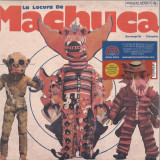
La Locura de Machuca is the story of one man’s bizarre odyssey into Colombia’s coastal music underground, and the wild, hypnotic sounds he helped bring up to the surface.
One night in 1975, a successful tax lawyer named Rafael Machuca had his mind blown in Barranquilla’s ‘Plaza de los Musicos’. Overnight he went from a high ranking position in the Columbian revenue authority to visionary production guru of the newly formed record label that bore his name, Discos Machuca, and for the next six years he devoted his life to releasing some of the strangest, most experimental Afro Psychedelia Cumbias ever produced. La Locura de Machuca is the story of one man’s bizarre odyssey into Colombia’s coastal music underground, and the wild, hypnotic sounds he helped bring up to the surface.
The Colombian music industry was thriving in the mid-seventies, but while homegrown bolero and vallenato tunes were doing well on the charts, it was imported African records that were setting crowds on fire at the picos – the sound-systems that fuelled neighbourhood parties – and wherever those records were played there were always a handful of groups who were inspired to plug traditional Cumbia directly into the electric currents coming from across the Atlantic.
It was these obscure bands, who fused Colombian and African rhythms with the swirling organs and psychedelic guitars of underground rock, that fired Machuca’s imagination. While the label made its money releasing popular hits by legends such as Alejandro Durán and Aníbal Velásquez, that money was poured back into a unique run of experimental releases by fringe artists such as La Banda Africana, King Somalie, Conjunto Barbacoa, and Abelardo Carbono, one of the godfathers of Champeta Criolla.
When Machuca couldn’t find groups to realise his particular vision, he simply created them himself. Drawing on a fearsome roster of musicians associated with the label, he assembled bands that lasted only as long as it took to record an album ,and unleashed the results – complete with arrestingly unusual album covers – under a series of different names such as Samba Negra or El Grupo Folclórico. This unorthodox approach led his longtime recording engineer, Eduardo Dávila, to describes Machuca’s productions as the “B-Movies of Colombian music.”
The story of Doctor Machuca and his eccentric exploits tells of one of Colombia’s most atypical and peculiar record companies; a defining pillar of Afro-Caribbean psychedelia. His productions have come to represent the roots of Champeta and set the pedigree standards for Afro and Costeño avant-garde. The seventeen tracks on La Locura de Machuca, harvested from the darkest, strangest corners of the Discos Machuca catalogue, sound like little else recorded before or since.
out of Stock
Last delivered 5 years ago available to reorder, subject to availability
Legendary Turkish psych innovators Moğollar grace the Artone Studios in Haarlem for a masterclass in the original Anadolu psych roots, cutting a compendium of their rawest hits and most-wanted psychedelic rock classics – including the J.Dilla-sampled ‘Haliç’te Güneşin Batışı’ – for the latest edition of Night Dreamer’s essential Direct-to-Disc series.
In the beginning, there was Moğollar.
Formed at the end of 1967 with five young musicians, Moğollar were the original Anadolu psych originators. They were the first Turkish pop band who tried to blend the microtonal folklore and traditional instruments of rural Anatolia with Western pop and rock; they were the first Turkish psychedelic band to achieve overseas recognition, winning the prestigious French Grand Prix Du Disque in 1971 after a period in Paris; and they coined the very phrase ‘Anadolu Pop’ with their first album release. They were radical, innovative, and hugely popular, and when the great artists of the Turkish rock revolution appeared on the scene, Moğollar were already there – stars including Barış Manço, Selda, Cem Karaca and Ersen all recorded with them or briefly joined the line-up. Moğollar were and are the undisputed pioneers of the style.
More than fifty years after first forming, Moğollar materialised in the Artone Studios to give a masterclass in fuzzed-out folklore and Turkish psychedelic roots for Night Dreamer’s Direct-to-Disc series – a fitting follow-up to Night Dreamer’s BaBa ZuLa set, coming straight from the group who laid the foundations of the genre.
In 1971, having already released numerous singles, they secured an album deal with French label Guild International du Disques. Travelling to Paris that year, they recorded their first major statement, Danses Et Rythmes de la Turquie d’Hier à Aujourd’hui, a set later released in Turkey as Anadolu Pop. The album won a prestigious French award – the Grand Prix du Disque from the L’Académie Charles Cros, an honour that had been won in the past by Jimi Hendrix, Pink Floyd and Soft Machine. Moğollar, and Anadolu psychedelic pop, had arrived on the international scene.
In 1976, after many more releases and line-up changes, and pressured by an increasingly difficult political situation in Turkey, the group dissolved for seventeen years, and various members dispersing to exile in Paris and Berlin. However, after a petition from their fanbase asked them to reform, they agreed to play a comeback concert in 1993. It was a huge success, and reunited, they went on to record some of their greatest work. Led today by original member Cahit Berkay alongside original bass player Taner Öngür, and joined by Cem Karaca’s son Emrah, Moğollar continue to push their uniquely original brand of fuzz-scorched folk-rock and crackling Anadolu psychedelia forward into a new millennium.
For this Night Dreamer session, Moğollar spent two days in the Artone studios, recording sides A and B on the first day, and C and D on day two. With BaBa ZuLa’s Murat Ertel adding contemporary sonic punch behind the boards, the band revisited their most renowned hits to lay down energised new versions, and dusted off some of the most sought-after cuts from their enormous catalogue. The result is a showcase set by a band that are one of true pioneers in global psychedelic rock, and a masterclass in the true roots of the Anadolu psych sound: fuzzed-out, committed, and straight from the source.
Highlights of the set include:
-‘Haliç’te Güneşin Batışı’, an Anadolu psych classic which was first issued as the b-side to the ‘Ternek’ single in 1970, before being recorded again for the Danses Et Rythmes de la Turquie d’Hier à Aujourd’hui LP in 1971. A tense slab of roughneck psychedelia, the final breakdown of the original recording was sampled by none other than J. Dilla for the ‘Intro’ cut on Welcome To Detroit.
-‘Gel Gel’, a 1974 song with head-nodding tempo change, originally featuring Cem Karaca. It is here voiced by his son Emrah Karaca, now a permanent member of Moğollar.
-‘Çığrık’, a 1972 cut which originally appeared on one of Moğollar’s most coveted singles, is a funky psych-rock workout with an unforgettably riff, a ringing guitar motif, and twist of Led Zeppelin.
-‘Düm Tek’, the title track of the bands second full LP (Düm Tek, 1975), a raw psych screamer, laced with hardcore davul drum patterns.
-‘Bi’Sey Yapmali’, first recorded for the 1996 Dört Renk album, became the anthem of huge street protests that took place in Turkey that year after an investigation uncovered a huge network of state, police and mafia corruption.
-‘Dinleyiverin Gari’, a hit from the 1994 come-back album Moğollar 94, addresses a notorious corruption scandal of the era.
out of Stock
Last delivered 5 years ago available to reorder, subject to availability
Jeremy Gara, drummer of Arcade Fire, releases his second solo album ‘Passerine Finale’ on Invada Records.
The album was mastered by Helge Sten (Deathprod, Supersilent) and composed, produced and recorded by Jeremy over the last three years. ‘Passerine Finale’ is a varied collection of songs and disparate sounds, from arranged static noise to extended melodic drones, improvised and chiselled at, ignoring form or structure, and completed the moment things ‘felt’ something.
The album comes pressed on silver vinyl and is housed in a heavyweight sleeve with digital download card included, with artwork throughout by Jeremy himself.
Jeremy explains: “‘L_06’ - the visual thing, like the song it accompanies, comes from trying to push really simple objects and figures to a place where they hopefully, somehow, become imprinted with a kind of emotional energy - attempting to entwine single note drones and simple straight lines together tightly enough that they dance a little.”
Originally from Ottawa, Canada, Jeremy has been a member of Arcade Fire since 2004. Outside of the band, he has recently collaborated with bandmate Sarah Neufeld and world-renowned dancer and choreographer Peggy Baker on composing music for a large-scale dance production called Who We Are In The Dark and performed it live at various dance festivals. He’s also been touring and performing his solo material across the world since his first album, ‘Limn’, was released in March of 2016.
In 1990 Neil Hannon started recording and releasing under the name The Divine Comedy. Thirty years and twelve great albums later, Hannon is rightly adjudged one of the finest singer songwriters of his generation. To celebrate, Divine Comedy Records are updating and reissuing the band’s catalogue.
‘Foreverland’ - a record about “meeting your soulmate and living happily ever after... and then what comes after happily ever after” - was first released in 2016. Mojo described it as “Funny, learned and
poignant by turns,” while Uncut said it was “sumptuous, orchestral pop laced with lyrical absurdity.”
The album includes singles ‘Catherine The Great’ ‘How Can You Leave Me On My Own’ and ‘To The Rescue’.
The updated LP edition consists of the original album, packaged with a digital download code for the album plus bonus tracks of demos and alternate versions lovingly curated by Neil Hannon, much of which have never been heard before.
The LP is pressed on heavyweight black vinyl in a gatefold sleeve accompanied with photos, credits and extensive liner notes written by Neil, covering the context and inspiration behind the album and
its songs.
"When Candy Opera first appeared on the kaleidoscopic early 1980s Liverpool music scene, by rights they should have changed the world" ~ Louder Than War
"Very welcome news as a highly underrated band who is now back with a force. While their previous output is stellar, this new single is even more commanding of attention. This is absolutely stunning, the band reaching higher than ever before" ~ Big Takeover Magazine
Sometimes it takes a while to realise what you’ve got. So it goes with pop craftsmen Candy Opera, who emerged during Liverpool’s 1980s golden age and whose new LP 'The Patron Saint of Heartache' is their first collection of new material in nearly three decades.
Ahead of that, they present 'These Days Are Ours', a rally cry of hope for the current times and the first single from this long-play, which is due for release in mid-November via European / UK label A Turntable Friend Records. The video was created / produced by James Davies and Paul Malone.
Mixed by Grammy award-winning producer Guy Massey and featuring back vocals by Paul Simpson of The Wild Swans, the track was recorded at Elevator Studios in Liverpool.
With all the hallmarks of an enduring pop anthem, this impeccably produced, adrenalin-fuelled song captures the essence of Candy Opera’s infectious energy and celebrates life with a genuine wonder-lust, whilst delivering the excitement of their live performances.
Following the overdue release of two archival sets - '45 Revolutions Per Minute' and 'Rarities' (released in 2018 by Firestation Records., quickly selling out of their first runs) - their new album 'The Patron Saint of Heartache' picks up where the band left off, with 14 fresh songs ready for discovery of a sound as timeless as any Candy Opera output.
Candy Opera were formed in Liverpool in 1982 and went through various incarnations before calling it a day in 1992. By 1985, the band had played alongside the likes of The Pogues, The Go-Betweens and The Redskins, as well as appearing on Granada TV.
The band's current line-up is drawn from all eras of the band’s existence and features Brian Chin Smithers (guitar, vocals), Alan Currie (drums), Frank Mahon (bass), Paul Malone (vocals, guitar), Ken Moss (guitar) and Gary O'Donnell (keyboards, vocals, percussion).
This new LP also features a swathe of friends and contemporaries, including Paul Simpson (The Wild Swans) and Phil Jones (Afraid of Mice). The result is an exquisite piece of pop craftsmanship that brings their songs into the light. This is a labour of love born of experience, but retaining the sense of wonder that brought the band together in the first place.
"When Candy Opera first appeared on the kaleidoscopic early 1980s Liverpool music scene, by rights they should have changed the world" ~ Louder Than War
"Very welcome news as a highly underrated band who is now back with a force. While their previous output is stellar, this new single is even more commanding of attention. This is absolutely stunning, the band reaching higher than ever before" ~ Big Takeover Magazine
Sometimes it takes a while to realise what you’ve got. So it goes with pop craftsmen Candy Opera, who emerged during Liverpool’s 1980s golden age and whose new LP 'The Patron Saint of Heartache' is their first collection of new material in nearly three decades.
Ahead of that, they present 'These Days Are Ours', a rally cry of hope for the current times and the first single from this long-play, which is due for release in mid-November via European / UK label A Turntable Friend Records. The video was created / produced by James Davies and Paul Malone.
Mixed by Grammy award-winning producer Guy Massey and featuring back vocals by Paul Simpson of The Wild Swans, the track was recorded at Elevator Studios in Liverpool.
With all the hallmarks of an enduring pop anthem, this impeccably produced, adrenalin-fuelled song captures the essence of Candy Opera’s infectious energy and celebrates life with a genuine wonder-lust, whilst delivering the excitement of their live performances.
Following the overdue release of two archival sets - '45 Revolutions Per Minute' and 'Rarities' (released in 2018 by Firestation Records., quickly selling out of their first runs) - their new album 'The Patron Saint of Heartache' picks up where the band left off, with 14 fresh songs ready for discovery of a sound as timeless as any Candy Opera output.
Candy Opera were formed in Liverpool in 1982 and went through various incarnations before calling it a day in 1992. By 1985, the band had played alongside the likes of The Pogues, The Go-Betweens and The Redskins, as well as appearing on Granada TV.
The band's current line-up is drawn from all eras of the band’s existence and features Brian Chin Smithers (guitar, vocals), Alan Currie (drums), Frank Mahon (bass), Paul Malone (vocals, guitar), Ken Moss (guitar) and Gary O'Donnell (keyboards, vocals, percussion).
This new LP also features a swathe of friends and contemporaries, including Paul Simpson (The Wild Swans) and Phil Jones (Afraid of Mice). The result is an exquisite piece of pop craftsmanship that brings their songs into the light. This is a labour of love born of experience, but retaining the sense of wonder that brought the band together in the first place.
ACCEPT ARE BACK! The German kingpins of heavy metal will release their new, eagerly-awaited studio album via Nu- clear Blast on January 15th 2021. The ingenious title of the masterpiece is “Too Mean To Die”.
Speaking of heavy metal kingpins, when ACCEPT first launched at the end of the 70s, the metal genre didn’t even exist - at first the band could only be labelled with the (quality) seal “crazy loud and crazy wild”. Today we know that this was (and is) metal par excellence. And we also know that ACCEPT opened the door to thrash metal, inspiring giants such as Metallica. Guitarist Kirk Hammett recently stated in the German magazine “Gitarre & Bass”: “Wolf Hoffmann has a huge influence on me.“
ACCEPT, who once had their origins in the city of Solingen, a city of sound, have been a worldwide music phenomenon for more than 40 years. They still impress with razor-sharp guitar licks and a steel-hard sound. The band created all-time metal classics like “Balls To The Wall”, “Metal Heart” and many more.
Countless world tours and headline slots at the biggest, cutting-edge festivals cemented the band’s reputation as one of the best, hottest and loudest live acts ever. In addition, the band has sold millions of records, has achieved gold status in the USA, top 10 chart positions worldwide and a number 1 album (Germany, Finland) for “Blind Rage” (2014).
Now with “Too Mean To Die” their 16th studio album is in the starting blocks - it is the fifth album that US vocalist and front man Mark Tornillo has put his incomparable vocal stamp on.Recorded in the world music capital of Nashville (USA), ACCEPT’s music was once again produced by British master producer Andy Sneap, who is responsible for the mix. Sneap, who works for Judas Priest and Megadeth among others, has also been responsible for all ACCEPT productions since 2010.
Special circumstances often lead to very special albums. This is certainly true for “Too Mean To Die”, which of course alludes to the Corona period, although in a different way than one might assume. Hoffmann says: “Its to be expected that many musicians will address the Corona situation in their songs. There will certainly be slogans for cohesion, through which positive vibes should be spread, which is also good. But we have decided to not let ourselves be influenced by it. The fans will get a hard, direct and uncompromising metal album, but of course accompanied with a wink: We are too mean to die! Weeds do not go away! ACCEPT do not let themselves get down!”
Wolf isn’t wrong - the title track is a classic Accept cracker: dynamic and unwavering, turned up to eleven!
Zombie Apocalypse’, also relentless and hard, strikes the same note in the band’s signature style.
The first single - which will be released on October 2nd 2020 together with a remarkable video - is different. Titled ‘The Undertaker’, its a terrific midtempo number with great vocals and a built-in character that chugs along – certain to deliver some mermorable live moments! According to Wolf Hoffmann its one of the most catchy, pleasing pieces of the album.
New to the band, and thus to be heard for the first time on an ACCEPT album, is Philip Shouse (Gene Simmons Band, among others). The US guitarist fights hot duels with Hoffmann, while Uwe Lulis makes the guitar trio perfect and pro- vides the right rhythm. “Phil was part of our orchestra project and was also completely convincing live. We recognised his great talent immediately and simply didn’t let him go,” explains Hoffmann.
Just how varied the ACCEPT guitar trio performs on the new album is proven by one of the secret highlights: ‘The Best Is Yet To Come’ – a beguiling ballad in which Mark Tornillo is at his best. The metal world knows that Mark can scream like no other, but here it shows once again that the frontman can also sing magnificently. “Mark sang this, for us rather unusual song stunningly well. The fantastic thing about Mark is that he not only masters the typical metal screams, but can also sing melodically and beautifully. He proves this impressively in this song”, chief guitarist Hoffmann raves.
In addition, ACCEPT have strengthened their team even further with newcomers Martin Motnik (bass) and Philip Shouse (guitar), thus forming an unbeatable team together with “Drum God” Christopher Williams and “Rhythm Mas- ter” Uwe Lulis.
There’s no doubt that with “Too Mean To Die” Accept are once again playing at the top of the Champions League of the genre. Wolf Hoffmann & Co. present the (music) world eleven masterpieces at the beginning of 2021 - eleven songs for eternity!
Blue vinyl includes mp3 download, 12 x 24 inch poster: Some say life only makes sense in reverse, from the vantage point of your rear view - Magic Mirror is a looking glass of sorts. Like a modern day Alice in Wonderland, Pearl Charles beckons you to slip and fall into her world. You'll find yourself drifting with the tide - the ups, downs, and all-arounds of a life well-lived and well- loved. From start to finish you float along a reflective river, dancing in your own/the personal/private Studio 54 of your living room, decked out in sequins or nothing at all. It's a feel good album that asks us to actually take the time to feel good. Magic Mirror follows the cartography of a girl, growing into a woman, as she moves through life from singledom, to the expansive space of self-reflection, and the newly appreciated perspective of coming back together again and finding yourself, this time with someone new. A love letter to the self, a dance party for life, and at times as introspective as your best trip, Pearl takes us on a journey that, like life & love, has the tendency to surprise, delight, and leave you breathless. All you have to do is let yourself enjoy it.
As Midnight Sister, multi-disciplinary LA artists Juliana Giraffe and Ari Balouzian make motion pictures. Yes, sometimes with moving images _ but most often only with the music they create together. Balouzian's serpentine, string compositions are movie scenes that allow Giraffe, a brilliant character actor, to cloak herself in a new roles and voices. A bit of Jon Brion's score work; some old Hollywood strings; a solid dose of glam and outsider disco from 70s independent cinema. Any perceived artifice is always matched by an indelible human fingerprint, something perfectly off. Giraffe and Balouzian's respective work in fashion, visual art, video and film scoring _ along with the gang of virtuosos with which they surround themselves _ all wonderfully coalesce as Midnight Sister. And if 2017's `Saturn Over Sunset' was their collection of short films about outcast life in The San Fernando Valley, then their new album `Paining the Roses' is the inventive, meta motion picture that cements them as auteurs. `Painting the Roses' is in many ways a fairy tale -- not so much the sweet-and-happyending kind as something richer, packed with imagination and rooted in the complex human messiness beneath a story's artifice. Frontwoman Giraffe describes it as "this tightrope of being real yet synthetic, organic yet staged, light yet dark, logical yet irrational, beautiful yet dilapidated. Joyful nonsense." Here, disguises like masks and paint are not meant to hide but to liberate, to "set a part of us free", and Midnight Sister often embody this themselves, appearing highly stylized, curious, warm and inviting but a little askew. `Painting the Roses' is a story told through the looking glass, one where we examine ourselves in a funhouse mirror but find clarity in its twists. Giraffe traveled to visit family in Argentina during the making of the album and reconnected greatly with that part of her family history, art and culture. Balouzian created the core album opener "Doctor Says" during a session in the desert outside of LA. The guitar, which reminded Giraffe of South America, has a slow, sweltering surf-tango to it, like Dick Dale doing Carlos Gardel. And even though the song was inspired by Giraffe's reconnection with Argentina, the song is about the fading of some close friendships during the making of the album. "Man, you have changed," Giraffe sings, unclear if tis directed to a friend or to herself. Later on the album, "Wednesday Baby" _ named after Giraffe's rescue dog _ is patient, subtly baroque pop. It follows Giraffe through one of those gloomy days spent in tunnelvision doldrums from which only a sunbathing turtle or your canine companion can pull you out. By the time collaborator Max Whipple's saw comes beaming down from heaven in the song's 3rd part, we're hypnotized by the song's charming ennui. The song lands someplace both familiar and aloof, a little slice of timelessness taken straight from The Cake of Perfect Songcraft.
Repressed in quantity for the first time in years. Includes the hit single "Strange Harvest". Tempers, comprised of Jasmine Golestaneh and Eddie Cooper, have carved out their own niche within dark indie, electronica and synth-pop circles. Their sound is about exploring tonal and emotional tension as much as it is about actual tracks or singular moments. Adrenalizing yet hypnotic landscapes layer mechanical and sensual impulses, as crystalline vocals weave fever dreams of yearning and alienation. Informed by both Golestaneh's involvement in musical performance and visual art and Cooper's electronic production resume, as well as their time in the States and abroad, they operate as a multi-disciplined entity in the spirit and ethos of Factory Records. Tempers describe their creative process as a telepathic kinship they've developed since they started making music together: "We have these sort of unspoken criteria when we're writing music. We never really need to explain what that is but we both know when it's missing or when we've hit it." After a string of critically acclaimed singles beginning in 2013 with "Eyes Wide Wider" b/w "Hell Hotline," the duo released their debut LP "Services" (2015) on cult imprint Aufnahme + Wiedergabe resulting in the underground club hit "Strange Harvest", extensive international touring and sold-out shows. The album's vinyl edition soon became a sought after collectors item. Their 2017 EP "Fundamental Fantasy" was released as a result of the Vinyl Factory's Volcano Extravaganza artist residency on the Aeolian island of Stromboli. Following their unique creative compass, in 2018 they indirectly moved from the dance floor to galleries, releasing "Junkspace" a conceptual collaboration with famed architect Rem Koolhaas. The record is available in the world's most select cultural hotspots, from The New Museum in New York to Walther Konig museum stores throughout Europe, a testament to Tempers' love for experimental output and unorthodox presentation. In 2019 Tempers signed with Dais Records, promptly releasing "Private Life" and the lead single "Capital Pains," a meticulous evolution of the dark pop that marked the duo's earlier output.
In 1978 Pharoah Sanders went into the studio with pianist, Ed Kelly, who was an important figure in the local San Francisco and Oakland jazz scene. The two of them recorded six tracks which ranged from covers of standards, through soul jazz through to two real gems. The album was originally released as Ed Kelly and Friend due to Pharoah being contracted to Arista Records at the time. Indeed, as you can see, the cover shows Kelly playing next to Pharoah’s hat, shoes and Selmer tenor saxophone.
Rainbow Song, a Kelly composition, opens matters in a manner far removed from Pharoah’s work on his Impulse albums (although there had been a dramatic change of course when he signed with Arista and recorded). This is firmly in Grover Washington Junior territory with a liberal sprinkling of oh so tasteful strings. The Master’s sound is full and mighty as ever.
With the radio track out of the way it is business as hoped for and Newborn is a Sanders composition that burns with intensity. The power of his solo is as good as anything he has produced and he runs over the full span of the tenor’s range and onwards into territory lesser known or explored by 99% of sax players.
Sam Cooke’s You Send Me is treated with reverence and respect, with Pharoah delivering a sensitive and heartfelt rendition and ending with some extraordinary phonics, which we will meet again on later albums. Kelly’s accompaniment complements Sander’s playing before he receives his own space for a shimmering yet restrained solo which discloses what this non-pianist assumes to be an agile right hand.
Answer Me My Love is an early 50’s ballad with a fascinating back story. On its initial release in post-war Britain, covers of this fine melody stirred sufficient controversy for the song to be banned by the BBC. What led to it being barred from broadcast on the Light Programme and treated like Anarchy For The UK, Wet Dream and Give Ireland Back To The Irish? I can reveal that the reason for this draconian action was that the original version was entitled ‘Answer Me, My Lord’. In the olden days, it seems that a direct appeal to God was considered to be blasphemous- especially if set in a secular or selfish. Further research indicates that Nat King Cole made the most celebrated recording and that Bob Dylan used to sing it live in the 1990’s, presumably during his overtly Christian phase. Anyway, it is a grand tune.
Pharoah went on to record at least three studio versions of his great anthem You’ve Got To Have Freedom but the one here is the earliest incarnation that I am aware of. It is also the most restrained treatment of the theme, although Pharoah’s solo shows his ability to play with fire and power over the entire range of the horn. There’s plenty of space for Kelly’s piano too and he provides an elegant setting for Sanders’ exploratory work.
Following the November 20th 2020 release on CD and digital, Fogerty’s Factory is now being made available on vinyl.
This album is a ‘time capsule’ of the Fogerty’s Factory sessions that John Fogerty and Family have been sharing on YouTube and with various media during lockdown.
All tracks were recorded since the beginning of March 2020, and feature John along with his children, Shane, Tyler and Kelsy Fogerty. Shane and Tyler together are BMG frontline signing Hearty Har.
Seven of the tracks have never been available commercially before - the other 5 have only been made available digitally as part of the Fogerty’s Factory EP released in May 2020.
"I first heard Lady In Satin in a mega-shopping mall somewhere in San Francisco. I was about 20 years old and didn't know much about Billie's records or her life or how her voice changed over the years. Anyway, the sound was coming from the other side of the mall and I remember mistaking her voice for a beautiful perfectly distorted electric guitar - some other-world thing floating there on this strange mournful ocean of strings and I was hooked for life. Ten years later in 2006 I recorded an electric guitar instrumental version of "I'm A Fool To Want You" for my album Post-War. In 2018 I performed a concert in LA. of all the songs from Lady In Satin as a quintet and began preparing guitar arrangements for the recordings compiled on this record - Think of Spring. The title comes from a poem written in 1924 by Jane Brown-Thompson that eventually became "I Get Along Without You Very Well" in 1938 - the first song here. The conceit of Think of Spring is to filter the songs and strings from Lady In Satin through a single acoustic guitar using various alternate tunings and a minimal amount of textures and studio manipulation. most of the songs were recorded on an analog Tascam four track. Think of Spring is inspired by Billie Holiday, Ray Ellis, J.J. Johnson, John Fahey and Robert Johnson. Proceeds from this record will benefit Inner-City Arts & Donors Choose via PLUS1 for Black Lives Fund." - M. Ward
Just when America received a Grammy Award for Best New Artist in
1973, they released their second album Homecoming to great critical and popular acclaim. The single “Ventura Highway” preceded the album and hit a Top Ten status. The album followed suit and stormed the Billboard Top Ten. Polishing their sound, they built further on the Folk Pop formula they invented on their debut America a year earlier. Dewey Bunnell, Dan Peek and Gerry Beckley delivered a compelling and top quality set of songs, by many regarded as their best work..
Available as a limited edition of 1500 individually numbered copies on
flaming gold coloured vinyl.
• 180 GRAM AUDIOPHILE VINYL
• TRIFOLD SLEEVE, FOLD OUT SLEEVE
• LIMITED EDITION OF 1500 INDIVIDUALLY NUMBERED COPIES ON FLAMING GOLD COLOURED VINYL
Here is a brand new single from the Radikal Guru's 4th studio album 'Beyond The Borders'. 'Do The Right Thing' features italian vocalist Marina P mainly known for her previous works with Mungo's Hi Fi. Her soulful lyrics are touching on social struggles that we are facing today in our communities. On the musical side Radikal Guru comes with meditative basslines, melodic patterns and arrays of echo chambers and 808's. Backed by two roots style vinyl exclusive remixes made by the Guru himself.
out of Stock
Last delivered 5 years ago available to reorder, subject to availability
After the tremendous success of the first two boxsets of Nuyorican goodies, Rocafort Records heads to Peru for our next instalment of Salsa & Boogaloo treats!
We have compiled six of the finest songs from Alfredito Linares' first two albums, both recorded for Manuel Guerrero's label 'MAG'. 'El Pito Y Otros Exitos' was released in 1968, followed by 'Yo Traigo Boogaloo' in 1969. Both albums are highly sought after and prized by collectors, DJs and music lovers. Not only do they showcase Linares' talents as a pianist, composer, and arranger, but they perfectly capture the infectious rhythms of the era 'con tremendo swing'.