At the outset of the project, Jupp assembled a palette of instruments and sounds which evoke a moment in musical history when digital studio technology just started to take over from analogue. Eschewing Belbury Poly’s earlier mid 70s obsessions, to focus on that period around 1983, when artists who could afford it started to experiment with samplers. It was a musical moment dominated by the sounds of Prophet 5, DX7 & PPG synthesizers, Fairlight & Synclavier music computers, TR808 drum machine & Simmons Drums (those ubiquitous hexagonal drum pads) and of course the much-maligned fretless bass.
It’s also an era that’s now seen as something of a golden age for fantasy, sci-fi, comics, book, TV, movies and games (particularly in Britain where it was often fuelled by a post punk reaction to Thatcher’s regime). In Jupp’s memory these things go hand in hand; as a child his nerdy fandom was soundtracked not as it was for most by Heavy Metal, but by the electronic pop of Bill Nelson, Yellow Magic Orchestra, Japan, and Frank Chickens. Also, by otherworldly TV soundtracks & production music of the era: Elizabeth Parker and Paddy Kingsland at the BBC, The Parry Music Library, Rod Argent’s new age library albums and even Clannad’s Robin of Sherwood score.
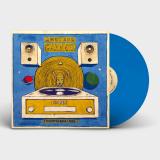
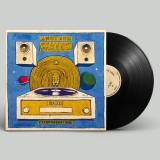
Picture the scene - October 2025, while staying at a friend’s apartment in Chennai, Gavsborg created umpteen ideas and contacted his good friend and bassist from back home, Delroy Pele Fyah Hamilton to collaborate. Hamilton, now based in Singapore performs and records regularly with F.Y .A.H. (successor band from Raging Fyah).
Both Blair and Hamilton share a love for Caribbean music. With this foundation the two set out to create something a bit different that sits between Bouyon, Dancehall & Dennery. The amalgamation resulted in this unique four-track instrumental EP . While the track titles are packed with broader Caribbean references, the project name and title track is an ode to the 90s dancehall pioneers, “Black Roses Crew” , who were based in Arnett Gardens (aka Jungle), Kingston, Jamaica, one of the important homes of 90s dancehall. Roses helped shape dancehall culture through dance, style, crew affiliation, and performance, largely soundtracked by Computer Paul’s Corduroy Riddim with Gerald Levy aka Bogle being the poster human.
Arnett Gardens (Jungle) is one of the key engines that produced the version of dancehall both Gavsborg and Pele draw here from. Think tight, bubbling, bouncing riddims, rolling basslines unlike anything you’ve heard before. Jamaican Dance Music for the movers and shakers
»Pipe Dreams II & III« presents two new, side-long organ works by Mary Jane Leach, extending the sonic investigations of her 1989 landmark »Pipe Dreams«. Recorded in Ghent and Cologne, the two side-long pieces use shifting stops, resonance and beating tones to turn the pipe organ into a vivid, physical field of sound.
When »Pipe Dreams« was issued on vinyl for the first time by Blume in 2017, it was effectively the first time many of us encountered Mary Jane Leach’s music, finally placing her work in its proper historical context amid the searching Downtown milieu of Julius Eastman, Arthur Russell, Arnold Dreyblatt, Ellen Fullman, Philip Corner, Daniel Goode, and Peter Zummo. Leach collaborated with most of these artists at one point or another, either in Downtown Ensemble or as a guest on their records.
Now »Pipe Dreams II« and »Pipe Dreams III« arrive, recorded in 2023 and 2024 at Miry Concertzaal in Ghent, Belgium, and Kunst-Station Sankt Peter in Cologne, respectively.
»When I was a young child, my family lived next door to a church, where my mother was the organist. I spent many hours lying on the floor of the sanctuary listening to the music, letting the sound of the organ envelop me. I also liked to play the piano loudly with the pedal down, producing clouds of sound, much to my family’s annoyance. These two organ pieces explore some of my earliest musical interests and aesthetics.
In 1989, I lived in a tower attached to St Peter’s Church in Cologne, where I had access to its organ. It had two sets of pipes, front and back, which could create antiphonal effects. I spent countless hours exploring the possibilities of all the permutations of notes, space, and the resulting sound phenomena. I wrote »Pipe Dreams« for that organ. Fast forward to 2023, when I was asked to create a piece for organ for a concert at the Miry Concertzaal in Ghent, Belgium: »Pipe Dreams II«. I had a few days to familiarise myself with the organ, its available stops, and the layout of the console. I choreographed stop changes for a volunteer, as I couldn’t reach them myself. Some amazing sounds began to happen, and at one point the sound was so visceral that I felt as though I were taming a wild beast.
»Pipe Dreams III« was performed in 2024 on the organ that I had spent so much time playing in 1989–90. One big difference, though, was that the console was totally new and computerised. Having access to the organ for only a few hours before the concert, I decided that I did not have enough time to feel comfortable with the console and should not attempt to recreate the piece I had written in 1989. I would instead use the same sequence of stops and perform an improvised piece. I loved the sounds that were being created, and I was having so much fun that at one point I even started to laugh quietly. I began to visualise the beating notes as if they were atoms, opening them up to expose their innards, with the beating, higher-pitched notes — neutrons and protons — shimmering at the top, and the lower notes — the electrons — throbbing away at the bottom. I was playing notes not so much for their pitch value, but for how they affected the notes and sound phenomena already being played. Instead of a time signature, I timed the entries by listening to the beating patterns, waiting for the right moment to enter. And no, I wasn’t hallucinating.«
Zum 30-jährigen Bestehen gönnt sich das Hamburger Dub-Label Echo Beach ein multidimensionales Porträt seiner Heimat- und Hansestadt Hamburg. Musikalisch hat das Label bereits die ganze Welt bereist und Dub-Sets aus UK, Südafrika, Neuseeland, New York, Jamaika und Germany veröffentlicht. King Size Dub - Hamburg ist die erste Album-Compilation, die sich exklusiv der Dub-Musik aus Hamburg widmet. Schon als das Label mit einer Compilation mit UK Dub die Bühne betrat, gab es mit Soundhaudegen wie Silly Walks und Dub Me Ruff, Projekten um den Producer Matthias Arfmann sowie Bands wie Dub Division und Di Iries eine vitale Dub-Szene in Hamburg, die im Lauf der Jahrzehnte ebenso wilde Blüten trieb wie outernational das Echo Beach Label, wobei es durchaus zu Überschneidungen und Kreuzungen kam. Nun ist die Zeit der Ernte gekommen: Für die Vinyl-Version hat sich das erste Dub-Label am Platz mit dem nicht nur für Dub-Heads besten Plattenladen der Stadt zusammengetan und jeweils eine Rille voller Versions, Specials und Exclusives aus den Hamburger Studios gepresst.
out of Stock
Last delivered 21 days ago available to reorder, subject to availability
„Dragonflies“, das gleichnamige Debütalbum von Dhani Harrison und Nigel Godrich.
Dhani Harrison ist ein zweifacher Grammy-Preisträger, Musiker, Komponist und Produzent. Nachdem er
mit seiner Band „thenewno2“ erstmals auf der internationalen Bühne in Erscheinung getreten war, hat sich
Harrison inzwischen als eigenständiger Solokünstler etabliert. Sein Solo-Debütalbum „IN///PARALLEL“
(2017) markierte eine mutige kreative Weiterentwicklung, gefolgt von dem von der Kritik gefeierten Werk
„INNERSTANDING“. Neben seiner Solokarriere hat Harrison mit einer vielfältigen Auswahl an Künstlern
zusammengearbeitet, darunter Wu-Tang Clan, UNKLE, John McLaughlin, Annie Lennox, Pearl Jam, Nitin
Sawhney, Perry Farrell, Prince, Regina Spektor und Fistful of Mercy (gemeinsam mit Ben Harper und
Joseph Arthur).
Nigel Godrich ist einer der renommiertesten Produzenten und Toningenieure, der vor allem für seine
jahrzehntelange kreative Zusammenarbeit mit Radiohead bekannt ist. Er begann seine Arbeit mit der
Band im Jahr 1994 und hat seit „OK Computer“ (1997) jedes Radiohead-Studioalbum produziert; damit
war er maßgeblich an der Gestaltung eines der einflussreichsten Musikkataloge der Moderne beteiligt. Godrich, der ebenfalls zweifacher Grammy-Preisträger ist, gehört zudem zu den Gründungsmitgliedern der
gefeierten Band Atoms for Peace – gemeinsam mit Thom Yorke, Flea, Joey Waronker und Mauro Refosco.
Im Laufe seiner Karriere hat Godrich mit einer außergewöhnlichen Bandbreite an Künstlern zusammengearbeitet, darunter Paul McCartney, Beck, Red Hot Chili Peppers, U2, IDLES, Roger Waters, Air, Pavement,
Travis und R.E.M.
Mit *Dragonflies* führen Harrison und Godrich ihre jahrzehntelange Erfahrung in Songwriting, Produktion
und Filmkomposition in einem einzigartigen neuen Gemeinschaftsprojekt zusammen.
In einer Zeit, wo alles immer mehr Digital und von KI dominiert wird, setzt Angelo Kelly auf Authentizität
und zwar auf allen Ebenen.
Die Songs auf dem neuen Album „ALIVE“ wurden komplett von ihm geschrieben, arrangiert und produziert. Wer sich die Texte der Lieder anschaut wird schnell merken, dass sich einiges in seinem Leben
verändert hat. Er öffnet sich in seinen Songs mehr, als er es jemals in einem Interview tun würde. Die Art,
wie dieses Album produziert wurde, könnte auch nicht authentischer sein!
AK: „Mir war es wichtig das Album komplett analog auf einer Bandmaschine aufzunehmen ganz ohne
Computer. Meine Band und ich waren dabei alle im gleichen Aufnahmeraum und haben meine neuen
Songs gemeinsam in „One Takes” aufgenommen. Nichts wurde korrigiert und es gab auch keine Overdubs
/ Zusatzaufnahmen! So sind die Aufnahmen sicherlich nicht perfekt,
und im Radio werden sie höchstwahrscheinlich nicht laufen, aber das ist die einzige Art Musik zu machen,
die mich heute noch reizt und interessiert.“ Das Album wurde dann auch komplett analog auf Band gemischt. Und für alle, die sich dieses Werk auf Vinyl holen: Das Mastering wurde im letzten Schritt von Chris
Bellman analog vollendet.
Almost Starlight is the extraordinary new album by Jem Finer (hurdy-gurdy) and John Matthias (violin). Produced by Jay Auborn and recorded in a Medieval Church, deep in the Devon countryside, in the Summer of 2025, the music is suffused with light, heat and the natural acoustics of the space.
The album defies categorisation; forced to pigeon hole it the nearest approximation would be ‘modern-classical’ but this ignores its myriad influences and explorations which encompass inspiration from Arvo Pärt through Terry Riley to Can via Delius, Alice Coltrane and a subtle reimagining of electronic music played purely with acoustic instruments, bending and shaping their possibilities in surprising and unexpected directions.
Jay Auborn plays cello on a number of the compositions and his production opens up and expands the music through a skilled and imaginative use of space, paying homage to the atmosphere of the church; ‘the sound evolved… chasing the imagined acoustics of that church in my mind; a place for worshipping light with sound.’
Almost Starlight will be released on the 4th September by Touch, available as CD, vinyl, cassette and on streaming platforms.
BIOS OF THE ARTISTS
Jem Finer
Since studying computer science in the 1970s, Jem Finer has worked in various fields, including photography, film, experimental and popular music, sound recording, sculpture and installation.
Much of his work relates to systems, extended processes and extremes of scale and includes Longplayer, a musical composition repeating once every 1000 years, and the Gurdy and Hurdy stones, ancient rocks set upright in fields in East Sussex and Gloucestershire with Jimmy Cauty. Their work together includes a band, The Standing Stones, whose most recent release is Twa Sisters, featuring Iona Zajac and Daragh Lynch.
He was a founder member of The Pogues, with whom he has played, written and recorded since 1981.
Recent music revolves around a fascination with the hurdy-gurdy and includes hrdy-grdy, a cassette released by Benedict Drew’s Thanet Tape Centre. His latest collaboration, with John Matthias, Almost Starlight, will be released by Touch in September 2026.
John Matthias
Since studying Theoretical Physics in the late 1980s and 1990s, John has created music and sound in many forms, including for installation, popular music, music for film, for dance and orchestra.
Much of John’s work plays with the physics of complex systems but he is also greatly influenced by stories and song. John has collaborated with Matthew Herbert, Stanley Donwood, Jay Auborn, Radiohead, Thom Yorke, Nick Ryan and many others to create music with a variety of textures and sonorities. He is particularly interested in simplicity and form and how context informs the way music sounds.
His latest collaboration, with Jem Finer, Almost Starlight, will be released by Touch in September 2026.
out of Stock
Last delivered 31 days ago available to reorder, subject to availability
The compositions recorded here are a product of work with computers in synthetic speech, song and vocal sounds and were created between 1972 and 1975. The music was realized on two different computer music systems and takes advantage of, and attempts to extend and explore their features. The system employed to realize speech songs was created at the Bell Telephone Laboratories for research in synthetic speech and speech communication. Since the system was not designed for musical purposes, its limitations were severe and its musical use a great (and often rewarding) challenge. The system used for In Celebration and The Story of Our Lives was designed with the expressed purpose of creating synthetic musical voices, and was therefore much better suited to the task at hand. As with any high technology project, there was extensive collaboration in the production of the works.
The works on this disk are called computer music because the sounds were created numerically in a computer before reaching magnetic tape and loudspeakers. The computer did not compose the music. However, it was only used as a sound synthesis and analysis medium. In order to hear the sounds which are represented in the computer as successions of numbers it was necessary to attach a digital-to-analogue converter to the computer. The converter transformed the succession of numbers into a fluctuating voltage which was recorded directly on to audio tape.
The technique used to create the synthetic voices is called speech synthesis-by-analysis. For this method of speech synthesis, only those words, phrases and sentences which have been spoken into the computer previously (via an analogue-to-digital converter) may be synthesized. First the digitally-recorded speech is analyzed by programs which extract the attributes (parameters) of the speech for short time segments (.01 sec.). From these parameters the speech may be recreated in a form which resembles the original recording very closely. But for musical purposes the parameters are most often altered before synthesis. It is possible, for example, to change the natural pitch contour of the speech into a melodic line or to change the speech speed without altering the natural pitch level.
The variety of musical patterns which may be created from the analytic parameters is limited only by the composer's imagination. Most of the speech sounds on the recording were created by changing the pitch and duration attributes of the original on resynthesis, but for a few, the resonances (the formants) of the speech were altered as well. The voice of the book in The Story of Our Lives was created by replacing the program which simulates the sound of the human vocal cords with one consisting of 64 sine tones glissandoing at different rates. All the textures in which more than one voice is heard were obtained by mixing the synthetic voices together digitally.
Long Slow Distance is an album about finding peace, and making peace where it can’t be found. It’s inspired by change, grief, acceptance, forgiveness, love, and running.
Dawson began running around the same time he started making records. At this point it’s unclear where one practice ends and the other begins. The album’s title has become the ethos he’s embraced for all things in life.
Long Slow Dance unravels the woven collage of his previous work. Here each song consists of three long guitar takes, panned across the stereo-field with minimal overdubs. “I remember my grandmother always kept a rain barrel on the farm. Just a simple vessel that served as a means for gathering water for the garden and the flowers. I wanted to instill that sentiment on this record. Other than some panning and recreational EQing, the computer was just a vessel to gather sounds.”
There is a distant grace to the album. A soft expanse, a quiet contrast. Guitars dissolve and then recalibrate. Sparse melodic motifs bloom and fracture. Warm chords clash and make amends. Alpenglow textures shimmer against tones that feel weathered by salt air. The songs are lightly propulsive, yet drift at a glacial pace. Fields and artifacts ground the material, like keeping your eyes on the horizon. Long Slow Distance feels intuitive, sentimental, and like Dawson is one step closer to whatever distance he is chasing.
Downloadable Assets
Composing primarily with the piano, Kotaro Maruyama creates music for a variety of visual media, including commercials and short films. Influenced by the composer Toru Takemitsu, he places importance on the “silence” and "ambience" of sound, aiming to create works where the music quietly depicts a scene.
Kotaro Maruyama's first solo album, "Vapor Curve," is constructed entirely from the sound source of the OP-Z digital synthesizer. Notably, he avoids the concept of harmony for a single tone, instead pursuing a unique "woven harmony" created by intricately layering multiple independent melodies. Using only the OP-Z, and recording everything in a single take without using a computer, Kotaro Maruyama's "Vapor Curve" is distinguished by its uncompromising production style. The minimalist melodies that are layered to create an ambient soundscape, along with the incidental noise that gives an organic texture to the inorganic electronic sound, showcase the raw appeal of sound that is imperfect."
Originally scheduled for release September 2025, this album faced delays due to a series of errors involving the distributor, pressing plant, and cutting engineer. However, earlier this year, Personal Affair teamed up with a new distributor, Rubadub, who introduced them new pressing plant, allowing them to restart the entire pressing process from scratch. Emerging from Tokyo via Glasgow, this release is now ready to deliver a fresh sound to the world."
BUCHLA MEETS ORCHESTRA IN QUADRAPHONIC SPACE ON CIANI/ORKEST
Suzanne Ciani, Metropole Orkest and Simon Dobson release historic immersive performance in multiple immersive formats including quad vinyl.
Silverlake, CA \\ June 4, 2026 – Electronic music pioneer and five-time Grammy nominee Suzanne Ciani joins the internationally acclaimed Metropole Orkest, conducted by Simon Dobson, for the release of CIANI/ORKEST, a landmark live album composed entirely of new work, created specifically for this unprecedented collaboration.
Recorded at Amsterdam Dance Event (ADE) before a rapt audience, CIANI/ORKEST is not a retrospective. It is a bold, immersive meeting of the Buchla electronic instrument and 50-piece orchestral sound. The result is a sweeping sonic landscape, at once intimate and monumental.
Under the direction of the Metropole Orkest, renowned for its genre-defying collaborations with artists from jazz to contemporary classical - strings shimmer, brass swells and woodwinds echo the organic, fluid qualities that have always defined Ciani’s sound. “This project feels like a homecoming,” says Ciani. “The Buchla was always orchestral to me, an instrument capable of infinite color. Hearing those colors unfold through the Metropole Orkest has been profoundly moving.”
At the heart of CIANI/ORKEST lies Ciani’s lifelong commitment to quadraphonic sound. From her early Buchla performances in the late 1960s to her 2018 release LIVE Quadraphonic, Ciani has treated space as a primary compositional parameter. Working alongside immersive producer KamranV, Ciani continues to explore immersive sound as both artistic and human gesture. Kamran’s decades of work in spatial formats, converge here in service of a singular goal: to let sound behave as it does in the physical world. “For both of us, quad is musical,” Kamran notes. “The way Suzanne works, quadraphonic is nested in — not the technology per se — but the intent you bring to the work.”
The recording stands as a meditation on legacy, evolution, and the enduring dialogue between technology and human expression. The live album captures the electricity of performance, the immediacy of touch plates under Ciani’s hands, the collective of musicians responding in real time, and the audience’s shared immersion in quadraphonic-inspired space.
CIANI/ORKEST is released by Atmospheric/AKP Recordings/CyKiK in multiple double-disc quadraphonic 12” Record packages designed by grammy-nominated designer Rebeka Arce. Each pressing is made regionally to minimize carbon emissions and also contributes to nature via Brian Eno's EarthPercent, the music industry's climate and nature foundation.
The release is encoded using the dublab Quadraphonic Universally Accessible Resource Kit (QUARK). QUARK enables binaural listening via standard 2-channel playback or 4-speaker playback via Involve Audio hardware decoders, vintage Regular Matrix quadraphonic receivers, Dolby Pro-Logic II/Dolby Surround Upmixer (DSU) receivers, or any multi-channel audio interface equipped computer. This album is immersive via all formats: digital download, streaming (Qobuz, Spotify, SoundCloud, Bandcamp), radio broadcast, vinyl and high-resolution Dolby Atmos (Apple Music, Tidal, Amazon HD, IIA), Sony 360RA (Nugs, Amazon HD) and Eclipsa Audio (YouTube).
About Suzanne Ciani
Suzanne Ciani is a composer, pianist, sound designer, and electronic music pioneer whose work spans experimental, new age, classical, and cinematic sound. A five-time Grammy nominee and recipient of the Moog Innovation Award, she continues to perform internationally, captivating audiences with immersive modular synthesis performances.
About Metropole Orkest
Based in the Netherlands, the Metropole Orkest is one of the world’s leading genre-crossing orchestras, known for collaborations with artists including Brian Eno, Herbie Hancock, Snarky Puppy, Jacob Collier, and within contemporary classical and electronic spheres.
The compositions recorded here are a product of work with computers in synthetic speech, song and vocal sounds and were created between 1972 and 1975. The music was realized on two different computer music systems and takes advantage of, and attempts to extend and explore their features. The system employed to realize speech songs was created at the Bell Telephone Laboratories for research in synthetic speech and speech communication. Since the system was not designed for musical purposes, its limitations were severe and its musical use a great (and often rewarding) challenge. The system used for In Celebration and The Story of Our Lives was designed with the expressed purpose of creating synthetic musical voices, and was therefore much better suited to the task at hand. As with any high technology project, there was extensive collaboration in the production of the works.
The works on this disk are called computer music because the sounds were created numerically in a computer before reaching magnetic tape and loudspeakers. The computer did not compose the music. However, it was only used as a sound synthesis and analysis medium. In order to hear the sounds which are represented in the computer as successions of numbers it was necessary to attach a digital-to-analogue converter to the computer. The converter transformed the succession of numbers into a fluctuating voltage which was recorded directly on to audio tape.
The technique used to create the synthetic voices is called speech synthesis-by-analysis. For this method of speech synthesis, only those words, phrases and sentences which have been spoken into the computer previously (via an analogue-to-digital converter) may be synthesized. First the digitally-recorded speech is analyzed by programs which extract the attributes (parameters) of the speech for short time segments (.01 sec.). From these parameters the speech may be recreated in a form which resembles the original recording very closely. But for musical purposes the parameters are most often altered before synthesis. It is possible, for example, to change the natural pitch contour of the speech into a melodic line or to change the speech speed without altering the natural pitch level.
The variety of musical patterns which may be created from the analytic parameters is limited only by the composer's imagination. Most of the speech sounds on the recording were created by changing the pitch and duration attributes of the original on resynthesis, but for a few, the resonances (the formants) of the speech were altered as well. The voice of the book in The Story of Our Lives was created by replacing the program which simulates the sound of the human vocal cords with one consisting of 64 sine tones glissandoing at different rates. All the textures in which more than one voice is heard were obtained by mixing the synthetic voices together digitally.
Graham Hunt kann einfach nicht aufhören, Alben aufzunehmen. Seit 2019 hat der in Madison, Wisconsin, lebende Songwriter ein umfangreiches Repertoire an einzigartiger Musik zusammengetragen - in einem Tempo, das nur von der Qualität der Werke selbst übertroffen wird. Nun, bereits bei seinem sechsten Album ,American Pyramid", hat Hunt sich aus seiner Komfortzone herausgewagt, die bodenständigen, computerorientierten Experimente seiner früheren Arbeiten hinter sich gelassen und stattdessen Minnesotas legendäres Pachyderm Studio mit einer neunköpfigen Band, um zu versuchen, eine andere Seite seiner grenzenlosen Kreativität einzufangen. Das Ergebnis ist ein Album, das musikalisch und textlich neue Wege geht, wobei Hunt mit seinem surrealistischen Ansatz sowohl die Traditionen des amerikanischen Indie-Rock als auch die beunruhigende Distanziertheit der amerikanischen Erfahrung selbst seziert. Zusammen mit einer Reihe von Multi-Instrumentalisten aus früheren Besetzungen seiner Live-Auftritte zog Graham ins Pachyderm Studio, den berühmten Aufnahmestandort unzähliger Kultalben, von Nirvanas ,In Utero" und PJ Harveys ,Rid of Me" bis hin zu neueren Alben wie ,Sugaregg" von Bully oder ,Once Twice Melody" von Beach House. Die Session erwies sich als fruchtbar, da die meisten Songs, die es auf ,American Pyramid" schafften, jene maximalistische Ambition ausstrahlen, die in Grahams meisterhaftem Songwriting offensichtlich ist - doch nachdem er nach Hause zurückgekehrt war, wurde Hunt von noch weiterer Inspiration erfasst - und das Album schwelgt in der Dualität beider Prozesse. Tracks wie der bei Pachyderm aufgenommene Rave-up ,Riverboat Blues" gehen nahtlos in die zu Hause aufgenommene Musik wie ,Dust Underwater" über, wobei beide in eskapistische Fantasien abdriften, in denen lebhafte Produktionselemente die surreale Erzählung untermalen. Oder anderswo bietet der Album-Highlight ,Getting Older" einigen von Hunts unmittelbar befriedigendstem Gitarrenpop und die bodenständigsten Texte auf ,American Pyramid". Die Fähigkeit, so viele verschiedene Klänge, Emotionen und Stimmungen zu vereinen, macht Graham Hunt zu einem so besonderen Songwriter. Nur sehr wenige würden es überhaupt versuchen, Westerberg-artigen Everyman-Rock mit gonzoartigen, autotune-bearbeiteten Gesangspassagen oder psychedelischen lyrischen Abstraktionen mit offenherzigen Gedanken über den unaufhaltsamen Lauf der Zeit zu kombinieren - und noch weniger könnten das so umsetzen, wie Hunt es auf ,American Pyramid" tut.
In Walter Benjamin’s seminal essay “Art in the Age of Mechanical Reproduction”, he posits that the aura of art objects is destroyed by the ability to photographically reproduce them. When you had to make a pilgrimage to a work it remained elusive, charged, ever distant; but when you can easily see a reproduction, such aura dissipates. What Benjamin did not anticipate is that in the age of AI and the frictionless fount of digital content, we have imbued mechanical and analog means of media production with aura. Film cameras from the last 100 years are in high demand (the point and shoot Olympus Mju I featured in Wim Wenders film Perfect Days still sells for $200), vinyl sales continue to grow year by year, 35mm and 70mm film screenings have become aura-drenched events people travel across country for, and as to the world of vintage and analog synthesizers, when a friend asked for the price on the Yamaha CS-80 synth used on Toto’s “Africa”, the answer was a cool $60,000.
Despite the ability to simulate almost any synthesizer on a computer, the original physical units retain their mystique. Perhaps this lies in the physical process, many of these synths are temperamental and difficult to fully utilize, and the effort and ingenuity can be felt in ways that will always be absent from easy digital simulacra. Perhaps there is an aura in their imperfection, as Brian Eno wrote: “Whatever you now find weird, ugly, uncomfortable and nasty about a new medium will surely become its signature. CD distortion, the jitteriness of digital video, the crap sound of 8-bit - all of these will be cherished and emulated as soon as they can be avoided.” Some may call this nostalgia, but such sonic imperfections are the sounds of humans interacting with the physical world, and it is understandable to feel a pang of emotion and attachment in a time of exponential alienation.
Marche 22 was recorded over a week at the Museo Del Synth Marchigiano in Macerata, Italy. The museum is filled with rare and obscure synths (especially CRB, GEM & Elka) as well as salvaged materials from a nearby shuttered Farfisa organ factory, including MARS, an unfinished realtime audio processing application developed by IRIS - similar to the now well known MAX/MSP. Kyle Dixon and Michael Stein play a suite of pieces that encompasses the last sixty years of synthesizer music—there are nods to Cluster, Tangerine Dream, Jean Michel Jarre, and Morton Subotnick. Dixon and Stein are like jazz masters playing the American songbook with their own riffs and quotations. What shines through in these varied works that are sometimes rhythmic, sometimes melancholic, and sometimes both, is a soul, a spirit, an emotion vibrating through the tones like the charge of coming rain or the thrum of a distant train on the tracks. - Neil Fauerso
pre-order now28 Aug
expected to be published on 28 Aug
27,94 €
0 Cart
Nino Antonellini, Roland Kayn, Coro da Camera della RAI, Roma,
Marino Zuccheri
Album #6 der brandneuen Vinyl-Serie mit zukunftsweisenden Aufnahmen der musikalischen Avantgarde.
Luigi Nono (1924–1990) genoss während seiner gesamten Karriere große Anerkennung. Als zentrale Figur
des Nachkriegsserialismus trat der venezianische Komponist in den 1950er Jahren als eines der drei Mitglieder der „avant-garde trinity“ neben Karlheinz Stockhausen und Pierre Boulez in Erscheinung.
„Contrappunto“ wurde 1968 für 2-Kanal-Tonband komponiert, in einer Zeit, in der Nono sich intensiv für
die internationalen Studentenbewegungen sowie gegen den Vietnamkrieg engagierte. Nono stützte das
Werk auf eine Madrigal-Komödie von Adriano Banchieri aus dem frühen 17. Jahrhundert und erklärte,
er habe „versucht, die Art des musikalischen Prozesses widerzuspiegeln, den Banchieri verwendete: die
Konzentration auf die Stimme, die Einbeziehung von Klangmaterial der damaligen Zeit, humoristische und
parodistische Verzerrungen, insbesondere in den lyrischen und dramatischen Elementen … aber in der heutigen Aktualität“.
Roland Kayns „Cybernetics III“ nimmt auf beeindruckende Weise die Fortschritte in den Bereichen Synthese, Computer- und Aufnahmetechnik sowie die Entwicklung von Samplern und Sequenzern vorweg. Die
Art und Weise, wie diese Werkzeuge von den Künstlergenerationen, die in Kayns Fußstapfen traten, aufgegriffen wurden, hat die Rahmenbedingungen der elektronischen Musik grundlegend verändert. In diesem
Sinne hat „Cybernetics III“ tiefgreifende Veränderungen im kreativen Denken vorausgesehen.
Gemastert und geschnitten von den originalen analogen ¼-Zoll-2-Spur-Masterbändern von Rainer Maillard
und Sidney Claire Meyer in den Emil Berliner Studios.
Limitierte und nummerierte Auflage mit Original-Artwork und einem neu gestalteten, wunderschön gearbeiteten Sammler-Cover mit neuen Liner Notes von Bradford Bailey, gepresst auf 180-g-Vinyl.
Es gibt eine unbestreitbare Verbindung zwischen dem Süden und Ereignissen außerirdischen Ursprungs. Vom eklektischen Jazz-Guru Sun Ra bis zum deutschen Raketenwissenschaftler Wernher von Braun - Alabama hatte schon immer mehr als nur einen reißenden Anteil an Verbindungen zum Weltraum und zu Dingen außerirdischen Ursprungs. So war es auch bei ,Man or Astro-Man?", die vor einigen Jahren in einer kleinen Universitätsstadt in Alabama ankamen bzw. dort eine Bruchlandung hinlegten. Als sie ihre Plattensammlungen wiederentdeckten, die lange Zeit auf vergessenen Dachböden verstaut oder hinter Regalen mit alten Zeitschriftenausgaben in zahlreichen heruntergekommenen Secondhand-Läden in Alabama versteckt waren, verliebten sich die Mitglieder von ,Man or Astro-Man?" in die verkratzten Klänge von Link Wray, The Ventures, Dick Dale, The Shadows und Duane Eddy - also in Instrumental-Gitarren- und Surf-Musik der späten Fünfziger und frühen Sechziger. Gleichzeitig hatten bizarre Bühnenbilder und Auftritte von Kraftwerk, Sun Ra, Devo, Frank Zappa, The Sputniks und natürlich den Residents großen Einfluss auf die sich rasch entwickelnde Truppe. Dennoch war es das erzwungene Leben in einer hoffnungslos konservativen Kleinstadtumgebung, das Man or Astro-Man? dazu brachte, das Offensichtliche hinter sich zu lassen und sich viel stärker von dem beeinflussen zu lassen, was sie hassten, als von dem, was ihnen eigentlich gefiel. Im Grunde könnte man sagen, dass Man or Astro-Man? weitaus stärker von College-Football und muskelbepackten Verbindungs-Spinnern beeinflusst waren als von Science-Fiction. Die Band trieb es, besonders bei Live-Auftritten, auf die Spitze, so lächerlich wie möglich zu sein, und verspottete dabei ernsthafte ,alternative" Acts und mit ihnen die Musikindustrie selbst. ,Experiment Zero" (1996) war ihr Debütalbum bei Touch and Go. Es wurde in drei Tagen im eigenen Studio von Man or Astro-Man?, dem ,Zero Return" in Alabama, zusammen mit Steve Albini aufgenommen und gilt als eines der großartigen modernen, vom Surf-Stil beeinflussten Gitarren-Instrumentalalben. Da Man or Astro-Man? ,Experiment Zero" als ihr Meisterwerk der langen Entwicklung der Surf-Musik etablieren wollten, begannen sie, sich schneller als je zuvor weiterzuentwickeln. Sie veränderten ihren Sound weiter und erweiterten den Einsatz von Samples, Computerprogrammierung, Keyboards, elektronischen Spielereien sowie experimentellem analogem Schneiden und Einfügen von Tonband. Obwohl das Album von der Kritik weithin gelobt wurde, mussten sich langjährige Fans erst einmal daran gewöhnen. Wo die meisten Bands müde geworden wären oder einfach immer wieder dasselbe Album im Kreis gedreht hätten, erfanden sich Man or Astro-man? und ihre Live-Auftritte immer wieder neu.
This special collector's edition is available in a strictly limited run of only 250 copies. The vinyl version is pressed on transparent vinyl and features metallic paper packaging along with a printed inner sleeve made from dyed paper stock. The entire release was designed by the exceptionally creative graphic designer Weronika Lipniewska, resulting in an edition that is as captivating visually as it is musically.
EY AY (Deluxe Slay Jazz) is the second album by Piotr Checki - an artist who, following the intimate, home-recorded debut PE, returns with something radically different: a living, spontaneous work captured in real time. If PE was a personal document of moments enclosed within a controlled studio environment, EY AY is its opposite - a sonic organism that breathes, pulses, and unfolds in the here and now.
The album was created in just two weeks during a period of intense inspiration. Ch?cki developed a series of compositional sketches which were then expanded together with drummer Tymek Papior and pianist Marcel Balinski during a single six-hour recording session. Crucially, the entire album was recorded as one-take performances. No overdubs, no edits, no second attempts. It is a document of pure presence - a moment that can never be repeated.
The subtitle Deluxe Slay Jazz carries an additional personal layer of meaning. It serves as a subtle yet significant nod to one of Checki's greatest passions: ski jumping. The initials "DSJ" may also evoke the cult classic ski-jumping computer game released in 1999, beloved by an entire generation of players.
With EY AY, Checki redefines his approach to music-making. Instead of constructing rigid structures, he places trust in the process. Instead of production, interaction. Instead of perfection, authenticity. This is music that does not strive to be finished - it simply exists.
out of Stock
Last delivered 77 days ago available to reorder, subject to availability
K' Alexi Shelby is a prominent figure in electronic music with a career spanning decades. The cultivation of his massive music catalogue has overflowed into albums and the three labels he heads. It's also led to legendary collaborations with artists like The Pet Shop Boys, Robert Owens, Kenny Dixon, Roy Davis Jr., Joe Smooth, Steve Silke Hurley, Tyree Cooper, Ron Trent, Glenn Underground, Larry Heard, DJ Pierre, Carl Craig, Felix da Housecat, Marshall Jefferson and more. He makes a welcome return to COD3 QR with the jazzy house of opening track, "House Music de Chicago".
Voltaire has built his career through passion and a perfectionist approach to music, creating a richly emotional eclecticism, with inspiration from the pioneers of Detroit to the glorious electro decades of the 2000s and 2010s. Today he's a COD3 QR regular and released his debut album, "Echoes" on the label last year. He leans into the realms of house with a deep techy edge, for new track "Some House".
Finder is the alias of Radial (Jeroen Liebregts), originally from The Netherlands but today residing in Spain. He started mixing records around '98 and in 2002 teamed up with Bas Mooy to started the now legendary label, Audio Assault. He's also released on Token, Perc Trax, Mote-Evolver, Numb, Drumcode, Planet Rhythm, Mord, Will & Ink and MDR, alongside his label, Radial Records. As Finder he goes in a new direction with "Team Dream".
Benny Rodrigues a.k.a. ROD's other moniker, The Lost Souldancer has already seen him drop "No More Voices" and "Life and Death" for the label. In his own words, Benny says: "The Lost Souldancer is about coping with the loss of what once was. Finding comfort in the invisible rather than what can be seen. Disconnect to connect in order to be loved rather than liked." He returns with another emotional journey on "Magnolia".
Producer and manager of Slates Records, Squal G is a French artist who has been passionate about electronic music since the '90s. Initially a DJ, he soon turned to machines and computers. This enabled him to progress with his production and remixes. He never tries to stick to a single style, which, depending on his inspiration, can lead him to be more or less hard, while remaining in the spirit of techno. A popular COD3 QR regular, he's back with the intense techno of "Crackle".
French producer, DJ and live artist, Electric Rescue is world renowned. His productions have been signed on labels like Cocoon, Virgo, Arts, F Communications, COD3 QR, Soma, Sci + Tec, Boys Noize and his own Skrypto¨m. Ahead of his forthcoming artist album (to be released on COD3 QR in October) he closes the vinyl with the electro-tech and wonderfully wonky machine funk of "Internet Was an Illusion".
out of Stock
Last delivered 23 days ago available to reorder, subject to availability
From 1993, a hallmark UK Dub album returns to the light. Originally pressed in a small run and extremely hard to find, this record was produced at Earthquake Studio by TNT Roots and Winston Dread.
Together, they provided a raw contribution to the early UK Dub scene using a basic setup: a Siel DK-80 synth, a Yamaha home keyboard, a Casio RZ-1 drum machine, and an Atari 1040 computer running Cubase V2.0. The tracks were shaped through an old Dynamix 8-channel mixer and captured on a Casio portable DAT machine.
TNT Roots provided the drum, bass, and chord patterns, while Winston Dread added the lead lines and performed the mixing duties. This raw, undiluted music reflects the evolution of Dub and contains the seeds of all their future work. Their dubplates were staples for legendary UK sound systems like Aba Shanti-I and Iration Steppas, becoming sought-after anthems that defined the "heavyweight" digital roots sound.
These are heavy sounds that stand the test of time. Back on the streets after 30 years, the album has been fully restored and remastered to honor the dubplate masters of UK Sound System culture
out of Stock
Last delivered 64 days ago available to reorder, subject to availability
´Salva´ unfolds as a slow-moving sonic passage, suspended between stillness and transformation. Rooted in a deeply personal lineage, the album reimagines a long-standing family wound through the lens of myth, with the intention of altering its direction. Rather than recounting events, DIMA constructs a parallel narrative, one where sound becomes a means of reconfiguring what was once haunted.
Emerging from an intuitive and studio-centered process, Salva is shaped through experimentation, co-creation, and temporal patience. Working primarily with the computer as her main instrument, DIMA assembles fragments of sound, plugins, sampled material, improvised gestures, and stems drawn from cinematic sources into a porous and evolving sonic architecture. Composition here is accumulative, guided by sensation. Within this framework, certain tracks introduce restrained pop sensibilities, glimpses of melody, song structure, and tonal clarity that surface briefly before dissolving back into the broader sonic language.
´Salva´ is a passage. A listening experience that invites the audience to inhabit uncertainty, to stay with sensation, and to consider how sound can hold stories that language alone can´t resolve.
LP1 New album
LP2 Available on vinyl for the first time
LP3/4 Debut album on green vinyl
LP5 Second album on red vinyl
When I recorded the first 2 Trickfinger records, I had recently discovered that you could make electronic music in a room with a bunch of synced machines going at the same time, record it on a
CD burner and have a finished track. I've heard this process described as “overdubbing into the air”. It was as exciting to me as my first 4 track was when I was 14. I wasn't trying to be good, or
original. I was just excited that music could be made that way; it felt like I was a whole group of musicians playing together… or like I was jamming with ghosts of myself. This has actually been a
very common way of making electronic music since the 80s, particularly in the main pioneering genres like Chicago Acid and Detroit Techno, but anyways I didn't figure it out until 2006. In 2007,
I started doing it myself, which resulted in what was eventually released as Trickfinger, and Trickfinger II. I was just home from tour and was still in the middle of recording The Empyrean.
A couple of years later I started making music by overdubbing onto a computer, but using the same machines. I tried to make music that didn't sound like anything else. I saw a way of combining
Progressive Rock and Synth Pop which nobody had done. And I was combining my songwriting and guitar playing with these old machines in a way which I was sure was unique. I had reached a point
where it was more important to do something original than to do something good, whatever “good” means.
Some of this music did not get a proper release, and is compiled here as the vinyl record High Low. I don't think I have ever tried so hard at making music as I did during that period. This in contrast to
those two Trickfinger records, where I wasn't trying at all. There’s something to be said for both mental states. When you're in one, the other seems impossible. I was really pushing myself on High
Low. Looking back, it was as if I had an audience inside myself, driving me to go beyond my abilities, while at the same time I had a total disregard for any concept of an actual audience. It
was one of those periods in life where things come together in a certain way that feels natural at the time, but seems foreign in retrospect. It felt like I was going to die if I didn't do something musically
different.
The fourth record in this box is me breaking in a new mixing console, making live-to-stereo music. The record is called Rotation, and it is all new music. These tracks are more in the “not trying”
category, since we're on that subject. I had just come home from tour, and was just really glad to be in the studio with my machines. Acid Test thought it would be nice to do a box set commemorating the 10th anniversary of the release of Trickfinger, and so we put together this box set, with homemade cover art.
John Frusciante 2026
out of Stock
Last delivered 84 days ago available to reorder, subject to availability
Pure, Distilled Dub. Upholding Jamaica's Legacy As Well As Germany's Unequivocally Influential Dub Techno Spirit, Moonshine Recordings Proudly Welcomes Their Next Addition To The Roster. On The Controls For The 9th Full-length Album Release, A True-to-the-roots, All-analogue Musician: Another Channel. Having Put Himself On The Map With Releases On Soukah's Blacksoil Records, Bristol's Transient Audio As Well As On Australian Imprint Modern Hypnosis, It's Now Time For The Album Release, We've All Been Waiting For. No Computer Involved As Impeccable Arrangements And Analogue Reverberations Unfold. Live And Direct In The Original Dub Mixing Fashion, The Augsburg-based Artist Uniquely Transports The Sonic Characteristics Of Rhythm & Sound Into The Present Time.
Subtle Vinyl Crackles Gently Introducing Meditative Beats, 'run Dub' Sets The Pace. Keen Listeners Find Themselves Embedded In Lively Echoes And Reverbs, Left To Bask In Smooth, Sonic Contemplation. Engineered To Soothe The Soul, Timeless Foundation Sound. Intensified Groove Meets Low-frequency Pressure In 'amir Dub' Among Haunting Melodica Fragments. '(yes!) Badness' Unsheathes Its Off-kilter Swing, Vocal And Foley Samples Musing In The Distance - Further Showcasing Another Channel's Technical Prowess. Heavy Chord Stabs And Delicate Overdrive Counterpoint The Immense Scope Of Conjured Space In 'ael Na Dub', Concluding A Beautiful A-side.
Lush Chords Lure Us To The Flip-side - 'solid' Kicks Off With A Staccato Bass-line In The Midst Of Lavish White Noise Surges And Minimal Drums. Rooted In Endless Feedback Trails, Steadily Kept In Check. Previously Teased, The Mighty 'ethiopian Dub' Steps Through In Full Glory, Carried By Militant Drum Motion And Forceful Low-end. On A More Spacious Excursion, 'uranus' Takes A Brightly Lit Stroll Through The Analogue Dub Universe, Led On By Another Channel's Signature Groove Propulsion. Pointing Back Towards A-side, Prolific Dub Proponent Babe Roots Presents His Musical Qualities In A Monumental Remix Of 'run'.
out of Stock
Last delivered 3 months ago available to reorder, subject to availability
The dogs bark and the heavy-metal caravan tears through everything in its path. What lies ahead is a twisting, high-voltage journey for anyone with a taste for contemporary sound, and this record offers no lukewarm sightseeing, no pre-retirement indie pop-rock playlist drift. You'll have to learn to dance off-beat, wringing out every neuron before the final rinse. Drink your sweat, not your tears, and burn off the bitterness: that's the intended destination of the trip. This monstrous album has a computer where its heart should be. Three humans are wired into it: Michel Cloup, Manon Labry and Julien Rufié. Layer after layer, they've fed this sandpaper-and-digital-custard mille-feuille. On the menu, heaped and hurtling by the wagonload, the beast is stuffed with screams, laughter, melodies, noise: a frantic feast. It even leaves you wondering who's driving whom. Who seized control? The flesh? The printed circuits? Michel as a Titanic-'n'-Roll conductor? Julien and Manon as demolition apostles? Doesn't matter. For now, it rips, it saws, it strafes, it smashes, without pause. Rock debris_post or not_grumbling Parmentier-pop mash, white-hot hip hop spinning out, electro-disco-kraut fissuring, furious new French chanson: everything shoves its way into the blender. The real free world is here. Michel veers between naïve chants of dwindling hope, barking tsunamis of black fury and other delights, recounting the world in full 360 degrees as well as the twenty metres outside his front door. As ever, he speaks of himself, of us, speaks a lot, speaks too much. The intensity barely drops below the danger line; even the lows are stratospheric. Foot to the floor, calmly. In the thick of it, you'll wander room to room through the small theatre of France's grand political tragicomedy (David, Goliath and Godzilla), the consultation chamber of our disappointments (2027), the community repair shop of our hopes (Catharsis), the literary gym (The Poison, The Antidote), the torture room (H&M, with old Toulousain comrade Fredo Nonstop), the nightclub in flames (Shame, RIP), the electronic shooting gallery (Maria, Background Noise), the XXL confessional (For Whom? For What?) before ending in the Munch Room, the chamber of the primal scream (SISRAHTAC). "In the end, there are no words left. It howls, it howls, and it doesn't stop."
ALERT: BIG 90s ITALIAN RAVE COMP - a lot of very in demand tunes on here.
Navigators
Franco Falsini and the Interactive Test Universe
There are musicians who follow their time.
And then there are those who seem to move along a different trajectory—like navigators crossing sonic eras without ever truly belonging to any one of them. The story of Franco Falsini belongs to the latter. It is a story that begins long before raves, before techno, before the word “electronic” had even become a recognizable musical genre. A story that moves across continents, technologies, and sonic visions, eventually arriving at a small creative laboratory born in Italy in the early 1990s: Interactive Test. This compilation is a fragment of that universe. But as often happens with the hidden histories of music, understanding it requires going back. Far back.
The Beginning: Machines, Tape and Space
In the late 1960s Franco Falsini leaves Italy and moves to the United States. It is not merely a geographical journey—it is also a journey into a new idea of music. At the time, synthesizers are only just emerging from research laboratories. Multitrack tape recorders allow musicians to build entire sonic worlds on their own. Technology is still far from standardized: every studio is almost an experimental workshop. In Virginia, Falsini builds one of his own. Among cables, oscillators, electric guitars and reels of magnetic tape, a kind of music begins to take shape that resembles nothing else being made at the time. It is not simply rock, and it is not yet truly electronic. It moves somewhere in the space between the two. Out of these explorations emerges Sensations' Fix, the project through which Falsini releases a series of albums during the 1970s. Records that seem to come from a parallel dimension: cosmic landscapes, electronically treated guitars, synthesizers drifting like satellites. Many years later those albums would be rediscovered as visionary works. But at the time they were simply the result of relentless curiosity. A curiosity that would never fade.
The City That Never Sleeps
In the 1980s Falsini’s trajectory leads him to New York. The city is a sonic organism in constant transformation. In its clubs and recording studios something entirely new is beginning to take shape: music built from drum machines, sequencers, and samplers, created for the body before the living room. It is the dawn of modern dance culture. Falsini works as a sound engineer, producer and experimenter. From close range he observes electronic music transforming into a global language. Machines become more accessible, computers begin entering studios, and rhythm takes on an increasingly central role. Yet even in this phase Falsini does not simply follow what is happening. He absorbs. Observes. Reimagines. When he eventually returns to Italy, he brings back not only technical experience but also a clear vision: the conviction that electronic music is an open space, a territory still waiting to be explored.
Tuscany, Early 1990s
At the beginning of the 1990s something is happening in Italy as well. In clubs, abandoned industrial warehouses and clandestine parties, a new scene is beginning to form. It is rave culture: a spontaneous movement bringing together DJs, producers and listeners in a collective experience driven by rhythm, technology, and creative freedom. It is within this context that Franco Falsini, together with his brother Riccardo, creates Interactive Test.
The name almost sounds like a scientific experiment. In many ways, it is. Interactive Test does not emerge as a traditional record label. It begins as a laboratory—a place where ideas, sounds and musical identities can be tested and explored. Around the Falsini studio in Tuscany a small constellation of artists and DJs begins to gather, helping to shape the sound of Italy’s emerging electronic scene. Among them are Andrea Giuditta, Francesco Farfa, Gabry Fasano, Roby Mastelloni, Roby J and many others. Each brings a different musical sensibility. But they all share the same intuition: electronic music is not a genre. It is a language.
The Laboratory of Identities
One of the most fascinating aspects of the Interactive Test universe is its constant play with identity. Franco Falsini releases music under several different names: Open Space, Youth Wave, Agent Fylfoyt, Man Myth Magic. These are not simply pseudonyms.
They are different sonic perspectives, as if each project were a window opening onto a parallel musical universe. Open Space, for example, explores more atmospheric and visionary territories. Youth Wave moves between electronic groove and club-oriented rhythms. Other projects experiment with digital psychedelia or hypnotic techno textures. Interactive Test becomes something more than a label. it becomes an ecosystem.
Domestic Machines, Infinite Worlds
Looking back today at the technology used in those productions, one might almost smile. Many tracks were created on Amiga computers, MIDI sequencers and analog synthesizers wired together in home studios—tools that appear modest when compared to today’s digital possibilities.
Yet precisely these limitations became a creative force. Every sound had to be built, shaped and reinvented. Sequences developed slowly, almost like living organisms. The tracks did not always follow traditional dance music structures; often they felt like genuine sonic journeys. Music built from space.
A Hidden Constellation
Many of the records released by Interactive Test in the 1990s remained for years almost invisible objects, circulating quietly among DJs, collectors, and devoted listeners. Yet it is precisely this underground existence that helped preserve them. Listening again today, one perceives something rare: the feeling of music that does not fully belong to its own time. Music suspended between different eras. Perhaps because it comes from a vision that both precedes and transcends trends.
Continuing the Journey
Looking at Franco Falsini’s entire path—from the electronic psychedelia of Sensations’ Fix to the rave culture of the 1990s—a surprisingly coherent line emerges.
A line defined by exploration.
Each project, each pseudonym, each record appears as a new route within the same great sonic voyage.
Interactive Test was one of its stations.
A laboratory.
A community.
A creative platform.
This compilation gathers some of its traces.
Not as a simple archive of the past, but as a map of a musical territory that continues to expand even today.
Like all true sonic explorations.
out of Stock
Last delivered 4 days ago available to reorder, subject to availability
Pure, Distilled Dub. Upholding Jamaica's Legacy As Well As Germany's Unequivocally Influential Dub Techno Spirit, Moonshine Recordings Proudly Welcomes Their Next Addition To The Roster. On The Controls For The 9th Full-length Album Release, A True-to-the-roots, All-analogue Musician: Another Channel. Having Put Himself On The Map With Releases On Soukah's Blacksoil Records, Bristol's Transient Audio As Well As On Australian Imprint Modern Hypnosis, It's Now Time For The Album Release, We've All Been Waiting For. No Computer Involved As Impeccable Arrangements And Analogue Reverberations Unfold. Live And Direct In The Original Dub Mixing Fashion, The Augsburg-based Artist Uniquely Transports The Sonic Characteristics Of Rhythm & Sound Into The Present Time.
Subtle Vinyl Crackles Gently Introducing Meditative Beats, 'run Dub' Sets The Pace. Keen Listeners Find Themselves Embedded In Lively Echoes And Reverbs, Left To Bask In Smooth, Sonic Contemplation. Engineered To Soothe The Soul, Timeless Foundation Sound. Intensified Groove Meets Low-frequency Pressure In 'amir Dub' Among Haunting Melodica Fragments. '(yes!) Badness' Unsheathes Its Off-kilter Swing, Vocal And Foley Samples Musing In The Distance - Further Showcasing Another Channel's Technical Prowess. Heavy Chord Stabs And Delicate Overdrive Counterpoint The Immense Scope Of Conjured Space In 'ael Na Dub', Concluding A Beautiful A-side.
Lush Chords Lure Us To The Flip-side - 'solid' Kicks Off With A Staccato Bass-line In The Midst Of Lavish White Noise Surges And Minimal Drums. Rooted In Endless Feedback Trails, Steadily Kept In Check. Previously Teased, The Mighty 'ethiopian Dub' Steps Through In Full Glory, Carried By Militant Drum Motion And Forceful Low-end. On A More Spacious Excursion, 'uranus' Takes A Brightly Lit Stroll Through The Analogue Dub Universe, Led On By Another Channel's Signature Groove Propulsion. Pointing Back Towards A-side, Prolific Dub Proponent Babe Roots Presents His Musical Qualities In A Monumental Remix Of 'run'.
out of Stock
Last delivered 3 months ago available to reorder, subject to availability
This new album compiles several songs made in the years following Black To Comm's classic "Alphabet 1968" album. Originally released on the seminal Type label in 2009 (and to be reissued on Cellule 75 this year) "Alphabet 1968" combined the sound of vintage shellac and vinyl loops with broken electronics and field recordings, the press release mentioning disparate influences "ranging from Moondog to Basic Channel by way of Bernard Herrmann". In a beautiful one-page review in The Wire magazine (later reprinted in his book Ghosts Of My Life) Mark Fisher compared Richter's music to JF Sebastian’s miniature automata in Blade Runner ("with their bizarre mixture of the clockwork and the computerised, the antique and the ultramodern, the playful and the sinister"), ETA Hoffmann's inventor-magicians and Auguste Villiers de l'Isle-Adam's 1886 tale of Thomas Edison's (fictitious) construction of an artificial human.
Now titled "Coh Bâle" (inspired by a strange dream) these recordings were supposed to become a follow-up to said album but for reasons unknown it never materialized and the album seemed forever lost. At the time Richter started to dive deeper into several strains of (so-called) world music aka the folk music of Southeast Asia and Eastern Europe as well as liturgical and medieval music, the Kraut-Electronica of Harmonia and several certain Mediterranean experimentalists from the 1980's who started to merge their mostly electronic and field recording based compositions with traditional musics from all over the world by way of new sampling technology.
Many of the songs for the album were recorded while travelling and at various residencies around Europe: a detuned piano in a Thessaloniki basement (Richter played at a children's birthday party there), vintage synthesizers in the GRM studios in Paris, decaying acoustic instruments found in an old Black Forest mansion, childrens' voices at a workshop in Karlsruhe's ZKM Institute; then mixed on headphones in the ICE trains running between these places and his hometown Hamburg.
"Coh Bâle" is taking inspirations from old Nonesuch Explorer and Ocora LP's, Crammed Records, 80s Mediterranean Ambient (Nuno Canavarro, Roberto Musci) combined with the DIY spirit of Deux Filles and Flaming Tunes and the playfulness of Asa Chang & Junray. The songs are both mysterious and transparent, intricate and frugal, vibrant and patient. One of the album's unexpected climaxes is a gorgeous (artificial) berimbau version of the Welsh traditional "Iechyd o Gylch".
No two songs feature the same instrumentation and many acoustic sources (pianos, flutes, wood percussion, viola, tablas, autoharp) were disassembled and later coalesced into new configurations or used as virtual instruments; later combined with samples, field recordings, electronics and (on a few tracks) autotuned vocals reminding of recent works by the likes of Claire Rousay or More Eaze.
We had to wait for a worldwide pandemic for Richter to dig deep into the vaults and finally bring these recordings to light. This is the 2nd release from his archives after the "Diode, Triode" LP which presented Musique Concrète/Acousmatic recordings made at INA/GRM and ZKM. Another massive Double-CD (MM∞XX Vol. 1 & 2) was released last year featuring collaborations with 33 artists such as Andrew Pekler, Richard Youngs, Eric Chenaux, Maja Ratkje, Radwan Ghazi Moumneh of Jerusalem In my Heart, GRM boss François Bonnet (Kassel Jaeger), Felix Kubin, Timo van Luijk (In Camera, Af Ursin), Luke Fowler and many others, showing Richter's versatility and his willingness to reinvent himself for every new release.
Marc Richter is widely known under his Black To Comm moniker, having released (at least) 12 albums under this alias in the last 20 years. He is currently signed to the Thrill Jockey label. Richter composes soundtracks for film and has worked with visual artists such as Mike Kelley and Ho Tzu Nyen. He also records as Jemh Circs and Mouchoir Étanche for his own Cellule 75 label (named in tribute to the late Luc Ferrari).
out of Stock
Last delivered 4 months ago available to reorder, subject to availability
W.R.F. was formed in 2015 by Nina and late studio partner Andrew Weatherall to help wrangle the vast output recorded together beyond his solo releases.
Spotlighting nine tracks from the Apparently Solo series of EPs recorded between 2016- 2019 and released on Bandcamp in 2023, this lustrous time capsule marks the culmination of Walsh and Weatherall’s creative relationship born after they clicked at London’s earliest acid house clubs, becoming partners then managers of their Sabres Of Paradise/Sabrettes labels before taking different paths by the late '90s.
An accomplished musician, Nina had learned the art of studio technology by the time they reunited and started working together in 2012. Created at her Facility 4 Studio situated in the dangerous, gang-ridden no man’s land between Streatham and Mitcham, Anamchara captures the super-prolific creative stretch starting in 2015 that produced Weatherall’s Convenanza and Qualia solo sets, W.R.F.’s The Phoenix Suburb (And Other Stories) plus a whole lot more. According to Nina, Andrew envisioned the spectacular ‘Borderland’ as natural successor to ‘Smokebelch’, his most revered track. When it came to his remix, Nina enlisted renowned viola virtuoso Sarah Sarhandi and composed new harmonies with Pachelbel’s Canon in D Minor in mind.
The set also catches the breakthrough period when, through Nina’s careful coaxing, Andrew started using the computer system she’d set up to better express his musical visions by arranging the elements, grooves and melodies she sent him. Still considered the UK’s greatest DJ-producer, Andrew’s arrangements were inspired by his club-igniting sets. “This allowed me to mix the colours for his palette whilst he was painting the picture,” says Nina. Anamchara straddles the gamut of musical styles explored by W.R.F. at this time, from slower paced psychedelic “drug chug” outings ‘We Two’. ‘Heat To Meat Ratio’, ‘Hidden Watchers Part 1’ to banging acid house and techno sometimes inspired by the violence outside the studio door, including ‘SCHLAP’, ‘Crack-Ed’ and churning acid juggernaut ‘Yacidik’ (“After much dangling of the acid carrot, Andrew took a bite and, after one familiar raised eyebrow, never looked back,” says Nina).
Many tracks fly elements from the enormous sonic library Nina inherited from late partner Erick Legrand that she called The Akashic Library of Sound. Marking Andrew’s 2016 admission into the vault, ‘Rattly Old Puffin’ boasts Erick’s psychedelic guitar and tumbling drum loop Weatherall would run with, including on ‘Borderland’. “Erick was like our third member,” says Nina.
Bringing down the curtain, ‘Alma’’s exquisitely poignant melody that unfolds over thirteen time-stopping minutes was composed by Nina while navigating Erick’s birth and departure date anniversaries to accompany Andrew’s reading from Gordon Burn’s 1991 same-named novel at 2018’s Durham Literary Festival. Burn’s novel imagines early 60s popstrel Alma Cogan, who succumbed to cancer in 1966 surviving to reflect on fame. “Now it just makes me think of Erick. And every time I hear those well-placed cymbal crashes I can only think of the Captain himself.”
A beautiful grand finale for this astonishing selection of pure gold from the vaults.
Kris Needs / 2026
out of Stock
Last delivered 4 months ago available to reorder, subject to availability
»A Distracted God« collects three works by Beatriz Ferreyra, each offering a glimpse into her immersive approach to sound. Spanning tape- and computer-based composition, the collection ranges from the IMEB-commissioned »Souffle d’un petit Dieu distrait (Breath of a Distracted Little God)« to »Tierra Quebrada (Broken Land)«, a work for violin and electroacoustic music. Cut at 45 RPM and mastered by Lawrence English, »A Distracted God« serves as a concise survey of Ferreyra's singular electroacoustic practice.
Ital Tek's new album 'Mind Abandon' takes a different direction from his recent run of releases, embracing a more human touch in contrast to the dense, world-building drone of his previous albums and film work. This time, he set out to compose away from the computer as much as possible _ working more instinctively and allowing himself to get lost in the music. Alan found the most natural starting point was his own voice, processing vocals into shifting pads and textures. His guitar sits at the centre of much of the record, joined by live, hand-played percussion and effects, often captured in quick, spontaneous performances. The result is an album of spacious, contrasting dynamics, with textures pressing against each other and rhythmic elements fighting to surface from glutinous, layered sound. "It feels like a very introspective record for me," Alan says. "Losing my sense of identity/self as part of the process - the increasing effort to calm my mind and embrace humanity/imperfection in the music. This path made sense as a jumping off point for a lot of the music to be vocal or guitar experiments - singing in ideas and then processing to become less identifiable." The album feels carved and three-dimensional, weaving industrial and shoegaze influences with the darker edges of post-rock. Subtly embedded in its architecture are traces of dubstep dynamics _ a sound that remains part of Alan's DNA. Opening track "The Ice Is Thin" is driven almost entirely by live guitar and keyboard, awash in reverb. On "A Hidden Path," everything apart from the drums stems from processed vocals and guitar, with a fleeting appearance from his daughter's toy ukulele. It unfolds like the beginning of a journey _ vast and cinematic _ nodding to the widescreen tension of Ennio Morricone before building into a towering wall of noise. "Killswitch" disorients with pounding kick drums crafted from twanging acoustic guitar, pushing through layers of static-charged chords. "Undertow" spirals outward on looping guitar figures set against a pulsing Rhodes. "Misted," built around a rare four-to-the-floor beat, uses guitar as a driving rhythmic device, opening with a bassline that wouldn't feel out of place on a The Cure record. "Imagined Landscape" introduces icy keyboard textures that foreshadow the dark closer, "The Pull," where an arpeggiated bassline reminiscent of DAF underpins unnerving, internalised sound design that feels as though it's scratching from within. Mind Abandon closes on a heavy, stalking note _ fresh sounds drawn from the body and the heart.
out of Stock
Last delivered 4 months ago available to reorder, subject to availability
This songs were recorded years ago and were sleeping in the computer for some reasons...
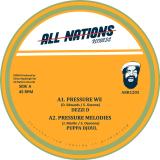
After the Dezzi D tune was released last year on an LP on Chouette Records, All Nations puts out this 12" with the song from Afrikan Simba on the same riddim, plus an extra cut from Puppa Djoul, talented multi instrumentist from France.
out of Stock
Last delivered 4 months ago available to reorder, subject to availability
Toronto’s Ducks Ltd. (formerly Ducks Unlimited), the bright jangle-pop duo of Tom McGreevy (lead vocal, guitar, bass, keyboards) and Evan Lewis (guitar, bass, drum programming), accomplish the impossible. The pair craft songs that play to very specific inspirations without drowning underneath them—immediately evidenced on their critically acclaimed EP, Get Bleak, and sharpened on Modern Fiction, their debut LP. “The Servants, The Clean, The Chills, The Bats, Television Personalities, Felt,” Evan rattles off. “Look Blue Go Purple is one I reference a lot with our production.” Echoes of ‘80s indiepop abound, but they never overwhelm. This is not a nostalgic record, after all, nor is it a derivative one. Instead, across 10 cheery-sounding songs, Ducks Ltd. explore contemporary society in decline, examining large scale human disaster through personal turmoil (hence the title, taken from a university course called Gnosticism and Nihilism in Modern Fiction, influenced by Graham Greene novels. Bookish indie fans, look no further.)
Writing the album was intimate. Tom drafted the nucleus of a song on an unplugged electric guitar and brought it over to Evan’s apartment, where the pair sat in his bedroom, placing percussive beats from a drum machine under nascent melodies, passing a bass back and forth, adding organs and bridges where necessary. “It’s computer music trying extremely hard not to sound like computer music,” Tom jokes. Fearful that limited and expensive studio time would kneecap the project creatively, eroding their charming naivete, the pair re-recorded the album in a storage space owned by Evan’s boss. Ornamentation through collaboration followed: there’s Aaron Goldstein on Pedal Steel in the Go-Betweens’ “Cattle and Cane”-channeling interlude “Patience Wearing Thin,” Eliza Niemi on cello (“18 Cigarettes,” a song loosely inspired by a 1997 Oasis performance of “Don’t Go Away”), and backing harmonies from Carpark labelmates The Beths (on an ode to friendship at a distance, “How Lonely Are You?,” “Always There,” and on the sped-up Syd Barrett stylings of “Under The Rolling Moon.”) While in his native Australia due to covid-19, Evan worked closely with producer James Cecil (The Goon Sax, Architecture in Helsinki) on Modern Fiction’s finishing touches—at one point, in the mountains of the Macedon Ranges in Victoria, recorded a string quartet (featured on “Fit to Burst,” “Always There,” “Sullen Leering Hope,” “Twere Ever Thus,” “Grand Final Day.”)
It’s danceable, depressive fun, with some relief: in “Always There” and “Sullen Leering Hope,” Modern Fiction’s faithful heart. “There’s a tendency in my writing, because of my world view, to be very bleak.” Tom explains. “A quality I don’t always see in myself and really appreciate in others is the courage to go on.” And yet, the record manages resiliency—enough for pop fans to fall in love with.
Transparentes blaugrünes Vinyl mit O-Card. Oliver Coates' Original-Soundtrack zu Pillion (dt.: Sozius"), einem britisch-irischen Spielfilm von Harry Lighton aus dem Jahr 2025. Der Liebesfilm handelt von einem schüchternen jungen Mann, der sich auf eine unterwürfige SM-Beziehung mit einem älteren Motorradfahrer einlässt.
Christopher Tignors ,Bleeding Past the Edges" ist ein bewusster Kontrapunkt zur heutigen, von KI geprägten Musiklandschaft und stellt die menschliche Hand fest in den Mittelpunkt des Schaffensprozesses. In einem kleinen Studio voller Geigen, Stimmgabeln, Pedalen und maßgeschneiderter Software hat Tignor ein Performance-System entwickelt, das sich weniger wie eine Maschine, sondern eher wie ein lebendiges Instrument verhält. Anstatt sich auf Loops oder Backing-Tracks zu verlassen, generiert er jedes Stück in Echtzeit und fängt Klänge ein und formt sie um, während er spielt. Geigenstreichmelodien erweitern sich zu vielschichtigen Mustern, perkussive Schläge lösen sich entwickelnde Strukturen aus, und selbst eine einzelne Stimmgabel kann sich zu einem ganzen harmonischen Feld entfalten. Das Ergebnis ist ein immersiver, orchestraler Klang, der live von einem einzigen Interpreten erzeugt wird, der sich durch ein eng verwobenes System aus Gestik, Timing und Code bewegt. Jedes Element beginnt als physische Handlung und bleibt damit verbunden, was der Musik ein Gefühl von Unmittelbarkeit, Risiko und Präsenz verleiht, das sich durch das gesamte Album zieht. Auf dem Album bewegt sich Tignor fließend zwischen rhythmisch geprägten Kompositionen, die das Instrument als perkussiven Motor behandeln, und melodischeren Werken, die im expressiven Kern der Violine verwurzelt sind. Die Lead-Single ,Weight of Words" unterstreicht diese Balance und entfaltet sich mit einer narrativen Klarheit, die Tignors Kompositionsansatz widerspiegelt. Er beschreibt diese Stücke oft als ,Kurzgeschichten", in denen Melodien als roter Faden dienen und jedes Werk durch wechselnde Strukturen und emotionale Bögen führen. Der Titel ,Bleeding Past the Edges" verweist auf Momente, in denen die Musik über ihr ursprüngliches Konzept hinausgeht, in denen sich die Struktur lockert und der Klang nach außen fließt. Tignor vergleicht den Prozess mit ,einem Seiltänzer", bei dem sorgfältige Vorbereitung auf die Möglichkeit einer Transformation in Echtzeit trifft. Obwohl die Systeme streng ausgearbeitet sind, behält jede Aufführung ein Element der Unvorhersehbarkeit, wodurch sich die Musik ständig weiterentwickeln kann. Im Laufe von zehn LPs, die über Western Vinyl und New Albion erschienen sind, hat sich Tignor in klassischen und experimentellen Kreisen breite Anerkennung erworben. The Guardian bezeichnete ihn als ,absurd talentiert", während Bandcamp seine ,schiere technische Meisterschaft" hervorhob und The New York Times seine seltene Fähigkeit lobte, Computer bei Live-Auftritten nahtlos mit akustischen Instrumenten zu verbinden. The Wire lobte seine Kompositionen zudem für ihre fließenden, sich entwickelnden Strukturen. Über seine Soloarbeit hinaus hat Tignor mit Künstlern wie Rachel Grimes, Helios, Jefre Cantu-Ledesma, John Congleton und This Will Destroy You zusammengearbeitet. Sein Hintergrund verbindet verschiedene Disziplinen: Er hat einen Doktortitel in Komposition von der Princeton University, einen Master in Informatik vom NYU Courant Institute und einen Bachelor vom Bard College, wo er bei dem Dichter John Ashbery studierte. Mit ,Bleeding Past the Edges" führt Tignor diese Stränge zu einem Werk zusammen, das sich sowohl streng konstruiert als auch lebendig anfühlt - ein Album, das Performance, Körperlichkeit und die anhaltende Ausdruckskraft menschengemachter Klänge in den Vordergrund stellt.
This double-album pushes the boundaries of E-Jazz, blending heavy electronic weight with sophisticated improvisation. Featuring a standout collaboration with Llibert Fortuny, the production treats the computer as a "fourth band member," resulting in a dense, groove-heavy record defined by intense crescendos. A top-tier pick for shops specializing in Nu-Jazz, Broken Beat, and
Electronic Fusion.
Despite its tragic breakup, Yugoslavia as a political, social and cultural phenomenon still inspires generations, especially those who were born or lived at the time of this utopian land of South Slavs. Those who didn’t enjoy the privilege are still amazed by its 1970s and ’80s music scene and the number of very modern, high quality acts that were so often ahead of their time. Two such acts were Data and The Master Scratch Band, both founded by Zoran Jevtic and Zoran Vracevic, who introduced synth-pop, breakbeat, and hip-hop music in Yugoslavia in 1984 with their releases: SP Neka Ti Se Dese Prave Stvari/Ne Zovi To Ljubavlju and miniLP Deogut (Jugoton). Our latest release, “It Was Ridiculous, It Was Amazing!” gathers their earliest unreleased material from 1981-1983, showcasing a broader range of genres – alongside synth-pop and breakbeat/hip-hop, they also experimented with industrial, EBM, minimal synth, and electro-funk!
The whole record is divided into two parts: on A side there are 7 previously unpublished songs by group DATA, and on B side there are 4 previously unreleased recordings by The Master Scratch Band.
The Data side opens with two unexpected “shocker” tracks: Ja Nisam Kao Ti” (eng. I am Not Like You) and “Izumi” (eng. “Inventions”) from 1981, where they sound like early Deutsch-Amerikanische Freundschaft with unusual vocal pan sound effects on Serbian lyrics and uncompromising synth-based sound. Equally unpredictable are the next two songs: atmospheric “España” and dusty “Damage In My Head,” where Zoran Jevtić boldly steps into the lead vocal role. But the surprises don’t end there. The next two songs, France and Strahovi (eng. “Fears”), bring a mysterious and nostalgic atmosphere, elevated by the irreplaceable sound of the modular Roland System-100M. At the end comes the greatest surprise of all: Data covers YMO-Ballet in a song called Ne Zelim Da Tako Zive (eng, I Don’t Want Them Living Like That) and puts some extra energy in rhythm without losing the original song’s sensibility. Like in the original, the lyrics are tender and yet mysterious and provocative.
The Master Scratch Band side contains the very first versions of the songs Break War, Jailbreak, and Computer Break, originally recorded in studio Druga Maca in Belgrade in 1983. These versions were not released on their mini-LP album Dégout (Jugoton, 1984), and they are actually the first ever hip-hop/Breakbeat recordings in Yugoslavia. With great enthusiasm, every sound was uniquely crafted from scratch using the finest analog gear available in the early ’80s. The two young artists, aiming for international success, chose to write their lyrics in English. The album’s final track, “Mad Scratch,” showcases their talent for creating impressive sound effects, which would be a delight for contemporary DJs and producers who specialize in sampling and scratching old-school hip-hop.
This release is truly a “100% digger’s gem” – 11 previously unreleased tracks from legendary pioneers of electronic, hip-hop, and breakbeat. A collection to discover, enjoy, play, and treasure forever!
out of Stock
Last delivered 5 months ago available to reorder, subject to availability
mclusky sind eine Band, die eine Band war, keine Band war und nun wieder eine Band ist. Sie wurde Ende der 90er Jahre gegründet und löste sich 2005 nach drei Alben zum ersten Mal auf. Meinungen zu diesen Alben finden sich im Internet. Der Weg zurück zur Band begann 2014, als die Band sporadische Konzerte spielte, um Geld für einen lokalen Veranstaltungsort zu sammeln, der von der Schließung bedroht war. Nach einigen Rückschlägen, die man als die schönsten Seiten des Lebens bezeichnen kann, veröffentlichten sie 2025 ihr erstes Album seit zwanzig Jahren. sporadische Konzerte gab, um Geld für einen lokalen Veranstaltungsort zu sammeln, der von der Schließung bedroht war. Nach einigen Missgeschicken, die man als Teil des Lebens in seiner schönsten Form bezeichnen kann, veröffentlichte die Band 2025 ihr erstes Album seit zwanzig Jahren. Nun, im Jahr 2026, setzt sie ihre musikalische Reise mit weiterer neuer Musik in Form dieses 6-Song-Mini-Albums fort. Der Zeitpunkt dieser Veröffentlichung fällt mit einer US-Tournee im Frühjahr 2026 zusammen, die nach ihrer Australien-Tournee im Januar und einer Reihe weiterer Tourneen aus dem vergangenen Jahr rund um den Globus stattfindet. Die Rückkehr der Band wurde mit Begeisterung aufgenommen, insbesondere von der Presse, wo Medien wie NPR schwärmten: ,Progressiver, ungewöhnlicher, frecher Post-Punk mit echtem Sinn für Humor und Grandiosität. Diese Musik ist einfach voller Kreativität", und Pitchfork sagte: ,Mclusky, bekannt für ihre explosiven Live-Auftritte, klingen auf ihrem Comeback-Album genauso laut... Viel Spaß dabei." Das Album enthält vier neue Songs, die im Herbst 2025 aufgenommen wurden, sowie einige Songs aus ihrer nur digital erhältlichen Comeback-EP aus dem Jahr 2023.

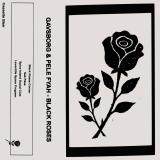


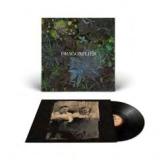
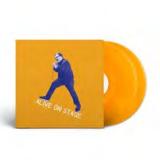








![Various - [QR]V.205.DTON.26](https://www.deejay.de/images/l/7/1/1248271.jpg)