A1 - Desire
Opening the EP in quietly epic fashion, Desire begins with a delightful beat pattern with adistinctive cymbal hit set over warm bass tones and whale song samples. A smooth, thoughtful bass melody is introduced which joyfully intersects with gorgeous piano keys while swirling strings and atmospheric vibes layer and recede like tides of the ocean, creating a truly unique journey of a track that will linger anywhere it may be heard.
A2 - Voidscaping
Instantly setting the scene with crisp, striking breaks, Voidscaping is an atmospheric treatfor the senses with serene throwback pads reminiscent of the halcyon days of Good Looking. Bringing the piece up to date for the Spatial era is the typically intricate blending of reflection and intrigue ASC conjures with his sampling and reverb work, effortlessly thickening the soundscape with memories old and new.
AA1 - Let Go
Opening with the vibrant sounds of twilight nature and metallic bongos, ASC sparinglydeploys a glorious choral vocal before the breaks take off with an energetic pattern drivenby constant, playful hi hats. As the track develops, questions are asked of the listener bythe curious atmosphere, gradually unraveling with strings, synths and trademark vocalusage, offering a new perspective with each listen.
AA2 - Meltdown
A darkly, anxious undertone floods the mix as Meltdown grips the listener from the first barwith skillfully sequenced minimal breaks, hi hats that whoosh in and out like evening crickets you can't quite track, and intense ambient padwork. A longing female vocal occasionally yearns over the various melodies which enter at will, discreetly developing the mood with purpose, unfurling a stream of aural consciousness from this incredible producer.
Words by Chris Hayes (Spatial / Red Mist)
Поиск:conscious sounds
Все
Dawn Richard and Spencer Zahn share a common collaborative ethos, a genuine sense of musical curiosity, and a cosmopolitan eagerness to escape the conventions of genre. That shared vision first brought them together on 2022’s Pigments icy and warm, stripped-down and grand, familiar and otherworldly and now it has reunited them for Quiet in a World Full of Noise. By turns intimate, soul-baring, spectral, and startling, Quiet in a World Full of Noise blends atmospheric and orchestral soundscapes with mellifluous soul, jazz, and journalistic vocalizing driving it all home with stark, confessional lyricism. The new album finds Richard at her most raw and exposed. This year, Richard’s musician father experienced mini strokes while being diagnosed with cancer; and last year, her cousin Cisco was fatally shot seven times in New Orleans. Richard channels the emotional impact of these traumatic experiences of loss into her lyrics and vocal performances, which are left bare and human here, raw and unprocessed across the album. Quiet expands the definitions of what constitutes progressive, avant-garde R&B by rewriting them altogether. On paper, Richard and Zahn’s audacious, impressionistic musical collaborations feel like a surprising match. Richard, a New Orleans–reared visionary, has had an improbable journey from late 2000s reality television and mainstream pop with girl group Danity Kane to become one of the most prolific, experimental, and visible indie R&B singer-songwriters of the last decade and a half, with seven solo albums under her belt. Zahn is an East Coast–raised multi-instrumentalist and composer working at the intersections of jazz, Americana, classical, and ambient pop. His growing solo discography includes People of the Dawn, Sunday Painter, Pale Horizon, and Statues I & II, as well as the duo’s first release, Pigments. “Pigments was one of the best projects I’ve ever made,” Richard says, “and the furthest I’ve ever been pushed as an artist.” The album was a critical hit, hailed as Best New Music by Pitchfork and receiving praise from Stereogum as Album of the Week, NPR Music, Bandcamp Daily, The Fader, Bitter Southerner, and Edition, among many other publications. The making of its follow-up, Quiet in a World Full of Noise, began in 2023 in upstate New York. Fresh from a break-up, Zahn sat at his piano and poured himself into writing and recording instrumental compositions. “I wrote all these stream-of-consciousness pieces on piano, and they were eerie, spacious piano tracks,” he said. He used a piano that had been unconventionally tuned to the room rather than to standard pitch. These oddly-tuned, eerie instrumental recordings were never intended to be an album. Six months later, he listened to the recordings again and sent them to Richard who immediately recognized their potential and said, “Oh, this is the next album.” Richard went into the studio the next day and wrote and recorded melodies and lyrics to Zahn’s piano recordings. Zahn brought in gifted musicians like Bryan Senti on strings (violin, viola, and violoncello da spalla) and CJ Camerieri on brass (French horn, flugelhorn, and trumpet). In some cases, like on the track “Life in Numbers,” Zahn used only the original first-take piano recording and scratch vocal, resulting in an intimate close-up of both Richard and Zahn.
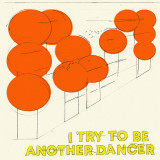
Brussels is a highway where rainbow-fuelled melancholia kids race its track, mountain and road bikes. Endless summers cherish the collective chosen chaos of the city; every corner displays wild micro-natures, buzzing insects, and rare weeds fourishing organically; tape hiss and AM radio compression are the soundtrack of everyday life. And hear! Originated in the Brussels DIY, indie rock and noise scene, a new kid on the block appears: Another Dancer.
They deal in utopian music - of the open, welcoming and whatsoeverish kind. It’s fresh, snotty, neurotic art-rock deeply rooted in 80s/90s DIY aesthetics. The songs on their debut album balance gently between forgotten pop hits and broken sound experiments. In their world, any shitload of weird, random, and badly synchronized sounds unveil broken-hearted pop mastery. In the Another Dancer universe, radios are stuck to WFMU and Soulseek is a self-conscious AI producing 80ies psychedelic FM-rock.
Brussels-based Another Dancer is outdated, wild at heart and elegantly shy. Their full album I Try to Be Another Dancer is out September 10th on Bruit Direct Disques and Aguirre.
"Flashes of the shambolic post-punk of Good Sad Happy Bad and the goofy, fraternal synth-pop of the blog-era gem Teenagers can be seen, often simultaneously, across the new single from the Brussels-based band Another Dancer. Vocals are layered on top of each other to a conversational near-cacophony, like you’ve been placed at the center of a Dry Cleaning show where everyone is, improbably, in a good mood. Sunny synth sweeps jostle next to bent, jangly guitar lines for a song that finds a special kind of vibrance in its mess. — Jordan Darville”
ercury Rev take you on a swan dive into the mystic: a rapture of ballad-dreams and emotional memoir at the crossroads of The Dharma Bums, Pet Sounds and Side Three of Electric Ladyland. A profound, transcendant trip from the psychedelic explorers who brought you Deserter's Songs.
David Fricke In upstate New York, deep in the seam between the Catskills mountains and the Hudson Valley, a richly swelling, spellbound sound emerges, eddying and flowing like the local Esopus Creek, or in the slipstream of the grander Hudson river, carrying the flotsam and jetsam of our hopes, dreams, fears. A sound composed of organic and electronic; guitars, keys, brass, strings, woodwind, drums - and a voice of incantations, tapping streams of consciousness that similarly eddy and flow.
Spiritually, literally, psycho-geographically: where else does Mercury Rev’s ninth album Born Horses spring from? This cascade of gleaming, glistening psych-jazz-folk-baroque-ambient quest that searches its soul but can never truly know the answer? A sound and vision linked to their exalted past whilst quite unlike anything they have created before?
The answer is somewhere between the homes of founder members Jonathan Donahue (the hamlet of Mt Tremper) and Grasshopper (the town of Kingston), in their veins and brains of their now-legendary tapping of musical cosmology, and the vital presence of new permanent member Marion Genser (keys), plus long-term ally Jesse Chandler (keys) and guests Jeff Lipstein (drums), Martin Keith (double bass) and Jim Burgess (trumpet). A place that feeds off the levitating mood of their last album, 2019’s expansive tribute Bobbie Gentry's The Delta Sweete Revisited, and the instrumental psych explorations under the names of Harmony Rockets and Mercury Rev’s Clear Light Ensemble, and the spiritual guidance of avant-garde artist Tony Conrad and Beat poet Robert Creeley, to whom Born Horses is
dedicated.
Pour Un Homme Seul, the debut EP from Pete Beardsworth, is a cathartic exploration of the spiritual world of jazz and the healing force within. Originally just simple melodies jotted down in the back of a small leatherbound notebook, the songs were written during a long period of solitude in the year following a traumatic accident that left Pete without the bottom parts of his legs. Charting a journey of hope and rediscovery, the tracks are aural fragments of a voyage through a harsh, personal wilderness, and back again to civilization and consciousness. This voyage is painted with woodwind, electronics, vocals, found sounds, and synthesizers provided by Pete.
Accompaniments by renowned Erhu player Ling Peng, Yazmin Lacey's drummer Tom Towle, guitarist Roshan Gunga, bassist George Butt, and vocalist Daisy Godfrey. It follows long-standing collaborations with Yazmin Lacey, for whom Pete produced EPs Black Moon and When The Sun Dips 90 Degrees, the genre-crossing Invisible Orchestra, Brooklyn's own Chris Rock, and work as part of free-jazz inspired electronic outfit Three Body Trio.
Absolutely electrifying and timeless, the 1973 Philly disco anthem is back! Now fully licensed and repressed for 2024 on a premium 12" single, "The Love I Lost" shines brighter than ever. This all-time classic showcases the extraordinary vocals of a young Teddy Pendergrass, who was on the cusp of becoming one of the era's most successful male performers. This full-length LP version, generously spread across an entire side of the 12" single, is an essential addition to any collection. It's one of those formative tracks that laid the foundation for the disco explosion—pure perfection!
Flip the record, and you'll find another landmark tune: "Wake Up Everybody." This 1975 mellow dancer carries a powerful, heartfelt message and stands as another monumental hit in the Blue Notes' impressive catalog. With socially conscious lyrics that resonate even today, this track has solidified its status as a timeless classic, exuding depth and soul. The entire B-side is dedicated to this one track, providing ample room for its message to resonate and ensuring top-quality sonic playback for DJs and dancers alike. If you appreciate soulful sounds, this record is a must-have—peerless and unforgettable!
2024 REPRESS
Fourth corner. Physically, it's where four states in the U.S. come together at one singular point. Symbolically, it's where the four great rivers in China come together as one. Or, it could be the cycle of life during the four seasons of the year. For Trixie Whitley, it's a metaphor for trying to find balance and belonging from the songs that make up her scintillating debut album, Fourth Corner.
Whitley burst into public consciousness in 2011 as the lead singer of Black Dub, super-producer Daniel Lanois' (U2, Bob Dylan) project, blowing people away with a voice and presence beyond her now-25 years.
And it's that voice: an emotional, blues-drenched instrument that ranges from a lilting slap to a knock-you-backwards uppercut. On Fourth Corner, Whitley explores the range of human emotion in another set of four: utter love, total rage, unadulterated happiness, and crippling loneliness. "It's those elements of life I keep coming back to," she says. "Both as a person and musically as well."
Recorded in New York with producer/keyboardist Thomas Bartlett (aka Doveman, who's also worked with Glen Hansard, Antony and the Johnsons, Grizzly Bear and the National) engineer Pat Dillett (David Byrne, St. Vincent, Mary J. Blige), and string arrangements by Rob Moose (Antony, Bon Iver), aching songs like "Need Your Love" have Whitley working from a spare beginning that explodes into a blossom dripping with pleading vocals and delicate piano. On tracks like the sassy "Irene" and the sinister "Hotel No Name," Whitley lays down a snarling guitar line on top of scuzzy beats while her voice veers from defiant to remorseful.
It's a tantalizing mix of sounds that can come only from someone who says: "I'm from everywhere but have never felt like I belong." Whitley lived a nomadic life: born in Belgium, she split her time growing up there and in New York but also frequently visiting family in France, Texas, and Mexico. Her mother came from an artistic European gypsy family, filled with musicians, painters, writers, and sculptures, while her father, renowned singer-songwriter Chris Whitley, thrust her into the world of music as a toddler when she joined him onstage in Germany at age three.
After a few years of touring and recording experience with some of the most inspiring artists around, Trixie is ready to presenther anticipated first solo full length.
"I'm psyched and petrified," says Whitley in her archetypal wide-eyed wonderment mixed with a fierce determination. "As a songwriter, I want to go to places people don't expect and with that is complete freedom of expression." Perhaps that place is another version of a fourth corner: something spiritual perhaps, certainly emotional, but most definitely real.
There is something simultaneously both brand-new and retro about 'All News Is Good News’ - the debut album from Melbourne's instrumental soul group Surprise Chef. It sounds like something dreamt up by lo-fi cousins of David Axelrod and Janko Nilovic, with dramatic Library-music-eqsue cinematic arrangements echoing both light and dark, delving into moments of dissonance and positivity.
There is a meticulous education of 1970’s soul on display that touches on the legacies of the great composer / producers, yet at the same time this is a truly contemporary record that could have only been made now. The first limited pressing of 'All News Is Good News’ was released on the band's own 'College Of Knowledge' imprint in November 2019. It slipped rapidly into the collective consciousness of underground music lovers around the world, with all copies selling out within a week and becoming a firm favourite at Mr Bongo HQ in the process.
We felt Surprise Chef had made something very special, a future-classic, and that needed to be heard well beyond those lucky enough to have bagged those limited first copies. Formed at the end of 2017, Surprise Chef have grown within the fertile, creative, and supportive Melbourne music scene. Whilst the band is comprised of four core members, the album features friends and family as guest instrumentalists on flute, saxophone, vibraphone, congas, and assorted percussion; all adeptly recorded by engineer Henry Jenkins from the band Karate Boogaloo. The warm-raw-authenticity of the album was captured in the recordings live to tape over a handful of sessions in the band’s home studio in Melbourne’s inner-northern suburb of Coburg. As band member Lachlan Stuckey explains “All of the music we record is tracked live to tape, simply because so many of the records we love most were made that way".
The results are a captivating journey of instrumental cinematic-soul that will connect with the hardened Axelrod, Truth & Soul, El Michels Affair, and Daptone's fans, as well as the open-minded first-time listener. We are very excited to share this first slice of Surprise Chef’s world, with plenty more magic from these guys coming around the corner very soon.
Also available on Red Vinyl - Limited Edition of 200 Copies.
Simple Reality cements the short lived legacy of Coventry DIY group Skeet.
Emerging from a scene of first-generation punks and 2 Tone kids, Skeet was instigated by Gary and Nigel Meffen in 1981, fusing tightrope instrumentals with a Roland CR-8000 under the glow of projected visuals. After a cassette of their debut performance found its way to Kay Booth who worked at Inferno Records, the unsuspecting frontwoman took the liberty of adding her own vocals. Instantly embraced as a permanent member, Booth’s shy delivery and open-diary expressions of social alienation and romantic rejection hovered over the brothers’ scratchy guitar and agitated bass.
Playing as few as 10 shows, their unnerving minimalism was recorded in a suburban home studio, borrowing a reel-to-reel from Toby Lyons (The Colourfield) and a mixer from Jerry Dammers (The Specials). Record labels gestured interest until one day they were no more - no arguments, no official split, just a silent parting of the ways and three people taking journeys in different directions. Unheard and unloved in the vaults for nearly four decades, 'Brief Call' finally resurfaced via the Coventry Music Museum compendium Alternative Sounds Volume 1, followed by a micro pressing of the full suite on Chris Long’s Almost Unknown imprint in 2023.
Simple Reality now offers a definitive snapshot of these must-hear neurotic post-punks. Mastered by Skeet fanatic Mikey Young, newly discovered instrumental multitracks are restored alongside a live recording of their final stand. Performed atop of a trailer in a pub beer garden, the release-worthy desk tape adds three new tracks and a more energised swing at ‘Left On the Shelf’s apathetic techno-pop.
RIYL: Fire Engines, 23 Skidoo, A Certain Ratio, Young Marble Giants, pel mel
Steve Marion, the critically acclaimed-and completely wordless-songwriter and guitarist known as Delicate Steve, has unveiled a new album called Delicate Steve Sings. Is the album title a reference to the instantly recognizable "voice" of his guitar? Does he actually sing this time? Has he not been singing all along? That"s the crux of Sings-Marion is the rare guitarist where you can put on any of his records and know exactly who"s playing. In an indie rock landscape stuffed end-to-end with guitars and amplifiers, nobody else sounds like this. That unique voice has kept Steve busy in an unpredictable variety of settings. The sheer spread of his work outside his own records-collaborating with Miley Cyrus and Paul Simon, playing in Amen Dunes and the Black Keys, and being sampled by Kanye - doesn"t mean Steve"s a chameleon. It means he"s singular. Delicate Steve Sings is a record centered on channeling iconic voices with his guitar. In doing so, Marion is casting himself in the role of iconic singers like Willie who make standards their own. In the process, he reveals just how singular (dare we say iconic) that voice is. The guitar sings these songs-smoothly, sweetly, boldly, and on its own terms. Recorded with Jonathan Rado on bass, Kosta Galanopolous on drums, Renata Zeiguer providing strings, and co-writer Elliot Bergman, the album features both original songs with titles that suggest they might be new recordings of classics. "I"ll Be There" is smooth like a lost Bill Withers track; "Easy for You" isn"t the Elvis song of the same name, but there"s a hint of the king in there, in addition to Marion"s own takes onclassics such as the Emersons" "Baby," The Beatles" "Yesterday" and Otis Redding"s "These Arms of Mine." "You"re tapping into something universal and in the consciousness of pop music," Steve says-tacit permission for his guitar to drift into vocal expressions he"s internalized through years of close, repeated listening. Just like all the great singers.
Kannon is an album which was composed in the aftershadow of SUNN O)))’s most recent successes in immersive collaboration (the group worked with Scott Walker on Soused, Ulver on Terrestrials in 2013 and 2014) and also from the broad and influential wake of their epitimous Monolith’s & Dimensions . Kannon emerged both independently as a conceptual entity and with roots in the legacies of those projects, yet was fully realised years later, in 2015. The album is 36 minutes in length and consists of three pieces of a triadic whole : Kannon 1, 2 and 3.
The album celebrates many SUNN O))) traditions ; Kannon was recorded and mixed with SUNN O)))’s close colleague and coproducer Randall Dunn in Seattle, in Studio Litho, Aleph and Avast! ; and the LP includes performances by long term allies and collaborators Attila Csihar, Oren Ambarchi, Rex Ritter, Steve Moore and others. And at the core the composition centers around the dynamic and intense guitar and bass interplay of SUNN O)))’s founders : Stephen O’Malley & Greg Anderson.
It’s possibly the most figurative album SUNN O))) has created, which is unusual as they usually dwell in layers of abstraction and subjectivity. On the other hand the album is the most outright “metal” in years, drawing personal associations and memories of cherished albums like Panzerfaust and Twilight of the Gods again to the forefront of consciousness. At the third time it is very close to the cyclical character of mantra which the band has evolved into as a living creature, the enormity of intense sensate detail and manifestation of the live in concert face of SUNN O))), the organism that has flourished, metamorphosed and transcended tremendously over the past ten years.
The literal representation of Kannon is as an aspect of Buddha : specifically “goddess of mercy” or “Perceiving the Sounds (or Cries) of the World”. She is also sometimes commonly known as the Guanyin Bodhisattva (Chinese: 觀音菩薩) amongst a plurality of other forms. There is a rich lineage behind this idea tracing back through many asian belief systems, with as many names and cultural personifications of the idea .
SUNN O))) commissioned critical theorist Aliza Shvartz to write a text / liner notes around these ideas and topics. She also explores the relations and perceptions to their approach to these ideas via the metonym of music and SUNN O)))’s place/approach within the framework of music and metal overall.
SUNN O))) also commissioned Swiss designer/artist Angela LaFont Bollinger to create the cover artwork, an abstracted sculpture of vision of Kannon, and the French photographer Estelle Hanania to capture portraits of the core trio (Csihar, Anderson, O’Malley) in the impressive and obscurant Emanuel Vingeland mausoleum in Oslo.
The LP is packaged in immaculate tip on gatefold sleeve by our long time comrades Stoughton Printing, and pressed at Cascade in Portland, Oregon. CD, download and coloured vinyl versions are also available
Lullaby for the Debris is the second album from Moses Brown of Institute’s solo project Peace de Résistance. Those of us who loved Peace de Résistance’s 2022 debut, Bits and Pieces, will be pleased to hear that much of what made that album so memorable—the glam-infused art rock sound, the gritty yet richly textured production, and Moses’s bluntly class-conscious lyrics—carries over into Lullaby for the Debris. Yet Lullaby for the Debris also sounds more refined, more timeless than its predecessor, with “40 Times the Rent,” “Coddle the Rich,” and “Ain’t What It Used to Be,” all built around chooglin’ Lou Reed-style riffs beamed in from the great rock and roll beyond. Elsewhere on the record, Moses’s arty side shines through, with “The Funny Man” and “Pay Us More” full of uncanny sounds that invite the listener to bathe in their rich sonic textures. “I Am” and “You Are Absurd” move into a new territory Brown calls “despondent funk,” their rubbery bass sounds and eerily progressive soundscapes evoking Station to Station-era Bowie, while the title track closes the album on a pensive note, landing somewhere between 70s minimalist composition and the mellower moments from Eno’s solo albums. The real strength of this record, though, is Brown’s ever-developing songwriting skills, which meld wry social observation and Crass-style confrontational politics to melodies you’ll sing along with for the rest of your life
This is the memorable debut album by Wendell Harrison, the founder of TRIBE, under his solo name, and is also known as the first version of "Message From The Tribe", which was released the previous year as the iconic masterpiece "TRIBE". The first version of "Message From The Tribe" (a.k.a. "Cliff Jacket"), which was released the previous year, is an updated version of the A-side that Wendell Harrison steered! The opening "Mary Had An Abortion" (M1) and "Consciousness" (M5), which quickly builds tension with its poetry reading and freaky sound that conveys a strong message in a deep voice, and the ferocious "Soulful Soul" by a young Wendell Harrison. The soulful "Vol II Angry Young Man Part I - Part II" (M3-4) is overwhelmed by the blows of the young Wendell Harrison, "Rebirth" (M6) is shaken by the heart-string-tugging horns against a tranquil soundscape, and "Mellow & Spiritual" (M7) is a mellow and spiritual masterpiece. Where Am I" (M2), a mellow and spiritual song loved by many DJs and diggers! All tracks have been newly mastered and reissued in the original 1st pressing jacket with full-size printed visuals!
BALTHVS is THE premier eclectic & psychedelic world funk trio from Bogotá, Colombia, sparking a counterculture revolution in their home country.
Cause & Effect is BALTHVS's second record. An evolution from its initial chill psychedelic sounds portrayed in 2020's 'MACROCOSM'. Owing to its Colombian roots, the album has plenty of Latin American rhythms, as well as ventures into Deep House, Turkish Music, Vaporwave, Trip-Hop and Disco. Their signature psychedelic elements are always present, ready to engulf the listener in a hypnotic trip across time, space, cultures, and different eras.
The name of the album reflects an ancient hermetic axiom. Nothing is accidental, everything is invoked. Chance or fate are names for a cosmic law not comprehended. Everything you do, consciously or unconsciously will come back at you, nothing happens without reason.
Prolific Danish drummer Emil de Waal has come to be known for his unique and personal contributions to a wide variety of musical projects in jazz, pop, rock, and electronica, including Kalaha, Baghdad Dagblad, Maluba Orchestra, and his own quartet to name a few. Well versed in the art of collaboration, his new record is his first solo undertaking, combining his jazz musicianship with his affinity for the offoff-kilter and electronically manipulated. Comprised of seven original compositions, as well as creative reinterpretations of pieces by Charlie Haden, Duke Ellington, and Hans Henrik Ley/Jannik Hastrup, the record is a collection of intimate, interactive duo performances decorated with sounds and textures from the electronic world. The record s title translates to four eyes ", a double double-entendre alluding to the album s duo approach, under four eyes so to speak, as well as to the fact that de Waal wears glasses. Making a conscious effort to collaborate with more female instrumentalists as well as musicians de Waal hadn t played with before, Fire Ojne " features a wide spectrum of organic instrumental timbres on the prepared piano, clarinet, saxo-phone, pedal steel guitar, and bass flute. From sung melodies and winding improvisations to spacious, experimental textural approaches, each piece sees de Waal engage in a private conversation with a musician he s admired. From the bluesy New Orleans feel of Ellingtons Limbo Jazz "", to the glitchy, menacing, avant avant-garde groove of Halvfirs Fems "", to the spacious, twinkling, ethereal Diskurs "", the album showcases the staggering breadth of the drummer"s influences and ideas. Programmed drum beats, vast reverbs, foley recordings of flowing water, and ricocheting delays craft an expansive, surprising and inventive context for improvised music in the 21st Century.
Da Best Riddim Eternal Action Krew ! Here is the mission that DA BREAK has given itself for this 3rd album : To drop a new
opus of great quality, which will remain eternally engraved in the memories of Soul Music... BOOM! As simple as that! ;)
Jennifer "Hawa" Zonou & Rémy Kaprielan, founding members of the group, have decided to tighten the ranks and clarify
the content of their music: an aesthetic still anchored in their dear 90's Soul Hip Hop culture, but also with a sharpened ear,
attentive to today's world and sounds, always searching for federating grooves and warm vibes.
DA BREAK has entrusted the production of the LP to Pierre Vadon (also the band's Live keyboard player) who has already
proved the quality of his compositions and arrangements on the second album LET IT SHINE. The mission remains
unchanged: to gather, in the line of the social values defended in the 90s urban music, crib of their inspiration. Grounded,
conscious, questioning, celebrating, comforting, staying open to the world and to each other. Each song is a painting, a
story, a reflection...
Composed during an intense period on the emotional level, this album is a subtile mixture of musical influences: from the
most old school Hip Hop beat to the most contemporary flow, going from West Coast vibes to Caribbean colors. DA BREAK
IS BACK and its key word remains the same: GROOVE.
Far East Suite is a 1967 concept album by American jazz musician Duke Ellington, inspired by his group's tour through Asia. Ellington and longtime collaborator Billy Strayhorn wrote the compositions. Strayhorn died in May 1967, making Far East Suite one of the last albums recorded during his life to feature his compositions. The album won the Grammy Award in 1968 for Best Instrumental Jazz Performance – Large Group or Soloist with Large Group. The Penguin Guide to Jazz gives the album a four-star rating, noting that ""Ellington's ability to communicate points of contact and conflict between cultures, assimilating the blues to Eastern modes in tracks like ""Blue Pepper (Far East of the Blues)"", never sounds unduly self-conscious. This remains a postwar peak."" Allmusic calls this one of Ellington's ""more memorable recordings,"" describing it as an example of ""Ellington and Strayhorn in their late prime,"" and as such, ""quite essential."" Far East Suite is available on coloured vinyl for the first time as limited edition of 1500 individually numbered copies on orange coloured vinyl.
- A1: Jun Sato - Lorang
- A2: Fumihiro Murakami - Miko
- A3: Tadahiko Yokogawa - Stop Me
- A4: Love Peace Trance - Yeelen
- B1: Ichiko Hashimoto - Lete
- B2: Yosui Inoue - Pi Po Pa
- B3: Eiki Nonaka - Phlanged Vortex Clip
- C1: X Cara - Night In Aracaju
- C2: Poison Girl Friend - Nobody
- C3: Dream Dolphin - Take No Michi
- D1: Keisuke Sakurai - Harai Cd Version
- D2: Hiroki Ishiguro - Unity
- D3: Dido Shizuru Ohtaka Michiaki Kato - Mermaid
- D4: Keisuke Kikuchi - Retro Electric
2024 repress
Music From Memory is excited to announce a special compilation that they’ve been working on for some time now; MFM053 – VA – Heisei No Oto – Japanese Left-field Pop From The CD Age (1989-1996). Compiled by long-time friends of the label, Eiji Taniguchi and Norio Sato, Heisei No Oto delves into a world of music released almost exclusively on CD and brings together a fascinating selection of discoveries from a little known and overlooked part of Japan’s musical history.
The last ten or so years have seen a global wave of interest in Japanese music encompassing ambient, jazz, new wave and pop records from the 1980s, some of which is increasingly considered the most innovative and visionary music of that time. Although some music from this period, in the form of ‘City Pop’ or ‘rare groove’ records, had been coveted by collectors and DJs for a number of years, most Japanese music from the time was little known outside and often even within Japan.
Sometime around the mid 2000s, two Osaka record store owners, Eiji Taniguchi of Revelation Time and Norio Sato of Rare Groove, along with a handful of deep Japanese diggers such as Chee Shimizu of Organic Music records in Tokyo, began to explore beyond the typical ‘grooves’ or ‘breaks’. Much like their counterparts in Europe and the US, they began delving into home-grown ambient, jazz, new wave and pop records, discovering visionary music, often driven by synthesizers or drum computers, that broke beyond the typical confines of their genres.
Spending tireless hours in local record stores and embarking on digging trips across the country, Eiji Taniguchi and Norio Sato, much like Chee Shimizu, have been at the forefront of unearthing and introducing many of the very Japanese records now loved and sought after around the world. Yet as YouTube algorithms and vinyl reissues would transport such music into the global consciousness and demand and therefore scarcity intensified for such records, so Eiji and Norio have recently begun to turn their attention to CDs.
The title of the compilation Heisei No Oto refers to the sound of the Heisei era, which began in 1989 and corresponds to the reign of Emperor Akihito until his abdication in 2019. Marking the culmination of one of the most rapid economic growths in Japanese history, 1989 also coincided with the music industry’s final shift away from vinyl in favour of CDs. And, although compact discs were first introduced seven years earlier it wasn’t until late into the ‘80s that, beyond dance music labels, CDs became the exclusive format for major and independent labels in Japan and throughout the world.
This however didn’t signal the end of the innovation in Japan. Many of those same musicians who have become known for their work in the ‘80s would continue to produce outstanding music well into the mid ‘90s, as greater innovation and advances in musical equipment allowed Japanese musicians and producers to refine and explore new sounds. While musicians such as the seminal Haruomi Hosono, whose productions feature on a number of tracks, would continue to push the boundaries of these new technologies, these technological advances also meant less established musicians were able to make use of increasingly affordable but state-of-the-art equipment.
Including music by Haruomi Hosono as well as Yasuaki Shimizu, Toshifumi Hinata and Ichiko Hashimoto who have become known and loved around the world in recent years, Hesei No Oto also features Japanese pop star Yosui Inoue, producers Jun Sato and Keisuke Kikuchi in aaddition to less established artists from the contemporary, jazz, new wave, pop and dance music scenes. Bringing together a selection of tracks that seem to define these specific genres and in fact move fluidly between a number of them, the music on the compilation is again underscored by experimentations with synthesizers and drum computers though with something of a gentle Pop sensibility. Reimagined here then under the encompassing term ‘Left-field Pop’, this is an exciting chapter in Japanese musical history that has only just begun to be fully explored.
VA - Heisei No Oto - Japanese Left-field Pop From The CD Age (1989-1996) is a 2xLP/2xCD that includes liner notes by Chee Shimizu and artwork by Hagihara Takuya and is released on February 28th.
‘’The duo’s music has traces of 1980s dream pop and 1990s slowcore, particularly Low, another married-couple band. There’s more to the comparison than ink on a certificate. Marriage’s suffering and devotion breed a particular kind of intimacy. Windy & Carl often resemble an ambient version of Yo La Tengo, another group that centers on a long-wed duo and conveys a secret, profound sense of life beyond the music.’’ PITCHFORK 7.2
For the first time in almost twenty years, Windy & Carl’s second album for kranky, Consciousness, will be available on the vinyl format once again. The fourth album from Michigan’s premier space duo, again delivers their shimmering trademark wall of sound, beautiful vocalization, and delicate songcraft. Six sweet and easy new tracks recorded in their home studio in Dearborn, that drift and dream with layered guitars, keyboards, bass and a love-arsenal of delicious effects and distortion.
“There is an airy shaft of light that extends straight through these six extended pieces, offsetting the density of sound with a breezy loveliness that’s almost impossible to articulate, towering on a floating sea of mesmerising, sub-level sounds.” —Boomkat
“Genre descriptions such as ‘ambient guitar soundscape’, ‘wall of sound’ and ‘drone’ fail miserably to capture the astonishing, magical emotional beauty of their pieces.” —Cyclic Defrost
- A1: So Close
- A2: Life Of A Dj (Feat Demolition Man)
- A3: Outta Orda
- B1: Save Me From Myself
- B2: Endless Dreaming (Feat Bulgarian Goddess)
- C1: Automatic
- C2: Consciousness
- D1: Moonshine
- D2: Odyssey (Feat Evil B)
- D3: Keep On Dancing
- E1: Make Me Feel
- E2: Natty Love (Feat Sweetie Irie)
- F1: Pyramidz
- F2: Journey To Outer Space
Warehouse Find!
Undoubtedly one of the most exciting acts to have emerged in drum & bass over the past decade, Voltage has joined forces with Hospital Records for the release of his long-awaited studio album 'Balance Over Symmetry' which marks the tenth year of his journey as a solo artist.
No stranger to the Hospital family with an album, 2 EPs and a handful of singles under his belt as part of drum & bass powerhouse group Kings Of The Rollers, it's now time to explore the solo sounds of Voltage which have slowly but surely carved him to be one of the most respected DJ & producers in the scene.
In his true rambunctious style, Voltage sets the swing with a wild card. 'So Close' is a sub-120BPM synthwave weapon which matches his retro-inspired fashion to his musical vibrations. The combination of catchy vocals, an 80s-esque bassline and an unforgettable topline melody sees the creation of something extremely different yet irresistible from Voltage.
Not straying too far from the roots of his influences, 'Natty Love' features the groove inducing vocals of sound system legend Sweetie Irie. Saturated sub wobbles juxtaposed with potent string plucks are intertwined with ease, peppered with that signature Voltage flair.
Teaming up with reggae and dancehall superstar Demolition Man known for his skill as a vocalist, producer, MC and sound engineer, 'Life Of A DJ' combines the sounds of Demo's with Voltage's unmissable sonic technique. 'Save Me From Myself' exposes
the lighter side to Voltage as he illustrates his versatility as an artist through a soul-heavy amen roller with a classic liquid bassline.
Reminiscent of the days of euphoric hardcore, 'Keep On Dancing' sets the vibe with uplifting piano chops and adrenalised vocals as crunchy snaps and rhythmic cymbals keep things moving beneath. An iconic duo to everyone who knows their drum & bass, Voltage and Evil B come together for 'Odyssey' which sees ambient soundscapes
and earnest lyrics on a truly heartfelt piece of music.
With releases on foundational imprints such as Metalheadz, 31 Recordings, RAM, Souped Up and Spearhead to name a few, Voltage's discography speaks for itself in laying down his years’ worth of experience within drum & bass. With support for his productions coming from a wide range of influential selectors including the likes of Andy C, Hype, Friction, Goldie, Bailey, Hazard and Bryan Gee, it's safe to say that 10 years of Voltage has been a remarkable decade to say the least. Here's to 10 more…
Annechoic, the force of consciousness behind the acclaimed cult label Audiofugitives, steps out of the shadows once again to present her latest sonic endeavour, 'Eclectic Sugar'. Ana De Giles, whose career has been shrouded in secrecy since the early 2000s, continues to captivate audiences with her eclectic mix of electro, techno and the ethereal sounds of ambient, leaving a trail of enchanted listeners in her wake.
"Eclectic Sugar" represents an exciting new chapter in Annechoic's musical adventure, demonstrating her unparalleled ability to traverse sonic environments with sophistication and refinement, the EP's emotional depth and strength resonates profoundly.
Annechoic's musical journey has been marked by a dedication to sonic exploration and a keen ear for genre-bending compositions. She has carefully curated her craft, spending much of her career balancing roles in film post-production and co- running the label Audiofugitives. Nowadays, her DJ sets have earned her residencies and performances alongside esteemed artists.
With Eclectic Sugar, Annechoic invites listeners into her world - a world where boundaries blur, emotions soar and sonic landscapes unfold in fascinating ways. As you delve into her latest offering, prepare to embark on a border-crossing journey unlike any other, guided by the masterful hand of Annechoic herself.
The inaugural chapter of a two-part epic. Get ready for an eclectic and unique modern twist fusion of proto- EBM, New Beat, Electro, Rave Breaks and early UK house, weaving together a tapestry of diverse influences. Experience the raw energy pulsating through potent basslines, driving each track forward with unstoppable force.
Meanwhile, deep and thought-provoking lyrical voice samples captivate the mind, inviting listeners to ponder existential questions and explore the depths of consciousness and creating innovative soundscapes leaving an indelible mark on the listener’s psyche. Presented in ONE-OFF truly limited edition of 300 copies lacquered pressed on 180 gr. high quality solid MAGENTA vinyl. All tracks have been specially mastered for vinyl by Daniel Hallhuber at Young and Cold Studios (Germany).
Chami and DHAEUR step up for the first release on DIG Curated, the sub label of Dust in Grooves (DIG), a pioneering force in the world of vinyl techno, born in Berlin. This passion project, launched by Olivia Mendez and Chami, spotlights emerging artists who embody the essence of the imprint's signature style--sophisticated, timeless, and groovy. With each release, a new talent is endorsed by a seasoned digger from the scene, aiming to push forward undiscovered sounds and empower the community.
After years of refining his palette as a dedicated DJ and acoustics master, the Italian-born, Berlin-based DHAEUR
has developed his distinct creative vision rooted in sound quality and stylistic research. At the time of crossing
paths with Chami, DHAEUR had already produced a handful of immersive tracks, exploring unknown territories
while keeping things minimalistic, giving DJs the freedom to construct their preferred sonic environments. Four of these tracks are pressed on DIG Curated 001, marking the beginning of a chapter for the sub-label that brings forth the future sound of techno.
The opening track of the release SUBJECT ZERO is a cinematic, mental, elegant journey, playing with the
perception of built up anticipation. This boundless, loopy soundscape is designed to induce inner quests on the
dancefloor and is a grand point of departure to unknown adventures ahead. This interlude of primordial grooves sets the scene for a voyage through a not-so-distant world where dystopian visions and technology merge with hypnotic synths. Evoking human emotions and desires is the hot and groovy track MIN(E)D, with vocals that could be from a female replicant building her own sonic web3 through the soundsystem of a steamy dancefloor.
On the B side, things quickly gain power and intensity, with STEPS racing through pounding beats, enigmatic
pads, and unpredictable claps, only tamed by DHAEUR's impeccable acoustic design. The EP closes with the cryptic, mechanical sounds of HEX 1904d1, deconstructing old patterns and programming a new form of evolved consciousness--inspired by precision and a reverence for organic movements.
All tracks mastered by Nihad Tule.
Words: Lora Mateva, Orb Mag
Black Truffle is thrilled to present the first vinyl reissue of David Rosenboom’s unique Future Travel, originally released on the short-lived Detroit label Street Records in 1981 and here presented in an expanded edition with an additional LP of wild, previously unheard live and studio material from the same period.
Future Travel emerged from the confluence of two important streams in Rosenboom’s work at this time. First, his exploration of ‘propositional music’, defined as ‘complete cognitive models of music’ that start from the radical question, ‘What is music?’ In this case, the music belongs to the universe of Rosenboom’s In the Beginning (1978-1981), in which proportional relationships determine the material available to the composer in all musical parameters (harmonic relationships, melodic shapes, rhythmic subdivisions, dynamics, and so on). Second, the work documents a key moment in Rosenboom’s long collaboration with synthesizer pioneer Don Buchla. Having played a role in developing concepts for some of the modules of the Buchla 300 Series Electric Music Box (an innovative analogue modular system controlled by micro-processors), Rosenboom went on to write the software for Buchla’s hybrid analogue-digital keyboard synthesiser, the Touché, the instrument heard most prominently here.
In a way that no purely analogue synthesizer could, the 300 Series and Touché allowed Rosenboom to work with the In the Beginning algorithms in real time, the synthesizers becoming ‘intelligent instruments’ that actively collaborate with the performer. Developing the open structures of the electronic pieces from In the Beginning, Future Travel explored the possibilities of simply ‘playing the system’, recording live at Francis Ford Coppola’s Zoetrope studio in San Francisco. Working from loose sketches, Rosenboom added acoustic instruments to the electronic sounds and, on some pieces, the processed voice of Jacqueline Humbert. Like Rosenboom’s collaboration with Humbert on the abstracted synth-chanson of Daytime Viewing, this music set out deliberately to challenge the ‘stratified and illusorily coagulated identities in the musical culture of the time,’ refusing distinctions between ‘serious’ and popular music. But where Daytime Viewing achieves this in part through genre references, Future Travel is bracingly sui generis, existing in a unique universe where radical formalisation à la Xenakis spontaneously gives rise to expressive jazz harmonies and old-timey folk melodies.
The crystalline quality of many of the Touché sounds gives Future Travel a sparkling, immediately enticing surface, its layers of shifting ostinato patterns pulsating outside conventional meter, rippling like waves on the surface of water. On opener ‘Station Oaxaca’, ping-ponging synth arpeggios and hand percussion accompany a sentimental violin melody, abruptly overtaken by layered keyboard runs, before the entry of tinkling marimba-like sounds reframe the scene as sci-fi Martin Denny exotica. ‘Time Arroyo’ begins as an austere study in staccato synth sounds in multiple overlapping tempi, reminiscent of Ligeti’s famous ‘clock’ rhythmic effects. Before long, it opens up into a melodic passage with the gentle heroism of classic Roedelius, which proves to be only a brief interlude before the layers of rhythmically distinct synthesiser patterns begin to build and accelerate into an increasingly dense cacophony. The wildest twists and turns are saved for the epic closer ‘Nova Wind’, where the arrangement focuses on Rosenboom’s virtuoso piano playing, perfectly embodying the project’s radical disregard of stylistic orthodoxies as he moves from hyperactive pointillistic flurries to a kind of space-age gospel.
At several points throughout the record, the distinctive voice of Jacqueline Humbert is heard reading passages from the text component of In the Beginning, a dialogue between The Double (an embodiment of humanity’s timeless desire to replicate itself in spiritual and technological copies) and two Spirit Characters. Fittingly, as all are conceived as embodiments of a future form of techno-human collective consciousness, distinctions between the three characters are not immediately evident in Humbert’s delivery, just as the music blurs the boundaries between intelligent computing and human spontaneity. Adorned with a striking retro-futurist cover (and here accompanied by extensive new liner notes and archival images), Future Travel is a time capsule of radical imaginings at the birth of our digital age, reminding us of utopian possibilities of which our own present seems so often to fall short.
After turning in a wall-shaking remix of Essaie pas last year, Romanian production duo Khidja present their first EP for DFA. These four tracks are deep, spooky heaters - think John Carpenter in the club, with industrial basslines, frenetic melodies careening a bit out of control, and vocals echoing from the corners of the room. Their signature throb that runs along all four tracks, influenced by their time spent in underground scenes in Bucharest, London, and Berlin, as well as an emphasis on the jagged sounds of hardware.
Having established themselves with previous releases on labels like Hivern Discs and Malka Tuti, Khidja get darker, dubbier, and more twisted on In The Middle Of The Night. We find the record in the witching hour, and the tracks represent the cycle of nighttime mentalities, revealing the various directions the mind can wander in the place between consciousness and unconsciousness - mania, paranoia, even boredom. It all makes for a raucous dancefloor experience, with the duo bringing something new and heavy to the DFA roster.
Albums don’t get much more intimate than the ones made by Stina Nordenstam. The Swedish singer layers her delicate voice over minimal, ambient soundscapes, and her lyrics are impressionistic, personal, and poetic. It’s like you’re swimming in her stream of consciousness, which is a pretty nice place to be, especially on this 2001 album, which presents Stina at her dreamiest and poppiest. Long desired by vinyl fans, This Is Stina Nordenstam is here in a clear pressing with a color inner sleeve featuring lyrics. Mitchell Froom co-produces; includes a couple of duets with Suede’s Brett Anderson (on “Trainsurfing” and Keen Yellow Planet”)!
„Awkward Attraction” captures Monstera Black’s exploration of both embracing and deconstructing pop music. The EP starts off with ‘system’, a piece that echoes a classic song structure while anticipating an unconventional sonic palette, setting the stage for the impending unraveling process that reaches its culmination in the final track, ‘who’s a hoe?’. As the journey unfolds, traditional structures progressively give way to a stream of consciousness, where motif-driven improvisation and softly sung melodies collide with a darker club and experimental soundscape masterfully crafted by alys(alys)alys. The lyrics, infused with provocation and sarcasm, delve into themes of existence and vulnerability, presented through warped vocals and repetitive hooks. „Awkward Attraction“ crafts a taunting atmosphere, challenging listeners to embark on a reflective journey.
Mr Bongo proudly presents the debut album from Tasmania-born, Melbourne-based, Finn Rees. Gliding across a swirling palette of saturated hues, Dawn Is A Melody feels vintage yet vibrant, new but familiar at the same time. A spiritual, deep and textured jazz record, tipping its hat to greats from the past, capturing memories and reformulating them into new ideas with the help of some of Melbourne’s finest talent.
Expert keys player for the likes of 30/70 and Elle Shimada, alongside one-half of Close Counters, this debut LP was Finn’s conscious departure from the realm of groove-based jazz. Instead, Dawn Is A Melody places the piano and arrangements centre stage, giving Finn and his fellow Melbourne crew freedom to explore the spaces in between, new emotions and alternate soundscapes.
In Finn’s own words: “My intention with Dawn Is A Melody was to create a world; a microcosm of colour. Something rich and beautiful that allowed the melodies and compositions to reach their full potential. It was driven by hope, curiosity and the search for beauty and reassurance in this ever-changing world. The emotion behind the music is really about the journey of life, growing up and changing, as well as my relationship with Tasmania’s natural landscapes where I grew up, a part of the world that is incredibly unique and beautiful.”
The album arcs between opening, middle and end. Beginning with the optimism of ‘Looking Up’ and ‘Lagoon’, the former a celestial, string and harp marbled slice of positivity, the latter a spiritual journey of exuberance and hope, Finn’s fingers dancing across the ‘70s Yamaha grand piano. From there the songs blossom outwards with the cinematic soulful journey of ‘It’s Behind Me Now’ and Brazilian-inspired ‘Expansion’, as the divine ‘Crossing’ signals a transition to a new realm. The energy is transformed from the rich cosmic textures to a more intimate and personal feeling with ‘Ablaze’, ‘Between Spaces’ and ‘As It Passes’ which blissfully fades down to simply piano and strings to close out the record.
Recorded at Rolling Stock in Collingwood, Melbourne, Henry Jenkins was drafted in as recording and mix engineer, his minimal vintage mic setups giving a live aesthetic and warmth to the arrangements. Lucky Pereira and Blakely McLean Davies form the rock-solid rhythm section, with a hand-picked line-up of other Melbourne talent on display, including Cheryl Durongpitikul on tenor sax, Siwei Wong on harp, Audrey Powne on trumpet and Allysha Joy on vocals to name only a few.
Plotting a course from Alice Coltrane, through Herbie Hancock, to Arthur Verocai, this is a debut nourished by the past but firmly made in the present. A record unable to be age-stamped, casting ambiguity as to when, what era and by whom it has been crafted. Like a vintage lens capturing a current scene, Dawn Is A Melody is warm and familiar yet focused on the here now.
- A1: We Need Freedom (Featuring Jermain Jackman)
- A2: Black Gold (Featuring Jermain Jackman)
- A3: Cut The Cheque (Featuring Percee P & Great Okosun)
- A4: Believe (Featuring Ugochi Nwaogwugwu & Toyin Agbetu)
- A5: Skull Tax (Featuring Anthony Joseph)
- A6: Indifference (Featuring Anthony Joseph)
- B1: Why Do They Fear Us? (Featuring Yolanda Lear)
- B2: Prison Of Skin (Featuring Ugochi Nwaogwugwu)
- B3: The Walls Of Jericho (Featuring Dylema)
- B4: Intensity In Five (Featuring Anthony Joseph)
Introducing "The Architecture of Oppression Part 2" - the highly anticipated follow-up to Jake Ferguson's critically acclaimed debut album - Part 1. Ferguson is recognised as the ‘other half’ of The Heliocentrics, producing his solo work under the moniker, The Brkn Record. Effortlessly merging the realms of music and activism, he has created a groundbreaking album, which is set to be one of the most important bodies of work that illustrate ongoing systemic racism this side of the millennium. Ferguson takes the listener to a world where artistry and social consciousness intersect. Crafting an array of captivating soundscapes and themes. This album showcases the vocal talents of both established artists and hidden gems discovered through Ferguson's day-job as a former charity CEO and community activist. While Part 1 served as a rallying cry to dismantle oppressive systems, Part 2 offers a compelling soundtrack of a Pro-Black world reclaiming its destiny. This thought-provoking art piece invites listeners to envision alternative paths while avoiding the pitfalls of past paradigms. Unlike a broken record, this The Brkn Record album keeps pushing boundaries— By enlisting the voices of The Global Majority, The Brkn Record creates a platform for genuine expression through sound. Renowned for his production skills, Ferguson has captured the admiration of industry heavyweights including Nas, Madlib and Kanye West. However, rather than seeking popular features, he chooses to amplify the authentic perspectives of the talented youth he collaborates with in Hackney. One such initiative supported by Ferguson, Account Hackney, introduced him to two gifted artists showcased on this album – Great Okosun and Yolanda Lear. ‘This album serves as a visceral demonstration of my anger at the racially founded status quo in this country and globally. The continued oppression of people on the basis of their race is beyond evil, its common place and needs to end. Simple as.’ The album also sees Ferguson joining forces with award winning laureate Anthony Joseph and legendary hip-hop MC Percee P - their dynamic and thought-provoking lyrics seamlessly intertwine with expertly produced musical landscapes. "The Architecture of Oppression Part 2" is not just an album; it is a transformative journey that challenges the listener and wants you to ‘feel’. It’s Art. A musical experience that inspires, compels, and empowers. Over to you!
Pull the Rope, the new record by Ibibio Sound Machine, casts the Eno Williams and Max Grunhard-led outfit in a new light. The hope, joy, and sexiness of their music remain, but, further honing the edge of their acclaimed 2022 album Electricity, the connection they aim to foster has shifted venues from the sunny buoyancy of a sunlit festival to a sweat-soaked, all-night dance club. Williams and Grunhard attribute this shift to a matter of collaborators, recording Pull the Rope with Sheffield-based producer Ross Orton (Arctic Monkeys, M.I.A.) over the course of two weeks. The way the pair wrote songs changed significantly_rather than Eno penning lyrics to music generated by Max and company's jamming, Orton started with Eno and Max writing together before adding the band. With less time in the studio and a new way of considering how they built songs, the duo found making decisions about Pull the Rope's sound quicker and more instinctual than before. "Ross is from Sheffield, which has an edgier, more industrial vibe than London," Grunhard explains. "He hears things differently than us, is more grounded in rave and grungier sounds, and knew when to add drums or push the instrumentation more. It was very different for us, but it lends itself to where Ibibio Sound Machine is going." In melding their songwriting process, Grunhard and Williams have, impossibly, pulled the trick of making Ibibio Sound Machine a tighter band than ever before, building out from their core in a way that highlights the electrifying group of musicians they play with. Rather than recording with the full band in the room, Pull the Rope was sculpted, elements added and shaped by Grunhard, Williams, and Orton along the way. As a result, Pull the Rope is a nimble, sleek machine that's thrilling from the first note of the opening title track, Eno's otherworldly voice and PK Ambrose's throbbing bass driving through a kaleidoscopic array of house, post-punk, funk, Afrobeat and disco, bangers and ballads, making an argument for unity that begins on the dancefloor. "We are the places we grew up, the places we've been, and the people we've met along the way," Williams says. "Hopping around the globe, we've found that people are fundamentally the same_they're people. Opposing sides push and pull, but there is an alternative to war, violence, and suffering." Lead single "Got to Be Who U Are" literally globetrots, name checking locales across the world that would feel disparate were it not for how well-traveled they are. Eno growing up in the musical melting pot of the Ibibio region of Nigeria and Max being a conservatory-trained musician from Australia, one could call their meeting in London and formation of Ibibio Sound Machine predestined. "Mama Say" and "Let My Yes Be Yes" touch themes of female empowerment. They're indicative of the band's depth as they push further into the electronic; "Mama Say" hits notes of electropop while "Let My Yes Be Yes" fuses electro to Afrobeat. Ibibio Sound Machine have always imbued their music with political consciousness, and the light that shines through in Williams' vocals and voice has never felt more necessary. The sound of Pull the Rope, then, is hope in darkness, bliss in spite of bleakness. Once again, Ibibio Sound Machine are here to provide the soundtrack to the best night of your life, and the better world to come.
Recorded across three sessions over the last three years, ‘Behold’ is a testament to Parsnip at their most creative, catchy and collaborative. This album showcases the multi-talents of all four members, with spirited performances adding dazzle to the thirteen tracks.
Paris Richens lets the bass playfully roam. Carolyn Hawkins tumbles feeling into the drum rumble. Stella Rennex’s guitar soars alongside her saxophone work, whilst a sprightly keyboard is tenderly attended by Rebecca Liston. Everyone sings amidst this lush canopy.
Patience, environmental cues and internal signals are integral for a garden to flourish. The same can be said of the conditions necessary for ‘Behold’ to emerge. It is an album gleeful in reassessment, changed priorities and anticipation. The roots are deeply anchored to mystery, drinking up a hidden wonderment that lies within. ‘Monument’ is a twist of melody and mania, “For what am I? But a channel of light” they attest amongst the whoops and hollers. ‘The Babble’ sounds like Ray Davies playing Wordle for enlightenment. In fact most of these songs are pointing the way towards growth and understanding. ‘Turn to Love’ is mesmeric and timeless, thoroughly serene and perfectly judged. Parsnip write songs as a form of communion with the intangible in our increasingly delusory world, but there is always a gentle reminder; don’t take anything too seriously! “My head is gonna split in two, fix it with flour and glue” they demand on ultimate bop ‘Papier-Mâché’, this juxtaposition of mature resolve with childlike astonishment packs a more powerful punch.
On ‘Behold’, Parsnip explore both the inner and outer realms of consciousness with quick wits and some seriously quality jangle and jolt. ‘The Light’ is a whip smart workout, sprouting naturally from the propulsive nature of their debut album ‘When the Tree Bears Fruit’ (2019). ‘Placeholder’ is also devastatingly honest and channels The Field Mice as it buries itself like an arrow into your heart.
Anti Fade Records and Upset The Rhythm proudly present Parsnip’s first album in five years, ‘Behold’. Available in all good record stores April 26th.
Synthesizers, Tape Recorders and Analog Machines come together into an enchanting atmospheric album reminis-cent of Eno´s, Jarre´s or Vangelis´ space-romantic compositions.
Resonance is the artistic alias of Javier Pérez Rodríguez, a Canary Islands based producer who began his musical activity in the late nineties, blending cinematic experimental music with dancefloor sounds. After releasing several club-focused releases in recent times, he now presents this new departure - a synth based album for a soundtrack to a non-existent film featuring dreamlike compositions, filled with long, immersive passages that effortlessly blend ele-ments of electronic, ambient, and progressive rock music.
'Valediction' is an ambient ode, an emotional missive departing from a personal and intimate space and expands it to the universe - the cosmos expressed through a lens of ideas and concepts that contrast with its compositional com-plexity. Through this work, the author bids farewell to a stage of his life whilst presenting a new born optimistic and mature vision of parting, naturally transitioning to another phase without collision - a romantic and optimistic escape towards the reality of a recent sensitive time, which may not have been better, but perhaps it was.
'Valediction' is Resonance's spontaneous yet conscious escape to the most endearing realms of his own inner uni-verse, subsequently projecting it outward, in a sharing statement to whoever is willing to listen.
All songs by Javier Pérez Rodríguez
Mastered by Resonance, supervised by Eddy Méndez
Artwork by Aristides Garcia
Released by Keroxen records, 2024
2024 RSD Release
Montreal's finest, Dave Allison, returns with a 2xLP packed with disco-funk party flips, deep atmospheric soundscapes, lounging pool vibes, and captivating deep house journeys for the club. His tracks and EPs have consistently dominated the hype charts, earning acclaim from luminaries and trendsetters worldwide, including Dimitri From Paris, Greg Wilson, Jimpster, Soul Clap, Tensnake, Lovebirds, The Revenge & more. Limited edition 2 x LP Purple Vinyl pressing with exclusive vinyl-only tracks.
Grain is the third Innode release following on from Gridshifter in 2013 and syn in 2021.
A new methodology to make the album is applied yet again from the trio of Bernhard Breuer, Steven Hess and Stefan Németh. The approach is more an anti approach where the trio let the process of creation itself steer the development of the recording, without any prior conceptual agenda.
Irregular rhythmic patterns often served as the initial springboard for each piece with Breuer creating a loop either by playing drums or with the aid of a modelling percussion synthesizer. The results often bypass existing formulaic grids. The outfit embraced these anti-precision steps building shapes around the tarnished templates.
The process of building upon the core structures laid forth alters throughout. In the case of "Splitter" you can hear an example of Bernhard´s core loops dominating a skeletal audio sphere. The title of the track "Impactopium" reflects the process of its construction being a conglomeration of individual titles meshed into a whole. The audio is a non-linear compendium of several fragments of individual elements. A conscious method of exploring a more decentralised architecture saw three disparate elements layered randomly on top of each other with some synths added as a sonic seasoning at the later stages.
Elsewhere sonic elements are restructured in unusual ways. One member's contribution is completely stripped away, quiet sounds captured with contact mics are highly amplified, the last track introduces twisted themes of the first track.
The title Grain refers to the roughness resulting from these explorations. It also takes note of the term grain as used in analogue photography or in the case of audio as a distorted signal, or "noise". All of these elements, normally eschewed, are here embraced as a thematic thread to instigate the exploratory proceedings.
This is a playbox of inventiveness, a hall of mirrors and an endless search for unusual tactics and fresh results.
Tackling the initial loop tracks from a wide variety of strategic approaches Innode has concocted a strangely cohesive work. From sparse source material to heavy overdubs of overdubs grain is a uplifting collection of works from this relentlessly curious and exploratory Austrian outfit. Humans make the work but the random embracing of unexpected processes means the gentleman of the outfit is not fully ruling what becomes of these works.
Khôra is the medium Matthew Ramolo uses to delve deeply into initiatory world-building by way of sound, image, and lyrical prose. Figuring wholly realized art-myths which distill and rouse the numinous while provoking the visceral and cathartic, Khôra intricately collages studio documents of ritualized instrumental performances, introducing overdubs by transient, heteronymic personae which dismantle stable points of reference in the music and open uncommon planes of consciousness.
"Gestures of Perception" is Khôra’s first double album with a supporting artbook and features a fascinating array of sources subjected to patterned assembly, poetic layering, and the elevations of the heart. Deft handling of modular synthesis is palpably central, while feedback, erhu, keys, flute, contact electronics, guitar, field sounds, and various percussion objects (rattle and frame drums, seed pod sticks, random metal objects, meditation bowls, kalimbas, bells) all serve to provide breathing structures and energetic contours that guide and scaffold inner and outer journeys into the far-near. Prominent across the record's span is a home-built, solenoid drum machine, responsible for the alive and askew techno-archaic flows and conceived as the album’s "rhythm seed”. The music on Gestures is teeming with organic and alien textures, soaring drones, inter-dimensional noises, and emotionally resonant melodies; balanced on the fringes of exotica and meditative trance, with capacities that untether the listener from the ballast of limited reality.
Operating hermetically in the penumbra of Toronto's cultural scene for well over a decade, Khôra has been invested in self-publishing handcrafted editions of spiritually driven recordings which led to the LP/CD reissue of inaugural album "Silent Your Body Is Endless" by Constellation. Khôra has toured extensively in North America and Europe both solo and in collaboration with Picastro, Nick Kuepfer (Hrsta,1/4 Tonne), and Brandon Valdivia (Mas Aya, Lido Pimienta), generated over a hundred hours of unreleased, bewildering drone through durational performance with experimental outfit Nidus (Marc Couroux, Jason Doell), composed for live dance and independent film, been commissioned by MaerzMusik, and seeded and co-run the now defunct music and art venue Ratio in Toronto.
Delphine Dora is a prolific composer, improviser and musician who has released on a plethora of labels including Recital, Morc, Sloow Tapes, Feeding Tube, Okraïna and more, and ‘Le Grand Passage’ is her Modern Love debut, a stunning set of songs for piano and voice, recorded in one take without overdubs or edits.
In an act of pure expression, Delphine Dora recorded the 8 songs of ‘The Great Passage’ in a single take, succumbing to a whirlwind of inspiration that transported her beyond the material world. Baroque paradigms bleed into fragile, introspective mantras, expressed through a made up language of existential yearning and channeled through piano and voice. It’s music that caresses the sublime, made without any premeditation.
Delphine was nearing the end of a three-day prepared piano residency when an technician stepped in to tune her grand piano for her final performance. He removed the objects from the strings and fixed the pitch, leaving Dora with a freshly tuned instrument. Mesmerised by its new sound, she proceeded to switch on her recorder and pour out her soul, channeling, in her own words, "something greater than myself".
The result is some of the most unusual but elevated material the prolific composer, improviser and multi-instrumentalist has ever recorded, rooted in a deep understanding of European musical history but willing to push at its boundaries, questioning the earthly logic of life and death, asceticism and impiety. Glistening imperfections lash 'The Great Passage' to the physical world, but Dora - seemingly possessed as she quivers in a fictional dialect - lets her fantasies intensify her spirit, lifting the music towards the heavens. It's not sacred music, per se, but it is unashamedly mystical.
On the luxurious, languid opening, Dora dissolves eerily familiar romantic piano motifs into an attentive ceremony, singing with charged emotion. Her words aren't really decipherable, but their resonance vibrates beyond language; it's striking to hear how confident she is in vulnerability. She lets the piano wrap into her voice, connecting us directly to a unique mode of emotional expression by urging us - the listener - to project our own meaning onto her abstracted words.
Dora refers to the act of improvisation itself as a way to indicate "the fragility of being”, and as her words blur in and out of focus, dipping from a hoarse croak to a choking wail, she places herself at the very edge of musical formality, questioning strictures put in place to suffocate self-expression. Her music has often been labeled "outsider", but here she sounds intimate and interconnected, more self-consciously candid than anything traditional might have allowed. She conjures affecting, plainspoken poetry, like a bedside diary written in a hypnagogic, delirious state: a stream-of-unconsciousness, channelling the beyond.
The album title connects to a book dedicated to French philosopher and activist Simone Weil, who famously pored over global religions to ascertain spiritual truths. To Weil, meditation was a passage to access mystical experience, or a bridge between humanity and divinity. In Dora's hands, this idea is a corridor between herself and the listener, a liminal place where she's able to address feelings without making anything explicit. The title, of course, also refers to life, its impermanence, finitude, and fragility, presenting the complex, multi-dimensionality of being through one of the most undiluted, unbridled set of songs imaginable.
Miles Davis' boundlessly influential On the Corner was so far ahead of its time upon release in 1972, the jazz cognoscenti rejected its groundbreaking concoction as middling in nature. Yet time has a way of righting wrongs and shifting views by adding needed context and perspective to visionary ideas, music, and approaches — the likes of which fill Davis' boldest and most controversial — undertaking. Designed to bring the focus back on the groove and bottom-end frequencies, the funk-loaded On the Corner revolutionized jazz. It also set new standards for record production, presaging remixing and electronica by more than a decade. And the work has never sounded more thrilling thanks to this very special pressing.
Sourced from the original master tapes and pressed on MoFi SuperVinyl, Mobile Fidelity's numbered-edition 180g 33RPM SuperVinyl LP of On the Corner exposes the internal mechanisms, free-associated playing, and then-unmatched studio techniques in vivid fashion. The low end, crucial to every composition here, is both heard and felt, with locked-in bass lines and low-range percussion conveyed as taut, solid, and visceral passages. You can discern the multiple layers of rhythm Davis employed on complex tracks such as "Black Satin," as On the Corner stands as his first effort to use overdubbing and multiple tape machines. As a pioneer, Davis likely would’ve loved MoFi’s groundbreaking SuperVinyl profile that features the lowest-possible analogue noise floor as well as pristine transparency, dead-quiet surfaces, and superb groove definition.
New degrees of spaciousness and airiness — equally important to the musique concrete arrangements — give the impression Davis and Co.'s creations float in space. Instruments are portrayed in three-dimensional manners, rhythmic loops retain tonal purity, and horn solos skitter across an extra-wide soundstage that takes listeners into Columbia's Studio E. Mobile Fidelity's SuperVinyl LP captures Teo Macero's innovative production — and the trumpeter's cutting-edge aural collages — in definitive fashion.
Heavily inspired by Sly and the Family Stone, On the Corner portrays street vibes and remains Davis' Blackest-sounding record. The conscious attempt to connect with youthful audiences tapped into rock and funk is evident not only on the colorful cartoon cover art depicting hot-pants and zoot-suit revelers, but in the music's emphasis of recurring drum and bass grooves. Distinct from Davis' earlier fusion experiments, the record's long-misunderstood set dials back improvisation in favor of beats, loops, and atmospherics that generate trance-like effects. While Davis utilizes his band for core duties — Chick Corea and Herbie Hancock prominently figure — he also relies on an all-star cast of side-men for concentrated soloing and additional support.
With rhythm providing the basic foundation, other notes fall into place, with their positioning steered by Macero and Davis' editing-room techniques. Looking to the manipulation-based work of Karlheinze Stockhausen and teaming with Stockhausen disciple Paul Buckmaster, Davis re-imagines what grooves constituted and could accomplish throughout On the Corner. The shapes of the songs become completely transformed as they progress. Faint melodies, spacey chords, chunky riffs, wah-wah fills, and repeated motifs bounce in and out of a sonic funhouse that wouldn't be out of place at a Harlem block party.
Exotic, intrepid, and filled with Davis' "jungle sound," On the Corner remains daringly hip more than four decades later.
Authenticity is important in music culture, at least to those whose relationship with it is a lifelong love affair. As listeners, we instinctively respond to artists whose musical output is an authentic representation of their inspirations, experiences and working methods.
By any measure, Guillaume Metenier’s collaborative Soul Sugar project oozes authenticity. It began in the late 2000s as an outlet for the virtuoso organist and producer’s updated takes on ‘60s and ‘70s soul-jazz and Hammond funk, but over the years it has evolved into something entirely different: a vehicle for classic dub and reggae inspired musical fusions made in collaboration with friends and like-minded musicians. As a result, Soul Sugar albums mix impressive musicianship with great grooves and untold nods to the sounds and artists that have helped shape Metenier’s musical outlook.
This authentic approach and soul-enriching sound is naturally in evidence on Soul Sugar’s firth studio set, Just a Little Talk, which is set to be released by Metenier’s own Gee Recordings label in March 2024. This time round, Metenier’s close circle of musical collaborators includes Blundetto, Samuel Isoard, Yvo Abadi, Jolly Joseph, Jahno, Shniece, Slikk Tim and Leo Carmichael. While many are old friends who have appeared on previous albums and singles, there are some first-time collaborators too.
This familiar-but-also-fresh approach is mirrored by the blend of tracks on offer on Just a Little Talk. New songs and instrumentals sit side by side with a small selection of on-point cover versions – something Metenier has been doing since the inclusion of Jimmy Smith and Dr Lonnie Smith covers on 2009 debut album Nothing But The Truth. Memorable covers since have included ‘Why Can’t We Live Together’, ‘I Want You’ and ‘Never Too Much’, all featuring the honeyed voice of Leo Carmichael.
This time round, the headline-grabbing covers are undeniably special. You’ll find takes on Curtis Mayfield’s ‘Makings Of You’, re-framed as a languid roots reggae song featuring voiced by the returning Carmichael, and Donald Byrd’s ‘Blackbyrd’, which Metenier has brilliantly re-imagined as a fabulous fusion of Studio One dub and Blaxploitation funk.
Yet it’s the album’s original compositions that arguably stand out. For proof, check lovers rock-influenced reggae-soul treat ‘The End of Your World’ (featuring heart-aching roots style lyrics and Junior Murvin-esque lead vocals by Jolly Joseph), the similarly conscious ‘Just a Little Talk’ and recent single ‘Top of My List’– an effortlessly emotive gem marked out by Metenier’s weighty dub bassline and Shniece’s incredible lead vocal.
The original instrumentals, in which Metenier often trades licks and solos with guitarists Slick Tim and Samuel Isoard, are similarly impressive – and, to return to our theme, as authentic as they come. Fittingly, one of these – ‘Tubby’s Ghost’ – was originally written and recorded in 1998 with bassist Patrick Bylebyl, who was then Metenier’s partner in a project called Seven Dub. It is, then, a new cover of one of Metenier’s own tunes – and a pleasingly heavyweight one at that. It delivers a genuinely pleasing conclusion to Soul Sugar’s most true and authentic album to date.
Random Color Vinyl. Beach Fossils' sophomore album, Clash the Truth, is modern post-punk triumph that's left a lasting impression on the music scene it was born out of. After releasing their self titled debut and the beloved EP, What a Pleasure, songwriter and composer Dustin Payseur began recording dissonant and introspective demos reflecting on his southern upbringing and young adulthood in New York. The tracks that would eventually make up Clash the Truth involved Payseur taking his songwriting in a new direction, employing jagged instrumentals, existential lyrics, and socially conscious subject matter. The darker themes of Clash the Truth still come out vibrant through bright guitar tones, locomotive drumming, and Payseur's inventive home recording techniques. Referencing the sounds of Factory Records releases, New York's no wave scene, and 90's avant-pop, Beach Fossils expanded their sound past the perimeters of bedroom dream pop. The album is now being reissued for the first time on Payseur and his partner Katie Garcia's own label, Bayonet Records, including a limited edition clear pink vinyl pressing.