HoYoverse und Laced Records präsentieren den offiziellen Soundtrack zu „Zenless Zone Zero“ auf Vinyl – eine fesselnde klangliche Momentaufnahme von New Eridu, der letzten Stadt in einer Welt, die von den „Hollows“ verwüstet wurde. Während das Cover-Artwork Agenten wie Yixuan, Miyabi, Anby und Nicole in den Vordergrund rückt, geht die Musik über einzelne Charaktere hinaus und fängt die allgemeine Atmosphäre des Spiels ein.
Erhältlich als 2LP mit 25 remastereten Titeln aus dem Urban-Fantasy-Action Role Playing Game von HoYoverse - mit dabei sind unter anderem Mr.mo, Philip Strand, Sion Tsuji und YMIR, sowie als erweiterte 4 LP Sammler Edt. mit 49 Tracks, vom San-Z STUDIO kuratiert, die Charakter-EPs (darunter „pinKing“ und „Burning Desires“), dynamische Kampfthemen und den entspannten Groove der „60%“-Reihe vereint.
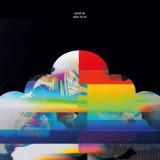
On its latest album »Music For Air«, the Berlin-based interdisciplinary duo Gamut Inc explores new possibilities of the computer-controlled pipe organ — from hypervirtuoso excess to nuanced automation and rhythms beyond the fixed grid. Composed and recorded during a two-week residency in Toulouse, the pieces move between harmony and noise, conjuring a euphorically intoxicating maelstrom of overlapping, accelerating sound.
Gamut Inc’s work with the computer-controlled organ actually began in 2009 with a commission from ON – Neue Musik Köln for the Kunst-Station Sankt Peter — at a time when few congregations were ready to open their instruments to this kind of work. When the duo of Marion Wörle and Maciej Śledziecki officially founded the ensemble in 2013 as an interdisciplinary project, they first developed their own music machines with instrument builder Gerhard Kern, returning to the organ in 2018 when more churches and venues had opened their doors … and Gamut Inc carried their practice across Europe and beyond, developing AGGREGATE (first a concert series and then an annual festival) into a platform dedicated to organ music of the 21st century.
Sharpening a critique of mechanisation, digitality, and the human in between, the project is conceived around the construction of pre-modern instruments and the control of these instruments by contemporary technologies, resulting in an aesthetic that bridges the very old and the very new. Recent works include the human-machine trilogy »Over The Edge Club« (2021), »Rossum’s Universal Robots« (2022), and »Zeroth Law« (2023, performed at Deutsche Oper Berlin with the RIAS Chamber Choir and the Logos Robot Orchestra), and »Black Square« (2025), a wind-dynamic modular organ built by Tony Decap, inaugurated at CTM Festival and broadcast on Deutschlandfunk Kultur and SWR Kultur. Their organ installation AGGREGAT#10, commissioned by Sónar Festival, was acquired for the permanent collection of Palau Güell Barcelona in 2022.
Gamut Inc’s latest album »Music For Air« was composed and recorded during a two-week residency in Toulouse on the wind-dynamic organ »L’Explorateur«, with individually computer-controlled wind pressure per pipe. The seven pieces move between harmony and noise, conjuring a euphorically intoxicating maelstrom of overlapping, accelerating sound and again exploring new possibilities of the computer-controlled pipe organ — from hypervirtuoso excess to nuanced automation and rhythms beyond the fixed grid. Sensual and ecstatic.
For over 25 years, David Madson (aka Odd Nosdam) has been stationed away from the light of the mainstream, diligently working the nightshift. Every so often, we awake to find another of his bleary and beautiful missives slung into the waking world – albums whose assemblages of sampled grooves, atmospheres and voices are unified by a hallucinatory sense of melody, like disparate visions strung together through ribbons of sleep-talk. From his earliest days as a member of the seminal group cLOUDDEAD, through his remixes for artists such as Boards of Canada and Black Moth Super Rainbow, Nosdam has been reporting back from his rounds upon the perimeters of culture and consciousness, forging a musical language all of his own.
On Patrol is the second Odd Nosdam LP to be released on The Notwist’s imprint Alien Transistor – following on from the 2019 album Mirrors – and continues a collaborative history that begun with a 2008 remix of The Notwist song, “Sleep”. It’s a love letter to the vinyl format, produced with the aim of optimizing for a single LP. This objective permeated every aspect of the album’s production, from the duration of each side through to the vinyl mastering (Jessica Thompson) and lacquer-cutting (Dubplates & Mastering, Berlin). As we've come to expect, the album is built almost entirely from found sounds, many of which were taken from obscure and second-hand vinyl gathered during Nosdam’s ceaseless crate-digging escapades. Other sources include field recordings made in 2022 at the Catalonia summer home of artist Salvador Dalí, which are baked into the swirling sci-fi glide of “Here to Know (Adéu Mix)”, and a sumptuous clunking bass line courtesy of Organi’s Mike Walti, which runs like an infinite highway through the fuzzy, sunbaked sprawl of “Deepsimple”.
Odd Nosdam’s work has always swept the entire atmospheric spectrum, from rhythmic vigour to levitational beauty. On Patrol is perhaps his finest assimilation of these extremes. “Sgt. Pepsi” is the perfect case in point: a formidable slow groove capsizes into vinyl crackle after a mere minute, before the song resurrects itself through sweeping strings and vocal harmonies, sliding against each other like the overlain romantic denouements to a dozen Hollywood films from the 1940s. Elsewhere, “Get You In (Belong Mix)” drapes shoegaze guitar over a trundling funk backbeat, straddling the physical world and the outer realms, while hushed voices point toward the song's implied themes of cultural cliques, critical consensus and the plight of the eternal outsider: “Sure, I can get you in... these people are my friends, I’m one of them - I belong.”
This is music that both endures and disappears. Odd Nosdam has always wielded a strange relationship with time, scrambling association with any specific era, weaving together numerous tempos simultaneously. There is no master clock. Each track could happily hold up as an infinite loop, yet Nosdam clearly favours the potency of the gone-too-soon, applying the fadeout just as hypnosis starts to crest. Indeed, the songs are both the product of meticulous long-term construction and spontaneity. While the foundations of On Patrol have come together over several years, the recording process involved channeling vibes through a vintage Roland Space Echo and bouncing song fragments back and forth from hard disk to cassette 8-track, gifting a phased permanence to creative decisions made on the fly – a hat-tip to the production processes of Nosdam's longtime hero, Lee ‘Scratch’ Perry. Like a recurring dream, On Patrol appeals to both the plains of momentary ephemera and the long-established backchannels of the unconscious, equal parts revelation and deja vu.
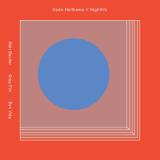
Composer and multi-instrumentalist Koen Holtkamp has spent more than two decades shaping a body of work at the intersection of ambient, experimental, and electroacoustic music. Known for his role in the influential duo Mountains, as well as a solo catalog defined by texture and spatial awareness, Holtkamp has long explored how sound interacts with environment and perception. With Nightlife, he enters a new phase of that inquiry, one shaped as much by physical relocation as artistic evolution.
After leaving Brooklyn for the relatively rural setting of New York’s Hudson Valley, Holtkamp found himself immersed in nature and embracing a slower way of life, a shift that directly informed the album’s creation. Rather than rushing into a new project, he allowed the space itself to guide him, focusing on experimentation and play instead of a fixed outcome. Over time, a new instrument emerged from his modular system, built around physical modeling techniques that emulate plucked string sounds. Drawing on a deep affinity for acoustic traditions, from guitar soli to the kora and other chordophones, he began translating those influences into an electronic language, creating music that feels tangible, effusive, and even intimate, despite its synthetic nature. As the pieces took shape, Holtkamp expanded the project into a kind of imagined ensemble. Composed with specific collaborators in mind, the album features extensive contributions from drummer Greg Fox and saxophonist and flutist Matt Bauder, whose performances subtly reshape the material and draw it toward more fluid, song-like forms, alongside a guest appearance from Ben Vida on synth bass. Yet even as Nightlife occasionally resembles a band in motion, its construction resists traditional cohesion. Acoustic and electronic sources coexist to create a hyper-dimensional sense of space, with each element deliberately placed in its own distinct environment, yielding a complex yet inviting setting that feels both otherworldly and completely natural.
Much of the album was created during late-night sessions, which became a kind of personal ritual and ultimately inspired its title. Nightlife unfolds as a series of finely detailed environments, where stillness, texture, and subtle interplay take precedence over momentum. Each piece invites close listening while remaining open and unforced, reflecting both a change in pace and a deepening of focus. The result extends Holtkamp’s ongoing interest in how sound can shape, and be shaped by, the spaces we inhabit.
Voodoo Glow Skulls are an American ska punk band formed in 1988 in Riverside, California, by brothers Frank, Eddie, and Jorge Casillas and their longtime friend Jerry O'Neill. Voodoo Glow Skulls first played at backyard parties and later started playing shows with the Angry Samoans, The Mighty Mighty Bosstones, Firehose, Murphy's Law, and The Dickies.
Voodoo Glow Skulls' 1995 album Firme has been one of the high points in popularity for the seven-member band. Unlike some more laid-back performers in the genre, Voodoo Glow Skulls are a bit more heavy-handed on the punk part of the mix, resulting in consistently fast-paced and chugging song structures that occasionally erupt into triumphant horn breakdowns and chanted group vocals. The album also includes "Fat Randy," one of the group's more convincing ska-punk hybrids.
Firme is avavilable as limited numbered edition of 400 copies on green vinyl and includes an insert
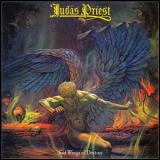
Dieses Reissue würdigt das 50-jährige Jubiläum eines der wegweisenden Alben des Heavy Metal. Original-Master von 1976, Half-Speed-Mastering, farbiges Vinyl, Original-Artwork, ursprüngliche gewünschte Tracklist. Diese zum 50. Jubiläum erscheinende Ausgabe von Sad Wings of Destiny wurde von den analogen Original-Masterbändern aus dem Jahr 1976 restauriert und stellt die definitive Version des Albums dar. Das ursprünglich 1976 veröffentlichte Album gilt als eines der einflussreichsten Alben in der Geschichte des Heavy Metal und prägte das Genre maßgeblich mit Klassikern wie "Victim of Changes", "The Ripper" und "Tyrant". Die in Zusammenarbeit mit Judas Priest entstandene Ausgabe wurde im Half-Speed-Mastering-Verfahren speziell für Vinyl bearbeitet. Dieses Verfahren bewahrt die Kraft und den Dynamikumfang der analogen Aufnahmen und sorgt zugleich für außergewöhnliche Klarheit und Tiefe. Die Wiedergabe erfolgt in der von der Band vorgesehenen Reihenfolge, beginnend mit "Prelude", wodurch das ursprüngliche Hörerlebnis wiederhergestellt wird. Die LP kommt dabei im ikonischen original Artwork als Galaxy Yellow/Orange Mix Vinyl, auch als klasse klingende CD wieder erhältlich. "Sad Wings of Destiny, ...simultaneously took heavy metal to new depths of darkness and new heights of technical precision. [...] Three songs rank as all-time metal classics, starting with the epic "Victim of Changes," which is blessed with an indelible main riff, a star-making vocal turn from Halford, explosive guitar work, and a tight focus that belies its nearly eight-minute length. "The Ripper" and "Tyrant," with their driving guitar riffs and concise construction, are the first seeds of what would flower into the New Wave of British Heavy Metal movement." -
'Quiet Pieces' initiates Abul Mogard’s personal imprint Soft Echoes with a definitive self-portrait of calm, contemplative, and discreet inner landscapes made audible. It is the first solo album on vinyl in four years. RIYL Alessandro Cortini, William Basinski, The Caretaker.
While sifting through archived material left idle from earlier projects, a chance encounter with a late uncle’s trove of beloved 78rpm classical and opera records prompted the reworking and completion of what would eventually become the album. Spinning dusty records at 33 and 45rpm, Abul Mogard recombined their enduring spectres with unfinished sketches from his archive. The resulting soundscape blurs distinctions between his memories and those of another, exquisitely short-circuiting the senses with its waking, dream-like lucidity.
This was a process I hadn’t explored in my earlier works. I began sampling brief moments from these records, altering them with studio effects and playing them at slower speeds. In many cases, I wasn’t entirely sure how the original music sounded. These fragments, once further processed, became a source of inspiration for my new compositions. Over time, I realised that the old pieces from the archive and the new material derived from the samples naturally complemented each other.”
The resulting pieces hover over a threshold, a liminal space that harmonises the old and older material. Voluminous waves of quiet and loud undulate between consonance and dissonance, conjuring imagery of a decaying grandeur that humanity’s decadence has surrendered to the elements. Abul Mogard’s seemingly abandoned yet vast landscapes are nevertheless intimate with timbral frissons of red-lined distortion. Elusive, yet as tangible as sea spray or smog, they affect the olfactory senses with a rarified, synesthetic quality that modestly engages one’s emotional register – a hypnotic, distinguishing feature long hailed as one of the hallmarks of his work. A fidelity to memory and dream recall is sensitively probed in the journey from the stately symphonic stasis of 'Following a dream' to the almost industrial, untethered brutality evoked by a looming silhouette that’s never fully visible in 'Constantly slipping away', culminating in the foreboding coda of 'Like a bird'. Those pieces appear to shield the album’s sentimental core, where the tempestuous play of light and shadow of 'In a studded procession' escalates to breathtaking, panoramic climax, while 'Through whispers' evokes an out-of-body-like experience encountered with visceral poignancy.
Looking back, Mogard notes an unexpected influence: “I realise being inspired by Phill Niblock, whose work I had barely known at the time but explored after his passing in 2024. His album 'Boston Tenor Index' changed the way I approached dissonance. It encouraged me to push my sound further, to the edge of a space where I began to feel uncomfortable.”
The album artwork, created by longtime collaborator Marja de Sanctis, features a photograph taken at the Temple of Jupiter Anxur, an archaeological site overlooking the Mediterranean Sea. Captured with an iPhone, the image traces the residual presence of construction techniques and architectural forms of the Romans, where material history is transcribed through contemporary tools. The convergence of ancient and modern technology aims to reverberate the site’s lasting spiritual presence – an echo persisting in what is now perceived as a quiet, emptied space. The spiral gestures towards infinity and light. Past and present dissolve into one another, reflecting 'Quiet Pieces' meditation on sound, memory, and time.
RIYL Alessandro Cortini, William Basinski, The Caretaker
out of Stock
Last delivered 9 months ago available to reorder, subject to availability
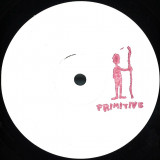
25 years after this cult UK label first emerged, we're very happy to present some of their most sought after releases...
Primitive represented a stripped down and sonically heavyweight series of essential DJ tools, winning wide support from Techno an House DJ's alike & enduring - perhaps due to their raw, basic construction - way beyond their original inception.
This is the first compilation EP, featuring some favourites from the catalogue, remastered & repressed on limited, hand-stamped vinyl...
Despite serious demand, we will only be able to access limited quantities of these special 21st century repress editions, so buy or cry !
out of Stock
Last delivered 10 days ago available to reorder, subject to availability
Leo Gibbon returns to Mudline with barbed, a six-track suite of dust-worn, sample-driven constructions pieced together from a balcony while travelling. Built from fragments that retain the emotional weight of their origins, the EP finds Gibbon paring his sound back to its essentials, letting cracked loops, negative space and tactile percussion carry a quiet sense of intimacy. There's a subtle tension throughout, music suspended between memory and movement, where worn textures and carefully preserved imperfections become part of the composition itself.
James Massiah appears on the record with a characteristically measured performance, his delivery drawing on the cadence and phrasing of archived poet freestyles, less spoken word than an act of excavation, recalling a lineage of recorded voices whose authority comes from rhythm, restraint and lived experience. His presence folds seamlessly into the EP's weathered textures, becoming another fragment in Gibbon's collage rather than a conventional guest appearance.
The first half drifts through reflective, inward-looking terrain before the second side gradually opens towards the dancefloor, never abandoning the emotional pull that defines the record. Even at its most club-focused, barbed favours understated pressure over obvious peaks, allowing atmosphere and texture to carry as much weight as rhythm. Mastered by Miles Whittaker, every grain, scrape and imperfection is left intact, balancing grit with clarity and reinforcing Mudline's instinct for raw, emotionally resonant club music that feels as honest as it does functional.
"Solaris", das zwölfte Studioalbum von The Ocean, würdigt die bisherige Entwicklung der Band und verleiht ihr eine neue, intensive Note. Mit Mitgliedern aus sechs verschiedenen Ländern im Kern-Line-up kehrt The Ocean zu einer kollektiven Besetzung zurück und schöpft aus dem Erfahrungsschatz und Talent eines Pools außergewöhnlicher Musiker. Nachdem man mit dem Vorgängeralbum "Holocene" einen anderen Weg eingeschlagen hatte, zeichnet für den weitläufigen, organischen Klang von "Solaris" erneut der schwedische Produzent Jens Bogren verantwortlich, der bereits die beliebtesten Alben der Band - "Pelagial" sowie "Phanerozoic I" und "II" - abgemischt hat. Das neue Album stellt die Sänger*innen Lane Shi und Enrico Tiberi sowie die Gitarristen Emmanuel Jessua und Marco Gennaro vor; sie ergänzen den Gründungs-Gitarristen Robin Staps, den langjährigen Bassisten Mattias Hägerstrand und Schlagzeuger Jordi Farré. Jeder von ihnen bringt seine ganz eigene Note ein, um dieses fast 70-minütige Opus zum Leben zu erwecken - ein Werk, das für The Ocean hinsichtlich Ambition und erzählerischer Tiefe einen neuen Höhepunkt darstellt. Für die Aufnahmen wurde der Kreis der Mitwirkenden noch weiter gefasst: Thorsten Quaeschning (Tangerine Dream) steuerte modulare Synthesizer bei, der griechische Komponist Orestis Zafiriou (Playgrounded) lieferte ebenfalls Elektronik- und Synthie-Elemente, und Simen Eifring von der norwegischen Post-Rock-Band Spurv übernahm den Posaunenpart. Aufgenommen wurde das Album in den legendären Berliner Hansa Studios, wo bereits Klassiker wie David Bowies Low und Heroes, Iggy Pops Lust For Life und Depeche Modes Construction Time Again entstanden. Innerhalb dieser Studiowände entwickelte sich "Solaris" zu einem lebendigen Zeugnis für die Kraft von Entdeckergeist und Teamarbeit. Da der neue Sänger Tiberi zudem ein versierter Pianist und Multiinstrumentalist ist, wurden Klänge von Celesta, Flügel, Rhodes-Piano und Hammond-Orgel zu einem integralen und unverwechselbaren Bestandteil des Solaris-Sounds. Der für The Ocean typische, atmosphärische Post-Metal wird durch den experimentierfreudigen Geist der neuen Mitglieder sowie die Beiträge der exzellenten Gastmusiker bereichert. Die CD und 2LP Gatefold-Sleeves sind jeweils auf 360g Spezial-Karton gefertigt und auf Vorder- wie Rückseite mit roter Metallic-Heißfolien-Prägung veredelt. Die CD mit 6seitigem Fold-Out-Booklet, die 2LP in bedruckten Innenhüllen kommt zusätzlich mit A2-Poster.
"Solaris", das zwölfte Studioalbum von The Ocean, würdigt die bisherige Entwicklung der Band und verleiht ihr eine neue, intensive Note. Mit Mitgliedern aus sechs verschiedenen Ländern im Kern-Line-up kehrt The Ocean zu einer kollektiven Besetzung zurück und schöpft aus dem Erfahrungsschatz und Talent eines Pools außergewöhnlicher Musiker. Nachdem man mit dem Vorgängeralbum "Holocene" einen anderen Weg eingeschlagen hatte, zeichnet für den weitläufigen, organischen Klang von "Solaris" erneut der schwedische Produzent Jens Bogren verantwortlich, der bereits die beliebtesten Alben der Band - "Pelagial" sowie "Phanerozoic I" & "II" - gemischt hat. Das neue Album stellt die Sänger*innen Lane Shi und Enrico Tiberi sowie die Gitarristen Emmanuel Jessua und Marco Gennaro vor. Sie ergänzen den Gründungs-Gitarristen Robin Staps, den langjährigen Bassisten Mattias Hägerstrand und Schlagzeuger Jordi Farré. Jeder von ihnen bringt seine ganz eigene Note ein, um dieses fast 70-minütige Opus zum Leben zu erwecken. Für die Aufnahmen wurde der Kreis der Mitwirkenden noch weiter gefasst: Thorsten Quaeschning (Tangerine Dream) steuerte modulare Synthesizer bei, der griechische Komponist Orestis Zafiriou (Playgrounded) lieferte ebenfalls Elektronik- und Synthie-Elemente, und Simen Eifring von der norwegischen Post-Rock-Band Spurv übernahm den Posaunenpart. Aufgenommen wurde das Album in den legendären Berliner Hansa Studios, wo bereits Klassiker wie David Bowies Low und Heroes, Iggy Pops Lust For Life und Depeche Modes Construction Time Again entstanden. Innerhalb dieser Studiowände entwickelte sich "Solaris" zu einem lebendigen Zeugnis für die Kraft von Entdeckergeist und Teamarbeit. Da der neue Sänger Tiberi zudem ein versierter Pianist und Multiinstrumentalist ist, wurden Klänge von Celesta, Flügel, Rhodes-Piano und Hammond-Orgel zu einem integralen und unverwechselbaren Bestandteil des Solaris-Sounds. Der für The Ocean typische, atmosphärische Post-Metal wird durch den experimentierfreudigen Geist der neuen Mitglieder sowie die Beiträge der exzellenten Gastmusiker bereichert. Ein Werk, das für The Ocean hinsichtlich Ambition und erzählerischer Tiefe einen neuen Höhepunkt darstellt. Das CD- und 2LP Gatefold-Sleeve ist jeweils aus 360g Spezial-Karton gefertigt und auf Vorder- wie Rückseite mit roter Metallic-Heißfolien-Prägung veredelt. CD mit 6seitigem Fold-Out-Booklet, die 2LP in bedruckten Innenhüllen kommt zusätzlich mit A2-Poster.
out of Stock
Last delivered 21 days ago available to reorder, subject to availability
Six drum-forward, tape-warped club constructions from the elusive Comandante engineer. Sampled 80s wreckage crushed through hardware and heavy compression: club-chug weapons + late-nite astral howling.
12″ edition of 200, individually hand-stamped and numbered. No represses.
Strange and sepulchral, Pedronium has crafted a mini-album on an astral flight, looping in and around macabre wormholes, from the strange sepulchre of opening serenade ‘4D VISION 1987’ to the deranged primal scream of ‘Nixe’ [dusk in the studio, crooning drunk on mic, disturbed sonics dragged up at the warbled gates]
‘Churms’, an unrelenting club chug banger that we’ve already heard send Lisbon’s best club systems into overdrive; ‘Finesse [The Right People]’, a teknicolor weapon hitting like a jackhammer on the concrete floor.
The grotesque charm of ‘Naked / Afraid’, the rickety jilt of ‘Snav’, all tape delay and foreboding pads, an imminent threat, a polysonic picture in a weird forgotten theatre.
The sanity of reason is already a distant dream on the late-night floor or the morning after. All tracks meticulously arranged and recorded live in one take.
DESCRIPTION
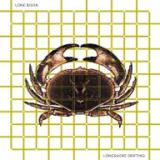
Lone Bison / Nick Bonell lives by the sea in Ramsgate. Mainly a guitar player and pedal freak, Nick bought a used Korg MS20 and fell in love with synths. As one half of Stuntmen, Nick released the sample-heavy single 'You're the Beat Find' on the groovy Tummy Touch label, which led to him scoring three Ford adverts in the U.S and a few pieces of well-used production music - which paid for more synths and pedals!
An album, 'Transistor Memory' and single 'Drugs' came out via Dom Martin's brilliant Polytechnic Youth records in 2021. "Wave Construction" was released by Castles in Space in Autumn 2023. An album for the CiS Subscription Library entitled "Mechanical and Electrical" was released in late 2024.
Nick Explains: "After recording "Transistor Memory", "Wave Construction" and "Mechanical and Electrical" pretty much back-to-back, I wanted to change my sound palette a little. I started programming my Hydrasynth Explorer in obsessive detail and was also drawn to using my voice, in a sampling kind of way at first. Sampling my voice then shifted into recording more straightforward vocals and writing proper songs again. "Rise Up" started as a field recording in my local park and then some wonky piano loops with a cheap mic – somehow a song arrived. I’ve always really liked really concise records, so I got interested in packing lots of synth textures into a three-minute pop song. As the record progressed, I did less leaning on vocoders and harmonisers and developed the courage to just do more up-front vocal mixes. Things like Maths and Minimal / Maximal are more groove-based and came from recording 20 minute drum tracks then jamming bass guitar over it then editing it all down and adding loads of synths. Oh, and there’s a bit of James Williamson era Stooges at the end of Minimal / Maximal – I was a bit nervous about playing garage rock guitar on a Castles in Space record but Colin told me I would be ‘fucking mental’ if I didn’t end the record with it."
Lone Bison's music is influenced by Krautrock, electronica, post-punk, soundtracks, a splosh of modern classical/minimalism and post-rock. He's a hot genius.
The album is preceded with "The Power" which will be available on streaming platforms as well as on our Bandcamp for those who want to listen or pre-order the album. There's a fantastic remix from MAPS included as well.
Over the course of more than four decades, Andrew Chalk has created one of ambient and experimental music's most distinctive, influential, and enduring bodies of work. Though his recordings have taken many forms—from the raw, post-Industrial sounds of Ferial Confine in the 1980s to the fragile guitar meditations, blurred keyboard studies, and richly textured collages that populate the Faraway Press catalogue—they remain united by a singular sensibility: an uncommon attentiveness to atmosphere, nostalgia, and the power of restraint.
Mystical Obscurant offers a rare opportunity to encounter the expansive character of that oeuvre in miniature. Rather than documenting a single period or methodology, it functions almost like a survey of Chalk's musical language—a collection of new music that illuminates the breadth of his practice while distilling the singular vision that unites it.
“The Sea of Sorrow” and “Peacemaker” feel cut from the same cloth as the sacred guitar minimalism of The River That Flows Into the Sands, while “Against the Tide” would sit naturally alongside the smudged and distant keys of Blue Eyes of the March. Other pieces draw upon environmental sound and loop-based constructions, hallmarks of Chalk's more recent, vignette-like compositions. Though these recordings emerge from different moments in his long creative journey, each inhabits a recognizable world: one where melodies drift in diffuse, unhurried forms and sound gathers with painterly grace.
What is most striking when these pieces are heard together is not their difference but their coherence. Across changing instruments, collaborators, and approaches, Chalk has consistently pursued a subjunctive music of suggestion rather than declaration, creating spaces where memory and imagination are allowed to unfold at their own pace.
“Ruins are the style of our future cities, future cities are themselves ruins.” - Izosaki Arata
A note from Lawrence English: Nostalgia is not an ideology, though in this moment, we could be mistaken for thinking it might be just that. Over the past years, the idea of nostalgia has been filtered through various political and technological lenses and has become a tool used for forgetting, rather than remembering. Instead of embracing histories’ complexities and inconsistencies, this version of nostalgia seeks only singular recollection. This contemporary phenomenon of nostalgia has become a methodology at best, and a weapon at worst, used to erode the past and project forward a collapsed and unimaginably sanitised version of things, places, and ways of being from former times. It’s this projection that sees it playing a mounting role in a social pathology associated with reducing the imagined possibilities of future.
The Rest Is My Ghost is a record that interrogates the manifestations of this reductive futuring and celebrates those that have tried (and failed), and those who continue to push back against decayed and revisionist positions. It’s a record that considers the weaponisation of nostalgia for the purposes of cloaking possible futures.
In recent times, I’ve proposed a term for this weaponised use of nostalgia, something I have called Acid Nostalgia. I offer it as a shorthand to describe the de-contouring of the future through a corrosive fixation on a flatten rendering of the preceding times. It is, in part, a certain type of lazy cultural scripting where tropes of the past are presented in the absolute, as empty pictorials; photocopies without any original from which to draw actual meaning, or useful detail.
Acid Nostalgia describes an increasingly common political projection of nostalgia that exists without any subjective connection to the memory surrounding and contained within it. Like acid poured onto a surface, this use of nostalgia seeks to erodes and smooth out the complexity and texture of lived connection and longing, which has until recently guided contemplations of nostalgia. Acid Nostalgia instead erases the texture of histories and de-contours the past, and in doing so dematerialises the horizon of possibility, which by its very nature marks the beginning point for any (and all) imaginable futures. Acid Nostalgia is a dreamless screen, where uncertainty, restlessness and aspiration are subjected to corrosion, breaking down and neutralising the wellspring of futures which are birthed from within the ambiguously charged, complex and at times chaotic atmospheres of the present.
The Rest Is My Ghost is not however some universal reading of these things and happenings. Rather it draws its breath from a very personal pathway carved through my own fraught experiences of nostalgia and framed through a disparate collage of chance encounters, situations, places and provocations. It takes oblique notes from civic and architectural references such as Japan’s Metabolist movement, Hong Kong’s ‘one line sky’ and Los Angeles’s vanished Sodium Vapour lights. It interpolates texts – factual and fictional – by authors such as Franco Berardi, Kate Crawford, JG Ballard, Katsuhiro Otomo, Mark Fisher and Alexei Yurchak who have each so wonderfully sought to rupture the familiarity of now, and push us towards other ways of imaging ourselves, our surroundings and our very ways of being in this world.
I also owe a debt of thanks to Adam Curtis in helping launch what has become this edition. It was his provocation, in a conversation we shared about an overwhelming and profound sense of uncertainty around being able to predict the immediate future and how to respond to that, which sparked the earliest inklings of this edition.
The Rest Is My Ghost is ultimately a record about the promise of constructions and connections to come, material, social and political. It's a record that accepts the fragility of failure as a source of ultimate potential, and a position from which the deepest freedom of imagination might be sought and summoned forth to conjure even the most unimaginable, (but) possible futures.
out of Stock
Last delivered 44 days ago available to reorder, subject to availability
Dawuna’s latest mixtape is a muted hypnagogic R&B tour de force, pieced together while recovering from a traumatic head injury.
For »African Family Laptop Musick«, I was healing from a traumatic head injury that gave me a later amnesia diagnosis, so I don’t remember more than a couple small flashes of memory from the recording/construction of this project. I know I wanted to make a low-fidelity concept piece about my family life at the time, compositionally simple, but necessarily abstracted. This is the last lil offering from a very personal side of myself before I give y’all something big. Enjoy. – Dawuna
out of Stock
Last delivered 44 days ago available to reorder, subject to availability
This quintessentially Australian rock band is one of the main highlights of Newcastle's music scene. It consists of singer Hugh Westcotta true ball of energy who leaps around the stage like a Peter Garrett on caffeineguitarist Jed Pratten, drummer Nick Worrad, and bassist James Pansini. Following in the footsteps of AC/DC and '70s Aussie punk, Where's Jimmy presents these two EPs combined on a single vinyl record. Written in Orange, New South Wales, back when we were all working our respective jobs in the construction industry. It pokes fun at life at work.Simple, blues-inspired themes, like working for the boss, being broke, or getting dumped by your girlfriend. Add a dash of punk and rock 'n' roll, and you get the EP "Paycheck Blues." EP "Staring at the Wall" - Where's Jimmy's second 5-track EP. The punk rock sound with bluesy undertones is more pronounced on these tracks. Pure, no-frills, high-octane noise that makes you want to get up and move.
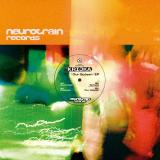
For its first release, Neurotrain Records presents a 4-track EP by its co-founder Krijka.
The label grew out of a friendship, a duo that spent years exploring and nurturing the Seoul underground scene.
‘Our Spleen’ EP carries that undefinable, elusive atmosphere and construction that has become Krijka’s signature; reflecting a desire to extend this identity now part of him, while opening doors to new elements and maybe a new era.
out of Stock
Last delivered 3 months ago available to reorder, subject to availability
The shape-shifting sound of Low End Activist continues to pivot around an axis of bassweight pressure with the launch of their self-titled label – the appropriate vessel to take them deeper into sci-fi scented sonics with an ‘ardcore swagger. Previous drops on Sneaker Social Club and Seagrave have seen the shadowy technician mangling grime, jungle and dubstep tropes with all the grit and flair of the most visionary sample sorcerers. At times, they’ve built their beatscapes up around fierce MC spots from such legends as Flowdan and Trim, but while there’s more to come on the vocal tip for the LEA series, this first installment works in a strictly instrumental fashion.
Hi-tech breakbeat de/re-construction is the focus across all three tracks on LEA001, with atmospheres so densely rendered you can feel them sticking to your skin like the sweat of a well-slicked basement session. ‘Engineers Origins’ emits pure darkcore energy and icy stabs of future-shock industrialism, while ‘Look Up’ shivers with off-key orchestrations. ‘Probability 1’ gets deep in the break edit and throws in an iconic low end rumble that should spark intense reveries amongst anyone with even a passing appreciation for bass. Like the most potent foundational jungle, all three tracks swerve regimented structure in favour of moody exploration around a suite of themes and sounds, slipping time in style and setting up the LEA series for further intense sonic treatments to come.
out of Stock
Last delivered 3 months ago available to reorder, subject to availability
Freddie McGregor was born in Clarendon, Jamaica on June 27, 1956. At age seven, he started singing backup for a local ska harmony duo called The Clarendonians and did his first recordings aged 10 years with the name "Little Freddie" or "Young Freddie", and as a duo with Ernest Wilson aka "Freddie & Fitsy".
During the 1970s, McGregor was closely associated with the legendary Studio One label. He sang lead for groups like Generation Gap and Soul Syndicate, and also recorded off and on as a solo act during the '70s. In 1975, McGregor converted to Rastafarianism.
His debut album Mr. McGregor was released in 1979. The album opens with "We Got Love" featuring a Tower of Power influenced horn section underneath McGregor's tale of love conquering all. The classic "Rastaman Camp" combines muted horn and an earthy, Nyahbinghi-like chorus for one of producer Niney's deeper constructions, but the lightweight fare is equally welcome as the easy strolling and not too sugary version of "Brandy" displays.
Mr. McGregor is available as a limited numbered edition of 750 copies on orange vinyl.
This new album compiles several songs made in the years following Black To Comm's classic "Alphabet 1968" album. Originally released on the seminal Type label in 2009 (and to be reissued on Cellule 75 this year) "Alphabet 1968" combined the sound of vintage shellac and vinyl loops with broken electronics and field recordings, the press release mentioning disparate influences "ranging from Moondog to Basic Channel by way of Bernard Herrmann". In a beautiful one-page review in The Wire magazine (later reprinted in his book Ghosts Of My Life) Mark Fisher compared Richter's music to JF Sebastian’s miniature automata in Blade Runner ("with their bizarre mixture of the clockwork and the computerised, the antique and the ultramodern, the playful and the sinister"), ETA Hoffmann's inventor-magicians and Auguste Villiers de l'Isle-Adam's 1886 tale of Thomas Edison's (fictitious) construction of an artificial human.
Now titled "Coh Bâle" (inspired by a strange dream) these recordings were supposed to become a follow-up to said album but for reasons unknown it never materialized and the album seemed forever lost. At the time Richter started to dive deeper into several strains of (so-called) world music aka the folk music of Southeast Asia and Eastern Europe as well as liturgical and medieval music, the Kraut-Electronica of Harmonia and several certain Mediterranean experimentalists from the 1980's who started to merge their mostly electronic and field recording based compositions with traditional musics from all over the world by way of new sampling technology.
Many of the songs for the album were recorded while travelling and at various residencies around Europe: a detuned piano in a Thessaloniki basement (Richter played at a children's birthday party there), vintage synthesizers in the GRM studios in Paris, decaying acoustic instruments found in an old Black Forest mansion, childrens' voices at a workshop in Karlsruhe's ZKM Institute; then mixed on headphones in the ICE trains running between these places and his hometown Hamburg.
"Coh Bâle" is taking inspirations from old Nonesuch Explorer and Ocora LP's, Crammed Records, 80s Mediterranean Ambient (Nuno Canavarro, Roberto Musci) combined with the DIY spirit of Deux Filles and Flaming Tunes and the playfulness of Asa Chang & Junray. The songs are both mysterious and transparent, intricate and frugal, vibrant and patient. One of the album's unexpected climaxes is a gorgeous (artificial) berimbau version of the Welsh traditional "Iechyd o Gylch".
No two songs feature the same instrumentation and many acoustic sources (pianos, flutes, wood percussion, viola, tablas, autoharp) were disassembled and later coalesced into new configurations or used as virtual instruments; later combined with samples, field recordings, electronics and (on a few tracks) autotuned vocals reminding of recent works by the likes of Claire Rousay or More Eaze.
We had to wait for a worldwide pandemic for Richter to dig deep into the vaults and finally bring these recordings to light. This is the 2nd release from his archives after the "Diode, Triode" LP which presented Musique Concrète/Acousmatic recordings made at INA/GRM and ZKM. Another massive Double-CD (MM∞XX Vol. 1 & 2) was released last year featuring collaborations with 33 artists such as Andrew Pekler, Richard Youngs, Eric Chenaux, Maja Ratkje, Radwan Ghazi Moumneh of Jerusalem In my Heart, GRM boss François Bonnet (Kassel Jaeger), Felix Kubin, Timo van Luijk (In Camera, Af Ursin), Luke Fowler and many others, showing Richter's versatility and his willingness to reinvent himself for every new release.
Marc Richter is widely known under his Black To Comm moniker, having released (at least) 12 albums under this alias in the last 20 years. He is currently signed to the Thrill Jockey label. Richter composes soundtracks for film and has worked with visual artists such as Mike Kelley and Ho Tzu Nyen. He also records as Jemh Circs and Mouchoir Étanche for his own Cellule 75 label (named in tribute to the late Luc Ferrari).
out of Stock
Last delivered 4 months ago available to reorder, subject to availability
‘ИМА (Ima)’ is a work by KiMiMi, the solo project of a musician Shin-ya Ohno, which captures the layers of time and the presence of people inhabiting ‘Arimasuton Building’―a self-built structure created over 20 years by architect Keisuke Oka, located in Mita, Tokyo, and reconstructs them into music.
A multi-instrumentalist who masterfully handles a diverse range of instruments, with the gaida (an ancestor of the bagpipes) – which he studied in Bulgaria – at the core of his sound, KiMiMi has previously brought traces of daily life and folk melodies recorded during his travels back to the scale of home recording, weaving fantastical folk soundscapes through cassette tape works and stage music.
Alongside his musical activities, he has participated in the construction work for ‘Arimasuton Building’, recording the sounds of hammers and steel beams echoing on site, lunchtime chatter, the melodies of instruments played by others, and the sound of cars passing by. From the end of 2022, a zine titled ‘Monthly Arimasuton Building Urimasu’, based on this construction project, was launched. KiMiMi incorporates these recordings into the musical works he contributes to each issue, layering sounds from live instruments―including the gaida, accordion, guitar, flute, ukulele, piano, foot-pump organ, melodica and xylophone―alongside a few synthesiser tones, to shape a soundscape imbued with the humidity and breath of the site.
KiMiMi’s creative process is characterised not by planned construction, but by an attitude of entrusting the work to chance, intuition and the passage of time. Fragmented recordings are layered, set aside for a time, and then unearthed again. Through this repetition, the music naturally takes shape. This resonates perfectly with the process of ‘Arimasuton Building’, which was built up improvisationally, layer by layer, without any pre-prepared blueprints.
‘ИМА (Ima)’ marks the current stage of KiMiMi’s sonic journey and represents an attempt to gracefully transcend the boundaries between architecture and music, documentation and creation, and the individual and the community. The clamour of the city, the tranquillity of manual labour, laughter, and every sound resonating at the Arimasuton Building site blend with KiMiMi’s music, reflecting the very passage of time in which people live.
Germany"s producer elite gathers on this new instrumental compilation by Kabul Fire Records and, just in time for the G20 summit in 2017, is sending a powerful signal against nationalist isolationist politics and global exploitation. Label boss Farhot has brought together pretty much everyone that has rank and name in the German hip hop scene: Bazzazian, The Krauts, Dexter, KitschKrieg, Brenk Sinatra, Ghanaian Stallion, Suff Daddy, Samy Deluxe, DJ Desue, and many more. Everything exclusive, everything fire! The proceeds from the project go to a school construction project of the Hamburg association Visions for Children e.V. in Afghanistan. Make beats not borders!
Back on Planet Sneaker with his infectious, raw-as-sushi take on UK funky, French MPC maverick Kaval presents another four-strong salvo of wavey 4/4 workouts heavy on the drums and loaded with ear-snagging hooks. The past year saw the Toulouse scene stalwart launch his own KVLDUBS 12” series and appear on Parisian label Nowadays.
Kaval certainly sounds in fine fettle as he bowls back our way, kicking off proceedings with the air horn x bass squelch firestarter ‘Lavawheel’. It’s loaded with such hefty squarewave low end it feels like it could fall out the bottom of the speaker at any minute, all the while stamped down by a bouncy UKF thump. ‘Basement Woi’ twists up a knottier rhythm, but the cheeky vocal samples keep flying out of the mix to keep the vibe infectious.
On the B side, ‘Sonic Boom’ has a slightly more techno-spirited demeanour to the production, albeit never at the expense of the hefty subs. That leaves it to ‘Tek Talk’ to mop up with a twitchy construction dancing on the edge of electro in the tweaked-out, early 00s spirit of the word. With bags of personality and equal amounts swagger and fun, on SNKR066 Kaval maintains his position as a free thinker for the possibilities springing from the UK funky formula.
out of Stock
Last delivered 4 months ago available to reorder, subject to availability
Filmmaking and music-making share a common element of worldbuilding. Whole cloth, environments are raised in which a perspective can be placed; the viewer, the listener, is taken on a ride into the unknown for a time. Movie, the newest album by DMV-based duo Lifted, is like a film shot with microphones rather than cameras, using the pacing, spatialization, and semiotics of cinematic sound design to lead us through a surreal soundworld that draws as much from Foley artistry as dub, jazz, and electronic music. Musical elements and field recordings shift in and out of focus, collaged in spontaneous improvisation sessions on CDJs by the core duo of Andrew Field-Pickering (Max D, Dolo Percussion, Beautiful Swimmers) and Matt Papich (Co La, Ecstatic Sunshine). We may not see where we are, but our ears give us all the information we need.
We open on a pedal steel, played by More Eaze, but it’s been warped and slowed, gradually pitching upward until it's met by drums and electronics. Imagine the THX logo emerging onscreen. Movie is bookended by two related themes, “The Ice Chewers (Opening Credits), ” and “Midnight Snack (End Credits), ” giving the spatial experiments at the heart of the record form and focus. If there’s a broader narrative to latch onto, it’s in the transition moments, the juxtaposition of various field recordings that indicate movement of characters through space and life happening at its own pace. Tracks are defined by other thematic elements: a wandering piano in "Repossessed, " the drone of Duncan Moore’s bagpipe on “Melts Very Nasty, ” the delicate dance of Dustin Wong’s guitar over Jeremy Hyman’s drums on “Midnight Snack. ” Even with such an expansive ensemble cast, the focus remains squarely on the flow from one scene to the next.
Robert Altman’s use of sonic perspective shifting, as well as Apichatpong Weerasethakul’s intricate construction of environmental ambience and aural representations of the unknown, were both inspirational for Lifted’s focus on sound as a way to establish set and setting in film. We hear Altman especially in the way dialogue emerges and recedes: as Papich puts in a sandwich order, as Field-Pickering browses the grocery store. These techniques have been a part of the duo’s arsenal in Lifted and their own projects for years, but here, without the mandate to make something overtly musical, they are foregrounded and placed in crisp focus. Here is another way to listen to the world, to understand how time, place, and personality are communicated through sound as Lifted closes the gap between artforms. What you can’t see only drives the imagination to more brilliantly invent.
Multi-instrumentalist Sarah Lipstate brings her innovative music to life under the name Noveller. Forming unexpected sonic routes, her songs are vivid and cinematic. Following several years spent collaborating with Iggy Pop, and touring the world as his guitarist, Lipstate returns with a new album of her own. I Am The Weather further expands her inventive explorations, creating what Pop once described to Jim Jarmusch as “symphonies for people that don’t have a lot of time.”
Sarah’s work as a composer, notably for the HBO Docuseries Breath Of Fire, as well as the Anthony Bourdain documentary Roadrunner, has greatly influenced her new constructions, incorporating piano, percussion and a new studio filled with excitement into her signature guitar sculpting. It is the baby grand at the center of her studio that welcomes you to the record on “Sunday in Copenhagen” before ceding to a celestial six string swell. The percussive rhythms of “Divining Dance” awaken a new morning in "The Way of Our Flood” and walk towards the bowed grace of “Otherside of Mountainside." Surging into the sky, “Portmerion” allows “Beyond the Fells” to glide back down to Earth, revealing the album’s biggest surprise - a vocal track!
It seems fitting given their past, that the first vocals on a Noveller record would be delivered by the legendary Iggy Pop. Written specifically for The Godfather of Punk, a noir-ish tale of a man over-matched by a femme fatale, “The Girl Who Was Death” builds with tension and release. Following their collaboration on the title track to Iggy’s album Free, (also used in a global campaign for PETA) and their interpretation of Dylan Thomas’ “Do Not Go Gently Into The Night”, Iggy was eagerly awaiting the opportunity to add vocals to another Lipstate composition. A scene set as if on opposite ends of a corner booth at the Double R Diner in Twin Peaks, he delivers each line with the weight of a thousand lives lived. The result is a song so vivid that you can see it projected ten feet tall on the walls all around you.
I Am The Weather is the first new release for the Experimentia label, which will soon be the home for the entire Noveller catalogue.
There are two versions of the record - classic black vinyl and transparent green limited edition (100 numbered copies) - both 180g with printed inner sleeve.
"PORTRETY" (Portraits) is a one-of-a-kind series – it focuses on artists known for their strong connection to the drums. Each person invited to the project is given freedom in their work. Ultimately, the track created for the album must be signed with the real names of our protagonists – that's our sole criterion.
This is how a kaleidoscope of sounds and eight original perspectives on music emerges.
LINER NOTES by Bartek Chaciński:"For part III of the compilation series focusing on Polish drummers, I’d like to start, as per usual, with a one liner…
There are three types of drummers: Those that can count, and those that… can’t.
Ok, but looking past the punchline, it turns out that there is, in fact, a third type: Drummers who can count, and pretty well too, but still struggle with triple rhythms. Amongst those who have ascended the heights of triple rhythm perfection you will certainly find, Piotr Gwader. One of the leaders of the movement, we could call an “Oberek Revival. He even proposed a new form: Footberk - splicing of Polish Folk dance and Chicago Footwork. He performed live with the OG of Footwork - RP Boo (Arpebu), but equally, he could successfully form a footberk duo with Jacek Prościnski, another protagonist from “Portraits 3”. Prościnski has been deeply immersed in the world of electronic dance music for years and offers us yet more proof of those interests here.
Triplets are also no stranger to Ola Rzepca (synonymous with the Drekoty Trio), in whose music there is no shortage of rhythmical complications and tempo changes. The same can be said of the improv-friendly contemporary jazz presented by Patrycja Wybrańczyk. These two Polish drummers show how versatile this discipline is on the Polish jazz scene. These qualities have already been well documented by Marcin „Groh” Grośkiewicz, but never so strongly as here.
Szymon „Pimpon” Gąsiorek is a musician who has made unconventionality the foundation of his individual style. Yet even in the piece by Jan Pieniążek (a dynamic and equally versatile drummer), we find an element of surprise in its melancholic atmosphere and construction, which introduces a triple rhythm while pushing the drum parts into the background. Portraits, on the other hand, does the complete opposite with its protagonists - it positions them in the foreground as the creators of specially commissioned original works. From this perspective, perhaps the most familiar names here may be Emade and Albert Karch, who are known as outstanding music producers and among the most interesting in Poland. “Portraits III” has presumably given them a momentary break from producing other artists, while for the music industry, it’s also a pleasant break in the rhythm and a shift of emphasis."
There are two versions of the record - classic black vinyl and transparent green limited edition (100 numbered copies) - both 180g with printed inner sleeve.
"PORTRETY" (Portraits) is a one-of-a-kind series – it focuses on artists known for their strong connection to the drums. Each person invited to the project is given freedom in their work. Ultimately, the track created for the album must be signed with the real names of our protagonists – that's our sole criterion.
This is how a kaleidoscope of sounds and eight original perspectives on music emerges.
LINER NOTES by Bartek Chaciński:"For part III of the compilation series focusing on Polish drummers, I’d like to start, as per usual, with a one liner…
There are three types of drummers: Those that can count, and those that… can’t.
Ok, but looking past the punchline, it turns out that there is, in fact, a third type: Drummers who can count, and pretty well too, but still struggle with triple rhythms. Amongst those who have ascended the heights of triple rhythm perfection you will certainly find, Piotr Gwader. One of the leaders of the movement, we could call an “Oberek Revival. He even proposed a new form: Footberk - splicing of Polish Folk dance and Chicago Footwork. He performed live with the OG of Footwork - RP Boo (Arpebu), but equally, he could successfully form a footberk duo with Jacek Prościnski, another protagonist from “Portraits 3”. Prościnski has been deeply immersed in the world of electronic dance music for years and offers us yet more proof of those interests here.
Triplets are also no stranger to Ola Rzepca (synonymous with the Drekoty Trio), in whose music there is no shortage of rhythmical complications and tempo changes. The same can be said of the improv-friendly contemporary jazz presented by Patrycja Wybrańczyk. These two Polish drummers show how versatile this discipline is on the Polish jazz scene. These qualities have already been well documented by Marcin „Groh” Grośkiewicz, but never so strongly as here.
Szymon „Pimpon” Gąsiorek is a musician who has made unconventionality the foundation of his individual style. Yet even in the piece by Jan Pieniążek (a dynamic and equally versatile drummer), we find an element of surprise in its melancholic atmosphere and construction, which introduces a triple rhythm while pushing the drum parts into the background. Portraits, on the other hand, does the complete opposite with its protagonists - it positions them in the foreground as the creators of specially commissioned original works. From this perspective, perhaps the most familiar names here may be Emade and Albert Karch, who are known as outstanding music producers and among the most interesting in Poland. “Portraits III” has presumably given them a momentary break from producing other artists, while for the music industry, it’s also a pleasant break in the rhythm and a shift of emphasis."
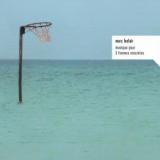
In Sheep’s Clothing announces the long-awaited vinyl pressing of Marc Leclair’s beloved 2005 album Musique pour 3 femmes enceintes. The album will also be available on streaming for the first time via Community Music Group.
For years after Marc Leclair released Musique pour 3 femmes enceintes, he heard from listeners who had lived with the record in an unusually intimate way. Many described how the music became part of the emotional landscape of the months leading to birth. “I never expected that,” Leclair says. “Many women told me they listened to the record throughout their pregnancies. They said it made a real difference, that it helped them. It became more than just a record.”
First issued on CD in the early 2000s, Musique pour 3 femmes enceintes (Music for Three Pregnant Women) now returns in a new edition from In Sheep’s Clothing Hi-Fi, appearing on vinyl for the first time as a double LP. The record is being pressed in Detroit at Archer Record Pressing, the historic plant behind deep-groove classics by Juan Atkins, Kevin Saunderson, Underground Resistance, UR’s Jeff Mills, and J Dilla.
Listeners who know the Montreal-based Leclair through his better-known work as Akufen might be surprised by the tone here. During the same years he was shaping the intricate micro-sampling tracks that made Akufen a cult figure on labels including Perlon, Force Inc. and Trapez, Leclair was quietly developing this far more personal project. The meticulous craftsmanship remained the same, though the focus shifted from the hyper-detailed cut-up rhythms of his dance records toward something slower and more atmospheric. “I always compare my work to a jeweler,” Leclair says. “It’s really very precise. I’m a bit of a detail freak. I can spend hours or days on just one phrase in one song. Everything has to be perfectly put together.”
The project began almost accidentally. A few members of Leclair’s circle became pregnant nearly simultaneously, including one who had long believed she couldn’t conceive. The first track he recorded for the project wasn’t meant to advance a larger concept, he says. “It was meant to highlight the fact that three of my closest friends became pregnant at exactly the same time.”
Leclair was already a father with a three-year-old daughter, so the emotional terrain of early parenthood was familiar. Gradually the idea expanded. “I began thinking, why not make a whole album that celebrates this and also follows the entire pregnancy, the nine months,” he says. The music developed piece by piece, including a track originally commissioned by the Berlin experimental duo Rechenzentrum that would later become the album’s opening movement.
Nearly seven years passed between the first composition and the finished album, and the music mirrors the strange arithmetic of pregnancy itself. What begins as a single idea multiplies outward, sounds layering and branching until the album feels less like a sequence of compositions than a living process unfolding in time. “I work very slowly,” Leclair says. “Everything has to be something I’m completely behind. I never want to rush anything. I want things to come naturally.” Across its 72 minutes, the album blossoms with the patience of a long meditation on time, growth and emergence.
When Musique pour 3 femmes enceintes first appeared via Mutek, it circulated quietly but steadily. Critics who discovered it later recognized its unusual scope. In a 2006 Pitchfork review, Mark Richardson gave the record an 8.1, calling “150e Jour” “an unfailingly gorgeous and tightly sequenced quilt of guitar and piano samples reminiscent of Tangerine Dream,” and describing “85e Jour” as infused with “viscous pop ambient drift, the gauzy synth pads ebbing and flowing with rhythm.” Boomkat described the album as “a majestic opus from a producer that's always promised so much — here delving into a panoramic construction of almost visibly radiant music that works so beautifully through each and every second of its 72 minute lifespan.”
The new In Sheep’s Clothing Hi-Fi edition finally presents the record in the format Leclair long imagined. “I always thought that record deserved a vinyl edition,” he says. Spread across two LPs, the music now has room to unfold at its natural pace. More than twenty years after it first appeared, Musique pour 3 femmes enceintes remains what it was from the start: a carefully shaped meditation on transformation and the quiet miracle of life beginning.
A central figure in Belgian techno, Border One's work has also been an international reference for consistency and direction since his early releases. An artist for artists with true commitment to his sound, Steven Petit's impact in the studio and behind the decks is admired by anyone who has done their homework. His music describes tight pressure under curious, modular-like sequences that stretch through the timeline of each track. The scale of minimalism remains key here, and the Belgian wastes no time when tunneling through his erratic tracks. Jazz-like dissonance drives his tension and although each element is carefully measured, the records truly command dancefloors. 'Inner Radiance' is no different. The Fuse resident takes his game one step further, pushing harmony to hysteria at every turn.
The EP skips foreplay and dives straight into the extremities of Border One's sound. In 'Reducing Valve', sustain is the key ingredient to this chaos. Slowly ripping the synth sequence into chords, Border one maintains a firm hold on the track's tension while remaining playful with the main theme. 'Sensory Reset' is more of a lurker with its shifting pad that spreads across the stereo image. This track is characterized by a grim urgency as opposed to its predecessor's progressive spiral. Keeping things low to the groove, the A2 swings about satisfyingly while Border One tinkers at his 909 constructions. Continuing his work on resonance, 'Transfigured' balances obscurity and surrealism. With a sequencer on the loose and a drum machine to emphasize it, the Fuse resident guides his audience into twists and turns at a constant pace. Here, we explore the dichotomy between the warmth and cold of a modular sound in techno, something frequently done but rarely mastered. Border One puts his years of experience to work to provide a combination of flair and balance to his tracks, something that is clearly translated in this EP. Of course, the final track - the title track - 'Inner Radiance' brings something very special to the table. The power of simplicity can never be underestimated and Petit knows just how to use it. With a strong core to an already sturdy track, the conclusion is spectacular. Emphasizing the electrifying nature of the record, Border One adds vintage chord stabs that fit right in with the sharp lead to create a powerful and memorable dancefloor experience. Not as much of a wind-down more than it is a gripping cliff hanger for his future releases, Border One provides once more an EP that underlines the true ethos of techno music.
out of Stock
Last delivered 2 days ago available to reorder, subject to availability
Shrouded in mystery when it first appeared, Tiger & Woods’ debut album quickly took on a life of its own. With little more than whispers surrounding the project, the music spoke loud enough: a set of extended disco constructions carefully tuned, remixed, over-dubbed, sliced and diced by the elusive duo of Larry Tiger and David Woods. What began as a cult phenomenon soon caused a stir across dance floors and record bags worldwide.
Now, for the first time ever, that legendary debut finally arrives on vinyl. Through the Green captures Tiger & Woods at the moment their distinctive language of groove first took shape. Rooted in the spirit of disco edits but already stretching beyond the format, the album blends loop-driven funk, house-leaning propulsion and the unmistakable bounce that would soon become their signature.
It’s the sound of two producers refining a craft that would later blossom on albums like On The Green Again, where their approach expanded into a wider palette of boogie, electronica, Italo and uptempo house. But here is where the story begins.
Before world tours, live sets and the creation of their own T&W Records imprint, there were these tracks: hypnotic, playful and engineered with a dancer’s instinct for tension and release. Each cut unfolds like a perfectly extended club moment, full of warmth, swing and that unmistakable Tiger & Woods sense of fun and function.
Years after its original digital release, Through the Green remains a cornerstone of modern disco-house culture. Pressed to wax at last, it finally receives the physical format it always deserved: grooves built for the turntable, the dance floor and the crate.
The mystery might be gone. The magic, however, remains very much intact.
out of Stock
Last delivered 4 months ago available to reorder, subject to availability
A century-old grand piano, a secluded house surrounded by the greenery of Brittany, no internet connection, and a reel-to-reel recorder.L'Écho de Bretagne, the new EP by Niklas Paschburg, set for release from fall 2025 via Nettwerk Music Group, is a solo piano record as essential as it is intense. An album made of silences, space, slowness. A music that doesn't chase impact, but truth.
the album release is march 26th - 2026.
If his previous work, Mexican Alps (2025), marked the first time the German composer and producer created an ambient-electronic album without his instrument of choice, the piano, L'Écho de Bretagne emerges as a direct response to that absence. "It was exactly the lack of piano that brought about the need for this new record, which instead puts that instrument, so vital to me, at the very center, stripping everything else away," Niklas explains.
Born in 1994, Paschburg has shaped over the years a musical path deeply connected to travel, nature, and introspection. From his debutTuur Mang Welten(2016) toOceanic(2018),Svalbard(2020),Panta Rhei(2023), and the aforementionedMexican Alps— alongside soundtracks, remixes, and collaborations with artists like RY X, Hania Rani, Ásgeir, and Bryan Senti — his sound bridges neoclassical, electronic, ambient, and pop-driven composition.
WithL'Écho de Bretagne, the Hamburg-born, Berlin-based musician continues his exploration by seeking solitude in nature, much like he did onSvalbard, but this time with an even more radical choice: disconnecting completely from the internet, and switching off both computer and smartphone for a while, in order to fully immerse himself in his new music. "I rented an old cottage in Paimpol, Brittany, where I knew there was a grand piano," he recounts. "When I got there, I discovered that not only was the piano more than a hundred years old, but it was also of an unknown brand, never restored, and quite difficult to play. But that gave it a unique character, and I didn't give up. Sure, it was an instrument left to its own fate, I couldn't play anything too fast. But how fascinating was that? I'm convinced that setting limits, instead of giving yourself total freedom when composing, can become an extraordinary source of inspiration."
As for the decision to temporarily detach from a life that demands we stay constantly connected, Niklas describes it as both a creative and human experiment. "I had my laptop and phone with me, just in case, but I kept them turned off. That choice made me wantL'Écho de Bretagneto be a fully analog work, even in how it was recorded." A way of clearing the mind. "I don't think I've ever been as calm as I was during those days in Paimpol. Even though I was working on a very specific project and didn't have much time, that period was more relaxing than any vacation."
Not that it was free of hiccups. "I'd borrowed a reel-to-reel recorder small enough to travel with me, but after recording a session on the piano, I realized it wasn't working properly, the sound was distorted, full of crackles. I got worried, because I wasn't near any big city where I could find a technician. Luckily, I figured out the problem was the old tape reels I had brought along. That was the only time I had to go online, to order new ones. But it was just for a moment. I shut everything off again right after." At that point, Niklas was waiting for the new tapes to arrive. He found out, completely by chance, from a local UPS courier that they had been delivered to a nearby village. "Since my phone was off, I couldn't track the shipment. So one day I asked this delivery guy, who didn't know anything about it. But from that point on, we'd see each other daily and talk… That's what being disconnected also means: reconnecting with people around you, even strangers. It was thanks to that courier that I found out where the tapes had ended up. And he even helped me get them back, writing directions for me on a scrap of paper."
But there's another element that makes this new EP unique.L'Écho de Bretagnewas recorded entirely live; its tracks are all improvised, complete with their imperfections. This approach leads to a sound that is pure, profoundly organic, and deeply authentic, intentionally preserved to give the listener the feeling of a live performance happening in their own living room. The touch of fingers on the keys, the breath of the wood, the tension of the vibrating string, all become part of the music. There is no construction, only expression. "Even now, when I listen back to it, I feel that moment I gave myself to step away from everything: from reality, from words, from noise." The result is a collection of suspended melodies and atmospheres, reflecting a state of the soul. A refuge from the rush of time. A pause from the world.
Cititrax release Sand Clock, the new full-length album by Men With Secrets, the Italian trio of Donato Dozzy, Lino Monaco, and Nicola Buono (Retina.it). Originally emerging from a shared background in experimental techno under the name Le Officine Di Efesto, the three musicians turned toward classic post-punk, minimal wave, and synth-driven pop with the formation of Men With Secrets. Their debut album Psycho Romance (2020), released on Bunker Records, introduced a meticulously produced body of work that felt like a rediscovered European darkwave recording from the early 1980s—yet was entirely contemporary in its construction.
With Sand Clock, the trio deepen this language. The album leans more directly into the melodic clarity and romantic tension of late-80s and early-90s darkwave and synthpop while maintaining the stark restraint that defines the project. Icy synthesizers, shuddering basslines, and precise drum machine programming frame baritone vocals that are intimate, emotionally exposed, and quietly apocalyptic.
Balancing pop structure with gothic atmosphere, Sand Clock moves between shadowed dance floor momentum and solitary headphone introspection. It is not an exercise in revivalism, but a continuation—an acknowledgment that the emotional architecture of that era remains unresolved and still relevant. Written and produced by Donato Dozzy, Lino Monaco, and Nicola Buono and recorded in Rome and Pompeii.
The vinyl edition is pressed on clear 160-gram vinyl, limited to 500 copies worldwide. Each record is housed in a heavy printed jacket with a printed inner sleeve.
out of Stock
Last delivered 44 days ago available to reorder, subject to availability
Bruno Silva, operating here under his restless Serpente alias, returns with Visita do Fogo — a sharp, stripped-back and incendiary counterpoint to the drifting, dream-jazz abstractions of Dias da Aranha. If that record floated like smoke, this one crackles and snaps like dry wood.
Visita do Fogo finds Silva stepping back into the heat of his beat-driven origins, embracing a raw, forward-leaning approach that feels closer to his live detonation than a studio construction. The record is built on stark materials — drum fragments, percussive jolts, scorched-earth loops — all manipulated with his unmistakable “screw” instincts: micro-cuts, sudden pivots, rhythmic false floors and the sense that the track might turn itself inside-out at any moment.
Rather than smoothing edges or leaning into atmospherics, Serpente doubles down on urgency. Each piece moves through the record with a chop-and-go physicality, a kind of ritual propulsion that never settles into comfort. Silva’s rhythmic language remains entirely his own: crooked but precise, feral yet meticulous, rooted in dance structures but constantly mutating away from them.
Visita do Fogo is less a sequel to Dias da Aranha than a flare shot into the same night sky — brighter, hotter, and designed to leave afterimages. It captures an artist burning forward, shedding everything unnecessary, trusting the flame.
Bosconi Records, the Florence-based imprint run by Fabio Della Torre, is back with something truly special. Over the years, the label has built a reputation for pushing house, funk and electro in all their shades, always keeping a strong link between the local scene and international legends. And when it comes to legends, there are few names that shine brighter than Alexander Robotnick.
The Italian electro pioneer – aka Maurizio Dami – has already collaborated with Bosconi on The Hidden Game and Italcimenti Under Construction. Now he returns with My La(te)st EP, a vinyl-only release that pulls five standout cuts from his 2007 CD My La(te)st Album and finally makes them available on wax. All tracks have been remastered for the vinyl format, enhancing their depth and dynamics to deliver the best possible experience on wax.
The EP opens with “Jette Le Masque (Extended Version)”, driven by a pumping bassline and jagged sawtooth synths, with whispered French vocals by Robotnick himself. Stretched out and more DJ-friendly than the original, this version is tailor-made for the dancefloor. On “We Love The Music” things get fun and funky: vocoder vocals, an electro-funk bounce and that unmistakable Robotnick irony. A killer cut to start a set on the right foot.
Flip the record and you dive into the acidic depths of “I’m Getting Lost In My Brain”. Old-school Chicago vibes, a hypnotic groove and basslines that just don’t quit – a peak-time weapon that feels raw and timeless. Then comes “A Coffee Shop in Rotterdam”, one of those secret gems: melodic, laid-back and warm, built on a slapping bass and dreamy arpeggios. It has that Riviera house touch from the ’90s, but with Robotnick’s unmistakable twist.
Closing the EP is “Addio” – a track that wears its heart on its sleeve. Romantic, emotional, and driven by a bassline that nods back to Robotnick’s all-time classic Problèmes d’Amour. A perfect goodbye track, the kind that leaves a smile on your face as the lights come on.
This is a must-have for vinyl lovers and Robotnick fans alike – five cuts carefully remastered for the vinyl format, pressed exclusively on wax and ready to work the floor from start to finish. Don’t sleep on it: limited copies, vinyl only.
out of Stock
Last delivered 25 days ago available to reorder, subject to availability
Trickpony rightfully return with their sensual sophomore record, a six track tip of downtempo anthems elaborating on the sonic blueprint established through Pillow Talk (STEP11). Contemporary trip hop revivalists at the core; the trio specialise in new age pop collages, stripped, subbed and dubbed for your pleasure. With whispered secrets tangled over atmospheric decay and hooks that tug at heartstrings, the trickpony DNA is embedded deep in the musical discourse; “24/7 Heaven” elevates even the most devious to a divine higher place.
From top to tail slung breaks crash like waves, rolling and seeping into opulent synthesis which fills the room. Sometimes music can say a thousand words without a single lyric; Ripple and Trick Trick fixating on textural constructions, layers of harmonic delight working in unison with forward thinking percussion patterns. Angel and No/Direction delve deeper into a more sparse, stripped back landscape; delayed fragments with room to breathe between vocal stylings that will lodge themselves into your memory one word at a time.
Closing with a psychedelic exploration, Memphis Light derails structure formula and drum&bass starts to feel technicolour. With an understated maturity exuding from all angles, STEP17 offers an introspective assortment of illustrious songs ready to reach into your subconscious.
out of Stock
Last delivered 81 days ago available to reorder, subject to availability
Hardcover slipcase box
Celebrate twenty-five years of Ape Escape and thirty years of PlayStation with Ape Escape 3 Originape Soundtracks in a Box!
Saru Get You 3
As with the Ape Escape Originape Soundtrack, composer Soichi Terada has meticulously re-recorded and reconstructed all tracks from the Ape Escape 3 Original soundtrack. Previously only available on CD, this is the complete soundtrack's first time on vinyl. This box set was produced in partnership with Mr. Terada and Far East Recording, and is an officially licensed Sony Interactive Entertainment product.
This release contains eighty tracks, spanning four individually sleeved records, housed in a hardcover box. It is similar in construction to the Ape Escape Originape Soundtracks in a Box release (2024), and the two will look quite nicely next to one another on your shelf!
We are happy to announce that this box set features a definitive edition of the Ape Escape 3 Originape tracklist. This also includes "Swanlake," a track previously unavailable on the CD release. At its core, the Ape Escape 3 soundtrack features much of Soichi Terada's signature sound: lush electronic, jungle, silky smooth synthesizer, humor, and charm.
Ape Escape 3 was originally released in 2005 (Japan), and its moviemaking pipos were unleashed across the rest of the globe in 2006. The game features two new protagonists (Kei and Yumi) who battle the Freaky Monkey Five, underlings of the nefarious Dr. Tomoki and the evil monkey Specter.
Complimenting the game's journey through the TV-verse, the Ape Escape 3 soundtrack also features twists on themes from Wild West Showdowns, Kung-Fu movies, and space operas. Fans of the Ape Escape Originape Soundtrack, as well as newer work like Asakusa Light, will certainly enjoy all elements of Soichi Terada's music present in Ape Escape 3.
The music on this box set was mastered by Justin Perkins of Mystery Room Mastering, who also mastered the original Ape Escape Originape Soundtracks box set (2024). Using Mr. Terada's premastered source files, the music was completely and specifically mastered for vinyl. The box set also features original Ape Escape 3 character renders and key art. All of the design elements have been put together with careful thought, referencing the original Japanese guidebook for inspiration and visual cohesiveness.
It is with great pleasure that we celebrate Soichi Terada's music and the Ape Escape franchise with this four-disc release!
Hamburg is sinking into an ever-expanding landscape of fresh construction ruins born from investor fantasies, concrete monster-bridges and ghostly office spaces. But from secret basements, a Geflecht begins to grow. After the first tape by Hamburg duo Kostenfalle, now comes their second album on vinyl.
The furious electropunk of Kostenfalle has been cut into the matrix at 45 RPM. Nine
songs in the fast lane, driven by sequencers, synthesizers, drum machines, and bass guitar. Despite the electronic machinery, Kostenfalle remain fiercely dynamic, twisting and shifting through intricate structures and sudden turns. Punk and Electronic Body Music lock into a dance; without warning we’re plunged into a psychedelic riff, only to slam angrily into the next guardrail.
With alternating vocals, Christian manning the transistors, Philipp holding the bass, the lyrics emerge dark and oblique, meditating on life as a one-dimensional human and on the spaces between people. Boycott and sabotage. Explode and generate.
Samurai Music offshoot SAIBAI welcomes legendary producer ASC to expand upon the label's widescreen strain of electronic music plumbing the depths between techno, electronica and broken beat.
ASC is the flagship project for James Clements, a prolific veteran of the scene who started releasing his distinctive twist on drum & bass back in the late 90s. Across a variety of aliases and many different label projects and collaborations, Clements has retained a strong artistic identity defined by steely atmospherics, rhythmic intrigue and precisely sculpted sound design. He brings those qualities to SAIBAI3.
On 'Raijin' the tempo prowls at 90 BPM, all the better to carry the bass snarls and haunted melodies hovering in the middle distance. 'Rasetsu' meanwhile hides its much sprightlier 150 pace behind a half time construction punctuated by a tactile, almost organic set of percussion. 'Kyubi' sinks into a deep, inky well of spatial sound design with just a light smattering of percussion and a weighty kick for guidance. 'Shigure' completes the picture with a mesmeric tapestry of shifting textures and brooding melancholy.
Clements has devoted much time recently to his ambient output, and it shows in the richness of the space he shapes around his needlepoint patterns, while his roots in more propulsive club music show their hand in subtle, understated ways. It's this balance that makes the release the perfect addition to SAIBAI's evolving story.
Limited to 200 copies
out of Stock
Last delivered 7 months ago available to reorder, subject to availability