Search:cont ext

Styles
All
Prince Daddy & The Hyena - Hotwire Trip Switch
  • 1: 24-03-04_Birthday_B4
  • 2: Big-Box Store Heart
  • 3: Nqa
  • 4: Sure Could (A Random Exercise In Life-Altering Party Fouls)
  • 5: The Luna Project
  • 6: Crash Taylor
  • 7: 30Days30Days30Days
  • 8: Shitshow Or Boulevard Of Soaking Dreams
  • 9: Oh, Donna
  • 10: Wten
  • 11: Something's Gotta Give
  • 12: Pinch Me

When you name your band Prince Daddy & The Hyena, you sort of accept that chaos isn’t a chapter in your story – it’s the entire ethos. Since forming out of Albany, NY’s DIY scene, Prince Daddy & The Hyena have built a career out of reaching their breaking point and continuing forward anyway. Their first LP, produced by Joe Reinhart, captured a very young band figuring things out in real time; their massive conceptual undertaking Cosmic Thrill Seekers followed and pushed their ambition (and patience) to new extremes. Not long after, a serious van accident nearly took their lives, directly informing the intensity of their self-titled record.

Over the last decade, the band has lost close friends and collaborators, endured relationship struggles, and faced countless moments that would have ended most bands without question. But those experiences never slowed Prince Daddy & The Hyena down. On their upcoming fourth album, Hotwire Trip Switch, they recalibrate and reconnect with their roots while sounding more focused and self-aware than ever. Reuniting with Joe Reinhart for the first time in nearly a decade, the album pulls from the punchy lineage of Green Day, the hook-driven quirk of Weezer, the snarky urgency of Joyce Manor and Jeff Rosenstock – all through the distinctly bratty lens of songwriter and vocalist Kory Gregory.

pre-order now17.04.2026

expected to be published on 17.04.2026

22,65
LOVING DARKS - LOS AMANTES OSCUROS
  • 1: Complicado
  • 2: No Quiero Llegar A Viejo
  • 3: El Adivino
  • 4: Mi Imposible
  • 5: Ven Debajo De Mi Bote
  • 6: A Través De Las Lgrimas
  • 7: Psicosis
  • 8: Vino Dulce
  • 9: Conexin
  • 10: Llmame
  • 11: Algo De Ttere
  • 12: Toad

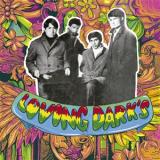
Los Amantes Oscuros" brings together for the first time on vinyl the recordings made between 1968 and 1969 by pioneers of Bolivian garage rock, Loving Darks, originally released on their three EPs. A selection packed with proto-punk covers of hits by the Stones, Cream, Tony Hatch, and more-often surpassing the originals in attitude and power. Their original records are highly sought after and are virtually impossible to find in any condition_ If we had to choose the Latin American country where the rawest and wildest garage and beat records of the '60s were recorded, Bolivia would be one of the clearest contenders. For some strange reason-surely related to the country's extreme conditions, its high altitude, and the influence of huayno-Bolivian recordings are truly unique and fascinating. A multitude of bands sprang up under the influence of groups-mainly British-that dominated the international charts. From the ashes of two of Bolivia's most important seminal bands, Los Black Byrds and The Turtles, two new groups fundamental to the history of Bolivian rock would be born: the mythical Climax and the legendary Loving Darks. "Los Amantes Oscuros" brings together for the first time on vinyl the recordings this band made between 1968 and 1969, originally released across three EPs on the local Lyra label. Their repertoire is packed with covers such as 'El Adivino,' a sped-up reinterpretation of 'Fortune Teller,' or even 'Algo de títere,' a reworking of 'Jumpin' Jack Flash.' They also adapt the classic 'Call Me' by Tony Hatch and 'Toad' by Cream, from whom they borrow the cover of one of their most iconic albums for the artwork of their EP "Complicado." In fact, 'Complicado'-a proto-punk version of the Rolling Stones' 'Complicated' and their signature track-is a perfect example of how a Bolivian band could outdo the British giants in attitude and power. Their importance lies in having paved the way for new sounds, styles, and aesthetics within a still-emerging scene. This compilation is a joint release with the Peruvian label Rey Record and includes an insert with notes on the band's history. First time vinyl reissue.

pre-order now17.04.2026

expected to be published on 17.04.2026

22,27
Roxette - Baladas En Español LP 2x12"

Roxette

Baladas En Español LP 2x12"

2x12inch5026854375977
WM Sweden
17.04.2026
also available

Black Vinyl[35,50 €]


For the first time ever, Roxette release ‘Baladas En Español’ on vinyl. The relationship between Roxette and Spanish-speaking audiences has been a love story since the early ‘90s and this release celebrates that special relationship. The release is timed with Roxette’s 40th anniversary and their return to South America for live shows in April. The album will be available on vinyl and CD, featuring 4 bonus tracks compared to the original release. The vinyl will be released in both a limited coloured edition and standard black.

Roxette have some exciting plans to celebrate their 40th Anniversary this year, including extensive touring, further anniversary re-releases, video upgrades, contemporary remixes and much more!

pre-order now17.04.2026

expected to be published on 17.04.2026

41,98
Roxette - Baladas En Español LP 2x12"

Roxette

Baladas En Español LP 2x12"

2x12inch5026854652610
WM Sweden
17.04.2026
also available

Red Vinyl[41,98 €]


For the first time ever, Roxette release ‘Baladas En Español’ on vinyl. The relationship between Roxette and Spanish-speaking audiences has been a love story since the early ‘90s and this release celebrates that special relationship. The release is timed with Roxette’s 40th anniversary and their return to South America for live shows in April. The album will be available on vinyl and CD, featuring 4 bonus tracks compared to the original release. The vinyl will be released in both a limited coloured edition and standard black.

Roxette have some exciting plans to celebrate their 40th Anniversary this year, including extensive touring, further anniversary re-releases, video upgrades, contemporary remixes and much more!

pre-order now17.04.2026

expected to be published on 17.04.2026

35,50
LIS FEATURING VERONIKA RUD WESSBER - IN THE WAKE OF BLUE
  • 1: The Promise
  • 2: Longing
  • 3: In The Wake Of Blue
  • 4: Flux
  • 5: Vapor
  • 6: When Birds Flock
  • 7: The Endless Thread
  • 8: The Quiet Edge
  • 9: Shadows In Bloom

April Records proudly presents the new album from Danish trombonist and composer Lis Wessberg. Her most personal album to date, In The Wake of Blue is a song-driven work exploring transience, love, and transformation. Expanding her writing while remaining rooted in her distinctive instrumental voice, Wessberg creates an intimate musical landscape where lyric, melody, and texture carry equal weight. Wessberg has established herself as a leading voice on the European jazz scene through her band Yellow Map and a series of acclaimed releases on April Records. Her previous album, Twain Walking (2024), marked her first step into English-language songwriting and earned a Danish Music Award nomination in 2025 for the track Behind the Walls. In The Wake of Blue develops this direction further. The album draws on images from nature - sea, tides, clouds, mist, and birds - used as emotional anchors rather than abstractions. These elements frame songs that move from uncertainty and loss toward openness, connection, and renewal. The title reflects this arc: "blue" as melancholy, depth, and memory, and what emerges in its wake. Vocalist Veronika Rud is central to the album"s sound, bringing vulnerability and clarity to the songs. Rather than a traditional singer-led project, the music unfolds as a dialogue between voice and trombone, with Wessberg"s warm, airy tone mirroring and extending each song"s emotional core. At times the two move in close unison; elsewhere, they diverge and reconnect. The core ensemble - Steen Rasmussen (piano and keys), Lennart Ginman (bass), and Jeppe Gram (drums) - provides a responsive, understated foundation, while string quartet Live Strings appear on two tracks, expanding the ensemble"s depth and resonce. In The Wake of Blue offers a quietly assured statement from an artist continuing to refine a voice that speaks as clearly through brass as it does through words.

pre-order now17.04.2026

expected to be published on 17.04.2026

23,11
Wired - Kyoto 1970

Wired

Kyoto 1970

12inchMETAPHON028
Metaphon
17.04.2026

Wired was an ephemeral improvisational music project formed by Michael Ranta, Karl-Heinz Böttner, and Mike Lewis. On 28 April 1970, the trio recorded an extended studio session of approximately 140 minutes, in collaboration with Conny Plank, who engineered and mixed the recording in real time, incorporating elements of live electronics. This session was subsequently edited to album length and released in 1974 as part of the Free Improvisation 3LP box set issued by Deutsche Grammophon, alongside recordings by Iskra and New Phonic Art.

Owing to its exploratory electric sound world and Plank’s distinctive spatial production techniques, the Wired recording acquired a degree of underground cult status, particularly among listeners associated with krautrock and psychedelic improvisation.

Shortly after the studio session, Ranta and Böttner travelled to Japan, where they spent approximately six months performing with Karlheinz Stockhausen at Expo ’70 in Osaka. In addition to these activities, they engaged in various independent musical projects and performances.

The present release, sourced from the personal archive of Michael Ranta, documents a live duo performance by Ranta and Böttner, recorded on 27 July 1970 in an outdoor setting in Kyoto (the exact location remains unknown), before an audience of approximately 200 music teachers. The recording exhibits sonic and aesthetic characteristics closely aligned with the previously recorded studio material, retaining the distinctive “Wired” sound while situating it within a live, site-specific context.

Michael Ranta: percussion, voice, home-made instruments, tapes, tape delay, effects Karl-Heinz Böttner: guitar, organ, ocarina, voice, effects

pre-order now17.04.2026

expected to be published on 17.04.2026

26,68
Kosmonauci - Brudna - Bielizna
  • 01: Kogut
  • 02: Och! Proste : Trudne
  • 03: Almodowar Z Małym
  • 04: Sieka
  • 05: Tabaluga
  • 06: Ostatni 2.0
  • 07: Koniec Tego
  • 08: Dla Zuzy
  • 09: Siła Przyjaźni
also available

Black Vinyl LP[33,57 €]


"Brudna - Bielizna" is the second album by the boy band KOSMONAUCI. This album consists of original compositions by the band members, which were created over the past two years and evolved together with the artists during concerts. The Kosmonauts' music is rooted in jazz and improvisation, but over time, the musicians have developed many new paths and ways of drawing from many other, seemingly disparate musical genres. On the album "Brudna - Bielizna" the Kosmonauts continue to explore various genre and stylistic combinations. However, the second album is more focused and connected to the band members' jazz inspirations. KOSMONAUCI have been playing together since high school, and this is clearly audible.

***After very quick SOLD OUT of the U JAZZ ME vinyl - we are adding new version of the album - 200 copies extra of white and blue galaxy vinyl in collaborationn with U Know Me Records - 180g wax with insert ***

pre-order now17.04.2026

expected to be published on 17.04.2026

33,57
WHO CARES? - WHO CARES?

Very Limited 7” EP with printed lyric inner sleeve

Purely Physical Teeny Tapes continue to sink their teeth into the fleshy nethers of the contemporary oz
underground, plucking the self-titled ep of vivisected bedroom folk by naarm/melbourne trio Who Cares?
from the recesses of net anonymity for the greatest of good.

Upon appearing out of nowhere back in ‘24, the quartet’s debut registered (feverishly) somewhere
between immediacy & beguilement, the intervening year & change doing little to dull its aura, the
mystique only heightened by their suitably gorgeous appearance in wonderful company on a colourful
storm’s recent ‘going back to sleep…’ compilation-extravaganza. The conceit of these four tracks here is
disarmingly minimal - repetitious loner guitar strummage, oblique vox poetics as lullaby, intermittent
sunken percussion, bass the subtle melodic lugger - all recurring/revolving in delicious pirouette freefall,
un-rinseable within the mind, wayward melodies stuck like heat-warped treacle.

As with the firmest of its diy domestica ilk, there’s something ever so slightly off here, the carnivalesque
nature of this thing being the ‘what?’ that keeps pulling you in. parched ennui drip, fully zonked bacchanal
(anti-)energetics, listlessness rendered bedsit anthem, cooees in the hallway. depending on how your
head is screwed, ‘correct’ or otherwise, one might hear a charmed take on a vein of folk song fallen well
by the wayside/behind the mantle, others a seance for the spirits in the kettle, others more attuned to the
myriad wraiths swirling within the outer reaches of these songs, flights of whimsy foiled by a sticky, gluey
something or other. choose, or rather submit to your own adventure. Miaow miaow miaow.

out of Stock

Order now and we will order the item for you at our supplier.

14,08

Last In: 25 days ago
B. Fleischmann - Music for Shared Rooms LP 2x12"

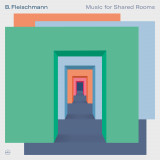
»Music for Shared Rooms« is B. Fleischmann’s eleventh solo album and his first since 2018. It is also not an album, or at least not in the conventional sense of the word. These 16 instrumental pieces provide a kaleidoscopic glimpse of a forward-thinking musician at home in many different musical worlds, including experimental and abstract music, pop and more classically-minded compositional forms. These pieces were culled from an archive of roughly 600 compositions for theatre pieces and films written throughout the past twelve years. The Österreichischer Filmpreis-awarded composer, however, aimed for more than simply documenting his extensive work in and with different media. To do so, he edited and re-mixed the individual recordings for this release, taking them out of their contexts and reworking them for an audience who can experience them in a different setting. »Music for Shared Rooms« makes it possible for its listeners to engage with the sounds and to fill the spaces they open up with their own imagination.

Roughly speaking, music for theatre or film can serve two functions: it either takes the lead, or underscores what is happening on stage or screen. The marvelous thing about these pieces is that they manage to do both. Fleischmann’s work as a prolific producer has always drawn on contrasts, at times combining pop sentiment with rigid experimentation, the seemingly naive with the intricate and complex. This approach also marks the tracks collected here: bringing together acoustic elements and electronic sounds, at times working with conventional structures but always de- and re-contextualising them, Fleischmann constructs a vivid dramaturgy out of discrete singular compositions, letting them interact across the record.

Take, for example, the opener »Träumerei« and the following »Brenne«: after the soothing acoustic sounds of the former, the latter quickly picks up speed with hard-hitting drum machine rhythms. It’s a stark contrast sonically and stylistically, however both tracks are tied together by a certain harmonic sensibility. This sort of dramaturgical interconnectedness of varied musical materials is the thread that runs through »Music for Shared Rooms«. A droney piece for string instruments like »Sehnsucht« is followed by a trip-hop beat, before »Schock« lives up to its title with skittering beats and piercing high frequencies. The differences between the pieces may be striking, but the progression from one to the other is subtle. It goes on like this through different moods and tempos. There’s soothing-yet-eerie piano pieces like the »Für Elise«-inspired »Der Lärmkrieg«, gentle house grooves, joyful synthesizer excursions and, finally, »Die Erde ist mir fremd geworden«, a collage of abstract textures and concrete sounds.

All these pieces create distinct situations through the juxtaposition of diverse musical elements, but are also bound together by a single vision. Writing music for theatre pieces or film requires a composer and his pieces to engage with people and their movements in space, which is exactly what Fleischmann offers on this record. He breaks down the fourth wall and invites his listeners into his world, a wide-ranging musical panorama. »Music for Shared Rooms« is indeed not an album in the conventional sense of the word, but more like a photo album in which each page opens up a new space to get lost in; recreates different scenes in which you can immerse yourself. These are shared rooms indeed.

out of Stock

Order now and we will order the item for you at our supplier.

28,53

Last In: 26 days ago
Various - SPECTRES IV: A Thousand Voices - Mille Voix

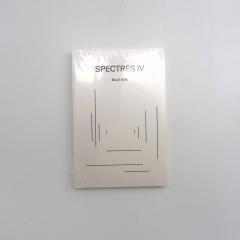
Fourth issue of Shelter Press' annual publication series »Spectres« (in association with INA GRM), this time themed around ›voice‹. Featuring contributions from/about François J. Bonnet, John Giorno, David Grubbs, Yannick Guédon, Lee Gamble, Sarah Hennies, Haela Ravenna Hunt-Hendrix, Stine Janvin, Joan La Barbara, Youmna Saba, Akira Sakata, Pierre Schaeffer, Peter Szendy and Ghédalia Tazartès.

The book includes an essay about the essence of improvisation by Joan La Barbara, Lee Gamble looking at neural networks and vocal simulation systems, an untitled anecdote from Ghédalia Tazartès (RIP) and Stine Janvin on the necessity of singing, plus much more.

»The voice is everywhere, infiltrating everything, making civilisation, marking out territories with infinite borders, spreading from the farthest reaches to the most intimate spaces. It can be neither reduced nor summarised. And accordingly, when taken as a theme, the voice is inexhaustible, even when seen in the light of its very particular relation with the sonic or the musical, as is the case in most of the texts collected in this volume. There is no point therefore in trying to circumscribe or amalgamate the multiple avatars of the voice. We must rather try to apprehend what the voice can do, to envisage its landscape, its potential effects.«

— Extract from the editors' foreword.

out of Stock

Order now and we will order the item for you at our supplier.

21,22

Last In: 26 days ago
Pascal Benjamin - Soul Extension EP

We welcome you to the third installment of Scala. Each new release on Scala Muziek reflects the evolving mindset of its founder. For the third chapter, Pascal Benjamin delivers Soul Extension EP, an exploration of movement, mood, and the subtle shifts that define his sound. A1: Almost Fact sets the tone with taut rhythms and shimmering low-end pulses, balancing tension and release in constant motion. A2: Shift Happens dives deeper into modulation, its warped stabs and filtered delays gradually building a shifting, evolving energy. On the flip: B1: Extension expands into rolling grooves and atmospheric layers, blending vintage warmth with modern precision. B2: Phases closes with a sparse, contemplative mood—fragmented voices and echoes creating a hypnotic sense of drift. Soul Extension captures Pascal at a point where artist and label move forward as one, shaping the next chapter of Scala Muziek’s identity.

stock from14.05.2026

13,03

Last In: 7 days ago
ANNIE & THE CALDWELLS - WRONG / I MADE IT REMIXES

The history of house and disco music is full of gospel soul singers creating anthemic bangers for the dance floor. Annie and the Caldwells, a family band from West Point, Mississippi, are the latest to join their ranks.

============================

This collection — featuring remixes from musclecars, Kornél Kovács, Alexis Taylor (of Hot Chip), and disco icons Nicky Siano and Justin Strauss — follows the release of the Caldwells’ wildly acclaimed debut Can’t Lose My (Soul) Luaka Bop, Spring 2025. Hailed as “a masterpiece” by The Guardian (★★★★★), and one of the best albums of the year by The Times, MOJO, UNCUT, and The Economist, Can’t Lose My (Soul) found fans all over the world — like Sir Elton John, who called their album “A great, great record that I insist you go out and buy.”

“I was blown away when I first heard the original version of ‘Wrong’,” says Kornel Kovács, whose remix of “Wrong” appears on this white label. “Deborah’s voice floored me, as well as the background singers. One of the greatest vocal performances I’ve heard, let alone worked with. The result is a club-ready take that’s become a highlight in my recent DJ sets.”

Producers Brandon Weems and Craig Handfield (of musclecars) had a similar experience when they heard the family for the first time: “We quickly fell in love with the groovy bassline and the choir vocals,” said Craig. “We thought it’d be fitting to put our own spin on it, while paying homage to those jive brothers from Tulsa. The uplifting keys paired with the punch of the drums, rounded out with that organ…this one is sure to bring a joyful noise!”

Annie Caldwell and her family have since performed in more than twenty countries on four continents, and recently made a star turn on the UK's preeminent music program Later... with Jools Holland. They’re hitting the road again in 2026. Watch this space.


[c] Wrong [You Dropped a Bomb] - Extended Wooden Dance Floor Mix (A Nicky Siano Production) 6:48

out of Stock

Order now and we will order the item for you at our supplier.

16,77

Last In: 25 days ago
Claude VonStroke - Wrong Number Vol.1

Volume 1 of 3 vinyls containing all the extended mixes on Claude VonStroke’s 5th original artist album, “Wrong Number.” This first record is deep, patient, and deliberately restrained. Claude VonStroke re-calibrates his career for real people who enjoy music. The big room house machine is out of control and Claude has stopped answering the phone.

“I’m sorry you have reached the wrong number. Claude is no longer available…

out of Stock

Order now and we will order the item for you at our supplier.

14,24
The Appetizers - Keep Your Step LP
  • 01: Feel Like Dancing
  • 02: Thicker Than Water
  • 03: A Message From The Meters
  • 04: Catch This
  • 05: Fussy Girl
  • 06: Cool And Deadly
  • 07: The Life
  • 08: Keep Your Step
  • 09: Make It Reggay
  • 10: Behind My Shoulders
  • 11: Stormy Weather
  • 12: We Shall Overcome

Killer Groove Records proudly presents "Keep Your Step", the explosive comeback by Italian rock steady & early reggae ambassadors The Appetizers, a soulful celebration of reggae's timeless spirit.


"Keep Your Step" marks the band's much-awaited return, landing April 10th on limited edition LP, CD digipack and digital format featuring two exclusive bonus tracks.

The Appetizers deliver a masterclass in roots reggae music with their highly anticipated second studio album, bridging Jamaica's golden age with contemporary relevance. "Keep Your Step" is a heartfelt sonic journey where the band blends rocksteady and early reggae with funk and soul influences to create a sound that's both genuine and refreshingly modern.

The fourteen tracks move fluidly between infectious dancefloor fillers and socially conscious lyrics. From the laid-back swing of "Feel Like Dancing" to the hypnotic rhythm of "Thicker Than Water", the band demonstrates their versatility while remaining true to the roots of Jamaican sound. "A Message from The Meters" pays tribute to the legendary funk pioneers, while the instrumental "Catch This" and "Make It Reggay" highlight the band's musical prowess and the deep connections between reggae and funk.

Meanwhile, tracks like "Fussy Girl" and "Behind My Shoulders" explore love's complexities with humor and soul. The album's heart lies in its social consciousness. "Cool and Deadly", "The Life", "Stormy Weather" and the album title track "Keep Your Step" tell stories of perseverance through life's struggles.

With the hopeful anthem "We Shall Overcome," The Appetizers deliver a timely message about genuine human connection in a social media-dominated era. The digital edition closes with "Get Some Rollin'" and "Swing and Sway," rounding out the journey with two additional gems.

"Keep Your Step" pays homage to Jamaican music legends, from Jackie Mittoo and Tommy McCook to Toots & the Maytals, while carving out The Appetizers' own distinctive sound. This is a groove made for both the dance floor and the soul, proving that reggae's power to inspire, unite, and uplift remains as vital as ever.

The production stays true to The Appetizers' signature sound: organic tones, deep groove, and that live-room vibe you only get when real musicians are locked in together. Luca Monza and Claudio Mambrini, the band's core members, handled the artistic production. Mastering came courtesy of the great JJ Golden (Black Pumas, Sharon Jones & The Dap-Kings, Jr. Thomas & The Volcanos, The Frightnrs) at Golden Mastering in Ventura, California. JJ is one of the most trusted engineers working in this sound, ensuring every ounce of warmth and authenticity came through.

The Appetizers are a rocksteady and early reggae band formed in Milan in 2020 by musicians deeply embedded in the Italian and international reggae scene. Musicians from different paths united by a shared vision: recreating that vintage Caribbean and American sound with authenticity, respect and a forward-thinking edge.

Drawing inspiration from Jamaica's golden era and channeling the soul of Delroy Wilson, Alton Ellis, the early Wailers, and The Upsetters, The Appetizers carry forward the essence of bass culture with a pure, fully organic approach.

Their debut album Listen Up! (2022), released via Belgian imprint Badasonic Records (home to The Slackers, The Aggrolites, David Hillyard & Victor Rice), featured ten original tracks and a dub cut by Victor Rice. Distributed across Europe, the UK, the US, and Japan, it quickly earned international recognition among reggae connoisseurs and selectors worldwide.

Following extensive touring, including shows with The Slackers, Black Uhuru, Skip Marley, and more, the band returned to the studio to record "Keep Your Step", their second album produced by Killer Groove Records. Here the band expands its musical language, weaving together the spirit of historic Jamaican labels like Studio One and Treasure Isle with '60s funk, arriving at a warm, organic, and timeless sound: soul, Jamaican roots, and modern sensibility in perfect balance. Their lyrics explore heartbreak, social issues, and reflections on life and music, performed with dedication and respect for tradition while always pushing forward.


If you're into The Skatalites, The Ethiopians, and those classic Caribbean rhythms, this one's for you.

pre-order now10.04.2026

expected to be published on 10.04.2026

23,32
Cosmic Ear - TRACES LP

Cosmic Ear

TRACES LP

12inchWJLP76B
WE JAZZ
10.04.2026
  • 01: Father And Son
  • 02: Traces Of Brown Rice
  • 03: Love Train
  • 04: Right Here Right Now
  • 05: Do It (Again) – For Sofia Jernberg

2ND LP PRESSING

Cosmic Ear is a new group bringing together Christer Bothén, Mats Gustafsson, Goran Kajfeš, Kansan Zetterberg and Juan Romero. Their debut album TRACES is released by We Jazz Records on 23rd of May, 2025. Including 6 deep cuts, TRACES is an album that sees Cosmic Ear tracking down the "traces" of the legendary Don Cherry's legacy while paving their own way in contemporary creative music expression.

Christer Bothén, a collaborator with Don Cherry during his Swedish period in the 1970s, brings depth to the history of the band, while his bandmates each belong at the top of the game in Scandinavian jazz. Their music is meditative and deep, much recommended for fans of the likes of Don Cherry, Alice Coltrane, and Pharoah. That being said, listeners should approach Cosmic Ear only with openness and curiosity, without set stylistic boundaries, as it's the group's natural flow and togetherness that brings their music into a fresh territory of their own.

As John Corbett writes in his liner notes:

"The Cosmic Ear. Five souls, sometimes six, on the same road. The pied piper path of Mr. Cherry. Christer Bothén, one of Cherry's main collaborators in his Swedish period and one of the most beautiful bass clarinetists on planet earth, together with next-gen saxophonist Mats Gustafsson, who has carried so many torches in Cherry's procession, and younger Swedish stars trumpeter Goran Kajfes, bassist Kansan Zetterberg, and percussionist Juan Romero. Together a tempo is set, a path is charted. There are global grooves. A berimbau, a karignan (metal scraper from Guinea), donso n'goni. There are ET grooves. Synth, live-electronics, slide flute. The globe is a glove, a hand warmer that radiates with extraterrestrial power, returning the fingers to their place at the center of the galaxy; the Cherry path is a balm that restores essential moisture to the lips that blow life back into the megacosm. Let us all praise warm fingers and moist mouths."

pre-order now10.04.2026

expected to be published on 10.04.2026

22,65
Marion Brown - Awofofora

First time reissue of JP / US free jazz rarity.

The 1970s were Marion Brown’s most searching decade, a period during which he sought to move beyond the free jazz of the previous era and find more personal approaches to structuring improvisation and composition. After leaving New York for Europe in 1967, Brown began reshaping his music into what he described as “a more deliberate kind of music that had more structure to it,” pacing it so that moods and modes could develop over time. Albums such as In Sommerhausen, Afternoon of a Georgia Faun, Geechee Recollections, and Sweet Earth Flying trace this evolution: rhythmic structures moved to the foreground, harmony receded, and composition became a matter of orchestrating interlocking rhythmic parts as one would polyphonic lines.

Released in 1976, Awofofora is an overlooked but crucial entry in that sequence. At the time, its use of funk and reggae beats, electric guitars, and grooves drawn from contemporary Black popular music led some to misread it as a jazz-rock detour. In retrospect, it is entirely consistent with Brown’s methodology. As he admired in the Art Ensemble of Chicago, the stimulus comes from within the community. Here Brown filters Afro-Caribbean rhythms and funk through his own sensibility, abstracting their structural qualities rather than adopting surface style.

“La Placita,” making its first recorded appearance, layers distinct rhythmic phrases in a manner reminiscent of African drum ensembles, over which Brown and trumpeter Ambrose Jackson spin extended improvisations. The standard “Flamingo” is reshaped through diasporic rhythm and lyrical soloing, while “Pepi’s Tempo” and “Mangoes” harness crisp funk and reggae grooves to generate what Brown called a “manifestation of community” through collective improvisation. Even the overdubbed solo feature “And Then They Danced” reflects his structural thinking, ingeniously re-voicing a duet composition for two alto saxophones performed by one player.

This was the only recording by a short-lived band that briefly polarized audiences during festival appearances in 1976. Yet Brown consistently sought unity across change: different sounds, same principles — rhythm as structure, melody as architecture, collective improvisation, and above all, the primacy of tone. Awofofora stands not as a departure, but as a vivid synthesis of the elements he had been refining since the late 1960s, its grooves and golden alto lines conveying a sound drawn, in his words, “from life and from the world of experience.”

pre-order now10.04.2026

expected to be published on 10.04.2026

28,15
Vampire - What Seems Forever Can Be Broken LP
  • Built For Decline
  • Human Market Capital
  • The Zone
  • Endless Chain
  • Polite
  • Words
  • Nothing To Hold
  • Hollow Life
  • Seeing Blind
  • The Letter
  • View From The Tower

10 songs from what is possibly the best anarchopunk band currently in existence. The dynamics of the tracks are refreshingly simple, a powerful yet neutral- sounding recording, with very little embellishment or stylized production to hide behind, approaching filth with distorted guitars, haunting bass lines, and steady drum beats, all elevated by the combination of the three voices perfectly balanced between melody and hatred. In a quantized world, one can perceive an endearing dose of human spirit through their tense and disturbingly melodic expressions. A modern Anarcho Punk classic that is surprising to find 40 years after the wonderful bands that spawned the genre, especially England. Includes poster and insert with lyrics.

Since reviewing Pomegranate Seeds: An International Benefit for Mutual Aid in Gaza, the compilation put out by the DISSIDENTS, I've been hunting for more VAMPIRE material, so when I saw I was assigned this LP I became very excited. VAMPIRE is an Australian band that plays apocalyptic anarcho- punk. A sense of extreme urgency pervades VAMPIRE's sound, and What Seems Forever Can Be Broken is ten songs that combine the demanding hardcore of CONFLICT, with a foundation of CRASS, and the rough-hewn delivery of raw punk. The resulting album is dark, hauntingly mesmeric, but also aggressive with a sense of communal voice. In other words, this is anarchopunk that is of the moment, and articulates exactly what contemporary punk is about without being preachy or elitist. This is that eye-to-eye, in-the-trenches vocalization of criticism that comes off as eye-opening and perspective-altering. What Seems Forever Can Be Broken is by far my favorite release thus far in 2025, but also might be the best album I've heard in a really long time. Like, this is benchmark-level material, so definitely give this a listen.

pre-order now10.04.2026

expected to be published on 10.04.2026

30,46
Tara Clerkin Trio - On The Turning Ground

Bristol's Tara Clerkin Trio return to World of Echo and the EP format for a five song collection of quixotic, emotional redolence. But do not mistake their absence for inertia. If their musical output has been a little sparse during those in-between years, limited to a few solo ventures and an astonishing ten minute long piece as a trio, their time has otherwise been richly spent: continuous writing and recording, extensive live performances across Europe and Japan, a cultivation of local and more far-flung artistic connections (musical and otherwise), and a monthly NTS show that, through the voice of others, speaks most obviously to their own unorthodox interests. It's the conflux of that winding activity that leads indirectly to On The Turning Ground, 26 minutes of probing, thoughtful composition that draws from no one specific source. Their inspirations might be centreless, but the trio still possess a very obvious anchor in the form of their hometown. Bristol stands as a city of multitudes, heterogenous and vibrant in such a way as to allow it to renew and remake time and again. Tara Clerkin Trio drink from that same well, duly reflecting a rich musical heritage built on fwd-facing electronic subcultures and experimental urges.

As such, On The Turning Ground finds them subject to their own subtle internal evolution, the pervasive sense that you've caught them mid-bloom, on their way to becoming but never anything but themselves. The two instrumental pieces that bookend the EP stand as a perfect case in point, displaying an increasing mastery of compositional space. Pensive and restrained, 'Brigstow' and 'Once Around' both emanate an interstitial quality that's not so much after- as in-between-hours, miniature dub-folk symphonies held together by the kind of tacit understanding that remains the preserve of only the closest of family units. If those two tracks are shaped by a sense of shifting temporality, then the three vocal-led pieces that comprise the record's core feel like a gentle ossifying of aesthetic into something approaching their own unique form of avant-pop. 'Pop' is, of course, a broadly subjective concept, but there's no avoiding the overt sparkling melodicism of songs like 'Marble Walls' and 'The Turning Ground', undeniable re-directions of that late 90s impulse to bend pop sensibilities into off-centre terrain, to render the familiar new again. This is what Tara Clerkin Trio do, gently pulling the ground from under your feet, turning you to face something you'd not quite seen before. To view the world as they do: sideways, sometimes, all of the time.

out of Stock

Order now and we will order the item for you at our supplier.

19,75

Last In: 2 years ago
Melvins with Napalm Death - Savage Imperial Death March LP

After two co-headlining tours over the past decade, (the) Melvins are continuing their long tradition with us of teaming up with another band on an album. Next up – Napalm Death! This isn’t just some split release with the bands each getting a side. Savage Imperial Death March is a full collaboration with both Melvins & Napalm Death playing together on all the tracks.


This release originally came out on super-limited CD and vinyl via AmRep in 2025 (tour and AmRep store only). This will be an extended version with 2 extra songs, brand new artwork from Mackie Osborne, new vinyl variants, and will be the official release for the first time at record stores, DSPs and more.


Napalm Death are credited as pioneers of the grindcore genre by incorporating elements of crust punk and death metal. Even after exerting an indelible influence on the entire world of heavy music for nearly 40 years, there is still no band on Earth that sounds like Napalm Death. Not just pioneers, but an enduring benchmark for invention and fearlessness in heavy and experimental music of all kinds, the Birmingham legends are still hurtling forward at full pelt.


The Melvins are one of modern music’s most influential bands. Having formed in 1983, the group — founded by vocalist/guitarist Buzz Osborne, with drummer Dale Crover joining a year later — has been credited with merging the worlds of punk rock and heavy music, forming a new subgenre all their own. Over their 40-plus-year career, they’ve released more than 30 original albums, numerous live records, and far too many to count singles and rarities.

out of Stock

Order now and we will order the item for you at our supplier.

23,49

Last In: 34 days ago
Guilty Razors - Complete Recordings 1977 - 1978

UILTY RAZORS, BONA FIDE PUNKS.


Writings on the topic that go off in all directions, mind-numbing lectures given by academics, and testimonies, most of them heavily doctored, from those who “lived through that era”: so many people today fantasize about the early days of punk in our country… This blessed moment when no one had yet thought of flaunting a ridiculous green mohawk, taking Sid Vicious as a hero, or – even worse – making the so-called alternative scene both festive and boorish. There was no such thing in 1976 or 1977, when it wasn’t easy to get hold of the first 45s by the Pistols or the Clash. Few people were aware of what was happening on the fringes of the fringes at the time. Malcolm McLaren was virtually unknown, and having short hair made you seem strange. Who knew then that rock music, which had taken a very bad turn since the early 1970s, would once again become an essential element of liberation? That, thanks to short and fast songs, it would once again rediscover that primitive, social side that was so hated by older generations? Who knew that, besides a few loners who read the music press (it was even better if they read it in English) and frequented the right record stores? Many of these formed bands, because it was impossible to do otherwise. We quickly went from listening to the Velvet Underground to trying to play the Stooges’ intros. It’s a somewhat collective story, even though there weren’t many people to start it.
The Guilty Razors were among those who took part in this initial upheaval in Paris. They were far from being the worst. They had something special and even released a single that was well above the national average. They also had enough songs to fill an album, the one you’re holding. In everyone’s opinion, they were definitely not among the punk impostors that followed in their wake. They were, at least, genuine and credible.

Guilty Razors, Parisian punk band (1975-1978). To understand something about their somewhat linear but very energetic sound, we might need to talk about the context in which it was born and, more broadly, recall the boredom (a theme that would become capital in punk songs) coupled with the desire to blow everything off, which were the basis for the formation of bands playing a rejuvenated rock music ; about the passion for a few records by the Kinks or the early Who, by the Stooges, by the Velvet mostly, which set you apart from the crowd.
And of course, we should remember this new wave, which was promoted by a few articles in the specialized press and some cutting-edge record stores, coming from New York or London, whose small but powerful influence could be felt in Paris and in a handful of isolated places in the provinces, lulled to sleep by so many appalling things, from Tangerine Dream to President Giscard d’Estaing...
In 1975-76, French music was, as almost always, in a sorry state ; it was still dominated by Johnny Hallyday and Sylvie Vartan. Local rock music was also rather bleak, apart from Bijou and Little Bob who tried to revive this small scene with poorly sound-engineered gigs played to almost no one.
In the working class suburbs at the time, it was mainly hard rock music played to 11 that helped people forget about their gruelling shifts at the factory. Here and there, on the outskirts of major cities, you still could find a few rockers with sideburns wearing black armbands since the death of Gene Vincent, but it wasn’t a proper mass movement, just a source of real danger to anyone they came across who wasn't like them. In August 1976, a festival unlike any other took place in Mont-de-Marsan – the First European Punk Festival as the poster said – with almost as many people on stage as in the audience. Yet, on that day, a quasi historical event happened, when, under the blazing afternoon sun, a band of unknowns called The Damned made an unprecedented noise in the arena, reminiscent of the chaotic Stooges in their early adolescence. They were the first genuine punk band to perform in our country: from then on, anything was possible, almost anything seemed permissible.

It makes sense that the four+1 members of Guilty Razors, who initially amplified acoustic guitars with crappy tape recorder microphones, would adopt punk music (pronounced paink in French) naturally and instinctively, since it combines liberating noise with speed of execution and – crucially – a very healthy sense of rebellion (the protesters of May 1968 proclaimed, and it was even a slogan, that they weren’t against old people, but against what had made them grow old. In the mid-1970s, it seemed normal and obvious that old people should now ALSO be targeted!!!).
At the time, the desire to fight back, and break down authority and apathy, was either red or black, often taking the form of leafleting, tumultuous general assemblies in the schoolyard, and massive or shabby demonstrations, most of the time overflowing with an exciting vitality that sometimes turned into fights with the riot police. Indeed, soon after the end of the Vietnam War and following Pinochet’s coup in Chile, all over France, Trotskyist and anarcho-libertarian fervour was firmly entrenched among parts of the educated youth population, who were equally rebellious and troublemakers whenever they had the chance. It should also be noted that when the single "Anarchy in the UK" was first heard, even though not many of us had access to it, both the title and its explosive sound immediately resonated with some of those troublemakers crying out for ANARCHY!!! Meanwhile, the left-wing majority still equated punks with reckless young neo-Nazis. Of course, the widely circulated photos in the mainstream press of Siouxsie Sioux with her swastikas didn’t necessarily help to win over the theorists of the Great Revolution. It took Joe Strummer to introduce The Clash as an anti-racist, anti-fascist and anti-ignorance band for the rejection of old-school revolutionaries to fade a little.

The Lycée Jean-Baptiste Say at Porte d’Auteuil, despite being located in the very posh and very exclusive 16th arrondissement of Paris, didn’t escape these "committed" upheavals, which doubled as the perfect outlet for the less timid members of this generation.
“Back then, politics were fun,” says Tristam Nada, who studied there and went on to become Guilty Razors’ frontman. “Jean-Baptiste was the leftist high-school in the neighbourhood. When the far right guys from the GUD came down there, the Communist League guys from elsewhere helped us fight them off.”
Anything that could challenge authority was fair game and of course, strikes for just about any reason would lead to increasingly frequent truancy (with a definitive farewell to education that would soon follow). Tristam Nada spent his 10th and 11th unfinished grades with José Perez, who had come from Spain, where his father, a janitor, had been sentenced to death by Franco. “José steered my tastes towards solid acts such as The Who. Like most teenagers, I had previously absorbed just about everything that came my way, from Yes to Led Zeppelin to Genesis. I was exploring… And then one day, he told me that he and his brother Carlos wanted to start a rock band.” The Perez brothers already played guitar. “Of course, they were Spanish!”, jokes their singer. “Then, somewhat reluctantly, José took up the bass and we were soon joined by Jano – who called himself Jano Homicid – who took up the rhythm guitar.” Several drummers would later join this core of not easily intimidated young guys who didn’t let adversity get the better of them.

The first rehearsals of the newly named Guilty Razors took place in the bedroom of a Perez aunt. There, the three rookies tried to cover a few standards, songs that often were an integral part of their lives. During a first, short gig, in front of a bewildered audience of tough old-school rockers, they launched into a clunky version of the Velvet Underground's “Heroin”. Challenge or recklessness? A bit of both, probably… And then, step by step, their limited repertoire expanded as they decided to write their own songs, sung in a not always very accurate or academic English, but who cared about proper grammar or the right vocabulary, since what truly mattered was to make the words sound as good as possible while playing very, very fast music? And spitting out those words in a language that left no doubt as to what it conveyed mattered as well.
Trying their hand a the kind of rock music disliked by most of the neighbourhood, making noise, being fiercely provocative: they still belonged to a tiny clique who, at this very moment, had chosen to impose this difference. And there were very few places in France or elsewhere, where one could witness the first stirrings of something that wasn’t a trend yet, let alone a movement.

In the provinces, in late 1976 or early 1977, there couldn’t be more than thirty record stores that were a bit more discerning than average, where you could hear this new kind of short-haired rock music called “punk”. The old clientele, who previously had no problem coming in to buy the latest McCartney or Aerosmith LP, now felt a little less comfortable there…
In Paris, these enlightened places were quite rare and often located nex to what would become the Forum des Halles, a big shopping mall. Between three aging sex workers, a couple of second-hand clothes shops, sellers of hippie paraphernalia and small fashion designers, the good word was loudly spread in two pioneering places – propagators of what was still only a new underground movement. Historically, the first one was the Open Market, a kind of poorly, but tastefully stocked cave. Speakers blasted out the sound of sixties garage bands from the Nuggets compilation (a crucial reference for José Perez) or the badly dressed English kids of Eddie and the Hot Rods. This black-painted den was opened a few years earlier by Marc Zermati, a character who wasn’t always in a sunny disposition, but always quite radical in his (good) choices and his opinions. He founded the independent label Skydog and was one of the promoters of the Mont-de-Marsan punk festivals. Not far from there was Harry Cover, another store more in tune with the new New York scene, which was amply covered in the house fanzine, Rock News (even though it was in it that the photos of the Sex Pistols were first published in France).
It was a favorite hang-out of the Perez brothers and Tristam Nada, as the latter explained. “It’s at Harry Cover’s that we first heard the Pistols and Clash’s 45s, and after that, we decided to start writing our first songs. If they could do it, so could we!”
The sonic shocks that were “Anarchy in the UK”, “White Riot” or the Buzzcocks’s EP, “Spiral Scratch” – which Guilty Razors' sound is reminiscent of – were soon to be amplified by an unparalleled visual shock. In April 1977, right after the release of their first LP, The Clash performed at the Palais des Glaces in Paris, during a punk night organised by Marc Zermati. For many who were there, it was the gig of a lifetime…
Of course, Guilty Razors and Tristam were in the audience: “That concert was fabulous… We Parisian punks were almost all dressed in black and white, with white shirts, skinny leather ties, bikers jackets or light jackets, etc. The Clash, on the other hand, wore colourful clothes. Well, the next day, at the Gibus, you’d spot everyone who had been at this concert, but they weren’t wearing anything black, they were all wearing colours.”

It makes sense to mention the Gibus club, as Guilty Razors often played there (sometimes in front of a hostile audience). It was also the only place in Paris that regularly scheduled new Parisian or Anglo-Saxon acts, such as Generation X, Siouxsie and the Banshees, the Slits, and Johnny Thunders who would become a kind of messed-up mascot for the venue. A little later, in 1978, the Rose Bonbon – formerly the Nashville – also attracted nightly owls in search of electric thrills… In 1977, the iconic but not necessarily excellent Asphalt Jungle often played at the Gibus, sometimes sharing the bill with Metal Urbain, the only band whose aura would later transcend the French borders (“I saw them as the French Sex Pistols,” said Geoff Travis, head of their British label Rough Trade). Already established in this small scene, Metal Urbain helped the young and restless Guilty Razors who had just arrived. Guitarist for Metal Urbain Hermann Schwartz remembers it: “They were younger than us, we were a bit like their mentors even if it’s too strong a word… At least they were credible. We thought they were good, and they had good songs which reminded of the Buzzcocks that I liked a lot. But at some point, they started hanging out with the Hells Angels. That’s when we stopped following them.”

The break-up was mutual, since, Guilty Razors, for their part, were shocked when they saw a fringe element of the audience at Metal Urbain concerts who repeatedly shouted “Sieg Heil” and gave Nazi salutes. These provocations, even still minor (the bulk of the skinhead crowd would later make their presence felt during concerts), weren’t really to the liking of the Perez brothers, whose anti-fascist convictions were firmly rooted. Some things are non-negotiable.
A few months earlier (in July 1978), Guilty Razors had nevertheless opened very successfully for Metal Urbain at the Bus Palladium, a more traditonally old-school rock night-club. But, as was sometimes the case back then, the night turned into a mass brawl when suburban rockers came to “beat up punks”.

Back then, Parisian nights weren’t always sweet and serene.

So, after opening as best as they could for The Jam (their sound having been ruined by the PA system), our local heroes were – once again – met outside by a horde of greasers out to get them. “Thankfully,” says Tristam, “we were with our roadies, motorless bikers who acted as a protective barrier. We were chased in the neighbouring streets and the whole thing ended in front of a bar, with the owner coming out with a rifle…”
Although Tristam and the Perez brothers narrowly escaped various, potentially bloody, incidents, they weren’t completely innocent of wrongdoing either. They still find amusing their mugging of two strangers in the street for example (“We were broke and we simply wanted to buy tickets for the Heartbreakers concert that night,” says Tristam). It so happened that their victims were two key figures in the rock business at the time: radio presenter Alain Manneval and music publisher Philippe Constantin. They filed a complaint and sought monetary compensation, but somehow the band’s manager, the skilful but very controversial Alexis, managed to get the complaint withdrawn and Guilty Razors ended up signing with Constantin with a substantial advance.

They also signed with Polydor and the label released in 1978 their only three-track 45, featuring “I Don't Wanna be A Rich”, “Hurts and Noises” and “Provocate” (songs that exuded perpetual rebellion and an unquenchable desire for “class” confrontation). It was a very good record, but due to a lack of promotion (radio stations didn’t play French artists singing in English), it didn’t sell very well. Only 800 copies were allegedly sold and the rest of the stock was pulped… Initially, the three tracks were to be included on a LP that never came to be, since they were dropped by Polydor (“Let’s say we sometimes caused a ruckus in their offices!” laughs Tristam.) In order to perfect the long-awaited LP, the band recorded demos of other tracks. There was a cover of Pink Floyd's “Lucifer Sam” from the Syd Barrett era – proof of an enduring love for the sixties’ greats –, “Wake Up” a hangover tale and “Bad Heart” about the Baader-Meinhof gang, whose actions had a profound impact on the era and on a generation seeking extreme dissent... On the album you’re now discovering, you can also hear five previously unreleased tracks recorded a bit later during an extended and freezing stay in Madrid, in a makeshift studio with the invaluable help of a drummer also acting as sound engineer. He was both an enthusiastic old hippie and a proper whizz at sound engineering. Here too, certain influences from the fifties and sixties (Link Wray, the Troggs) are more than obvious in the band’s music.

Shortly after a final stormy and rather barbaric (on the audience’s side) “Punk night” at the Olympia in June 1978, Tristam left the band ; his bandmates continued without him for a short while.

But like most pioneering punk bands of the era, Guilty Razors eventually split up for good after three years (besides once in Spain, they’d only played in Paris). The reason for ceasing business activities were more or less the same for everyone: there were no venues outside one’s small circuit to play this kind of rock music, which was still frightening, unknown, or of little interest to most people. The chances of recording an LP were virtually null, since major labels were only signing unoriginal but reassuring sub-Téléphone clones, and the smaller ones were only interested in progressive rock or French chanson for youth clubs. And what about self-production? No one in our small safety-pinned world had thought about it yet. There wasn’t enough money to embark on that sort of venture anyway.

So yes, the early days of punk in France were truly No Future!

out of Stock

Order now and we will order the item for you at our supplier.

21,43

Last In: 32 days ago
Items per Page:
N/ABPM
Vinyl