Peggy Gou's Gudu Records proudly presents 'Jack's Jive' - a long overdue re-release of a legendary lost South African record from 1987. Out of print for years and never available digitally, 'Jack's Jive' is the stuff of legend: a bold, bright synthesizer-led cut that has been demanding Discogs prices upwards of £150 and both referenced and ripped off by contemporary artists since. Re-mastered for 2021 and cut to vinyl for the first time in decades, it's backed with two remixes by DMX Krew.
out of Stock
Last delivered 4 years ago available to reorder, subject to availability
With his first release as EBM outfit Voltage Control on Antler Subway in 1989, Utrecht-based Arno Peeters can easily be considered one of the Dutch Dance pioneers.
Influenced by hip hop, electro and acid house, and his uncontrollable urge to experiment, he moved on to produce techno. Disappointed by the genre s conventions, he rather suddenly stopped with dance music altogether around 1995, letting a wealth of DATs with unreleased material collect dust in his studio.
To our great pleasure, U-TRAX was allowed to pick some nuggets from these archives, resulting in this Titanic EP and an album later this year.
Arno started experimenting with sound at very young age, resulting in his first cassette releases with experimental soundscapes in 1983. In 1986 he joined the notable Centre for Electronic Music (CEM), where he was able to take his experiments to a new level in a professional studio-environment.
In his techno episode , he recorded several 12 -es and CDs as Sp@sms and The Implant, and as part of Random XS, Urban Electro, African Nightflight and The AWAX Foundation, with most of his records being released on the famous DJAX label.
After turning his back on techno, he applied himself to more experimental music again. In 1996, he created AeroSon, a 40-minute sound collage that won him the first prize in the category Composers Under 30 at a high-brow international contest for electro-acoustic music. This piece was later released on the prestigious Mille Plateaux label.
Since then, his focus has shifted away from releasing music, towards working more project-based: on remixes, compilations and interactive (installations, video, sound design), building himself a successful career as radio maker, teacher and engineer, contributing to several award-winning documentaries and podcasts.
This EP is a nice cross section of Arno s dance productions, serving you some acid, techno and electro.
Titanic V1 was originally created to be a Random XS track, the techno band he formed in 1991 with Sander Friedeman. It was performed during their live set at one of the G.U.R.U. parties, organized by U-TRAX label boss DJ White Delight and label artist P.A. Presents.
This acid track was remixed into a techno monster when Friedeman replaced the 303 with a 101 and added a ton of delay on the bass drums, resulting in the woofer destroying Titanic (Underwater Dub).
The flipside sees a rare post-1995 recording by Arno: CEM Traxx 1. As the title suggests, this melancholic electro gem was created using the intricate machinery of the CEM Studio. Originally created as one half of a two-part composition for some project in 2003, it was never released before.
The EP closes with a typical Arno brainchild, the tongue-in-cheek acid banger XD5 Acid Master, from 1994. Tracks like this happen if you leave Arno unattended with a rather un-hip machine like the Kawai XD-5: he turns it inside out and uses it for things it was never intended for. Buckle up!
All tracks have been produced by Arno Peeters and mastered by Ruud Lekx. Label art by Botterman Ontwerp.
out of Stock
Last delivered 4 years ago available to reorder, subject to availability
With his first release as EBM outfit Voltage Control on Antler Subway in 1989, Utrecht-based Arno Peeters can easily be considered one of the Dutch Dance pioneers.
Influenced by hip hop, electro and acid house, and his uncontrollable urge to experiment, he moved on to produce techno. Disappointed by the genre s conventions, he rather suddenly stopped with dance music altogether around 1995, letting a wealth of DATs with unreleased material collect dust in his studio.
To our great pleasure, U-TRAX was allowed to pick some nuggets from these archives, resulting in this Titanic EP and an album later this year.
Arno started experimenting with sound at very young age, resulting in his first cassette releases with experimental soundscapes in 1983. In 1986 he joined the notable Centre for Electronic Music (CEM), where he was able to take his experiments to a new level in a professional studio-environment.
In his techno episode , he recorded several 12 -es and CDs as Sp@sms and The Implant, and as part of Random XS, Urban Electro, African Nightflight and The AWAX Foundation, with most of his records being released on the famous DJAX label.
After turning his back on techno, he applied himself to more experimental music again. In 1996, he created AeroSon, a 40-minute sound collage that won him the first prize in the category Composers Under 30 at a high-brow international contest for electro-acoustic music. This piece was later released on the prestigious Mille Plateaux label.
Since then, his focus has shifted away from releasing music, towards working more project-based: on remixes, compilations and interactive (installations, video, sound design), building himself a successful career as radio maker, teacher and engineer, contributing to several award-winning documentaries and podcasts.
This EP is a nice cross section of Arno s dance productions, serving you some acid, techno and electro.
Titanic V1 was originally created to be a Random XS track, the techno band he formed in 1991 with Sander Friedeman. It was performed during their live set at one of the G.U.R.U. parties, organized by U-TRAX label boss DJ White Delight and label artist P.A. Presents.
This acid track was remixed into a techno monster when Friedeman replaced the 303 with a 101 and added a ton of delay on the bass drums, resulting in the woofer destroying Titanic (Underwater Dub).
The flipside sees a rare post-1995 recording by Arno: CEM Traxx 1. As the title suggests, this melancholic electro gem was created using the intricate machinery of the CEM Studio. Originally created as one half of a two-part composition for some project in 2003, it was never released before.
The EP closes with a typical Arno brainchild, the tongue-in-cheek acid banger XD5 Acid Master, from 1994. Tracks like this happen if you leave Arno unattended with a rather un-hip machine like the Kawai XD-5: he turns it inside out and uses it for things it was never intended for. Buckle up!
All tracks have been produced by Arno Peeters and mastered by Ruud Lekx. Label art by Botterman Ontwerp.
out of Stock
Last delivered 4 years ago available to reorder, subject to availability
For Memory Pearl’s »Music for 7 Paintings« Moshe Fisher–Rozenberg traveled to art galleries throughout North America searching for paintings which would enrapture him.
Like the experience of being drawn into the worlds of those paintings, these seven tracks — each one directly referencing a single work by Joan Mitchell, Robert Ryman, Lee Krasner, Helen Frankenthaler, Franz Kline, or Jackson Pollock — are love letters to the sympathetic vibration of one creative mind encountering another. They trace the way art inspires and generates art. Each resonates with the reconstructive energy that comes from translating the visual to the auditory.
One might expect a jagged, alienating angularity, given the modernist and postmodern source material. Instead there is warmth and depth of sentiment, accented by the analogue and digital synth pitch–shifts and cascades. The pieces crackle with the energy of translation: something new is created as the medium changes, mediated across the boundaries of genre. There are associations, asides, tangents as each work is »read« into its new format. There is no alienation, no cold distance: only engagement and warmth. The album’s lead track, Natural Answer, 1976 opens with sounds that feel like the gaze being caught and drawn into an intimate emotional connection with a work. Cupola, 1958–1960 begins with a thickly layered wash of sound as nostalgic as a train ride through the outskirts of a city at night, then expands into a cavernous memory–scene of personal association.
Fisher–Rozenberg brings a vast experience to bear on the paintings that inspire »Music for 7 Paintings«. While this may be his debut full length as a solo artist, he is a consummate collaborator (Alvvays, Fucked Up, U.S. Girls, Youth Lagoon, Man Forever) best known as the drummer and synthesist in Absolutely Free. Also clear is his visual sensibility — his instinct for how to translate the emotive context of visual art into sound, honed in collaborative work on kinetic sculptures, immersive installations and film scores. But what most comes to the fore is perhaps his recent graduate work in music therapy, and the sensitivity learned through his leading of music therapy sessions at Toronto's Centre for Addiction and Mental Health. This direct encounter with music’s power to heal lends the tracks a sacred, therapeutic quality. They are suffused with curative frequencies that connect the isolated individual to a world of contemplative beauty.
»Music For 7 Paintings« catalogues the energy in the gaze of a seasoned musician, translating brushstroke to sound.
Believed to have been recorded in 1983, ‘O Filho Do Homem’ is a newly discovered and previously unreleased single by the late Brazilian composer and keyboardist Ana Mazzotti. Though it’s her only known studio recording of the decade, ‘O Filho Do Homem’ is one of several unreleased compositions Mazzotti and her band performed on TV Cultura and Programa MPB during the 80s.*
These performances showed Mazzotti had transitioned towards a harder edged and more daringly experimental sound in this period, while keeping the core components of samba, jazz and funk that characterised her two studio albums from the 1970s, Ninguem Vai Me Segurar (1974) and the self titled Ana Mazzotti (1977). This evolved 80s sound had evidently taken a similar path to that of her contemporaries and mentors, like Azymuth, whose keyboardist José Roberto Bertrami arranged her debut album, and Hermeto Pascoal who described her as “a super musician.”
Following the resurgence in appreciation for Ana’s music that arose from the 2019 reissues of her two studio albums, her son Toni Mazzotti was compelled to re-examine the archive of artefacts he’d inherited from his parents. Amongst the LPs, chord sheets, photos and VHS recordings, Toni stumbled upon a mysterious reel of tape, which he swiftly dispatched to the Far Out office in London. Toni and the Far Out team were delighted to discover the mystery tape was a hazy jazz-funk gem recorded by his mother (and father, drummer Romildo Santos) during the twilight of her short career; Ana Mazzotti sadly passed away in 1988 from lung cancer at the age of just 37. Aside from Ana on keyboards and vocals and Romildo who produced and played drums on all of Ana’s recordings, the line-up for the quartet is unknown.
“O Filho Do Homem” will be released on 7” vinyl and digitally on the 10th December 2021 via Far Out Recordings.
"In Vivo" is the result of the photographic work of Klavdij Sluban at the Fleury-Mérogis Young Offender Institution (France) from 1995 to 2016 Beds in addition to his work from Izalco prison, located in El Salvador, from 2008 [visiting rooms] connected to the music of Gareth Davis.
Gareth Davis is an artist, composer and musician living in Amsterdam. He plays clarinet(s), the result of a somewhat impulsive purchase whilst window shopping in Covent Garden, London, around ten years before the turn of the century. The serendipitous location of a rather wonderful (and equally important, rather cheap) second hand record shop less than 10m from the bus stop required for seven years of schooling, combined with delivering newspapers on a daily basis, lead to a somewhat eclectic, dusty and generally unclassified taste in music.
The result. Activity covering sonic art and contemporary classical music through rock, improvisation and noise with collaborations that have included the premiering of new written pieces by composers such as Bernhard Lang, Peter Ablinger, Toshio Hosokawa and Jonathan Harvey, soloist with orchestras including the SWR Symphonieorchester, Warsaw Philharmonic and Orquesta de la Comunidad de Madrid, performances with groups and performers ranging from the Neue Vocalsolisten and Arditti Quartet through to improvisers Elliott Sharp and Frances Marie Uitti, electronic artists Robin Rimbaud and Merzbow and multimedia work with artists including Christian Marclay and Peter Greenaway.
"In Vivo" is his second solo release after to have recorded a bunch of collaborative albums with artists such as Scanner, Machinefabriek, Steven R. Smith, Kleefstra Brothers, Frances-Marie Uitti, Merzbow, Adain Baker, Duane Pitre and more...
Klavdij Sluban, winner of the European Publishers Award for Photography 2009, of the Leica Prize (2004) and of the Niépce Prize (2000), main French prize in photography, is a French photographer of Slovenian origin born in Paris in 1963.
He develops a rigorous and coherent body of work, nourished by literature, never inspired by immediate and sensational current affairs, making him one of the most interesting photographers of his generation. The Balkans, the Black Sea, the Baltic Sea, the Caribbean, Central America, Russia, China and the Antarctic (first artistic mission in the Kerguelen islands) can be read as many successive steps of an in-depth study of a patient proximity to the encountered real.
His images have been shown in such leading institutions as the Metropolitan Museum of Photography of Tokyo, the Maison Européenne de la Photographie in Paris, the Rencontres d’Arles, the Museum of Photography in Helsinki, the Fine Arts Museum in Canton, the Musée Beaubourg, the Museum of Texas Tech University. His many books include East to East (published simultaneously by Actes Sud, Dewi Lewis, Petliti, Braus, Apeiron & Lunwerg with a text by Erri de Luca), Entre Parenthèses, (Photo Poche, Actes Sud), Transverses, (Maison Européenne de la Photographie) and Balkans -Transit, with a text by François Maspero (Seuil). Since 1995, Sluban has been photographing teenagers in jails. In each prison he organizes workshops with the young offenders to share his passion. First originated in France, in the prison of Fleury-Mérogis with support of Henri Cartier-Bresson during 7 years, as well as Marc Riboud and William Klein punctually. This commitment was pursued in the disciplinary camps of Eastern Europe –Serbia, Slovenia, Ukraine, Georgia, Moldavia, Latvia – and in the disciplinary centres of Moscow and St Petersburg as well as in Ireland. From 2007 to 2012, Sluban has been working in Central America with imprisoned youngsters belonging to maras (gangs) in Guatemala and Salvador. In 2015, he started photographing imprisoned teenagers in Brazil. In 2013, the musée Niépce showed a retrospective of K.Sluban’s work, After Darkness, 1995-2012. In 2015/16, he was awarded the Villa Kujoyama Residence in Kyoto, Japan. K.Sluban is member of national and international jurys, such as prix Niépce, prix de la Jeune Photographie de Niort, prix Leica, All About Photo…
New Zealand dreampop luminaries French For Rabbits have dedicated nearly a decade to creaming warmly detailed and expansive music together. Their third, prophetic, LP The Overflow is set for release via Reckless Yes (UK), AAA Records (NZ/Aus), and A Modest Proposal (Italy) is described by the band as their most “immediate and honest” record to date. The Overflow draws on the influence of contemporary artists Laura Jean, Hannah Cohen and Hundred Waters alongside the storytelling of folk and rap music, and even references 90’s cultural touch points such as Moby, Enya and The Lion King. Whilst its inspirations are diverse-the result is a singular album that is confident in its delivery. The album follows on from their elegantly stated second LP The Weight of Melted Snow and their 2014 break-out Spirits, which received millions of streams, and song placements everywhere from the Vampire Diaries to Netflix’s Never Have I Ever TV series. On their new album, the group, led by Brooke Singer, sweeps forward with their most dazzling body of work to date-from the introverts’ anthem ‘The Outsider’ to the unfurling end-of-the-world statement piece “Nothing in my Hands”. Written and recorded mostly in 2020 in Wellington, the songs on The Overflow cover a wide range of topics, with the common threads of introversion and anxiety woven throughout. Yet, on first listen, you could be forgiven for mistaking the album’s subject matter for something lighter and more upbeat, resplendent with featherlight vocals and delicate layers
For his first solo EP, Tushen Raï designed a record in the form of a colorful patchwork of sounds, a meticulous collage of samples, surrounding noises and synthesizers. Here, Maori percussion dug on field recording discs from the late 60s and 70s meet Indonesian chants recorded on phones and posted anonymously online. A nostalgic yet deeply contemporary testimony to an imagination weakened resulting from the cultural globalization.
With Drums Circles, Tushen Raï wants to reconnect with the adventure novels, from Jules Vernes to Barjavel, which nourished his childhood. Thought out as an ode to the diversity of our cultures, our practices and our beliefs, Drums Circles is a cry in favor of open-mindedness and curiosity. It is an invitation to discovery rather than to conquest.
A humble invitation to embark on a journey and to collective trance.
out of Stock
Last delivered 3 years ago available to reorder, subject to availability
In 1958 the painter Isson Tanaka (22 July 1908 – 11 September 1977) moved to Amami Ōshima, an island in the Ryukyus. There, in self-chosen isolation, he committed himself exclusively to his art until his sudden passing in 1977. In 2018 Seiha Kurosawa, Kanako Azuma and Hideki Umezawa visited Amami Ōshima to create a video installation about Tanaka’s insular life. The work, entitled “Dokkyaku” (tr. The Lone Visitor), shifts between the texture and materiality of Tanaka’s paintings in relation to the natural world of Amami Ōshima and its people. The video invites viewers to understand—poetically—the artist’s sensitivity to nature and the expressivity of his works.
During his stay on Amami Ōshima, Hideki Umezawa recorded a lot of natural sounds to recreate a sort of simulated ecology of Tanaka’s mind – or: of the painter’s mind. On this long playing record these recordings are blended with electronically generated sounds. Next, Andrew Pekler, who has never actually visited Amami Ōshima, upon hearing Umezawa’s field recordings creates - in the spirit of Isson Tanaka - a complementary dreamscape of the island’s phenomena. Of what could be.
This is a work that doubts between site specific and creative imagination. With sounds echoing between the anecdotic and the imaginary. It is a sensitive and highly stylized interpretation of a world that Isson Tanaka had also carefully studied. A painter at work; a way of seeing. So, after Christophe Piette’s ‘Six Tableaux de Quelpaert’, released by Edições CN in 2019, we again moore an island in the nautical footsteps of a painter. While Piette drew a story through – among other things - recording dialogues at his island home, at the restaurant table, et al. Pekler and Umezawa paint their pictures in a more musical fashion. Where natural sounds evaporate into electronic clouds of imagination.
Hideki Umezawa (b.1986, Gunma) is Japanese artist / composer. He won 1st prize at Luc Ferrari’s international competition – Presque Rien Prize 2015 (France), and the Contemporary Computer Music Concert 2015 (Japan). “Dokkyaku” was originally created for "Fukami – Une plongée dans l'esthétique japonaise", an exhibition at Hôtel Salomon de Rothschild in Paris, France as part of ‘Japanismes 2018’.
Andrew Pekler (b. 1973, Samarkand) works with techniques of digital sampling and analog synthesis to re– contextualize found sounds and archival musical materials. In addition to numerous album releases, Pekler has also produced a number of video, installation and web-based works, as well as music for theater, dance, and film.
out of Stock
Last delivered 4 years ago available to reorder, subject to availability
Ajak Kwai is a name well known to the airwaves, stage, and broader Australian music community for her powerful performances and strong messages that call for inclusion and celebration of the diversity found throughout Australian society. Originally hailing from a small town of Bor (pronounced ‘bohr’) on the Upper Nile in what is now South Sudan, music has always been part of her life.
Alongside sharing political messages through her music, Ajak Kwai is also a radio broadcaster in Melbourne on both PBS and 3CR. Her shows give a voice to the local African community so that they can tell their stories through music and spoken word, and her music selections focus on songs that have changed the world in a positive way. She challenges bias in our society and reminds politicians to be accountable for their language and actions.
Performing in English, Arabic, and her native language, Dinka, Ajak Kwai’s music draws upon South Sudanese funk and blues influences and brings together elements of traditional music alongside more contemporary gestures. The result is something notably unique and powerful.
Ajak Kwai is joined by a band of exceptional standards, including musicians Matthew Erickson, Kanyakumar Shome (Silent Jay, REMI, The Bamboos, Cat Empire, Sampa the Great), Kofi Kunkpe, Maria Moles (Jaala, Jonnine (HTRK), Mildlife), Gabriela Georges and guests Boubacar Gaye (Ausecuma Beats) and Allysha Joy (30/70).
Ajak Kwai’s previous release and fifth album, ‘Let Me Grow My Wings’, was featured as RRR album of the week, feature Album on 2ser, and saw widespread support across community radio. Ajak Kwai has been an ambassador of the Melbourne International Arts Festival for three years and her sets have been highlights at festivals including WOMADelaide, Bluesfest, Brunswick Music Festival, A Festival Called Panama, Dark Mofo, Port Fairy Folk Festival and Woodford Folk Festival.
out of Stock
Last delivered 4 years ago available to reorder, subject to availability
Steering his dance label, Frank Music, all the way through the last decade, Johannes Albert would like to welcome a bunch of new and old friends for its 10 years anniversary. Berlin’s Amount steers the ship into contemporary disco waters with his „Dphrase". All hands on deck please! The Captain Of Your Heart is more than a good friend. He is the boss from Zürichsee actually. We „L.ove“ his Synth Pop all the way. Darmstadt’s finest Levitation Venue are back with the calm yet groovy „Everything’s Good“. Now we set sail for the flipside. High waves and a storm comes up on the floor when Johannes drops his „Dynamo“. A very 90s informed rave affair! Sir Iron Curtis takes over the realm and shows a little respect for classic Electro. We travel to „Münster West“. The sea calms again with the bittersweet symphony of Max Lessig’s „Make me cry“. We reach safe havens. To the next 10!
out of Stock
Last delivered 11 months ago available to reorder, subject to availability
Hot on the heels of their landmark remix of ‘Lost My Love’ by Kenny Cox, DJ Amir and Re.decay return to BBE Music with a rework of Maulawi’s ‘Street Rap’, plus a new version of Fito Foster’s ‘Salsa’ by DJ Dez (aka Andrés) featuring Amp Fiddler. Originally issued as the opening track on Maulawi’s self-titled 1974 album by Detroit’s Strata Records, ‘Street Rap’ is a slept-on jazz/funk classic. As part of his role as curator and archivist of the Strata catalogue, DJ Amir discovered the original stems for the track and was happy to discover they had survived the years well. “I thought we could really do something different with this song” say Amir. “Like making it more of a mid-tempo ‘four to the floor’ groover. Also, I wanted us to play with the original vocals a bit for the updated version. This is by far our favourite remix!” Previously serving as DJ for Slum Village and releasing on Moodymann’s Mahogani Music simply as Andrés, DJ Dez Andrez is part of the fabric of Detroit’s unique and eclectic music scene. But few people know that Dez’s father is Cuban music hero Humberto “Nengue” Hernandez, a highly respected percussionist and vocalist who starred in the 1988 motion picture ‘Salsa’. “So I reached out to Dez because I knew his father sang and played on the Fito Foster song “Salsa’” says Amir. “I have had the stems of the song since the beginning of my license deal with Strata. I thought it would be a great homage to have Dez remix his father’s music. Plus, Dez was definitely excited to do so!” For his remix, Dez called upon Detroit legend Amp Fiddler to play additional keys and piano on the remix, while Dez also added additional percussion to compliment his father’s, like a time-travelling jam session going back almost 50 years. Staying true to his Cuban roots, Dez’s remix brings a contemporary twist to this timeless track.
out of Stock
Last delivered 4 years ago available to reorder, subject to availability
Many great Blue Note artists have hailed from the jazz hotbed of Detroit over the course of the label's history including Donald Byrd, Kenny Burrell, Paul Chambers, Thad Jones, Elvin Jones, Joe Hendreson, and many more. Perhaps the only instance on an entire band coming out of Detroit was with Kenny Cox and the Contemporary Jazz Quintet, a fantastic but unsung combo led by pianist Kenny Cox whihc featured Joe Henderson's brother Leon Henderson on tenor saxophone, Charles Moore on trumpet, Ron Brooks on bass, and Danny Spencer on drums. The quintet made two excellent albums in the late 1960s including their debut album Introducing Kenny Cox and The Contemporary Jazz Quintet, a hidden gem of the Blue Note catalog which was recorded in 1968. The band was certainly influenced by the post-bop explorations of the Miles Davis Quintet with Wayne Shorter, Herbie Hancock, Ron Carter, and Tony Williams, but the CJQ exhibited its own unique sensibilities on memorable originals like "Mystique", "trance Dance", "Diahn", and David Durrah's beautiful piece "You".
Many great Blue Note artists have hailed from the jazz hotbed of Detroit over the course of the label's history including Donald Byrd, Kenny Burrell, Paul Chambers, Thad Jones, Elvin Jones, Joe Hendreson, and many more. Perhaps the only instance on an entire band coming out of Detroit was with Kenny Cox and the Contemporary Jazz Quintet, a fantastic but unsung combo led by pianist Kenny Cox whihc featured Joe Henderson's brother Leon Henderson on tenor saxophone, Charles Moore on trumpet, Ron Brooks on bass, and Danny Spencer on drums. The quintet made two excellent albums in the late 1960s including their debut album Introducing Kenny Cox and The Contemporary Jazz Quintet, a hidden gem of the Blue Note catalog which was recorded in 1968. The band was certainly influenced by the post-bop explorations of the Miles Davis Quintet with Wayne Shorter, Herbie Hancock, Ron Carter, and Tony Williams, but the CJQ exhibited its own unique sensibilities on memorable originals like "Mystique", "trance Dance", "Diahn", and David Durrah's beautiful piece "You".
**LIMITED BLACK VINYL** Rival Consoles returns with a resonant
and explorative soundscape of original
music, composed for renowned
choreographer Alexander Whitley’s
contemporary dance production
Overflow.
Exploring themes of the human and emotional
consequences of life surrounded by data, the piece
echoes the concept of social media, advertising,
marketing companies and political factions
exploiting our data to gain wealth, political
advantage and sow division. Key reading for the
project was based around the contemporary
philosophical work Psychopolitics: Neoliberalism
and New Technologies of Power by Byung-Chul
Han.
“The piece opens with Monster which has a kind of
drunken madness to it, highly repetitive to mirror the
repetitive nature of how we as humans engage with
technology such as social media. It’s sometimes
edging towards chaos but yet always returning back
to the same starting point, but eventually giving way
to exhaustion. I wanted to create a bold opening
piece for Overflow,” states West.
I Like features the mapping of data from dancer Tia
Hockey’s personal monologue, which allows chords
to be heard - but only based on the activity of her
voice, drawing attention to things happening behind
the curtain, invisible systems, algorithms.
The album also features the previously released
standalone slice of euphoria, Pulses of Information
— described by UK mag Clash as “typically
entrancing, Pulses of Information seems to
encourage a form of internal dialogue, between our
inner and outer selves.”
Overflow was premiered by the Alexander Whitley
Dance Company in May 2021 at the Sadler’s Wells
in London and is scheduled to tour through theatres
in Europe in spring 2022. The score will be released
by Erased Tapes on limited edition vinyl and CD as
well as digital formats on December 3.
out of Stock
Last delivered 9 months ago available to reorder, subject to availability
Finding a rich seam in stark minimalism, soundsystem pressure and fractalised rhythm, Cassius Select is at the vanguard of contemporary broken beats and punishing low end.
This new Select transmission comes correct on Bruk, prodding at the same bold dance futurism already laid down by Siete Catorce and FFT, whilst sounding nothing like either of them. 'Dread Percent's swelling pads and dislocated MC shards are a foil for the ruff angles of 'Fish Tek'. 'Mess Mutual' teases and stalks at a lower tempo and then twists up another set of bars over a bed of alien drone, laying the groundwork for the massive, grime-licked hooks of 'Shake Like Me'.
Hinting at the anthemic while remaining steadfastly cool and deadly, Cassius Select's mutant brand of club has the space and versatility to slip between scenes, doing damage wherever it lands.
out of Stock
Last delivered 4 years ago available to reorder, subject to availability
London exploratory industrialist Luke Younger characterizes the creation of his latest collection, Axis, as a liberating return to roots: “It felt like going back to the beginning, it felt freeing.” Begun before the pandemic as a soundtrack to a dance performance, the initial vision was for something “visceral, with physical movement in mind.” When the project shifted to indefinite hiatus, he reimagined the material in the context of an LP, while retaining its sense of dynamic physicality. The result is grim and gripping, seasick throbs lurching in a low-ceilinged space, strafed with fractured clanging, hissing steam, and grinding spirals of granular haze. Noise in its most elevated and compelling form, from and for the body as much as the mind.
London exploratory industrialist Luke Younger characterizes the creation of his latest collection, Axis, as a liberating return to roots: “It felt like going back to the beginning, it felt freeing.” Begun before the pandemic as a soundtrack to a dance performance, the initial vision was for something “visceral, with physical movement in mind.” When the project shifted to indefinite hiatus, he reimagined the material in the context of an LP, while retaining its sense of dynamic physicality. The result is grim and gripping, seasick throbs lurching in a low-ceilinged space, strafed with fractured clanging, hissing steam, and grinding spirals of granular haze. Noise in its most elevated and compelling form, from and for the body as much as the mind.
London exploratory industrialist Luke Younger characterizes the creation of his latest collection, Axis, as a liberating return to roots: “It felt like going back to the beginning, it felt freeing.” Begun before the pandemic as a soundtrack to a dance performance, the initial vision was for something “visceral, with physical movement in mind.” When the project shifted to indefinite hiatus, he reimagined the material in the context of an LP, while retaining its sense of dynamic physicality. The result is grim and gripping, seasick throbs lurching in a low-ceilinged space, strafed with fractured clanging, hissing steam, and grinding spirals of granular haze. Noise in its most elevated and compelling form, from and for the body as much as the mind.
CAM Sugar is proud to present the first physical release, on LP and double CD, of the original soundtrack to the TV series “MEDICI - MASTERS OF FLORENCE” (2016-2019), that received international praise following the Netflix distribution. The original score composed by Paolo Buonvino brings the Italian Renaissance back to life. The soundtrack mixes traditional instruments belonging to classical music (a common practice with historical dramas) with smooth electronic elements, allowing the listeners to take a journey of exploration through one of the most exciting periods of European history as much as into one’s intimacy. The result is a score that is impactful and enjoyable for a broad audience, also thanks to the voice of Skin (Skunk Anansie), who performs “Renaissance” and “Revolution Bones”, respectively the theme songs to season 1 and season 2 & 3. The LP version offers a selection of the best tracks composed for the 3 seasons, while the double CD edition features the series’ complete soundtrack.
Jeff Parker's Forfolks - a new album of solo guitar works - was recorded by Graeme Gibson at Sholo Studio in Altadena, California (aka Jeff's house) over two days in June 2021. It includes interpretations of Thelonious Monk's "Ugly Beauty" and the standard "My Ideal," plus six original compositions including "Four Folks," "La Jetée" (a tune he recorded with Tortoise in 1998), and four totally new loop-driven, stratiform works that marry melodic improvisation with electronic textures. "It's a particular thing to hear Jeff play solo," writes veteran Chicago musician and longtime Parker collaborator Matthew Lux in his liner notes for Forfolks. "He is an unusually selfless improviser, oftentimes laying out and highlighting the contributions of his band mates... On this recording, however, he is by himself, joined only by his own ideas, looped or frozen, to flesh out the music he's creating in his mind. Hearing him craft entire sound worlds on these eight selections gives us an opportunity to really see how Parker orders sound." Forfolks follows Parker's critically acclaimed 2020 record Suite for Max Brown, which Pitchfork called an "effortlessly detailed album, full of tradition and experimentation that spans generations ... It lives at the vanguard of new jazz music." The album went on to debut at No. 1 on Billboard's Current Contemporary Jazz Chart.
out of Stock
Last delivered 4 years ago available to reorder, subject to availability
Bill Thompson is a sound artist and composer. His work is concerned with various aspects of perception and embodied presence. Using found objects, field recordings, repurposed electronics and digital media, his installations encourage active attention to each moment. He applies this same strategy within his compositions which often include sustained tones, densely layered textures and indeterminate or improvised structures.
Although trained as a guitarist, Thompson has worked primarily with live electronics for 20 years. In 2016, he returned to guitar (by Moog) combined with miscellaneous tabletop devices, found objects, flashing lights and the occasional vibrator.
His work has been released on Ash International, Burning Harpsichord Records, Mikroton Records, State Sanctioned Records, and/Oar, Autumn Leaves, Phonography and several compilations. Notable recent performances and installations include the Venice Biennal (2020/21), Pauline Oliveros Tribute (Café Oto 2018), Intraspect Concert 2018, Edinburgh Fringe (2016-2018), NAWR 2017, Sonic Atlas 2017, Organ Reframed 2016 (Installation), What Remains Festival 2016, Sound Festival 2016.
"Black Earth Tongue" is based on material composed when working on the project Mushroom! with the contemporary dance group In the Making for the Edinburgh Fringe Festival 2016. Track titles are taken from (mis)translations of Japanese or Latin names for various fungi.
out of Stock
Last delivered 4 years ago available to reorder, subject to availability
50th Anniversary Re-Edition - Includes Original Releasesheet Inlay - Original Release: 1972 - 2021 Re-Cut carefully overseen by Manuel Göttsching
We proudly announce the authorised 50th Anniversary Edition 2021 of the 1972 Original release , one of the most important German Krautrock albums in a 2021 Re-Cut carefully overseen by Manuel Göttsching himself. As for the info we refer to Julian Cope´s review in his “Krautrocksampler” Book, Publisher : Head Heritage (1 Oct. 1995) : “Beware of Schwingungen!” That should be the large sticker on the front of all copies of this record. For it is dangerous to be casually introduced to something that is life-changing, as I found out to my cost when first listening to this record. It all starts fairly simply and without any cause for alarm - “Look at Your Sun” begins with a Doorsy lone groover guitar begins a pedestrian blues, beautiful. Then the most crushed voice, a cross between Johnny Rotten and Tiny Tim, preaches its way into the proceeds. God, it is beautiful - John L. repeats over and over, “We are all one, we are all one”, until a howling fuzztone solo guitar blows the whole onechord “Signed D.C.” ringing-cymbals torture to an end. And then the most far out track of all begins. This is called “Flower Must Die” and it is a free-rock giant that transcends everything else in its field (there are no contenders.) As I’ve written before, PIL sounds like this. John L. was John Lydon in a previous incarnation. After a slow weird build, a frantic streamlined one-chord mantra kicks in and it’s like the Stooges’ Funhouse period but in a Righteous Vision Zone that fucks them right off.
out of Stock
Last delivered 4 years ago available to reorder, subject to availability
Since its creation in 2007, Hifiklub has led more than 150 collaborations which have allowed the Toulon trio to open its music to multiple artistic experiences revealing a constant desire for research and novelty. From unprecedented encounters to unique projects, Hifiklub has developed over the years a now substantial discography whose musical proposals range from pop to jazz through the most experimental sounds and even traditional music. One path, however, remained unexplored: contemporary music."Last Party On Earth" is organized around the association of three energies: contemporary composer Jean-Michel Bossini, singer Duke Garwood and the instrumental ensemble Hifiklub.
Surrounded by mysticism and darkness, the creation has cinematographic dimensions. It positions the listener in a depth and disposition of soul where the voice - and the poetry - of Duke Garwood is carried by Hifiklub and Jean-Michel Bossini around cold and tormented atmospheres. The album seduces by the detail of its sounds, its apparent tranquility and its intimate atmospheres thwarted by harsh flashes.
Mixed by Alain Johannes (Queens of the Stone Age, Them Crooked Vultures, Eleven), the album sees the exceptional participation of the string trio Anpapié (Alice Piérot, Fanny Paccoud and Elena Andreyev) who magnificently perform the score by Jean-Michel Bossini.
All songs performed by Hifiklub, Duke Garwood and trio Anpapié (conducted by Jean-Michel Bossini)
Collaboration is an essential ingredient to this open trio’s creative approach, forming a recurring theme in Hifiklub’s extensive discography and filmography. Based in Toulon, the hyperactive experimental rock band offer a diverse ever-evolving catalogue that now boasts over 150 artist collaborations since they started in 2006. Over the years they have formed as many fruitful artistic friendships allowing them to explore the endless possibilities of expression combining sound, image and text.
Some of the artists that feature in Hifiklub’s kaleidoscopic discography: Lee Ranaldo (Sonic Youth), Alain Johannes (Queens of the Stone Age, Them Crooked Vultures, Eleven), Roddy Bottum (Faith no More, Imperial Teen), Matt Cameron (Pearl Jam, Soundgarden), The Legendary Tigerman, Jad Fair (Half Japanese), Iggor Cavalera (Sepultura, MixHell), Jean-Marc Montera, R. Stevie Moore, Mike Watt (Minutemen, The Stooges), Fatso Jetson, Nels Cline (Wilco), Scanner, Mike Cooper, Eugene Chadbourne…
One of the most important harmony groups in the entirety of Jamaican music, the Paragons have a long and complicated history. First formed in the ska years by Bob Andy and Tyrone Evans as the duo of Andy and Ronnie, the group soon expanded to a quartet through the addition of Howard Barrett and John Holt, the latter naturally assuming lead duties, following the subsequent departure of Andy, Holt, Evans and Barrett made the Paragons the quintessential rock steady trio. They had an incredible run of hits for Duke Reid and Coxsone during the mid-to-late '60s, and also issued some self-produced work, before Holt's solo career skyrocketed, leaving the group on the back-burner. Then, in the mid-1970s, the Paragons reformed, cutting material for New York-based labels such as Clocktower and Clintones, which led to this intriguing album, which saw material recorded in Jamaica at Harry J for Bunny Lee mixed with work cut at Bullwackie's studio in the Bronx, along with re-workings of classics such as 'Left With A Broken Heart' and 'Memories By The Score' is a whole range of new material, dealing with contemporary themes.
out of Stock
Last delivered 4 years ago available to reorder, subject to availability
After the worldwide success of their first album Puzzle (1999), which sold over 200,000 copies and went gold in Japan, Xavier Boyer (vocals, guitars), Pedro Resende (bass), Médéric Gontier (guitars) & Sylvain Marchand (drums) reunited with producer Andy Chase to record the follow-up, Wallpaper for the Soul, in New York City. Starting in November 2001 at Stratosphere Sound, the prolific sessions gave birth to twenty tracks, twelve of which appeared on the original tracklist. The eight outtakes were compiled on the mini albums A Piece of Sunshine (2003) & Extra Pieces of Sunshine (2004). This new vinyl edition will be the first time all these songs appear together.
Almost 20 years on, WFTS is a tour de force of contemporary songwriting with obvious nods to the past somehow revisited in a timeless fashion. Tahiti 80’s second effort can also be seen as an alternative and more sophisticated snapshot of an era often associated with the rebirth of rock (The White Stripes, The Strokes…). This set of songs also established them as stalwarts of the Post French Touch cannon, showcasing both their ability to write catchy songs and their knack for mélanges & experimentation. 1,000 Times or The Train are unique examples of blue-eyed soul augmented with French flair (« Prefab Sprout as produced by Thomas Bangalter » suggested Uncut which listed WFTS in their Top Ten’s albums of 2003). Listen to Don’t Look Below today, and ask yourself who was mixing Destiny’s Child with My Bloody Valentine in 2001? Delicate numbers like Open Book or live favorite Better Days Will Come both demonstrate T80’s songwriting skills and their innate sense of melancholia.
Listening back to WFTS today, one cannot help but think of it as an album recorded in a state-of-the-art fashion. All four members would typically perform together in the same room. Basic takes were printed on a 24-track analog tape machine and then bounced onto a computer for editing. A fine example of this method is the title track itself. Originally written on acoustic guitar, Wallpaper … is the result of three eight minutes synthesizer jams pieced together. The Frenchmen were keen to try out multitude of ideas and had developed a taste for experimentation. The sessions also coincide with a rich outburst of creativity from a band on top of their game after several months of touring around the world.
Another typical WFTS characteristic is Richard Hewson’s orchestration. Veteran string arranger, famous for arranging The Beatles’ The Long And Winding Road or writing RAH Band’s ‘80s classic Clouds Across The Moon Hewson gave the songs a sweeping orchestral touch. Strings, Horns & woodwinds were all performed at the now defunct Olympic Studios in London. Urban Soul Orchestra, a 24-piece ensemble who played on Oasis’ or Spice Girls’ hits can be heard on five songs: the opening trilogy Wallpaper…, 1,000 Times and The Other Side, then on the Northern Soul revival Soul Deep and lastly on the album’s closer Memories Of The Past.
Rouen’s most famous four-piece, now relocated in a house on France’s North West Coast, in the quiet seaside town of Étretat, added more bells & whistles and resumed production on the songs. With one last transatlantic leap during the summer of 2002, the boys flew to Portland, Oregon to attend the mixing sessions held by sound wizard Tony Lash (Elliott Smith, The Dandy Warhols…). Suggested by Sub Pop’s craftsman Eric Matthews, also a guest on trumpet and keyboards, Lash would later become a major collaborator on Tahiti 80’s subsequent albums.
In the meantime, Laurent Fétis, the designer behind Puzzle’s iconic artwork, had started working with artist Elisabeth Arkhipoff on a set of nostalgic photographs transfigured with a soft air-bush technique. Those visuals, like their predecessors, have since become an inseparable companion to Tahiti 80’s music.
Many musical fashions and flavors of the month have come and gone, but twenty years after its release, WFTS still sounds fresh and relevant. And always forward-looking, Tahiti 80 is currently wrapping up the recording of their eighth album, to be released in early 2022.
Editions Mego is proud to welcome Powell to its roster with a bizarre and strangely emotive new LP of synthetic computer works entitled Piano Music 1-7.
Via his own Diagonal Records imprint, his work on XL Recordings and, most recently, the opening of audio/film platform A Folder afolder.studio, Powell has firm footing in the contemporary electronic landscape. During a wry and obstinate musical life he has twisted myriad synthetic forms into shapes that explore and expand upon the districts of post-punk, techno, noise + computer music, and in the the last year alone he has released four albums of hi-def abstractions, each inspired by a formalisation of music proposed by Iannis Xenakis.
As an extension of this intense period of work/research/play with stochastic functions using probabilities to compose music, various processes emerged that Powell then began to apply to more traditional musical events. Where ordinarily in his work the probabilities and relationships are used to define parameters such as wave-shape, folding, FM, filter modes etc., he now began to use them to create musical formations and visual scores that could be played back using any software/MIDI instrument one of these can be seen on the rear cover of the LP release. While mapping out this cartography of relations, he used a basic Grand Steinway sampler as a placeholder instrument; the longer the process went on, though, the more he began to embrace the acoustic properties of the synthetic piano and make it the bedrock for this new constellation of work.
Piano Music 1-7, subtitled 'Music for Synthetic Piano and Assorted Electronics', consists of seven different synthetic islands strung together into a single composition. All were composed using the aforementioned processes that allowed Powell to play a piano, even if he never learned to do so with his hands. After all, 'In writing electronic music,' Robin Mackay once wrote, 'you also have to direct the invention of new tools.'
At times the piano skips gleefully over shadowing synthesis, whilst at others the synthetic sheets swarm and envelope the keys. The interplay between the two create a fantastical alternate reality, a cosmic machine in which time is eroded, shrunk and expanded, like a wax upon which operations and relations are inscribed or engraved. Many of the pieces express a playfulness or optimism verging on vitalism, as bundles of piano notes dance and interpolate with a never-repeating range of electronic gestures. The feel is of a brightly coloured flower-bed in various stage of bloom. This interplay of the artifical acoustic and the electronic builds on the pioneering processes developed by David Behrman in works such as Leapday Night, and Piano Music 1-7 could also be posited as a modern take on Conlon Nancarrow's investigations for player piano. Similarly, the razor-sharp sonic properties and unfolding of non-human events recall the computer works of Xenakis and the surgical precision of Mego mainstay Florian Hecker.
Recorded in late 2020, these new Powell works propose not just a bold and bright vision of electronic music but serve also as a map with which, for 35 minutes at least, we can navigate our way out of the current milieu. As the artist himself remarks in the sleeve-notes, '. . . What emerged from this fog or soup for me were ideas and processes that felt affirmative and life giving — sensations I had always hoped to convey in my music. Perhaps the optimism or positivity I felt at these musical events unfolding, these clusters and knots tumbling in different directions across time, can also be felt by you.'
out of Stock
Last delivered 9 months ago available to reorder, subject to availability
Sometimes, the best place to begin is at the end. If you really want to dig deep into Illusory Walls, the fourth album by THE WORLD IS A BEAUTIFUL PLACE & I AM NO LONGER AFRAID TO DIE, it definitely helps to do that. That's because epic closer "Fewer Afraid" -all 19 minutes, 44 seconds of it-doesn't just revisit the themes and ideas on the ten songs that precede it, but also offers a self-aware summary of the Connecticut band's entire history. It's the conclusion of all the stories within the record as well as a nod to all the lives that helped make them-little glimpses of everything that's come before, on both a micro, immediate level, and a more universal one. "That song is a higher level look at my whole life and the whole world," explains vocalist/guitarist David F. Bello, "as well as the album, our band and our discography. It places the band in the context of the rest of the world, as if we're listening to everything that came before. It touches on all the themes of the previous songs, but there are also callbacks to songs from earlier in our career. But in this song, they're the object, not the subject-I'm talking about a world in which these things happen, not talking about these things happening." Due to the coronavirus pandemic, the band-completed by Steven K. Buttery (drums and percussion), Joshua Cyr (bass/vocals) and Katie Dvorak (vocals/synth)-had nothing but time to realize the full extent of their musical and thematic aspirations. And so, four years on from lauded third album Always Foreign, they were able to make what is undoubtedly the band's most ambitious and epic record to date. Written and recorded remotely-a first for the band-Illusory Walls takes on the weight of human existence while it's buckling under the pressure of today's near-dystopian society. Personal anxieties and political struggles collide with a series of portentous, apocalyptic and dramatic tunes, resulting in some of the darkest music the band has made since forming in 2009.
A full length collaboration from DUANE PITRE and ELEH. PITRELEH use high resolution analog and digital tools to create music utilizing natural vibrations and harmonics as rhythm and melody. Inspiration is drawn directly from vibrational waves (sound, gravity, water). The electronics, of which both pieces are constructed, are tuned using pure intonation which utilizes the prime numbers: 1-3-5-7. The debut live performance of Pitreleh was recently presented at the Issue Project Room in Brooklyn as well as the Museum Of Contemporary Art in Cleveland.
out of Stock
Last delivered 4 years ago available to reorder, subject to availability
In 1977, in the midst of a period of political turmoil and social unrest that went down in Italian history as "years of lead", screenwriter and director Massimo Pirri made a film no one else had the courage to make: Italia: ultimo atto? (Could It Happen Here?). Here, Pirri explores the controversial (and, in the 70s, very current) topic of left-wing armed struggle. He does so through a storyline that is almost prophetic: in the film, a mysterious ultra-leftwing armed group plans and executes the killing of the Ministry of the Interior; in 1978 Christian Democrat leader and former premier Aldo Moro was kidnapped and killed by the Marxist-Leninist Red Brigades).
The violence of Pirri's storyline is fully captured by the score composed by Lallo Gori, who uses obscure synths, analog keyboards, and dry-sounding acoustic drums to create an extremely tense and frenzied soundscape of electronic textures.
The result is an album that combines dark, haunting jazz-funk with ambient atmospheres and suspenseful electronic sounds, and which ends up sounding like an instrumental proto-hip hop record where Moog synths take the lead together with drums.
At the time, this must have seemed like a low-budget, ramshackle soundtrack – essentially, a B-movie soundtrack. Indeed, the extensive use of electronic sounds was meant to compensate for the lack of acoustic instruments, such as the bass or (alas!) brass, which were replaced by keyboards and MiniMoog synths. Today, however, Lallo Gori's odd and minimalistic style of arranging makes this score sound unexpected, avant-garde, and innovative. In short, modern and contemporary.
Previously unreleased in any format, all tracks have been remastered from the original master tapes.
out of Stock
Last delivered 4 years ago available to reorder, subject to availability
Legendary Brazilian group Orquestra Afro-Brasileira are reborn for first new album in over fifty years, produced by Beastie Boys collaborator Mario Caldato Jr.
Led by maverick composer Abigail Moura, Orquestra Afro-Brasileira were one of the most influential yet overlooked groups in Brazilian music history. Operating for almost thirty years until 1970, they released just two albums - the first of which, Obaluayê, has recently been reissued by Day Dreamer Records - and left behind a legacy of Afro-Brazilian consciousness that continues to resonate today.
Combining Yoruba spirituality, folk tales, Candomblé chants and West African percussion with the instrumentation of the big band jazz tradition in the United States, the Orquestra placed Afro-Brazilian heritage in a new and vital context. Weaving emancipatory narratives into complex poly-rhythms and powerful, syncopated horn lines, the group educated and enlightened all those who saw them perform.
For Abigail’s protégé and percussionist on the group’s 1968 album Carlos Negreiros, the message of the group’s music had a profound impact: “I became aware of what it is to be black,” he says, “discovering the extraordinary potential of the Afro-Brazilian culture in the making of the national ethos.” Now the last remaining member of the original Orquestra, Carlos was tracked down by producer Mario Caldato Jr. - whose credits include Beastie Boys, Marcelo D2 and Seu Jorge among others - to oversee the first new album of Orquestra Afro-Brasileira material since 1968.
“I was overwhelmed with the percussive rhythms, beautiful deep vocals and combined energy,” Caldato Jr. explains. “It felt like the most authentic Brazilian roots music I had ever heard. It was raw and dynamic, a pure organic sound and energy. It was a spiritual experience.”
Alongside arranger Caio Cezar, Carlos assembled his Orquestra to record five tracks at Berna Ceppas’ Estudio Maravilha 8 studio in Rio De Janeiro. With percussion, horns and vocals cut in single takes over three days, the session captured the intuitive, pure and natural spirit of the group in full flow.
Following the success of the initial session, five additional tracks were recorded at the iconic Estudio CIA dos Tecnicos in Copacabana to complete the album. Mixed by Caldato Jr., 80 Anos is a contemporary incarnation of Abigail Moura’s vision, bristling with the flair of the original recordings.
out of Stock
Last delivered 4 years ago available to reorder, subject to availability
Tartelet has a knack for uncovering virtuosic, off-kilter electronic music. Max Graef—born, bred and still holding it down in Berlin's Prenzlauer Berg—is their latest artist in this mold. Though adventurous dance music is thick on the ground in the German capital, Graef's 2013 run of singles, cropping up on Graef's own Box aus Holz, plus Melbourne Deepcast, The Gym, Heist and Tartelet, continually surprised, infusing worn-in house with manic energy and acrobatic elasticity. Where many of his peers make languid, self-consciously laid-back tunes, Graef makes brilliantly restless ones. Dropping the needle on one of his EPs, you nearly expect it to pop right off again.
Rivers of the Red Planet, Graef's first full-length and Tartelet's latest album project, takes all that wildness and refines, expands, updates and scrambles it. It's as ambitious and deviously entertaining a record as you'll hear in 2014, the fulfillment of Graef's desire to make anything but another contemporary house music album. At any given moment, Rivers of the Red Planet feels like it could have been recorded through the smoke at a jazz club in the booth at a techno club 30 years from now or inside an MPC stocked with crusty dollar-bin samples. (We'd guess the staff at Graef's beloved OYE Records in Berlin will have a difficult time settling on which section to file it in.) If it sounds sampled, it's a testament to Graef's natural musicianship and production prowess —the record is heavy on sounds he played himself, from drums and Rhodes to fat synth melodies wrung out of an old Crumar Performer water-damaged to perfection. For vocals, Graef enlisted Nigerian singer Wayne Snow, whose rugged soulfulness makes him a natural pairing. On cuts like "Drums Of Death" and "Speed Metal Jesus," the club- readiness of his EPs lives on. But Rivers of the Red Planet may be most at home in your living room, with a good bottle of red and a roaring fire's crackles mixing with the pops and hiss of the vinyl—a playful listen that sinks in, burrowing deep and getting you all warm and gooey on the inside.
out of Stock
Last delivered 4 years ago available to reorder, subject to availability
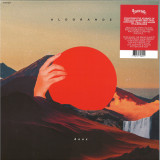
Favorite Recordings proudly presents Deux, second album of French Jazz-Funk quartet Aldorande. In this new chapter, the four explorers pursue their interstellar trip on the Aldorande
planet, deploying their ever deeper love for the 70's Jazz-Funk & Fusion scene. Extending their first
visions of this new world, the bigger-than-life arrangements of this second album reflect again their
high attention to dramatic narrative schemes, breezy Brazilian vibes, tempestuous funky grooves and
strong cosmic melodies from outer space. Classic and contemporary at the same time, Deux is built
for the like-minded souls still looking for the perfect beat.
Twisting time and space but never forcing the groove, the band dives more profoundly into the
Cortex influence of their compositions, with intense female back vocals fitting perfectly into their
cinematographic vision. Like a cry in space, could these esoteric incantations be heard by Aldorande's
divinities? Or will they be more impressed by the super-tight rhythm section with its bangin' basslines
or an irresistible blend of drums and percussion? In the end, they probably would have to surrender
after hearing the infinite echoes of the synthesizers and horns reflecting in the atmosphere. Deep and
thoughtful, the travel has only begun but it seems that so much has already been experienced.
Breaking the code, they opened the gates to a rebirth. One that could be only accomplished by finding
the “Pierre des Mondes”, deeply buried somewhere on Aldorande - the only key to solve the riddle of
the groove. Mission accepted.
You'll find in Aldorande some of the best French jazzmen including bandleader and founder Virgile
Raffaëlli on bass (Setenta & Joe Bataan, Camarão Orkestra), Florian Pellissier on keys (Iggy Pop,
Setenta, Cotonete & Di Melo, …), Mathieu Edouard on drums (Chassol, De La Soul) and Erwan
Loeffel on percussion (Camarão Orkestra, 10LEC6). On this album, they took the initiative to invite
two guests on some tracks: AOR singer Al Sunny and killer guitarist Laurent Guillet (Le Soldat Rose,
Setenta).eir ever deeper love for the 70's Jazz-Funk & Fusion scene. Classic and contemporary at the same time, Deux is built for the like-minded souls still looking for the perfect beat.
Available on November 19th 2021 as Tip-On Vinyl LP & CD.
out of Stock
Last delivered 4 years ago available to reorder, subject to availability
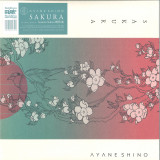
This is a love-filled tribute to the late japanese techno and ambient pioneer SUSUMU YOKOTA. In 2021, talented classical guitarist AYANE SHINO discovered his impressive works and recorded cover version of tracks from his acclaimed SAKURA album. Those new contemporary musical pieces will please his ever growing fanbase as well as listeners beyond the electronic music scene.
out of Stock
Last delivered 4 years ago available to reorder, subject to availability
GENRE: Modern Classical, Experimental, Ambient Metal. RIYL: György Ligeti, Sarah Davachi, Stars Of The Lid. 180g LP pressed at Optimal, 350gsm jacket, inner & DL card. Jessica Moss Also Known For Her Tenure In Thee Silver Mt. Zion (2002-2015), Black Ox Orkestar (2002-2007), Recordings By Vic Chesnutt, Carla Bozulich, Arcade Fire, Basia Bulat, Roy Montgomery, Sarah Davachi, Big Brave & More. A phosphene is “the phenomenon of seeing light without light entering the eye.” The title of the heart-rending and resolute new album by composer/violinist Jessica Moss could not be better chosen. Moss is by now a seasoned practitioner of immersive isolation music; across three previously acclaimed solo records of minimal and maximal post-classicism, her acoustic, amplified, and electronically-shifted violin is the raw material for deeply expressive, palpably haunted, wholly committed compositions. But Phosphenes inscribes fleeting halos of refracted ghostly light out of a prevailing darkness with especially plangent determination and intensity. This is the most overtly searching, mournful and inexorable music Moss has made to date. The pieces on Phosphenes exquisitely navigate consonance and dissonance, building patiently from single notes to multiple voicings, harmonic stacks and clusters. These compositions channel themselves like slow-moving water in a dark cave, finding small eddies and catching glints of luminescence from within. Signal processing is kept to a minimum in the three-movement “Contemplation” suite on Side One, where Moss deploys amplification chiefly in the service of activating overtones and pitch-shifts, thickening and widening the sonics, carving out her unique timbral space. Based on a four-note sequence that sets whole tones against one another, “Contemplation” is a bona fide requiem that finds Moss at her most instrumentally naturalistic, measured, and modern. Side Two unfolds in a more foreboding vein: “Let Down” is marked by cavernous octave-dropped arco and pizzicato, providing a gothically-inflected substratum upon which hauntingly wordless vocal invocations and cumulative gyres of violin melody unfurl. “Distortion Harbour” grinds with noisier grit and a more harrowing complexion, highlighting Moss’s ambient-metal sensibility and her distinctive palette of industrial-inflected power electronics a reminder of why she’s also been a go-to player on albums by the likes of Big Brave, Oiseaux-Tempête and Zu in recent years. These two songs also feature upright bass from old friend and former bandmate Thierry Amar (Godspeed You! Black Emperor, Thee Silver Mt. Zion, Black Ox Orkestar). Album closer “Memorizing & Forgetting” is inarguably the most tender and beautiful song in Jessica’s oeuvre: a keening lullabye of sorts, on which she plays piano, violin and guitar, joined by her partner Julius Levy in a lustrous ambient vocal duet. Everyone has been trying to find a way through and out of pandemic, lockdown, social isolation and often darkened hope and for many musicians, the absence of touring, of live performance, live sound, live audiences, and a living. For Moss, it’s also been “like when you press your fists hard against your eyes and eventually there is fireworks.” The light gets in where it can, even or maybe especially as imaginative sensory simulacra (if/when we shut down our screens and are left to our own devices). Phosphenes is a stoic, acutely sensitive, superlative musical statement from Moss
Gábor Lázár's colourful discography extends from sound art to his more recent dancefloor detonations. From his first release on Lorenzo Senni's Presto! label to his collaborations with Russell Haswell and his popular 'seizure inducing' team-up with Mark Fell entitled 'The Neurobiology of Moral Decision Making' to his last album 'Unfold' on The Death of Rave, where he balanced relentless, snappy rhythms and wonky melodic tones against more measured chords to create a deliciously fruity futurism.Gábor has now signed to Planet Mu for his new album 'Source' which moves forward with the dance music direction he started to formulate with 'Unfold'. Gábor first fell in love with electronic music simultaneously through dance music and it's IDM offspring, and also with harsher, noisier computer music on labels such as Editions Mego. This collection, which develops slowly over 8 tracks, works its way through his own take on these influences, moving across themes and loops as if each track is a different stage in a process. All these tracks sound incredible on a club sound system. The listener can hear nods to hoover bass and 2-step in 'Phase', or trance techno in ‘Excite', the dive-bombing bass of dubstep in 'Effort ' or the frantic techno influence of 'Route', emulated in the minimal forms Gábor has created with a sound artist's precision and a strict adherence to his vacuum-like grids. Gábor bends his sounds, abstracts them and re-contextualises them; basslines fire out of the grid at strange angles and squirm as if they've come alive, shards of melody shoot off at wild angles, attacking with drama and a thrilling sense of energy
out of Stock
Last delivered 6 years ago available to reorder, subject to availability
Time fortifies the bonds between us. Since emerging in 2018, Light The Torch have grown stronger in lockstep together as a band and as friends. Through this growth, the Los Angeles, CA trio—Howard Jones vocals, Francesco Artusato [guitar], and Ryan Wombacher [bass]—only enhanced every aspect of their signature sound. Upheld by head-spinning seven-string virtuosity, yet also anchored to skyscraping melodies, the group crafted twelve no-nonsense and no-holds-barred metallic anthems on their 2021 second full-length album, You Will Be The Death of Me [Nuclear Blast].
“The past few years have helped me to become much more personal in my writing,” explains Howard. “Even though I’m kind of a loner, this band became real family. My experiences with Ryan and Fran inside and outside of the band truly bonded us. I think it shows in this album, it truly represents who we are as a group.”
“Every second on this record was thought-out,” adds Fran. “Howard’s performance gives me chills, because it feels so alive. There’s so much emotion in it. I know the guy very well at this point, and our friendship is a big part of Light The Torch.”That friendship cemented over the course of the past three years. The group shot out of the gate as a contender on their full-length debut, Revival. It bowed at #4 on the Billboard US Independent Albums Chart and at #10 on the Hard Rock Albums Chart in addition to receiving acclaim from Revolver, Outburn, and many more. “Calm Before the Storm” racked up a staggering 14.5 million Spotify streams, while “The Safety of Disbelief” remains one of SiriusXM Octane’s all-time most requested songs. They also crisscrossed North America and Europe on tour with the likes of Trivium, Avatar, In Flames, Ice Nine Kills, Killswitch Engage and August Burns Red to name a few.
In late 2019, an idea for the title track “Death of Me” kickstarted the creative process. The guys returned to Sparrow Sound in Glendale, CA to once again work with the production team of Josh Gilbert and Joseph McQueen [Bullet for My Valentine, As I Lay Dying, Suicide Silence].This time around, they also welcomed Whitechapel’s Alex Rudinger on drums. “He’s incredible,” says Fran. “He was exactly what we needed.”Now, they kick down the door for You Will Be The Death of Me with the single “Wilting In The Light.” Howard’s instantly recognizable vocals soar over a sweeping riff and rolling beat before culminating on a massive luminous hook, “Over and over again we struggle. We’re wilting in the light, and we stumble in the dark.”“It has a different vibe and a very interesting riff,” observes Howard. “I love it when listeners can take what they want from a song. This was a special one for us.”
“More Than Dreaming” opens up the record with gut-punching guitar and another knockout hook. Elsewhere, airy keys wrap around chugging distortion on the title track “Death Of Me.” Regarding the latter, the frontman goes on, “Most people have some source of grief in their lives. It’s relatable, and it was appropriate for the song.”After the melodic melancholia of “Come Back To The Quicksand,” Light The Torch recharge the 1987 Terence Trent D’Arby classic “Sign Your Name” as the record’s climax. Shimmering keys bleed into an overpowering verse before it snaps into the immortal chorus beefed up with thick distortion. “Howard stayed at my house with me and my wife for the entire recording of the album,” recalls Fran. “I like to cook, and one night during the first week of pre-production I made everyone dinner. A compilation with ‘Sign Your Name’ started playing, and I thought, ‘I can do a version that would sound awesome!’ Howard knew and loved the song too. For as crazy as it sounded, it worked so well.”
In the end, the bond between Light The Torch burns brighter than ever in the music as they deliver a definitive statement with You Will Be The Death Of Me.
“We wanted to make a fully listenable and fun album that doesn’t let up,” Howard leaves off. “At the same time, we’re showing some heart, passion, and connection. It’s what we’ve always intended to do with this band.”
Haiku Salut, the acclaimed electronica trio from the Derbyshire Dales release their fifth album, ‘The Hill, The Light, The Ghost’ on Secret Name records on August 27th. Note the LP follows in November.
A beautiful study of ghosts and memory, the gestation of the record began when Haiku Salut’s Sophie Barkerwood was given a Tascam field recorder. “I carried it around with me in case anything interesting happened. I guess I wanted to capture little pieces of the world in the same way we all take photographs,” explains Sophie. “It wasn’t immediately apparent that we would begin to use these sounds as the architecture for an album but as our writing process evolved the textures of these memories became a bank of inspiration.”
“We then began actively searching for ghosts in the world and framing the songs around their qualities,” Sophie continues. “Gathering recordings, removing them from their context and building worlds around them. Capturing and preserving personal experiences, and evoking vivid spaces. You could say the record is a miniature exploration of sound in relation to memory. Each piece is intimately connected to a place in time.”
Musically, the album marries the expansive vision of their third album, ‘There Is No Elsewhere’, which celebrated identity and community, with the darker, more contemplative feel of their fourth album, the trio’s original soundtrack for Buster Keaton’s ‘The General’. Building on the lessons learned working on ‘The General’, ‘The Hill, The Light, The Ghost’ is a cohesive suite, nine songs that combine to tell a larger story – that of experience and memory, of precious moments and echoes of past lives.