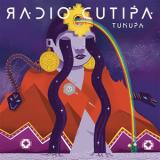
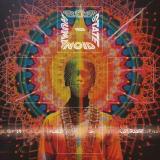
"Tunupa", the second album by Bolivian band Radio Cutipa is out now on Rey Record (Peru)! Radio Cutipa fuses native Bolivian music with electronic soundscapes, mixing past and present in a unique musical experience. Radio Cutipa's second album, "Tunupa," fuses Bolivian musical roots with electronic soundscapes, creating an experience that connects the past and present. Released under the Peruvian label Rey Records and distributed worldwide by Vampisoul (Spain), this independent project seeks to position electrofolk as one of the region's most innovative expressions. "Tunupa" represents the encounter between the ancestral and the contemporary. Inspired by Bolivia's sacred landscapes, the album narrates a spiritual and sonic journey through rhythms such as Andean cumbia, electronic huayño, Bolivian rap, and high-altitude soundscapes.
For the first time ever, Roxette release ‘Baladas En Español’ on vinyl. The relationship between Roxette and Spanish-speaking audiences has been a love story since the early ‘90s and this release celebrates that special relationship. The release is timed with Roxette’s 40th anniversary and their return to South America for live shows in April. The album will be available on vinyl and CD, featuring 4 bonus tracks compared to the original release. The vinyl will be released in both a limited coloured edition and standard black.
Roxette have some exciting plans to celebrate their 40th Anniversary this year, including extensive touring, further anniversary re-releases, video upgrades, contemporary remixes and much more!
For the first time ever, Roxette release ‘Baladas En Español’ on vinyl. The relationship between Roxette and Spanish-speaking audiences has been a love story since the early ‘90s and this release celebrates that special relationship. The release is timed with Roxette’s 40th anniversary and their return to South America for live shows in April. The album will be available on vinyl and CD, featuring 4 bonus tracks compared to the original release. The vinyl will be released in both a limited coloured edition and standard black.
Roxette have some exciting plans to celebrate their 40th Anniversary this year, including extensive touring, further anniversary re-releases, video upgrades, contemporary remixes and much more!
Wired was an ephemeral improvisational music project formed by Michael Ranta, Karl-Heinz Böttner, and Mike Lewis. On 28 April 1970, the trio recorded an extended studio session of approximately 140 minutes, in collaboration with Conny Plank, who engineered and mixed the recording in real time, incorporating elements of live electronics. This session was subsequently edited to album length and released in 1974 as part of the Free Improvisation 3LP box set issued by Deutsche Grammophon, alongside recordings by Iskra and New Phonic Art.
Owing to its exploratory electric sound world and Plank’s distinctive spatial production techniques, the Wired recording acquired a degree of underground cult status, particularly among listeners associated with krautrock and psychedelic improvisation.
Shortly after the studio session, Ranta and Böttner travelled to Japan, where they spent approximately six months performing with Karlheinz Stockhausen at Expo ’70 in Osaka. In addition to these activities, they engaged in various independent musical projects and performances.
The present release, sourced from the personal archive of Michael Ranta, documents a live duo performance by Ranta and Böttner, recorded on 27 July 1970 in an outdoor setting in Kyoto (the exact location remains unknown), before an audience of approximately 200 music teachers. The recording exhibits sonic and aesthetic characteristics closely aligned with the previously recorded studio material, retaining the distinctive “Wired” sound while situating it within a live, site-specific context.
Carve is the second full-length by Bay Area artist Kathryn Mohr. Written over the course of five years and recorded over several weeks in a rural singlewide in the Mojave Desert, the album centers on love experienced as a form of grief, not as an aftermath of loss, but as a condition of intimacy itself.
Mohr describes Carve as an album about how memory exists outside the body, embedded in places and landscapes. It is shaped by her first return to the American Southwest since a childhood road trip at age five, and by the experience of moving through terrain that holds emotional weight long after its origins fade. The record considers how intimacy feels after years of isolation, and what it takes to carve out a life that allows for trust, presence, and feeling rather than mere survival. The project took form after a difficult tour that ended in Joshua Tree. Mohr pointed her car into the desert and drove alone, crisscrossing the Mojave on dirt roads. Months later, she returned to record the album, working alone with an acoustic guitar, a field recorder, and limited supplies. Following that period, Mohr began to allow for intimacy and connection. The time she spent recording Carve in the desert did not create isolation so much as mirror it. Working alone out of an old, western-themed jail Airbnb, the physical enclosure reflected the emotional conditions under which much of the record had been written: distance, restraint, and long stretches of stillness. In that context, love was not experienced as escape, but as something inseparable from impermanence and the awareness of loss.
This tension between connection and inevitability sits at the center of Carve. Some of the album’s songs were written earlier, during a prolonged period marked by emotional distance and apathy. Over those four years, Mohr was working through unprocessed childhood memories and their long-term effects on her ability to connect with others. The work was slow and difficult, involving a fundamental reshaping of how she related to herself and to the world. Carve was mixed by Richard Chowenhill of Flenser labelmates Agriculture. Rather than offering resolution, the album documents the act of remaining present within tension. Carve is not about escaping grief, but about accepting it as inseparable from love itself. Kathryn Mohr’s previous effort “Waiting Room” received the coveted ‘Best New Music' designation and a score of 8.4 from Pitchfork.
Drumcode returns with its flagship A-Sides series, led by a huge new Adam Beyer single that highlights the 20-track compilation.
If you want a snapshot of techno in any given year, look no further than Drumcode’s annual A-Sides compilation. The release broadly charts the evolution of the genre, while giving a platform to standout demo’s Adam Beyer has received across the course of the year with many emerging artists finding their music on Drumcode for the first time. Case in point – Wehbba, Charles D and Raxon who all debuted on the label via a track on the A-Sides series and have gone on to become regular contributors to Beyer’s influential labels.
This year’s compilation features an exciting mix of established heavy-hitters, alongside a slew of new faces set to make their mark on the genre. ‘We Don’t Say Please’ – is emblematic of Adam Beyer’s sound in 2025 – fresh, experimental and thriving on cross-genre pollinations, as elements of bass music, rap and techno collide, underpinned by a distinctive UK vocal. The results are inspiring.
Elsewhere, the 20-track compilation brims with highlights. HI-LO’s ‘NYC to Amsterdam’ has inflections of New York house fused with driving techno elements. Nicole Moudaber returns to DC in cahoots with the rising ZLATA for the super-charged ‘Report to the Dancefloor’. Oscar L & Charles D mint a new collaborative partnership with the immersive, spacey cut ‘Lift Me Up’. LUSU continue their red-hot run following the recent ‘Move 2 the Groove’ EP, and craft a straight-up mind-mashing single ‘LIKE THIS’. Mark Reeve is in trademark strong form with hypnotic ‘My Mind’, which comes to life via a massive synth led. The fantastic Kaufmann shares her ‘People are Strange’, a nod to a classic vox, re-contextualised for a modern techno audience.
As is tradition, a troupe of ascendant producers land on Drumcode for the first time. They include Uruguay’s Enzo Monza, who delivers the crisp ‘Late Night’ – a favourite of Beyer’s; Mattia Saviola, whose ‘Parallel Dimension’ is a powerful cut with fantastic sound design; Romanian artist Tao Andra, who shares the celestial ‘Unity’; and long-time industry stalwart AdamK, who makes a richly deserved Drumcode debut in partnership with Vikthor feat. MC Stretch on the stunning ‘Silence + The Sound’.
Delusions Of Grandeur is proud to welcome back emerging producer, multi-instrumentalist, and vocalist Declan McDermott for his standout new EP, Why Don’t You Believe Me? Blending analogue hardware and live musicianship with deep, groove-driven production, the release showcases a confident and colourful voice in contemporary underground house. I:Cube & DJ Nature on remix duties!
out of Stock
Last delivered 3 months ago available to reorder, subject to availability
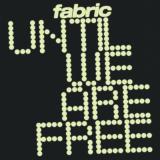
Until We Are Free is the debut album from fabric, a collective of musicians from diverse backgrounds united by a shared goal: to fuse irresistible rhythms and grooves with a direct, socially conscious message that draws vital attention to the contradictions of modern life. The project's name itself evokes the idea of a living, dynamic ensemble—a creative intertwining of different threads, from musical genres to founding musicians and guest collaborators, all actively woven into the social fabric.
The record blends funk, soul, and Afrobeat with a sharp, contemporary urban attitude, resulting in a sound that functions simultaneously as sonic resistance and an invitation to the dancefloor.
It finds its place in a lineage that runs from Fela Kuti and ESG to The Comet Is Coming, Sault and Jungle.
At its core is the conviction that music and civic engagement can coexist seamlessly without being didactic. While the lyrics—entirely in English—tackle themes of rights, equality, and freedom, the groove remains the heartbeat: constant, pulsing, and relentless.
Mixed by Tom Campbell (whose credits include Sault, Little Simz, Adele, Michael Kiwanuka, and Jungle) and featuring art direction by Raissa Pardini, Until We Are Free is a soundtrack for complex times. It is an invitation to refuse neutrality and isolation, and to imagine—together—new possibilities for movement, resistance, and the future.
fabric's singles "Taste This Sound" and "Fight!" have been featured in FIP's Spotify Playlists "FIP Radio (en live)" and KEXP's "New This Week" and "KEXP Rotation".
Mannequin Records presents a special release that bridges two generations of electronic body music: DAF’s iconic track “El Que” reimagined by French techno and EBM pioneer Terence Fixmer.
A lifelong admirer of DAF, Fixmer has been playing El Que in his DJ sets for years, considering it one of the band’s most enduring and powerful pieces. His connection to the track and to DAF’s groundbreaking legacy is the core inspiration behind these two new remixes, created with both reverence and bold creative vision.
On the “El Que (Terence Fixmer Leather Remix)”, Fixmer remains close to the original’s raw, muscular pulse while injecting a sharp, modern club sensibility. The remix builds on DAF’s unmistakable rhythmics but adds a contemporary momentum that feels like a natural extension of the band’s DNA. “It was like imagining what I would do if I were a member of DAF today,” Fixmer says.
The second version, “El Que (Terence Fixmer Drive Remix)”, ventures deeper into Fixmer’s own territory: darker, hypnotic, and peak-time focused. Tension and release are crafted with surgical precision, taking the original’s spirit into a harder-edged, suspense-driven sound world. It’s a version built for late-night floors without ever losing the soul of El Que.
Fixmer explains:
“I’ve been playing DAF’s El Que in many of my DJ sets for years. It’s a track I deeply loved from the first listen. I’m super proud to have remixed DAF — one of my cult bands and a major influence on my sound and electronic universe. For the "Leather Remix", I wanted to stay close to the original while bringing modernity and club momentum. For the "Drive Remix", I pushed the track toward darker, peak-time and hypnotic techno, keeping the soul of the original intact. I wanted to make versions that make you think: ‘I know this track… but wait — what is this version? I want it!’ When I tested them, that’s exactly what happened.”
DAF remains one of the most influential bands in electronic music history. These new remixes by Terence Fixmer reinforce the timeless power of El Que while offering two striking, club-ready perspectives for a new generation of listeners.
»Music for Shared Rooms« is B. Fleischmann’s eleventh solo album and his first since 2018. It is also not an album, or at least not in the conventional sense of the word. These 16 instrumental pieces provide a kaleidoscopic glimpse of a forward-thinking musician at home in many different musical worlds, including experimental and abstract music, pop and more classically-minded compositional forms. These pieces were culled from an archive of roughly 600 compositions for theatre pieces and films written throughout the past twelve years. The Österreichischer Filmpreis-awarded composer, however, aimed for more than simply documenting his extensive work in and with different media. To do so, he edited and re-mixed the individual recordings for this release, taking them out of their contexts and reworking them for an audience who can experience them in a different setting. »Music for Shared Rooms« makes it possible for its listeners to engage with the sounds and to fill the spaces they open up with their own imagination.
Roughly speaking, music for theatre or film can serve two functions: it either takes the lead, or underscores what is happening on stage or screen. The marvelous thing about these pieces is that they manage to do both. Fleischmann’s work as a prolific producer has always drawn on contrasts, at times combining pop sentiment with rigid experimentation, the seemingly naive with the intricate and complex. This approach also marks the tracks collected here: bringing together acoustic elements and electronic sounds, at times working with conventional structures but always de- and re-contextualising them, Fleischmann constructs a vivid dramaturgy out of discrete singular compositions, letting them interact across the record.
Take, for example, the opener »Träumerei« and the following »Brenne«: after the soothing acoustic sounds of the former, the latter quickly picks up speed with hard-hitting drum machine rhythms. It’s a stark contrast sonically and stylistically, however both tracks are tied together by a certain harmonic sensibility. This sort of dramaturgical interconnectedness of varied musical materials is the thread that runs through »Music for Shared Rooms«. A droney piece for string instruments like »Sehnsucht« is followed by a trip-hop beat, before »Schock« lives up to its title with skittering beats and piercing high frequencies. The differences between the pieces may be striking, but the progression from one to the other is subtle. It goes on like this through different moods and tempos. There’s soothing-yet-eerie piano pieces like the »Für Elise«-inspired »Der Lärmkrieg«, gentle house grooves, joyful synthesizer excursions and, finally, »Die Erde ist mir fremd geworden«, a collage of abstract textures and concrete sounds.
All these pieces create distinct situations through the juxtaposition of diverse musical elements, but are also bound together by a single vision. Writing music for theatre pieces or film requires a composer and his pieces to engage with people and their movements in space, which is exactly what Fleischmann offers on this record. He breaks down the fourth wall and invites his listeners into his world, a wide-ranging musical panorama. »Music for Shared Rooms« is indeed not an album in the conventional sense of the word, but more like a photo album in which each page opens up a new space to get lost in; recreates different scenes in which you can immerse yourself. These are shared rooms indeed.
out of Stock
Last delivered 6 months ago available to reorder, subject to availability
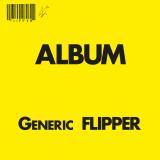
Generic Flipper, the debut album by Flipper, remains the most absorbing full-length LP to emerge from the early San Francisco punk scene. A constant source of imitation for so-called "noise rock" bands, it has yet to be surpassed in its nihilistic glee.
Recorded between October 1980 and August 1981 and released in 1982 on the indispensable Subterranean Records, this album functions as a chaotic, sticky mass of individual personalities: the magma-like bass eruptions and dual vocals of Will Shatter and Bruce Loose, Ted Falconi's icy guitar scraping and the relentless beat of drummer Steve DePace. At times playful and taciturn, paranoid and absurd, Generic charts a deliberate path that willfully chances destruction.
In early '80s punk, when the hardening default was "faster-shorter-louder," Generic subverts the nascent hardcore scene with a strictly applied regimen of turgid-slower-heavier. The lyrics are bleak, yet unnervingly beautiful. "Ever" sets the tone with trademark restraint – "Ever wish the human race didn't exist? And then realize you're one too?" – while closer "Sex Bomb" is a churning, 8-minute epic with looping bass, saxophone accompaniment and electronic effects of dropping bombs.
Tons of indie bands have attempted to recreate Flipper's mix of acidic guitar, metallic bass sludge and sardonically brilliant lyricism, using the seemingly effortless template they pioneered; however, the effect usually drives listeners right back to Generic. While most of their contemporaries wilt under direct comparison, No Trend, the Butthole Surfers, feedtime and Church Police are a few who can stand the frigid heat.
out of Stock
Last delivered 5 months ago available to reorder, subject to availability
Cititrax release Sand Clock, the new full-length album by Men With Secrets, the Italian trio of Donato Dozzy, Lino Monaco, and Nicola Buono (Retina.it). Originally emerging from a shared background in experimental techno under the name Le Officine Di Efesto, the three musicians turned toward classic post-punk, minimal wave, and synth-driven pop with the formation of Men With Secrets. Their debut album Psycho Romance (2020), released on Bunker Records, introduced a meticulously produced body of work that felt like a rediscovered European darkwave recording from the early 1980s—yet was entirely contemporary in its construction.
With Sand Clock, the trio deepen this language. The album leans more directly into the melodic clarity and romantic tension of late-80s and early-90s darkwave and synthpop while maintaining the stark restraint that defines the project. Icy synthesizers, shuddering basslines, and precise drum machine programming frame baritone vocals that are intimate, emotionally exposed, and quietly apocalyptic.
Balancing pop structure with gothic atmosphere, Sand Clock moves between shadowed dance floor momentum and solitary headphone introspection. It is not an exercise in revivalism, but a continuation—an acknowledgment that the emotional architecture of that era remains unresolved and still relevant. Written and produced by Donato Dozzy, Lino Monaco, and Nicola Buono and recorded in Rome and Pompeii.
The vinyl edition is pressed on clear 160-gram vinyl, limited to 500 copies worldwide. Each record is housed in a heavy printed jacket with a printed inner sleeve.
out of Stock
Last delivered 42 days ago available to reorder, subject to availability
Top Tier Contemporary Analog Disco Boogie. Powered by a stellar array of vintage gear and a shared fascination with the grooves of yesteryear, the L.A.-based, cross-Californian duo Introverted Funk have returned to the Windy City's Star Creature Label for "Body's Groove," an airtight 12" EP that unifies a variety of global influences into one forward-thinking, hybrid slab of soul. Their debut two-sided 7" Tell You / Fan Out quickly sold out last year and the follow up continues the ride with a fresh flow of funk that draws on smooth downtempo R&B, cosmic, breezy synths and masterfully-executed disco with expert authentic studio wizardry, all urging you to take that first step into their Groove.
out of Stock
Last delivered 4 months ago available to reorder, subject to availability
LS002 marks the first vinyl chapter of 20, Eitan Reiter's two-decade retrospective, distilled through key collaborations and remixes. Featuring Patrice Bäumel, Infected Mushroom, Shpongle, Red Axes, and Echo, this six-track release connects psychedelic heritage with contemporary indie dance and deep electronic aesthetics.
20 (Part 1) is a 12-inch vinyl edition featuring exclusive vinyl cuts, available only on this pressing. The selection reflects Reiter's ability to honor his roots while maintaining a distinctly modern sound,blending psychedelic foundations with cluboriented precision.
A1 - Eitan Reiter - Blue Planet (Remix) Vinyl Cut
The A-side opens with a spacious, atmospheric rework of Blue Planet, balancing restrained tension with melodic clarity.
A2 - Eitan Reiter - X-Vision feat. Echo Vinyl Cut
Echo's vocal performance anchors the track, presented here in a refined vinyl cut that enhances its emotional depth.
A3 - Eitan Reiter & A. Balter - E0E (Eitan Reiter Remix) Vinyl Cut
A driving, hypnotic groove where rhythmic focus meets evolving textures.
A4 - Infected Mushroom & Yahel - Electro Panic (Eitan Reiter Remix) [Vinyl Cut]
A confident reworking of a psytrance classic, reshaped into an 80s-leaning indie dance format.
B1 - Eitan Reiter - Eat You (Patrice Bäumel Remix)
Patrice Bäumel heightens the track's underlying tension with a slow-building, immersive reinterpretation.
B2 - Out of Orbit & Shpongle - No Disco (Red Axes Remix)
Red Axes flip the original into a dark disco framework, adding weight, swing, and late-night character.
LS002 presents a vinyl-focused snapshot of Eitan Reiter's collaborative output, with each track adapted for turntable playback.
out of Stock
Last delivered 7 days ago available to reorder, subject to availability
180 GR Records is proud to present a new release by N-Zino, reimagining two tracks previously released by Four Flies Records: Mo... and Living Disco Club, offering two distinct yet complementary interpretations. Mo... (180 GR Disco Mix) takes its cue from the original Banda Maje version, itself a contemporary homage to Peppino Di Capri, already given a club reinterpretation. N-Zino elevates the track with a nu disco approach, emphasizing its elegant groove and sunnier, funkier side, blending disco influences with pulsing basslines, shimmering percussion, and warm synth textures, all infused with contemporary sensibilities while keeping the original melody alive. The result is a bright, danceable reinterpretation designed for both listening and the dancefloor. In a different yet perfectly complementary direction, Living Disco Club (Don Ciccio Tribute Mix) explores a deep house dimension, turning Banda Maje's disco-inspired original into a hypnotic, late-night groove. Deep bass, soft drum machines, essential rhythms, and atmospheric pads create a rich, warm, immersive vibe, ideal for after-hours or more refined, introspective club moments. Together, these remixes highlight N-Zino and 180 GR Records' vision: celebrating strong musical roots, connecting Italy's musical past with contemporary club culture, offering tracks that honor the tradition and the originals released by Four Flies, while speaking directly to modern dancefloors.
out of Stock
Last delivered 5 months ago available to reorder, subject to availability
Mr Bongo proudly presents, ‘AFIM’, the second solo album by one of Brazil’s most exciting new talents, Zé Ibarra. You may be familiar with the hypnotic, entrancing tones of Ibarra’s vocals through his work with the Latin Grammy award-winning, four-piece, Bala Desejo and the band Dônica. He has also toured with the musical titan, Milton Nascimento, performing guitar and vocals, which is quite the honour and a testament to Ibarra's craft. As a solo artist, he has performed headline solo shows in Japan, Portugal and the US, as well as recently completing a support tour with the great, Seu Jorge.
‘AFIM’ is comprised of eight tracks, featuring Zé’s own compositions as well as cover versions of tracks by contemporaries and friends, Sophia Chablau, Tom Veloso, and Dora Morelenbaum. It combines elements of MPB, jazz, pop and progressive rock in a bold, authoritative style. The album represents the intersection between different facets of the artist, from the stripped-down, intimate, guitar singer-songwriter, to dense arrangements with sweeping strings sections. Writing this album allowed Ibarra "to explore sides of myself that had not yet been organized in an album: a certain darkness, a more cinematic musicality, a desire for new soundscapes.
The album features the single, 'Transe', a song with an instantly comforting tone reminiscent of classic Brazilian songs of the past (think Caetano Veloso). It is built on a rhythmic guitar that supports dynamic sound layers, opening space for Ibarra's intense interpretation. Cinematic atmospheres that lend an air of mystery come courtesy of string arrangements by Jaques Morelenbaum.
His unique cover version of Sophia Chablau's 'Segredo' is equally compelling, taking Sophia's punky-indie original in a different direction and making it feel like his own. 'Essa Confusão', a song celebrating the intensity of love and co-written by Dora Morelenbaum, is steered into epic, 70's AOR, singer-songwriter territory with wind arrangements by Ibarra, Jorge Continentino and strings by Jaques Morelenbaum.
The album is the result of the collaboration of experienced musicians and long-time partners of Ibarra. Fellow Bala Desejo and Dônica member Lucas Nunes co-produced the album. The core band featured on the record consists of Lucas Nunes on organs, Alberto Continentino on bass, Daniel Conceição and Thomas Harres on drums and percussion, Rodrigo Pacato on additional percussion, Chico Lira on Fender Rhodes and Guilherme Lírio on guitar.
The overall feel of the record is archetypically quintessential without slipping into retro mode. It is a stunning album from one of the finest musicians of his generation. A true star of Brazil’s blooming contemporary scene.
out of Stock
Last delivered 6 months ago available to reorder, subject to availability
How do losers dance? According to Helmut, almost weightlessly, with soft feet, warm gestures, sometimes alone, sometimes together. Content Creatures, Helmut's fourth album, evokes the pop archetype of the "beautiful loser", who had almost disappeared from view in so-called late capitalism. In a present in which even suffering is often similarly instrumentalised and tailored to clicks like a competitive sport, this album sets a counterpoint: those who listen to it suddenly want to be enchanting losers again, useless and joyfully messing up, losing something beloved, having their hearts broken, giving up a dream, sinking into beauty.
You don't sink alone. Comforting harmonies envelop you, the voices of friends appear, accompany you for a while and then disappear again. Warm grooves, floating synths and delicate guitar lines characterise an indie sound that remains open and breathes.
Self-produced for the first time in his home studio in Neukölln, 'Content Creatures' sounds thoughtful and light at the same time. The album will be released digitally and on vinyl on 10 April 2026 on Berlin-based label St.Vladimir. There are four songs on one side and four songs on the other. The cover is adorned with an exceptionally pretty guinea pig. Helmut shows the special in the seemingly ordinary: a child's pet, the most ordinary of all, is his cover star and headstrong protagonist.
Wie tanzen Verlierer? Wenn man nach Helmut geht, dann fast schwerelos, mit weichen Füßen, warmen Gesten, manchmal allein, manchmal gemeinsam. Content Creatures, Helmuts viertes Album, evoziert den Pop-Archetypus des "beautiful loser", der im sogenannten Spätkapitalismus fast aus dem Blick geraten war. In einer Gegenwart, in der sogar das Leid oft ähnlich durchinstrumentalisiert und auf Klicks getrimmt ist wie ein Leistungssport, setzt dieses Album einen Kontrapunkt: Wer es hört, möchte auf einmal gern wieder ein bezaubernder Verlierer sein, nutzlos und freudvoll abkacken, etwas Geliebtes verlieren, das Herz gebrochen bekommen, einen Traum aufgeben, in Schönheit versinken.
Man versinkt nicht allein. Tröstende Harmonien legen sich um einen, die Stimmen von Freundinnen tauchen auf, begleiten einen ein Stück weit und verschwinden wieder. Warme Grooves, schwebende Synths und feine Gitarrenlinien prägen einen Indie-Sound, der offen bleibt, atmet. Erstmals in seinem Neuköllner Homestudio selbst produziert, klingt "Content Creatures" bedacht und leicht zugleich.
Das Album erscheint digital und auf Vinyl am 10.04.2026 auf dem Berliner Label St.Vladimir. Es hat vier Songs auf der einen und vier Songs auf der anderen Seite. Das Cover ziert ein außergewöhnlich hübsches Meerschweinchen. Helmut zeigt das Besondere im scheinbar Gewöhnlichen: Ein Kinderhaustier, das normalste von allen, ist bei ihm Coverstar und eigensinnige Protagonistin.
Killer Groove Records proudly presents "Keep Your Step", the explosive comeback by Italian rock steady & early reggae ambassadors The Appetizers, a soulful celebration of reggae's timeless spirit.
"Keep Your Step" marks the band's much-awaited return, landing April 10th on limited edition LP, CD digipack and digital format featuring two exclusive bonus tracks.
The Appetizers deliver a masterclass in roots reggae music with their highly anticipated second studio album, bridging Jamaica's golden age with contemporary relevance. "Keep Your Step" is a heartfelt sonic journey where the band blends rocksteady and early reggae with funk and soul influences to create a sound that's both genuine and refreshingly modern.
The fourteen tracks move fluidly between infectious dancefloor fillers and socially conscious lyrics. From the laid-back swing of "Feel Like Dancing" to the hypnotic rhythm of "Thicker Than Water", the band demonstrates their versatility while remaining true to the roots of Jamaican sound. "A Message from The Meters" pays tribute to the legendary funk pioneers, while the instrumental "Catch This" and "Make It Reggay" highlight the band's musical prowess and the deep connections between reggae and funk.
Meanwhile, tracks like "Fussy Girl" and "Behind My Shoulders" explore love's complexities with humor and soul. The album's heart lies in its social consciousness. "Cool and Deadly", "The Life", "Stormy Weather" and the album title track "Keep Your Step" tell stories of perseverance through life's struggles.
With the hopeful anthem "We Shall Overcome," The Appetizers deliver a timely message about genuine human connection in a social media-dominated era. The digital edition closes with "Get Some Rollin'" and "Swing and Sway," rounding out the journey with two additional gems.
"Keep Your Step" pays homage to Jamaican music legends, from Jackie Mittoo and Tommy McCook to Toots & the Maytals, while carving out The Appetizers' own distinctive sound. This is a groove made for both the dance floor and the soul, proving that reggae's power to inspire, unite, and uplift remains as vital as ever.
The production stays true to The Appetizers' signature sound: organic tones, deep groove, and that live-room vibe you only get when real musicians are locked in together. Luca Monza and Claudio Mambrini, the band's core members, handled the artistic production. Mastering came courtesy of the great JJ Golden (Black Pumas, Sharon Jones & The Dap-Kings, Jr. Thomas & The Volcanos, The Frightnrs) at Golden Mastering in Ventura, California. JJ is one of the most trusted engineers working in this sound, ensuring every ounce of warmth and authenticity came through.
The Appetizers are a rocksteady and early reggae band formed in Milan in 2020 by musicians deeply embedded in the Italian and international reggae scene. Musicians from different paths united by a shared vision: recreating that vintage Caribbean and American sound with authenticity, respect and a forward-thinking edge.
Drawing inspiration from Jamaica's golden era and channeling the soul of Delroy Wilson, Alton Ellis, the early Wailers, and The Upsetters, The Appetizers carry forward the essence of bass culture with a pure, fully organic approach.
Their debut album Listen Up! (2022), released via Belgian imprint Badasonic Records (home to The Slackers, The Aggrolites, David Hillyard & Victor Rice), featured ten original tracks and a dub cut by Victor Rice. Distributed across Europe, the UK, the US, and Japan, it quickly earned international recognition among reggae connoisseurs and selectors worldwide.
Following extensive touring, including shows with The Slackers, Black Uhuru, Skip Marley, and more, the band returned to the studio to record "Keep Your Step", their second album produced by Killer Groove Records. Here the band expands its musical language, weaving together the spirit of historic Jamaican labels like Studio One and Treasure Isle with '60s funk, arriving at a warm, organic, and timeless sound: soul, Jamaican roots, and modern sensibility in perfect balance. Their lyrics explore heartbreak, social issues, and reflections on life and music, performed with dedication and respect for tradition while always pushing forward.
If you're into The Skatalites, The Ethiopians, and those classic Caribbean rhythms, this one's for you.
long content, you may need to expand row to see all... Zeitlose Meisterwerke - erstmals auf Vinyl
Dieses Album vereint die beiden Schumann-Konzerte in einer absoluten Starbesetzung: Es präsentiert den Dirigenten Nikolaus Harnoncourt und das Chamber Orchestra of Europe, die Pianistin Martha Argerich sowie den Geiger Gidon Kremer. Seit seiner Veröffentlichung vor über dreißig Jahren zählen diese Aufnahmen zu den Bestsellern im Teldec-Katalog und sie haben bis heute nichts von ihrer Brillanz verloren. Pünktlich zum 85. Geburtstag von Martha Argerich am 5. Juni erscheint diese legendäre Aufnahme nun zum allerersten Mal auf Vinyl. „In ihrer Live-Aufnahme liefert Martha Argerich eine lebendige, fesselnde und charakteristisch unbeständige Interpretation des Schumann-Konzerts ab; zugleich poetisch und fantasievoll, um nicht zu sagen kraftvoll und oft individuell. Die im Juli 1992 live aufgezeichnete Darbietung gipfelt in einem Finale, das so gewagt ist, dass man am Ende jubeln möchte.“ – Gramophone Magazine
Amulets is the solo project of Portland-based audio and visual artist Randall Taylor. Amulets employs handmade cassette tape loops and live processed guitar loops to create live, lush soundscapes and immersive drones. Through the recontextualisation of cassettes, sampling, field recording, and looping, these long-form compositions blur the genres of ambient, drone, noise, and electronic music. Amulets has steadily built a catalog defined by tactile intimacy and patient exploration. Deeply immersive, the album navigates the dreamy boundaries between the tangible and the ethereal, where sound behaves as memory itself: unstable, layered, and quietly transformative. Known for his ability to weave soundscapes that evoke powerful emotions with minimalistic instrumentation, Taylor's newest project is a masterful exploration of mood, atmosphere, and texture.Throughout the ambient soundscapes is introspection, melancholy, and an almost hypnotic calm. The album resists forward motion, instead inviting the listener to linger inside its evolving textures, to sit with what's left behind rather than rush toward resolution. Central to Amulets' identity is Taylor's insistence on working, quite literally, outside the box. While many contemporary experimental artists rely heavily on software, Taylor's process remains rooted in physical interaction with sound. "This album differs from previous albums because it's a lot of found sounds, song fragments, and other samples that I have that I wanted to fuse together. I also heavily relied on a lot of ambient guitar and live guitar recording to marry all the sounds together." (Randall Taylor) FOR FANS OF Tim Hecker * Ben Frost * Lawrence English * Alessandro Cortini * This Will Destroy You * Mono * Windy & Carl
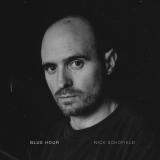
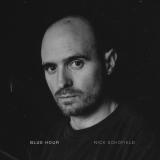
Blue Hour is Nick Schofield’s first foray into ambient jazz music. The album is an ambient ode to Miles Davis’ In A Silent Way, and opens up Schofield’s sonic palette to introduce his childhood instrument, drums, with his contemporary ambient-electronic practice. Blue Hour features the intuitive, and totally improvised, trumpet playing of Scott Bevins (No Cosmos, Busty and the Bass).
Schofield grew up playing drums, but turned to creating experimental-electronic music when studying Electroacoustics at Concordia University. Well-known for his signature ambient aesthetic, Schofield has been called a “dazzling electronic artist” by Aquarium Drunkard and a “synth maven” by Constellation Records. Blue Hour marks the first time that he has merged his percussion practice with his ambient electronic explorations, and it is all in the service of reinterpreting Miles Davis’ 1969 watershed recording In a Silent Way.
Schofield improvised all of the drumming and main synthesizer parts over the course of a single day, recording in a church in Ottawa. These foundational layers comprise tender Moog pulses and Roland Juno-6 pads, some of which would not be out of place on the back half of Another Green World or Music Has the Right to Children.
If this was to be a reflection of In a Silent Way, of course there would need to be trumpet. Schofield invited Bevins to record the missing piece of the album during a one day recording session, where Bevins improvised all his trumpet parts having never heard the songs before. Scott Bevins’ contribution gives the music a leading instrumental voice, and his intuitive approach shows a perfect understanding of how to both integrate and elevate the compositions.
Blue Hour is itself a profound reference, an ambient adaptation, a dream realized and an uncanny synthesis of sounds, styles, and personal history.
Blue Hour is Nick Schofield’s first foray into ambient jazz music. The album is an ambient ode to Miles Davis’ In A Silent Way, and opens up Schofield’s sonic palette to introduce his childhood instrument, drums, with his contemporary ambient-electronic practice. Blue Hour features the intuitive, and totally improvised, trumpet playing of Scott Bevins (No Cosmos, Busty and the Bass).
Schofield grew up playing drums, but turned to creating experimental-electronic music when studying Electroacoustics at Concordia University. Well-known for his signature ambient aesthetic, Schofield has been called a “dazzling electronic artist” by Aquarium Drunkard and a “synth maven” by Constellation Records. Blue Hour marks the first time that he has merged his percussion practice with his ambient electronic explorations, and it is all in the service of reinterpreting Miles Davis’ 1969 watershed recording In a Silent Way.
Schofield improvised all of the drumming and main synthesizer parts over the course of a single day, recording in a church in Ottawa. These foundational layers comprise tender Moog pulses and Roland Juno-6 pads, some of which would not be out of place on the back half of Another Green World or Music Has the Right to Children.
If this was to be a reflection of In a Silent Way, of course there would need to be trumpet. Schofield invited Bevins to record the missing piece of the album during a one day recording session, where Bevins improvised all his trumpet parts having never heard the songs before. Scott Bevins’ contribution gives the music a leading instrumental voice, and his intuitive approach shows a perfect understanding of how to both integrate and elevate the compositions.
Blue Hour is itself a profound reference, an ambient adaptation, a dream realized and an uncanny synthesis of sounds, styles, and personal history.
HYPER GAL are restless. Since 2019, Kansai’s minimalist duo has been in persistent, perpetual motion.
In January of 2024, SKiN GRAFT Records introduced HYPER GAL to western audiences, giving the previously self-released album “Pure” a worldwide release. It was followed by “After Image”; a new full-length record; in September of that same year. In short order HYPER GAL left Japan to embark on a month-long European tour, performing at festivals such as Left of the Dial in Rotterdam and Le Guess Who? in Utrecht.
Consisting of Koharu Ishida (vocals) and Kurumi Kadoya (drums), HYPER GAL craft a sound all their own, characterized by avant-garde rhythms, looping landscapes, and hypnotic vocals. Their music resists traditional genre boundaries to carve out a truly singular sonic space.
With their fourth album “Our Hyper”, HYPER GAL thrust their sound into a deeper, harder core. Songs unfold into surprising shapes, embracing shadowy turns emboldened by a heavier low-end, while unearthing sharp takes on Japan’s harsh noise roots. The drums have grown even more acrobatic and unorthodox, while the vocals take on new colors, shifting from mesmerizing repetition to melodic, pop-tinged expression.
The album’s artwork is no less adventurous and features masks created by contemporary artist Tokiyoshi Akina and photographed in the band’s own hands, signaling resistance to the performative dualities of social media and a commitment to authenticity.
Despite the lean, unadorned two-piece setup, HYPER GAL’s music attains an intense and unmistakable presence - an unwavering momentum driven by an unrelenting intent. “Our Hyper” is HYPER GAL amplified.
"With each release they appear as mirage sculptors, using simple tools (drums, keyboards, vocals) in craft of multi-genre spanning work which only becomes more captivating the simpler their execution becomes...”
– MYSTIFICATION
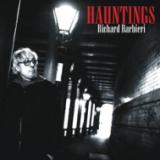
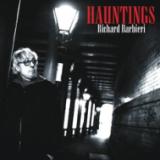
JAPAN & PORCUPINE TREE SYNTHESIST RICHARD BARBIERI RETURNS WITH NEW STUDIO ALBUM 'HAUNTINGS' GATEFOLD 2LP EDITION, PRESSED ON CLASSIC BLACK VINYL. Richard Barbieri remains one of contemporary music's most distinctive voices. Emerging as a key architect of the late '70s/'80s synthesiser revolution with David Sylvian's art-rock ensemble Japan, his visionary synthesiser programming expanded the horizons of electronic music & left a lasting mark on artists from The Human League & Duran Duran to Gary Numan & Talk Talk. His subsequent & ongoing tenure with Steven Wilson's legendary progressive outfit Porcupine Tree across albums such as 'In Absentia' (2002), 'Fear Of A Blank Planet' (2007) &, most recently, 'Closure/Continuation' (2022) further affirmed his status as one of the most intuitive & unique musicians of his generation.
'Hauntings' is Barbieri's first studio album since 2021's 'Under A Spell', deepening the pensive, dark instrumental aesthetic of its predecessor. A diverse collection of immersive sound worlds, both dark & uplifting in equal measure, 'Hauntings' is influenced by a nostalgia for the past & future, & for things that didn't happen yet still manage to haunt the mind & soul. What is real & what is simulation? The album finds Barbieri at the height of his powers, his deft keyboard & sonic architecture conjuring a shadowy, creeping Lovecraftian atmosphere. The music wanders through the streets of a gloomy lamp-lit Victorian London & drifts into grain-speckled snapshots of Belle Époque Paris. These journeys into the past are contrasted with nihilistic but euphoric forays into the future, "Traveler" & "A New Simulation" bristling with the itchy modern anxiety that often runs through his best work. Contrasting the sound designs & electronics of Barbieri, the album features performances from renowned musicians Morgan Agren (drums & percussion), Percy Jones (bass guitar) & Luca Calabrese (trumpet). This 2LP 45 RPM edition of 'Hauntings' is presented in gatefold packaging & pressed on classic black vinyl.
10 songs from what is possibly the best anarchopunk band currently in existence. The dynamics of the tracks are refreshingly simple, a powerful yet neutral- sounding recording, with very little embellishment or stylized production to hide behind, approaching filth with distorted guitars, haunting bass lines, and steady drum beats, all elevated by the combination of the three voices perfectly balanced between melody and hatred. In a quantized world, one can perceive an endearing dose of human spirit through their tense and disturbingly melodic expressions. A modern Anarcho Punk classic that is surprising to find 40 years after the wonderful bands that spawned the genre, especially England. Includes poster and insert with lyrics.
Since reviewing Pomegranate Seeds: An International Benefit for Mutual Aid in Gaza, the compilation put out by the DISSIDENTS, I've been hunting for more VAMPIRE material, so when I saw I was assigned this LP I became very excited. VAMPIRE is an Australian band that plays apocalyptic anarcho- punk. A sense of extreme urgency pervades VAMPIRE's sound, and What Seems Forever Can Be Broken is ten songs that combine the demanding hardcore of CONFLICT, with a foundation of CRASS, and the rough-hewn delivery of raw punk. The resulting album is dark, hauntingly mesmeric, but also aggressive with a sense of communal voice. In other words, this is anarchopunk that is of the moment, and articulates exactly what contemporary punk is about without being preachy or elitist. This is that eye-to-eye, in-the-trenches vocalization of criticism that comes off as eye-opening and perspective-altering. What Seems Forever Can Be Broken is by far my favorite release thus far in 2025, but also might be the best album I've heard in a really long time. Like, this is benchmark-level material, so definitely give this a listen.
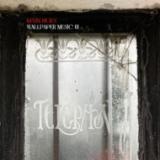
The album presents a distinctive artistic statement built around song, texture and collective exploration. Opening tracks such as 'Fair Weather' and 'The Big Flood' draw on the oblique lyricism of Henry Cow and the surreal songcraft of Robert Wyatt, with Beraha's voice at the centre of a sound world shaped by analogue radio collage and drifting, delayed saxophone lines. Punk-inflected rhythms emerge on 'Modern Times', while the reflective 'Into the Woods' blends lyrical song with collective improvisation, highlighting the ensemble's dynamic range. Across the album, tightly composed material sits alongside free improvisation, cinematic writing and storytelling. Tracks including 'February' and 'I the King' explore contemporary jazz, humour and surreal narrative, while groove- led pieces such as 'Dorian Gray's Bathroom Cabinet' and Morricone- inspired 'Same Time Next Week' showcase rhythmic drive and playfulness. The album closes with 'Strangers on a Train', where scripted text gives way to improvised spoken dialogue over a relentless pulse, uniting the record's themes of collaboration, narrative and spontaneity. Reflecting on the recording process, Kevin Figes describes Wallpaper Music III as "a joy to make", marking a return to Rockfield Studios and a collaborative experience with musicians whose sensitivity, imagination and improvisational skill shaped the music at every stage
Writings on the topic that go off in all directions, mind-numbing lectures given by academics, and testimonies, most of them heavily doctored, from those who “lived through that era”: so many people today fantasize about the early days of punk in our country… This blessed moment when no one had yet thought of flaunting a ridiculous green mohawk, taking Sid Vicious as a hero, or – even worse – making the so-called alternative scene both festive and boorish. There was no such thing in 1976 or 1977, when it wasn’t easy to get hold of the first 45s by the Pistols or the Clash. Few people were aware of what was happening on the fringes of the fringes at the time. Malcolm McLaren was virtually unknown, and having short hair made you seem strange. Who knew then that rock music, which had taken a very bad turn since the early 1970s, would once again become an essential element of liberation? That, thanks to short and fast songs, it would once again rediscover that primitive, social side that was so hated by older generations? Who knew that, besides a few loners who read the music press (it was even better if they read it in English) and frequented the right record stores? Many of these formed bands, because it was impossible to do otherwise. We quickly went from listening to the Velvet Underground to trying to play the Stooges’ intros. It’s a somewhat collective story, even though there weren’t many people to start it.
The Guilty Razors were among those who took part in this initial upheaval in Paris. They were far from being the worst. They had something special and even released a single that was well above the national average. They also had enough songs to fill an album, the one you’re holding. In everyone’s opinion, they were definitely not among the punk impostors that followed in their wake. They were, at least, genuine and credible.
Guilty Razors, Parisian punk band (1975-1978). To understand something about their somewhat linear but very energetic sound, we might need to talk about the context in which it was born and, more broadly, recall the boredom (a theme that would become capital in punk songs) coupled with the desire to blow everything off, which were the basis for the formation of bands playing a rejuvenated rock music ; about the passion for a few records by the Kinks or the early Who, by the Stooges, by the Velvet mostly, which set you apart from the crowd.
And of course, we should remember this new wave, which was promoted by a few articles in the specialized press and some cutting-edge record stores, coming from New York or London, whose small but powerful influence could be felt in Paris and in a handful of isolated places in the provinces, lulled to sleep by so many appalling things, from Tangerine Dream to President Giscard d’Estaing...
In 1975-76, French music was, as almost always, in a sorry state ; it was still dominated by Johnny Hallyday and Sylvie Vartan. Local rock music was also rather bleak, apart from Bijou and Little Bob who tried to revive this small scene with poorly sound-engineered gigs played to almost no one.
In the working class suburbs at the time, it was mainly hard rock music played to 11 that helped people forget about their gruelling shifts at the factory. Here and there, on the outskirts of major cities, you still could find a few rockers with sideburns wearing black armbands since the death of Gene Vincent, but it wasn’t a proper mass movement, just a source of real danger to anyone they came across who wasn't like them. In August 1976, a festival unlike any other took place in Mont-de-Marsan – the First European Punk Festival as the poster said – with almost as many people on stage as in the audience. Yet, on that day, a quasi historical event happened, when, under the blazing afternoon sun, a band of unknowns called The Damned made an unprecedented noise in the arena, reminiscent of the chaotic Stooges in their early adolescence. They were the first genuine punk band to perform in our country: from then on, anything was possible, almost anything seemed permissible.
It makes sense that the four+1 members of Guilty Razors, who initially amplified acoustic guitars with crappy tape recorder microphones, would adopt punk music (pronounced paink in French) naturally and instinctively, since it combines liberating noise with speed of execution and – crucially – a very healthy sense of rebellion (the protesters of May 1968 proclaimed, and it was even a slogan, that they weren’t against old people, but against what had made them grow old. In the mid-1970s, it seemed normal and obvious that old people should now ALSO be targeted!!!).
At the time, the desire to fight back, and break down authority and apathy, was either red or black, often taking the form of leafleting, tumultuous general assemblies in the schoolyard, and massive or shabby demonstrations, most of the time overflowing with an exciting vitality that sometimes turned into fights with the riot police. Indeed, soon after the end of the Vietnam War and following Pinochet’s coup in Chile, all over France, Trotskyist and anarcho-libertarian fervour was firmly entrenched among parts of the educated youth population, who were equally rebellious and troublemakers whenever they had the chance. It should also be noted that when the single "Anarchy in the UK" was first heard, even though not many of us had access to it, both the title and its explosive sound immediately resonated with some of those troublemakers crying out for ANARCHY!!! Meanwhile, the left-wing majority still equated punks with reckless young neo-Nazis. Of course, the widely circulated photos in the mainstream press of Siouxsie Sioux with her swastikas didn’t necessarily help to win over the theorists of the Great Revolution. It took Joe Strummer to introduce The Clash as an anti-racist, anti-fascist and anti-ignorance band for the rejection of old-school revolutionaries to fade a little.
The Lycée Jean-Baptiste Say at Porte d’Auteuil, despite being located in the very posh and very exclusive 16th arrondissement of Paris, didn’t escape these "committed" upheavals, which doubled as the perfect outlet for the less timid members of this generation.
“Back then, politics were fun,” says Tristam Nada, who studied there and went on to become Guilty Razors’ frontman. “Jean-Baptiste was the leftist high-school in the neighbourhood. When the far right guys from the GUD came down there, the Communist League guys from elsewhere helped us fight them off.”
Anything that could challenge authority was fair game and of course, strikes for just about any reason would lead to increasingly frequent truancy (with a definitive farewell to education that would soon follow). Tristam Nada spent his 10th and 11th unfinished grades with José Perez, who had come from Spain, where his father, a janitor, had been sentenced to death by Franco. “José steered my tastes towards solid acts such as The Who. Like most teenagers, I had previously absorbed just about everything that came my way, from Yes to Led Zeppelin to Genesis. I was exploring… And then one day, he told me that he and his brother Carlos wanted to start a rock band.” The Perez brothers already played guitar. “Of course, they were Spanish!”, jokes their singer. “Then, somewhat reluctantly, José took up the bass and we were soon joined by Jano – who called himself Jano Homicid – who took up the rhythm guitar.” Several drummers would later join this core of not easily intimidated young guys who didn’t let adversity get the better of them.
The first rehearsals of the newly named Guilty Razors took place in the bedroom of a Perez aunt. There, the three rookies tried to cover a few standards, songs that often were an integral part of their lives. During a first, short gig, in front of a bewildered audience of tough old-school rockers, they launched into a clunky version of the Velvet Underground's “Heroin”. Challenge or recklessness? A bit of both, probably… And then, step by step, their limited repertoire expanded as they decided to write their own songs, sung in a not always very accurate or academic English, but who cared about proper grammar or the right vocabulary, since what truly mattered was to make the words sound as good as possible while playing very, very fast music? And spitting out those words in a language that left no doubt as to what it conveyed mattered as well.
Trying their hand a the kind of rock music disliked by most of the neighbourhood, making noise, being fiercely provocative: they still belonged to a tiny clique who, at this very moment, had chosen to impose this difference. And there were very few places in France or elsewhere, where one could witness the first stirrings of something that wasn’t a trend yet, let alone a movement.
In the provinces, in late 1976 or early 1977, there couldn’t be more than thirty record stores that were a bit more discerning than average, where you could hear this new kind of short-haired rock music called “punk”. The old clientele, who previously had no problem coming in to buy the latest McCartney or Aerosmith LP, now felt a little less comfortable there…
In Paris, these enlightened places were quite rare and often located nex to what would become the Forum des Halles, a big shopping mall. Between three aging sex workers, a couple of second-hand clothes shops, sellers of hippie paraphernalia and small fashion designers, the good word was loudly spread in two pioneering places – propagators of what was still only a new underground movement. Historically, the first one was the Open Market, a kind of poorly, but tastefully stocked cave. Speakers blasted out the sound of sixties garage bands from the Nuggets compilation (a crucial reference for José Perez) or the badly dressed English kids of Eddie and the Hot Rods. This black-painted den was opened a few years earlier by Marc Zermati, a character who wasn’t always in a sunny disposition, but always quite radical in his (good) choices and his opinions. He founded the independent label Skydog and was one of the promoters of the Mont-de-Marsan punk festivals. Not far from there was Harry Cover, another store more in tune with the new New York scene, which was amply covered in the house fanzine, Rock News (even though it was in it that the photos of the Sex Pistols were first published in France).
It was a favorite hang-out of the Perez brothers and Tristam Nada, as the latter explained. “It’s at Harry Cover’s that we first heard the Pistols and Clash’s 45s, and after that, we decided to start writing our first songs. If they could do it, so could we!”
The sonic shocks that were “Anarchy in the UK”, “White Riot” or the Buzzcocks’s EP, “Spiral Scratch” – which Guilty Razors' sound is reminiscent of – were soon to be amplified by an unparalleled visual shock. In April 1977, right after the release of their first LP, The Clash performed at the Palais des Glaces in Paris, during a punk night organised by Marc Zermati. For many who were there, it was the gig of a lifetime…
Of course, Guilty Razors and Tristam were in the audience: “That concert was fabulous… We Parisian punks were almost all dressed in black and white, with white shirts, skinny leather ties, bikers jackets or light jackets, etc. The Clash, on the other hand, wore colourful clothes. Well, the next day, at the Gibus, you’d spot everyone who had been at this concert, but they weren’t wearing anything black, they were all wearing colours.”
It makes sense to mention the Gibus club, as Guilty Razors often played there (sometimes in front of a hostile audience). It was also the only place in Paris that regularly scheduled new Parisian or Anglo-Saxon acts, such as Generation X, Siouxsie and the Banshees, the Slits, and Johnny Thunders who would become a kind of messed-up mascot for the venue. A little later, in 1978, the Rose Bonbon – formerly the Nashville – also attracted nightly owls in search of electric thrills… In 1977, the iconic but not necessarily excellent Asphalt Jungle often played at the Gibus, sometimes sharing the bill with Metal Urbain, the only band whose aura would later transcend the French borders (“I saw them as the French Sex Pistols,” said Geoff Travis, head of their British label Rough Trade). Already established in this small scene, Metal Urbain helped the young and restless Guilty Razors who had just arrived. Guitarist for Metal Urbain Hermann Schwartz remembers it: “They were younger than us, we were a bit like their mentors even if it’s too strong a word… At least they were credible. We thought they were good, and they had good songs which reminded of the Buzzcocks that I liked a lot. But at some point, they started hanging out with the Hells Angels. That’s when we stopped following them.”
The break-up was mutual, since, Guilty Razors, for their part, were shocked when they saw a fringe element of the audience at Metal Urbain concerts who repeatedly shouted “Sieg Heil” and gave Nazi salutes. These provocations, even still minor (the bulk of the skinhead crowd would later make their presence felt during concerts), weren’t really to the liking of the Perez brothers, whose anti-fascist convictions were firmly rooted. Some things are non-negotiable.
A few months earlier (in July 1978), Guilty Razors had nevertheless opened very successfully for Metal Urbain at the Bus Palladium, a more traditonally old-school rock night-club. But, as was sometimes the case back then, the night turned into a mass brawl when suburban rockers came to “beat up punks”.
Back then, Parisian nights weren’t always sweet and serene.
So, after opening as best as they could for The Jam (their sound having been ruined by the PA system), our local heroes were – once again – met outside by a horde of greasers out to get them. “Thankfully,” says Tristam, “we were with our roadies, motorless bikers who acted as a protective barrier. We were chased in the neighbouring streets and the whole thing ended in front of a bar, with the owner coming out with a rifle…”
Although Tristam and the Perez brothers narrowly escaped various, potentially bloody, incidents, they weren’t completely innocent of wrongdoing either. They still find amusing their mugging of two strangers in the street for example (“We were broke and we simply wanted to buy tickets for the Heartbreakers concert that night,” says Tristam). It so happened that their victims were two key figures in the rock business at the time: radio presenter Alain Manneval and music publisher Philippe Constantin. They filed a complaint and sought monetary compensation, but somehow the band’s manager, the skilful but very controversial Alexis, managed to get the complaint withdrawn and Guilty Razors ended up signing with Constantin with a substantial advance.
They also signed with Polydor and the label released in 1978 their only three-track 45, featuring “I Don't Wanna be A Rich”, “Hurts and Noises” and “Provocate” (songs that exuded perpetual rebellion and an unquenchable desire for “class” confrontation). It was a very good record, but due to a lack of promotion (radio stations didn’t play French artists singing in English), it didn’t sell very well. Only 800 copies were allegedly sold and the rest of the stock was pulped… Initially, the three tracks were to be included on a LP that never came to be, since they were dropped by Polydor (“Let’s say we sometimes caused a ruckus in their offices!” laughs Tristam.) In order to perfect the long-awaited LP, the band recorded demos of other tracks. There was a cover of Pink Floyd's “Lucifer Sam” from the Syd Barrett era – proof of an enduring love for the sixties’ greats –, “Wake Up” a hangover tale and “Bad Heart” about the Baader-Meinhof gang, whose actions had a profound impact on the era and on a generation seeking extreme dissent... On the album you’re now discovering, you can also hear five previously unreleased tracks recorded a bit later during an extended and freezing stay in Madrid, in a makeshift studio with the invaluable help of a drummer also acting as sound engineer. He was both an enthusiastic old hippie and a proper whizz at sound engineering. Here too, certain influences from the fifties and sixties (Link Wray, the Troggs) are more than obvious in the band’s music.
Shortly after a final stormy and rather barbaric (on the audience’s side) “Punk night” at the Olympia in June 1978, Tristam left the band ; his bandmates continued without him for a short while.
But like most pioneering punk bands of the era, Guilty Razors eventually split up for good after three years (besides once in Spain, they’d only played in Paris). The reason for ceasing business activities were more or less the same for everyone: there were no venues outside one’s small circuit to play this kind of rock music, which was still frightening, unknown, or of little interest to most people. The chances of recording an LP were virtually null, since major labels were only signing unoriginal but reassuring sub-Téléphone clones, and the smaller ones were only interested in progressive rock or French chanson for youth clubs. And what about self-production? No one in our small safety-pinned world had thought about it yet. There wasn’t enough money to embark on that sort of venture anyway.
So yes, the early days of punk in France were truly No Future!
out of Stock
Last delivered 6 months ago available to reorder, subject to availability
British electronic music pioneers Graham Massey (founding member of Manchester legends 808 State) and Brian Dougans (the mind behind acid house milestone Humanoid and one half of The Future Sound Of London) join forces for their debut collaboration In Place Of Language, released on Belgian label De:tuned.
Both 808 State and Humanoid helped shape the UK's early rave and acid house movement. Here, Massey and Dougans channel that legacy into a beautifully balanced four-track EP that radiates warmth and energy, drawing on more than three decades of experience in electronic music. Inspired by key elements of the '89-91 era while embracing a contemporary edge, the duo merge their distinct sonic identities into a sound that feels both timeless and forward-looking.
In Place Of Language is not a nostalgia trip, but a natural evolution: a meeting point between foundation and future, and a blueprint for a new wave of electronic experimentation!
Kevin Foakes (Openmind, DJ Food, Ninja Tune) created all the graphic work. Mastered by Matt Colton at Metropolis. A separate digital release will also be available at the usual digital shops. Stay tuned!
out of Stock
Last delivered 5 months ago available to reorder, subject to availability
ZENA, the contemporary ethio-jazz duo from London comprised of producer, keyboardist
and synth player Yohan Kebede and bassist/producer Menelik, have announced the forthcoming release of their debut EP ‘TEMESGEN’; is a six-track aural odyssey that balances uncompromising experimentation with a deep sense of home, comfort, and exploration. In accordance with the duo’s mission, the project is seeking to redefine and reimagine Ethiopian music for a new generation.
Speaking on the inspiration behind the EP’s title, Yohan said: “‘TEMESGEN’ means “Thank God” in Amharic, and for me, I never heard my mother receive good news without saying it aloud. After the first couple gigs we did as ZENA, we saw how people reacted to our music and how it resonated with them. It spurred in us a feeling of overwhelming gratitude, after which the EP kind of named itself”
Born out of a mutual love and respect for the music of their shared Ethiopian heritage, ZENA are charting a new endeavour where Ethiopian musical traditions meet the future. Building upon the roots and foundations laid by legendary Ethiopian musicians Haliu Mergia, Alemayehu Eshete and Mulatu Astatke, ZENA fuses the haunting spirituality and earthiness of the ethio-jazz tradition with a modernity, sensuality and sense of disruption that is distinctly London.
Following three sold-out London headline shows, plus appearances at We Out Here Festival and on NTS Radio, ZENA arrive on Brownswood Recordings with a bold debut that’s equally at home across jazz-minded selectors and leftfield crate-diggers. The duo’s momentum is fuelled by Yohan Kebede’s landmark year with Kokoroko; from the release of Tuff Times Never Last to an NPR Tiny Desk, a North American tour, and their biggest headline show yet at O2 Academy Brixton, alongside Menelik’s quietly formidable reputation in London’s inner circle, shaped by time on the road and in the studio with Muva Of Earth and Bill Laurance.
The record is largely sung in Scots language, one of Scotland’s three official languages along with Gaelic and English. “Scots gives me a way of expressing myself which is connected directly with the landscapes I love. It brings the songs alive and it is a fascinating language. The name of the record is in Scots - Forefowk means the people who came before, or ancestors. When we say ‘mind me,’ we can mean a few things- remind, remember, watch over or care for me. The record explores how tradition needs to be constantly reconnected with, built upon, looked after, and shared.”
Quinie sings with a style inspired by Scottish Traveller singers. “I began singing unaccompanied Scots Song in 2015 after hearing Scots Traveller singer Sheila Stewart on the radio. Initially I felt like I shouldn't sing these songs because I'm not a Traveller, and I saw people around me doing that in a way that made me uncomfortable. But on the other hand this music made sense to me and I felt driven to learn. Over the years I have met Traveller friends who taught me that settled people sharing these songs could contribute to raising awareness. Scottish Travellers are marginalised and discriminated against in modern Scotland, despite being custodians of so many of our important traditions. So I started to perform them and tell this story. From there I built on my repertoire and started writing my own songs”.
To develop this record, Quinie travelled across Argyll with her horse. They went on a pilgrimage of sorts through the ancient landscapes of the West of Scotland to explore the interconnected relationships between people, ancestors, animals, and place. The album’s vinyl release is accompanied by a book and film, documenting this unusual research process.
Forefowk, Mind Me was recorded in August 2024 at The Big Shed in Highland Perthshire with support from Creative Scotland. Quinie is accompanied by an ensemble of musicians: Ailbhe Nic Oireachtaigh (viola), Oliver Pitt (duduk, bouzouki, percussion), Harry Górski-Brown (small pipes, violin), and Stevie Jones (double bass, recording, and mixing). Each of these artists brings their own distinctive voice, bridging contemporary experimental practice with worlds of traditional and early music.
Real Bad Man and YUNGMORPHEUS are excited to announce their new album The Chalice & The Blade is out now. The album features Boldy James, Kool Keith, Grip, Blu, Fatboi Sharif, and more.
YUNGMORPHEUS is a highly innovative rapper that consistently endeavors to redefine the boundaries of originality and elevate the art of lyricism. Earlier this year, YUNGMORPHEUS dropped his critically acclaimed album “From Whence It Came” which received praise from The FADER, NPR, SPIN, and was hailed by QUIP Mag as “Everything you need from a hip-hop record.”
Since 2020, Prolific LA-based producer and designer Adam Weissman (Real Bad Man) has been on a sensational run releasing albums with Boldy James, Smoke DZA, and Pink Siifu. The Chalice & The Blade will be Real Bad Man’s third album of the year following his remarkable collaborations with Blu (“Bad News”) and Kool Keith (“Serpent”).
The Chalice & The Blade showcases a unique ambiance marked by a stoney and atmospheric quality, interspersed with elements of funk. Real Bad Man explains the album making process, "I always tailor the music to the artist I’m collaborating with. I sent Morpheus a bunch of beats that he’d sound good over and once he started picking them, that set the path. We’d record and I’d make more beats, and move stuff around, get rid of some songs and record new ones. It was a good process. I like being able to adjust as we go, I think that makes for a good album. We left some songs on the cutting room floor. Cream rises."
YUNGMORPHEUS discussing the new album, “‘The Chalice & The Blade’ is an album primarily rooted in dichotomies; contemplation of action vs action itself, inner locus vs outer locus, pursuit for self vs pursuit for others. Honesty is always the centerpiece. Play if you want cause I’m not!”
On The Chalice & The Blade, the seamless synergy between Real Bad Man and YUNGMORPHEUS takes center stage, showcasing an extraordinary chemistry that elevates every track to new heights of musical innovation.
Talulah’s Tape is the debut offering from magnetic Midwest-jangle collective Good Flying Birds. Across a patchwork mixtape of stripped-down home recordings that span the independent-guitar spectrum, the band delivers colorful, intricate pop songs perched between the immediacy of DIY punk and the intimate sweetness of twee. Breakbeats, memes, and noise glue everything together, making the album feel as chronically online as it is timeless.
Originally released on cassette in January 2025 by Midwest-punk legend Martin Meyers’s Rotten Apple label, the tape sold more than 300 copies in under a month and quickly became an out-of-print and coveted item. Meyers called it “certified catnip for popheads.” Now, with a refined track list and a fresh master from Greg Obis, Talulah’s Tape returns on LP and CD via Carpark and Smoking Room in October 2025.
While production and approach vary, a through-line of sensitive self-contemplation rests on bright, scrappy guitars and hyperactive melodic bass. Opener “Down on Me” rides a buoyant bass line while jangling guitars frame reflections on overcoming trauma: “I see you in the mirror every time I cry / I hear your voice every time I try.” Next, the guitars trade twinkling counter-melodies on “I Care for You,” pairing sugary, lovestruck lyrics with effervescent strums: “You catch me when I fall / You build me up so tall.”
The rosy grin occasionally twists into a wicked smirk. “Dynamic” warns, “You used to paint the face, but now you’re just the clown,” while “Glass” asks, “Is it lonely at the top when everyone follows the trend, and you hold the pen?” Both tracks brim with sparkling guitar interplay. By the closing, nearly five-minute “Last Straw,” Good Flying Birds stand far beyond conventional indie-pop or 4-track punk, unveiling a roller-coaster of unpredictable changes, vocal harmonies, and instrumental cross-talk.
Altogether, Talulah’s Tape is a pastel-yellow, candy-coated shell filled with thoughtful juxtapositions and melodic experiments. Standing on the same ground as idiosyncratic songwriters like Connie Converse and Daniel Johnston, Good Flying Birds find sweetness in sadness, tear stains on a colorful flower-print couch. Simultaneously, it’s packed with the scratchy guitars and vibrant rhythms of Scottish guitar groups like The Pastels, Orange Juice, and Josef K. It’s a tremendous opening statement from a band just getting started.
The new album by L.Y.R., their third commercial release, begins with the idea that the furthest points of light - stars - can only be seen in the dark. It’s a kind of contradiction that finds musical expression in these new tracks, the band always navigating towards sightings of hopefulness and constancy in an increasingly bewildering and storm-battered world.
The term dark sky reservation has its origins in environmentalism, and several tracks on the album deal with the messed-up weather of our contemporary planet, both meteorological and psychological, from descriptions of an earth deluged by thunderstorms to the soggy back-gardens of suburbia, a climate crisis brought on by rampant urbanism. In that context, dark sky reservations are those regions of the landscape where light pollution is discouraged and even outlawed, to allow scientists and casual stargazers to peer into the cosmos and see the glory of the constellations, patterns of light that have entranced and mystified us for hundreds of thousands of years.
It’s from those designated zones that human beings get a sense of their place in the universe, and experience the wonder of the here and now against a context of eternity and infinity. An alternative to the hectic craziness of everyday life, so often virtual and synthetic, the dark sky reservation is a place of refuge and dreaming, and like L.Y.R.’s music, such spaces are earmarked for contemplation and thoughtfulness.
L.Y.R. is author and current British poet laureate Simon Armitage, singer-songwriter Richard Walters and multi-instrumentalist & producer Patrick Pearson.
This Signum Classics release presents four orchestral works by Xiaogang Ye, one of the most prominent figures in contemporary Chinese music, performed by the RLPO under conductor Dane Lam.
Recorded in February 2024 at Liverpool Philharmonic Hall, the album brings together music inspired by Chinese history and personal memory.
Bruce Hornsby’s newest album, Indigo Park, is a concept album of sorts, an extended multi-dimensional inquiry into the nature of aging and memory, often with a lightness of tone – the ways certain scenes linger placidly while others balloon into imagined catastrophe, the ways we remember and the ways we forget. Throughout, Hornsby contemplates moments from his deep past, sometimes trying to “resolve” them, other times looking for clues about his present-day outlook. “It's just an old bastard looking back, while hopefully pushing forward to adventurous and new musical & lyrical areas,” Hornsby says of his new songs, with a smile of characteristic self-deprecation. “To be honest, I've found a way, a path to….grow old gracefully, with help from some newborn friends of mine.” The album is produced by Tony Berg, Will Maclellan and Bruce Hornsby with contributions fro
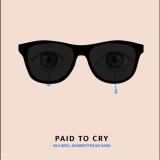
“I wanted to explore how a big band can cry — not only through sorrow, but through joy, tenderness, and release. Music can hold grief and celebration at the same time, and Paid To Cry lives in that space.”
Nils Berg has been a cornerstone of the Swedish jazz scene since the turn of the millennium. Known internationally as an innovative bandleader and collaborator, this release places the spotlight — for the first time — on Berg’s work as a composer for large ensemble.
Paid To Cry is the result of an intensive collaboration with the Norrbotten Big Band, one of Scandinavia’s most acclaimed jazz orchestras. Drawing melodic clarity and emotional directness from composers such as Burt Bacharach and Kurt Weill, while embracing the raw courage of Björk and Sun Ra, and the pulsating minimalism of Steve Reich, the music forms a sound world that feels both familiar and entirely its own.
This is contemporary big band music without nostalgia: physical, vulnerable, and expansive. Written with deep trust in the individual voices of the ensemble, the compositions allow space for both collective force and intimate expression. And what an ensemble to breathe life — and tears — into this music.
With fifteen musicians moving as one organism, Paid To Cry carries enough air, rhythm, and resonance to lift the listener far beyond genre boundaries. It is music that dares to be emotional without explanation, and powerful without grandstanding — inviting the listener to feel first, and understand later.
Rolling Stone calls award-winning Florida musician Selwyn Birchwood “a remarkable, contemporary bluesman…a powerhouse young guitarist and soulful vocalist.” Now, this mesmerizing guitarist, lap steel master and cinematic songwriter unleashes the powerful new album Electric Swamp Funkin’ Blues, further blazing his own musical trail.
Birchwood’s sound is an intoxicating mix of deep blues, blistering, psychedelic-tinged rock, booty-shaking funk and sweet Southern soul, played and sung with true blues passion. From an emotionally devastating whisper to a soul-baring scream, Birchwood’s vocals command attention. Schooled in the blues' storied traditions (he toured with and was mentored by the famed Sonny Rhodes), Birchwood maps out a dazzling future for the blues with his visionary music.
Selwyn Birchwood is one of the hardest-touring artists on the Alligator roster, and will support the new release with shows throughout the U.S. He's no stranger to European stages either, with plenty of tours there under his belt, and having just completed over a month's worth of European dates, 27 shows in all, with 24 taking place in France, three in Belgium and one in Czechia.
Really glad to present the first release of the year 2026, an amazing piece of music made by 4 friends of Copenhagen Jacob Funch, Kim Las, Rasmus Valldorf and Tan Vargas.
A very cinematographic journey in between Ambient and Experimental, with a certain touch of Balearic right in the middle of the Leftfield. A super trippy trip, gifted by beautiful melodies and vocals like on the titles “Indisponible” or “Mambo n6”… as if you were crossing a super cozy desert on LSD, starting from the coast after a nice bath in the sea to the dryness of the sand under the sun, with intense divagations like on “Fastelavn” or “Kompasitu” to long relief of contemplations like on “Opium Swing” or “Blizzard” at the end of the way...
This is a full immersive experience, one of those life soundtrack releases, and probably one of our favorite release ever.
out of Stock
Last delivered 4 months ago available to reorder, subject to availability
Tom Misch’s long-awaited sophomore album Full Circle finds the London-based artist, songwriter, and producer at his most personal and honest. Exploring the moments that have shaped him over the last four years: family, friendships, nature, and celebrates the work of finding his way back to himself. Made during his time spent between London, Cornwall, Portugal, and Nashville with a focus on classic songwriting, honing a collection of eleven timeless songs including the previously released singles ‘Old Man’ and ‘Red Moon’. While Full Circle contends with some of quieter moments of the last four years, it remains optimistic and effortlessly listenable, anchored by unadorned vocals and a warm, analogue sound. And the beauty of Full Circle lies in the universality of its lyrics, inviting listeners to inhabit Tom’s world or trace their own path within it. Full Circle stands as both a reflection of his journey and a statement of ongoing evolution.
out of Stock
Last delivered 54 days ago available to reorder, subject to availability
Far Out Recordings proudly presents Ladeiras De Santa Teresa, the debut collaboration between Rio-jazz maverick Antonio Neves and carioca percussion master Thiaguinho Silva. In what could well be the first ever Brazilian jazz album centered around two drummers, Ladeiras De Santa Teresa is an uncompromisingly groove-rich recording, steeped in trad-samba roots and brass power.
Since his acclaimed 2021 album A Pegada Agora E Esssa Antonio Neves has remained a mainstay of the international facing Brazilian scene, performing both as a trombonist and drummer. His instrumental contributions to contemporary classics like Ana Frango Eletrico’s Little Electric Chicken Heart, Bruno Berle’s No Reino Dos Afetos 2, and Bala Desejo’s Sim Sim Sim will be marveled upon by future generations. His partner in crime Thiaguinho Silva happens to be the son of percussion icon Robertinho Silva, who has played on more or less every canonical Brazilian record, Arthur Verocai (1972), Clube Da Esquina (Milton Nascimento and Lo Borges, 1972), and India (Gal Costa, 1973) to name barely a few. Thiaguinho himself has worked with Marcelo D2, Gal Costa, Liniker and Alice Caymmi, and upon listening to Ladeiras De Santa Teresa, it’s clear that Thiaguinho is more than a worthy successor to carry the Silva family torch.
Some listeners may already be familiar with “Das Neves,” which appeared on Mr Bongo’s Rio De Janeiro-focused Hidden Waters compilation in 2023. The track showcases the profoundly skilled Neves brothers brass section (Antonio alongside brother Edu, who has performed with Hermeto Pascoal), the fiery elegance of pianist Luiz Otávio (Dora Morelenbaum), and Thiaguinho’s pulsating samba breaks. This synergised combo continues across the album, notably on “Fendas Vocais” with Neves doubling up on drums, exhibiting his inventive and fearless skill as an arranger. The album also features street-artist, musician and rapper Joca, adding vocalised dynamism and swagger to an otherwise entirely instrumental record on “Viagem de Trem”.
The album’s title Ladeiras De Santa Teresa (The hills of Santa Teresa) is named in tribute to Rio De Janeiro’s famed Santa Teresa neighborhood, a bohemian enclave with scenic views of the iconic cityscape. The spirit of Santa Teresa with its expansive city views and bustling energy is embodied in the album which encapsulates the jazz and samba histories felt within the neighborhood’s windy alleyways and cobbled streets.
Ladeiras De Santa Teresa by Neves E Silva is out on vinyl, CD and digital on Friday 20th March 2026.