‘Best tunes for your answering machine’ is the debut album of oblique, introspective electronic music by the mysterious solo artist Tekamolo.
Fusing melancholic synth pop and absurdist trip hop, ‘best tunes for your answering machine’ is a special assemblage of pitch-modified vocals, retrofuturist samples and freeform electronics that coalesces into music both outlandish and bittersweet, playful and profound.
Produced by a renowned artist, opting to conceal their identity under the guise of a new pseudonym, Tekamolo presents a series of curious, incognito confessionals with ‘best tunes for your answering machine’. An album led by a voice like a sentient, heavy-hearted android, the nine tracks collected here contend with themes of inertia, solitude and longing, revealing an inspired, affecting stream of messages from an unknown caller.
Without preconceptions tied to provenance, this is music liberated from the burdens of biographical detail. Music that eschews ego and the cult of the self. An album that can be heard purely for the strange, poignant sounds unfurled throughout.
For Tekamolo, the album signifies an attempt to navigate aesthetic reductionism, as well as an absolute sense of seclusion:
“An audio diary of a lonely soul. Broken, wounded mantra-songs. Memories of things that never happened. Dreams that never had the chance to be dreamed. Disassembled songs. As if testing the limits of emptiness — how much void can a song endure while still remaining a song? How much can be stripped away, how bare can it be, and still, the groove lingers, the melody pierces the memory, sinking into the listener's mind.
These are the skeletons of songs, an attempt to assemble music from the bare minimum — words, sounds, fragments of memory.
The songs are filled with desperate calm. They are not sung to the world, nor to anyone tangible, but solely to oneself and to the unseen. In a way, they could be considered songs of the end of the world: you wake up, and there is not a single person left in the world. At least, no one you can see. You wander through empty streets and deserted shopping malls, humming softly to yourself, hoping that someone — anyone — might hear you.”
‘best tunes for your answering machine’ is a sui generis conception of warped 21st century blues from an enigmatic figure, a work filled with surreal, indelible songs of modern isolation. Lost contemporary hymns, now recovered. Voicemails worth hearing.
The line between art and entertainment has always been fuzzy. Certainly, there’s plenty of overlap between the two, but lately it feels like there’s a growing divide, an ever-widening chasm separating our fundamental need for creative expression and our insatiable appetite for disposable content. That’s where T. Hardy Morris comes in.
“I’ve spent a lot of time parsing the difference between the two,” he explains, “not just for myself, but for society at large. What does it mean to be an artist? How do we measure creative success? Where are the boundaries between audience and performer when everyone’s broadcasting their lives 24/7?”
Morris dives into those questions headfirst on his riveting new album, Artificial Tears, and while the answers don’t come easily, the search yields plenty of reward. Recorded in Nashville with My Morning Jacket’s Carl Broemel at the helm, the collection is an electrifying work of existential exploration, a raw, rock and roll reflection on meaning and identity in a modern world that’s simultaneously more connected and isolated than ever before. Despite the weighty ruminations at its core, the result is a remarkably grounded, down to earth album that’s at once honest and abstract, a poignant, clear-eyed look in the mirror from a master craftsman committed to his work for nothing more—and nothing less—than its own intrinsic value.
The Beths occupy a warm, energetic sonic space between joyful hooks, sun-soaked harmonies, and acerbic lyrics. Their debut album Future Me Hates Me, forthcoming on Carpark Records, delivers an astonishment of roadtrip-ready pleasures, each song hitting your ears with an exhilarating endorphin rush like the first time you heard Slanted and Enchanted or 'Cannonball.'
Front and center on these ten infectious tracks is lead singer and primary songwriter Elizabeth Stokes. Stokes has previously worked in other genres within Auckland's rich and varied music scene, recently playing in a folk outfit, but it was in exploring the angst-ridden sounds of her youth that she found her place. 'Fronting this kind of band was a new experience for me,' says Stokes. 'I never thought I had the right voice for it.'
From the irresistible title track to future singles 'Happy Unhappy' and 'You Wouldn't Like Me,' Stokes commands a vocal range that spans from the brash confidence of Joan Jett to the disarming vulnerability of Jenny Lewis. Further honeying Future Me Hates Me's dark lyrics that explore complex topics like being newly alone and the self-defeating anticipation of impending regret, ecstatic vocal harmonies bubble up like in the greatest pop and R+B of the '60s, while inverting the trope of the 'sad dude singer accompanied by a homogenous girl-sound.'
All four members of The Beths studied jazz at university, resulting in a toolkit of deft instrumental chops and tricked-out arrangements that operate on a level rarely found in guitar-pop. Beths guitarist and studio guru Jonathan Pearce (whose other acts as producer include recent Captured Tracks signing Wax Chattels) brings it all home with an approach that's equal parts seasoned perfectionist and D.I.Y.
'There's a lot of sad sincerity in the lyrics,' she continues, 'that relies on the music having a light heart and sense of humor to keep it from being too earnest.' Channeling their stew of personal-canon heroes while drawing inspiration from contemporaries like Alvvays and Courtney Barnett, The Beths serve up deeply emotional lyrics packaged within heavenly sounds that delight in probing the limits of the pop form. 'That's another New Zealand thing,' Stokes concludes with a laugh. 'We're putting our hearts on our sleeves—and then apologizing for it.'
Ty Segall follows 2022"s acoustic introspection opus "Hello, Hi" with a deeper, wilder journey to the center of the self. With Three Bells, he"s created a set of his most ambitious, elastic songs, using his musical vocabulary with ever-increasing sophistication. It"s an obsessive quest for an expression that answers back to the riptide always pulling him subconsciously into the depths. Questions we all ask in our own private mirrors are faced down here - and regardless of what the mysterious "Three Bells" mean in the context of the album"s libretto, you can be assured that Ty"s ringing them for himself, and for the rest of us in turn.
out of Stock
Last delivered 14 months ago available to reorder, subject to availability
The discovery of Doris Dennison's score represents a genuine musicological breakthrough—what once would have been "a tree falling in the woods" thirty years ago now holds the potential to render "a thunderous clap in our minds." While researching Anna Halprin's lesser-known collaborators, scholar Tom Welsh uncovered the archives of AA Leath, one of Halprin's principal dancers. Buried within these materials was Dennison's handwritten score for Earth Interval, dated May 1956. Born in Saskatchewan, Canada, in 1908, and raised near Seattle, Dennison (1908-2009) encountered John Cage while teaching Dalcroze eurythmics at the Cornish College of the Arts. She joined Cage's earliest percussion quartet—alongside Margaret Jansen, the composer and his wife Xenia—in the group widely regarded as having performed the first complete concert of percussion music in the United States. This historic December 1938 concert was followed by tours and the landmark May 1941 performance at the California Club, comprising Cage and Lou Harrison's Double Music, the premiere of Cage's Third Construction, and Harrison's 13th Simfony.
As Bradford Bailey observes in his extensive liner notes, Earth Interval demonstrates "an extraordinary balance of elements that imbues the piece with a sense of clarity, directness, and constraint that is both distinct and ahead of its time." The work's most remarkable innovation lies in its approach to extended techniques, particularly Dennison's notation for the central movement: "In 2nd movement, 1st player lowers + raises a gong into a tub of water while beating." This technique, absorbed from Cage's experimental vocabulary, generates what Bailey describes as "fields of acoustic abstraction that bend and warp time through sustained resonances, beat, and space." The temporal sophistication of these manipulations anticipated Karlheinz Stockhausen's Mikrophonie I (1964) and Annea Lockwood's water-based sound investigations by over a decade. After joining Mills College as dance accompanist, Dennison maintained crucial connections to the Bay Area's experimental scene, collaborating with figures like Merce Cunningham and programming Cage's music throughout the 1950s.
Comprising three movements—Land Form, Air Tide, and Earth Play—Earth Interval is scored for recorder, drums, gongs, maracas, muted gongs, and bowl gongs. In total, the piece is just under eight minutes: "a fleeting glimmer of moment in time, a life spent at the cutting edge, and a singular creative vision that packs a powerful punch." When viewed in historical context, placed in contrast to roughly contemporaneous avant-garde percussion works by Cage, Harrison, Louis Thomas Hardin (Moondog), and Harry Partch, or important precursors like Edgard Varèse's Ionisation (1931) and Henry Cowell's Ostinato Pianissimo (1934), it's clear that Dennison was following her own path. Earth Interval is not derivative. It is a precursor to what was yet to come, alluding to developments of avant-garde and experimental music that wouldn't begin to appear on the cultural landscape until the 1970s and '80s, with the emergence of Post-Minimalism and more idiosyncratic artists and ensembles like Midori Takada, Ros Bandt, Peter Giger, Frank Perry, Christopher Tree, Michael Ranta, Gamelan Son of Lion, and Niagara.
This recording by Chicago's Third Coast Percussion, captured in March 2022, represents the first complete documentation of this pioneering work. The ensemble's interpretation reveals the piece's remarkable contemporaneity while maintaining its historical specificity. Where Cage, Harrison, and Partch employed "self-consciously off-kilter polyrhythms," Dennison's rhythmic sensibility anticipates minimalist developments by nearly a decade, yet integrates "forceful rests, as well as sharp shifts in sonic character, tempo, and meter, that break the momentum and breathe a sense of life into the piece's structure." This positions her work closer to Post-Minimalism decades before its emergence. The architectural approach demonstrates Dennison's understanding that "the composer almost entirely disappears" in favor of phenomenological listening experience, creating what might be called an egoless music that places its realities and meaning entirely in the ear of the beholder. The present recording, realized by Chicago's distinguished Third Coast Percussion ensemble, represents a significant achievement in experimental music scholarship and performance practice. As specialists in the Cage tradition and contemporary percussion repertoire, Third Coast Percussion approached Earth Interval with the historical sensitivity and technical precision required to illuminate Dennison's subtle compositional innovations. The March 2022 recording sessions, engineered by Colin Campbell, capture both the work's intimate chamber music qualities and its bold exploration of extended techniques. The ensemble's interpretation reveals the piece's remarkable contemporaneity—its ability to speak directly to current musical concerns while maintaining its historical specificity.
This recording serves multiple scholarly functions: it provides the first complete documentation of Dennison's compositional voice, offers insight into the broader network of experimental music practitioners surrounding Cage and Harrison, and demonstrates the sophisticated level of compositional thinking that was occurring within the Bay Area's dance-music collaborations of the 1950s. The work's emphasis on phenomenological listening—what might be called an "egoless" approach to musical experience—places it within a lineage of American experimental music that prioritizes perceptual process over compositional personality. The work's original obscurity—limited to AA Leath's performances at venues like the 1957 Pacific Coast Arts Festival at Reed College—paradoxically allowed it to remain "entirely on its own terms," free from the constraints of historical categorization. Drawing on Jacques Derrida's Archive Fever, the argument emerges that "the archive can acknowledge, celebrate, and resurrect" overlooked voices, transforming our understanding of experimental music history. The present Blume edition, featuring Third Coast Percussion's authoritative interpretation, includes a lavishly illustrated 16-page booklet designed by Bruno Stucchi / dinamomilano, containing complete scholarly apparatus, historical photographs, and detailed production notes. This recording enables "cross-temporal intersectionality," allowing Dennison to "belong to a newly formed and more dynamic understanding of the present and past," demonstrating how forgotten voices can reshape entire historical narratives when given proper scholarly attention and performance advocacy.
Since its founding back in 2014, Blume has carved a unique place in cultural landscape, issuing free-standing works, spanning the historical and contemporary, that represent singular gestures of creativity within the field of experimental sound. Joining their broad efforts in building networks of context and understanding that already includes the works by Werner Durand, Sarah Hennies, Bruce Nauman, John Butcher, Jocy de Oliveira, Mary Jane Leach, Valentina Magaletti, Alvin Curran, Julius Eastman, Alvin Lucier, and following the first ever vinyl release to attend to James Tenney's legendary Postal Pieces, the label now presents the first LP published by the visionary Swiss composer Jürg Frey. Drawing from the transformative power of breath and resonance, this release represents one of the most profound explorations of musical metamorphosis to emerge from the contemporary experimental landscape.
The completed work represents a "conjunction of these two artists" that has "activated a transformative form of experimentalism." These renderings "dance with an airy lightness, humour, and play, imbuing them with a beauty and emotiveness that can be rare within experimental music." They exist as "breaths, carrying the curiosities of life, belonging to no time and all time, to no one and everyone: a human music to be inhaled and pondered, for which the outcome remains unknown." In this liminal space between composition and interpretation, between breath and resonance, Zurria and Frey have created something that transcends the boundaries of experimental music itself, offering what might be called a metaphysical cartography of sound in its most essential form. As Bradford Bailey observes in his penetrating liner notes, "music is rarely a fixed entity," existing instead in a state of perpetual flux, "taking on the influences of its interpreters and performers." This fundamental truth finds its most eloquent expression in the transformative collaboration between Italian flutist Manuel Zurria and Frey, longtime member of the Wandelweiser Group. Where conventional recordings might preserve a definitive version, this release activates what Bailey calls "states of unknowing and continued experimentation," allowing Frey's compositions to evolve into entirely new dimensional territories. The original string quartet and piano works dissolve into breath-carried architectures of sound, where "the original remains in a constant dialogue with its transformation." This is not mere arrangement but ontological metamorphosis - an alchemical process through which crystalline harmonies are reborn as atmospheric phenomena.
The metaphysical dimensions of this transformation become clear through detailed analysis of the musical result. Where Frey's original compositions operate through what he calls "basic confidence in the clear and restricted material," Zurria's interpretation activates entirely new perceptual territories. Space holds almost atomic sense of weight against the airy punctuations of timbres, textures, and tones, creating "suspensions of time within which questions and identities posed by instrumentation fade." The Extended Circular Music pieces - each comprising "a small number of bars to be repeated an undetermined number of times" - become organizations of sound that defy being definitive or fixed. Originally scored for different combinations of violin, viola, cello, and piano, these works now exist as pure phenomena of breath and resonance, where "hanging, breath-length utterances dance and intertwine amongst complex harmonic clusters and conjunctions."
The philosophical implications of this transformation illuminate a lineage of composers who have moved "away from abstraction and responding to the need to create" something beyond mere technique. Drawing parallels to Morton Feldman's understanding of non-functional harmony, Zurria's approach represents "a transformative form of experimentalism" that activates what Frey calls the "thaumaturgic power" of music - its capacity to heal and transform consciousness itself. The result is "a radical reimagining of ambience: sprawling sonorities and resonances adrift in space, carrying the liberated traces of the work's former incarnations and their truths." In Zurria's interpretation, Frey's String Quartet n.3 becomes something approaching "an organ played in slow motion, its seals leaking," while the Extended Circular Music pieces transform into "glacial chords from a diverse palette of voicings, harmonies, timbres, and tones."
Performed by Manuel Zurria. Recorded and mixed by Zurria at BigCardo, Catania between 2022-2024, with mastering by Bruno Germano at Vacuumstudio, Bologna, this Blume release represents a profound exploration of musical transformation.
A truly essential piece of early Detroit Techno history here, Octave One's original white label "Octivation" EP from 1990 has long been a sought after and coveted slab of wax. This 5 track journey charts the Burden brothers mood from sinister, spacey, acidic Techno jams ("Sonic Fusion") to deeper, more melancholic mid-tempo cuts ("Nicolette") and along the way manages to usher in a new wave of Detroit Techno sounds.
Steeped in soul and depth "Octivation" was hinting towards the epic style Octave One would shape with their various projects in the following decades and releases. The earliest glimpse (Their 1st release) into a long and fruitful career that is still continuing today. This EP was a game changer and it's influence can still be felt in contemporary House and Techno right now.
Now, finally made available again to be re-discovered and experienced.
Re-mastered, re-pressed and re-issued with all the original 430 West white label and sticker artwork intact, in conjunction with the Burden brothers / 430 West Records.
American glam metal band Warrant released their second studio album Cherry Pie in 1990, which became their best-known and highest-selling release. It peaked at #7 on the Billboard 200 and featured two hit singles, “Cherry Pie” and “I Saw Red”. The title track contains a guitar solo performed by Poison’s guitarist C.C. DeVille. The album features more guest performers, including Dio’s Scott Warren, Bruno Ravel and Steve West from Danger Danger. Besides well-known guest performers, the album was produced by Beau Hill (Alice Cooper, Europe) and mastered by Grammy Award winner Ted Jensen, who also mastered the Eagles’ Hotel California and Norah Jones’ Come Away With Me.
Cherry Pie is available as a limited edition of 3000 Individually numbered copies on cherry coloured vinyl and includes an insert.
Chaz Bear (formerly Bundick) was a musician from birth. Growing up, it was normal to hear music across genres, from Michael Jackson to Elvis Costello to The Specials, in the Bundick household. These influences were quite unique for a biracial kid growing up in South Carolina, contributing to the complexity of Chaz’s self-understanding and expression through his own music.
Chaz began playing and recording original compositions in his preteen years, forming multiple indie bands starting in middle school and continuing until his personal project, Toro y Moi, was signed by Carpark Records in 2009. Before getting signed, he was already an incredibly prolific artist, having released over 10 Toro y Moi albums on his own (and undoubtedly retaining a vast compendium of unreleased songs). His personal work drew upon a vaster array of influences than did his full band. Early Toro work called upon Chaz’s childhood exposure to 80’s R&B, pop and electronic music, while also evolving with his discoveries of acts like My Bloody Valentine and J Dilla and his burgeoning interest in French house. Just before his graduation from the University of South Carolina, where he earned a degree in graphic design, Chaz caught the attention of music bloggers and record labels with his dreamy, bedroom recordings.
Outer Peace, was written and recorded in the Bay Area after Chaz’s return from a one year stint in Portland. It is somewhat of a homecoming celebration, filled with features by friends and saturated with a playfulness that had not previously been embraced in past Toro albums. Outer Peace stands in contrast to the more sparse and contemplative Boo Boo, an album recorded while in Portland in relative isolation. With Outer Peace, Chaz showcases his ability to remain on the cutting edge of music’s evolution while not taking himself too seriously. There are contemporary hip hop references mixed in with funk, Eurodance and ambient elements, all interwoven expertly and retaining that quintessential Toro y Moi aesthetic.
Vines, the solo project of New York-based multi-instrumentalist and composer Cassie Wieland, offers a window into her inner world through expansive swaths of sound. She pieces together a celestial mix of synths, percussion, strings, and vocoded voice, making music that is at once deeply personal and cinematic in scope. This diaristic approach first took shape with her 2023 EP Birthday Party, and is crystallized on her debut LP, I’ll be here. With the sweeping and vulnerable I’ll be here, Vines arrives fully formed as an artist who crafts deeply resonant and open music–the kind that invites listeners in to listen, reflect, and share in the journey of learning through living.
“It was through making music that I was able to meet myself,” Wieland said. “Anything I’m going through or feeling is something that somebody else out there can relate to, and that’s really special to me.”
I’ll be here is both a culmination of years spent creating gossamer soundscapes and an opening to a new journey for Wieland as an artist. The album grew out of her years as a composer and songwriter, and builds on the language she developed on Birthday Party, which transformed the tumultuous feelings of the passing of time into minimalist meditations. It was just a start, though–a prologue, a development of the kind of language and ideas she wanted to express. With I’ll be here, she digs deeper and writes music that feels more sprawling, further solidifying her singular voice.
Wieland’s musical composition process is similar to journaling, lending itself to the music’s honesty. When she writes, she makes room for all the ideas she has; in these sessions, there are no wrong ideas, and she allows the music to be attuned to the experiences she’s having at the time. With I’ll be here, Wieland zeroes in on themes of anxiety, loneliness, navigating human connection, and having to grow up from a young age, ultimately coming to a place of acceptance. And though it began as a journal written in solitude, her collaborators shape the music with her.
Working with friends, in fact, was a crucial part of bringing the record to life. “Everything that was supposed to happen came together so easily because of the people involved,” Wieland said. I’ll be here was co-produced and recorded with Wieland’s longtime collaborator Mike Tierney, a four time Grammy-nominated engineer who has worked with artists across the contemporary classical and experimental scene like minimalist pioneer Steve Reich, LA’s preeminent classical ensemble Wild Up, and various bands on Bang on a Can’s Cantaloupe Music label. Percussionist and composer Adam Holmes and violinist Adrianne Munden-Dixon are two other longtime collaborators who are frequent fixtures of her live show. Holmes plays synths, drums, and banjo; in live settings, his kit is loaded with elements of the songs that are then triggered by MIDI, making the music an interactive, evolving experience. The album’s gentle, filamented edges are colored by Munden-Dixon, whose poignant string melodies elevate Wieland’s introspective compositions, as well as cellist Helen Newby, saxophonists Julian Velasco and Jordan Lulloff, and bassist Pat Swoboda.
Wieland takes an economic approach to writing music, building the swirling and immersive landscapes of Vines through short melodies, lyrics, and phrases. As each element layers and interweaves, they grow into sprawling webs of ghostly sound. Prior to Vines, Wieland composed pieces for other people to play using a minimalist’s sensibility, writing slowly unfolding melodies for instruments like violin and saxophone. In recent years, she sharpened her solo style across a variety of singles and covers which have garnered significant attention on social media for their emotional resonance (“being loved isn't the same as being understood” in particular went massively viral on TikTok in 2024). Birthday Party, her debut as Vines, brought her writing to a much more intimate space, centering on her vocoded voice cloaked in feathery reverb. A series of recent singles, meanwhile, including “I am my home,” showcase the way that Wieland’s music is born from the story of her innermost feelings, extending far beyond just the self.
Though Wieland’s music often deals with dark themes, it unfolds with tender melancholy, the kind that feels like a warm embrace. On “Evicted,” Wieland wonders if she’s getting sick or moving on, if she’s lost or found. Her vocals expand with each lyrical repetition, as the instrumentals slowly encircle and the music’s rhythm grows and bursts into a heart-wrenching, yet radiant wave reminiscent of post-rock bands like Explosions in the Sky. “Tired” follows a similar trajectory, building from a looping, melancholy rhythm and floating lyrics into a solemn resignation. Elsewhere, Wieland takes a more ruminative approach: “Omw” begins with twinkling piano and melancholy strings that gradually transform into an undulating mass. It is a song born out of the warm feeling of reminiscence, the slight return of hope that comes with nostalgia.
With any searching journey, there is also a point of understanding. The title track closes the album with the freedom of acceptance. A marching drum beats steadily beneath Wieland’s open vocals, moving forward, ever onward as it flies into the ether. In Wieland’s delicately textured music, there is room to come into yourself, and learn to love whomever that is. I’ll be here is a special space that can be all your own, one in which to feel what needs to be felt. “This is music for your story,” Wieland said. “I want you to use it how you need it.”
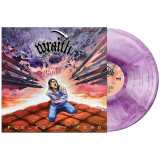
Blue and orange Stardust vinyl, limited to 500 copies. Since 2016, Indiana's Wraith have been emitting their incendiary brand of blackened thrash and speed metal into the world. Summer 2024 will see them release their debut full length under the Prosthetic Records label banner; prepare for Fueled By Fear. What started as a one-man band many moons ago has evolved into a propulsive beast of a band. Channeling a reverence to classic metal from a bygone era, Wraith incorporate their distinctively blistering sonic signature to create something urgent and contemporary. The band have previously described their collective mission as follows: a war of aggression on the dour confines of the modern metal scene and total sonic annihilation. Fueled By Fear captures the raw punk edge of their previous releases; a sound that will already be familiar to converts who have caught the band live in all their full-throttled abrasive glory. The album was self-produced by the band in Griffith, Indiana -, with engineering, mixing and mastering handled by CJ Rayson. Each member brings their own influences and stylistic flourishes to the table, combining to create a tightly wound, cohesive collection of scorching tracks that reflect their individual personalities and tastes.
A disco-funk venture laced with balearic pop as nostalgic as it is buoyant, Dijon-based outfit FLAUR land their inaugural EP on Cosmocities Records. Comprised of three original songs shifting gears between electrifying grooves and washed-out downtempo, plus three remixes courtesy of Art of Tones, Gaettson and Faze Action, ‘Hold On’ speaks the language of lively waves and sun-streaked coasts. By turns explosive and contemplative, the duo’s vision covers a wide span of influences and styles, fusing Californian P-funk with a touch of Supertramp-esque disco and nuances of alternative pop lined with silky funk in the style of acclaimed Versailles band, Phoenix.
Full with suave Wurlitzer piano chords and ultra-syncopated slap bass, the lead-track ‘Hold On’ is an ode to 70s disco pop with its satiny textures, solar-powered melody and a swing bound to cause ravage on the dance floor. The perfect mix of luxuriant disco, vibrant boogie house and supra-sensual cosmic escapology. Even more elating, the layered funk of ’Now’ takes us into a choppy swirl of unshackled pizzicatos, iridescent envelopes and epic vocal flights. Recorded live at Mastoid Studio in Paris, ‘On My Mind’ trades the hi-velocity disco of the first two cuts for a poignant, introspective movement, revolving around the bewitching voice of Florian, a piano and riffs draped in melancholic reverbs. A sonic journey round the confines of soulful dream pop and further intimate songwriting.
In the hands of another rising Dijon-based artist, Gaettson, ‘On My Mind’ morphs into a dance floor-oriented missile, mixing a highly volatile strain of corrosive IDM, sharp breaks and nervy vocal samples. Remixing ‘Hold On’, South of France producer Art of Tones takes us on a proper cosmic trip, laying further emphasis on the original's funky impact through sun-drenched loops a la Alan Braxe and Fred Falke, and a buildup tailored for extended seaside afters; feet buried deep in the sand, head up in the clouds. UK groove legends Simon and Robin Lee, alias Faze Action, round off the package with a chiselled revamp of ’Now’. Slightly accelerated and built for the club, this remix treats us to a pure moment of dance-ready bliss, packed with sinuous rhythms, dynamic bass and fevered percussions.
out of Stock
Last delivered 8 months ago available to reorder, subject to availability
118 pages * no ads * Pure Prince Content! - new High Quality paper version. (Originally printed in 2018)
Wax Poetics Issue 67 contains interviews and write-ups on a slew of Prince's albums, including 1978's For You, 1986's Parade, 1987's Sign "O" the Times, 1988's Lovesexy, 1991's Diamonds and Pearls, and 1995's The Gold Experience—with interviews from engineer Chris Moon, manager Owen Husney, engineer Susan Rogers, producer/engineer David Z, poet Ingrid Chavez, tour manager Alan Leeds, dancer Cat Glover, saxophonist Eric Leeds, guitarist and bandleader Levi Seacer Jr., engineer Michael Koppelman, trombonist Michael B. Nelson, and keyboardist Tommy Barbarella.
Issue 67 also includes standalone interviews with Jill Jones, Andre Cymone, and members of the Revolution: Doctor Fink, Bobby Z., Brown Mark, and Wendy & Lisa.
An adversarial network of ideas, electronic post-punk trio The Wants welcome the possibility that embracing friction can give rise to something cathartic and unexpected. Formed by Madison Velding- VanDam and Jason Gates in 2017, and with the addition of Yasmeen Night in 2021, The Wants' sound is defined by the push and pull of its members' processes: floating rhythms upheaving grounded songwriting, pulsing synths overwhelming live instrumentation. Their new record, Bastard, is an evolution of many of the seeds planted in their debut record, Container (2020), with a refined sense of acerbic emotional urgency and sonic experimentation. Drawing from a deep well of influences across decades and genres, The Wants forge an unlikely alliance of sounds that feels both radical and inevitable. Velding- VanDam channels both the raw power and snark of Public Image Ltd. and The Smiths' romance, while Gates draws intensity from bands like Bauhaus and Throbbing Gristle, and inspiration from experimental techno. Night's sound bridges inspiration from '90s alternative rock like Smashing Pumpkins and Garbage between the nocturnal trip-hop atmosphere of Massive Attack. The result sits in its own category—too raw to be pure electronic music, too mechanised to be straight rock— drawing favorable comparisons to early PIL and contemporaries like Model/Actriz while remaining distinctly their own beast.
out of Stock
Last delivered 14 months ago available to reorder, subject to availability
Alanis Morissette Delivers the Equivalent of a Spiritual Awakening on Supposed Former Infatuation Junkie:
Introspective Themes and Compassionate Emotions on Eastern-Tinged Album Have Grown More Relevant
1998 Smash Plays with Enhanced Detail, Rich Textures, and Sharp Focus on Mobile Fidelity’s 180g 33RPM 2LP Set:
First-Ever Audiophile Edition Strictly Limited to 3,000 Numbered Copies
1/2" / 30 IPS analogue master to DSD 256 to analogue console to lathe
Alanis Morissette refuses to adhere to convention on Supposed Former Infatuation Junkie. While most artists follow-up their breakthrough with an album that closely parallels the approaches that helped make them famous, the maverick singer-songwriter stayed true to herself and drew inspiration from travel to India before she began the recording sessions. As much as the preceding Jagged Little Pill put her on the global radar, Supposed Former Infatuation Junkie confirmed her role as a vital generational voice — and proved her blockbuster success was no fluke. Having set a mark for most sales of an LP in its debut week by a female artist, the 1998 smash remains a pop-rock staple.
Sourced from the original master tapes, strictly limited to 3,000 numbered copies, housed in a Stoughton jacket, and pressed at Fidelity Record Pressing, Mobile Fidelity’s 180g 33RPM 2LP set of Supposed Former Infatuation Junkie presents the triple-platinum LP in audiophile sound for the first time. Benefitting from defined grooves that befit the album’s nearly 72-minute length, this pressing plays with enhanced detail, refined clarity, sharper focus, and broader dynamics than prior versions.
Those traits are key given Morissette’s use of more textured and atmospheric soundscapes, not to mention her evolution into a more nuanced and controlled singer. Similarly, the scale and reach of David Campbell’s string arrangements come across as orchestrations should. Ditto the synth-based architecture shaped by producer and principal Morissette collaborator Glen Ballard. All in all, Mobile Fidelity’s collectible edition simply delivers more information via transparent means.
Notable for its balance, sophistication, and richness, Supposed Former Infatuation Junkie at heart finds Morissette pausing, taking a breath, and learning how to navigate life in a healthy manner after enduring one of the most exhausting and rocket-to-fame stretches any musician ever experienced. It’s the sonic equivalent of a spiritual awakening, a call to betterment, a brave assessment of the self and humanity as a whole. As such, the tunes on her second international (and fourth Canadian) release teem with gratitude, compassion, love, empathy — emotions that lend themselves to the largely mellow, contoured scope and Eastern-tinged melodies of the songs themselves.
“How ‘bout how good it feels to finally forgive you,” Morissette sings on the lead single “Thank U.” “How ‘bout grieving it all one at a time.” Those sentiments, and the vocalist’s embrace of concepts such as divinity and acceptance, not only provide a foundation on which Supposed Former Infatuation Junkie rests. They also reflect the personal maturation she gained from her embrace of Buddhist culture in India and a mindset bent toward notions of reconciliation, peace, and sensuality that were nearly absent in popular music in the late ‘90s.
Those themes continue on “That I Would Be Good,” a confident reflection that takes stock of one’s mental, physical, and emotional state in the face of both changing and unpleasant circumstances — and concludes with Morissette performing a flute solo, further exposing the raw intimacy of the introspective tune. She channels relatable simplicity and joy on “So Pure,” with her invocations of “dance” and “freestyle” speaking to the freedom of expression that courses throughout Supposed Former Infatuation Junkie. And perhaps no song finds Morissette showcasing her refreshed attitude toward life and opening up more than the relationship-themed “Unsent,” whose unconventional structures and lack of a chorus only add to its directness.
Akin to many albums that were ahead of their time, and despite the critical and commercial accolades afforded it upon release, Supposed Former Infatuation Junkie attracted new appreciation and perspective as it got older. Issued during an era where its ideas of serenity, absolution, tranquility, and contentment seemed largely alien, the record — akin to the ways its predecessor foreshadowed a movement — now functions as a visionary beacon that foretells of way to maintain sanity, dignity, and goodness amid a contemporary landscape filled with constant distractions, polarizing views, and incessant calls to purchase, promote, and produce without questioning the what-for purpose.
Supposed Former Infatuation Junkie dares to ask the questions and, at its best, supplies meaningful answers and alternatives that lead to longed-for enlightenment, healing, and laughter. For these reasons alone, it’s a record that never goes out of style.
Experience the Double-Platinum 1996 Album in Audiophile Sound for the First Time
Mobile Fidelity’s Numbered-Edition 180g 45RPM 2LP Set Is Sourced from the Original Analogue Tapes
1/2” / 30 IPS analogue master to DSD 256 to analogue console to lathe
If great art, as many believe, is inherently polarizing, then the Stone Temple Pilots’ Tiny Music… Songs from the Vatican Gift Shop easily ranks as the California-based band’s finest album. Simultaneously celebrated and castigated upon release in spring 1996, the group’s third full-length finds vocalist Scott Weiland and company expanding their “grunge” palette with a smart blend of glam rock, psychedelia, jangle pop, and other related styles. Having benefited from long-view reassessments that shed the biases and meanness of initial criticisms, the double-platinum effort is now largely and rightly seen as a creative masterwork. All the more reason why it deserves reference-grade production.
Overseen by producer Brendan O’Brien, Stone Temple Pilots used bedrooms, hallways, bathrooms, and the lawn to capture a broad blend of textures, spaciousness, and ambience that helped underline the group’s obvious (and somewhat unexpected) leap from normal “alternative” status to an artist whose aspirations went beyond that of many of its contemporaries. You can hear the multitude of details and tonalities with previously unattained clarity, presence, and scope on this fantastic reissue, which also delivers the impact and punch every rock record deserves. Another tremendous asset: The depth, grain, and pitch of Weiland’s voice.
For all the contagious choruses and glossy melodies that help make Tiny Music… Songs from the Vatican Gift Shop sparkle, the vocal performances of the late singer arguably rank as the best that the much-missed Weiland committed to tape. None other than the Smashing Pumpkins’ Billy Corgan — who, like many peers and critics, felt a pressing need to reevaluate the record as both time marched on and the self-importance attached to the “alternative” scene faded — praised Weiland’s efforts by noting: “Like Bowie can and does, it was Scott's phrasing that pushed his music into a unique, and hard to pin down, aesthetic sonicsphere.”
Smooth and diverse, those traits are everywhere on Tiny Music… Songs from the Vatican Gift Shop. From the clever combination of emotional closeness and distance he brings to the catchy albeit ultimately melancholic “Lady Picture Show”; to the lounge-fly balladeering that causes “And So I Know” to lightly swing akin to a bleary-eyed house band’s final number at a 4 A.M. bar; to the effortless cool and laissez-faire casualness he articulates on the grinding “Pop’s Love Suicide”; to the dimensional raspiness, defiant energy, and let-loose wail that sail through the crunchy “Big Bang Baby.”
The latter tune, the record’s first single and per Weiland a conscious attempt by the band to deconstruct its prior approaches, clearly borrows from the Rolling Stones’ “Jumpin’ Jack Flash.” Because of it, the song drew all kinds of barbs from naysayers. Their disdain extended to most material on Tiny Music… Songs from the Vatican Gift Shop, which indirectly references other prized acts such as the Beatles, Cheap Trick, T. Rex, and Lush. Those cynics failed to grasp that Stone Temple Pilots were paying homage and having a blast, with even Weiland, then battling serious substance-abuse and legal issues, getting in on the action.
Stone Temple Pilots’ skeptics also turned a deaf ear to the records’ stellar pop craftsmanship, sticky hooks, and sly commentary on music-industry machinations and fame. Not to mention the band’s intent, made clear from the outset. In an interview conducted in 1994, guitarist Robert DeLeo stated: “The last thing I wanted to do with this band was make everybody believe we invented something.”
Seen through that lens and the hindsight afforded history, and appreciated independent of the self-righteous authenticity standards of the day, Tiny Music… Songs from the Vatican Gift Shop sounds borderline fearless while authoritatively checking all the right boxes for fun, flavor, and finesse. Part winking send-up, part tribute to the glitter rock age, and part middle finger towards the hip crowd that didn’t know what they were missing, this mid-90s classic repeatedly invites you to drop the needle and press play.
In November 2024, 2 Flying Stones organized a remix contest. Four of the winners are featured on this 12” record.
The Funkhauser remix is already making waves in the jumpstyle scene. It is regularly played on harddance radio shows and festival main stages.
The Andy Cley remix is more downbeat and a great addition to the club circuit. Another winner, young talent Junotheoriginal, his remix takes a more artistic approach and could resonate well within the Gen Z scene.
Rounding out the release is a credible, club-oriented version by Antwerp-based producer Groove 81.
These four different versions, each growing within their own scenes, make for an impactful 12” release!
out of Stock
Last delivered 13 months ago available to reorder, subject to availability
Berlin-based Colombian DJ, producer, and curator Edna Martinez presents a sonic journey into the electrifying world of Picó—the vibrant and dynamic sound system culture that has defined the streets of Cartagena and Barranquilla for decades. More than just a musical movement, Picó is a way of life, a bold expression of identity, community, and resistance. From its roots in the working-class neighbourhoods of Colombia’s Caribbean coast to its deep connections with Africa and the Caribbean, this compilation captures the pulse of a culture where music is played at full volume, rhythms travel across oceans, and dance is both a form of celebration and storytelling. For those unfamiliar, Picós are hand-painted sound systems, often adorned with dazzling colours and striking imagery, each with its own name and sonic identity. These mobile discos became the heart of neighbourhood bailes, where the sounds of champeta, highlife, soukous, mbaqanga, zouk, soca, and cumbia would turn every street corner, market, and terrace into a dancefloor. Initially built by local craftsmen using modified speaker components, Picós became legendary for their powerful bass and exclusivity, with DJs sourcing rare vinyl from African and Caribbean ports and rebranding them with unique piconemas—new names adapted to local slang, making the tracks instantly recognisable within the community.
This compilation brings together a carefully curated selection of these rare and sought-after tracks, tracing the deep-rooted musical exchanges between Colombia, West and Central Africa, and the Caribbean. Featuring artists like Los Corraleros De Majagual, Peacocks International Highlife Band, Pedro Lima, Zaïko Langa Langa, and more, the album also includes edits by Edna Martinez, reimagining these timeless rhythms for contemporary audiences while staying true to their original spirit.
Strut presents ‘Picó! Sound System Culture From The Colombian Carribbean’ across 2LP Vinyl, 1CD & Digital focusing on a celebration of the raw, undiluted energy of Picó culture. Through Edna Martinez’s curation, and extensive liner notes, this compilation offers a powerful and authentic glimpse into one of the most vibrant musical traditions of the Colombian Caribbean
out of Stock
Last delivered 13 months ago available to reorder, subject to availability
Analogue Productions' UHQR, the pinnacle of high-quality vinyl! 45 RPM Ultra High Quality Record release limited to 5,000 copies Mastered from the original tapes by Ryan K. Smith at Sterling Sound Pressed at Quality Record Pressings using Clarity Vinyl® Purest possible pressing and most visually stunning presentation and packaging!
By the time Bob Marley died, he was one of the world's first global superstars, famous and lauded from Europe through Africa and the Americas. Some even saw him as not just a reggae singer but as a folk hero, a sort of freedom fighter, and to this day his enduring image feels greater than the music he made, writes Pitchfork. In the 21st century, Bob Marley is a global cultural icon and the first Jamaican inducted into the Rock & Roll Hall of Fame. 1977's Exodus — recorded in London exile after a failed attempt on his life — turned out to be Marley's biggest-selling studio album.
Time magazine named it the greatest LP of the 20th century. Other Marley discs had bigger hits and still others had better album tracks, but the balance Marley strikes between politics, religion, and romance on Exodus — compare and contrast the urgent title track and the laid-back "Jamming" — shows a pop star at the peak of his powers.
Now, Analogue Productions presents perfection — Exodus in UHQR 45 RPM format on Clarity Vinyl. This Ultra High Quality Record release will be limited to 4,500 copies, with gold foil individually numbered jackets. After the success of 1974's Natty Dread and 1976's Rastaman Vibration, Bob Marley was not only the most successful reggae musician in the world, he was one of the most powerful men in Jamaica. Powerful enough, in fact, that he was shot by gunmen who broke into his home in December 1976, days before he was to play a massive free concert intended to ease tensions days before a contentious election for Jamaican Prime Minister.
In the wake of the assassination attempt, Marley and his band left Jamaica and settled in London for two years, where he recorded Exodus. Exodus represented a subtle but significant shift for Marley; while he continued to speak out against political corruption and for freedom and equality for Third World people, his skill as a songwriter was as strong as ever, and Exodus boasted more than a few classics, "including the title song, 'Three Little Birds,' 'Waiting in Vain,' and 'Turn Your Lights Down Low,' tunes that defined Marley's gift for sounding laid-back and incisive at once," writes AllMusic. This UHQR is remastered at 45 RPM by Sterling Sound's Ryan K. Smith from the original analog master tapes. Each UHQR will be pressed on 180-gram vinyl at Acoustic Sounds' industry-leading pressing plant Quality Record Pressings (QRP) using hand-selected Clarity Vinyl® with attention paid to every single detail. These records will feature the same flat profile that helped to make the original UHQR so desirable. From the lead-in groove to the run-out groove, there is no pitch to the profile, allowing the customer's stylus to play truly perpendicular to the grooves from edge to center. Clarity Vinyl allows for the purest possible pressing and the most visually stunning presentation. Every UHQR will be hand inspected upon pressing completion, and only the truly flawless will be allowed to go to market. Each UHQR will be packaged in a custom clamshell box and will include a booklet detailing the entire process of making a UHQR along with a hand-signed certificate of inspection. This will be a truly deluxe, collectible product.
In ‘Of No Fixed Abode,’ Saint Abdullah and Eomac extend their experimentation with genre dissolution to press upon the tensions that exist between culture, place, and migration. This fourth collaborative LP addresses the inherent fluidity of cultural memory, accepting our inability to remain fixed in the past, and explores how best to carry its spirit forward into an ambiguous future.
Through extensive research into 50 years of Persian pop, they meticulously reinterpret the legacies of artists like Andy, Hayedeh, and Fereydoun Farrokhzad, refracting samples by way of gritty beat work-outs akin to more contemporary musicians like Rezzett and Madlib. Through extensive archival research and sampling, they recontextualise these iconic melodies, placing reverie and frenetic drum programming in conversation with one another in a fashion that seeks to express a sense of two disparate tendencies cohabiting together, all while refusing homogenization. This reimagining extends beyond mere homage, serving as a conduit for exploring the narratives of migrant experiences, both in the UK and globally.
Sonically ‘Of No Fixed Abode’ plays with new sampling techniques, utilising the quick-fire intensity of the Roland SP404 with the cool precision of digital DAWs, and features collaborations with drummer Jason Nazary, sound artist Aria Rostami (both New York based), New Zealand-based mHz, and a vocal collaboration with London-based artist and musician Raheel Khan."
out of Stock
Last delivered 12 months ago available to reorder, subject to availability
Jung Jaeil's haunting and innovative score for Netflix's global sensation Squid Game finally arrives on vinyl this summer! For three seasons, Jung's (of Parasite and Mickey 17 fame) iconic music has been essential in creating the intense atmosphere and emotional impact of the series. For this vinyl release, Jung Jaeil has exclusively compiled the best moments from three seasons of Squid Game. On this double LP, you'll hear Jung's mastery of blending classical, electronic and minimalist elements to create a soundscape that reflects the psychological tension and moral complexity of the show. From eerie piano motifs to unsettling ambient textures, the soundtrack heightens the suspense and emotional gravity of the survival drama. Tracks such as “Way Back Then” and “Pink Soldiers Redux” have become iconic for their chilling simplicity and dramatic impact. Squid Game's soundtrack not only complements the show's gripping visuals, but also stands as a masterclass in modern TV scoring. Jung Jaeil's work has received widespread acclaim, cementing his reputation as one of the most visionary contemporary composers. Squid Game is a limited edition of 3000 individually numbered copies on green (LP1) & pink (LP2) coloured vinyl. The records are housed in a limited edition POP-UP sleeve and include a 4-page booklet with liner notes by Jung Jaeil.
Jung Jaeil's haunting and innovative score for Netflix's global sensation Squid Game finally arrives on vinyl this summer! For three seasons, Jung's (of Parasite and Mickey 17 fame) iconic music has been essential in creating the intense atmosphere and emotional impact of the series. For this vinyl release, Jung Jaeil has exclusively compiled the best moments from three seasons of Squid Game. On this double LP, you'll hear Jung's mastery of blending classical, electronic and minimalist elements to create a soundscape that reflects the psychological tension and moral complexity of the show. From eerie piano motifs to unsettling ambient textures, the soundtrack heightens the suspense and emotional gravity of the survival drama. Tracks such as “Way Back Then” and “Pink Soldiers Redux” have become iconic for their chilling simplicity and dramatic impact. Squid Game's soundtrack not only complements the show's gripping visuals, but also stands as a masterclass in modern TV scoring. Jung Jaeil's work has received widespread acclaim, cementing his reputation as one of the most visionary contemporary composers. Squid Game is a limited edition of 3000 individually numbered copies on green (LP1) & pink (LP2) coloured vinyl. The records are housed in a limited edition POP-UP sleeve and include a 4-page booklet with liner notes by Jung Jaeil.
Oliver Dollar presents Contemporary Part Three on Rekids The third instalment features collaborations with Ben Silver, Boogs, and Hazmat, and features Apropos and Boog Brown.
Berlin’s Oliver Dollar unveils part three of his ‘Contemporary’ series, releasing on Radio Slave’s Rekids 4th April 2025 and following up last year’s parts one and two, which featured the likes of Harvard Bass, Brillstein, ADMN, and Austin Ato, and won support from the likes of Nightmares On Wax, Anja Schneider, Laurent Garnier, Carista, Jennifer Cardini, Dam Swindle, and more.
Part three of Contemporary sees Oliver Dollar invite another cast of hotly tipped collaborators, kicking offthe EP with Melbourne DJ and producers Ben Silver and Boogs - both resident DJs at Revolver Upstairs - for ‘Cosmic Weapon’. Their track features lush, poignant chords underpinned by a rolling groove, with vocal samples warped, chopped, and sliced above for a mind-melting trip. Up next, ‘What Cha’ Gonna Do?’ sees Dollar team up with Apropos, whose inimitable voice previously featured on ‘Contemporary Part One’, and talented Detroit vocalist and Dilla’s Delights’ Boog Brown for a soulful duet. Last up is another Motor City link-up featuring Hazmat Live on production alongside Oliver Dollar for the infectious House energy of ‘Ought To Be Love’, joined by the earworm vocals of Members of the House front vocalist William Beaver, aka Billy Love, known for his work bringing Motown-style gospel vocals to Techno and House with notable Detroit artists like JeffMills, Theo Parrish, Moodymann, Kevin Saunderson, and many more.
drum work. Closing out the ‘I Feel’ EP, Tal Fussman works with fellow producer 8-AN to drop the dream-like strings of ‘Life Itself’, another deep track that is as club-ready as it is introspective.
out of Stock
Last delivered 45 days ago available to reorder, subject to availability
RE:WARM Records are very pleased to announce their next release 'Rituals', a new compilation series from the curator and DJ, Josh Mason-Quinn, aka Somewhere Soul.
For Volume 1 Josh takes us on a journey through the various shades of his ritualistic listening habits across twenty-four hours. From rising first thing in the morning, radiating positive energy throughout the day, retreating into the evening before finally releasing your inhibitions on the dancefloor.
The compilation spans four sides of vinyl and is presented in a double gatefold sleeve. The release will also be available on CD and digital formats.
The album is a celebration of new and emerging talent from the underground Jazz, Soul, World and House Music spheres, sitting neatly alongside artists already carving their way into the collective conscience of those who have been curious enough to dig deep.
The record is due for release on 25th July 2025 with the pre-order available 23rd April 2025 via the Warm Agency Bandcamp and selected record stores.
out of Stock
Last delivered 13 months ago available to reorder, subject to availability
Two standout remixes from Embrace, the latest album by Change feat. Tanya Michelle
Smith — now available on vinyl.
The Mood (Figo Sound & JL Remix) – Already Top 10 on the Traxsource Soul/Funk/Disco
chart
Got 2 Get Up (Figo Sound & JL Remix) – An irresis$ble groove-driven club track that pays
tribute to the classic sound of D Train A powerful blend of vintage groove and contemporary produc$on — perfect for today’s
soulful dancefloors.
out of Stock
Last delivered 7 months ago available to reorder, subject to availability
Pink Butter’s debut EP is a bold fusion of jazz, R&B, hip-hop, and indie, blending structured composition with raw improvisation. Rooted in deep grooves and spontaneous creativity, the project channels influences like J Dilla, D’Angelo, and Robert Glasper while carving out a sound uniquely their own.
With live instrumentation at its core, the band brings an organic, dynamic energy that bridges classic and contemporary influences. Collaborations with legendary artists like T3 of Slum Village and Jermaine Holmes (D’Angelo) add an undeniable depth, reinforcing their vision of modern soul-jazz innovation. This release isn’t just a collection of songs—it’s an experience where musical chemistry and fearless creativity take centre stage.
Pink Butter is a Scandinavian collective of four musicians—Oskar Bettinsoli (guitar), Björn Lehnert (keys), Malte Bergman (bass), and John Bjurström (drums)—dedicated to the art of live performance and improvisation. Merging jazz’s freeform energy with the rhythmic pulse of hip-hop and the soulful depth of R&B, the band’s sound is both timeless and forward-thinking. Their approach embraces the rawness of live musicianship, creating a fresh sonic landscape that resonates with the essence of legends like J Dilla and D’Angelo. With a deep respect for both classic and modern influences, Pink Butter is not just making music—they’re redefining the space where jazz, soul, and hip-hop converge.
Pink Butter’s debut EP is a bold fusion of jazz, R&B, hip-hop, and indie, blending structured composition with raw improvisation. Rooted in deep grooves and spontaneous creativity, the project channels influences like J Dilla, D’Angelo, and Robert Glasper while carving out a sound uniquely their own.
With live instrumentation at its core, the band brings an organic, dynamic energy that bridges classic and contemporary influences. Collaborations with legendary artists like T3 of Slum Village and Jermaine Holmes (D’Angelo) add an undeniable depth, reinforcing their vision of modern soul-jazz innovation. This release isn’t just a collection of songs—it’s an experience where musical chemistry and fearless creativity take centre stage.
Pink Butter is a Scandinavian collective of four musicians—Oskar Bettinsoli (guitar), Björn Lehnert (keys), Malte Bergman (bass), and John Bjurström (drums)—dedicated to the art of live performance and improvisation. Merging jazz’s freeform energy with the rhythmic pulse of hip-hop and the soulful depth of R&B, the band’s sound is both timeless and forward-thinking. Their approach embraces the rawness of live musicianship, creating a fresh sonic landscape that resonates with the essence of legends like J Dilla and D’Angelo. With a deep respect for both classic and modern influences, Pink Butter is not just making music—they’re redefining the space where jazz, soul, and hip-hop converge.
Teddy Abrams, the Grammy Award winning conductor, composer, and multi-instrumentalist deemed by the New York Times as a “Maestro of the People,” and named Musical America’s 2022 Conductor of the Year, announces Preludes, an album of solo piano works composed and performed by Abrams and produced by Gabriel Kahane and Casey Foubert, via New Amsterdam Records.
Preludes is a contemplative, personal, and playful set of simple solo piano pieces whose recorded sonic identities were developed in collaboration with Gabriel Kahane and Casey Foubert. Kahane and Foubert “identified the personality of each Prelude and found a sound world for every track to match the intrinsic characteristics of the individual works.” The 16 pieces that make up Preludes take inspiration from the canon of classical piano works such as Bach’s Inventions and Bartok’s Mikrokosmos, yet they are imbued with Abrams’ immaculate compositional language and a depth in production uncommon to “classical” works.
Coming on the tail end of Abram’s Grammy Award Winning Piano Concerto (2023), Abrams explains: “After the crazy, frenetic, joyful energy of my Piano Concerto, I wanted to create a piano work that explored a completely different energy and soundscape. While the Piano Concerto is overtly populist, referencing American genres like jazz, funk, and Gospel music, the Preludes are meant to be introspective, intimate, and simple enough for pianists of many skill levels to play in both performance and home settings.
Mutant is proud to present another contemporary classic from Quebec duo Le Matos, a follow-up to their acclaimed science fiction score, TURBO KID. Released in 2015, the movie TURBO KID became an instant cult hit, and since then, fans have been aching for a video game. This is the future; the world as we know it is gone. You are The Kid, a lone warrior on a journey to cross the Wasteland in search of hope. What you will find on your way, however, is a land riddled with scoundrels and creeps, which you’ll have to go through – sometimes quite literally – to survive. Propelling this madness is an incredible soundtrack by Le Matos returning to the wasteland they helped create in 2015. They cherry-pick influences from the best of electronic music from the past forty years; John Carpenter, Vangelis, and Tangerine Dream are all touchstones, but so are Daft Punk or Justice, all put through an 80's synthpop blender. Creating some incredible retro-futuristic synth wave sounds, including an astonishing re-teaming with Pawws for the single To Tomorrow. TURBO KID – A place beyond your dreams, a record beyond your imagination.
The Gold is inspired by the true story and theories of the 1983 Brink’s-Mat robbery, which saw
the theft of £26 million worth of gold bullion, and the decades-long chain of events that followed. First aired in February 2023, the first series of The Gold garnered 8.7 million viewers for the first episode and was nominated for a BAFTA. Series Two is inspired by theories around what happened to the other half of the gold.
Simon Goff’s work sits at the intersection of contemporary classical, electronic, and cinematic
music. His albums Vale and Spark Like Living Mothers have received critical acclaim for their immersive, textural soundscapes and compositional depth. He has also worked with some of the world’s most acclaimed musicians as a collaborator and sound engineer on Joker and Chernobyl - both of which earned him Grammy Awards.
“In series one of The Gold, the score developed around using the sound pallets of strings and electronics, acting themselves as characters in the narrative. The subject of class permeates the whole story and we used these sound worlds to represent two worlds, divided at first but becoming more and more intertwined as the series progressed. The ways in which the worlds have collided and merged in series two is even more complex. The tension is even higher and the neurosis that torments the characters runs deeper.” Simon Goff
Vel launches PURR with an infectious first VA: P:\URR(V1)_pleaseinsert_ILOVEYOU
On April 18, 2025, Vel unveils the first-ever VA on her new label, PURR, marking a significant milestone in her rising career.
Titled P:\URR(V1)_pleaseinsert_ILOVEYOU, this six-track compilation, featuring six cutting-edge artists, is ready to infiltrate and corrupt the electronic scene.
An infected transmission of club energy, ASMR, and mental overload With P:\URR(V1)_pleaseinsert_ILOVEYOU, Vel curates a lineup of fearless programmers. Each track is engineered to execute in the club environment, embedding ASMR-like frequencies and intricate sonic patterns that phish the listener’s senses. This release encrypts a new strain of fast, introspective, cerebral electronic music.
A paradox in code: when love mutates into chaos. This VA draws its core inspiration from the infamous ILOVEYOU virus, a digital plague born from obsessive passion, proof that an emotion too powerful can spiral into devastation. Much like the virus that once spread uncontrollably, P:\URR(V1)_pleaseinsert_ILOVEYOU infiltrates the mind, its hypnotic intensity spreading through each beat.
With mastering entrusted to In Aeternam Vale and visual identity crafted by Yann Rachon, this release is set to deploy worldwide, embedding its signature into the circuitry of contemporary electronic music.
out of Stock
Last delivered 6 months ago available to reorder, subject to availability
Manchester’s sferic label return with a debut from ungoogleable Greco-Canadian anomaly Anastasia Patellis, aka Any, featuring additional instrumentation and co-production from Klein/Lolina cohort LA Timpa. It's a set of "squat pop" experiments that thread nocturnal soundscaping and pop hooks through hallucinated outlines written on harp and broken synth.
Greco-Canadian artist Any was bedding down in a Cretan squat when the album's title, μέγα ελεός in Greek, boomed from loudspeakers next to a bonfire, courtesy of a midnight Orthodox church sermon. Moving to the sunny, ancient island had provided her with an escape from big city burnout, but she ended staying far longer than expected - years rather than months. It’s this prolonged sense of suspension that provides the album with its wandering spirit, using harp as an emotional core.
Listening to Breton music made on the Celtic harp from artists like Kristen Noguès and Alan Stivell, Any sketched out song outlines that were then tweaked by Lagos-born, Toronto-raised journeyman LA Timpa, who flew out to Crete last summer to put his idiosyncratic stamp on the record. Like the dusty songs on Astrid Sonne's 'Great Doubt, ‘MEGA MERCY' sounds as if its drum line was duped on dictaphone from an old beat tape, then spliced with field recordings and vocals.
Half sung, half spoken, she murmurs around the beat, not exactly over it, adding circuitous, boss-tuned harp twangs when necessary. It's music that's spartan rather than lo-fi; a sort of bare-bones reaction to electroacoustic experimentation and outsider folk. It makes perfect sense that an artist as thematically on-point as LA Timpa is involved - Any's instrumental vamps are roughly pasted around pinprick boom-bap snaps and crunchy foley denouements, eventually cooled into contemplative Nala Sinephro-esque meditations.
Sections bring to mind Tirzah's most psychedelic early excursions, with dry asides set against a slurping, off-axis beatbox loop and distant, barely-audible synths. The record is tied up on 'WEATHER LIKE TIDE', an instrumental callback to the opener, book-ending the album with a melancholy, humid kinda ambient folk, purposefully melting the timeline.
out of Stock
Last delivered 14 months ago available to reorder, subject to availability
After the remarkable success and acclaim that greeted her second album Carry Them With Us (tak:til / Glitterbeat, 2023), Scottish composer and small pipes player Brighde Chaimbeul returns with a magic(k)al third album, Sunwise, which sees her push forward experimentally but also immerse her music more deeply in tradition, folklore and mystery.
Chaimbeul has travelled in a short time from her roots as a teenage piping contest winner into a fearless, widescreen artistry. She appeared on avant-pop paragon Caroline Polachek's last album, has collaborated with Canadian composer/saxophonist Colin Stetson on her previous album (and this one also) and in the last couple of years has graced the stages of premier experimental festivals such as Big Ears (USA), Le Guess Who? (NL) and Supersonic (UK).
Sunwise is a revelatory album, steeped in landscape, ritual, minimalism and the eternal presence of the drone.
A long-lost masterpiece of Yugoslavian jazz-funk and disco finally returns! Originally released in 1979 on the iconic Jugoton label, YU Disko Expres by Igor Savin and Orkestar Stanka Selaka is a rare gem—an electrifying fusion of jazz, funk, electronic music, and traditional folk elements. Decades ahead of its time, this album remains a strikingly modern and danceable exploration of sound, seamlessly blending synthesizers with tight horn arrangements and deep, infectious grooves.
Igor Savin, one of Croatia’s most respected composers and pioneers of electronic music, was a driving force in blending contemporary jazz with emerging electronic sounds. A classically trained musician with a deep love for jazz, he left a lasting mark on the region’s music scene, working across film, TV, and avant-garde composition.
Backed by an all-star ensemble featuring some of Yugoslavia’s finest musicians—trumpeter Stanko Selak, bassist Miljenko Prohaska, drummer Silvije Glojnarić, saxophonist Stjepan Mihaljinec, and more—YU Disko Expres delivers an unparalleled groove that has remained a collector’s favorite for decades.
For the first time ever, this sought-after album gets an official reissue, fully remastered from the original tapes. DJs, hip-hop producers, and groove aficionados take note: YU Disko Expres is back, sounding fresher than ever. Don’t miss your chance to own a piece of Yugoslavian music history!
out of Stock
Last delivered 15 months ago available to reorder, subject to availability
“My hero’s back,” Madeline Kenney sings on the second track of her newest effort, Kiss from the Balcony. In a sense, she means herself; made with friends Ben Sloan and Stephen Patota across just a few in-person studio sessions in Oakland, these tracks represent a culmination of Madeline’s musings on growth and resilience reaching back years, brought to life through this generative and vibrant collaboration. Close listeners can hear the breadth of stylistic elements and themes carried through from various eras of her work, which all come together in a cohesive and timeless record.
In two week-long intensive sessions, the three collaborators grew these nine songs from fragments, sketches, and seeds. With a background in experimental percussion and sound design, Ben Sloan brings an electronic sound to Kenney’s writing; Stephen Patota provides ingenious guitar melodies throughout and grounds the project in acoustic elements. Kiss from the Balcony was originally intended to be an EP, but the sessions brought forth such fruitful ideation and play that the project was expanded to a full length album. It sits in Madeline’s discography as a thematic and musical progression that sees her iterate on ideas about love and explore new sonic motifs through her work with Patota and Sloan.
Much of Kiss from the Balcony is a meditation on modern relationships, a feminist and utterly human contemplation of power and who holds it. “Hereditary backward leaning,” she describes in ‘Slap,’ of the female condition; “But no-one ever likes to see the girls break down / So they keep it to the bathroom floor” she sings in the rapturous opener, ‘Scoop.’ While the songs are shrouded in metaphor, the ubiquity of heartbreak and resilience decode much of the internal conflict Kenney depicts. The album sees her recognize the precarity and peculiarity of life and take it by the horns, realizing she controls her own narrative:
She explores the relationships between joy and suffering, choosing to see them as inseparable, two sides of a single coin. “It’s never over / When will they love me?” Kenney asks on ‘They Go Wide,’ describing her positionality both as a woman in relationship and as an indie artist in the modern music industry.
A playful hopefulness pervades the record, providing a sense of revelation in the journey throughout, Kenney’s radical acceptance of life as it is like a lyrical tongue out at the absurd.
Magic Mountain is the fourth studio album by American rock band Black Stone Cherry.
The album debuted at No. 22 on the Billboard 200 chart, selling 13,000 copies in the U.S. in its first week of release. It debuted in the United Kingdom at No. 5.
Produced, engineered, and mixed by Joe Barresi (Melvins, Queens of the Stone Age), this 15-song set unabashedly reflects the band’s biggest influences -- Lynyrd Skynyrd, Led Zeppelin, Cream, and Whitesnake
-- but places them in a 21st century post-grunge, hard rock context.
Magic Mountain assembles all of BSC’s strengths cohesively.
From swaggering blues-metal of opener “Holding on... to Letting Go” to closing track “Revolutionize”. Magic Mountain comes close to the kind of excitement Black Stone Cherry generate live, and showcases their most refined songwriting skills.
Magic Mountain is available on vinyl for the first time ever as a limited edition of 1500 individually numbered copies on gold & purple marbled vinyl. It contains no less than 2 bonustracks & has revised artwork.
Five tracks of future electro-funk from Spanish DJ and producer Lefrenk, who makes his Gated debut.
Across five expertly warped tracks, the EP pulls from 80s Balearic sunsets, fried breakbeats, warehouse-scented house music, and electro that’s been lightly basted in funk and grilled over a lovely DAW.
‘Brainstorm’ kicks off with pummelling beats then goes widescreen, like a sci-fi epic barging into your set uninvited but winning you over immediately. It’s bold, abstractly beautiful, and absolutely means business.
‘Clocks’ loops squelchy bass and a twinkling melody that develops masterfully, intent on living in your head proudly — like a tenant who pays rent on time and doesn’t play the saxophone.
‘Funk Awake’ could soundtrack a very stylish chase scene between two people in vintage tracksuits.
‘Ocaso’ slows it down a little — warm and woozy, but with snappy, electrified beats holding it up like a drunk at a bar vying for the bartender’s attention.
Rounding things off, ‘Relative Point’ floats somewhere between VHS nostalgia and late-night contemplation, where the insistent beat and bass hold steady and the synths do the wandering.
out of Stock
Last delivered 11 months ago available to reorder, subject to availability
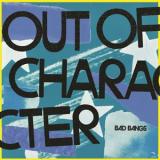
Turning heads with their unique blend of garage, psych, punk rock Bad Bangs played across notable festivals and club shows throughout a 23 show run in 2024. Making waves at Left of The Dial (NL), Leffingeleuren (BE), Truenorayo (ES) and Gliding Barnacles Festival (PT) Bad Bangs make a charging return to the 2025 European Summer festival circuit. Their 2024 sophomore release Out Of Character was the first offering since their debut album Character Building. Somewhere between punk and country, folk and psych, Bad Bangs find themselves Out Of Character. The Melbourne based outfit's sophomore album bends across genres to form a unique soundscape of their own. Live tracking with the masterful Paul Maybury (Cash Savage & The Last Drinks, The Murlocs) captured the bands enigmatic live energy, whilst mastering by Jim Diamond (Ghetto Recorders, The White Stripes, The Dirtbombs, The Gore Gore Girls) secured the signature gritty sound of Bad Bangs. The album arrives with the punchy, punk-laced opening track Contest, which questions the fabric of an industry hell bent on image and conformity, and concludes with the psych infused Wild Mess which laments the shifting state of the natural world. Themes of social and environmental unrest swirl in the undercurrent of an album reflecting on immediate frustrations and personal reflection. With a staple cult following in their hometown of Melbourne, Bad Bangs have supported a high caliber of contemporaries over the years such as Shannon and The Clams, The Murlocs, Rolling Blackouts Coastal Fever and Chastity Belt. Bad Bangs Out Of Character is set for re-release through Beast records (FR) and locally released via Blossom Rot Records (AU&NZ) (Snowy Band, Cassie Ramone and more) Bad Bangs are part of Ya Ya Yeah's booking roster throughout EU. Bad Bangs members are Shelby De Fazio, Tim Ryles, Sophia Lubczenko and Gab Portocarrero.
‘Idealism’ is an album about navigating life in the 2020s as millennial adults, and all the difficulties and uncertainties that come with that - knowing you’ll probably never be able to afford to buy a house, and that a simple grocery shop costs way more than ever before. But it’s also about all the joys and positives of modern life too - being kind to yourself, being kind to other people, and overcoming difficulties.
The band tries to capture that dichotomy on this album, hence the title ‘Idealism’, which the dictionary says is “the unrealistic belief in or pursuit of perfection”.
The album has been a long time in the making, diligently demoed before tracking across studios in London & Essex. Taking a more pop production approach, layering parts and additional keyboards, synthesisers and percussion to add a richer and fuller sound to their traditional indie rock set up.
Nostalgia has always been a running theme for Don’t Worry, as displayed on 2022’s ‘Remorseless Swing’ and 2018 debut album ‘Who Cares Anyway?’. There’s a decent dose of it on this new album still, including on the cover, with a photograph taken in their home of Harlow New Town in 2001 by Jim Brown. And in their musical influences, Pavement, Pixies, Smashing Pumpkins, The Streets, Fleetwood Mac, UK Grime and The GTA Vice City Soundtrack (alongside contemporary influences such as Fontaines D.C., MJ Lenderman, Andy Shauf).
But perhaps for the first time on this album, they push through the comfort of the past, embrace the present and look forward to the future with hope.
Itchy-O is an experiential performance ensemble that has mesmerized audiences across the U.S. and beyond since 2009. The beating heart of this fifty-plus-strong performance troupe is a batterie of percussionists accompanied by an orchestral arsenal of avant-instrumentation. Weaving a synergistic spell, the ensemble dismantles assumptions of traditional performance models to break down the barriers between audience and performer, administering a bombast of ceremonial chaos; baptizing the audience—body, mind, and collective spirit—in an elaborate, pan-sensorial ocean of music, mystery, and transcendental spectacle.
Itchy-O has shared the stage with legends such as David Byrne & St. Vincent, while luminaries like JG Thirwell and Dan Deacon have opened for the humbled brigade. Over the years, they have energized crowds as the opening act for a slew of iconic artists including DEVO, Beats Antique, and Wooden Wisdom (Elijah Wood). Their unforgettable private engagements include a legendary performance at Maynard Keenan’s Merkin Vineyards while delighting festival audiences at Riot Fest, Biennial of the Americas, the Underground Music Showcase, and Tasmania’s world-renowned Dark MOFO with enveloping processionals, pop-up performances, and staged spectacles.
In 2024, itchy-O debuted Söm Sâptâlahn, a sold-out collaboration with the Fiske Planetarium. Named for an epic set of custom-crafted gongs cast from six hundred pounds of reclaimed brass at the School of Mines and tuned to a bespoke seven-tone scale, this project birthed this latest double album. Accessible, mysterious, and meditative, it is a bold addition to the itchy-O catalogue, sure to appeal to connoisseurs of the experimental, the contemplative, and the avant-garde.