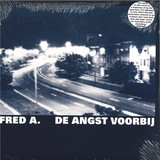
Fred A. was a two-faced act. His musical grasp to the new wave-movement was countered by his lyrical love for Flemish and Dutch ‘kleinkunst’, and his progressiveness as a composer was in stark contrast with his restraint as a performer. ‘De Angst Voorbij’ is an anthology of those remnants, with eight songs derived from the most fertile period in the musical career of Fred A. The record translates how Gerry opened up again to his late musical endeavours, recalling the 30-years younger version of himself. “The music on this record is a testimony of my life back then. It is delimited in time, that’s why this whole feels coherent to me. It shows who I was back then and what I stood for. And that’s worth cherishing
Search:contras
First Word Records is incredibly proud to present 'Starts Again', the debut album from Tawiah.
The latest signing to the Worldwide Award-winning indie label, Tawiah is somewhat of a trailblazer in the world of alt-soul. Despite this being her debut album, she's long-established in the UK music scene, having previously self-released two EPs and a mixtape, as well as high-profile collaborations with Cinematic Orchestra, Blood Orange, Mark Ronson, Kindness, Cee-Lo, Wiley, Zed Bias and Eric Lau. Additionally being championed by the likes of Zane Lowe, Gilles Peterson and The Guardian, and supporting Moses Sumney on his recent EU tour, it's finally time to unleash a full solo project into the world.
'Starts Again' is an exploration of her identity as a queer woman of colour, raised in a pentecostal family, and a determination to express her musicianship in all its raw glory, free of the constraints of major label wrangles from before.
Co-produced with Sam Beste (Hejira), the album also features vocals from Sharlene Hector, Vula Malinga, Ladonna Young, Ade Omotayo and Rahel Debebe-Dessalegne, as well as glorious string arrangements composed by Miguel Atwood-Ferguson, with a series of field recordings from Ghana, amongst the varied components.
In Tawiah's words; "the process of creating this record independently has taken years!! From self-produced demos to live recording sessions with my good friends; Blue May, Sam Beste, Alex Reeve, Alex Bonfanti, Nathan Allen and Lewis Wright. Sam and I then had two years of long joyful studio sessions working on the post production. With no external deadlines or briefs we had the freedom to create whatever came. It was a privilege to collaborate in this way".
A triumphant 10-piece opus, the music seamlessly blends avant-garde sensibilities with low-slung beats and layered harmonies. The vestiges of Tawiah's early church vocal training contrast subtly against a distinctive South London accent, which has helped place her firmly at the vanguard of the British alternative soul movement, and establish a rep as one of the country's most exciting live performers. Time Out even saying "she slays so hard, you better hope there's a doctor in the house".
With a series of immersive live shows being planned in collaboration with spatial artist, Studio Myrrh, the latter half of 2019 headed into 2020 is looking to be a busy time for Tawiah. A decade on from her debut EP, 'Starts Again' is a creative reset of-sorts, though she is already highly revered within the music industry. A unique talent, this debut album should rightly cement her status as one of the UK's finest recording artists and songwriters.
Uncompromising Hi-Speed and -Quality on Strictly Strictly’s 5th EP produced by Mathis Ruffing. No less than 6 ultra-fast paced bangers fractured by bustling breakbeat escapades. Opener Speed House Tool perfectly entitles the uncompromising A-Side with pure dashing power throughout. Side B contrasts with the aerial spirit of its three elegantly stitched Electro Traxx. Tangible / Elastic – deploying the future.
Greek artist June makes his debut on Mannequin Records with the 'Silver Demon' LP. The album explores a futuristic dystopian world where transcendence and oppression coexist, where claustrophobia and infinite openness coincide. A world of contrasts that is the product of the artist‘s active imagination and conscious effort to confront the subconscious.
The album was recorded using original techniques from the golden era of electronic music (late 70s to mid 80s) with an arsenal of vintage analog synthesizers, drum machines and effect processors (originating) from the same time period. While the aesthetics of the classic precursors emerge through the minimal, deep, dark architecture of June's music, Silver Demon prevails with the artist's characteristic originality.
Mastered by Rude 66.
Graphic design by Lee Douglas.
Samuel Rohrer CONTINUAL DECENTERING With his Arjunamusic label and a growing catalog of categorydefying releases, Samuel Rohrer continues to quietly, yet confidently, make a name for himself as a genuinely unique Gigure within the European electronic music realm. In the current era, talk of blurring boundaries between musical genres and attitudes is more the rule than the exception, but not always something done with any degree of success. Rohrer is one of those rare alchemical explorers to have truly created a hybrid which is all his own, one that does not just exist to melt distinctions for its own sake, but is a natural result of years of experimentation with both the determination of electronic music and the ludic spirit of ‘free improvisation.’ On his newest offering, Continual Decentering, this vision is applied to a set of mostly in real time (live) performed explorations. In keeping with his many years’ worth of fruitful collaborations, the tonal palette on this new record is one that is expectedly rich for those familiar with his work, yet still surprising in terms of how exactly the differing tonal colors come together. Representative tracks like Spondee and The Fringe are brimming with dub pulses, noir shivers and blooming timbral variations that are in many places carefully isolated / focused and in other places blended together in vivid fusions. In terms of the emotional atmosphere created here, the pensive and questioning tone hearkens back to the ‘wide open’ state of electronic music in the mid-late 1990s, yet with a greater clarity and maturity of vision that makes this music feel like a possible answer to aesthetic questions being raised at that time. As with Rohrer’s most recent solo work, like the Range of Regularity LP, Continual Decentering showcases the artist’s skill in turning the drum kit into a lead instrument. While the term “lead instrument” denotes a kind of exuberant “Glash,” or a clear separation from the rest of the voices in an ensemble, we can take the term to mean something different throughout this listening program of 13 short vignettes: that is to say, everything else within the audible environment exists to complement the character of the percussive playing rather than to stand apart from it. It helps that Rohrer has, in fact, developed a unique and complex hybrid system in which drum hits trigger modular synthesizer processes, the use of which makes for an incredibly fluid response time between distinct sonic events. In contrast to the previous Range... LP, this new offering is propelled less by interlacing threads of intensity and more by a shared sense of deep listening. As displayed on pieces like All Too Human, there is a profound sense of attention to silences or thoughtful pauses that maybe hints at another crucial aspect of Rohrer’s style: over the course of this program, we tend to hear the player not only playing but listening, an activity which makes perfect sense given the sense of instrumental dialogue already mentioned. All of the above come together to give Continual Decentering a “live”-ness that will easily translate from recorded document to dynamic performance.
Repress
Kali Malone presents a quietly subversive new album featuring almost two hours of concentrated, creeping organ pieces governed by a strict acoustic and compositional code. It’s a major new work with ultimately profound emotional resonance.
‘The Sacrificial Code’ takes a more detailed approach to ideas first sketched out on last year’s ‘Organ Dirges’, which featured canon exercises spontaneously captured without much prior technical planning. By contrast, the recording of ‘The Sacrificial Code’ involved the more careful micing up of several organs in such a way as to eliminate acoustic impurities as far as possible - essentially removing the large hall reverb so inextricably linked to the instrument. The pieces were then performed free of gestural adornments and without expressive impulse - an approach that
flows against the grain of the prevailing musical hegemony, where sound is so often manipulated,
and composition often steeped in self indulgence. The question posed; can this strict methodology still speak to the listener in meaningful terms?
The answer is both obvious and entirely surprising; with its slow, purified and seemingly austere qualities ‘The Sacrificial Code’ guides us through an almost trance-inducing process where we
become vulnerable receptors for every slight movement, where every miniature shift in sound becomes magnified through stillness.
As such, it’s a uniquely satisfying exercise in transcendence through self restraint - a stunning realisation of ideas borne out of academic and conceptual rigour which gradually reveals startling
personal dimensions. It has a perception-altering quality that encourages self exploration free of signposts and without a preordained endpoint - the antithesis to the language of colourless musical platitudes weíve become so accustomed to.
When Elena Colombi launched the Osàre! Editions label in the autumn of 2019, she explained that the label would become home to bold, daring, future-facing music rooted in experimentation and free-spirited musical abandon. These are all descriptions that could apply to the label’s latest release, a retrospective album of little-known works by Greek musician and producer Thanasis Zlatanos.
Many will not have heard of Zlatanos, or Nekropolis, the band he fronted alongside dear friend and regular collaborator Trygve Mathiesen, yet the music he made during the 1980s was otherworldly, intergalactic and undoubtedly alluring. These songs and instrumentals made extensive use of analogue synthesizers and lo-fi drum machines, as well as Zlatanos’s trusted Gibson Les Paul guitar and his own distinctive voice.
Stylistically, the musician and producer refused to settle on a specific sound, preferring instead to create inspired, often mind-altering pieces that join the dots between wave music, skewed leftfield pop, ambient, prototype electronic and Madedonian folk music. Operating for much of the period from a crumbling house earmarked for demolition, Zlatanos kept up a daily music-making vigil that resulted in a vast vault of music, most of which has remained unissued since the 1980s.
The breadth of and width of Zlatanos’s distinctive approach is laid bare on Retrospective, a compilation album prepared by Colombi and the artist himself that draws on tracks from his numerous albums, those by Nekropolis – whose sophomore set “The New Europeans” was banned in Norway – and his epic archive of previously unheard material.
The artist’s singular but wide-ranging musical vision is free for all to see across the 13 tracks stretched across the vinyl version of the album (digital buyers also get a further four superb cuts). It veers attractively from the ghostly, traditional-meets-futuristic new age electronica of “The Crystal Sight (Excerpt)” and the doom-laden coldwave throb of “Master Chameleon”, to the undulating, soft-touch creepiness of “Surreal Moment”, the Vocoder-laden operatic poignancy of “The New Barbarians” and the squally guitar solos and effects-laden electronics of “The Light”.
Words from the artist___:
"I live in the Internet. Visits from outer space make me compose. I breathe here. I am the master chameleon, the psychedelic clown. I am not here anymore, neither in the picture, nor the reflection. Our bed is a boat that takes us tomorrow without us.
Here is an album of dreams and digital emotions. Analogue recordings made with a Prophet, a Moog Rogue, a tape recorder and a Gibson Les Paul guitar.
As far as I can remember I have always been in a recording studio. I listen to, understand and live my life through songs and music. I have worked alone and with friends such as Trygve Mathiesen. Although I am a guitarist, I continue to work with synthesizers on music that blends elements of Macedonian folk music, recordings from the streets and embryonic electronic sounds.
Some of my albums have been critically acclaimed, others banned by radio stations. For years I worked on endless recording sessions in a crumbling house that should have been torn down. The music on this retrospective compilation was recorded at various points between 1982 and the present day. Some of the compositions first appeared on previous albums, while others have never been released before. They were sat on tapes waiting for a saviour. Now that saviour has arrived and they can be free.
For further proof of Zlatanos’s unique sonic approach, check the startling contrast between the bass-laden slacker pop headiness of “No Expectations” and the spacey ambience of “The Dead Don’t Remember”. Considered together, the selected pieces and those elsewhere on Retrospective forms a snapshot of a genuinely unique and visionary musician, composer and producer. It’s a celebration of someone whose work has previously been overlooked."
'Active Imagination' is a result of the bringing together of musicians for a day in the studio, with minimal rehearsal, to collectively experiment and improvise in the moment - in contrast to the more composed and structured recordings of the Paradox Ensemble album 'Awakening' from January 2019. All musicians contributed their distinctive individual voices, creating a united force of spiritual, freeform jazz. Each composition is based on a different mode, all with their own distinctive flavour: "So Long Chef" nod's to Coltrane with its chords jumping by major thirds, before a more static middle section,offering a chance for Walters and Jeff Guntren (tenor sax) to explore the Lydian mode."Ahimsa" is a meditative reflection and group improvisation, based around a simple theme in the mixolydian mode, resulting in a spiritual journey steered by Rebecca Nash's hypnotic piano solo. "Gordian Knot" was conceived as a vehicle for Ed Cawthorne (aka Tenderlonious) to cut loose on soprano sax in the phrygian mode, which he achieves with devastating effect, backed up by Nim Sadot's infectious bass hook and complimented by an equally striking trumpet solo from the band leader. Finally, "Dansoman Last Stop" uses the dorian mode to channel the spirit of a bustling travel interchange in southern Accra, Ghana, conceived further by another exquisite trumpet solo from Walters.
The relationship between Norm and Core is in terms of sunlight playing over a mountain and a valley. Norm is the brightly lit portion, Core is the dark area occluded by the mountain's bulk. As the sun moves across the sky, Norm and Core gradually trade places with each other, revealing what was obscured and obscuring what was revealed. Norm is solid, focused, hot, dry, and active.
Fire – Sky – The Sun – Day Time.
Core, by contrast is yielding, cold, wet.
Water – Earth – The moon – Night-time.
smokey vinyl / label sleeve / incl. dl code
Next on the label that only releases tracks at One Hundred and Seventy Five beats per minute, come two tracks that are quite different from one another.
"The Opposites" strongly relies on the contrast between melody and extremely energetic percussion, tied together by the voice of a girl who wonders how close two people can get without triggering "their crazy". The track's friendly atmosphere almost makes it a Crossbreed love song of sorts.
The much harsher flip side of this release entitled "More Primitive" deals with a different kind of issue: what happens when people get pushed hard, forced to act on instinct... the moment their true, often damaged, selves are revealed.
The seventeenth release on One Seven Five is proof that The Outside Agency still has a lot more tricks up its sleeve, showing the world what Crossbreed is all about.
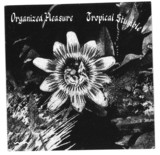
"In popular imagination, the early 80s were dreadful. Thatcher and Reagan led the world on a diet of austerity, unemployment and depression. The Berlin Wall separated East from West. The Sex Pistols had broken up. In sum, the future was unsure. Belgium was no exception. While Punk had been declared dead by some, its spirit was still roaming in country parishes and city alleyways. As the Catholic bourgeoisie provided young people with few opportunities, music was an obvious pastime. Teenage hopes of starting a band and putting out a record were everywhere. Organized Pleasure and Satin Wall were two bands living the dream. In contrast to a thousand others, they left us sounding evidence. This split 7” gathers two tracks originally recorded in 1981. It was the first and only studio excursion for both groups. After some local gigs, the people involved moved on to other projects. While their music is illustrative for the era, their story is distinct. Same but different."
‘I Want You To Be Mine’ has all the hallmarks of classic 1960’s Rocksteady, an era which many refer too as the Golden Age of Jamaican music. Over the top of a live one-drop beat, cool & deadly sax and warm analog guitar & bass Deemas J rides the riddim in a ‘old time style & fashion’ whilst Rachel Wallace provides the perfect accompaniment with her gorgeous vocal. On the B-Side we have the deeper cut ‘Questions’, where Deemas delivers a poignant poem over Adam Prescott’s moody instrumental in the style of Linton Kwesi Johnson. Featuring live instrumentation from Harry ‘Papa B’ Bradford (Sax), Clifford Junior (Guitar) & Guillaume Metenier (Hammond Organ). As an integral part of the Reggae Roast Soundsystem team Adam has established himself as one of the finest selectors in the world. Initially with some early support and guidance from Mark Iration (from the Leeds based Iration Steppas), Adam was quickly recognised as one of the key players in the re-emergence of British Reggae, producing first class original songs featuring the likes of Cornel Campbell, Macka B, Sugar Minott, Ranking Joe, Rod Taylor, Johnny Osbourne & Earl 16 to name but a few. Add to that consistent play on BBC Radio One & Rinse FM plus huge support from Sir David Rodigan, featuring Adam on his ‘Best Of British’ show on 1Xtra, Adam has become one of the hottest prospects in the revival of soundsystem music. Deemas J has built a formidable reputation as a go-to MC & vocalist with equally genre-busting credentials; His background in Reggae & Jungle means that his lyrical skills and style holds no bounds. He currently works with 3 of the top London Reggae Soundsystems, Unit 137, Reggae Roast & Solution Soundsystem as well as running his own Sound Limey Banton Bass in Guernsey. He has released music on some very well known labels such as Irie Ites, Irish Moss & Tru Thoughts, which released the cult LP ‘Wrongtom Meets Deemas J in East London’. More recently his latest release ‘Muhammed Ali’ received fantastic support from Don Letts, Sir David Rodigan & Ras Kwame. His virtually endless CV boasts collaborations with everyone across the worlds of Drum & Bass, Old School, Garage, Reggae and Hip hop, including High Contrast, Andy C, DJ EZ and Nick Manasseh to name just a few as well as touring the world with Manudigital
Phillipi is set to release his debut solo EP ‘Amadurecimento’ on November 29th via DEEWEE, the multi-faceted label and creative space operated by brothers David and Stephen Dewaele (2manydjs, Soulwax).
São Paulo duo Phillipi & Rodrigo dropped their beautifully uplifting debut album ‘Paciencia’, which earned the backing of an eclectic array of supporters including 6 Music, Mixmag, DJ Mag, PAPER, Tiga and Joe Goddard + more.
While ‘Paciencia’ pulsated with a euphoric beach party vibe, Phillipi’s solo project explores much darker territory. By uncompromisingly maximising the bass alongside a relentless beat, lead track ‘São Paulo’ is immediately oppressive and ominous. That intensity only amplifies as it’s blown open with tribal percussion, almost whispered vocals and glitchy synth stabs. ‘Vibe De Verao’ then takes a more progressive approach, with minimalist techno constantly evolving in surprising and inventive ways.
The EP’s second half extends Phillipi’s impossible-to-pigeonhole approach. In complete contrast to the preceding tracks, ‘9000’ is cinematic in scope and lighter in tone, feeling like the score to a lost ‘70s sci-fi cult classic that’s been reworked for 2019. And ‘Gelo Seco’ caps an unorthodox sonic adventure by setting a spliced, stuttered vocal simple around a dancefloor-friendly soundscape - making the title, the Portuguese phrase for dry ice, entirely appropriate.
As with all DEEWEE releases, ‘Amadurecimento’ was recorded, produced and mixed at the label’s inspiring headquarters Ghent, Belgium.
Fresh from the release of their third album ‘Autonomy’ earlier this summer, comes Autonomy Variations: four brand new perspectives from four exciting, innovative kindred spirits of the avant-pop duo.
South London’s Medlar breaks the seal. Following a series of incredible live collaborations with Dele Sosimi (Fela Kuti), he’s has turned ‘Autonomy’ into a minimal, percolating house track. Swapping the acid spikes for analog bleeps, Medlar’s signature can be felt every step through this vivid energetic stomper.
Fabric resident Anna Wall follows with another beautiful subversion as ‘New Politik’ is given a smouldering take. Moody, intimate, downtempo; there’s some serious late night HTRK-esque vibes to Anna’s twist.
Further into the remix trip we glide to find Dischi Autunno, Ombra International affiliate Curses pulling ‘Electric Light’ into the fringes. Taking the upbeat, crystalline pop of Penelope and Stephen’s original and flipping it into a stark postpunk Bauhaus-inspired take, Curses’ live bass and driving new wave beat shine a whole new light on the original and write it a whole new chapter.
Finally, brand new act, Isolating have the honour of closing the EP with industrial modular apocalyptic take on ‘Infinity’. A vast playground of contrasts, at points it’s dirty and pounding. At others it’s quiet and menacing. File under ‘Dystopian Techno.’
Four extensions on one of the most interesting electronic albums released this year, if you haven’t treated yourself to ‘Autonomy’ yet, you’d be wise to. DJ Mag stated it’s The Golden Filter’s best work yet while Clash called a it a bruising return. These remixes follow with complete forward-thinking consistency. Enjoy…
After Lowtec, Alex Cortex, STL and iridescence; Swedish label ‘blundar' presents Benjamin Brunn 11th solo album, 20 years after his debut.
BLUNDAR7 comes as a 10 tracks / 38 minutes long-player, coloured cover on a 180g black vinyl. Artwork by ‘mutantexture’
Brunn wrote and produced all tracks between 2017 and 2018; In contrast to must recent releases were limited to one or two synthesisers, this time a whole array of instruments was used: tELHARMONIC, Music Thing Modular Chord Organ, Doepfer A-111-3V Precision VCO, 4ms STS, Yamaha DX7, Clavia Nord Modular G1 & G2. The long-player comes after a collaborative album with Dave Wheels out on Sushitech early this year, and will be followed by one together with Move D, via Smallville in 2020.
The modern, avant synth/dance-pop frolics of ‘Moi’ catch Steven Warwick (Heatsick) at his impish but droll best for PAN. Returning to PAN six years after his standout Re-Engineering album,
Warwick returns to similar zones of enquiry as 2016’s ‘Nadir’ - the first release under his birth name. With ‘Moi’ (which we definitely hear enunciated with a playful pucker), Warwick further emphasises the personal, playful nature of his work with 10 melodic, danceable and pop-tart arrangements accompanied by a range of vocal personas; from his naturally droll singing voice to more alien and leaned-out styles, plus a guest platitude by Turner Prize nominee, Jo Pryde.
Bubbling up with the pickled 2-step and Lolina-esque lilt of ‘Open Fire Hydrant’, Warwick clearly draws upon a UK dance music heritage - and its Afro-Caribbean and US inspirations - with the
freshest, exceptional style that percolates throughout the album, strongly informing its biggest dancefloor highlights such as the warped trancehall bumps of ‘Salvation’ and the crooked crankshaft of ‘Kaleidoscope’, along with the the brittle boned shimmy of ‘Rush’ and the hard but elegant drive of ’Silhouette.’
But they’re only half the story, which really comes together with contrasts in the fizzy downstroke of ‘Kind of Blue’, on the Black Zone Myth Chant-like psychedelic daze and blunted vocals in
‘Consolatio’, and the album’s standout ‘Danke’, which revolves around Jo Pryde’s gentle utterance of the title weft into ominous ambient clag, connoting a sort of humility that knowingly becomes
both less and more meaningful with each reiteration
With absolute devotion Shook has created an exceptional listening experience in which timeless influences of Hiroshi Yoshimura, Ryuichi Sakamoto, Steve Reich and Erik Satie are honored and thoughtfully integrated in his modern, energetic sound. Shook merges Japanese ambient and Indonesian gamelan with an uplifting mixture of electronic pop, jazz and funk. Inspired by city pop, techno pop and ambient Music for City and Nature spreads a new light on the contrasting balance between what we make and what we are. Shook: “In my 5th album I tried to document my emotional and mental state at this point in my career. It is inspired by the conflict between the energetic and busy city life and the calm, warmth and peace that nature gives. It isn’t a city ‘versus’ nature album though, it is about daily life existing in a gray area in between. I try to find a balance by connecting both sides. We can build a future in the city, but we must not forget that nature is our future.”
In her most personally narrative work to date, A Fossil Begins To Bray is the follow up on Dais Records for NYC producer Hiro Kone, furthering the dialogue set forth on her 2018 release, Pure Expenditure. While the statements on Pure Expenditure rallied behind a point of dangerous excess and injustice, the material on A Fossil Begins To Bray embark upon a journey of discovery and selfanalysis, proposing a potential reorientation towards absence in hopes of illuminating potential futures.
In Mao’s own words, “This album considers the power of absence as neither a lack or deficit, but as a quiet, indeterminable force to cultivate in this time of looming and unrelenting techno-fascism. It asks that we take pause to consider our learned languages and actualities and to better consider how desire shapes our recollections and interpretations of this ‘existence.’” This allegory is expertly applied to every song on A Fossil Begins To Bray. Mao has established a long history of employing absence in her productions to maximum effect. With a vast assortment of diverse elements at play, no single track ever feels overly convoluted and further illustrates Hiro Kone’s skillful attention to dynamic tension and flow. Tracks such as “Fabrication of Silence” and “Submerged Dragon” perfectly represent the power of absence, utilized in a matter to create unique amalgams of decisive, cinematic techno rhythms from the electronic void. As the melodic elements contained within A Fossil Begins To Bray begin to unravel and slowly take form, the unaware are rewarded with a driving yet tangible refrain that offers resolve in contrast to the dense, textureladen backdrop that forms the album’s foundation. The first single, “Feed My Ancestors”, expands upon Hiro Kone’s signature take on electronic music structures. Seemingly free from the predictable contracts imposed by any one genre’s stereotypes, Hiro Kone throttles the foreboding bassline in favor of more calculated, abstract cut-ups that gracefully hold the track in place between hopeful utopia and something more ominous.
Adapted Vinyl was a UK based techno label active in the late 90’s that picked up regular DJ support from taste makers of the time ranging from Jeff Mills to Mr C.
This, the label’s 7th record disappeared before a public release when the Integrale Muzique distribution company went out of business in 2008, but now gets its first official release date after years of very limited availability
Label founder Suade is the artist behind this release and these days he is best known as a highly-sought-after mastering engineer working for artists like Dense & Pika, Paranoid London, Jamie Jones and Vitalic.
Focusing his energies into family life and the fine tuning of other peoples music it’s rare to see Suade’s own music on a new release, but this hasn’t stopped him from collaborating on original tracks with the likes of Magda and Radioactive Man in recent years.
The EP has four contrasting tracks all with different moods and tempos all blended with Techno’s classic motoric drive.
With it’s absence from the usual music marketplaces creating something of a mystery this record ended up receiving a new, unofficial name on Discogs - The Citadel EP which is a title taken from the broken-beat second track on the B side of the record.
The Citadel is just one of the highlights on this eclectic EP, as it’s a Latronic Notron sequencer workout that patiently deploys layered synths in ever-shifting cross-rhythms for a languid 5 minutes before its deep, underpinning bass arrives evoking desert travel and arrival.
Baikal, named after the huge freshwater lake in Russia, is another stretched out meditation on tone and harmony acting as a foil to the delicate and vibrant Latin American percussion that filters in and out through a massive stereo Moog Modular system creating an energetic yet static, ritualistic atmosphere.
Trajan - the most driving track on the EP, gives a nod to the Probe era Richie Hawtin sound with a touch of Drexciyan melodics with shuffled percussion and bleeps over a snaking TB303 shaped bassline where the classic Acid box is given the role of control sequencer only commanding the thick, dirty oscillators of the big Moog.
A1 track Felix is a contrast yet again. A big room melodic Techno piece with another massive bassline and an almost orchestral level of layering, building to nine counter-melodies in total before letting rip with a classic TB303 acid line that builds from the heart of the track.