It is summer dawn . . . and you are alone. Here is music for your strange mood. The piano starts the first track, slow tempo beat, a strict beat, a swinging beat. Lillemor—here minor harmonies give the tune a rural, romantic feeling of some place in Spain or France. The tempo changes to medium fast—the flute solos. Light phrasing contrasts beautifully to the earthy, swinging beat of the rhythm section and the repeating piano figures. The trombone adds a new color, a counterpoint of sound and phrasing, backed by the pulsating beat of this wonderful rhythm and the driving piano. Summer dawn . . . This music has more to offer, because it shows the personality of Sahib Shihab at its best. Sahib is a universal musician who reflects musical experiences in jazz since the end of the thirties. He lived through the important periods of modern jazz with his heart and mind wide open toward everything that was good music, regardless of being termed "Mainstream", "Bop", "Cool", "Westcoast", "Eastcoast", "Hard Bop'', et cetera. When you listen closely to his music, you will find traces of all these, but they are immersed in his deep musicianship and his true jazz personality. Sahib Shihab's background reads like the record of a master of advanced studies. Furthermore he played and collaborated with the coolest jazz musician of that period. Above all let's name Budd Johnson, Theolonius Monk, Tadd Dameron, Milt Jackson, Dizzy Gillespie, Illinois Jaquet, Elmer Snowden, Luther Henderson, Larry Noble, Fletcher Henderson, Roy Eldridge. In his early professional years, Sahib was heard mostly on alto sax; later, more often on baritone sax and flute. Today, his name is inseparably connected with these two instruments. The unity of his jazz performances is not alone bound up with the com¬positions and the arrangements of Sahib Shihab, though in their understated simplicity they have a melodic beauty that is seldom found in jazz of today. The rhythmical subtleties add to the overall qualities of being relaxed vehicles for free-blowing, but there is an immediacy that you hear and feel every moment when listening which defies analysis. The playing of the rhythm section helps greatly to promote the sense of flux and contrasting constant renewal that makes listening to this record so invigorating an experience. Well, this is no surprise, with Kenny Clarke as the nucleus of the rhythm group. Kenny 'Klook' Clarke is a major figure and contributor in jazz, one of the founders of modern jazz, and is ranked as one of the all-time great drummers. He influenced a whole generation of musicians with his playing, though living in Paris since the middle of the fifties somewhat dimmed his name to the general American public. Nevertheless, his name alone will assure a connoisseur to expect top class musical experiences. Talking of the rhythm section we have to name Jimmy Woode's bass, which together with Kenny's drumming, is the driving force for the group and the reliable harmonic anchor for the improvisors. By the way, Jimmy has been with the Duke quite a while, and this alone is an award for extraordinary craftsmanship and artistry. The good sounding rhythm with its full-bodied color is also a result of the added bongos of Joe Harris, who manages to stay out of the way of the players—a quality not often found with drummers—but his playing is felt through the set. There are two members of the group not yet mentioned. Two Europeans, pianist-composer-arranger Francy Boland from Belgium, and trombonist Ake Persson from Sweden. Francy Boland this time is a sideman, though normally he is a leader of recording sessions, both as composer-arranger and as musical director of the band. In the fifties he was in the States writing arrangements for different name-bands, such as Basie and Goodman. In Europe, he is famous for his swinging modern big band arrangements; and his inventiveness as a writer is reflected in his piano playing. He has the talent of using the right dynamic approach every moment, thus making his playing helpful to soloists and interesting for listeners as well. Ake Persson has been Scandinavia's out-standing trombone player for about ten years. There are only a few trombonists in Europe who might match his talents at times, but they lack the consistency of his playing. He is impressive, whether playing in a big band, or whether main soloist in his own small groups. American musicians love the sound of his slide trombone and his easily flowing romantic improvisations, so he often joins American name-bands as they travel in Europe. The music speaks alone . . . , we said it before. You have your soul to feel the beauty, to follow lines and structure, and to enjoy the spiritual excitement. Whether you enjoy the flowing, easy sounding theme of "Please Don't Leave Me", or the climaxing piano solo in the same piece—the bass solo in "Waltz For Seth" or the swinging baritone sax—listen to the first bars of this solo and pay attention to Kenny. Whether you listen to "Campi's Idea", (named after Gigi Campi, the well known Cologne jazz enthusiast who organized this recording) with the romantic flute solo of Sahib, the interesting tempo changes, the piano comping, the moving trombone solo; or to the up-tempo "Herr Fixit", with the cooking Kenny and humorous, driving flute solo, you know that these six musicians where in the right mood, in the right stimulating surroundings to feel what we all feel when it's: SUMMER DAWN.
Buscar:contrast
“Loves Love” jettisoned STÜM into 2024 and now “Beautiful Dancers” is here to take him ever higher.
As the second single off his forthcoming Essence Of Time EP, “Beautiful Dancers” is a blissful yet haunting take on techno. This track is total club rapture made up of ghostly vocal calls, static-like percussion and howling wind effects. A record of mixed emotions, pleasure and pain all blended up into 6 plus minutes.
Speaking on the tune, STÜM says “The songwriting process involved juxtaposing the organic with the synthetic weaving together contrasting sounds to mirror the duality of human emotion.”
Third in line is “Limbo”, a heaving acid hit full of hypnotic foreign instruments and vocals. This one gives off a massive street party feeling. From there we head to “Escape” a more dreamy and introspective bell-tone tune. A deliberate breather from STÜM before storming into the title track of the EP.
“Essence Of Time” is a shimmering rave piece. Dulcet piano intertwines with airy effects and hammering synths – another excellent example of STÜM’s ability to blend light and shade all at once.
Repress!
This EP is delicately melodic and fluid that even in its short four tracks shows a producer with different bows to their arrow. Intro is a laid back, downtempo affair with vocal samples punctuating the track’s pared down synths and gently propulsive beats.
Contrast that with Engang, which sees Jos Ma chisel all other elements away and put trust in the groove and urgency of its percussive elements. It’s something he echoes in Like Honey, although here the bright stabs of keys provide a welcome interjection - as does the chopped-up vocals that offer a further counterpoint to its kwaito-reminiscent shuffle. It is perhaps here that his respect and love of central and southern Africa’s dance forms is presented at its most bare.
The EP finishes with Mongo’s Dance, so-called after the Cuban Mongo Santamaria and driven forward by a chopped-up pachanga rhythm taken from one of the pioneering percussionist’s tracks. He then adorns it with wavy synths and flutes, each intertwining over the top as though engaged in ritual with one another. It’s a euphoric, slightly delirious end to an EP that puts Jos Ma firmly in Mas O Menos’ “neither here nor there” camp – a producer who simply follows his instincts and revels in the enthrallingly wandering music it throws up.
Guitarist Django Reinhardt and violinist Stephane Grappelli hold unique places in the history of jazz music. As the mainstays of the Quintet of the Hot Club of France, they are the first European musicians to directly influence what was until their heyday, a totally American-based genre. The pair could hardly have been more different, yet it was this contrast that apparently fired up their partnership. Even though they collaborated with many famous figures, their work with the Quintet of the Hot Club of France
remains the most celebrated of their careers. Celebrate their collaboration with eighteen specially selected pieces, which includes works penned by the pair; Swing Guitars, Djangology, My Sweet, Daphne, Swing '39, Nocturne, Hungaria, H.C.Q. Strut and Swing From Paris
LUMINOUS ELECTRO-ACOUSTIC COMPOSITIONS LAYERED WITH SUPERB IMPROVISATIONS
Frida Kahlo said, "Can we invent verbs? I'd like to tell you one: I sky you, so my wings stretch, enormous, to love you without measure". It was this message of love from the Mexican poet and painter that inspired the debut album Yo Te Cielo ("I Sky You") by the French southern quartet Chocho Cannelle. It's a canvas on which the different worlds of the four band members blossom. Full of nuances and contrasts, between harmonic softness and rhythmic subtlety, it bears witness to the musical maturity acquired within the quartet. Chocho Cannelle follows in the footsteps of contemporary jazz groups who have abolished stylistic boundaries. From the very first notes, the electro- llanera harp propels us into the band's colorful universe. The eclectic compositions are luminous, evocative and layered with superb improvisations. The musicians play with their timbres and seem to dance, all in balance. Across a wide range of musical influences, the fluidity and coherence of the tracks are self-evident, confirming once again the quartet's strong identity. The album exudes a life force reminiscent of Frida's own personality.
After a brief hiatus, Synapsis Records returns triumphantly with a captivating 12" release by Iranian artist Siamak Amidi, accompanied by reinterpretations from hm505. Synapsis-019, titled "Crack A Love Ball," showcases two original tracks from Amidi on the A side, while the B side features two mesmerizing reinterpretations by hm505.
Amidi's compositions, "Crack A Love Ball" and "Mess with You," are masterfully minimalistic and subtly intricate, filling the soundscape with rich percussion and immersive sound design. In contrast, hm505's reinterpretations infuse the tracks with lush melodies and harmonies, prominently featuring arpeggiations that evoke deep emotional responses from the listener.
Blurb:
A confident, two track release, cut loud to a split 12” from Meat Beat Manifesto & ScanOne
Following on from featuring together on the Yellow Machines BLE-EP series.
Bleeps, Breaks, Space and Bass.
Meat Beat Manifesto's ‘Into The Sun’ kicks off pulsing techno and IDM spasms against evocative NASA samples, the track evolves into a frenzied and unstable tower of wonky jungle break edits and heavy sub sweeps threatening imminent collapse. Weaving the contrasting rhythms with a narrative of eerie analogue pads and incidental atmospherics, Jack Dangers delivers a striking and fresh piece reminiscent of mid 90s left field rave acts such early Plug, Bedouin Ascent, and Law & Auder crew, both in their worldly experimental stylings as well as their forward-leaning progressivism.
ScanOne’s track ‘Secondary Loop’ is a seven minute galactic adventure of a slightly less hectic pace, and a brighter array of scenery. With a firm thematic nod to that 89 / 90, pre-hardcore sound exemplified by the likes of 808 State, FSOL, and Orbital, the voyage is signposted by chunky, shuffling breaks, glowing invigorating rave pads and sparkling arpeggiated sequences, built for those peak dance moments, light and dark, sundown or sunrise.
Nigerian electronic musician and violist Ibukun Sunday debuts on Phantom Limb with Harmony / Balance, a brooding, introspective take on Afro-ambient music that follows two acclaimed digital-only albums for Phantom Limb imprint Spirituals.
Based in Lagos, Ibukun Sunday has expertly positioned himself between the rarely-married cultures of ambient and West African musics. He entwines his compositions with field recordings from his native Nigeria and deeply considered philosophies of existence, humanity, and society. The themes of Harmony / Balance derive from Swami and Hare Krishna founder A. C. Bhaktivedanta and his work Bhagavad-Gita Eng: “As It Is”, a script on the duality of human nature. In Bhaktivedanta’s text, two cousins - warriors from the sacred Hindu text the Mahābhārata - and their armies are pitted against each other. The humility, self control, and devotion of one cousin against the arrogance, envy, and pursuit of power of the other. Bhaktivedanta writes that from this battle we see the necessity to cultivate and nurture our love and faith, but to simultaneously understand our selfishness and hubris. Appropriately, in Ibukun Sunday’s music, a heavy, apocalyptic dread contrasts fascinatingly with passages of light. The static-spiked, corrosive sound design of Harmony / Balance conjures darkness, but its skipping rhythmic patterns and melodic contours are made of beautifully vibrant colours.
Though Sunday excels in the kind of drawn-out elegance also found in the work of Kali Malone, William Basinski or Fennesz, and also in a magisterial repetition akin to Terry Riley or Manuel Göttsching, his unique practice, classical training, and core culture shine through in a pure and singular way. Scattered throughout Harmony / Balance are unexpected melodic antiphonies closely aligned with African music, interspersed between huge, spacious drones and field recordings.
Lead track “Arrayed On The Battlefield” evokes mythical and deific wars with hissing, buzzing synthesis that could be dystopian if not for a levitational, sunlit harmonic structure. It rolls and shimmers, transcendent frequencies alive with rhythm. Later, “Enemy Of My Enemy” employs shimmering, meditative chord pads and blissful negative space, while towards the end of the record, “To Fight With” could have been taken from a Denis Villeneuve sci-fi - the fizzing, fiery distortion at its peak gradually, carefully yields a rumbling, distant thunder as it closes. Throughout the record, Sunday’s education as a classical viola player is also evident. A honed musicality and developed ear for harmonic resonances lend the work a measured eloquence, even amidst deep, spiritual intuitiveness. This intensely personal and powerfully expressive creativity is key to the grace with which he crosses divides.
Ibukun Sunday is a solo electronic musician and violist based in Lagos, Nigeria. He has released two albums with Phantom Limb’s digital-only imprint Spirituals, which enjoyed rightful acclaim as unique and powerful works of experimental ambient music. He also performed at Phantom Limb’s 5th anniversary celebrations in 2023, playing alongside Richard Skelton at St. John’s on Bethnal Green in London, UK.
Mark Templeton is a Canadian media artist and the founder of Graphical, an audiovisual label dedicated to publishing his own musical and image based experiments. Mark’s audio compositions are constructed from reel-to-reel tape loops and sampled cassettes that are contrasted with contemporary sound techniques. In his published photobooks, he incorporates his own 35mm pictures and found images, focusing on intangible fantasies and realities. During his audiovisual performances, he utilizes digital instruments while projecting his own photographs, VHS footage, Super 8 film, and other sampled video.
Mark Templeton’s reinterpretation of outdated media as musical instruments makes him a compelling artist for the Faitiche label roster. For his debut on Faitiche, he browsed his old hard drives and invited Andrew Pekler to listen through and co-produce a selection of Mark’s unreleased works. The compositions act as a series of snapshots: a look back at a decade of archived sounds, re-envisioned and re-imaged for Faitiche.
The album contains nine tracks that follow an AB song structure. Each piece begins with verse A, transitions into verse B, and then ends. This simple formula creates a dichotomy that is also present in Mark’s diptych photographs, featured in the artwork. Throughout the album, both juxtaposition and inherent connections are simultaneously at play. One way or another, Two Verses provides a beginner’s guide to Mark Templeton's highly idiosyncratic catalog.
Mike Paradinas, veteran producer and Planet Mu label owner has written a new album called 'Grush' and it's full of weird bangers that reclaim the 'dance' part of the woeful term IDM. A back-to-first-principles record, inspired in part by the group of artists IDM was coined for; melodic dance music that didn't come out of urban scenes, but interpreted them from a distance. The tracks on 'Grush' are all road-tested live favorites developed with feedback from Mike's touring partner and visuals guy Mora (Jan Moravec). It's a detailed and energetic journey which replicates the flow of a live gig. A lot of the tracks have been made in hotel rooms in response to shows, 'Imperial Crescent' is named after a Japanese Hotel, as is 'Belvedere' in Prague, while some tracks such as 'Hyper Daddy' were created specifically to play live. Drums are confidently at the fore here and the album feels like it traces Mike's musical history and interests neatly around his sweetly nostalgic melodies, with atmospheres and structures which twist and turn with a charming softness which contrasts with the tension in the drums. Take 'Hyper Daddy's' spiralling notes and twinkling piano which remind one of early Black Dog or Omni Trio rushing alongside splashy jungle drums, or the aquatic acid footwork of the title track with its drums softly bubbling and kicking. Elsewhere there's territory which harks back to his Tusken Raiders pseudonym, like the heads down Drexciyan funk of 'Windsor Safari Park,' which transforms from moody electro into a sunny hardcore track midway. The album is interspersed with Reticulum A, B and C at the start middle and end of the album which suggest a theme which carries across the music in an effortless and joyful way. 'Grush' is a strong album that works both for listening and DJing and a great snapshot of where Mike Paradinas musical head is at in 2024.Tracklist Vinyl A: 1/Reticulum A 2/Hyper Daddy 3/Fogou B: 1/Magic Pony Ride (Pt.4) 2/Imperial Crescent 3/Reticulum B 4/Grush C: 1/Belvedere 2/Raver 3/Windsor Safari Park 4/Hastings D: 1/Manscape 2/Metaphonk 3/Reticulum C
- 1: The Three ‘O’ Clock - Jet Fighter
- 2: The Rain Parade - Don’t Feel Bad
- 3: True West - Lucifer Sam
- 4: Bangles - Going Down To Liverpool
- 5: Thin White Rope - Down In The Desert
- 6: Game Theory - 24
- 7: The Dream Syndicate - Definitely Clean
- 8: The Long Ryders - Too Close To The Light
- 9: Green On Red - Illustrated Crawling
- 10: 28Th Day - Pages Turn
- 11: The Dream Syndicate - That’s What You Always Say
- 12: The Pandoras - In And Out Of My Life (In A Day)
- 13: The Long Ryders - Ivory Tower
- 14: The Three ‘O’ Clock - With A Cantaloupe Girlfriend
- 15: Bangles - All About You
- 16: The Rain Parade - Talking In My Sleep
- 17: The Three ‘O’ Clock - Her Heads Revolving
- 18: True West - Shot You Down
- 19: Wednesday Week - If Only
- 20: Thin White Rope - Exploring The Axis
- 21: The Rain Parade - Mystic Green
- 22: Green On Red - Lost World
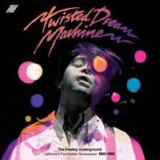
Futurismo proudly present a celebration of the Paisley Underground scene with TWISTED DREAM MACHINE The Paisley Underground / California’s Psychedelic Renaissance: 1982-1986, the next volume in their Altered Vision compilation series.
This collection draws from the neo psychedelic movement that took hold in California during the early to mid 80’s, one that melded the psychedelia, country, garage rock, avant-garde and pop of the 60’s with the DIY ethos of the then burgeoning punk scene, a hypnotic amalgamation of sound that came in staunch contrast to the blown out sonic excesses of the time.
Twisted Dream Machine takes you on a trip from the city to the desert, as the kaleidoscope of noise drifts from the The Dream Syndicate’s Velvet Underground inspired take on Crazy Horse and The Three O’Clock’s chiming baroque powerpop, to Rain Parade’s dreamy Beatlesesque melodies and the Bangles hook-laden Love inspired pop. Also featured are the wondrous sounds of Green On Red, The Long Ryder’s, Game Theory, True West, Thin White Rope and others highly worth your attention. If you are not familiar with some of the bands here, you will surely question how that is possible. The Paisley Underground, if anything, encapsulated a certain musical mindset, an outlook where the past and the future would collide in the moment. This thread would bond the bands, yet each honed it’s own sound in a twisted incarnation of the seeds planted two decades earlier. Whilst the ‘scene’ did remain contained, its influence did in fact spread throughout mainstream culture as the Bangles stuck a chord into the heart of MTV, whilst Prince took inspiration from the movement in his own songwriting and the naming of Paisley Park, as well as signing The Three O’Clock to his label and writing one of the Bangles biggest hits.
As you listen to the tracks on Twisted Dream Machine you will be reminded that there is still music left to discover and inspire, this compilation is aimed to hopefully delight longtime fans, as well as ignite a passion for those new to the bands. The Paisley Underground was the sound of neo psychedelic rock, it was subterranean pop...in
the classic sense, it was alternative rock before the term existed, a distillation of the fundamentals present at the dawn of rock ‘n’ roll, with a twist. The bands of the Paisley Underground may have been writing out of their own time, but as you listen to them in today’s context these songs should be heard as landmarks, rather than throwbacks. After all, nothing this good should stay underground. This 2xLP comes on limited edition coloured vinyl, it is housed in a gloss laminated outer sleeve with colour inner sleeves and contains a large fold-out poster with unseen photos and liner notes by Lisa Fancher of Frontier. Also available on CD with Gloss laminated Sleeve and Fold Out Poster.
With a world in ruins, there comes a new sun. This is the evolution which "TAL" is all about. Intense and relentless, "TAL" is an immersive experience through sonic landscapes and contrasting atmospheres. On its third full length, GLARE OF THE SUN combine orchestral layers with heavy guitars and vocals, creating an emotional listening experience with lots of dynamics and details to discover. Guest vocals are provided by J.J. (Harakiri For The Sky, Karg) and Maffi (Collapse7, ex-Pungent Stench).
"Allegra Krieger’s ""Art of the Unseen Infinity Machine"", her second full-length album with Double Double Whammy, is a collection of 12 songs that pick at the fragile membrane between life and death.
Krieger’s previous album, ""I Keep My Feet on the Fragile Plane"", hewed more closely to the domestic spaces of city and mind. Rolling Stone regarded the album as “ten songs of heady philosophical meanderings packed with emotional dynamite,” and likened her “finely phrased lyrics” to those of “Joni Mitchell, Leonard Cohen, and David Berman.” Krieger’s existential meditations remain on ""Art of the Unseen Infinity Machine"", however her meandering melodies have taken on a stronger sense of direction. She narrates candidly and assertively; the full-band arrangements never overpower, only offer a robust platform on which Krieger’s voice reaches new heights.
The full band brings a heightened sense of drama to the album’s arrangements, which contrasts the quieter approach of Krieger’s previous LP. There are noisy interludes, jazz-inflected discursions, impactful stops and starts, and occasional spaces for Krieger to stretch out her impressive vocal range (most prominently at the dazzling climax of album stand out “Came”). In ""Art of the Unseen Infinity Machine"", Krieger invites us to a place where transfiguration is not only possible but actively happening. From this place, the beautiful and the banal and the terrible are all laid out before us. And Krieger asks us not to look away. Instead, she invites us to stare down the beautiful and terrible in the world, and to realize that sometimes the only way out is through."
Thandii (aka Jessica Berry, Graham Godfrey) first made waves with their debut album A Beat To Make It Better in 2023. The album gained somewhat cult critical acclaim long after its release, with listeners luxuriating in the unusual sound collaged from offcuts of Soul, Lo-fi Hiphop & Psych. Thandii’s world comes bolstered by collaborations with esteemed artists such as Michael Kiwanuka, Inflo, SAULT, Joy Crookes, Jordan Rakei, and Little Simz. The duo’s sophomore offering comes in the form of two companion albums Dream With You & Come As You. The two albums make up a single conceptual statement celebrating dissonance, contradiction, polarity and opposition.
The pair believe that binary thinking has a lot to answer for in today’s world and is often used to divide us as a people. ‘We wanted to explore what it felt like to hold disparate notions in both hands whilst making the music. Starting with the title tracks, we explored the idea of unashamedly being your authentic self in every moment - this is admirable for those that can live their life in an uncompromising way. In contrast to that idea, we explored those moments where we perhaps wished we were more than our reality - a dreamed up, imagined self’. It’s no surprise that duality is central to what Thandii is all about with the pair co-writing, co-recording & co-producing from their seaside studio HaloHalo in Margate, Kent.
The albums each have a distinct flavour of their own. Dream With You is built on cassette-tape-driven lofi beats, art-pop melodies and soulful piano breaks. Whilst Come As You explores more experimental song-form that wouldn’t seem out of place on Tender Buttons - Broadcast or Dots And Loops - Stereolab. Jessica’s voice is the transcendent, ethereal form that shapeshifts between the realms of the two statements; dancing playfully through falsetto harmonies, confessional spoken word, detuned alter egos and haunting choirs. Key collaborators on the albums include bass player Jonathan Harvey and pianist Steve Pringle, both members of Margate’s burgeoning Arts scene. Thandii escaped London nearly a decade ago, their sights set on creating a means for prolific expression, without the distractions that the city can bring. The albums find them in an exploratory stage, throwing paint at the canvas with joyful abandon, gifting themselves permission for uncensored expression. The LPs muse on relationships - romantic, platonic & familial - community, self-worth, self love, healing and boundaries, at times from differing perspectives. This contrast of opinion makes for rich listening throughout a vast emotional landscape
- It Only Takes 2
- Dream With You
- Call It What You Like
- Workin
- Are You Gonna Find It
- I’ll Be There
- Believe In Your Reasons
- Sinus Node
- Nothing Like This
- Sunlight
Thandii (aka Jessica Berry, Graham Godfrey) first made waves with their debut album A Beat To Make It Better in 2023. The album gained somewhat cult critical acclaim long after it’s release, with listeners luxuriating in the unusual sound collaged from offcuts of Soul, Lo-fi Hiphop & Psych. Thandii’s world comes bolstered by collaborations with esteemed artists such as Michael Kiwanuka, Inflo, SAULT, Joy Crookes, Jordan Rakei, and Little Simz. The duo’s sophomore offering comes in the form of two companion albums Dream With You & Come As You. The two albums make up a single conceptual statement celebrating dissonance, contradiction, polarity and opposition.
The pair believe that binary thinking has a lot to answer for in today’s world and is often used to divide us as a people. ‘We wanted to explore what it felt like to hold disparate notions in both hands whilst making the music. Starting with the title tracks, we explored the idea of unashamedly being your authentic self in every moment - this is admirable for those that can live their life in an uncompromising way. In contrast to that idea, we explored those moments where we perhaps wished we were more than our reality - a dreamed up, imagined self’. It’s no surprise that duality is central to what Thandii is all about with the pair co-writing, co-recording & co-producing from their seaside studio HaloHalo in Margate, Kent.
The albums each have a distinct flavour of their own. Dream With You is built on cassette-tape-driven lofi beats, art-pop melodies and soulful piano breaks. Whilst Come As You explores more experimental song-form that wouldn’t seem out of place on Tender Buttons - Broadcast or Dots And Loops - Stereolab. Jessica’s voice is the transcendent, ethereal form that shapeshifts between the realms of the two statements; dancing playfully through falsetto harmonies, confessional spoken word, detuned alter egos and haunting choirs.
If there's one musician in the last decade that you may hear in wildly diverse musical contexts it is Belgian electric bassist and sound sculptor Farida Amadou. Not only can you enjoy the unerringly skillful command she has over her instrument but also the transformative power to reinterpret and expand her material in spontaneous and unconventional ways.
Amadou is self-taught and radically aware of her idiosyncratic relationship with the bass guitar. She neither emulates the virtuosos of the electric bass, nor does she use the instrument as a pure sound generator that merely emits humming and feedback. She takes a completely independent and unique approach. This freedom enables her to create an overwhelming wall of sound, as well as simple, clear structures that are rhythmically concise yielding a wide associative space that lands somewhere between free jazz and noise.
Her work is often concentrated and circular where motifs are established and developed outward. It is an organic sound in the literal sense of the word, constantly in motion, yet resting in itself. The three solo pieces she has recorded for Week-End Records emphasize her impressive ability to ignite ecstasy from tranquility, to fan out a whole range of moods from a few potent ideas.
These attributes make her a musician who enriches every group she plays in, because she is present with her assured and crystallized sound but refrains from being domineering. However, her strengths are even more apparent when she plays solo: the contrasts between the dark, heavy clouds of sound and the rhythmic passages, and the transitions between movements which always sound "logical" yet surprising.
Her new solo album, "When It Rains It Pours" presents Amadou as an inspired improviser who follows her musical intuition and acumen to create a truly unique soundworld. Rarely has improvised music sounded so succinct and compelling.
Wenn es in den letzten zehn Jahren eine Musikerin gegeben hat, die man in den unterschiedlichsten musikalischen Kontexten immer wieder hören will: nicht weil sie eine passable Mitspielerin wäre, sondern weil sie diese Kontexte jedes Mal bereichert und auf spontane, unkonventionelle Weise erweitert, umdeutet, in neue transformiert, dann ist es die belgische E-Bassistin und Klangskulpteurin Farida Amadou.
Sie ist Autodidaktin - und sie versteht diese Selbstaneignung des Instruments radikal. Weder eifert sie den Virtuosen des E-Basses nach, noch verwendet sie das Instrument als reinen Klangerzeuger, der bloß Brummen und Feedbacks von sich gibt. Sie geht von einem völlig eigenständigen Ansatz aus. Der ermöglicht es ihr, eine überwältigende Wall of Sound zu kreieren genauso wie einfache, klare Strukturen, die rhythmisch prägnant sind und einen weiten Assoziationsraum zwischen Free Jazz und Noise eröffnen.
Ihre Musik ist konzentriert, hat einen langen Atem, kreist um Motive, entwickelt daraus neue Linien, die Amadou im Spiel weiterverfolgt. Es ist ein im Wortsinne organischer Sound, ständig in Bewegung, dabei in sich ruhend. Die Stücke, die sie für Week-End Records aufgenommen hat, unterstreichen ihre beeindruckende Fähigkeit, aus der Ruhe die Ekstase zu entfachen, aus wenigen Ideen eine ganze Palette an Stimmungen aufzufächern.
Das macht sie zu einer Musikerin, die jede Gruppe, in der sie spielt, bereichert, weil sie präsent ist, ohne zu dominieren, weil ihr Sound so prägnant ist, ohne die anderen zu übertönen. Im Solo treten die Stärken ihres Spiels aber noch stärker hervor: die Kontraste zwischen zwischen dunklen, schweren Klangwolken und den rhythmischen Passagen, vor allem die Übergänge, die immer „logisch“ klingen, aber zunächst unerwartet kommen und ihren eigenen Weg einschlagen. Ihr neues Solo-Album, “When It Rains It Pours” zeigt sie als inspirierte Improvisatorin, die sich nie bloß ihren Einfällen hingibt, sondern die Ideen zu Ende denkt, oder besser: spielt. Selten klang improvisierte Musik so kompakt und zwingend.
Black Truffle is thrilled to present a Song for two Mothers / Occam IX the first ever solo release from Laetitia Sonami. Born in France in 1957, Sonami studied with Éliane Radigue in Paris before moving to California in 1978 to study electronic music at Mills College, going on to make important innovations in the field of live electronics interfaces and multi-media performance. Sonami is perhaps most closely associated with one of her inventions, the Lady’s Glove, an arm-length tailored glove fitted with movement sensors allowing the performer fluidly to control digital sound parameters and processing, as well as motors, lights and video playback. Having performed with the Lady’s Glove for 25 years, Sonami retired it in 2016, turning her attention to the interface/instrument heard and pictured here, the Spring Sprye.
In Sonami’s own description, “The Spring Spyre is composed of three thin springs that are attached to reverb tank pickups, mounted on a metal ring. The audio generated when the springs are touched, rubbed or struck is analyzed in Max/MSP. The extracted features are then used to train machine learning models in Wekinator and Rapidmax and control the audio synthesis in real time. We never actually hear the springs.” After decades of aversion to documenting her work on recordings, a Song for two Mothers / Occam IX treats listeners to two side-long performances with the Spring Spyre: the very first piece developed for the instrument and the most recent, the two contrasting remarkably in sound palette, energy and form. A Song for two Mothers (2023) spins an intricate web of rippling synthetic burbles, rapid sweeps and fizzing textures. Performed in real time with the sensitive and partly uncontrollable Spring Sprye ("a bit tyrannical," Sonami calls it), the music is delicate yet chaotic. Abrupt gestures hover against a backdrop of silence, "devoid of spatial or temporal direction". After several minutes, the sound-world becomes metallic and percussive, tapping and ticking in pointillistic flurries before a wavering harmonic cloud emerges, sprinkled with resonant drips and pops.
Occam IX is a radically different proposition. At the outset of Sonami’s exploration of the Spring Sprye, she asked her former teacher Éliane Radigue to compose a piece for it—and her: like all of Radigue’s work since she ceased working with analogue electronics at the beginning of the 21st century, Occam IX is written not only for an instrument but also for a particular performer. These scores are developed verbally, through meetings and conversations between performer and composer; each is grounded in an image (usually kept from listeners, to avoid influencing their experience); all magnify the subtlest acoustic phenomena and require great commitment and patience from the performer. Sonami’s is one of the few Occam pieces to make use of electronics, bringing it closer to Radigue’s famous longform pieces for ARP 2500. Beginning from a rumbling low tone, the listener is gradually immersed in slowly lapping waves of synthetic tones, eventually thinning out into delicate bell-like pings against a background of white noise, reminiscent of one of the most beautiful sections of Kyema from the Trilogie de la Morte.
Accompanied by notes from Sonami, her longtime collaborator Paul DeMarinis, and Radigue, and illustrated with scores, photographs and images of the Spring Spyre, a Song for two Mothers / Occam IX is an essential document celebrating an under-recognised pioneer of electronic music and performance.
- Ocean Motion Mildew Mind
- Yes Sir Ree
- I Can’t Stand It
- Country Time
- If I Were A Poet
- Torero Piece
- Peachy Keen-O
Carving an unlikely and elaborate niche in the stoney academic landscape
which she once shared with the likes of Phill Niblock, John Cage and Sorel
Hayes, the excitable proto-punk poèmes sonores of the linguistic loose
cannon known as Beth Anderson first rolled through New York in the mid-
1970s (from Kentucky via San Francisco) like a jumbled tumbleweed of lost
Letterism, face paint and threadbare drummy funk to astonish gallery floors,
lecture theatres and loft apartment stages.
One thousand leagues under the radar of the commercial music industry,
with a sense of humour that elevated way above her highbrow peer group,
the music of Beth Anderson has successfully evaded the pressing plant for
most of her creative career, and not unlike fellow New York gallery actionist
Suzanne Ciani, it has taken decades to successfully collect and contextualise
these early recordings - expanding her elusive discography beyond the rare
and mysterious solo single entry in the process.
When uttered amongst the type of vinyl vampires that haplessly gravitate
between both art school vintage vanity pressings and family funded plunder
funk, there’s an outside chance that the name Beth Anderson might muster
some vague recognition on account of her one and only solo wax sojourn
into the expansive DIY market. In 1980 the 45rpm single, ‘I Can’t Stand It’,
combusted into the consciousness of adventurous participants with its deep
rhythmic backbeat (courtesy of future Sonic Youth / Dinosaur Jr producer
Wharton Tiers, member of the new wave band Theoretical Girls), climaxing
with two colourful and commanding linguistic tantrums before disappearing in
a puff of smoke leaving would-be fans dumbstruck without so much as a
label name or distribution contact to explain what they had just heard.
For those who have spent the subsequent years on the edge of that same
seat, it might come as some comfort knowing that somewhere out there,
there is also a contrasting world of gallery patrons and experimental sound
poetry enthusiasts that similarly didn’t know that their regular performance
poet Beth Anderson even made the ambitious pop record. For the uninitiated,
the enigmatic Beth Anderson has straddled both sides of the art / rock fence
placed between two equally niche pastures.
Hopefully this first ever vinyl compendium will succeed in joining the dots,
loops, yelps, squeaks, beats and repeats. Let us follow Beth’s lineage, along
her magnetic tape highways crossing multiple boundaries in a hope to bridge
unlikely anti-genres like ‘yoga punk’, ‘ramble rap’, ‘combustion pop’ and
‘formroom funk’… all of which were officially neatly bracketed under the
curious Text-Sound movement where Beth garnered utmost respect as a key
practitioner.
The world is a firework of overstimulation - and Future Palace have dedicated an album to this feeling of overwhelm. On the new record "Distortion", the Berlin post-hardcore trio deals with an almost oppressing mass of mental illnesses and problems. In doing so they create music that - appropriate to this topic - hits more hooks than ever before from one moment to the next, from the quietest depths to the loftiest heights. While the band had already leaned more towards musical extremes on their previous album, "Run", "Distortion" is the ultimate culmination of all the tones that Future Palace have absorbed on their Europe-wide journey as one of the most exciting acts in alternative guitar music: the most powerful metalcore breakdowns meet trembling darkwave beats, anthemic emocore refrains a la Bad Omens are contrasted with sacred choirs, the coldness of industrial encounters the powerful emotionality of Sleep Token. An album like a manifesto.